
Wedding entertainment works best when it gives guests a natural way to enjoy the part of the day they are already in. That might mean a musician during arrivals, an artist people can watch during cocktails, a game for non-dancers, or one clear late-night finale.
Use this list to compare what guests would actually do, see, or take home. Start with one gap in the timeline and one group you want to serve, then choose the idea that fits the venue rather than stacking activities simply because they look good in photographs.
For any hired act, confirm space, power, sound limits, accessibility, setup time, insurance, and a weather backup before paying a deposit. The practical notes below are kept beside the ideas that need them so the visual inspiration still leads.
Easy Crowd-Pleasers Guests Can Join at Their Own Pace
1. Close-Up Magic That Moves Between Small Groups
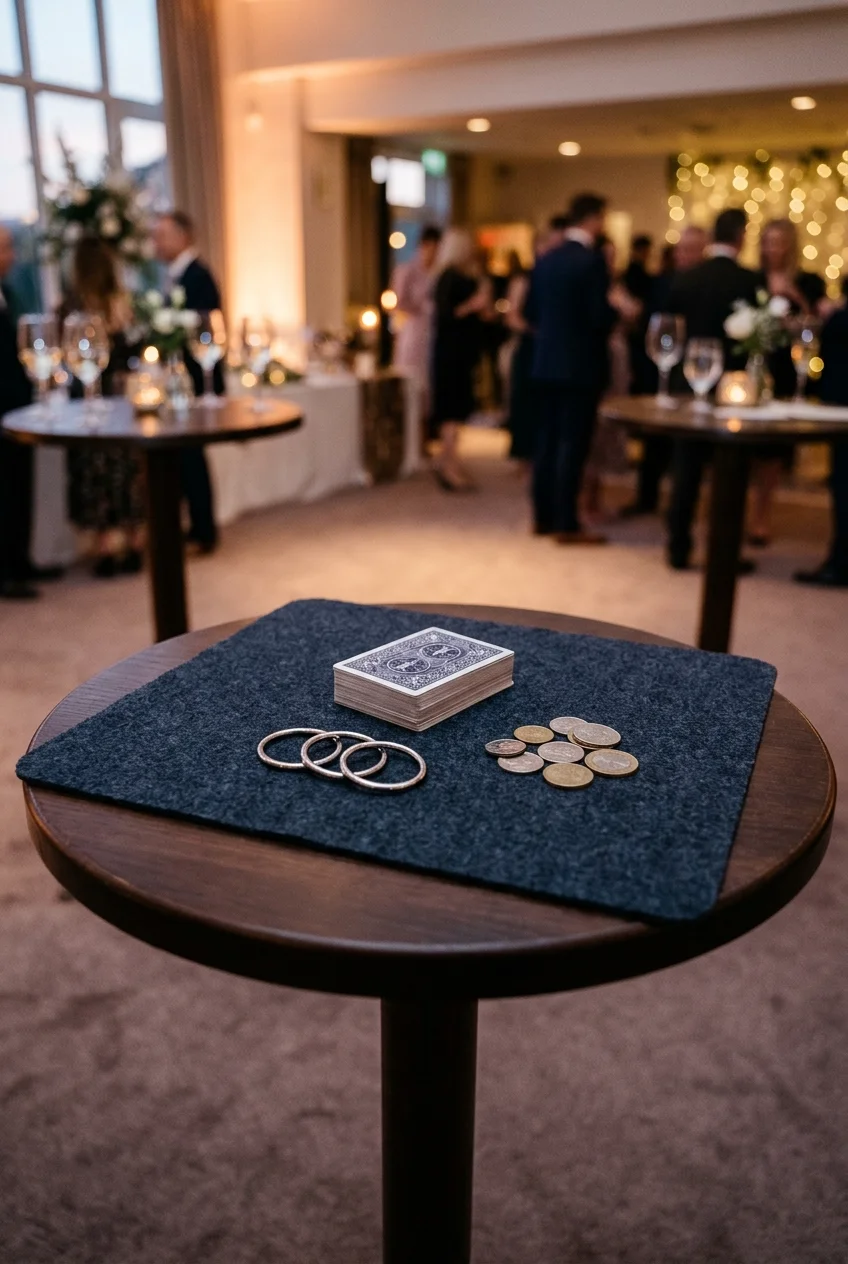
A close-up magician can work a cocktail hour without pulling everyone toward a stage. Card, coin, and ring effects give newly introduced guests something immediate to react to, while people who would rather keep chatting can simply watch from the edge.
Ask how the performer handles crowded rooms, loud background music, and guests who do not want to participate. A route agreed with the venue helps the magician reach several groups without blocking bar service or photo locations.
2. A Print Photo Booth With a Simple, Open Backdrop
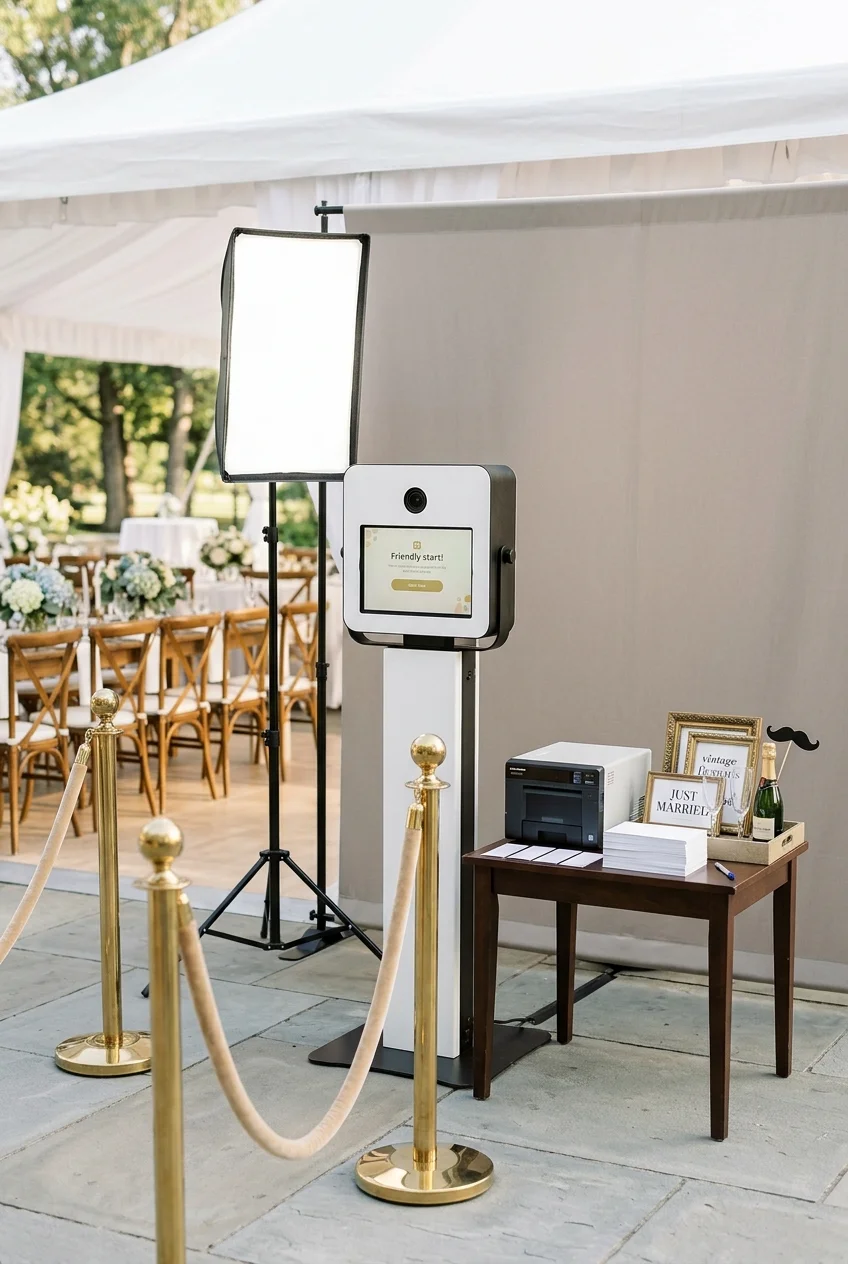
A print booth gives guests both an activity and something tangible to take home. An open booth with good lighting is easier for groups to enter than a small enclosed box, and a restrained backdrop keeps the photographs from looking disconnected from the rest of the reception.
Confirm whether the package includes an attendant, a printer, digital files, enough paper, and setup or breakdown time. Place the booth where people can notice it without allowing the line to spill across a doorway or the dance floor.
3. Live Guest Illustrations Displayed as a Pop-Up Gallery
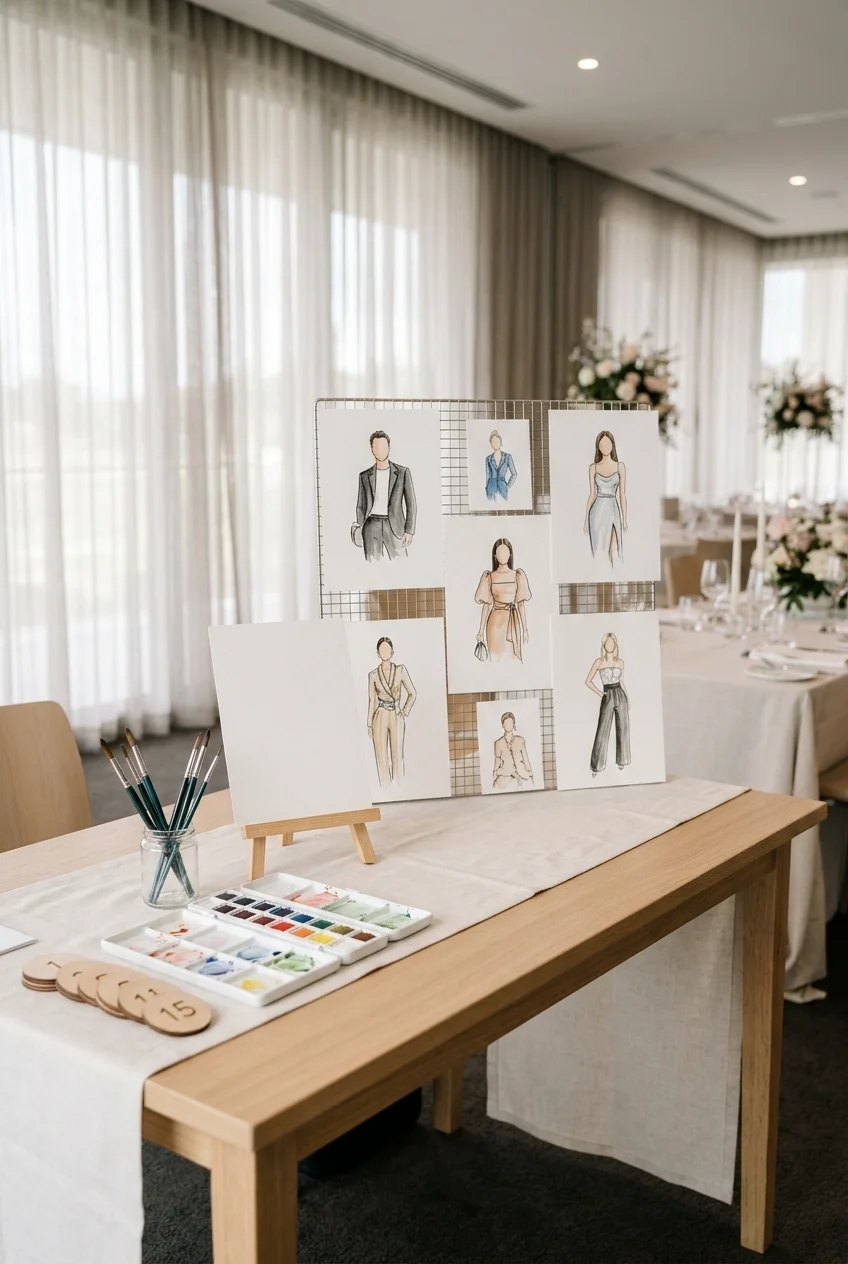
A guest illustrator turns the drawing process into quiet entertainment and the finished portraits into favors. The display becomes more interesting as the evening progresses, so position it where people can watch without crowding the artist's working area.
Capacity matters more than the number of guests invited. Ask how many individual or couple portraits the artist can realistically finish, how names or queue order are managed, and whether unfinished requests can be completed later from photographs.
4. A Small Cluster of Lawn Games Instead of a Whole Field
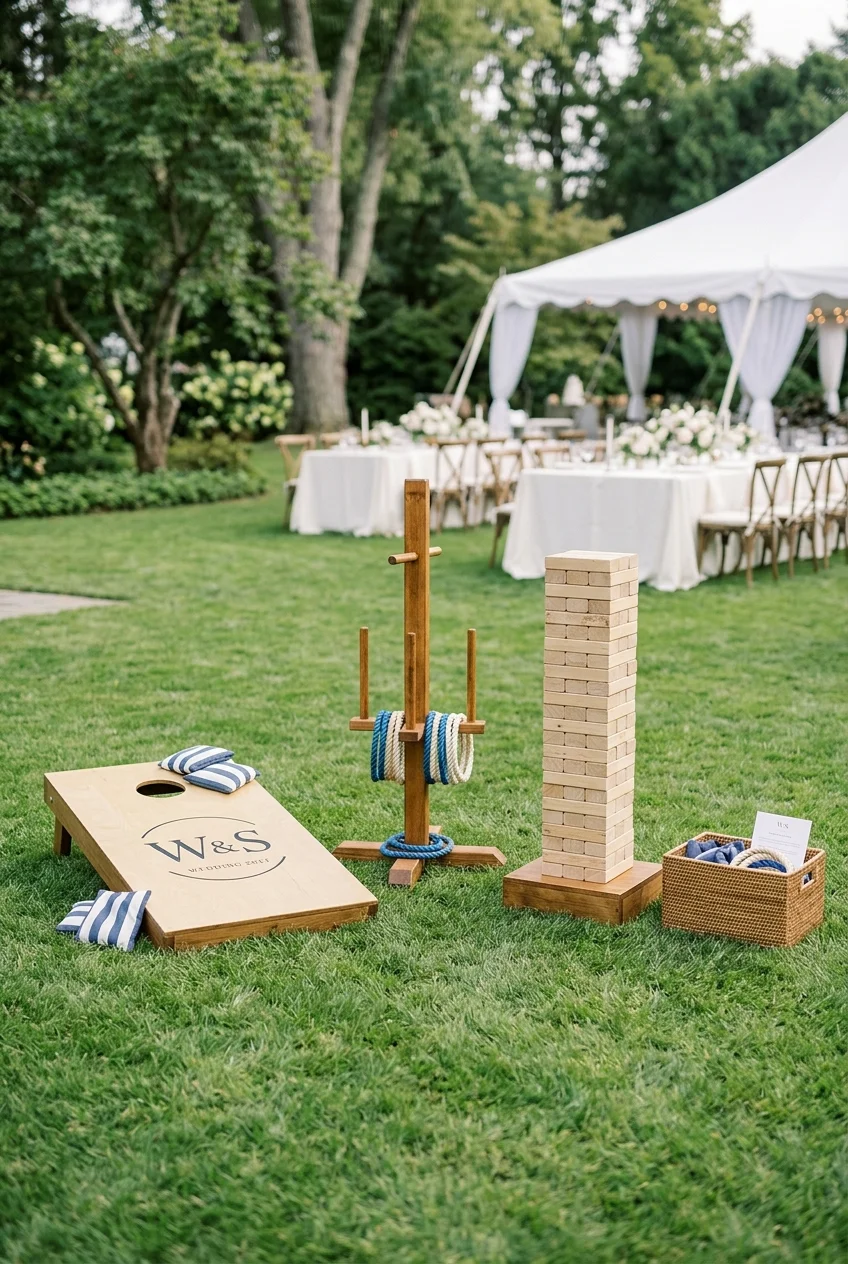
Two or three recognizable games are easier to use than a sprawling game zone. Pair one tossing game with one slower option, then leave open space around each setup so guests can join, watch, or pass through without stepping into the play area.
Choose level ground and check whether the venue allows stakes, heavy pieces, or equipment on the lawn. An indoor backup should be a real alternative, not simply wet game boards moved onto a crowded dance floor.
5. An Audio Guestbook in a Quiet Phone Nook
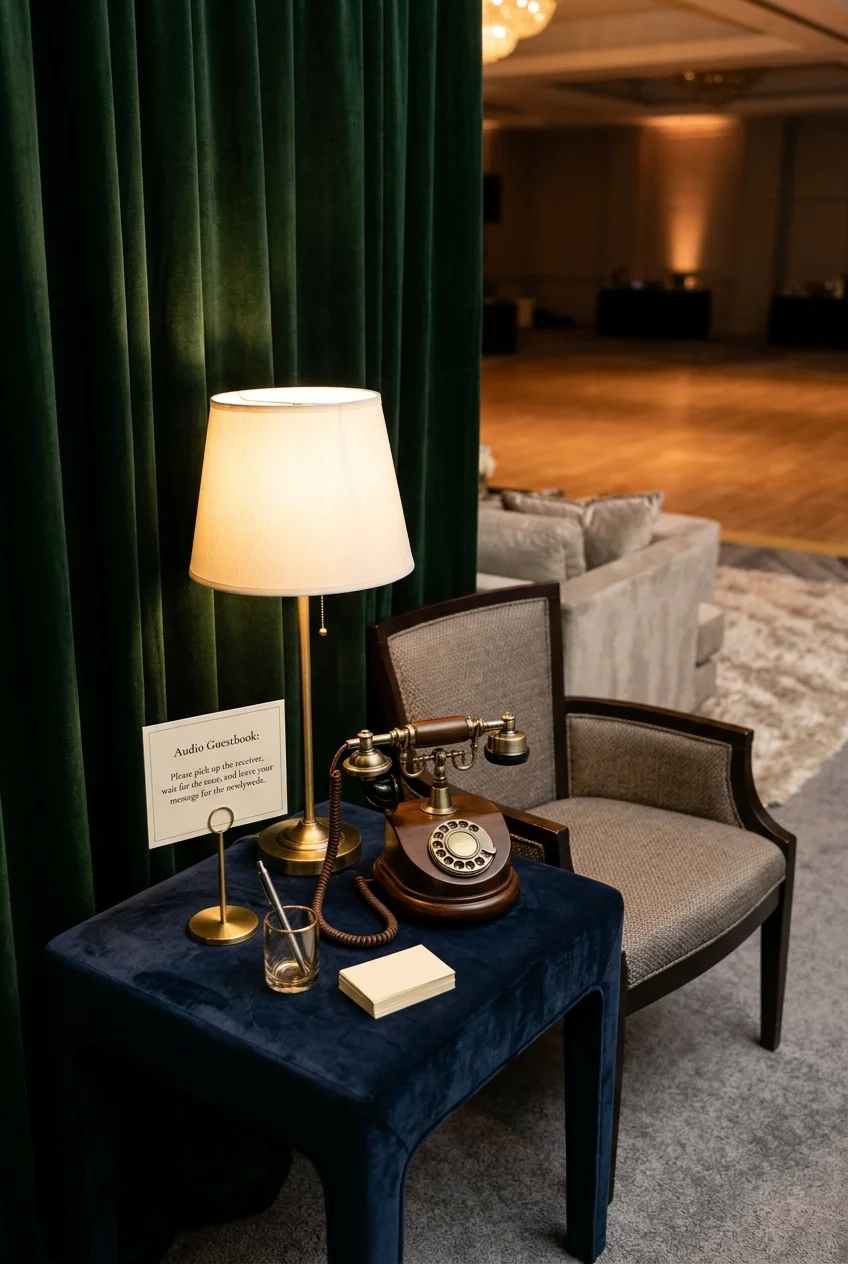
An audio guestbook records voices rather than handwriting. Give the phone a small side table, a comfortable standing or seated position, and a little acoustic separation from speakers so messages do not disappear under reception noise.
Test the greeting and recording process before the event. A few prompt cards—such as a favorite memory, a piece of advice, or a story about the couple—help guests start without scripting what they should say.
Setup note Check battery life, return instructions, file delivery, and how long the provider retains the recordings. Download and back up the final files when they arrive.
6. A Roaming Acoustic Duo for Cocktail Hour
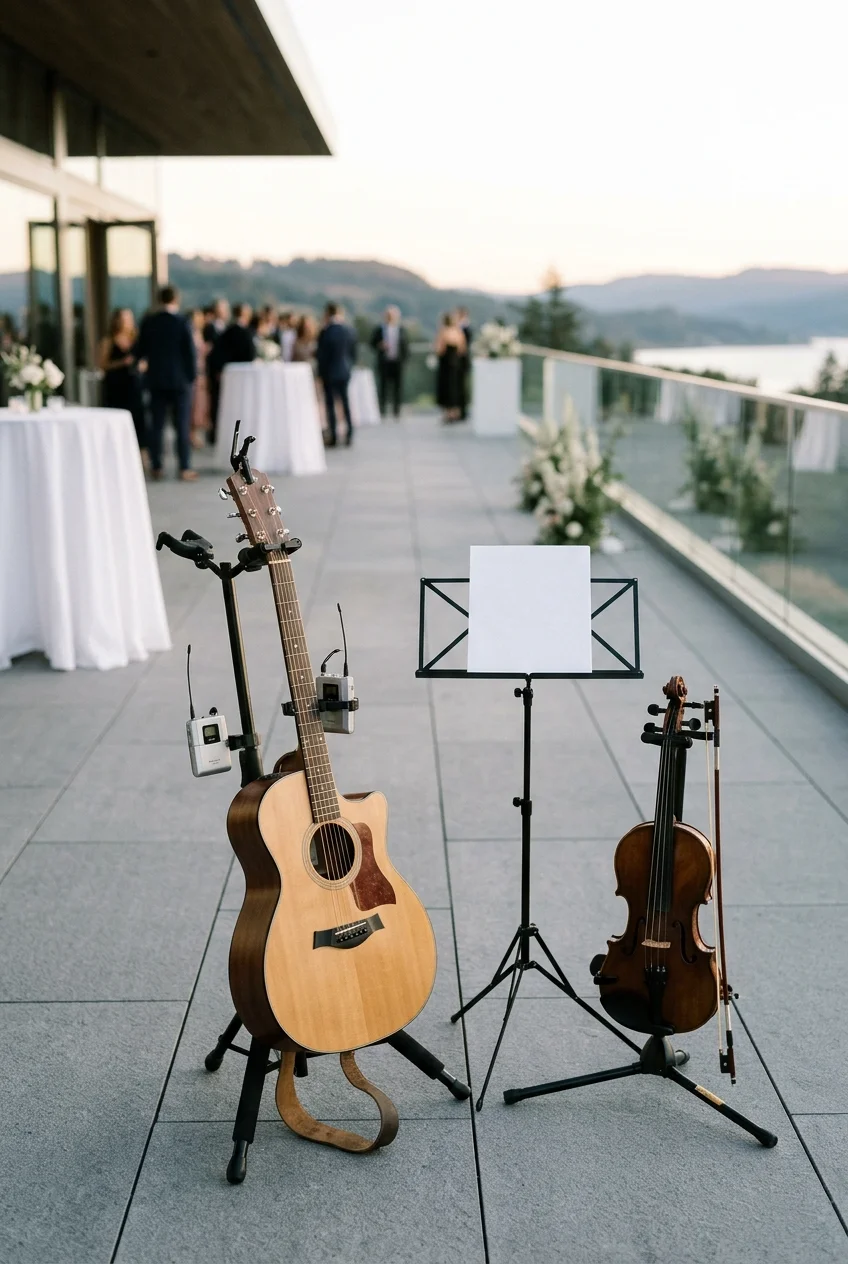
A guitar-and-vocal or guitar-and-violin duo can shift the energy without fixing guests in rows. Roaming works best when the musicians can perform acoustically or with compact amplification and when the venue has wide, predictable paths.
Agree on where the duo should pause and where they should not play, especially near conversations, service stations, and photography. If the room is already loud, one stationary set may sound better than constant movement.
7. A Live Painter Positioned Where Progress Is Easy to Watch
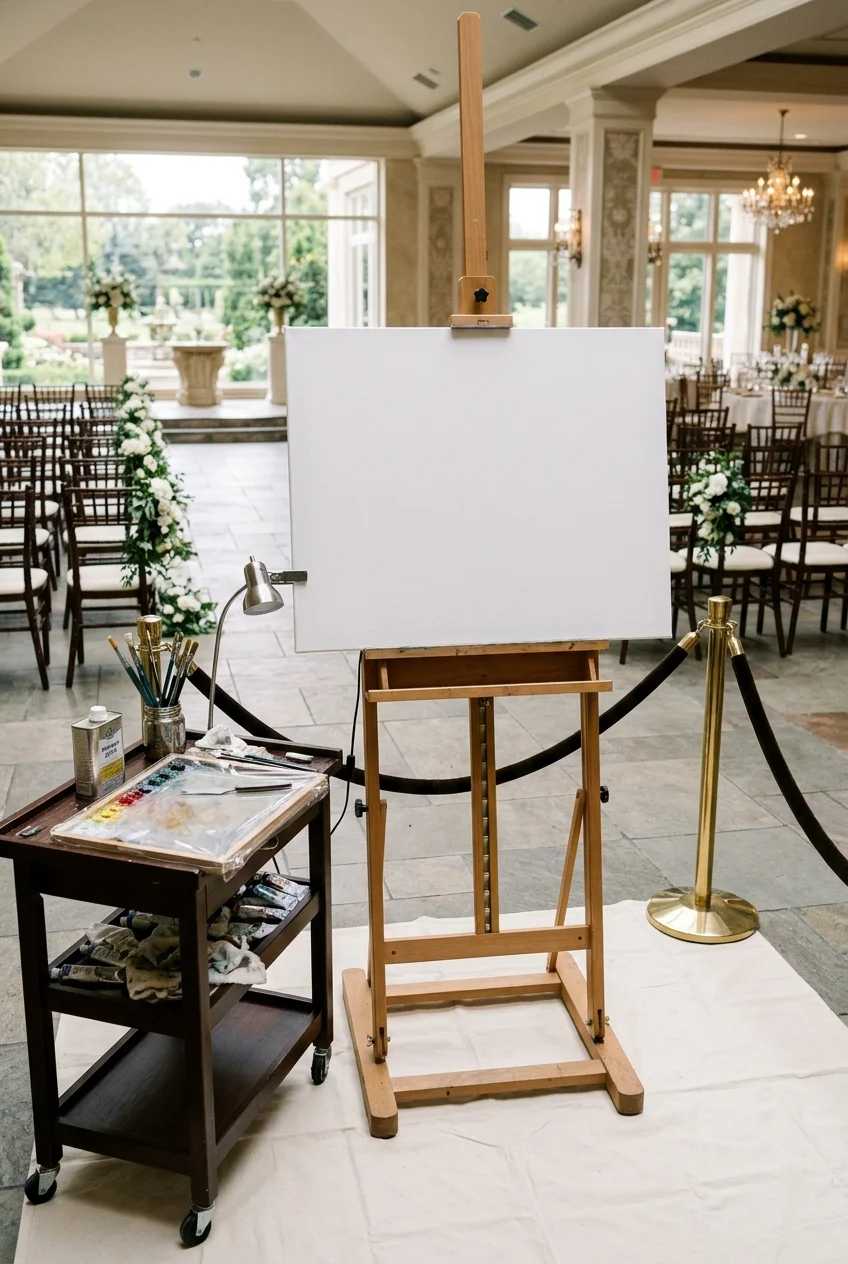
A live painter gives guests a developing scene to revisit during the day, while the couple receives the finished artwork. Decide in advance whether the painting will focus on the ceremony, first dance, architecture, or a composite scene; that choice affects where the easel belongs.
Ask what will be completed on site and what will be refined later in the studio. The painter needs a protected working area with a clear view, good light, and enough separation from traffic that wet paint and formalwear never meet.
8. An Instant-Photo Guestbook With a Real Assembly Station
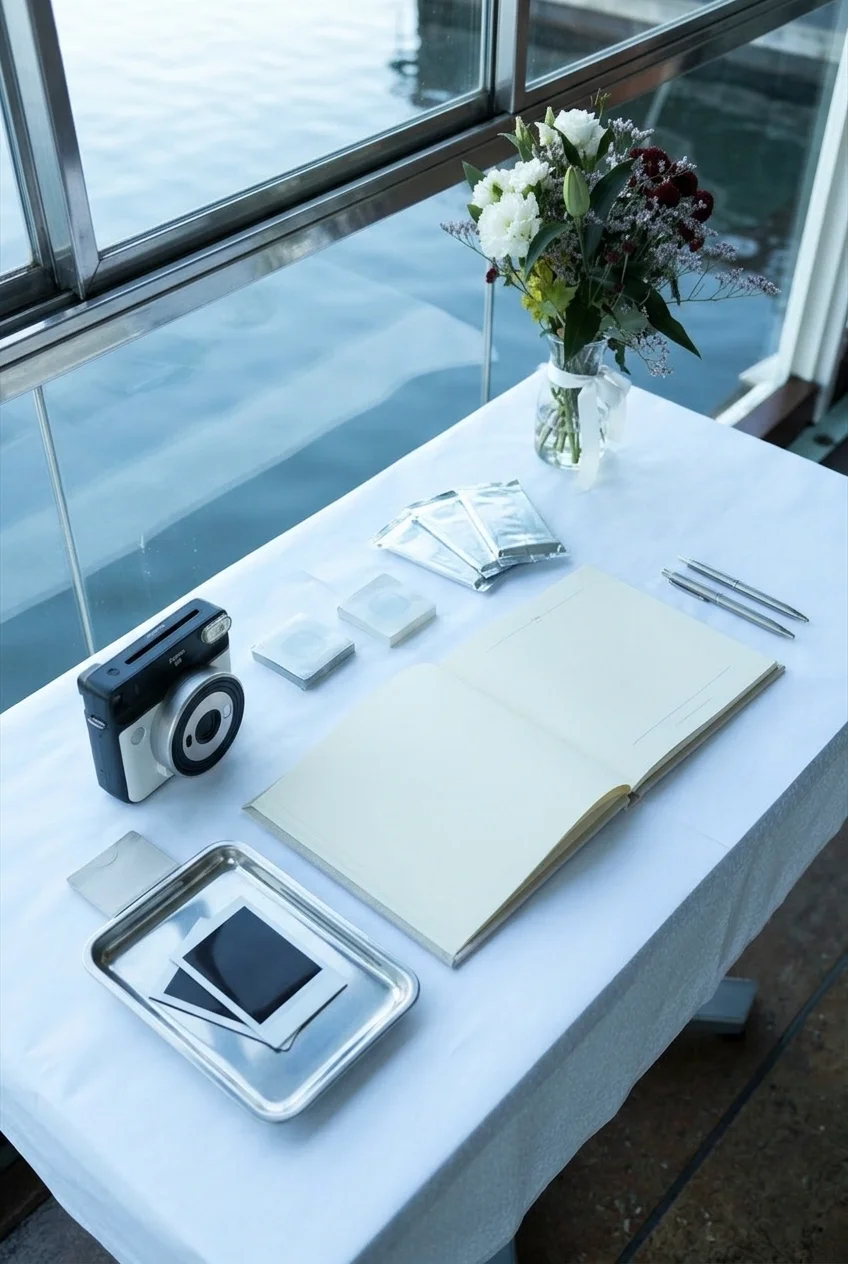
An instant-photo guestbook works only if guests can take, attach, and label a picture without hunting for supplies. Set out the camera, compatible film, photo-safe adhesive, pens that do not smear, and a visible place for prints to develop before they are handled.
Assign someone to check the station a few times during the reception. Fresh batteries, extra film, and a cleared waste container prevent a charming idea from becoming an abandoned pile of wrappers and blank pages.
9. A Silent Disco With More Than One Music Channel
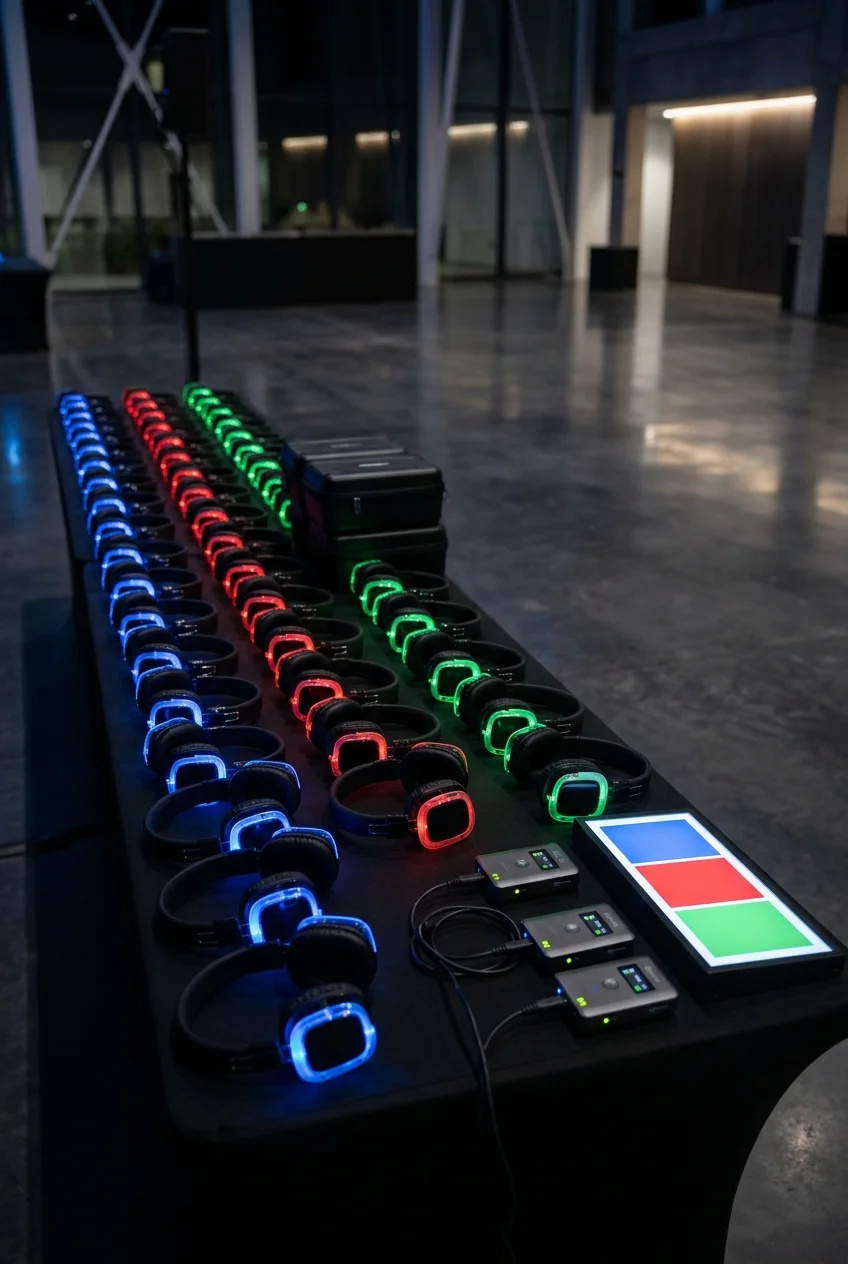
A silent disco lets guests switch between playlists while the room itself stays comparatively quiet. Multiple channels make the format useful for mixed music tastes, but the choice should be obvious through headphone colors or a simple channel key.
Confirm headphone count, charging, sanitizing, transmitter range, and who troubleshoots equipment. Keep a clearly marked return point and a few ordinary speakers at low volume in a separate lounge so guests who skip the headphones are not isolated.
10. Table Trivia That Starts Conversations Without Taking Over Dinner
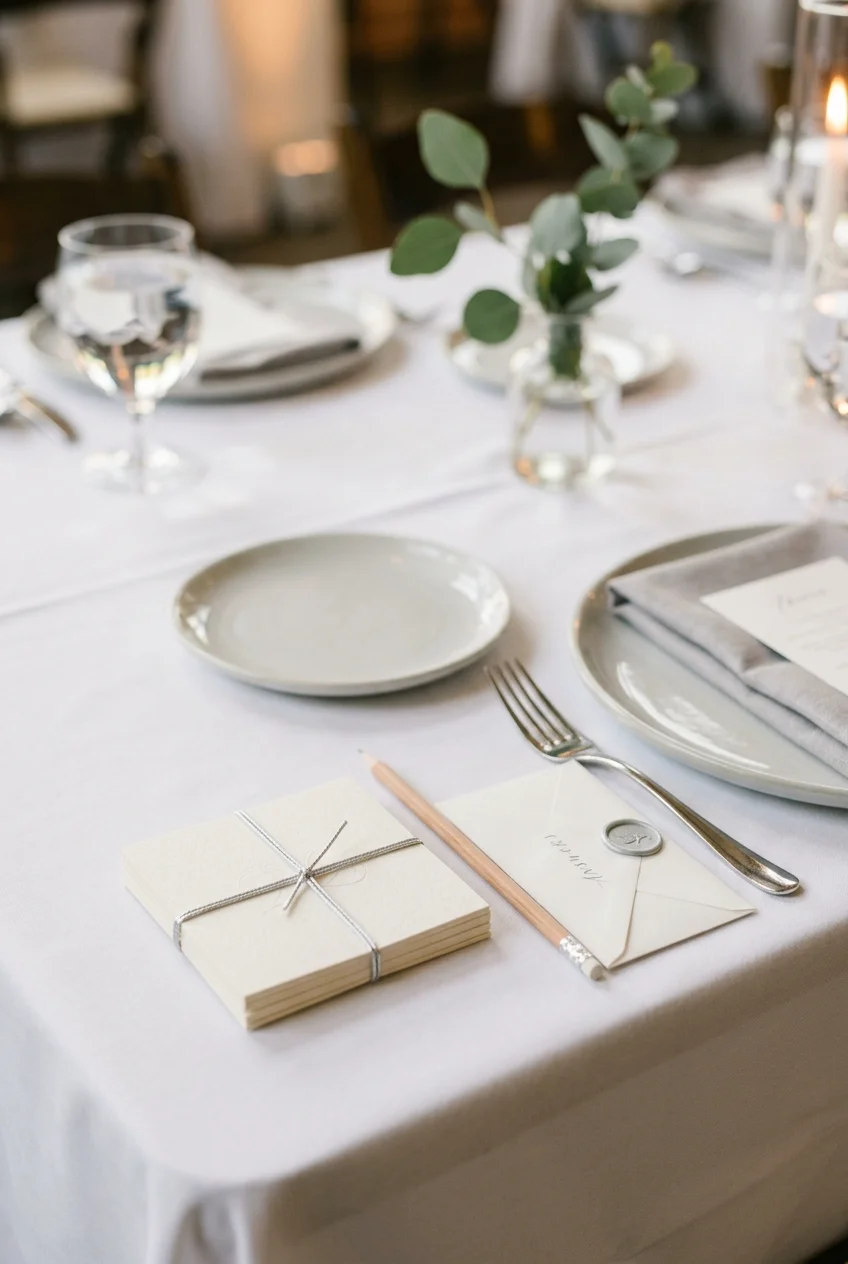
A short trivia set can help mixed tables talk without turning dinner into a scheduled contest. Use a few questions about places, music, food, or the couple that do not require insider knowledge, and make the cards easy to ignore once conversation is flowing.
Keep answers on a separate card or reveal them between courses only if the catering timeline allows it. Avoid questions that expose private stories, rank relationships, or make newer friends feel as though they arrived late to the couple's life.
Live Performers Who Add Atmosphere or a Show
11. A String Quartet for the Prelude and Ceremony Transitions
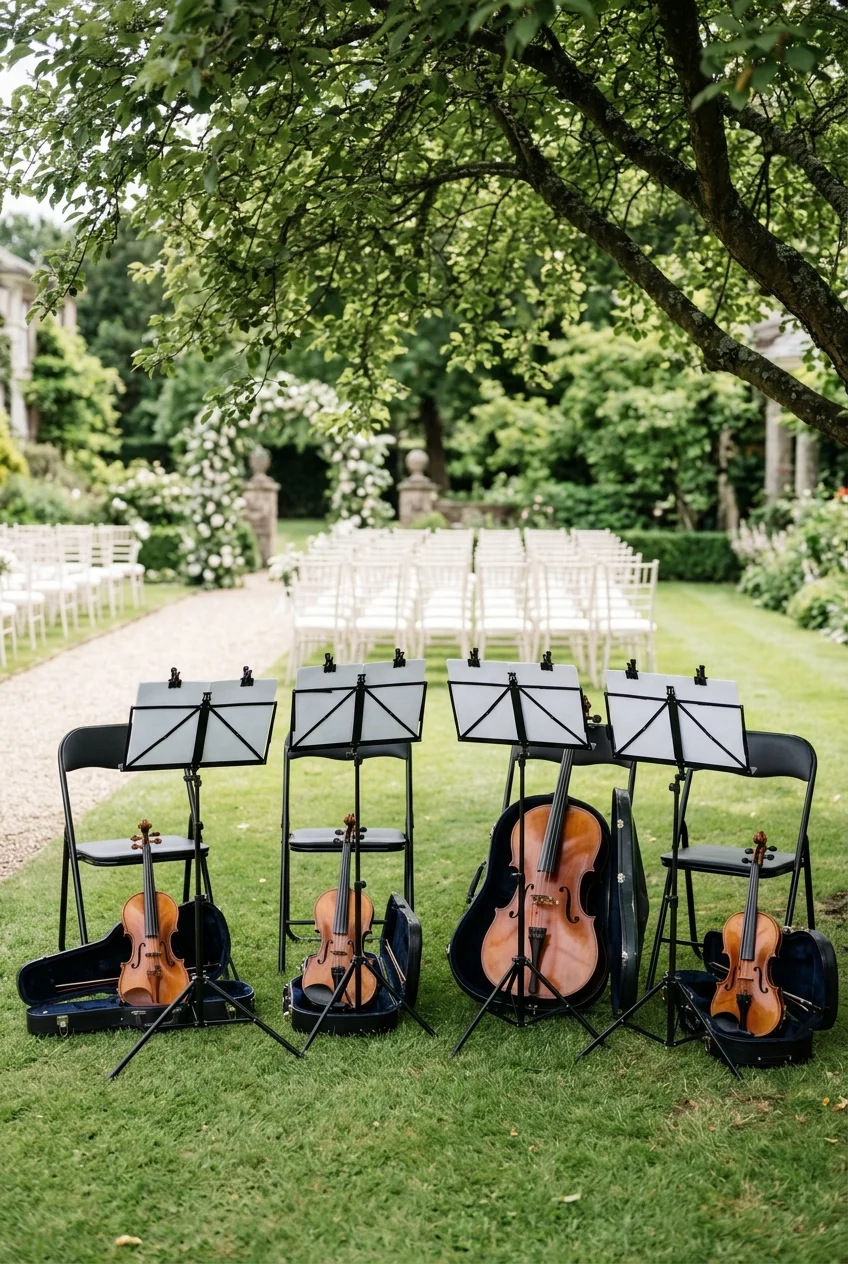
A string quartet can cover guest arrival, the processional, signing or interlude, and recessional without becoming a separate show. The biggest decision is musical range: ask for examples of classical, film, pop, or culturally meaningful arrangements before assuming any song works well for strings.
For outdoor ceremonies, confirm shade, wind protection, amplification, and the weather decision point. Instruments should never be left exposed while everyone waits to see if a storm passes.
12. A Solo Pianist in a Room That Already Has the Right Instrument
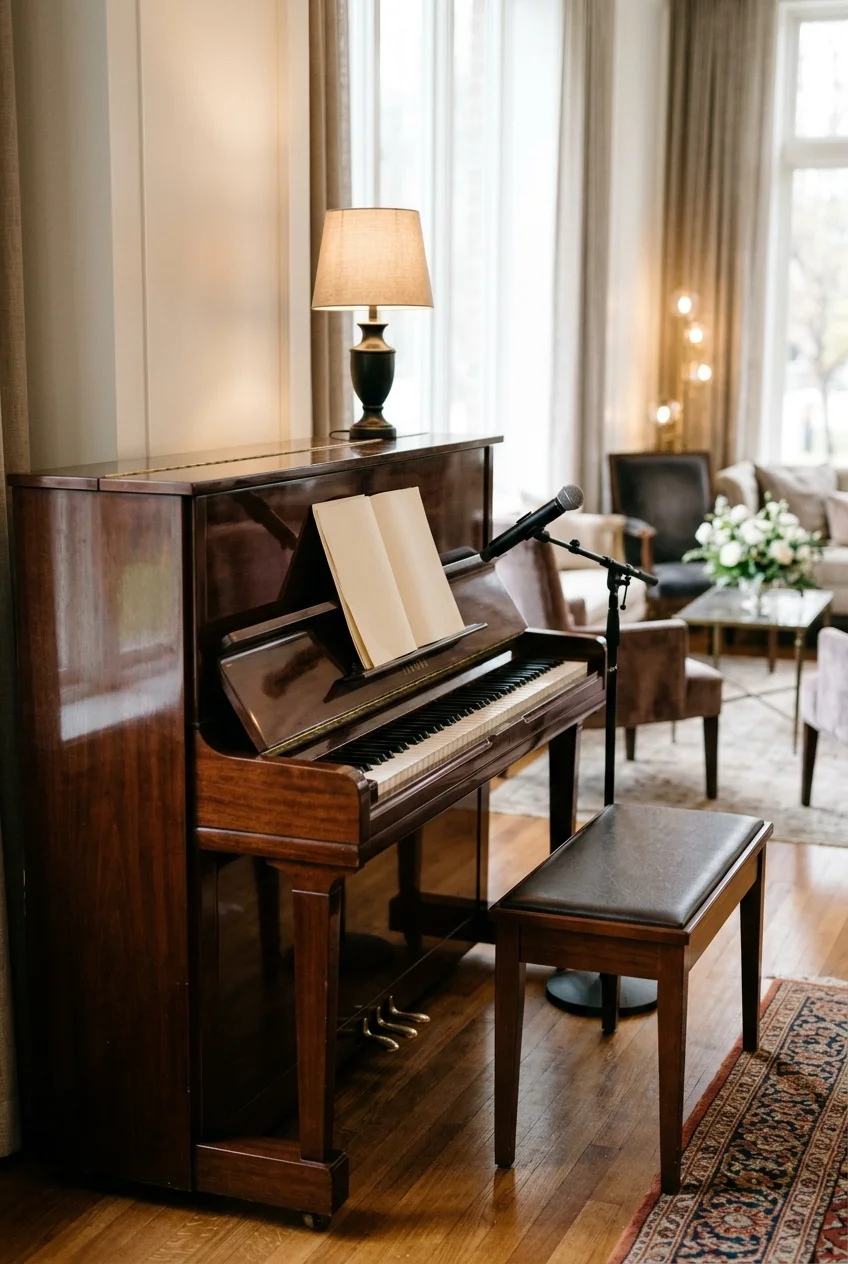
A pianist is a strong choice when the venue already has a maintained acoustic piano in a useful location. It provides a full sound with a small footprint and can move from ceremony music to cocktail-hour standards without a major equipment change.
Ask when the instrument was last tuned and whether it may be moved. If the piano is decorative, locked, or far from the event space, a quality digital keyboard with proper amplification is the more dependable plan.
13. A Jazz Trio for Drinks and Early Dinner
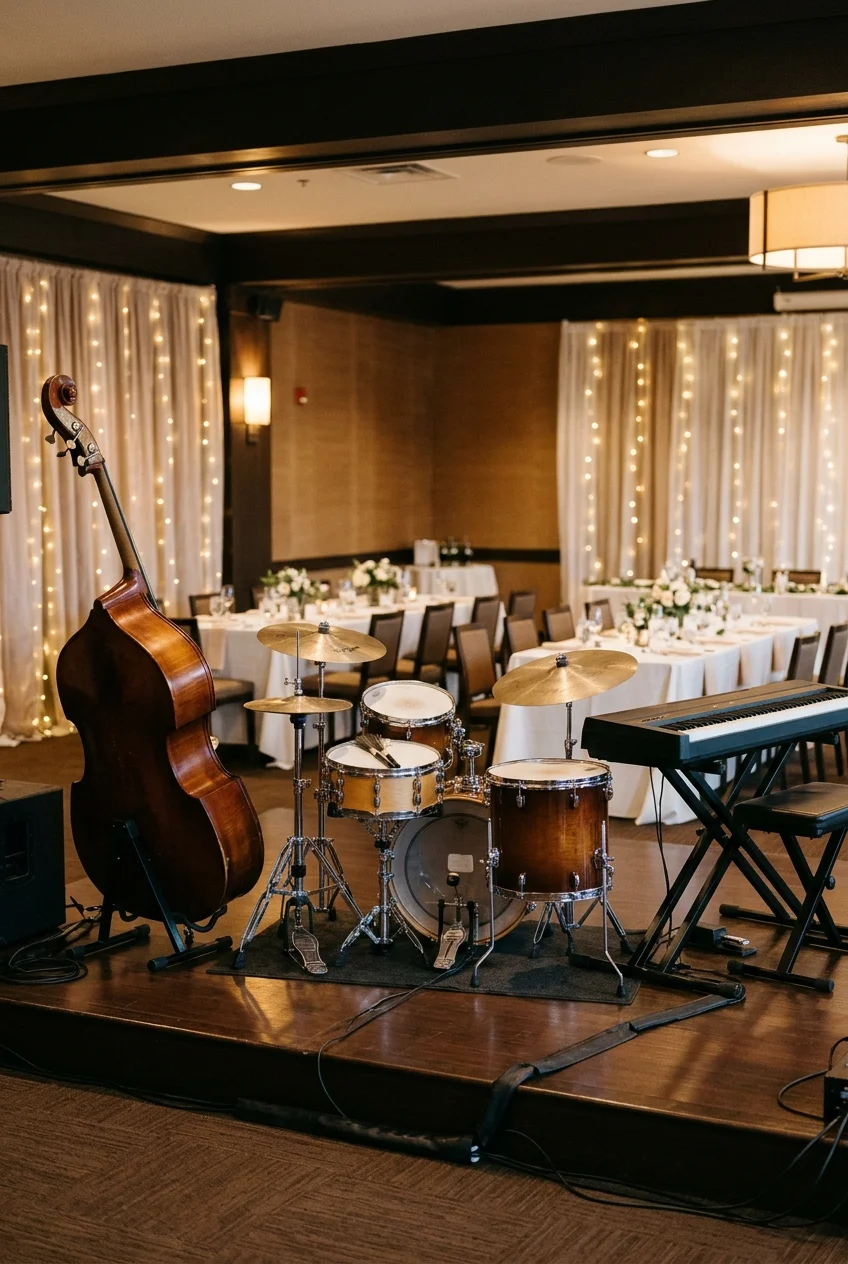
Piano or guitar, upright bass, and drums can create movement without demanding a dance floor. A trio suits a room where conversation remains the priority, especially if the musicians can adjust volume as guests move from cocktails to dinner.
Request a compact stage plot and sound requirements before confirming placement. Even a small group needs stable flooring, weather cover outdoors, and enough separation from seated guests that cymbals do not dominate one table.
14. A Brass Band Entrance That Leads Guests to the Next Space
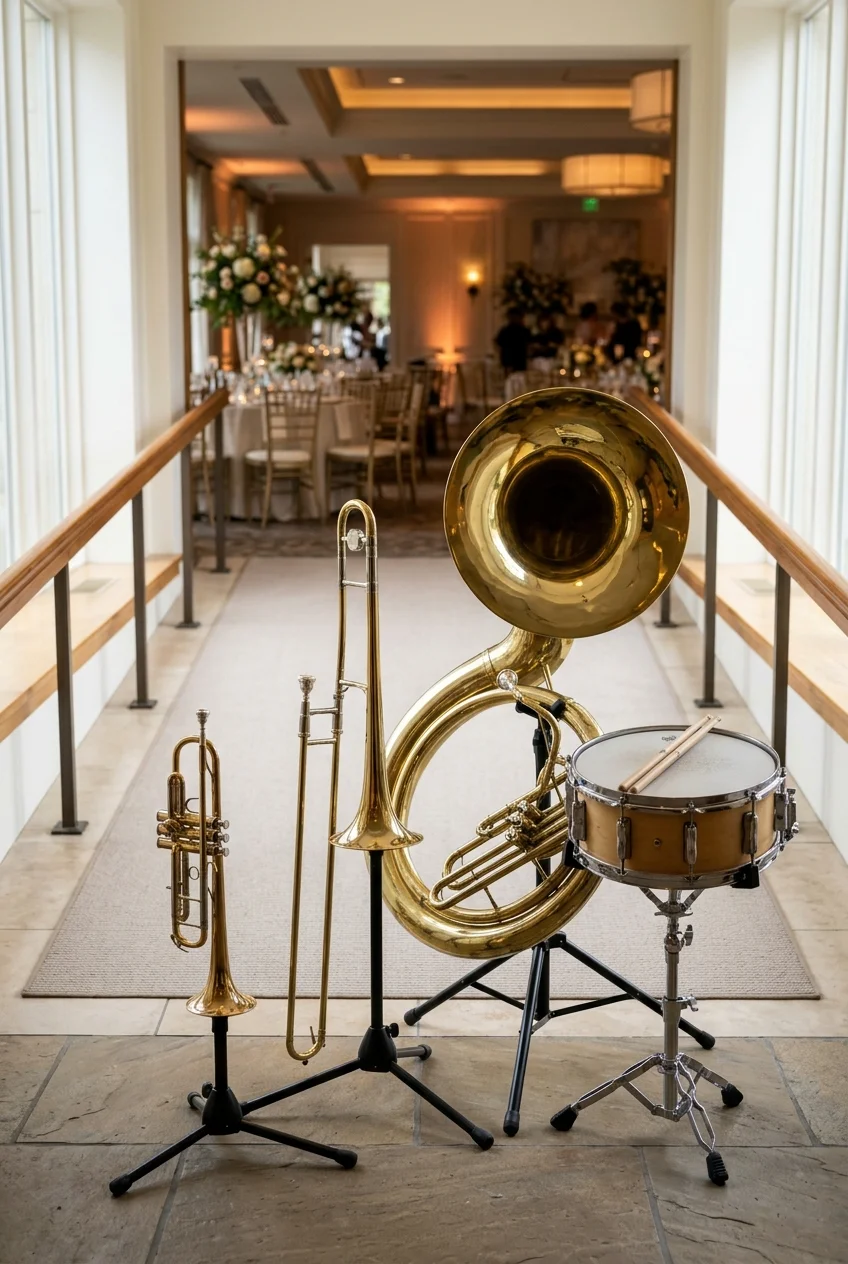
A mobile brass band can turn a room change into the entertainment itself, guiding guests from ceremony to cocktails or from dinner to dancing. It works best when the route is short, step-free, and wide enough for instruments and guests to move safely.
Choose a musical tradition that has a real connection to the couple, location, or performers rather than borrowing a regional style as a costume. Confirm local noise limits before planning an outdoor route.
15. A Vocal Ensemble for One Deliberate Ceremony Moment
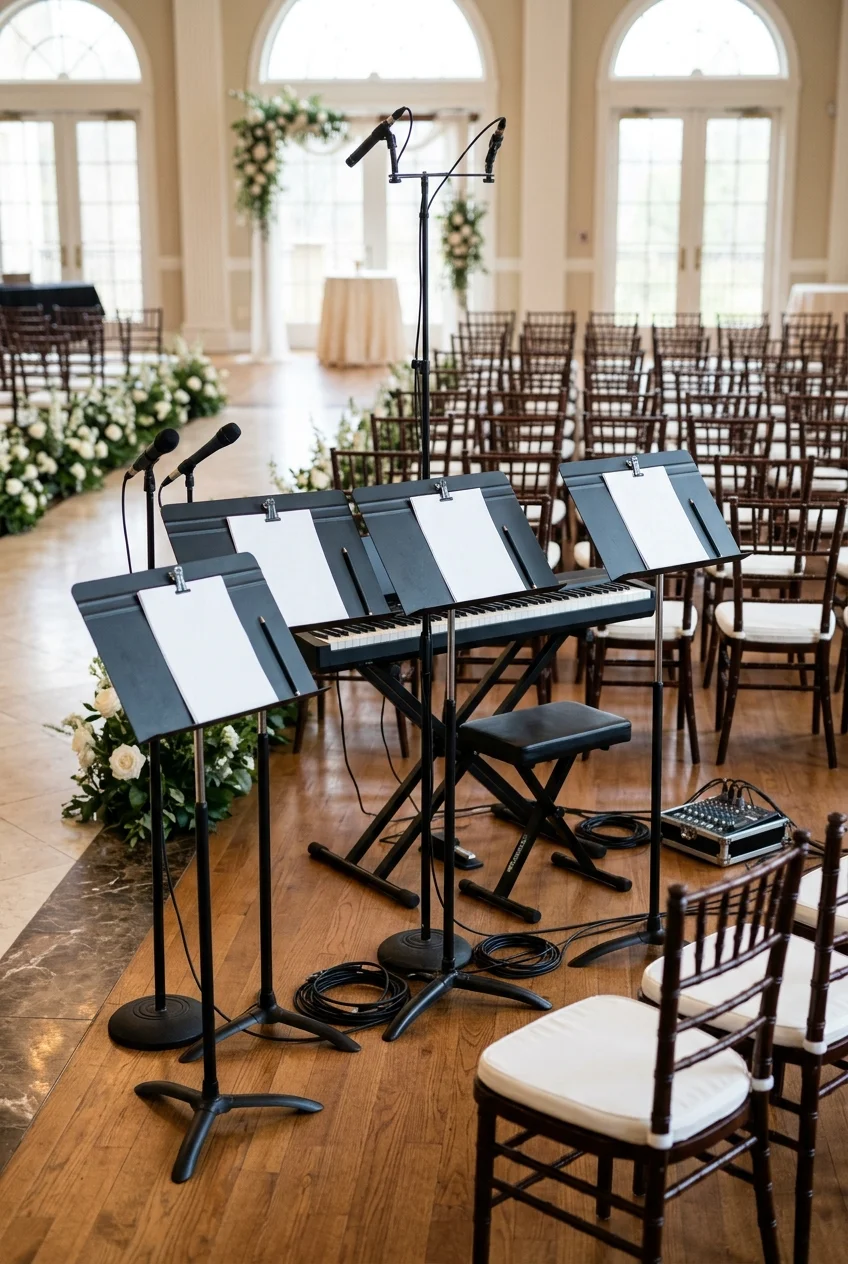
A choir or small vocal ensemble has the most impact when assigned one or two intentional moments rather than asked to fill every pause. A processional, signing piece, or recessional can feel complete without turning the ceremony into a concert.
Discuss language, lyrics, accompaniment, and the meaning of the repertoire with the group. For sacred or culturally specific music, follow the guidance of the officiant, venue, and performers instead of treating the style as generic wedding atmosphere.
16. A Short Comedy Set Written for the Actual Guest List
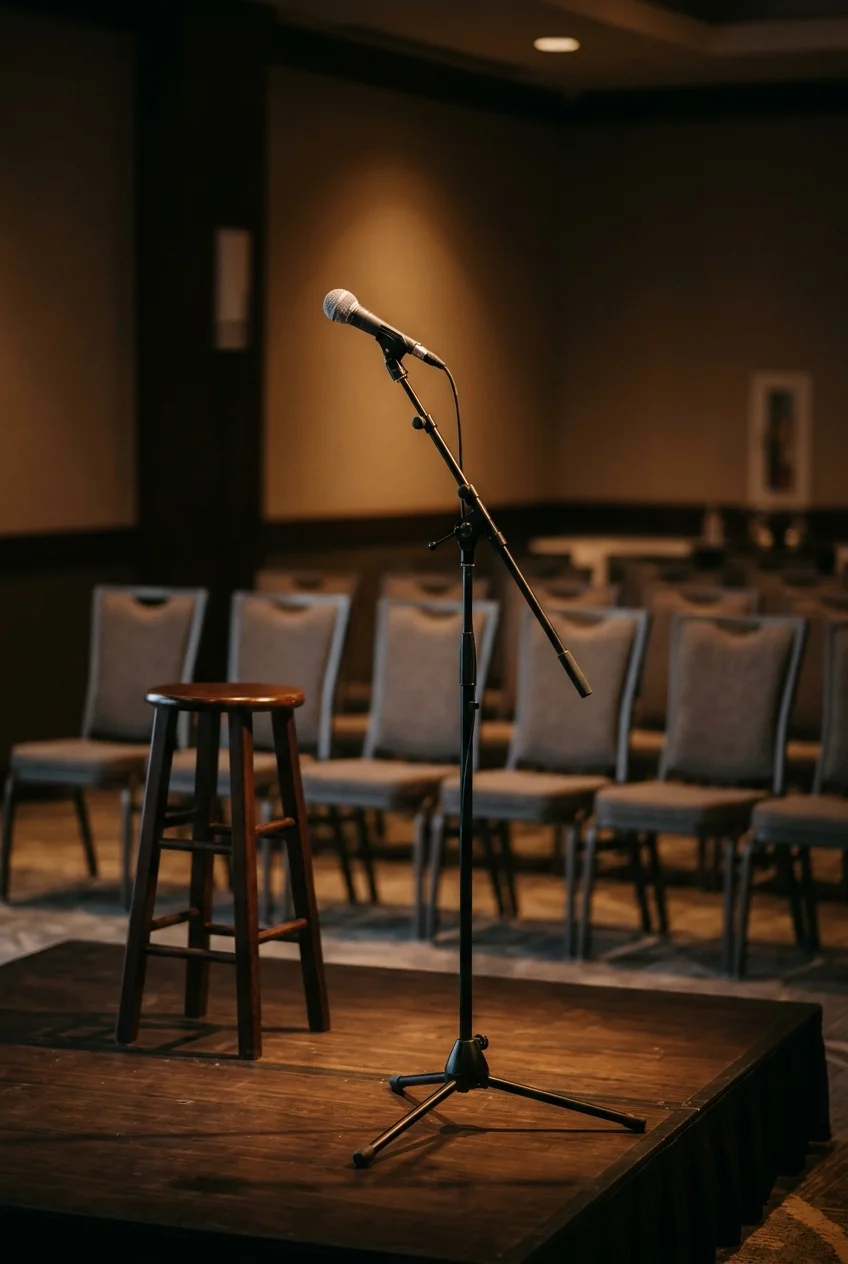
A comedian can work after dinner if the room is comfortable giving one person its attention. The safest brief is not simply 'keep it clean'; share the age range, relationships, cultural context, and subjects that are off limits, then ask for wedding or corporate-event clips.
Keep the set short and place it away from speeches so guests are not seated through one performance after another. Comedy is a poor surprise for someone who dislikes being singled out, so prohibit unplanned crowd work involving the couple or family.
17. A Caricature Artist With Both Seated and Standing Options
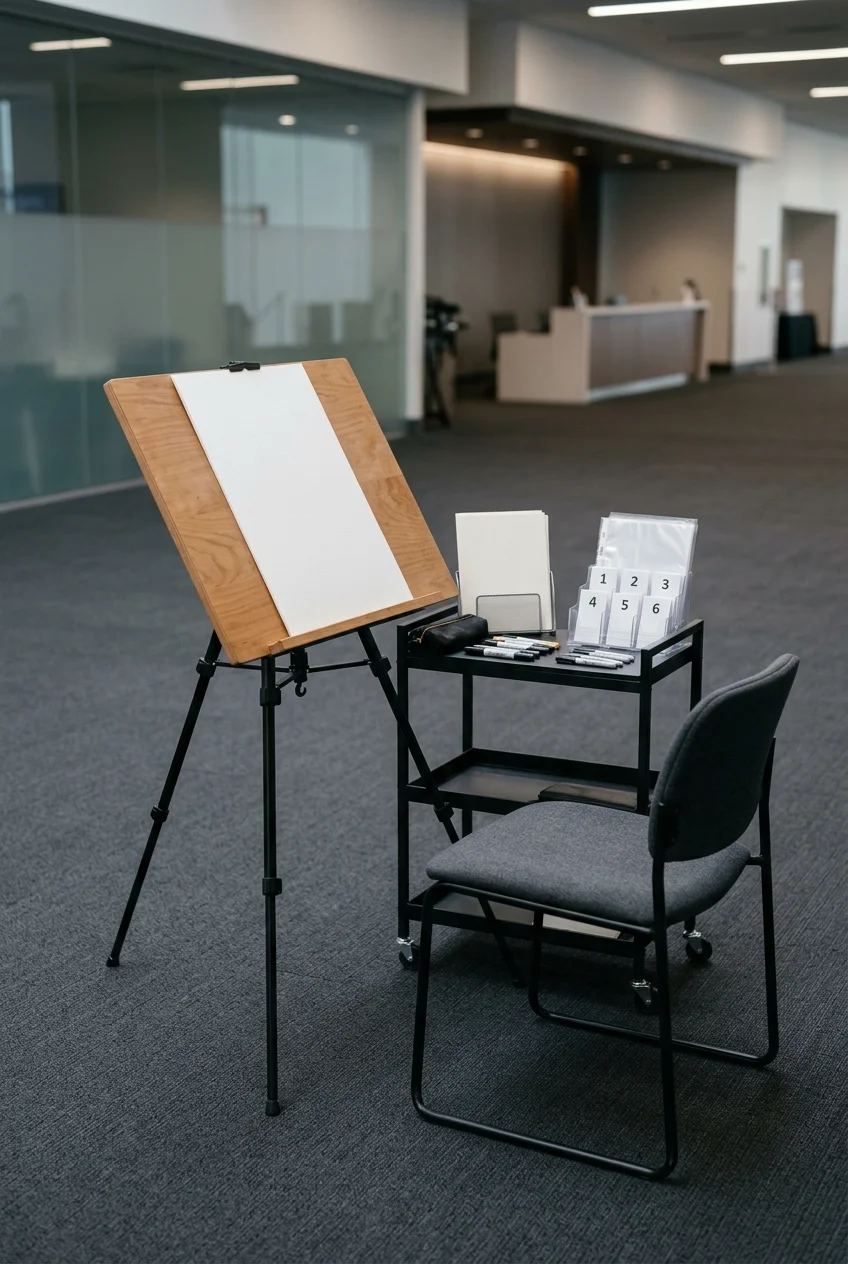
Caricatures give guests an activity to watch and a paper keepsake to carry home. Ask whether the artist works on paper or digitally, how many faces can be finished per hour, and how completed portraits will be protected from drinks and food.
Offer a nearby chair but keep the station usable for guests who prefer to stand or use a mobility device. A numbered queue prevents the artist's table from becoming a tight ring of people waiting for their turn.
18. A Typewriter Poet Making Five-Minute Keepsakes
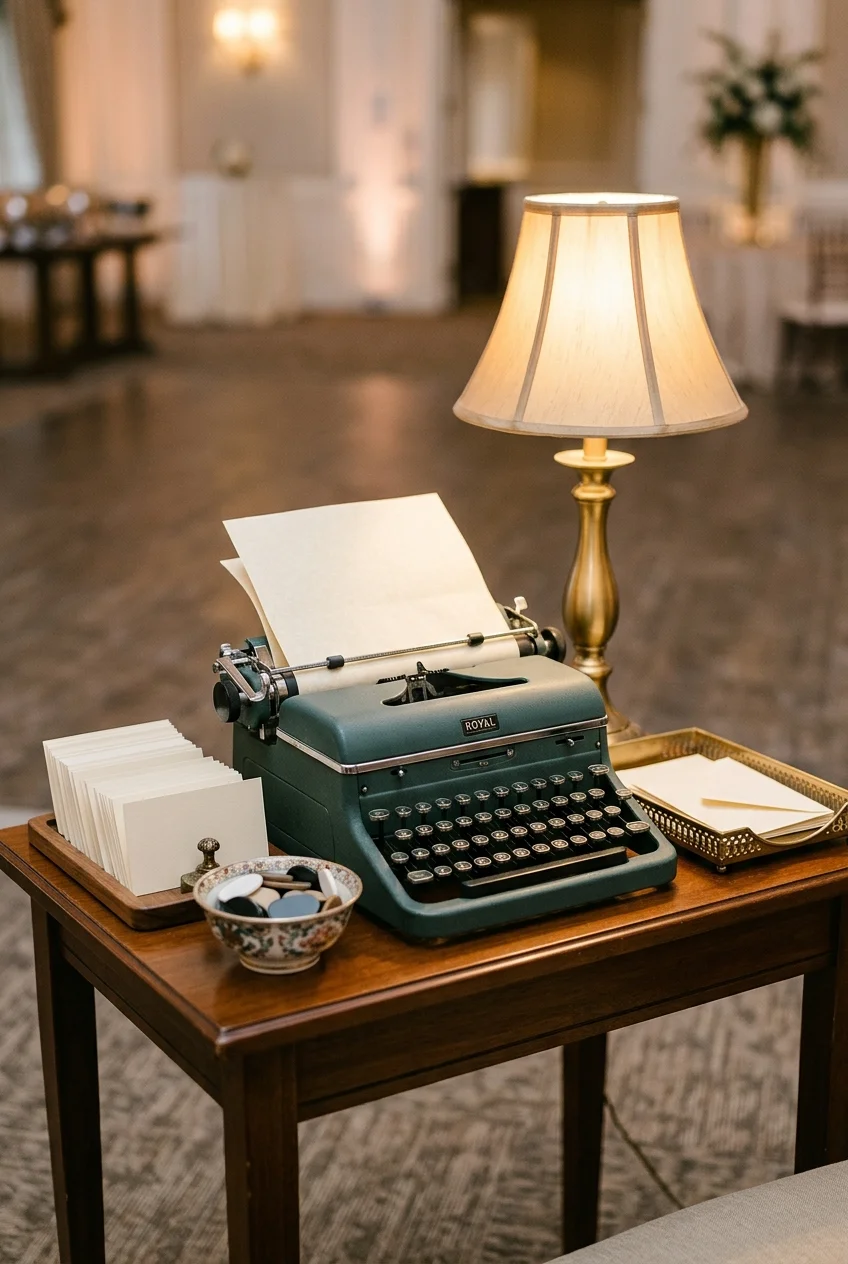
A typewriter poet asks a guest for a subject, mood, or few meaningful words, then creates a short poem on the spot. It is intimate enough for a quieter reception and produces a favor that feels personal without asking the couple to pre-design dozens of items.
Ask how long each poem takes and whether poems belong to guests or are collected for the couple. The typewriter can be noisy in a silent ceremony area, so schedule the station for cocktails or reception time.
19. A Silhouette Artist for Fast, Graphic Portraits
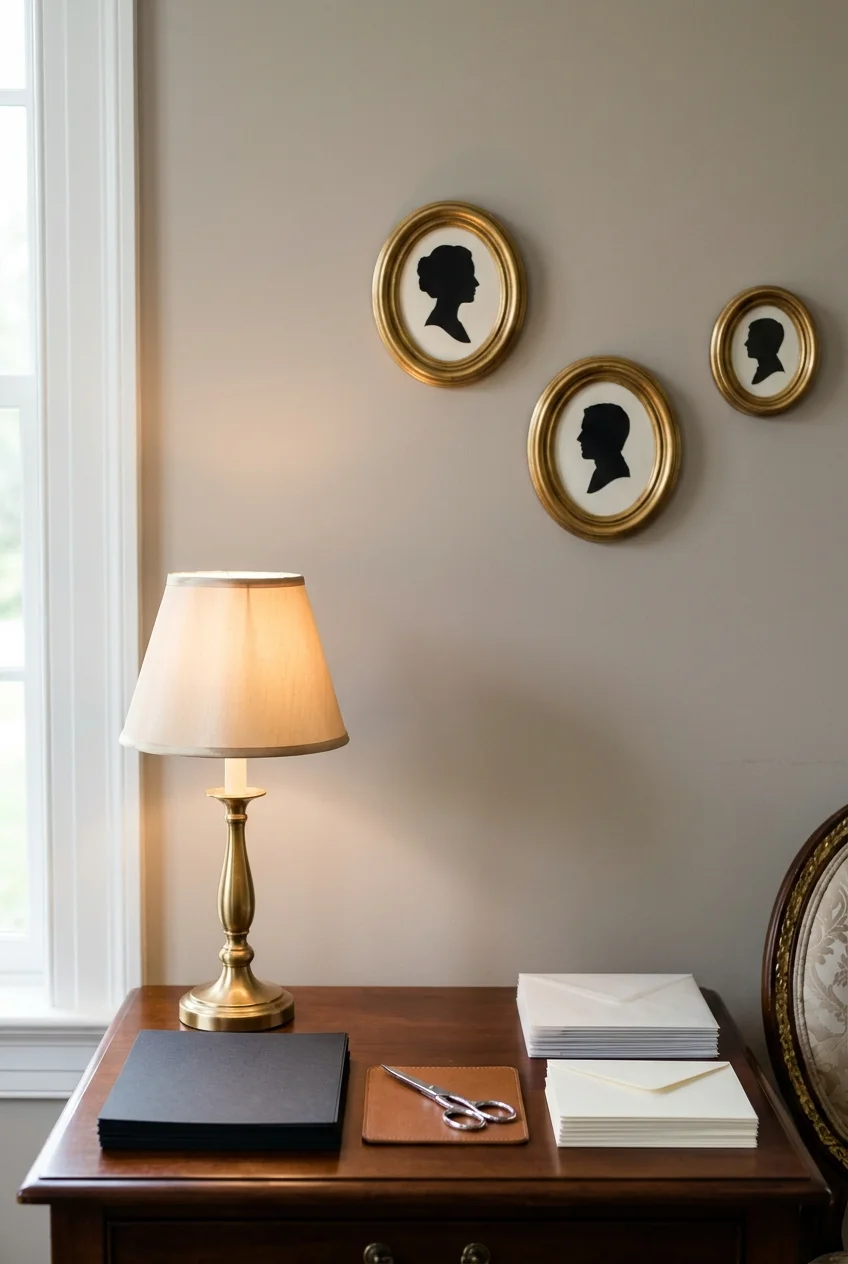
Hand-cut silhouettes have a different look and pace from watercolor portraits. The artist studies a guest's profile and cuts a dark paper likeness, often mounting it on a light card that is easy to frame later.
Ask whether the artist needs guests to sit, how long each profile takes, and how duplicates for couples or families are handled. Good side lighting and a calm background help the artist work without requiring a full photo booth.
20. A Live Calligrapher Personalizing Useful Favors
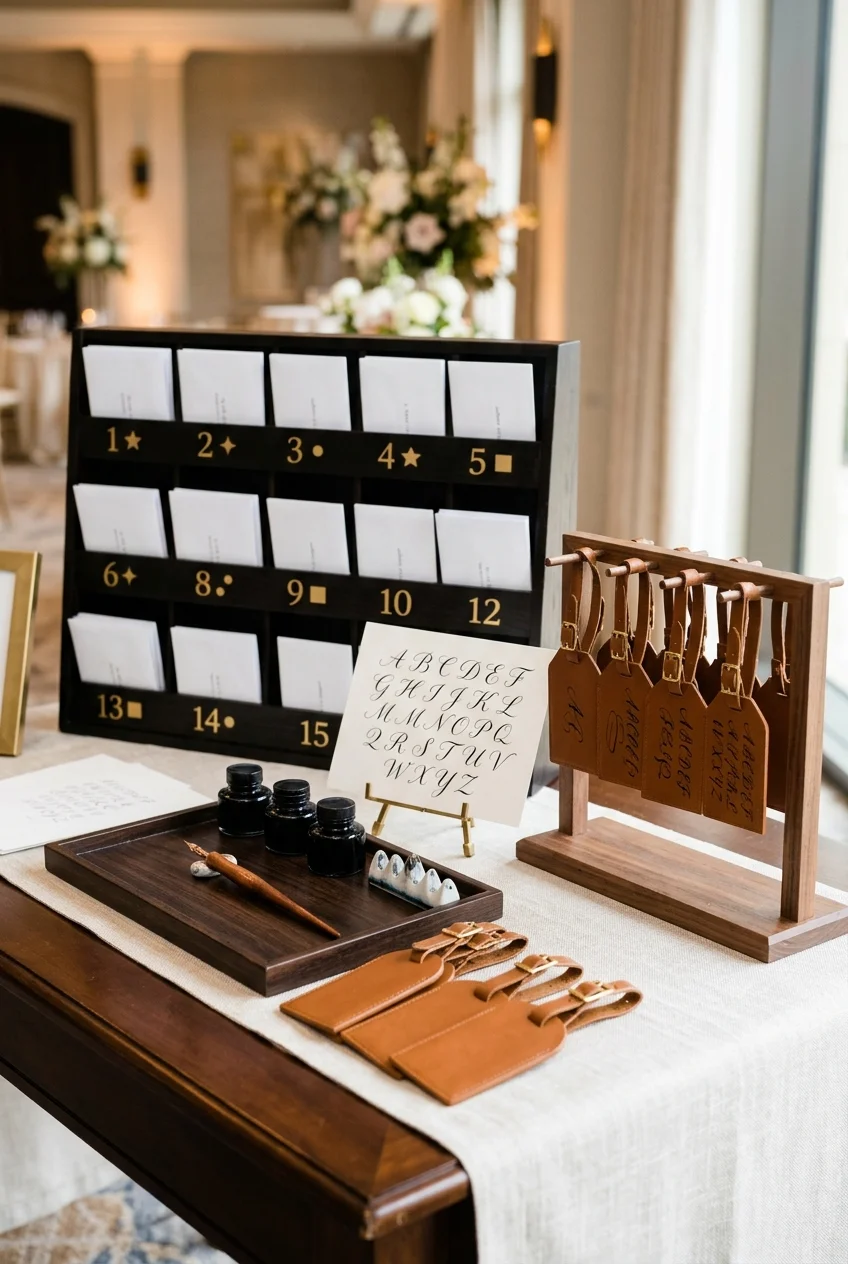
A calligrapher can personalize flat, dry items such as luggage tags, bookmarks, or place cards while guests watch. Limit the item choices and color options so the station stays creative rather than becoming a custom-order counter.
Confirm drying time, ventilation, spelling workflow, and how finished pieces will be organized. Avoid glassware or objects that require specialist inks unless the artist has tested the exact material in advance.
Photo, Memory, and Creative Stations
21. A 360 Video Booth With a Marked Safety Zone
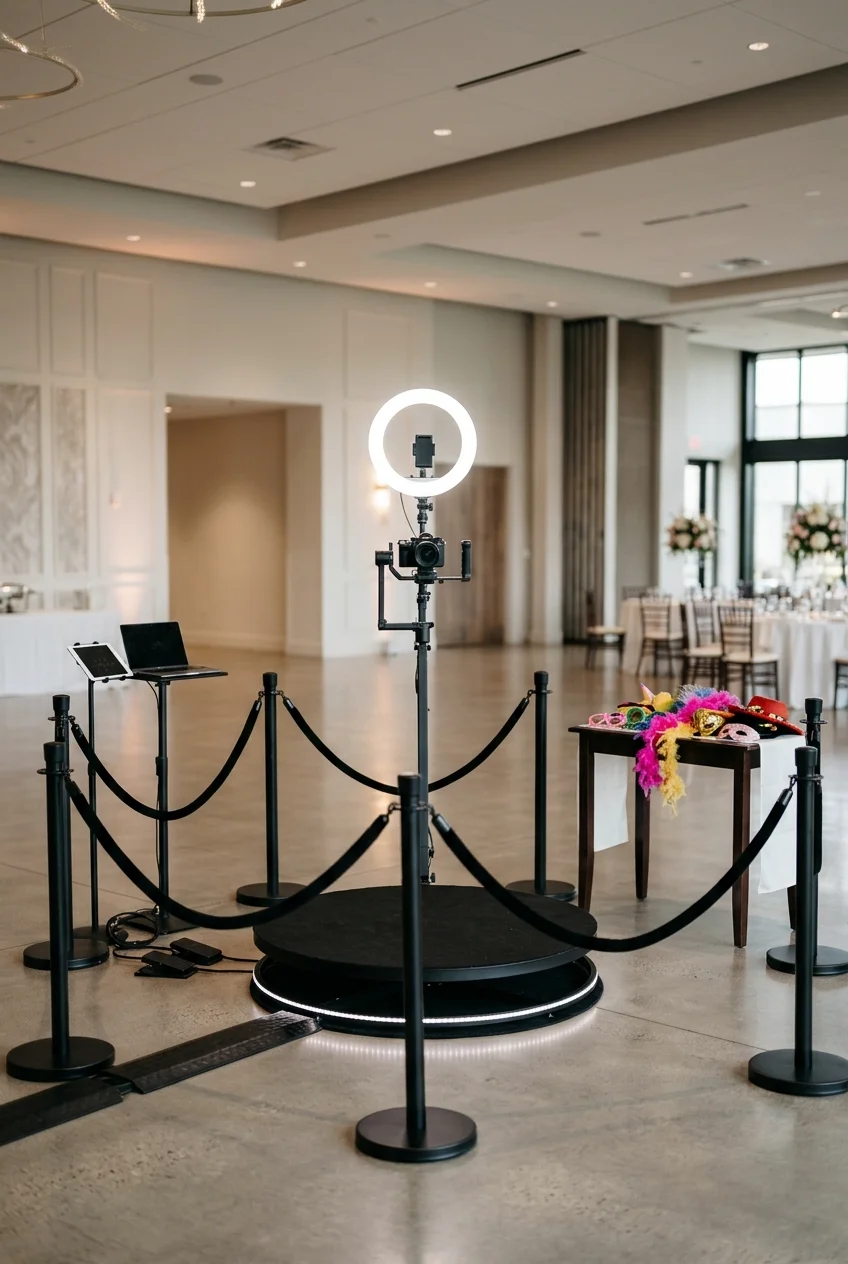
A 360 booth creates short moving clips as a camera arm circles a small platform. The visual payoff is high, but the equipment needs a larger protected area than a normal photo booth and an attendant who controls entry.
Confirm the platform size, weight limit, power, lighting, file delivery, and barrier dimensions. The spinning arm must remain separate from bar lines, children running through the room, and loose accessories that can fall into its path.
22. A Roaming Portrait Camera With an Instant Printer Station
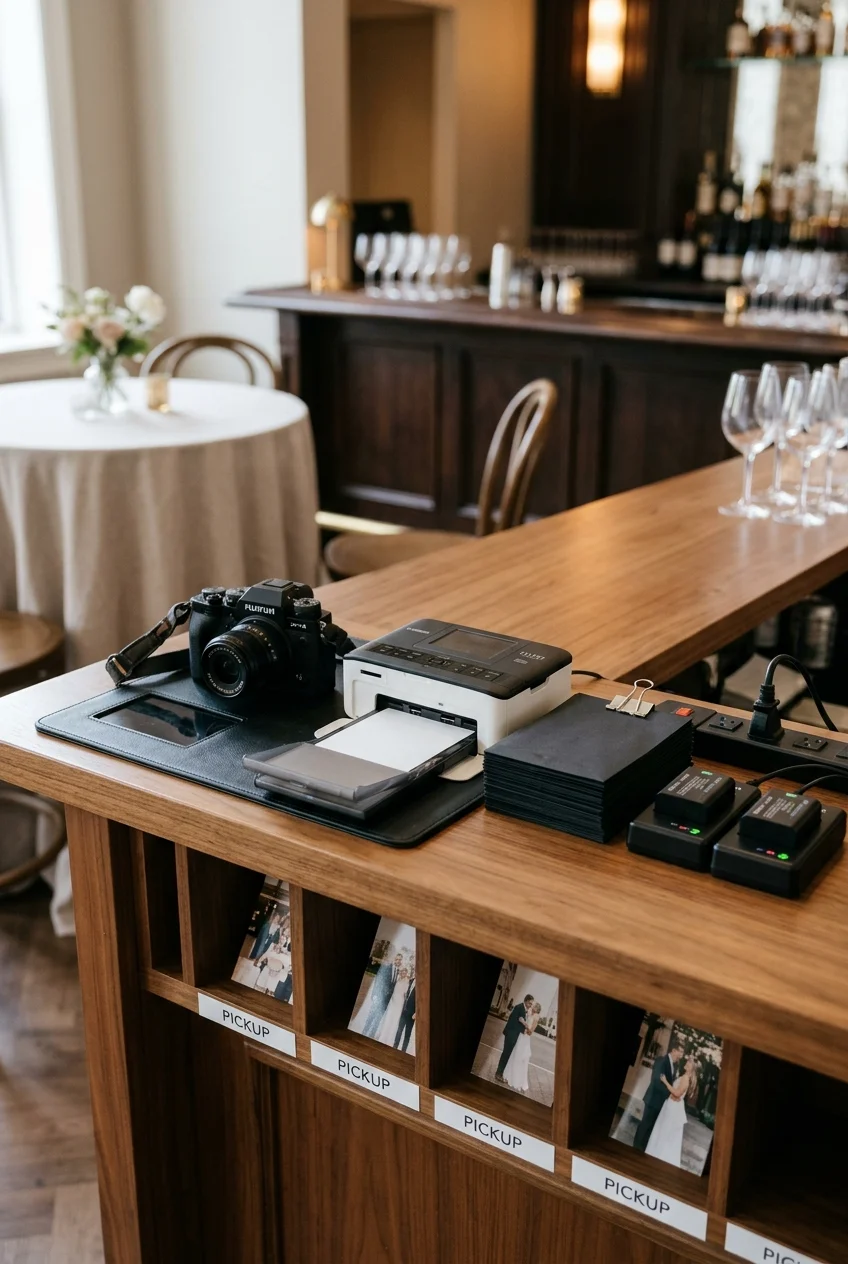
Instead of asking guests to visit a fixed booth, a roaming event photographer can make quick posed portraits around cocktail hour and send selected images to a central printer. This is separate from the main wedding photographer's documentary coverage and should be coordinated with them.
Decide whether each group receives a print, a digital copy, or both. The printer still needs a staffed home base with power, paper, and a clear pickup system so photographs do not pile up beside drinks.
23. A QR Photo Scavenger Hunt With Only Ten Strong Prompts
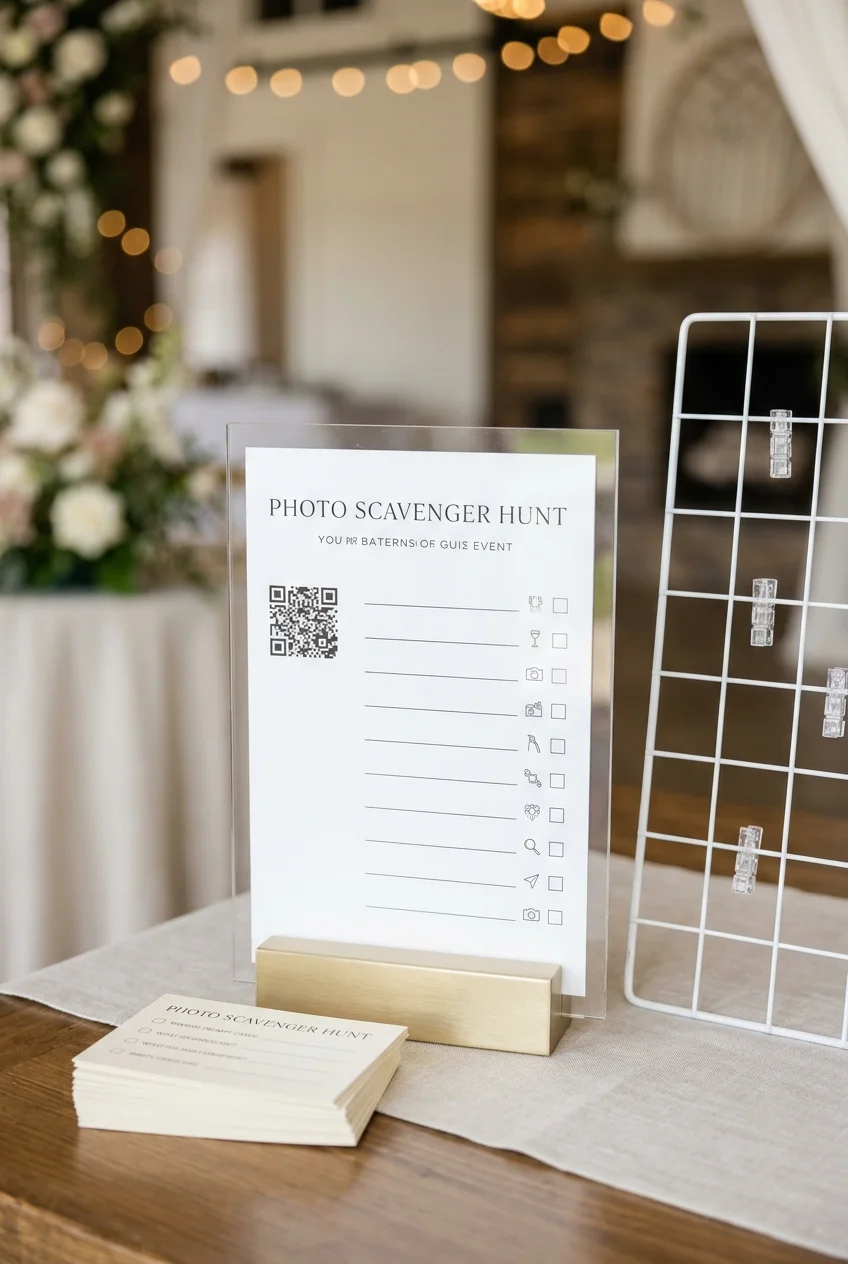
A photo scavenger hunt gives guests a reason to notice candid moments beyond the dance floor. Keep the list short and concrete: a reunion, an unexpected detail, a view from the table, or a favorite non-personal object can inspire variety without making the day feel like homework.
Use one shared upload destination that opens in a browser and test it on both iPhone and Android before printing the QR code. Include a plain-text route or short URL for guests who cannot scan.
24. A Photo Challenge Wheel That Assigns One Quick Task
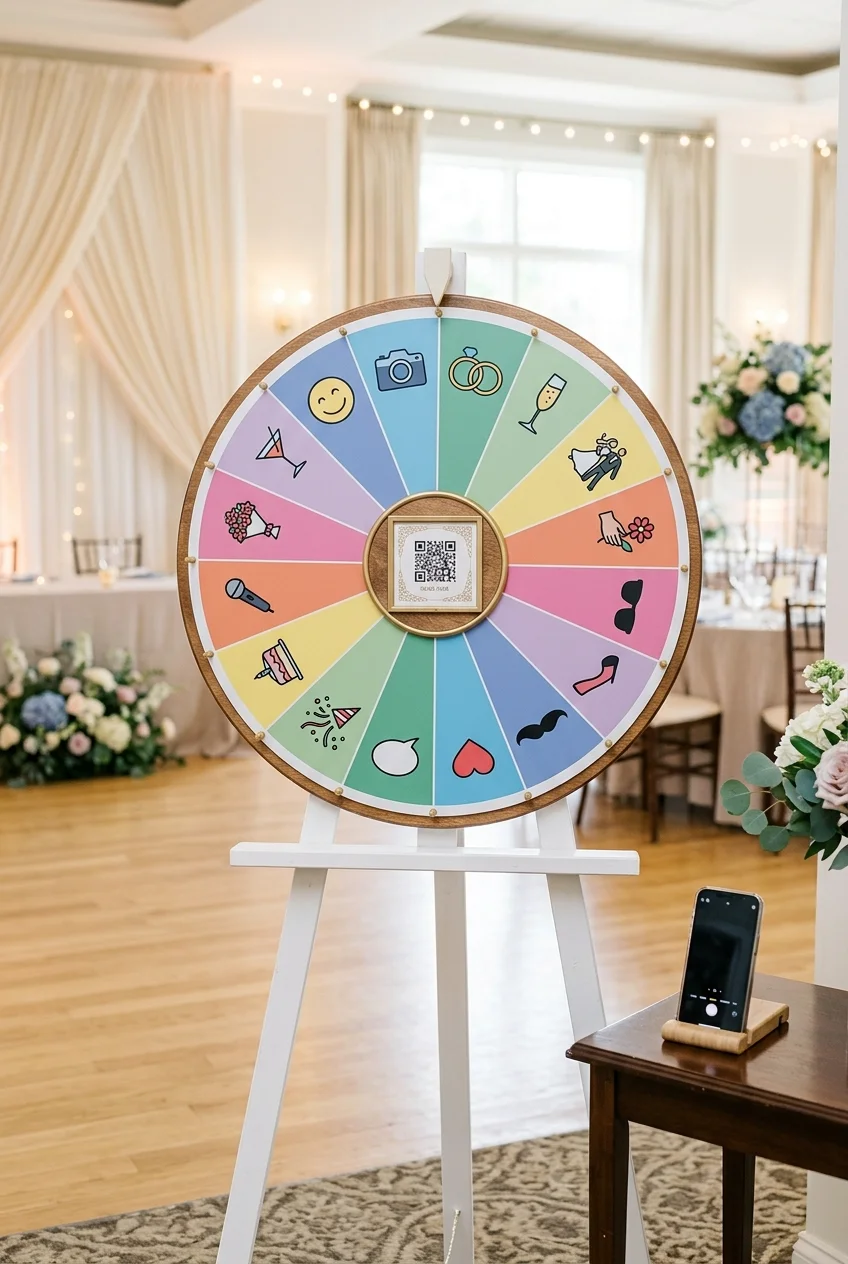
A challenge wheel turns the photo list into a one-at-a-time game. Each section should name a task that can be completed anywhere at the reception, such as photographing a favorite centerpiece detail or a creative view of the cake.
Put the upload instructions beside the wheel, not across the room. Skip tasks that encourage guests to interrupt vendors, cross restricted areas, photograph people who have opted out, or stage risky poses.
25. A Video Message Booth With a Visible Countdown
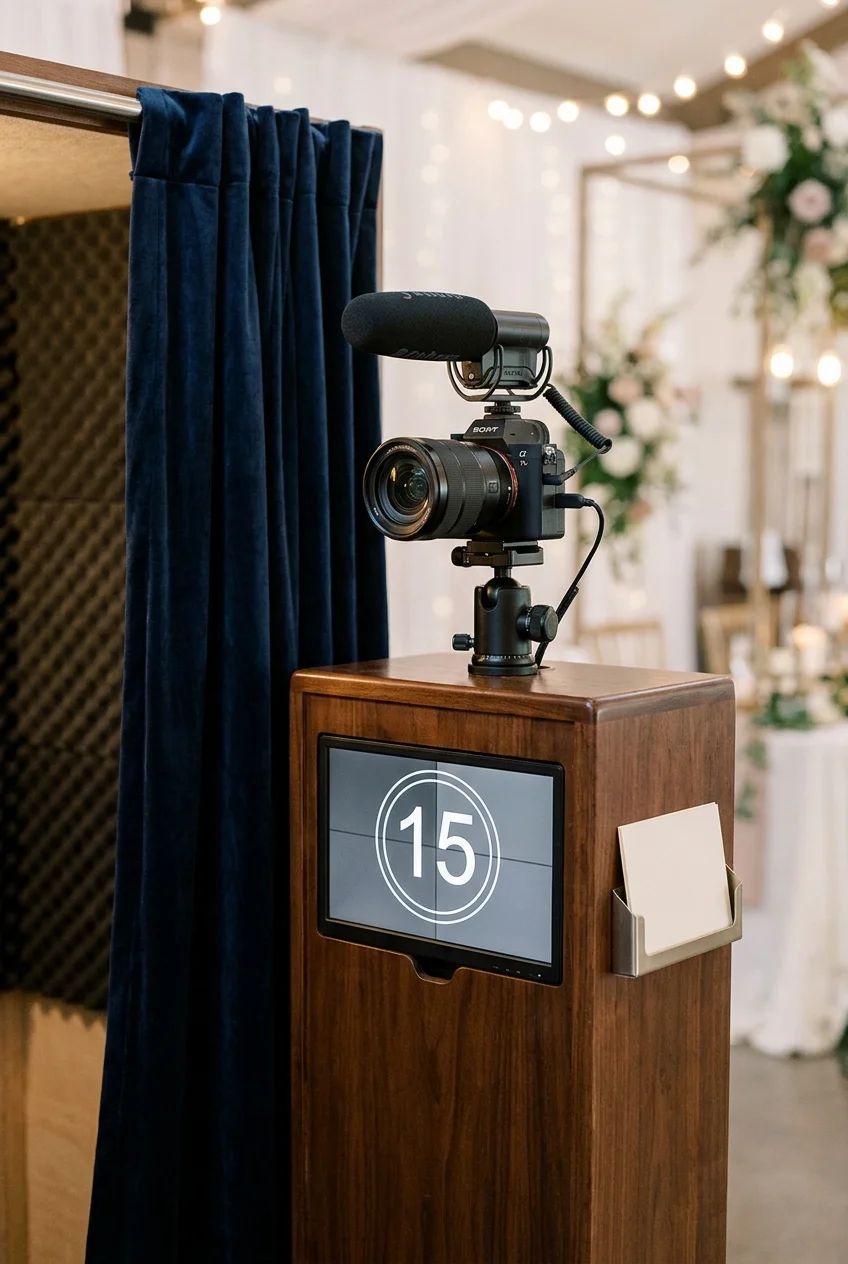
A video booth captures expressions as well as voices, but it asks more of guests than a phone guestbook. A short countdown, one flattering light, and a simple prompt make recording feel manageable instead of like an audition.
Choose a quiet location and cap each message so the booth does not develop a long line. Confirm microphone quality, file format, editing, privacy, and whether guests can delete and rerecord an awkward take.
26. A Collaborative Canvas Built From Small, Guided Marks
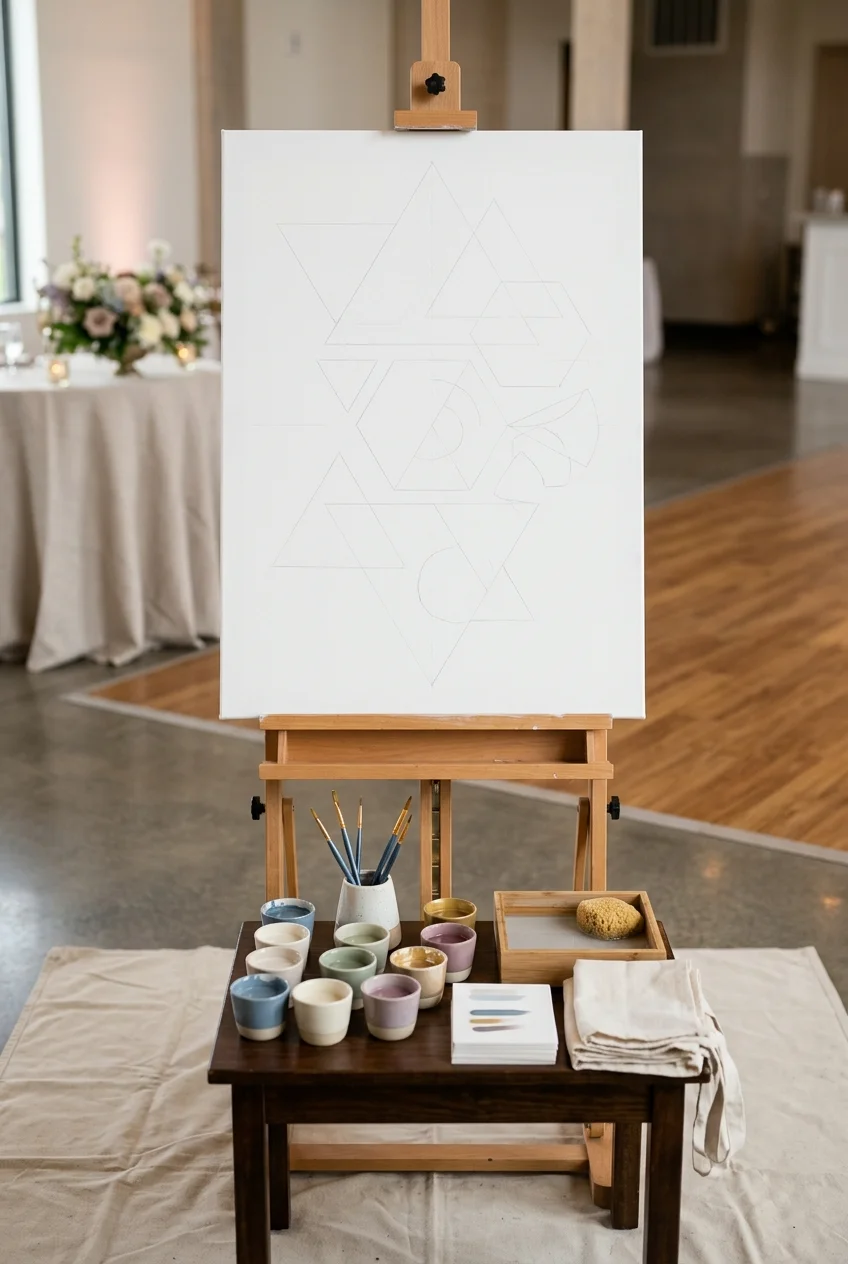
A shared painting works better when guests add one controlled element rather than improvising across a blank canvas. A penciled geometric layout, preselected paint colors, or a simple leaf-and-dot pattern gives the finished piece enough structure to display at home.
Use water-based materials, aprons, a drying area, and a separate practice card. Keep the station away from rental linens and assign someone to replace cloudy rinse water before it spills or transfers color onto the painting.
27. A Postcard Station for Notes to Open on Future Anniversaries
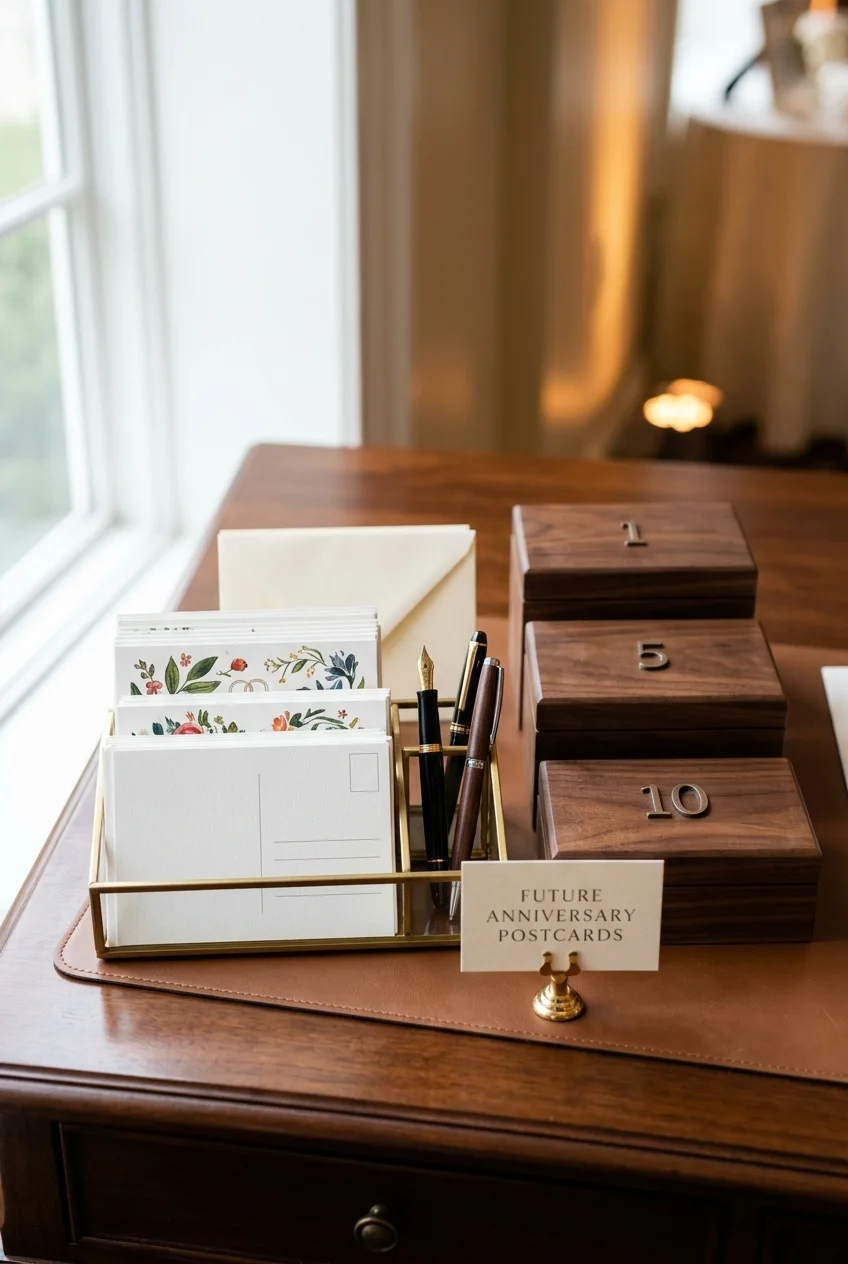
Postcards give guests a clear writing surface and let the couple sort messages by when they will be opened. Use a few broad prompts and several labeled boxes or dividers for the first, fifth, or tenth anniversary rather than requiring every guest to write a long letter.
Choose pens that work on the card stock and keep the writing area separate from food. If the cards will actually be mailed later, collect addresses privately after the wedding instead of displaying personal information at the reception.
28. A Prediction Time Capsule With a Firm Closing Plan
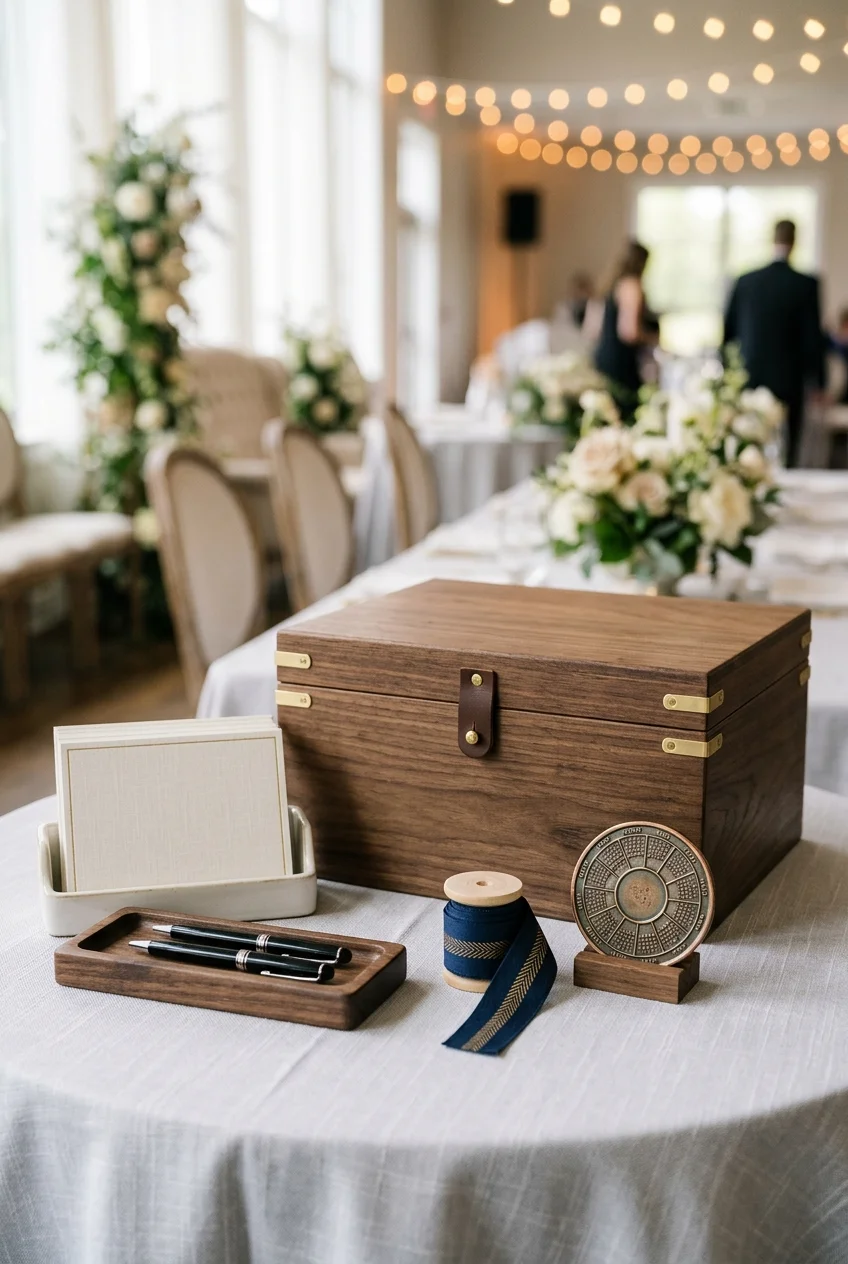
Prediction cards can ask guests where the couple might travel, what tradition they will keep, or what they will be laughing about years later. The activity works because the cards have a destination: a sealed box to open on a chosen anniversary.
Use prompts that stay warm and optional. Questions about children, money, health, or other private milestones can make a playful station unexpectedly intrusive.
29. A Flower-Crown or Lapel-Flower Bar With Prepared Pieces
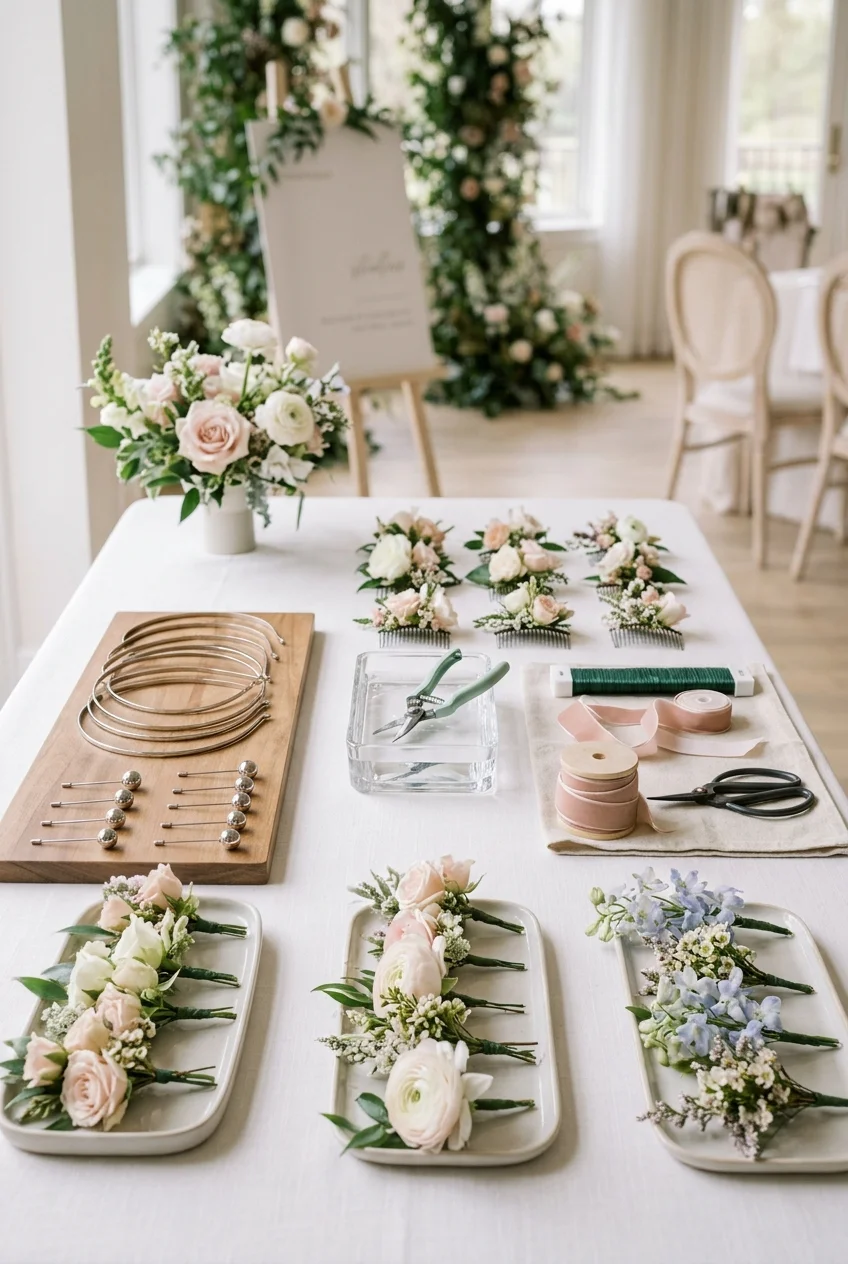
A flower accessory bar is quicker and less messy when a florist prepares small wired clusters in advance. Guests can choose two or three pieces and attach them to a simple headband, comb, pin, or wrist ribbon instead of cutting fresh stems at the table.
Check for plant sensitivities, sharp wire, water drips, and refrigeration needs. A florist or trained attendant should manage tools and pins; the guest-facing part can remain an easy selection and assembly activity.
30. A Temporary Tattoo Station Using Skin-Safe Designs
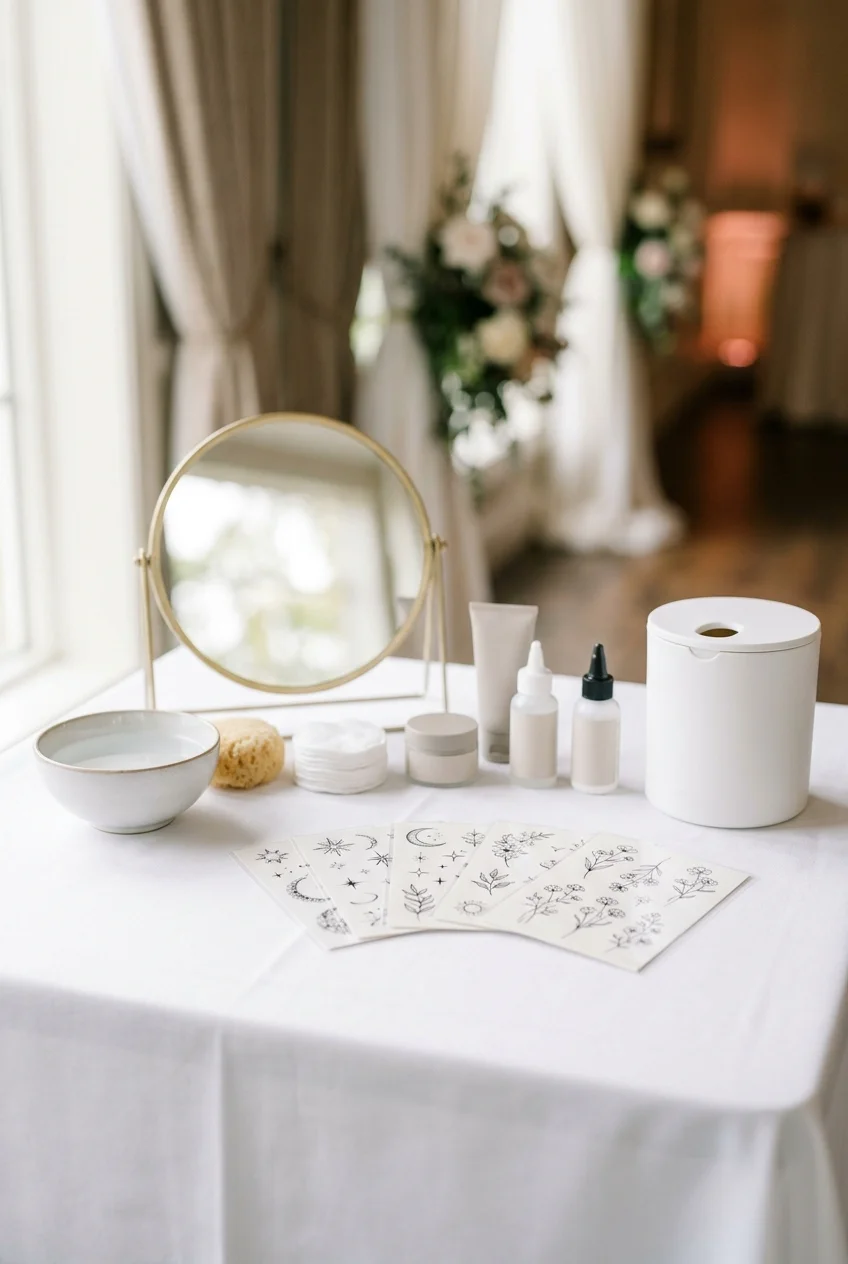
Temporary tattoos can be a playful late-reception station when the designs are small, optional, and easy to apply. Offer graphic motifs connected to the celebration rather than names or slogans that guests may not want to wear afterward.
Use products labeled for cosmetic skin use, provide ingredient information, and keep single-use applicators or fresh damp cloths available. Guests with sensitivities should have an easy way to skip the station without pressure.
Games and Conversation Starters for Guests Who Do Not Want to Dance
31. Cornhole With Scoreboards That Do Not Need an App
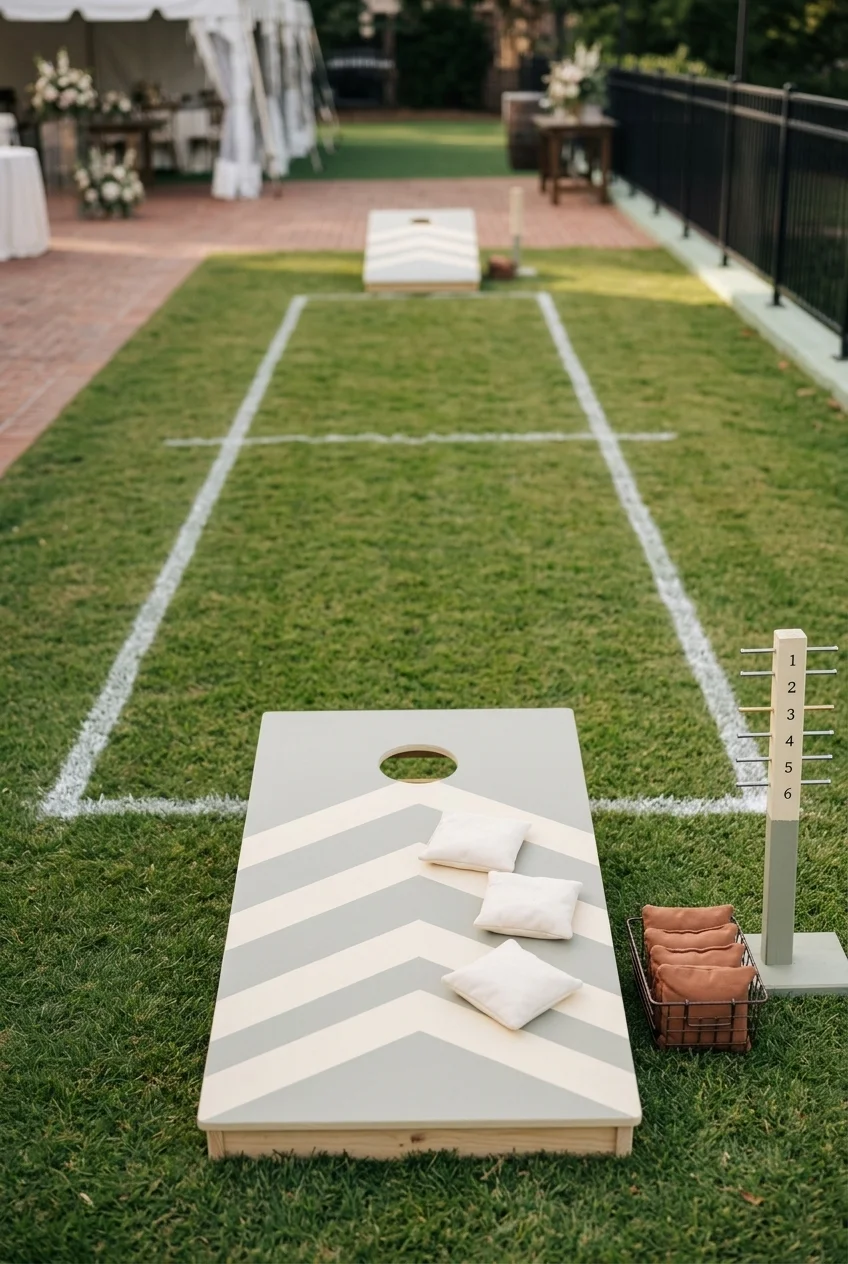
Cornhole is easy to recognize, quick to join, and watchable from the side. One or two boards are enough for a casual reception; a full tournament needs brackets, time, and someone willing to keep it moving.
Set the boards on level ground with generous throwing lanes and soft boundaries that guests can see after dusk. Keep beanbags dry and move the game indoors only if the alternative space can safely preserve the throwing distance.
32. Ladder Toss With a Clear Buffer Around the Frame
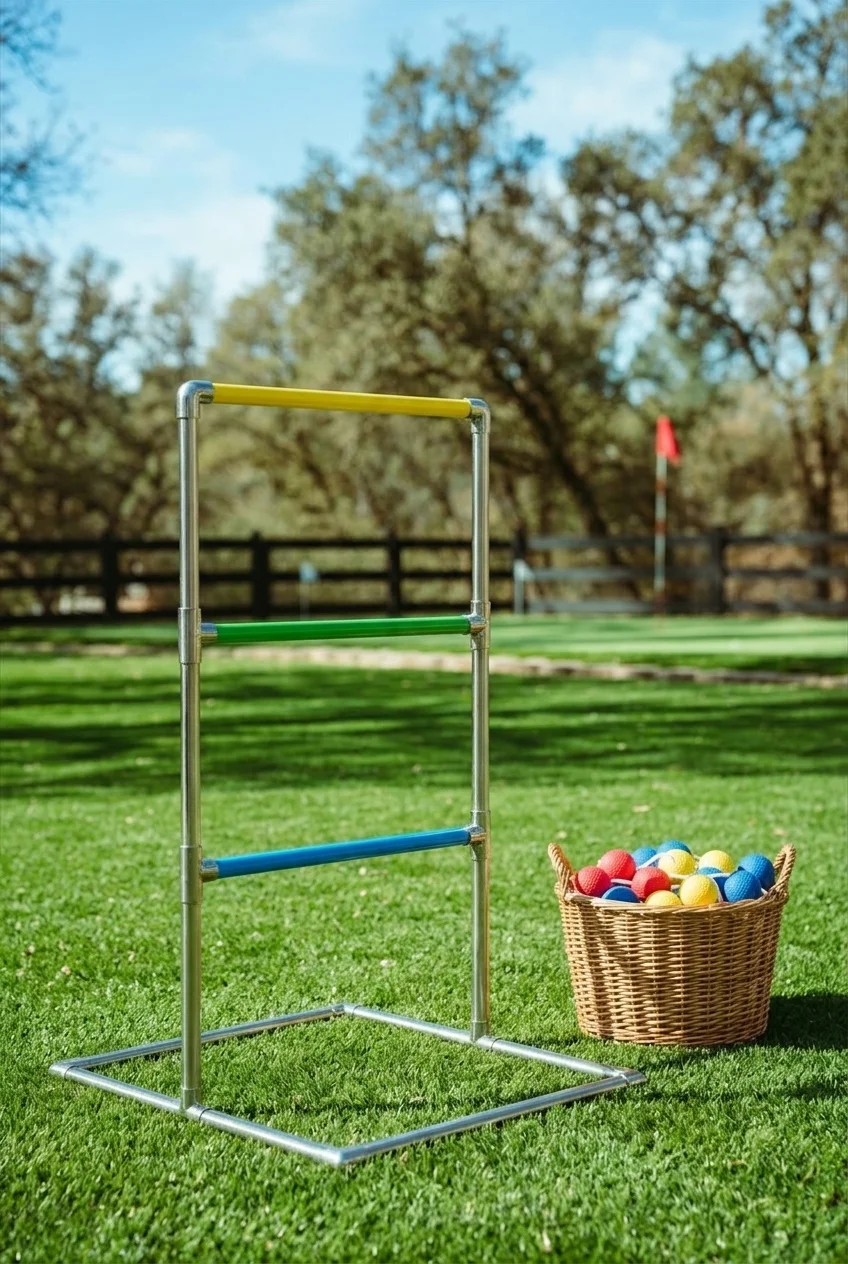
Ladder toss gives pairs a game that takes only a few minutes to understand. Its bolas travel beyond the frame, so the setup needs more side and rear clearance than its compact footprint suggests.
Place the equipment away from glass, dining tables, and walking paths. Use a stable frame intended for the game, inspect the connectors before guests arrive, and provide an indoor substitute if wind makes throws unpredictable.
33. A Giant Block Tower on a Low, Stable Table
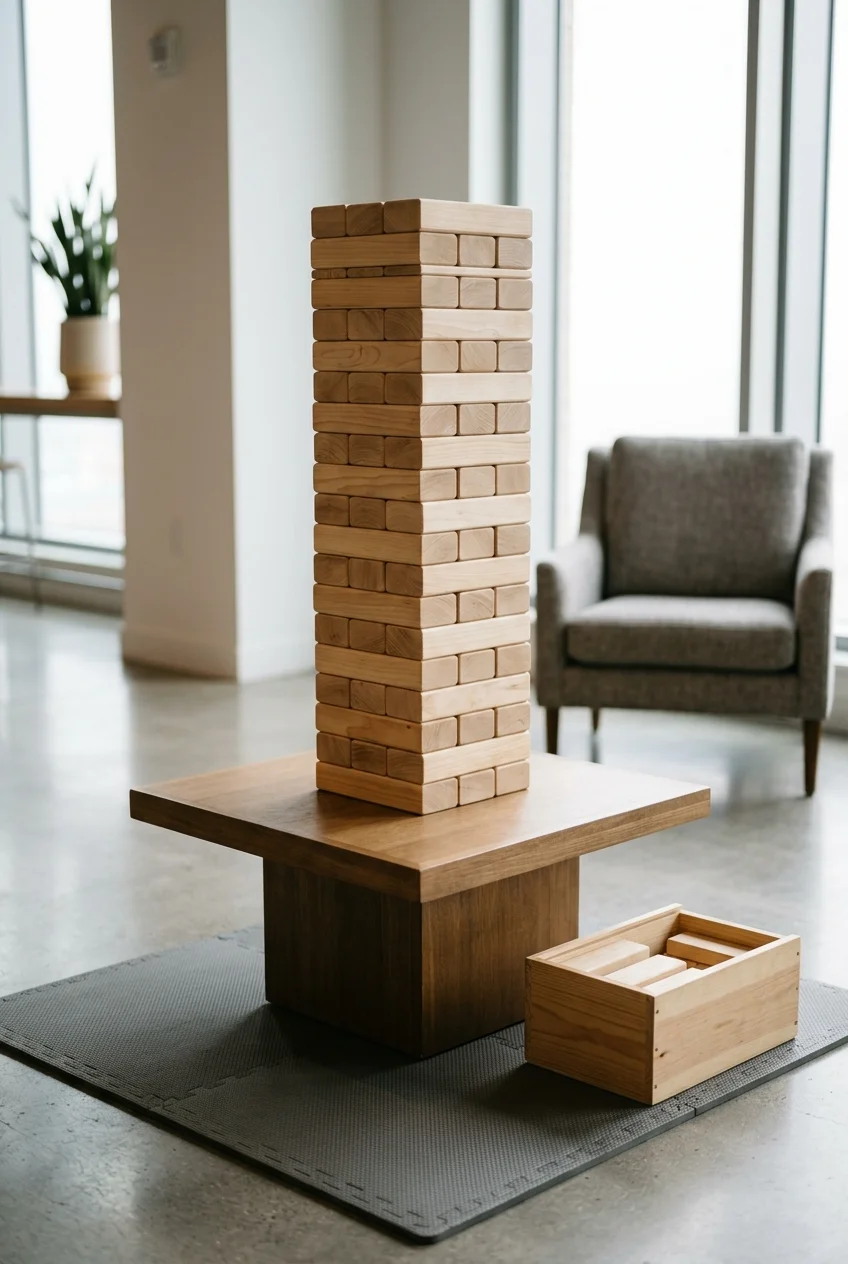
Oversize stacking blocks create suspense that onlookers can enjoy even when they are not playing. Put the tower on a low, rigid surface so players are not leaning over a fragile cocktail table as the stack gets taller.
Keep the fall zone away from bare feet, glassware, children seated on the ground, and mobility routes. A foam mat can soften noise and protect flooring if the venue approves it.
34. Bocce or Pétanque on a Surface That Suits the Game
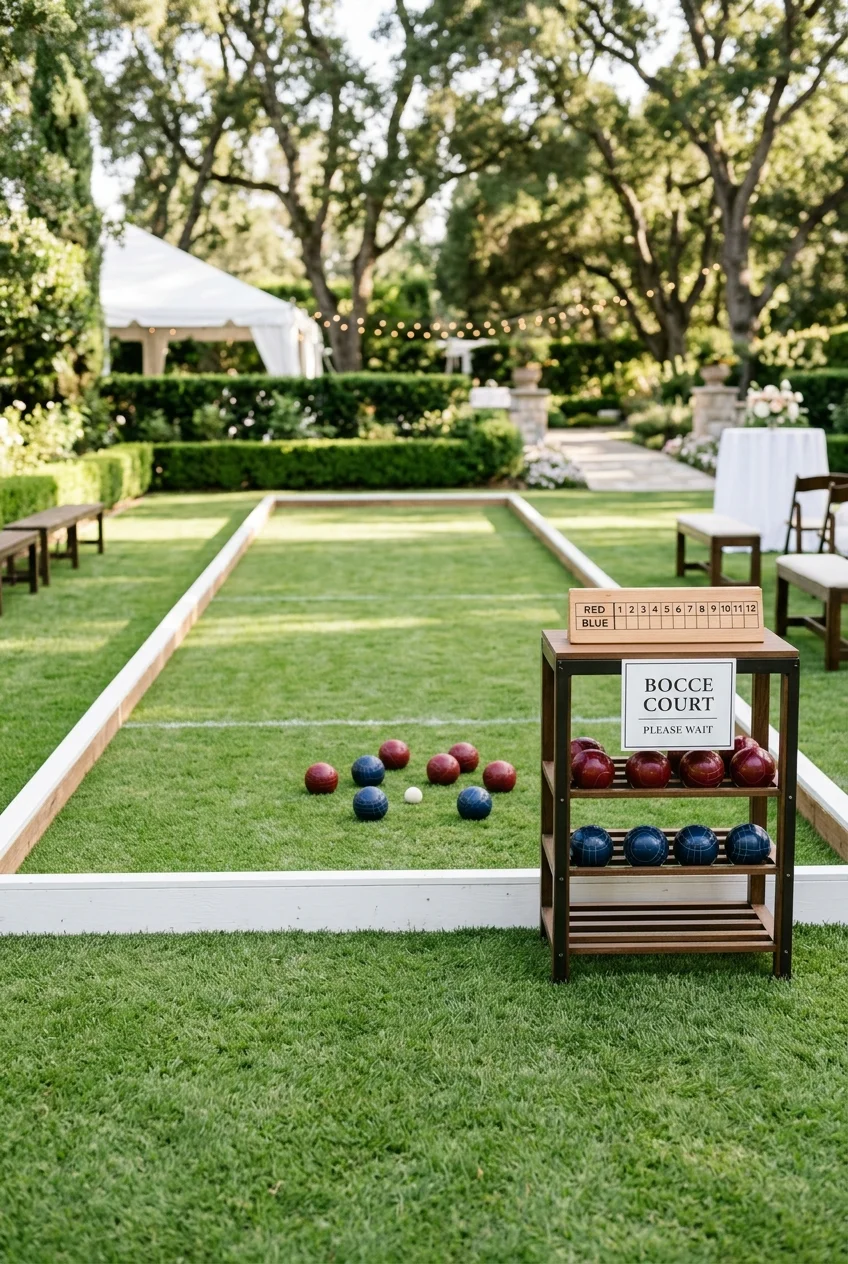
Bocce and pétanque offer relaxed competition with natural pauses for conversation. Bocce favors a smoother court or short grass, while pétanque can work on compact gravel; choose the game that matches the surface instead of forcing decorative gravel or deep lawn to cooperate.
Mark one play lane and keep heavy balls away from dining areas. Provide a reachable ball rack so nobody has to bend to ground level every time a round ends.
35. Croquet Laid Out as a Short, Casual Course
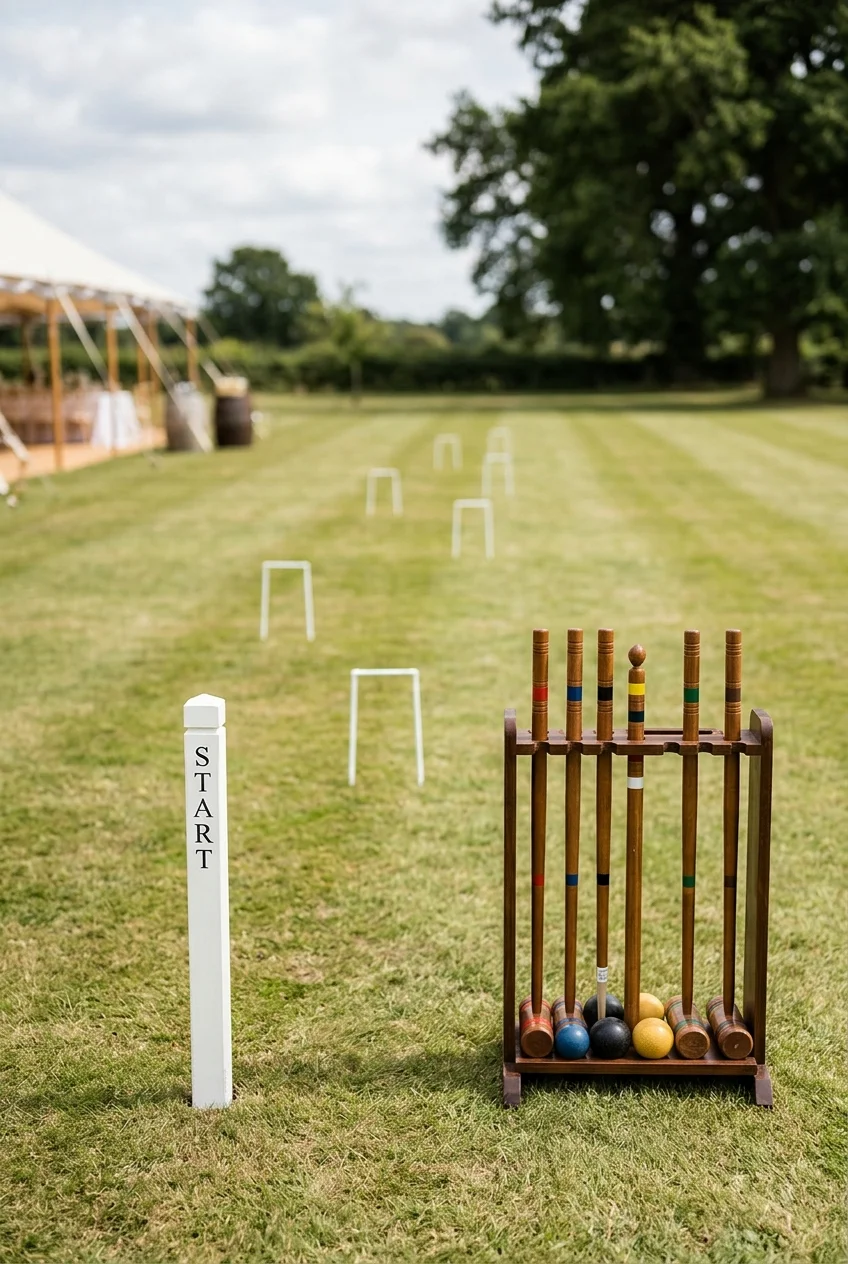
A four- or six-wicket croquet course is easier to finish during cocktail hour than a full formal layout. Use bright, easy-to-see wickets and place the start where guests can understand the direction of play at a glance.
Ask the venue before pushing wickets into the ground, and avoid steep or freshly watered lawn. Keep mallets in a rack rather than scattered beside the course.
36. Giant Chess or Checkers With Room for Wheelchairs and Watchers
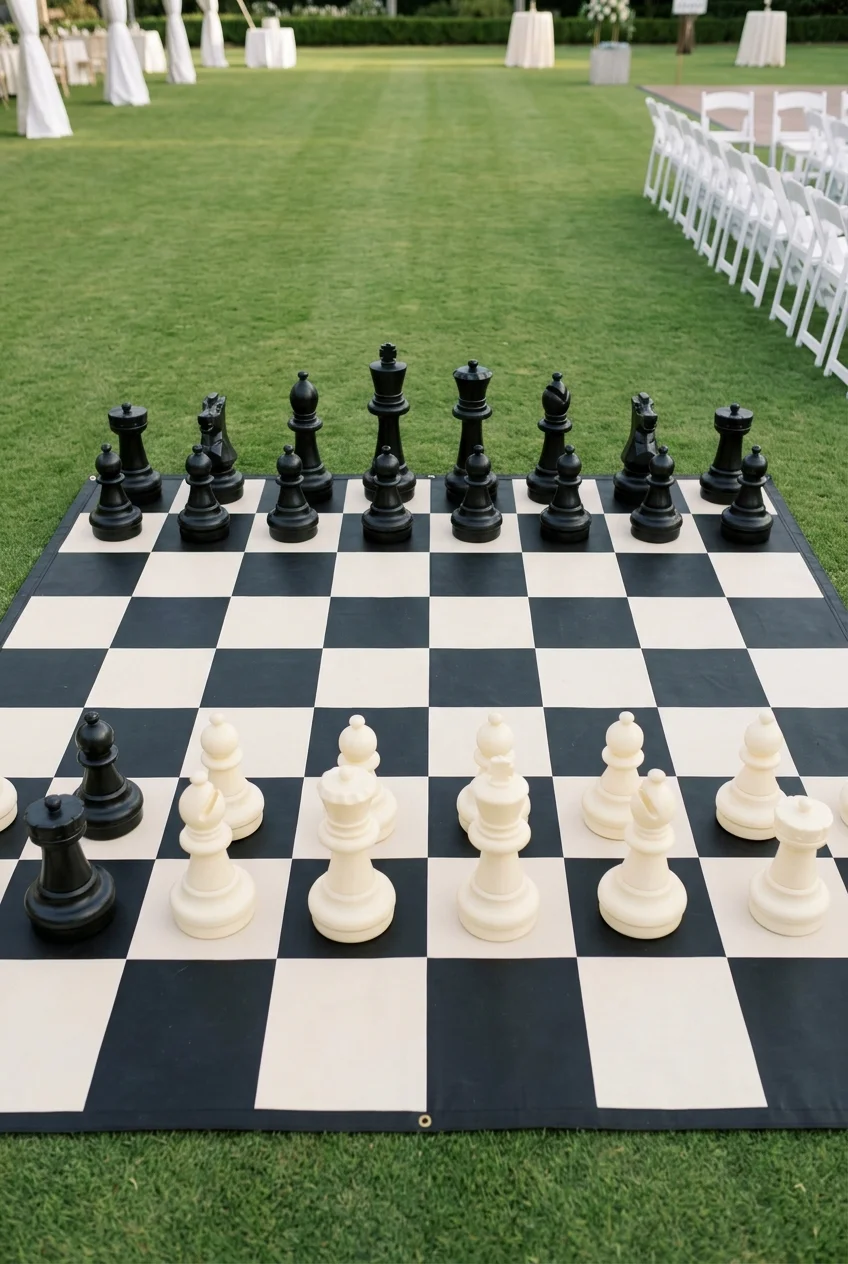
A floor-size board becomes a graphic feature even when no match is underway. Leave space on more than one side so players using mobility devices can reach pieces and spectators do not close the only path.
Choose hollow or lightweight pieces that can be lifted safely. On grass, use a mat designed to stay flat; curling vinyl corners create a trip hazard.
37. A Board-Game Lounge With Five Familiar Choices
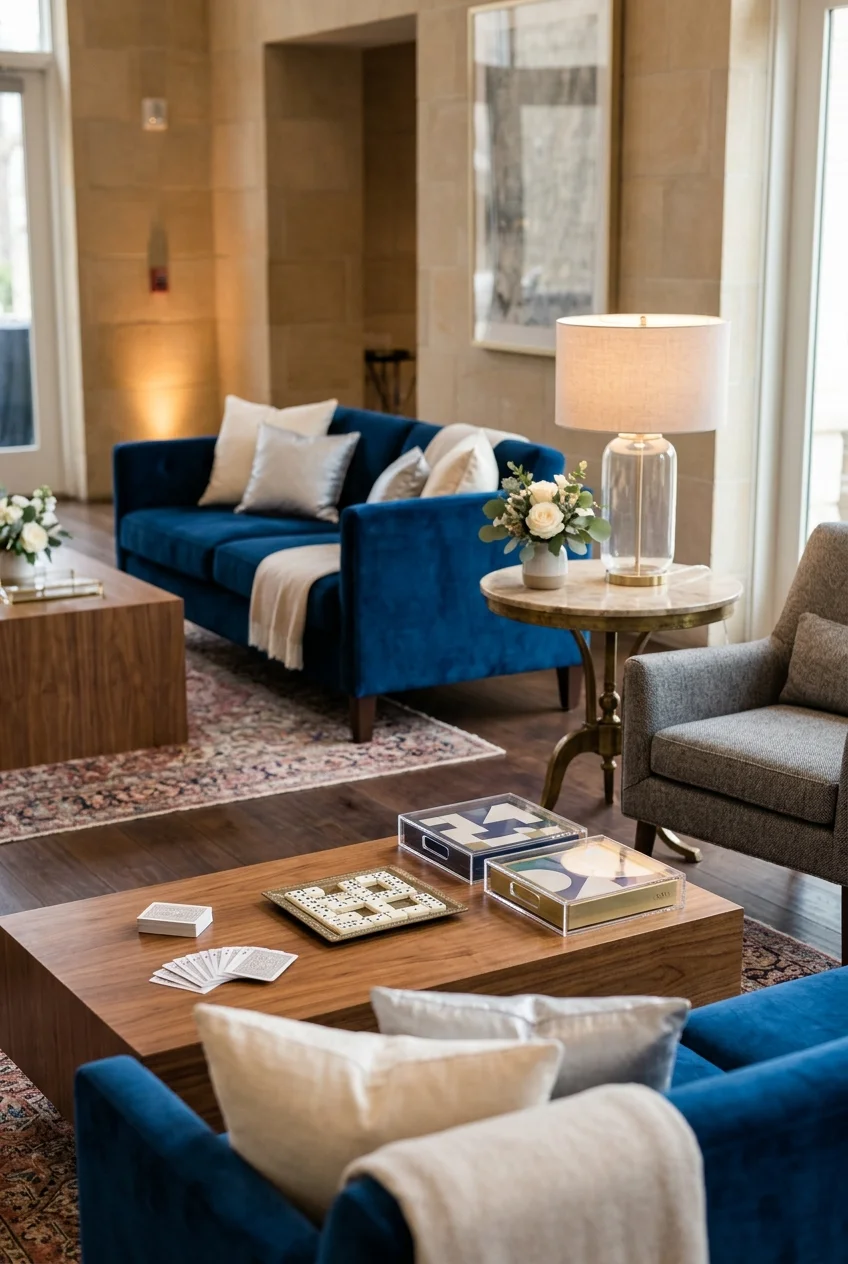
A quiet lounge can serve guests who want conversation without leaving the reception. Choose a few games with short rounds and simple rules—cards, word games, dominoes, or a quick strategy game—rather than shelving a library nobody has time to learn.
Use side tables large enough for the pieces and light the area well enough to read them. Count components beforehand and provide lidded trays so a spilled drink does not end the entire game.
38. A Pub-Style Team Quiz With Mixed-Knowledge Questions
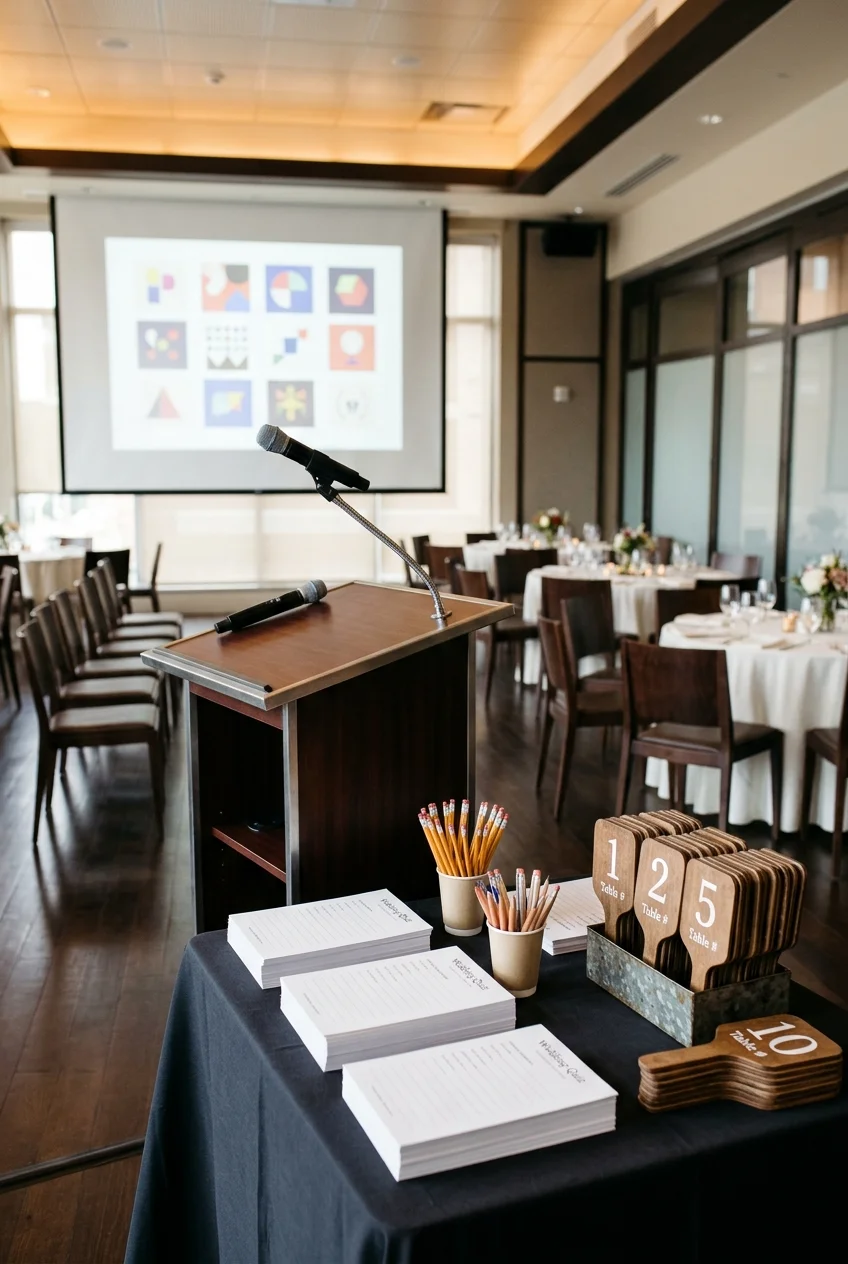
A hosted quiz can connect tables that do not know one another, especially during a room change or after dinner. Mix general knowledge, music clips, visual rounds, and a few couple questions so lifelong friends do not hold every advantage.
Keep the quiz to a clear time limit and let guests form teams naturally. Confirm microphone volume and screen visibility before dinner, not while the host is already waiting to start.
39. Play-Money Casino Tables With Dealers Who Teach
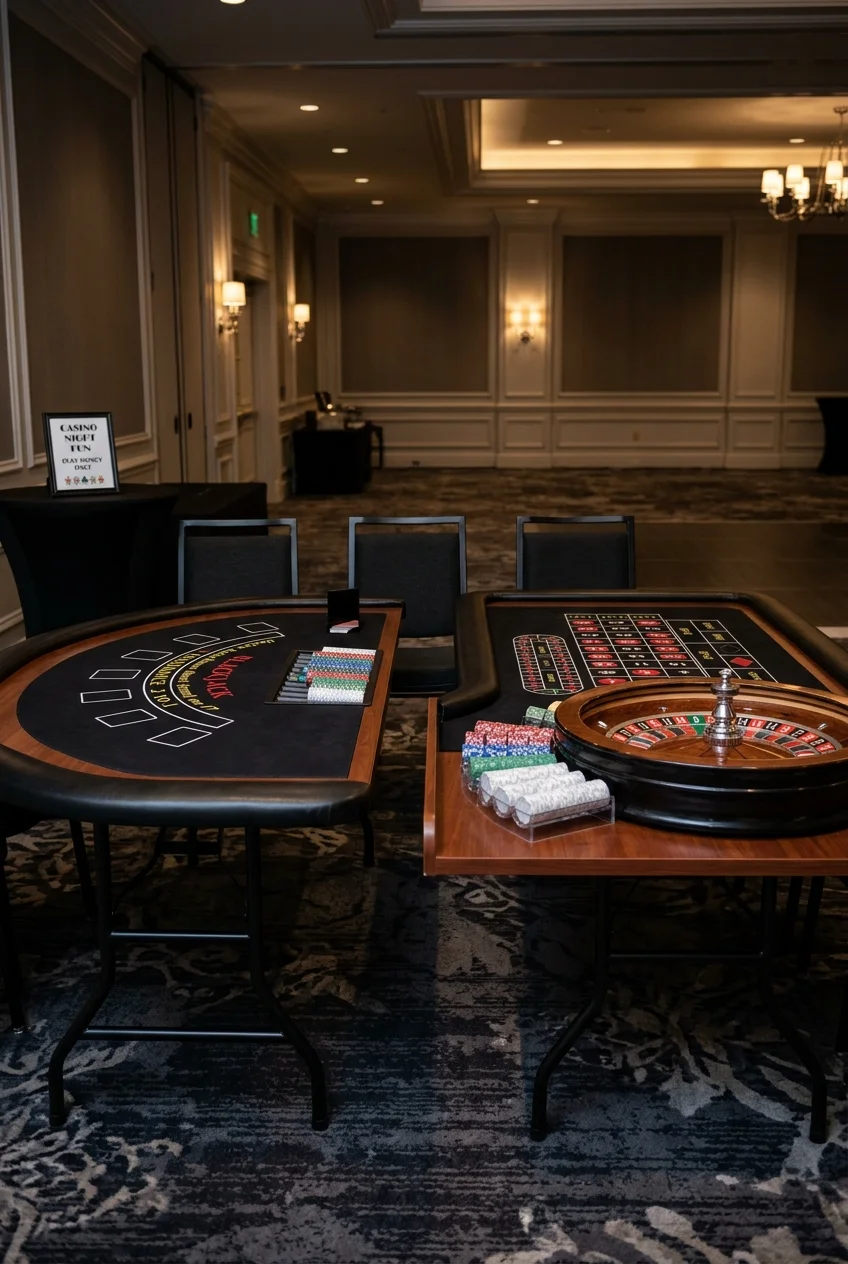
Blackjack or roulette tables can act as social games when the event uses chips with no cash value and dealers explain every round. This is entertainment, not real wagering, so make that distinction clear in the vendor contract and guest instructions.
Check local law, venue permission, age policies, table dimensions, and whether the provider carries appropriate insurance. Choose games that allow beginners to join quickly, and provide a non-casino option nearby for guests who would rather not participate.
40. A Retro Arcade Corner With Free Play Switched On
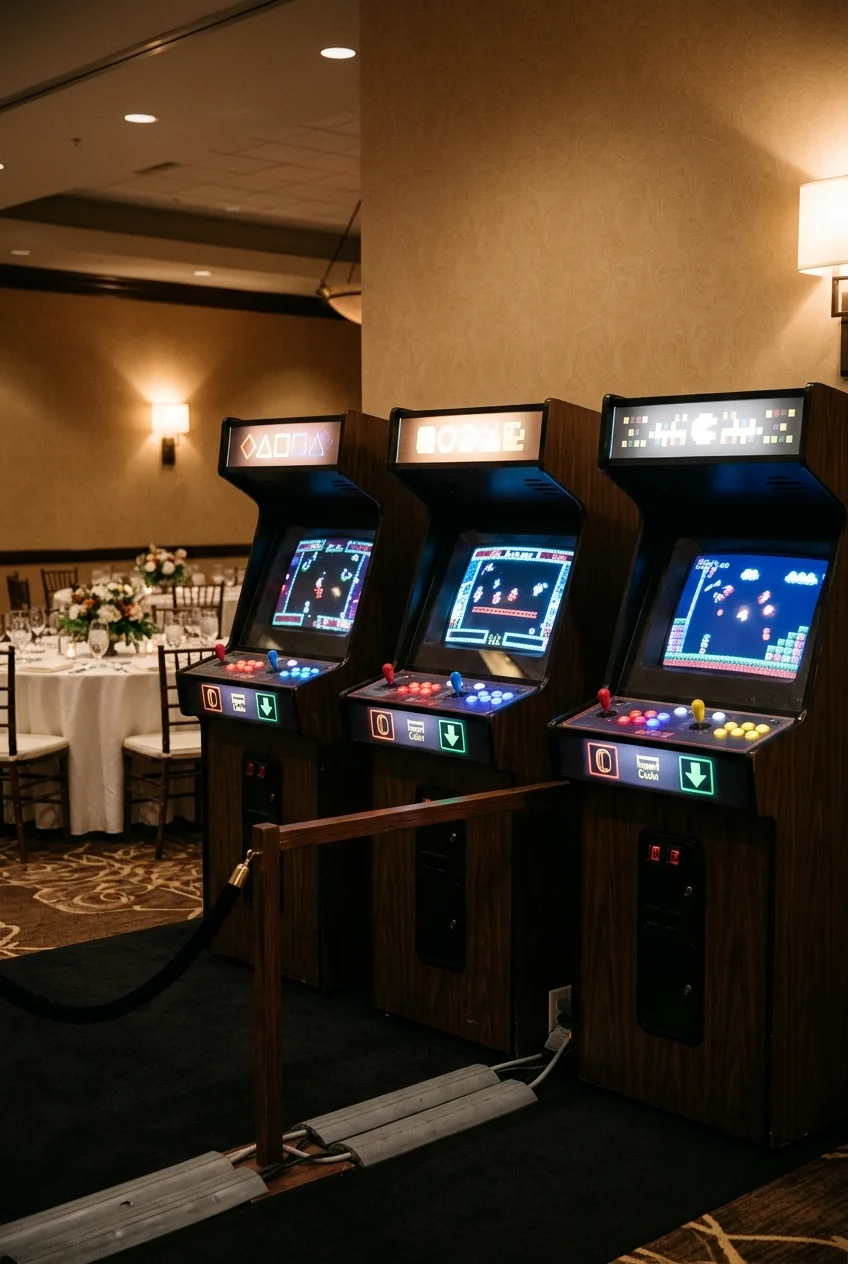
Two or three arcade cabinets can create a recognizable destination without turning the reception into an expo hall. Pick games with short rounds and intuitive controls so guests can rotate rather than settling in for the entire evening.
Confirm cabinet dimensions, power load, delivery access, volume controls, and whether machines are set to free play. Place them away from speeches and add cable covers anywhere power crosses a guest route.
Music, Movement, Family Options, and a Finale
41. A DJ Who Uses Request Cards as Guidance, Not a Command
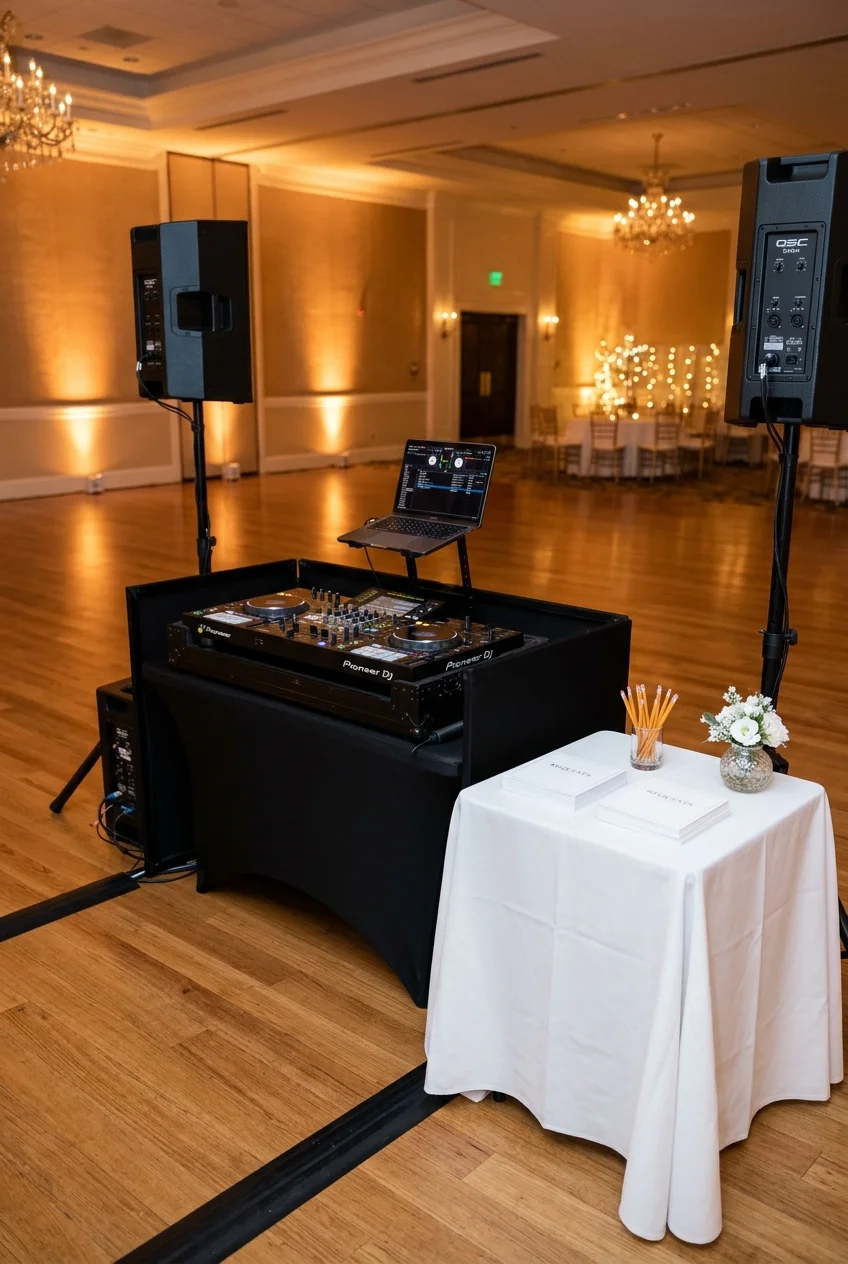
Request cards can tell the DJ what guests hope to hear without turning the playlist into a first-come queue. Ask for a song, an era, and a 'play if it fits' option; the DJ still needs freedom to manage tempo, timing, and the couple's do-not-play list.
Put the cards near the booth but not on the equipment table. Drinks, pens, and guests leaning over controls are a poor combination.
42. A Live Band With One Strong Set at the Center of the Evening
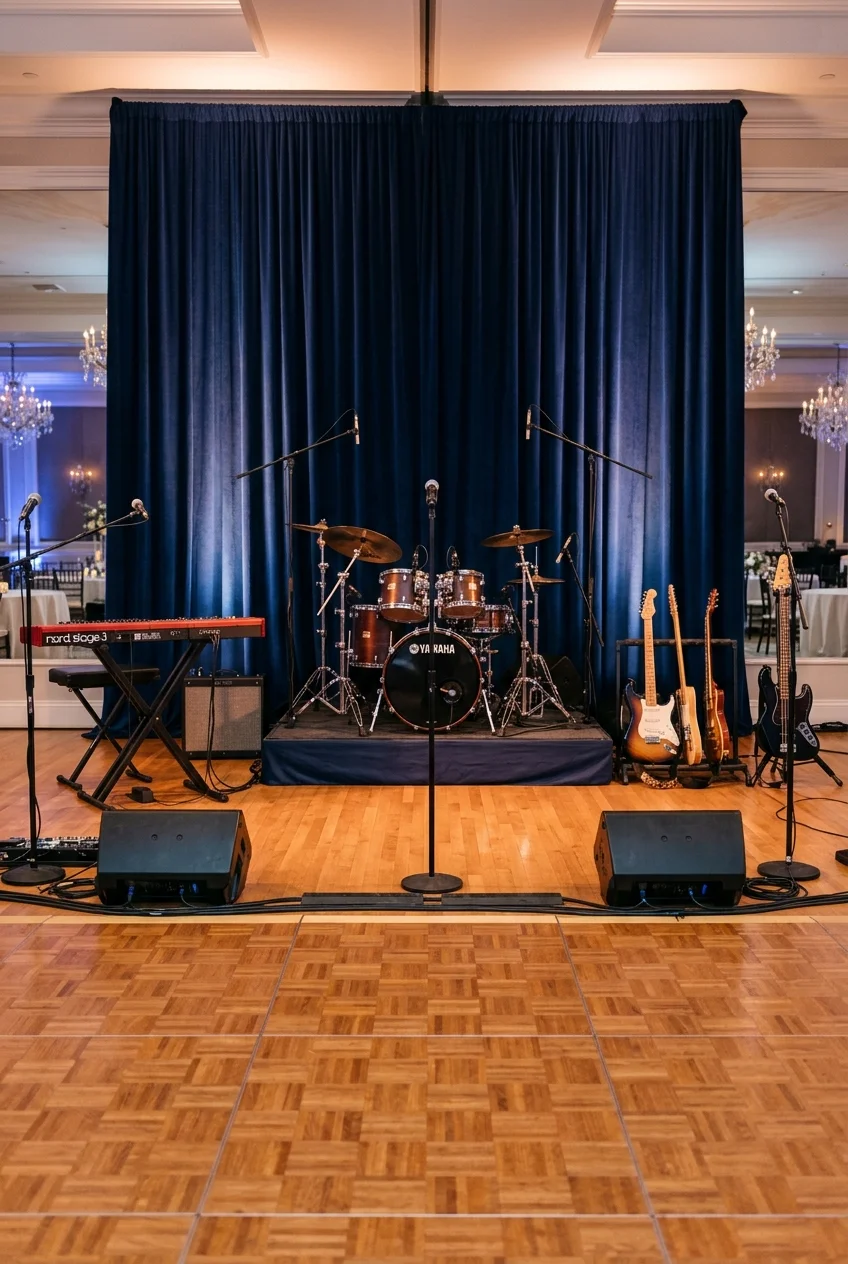
A band has the most impact when guests know where the performance fits. One focused dance set after dinner can feel bigger than several starts and stops that compete with speeches, dessert, and other stations.
Ask for the stage plot, power needs, sound limits, break plan, and the exact lineup included in the quote. If recorded music covers breaks, decide who controls it so the room does not fall silent.
43. A DJ-and-Saxophone Set for One High-Energy Window
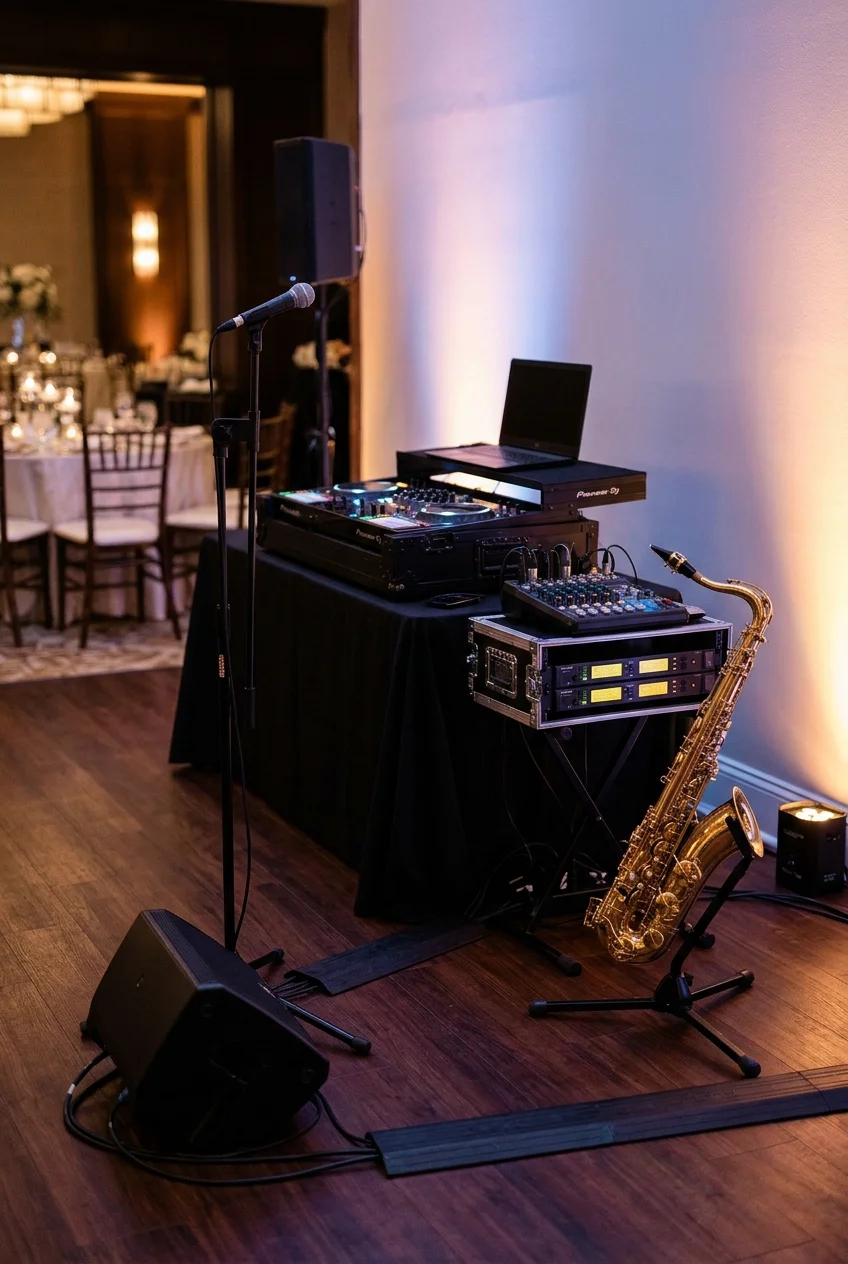
A saxophonist playing with a DJ can add a live focal point without the footprint of a full band. It works best as a defined set after the dance floor is already active, not as background music throughout dinner.
Confirm whether the saxophonist is fully wireless, how monitoring works, and where they may move. Keep performance routes clear of servers, low chandeliers, and tightly packed tables.
44. A One-Hour Karaoke Window With a Managed Song Queue
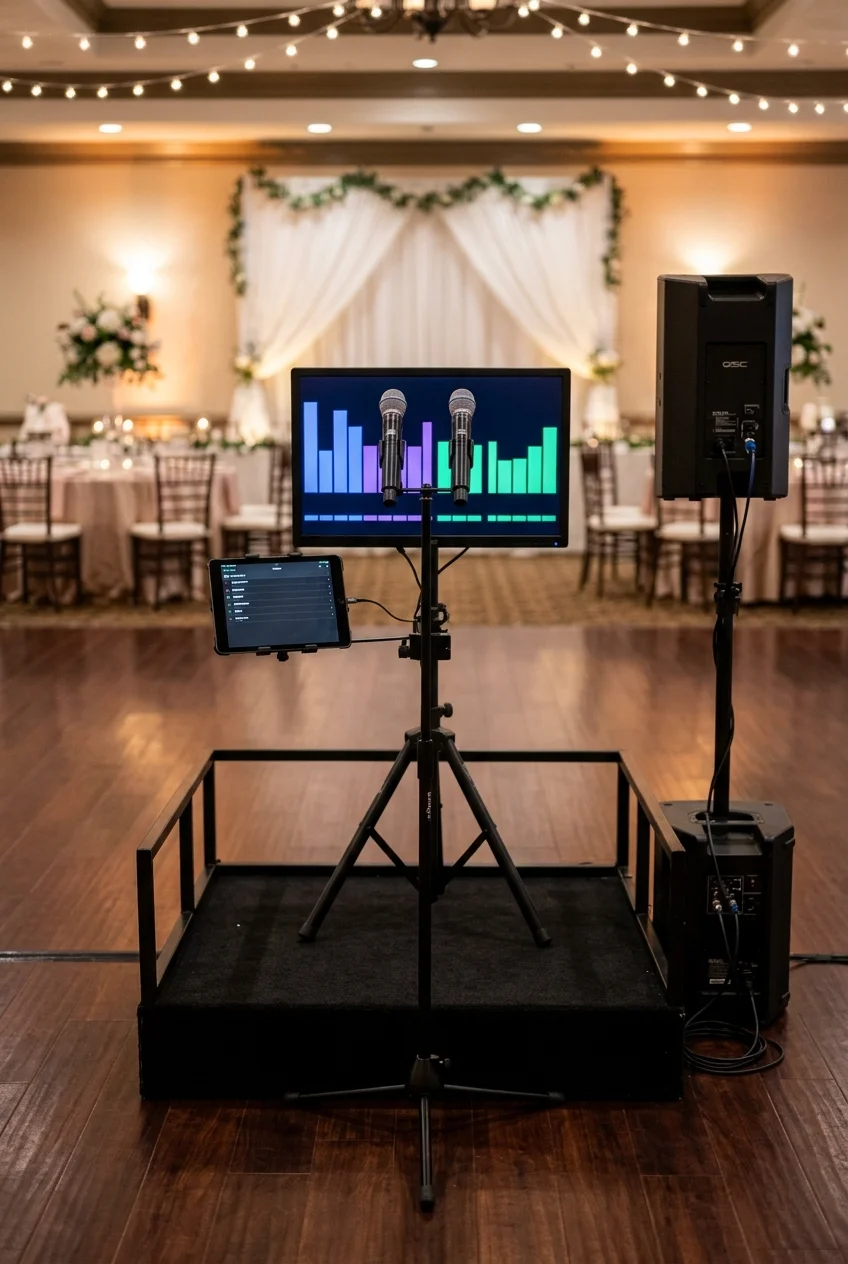
Karaoke feels lively when it has a beginning and an end. Open the list after dinner, let a host manage the queue, and close with a planned group song before returning the room to the DJ or band.
Use licensed karaoke tracks from the provider, two microphones, a confidence monitor, and a screen positioned so lyrics are readable without dominating the room. A host should stop duplicate requests and avoid pressuring reluctant guests.
45. Song Bingo That Lets Seated Guests Play Along
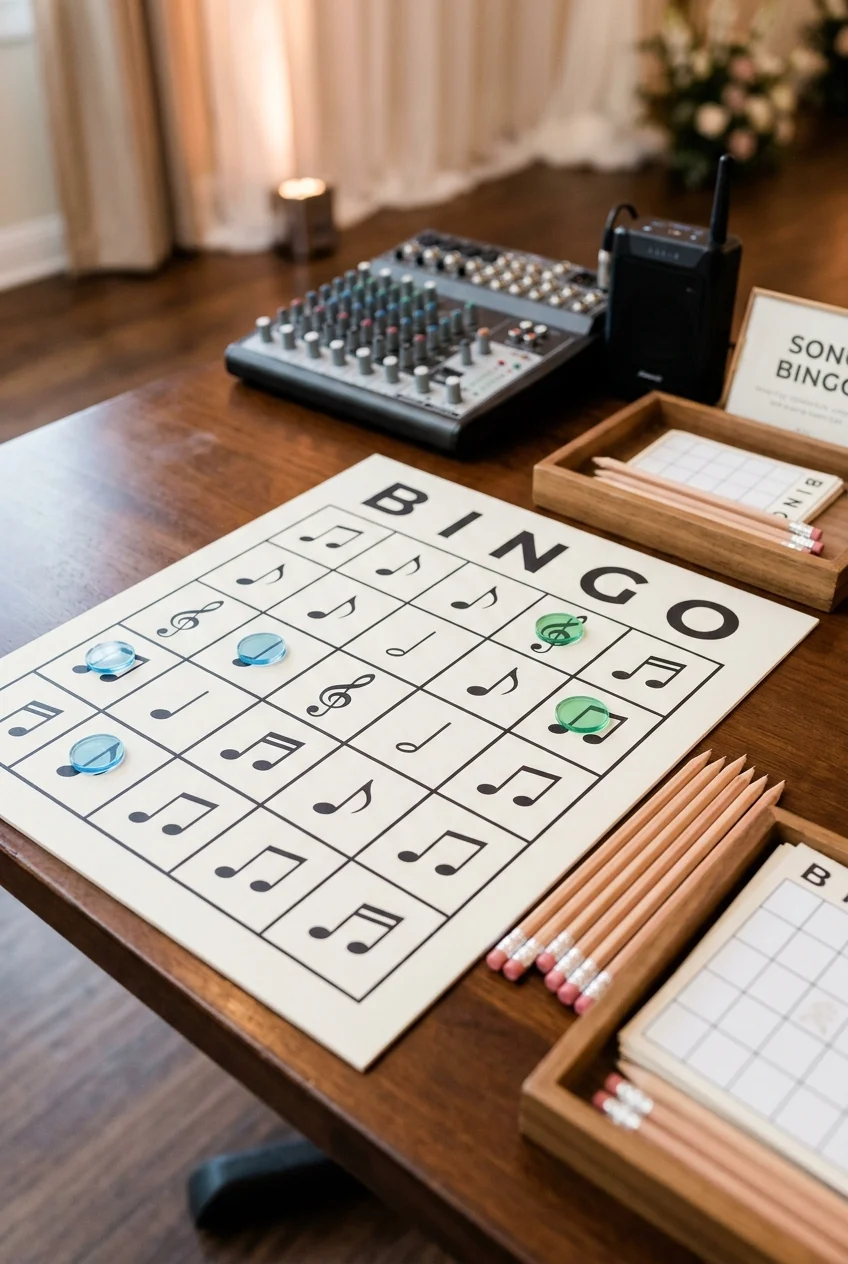
Music bingo replaces numbers with songs or artists, so guests can play while the DJ runs short clips. Use widely recognizable selections across decades and keep the round moving; the goal is shared recognition, not proving who knows the deepest catalog.
Print large, high-contrast cards and provide markers that do not roll off the table. Confirm that music playback fits the DJ or venue's licensing arrangements.
46. A Fifteen-Minute Social Dance Lesson Before Open Dancing
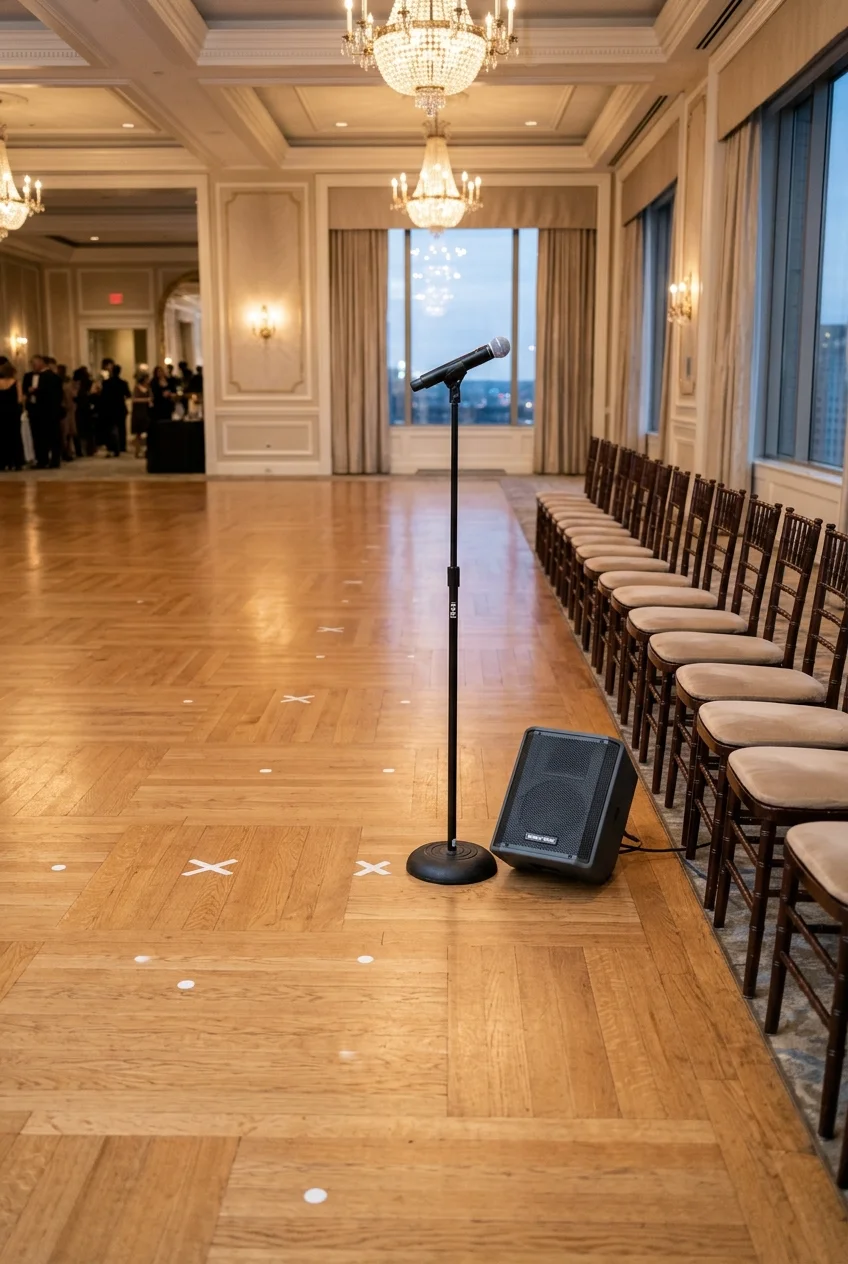
A brief lesson can lower the barrier for guests who want to dance but do not know how to begin. Choose one simple partner or line dance, offer seated observation, and move quickly into ordinary open dancing before the instruction starts to feel compulsory.
The instructor needs a clear floor, a reliable microphone, and a way to demonstrate without guests crowding the front. Avoid choreography that assumes couples are gendered pairs or that every participant can turn, jump, or stand for long periods.
47. Kids' Activity Packs Matched to Different Ages
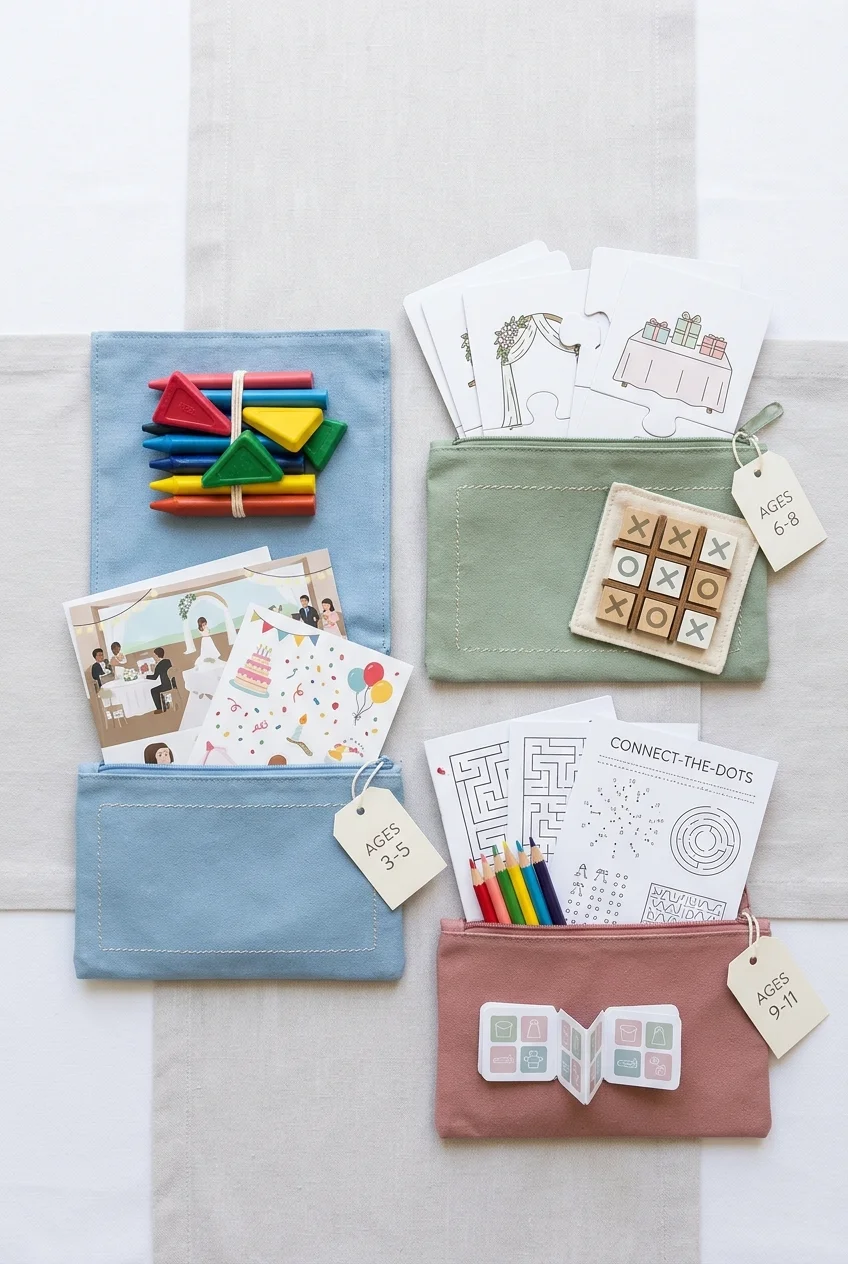
A single coloring sheet will not suit every child. Build two or three age bands with washable coloring tools, reusable sticker scenes, simple puzzles, or quiet card games, and place each pack at a clearly supervised family table.
Avoid small parts for young children and skip glitter, permanent markers, slime, or anything likely to spread across rental linens. Activity packs are entertainment, not childcare; adults remain responsible unless qualified care has been arranged.
48. A Children's Magician or Story Performer in a Separate Time Slot
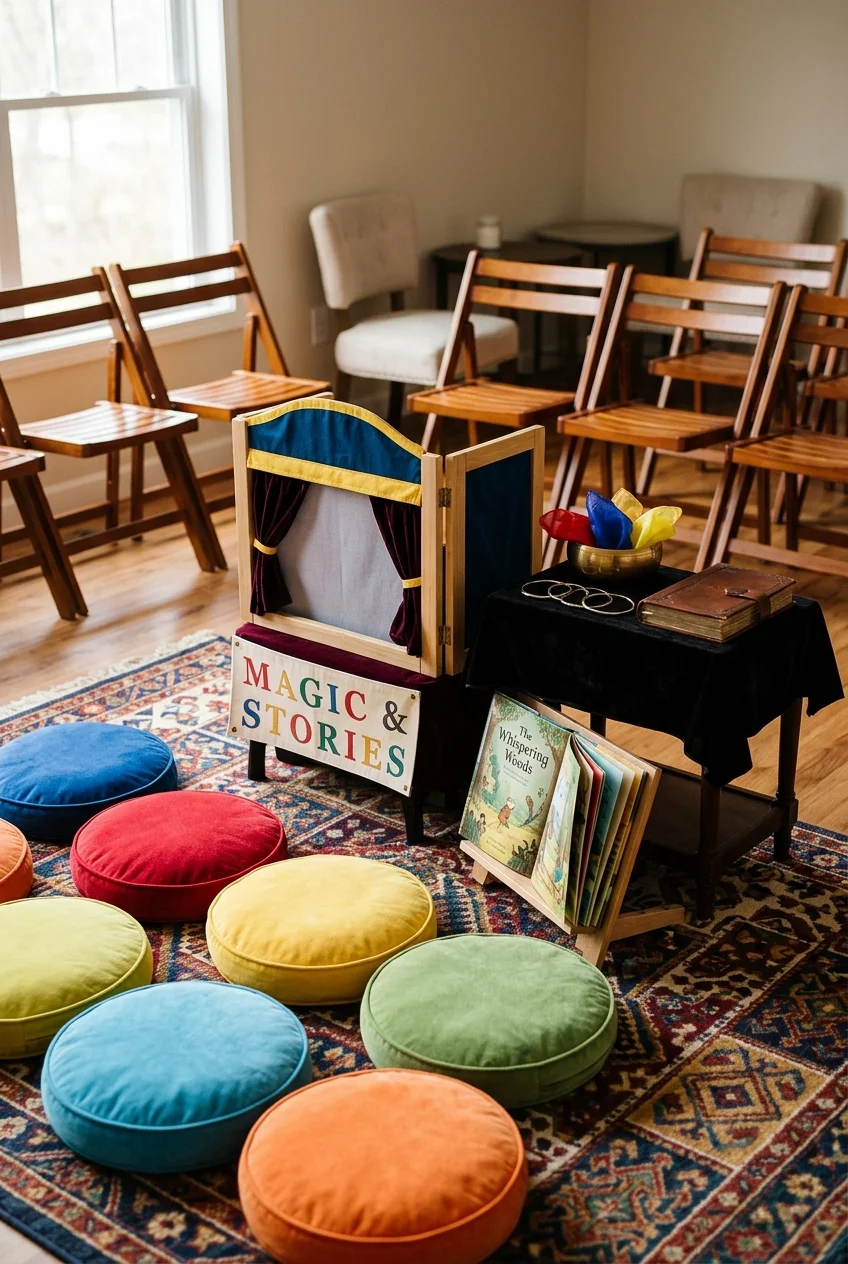
A short children's show can give families a clear activity during speeches, room turnover, or another slow point. Book a performer experienced with the expected ages and choose a nearby room or defined area where adults can remain present.
Confirm background checks or safeguarding practices as applicable, insurance, audience size, sound level, and what supervision the performer expects. Do not advertise the show as drop-off childcare unless qualified care is genuinely included.
49. An Outdoor Bubble Artist With a Wind and Surface Plan
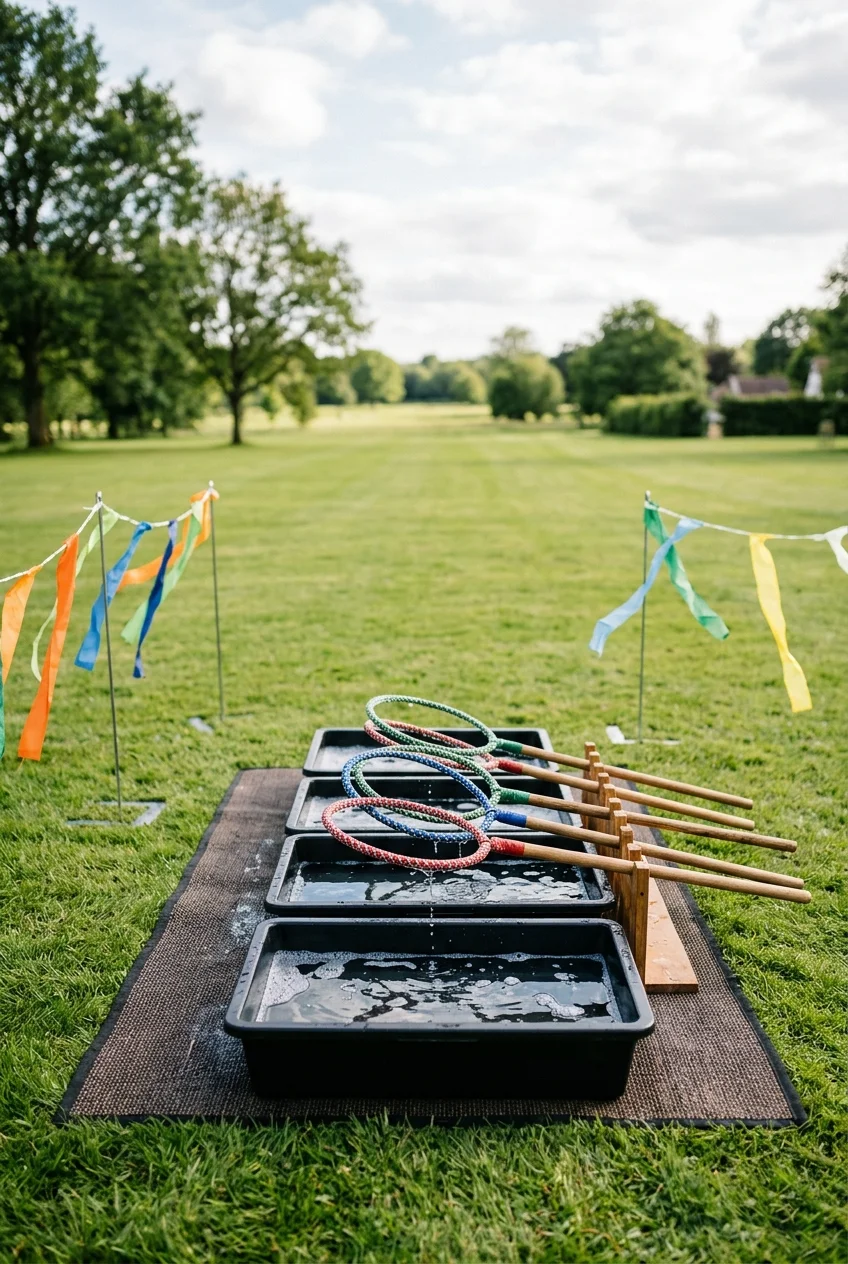
A bubble artist can create a watchable outdoor interlude that children and adults understand immediately. Large bubble wands need open air, predictable wind, and a surface where diluted solution will not make polished floors slippery.
Use a professional or a clearly managed station rather than leaving buckets unattended. Ask the venue about lawn treatment, cleanup, and whether bubbles could drift toward dining, photography equipment, or a nearby road.
50. A Venue-Approved Professional Fireworks Finale
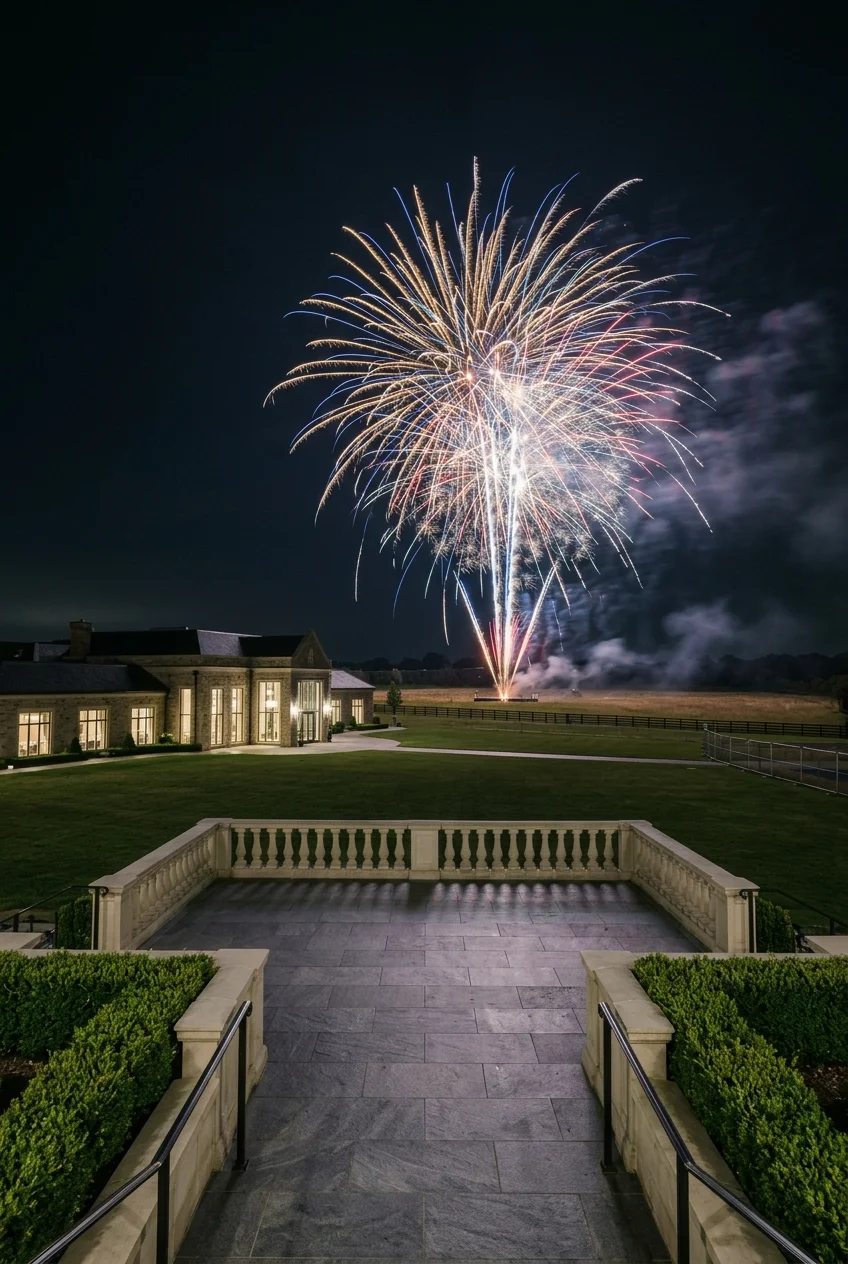
A fireworks display is a specialist production, not a DIY wedding activity. Consider it only when the venue and local authority permit it and a qualified professional operator manages permits, site distances, weather, firing, crowd control, and cleanup.
Tell guests when and where the display will happen, provide an indoor or quiet viewing option, and consider the effect of noise on children, animals, neighbors, and guests with sensory sensitivities. If those constraints do not fit the celebration, end with a final song or lighting moment instead.
Watch for Consumer fireworks and guest-held sparklers are not a substitute for a professionally managed display. Follow the venue, operator, fire authority, and local law.
How many entertainment ideas should a wedding include?
Many weddings need only one activity beyond the main music. Add another when it serves a different moment or guest need—for example, a quiet cocktail-hour artist and an evening DJ—rather than running several attractions for the same people at the same time.
What wedding entertainment works well for guests who do not dance?
Offer at least one option that can be enjoyed seated or in a short visit. Live illustration, close-up magic, an audio guestbook, table trivia, board games, a photo station, or a short performance can give non-dancers a genuine experience without isolating them from the reception.
When should entertainment be booked?
Start once the date, venue, guest count, and rough timeline are firm enough to confirm that the act fits. Availability varies by location, season, and performer, so contact priority suppliers early instead of relying on one universal booking deadline.
What should be checked before hiring a wedding entertainer?
Ask what the quote includes, performance length, breaks, equipment, power, access, setup and breakdown, travel, insurance, sound limits, weather backup, cancellation terms, and the provider's backup plan. Share the guest profile and venue restrictions so the supplier can flag a mismatch before the contract is signed.
How can wedding entertainment be made more accessible?
Keep routes and viewing areas open, offer seated and standing ways to participate, avoid forcing guests into public participation, provide large high-contrast instructions where needed, and ask vendors how they adapt sound, lighting, queues, and activities. A quiet lounge also gives guests a place to remain part of the celebration without staying in the loudest room.
This post may contain affiliate links: full affiliate disclosure.