
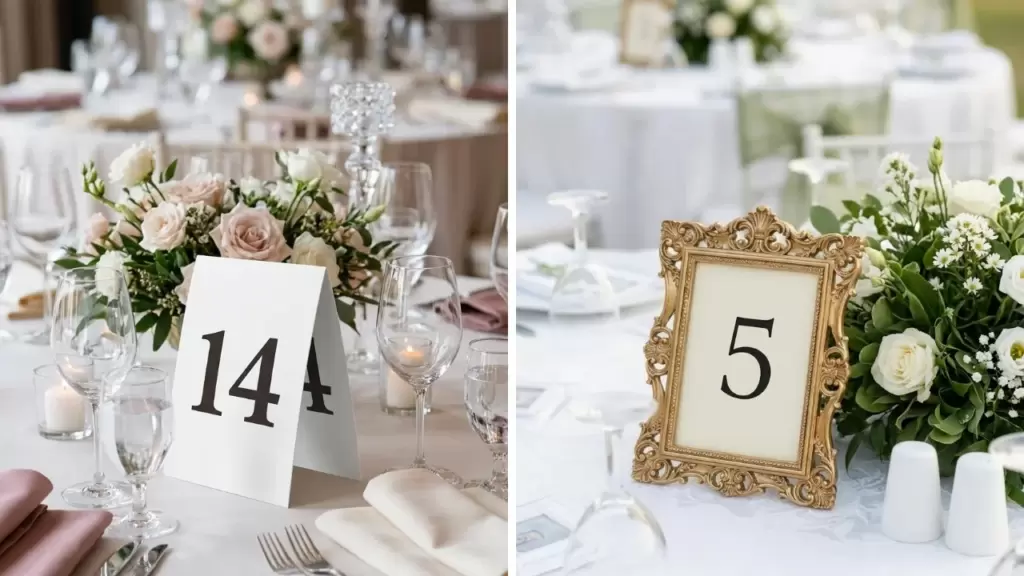
A table number has two jobs: it should belong in the tablescape, and guests should be able to spot it before they are standing beside the centerpiece. Start with the material and shape you like, then test the numeral's contrast, height, and viewing angle in a complete place setting.
These 50 ideas are organized by how they are made and displayed, from simple folded cards to photo timelines and numbered objects. Each one includes the practical choice that keeps the design readable, stable, and proportionate to the table.
As an Amazon Associate I earn from qualifying purchases.
Paper, Frame, and Acrylic Table Numbers
1. Folded Tent Cards with Oversized Numerals
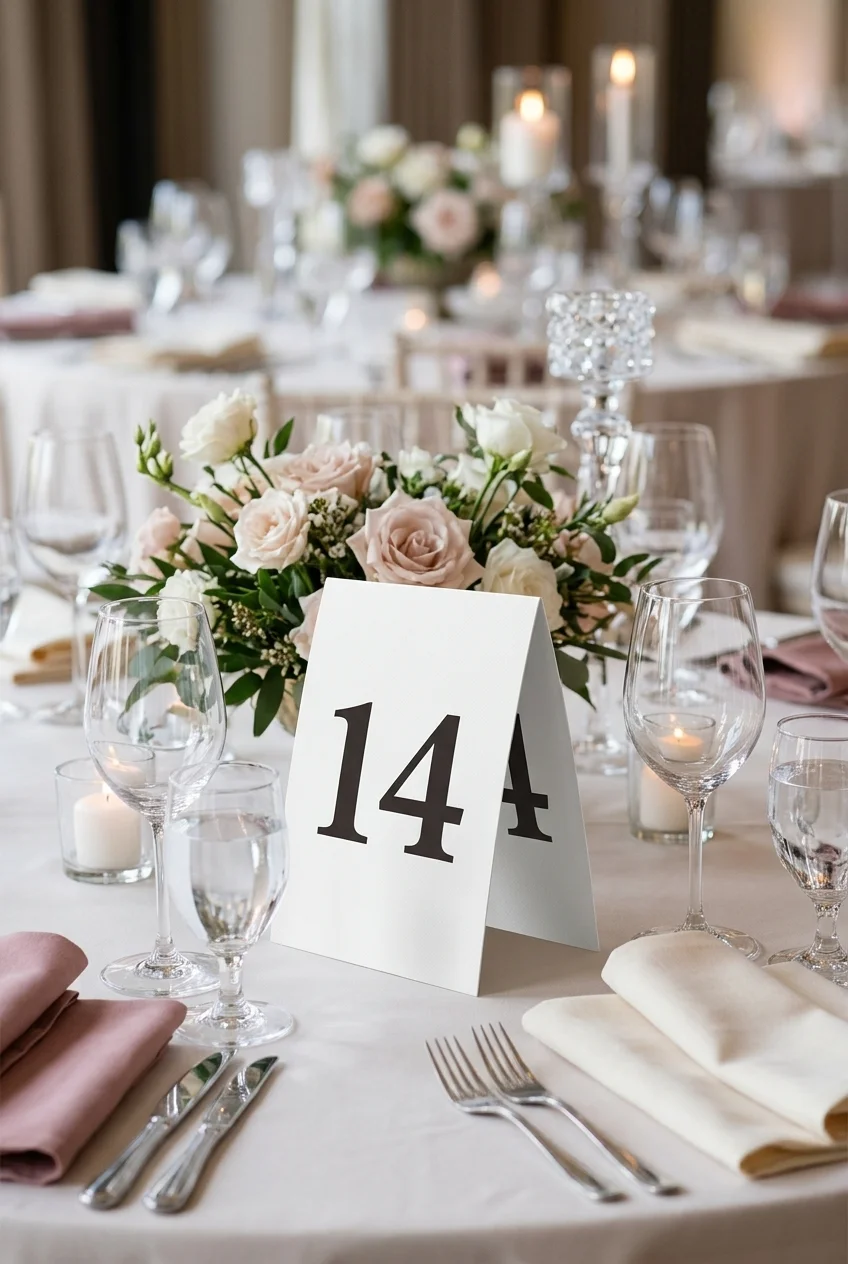
A heavy cardstock tent is the simplest format because it stands without a separate holder and packs flat for transport. Print one large numeral on both faces so guests approaching from either side see the same information.
Setup note Score the fold before printing a full set, and test the paper under the venue's air-conditioning or outdoor breeze. Light cardstock can curl or slide.
2. Vintage Frames with Clean Modern Number Cards
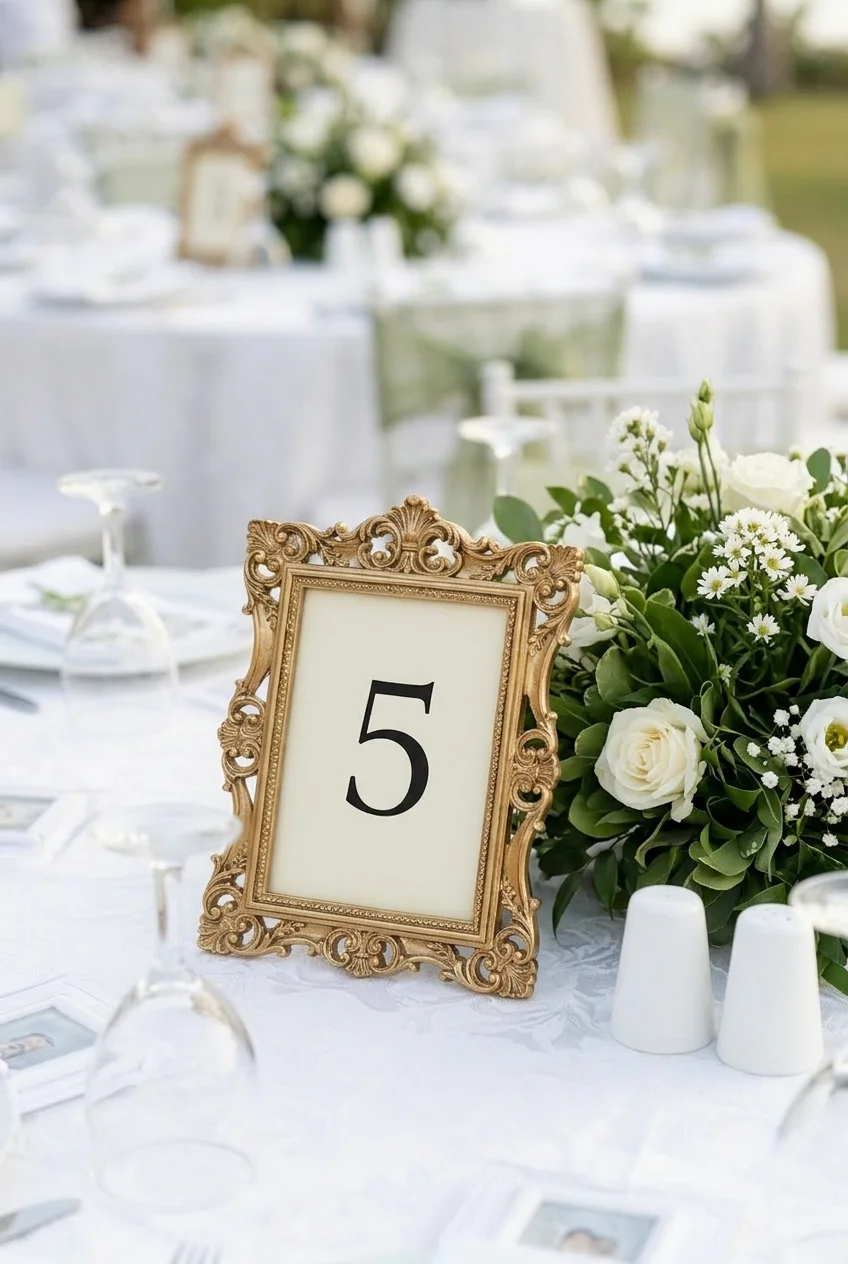
An ornate secondhand frame gives a plain printed number enough presence without requiring custom fabrication. Keep the insert modern and high contrast so the frame supplies the detail instead of competing with decorative type.
Use frames with stable easel backs and similar outer dimensions, even if the patterns differ. Matching size makes a collected set look intentional and prevents one table number from disappearing behind flowers.
3. Pressed Flowers in Floating Glass Frames
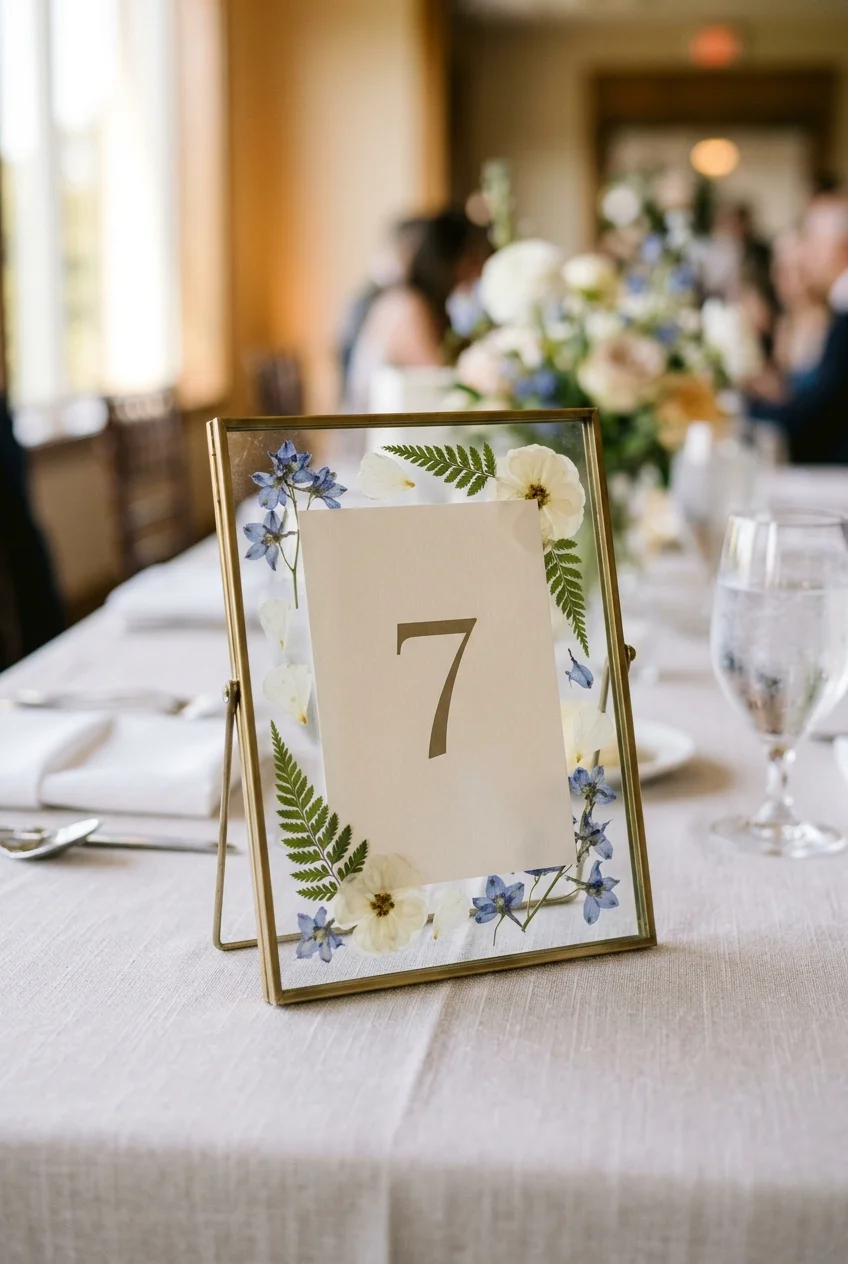
Sandwich a few pressed stems and a bold numeral between two clear panes so the flowers appear to float. Leave generous empty space around the number; a dense botanical collage can become hard to read once it overlaps a centerpiece.
Seal the frame securely and transport it upright with padding between pieces. Real pressed flowers vary, so repeat a controlled color family rather than trying to make every frame identical.
4. Clear Acrylic Cards in Slot Bases
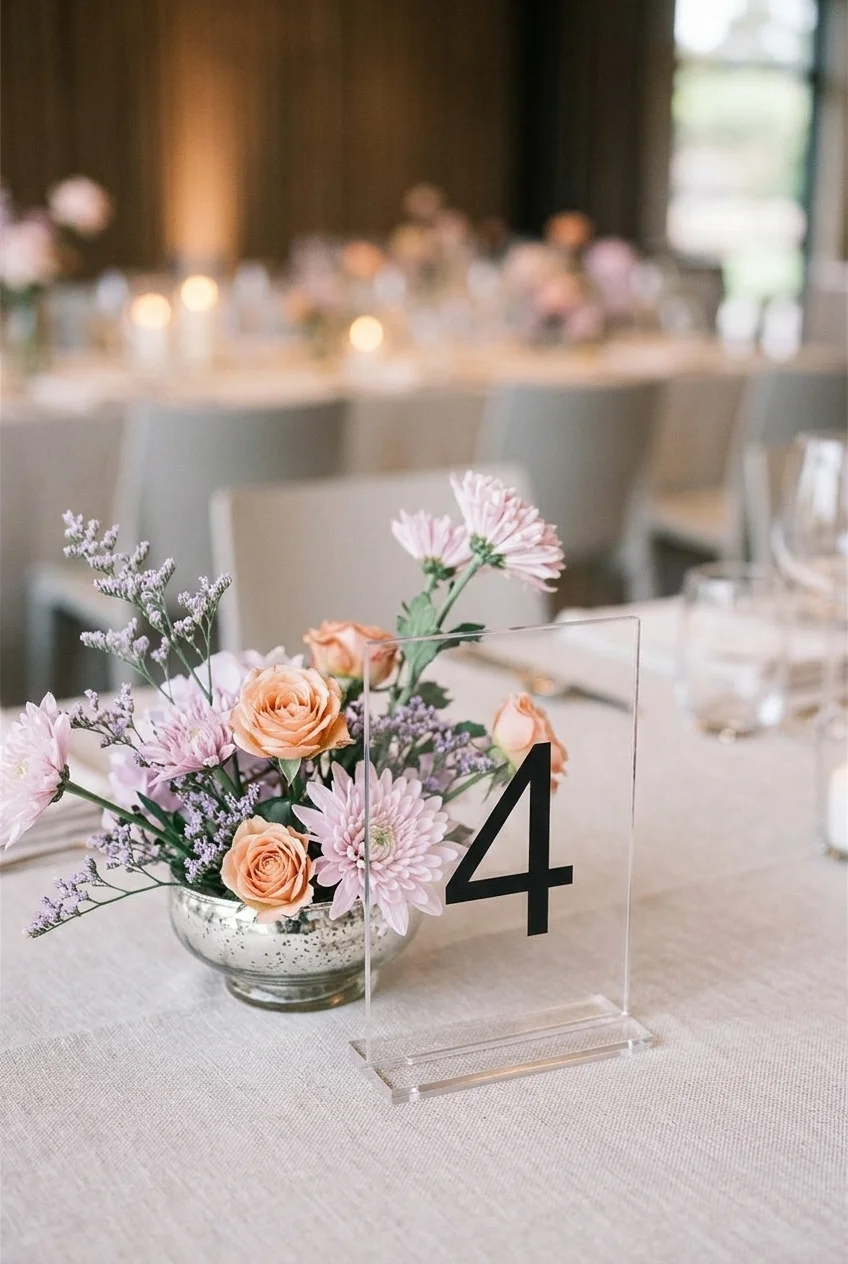
Clear acrylic keeps a table number visually light, but the numeral needs an opaque, high-contrast finish. Set the panel in a snug slot base and turn it toward the room entrance rather than hiding it in the center of the flowers.
Watch for Remove protective film from both sides and check glare under the venue lights. Clear signs can vanish against windows, pale linens, or reflective glassware.
5. Frosted Acrylic Arches with Stands
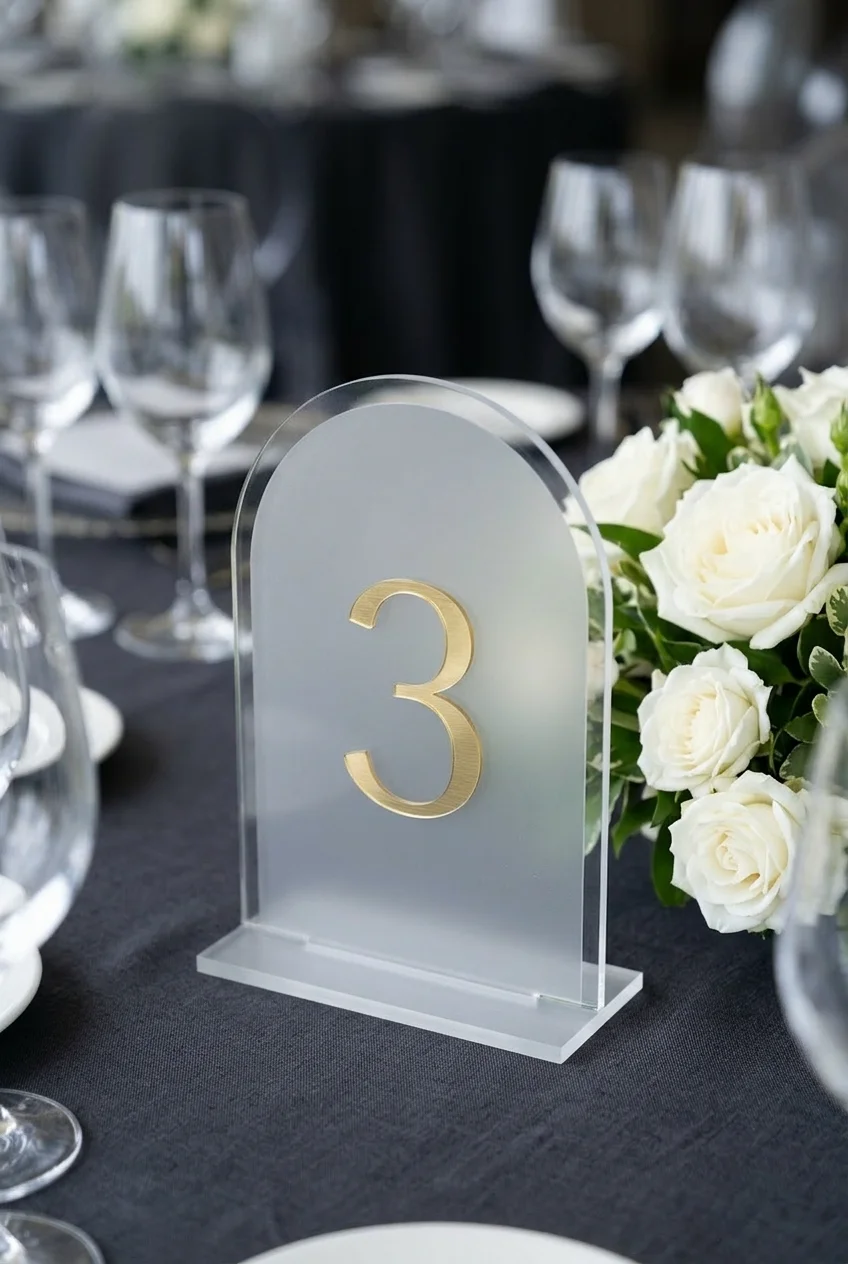
A frosted panel softens reflections and gives light-colored numbers a more visible background than fully clear acrylic. The arched top adds shape while the straight lower edge keeps the sign easy to seat in a separate stand.
For a ready-made option, this verified set of 5-by-7-inch frosted acrylic table numbers with stands (paid link) covers tables 1 through 20. Confirm current availability and choose a numeral color that contrasts with your linens and flowers.
6. Mirror Acrylic Disks with Matte Numerals
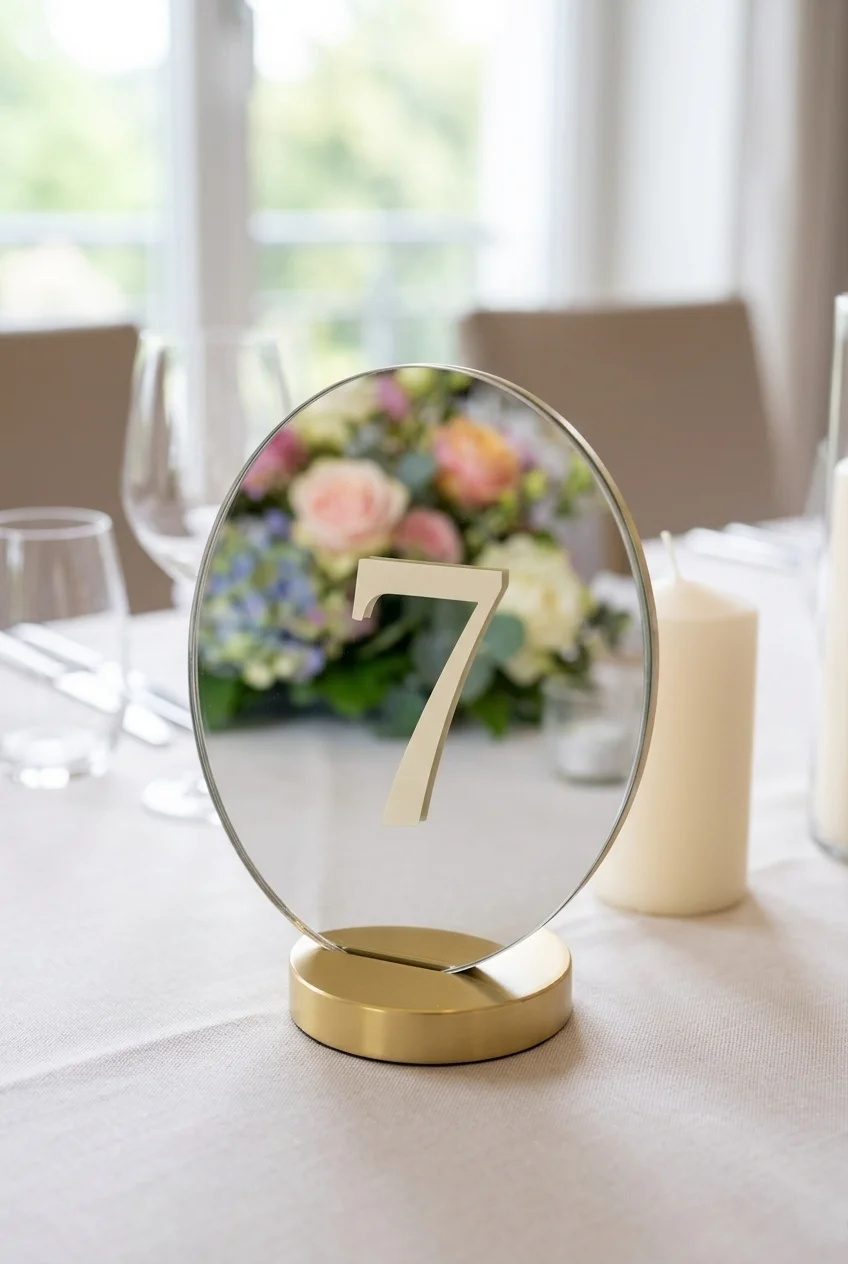
A small mirrored disk catches candlelight without introducing a large reflective panel. Apply a matte numeral rather than a glossy one, and angle the disk away from direct bulbs so guests see the number instead of a bright reflection.
Choose a weighted base with a wide enough slot for the acrylic thickness. Fingerprints show quickly on mirror finishes, so pack a clean microfiber cloth with the setup supplies.
7. Freestanding Metal Numerals
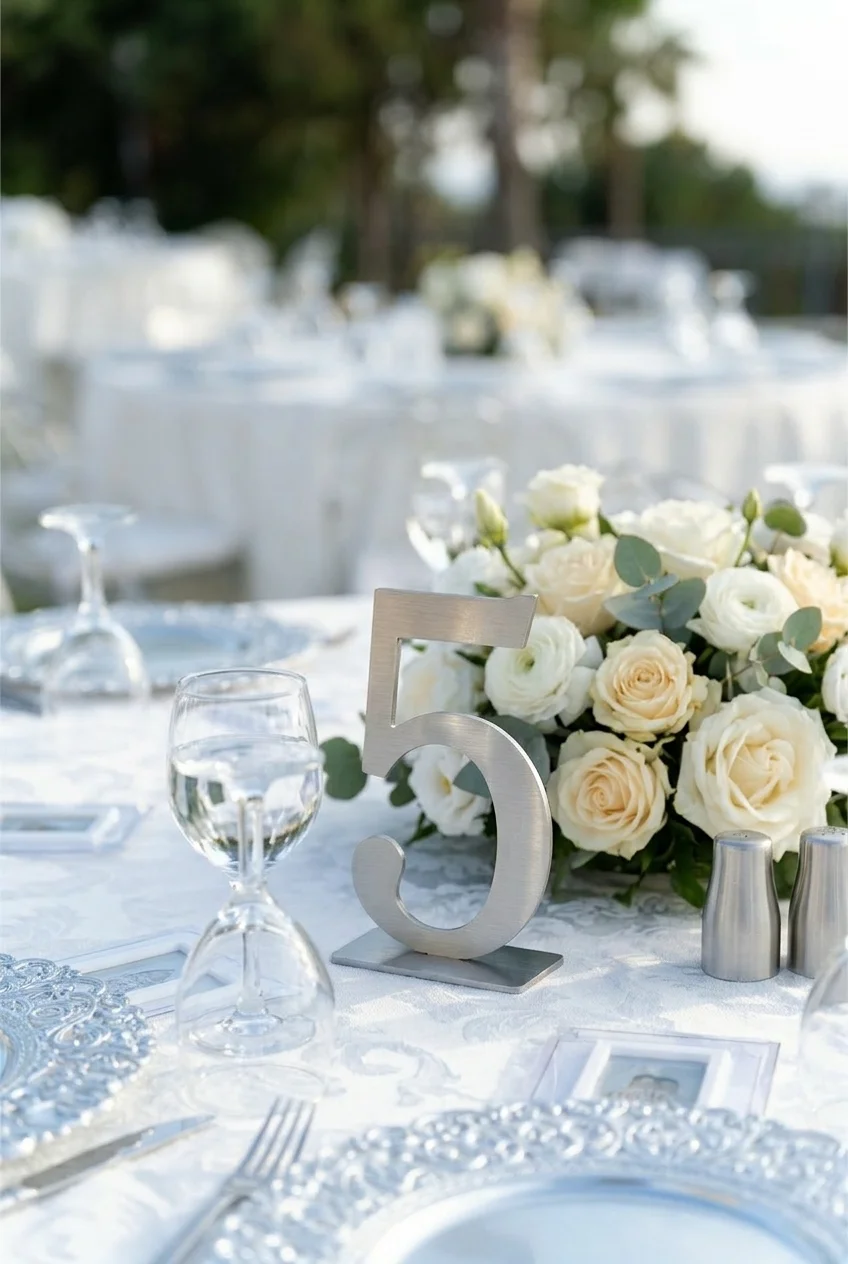
A solid metal numeral removes the card entirely and reads as a small sculpture. Look for a flat, weighted foot or a base that is wider than the digit so narrow numbers such as 1 and 7 are as stable as wider ones.
Keep the finish consistent across the set and test it against the centerpiece. Thin polished metal can disappear among stems, while a matte or brushed finish usually holds its shape in photographs.
8. Layered Laser-Cut Wood Numerals
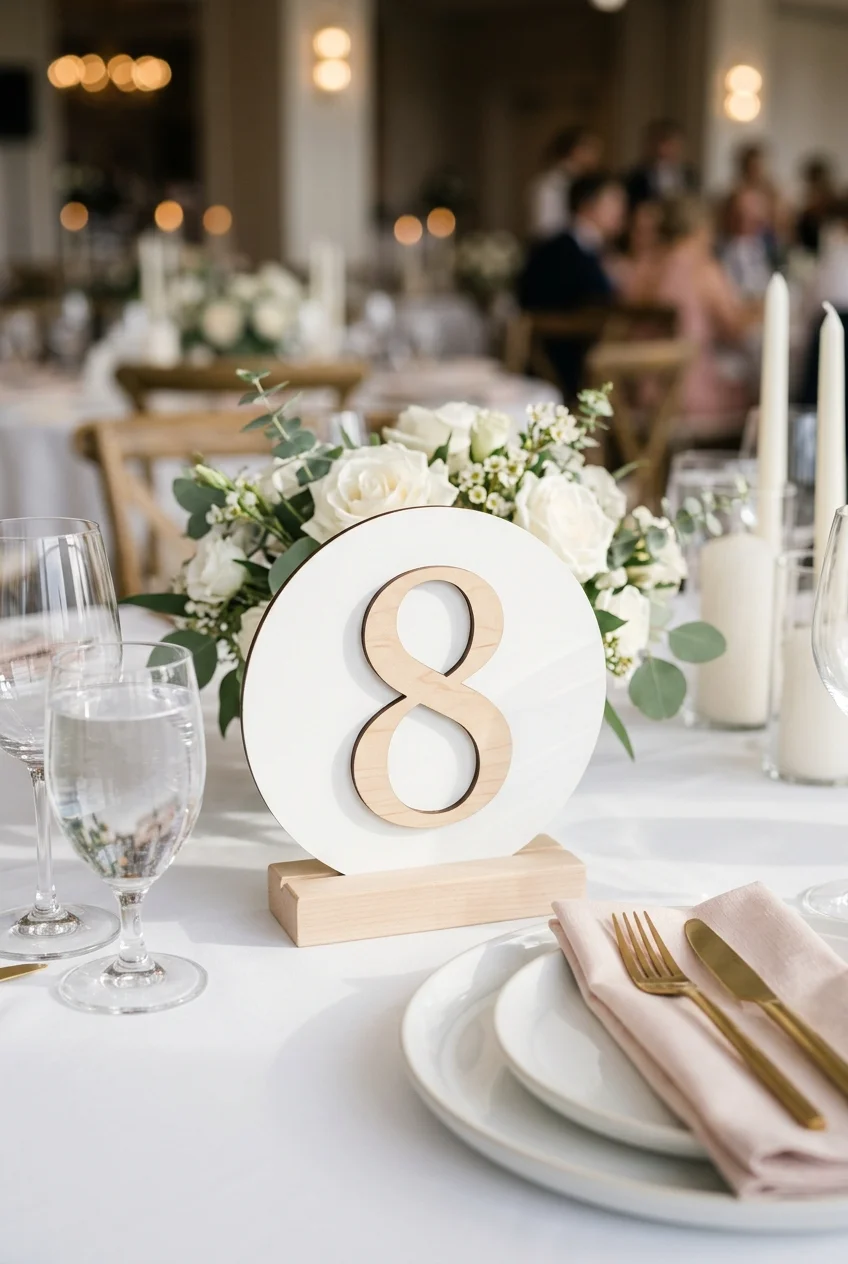
Mount a cutout numeral over a solid backing so it casts a small shadow and remains readable from across the room. A painted numeral on natural wood, or natural wood on a painted panel, creates enough contrast without adding more type.
Sand every edge and check that the base sits flat. Wood suits more than rustic weddings when the shape is clean and the finish relates to the venue's furniture rather than adding distressed details.
9. Hand-Painted Ceramic Tiles
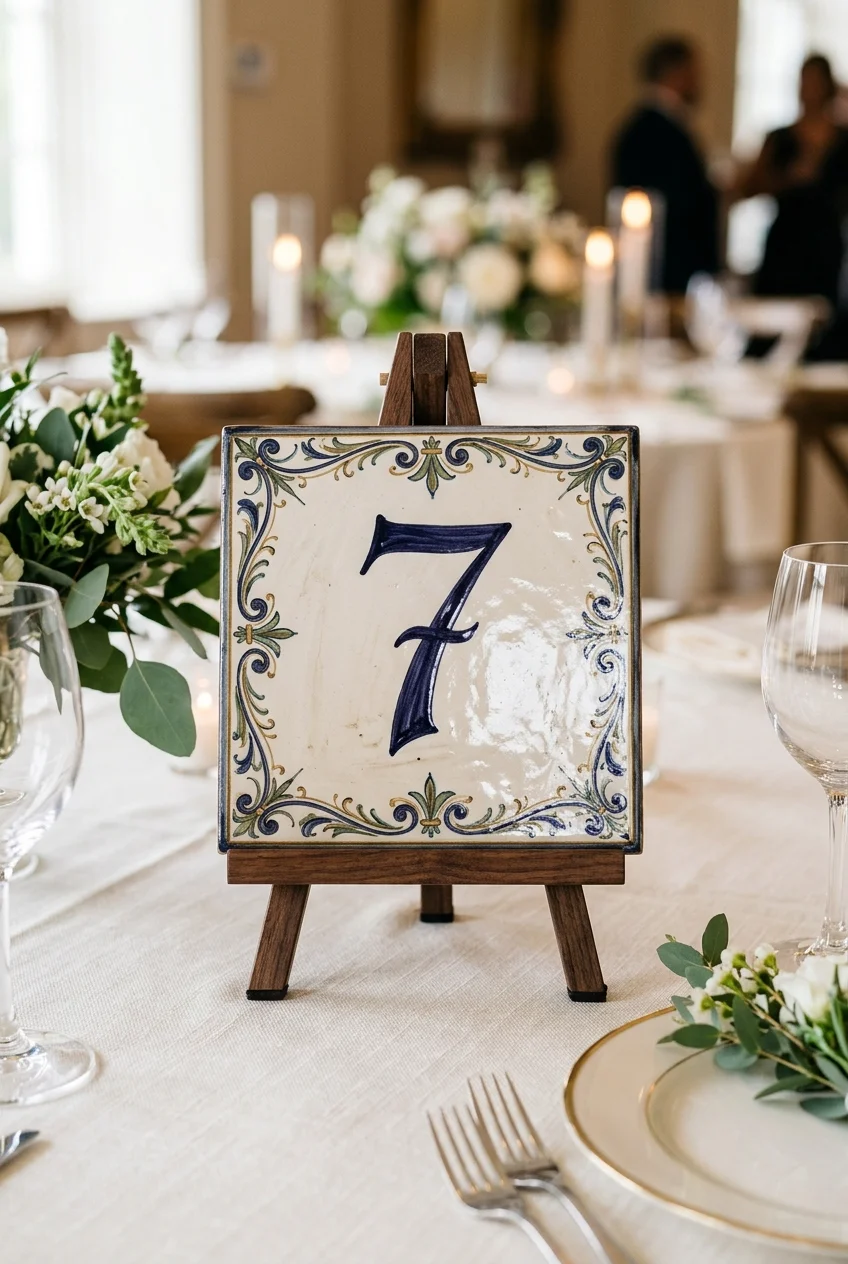
A ceramic tile gives a painted number visual weight and will not flutter outdoors. Use a tile easel or a grooved base rather than leaning it against a vase, and reserve detailed brushwork for the border so the numeral stays clear.
Setup note Add felt dots beneath the tile and holder to protect rented tables and prevent sliding on polished surfaces.
10. Vellum Number Sleeves Around LED Candles
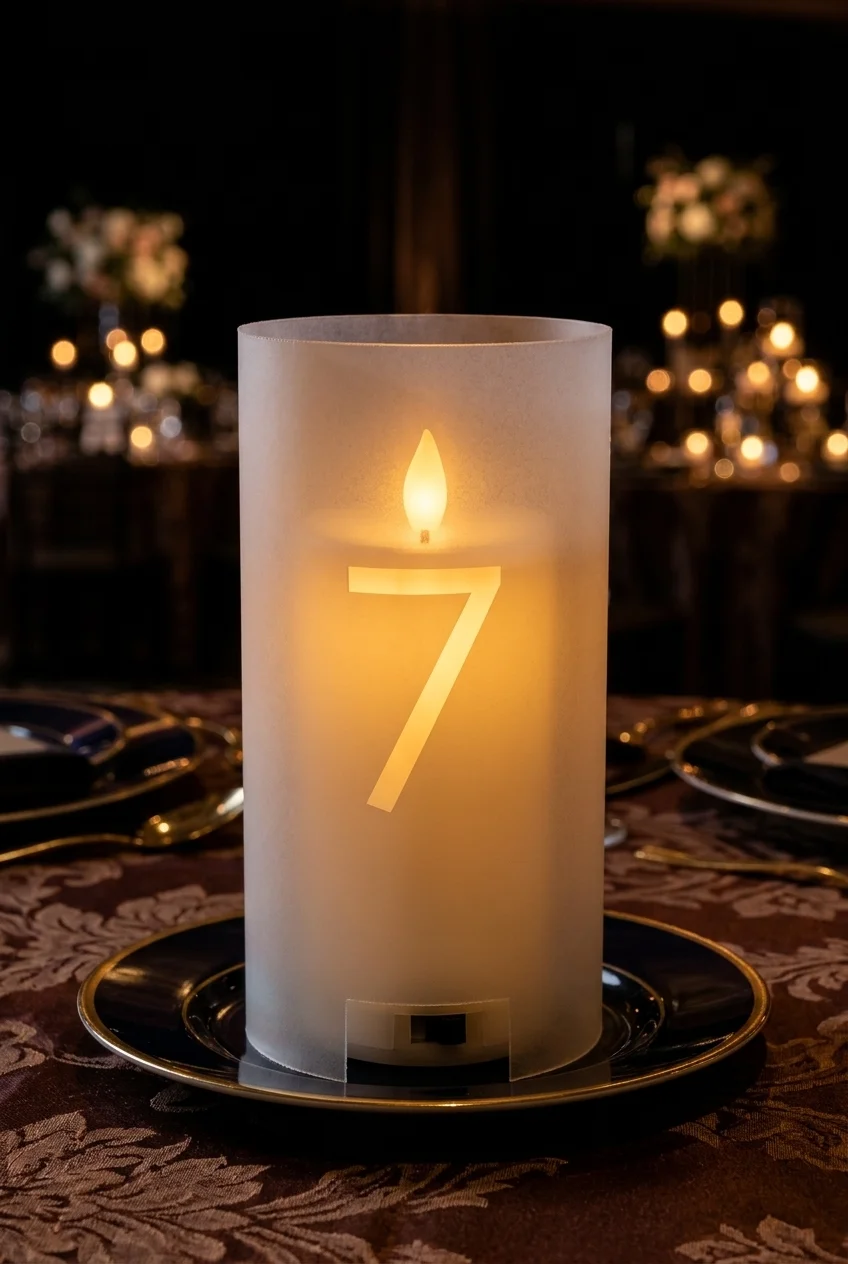
Wrap translucent vellum into a ventilated cylinder around a flameless pillar so the numeral glows after dark. Use an opaque printed number on two sides and keep the sleeve wide enough that it never touches the light housing.
This works best as a table number and light source in one, not as a shade around a real flame. Test the battery runtime and switch access before taping or fastening the sleeve.
Natural and Textile Table Numbers
11. Smooth Stones with Painted Numbers
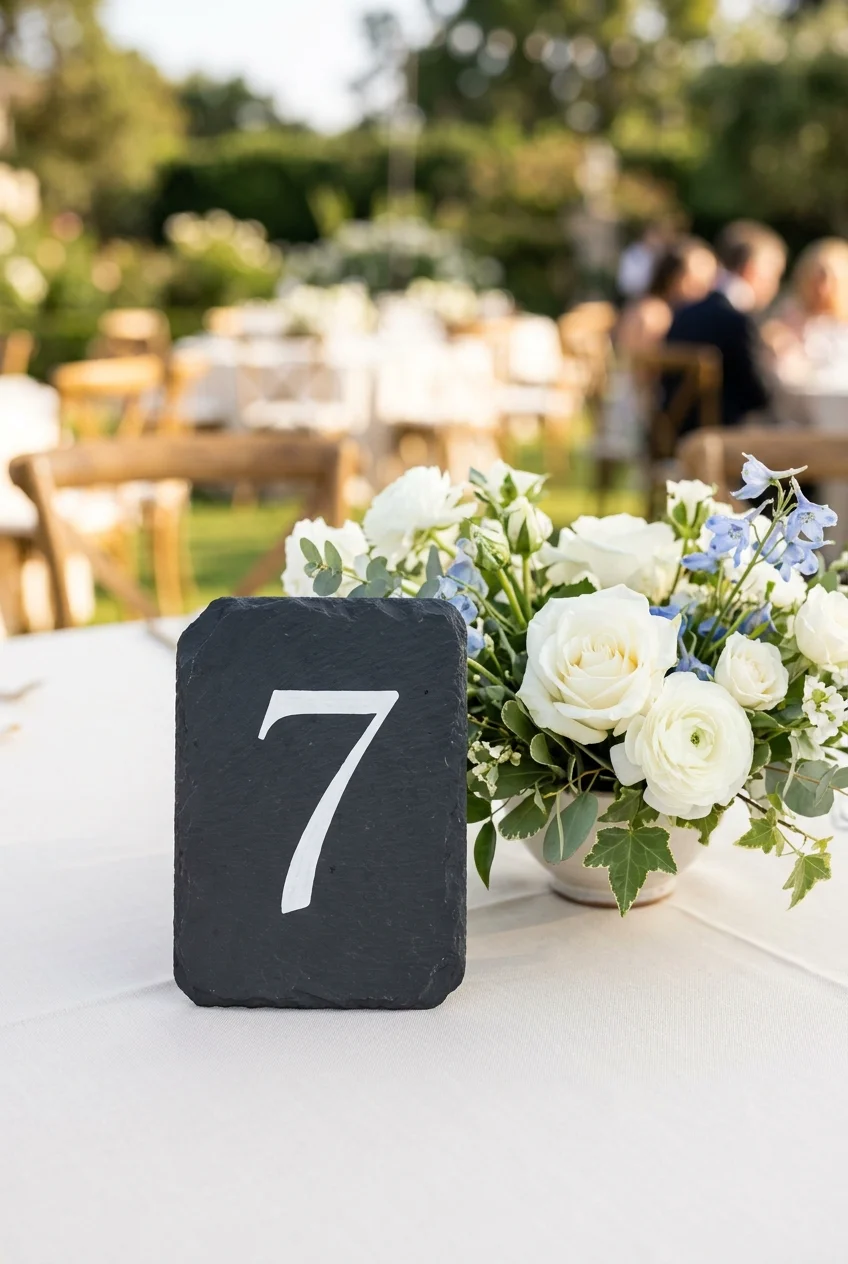
A flat stone makes a compact, wind-resistant number for an outdoor table. Choose pieces with enough face area for a bold numeral, wash and dry them thoroughly, and use paint that contrasts strongly with the stone.
Source stones legally from a landscape supplier or craft store rather than removing them from protected beaches, parks, or venue grounds. Add a clear protective coat only after testing that it does not create glare.
12. Slate Tiles with White Marker Numerals
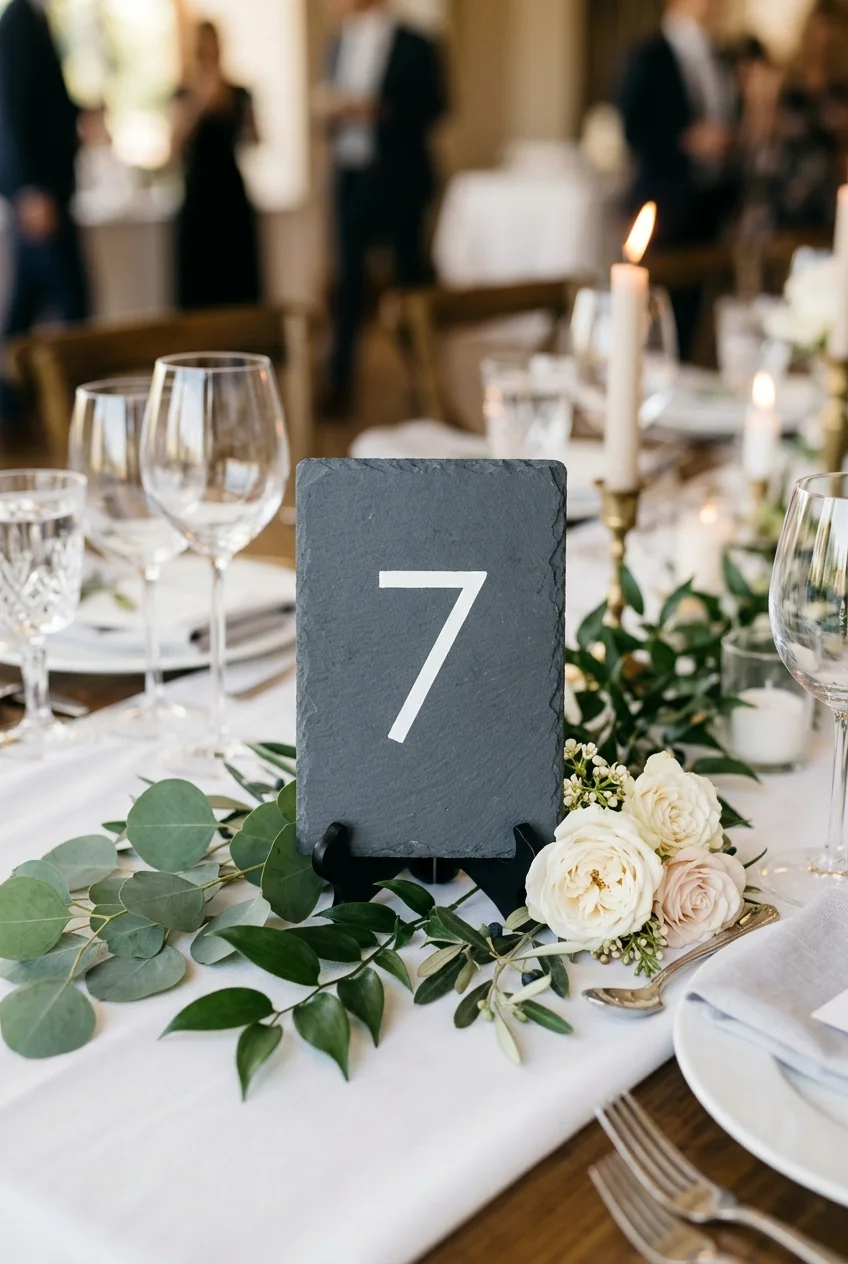
Matte slate provides a naturally dark field for a simple white number. Use a paint marker rather than loose chalk so the design survives transport, and place the tile in a stand with rubber or felt contact points.
Keep the lettering spare. Slate already has visible grain and chipped edges, so an elaborate border can make the small sign look crowded.
13. Terracotta Tiles with Cream Numbers
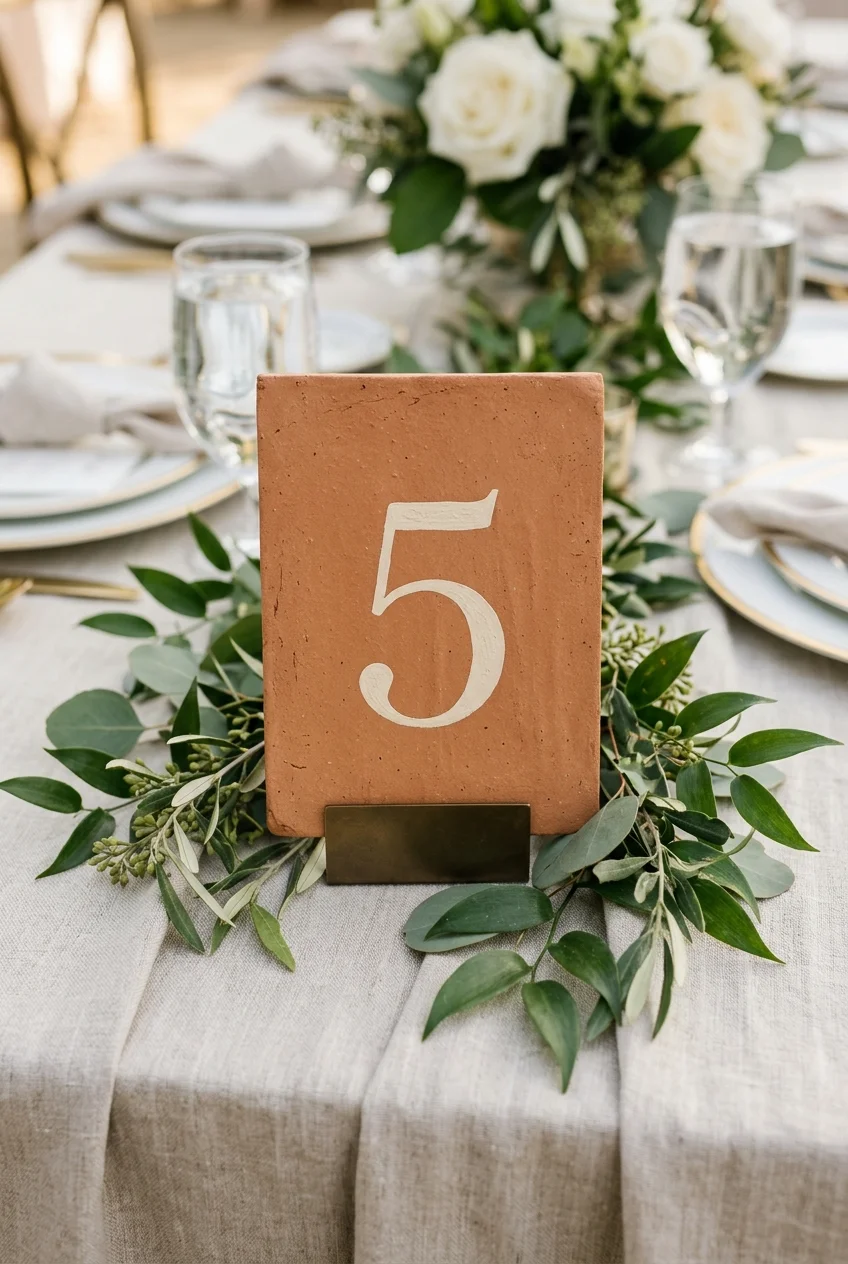
Unglazed terracotta adds warm color without using a printed background. Paint or apply a cream numeral large enough to cover the center, then seal the front if the material leaves powder on hands or linens.
Repeat terracotta elsewhere only once or twice, perhaps in place-card holders or plant pots. The table number should connect the palette, not turn every table into a theme display.
14. Wood Slices with a Clean Painted Face
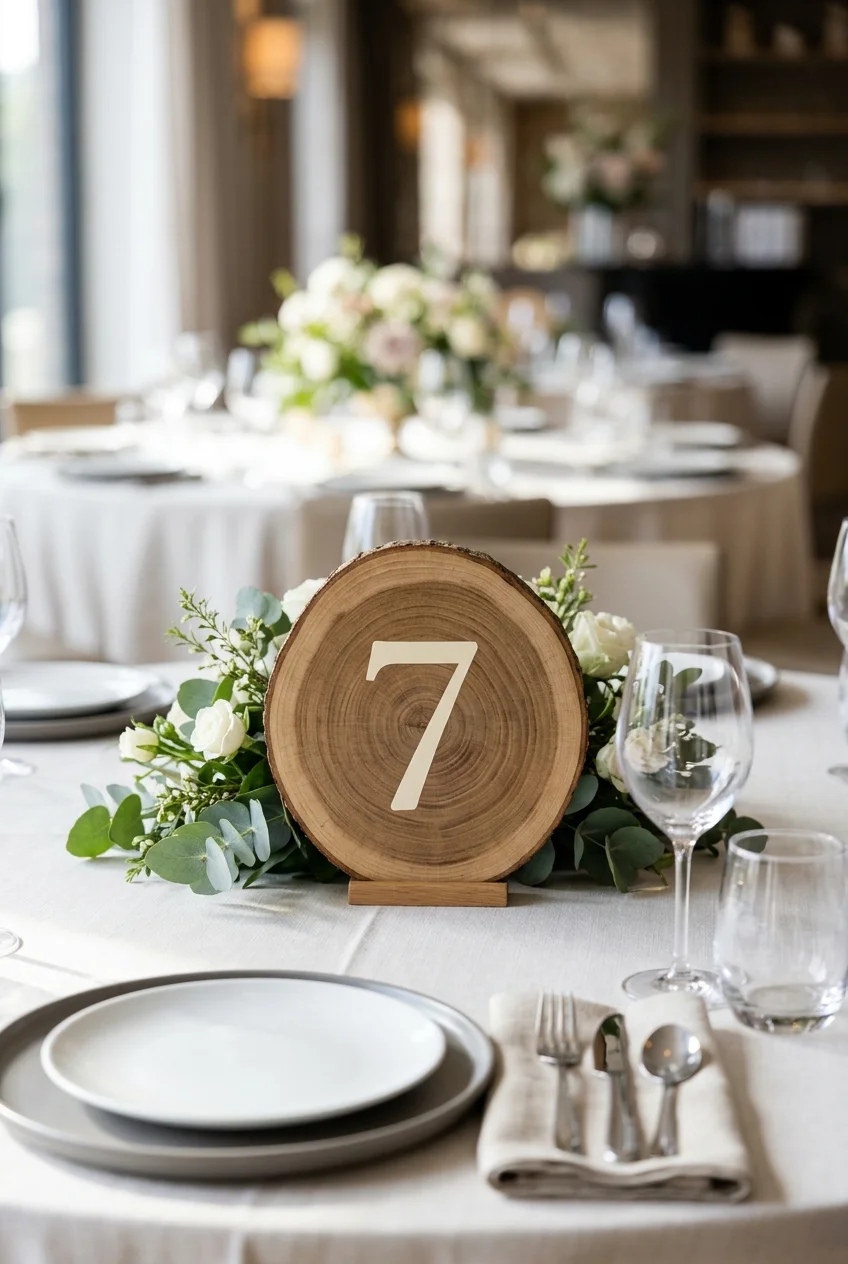
Use a thin, dry wood slice with one flat face rather than a thick stump that consumes centerpiece space. A solid painted numeral reads more clearly than fine burned script against visible rings and bark.
Watch for Unseasoned slices can crack or stain cloth. Seal both faces and test every piece on a scrap of pale fabric before the wedding.
15. Driftwood Holders with Upright Number Cards
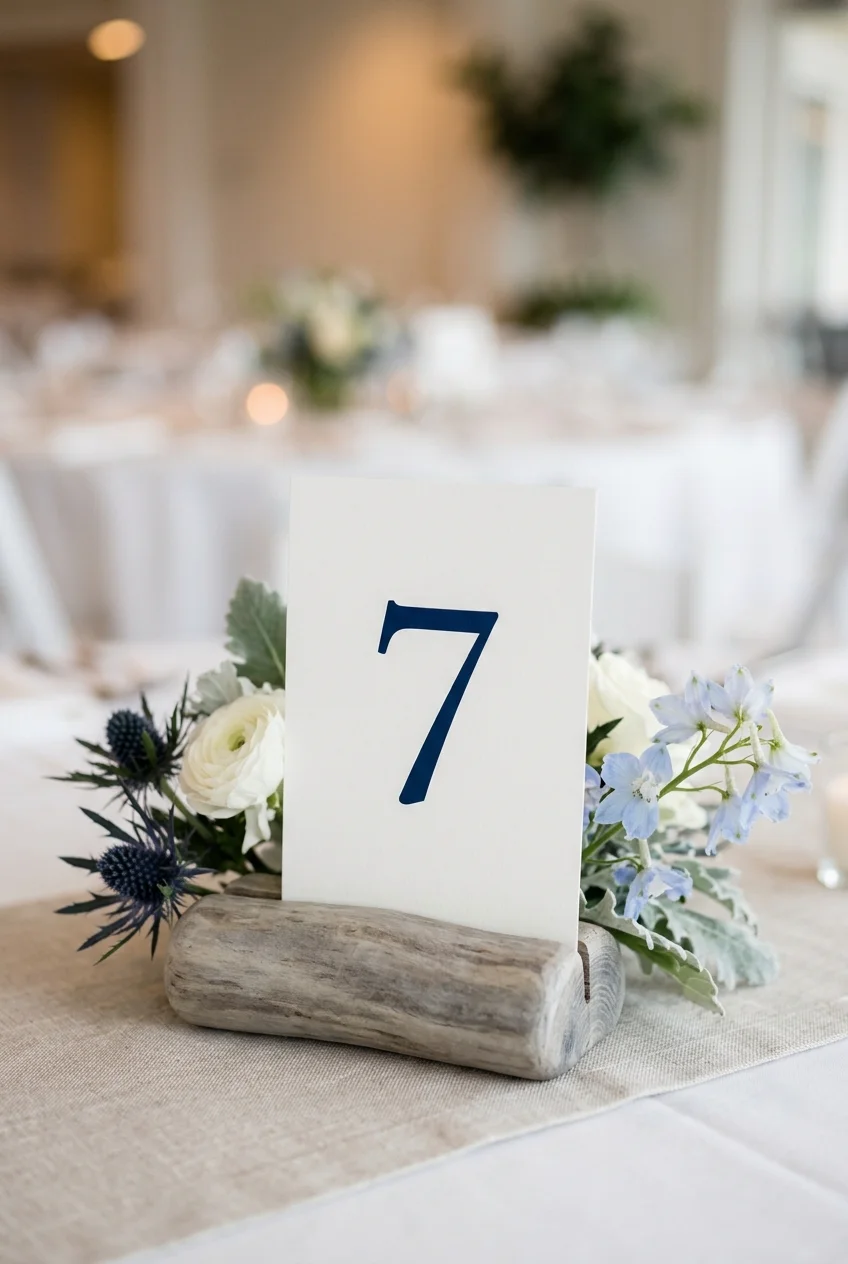
A short piece of driftwood can act as the holder rather than the sign itself. Cut a straight groove for a high-contrast card, sand the base flat, and keep the wood low so the number remains the visible element.
This approach fits a coastal setting without adding shells or nautical symbols. Use commercially sourced or personally owned material and check it for loose fibers before it reaches the table.
16. Pressed-Flower Cards with a Clear Number Window
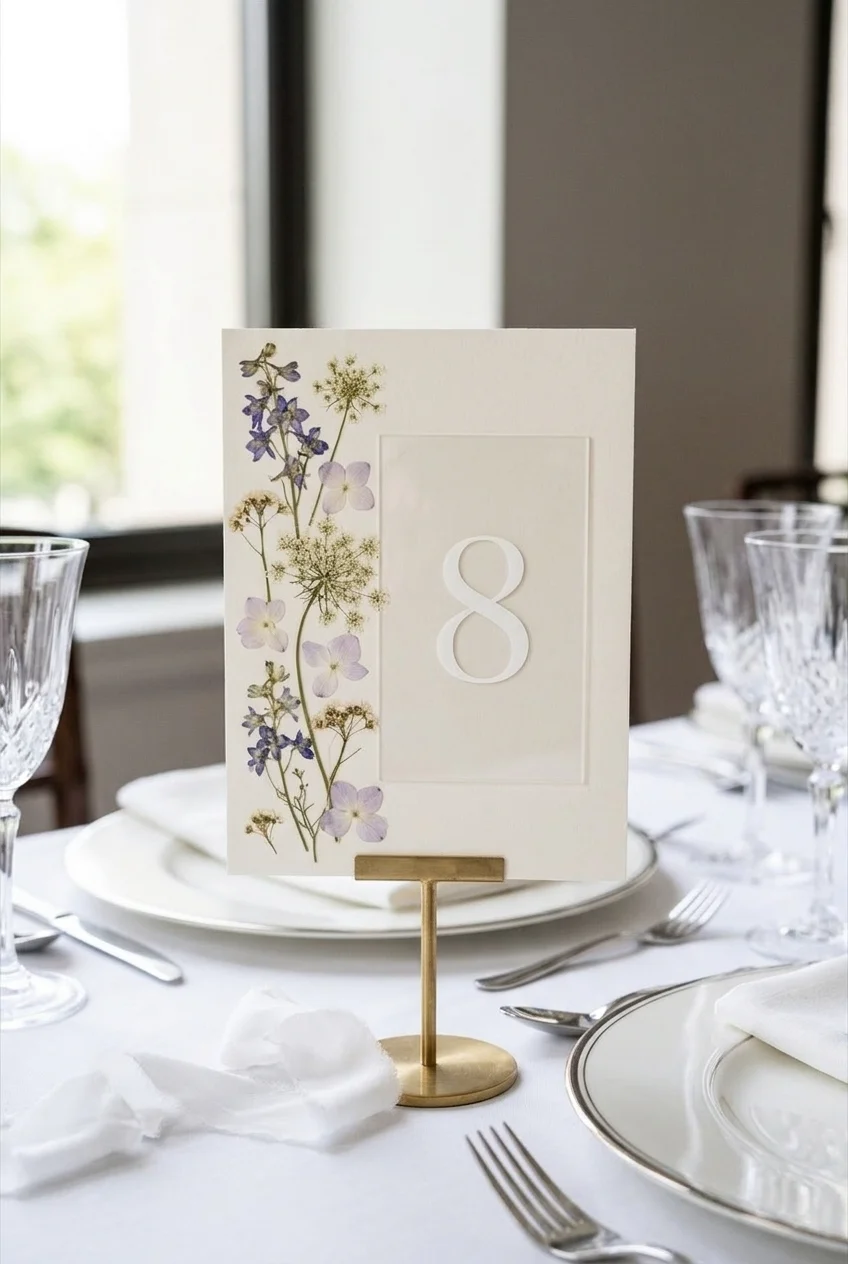
Arrange pressed petals along one edge of a thick paper card and leave the center nearly empty for the number. A clear window or pale solid panel behind the numeral stops the flowers from interfering with legibility.
Make the full set at once so drying time and flower color are consistent. Store the cards flat and away from humidity until setup.
17. Single Botanical Leaves with Metallic Numerals
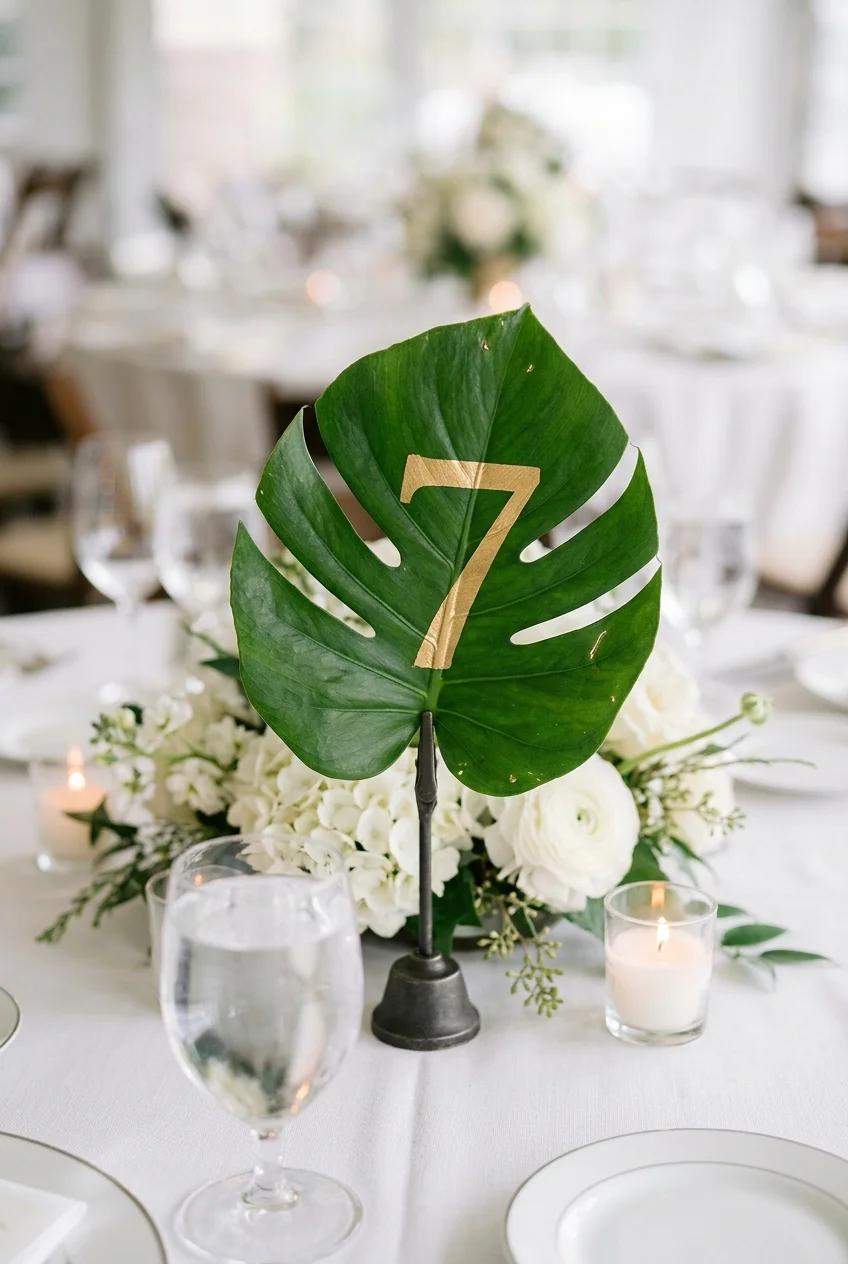
A broad, sturdy leaf can carry one painted numeral when it is mounted upright in a discreet clip. Choose leaves from a florist that will hold their shape for the event, and keep the number centered on an uninterrupted section.
Prepare a printed backup set in case the leaves crease, wilt, or arrive in inconsistent sizes. Do not rely on a delicate leaf lying flat among plates where guests cannot see it.
18. Plantable Seed-Paper Number Cards
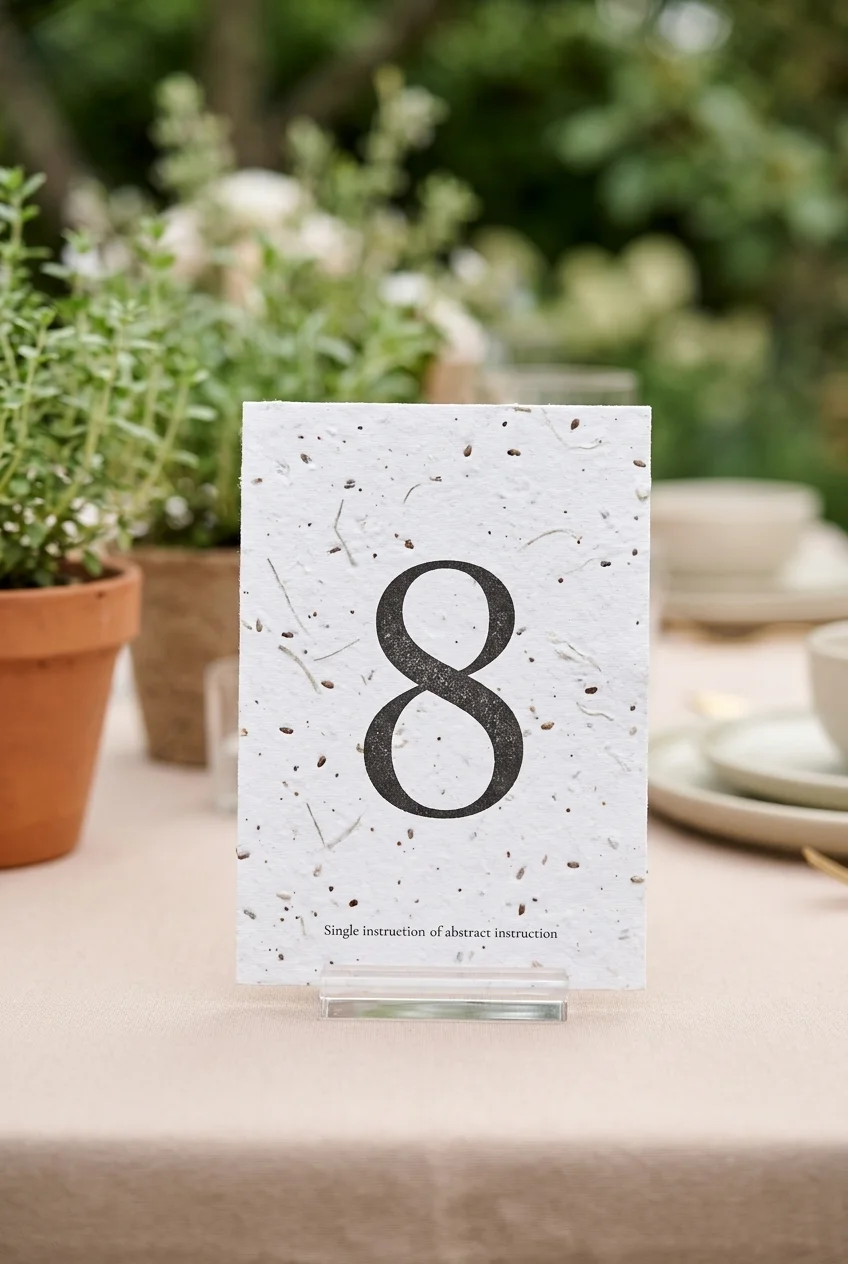
Seed paper gives the number a useful afterlife when the supplier confirms the paper is appropriate for the recipients' region and provides planting instructions. Keep the number large and the instruction line brief so the sign still works first as wayfinding.
Place each card in a reusable holder rather than folding thick seed paper, which may crack. Offer the cards after dinner instead of assuming every guest wants to take one.
19. Embroidered Numbers in Mini Hoops
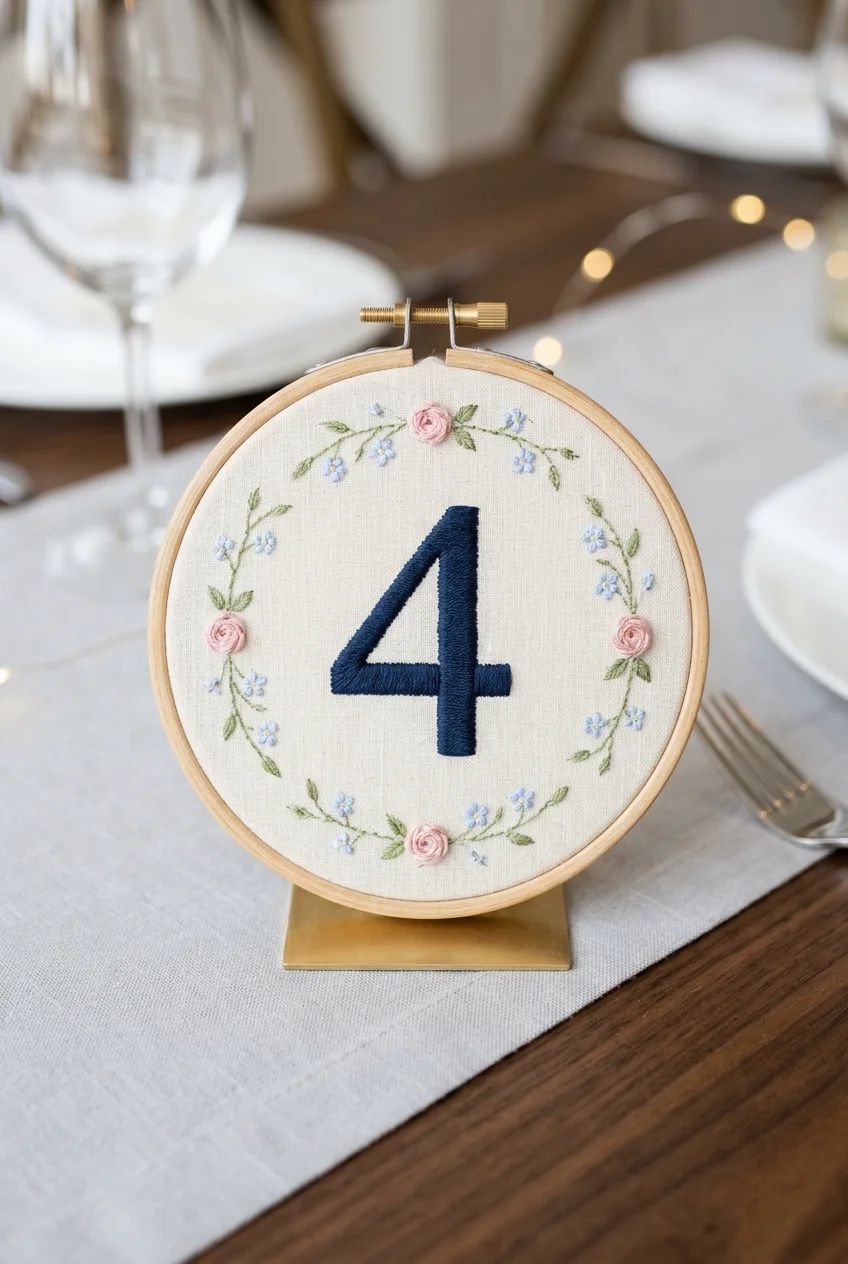
A small embroidery hoop adds soft texture while keeping the sign upright. Stitch a thick, simple numeral on solid fabric and trim the backing neatly so both sides look finished when the hoop is viewed across the table.
Use a plate stand or attached flat foot to stop the hoop from rolling. Fine floral embroidery can frame the edge, but it should not reduce the contrast around the number.
20. Woven Cane Panels with Solid Number Plaques
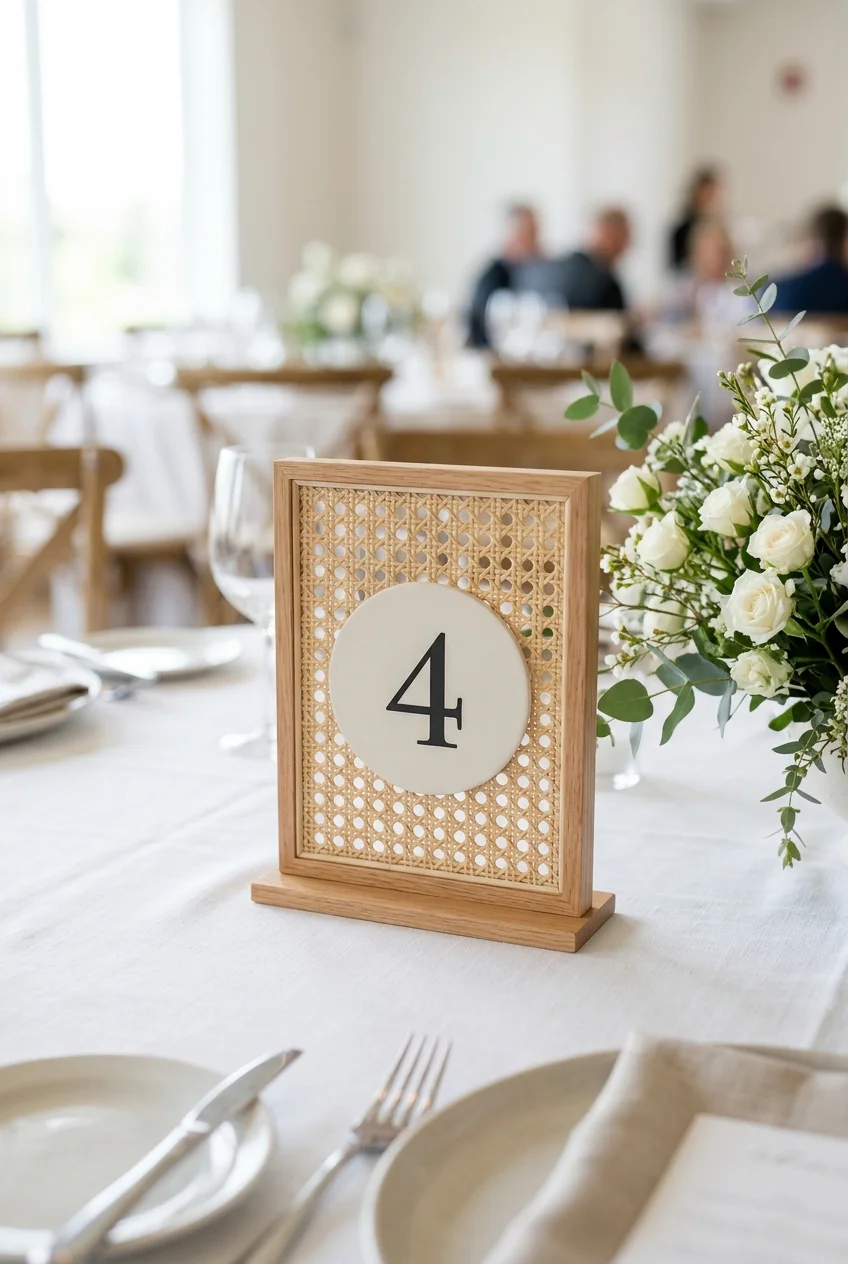
Use cane or another open weave as a textured backing, then mount an opaque numeral plaque on top. The solid plaque is essential: a number printed directly across the weave breaks apart visually from a distance.
Finish the edges inside a slim frame and choose a stand that supports the full width. Loose woven corners can catch on linens or snag nearby greenery.
Objects That Double as Table Numbers
21. Numbered Wine Bottles with Simplified Labels
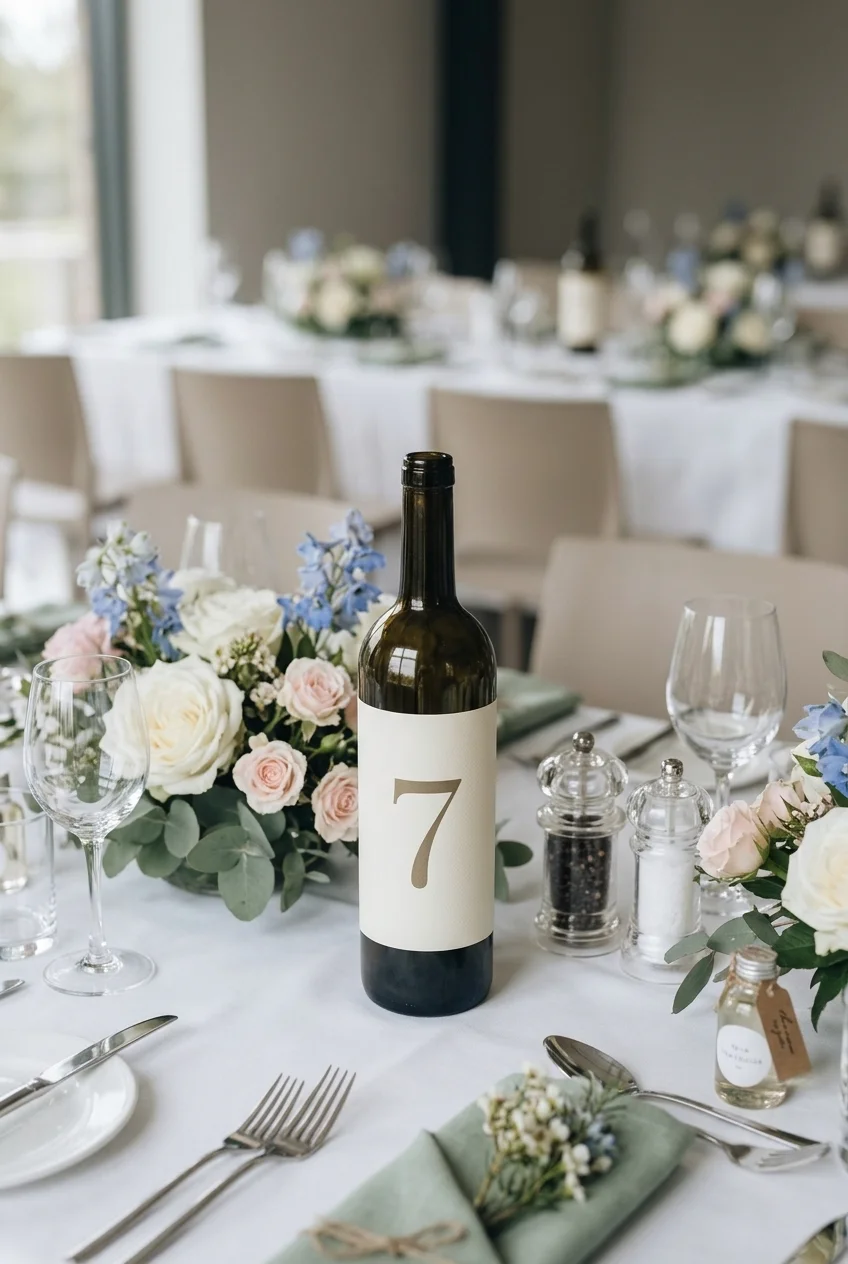
An empty wine bottle can add height while taking little surface area. Remove the commercial label completely and apply a new wrap with one large number, leaving the bottle unbranded and easy to read.
Use clean, dry bottles and add discreet weight if the venue is breezy. Do not place a numbered bottle in an ice bucket or among service wine, where staff and guests may mistake its purpose.
22. Number Tags Tied to Water Carafes
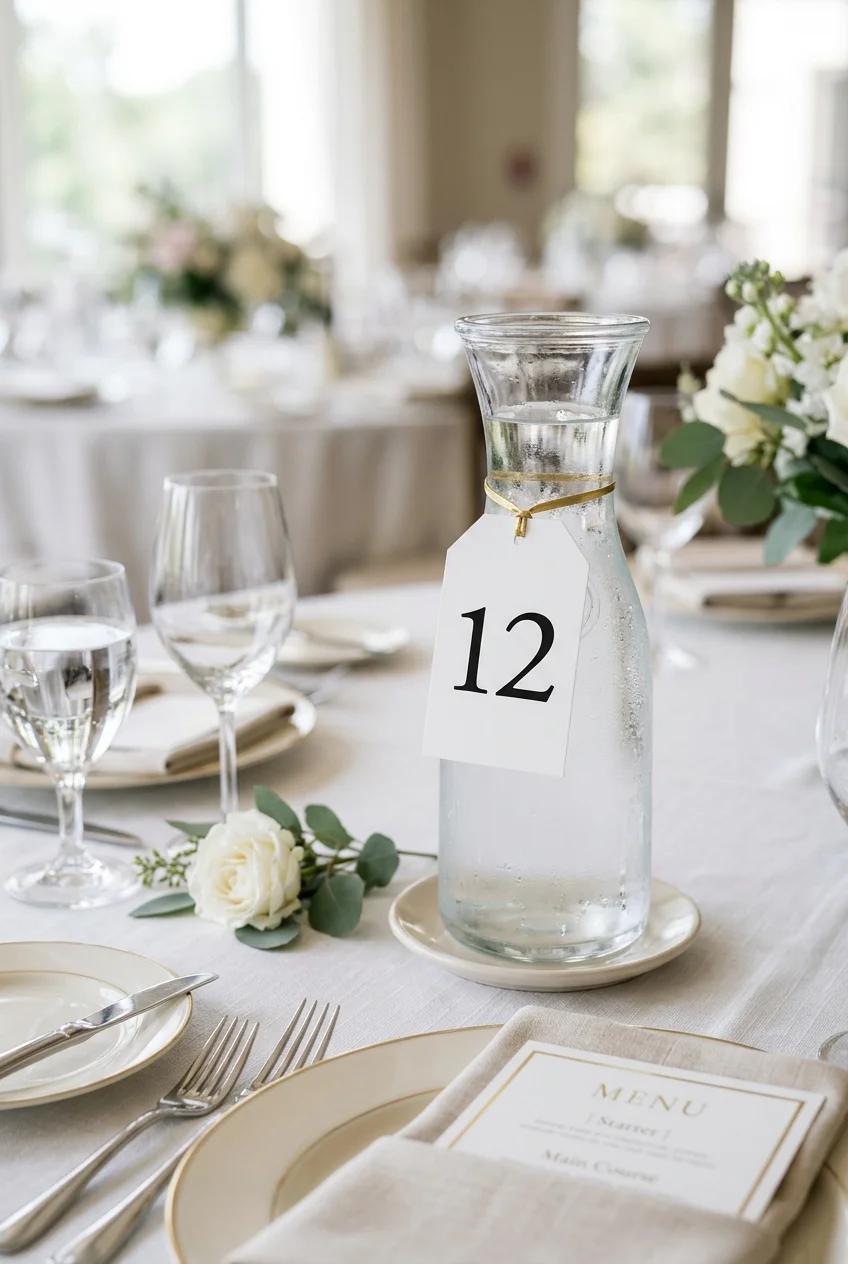
Tie a rigid number tag around the neck of a decorative water carafe that stays on the table. Use a short cord and waterproof material so the tag does not dip into glasses, collect condensation, or turn away from the room.
Confirm that staff will not remove or exchange the numbered carafe during service. If refills require swapping vessels, use the carafe as a vase instead or choose a separate holder.
23. Bud Vases with Number Charms
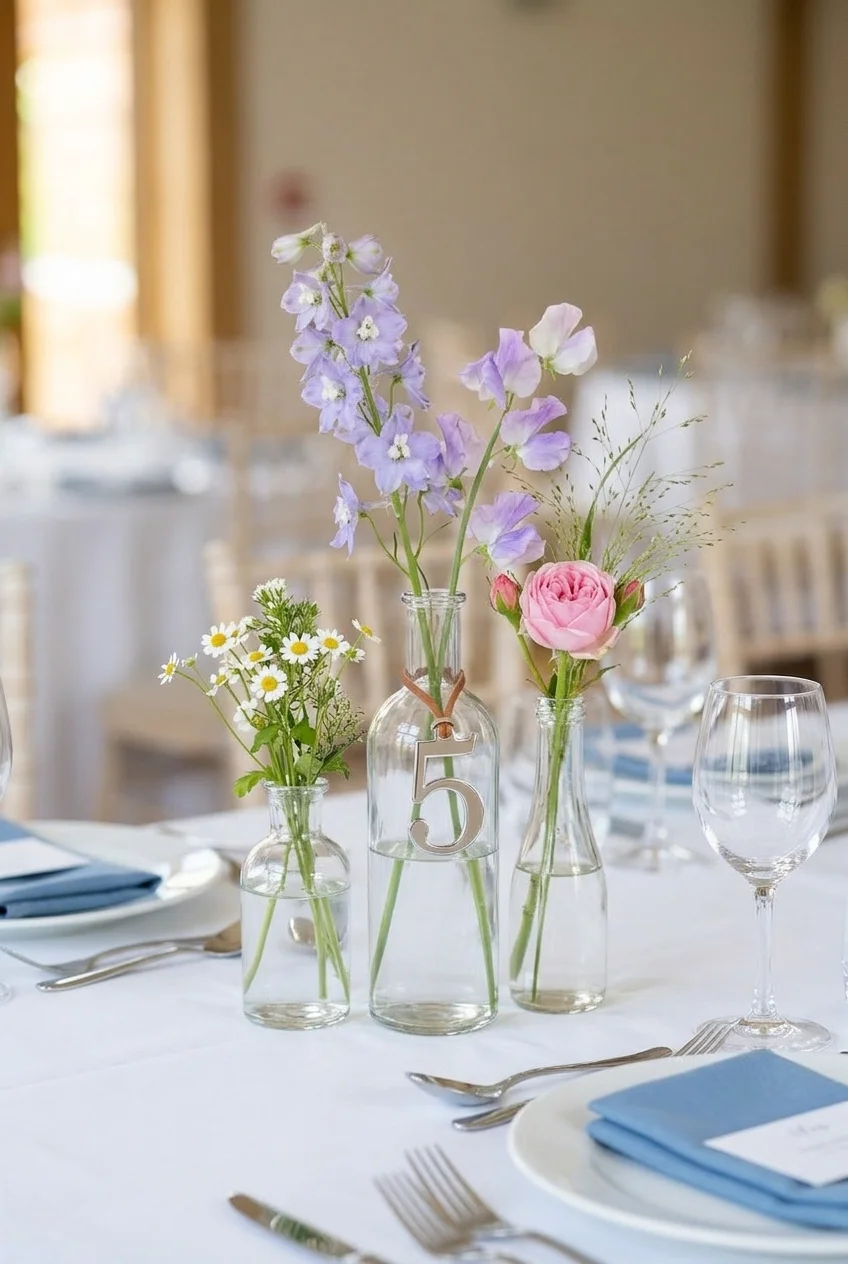
Hang a rigid numeral charm from the neck of one slightly taller bud vase, leaving the remaining vases unnumbered. The designated vase should sit toward the room-facing edge of the arrangement so stems do not hide the charm.
Setup note Fill and wipe the vase before attaching paper or wood pieces. Water droplets can warp the tag and stain ribbon.
24. Mini Potted Plants with Number Stakes
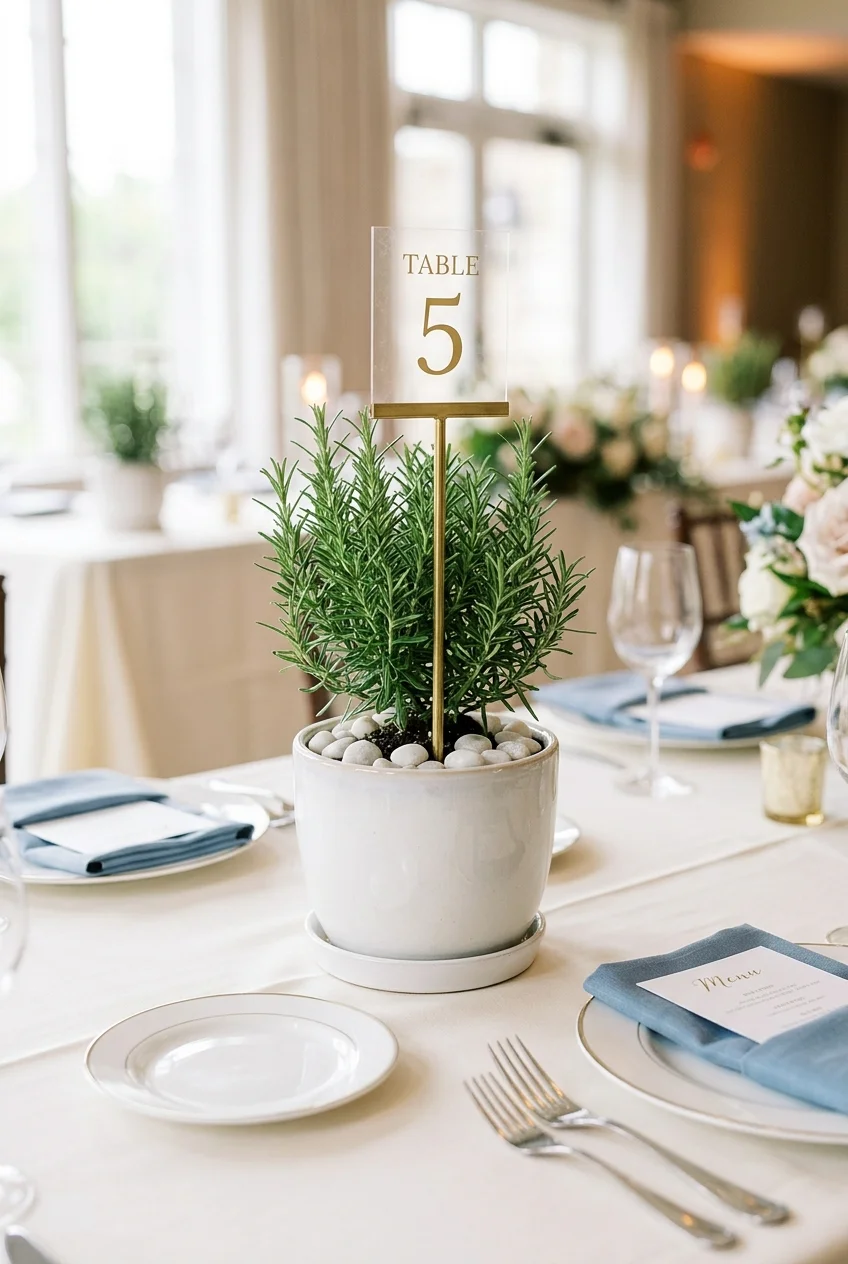
Insert a broad number stake into a compact potted herb or plant so the table marker becomes part of the centerpiece. Cover the soil neatly and position the stake above the foliage, not within it.
Choose plants without sharp leaves, strong fragrance, or loose soil near food. A saucer or sealed cachepot protects the table, and the number should remain with the plant during cleanup if it will be given away.
25. Lanterns with Numbered Glass Panels
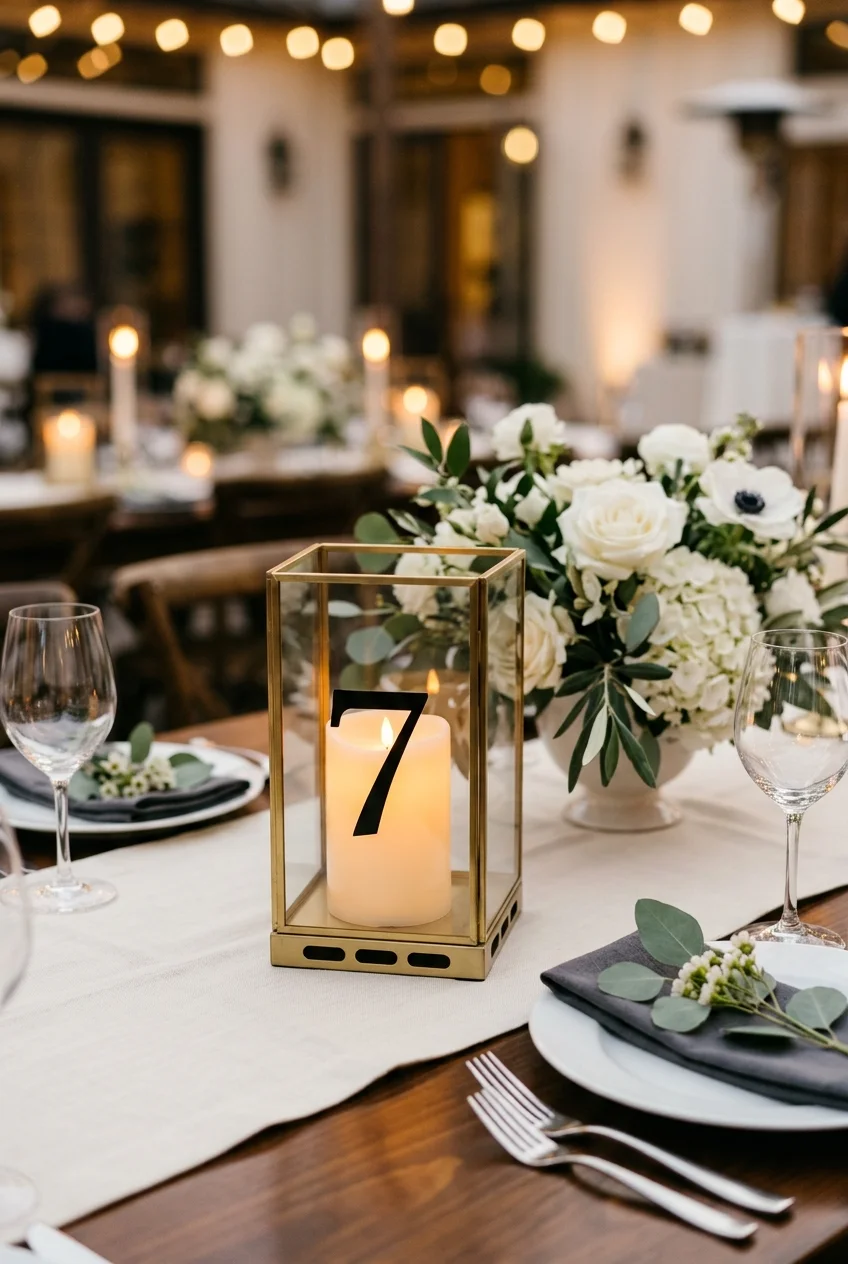
Apply a numeral to one glass panel of a compact lantern and light it with a flameless candle. The number should be opaque and large enough to remain visible when the light is on.
Face the numbered panel toward the seating-chart route and secure the battery door. Keep ventilation openings clear and use only the light source approved by the venue.
26. Vintage Book Covers with Cutout Numbers
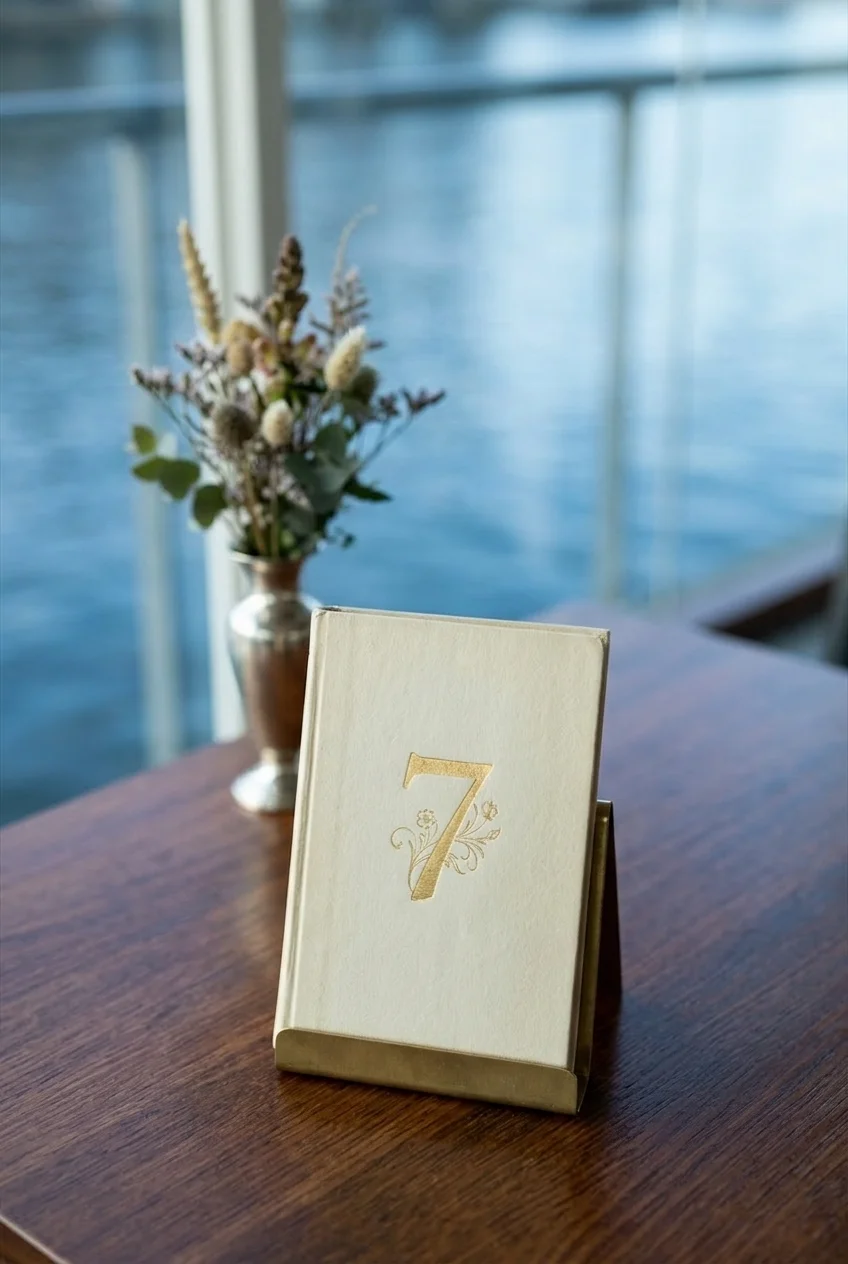
Stand a closed book upright and add a removable paper jacket or cutout number rather than altering a valuable volume. A narrow plate stand keeps the cover visible and prevents a stack from taking over the table.
Choose books you own or inexpensive copies with sturdy bindings. Keep titles and imagery secondary, especially if the books vary, so guests scan the numbers rather than stopping to interpret the covers.
27. Vintage Clocks Set to the Table Number
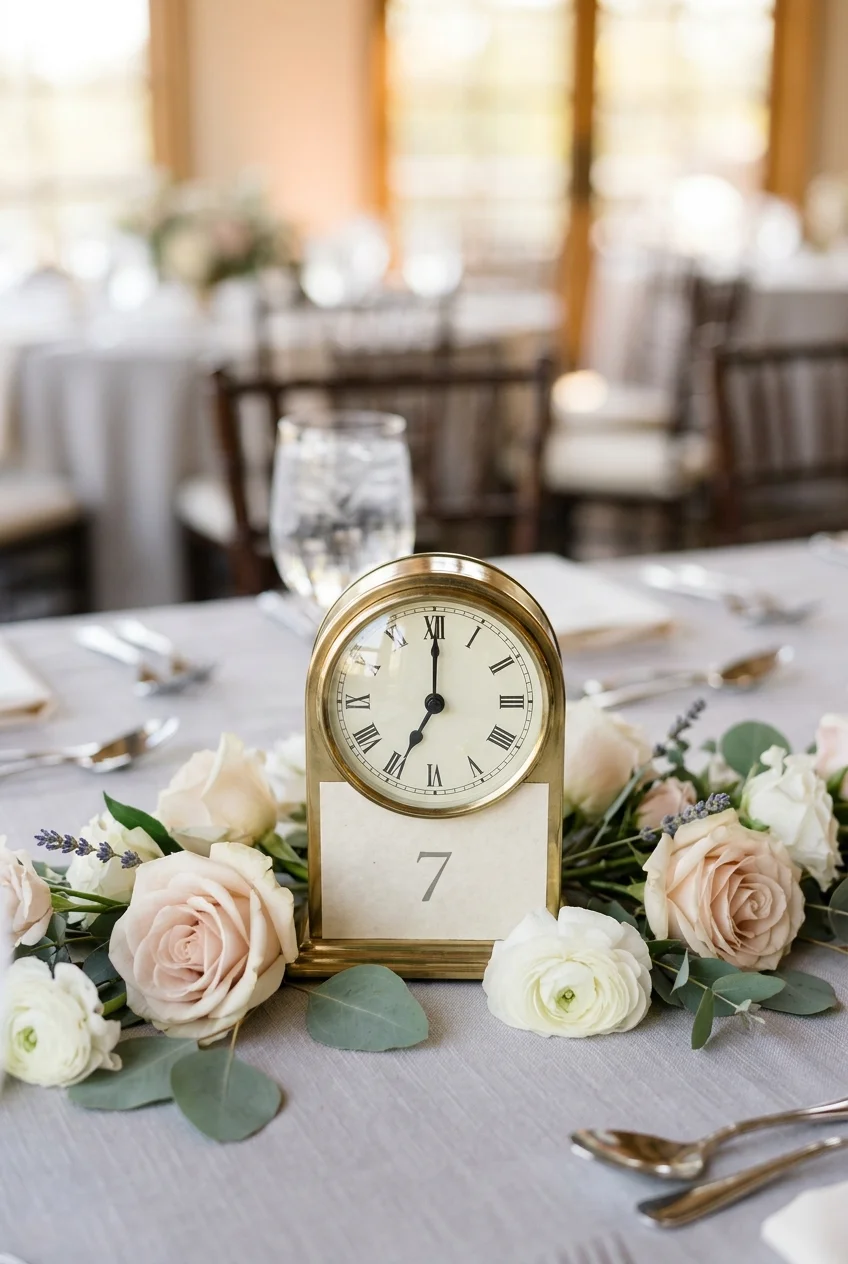
For tables 1 through 12, set a small analog clock to the corresponding hour and add a discreet printed numeral beneath it. The numeral prevents confusion while the clock face provides the visual idea.
Use silent, non-running clocks so alarms and ticking do not disturb dinner. This concept is best for a small reception; extending it past 12 makes the system harder to understand.
28. Vinyl Records with Numbered Center Labels
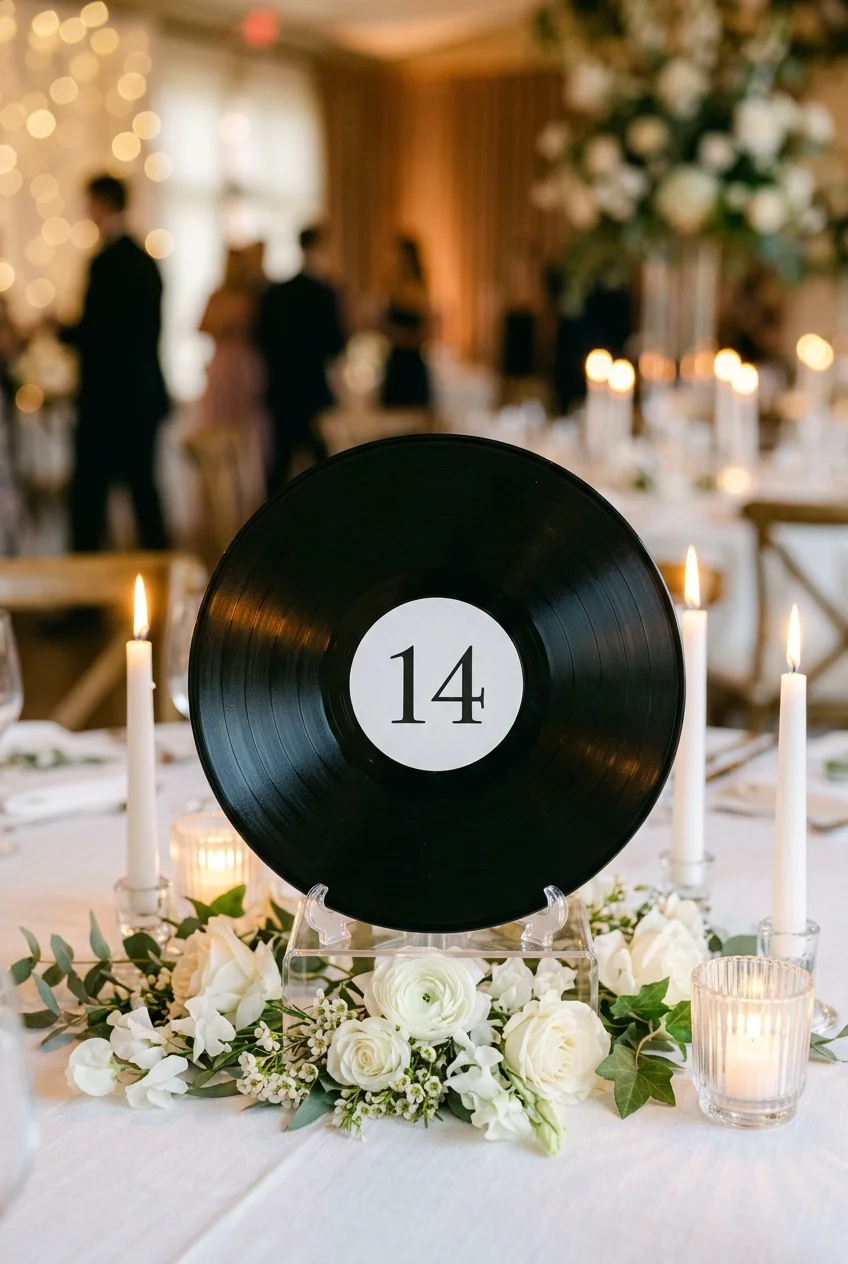
Mount an inexpensive or unusable record upright and replace the center label with a large table number. A low display stand keeps the disk vertical without hiding too much of the centerpiece behind a dark circle.
Do not drill or glue collectible records. Use duplicates, damaged discs, or purpose-made blanks, and keep the album references on the seating chart if each table also has a song or artist name.
29. Luggage Tags on Mini Suitcases
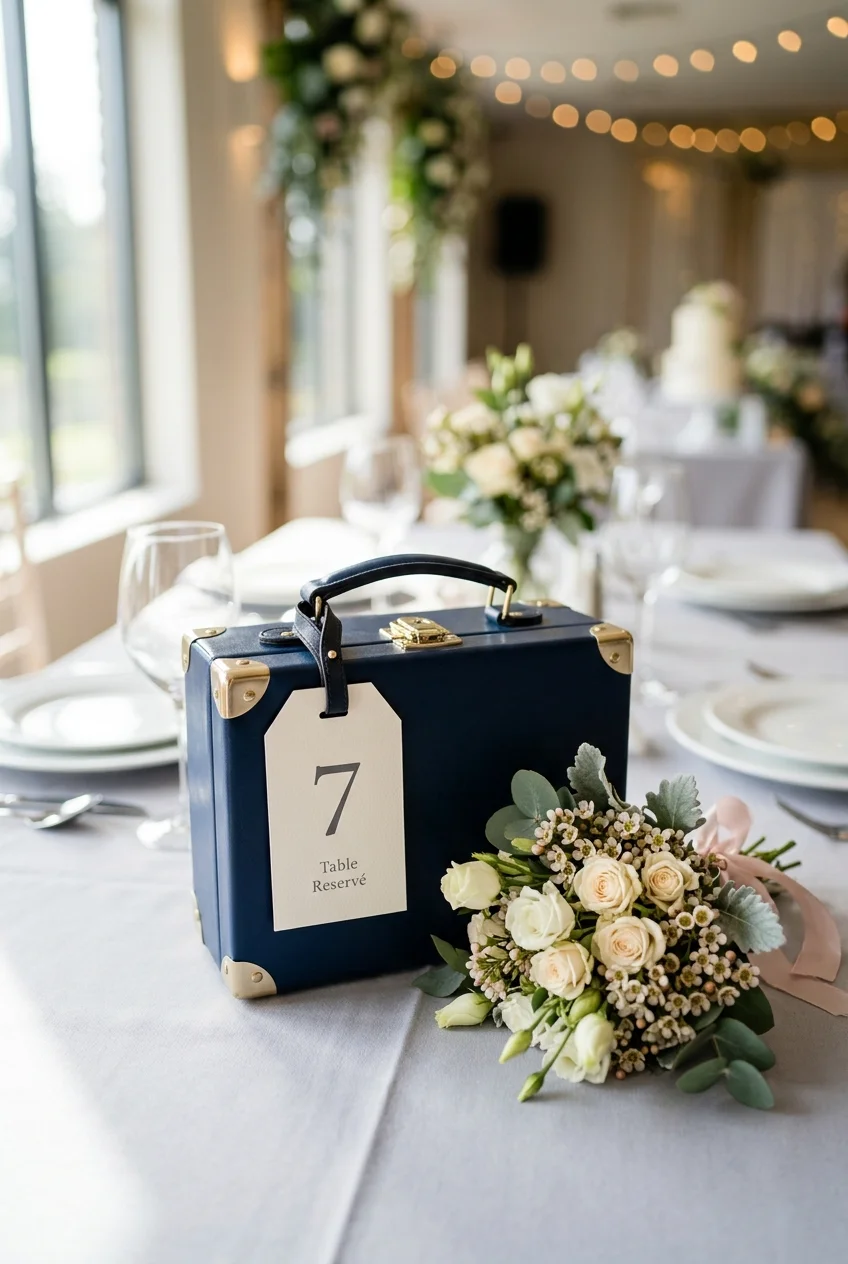
A small structured suitcase can hold flowers, favors, or nothing at all while a rigid luggage tag supplies the table number. Keep the case closed or only slightly open so it does not occupy the space needed for plates and glasses.
Repeat one case size and tag shape across the set. Mixed luggage looks deliberate when the proportions match; a random range of boxes and trunks can make some numbers much harder to find.
30. Combined Menu and Table Number Cards
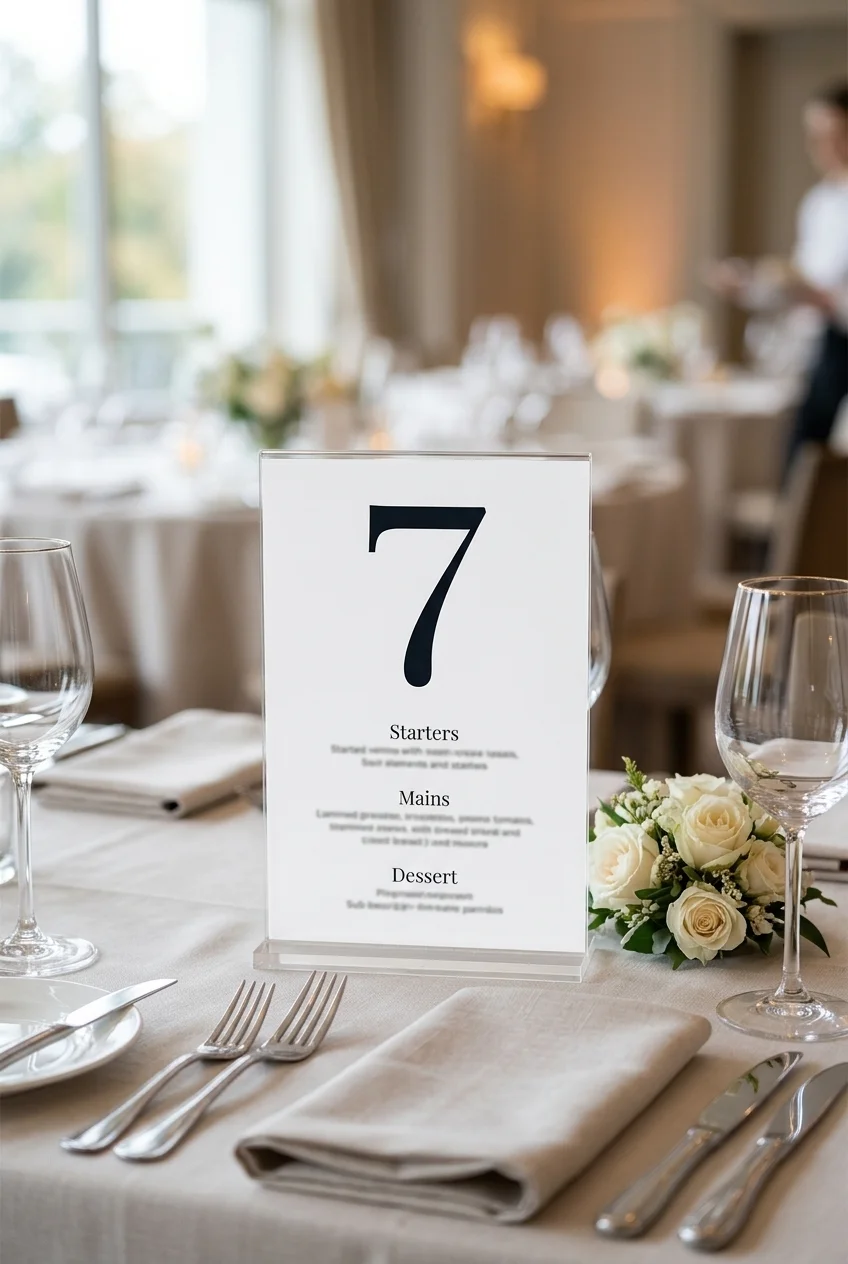
Put the table number on the upper third of a standing menu card and the courses below it. This reduces tabletop pieces, but the number must be much larger than the menu copy and visible above plates or shared dishes.
Print the number on both sides if the card sits at the center of a round table. For family-style service, move the card toward the edge so platters do not block it.
Personal Table Numbers That Tell a Story
31. Photos of the Couple at Each Matching Age
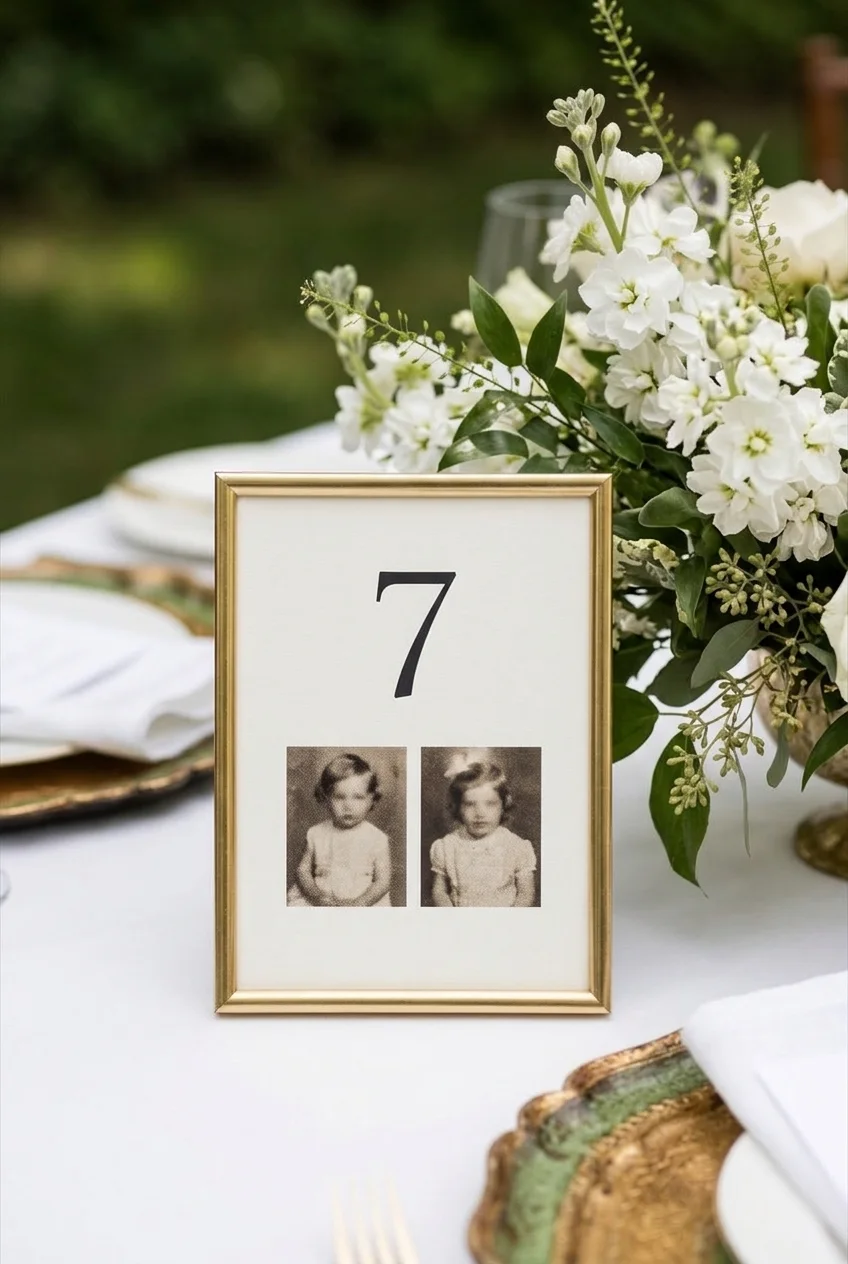
Table 1 can show age-one photos, Table 2 age two, and so on until the available tables or ages run out. Put the table number above the images and use consistent crops so the set feels like one timeline rather than fifty unrelated snapshots.
Scan originals instead of taking photographs of glossy prints, and ask family members before displaying sensitive childhood images. A single photo per partner is enough.
32. Relationship Timeline Years with Small Table Numbers
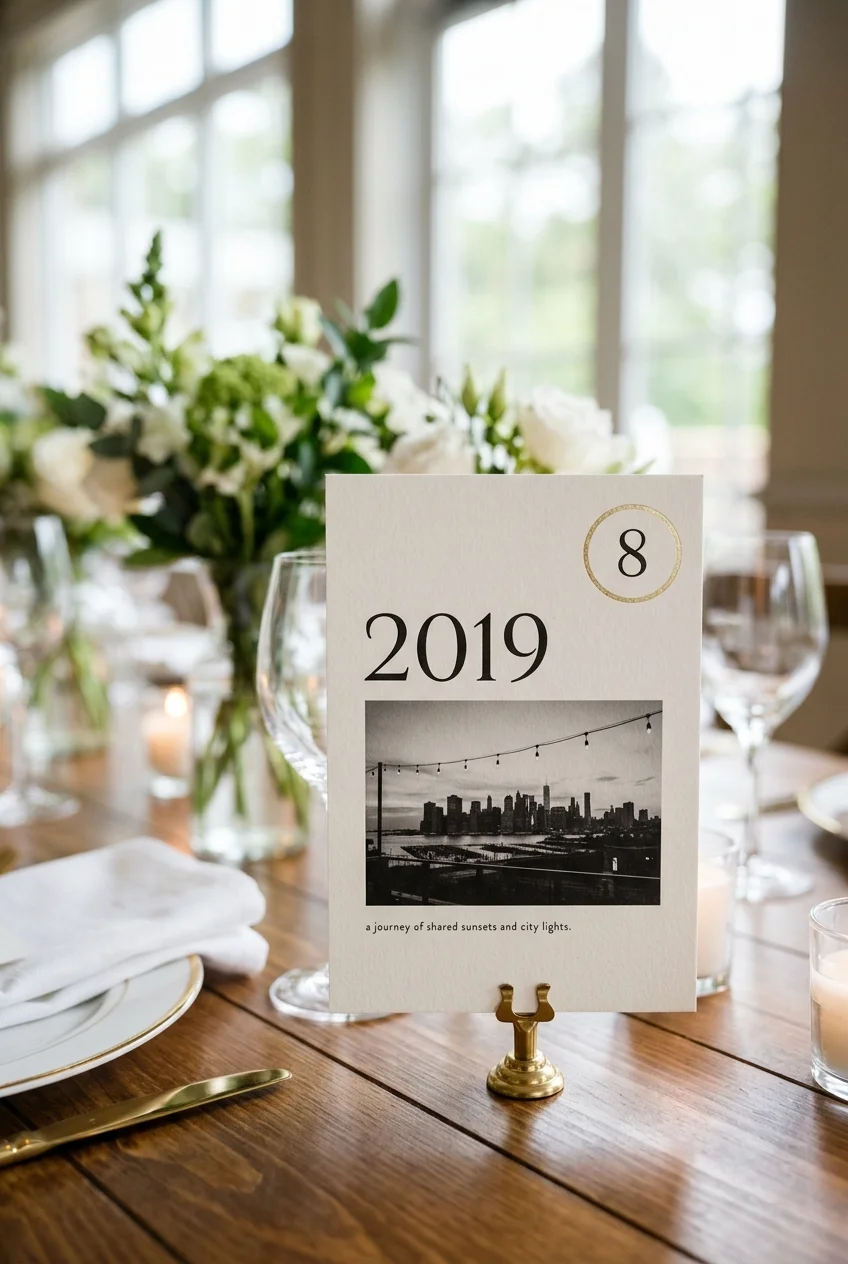
Feature a meaningful year, such as when the couple met or moved, while keeping the actual table number in a consistent corner. The seating chart should list both identifiers so guests do not mistake 2019 for Table 2019.
Use only dates both partners are comfortable sharing. One short caption gives context; a long paragraph is difficult to read in dim reception light.
33. One-Line Fun Facts Beside the Numeral
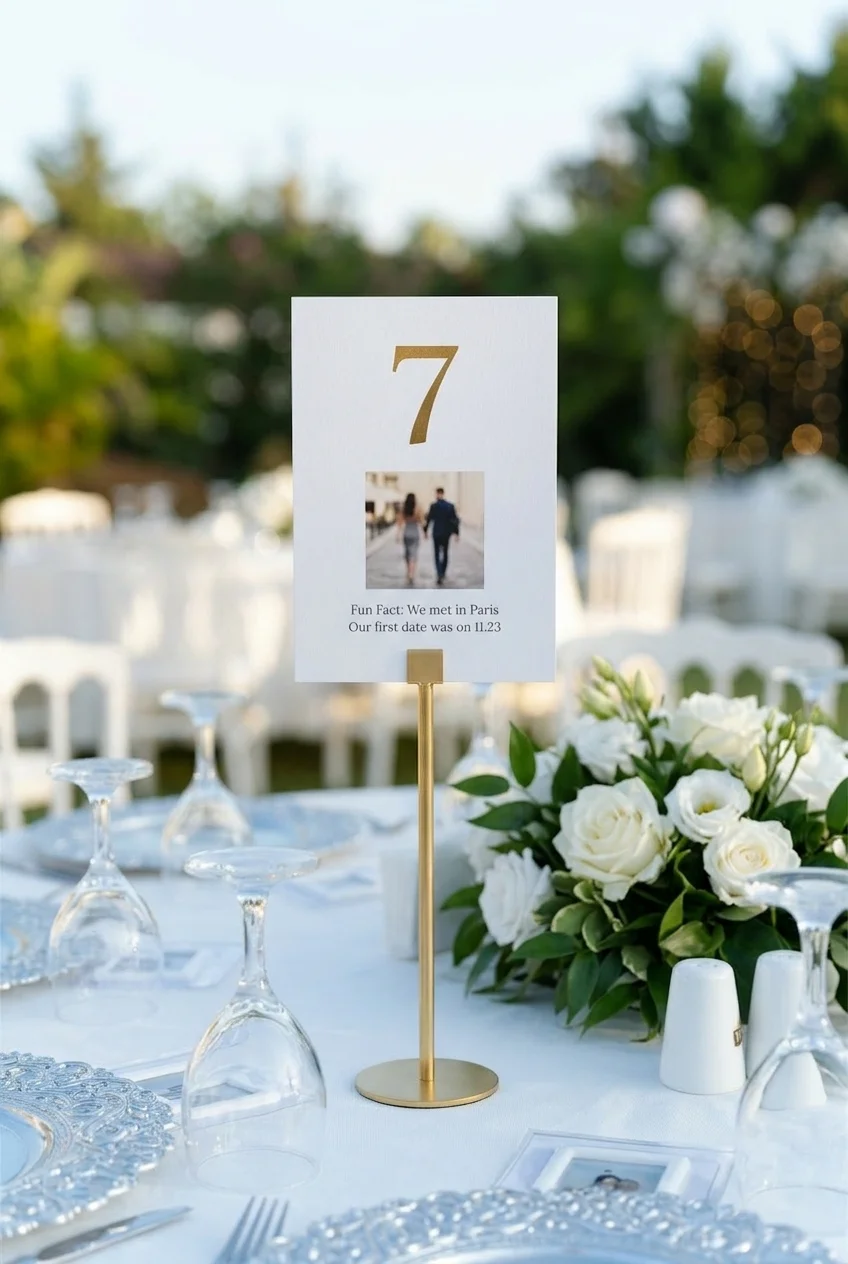
Pair each table number with one brief fact about the couple, such as a shared hobby, first meal, or memorable trip. Set the numeral at least several times larger than the fact so wayfinding remains immediate.
Editing tip Remove inside jokes that need a long explanation. A guest should understand the line in a few seconds and move on to their seat.
34. Travel Postcards with Numbered Postmarks
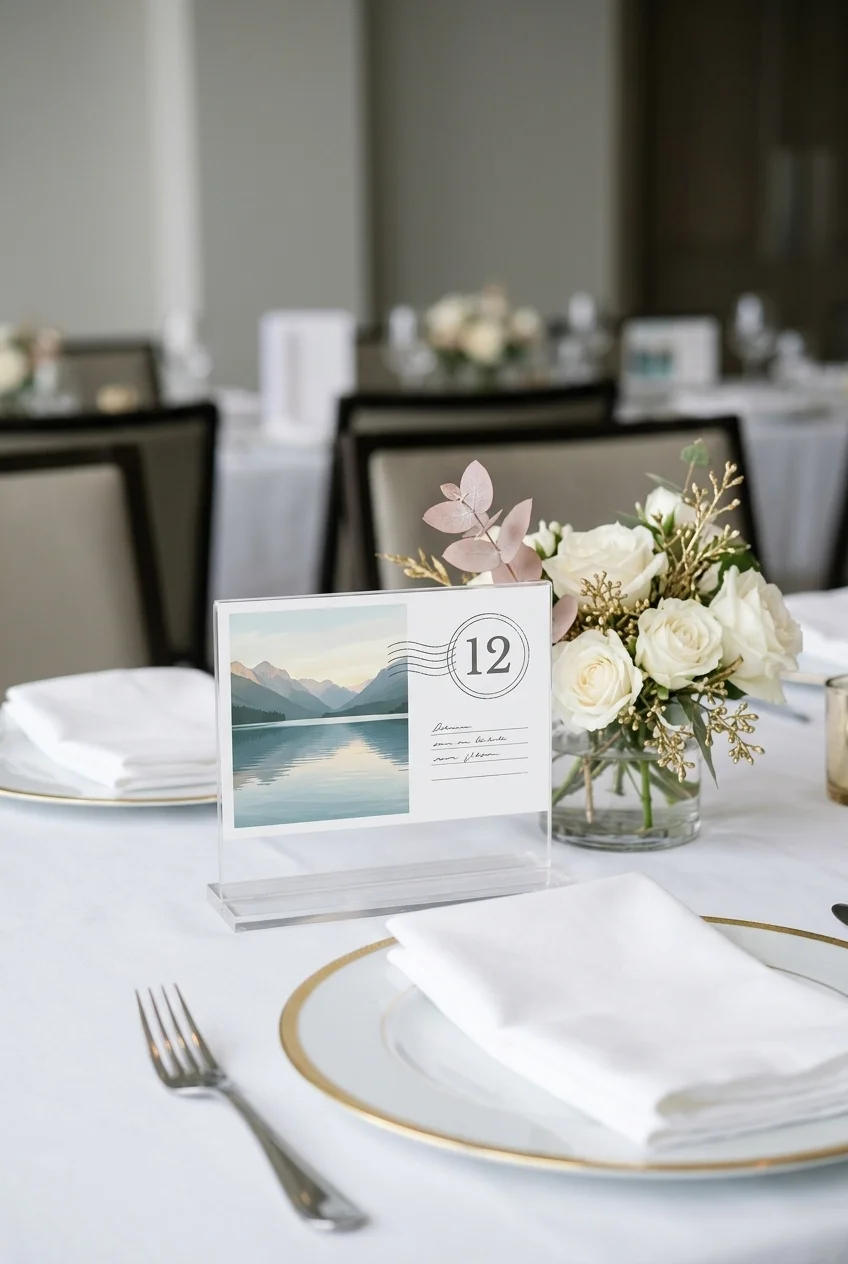
Design each card like a postcard from a meaningful place, with the table number enlarged inside a faux postmark. Use original photographs or properly licensed illustrations rather than copying commercial postcard art.
Repeat the same border, number position, and stand across every destination. That consistency lets the imagery vary without confusing the room.
35. Illustrated Local Landmarks
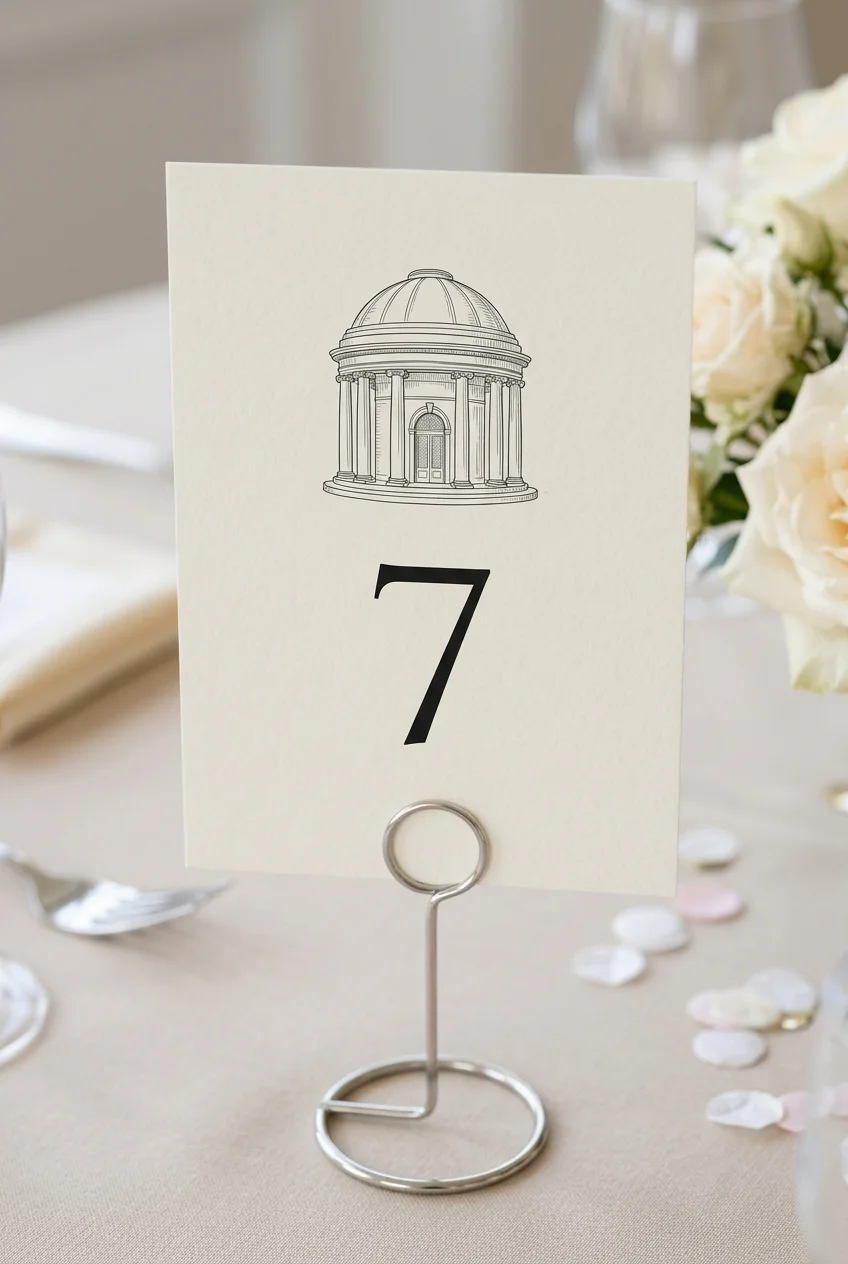
Commission or create a simple line drawing of a recognizable place for each table, then add a large number beneath it. Landmarks can reflect the wedding city, shared hometowns, or places guests will visit during the weekend.
Keep the illustration to one subject and avoid detailed maps, which belong on a separate guide. Guests should recognize the number even if they do not recognize the building.
36. Hand-Drawn Pet Portraits
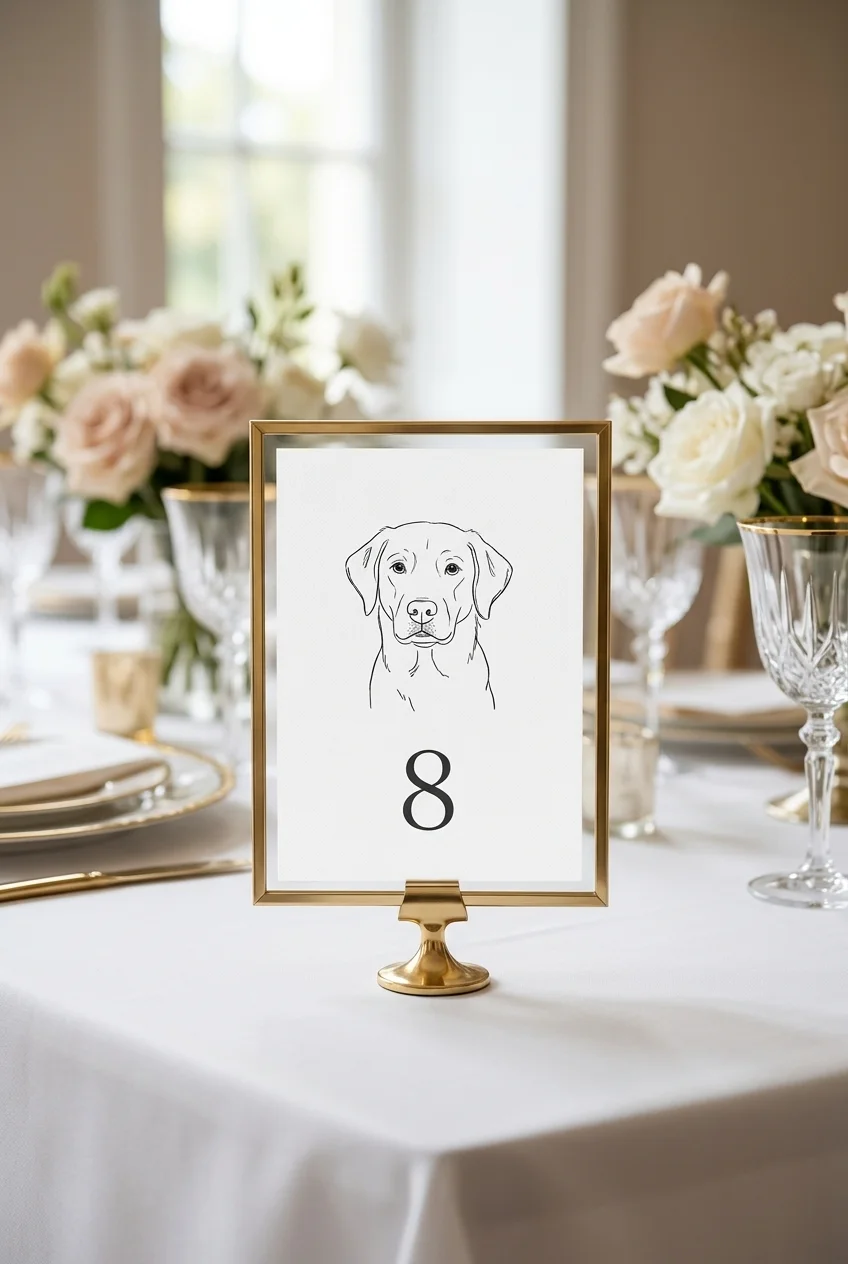
A series of pet portraits can vary poses or accessories while keeping the same animal and drawing style. Place the table number outside the illustration rather than hiding it on a collar tag or tiny prop.
One portrait can be repeated with different numbers if you do not need fifty separate drawings. Consistent artwork often looks stronger across the room than a collection of mismatched pet photos.
37. Venue Facade Sketches
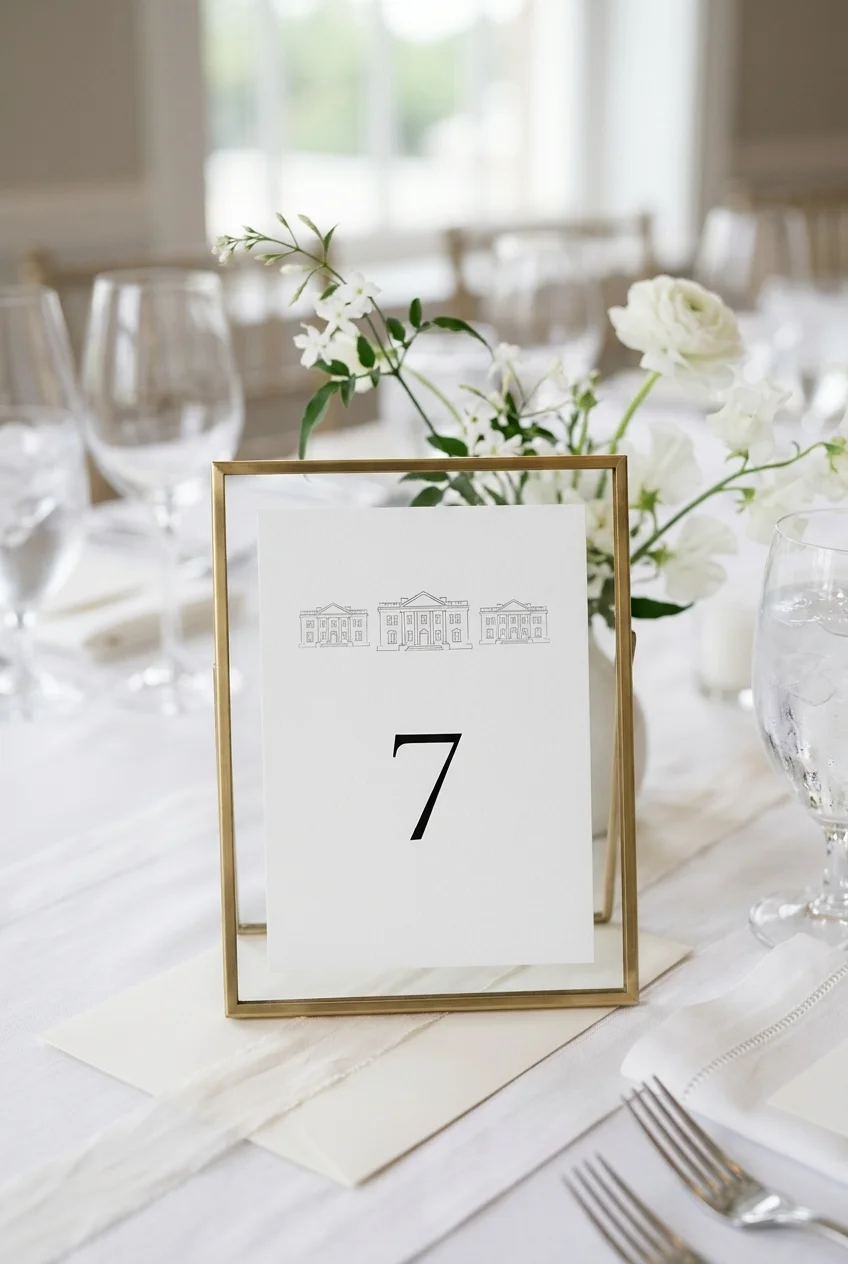
Turn one drawing of the venue facade into a repeating visual mark, then change only the table number. This works particularly well when the architecture is meaningful but the tablescape itself is restrained.
Ask the illustrator for printing rights and a high-resolution file. Crop the sketch consistently and leave enough blank paper that the numeral remains the strongest element.
38. Family Recipe Cards with Number Tabs
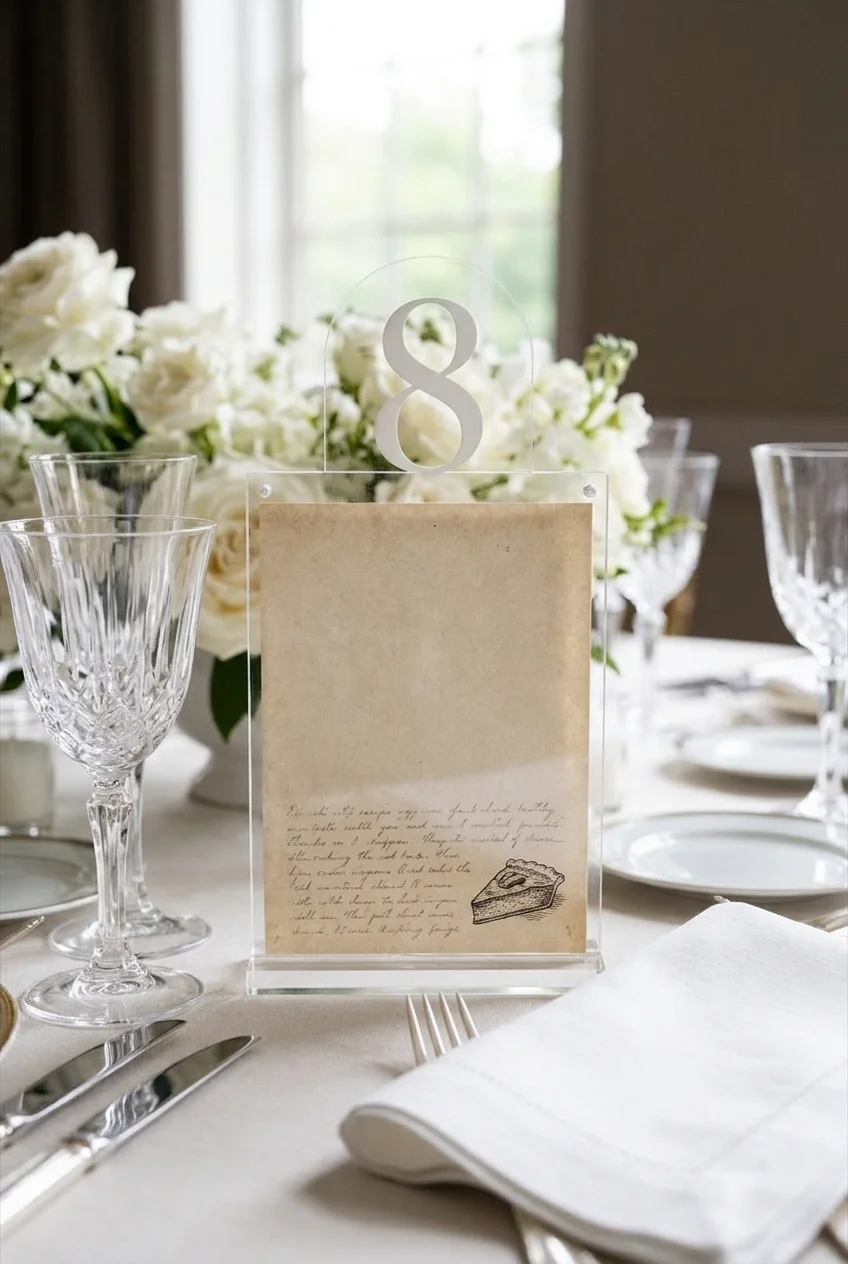
Reproduce a short family recipe or food memory on each card and add a large numbered tab above it. The tab handles navigation; the recipe is something guests can read after they sit.
Transcribe handwriting instead of displaying a fragile original, and get permission before sharing a living relative's personal note. If a recipe is long, use an excerpt and provide the complete version elsewhere.
39. Family Wedding Photos in Matching Frames
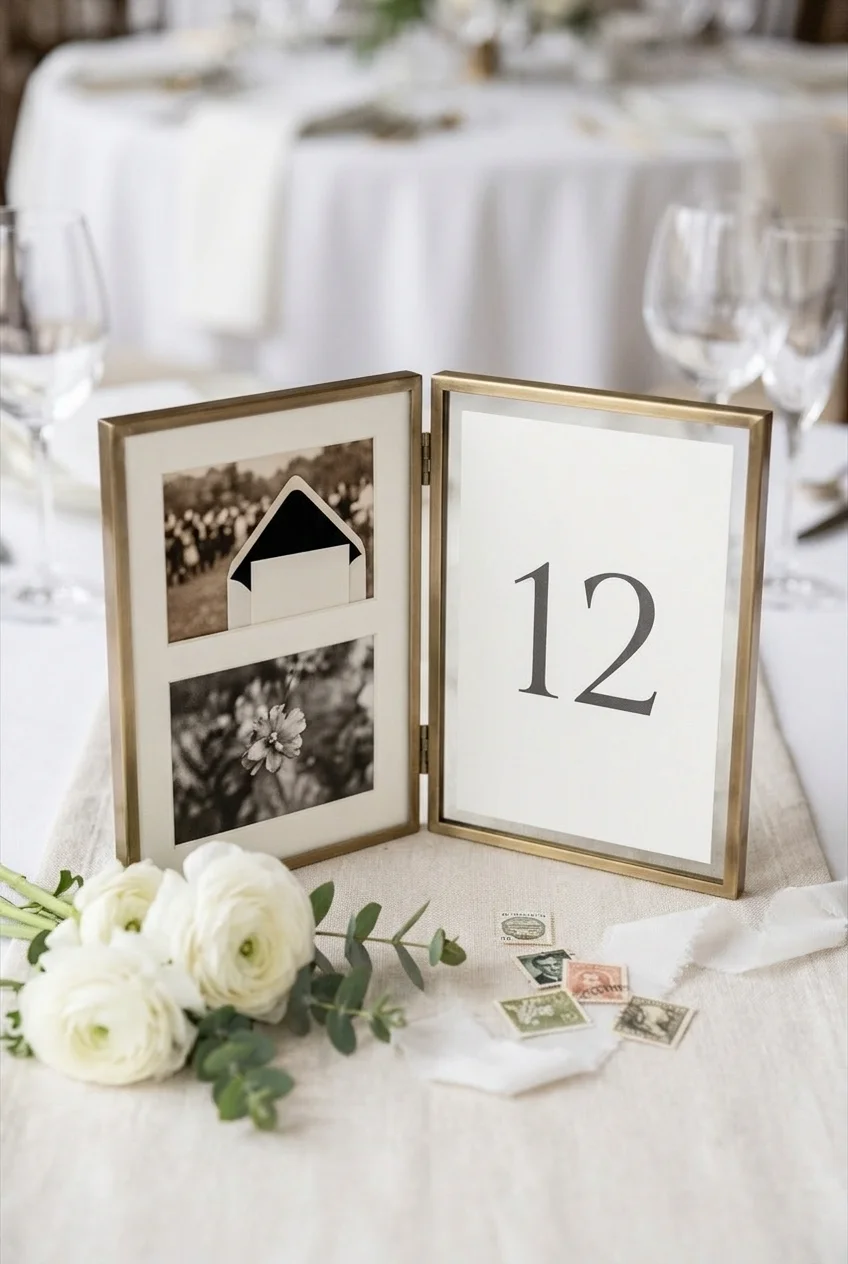
Display one wedding photograph from each side of the family and place the table number on a separate card within the same double frame. Keeping the number separate prevents busy archival images from swallowing it.
Use copies and label people discreetly on the back or in a small album, not across the tabletop sign. Ask permission before displaying photographs of relatives.
40. Shared-Hobby Icons Paired with Numbers
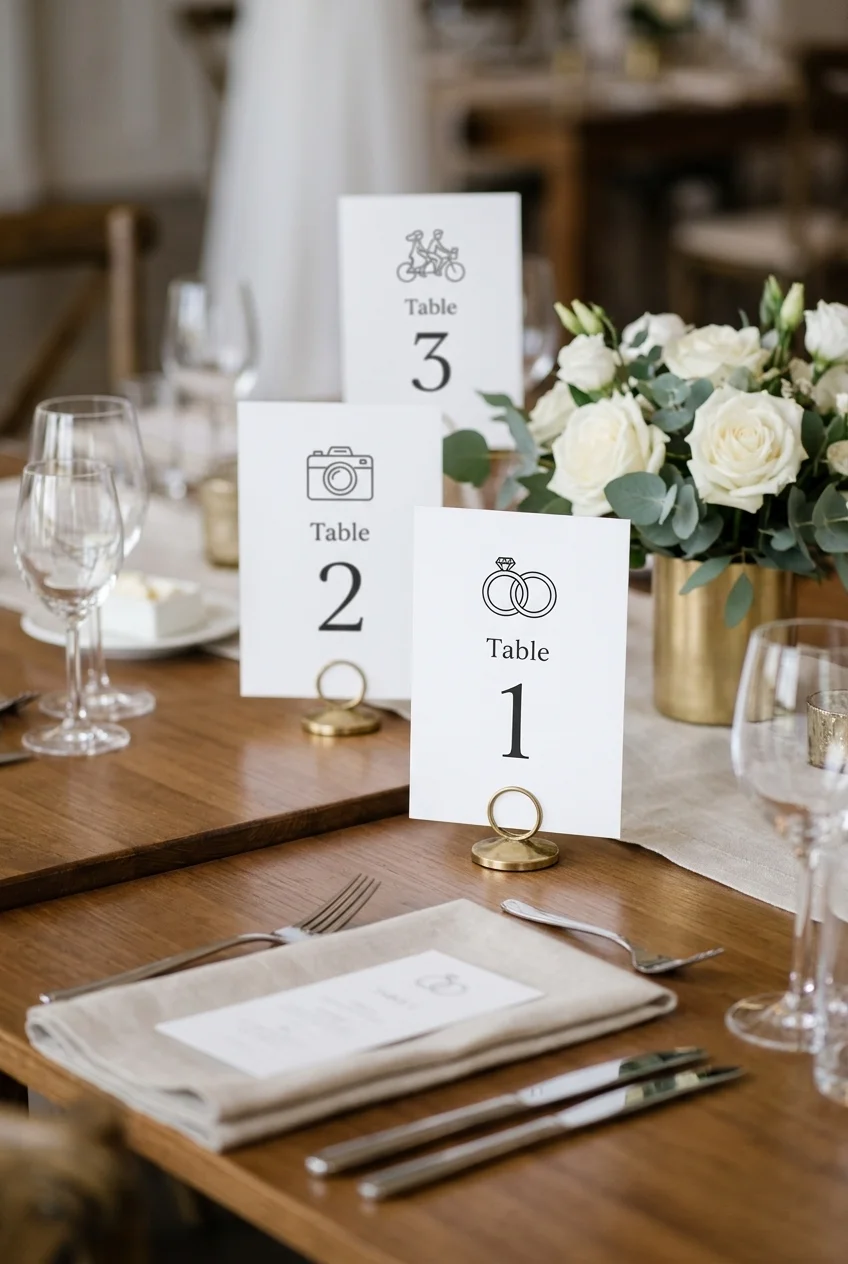
Assign each table a simple icon connected to a shared interest, such as a camera, garden trowel, chess piece, or hiking boot, while retaining the number beneath it. The icon adds personality without asking guests to decode a name-only system.
Use one illustration style and equal visual weight across all icons. Avoid trademarked logos and symbols that depend on a specific brand for recognition.
Placement and Wayfinding Ideas for Different Tables
41. Hanging Numbers Beneath Tall Centerpieces
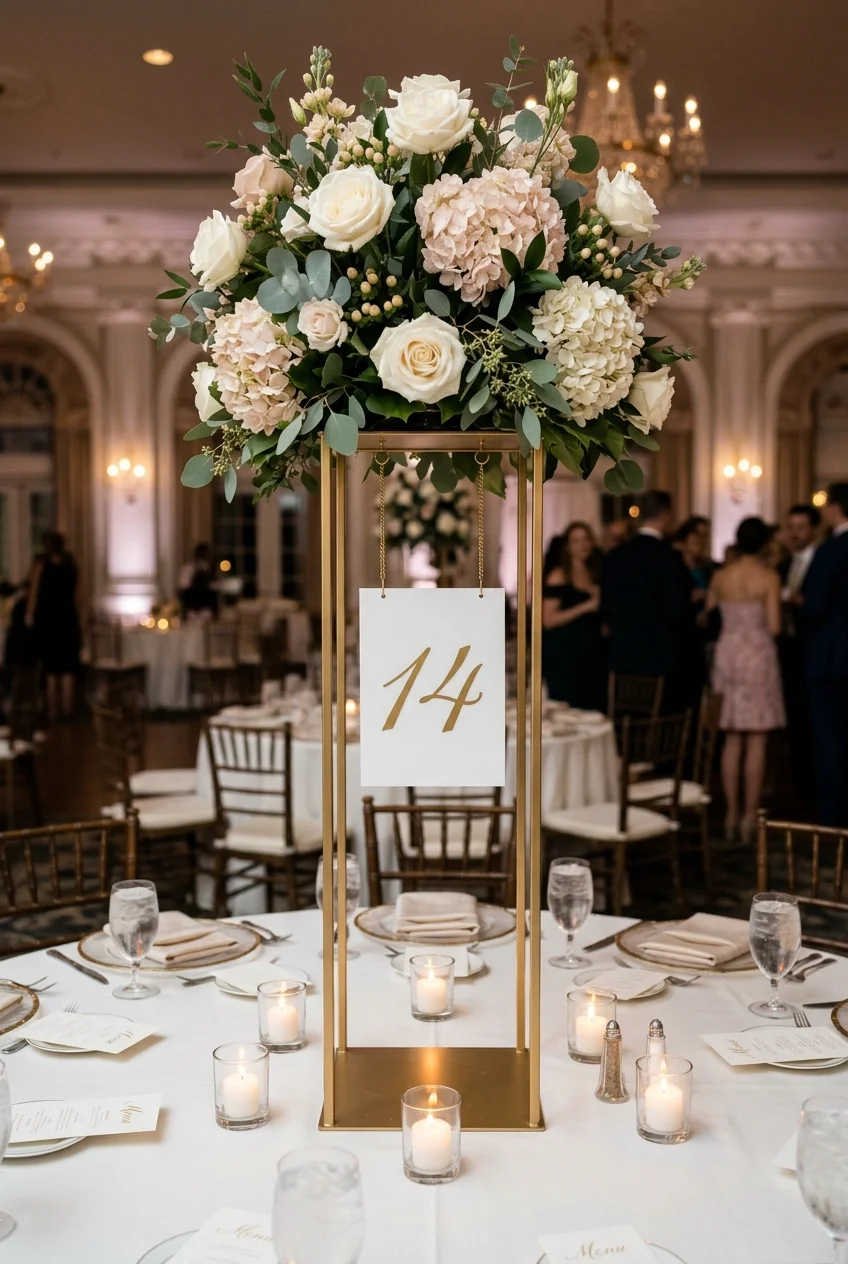
Suspend a rigid number panel from the central stand of a tall floral arrangement, below the blooms and above the tabletop clutter. Use two attachment points so the sign faces the same direction instead of spinning.
The florist or rental company should approve every attachment. Do not add weight to a stand that was not designed to carry it, and keep cords away from candles and serving dishes.
42. Number Flags Rising Above Low Flowers
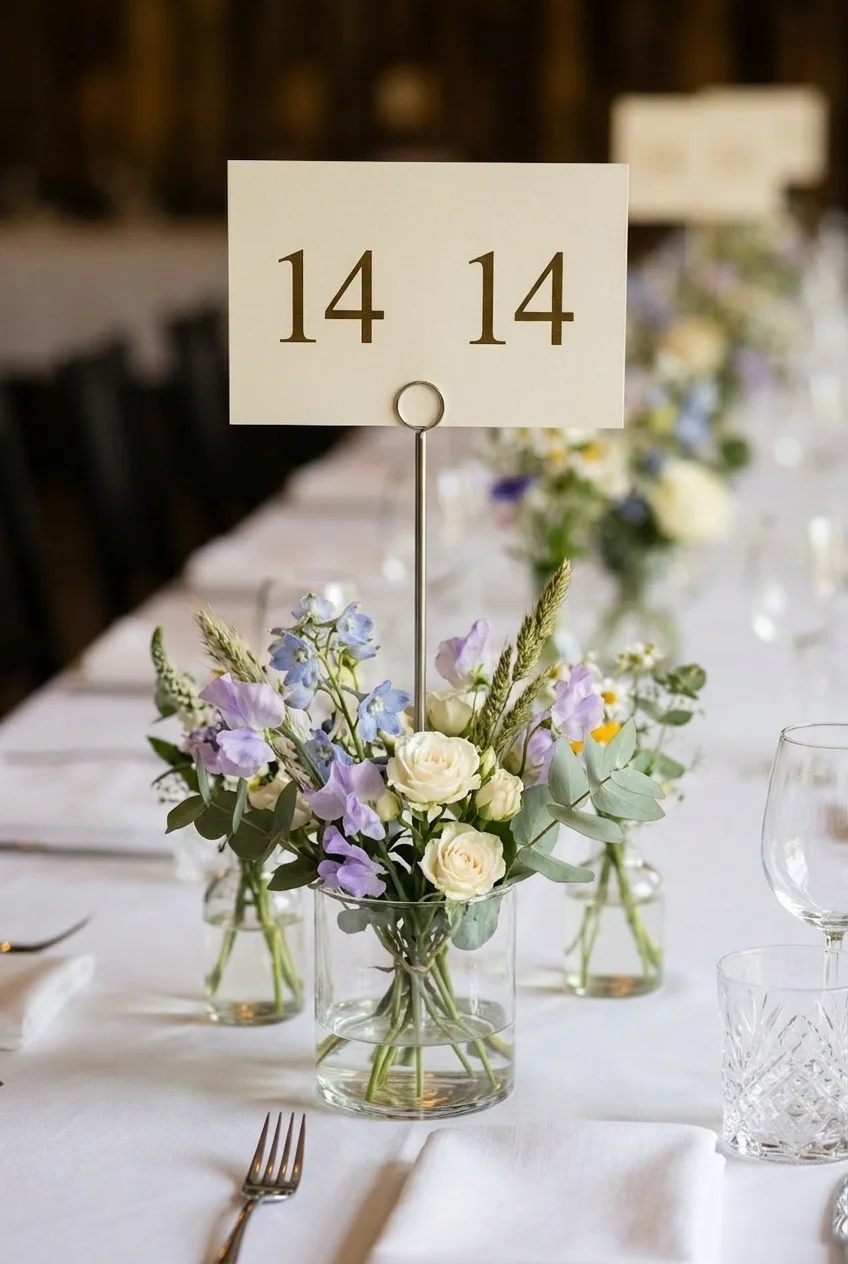
A small rigid flag on a slim stake can rise just above a low floral arrangement without becoming a tall sign. Print the number on both sides and keep the flag broad enough that the numeral does not fold around the stake.
Insert the stake into a mechanic approved by the florist, not directly among fragile stems. The number should remain removable if the arrangement is moved after dinner.
43. Low Horizontal Number Blocks Beside Bud Vases
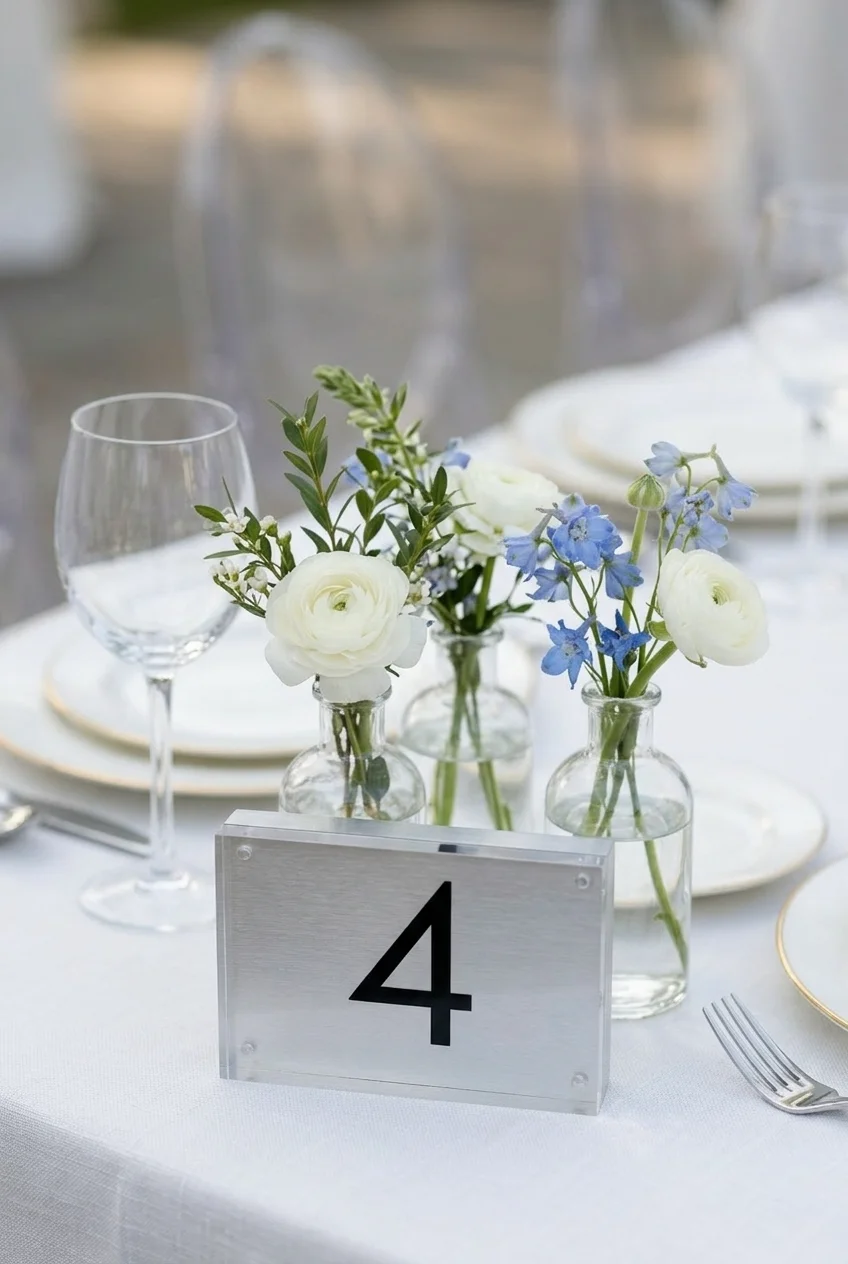
A wide horizontal block works on narrow tables where a tall sign would interrupt conversation. Carve, print, or apply the numeral across the face and place the block on the entrance-facing side of the vase cluster.
The block must sit above the visual line of plates and folded napkins. Test it on the dressed table; a very low number can disappear as soon as guests sit down.
44. Double-Sided Numbers for Round Tables
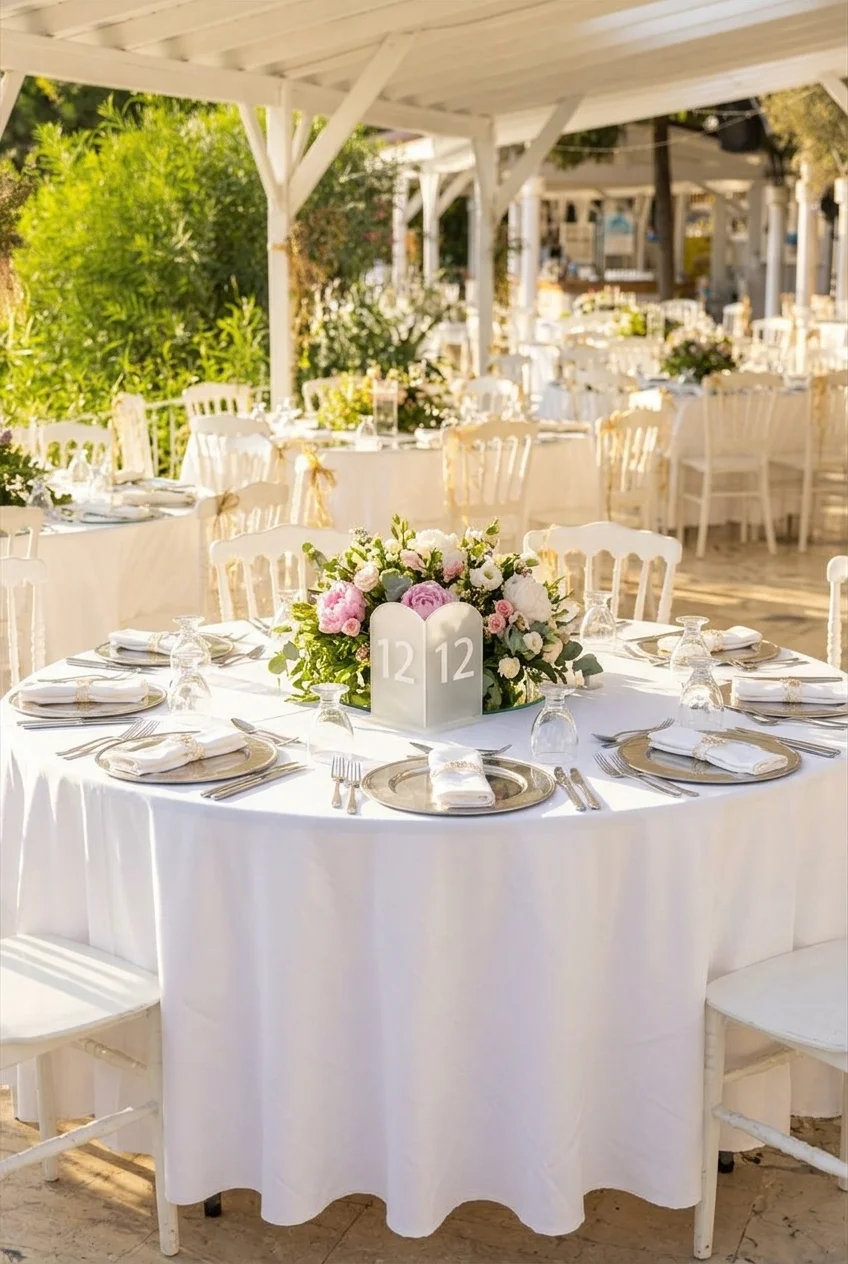
A round table can be approached from several directions, so print or apply the same number to both faces of a centered sign. Use an opaque core or back-to-back cards so the reverse numeral does not show through.
Rotate the finished centerpiece during a mock-up and check every arrival path. One clear side is not enough when guests enter from opposite corners of a large room.
45. Matching Numbers at Both Ends of a Long Table
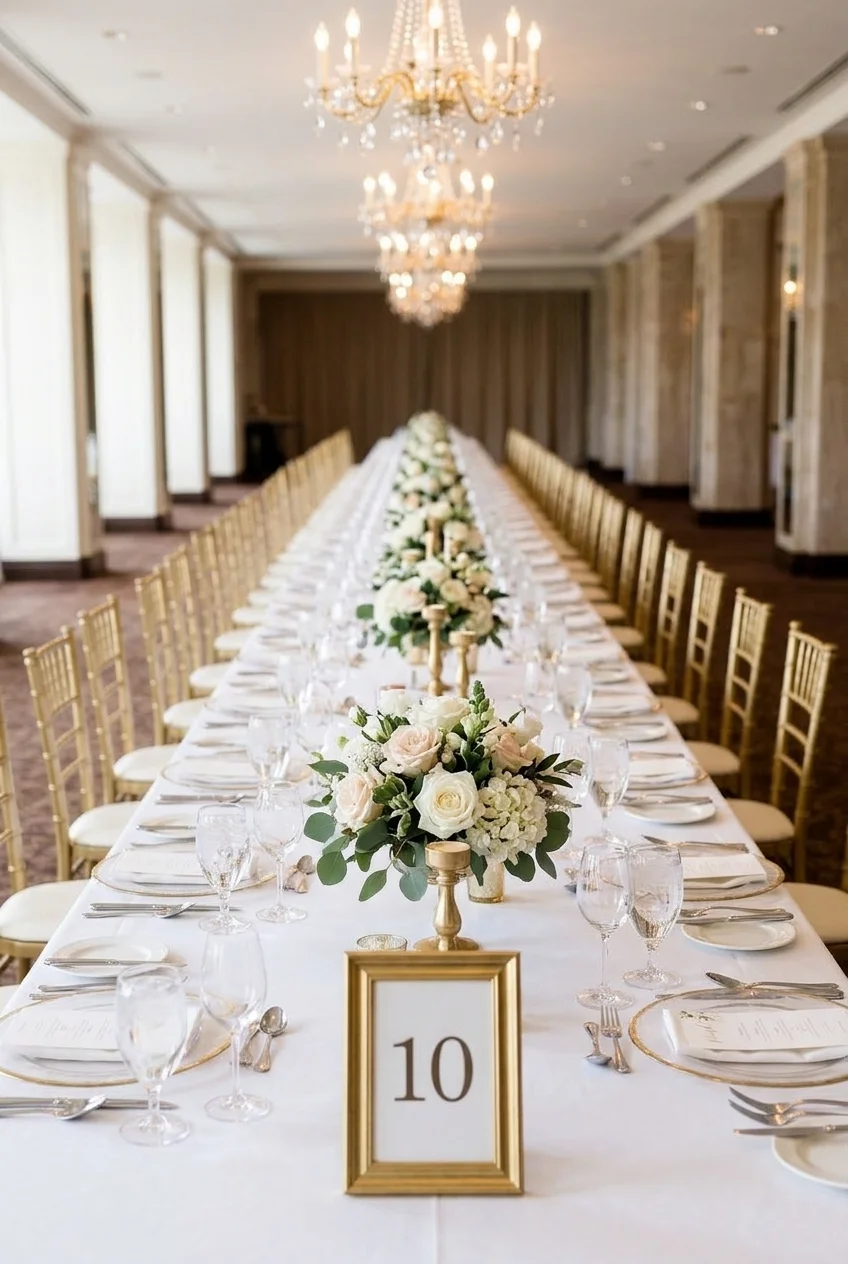
An extra-long banquet table may need two matching signs so guests do not walk the full length to confirm the number. Place one at each end, facing outward, and count both signs as one table in the production list.
Tell the setup team that duplicates are intentional. Pack each pair together to prevent one copy from being assigned to a different table.
46. Number Cards at Every Place Setting
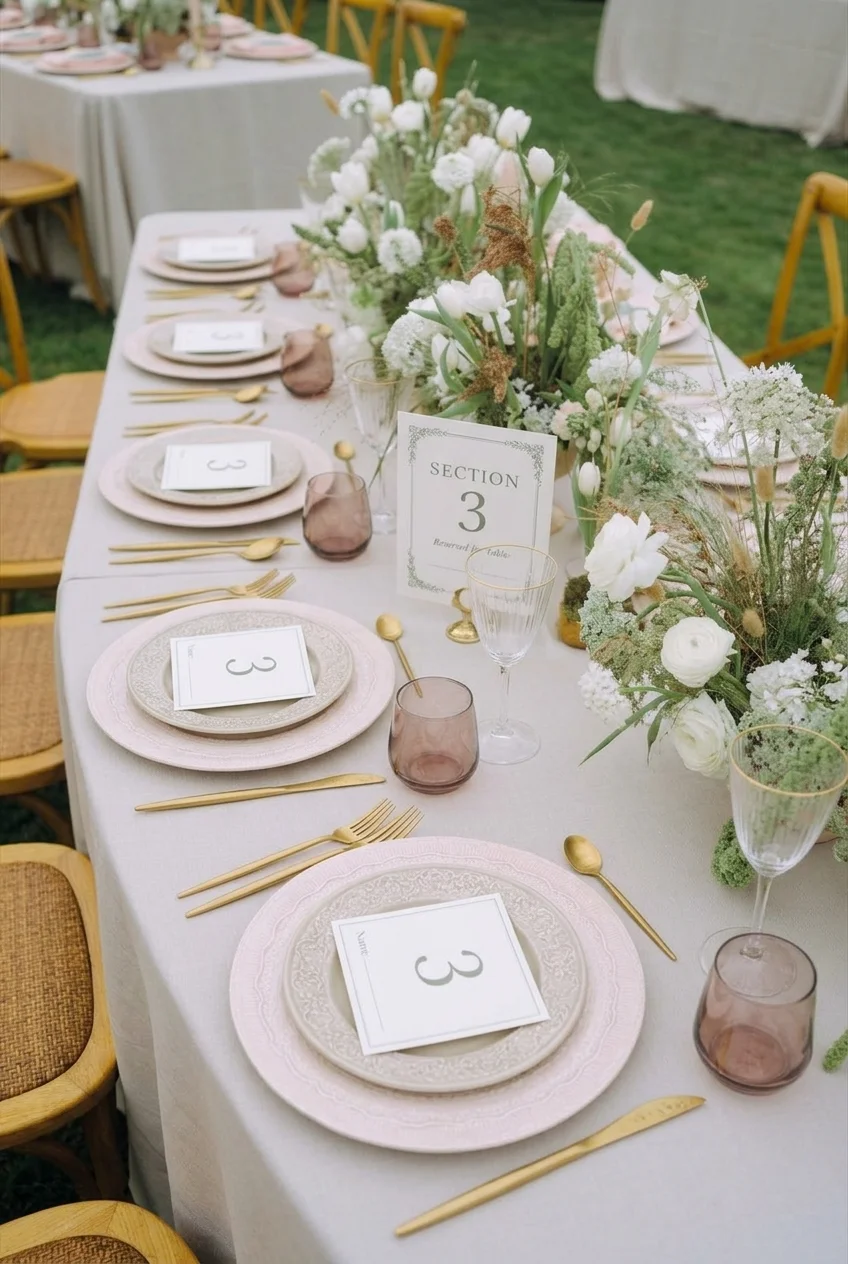
For one very long communal table divided into seating groups, place a small table or section number on every plate. Guests can confirm their zone without searching for a centerpiece sign several seats away.
Pair the section number with a guest name when seats are assigned, and retain one larger sign at each group boundary. This is a support system for a complicated layout, not a replacement for a clear seating chart.
47. Numbered Napkin Bands for Compact Tables
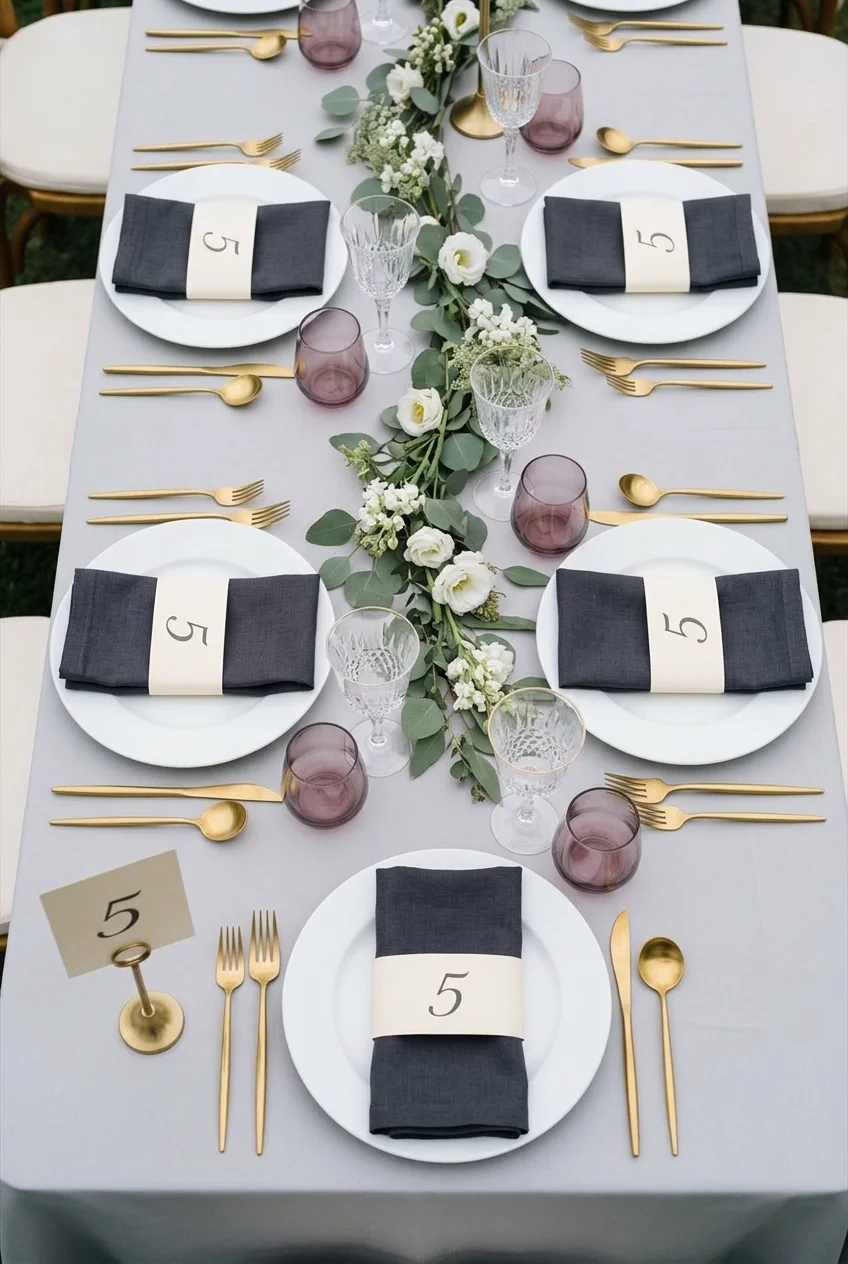
A broad paper band around each folded napkin can repeat the table number without adding a centerpiece object. Use this when tables are very small, but include one upright number near the table edge so guests can identify the table before reading a place setting.
Keep the band loose enough for staff to remove without disturbing glassware. If names are also printed, make the table number visually distinct from seat assignments or meal codes.
48. High-Contrast Color-Block Numbers
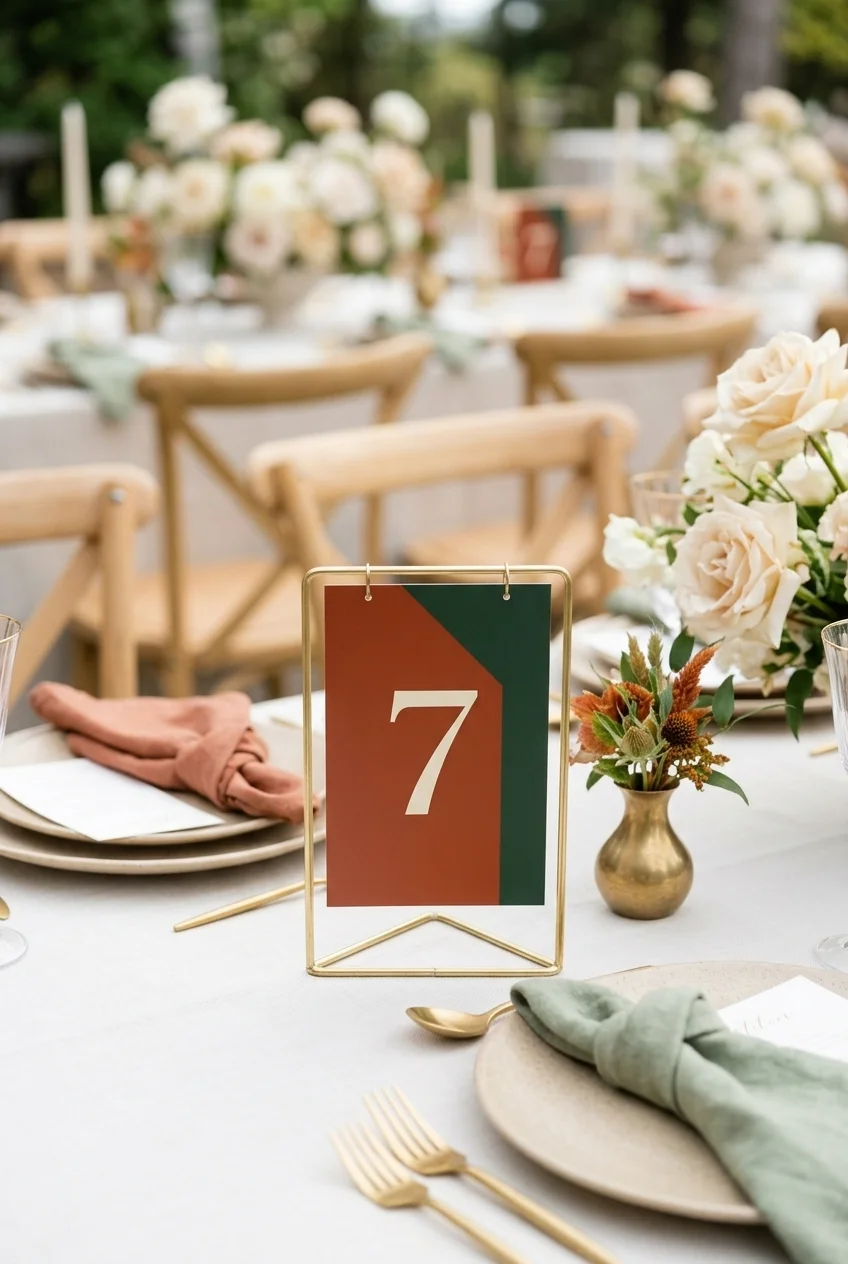
Divide the card into a solid color field and a large contrasting numeral for a graphic design that reads from across the room. Repeat one layout while alternating only a controlled palette that is already present in the flowers or linens.
Check contrast in grayscale as well as color. Two fashionable mid-tone colors can look distinct up close but merge under dim lighting or for guests with color-vision differences.
49. Reusable Frames with Interchangeable Number Inserts
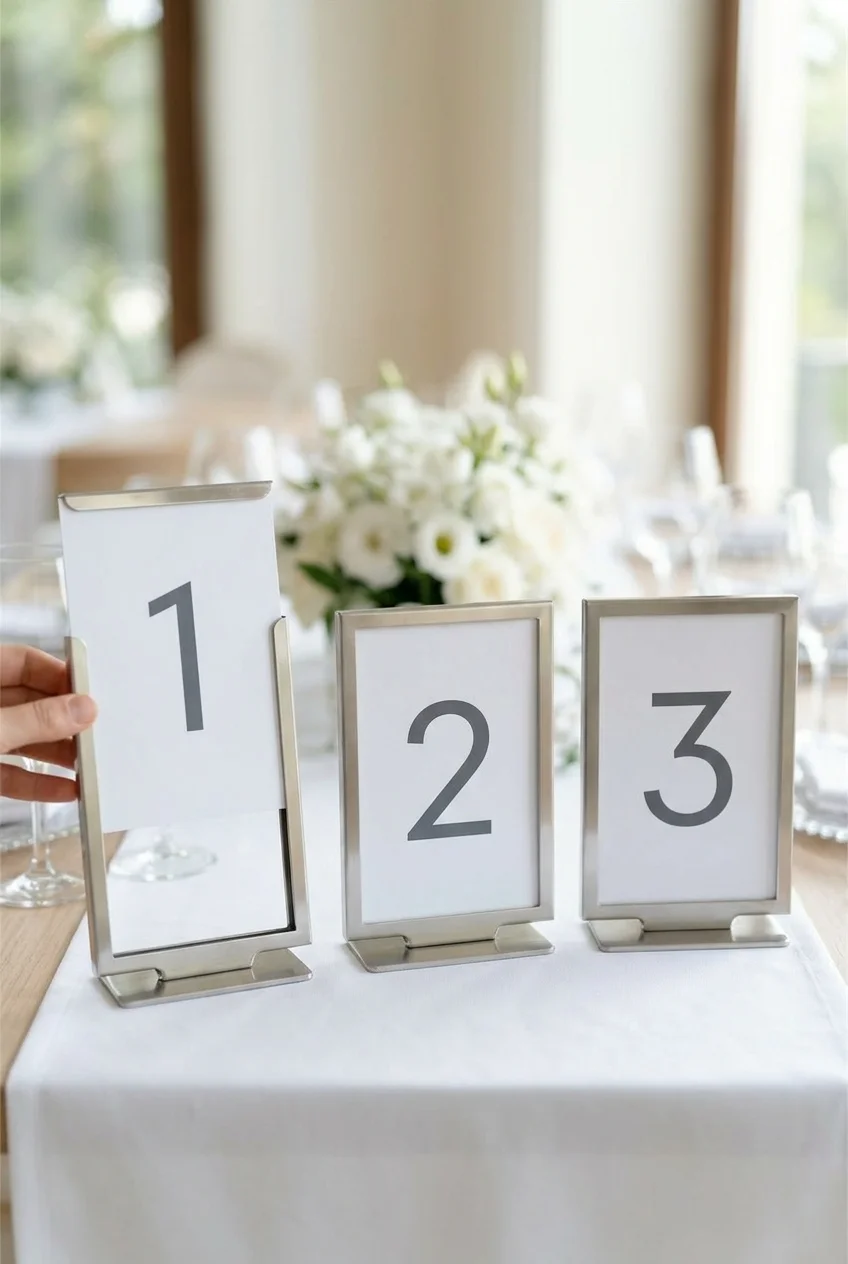
Use identical frames or sign holders with printed inserts that can be replaced if the floor plan changes. This is safer than permanent numbering when guest counts are unsettled or the venue may add a table.
- Print one or two spare blank inserts.
- Pack the numbers in final floor-plan order.
- Give the setup lead the same numbered diagram.
- Do not renumber the whole room for one late change.
50. Pair Every Number with a Simple Shape
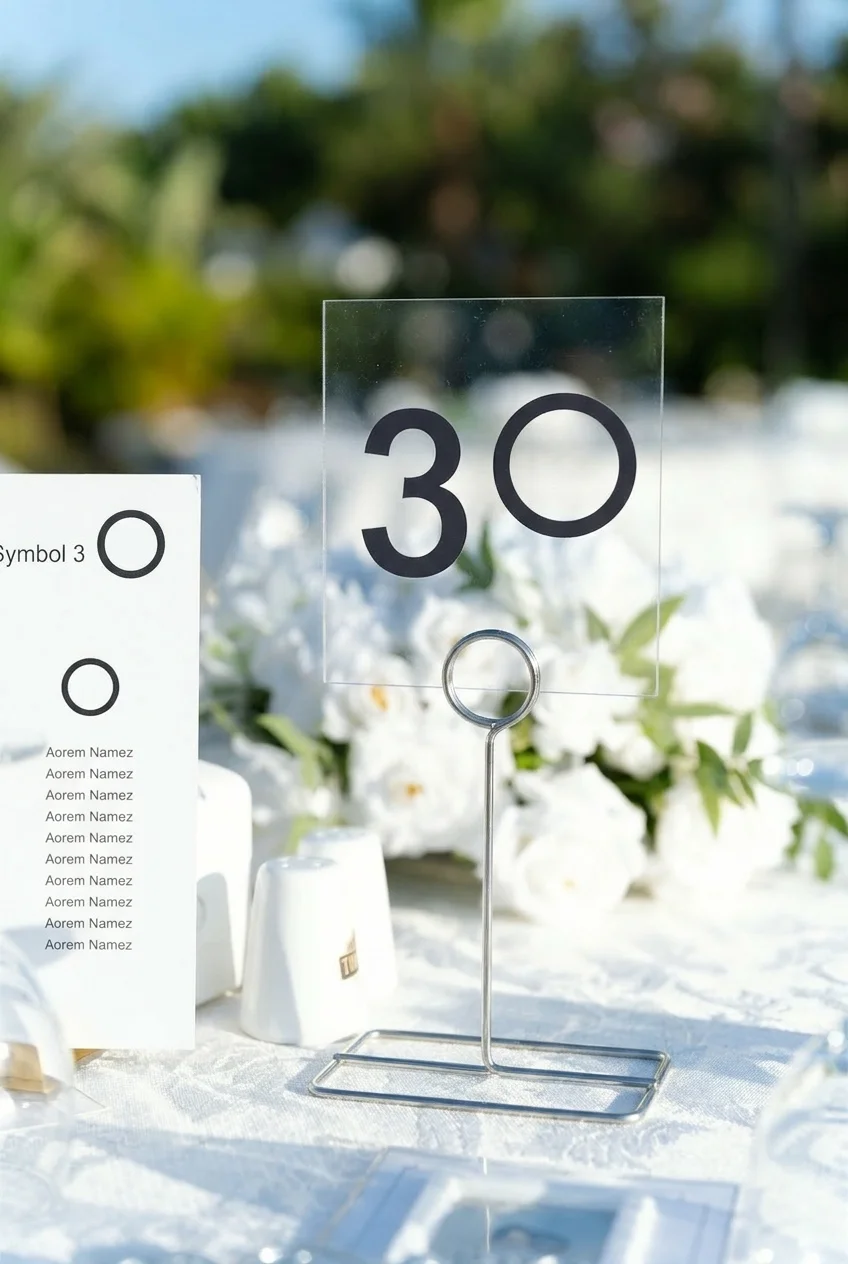
Add one clear shape behind or beside each numeral, then repeat the same pairing on the seating chart. A guest can look for Table 8 with a blue circle rather than relying on color or number alone.
Use familiar shapes with strong outlines and keep the number primary. This can improve wayfinding, but it is not a substitute for readable type, logical room numbering, or assistance from venue staff.
What size should wedding table numbers be?
There is no single required size, but 4-by-6-inch and 5-by-7-inch cards fit many standard holders and tables. Use the larger format when the room is wide, the light is low, or the centerpiece has more visual weight. The numeral itself matters more than the paper size: test it from the entrance and every main guest approach.
Should table numbers be double-sided?
Use double-sided numbers when guests approach from several directions, particularly at round tables or in rooms with multiple entrances. A single-sided sign can work when every guest arrives from one clear route and the sign faces that route. Long tables may need two separate matching signs rather than one double-sided card in the middle.
Where should a table number sit in relation to the centerpiece?
Place it on the side guests see while walking from the seating chart, with the numeral above plates and low flowers but below the main conversation sightline. Do not bury it directly behind a centerpiece. Photograph the finished mock-up from standing height, because a sign that is obvious from a chair may disappear when guests are searching from across the room.
How many table numbers should we order?
Order one number for each dining table, plus duplicates where an extra-long table needs a sign at both ends. One spare blank or replaceable insert is useful for late layout changes. Vendor tables, children's tables, and other assigned seating areas also need identifiers if they appear on the seating chart or catering plan.
This post may contain affiliate links: full affiliate disclosure.