
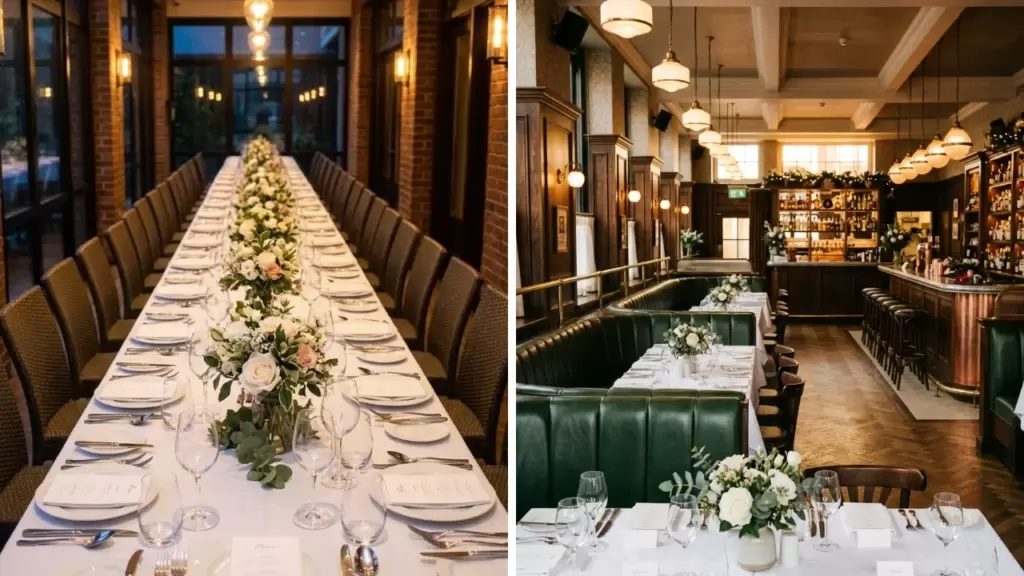
A restaurant wedding works best when the room, menu, and pace already feel close to the celebration you want. Instead of covering up the space, choose the restaurant for its light, furniture, food, and personality, then add a few wedding details that belong there.
The ideas below range from private-room dinners to full buyouts, with layouts, tablescapes, menu formats, and small moments you can picture before you tour. Save the looks that fit your guest list, then ask each restaurant what is included, what can move, and which event rules affect the plan.
A seated capacity is not the same as a comfortable wedding layout. Your final floor plan also needs working aisles, service stations, accessible routes, and any space required for a ceremony, musicians, or dancing.
Restaurant Spaces and Layouts Worth Saving
1. Seat Everyone at One Long Table in a Private Dining Room
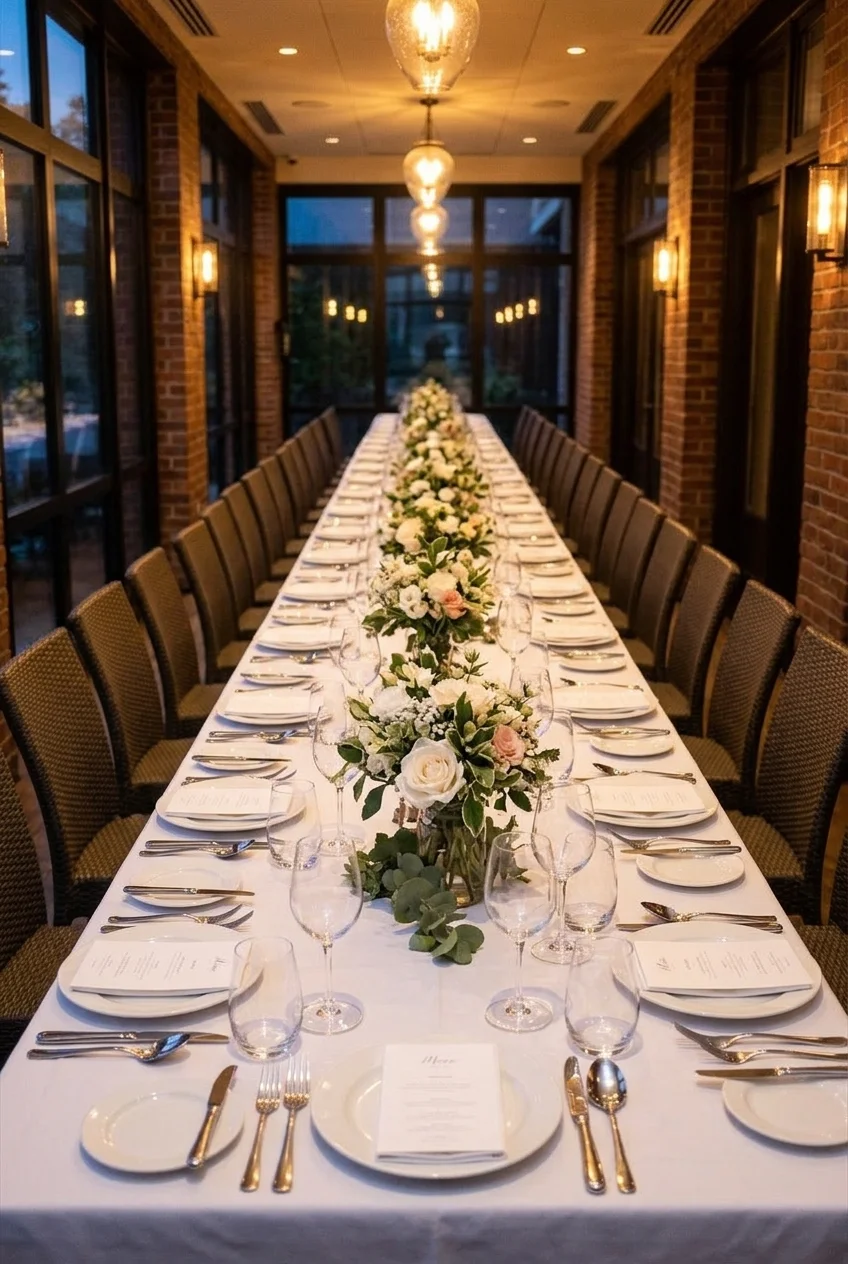
One long table makes a small wedding read as an intentional dinner rather than a scaled-down banquet. It works especially well in a narrow private room where several rounds would leave awkward gaps.
Ask the restaurant to show the table after plates, glassware, shared dishes, and chairs are in place. A beautiful empty-table plan can become cramped once service begins, so protect enough width for servers and enough space between place settings.
2. Use a Full Buyout to Let the Restaurant Be the Decor
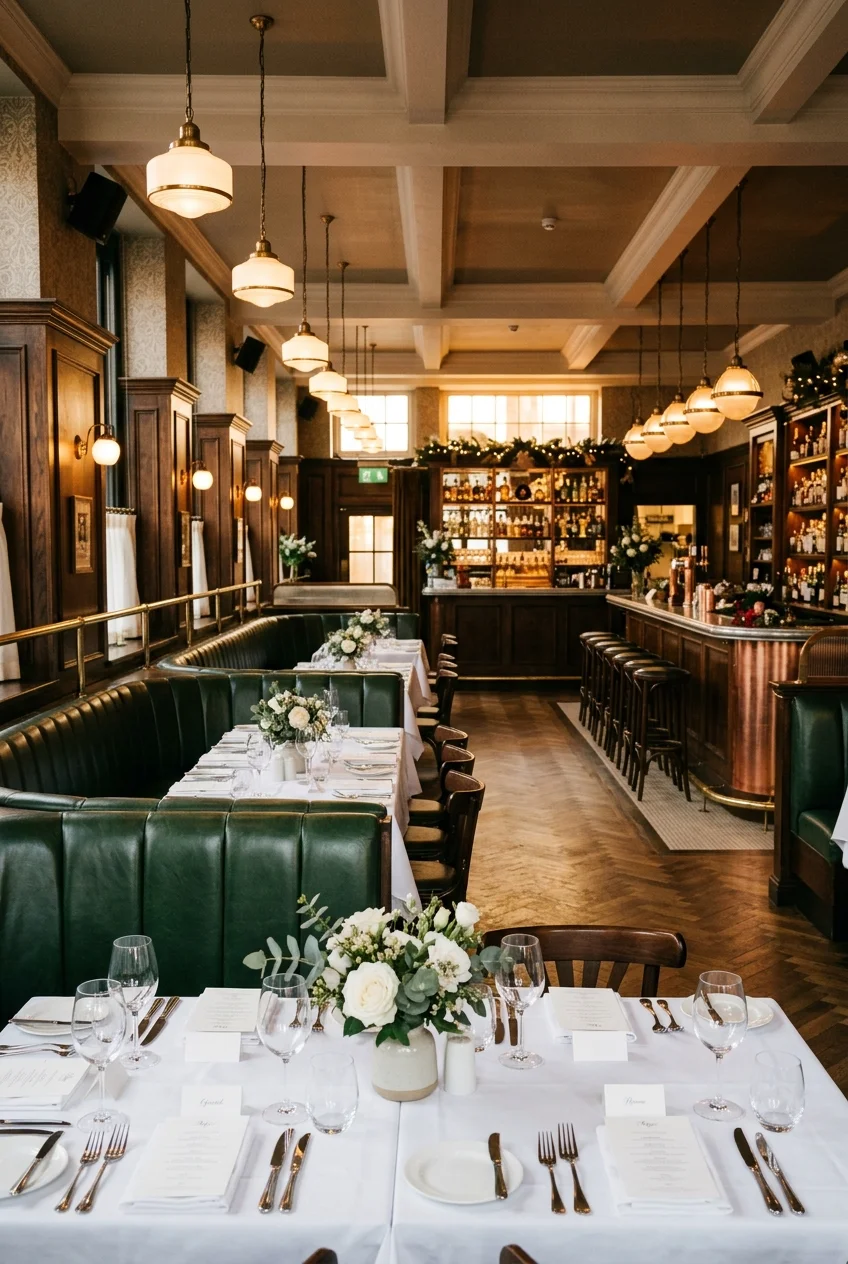
A full buyout gives you the restaurant's bar, dining room, entrance, and existing atmosphere as one connected venue. Choose a place whose chairs, lighting, wall color, and tableware you already like so your budget can go toward food, flowers, or music instead of disguising the room.
Request a written list of what the buyout includes and which spaces remain off-limits. The price may be structured around a food-and-beverage minimum rather than a simple room fee, with tax, service charges, rentals, and overtime added separately.
3. Create Privacy in a Semi-Private Dining Area
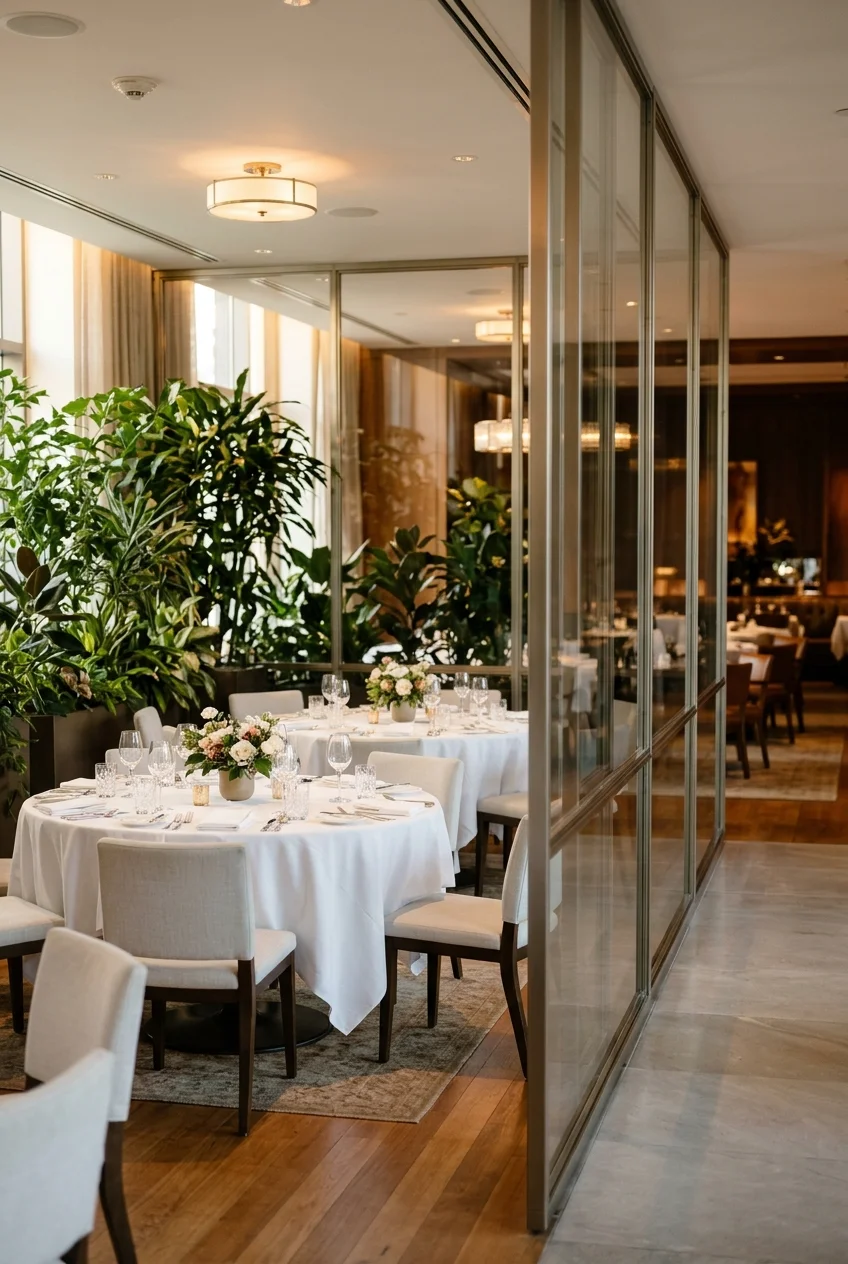
A semi-private area can feel separate without closing the whole restaurant when it has a clear boundary. Existing bookcases, sliding doors, curtains, or tall planters are more convincing than a small reserved sign beside regular diners.
Visit during the same service period as your wedding and listen from the proposed tables. Confirm how staff and other diners move past the area, where speeches will be heard, and whether restrooms require guests to cross the public dining room.
4. Plan a Courtyard Dinner Under Cafe Lights
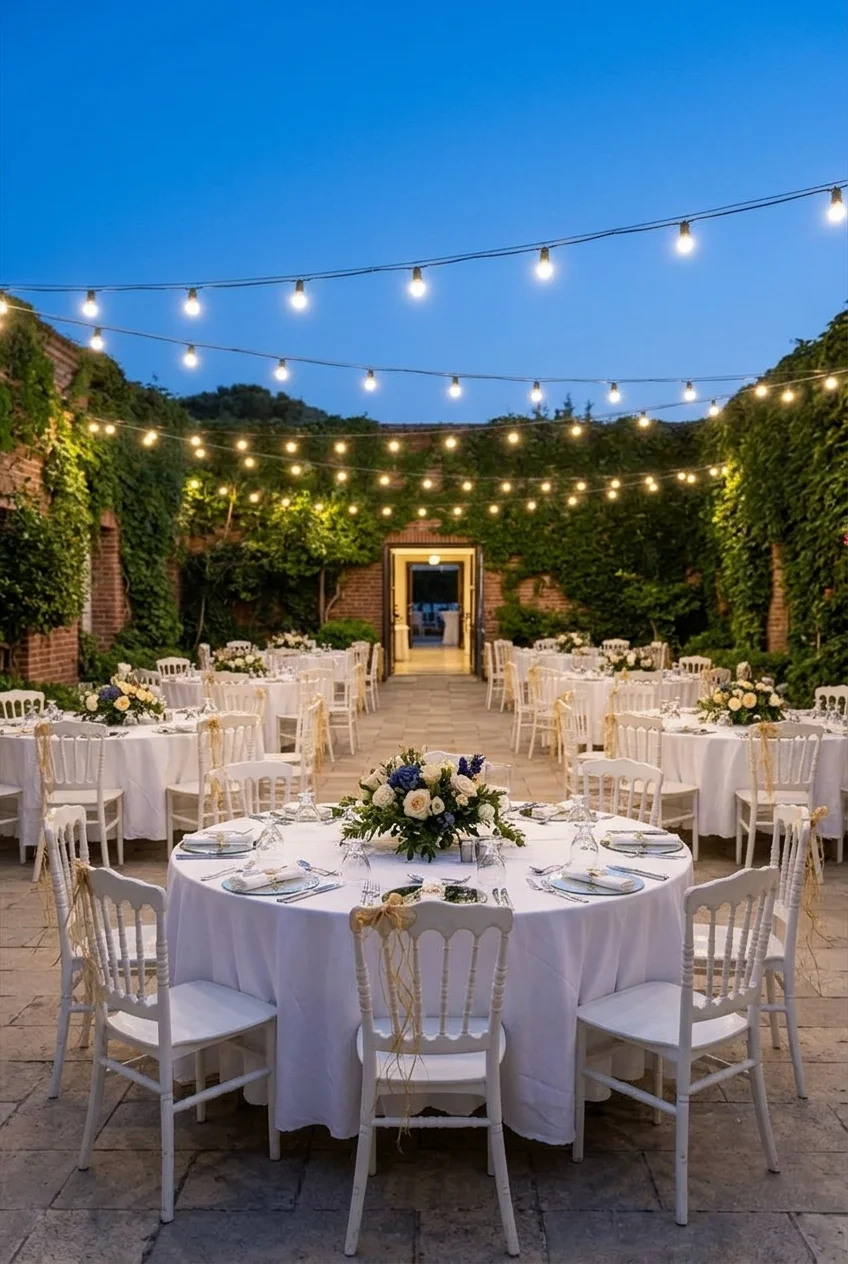
A restaurant courtyard supplies outdoor atmosphere without requiring a blank-field build. Let the walls, trees, and permanent lighting frame the dinner, then use modest centerpieces that stay below eye level.
Ask where the weather backup takes place and whether it holds the same seated count. Also check the restaurant's cutoff time for amplified sound, its plan for temperature changes, and the route servers use between the kitchen and courtyard.
5. Face a Rooftop Reception Toward the View
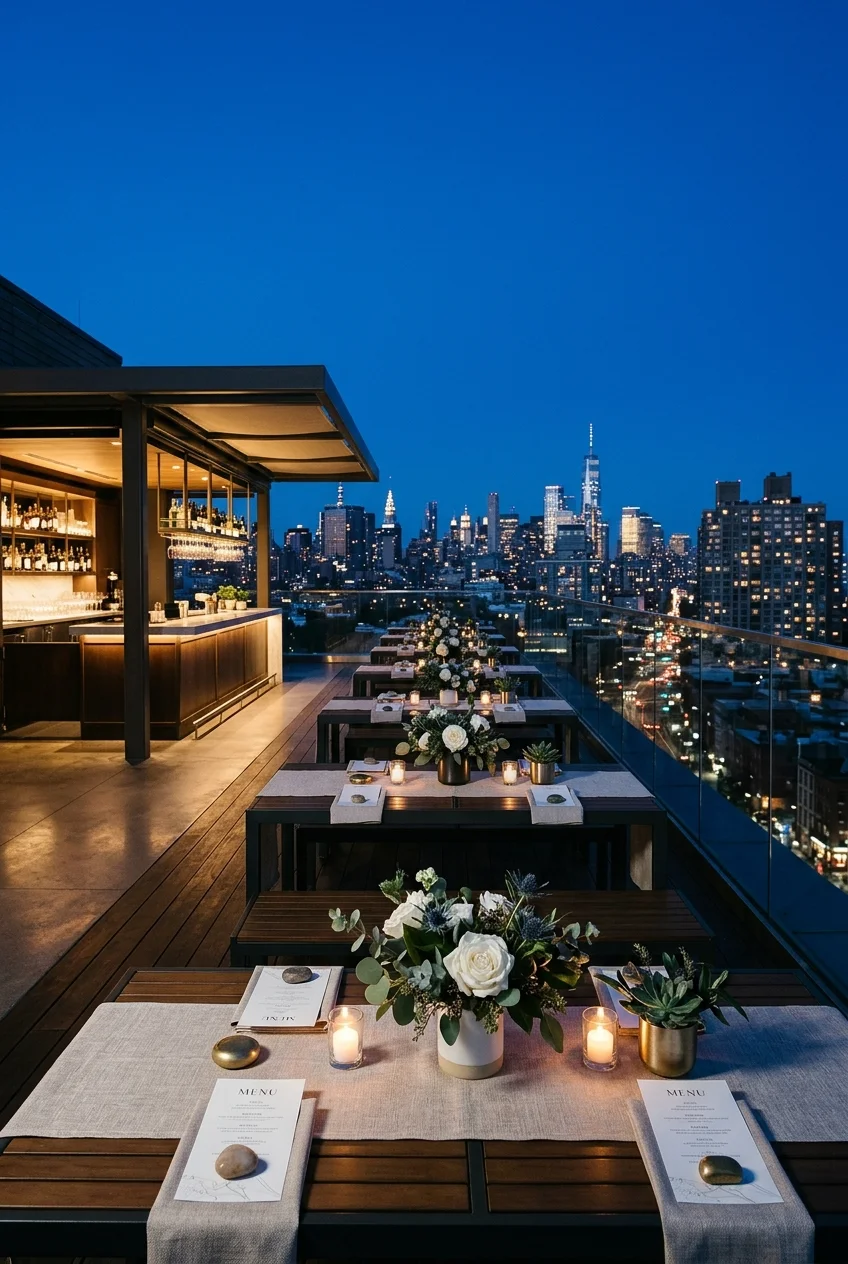
On a rooftop restaurant, the skyline is the visual feature. Keep tall decor away from the best sightline and orient the head table, ceremony, or lounge so guests see the view without sitting in direct glare.
Tour near the event time to assess sun, wind, traffic noise, and temperature. Lightweight menus and place cards need secure holders, and every outdoor plan should have an indoor alternative that is included in the contract.
6. Turn a Wine Cellar into a Candlelit Supper Room
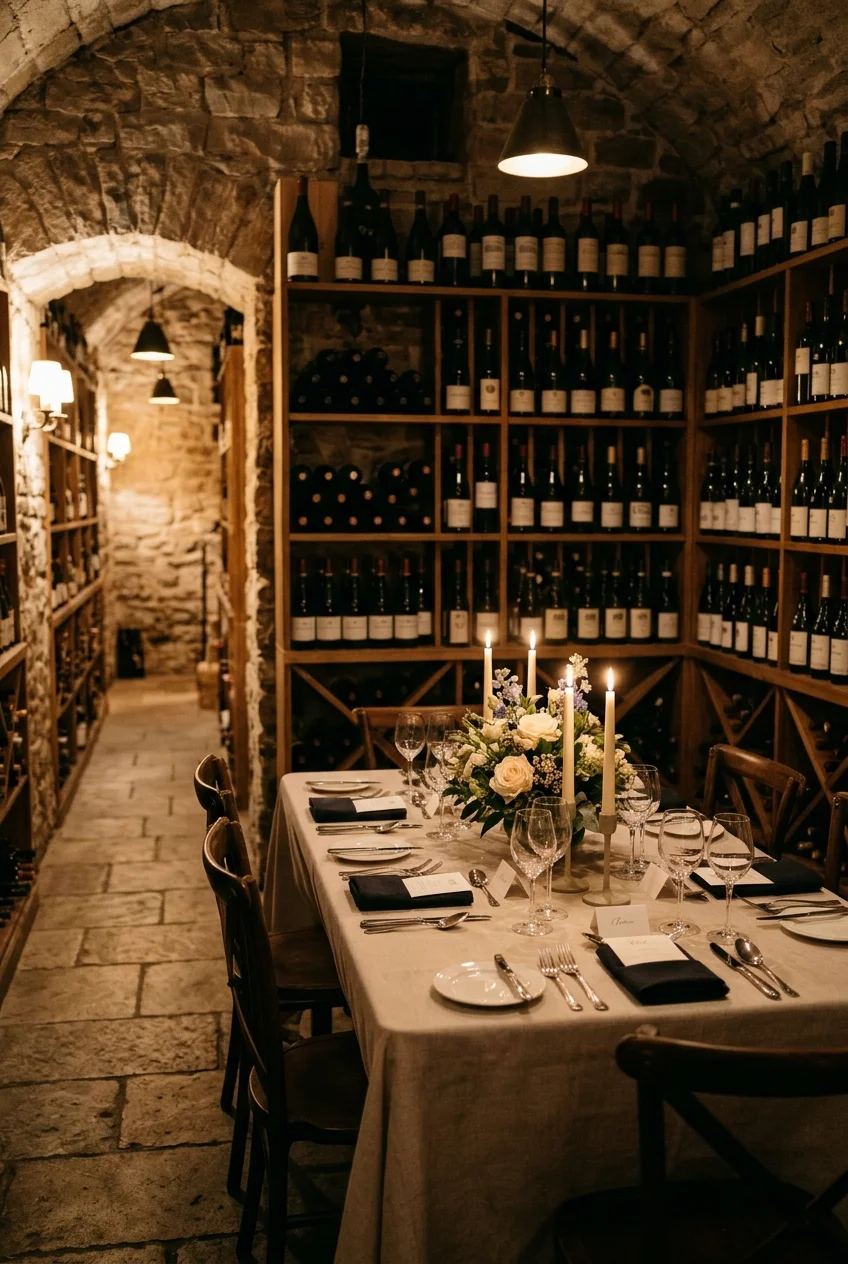
A cellar or wine room gives a very small guest list a strong sense of place with little added decor. Use pools of table light, a restrained floral palette, and clear glassware so the shelves remain part of the scene.
Cellars can have narrow aisles, steps, and limited exits, so confirm accessible entry, restroom access, legal seated capacity, and whether candles are permitted. Never plan from the room's listed cocktail capacity if everyone needs a dining chair.
7. Make a Chef's Counter the Center of a Micro Wedding
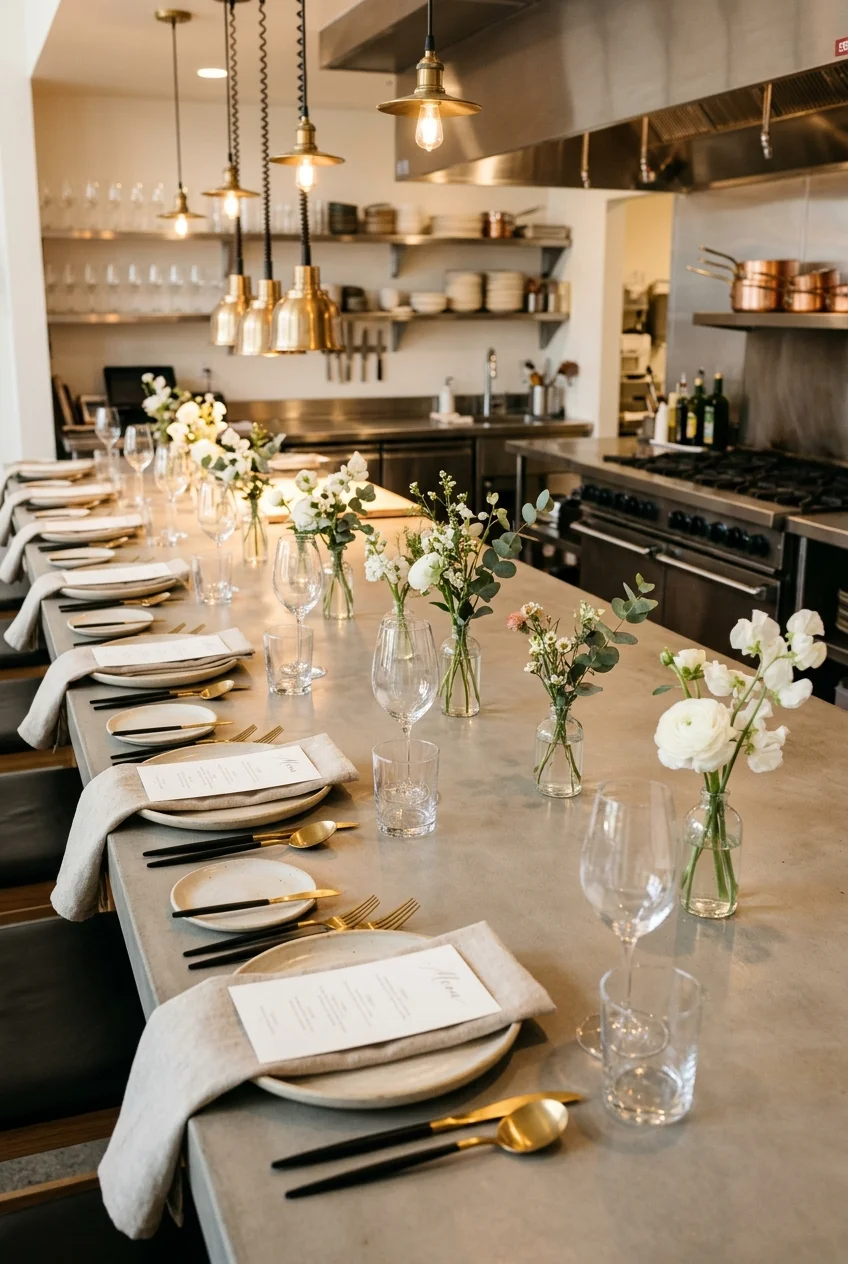
For a guest list that fits at a counter, the cooking becomes the evening's entertainment. Place each setting where guests can see the kitchen while keeping bouquets and signs out of the chef's working zone.
Ask whether every seat has a comparable view and how dietary substitutions will be handled during a fixed tasting menu. This format suits a meal-centered celebration; it leaves little room for a processional, large displays, or a traditional dance floor.
8. Book a Bright Brunch or Lunch Reception
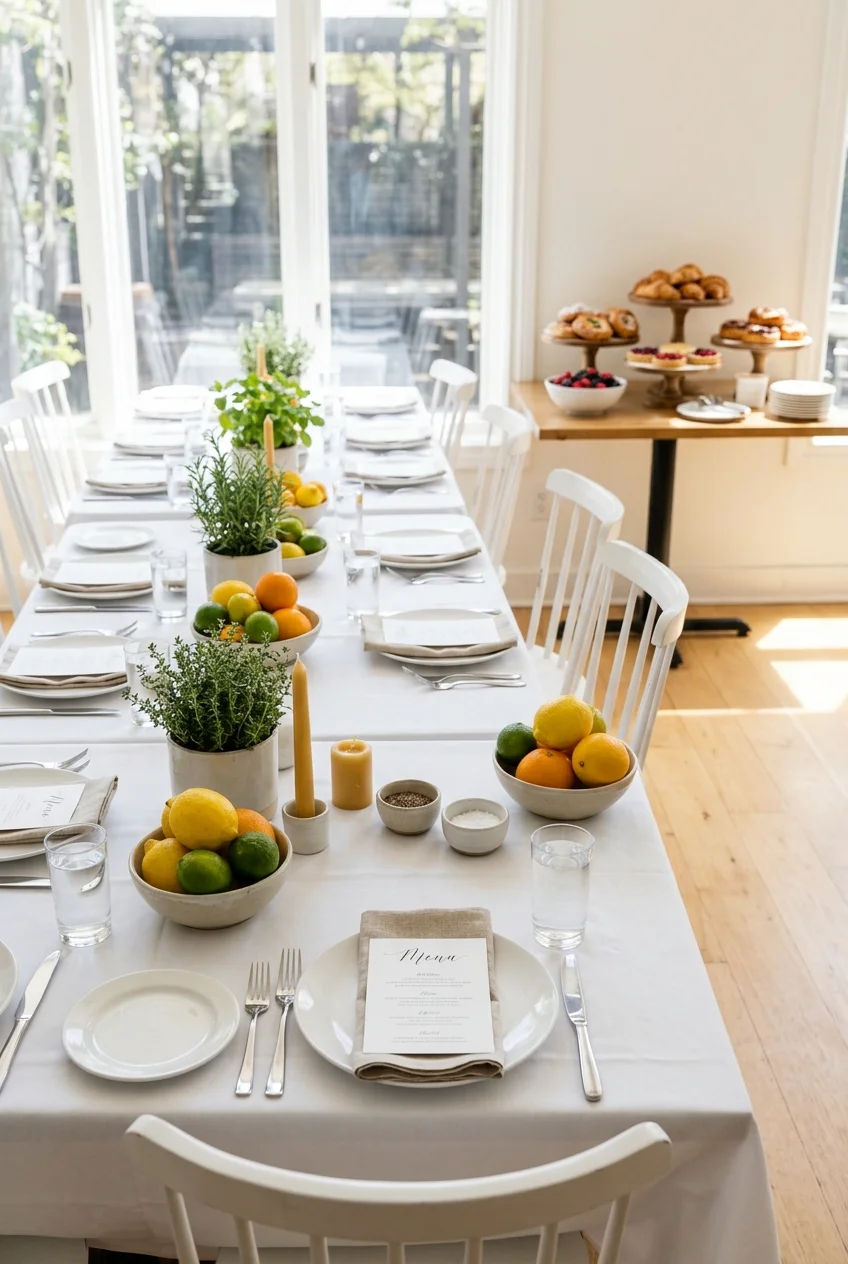
A daytime restaurant wedding can use the room's windows, daytime menu, and lighter pace instead of imitating an evening reception. Citrus, herbs, soft linens, and a coffee finish look at home in natural light.
Ask whether the restaurant offers a true daytime buyout or needs the room back before dinner service. Put the access, setup, guest departure, and vendor collection times in writing so the celebration is not squeezed by the evening reset.
9. Build a Cocktail Reception Around Anchored Seating
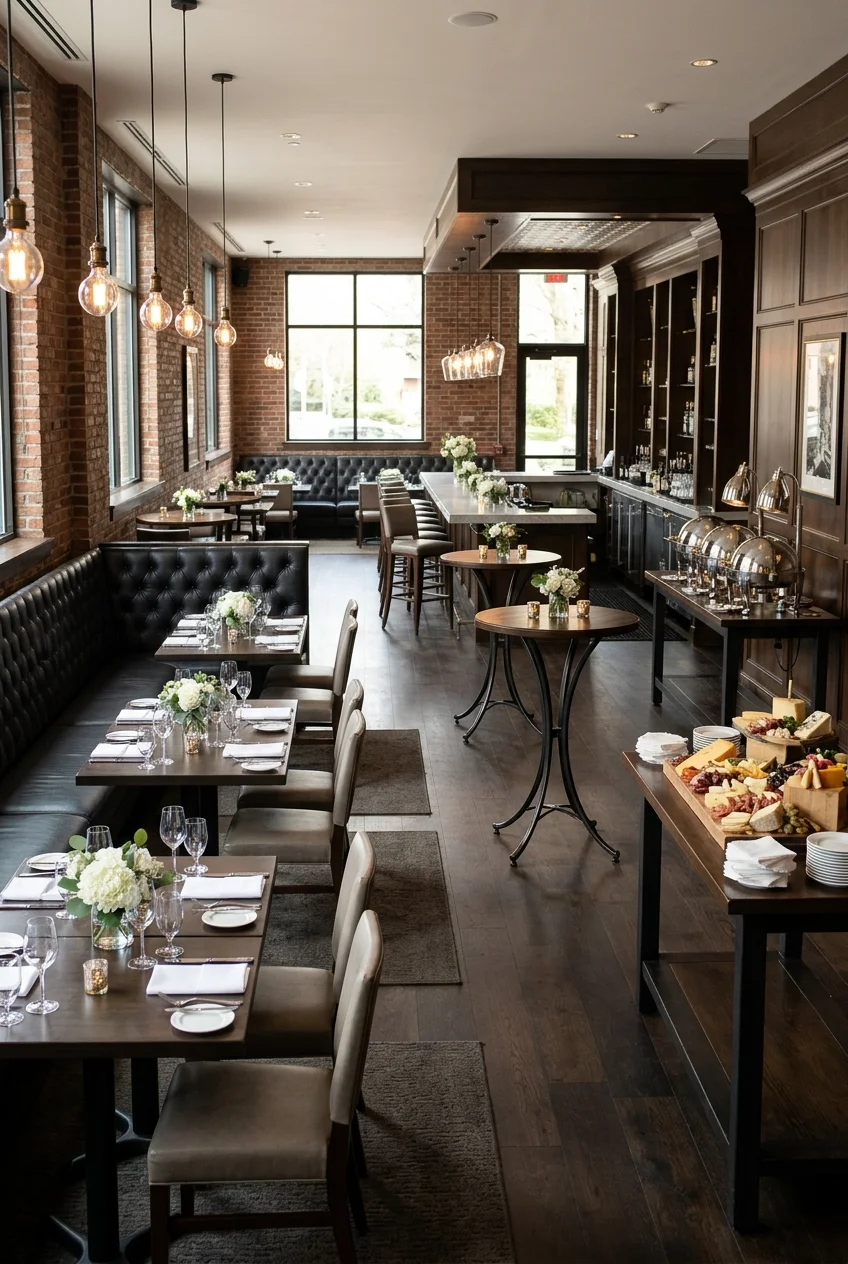
A cocktail-style wedding feels generous when it includes real places to sit, not only high-tops. Keep banquettes and dining tables around the room, then add a few standing tables near the bar to encourage movement.
Confirm enough seating for guests who need it and make the food substantial enough to replace dinner if that is the plan. Put napkins, small plates, and water within easy reach instead of concentrating every service item at one crowded station.
10. Mix Banquettes with Freestanding Tables
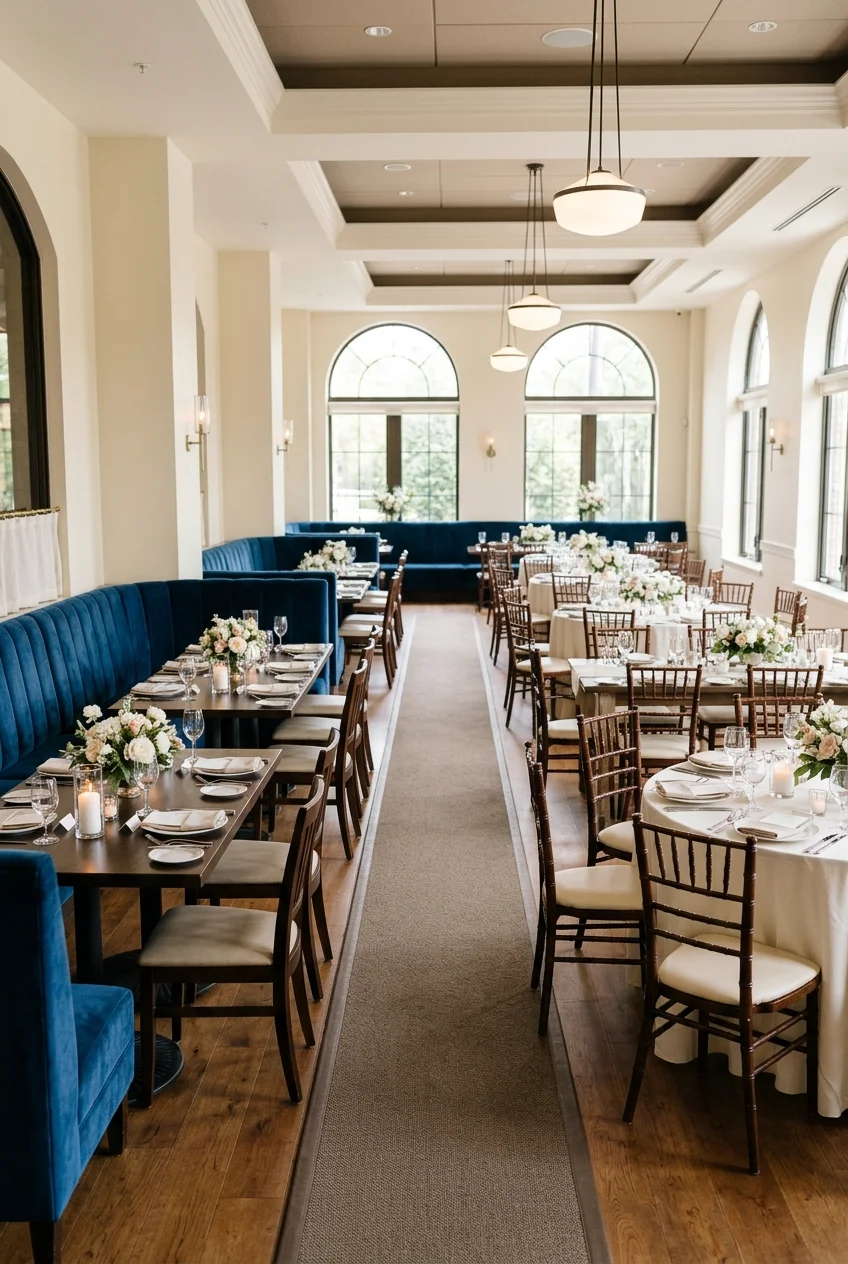
Using the restaurant's banquettes can preserve its character and reduce furniture changes. Pair them with movable tables in the center so families and friend groups can be seated together without turning every table into the same shape.
Check that guests on the inside of a booth can leave without asking several people to stand. Seat anyone with mobility needs where the route is straightforward, and avoid using deep booths for guests who will need to move frequently.
Tablescape and Room Details That Fit a Restaurant
11. Tuck Bud Vases Between Shared Dishes
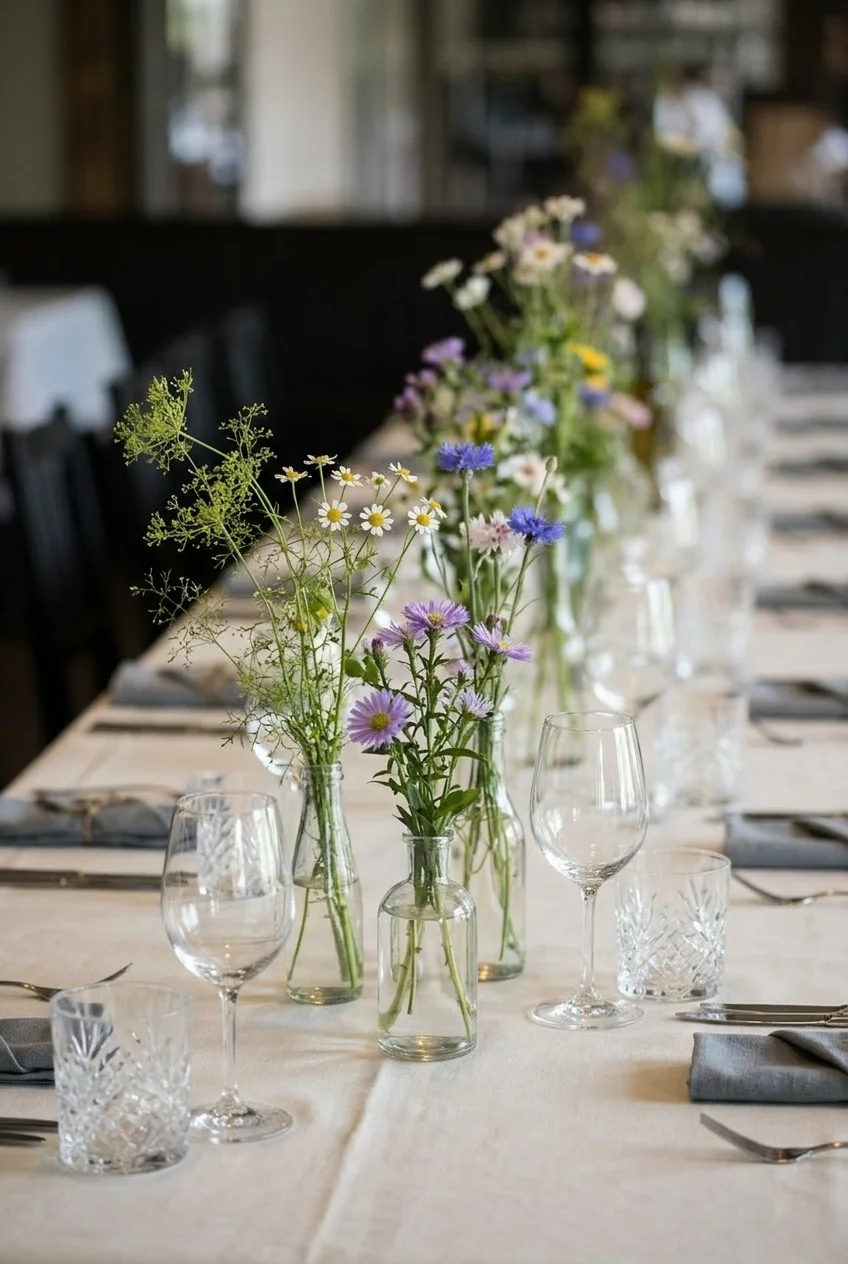
Small bud vases leave room for serving bowls and conversation. Use one to three stems in each vessel and vary the spacing rather than building a continuous runner that competes with the meal.
Have the restaurant place its largest shared plates on a sample table before the florist finalizes quantities. If the table already feels full, concentrate the vases at the ends and between courses instead of at every setting.
12. Layer Low Tapers and Votives Instead of One Tall Centerpiece
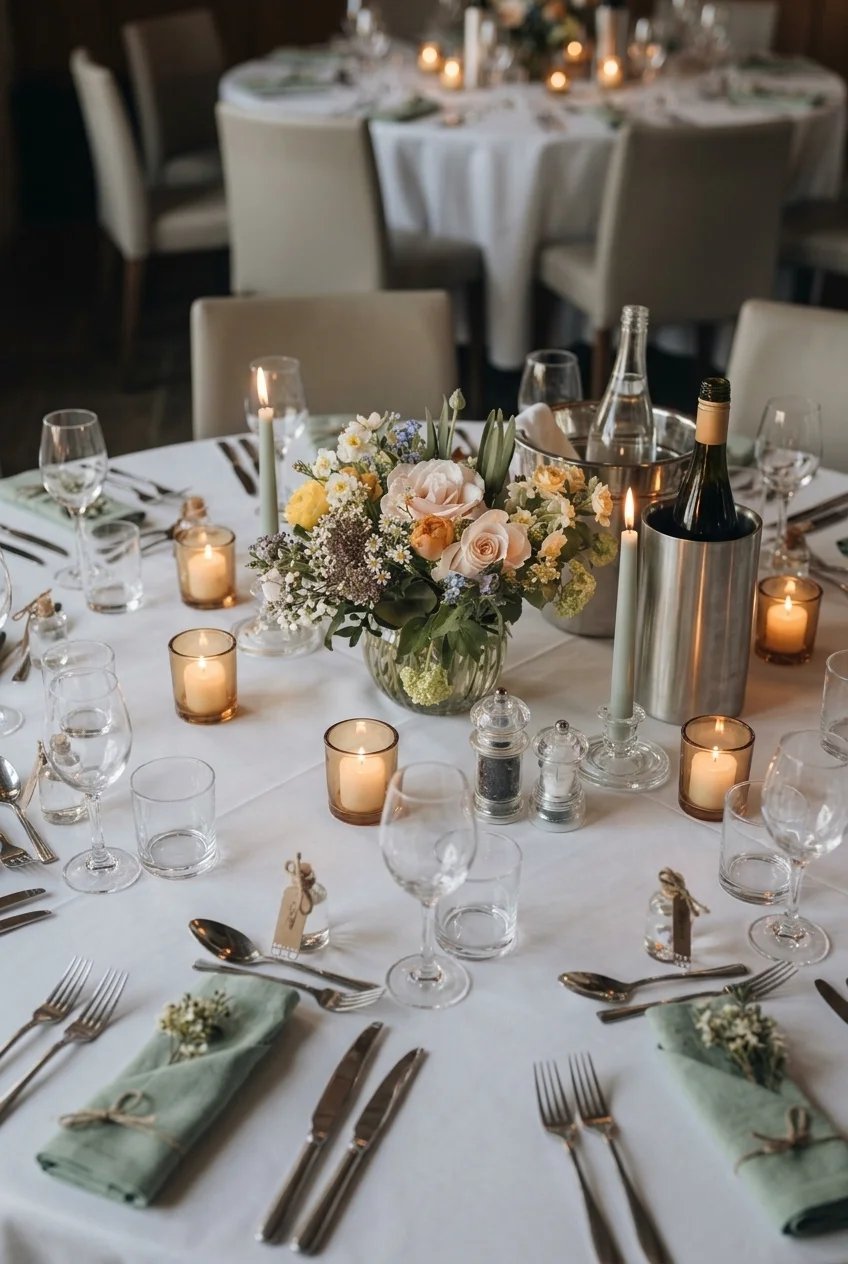
A low rhythm of slim tapers and votives adds depth without blocking faces or restaurant sightlines. Repeat the candle heights in small groups and leave clear zones around menus, glassware, and shared plates.
Setup note Ask about open-flame rules before buying candles. If flame is prohibited, use warm-toned flameless units in opaque or ribbed holders so the battery base is less conspicuous.
13. Use One Bold Napkin Color to Change the Room
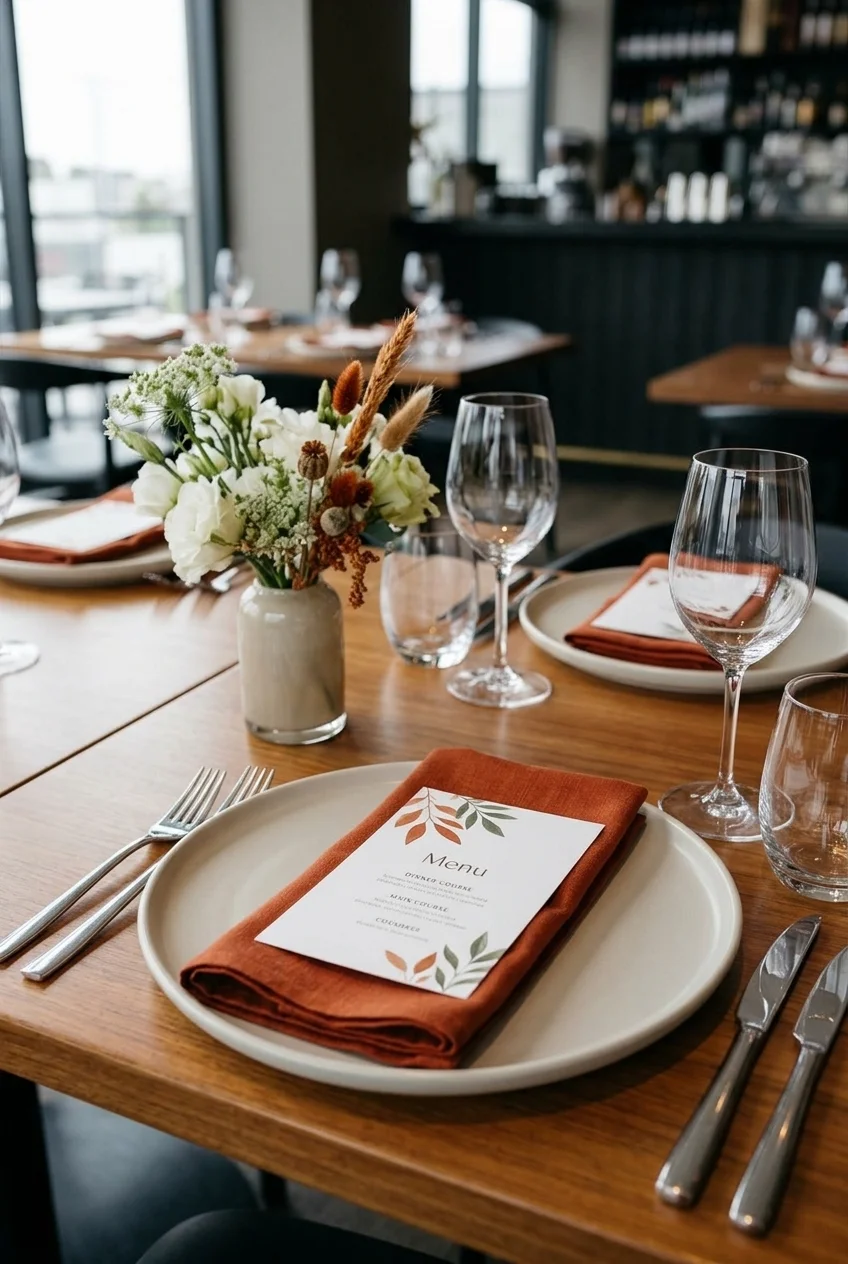
When the restaurant's plates and chairs must stay, a saturated napkin can create a clear wedding palette without adding bulky decor. Pull the color from one existing feature, such as tile, upholstery, or artwork, so it looks connected to the room.
Test one complete place setting in the actual light. A color that looks bright online may turn muddy under warm restaurant bulbs, while a slightly clearer or lighter shade may photograph better.
14. Place a Small Menu Card at Every Setting
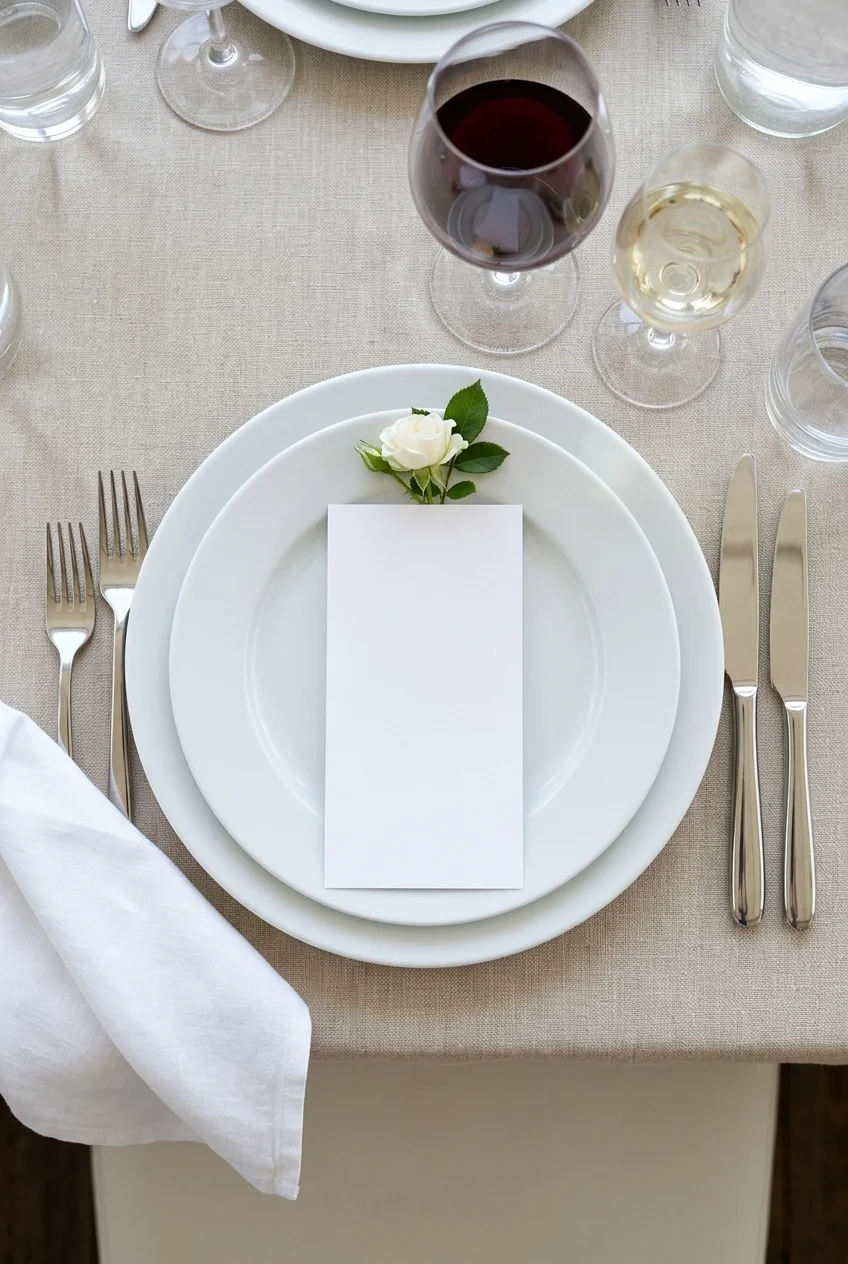
A menu card signals that the meal is central to the celebration and gives guests a clear view of the courses. Keep the card narrow enough to fit beside or on top of the plate without covering bread plates, flatware, or glass stems.
List dietary alternatives only if the wording has been confirmed with the restaurant. For seasonal menus that may change, approve the final copy close enough to printing that the kitchen is comfortable promising every listed dish.
15. Choose Table Numbers That Stay Below Eye Level
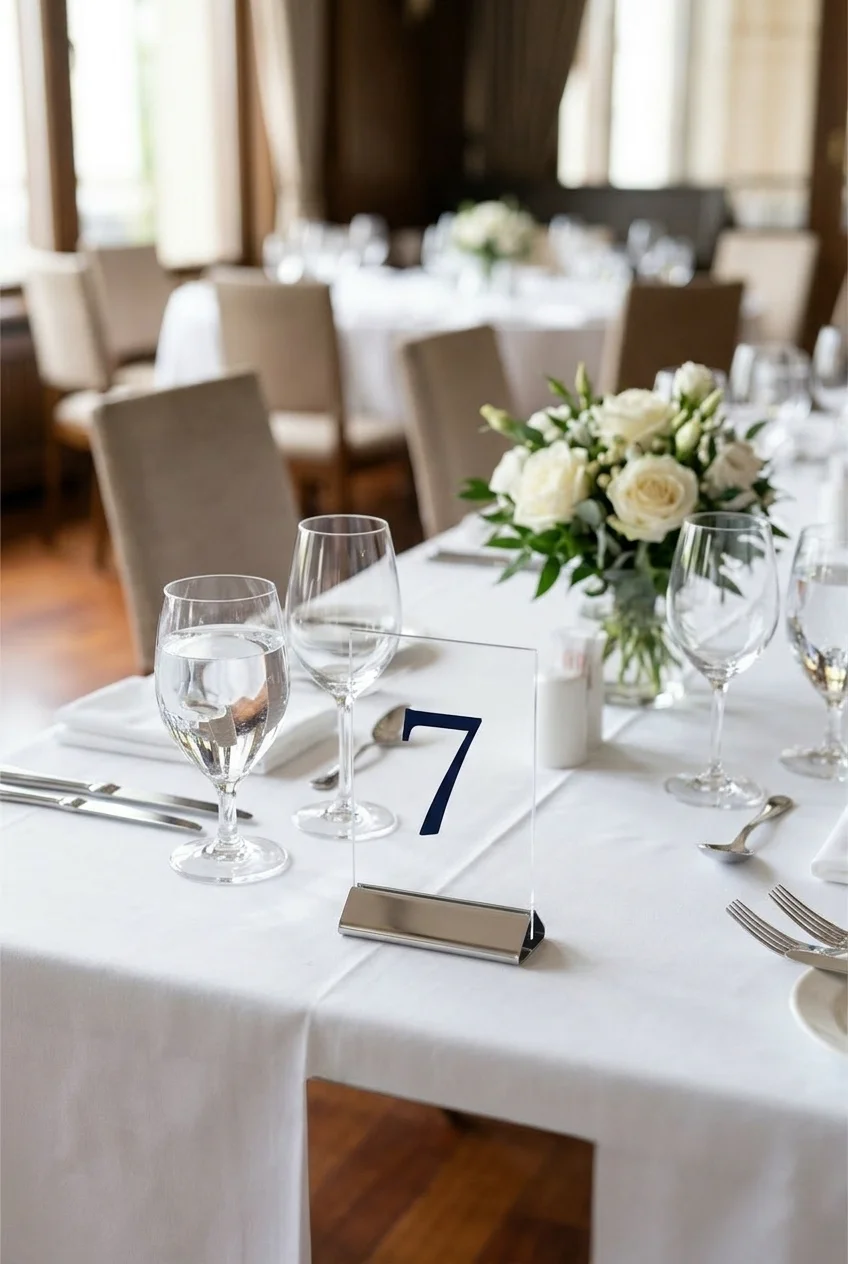
Compact table numbers help guests navigate without becoming another centerpiece. A small freestanding card or number on a weighted base is usually easier to place on a restaurant table than a large frame or tall sign.
Give the final table plan to the venue as well as the stationery vendor. Servers may use the numbers for meal delivery, so style should never make them hard to read from the aisle.
16. Set a Mirror Seating Chart Near the Host Stand
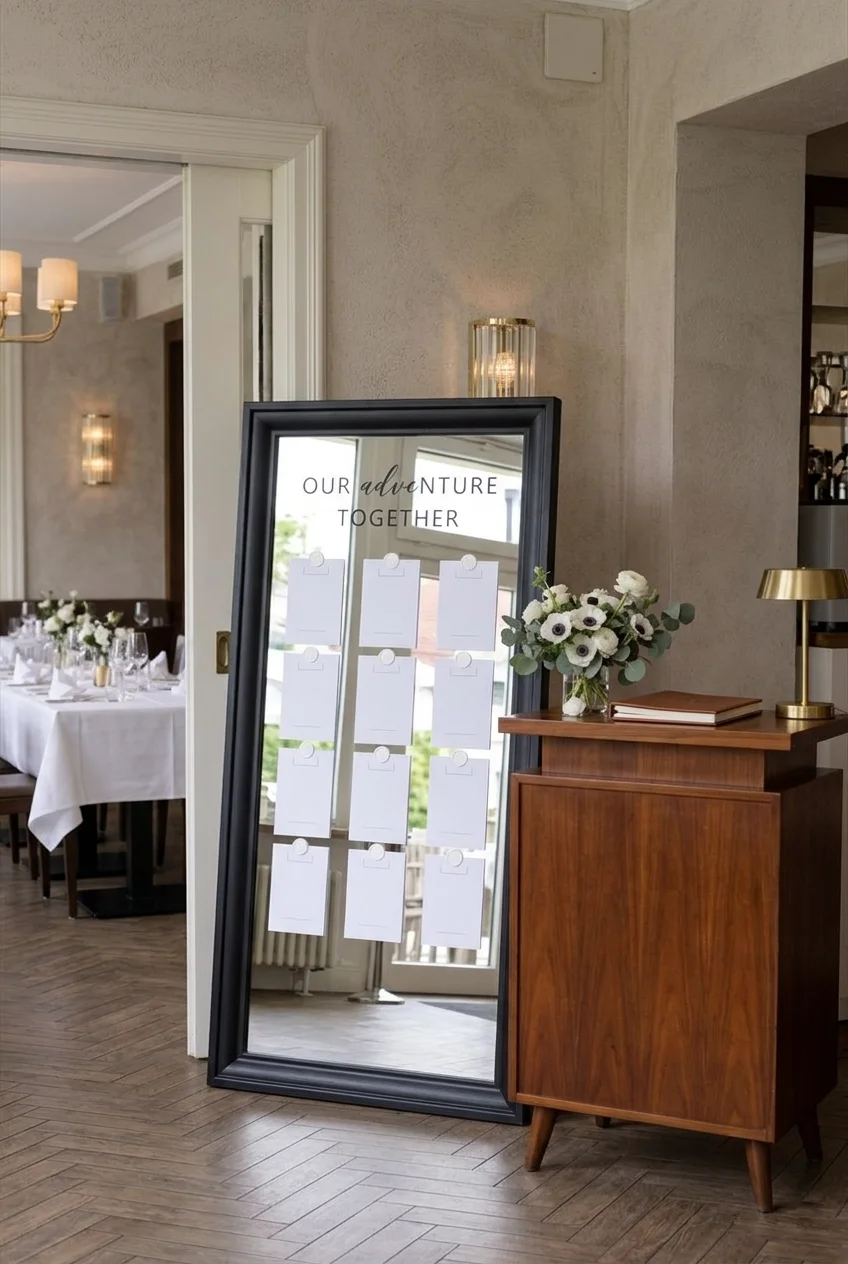
A mirror seating chart can echo the restaurant's existing mirrors and polished surfaces without taking up much floor space. Attach individual table cards so late changes do not require redoing the entire display.
Place it beyond the door swing and outside the main arrival path. Check reflections at the event hour; a mirror that faces a bright window or pendant light can become difficult to read.
17. Display the Dinner Menu at the Entrance
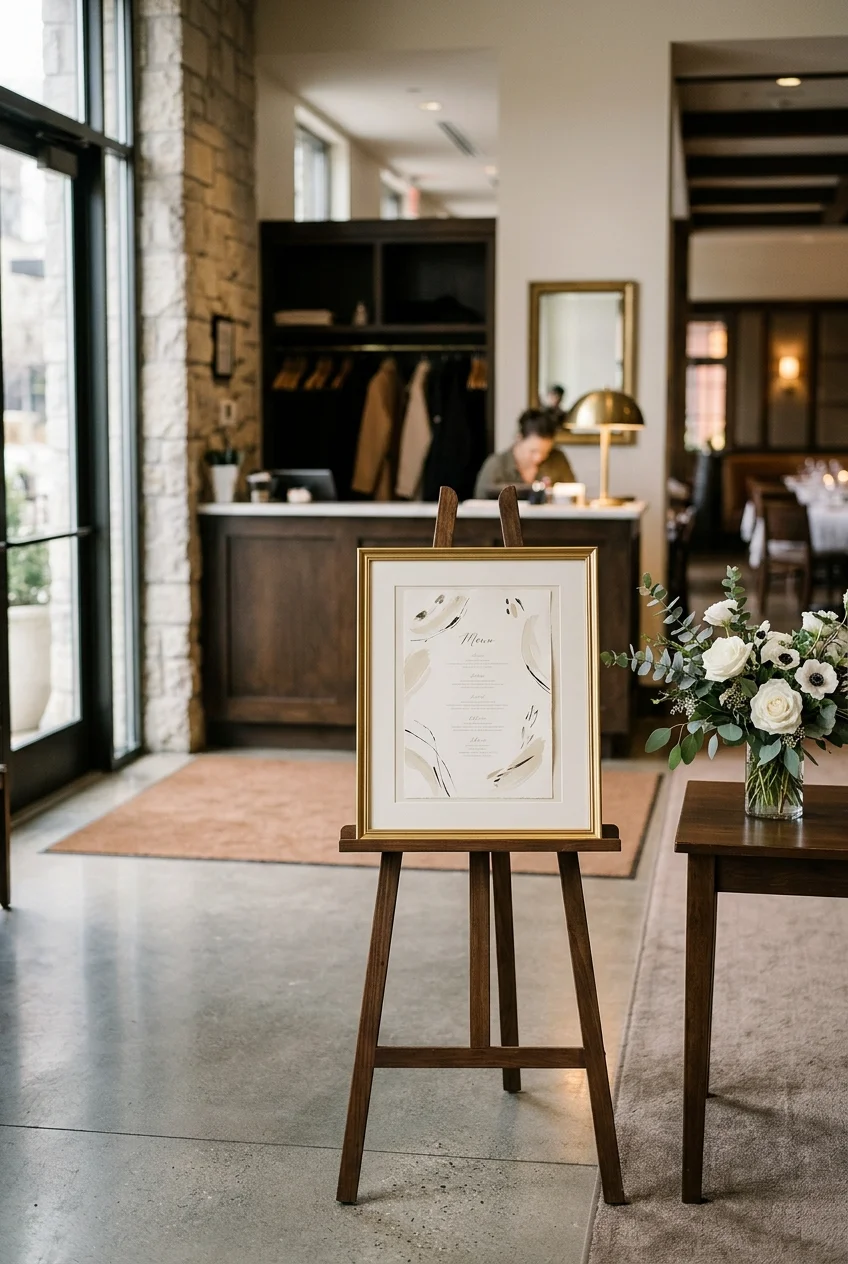
A framed or mounted menu at the entrance establishes the dinner-party focus before guests sit down. Show the course sequence in large, simple type and keep decorative flourishes secondary to legibility.
This is especially useful for a family-style or tasting menu that needs a short explanation. Keep allergen and dietary communication personal and precise; a display is not a substitute for confirming individual needs with the restaurant.
18. Put One Statement Arrangement at the Bar
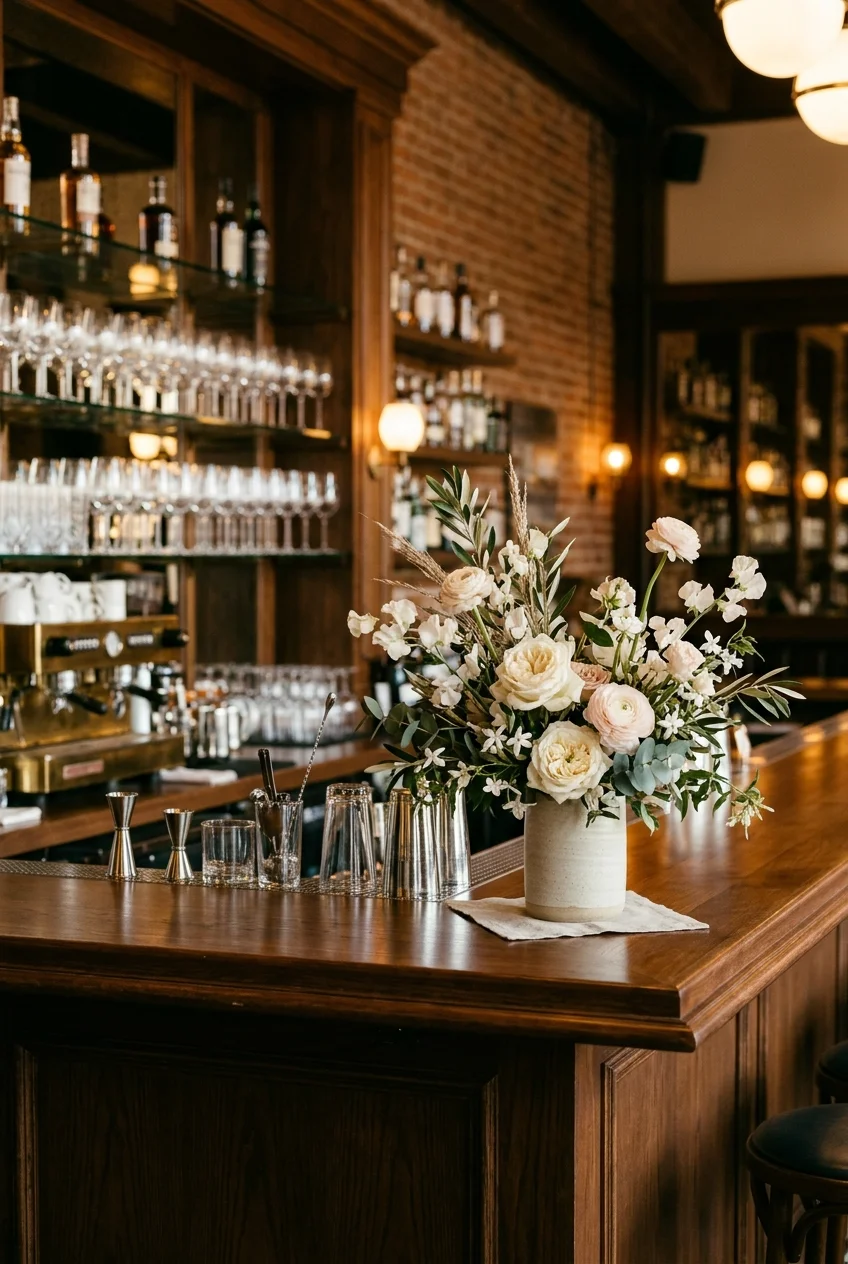
If dining tables must stay compact, use the bar for one larger floral moment. Position it at an unused end or on a back-bar ledge where it can frame the space without blocking bartenders, taps, glass racks, or payment stations.
Planning tip Ask the beverage manager to mark the exact footprint that is safe for decor. A loose sketch from a general walkthrough may miss the equipment needed during active service.
19. Run Greenery Along a Banquette Ledge
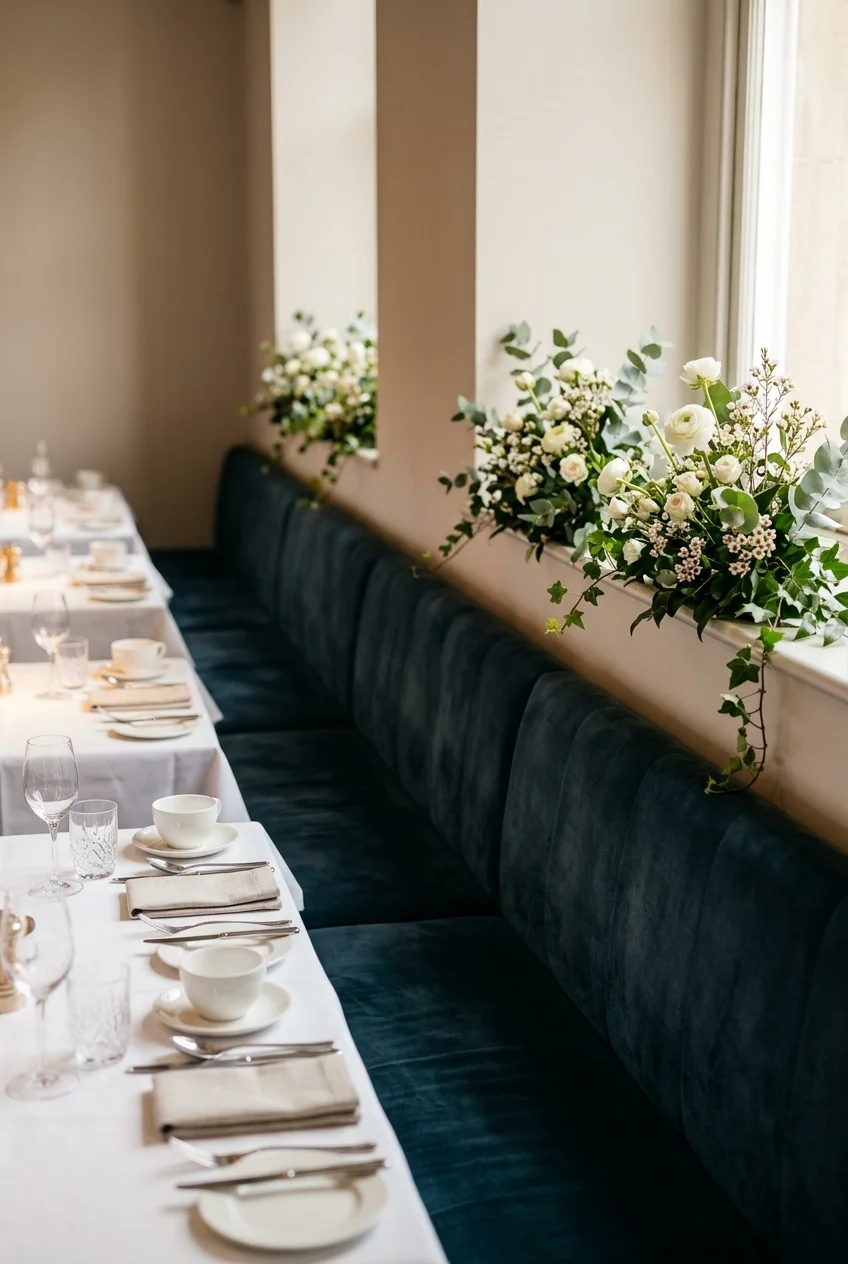
A narrow ledge behind a banquette can carry small clusters of greenery and flowers while leaving the tables free. Break the arrangement into removable sections so staff can reach outlets, windows, or service panels.
Avoid trailing pieces where guests slide into seats, and protect upholstery from water. Faux foliage may be the safer choice when the ledge is shallow or the restaurant cannot allow wet floral foam near finishes.
20. Turn Existing Booths into Family Tables
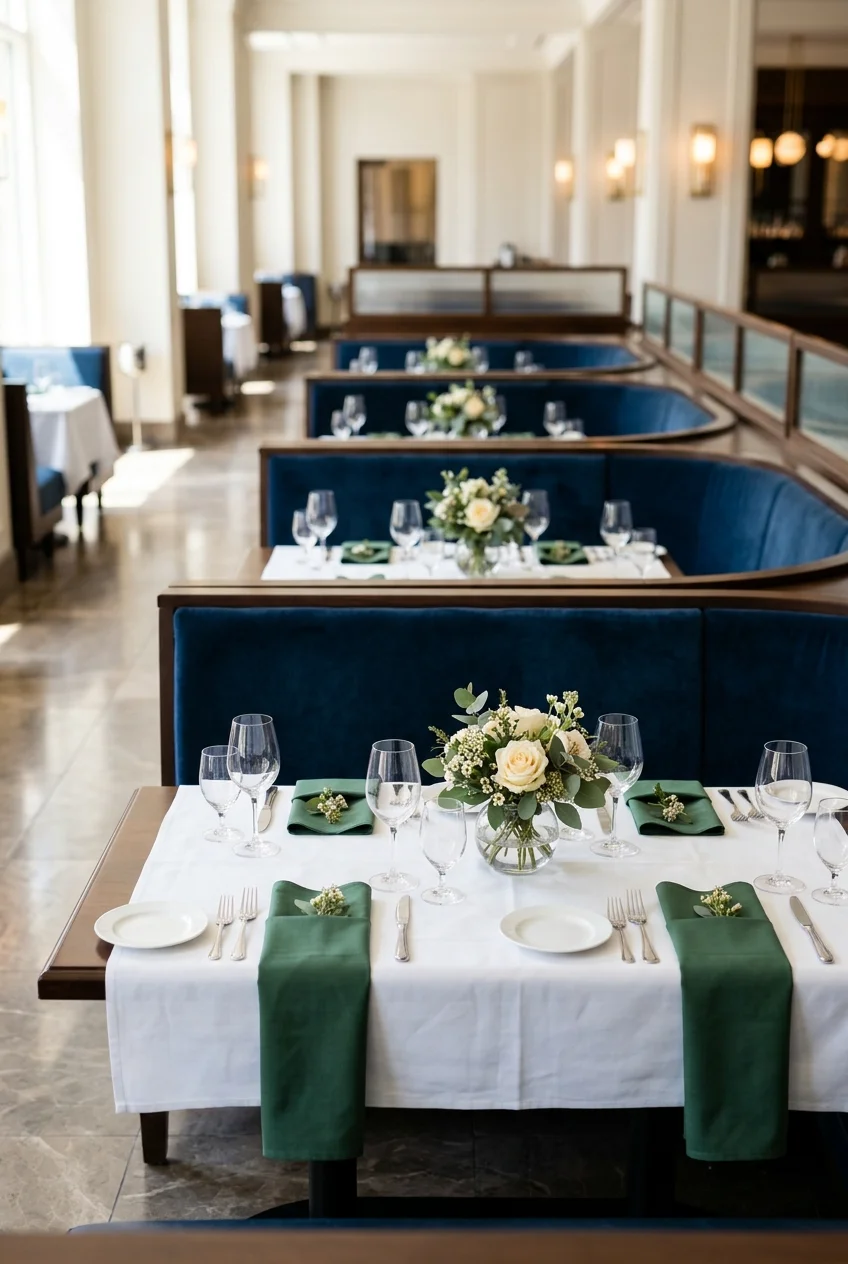
Restaurant booths naturally suit households, close friends, or guests with children because the seating feels contained and conversational. Use consistent napkins or flowers across the booths and freestanding tables so the room still looks like one celebration.
Do not force a strict hierarchy onto tables with different shapes and views. Instead, choose any couple's table for comfort and sightlines, then distribute immediate family where they can move easily and hear the key moments.
Food and Drink Ideas That Use the Kitchen Well
21. Serve a Family-Style Feast Down the Table
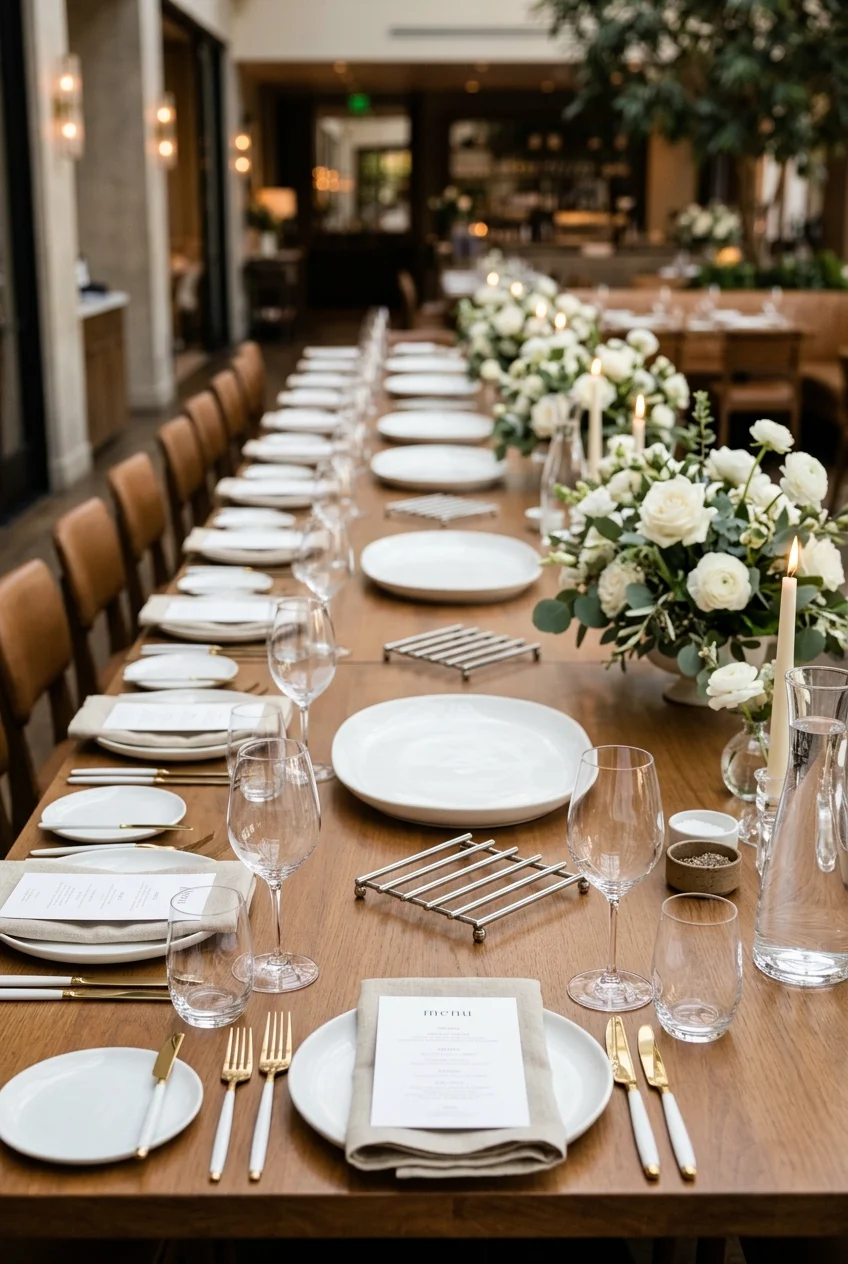
Family-style service reinforces the shared-table feeling and lets the restaurant present dishes as it normally would. Select a manageable number of platters that can sit comfortably between the place settings.
Ask how the kitchen will replenish dishes and serve guests with allergies without cross-contact. Tables may need fewer flowers, fewer candles, and no charger plates so hot serving pieces have safe landing zones.
22. Make a Tasting Menu the Main Event
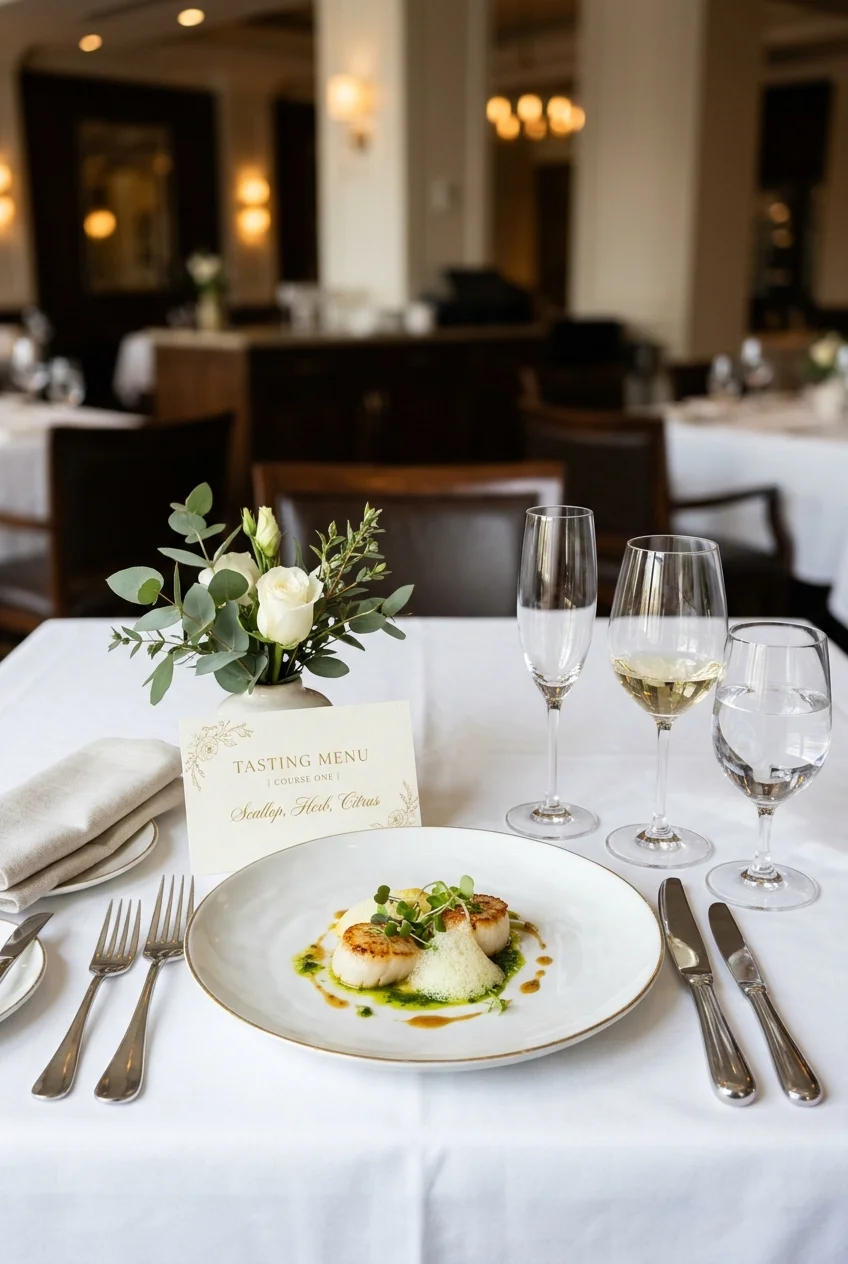
A tasting menu gives a small restaurant wedding a natural sequence, with each course marking the evening's progress. Keep speeches short and place them at pauses agreed with the kitchen so food is not cooling while someone talks.
Tell guests in advance that dinner will be multi-course and approximately how long it will last. Confirm substitutions, nonalcoholic pairings, and the final course count before the stationery goes to print.
23. Offer Two Entrees on a Concise Set Menu
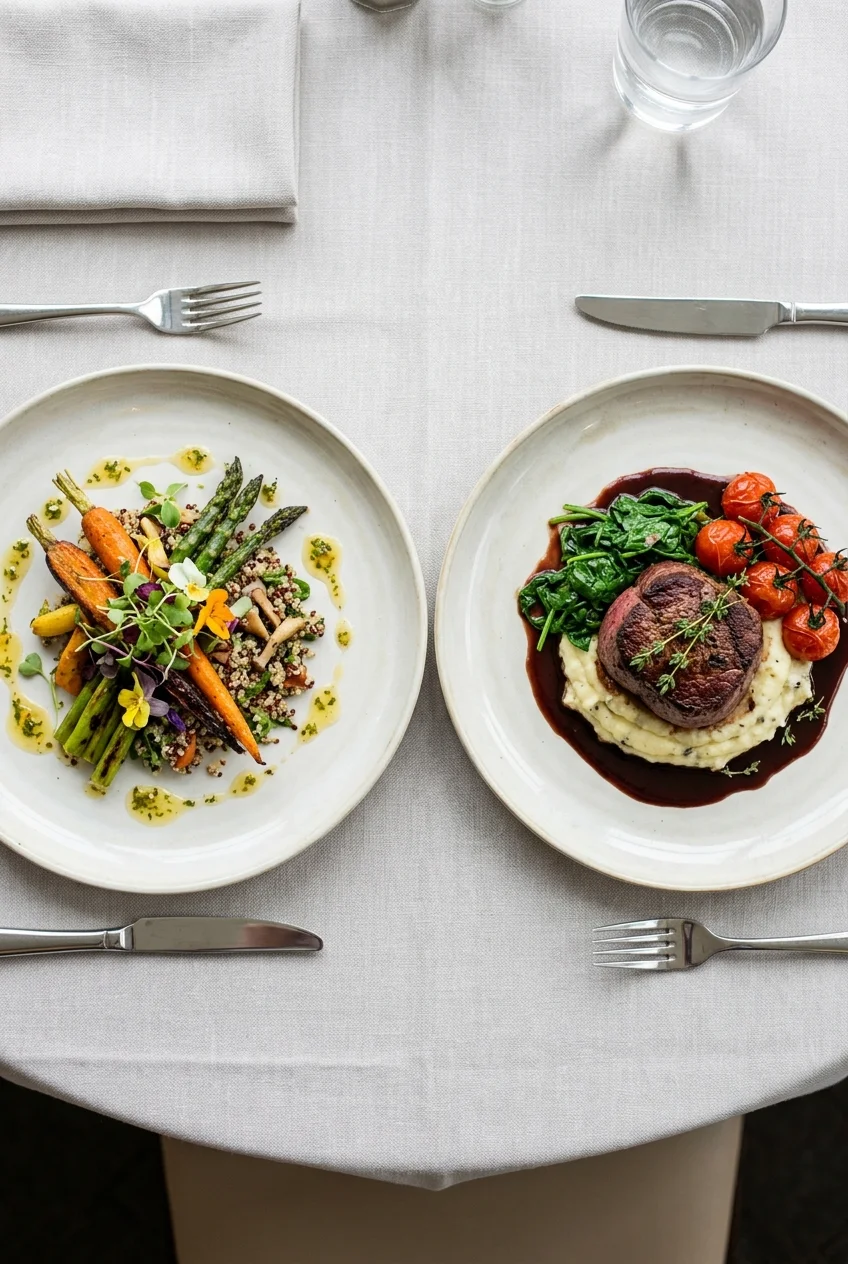
Two well-chosen entrees can give guests a meaningful choice without asking the kitchen to reproduce the full dinner menu at banquet scale. Add a thoughtfully composed vegetarian or vegan option rather than treating it as an improvised side plate.
Decide whether choices are collected with RSVPs or taken at the table. If they are preselected, give the venue a simple visual meal marker that servers can identify without reading tiny names in low light.
24. Let the Chef Build a Seasonal Wedding Menu
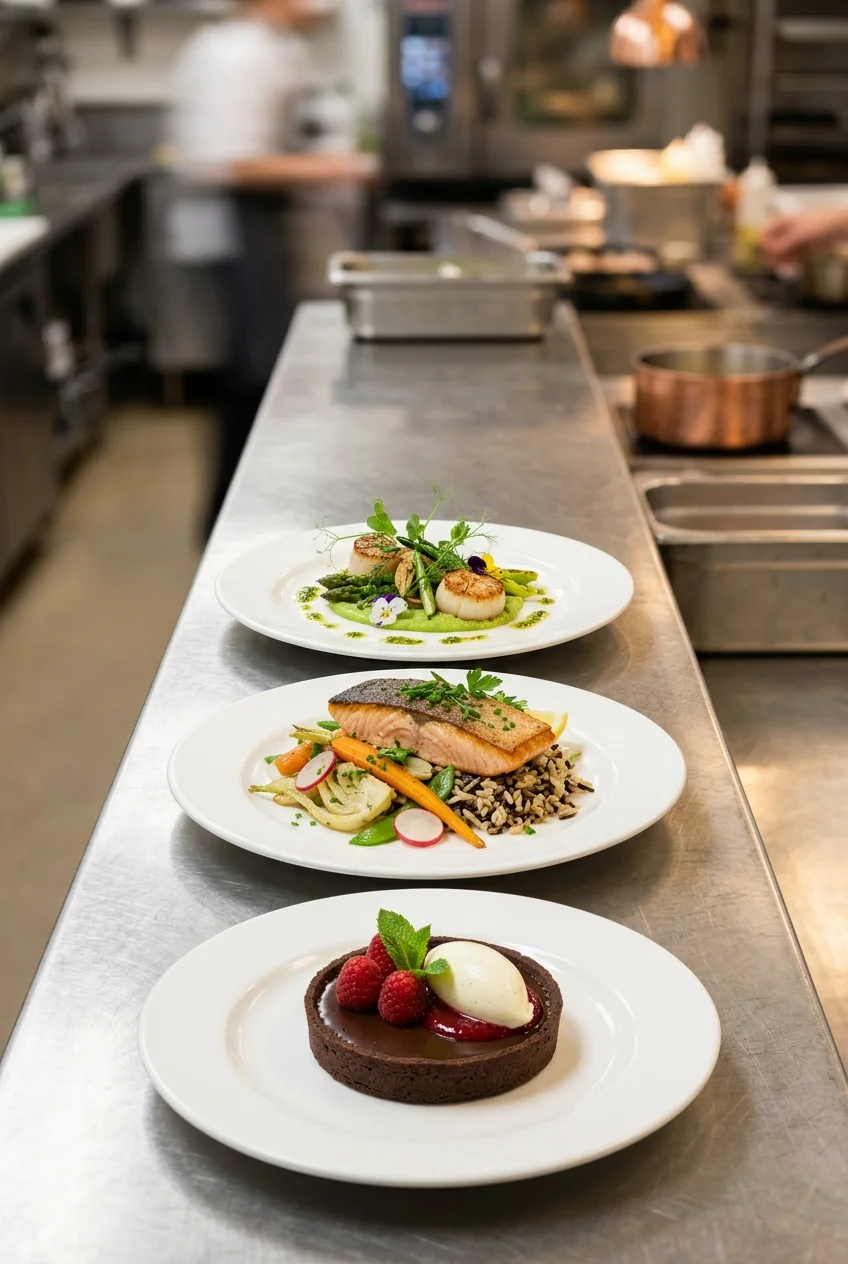
A seasonal menu lets the restaurant use ingredients and techniques it handles confidently. Ask for a representative menu from the same season rather than expecting today's dishes to appear unchanged months later.
Use flexible stationery wording such as a broad dish description until the ingredients are final. The contract should still define the number of courses, dietary process, and approval date so flexibility does not become uncertainty.
25. Open Dinner with Shared Starter Boards
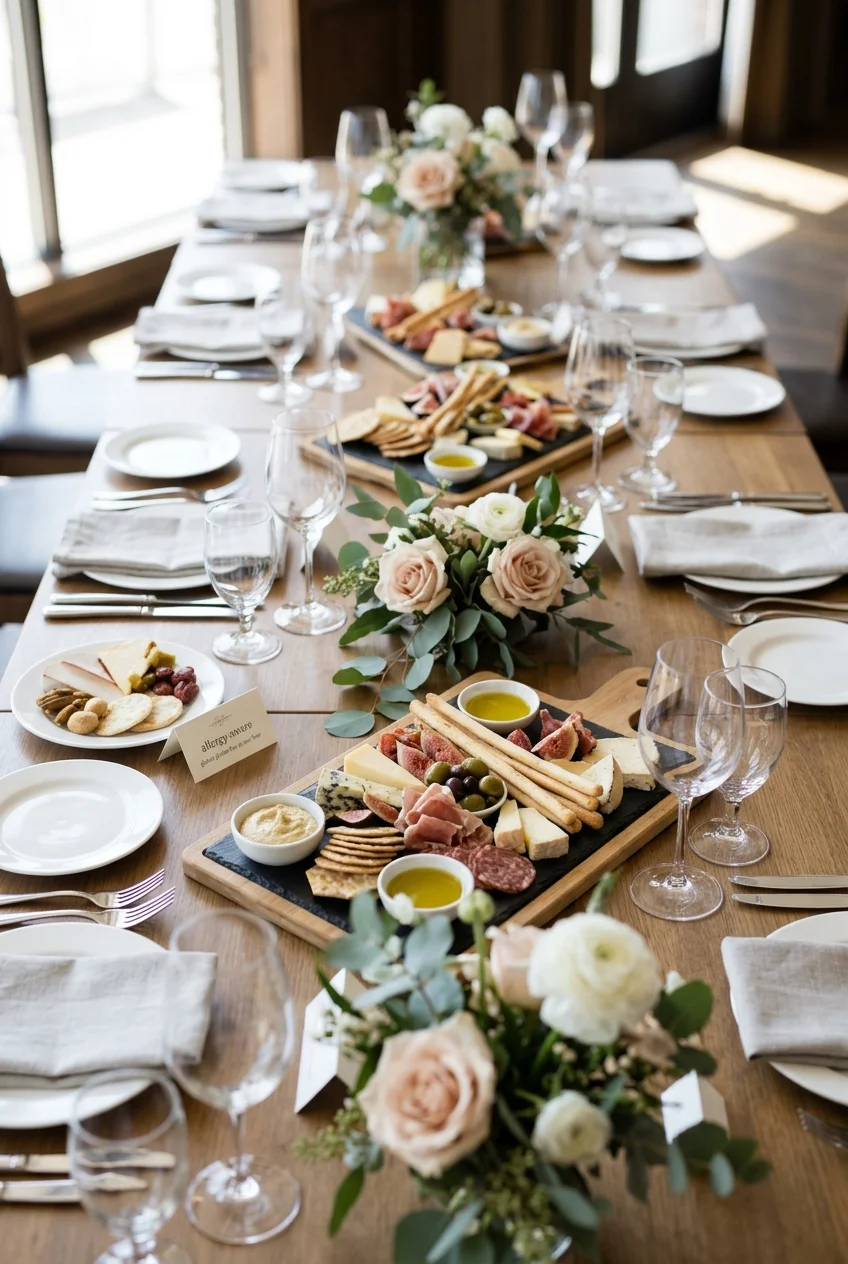
Shared starters give guests something to enjoy as soon as they sit down and can make a long table feel relaxed. Choose items that hold well for a few minutes and provide separate portions for allergy-sensitive guests.
Use several modest boards rather than one oversized display that guests cannot reach. Ask the restaurant to set the board size during the table mock-up so glassware and flowers are not displaced at service.
26. Pair Welcome Drinks with Passed Bites
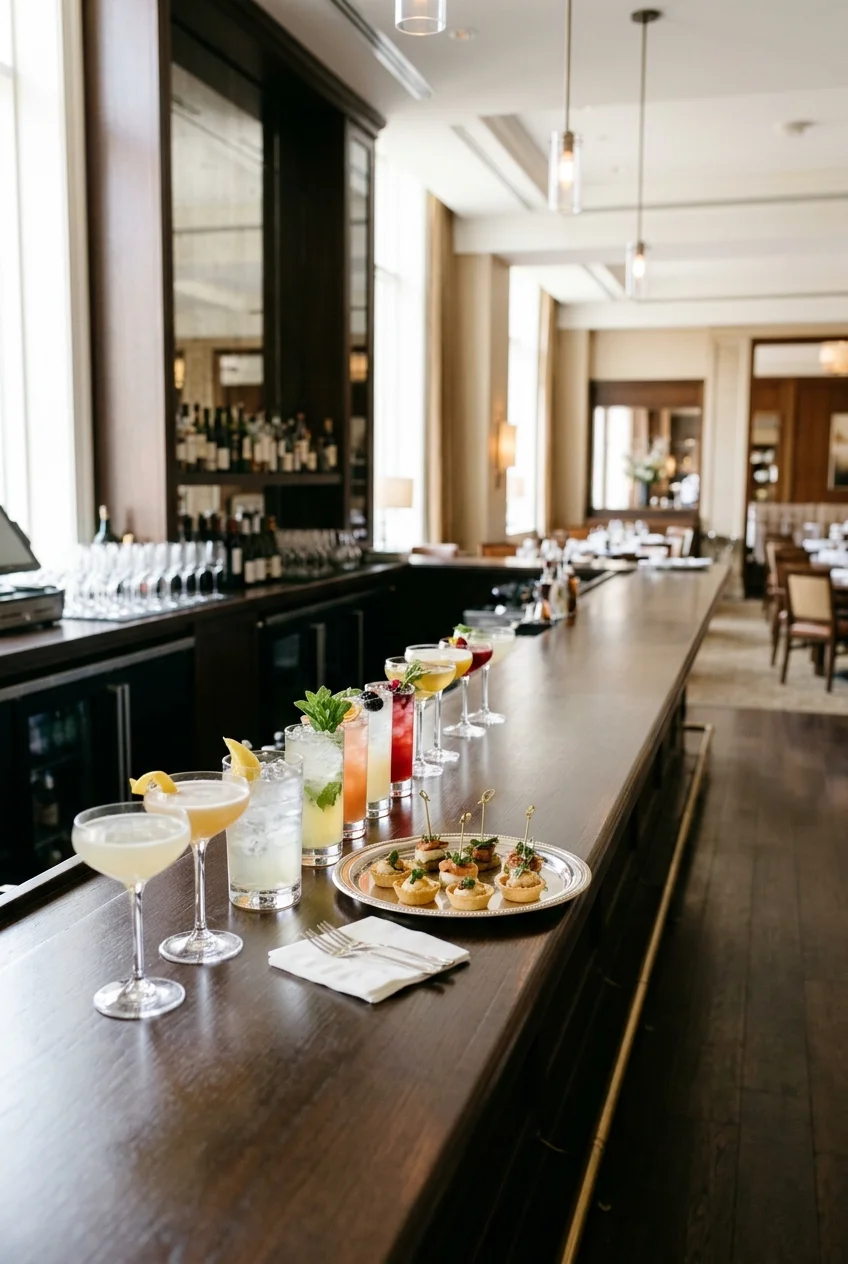
A short welcome period at the bar allows late arrivals to settle in before dinner. Match one or two passed bites to the drinks and keep the selection small enough that service remains steady in a compact room.
Protect a clear route between the kitchen, bar, and guests. If the entrance is narrow, move the welcome moment deeper into the restaurant so arriving guests do not meet trays, coats, and the seating chart in the same pinch point.
27. Add One Chef-Run Food Station
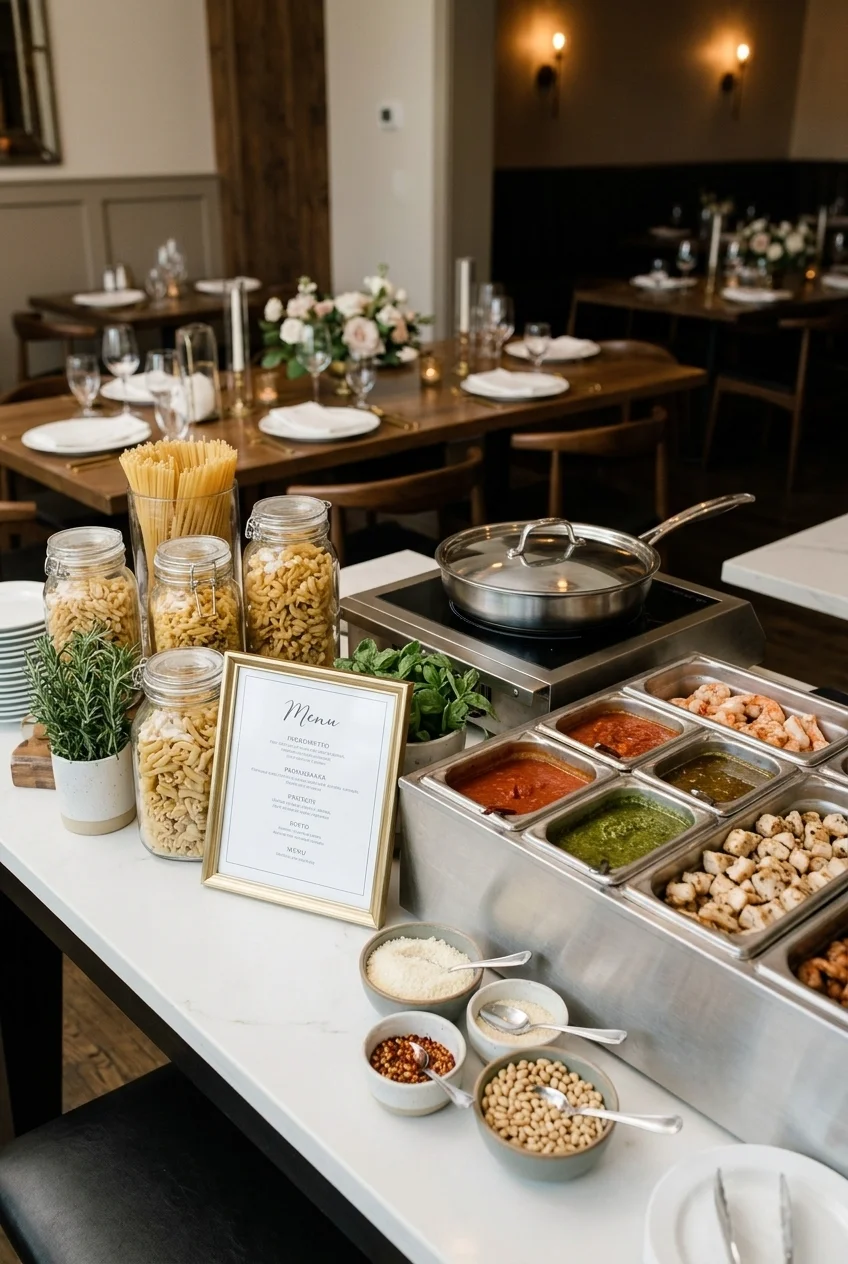
An oyster station, pasta finish, carving board, or dessert assembly can add movement without turning dinner into a collection of lines. Choose one station the restaurant already knows how to operate and position it away from the bar and main aisle.
Confirm refrigeration, heat, handwashing, waste, and allergen procedures with the venue. The station should be staffed and supplied by the restaurant or an approved vendor, not improvised as decor.
28. Match a Signature Cocktail with a Zero-Proof Version
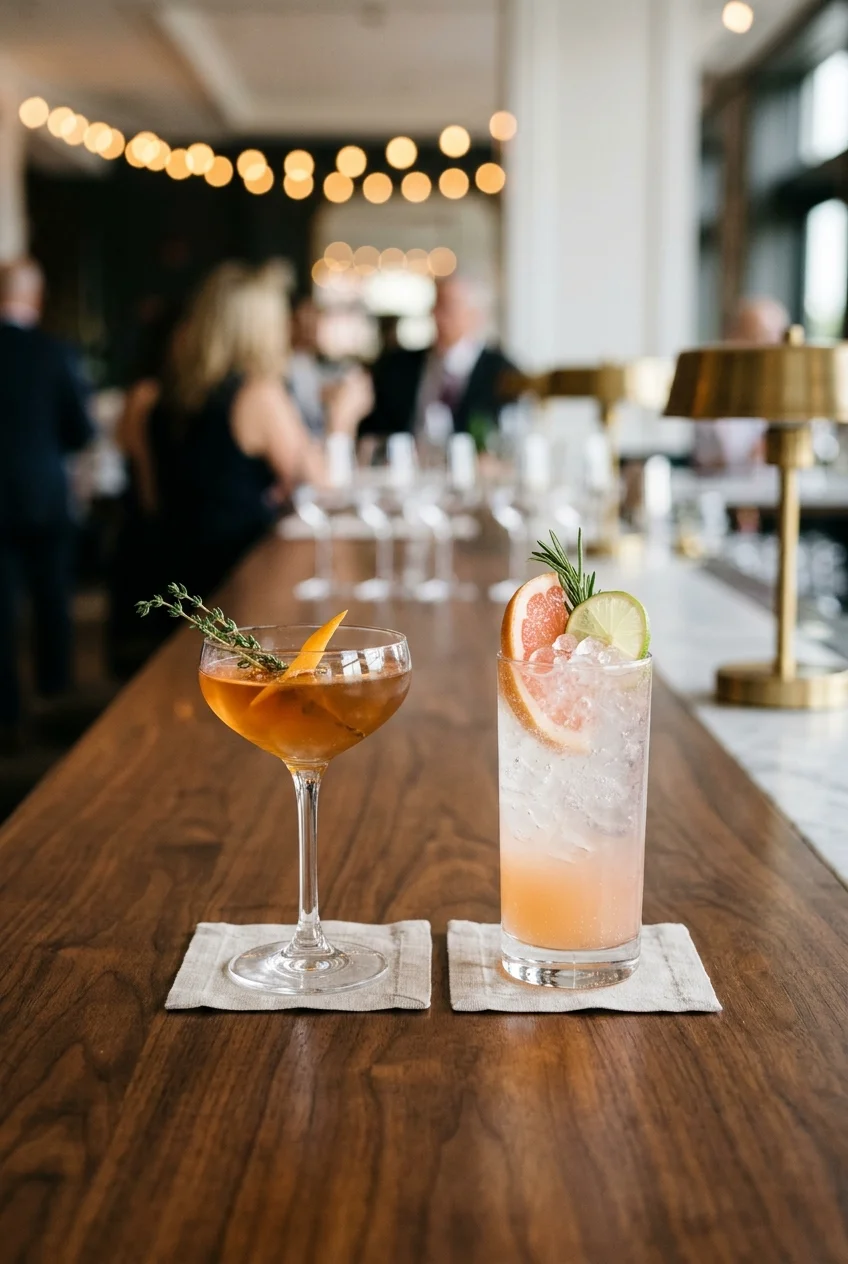
Offer one house-style cocktail and one zero-proof drink with equal attention to glassware and garnish. They can share a flavor note, such as citrus, ginger, or an herb, without pretending the nonalcoholic version must taste identical.
Select drinks the bar can batch or build quickly for your count. A complex made-to-order cocktail may create a line just when guests should be moving to dinner.
29. Offer Wine and Nonalcoholic Pairings by the Course
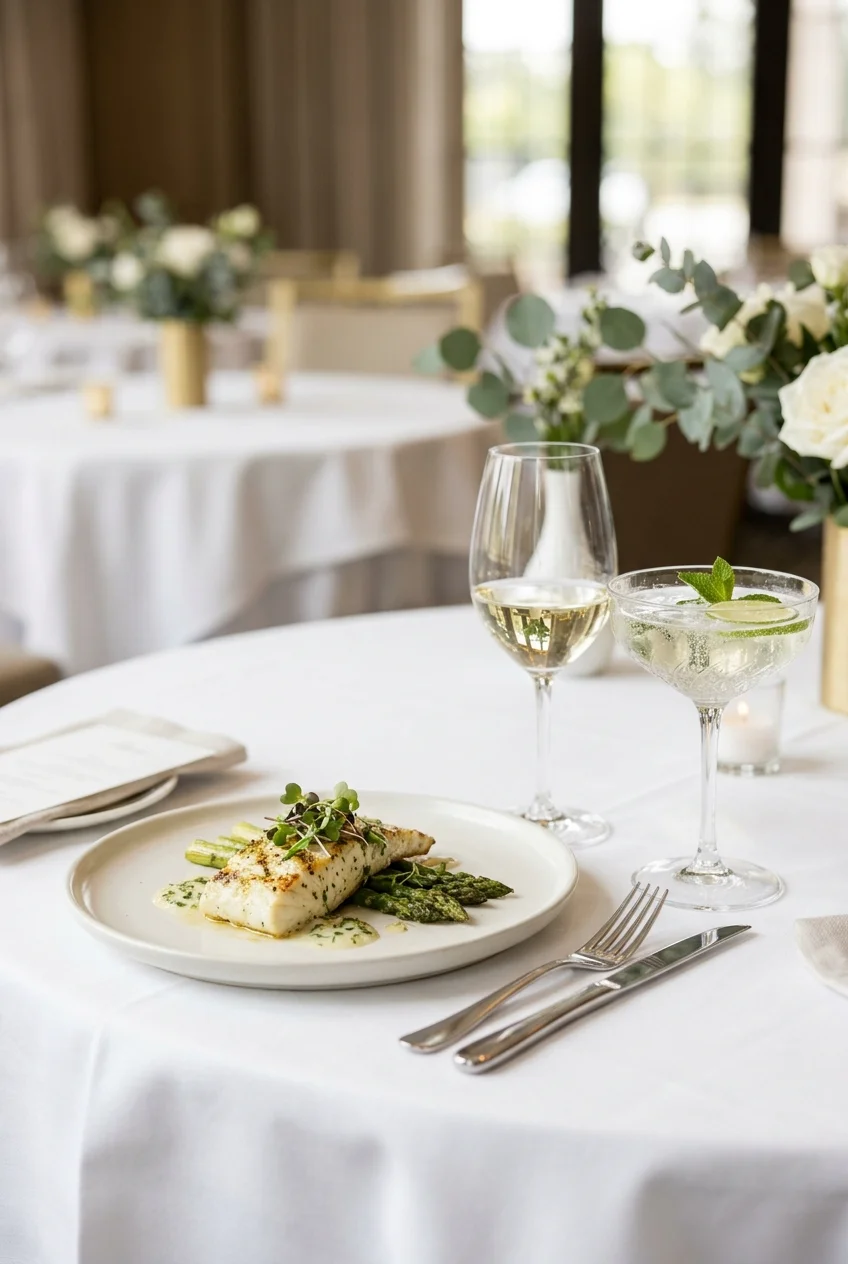
A pairing can make the meal feel ceremonial without adding a separate activity. Keep pours modest and offer a thoughtful nonalcoholic pairing, such as tea, verjus, shrubs, or sparkling botanicals chosen by the beverage team.
Explain the options at the first course so guests can switch or decline without attention. Confirm whether pairings are charged per person, by consumption, or within the food-and-beverage minimum.
30. Use a Coupe Tower for One Controlled Toast
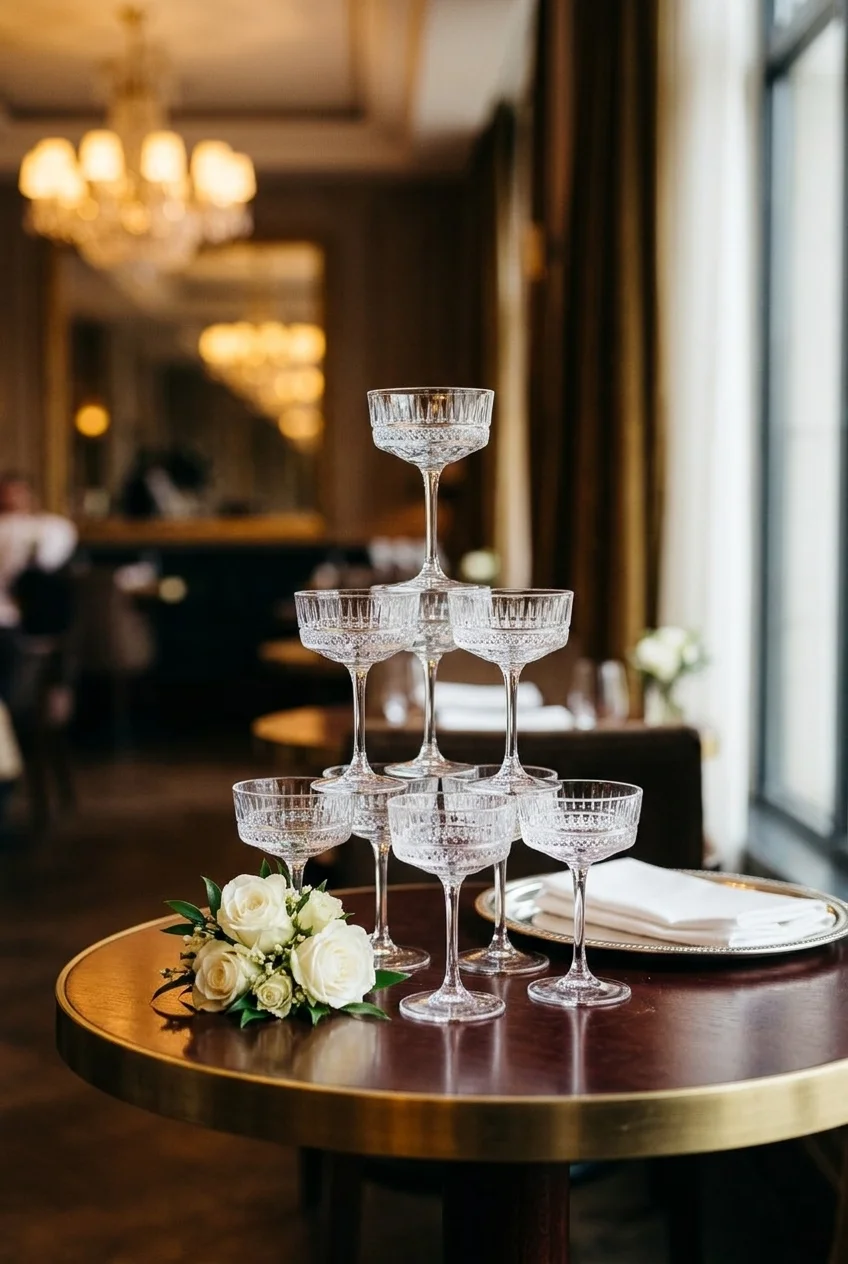
A small coupe tower can create a celebratory focal point near the bar or dessert area. Treat it as a staff-managed service moment rather than a do-it-yourself structure, and keep the surrounding surface dry and unobstructed.
Ask the beverage team how many glasses are stable, who will pour, and whether guests receive drinks from the tower or from prepared trays. A compact version often suits a restaurant better than a tall display that competes with circulation.
Dessert, Ceremony, and Reception Flow
31. Pair a Small Cutting Cake with Plated Dessert
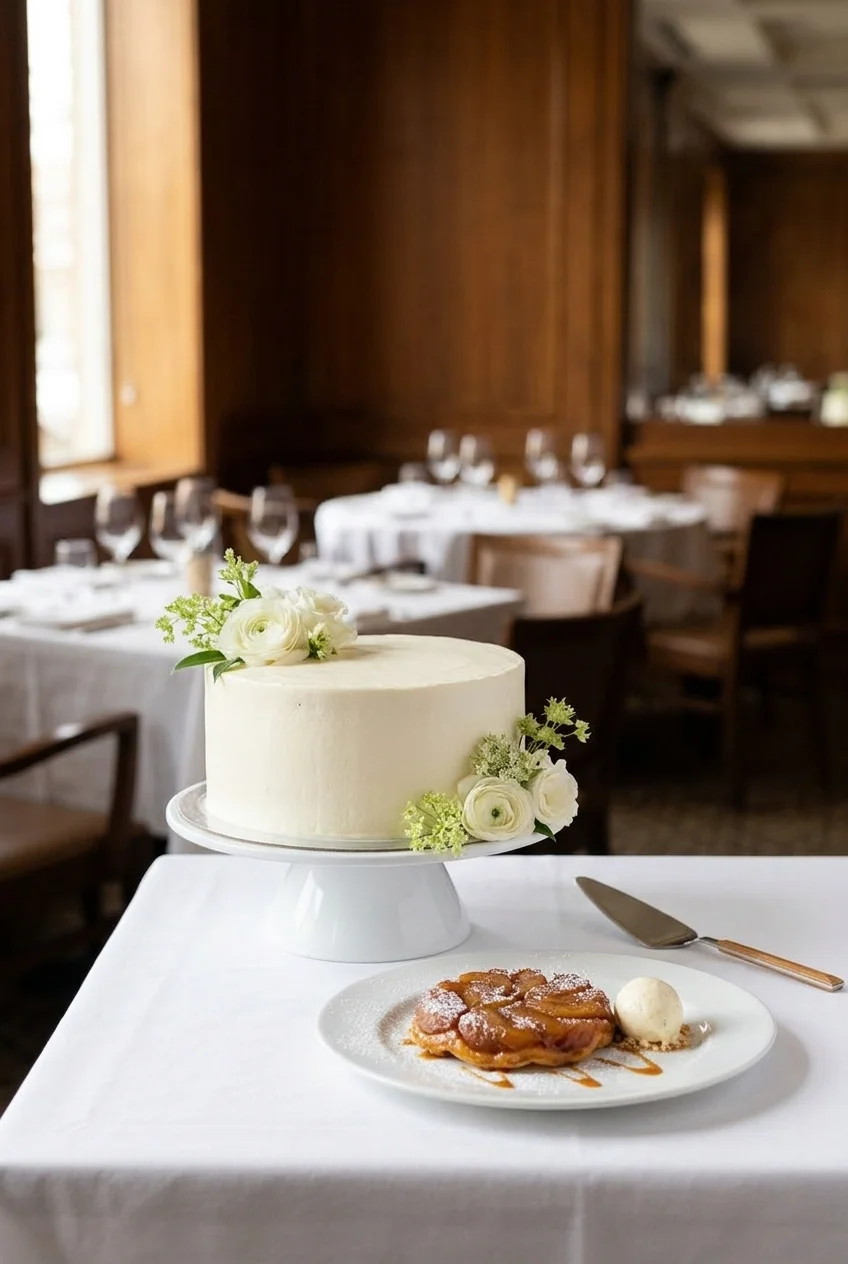
A small cake provides the familiar cutting moment while the restaurant serves its dessert at the right temperature. Choose a cake sized for the display and a few ceremonial slices, then let the kitchen handle the rest of service.
Confirm the outside-cake policy, storage, cutting fee, knife, stand, and plate service. If the restaurant's dessert is the main sweet, the cake does not need to imitate a full guest-count portion.
32. Ask the Pastry Team for a Restaurant-Made Wedding Cake
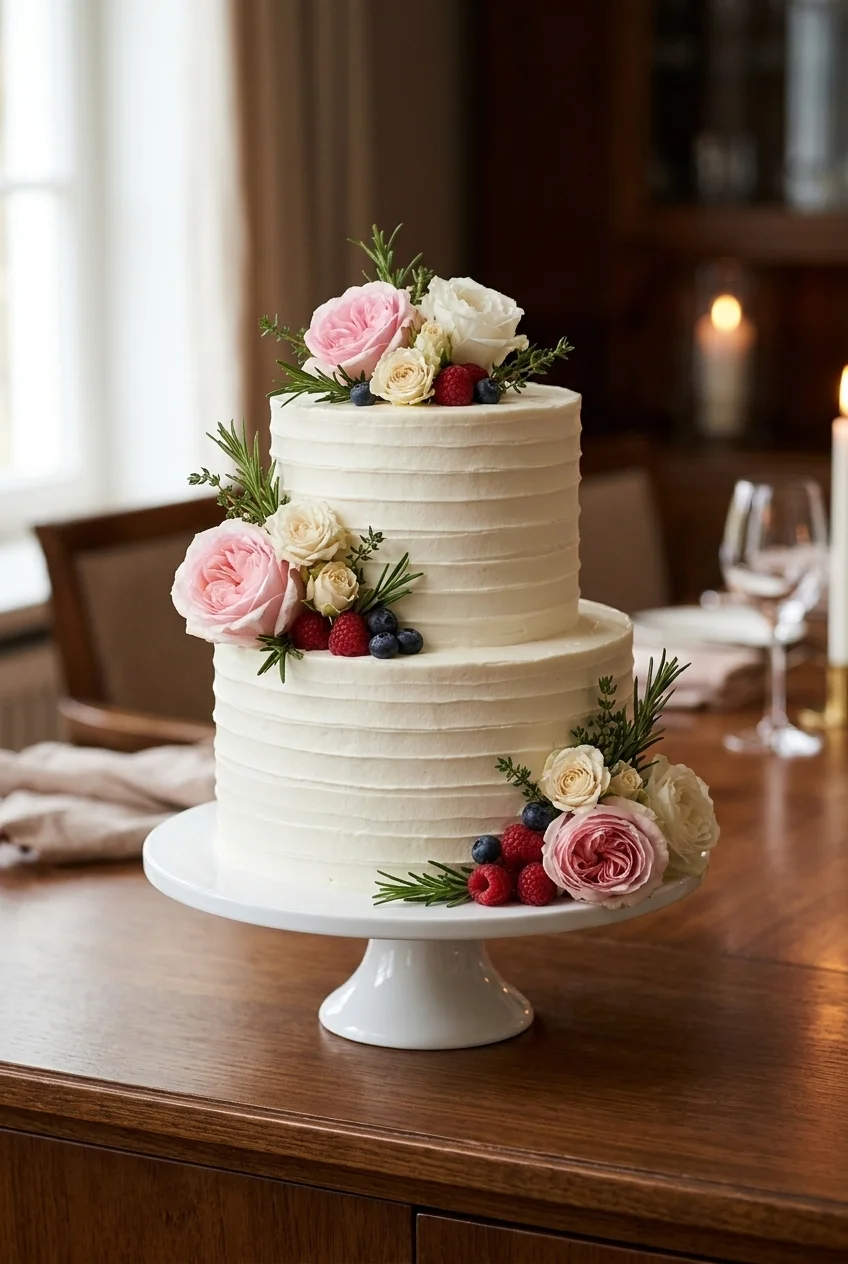
If the restaurant has a pastry program, an in-house cake can reduce delivery and storage complications. Share the serving count, desired finish, allergies, and display location, then let the pastry team recommend a design that suits its kitchen.
Get the size, flavor, decoration, delivery responsibility, and service method in writing. Not every restaurant that makes excellent plated desserts is equipped to build a tiered cake, so treat this as a question rather than an assumption.
33. Roll Out a Dessert Cart Between the Tables
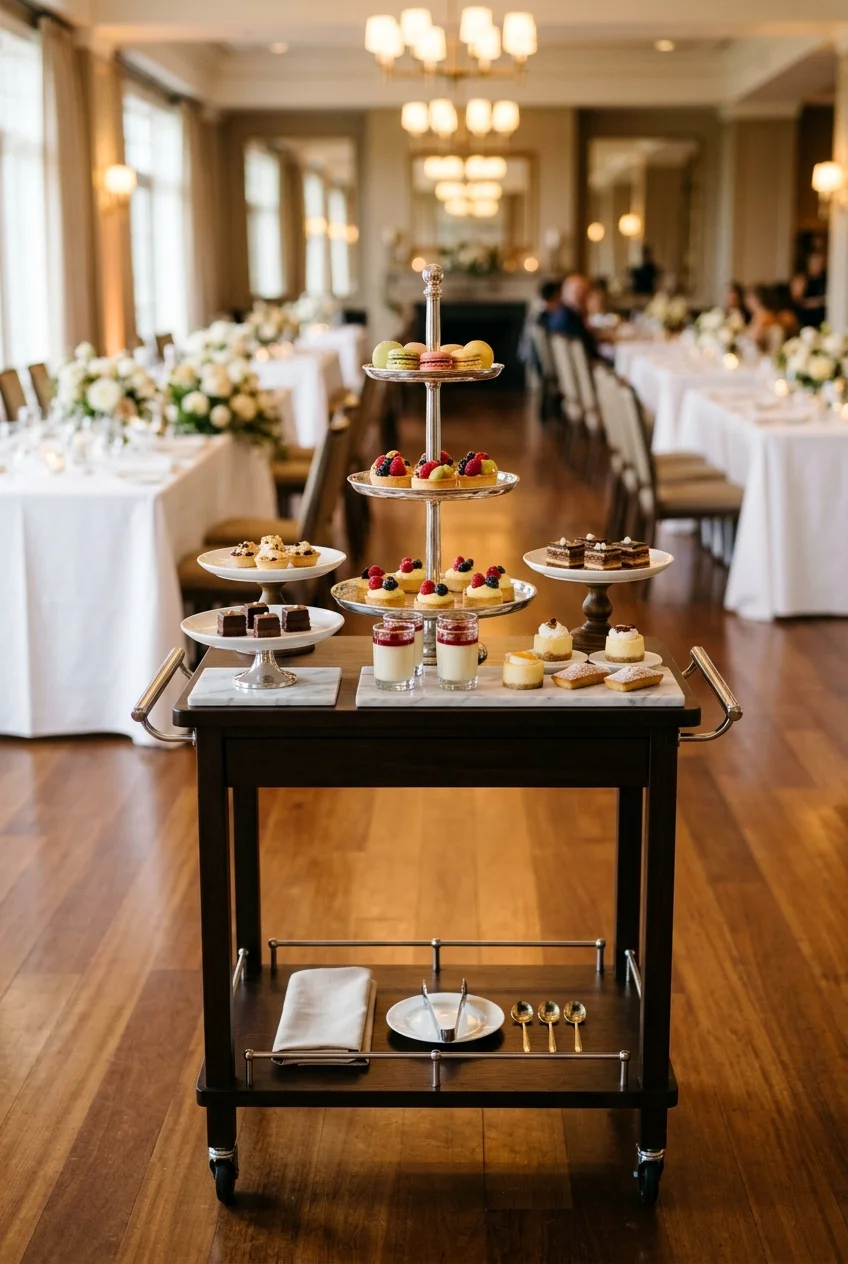
A dessert cart turns service into a visible moment without requiring a separate buffet. It works best with pastries, small plated sweets, or after-dinner drinks that the restaurant can portion and replenish smoothly.
Map the cart route after chairs are pulled out, not in an empty room. If aisles are tight, park the cart near one end of the dining room and have servers bring selections to the tables.
34. End with the Restaurant's Best Late-Night Bite
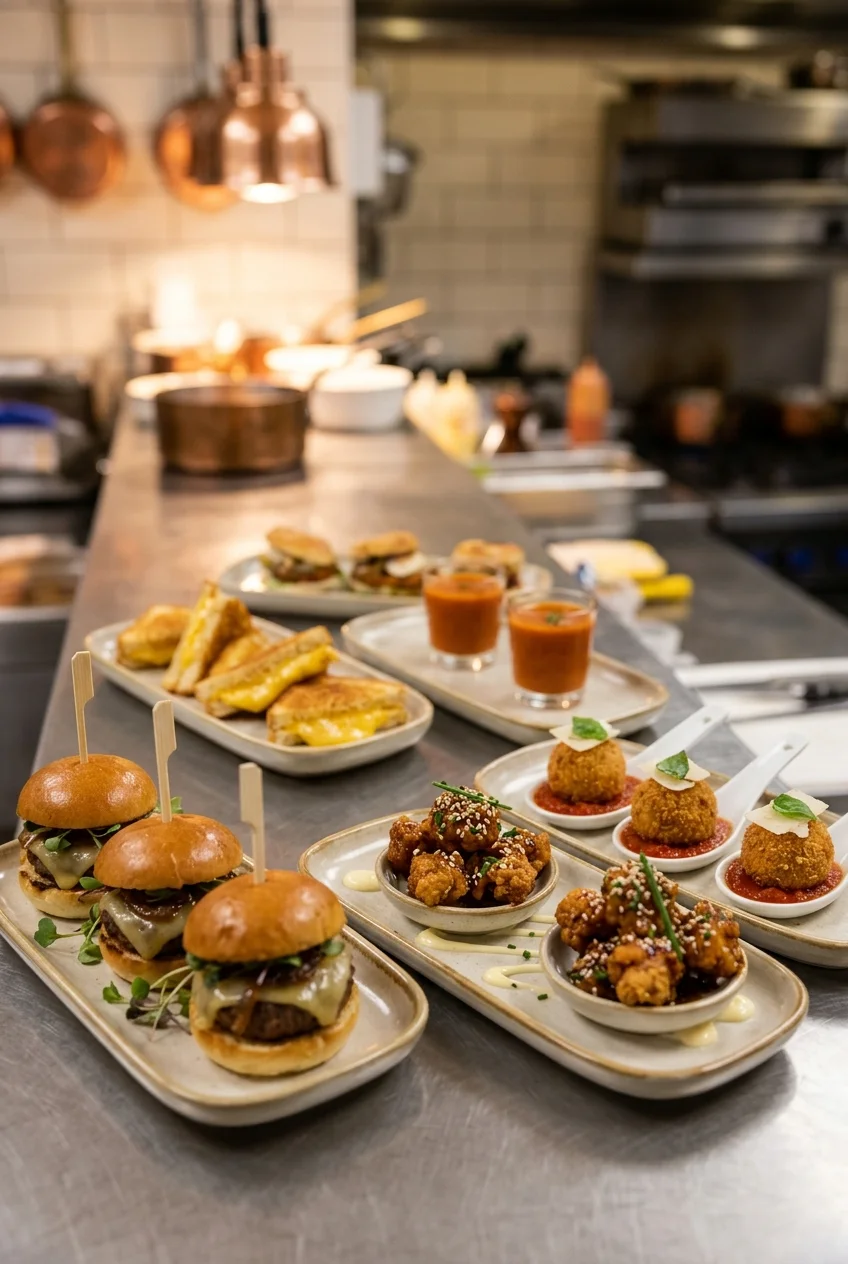
Instead of importing a food truck or elaborate snack wall, ask the kitchen for a small version of a menu favorite. A slider, slice, dumpling, fry cup, or warm pastry feels connected to the venue and can arrive just before departure.
Choose something that can be served quickly and eaten without reopening the entire table setting. Confirm the final order time, packaging, and whether leftovers may leave the premises.
35. Hold the Ceremony on the Restaurant Patio
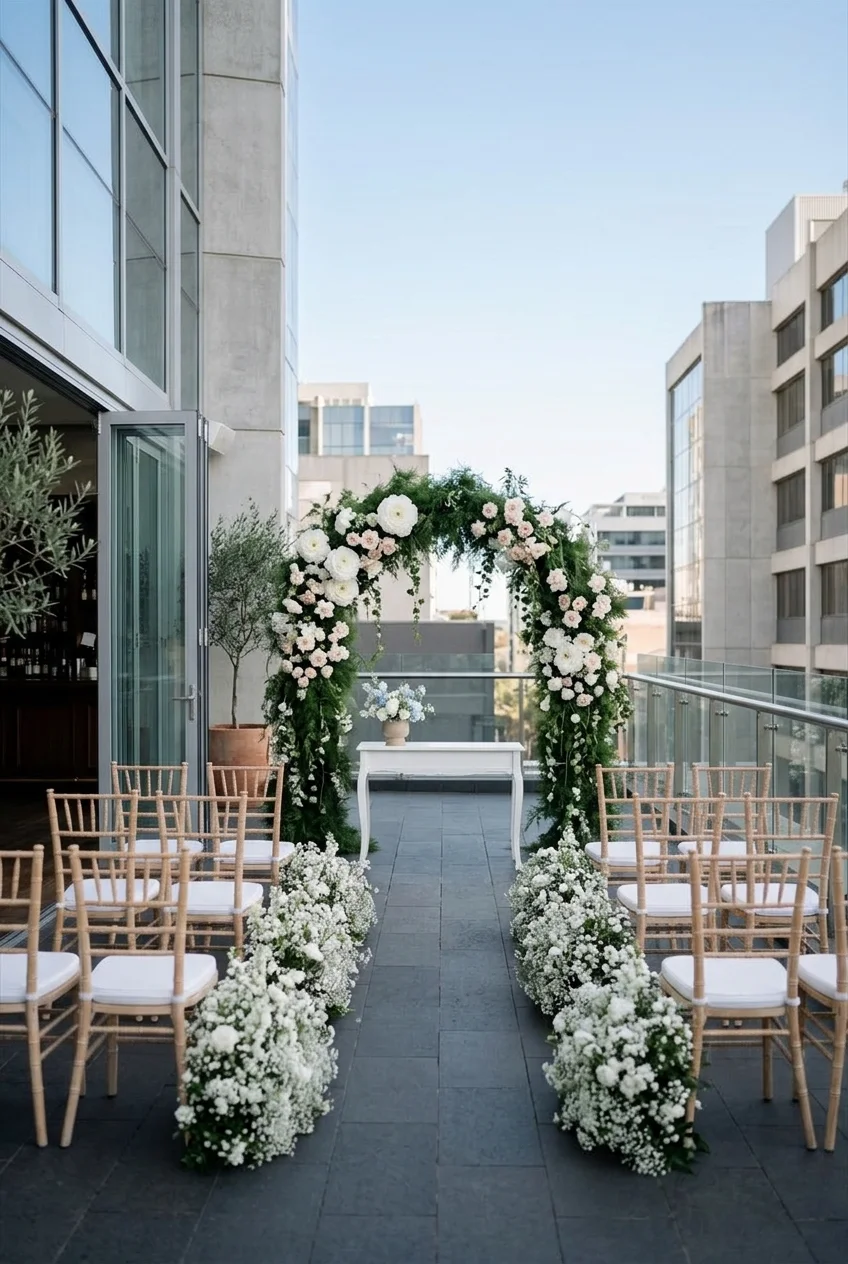
A patio ceremony can keep the entire day at one address while giving vows a setting distinct from dinner. Use a compact freestanding arrangement that respects doors, exits, planters, and the restaurant's permanent furniture.
Confirm chair rentals, microphone rules, accessibility, weather backup, and the exact flip plan before booking. If the patio is also needed for cocktails or dinner, assign enough staff and time to reset it without guests watching a frantic changeover.
36. Frame Vows with a Fireplace or Window Wall
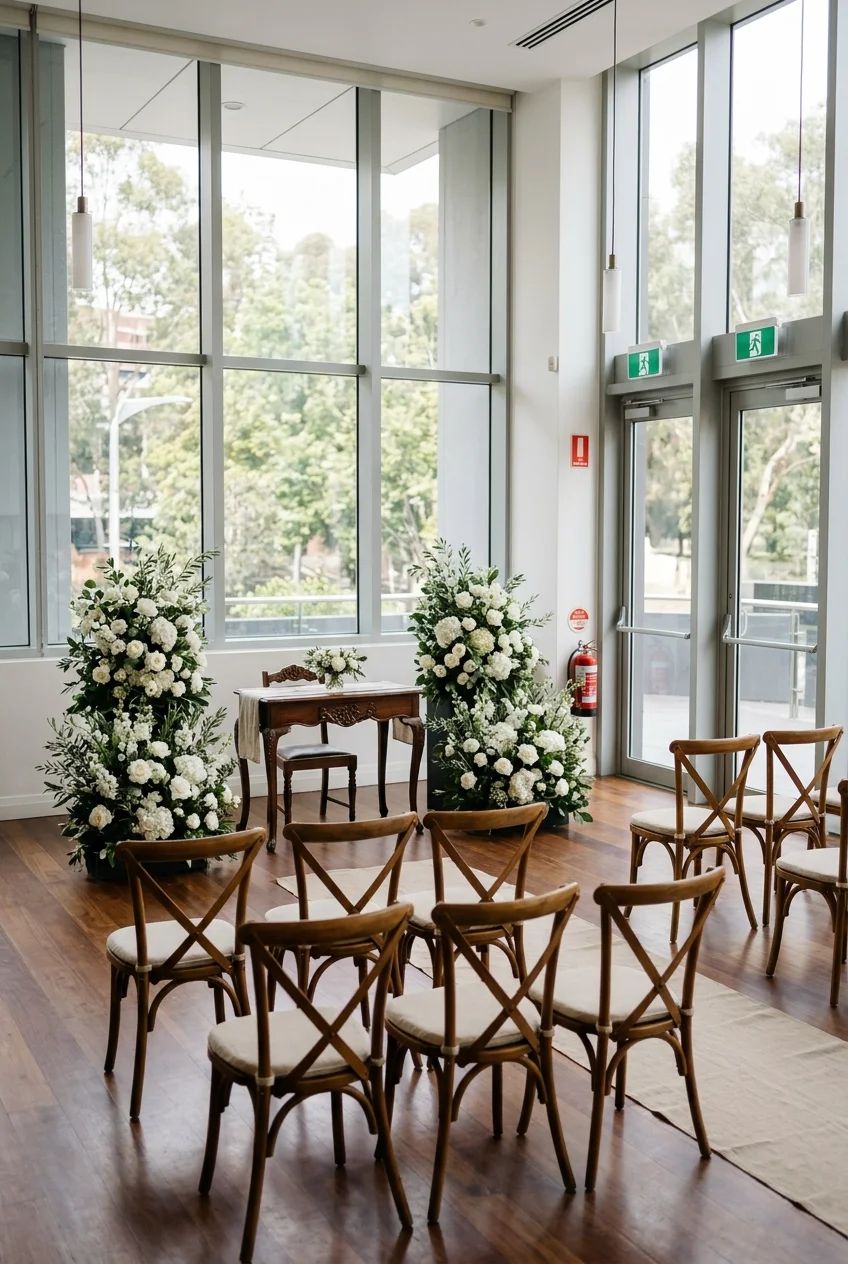
Inside a restaurant, an architectural feature can replace a large ceremony backdrop. A fireplace, window wall, tiled alcove, or art wall needs only a small floor arrangement or two weighted floral pieces to mark the focal point.
Check glare, exterior noise, and the route behind the ceremony area. Keep ventilation, fire equipment, and working doors entirely clear, even if that means shifting the composition away from perfect symmetry.
37. Flip One Room from Ceremony to Dinner
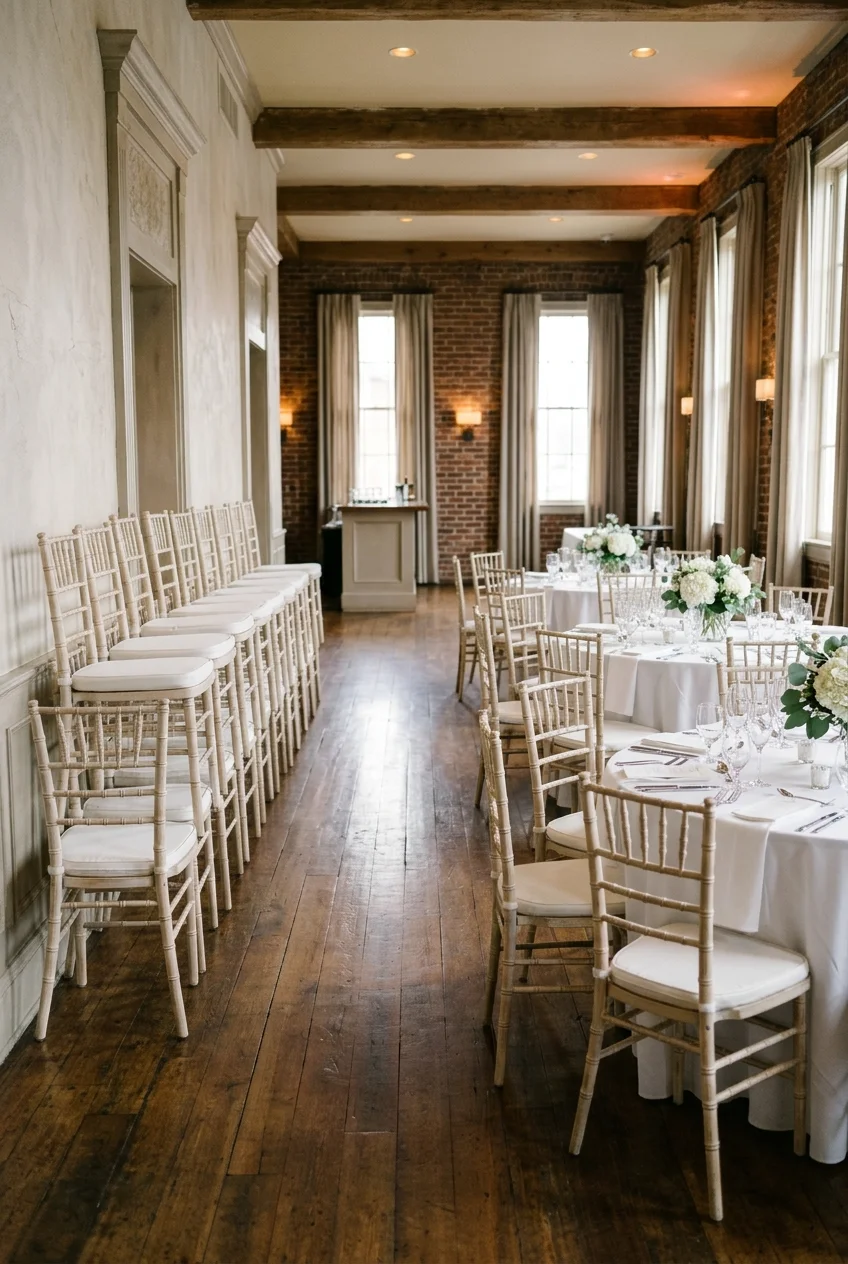
A one-room celebration can work when the furniture change is simple and guests have somewhere else to go. Hold welcome drinks at the bar or on the patio while staff replace ceremony rows with fully prepared dinner tables.
- Define who moves chairs, florals, and audio equipment.
- Set a realistic reset time with the restaurant.
- Keep a weather-safe holding area for guests.
- Photograph the approved dinner layout for the setup team.
38. Start the Celebration with Welcome Drinks at the Bar
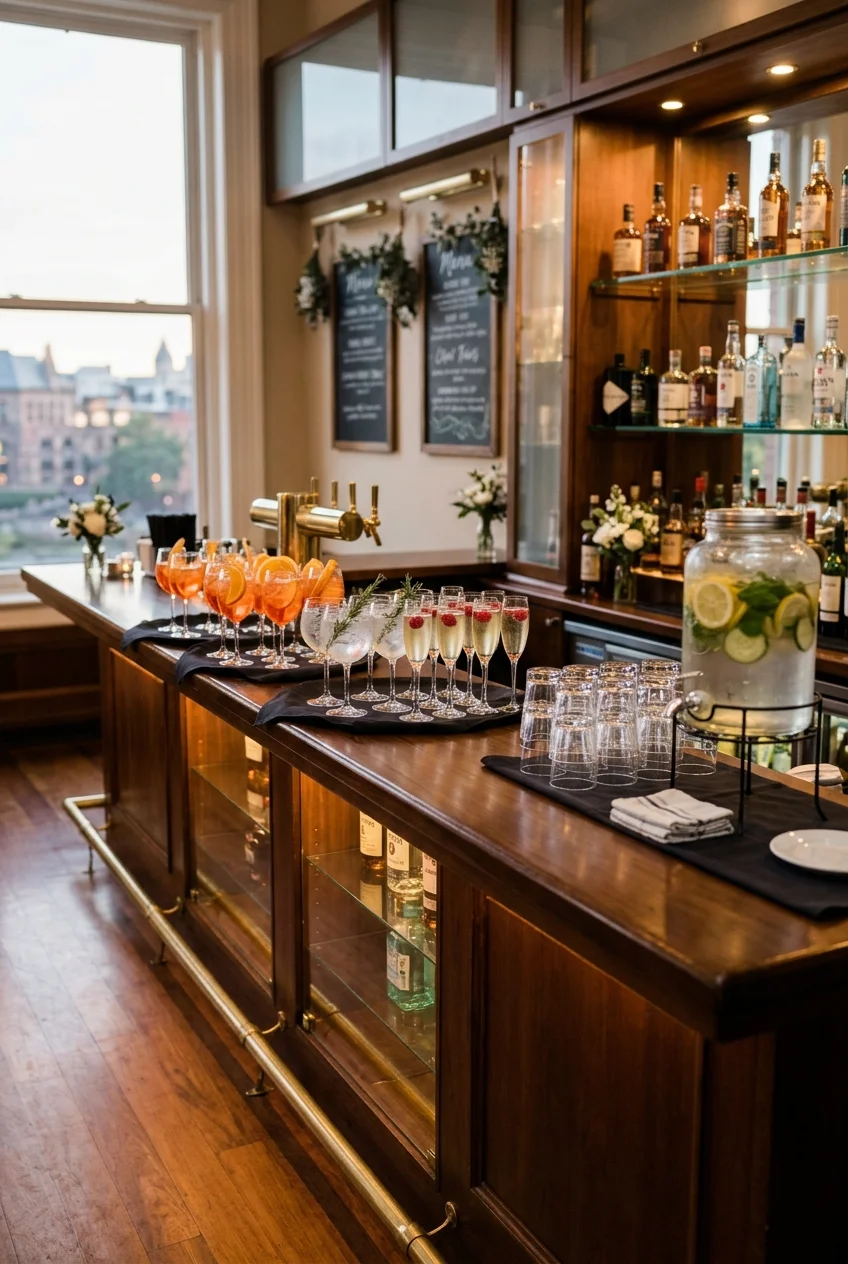
The restaurant bar is a natural gathering point while final table details are checked. Offer a short menu that can be served fast, with water and nonalcoholic choices visible from the start.
Keep coats, gifts, and the seating chart away from the drink pickup area. A clear announcement or a gentle lighting change can move guests to dinner more smoothly than trying to speak over an active bar.
39. Give Toasts from the Dinner Tables
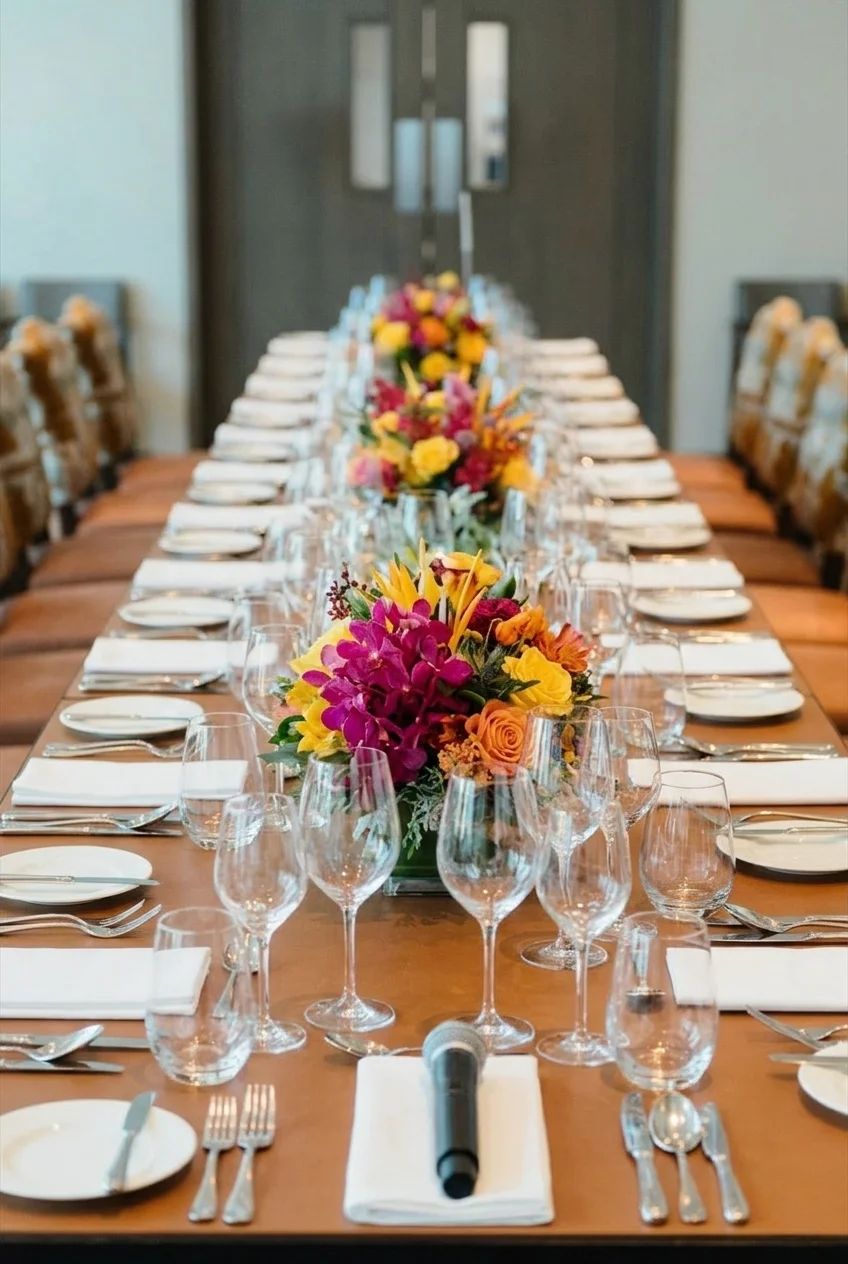
In an intimate room, speakers may not need a stage. Choose one standing position with clear sightlines, use the house microphone if the room needs amplification, and schedule toasts between courses.
Ask the restaurant to pause clearing during each toast and keep the service door behind the speaker closed if possible. Several concise toasts usually fit a dinner better than one long block that interrupts the kitchen's timing.
40. Clear One Small Corner for the First Dance
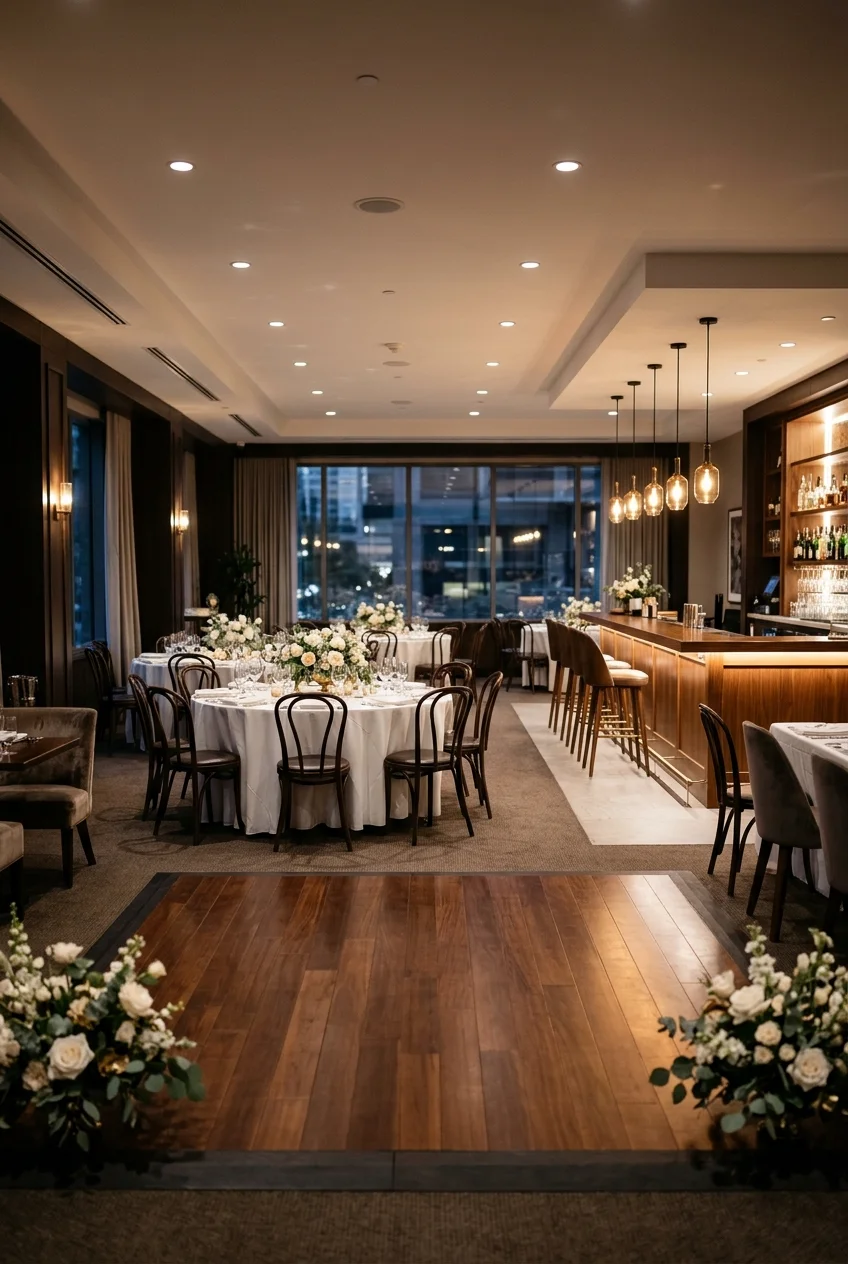
A first dance does not require a formal dance floor. A cleared square beside the bar, in front of the windows, or between two table groups can be enough if the room has a natural viewing angle.
Measure after chairs are occupied and confirm that servers can still reach the kitchen. If dancing will continue, ask about sound limits and floor finish; a brief first dance and a dinner playlist may fit the restaurant better than a full club setup.
Music and Guest Details for a Personal Restaurant Wedding
41. Place a Live Duo in an Architectural Alcove
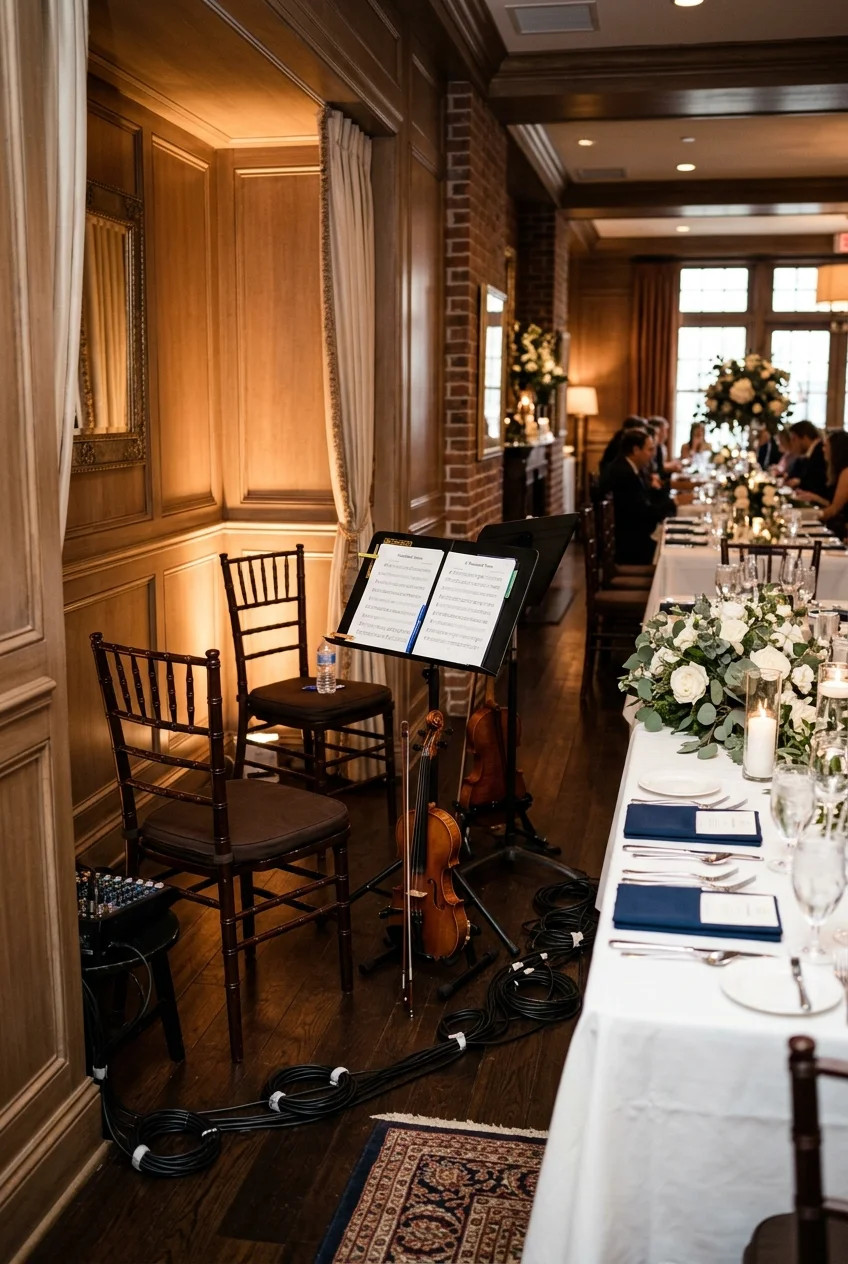
A guitar-and-vocal duo, strings, or a small jazz group can provide live music without the footprint of a band. Use an alcove or one end of the room where guests can see the musicians but cables and cases stay out of aisles.
Confirm power, amplification, load-in, breaks, and the restaurant's sound limit. The kitchen and bar are already active sound sources, so an unamplified group may not carry as far as it did during a quiet walkthrough.
42. Build the Evening Around the Restaurant's Sound System
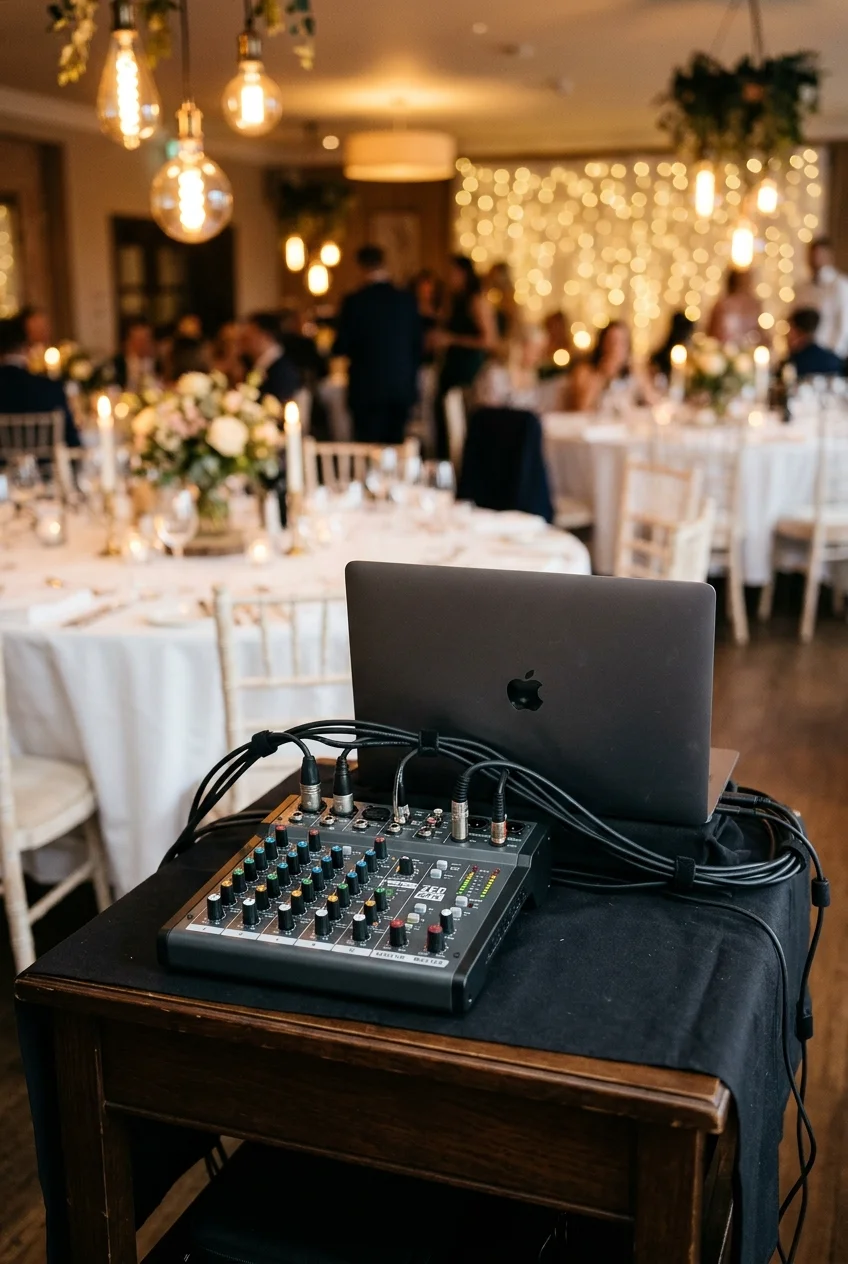
A carefully sequenced playlist can be enough for a dinner-centered wedding. Create separate sets for arrival, the meal, toasts, dessert, and the final hour so the energy changes without abrupt genre jumps.
Test the connection and volume in every part of the reserved space. Download the playlist, appoint one person to control it, and confirm whether the restaurant's system accepts a phone, laptop, or only its own audio source.
43. Set an Instant-Photo Station on a Sideboard
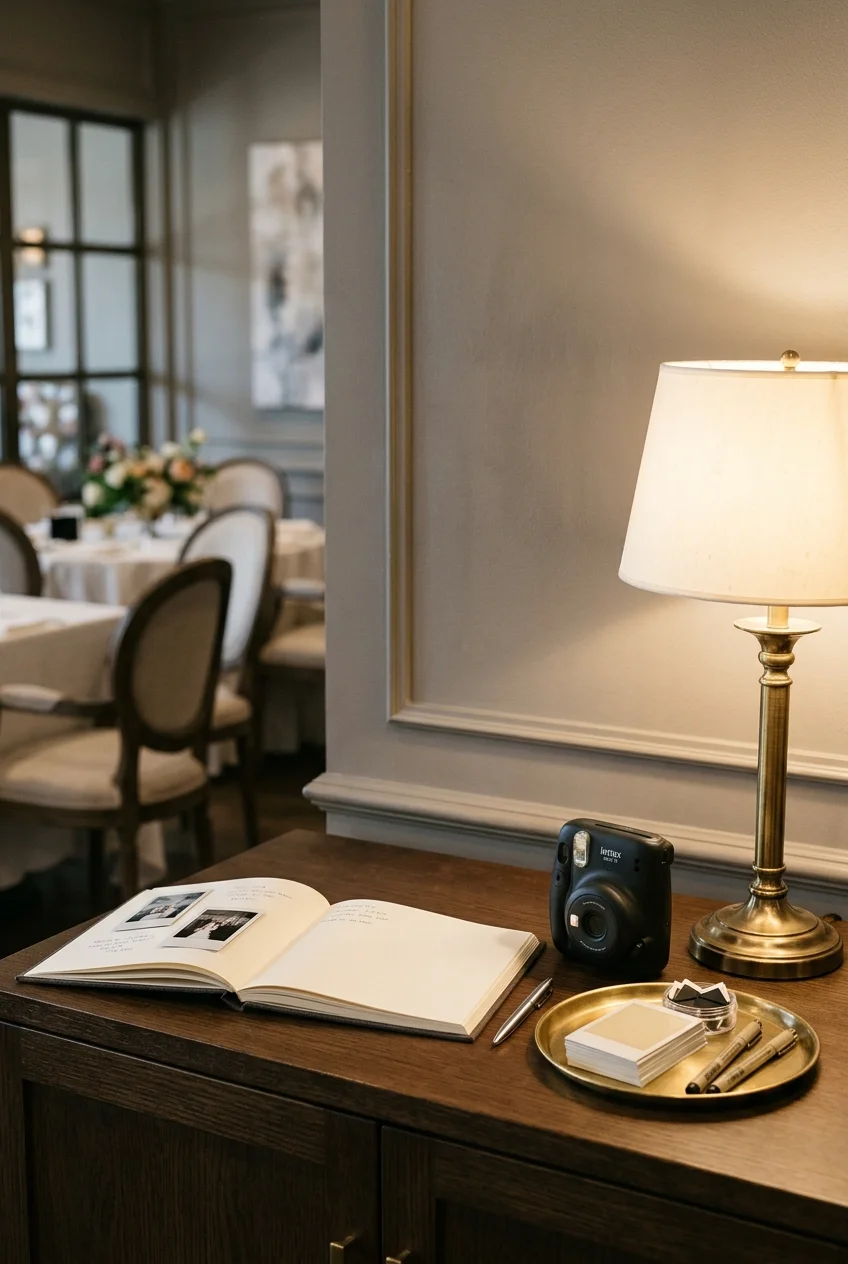
A camera, blank guestbook, and small tray for prints can create a photo activity without a booth or backdrop. Put the station on an existing sideboard with a nearby wall or well-lit corner that guests can use naturally.
Setup note Provide extra film, fresh batteries, photo corners or tape, and a simple one-line instruction card. Keep the station away from the dessert cart and service pass so prints are not exposed to spills.
44. Display a Small Timeline of Favorite Date-Night Places
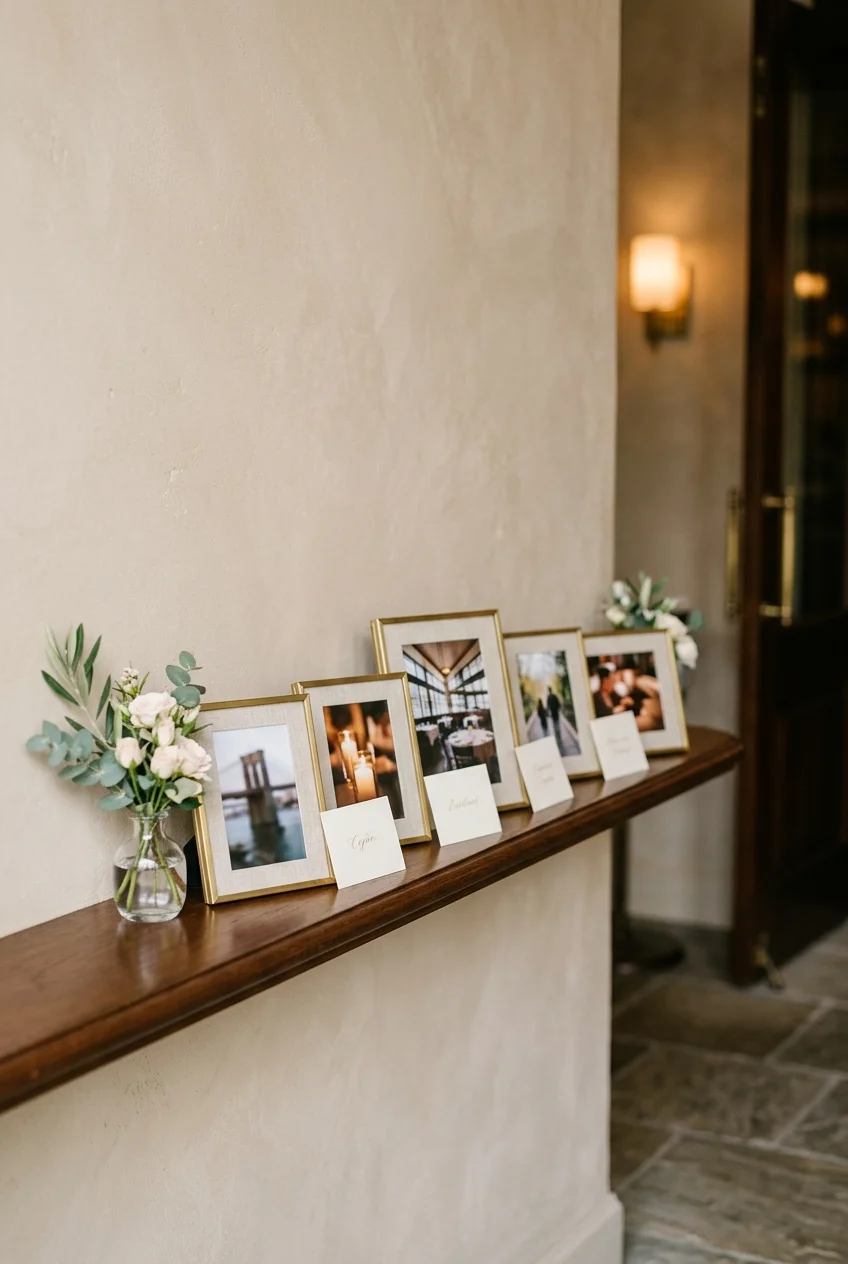
A few framed photos or illustrated place cards can explain why a restaurant wedding feels personal. Arrange three to five moments on a narrow ledge or entry table instead of building a large memory wall.
Use copies rather than irreplaceable originals, and keep the captions brief. If the restaurant itself is part of the story, one photograph from an early visit can say more than a long sign.
45. Use Place Cards as Clear Meal Markers
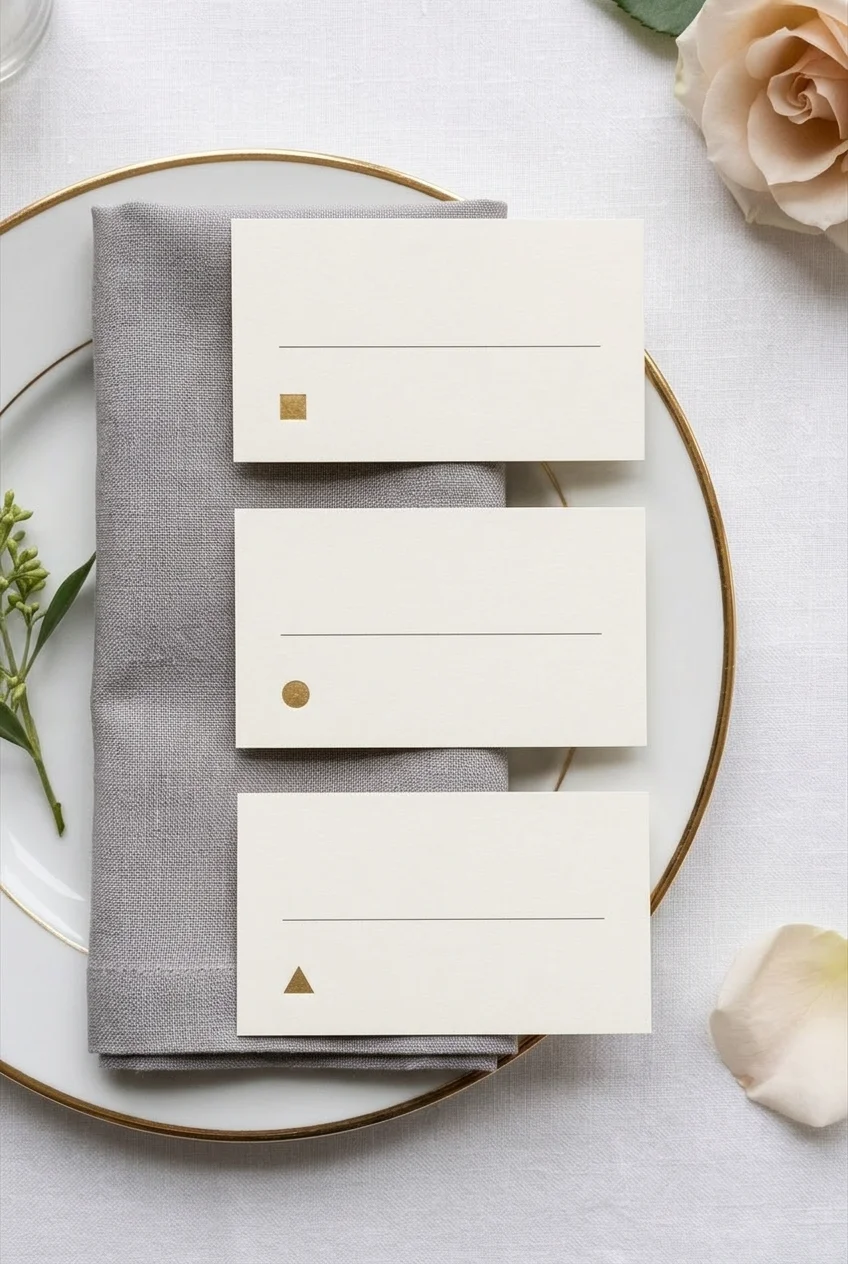
A small color dot, corner shape, or icon can tell servers which preselected entree belongs at each seat. Keep the name prominent and the code simple enough that the venue can recognize it in low light.
Give the restaurant a legend and a final seat-by-seat list. Avoid codes based only on subtle shades, which may be difficult to distinguish and should not be the sole cue for accessibility reasons.
46. Offer Matchbook-Style Keepsakes Without Using Them as Decor
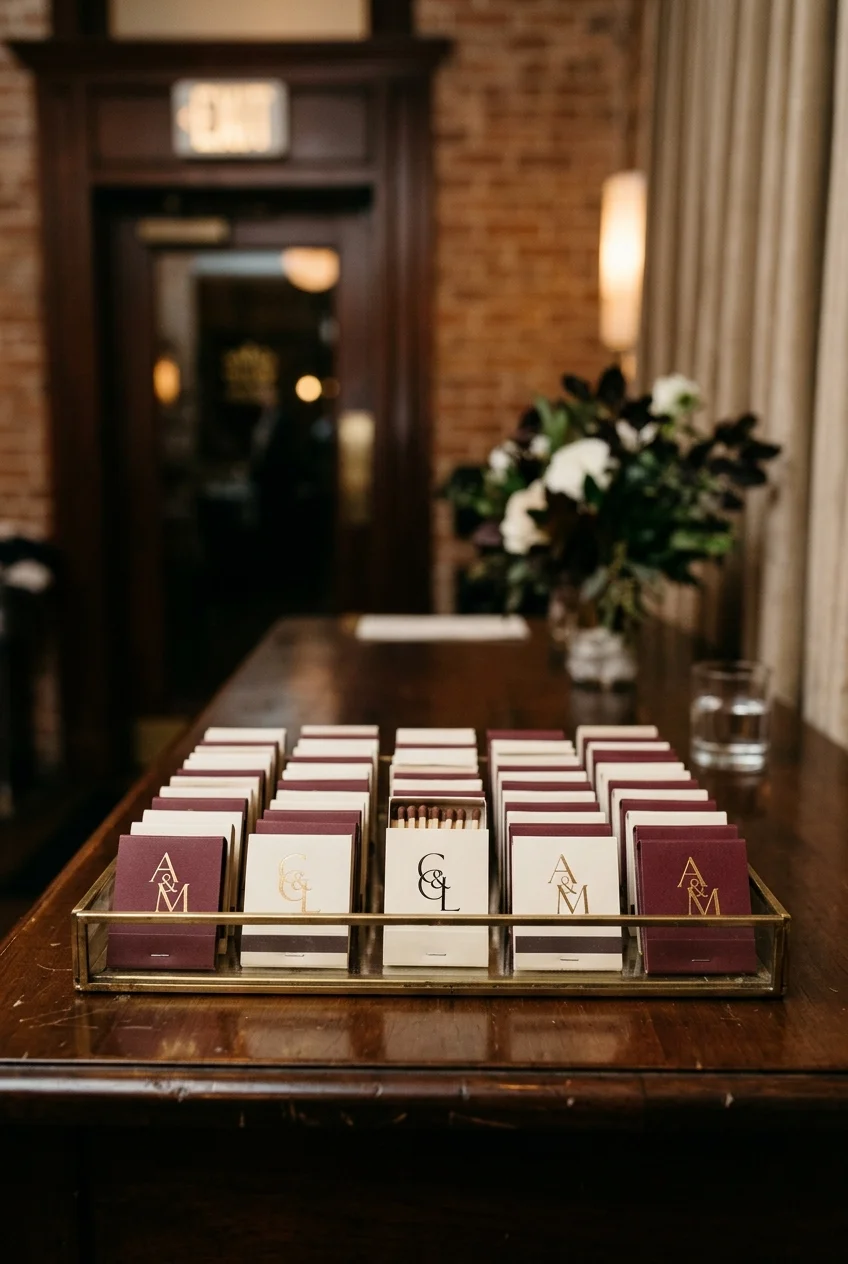
A small matchbook-style favor suits the restaurant setting because it recalls classic bars and supper clubs. Use a simple monogram or date and place one at each setting or in a shallow tray near the exit.
Ask the venue whether functional matches are allowed, especially when open flames are restricted. A matchbook-shaped notepad or mint packet can deliver the same graphic idea without distributing ignition sources.
47. Send Guests Home with a Restaurant-Made Treat
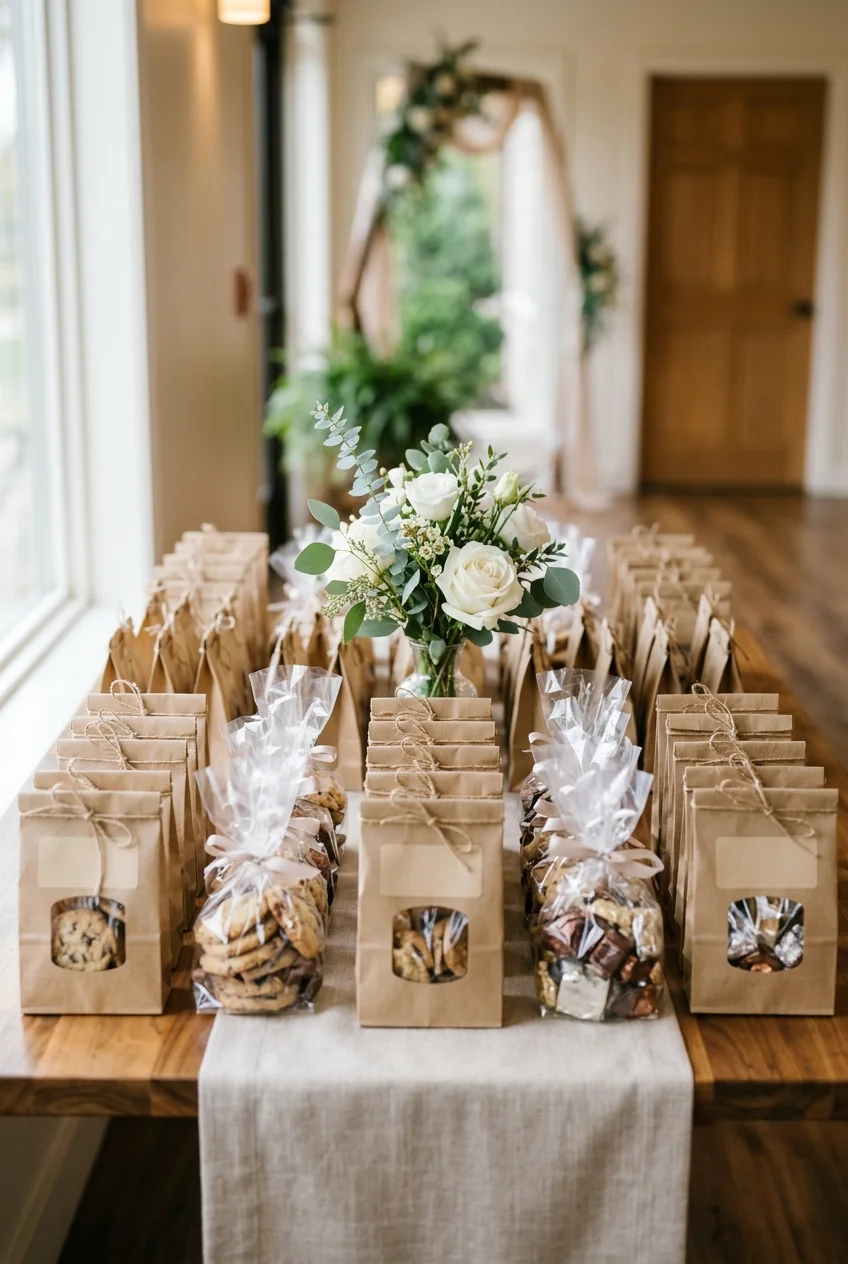
A cookie, truffle, spice blend, or packaged pastry from the kitchen extends the food-first experience without adding a separate favor vendor. Choose something that can be safely held at room temperature for the full event and transported easily.
Ask the restaurant to label common allergens and confirm when the treats will be packed. Display them near the actual exit after dessert so guests do not open or misplace them during dinner.
48. Use a Bound Menu as the Guestbook
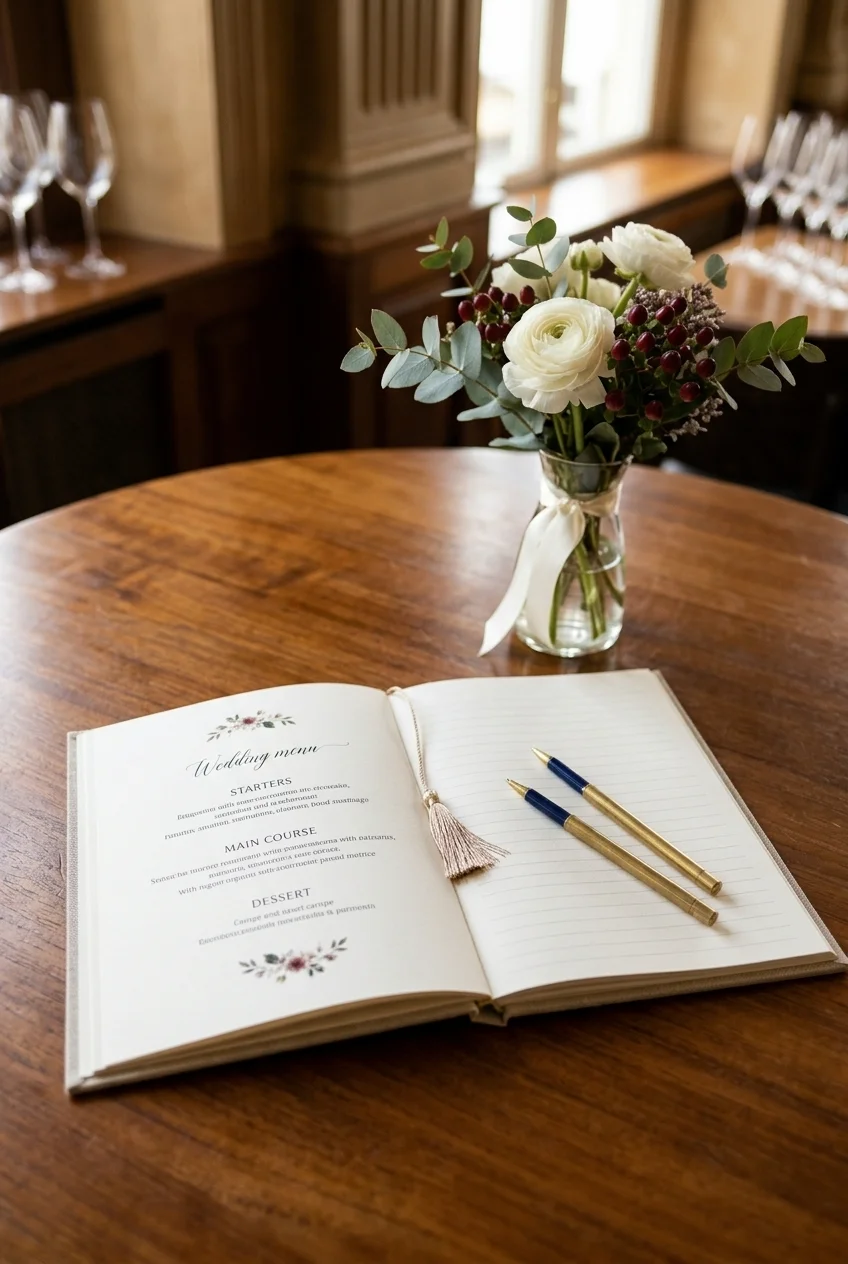
Ask the restaurant for a clean printed copy of the wedding menu and bind it with several blank pages for notes. The finished book records both what you ate and who shared the table without requiring a separate themed guestbook.
Place it on a stable table with pens that dry quickly, and have someone move it closer to dessert if early participation is low. Keep the restaurant's original menu intact rather than asking guests to write over service information.
49. Give Guests an Anniversary Return Card
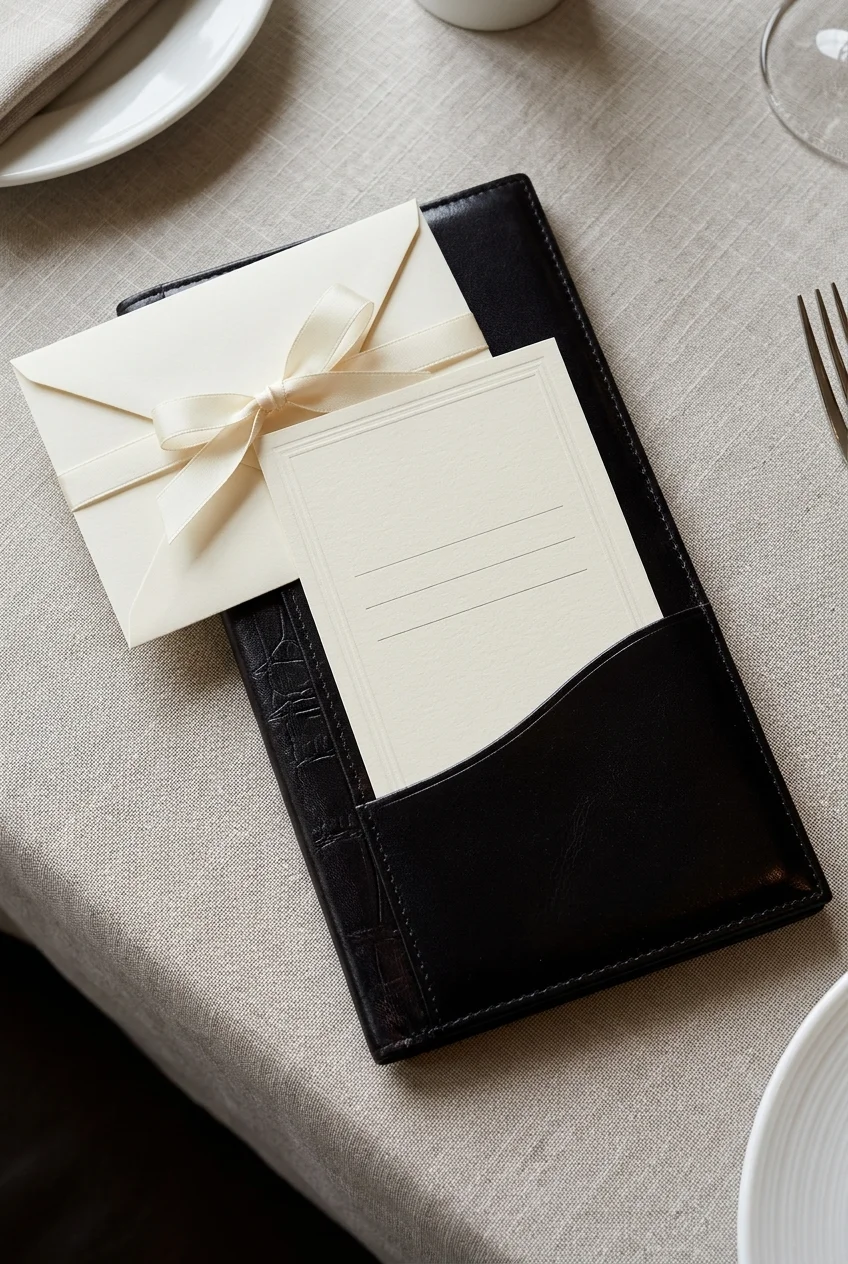
If the restaurant agrees, a small card can invite guests to return for a future dinner or simply share the couple's favorite dish to order. It connects the wedding to a place guests can visit again without promising a discount the restaurant has not approved.
Use wording reviewed by the venue and keep the card optional rather than framing it as a voucher. If the restaurant does provide a valid offer, include its exact terms and expiration date.
50. Finish with Espresso and a Wrapped Pastry
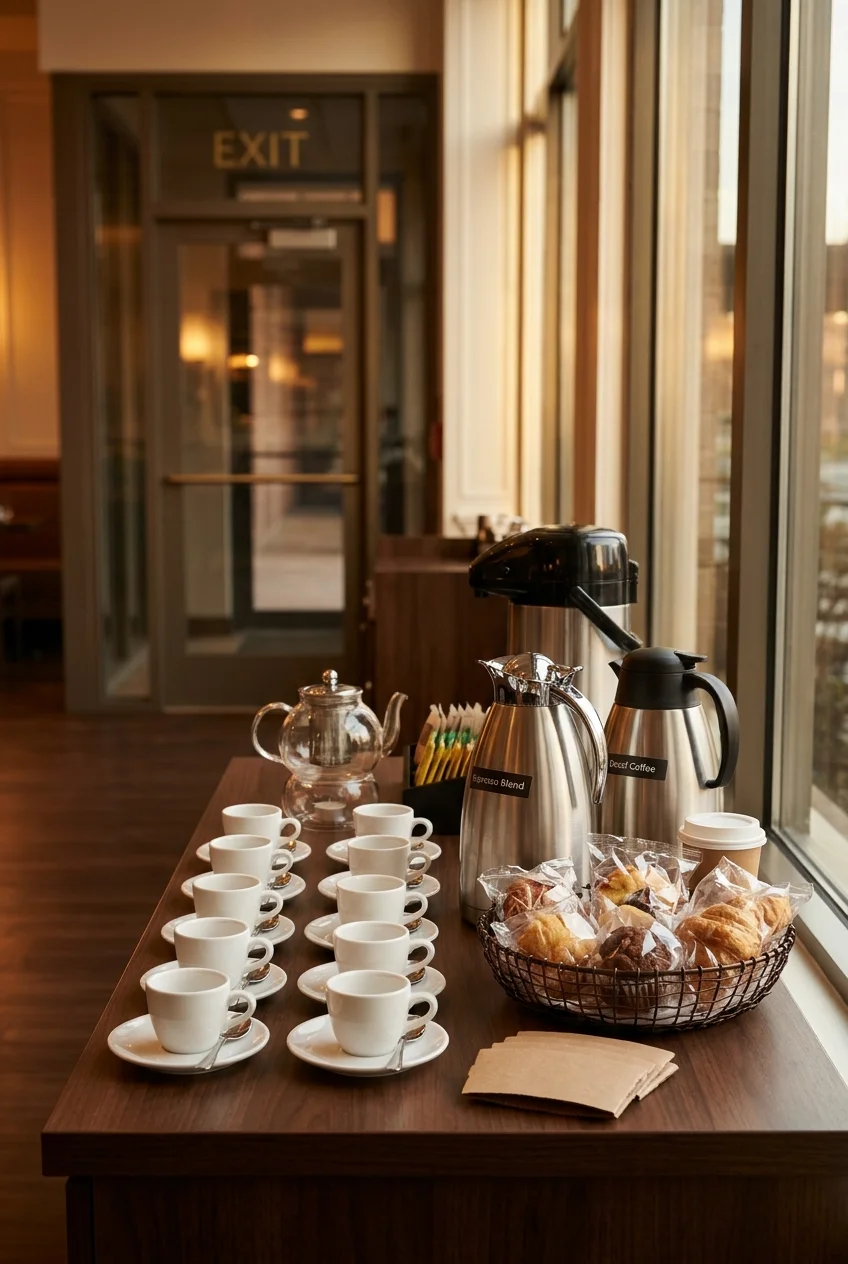
A small espresso and pastry station gives the evening a gentle ending and suits a restaurant better than a formal send-off line. Offer coffee, decaf, tea, and a non-caffeinated option, with pastries that can be eaten there or taken away.
Place the station where departures will not block the main door, and schedule it before the bar closes. Confirm cup quantities, takeaway packaging, and who is responsible for the final restock.
Is a private dining room or a full restaurant buyout better for a wedding?
A private dining room is usually the better fit when the guest list is small, dinner is the main event, and you are comfortable with the restaurant operating elsewhere. A full buyout makes more sense when you need complete privacy, multiple spaces, louder music, a ceremony, or control over the entrance and bar.
Compare the complete quote, not just the room fee. Minimum spend, tax, service charges, staffing, rentals, overtime, and cleanup can change the result.
What should we ask before booking a restaurant wedding?
- What are the seated and standing capacities for our exact layout?
- Is the space private, semi-private, or part of a full buyout?
- What food-and-beverage minimum, room fee, tax, gratuity, and service charges apply?
- Which furniture, linens, tableware, candles, sound equipment, and staff are included?
- What are the rules for outside cake, wine, flowers, music, signage, and photography?
- What are the setup, event, vendor pickup, and hard departure times?
- What is the weather backup and is it guaranteed for the same guest count?
- How will the venue handle allergies, accessibility, coat storage, gifts, and vendor meals?
Can we have dancing at a restaurant wedding?
Sometimes. A full buyout or dedicated event room is more likely to allow a dance area, DJ, or amplified band than a private room beside normal service. Ask about available floor space after tables and occupied chairs are included, sound limits, speaker placement, power, floor protection, and the required end time.
If the room is tight, a first dance followed by a lively dinner playlist may work better.
How much decor does a restaurant wedding need?
Usually less than an empty venue, provided you choose a restaurant whose existing design you like. Prioritize the entrance, table surfaces, and one focal area such as the bar or cake display. Before ordering anything, mock up a complete table with the restaurant's plates, glassware, menus, and intended serving dishes so decor does not interfere with service.
This post may contain affiliate links: full affiliate disclosure.