
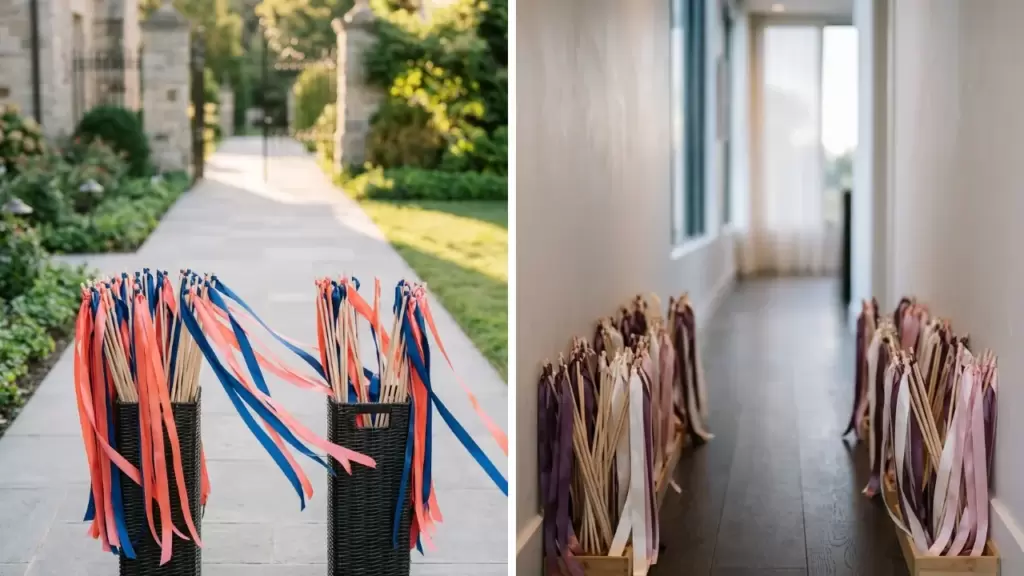
You want a wedding send-off that looks joyful in photos and still works at your venue. The fastest way to narrow the options is to start with the exit location and time of day: daylight rewards color and movement, while a dark route needs deliberate light.
The 50 ideas below include clean handheld props, approved tosses, after-dark effects, sound-led exits, and getaway scenes. Before ordering anything, send the exact plan to the venue and photographer—including the material, equipment, route, timing, cleanup, and backup—because rules vary sharply even between similar properties.
This list does not recommend balloon or sky-lantern releases, live-animal releases, loose glitter, rice, or birdseed. Those choices can create litter, wildlife, fire, cleanup, or venue-policy problems; a controlled reusable prop or a prop-free route can create a stronger result with fewer risks.
Color and Motion Without a Toss
1. Long Ribbon Wands in Two Coordinated Colors
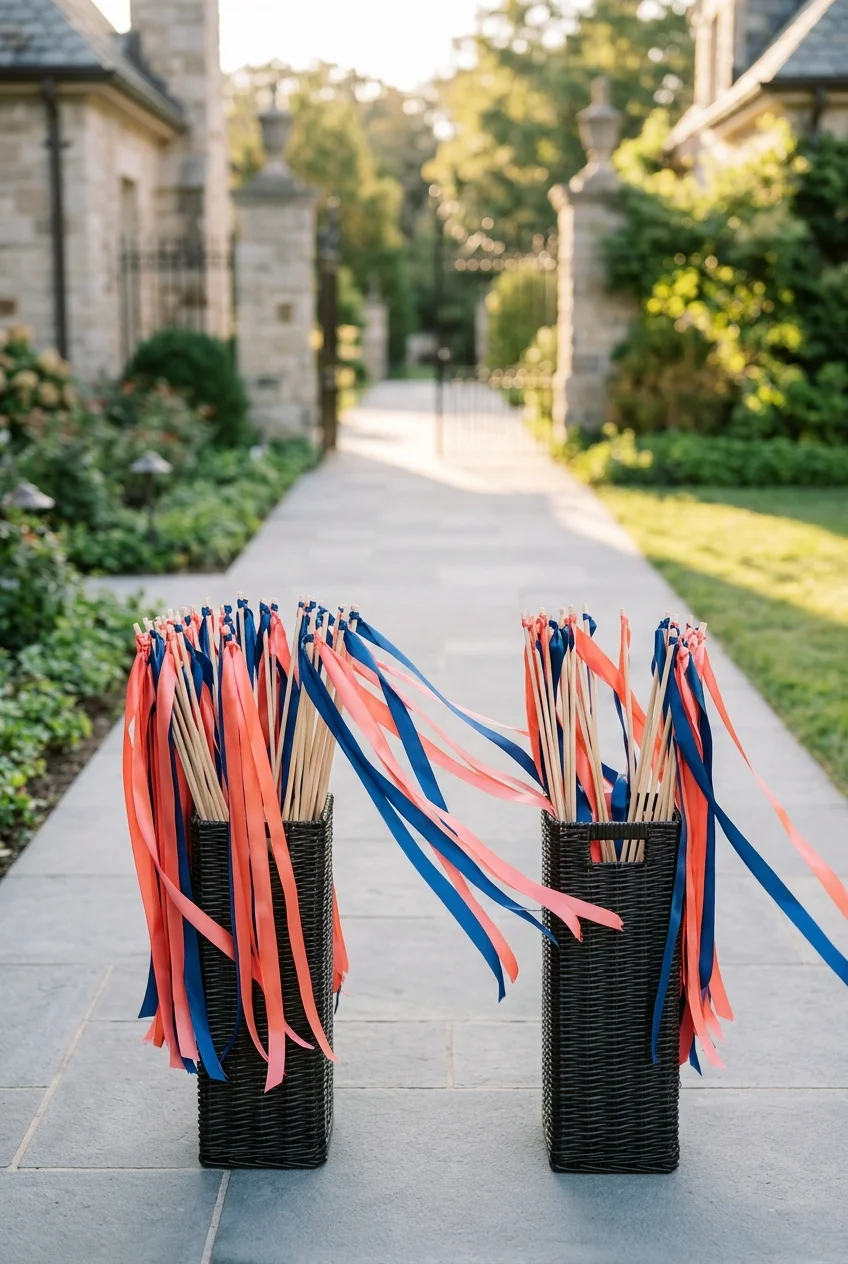
Long ribbon wands make a bright moving frame without throwing anything onto the ground. Choose two colors with enough contrast to show separately in photos, then use ribbons long enough to flow but short enough that neighboring guests will not tangle them together.
Place the wands upright in narrow containers at the exit and have one helper hand them out after the line forms. Ask guests to wave above shoulder height so the path remains clear and the ribbons stay away from the couple’s faces.
2. Short Satin Streamer Wands for a Narrow Hallway
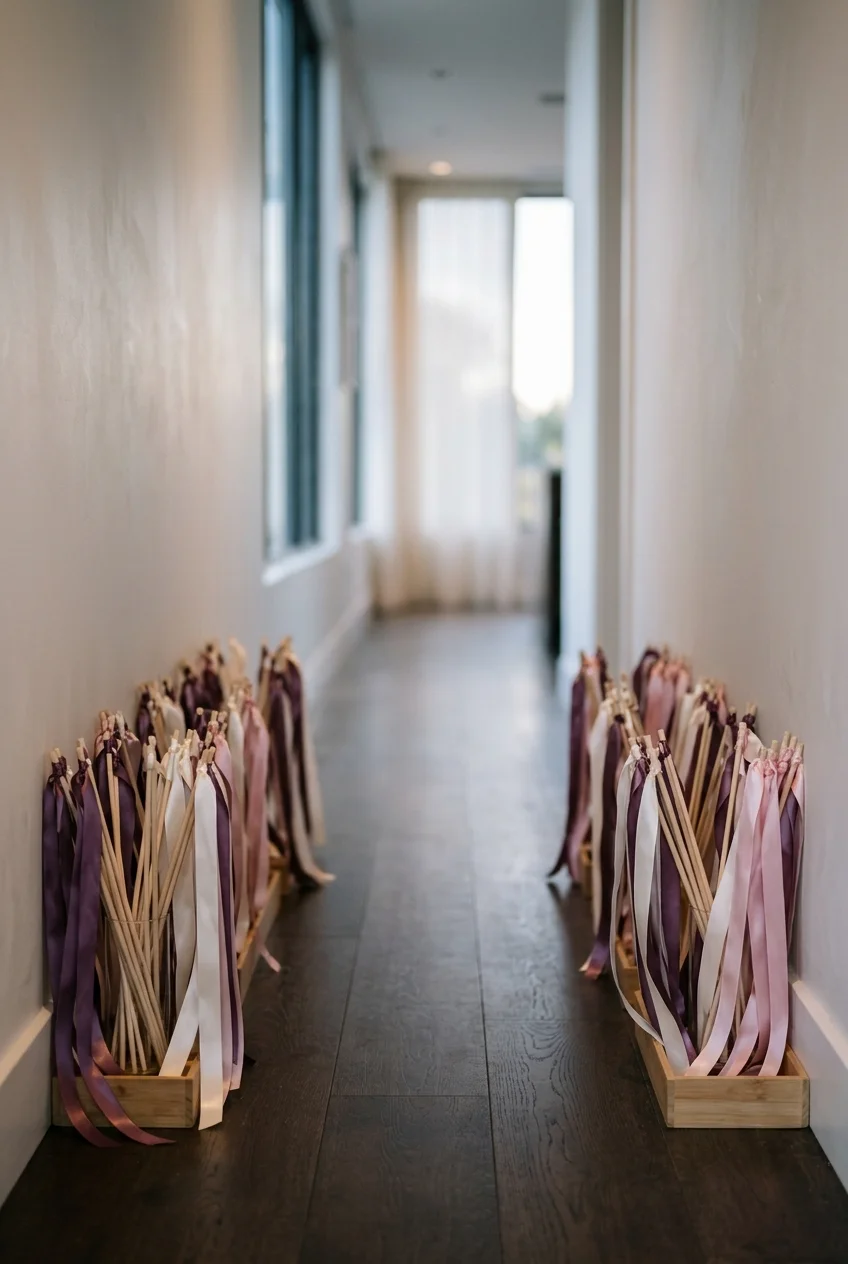
Short streamer wands suit a tight indoor passage where long ribbons would brush walls, light fixtures, or other guests. A dense bundle of narrow satin strips gives visible movement without taking much swing space.
Setup note Measure the usable walkway after doors are opened and décor is in place. Leave a clear center lane instead of filling the corridor from wall to wall.
3. Small Pennant Flags That Repeat the Wedding Palette
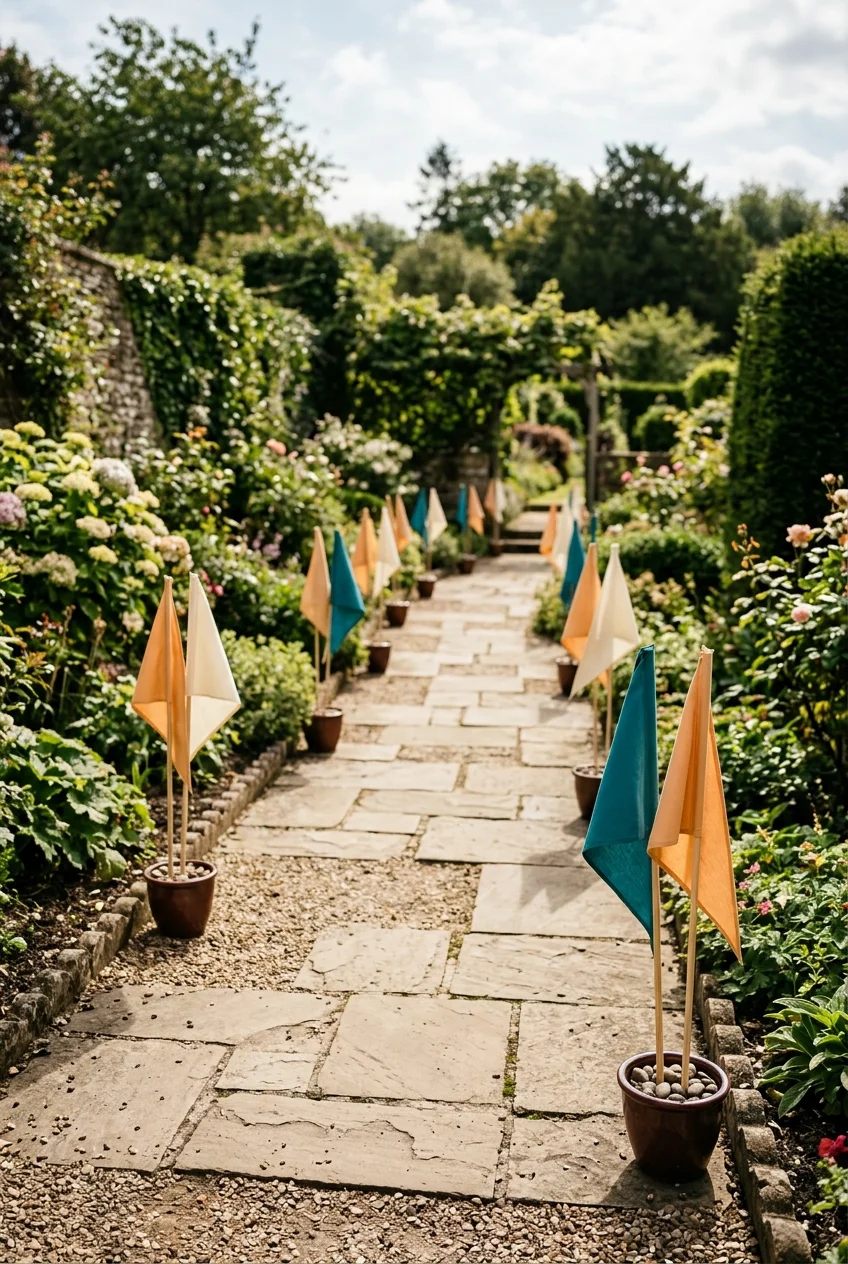
Handheld pennant flags create crisp blocks of color that read clearly in daylight. Use one simple shape and a limited palette; tiny printed names or dates are unlikely to be legible in a moving exit photo.
Fabric flags are sturdier than paper in a breeze and can be collected for another celebration. Keep the sticks blunt and lightweight, and check that the venue permits handheld signs or flags near doorways.
4. Rally Towels for a High-Energy Exit
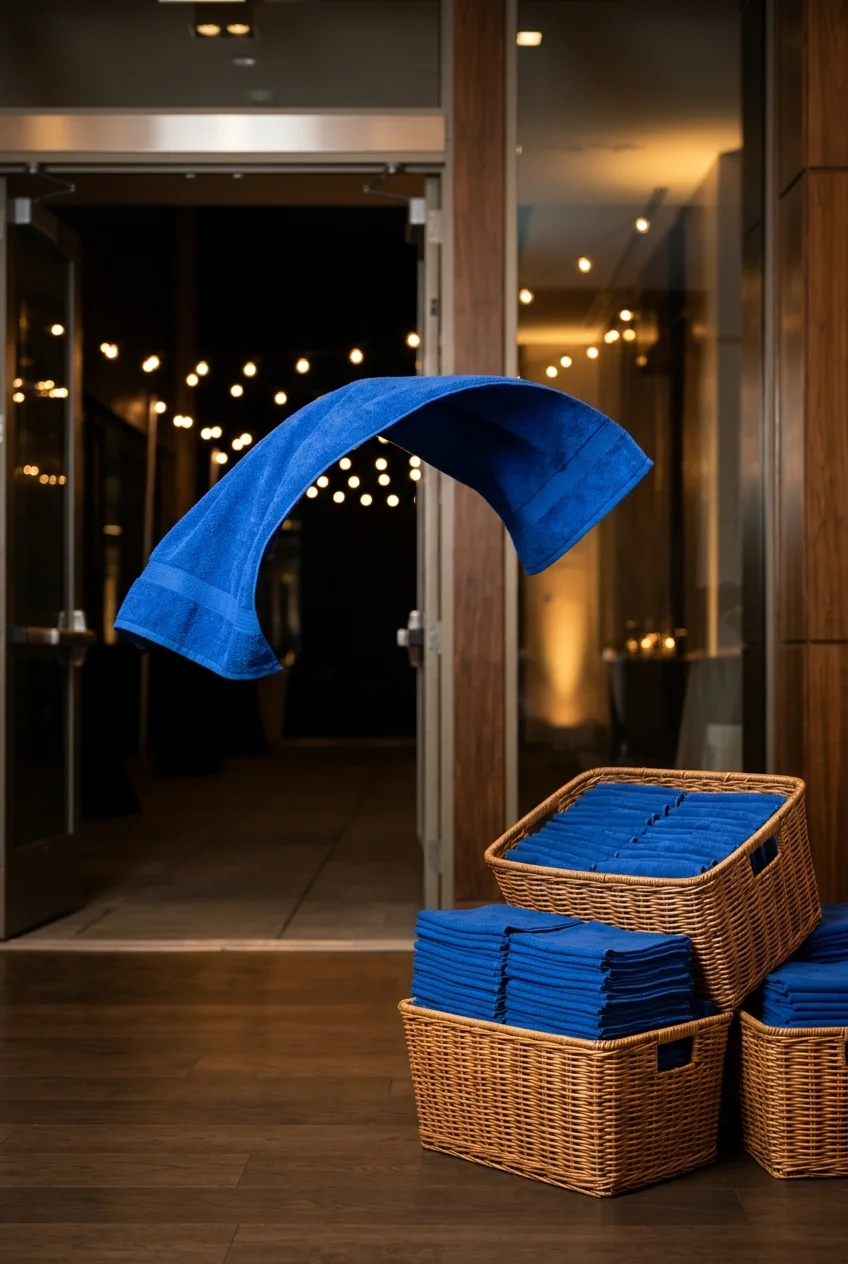
Rally towels work well when you want broad, energetic motion rather than delicate streamers. Pick a light fabric that moves easily and one saturated color that separates from the venue background.
One towel per guest is enough. A DJ or coordinator can demonstrate a slow overhead circle before the couple enters the path, which produces a more even canopy than everyone waving in a different direction.
5. Cheer Pom-Poms in One Bold Color
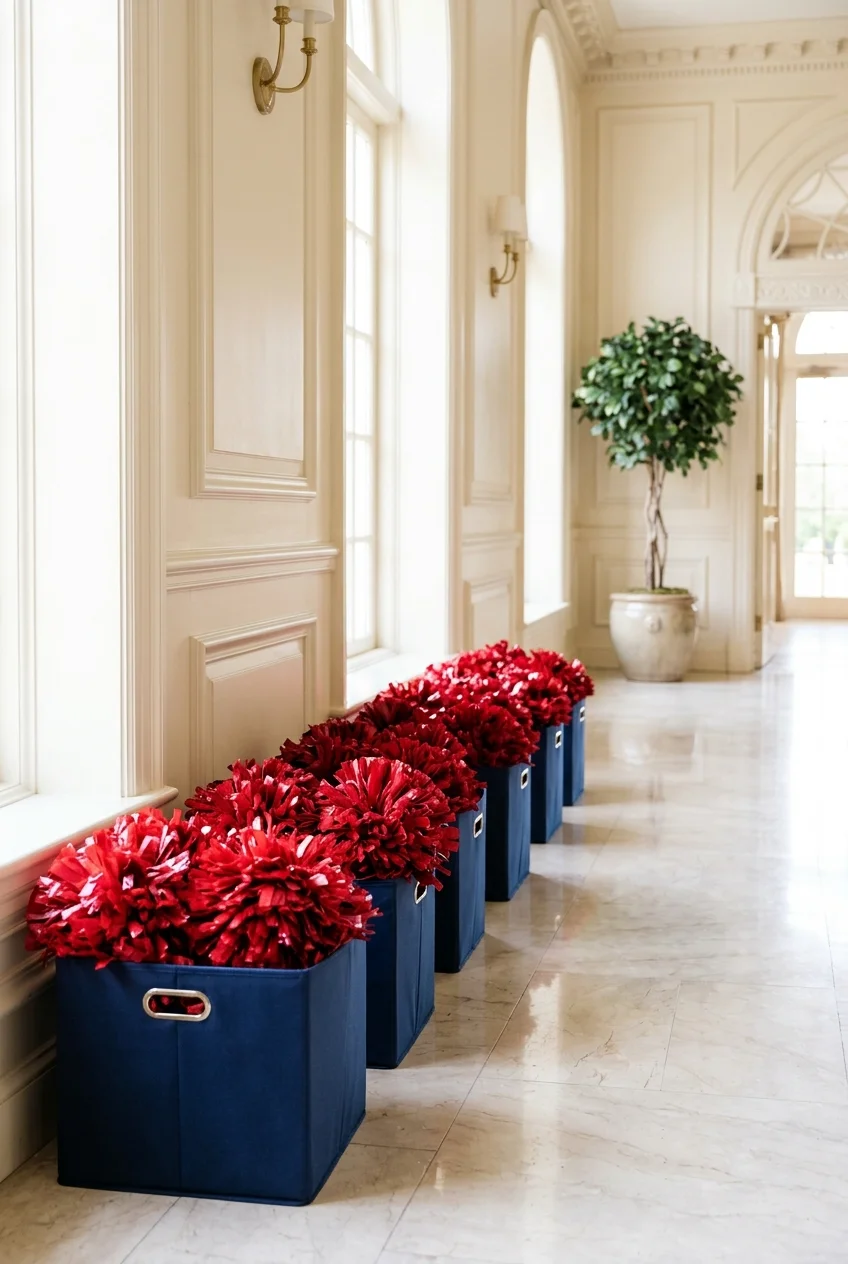
Pom-poms fill the edges of a frame with texture and suit school-spirit, sports, or playful reception themes. One bold color usually photographs more cleanly than a mix of metallic shades, especially under direct flash.
Choose pom-poms with strands firmly attached to the handle so pieces do not shed across the walkway. They are most effective in daylight or a brightly lit indoor exit, where the individual strands remain visible.
6. Folding Fans That Create a Graphic Pattern
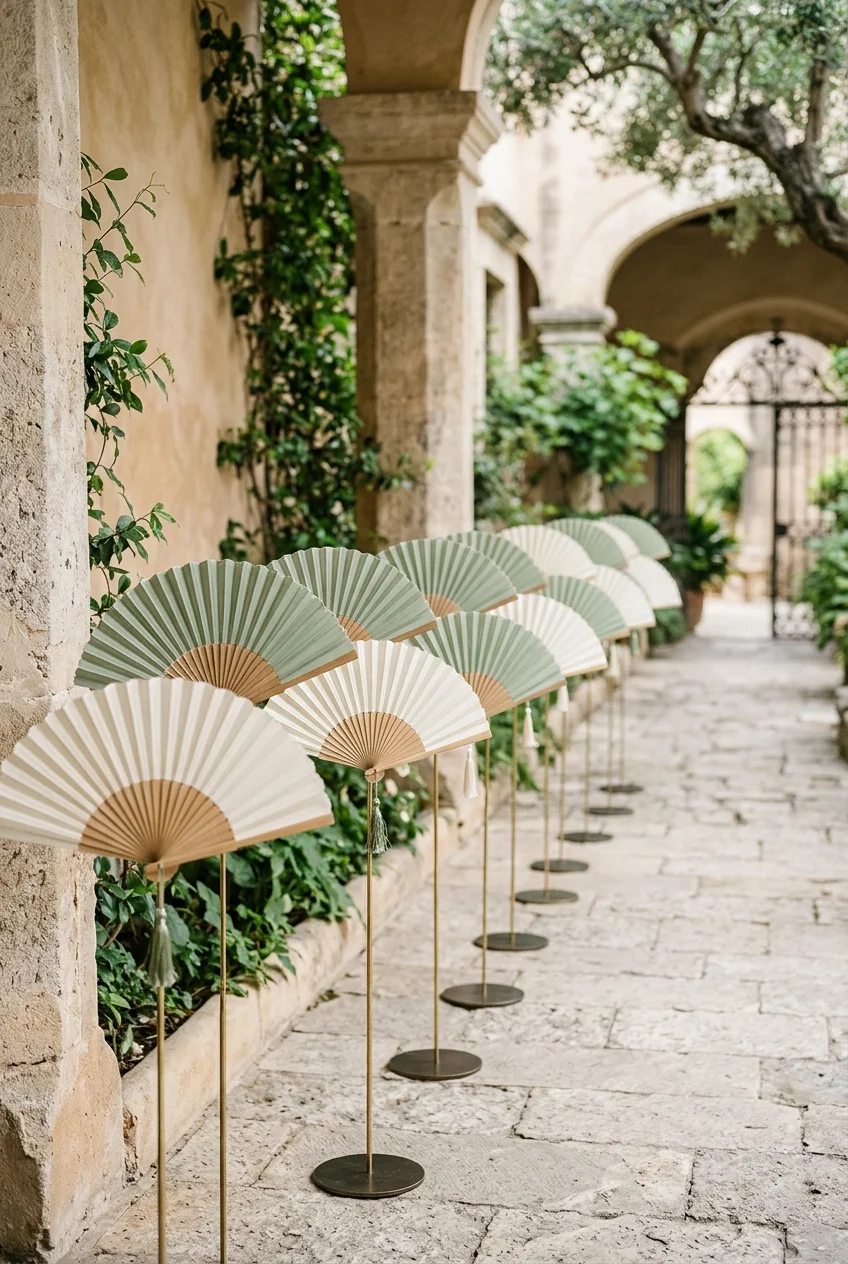
Open folding fans form a repeating scalloped pattern along the exit line and give guests a useful favor at a warm-weather wedding. Alternate two solid colors rather than mixing many prints, which can look busy once the fans overlap.
Fans do not need vigorous waving. Holding them open and angled toward the aisle creates the visual, while a few gentle movements add life without blocking anyone’s view.
7. Paper Pinwheels for a Breezy Daytime Send-Off
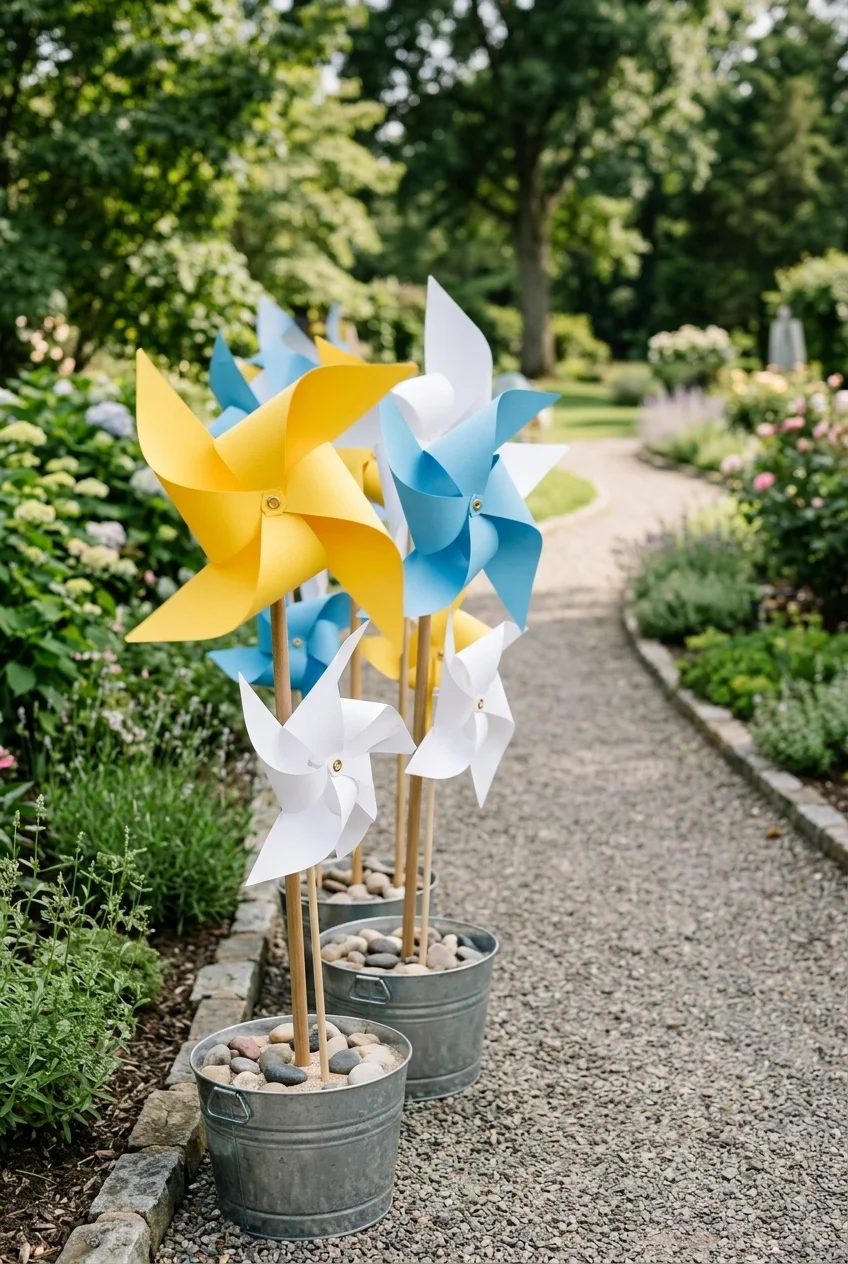
Pinwheels add visible motion even when guests hold them still, making them a cheerful choice for a daytime ceremony exit. Larger pinwheels show better in photographs, but the stems should be short enough to control in a crowd.
Test the exact pinwheels outdoors before buying in bulk. Some decorative versions barely turn, while very thin paper can fold in humid weather.
8. A Parasol Tunnel for Bright Sun
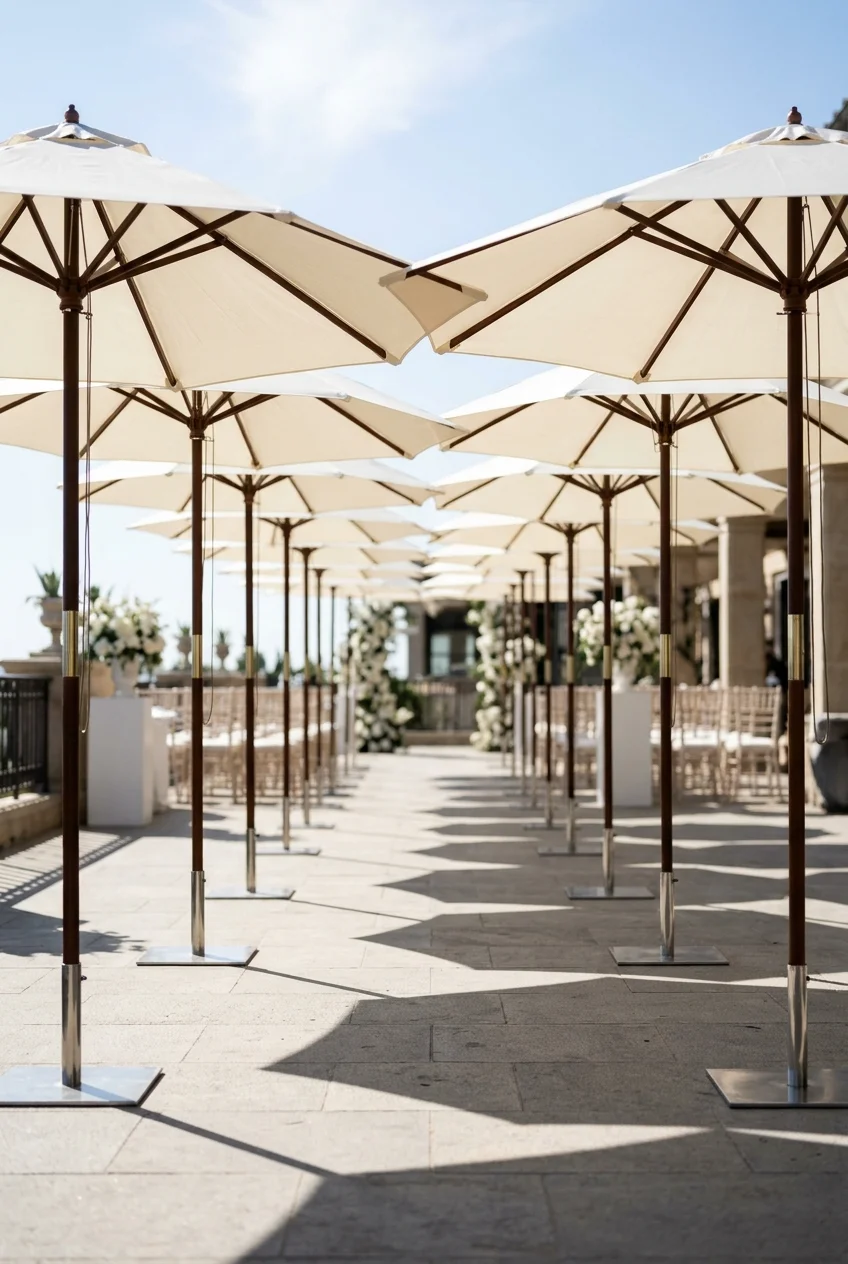
A row of matching parasols can turn a sunny departure into a patterned tunnel while giving the exit line real shade. Pale solid canopies keep faces from picking up colored light; darker or printed parasols create a stronger graphic look.
Open the parasols before the line crowds together and keep them tilted outward, not over the center aisle. This works best on a wide lawn or terrace where the canopies will not catch on branches or architecture.
9. Silk-Look Scarves for Soft, Sweeping Motion
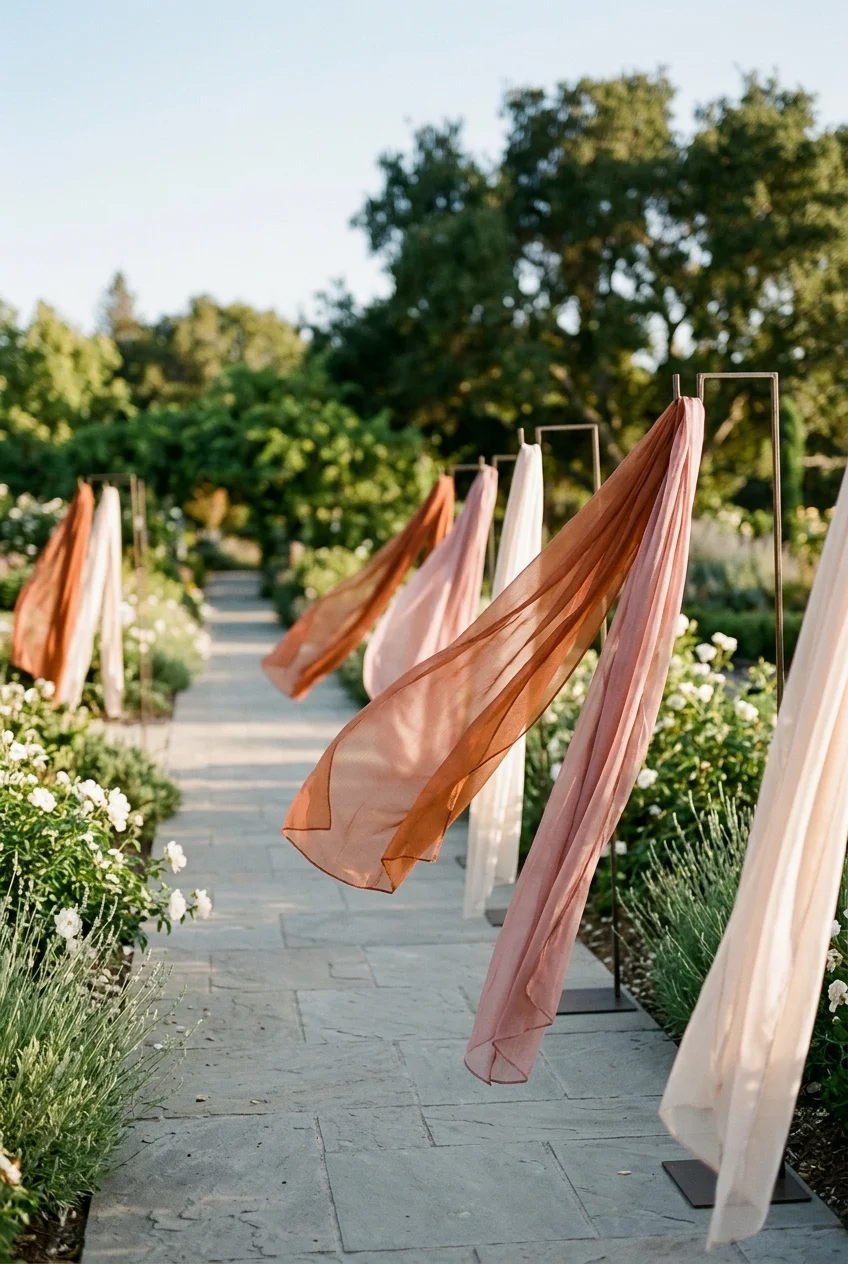
Lightweight scarves produce broad flowing shapes without rigid handles. Choose hemmed fabric squares rather than raw-cut material, and keep them large enough to move visibly but small enough for guests to control with one hand.
This idea is strongest against a plain wall, open sky, or uncluttered garden. On a windy day, switch from overhead circles to low side-to-side waves so scarves do not blow into the walking lane.
10. Handheld Floral Hoops Instead of Loose Petals
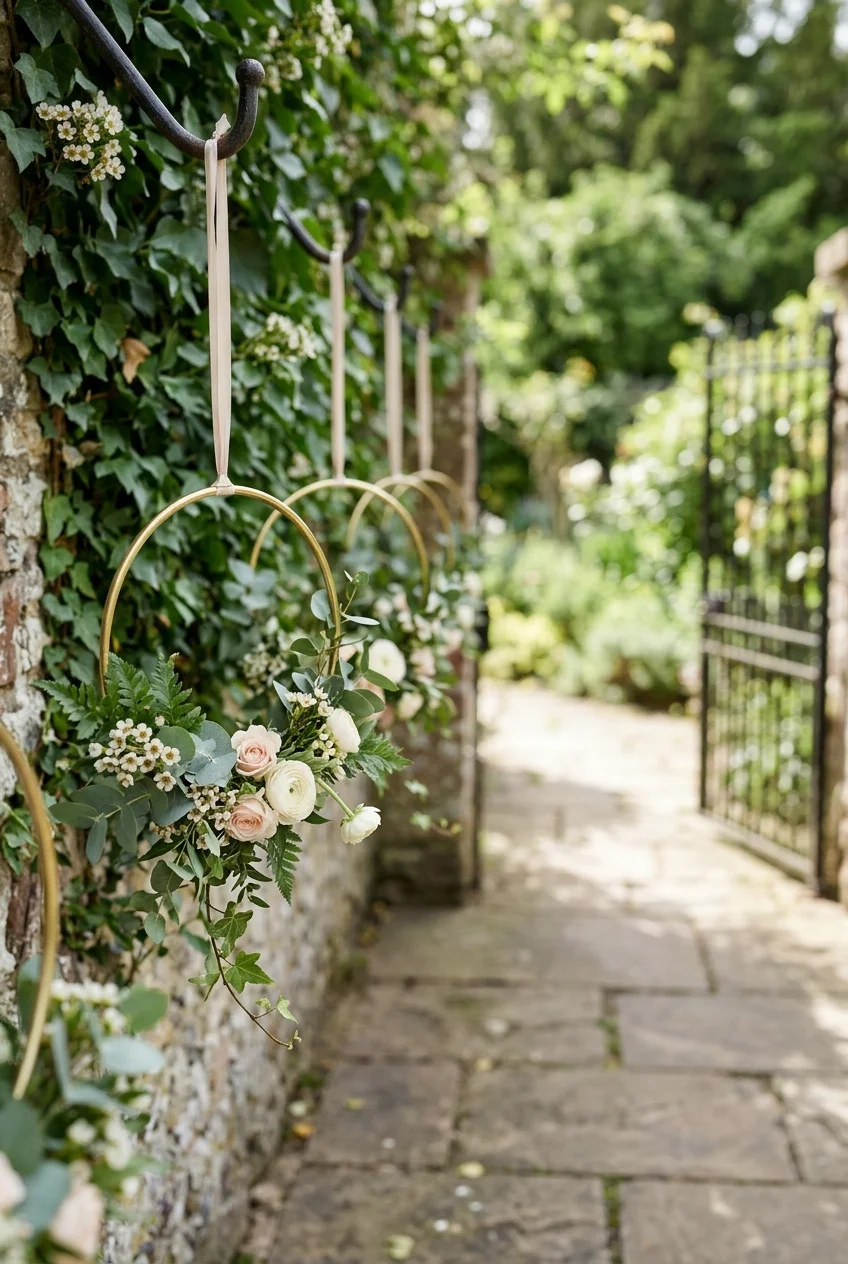
Small floral hoops provide a botanical frame without scattering petals. Use lightweight rings with flowers secured along one side, leaving a bare section that is easy to hold.
Ask the florist to keep the profile narrow so the hoops do not bump neighboring guests. This option costs more than ribbon but can use durable greenery or rented faux stems when the venue does not allow anything to be tossed.
11. Single Flower Stems Held Overhead
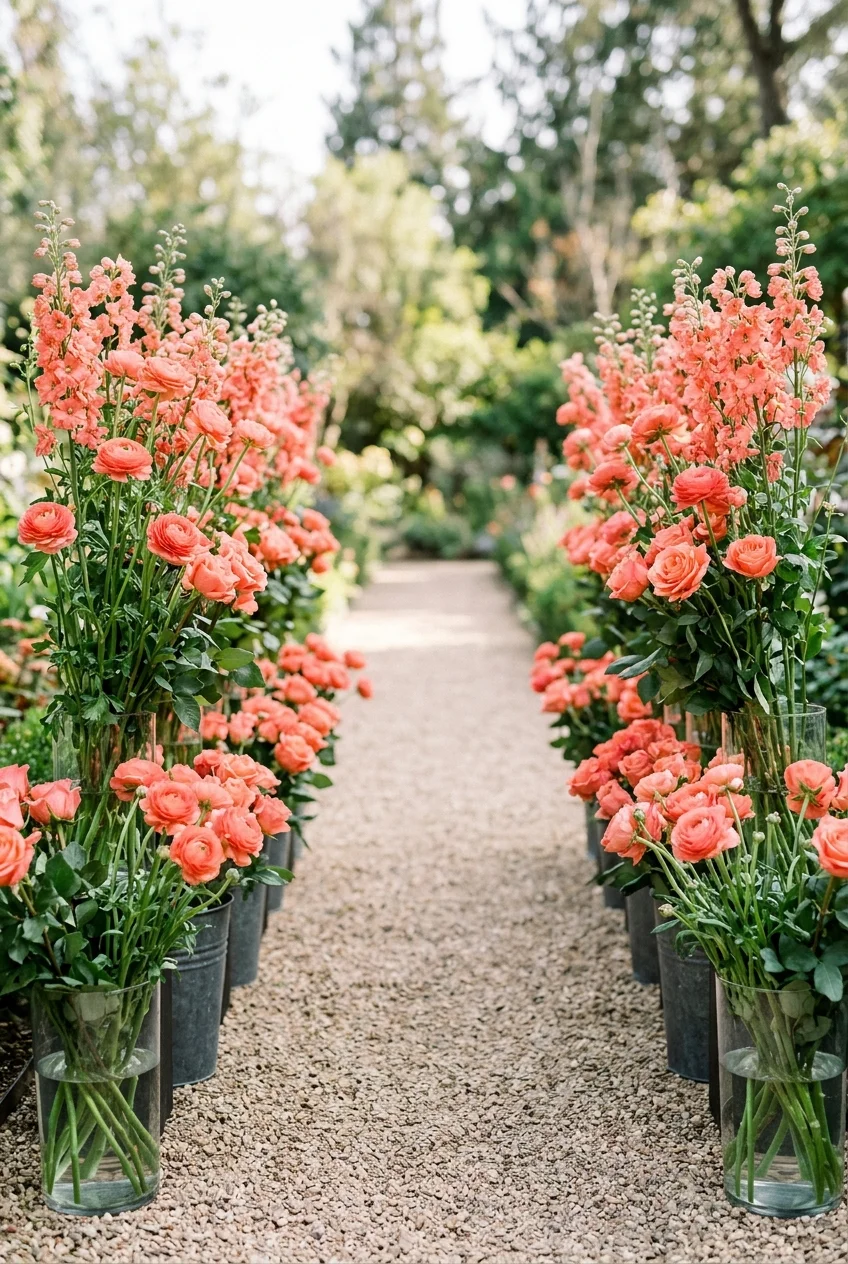
One flower stem per guest creates a simple floral tunnel and avoids the cleanup of a petal toss. Choose sturdy stems without thorns, sharp foliage, or heavy flower heads, and have the florist trim them to a consistent length.
This is an especially good use for hardy ceremony flowers that can be moved after the vows. Keep stems out of water only briefly, and place collection buckets at the far end so the flowers can be returned to water after the exit.
12. A No-Prop Arch Made by the Wedding Party
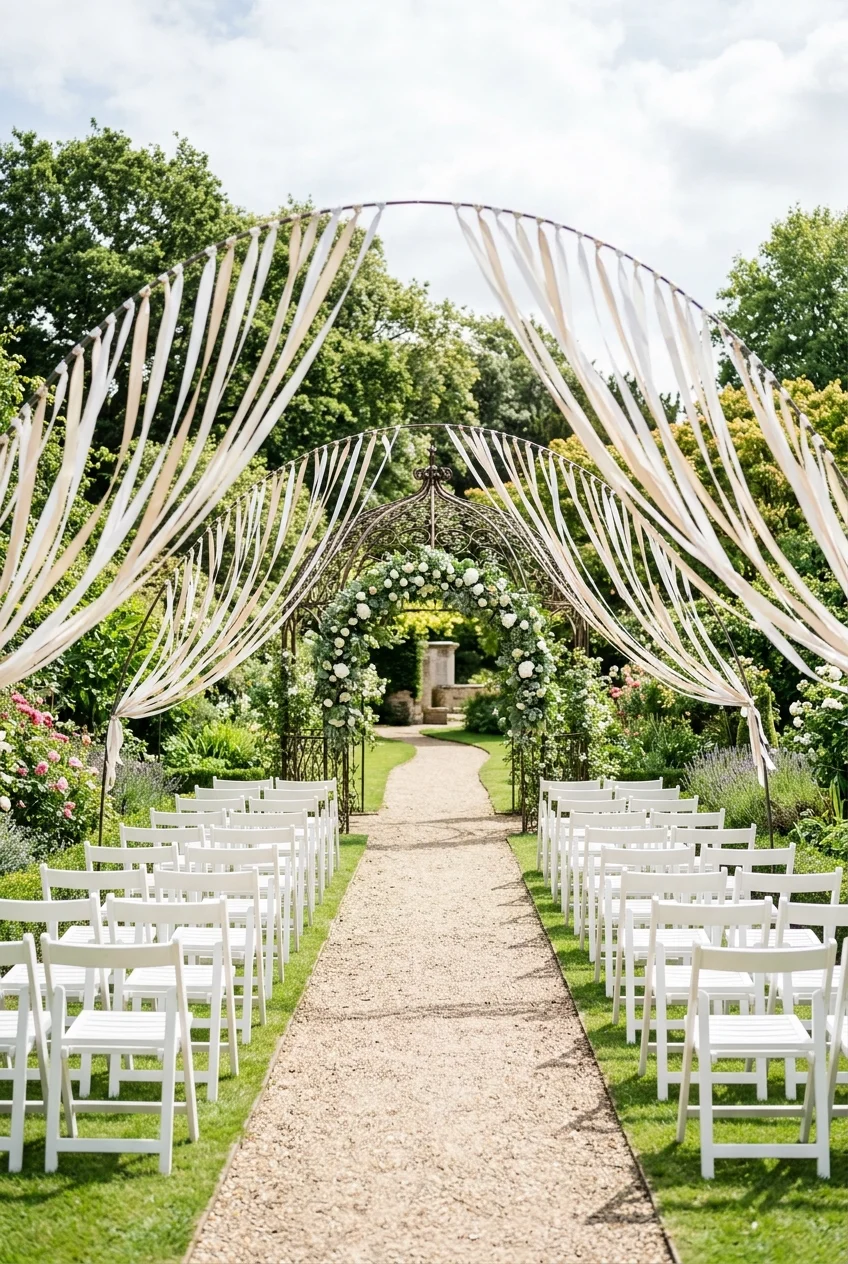
If props feel unnecessary, the wedding party can form an arch with raised joined hands while the rest of the guests clap from behind them. The shape gives the couple a defined path and creates a strong photo without purchases or cleanup.
Limit the arch to a small group so it stays stable and leaves enough headroom. Everyone else can line the route normally, which also makes this option easier for guests with limited reach or mobility.
Floating and Tossed Effects With a Cleanup Plan
13. Mini Bubble Wands in a Backlit Exit Line
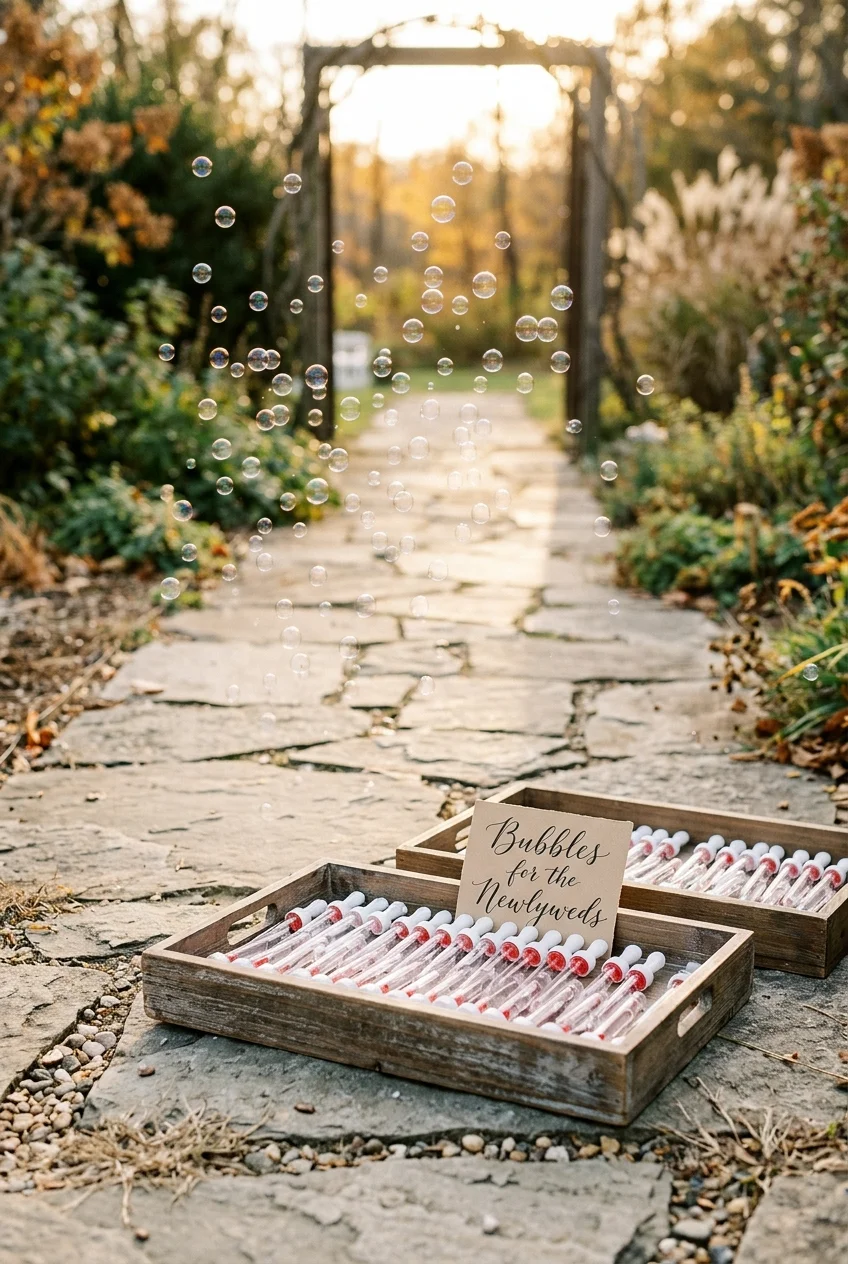
Small bubble wands create floating highlights without leaving solid debris, but the light direction matters. Ask the photographer to place the couple between the bubbles and a low sun or off-camera light so the clear bubbles catch an edge of brightness.
Hand the bottles out shortly before the exit and open a few in advance for guests who may struggle with seals. Use bubbles outdoors unless the venue approves the surface; soap on smooth tile or stone can become slippery.
14. Two Bubble Machines for a Fuller Cloud
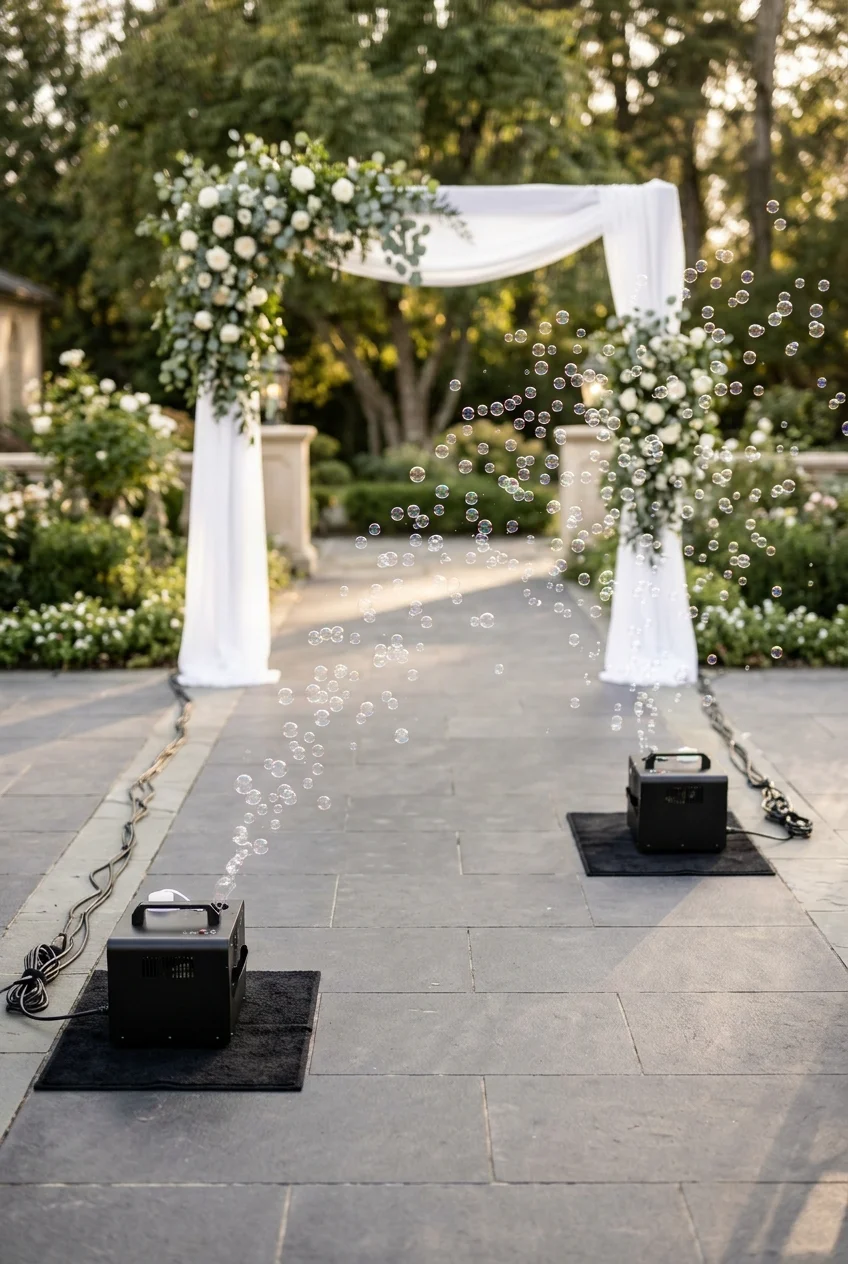
A machine creates a more consistent bubble field than guests can produce on cue. For a wide path, place one unit on each side and aim the airflow across the route rather than directly into it.
Run a short test with the photographer and venue staff, then mark the machine positions with tape. Put absorbent mats underneath and keep cords outside the walking lane; many venues restrict machines near polished floors, art, landscaping, or electrical equipment.
15. Fresh Petals in Wide, Easy-to-Grab Cones
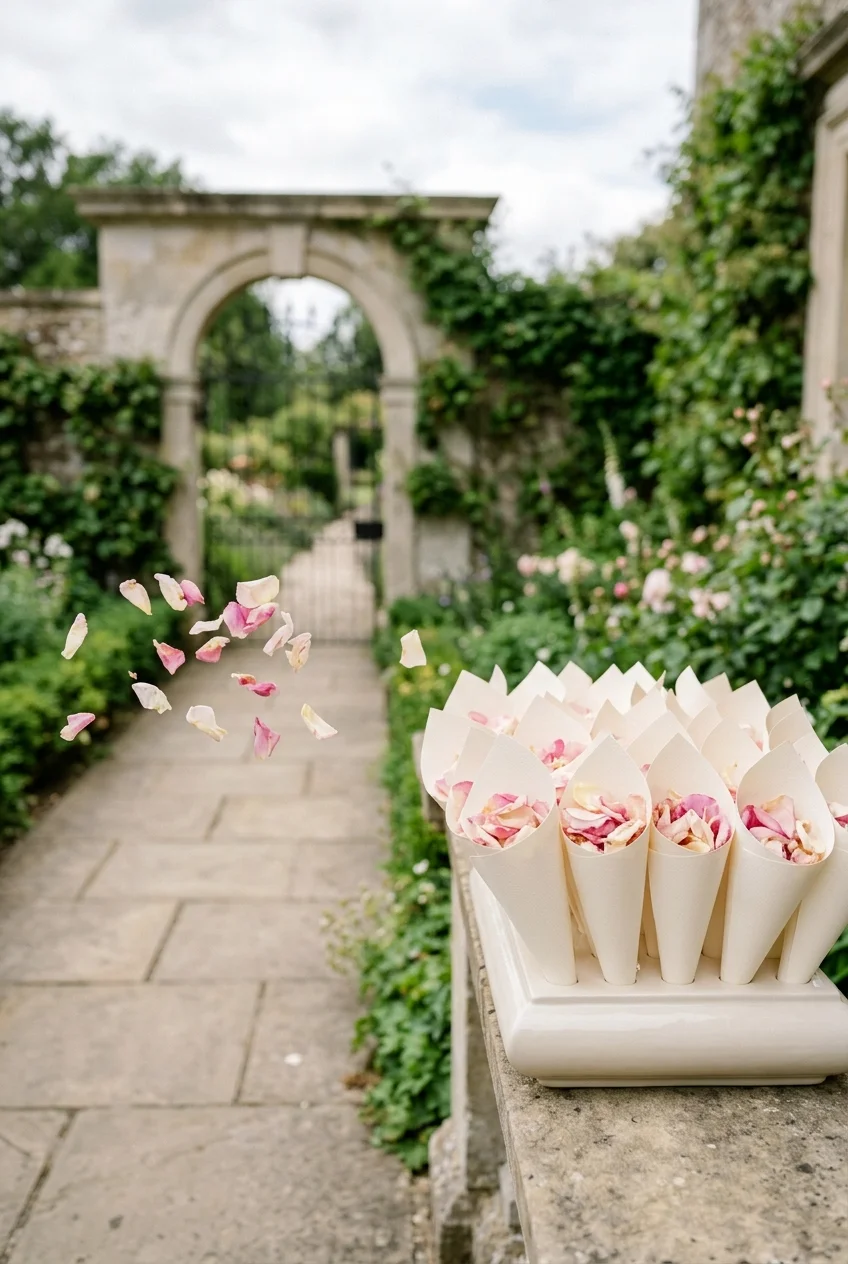
Fresh petals produce a soft, irregular shower that suits a garden or ceremony exit. Broad petals show up better than tiny fragments, and shallow paper cones let guests take a loose handful without crushing them.
Only use petals the venue has approved, in the location it specifies. Some properties allow real petals outdoors but prohibit them indoors because moisture and pigment can mark floors.
16. Dried Petals for a Muted, Textured Toss
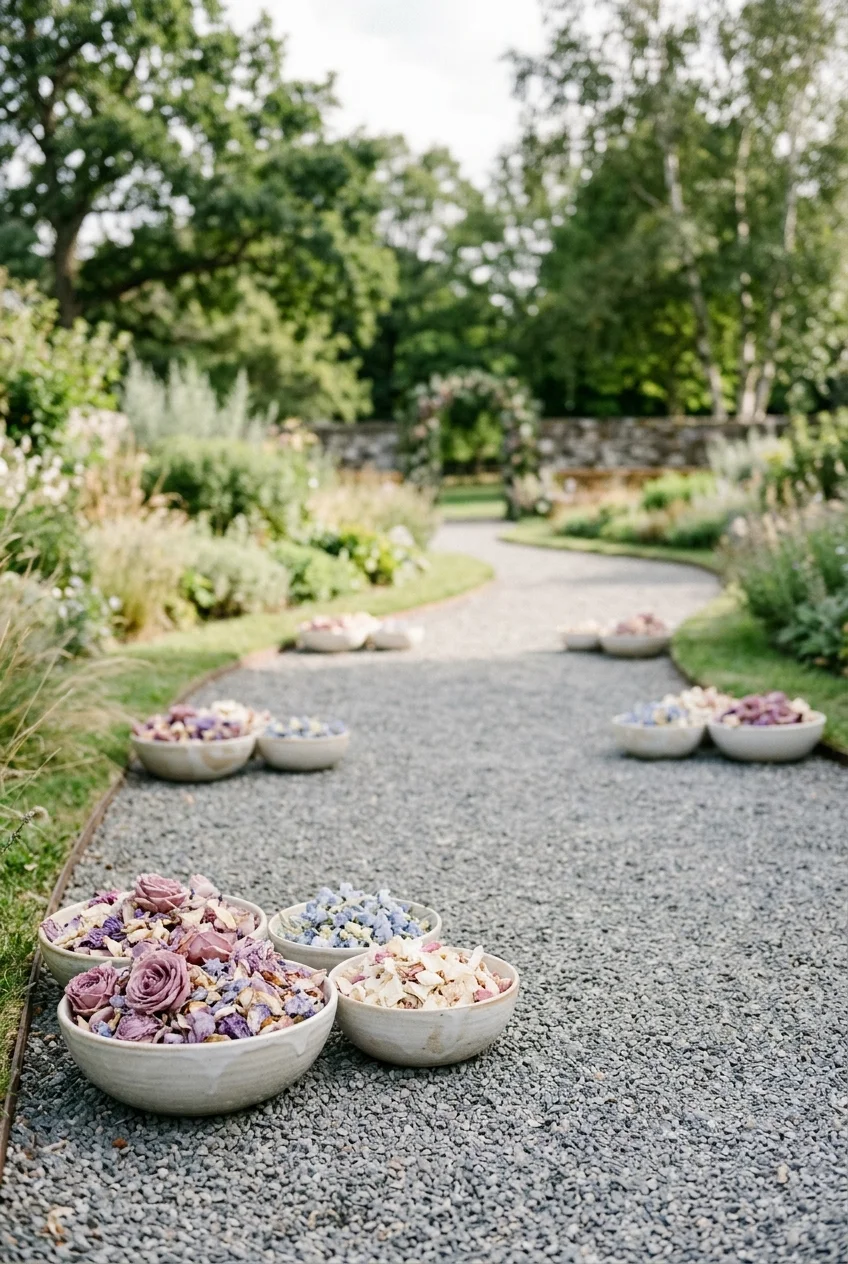
Dried petals suit a softer, more textural palette and can be portioned well before the wedding. Mix two petal sizes so the toss has both visible pieces and fine movement, but avoid dusty material that can blow into eyes or stain light clothing.
“Natural” does not automatically mean permitted or leave-no-trace. Confirm the exact mix with the venue, then assign cleanup tools and a person responsible for the area.
17. Clean Fallen Leaves for an Autumn Exit

Large dry leaves make an autumn toss visible without needing a dense cloud. Collect only clean, intact leaves from a permitted source, shake out debris, and keep them dry so they do not clump.
Leaves can be slippery on steps and may be prohibited even outdoors, so use them only on a level route with venue approval. A wide rake and collection bag should be waiting nearby rather than appearing after the staff starts closing.
18. Oversized Paper Confetti That Is Easier to Collect
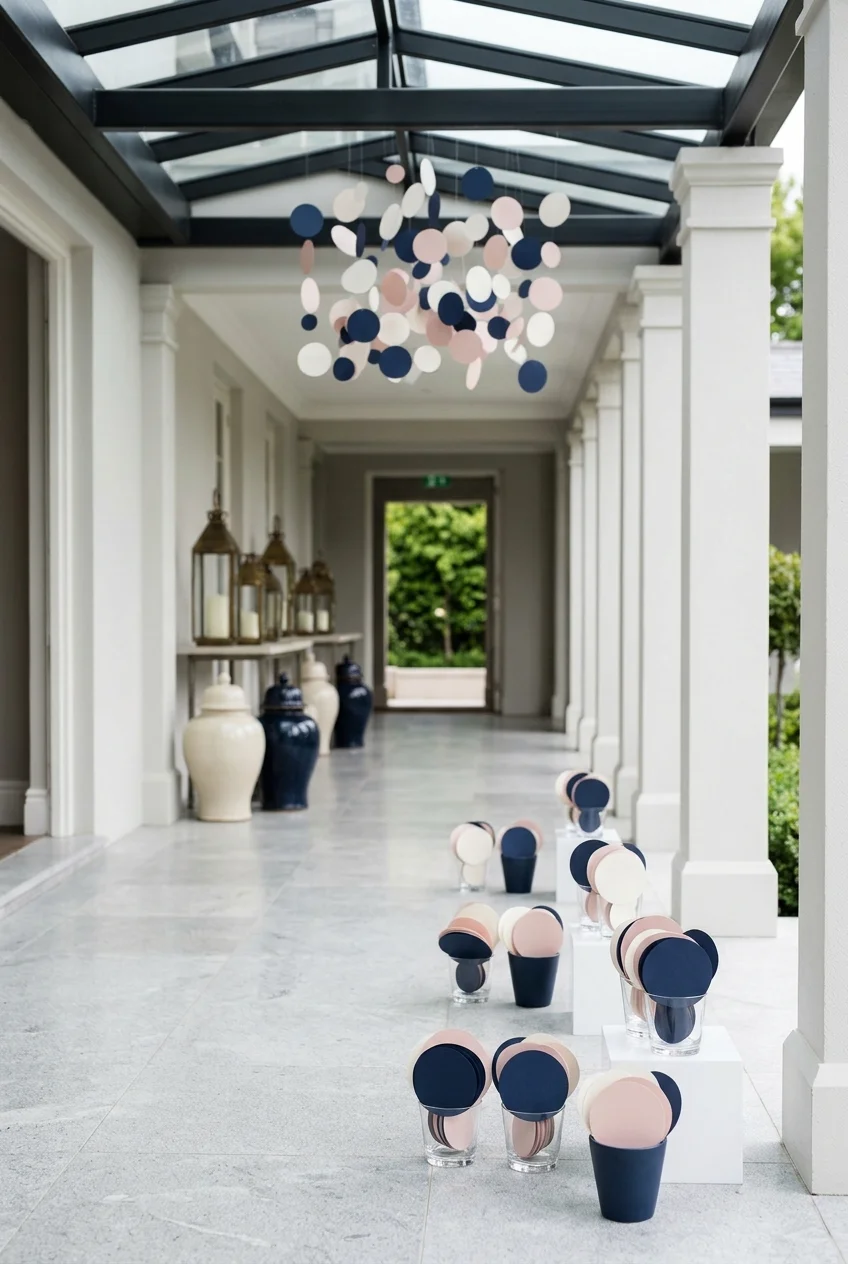
If a venue permits paper confetti, oversized circles are more visible and easier to sweep than tiny flakes. Use matte paper in two or three colors; foil, plastic film, glitter, and micro-confetti are harder to contain and may be banned.
Assign a countdown so the throw happens once, not continuously down the path. Set out wide brooms and a lidded bin before the exit, and follow the venue’s disposal instructions even if the package calls the paper biodegradable.
19. Paper Airplanes for a Long Outdoor Route
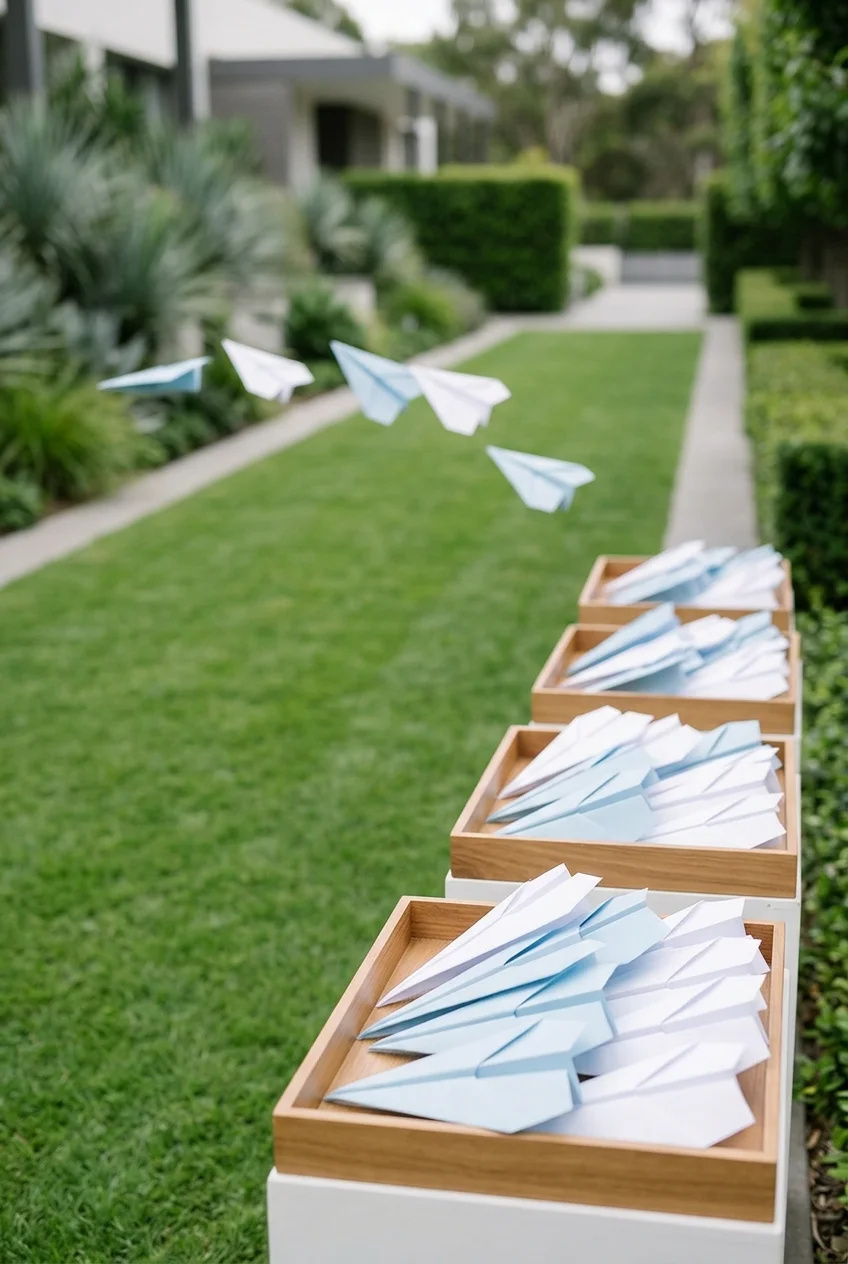
Paper airplanes create directional movement instead of a vertical toss, which works best along a long, broad outdoor route. Use light card stock with blunt folded noses and test the design so it glides briefly rather than diving sharply.
Guests should launch from behind a marked line after the couple passes, never toward faces. Count every plane before setup and after cleanup so none are left in landscaping or water.
20. Catchable Crepe Streamers for One Big Throw
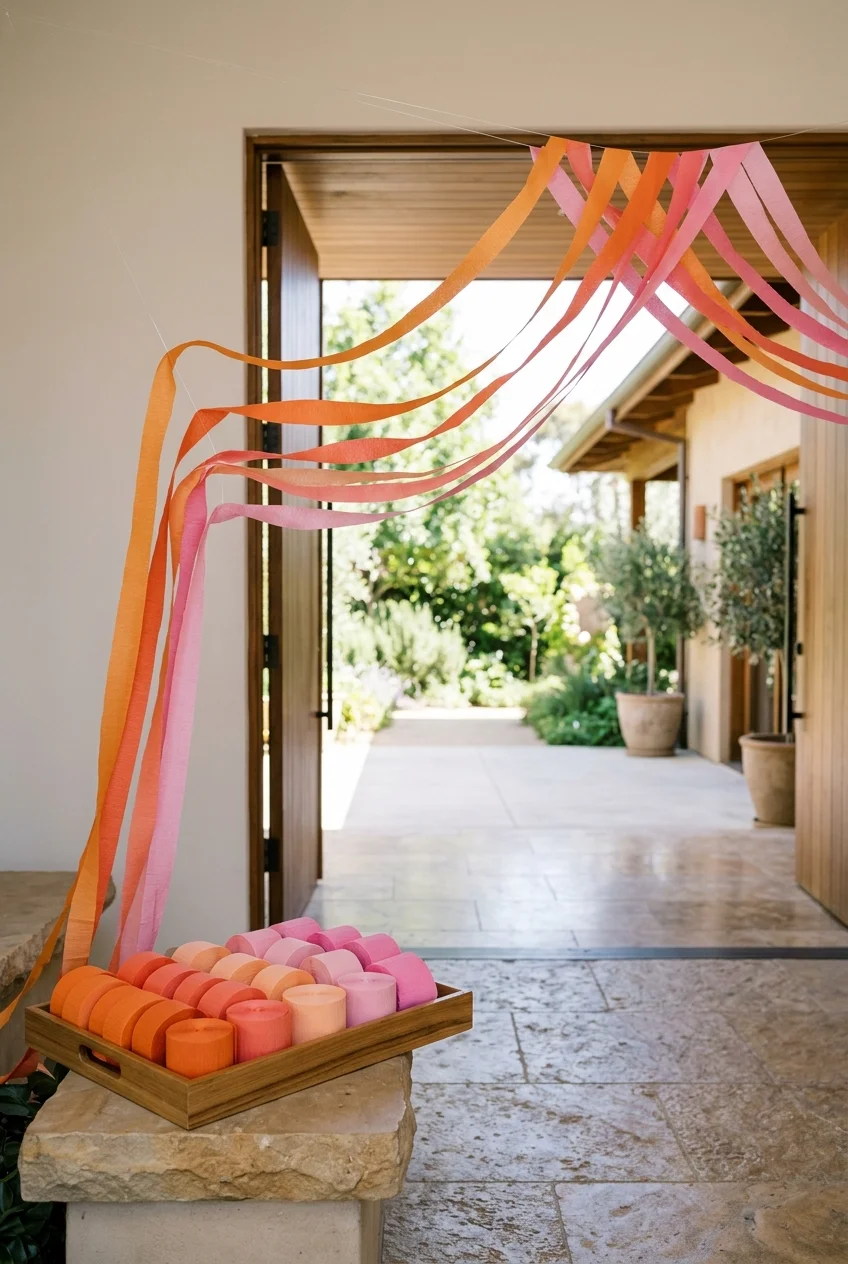
Rolled crepe streamers unfurl into long lines that can fill a photo with fewer loose pieces than confetti. Choose short event streamers designed to remain connected, and test them to see whether the roll separates when thrown.
This is a one-count moment: the photographer gets ready, the coordinator cues the throw, and cleanup starts as soon as the couple clears the path. Skip it around trees, ceiling fans, chandeliers, overhead sprinklers, or historic surfaces.
21. A Professional Snow Machine for a Winter Effect
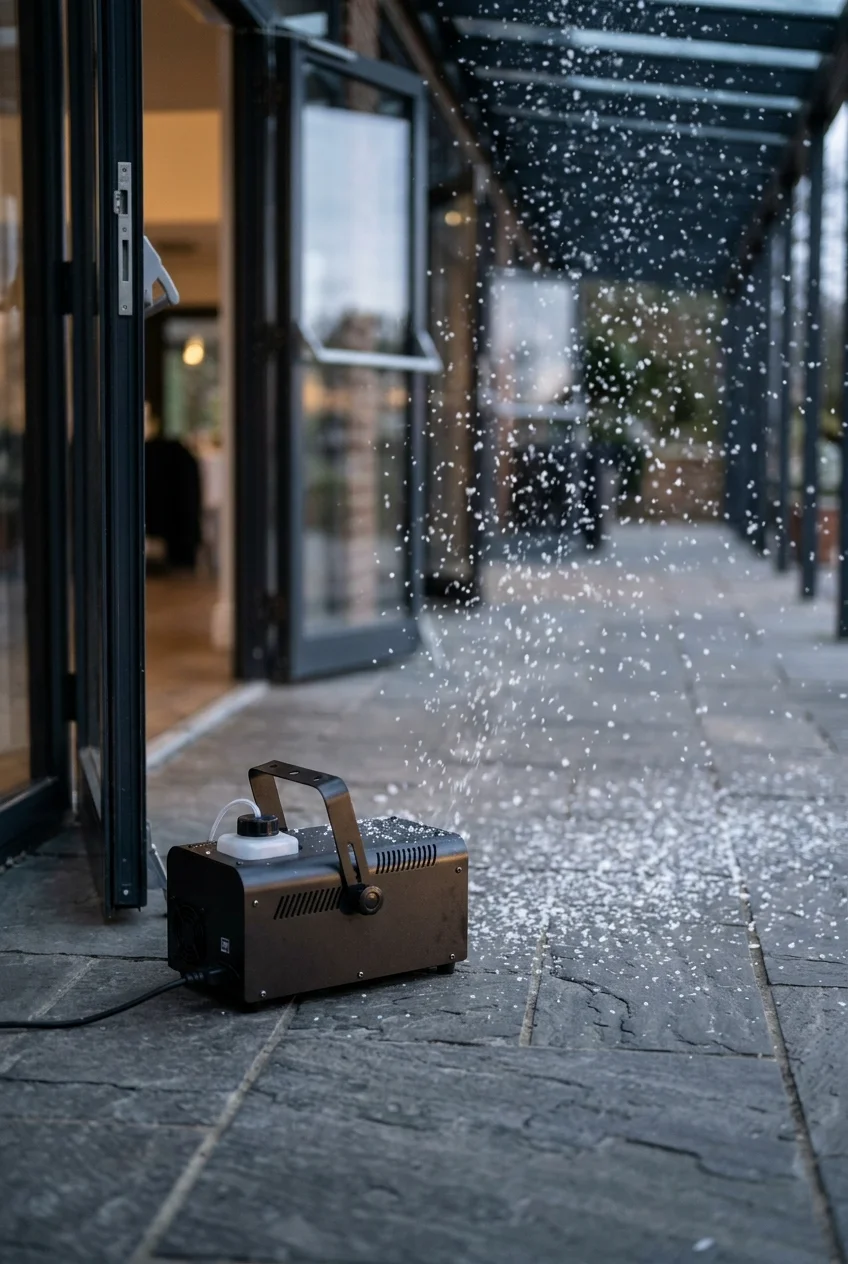
A staffed snow machine can create a brief winter-like flurry without asking guests to throw anything. The operator, venue, and photographer should agree on the fluid, output direction, run time, and cleanup plan before the wedding day.
Use the lightest output that will read on camera and keep it away from food, delicate finishes, and the walking surface. “Artificial snow” covers several materials, so never assume a product is venue-safe, slip-safe, or environmentally harmless without its documentation.
After-Dark Send-Offs Built Around Light
22. LED Foam Batons for a Dance-Floor-to-Exit Transition
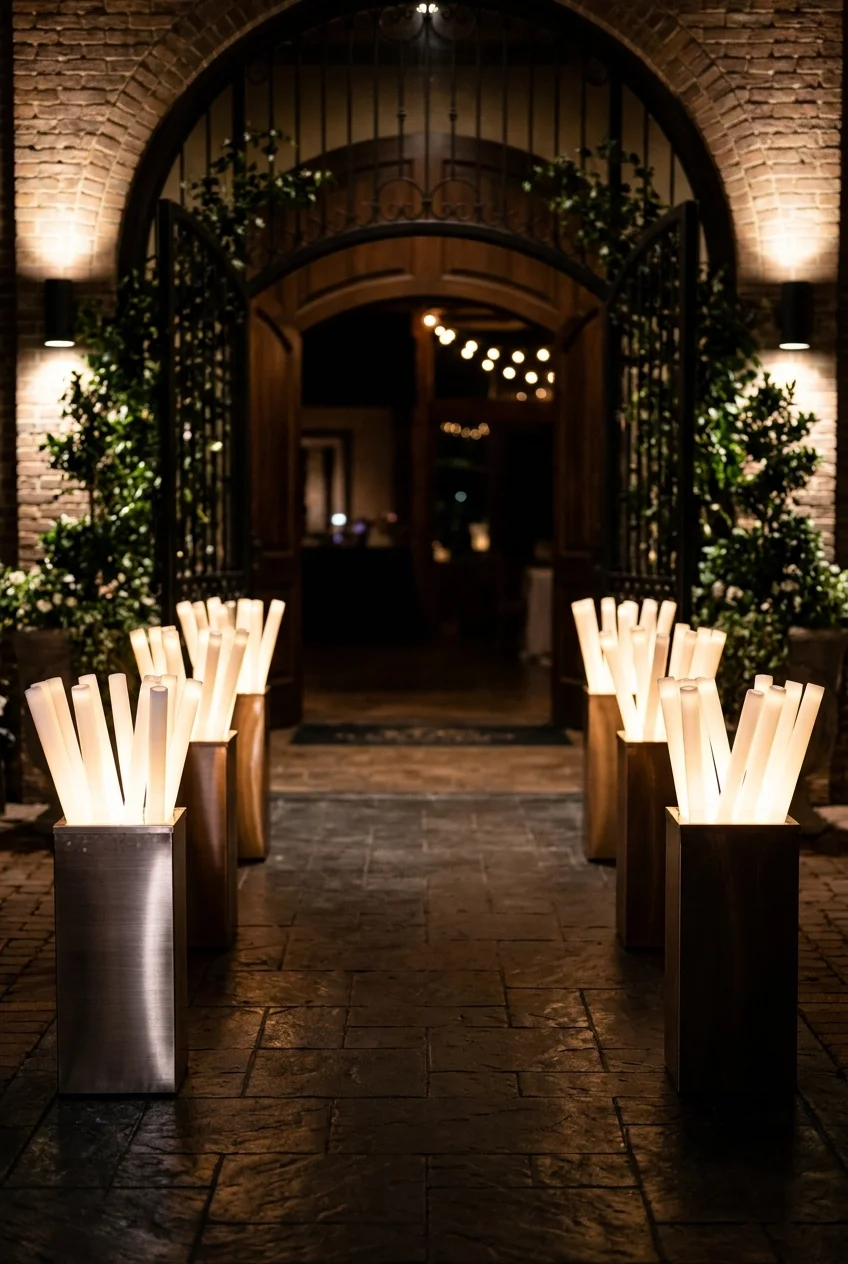
LED foam batons carry the energy of the dance floor into a nighttime exit and are easier to coordinate than open flame. Use one light mode and a limited color setting so the photograph does not become a mix of unrelated flashes.
Hand them out during the final song, then direct guests outside in two lines. Check the batteries when the shipment arrives and collect dead or damaged units so they do not become litter.
23. Fiber-Optic Wands for Fine Points of Light
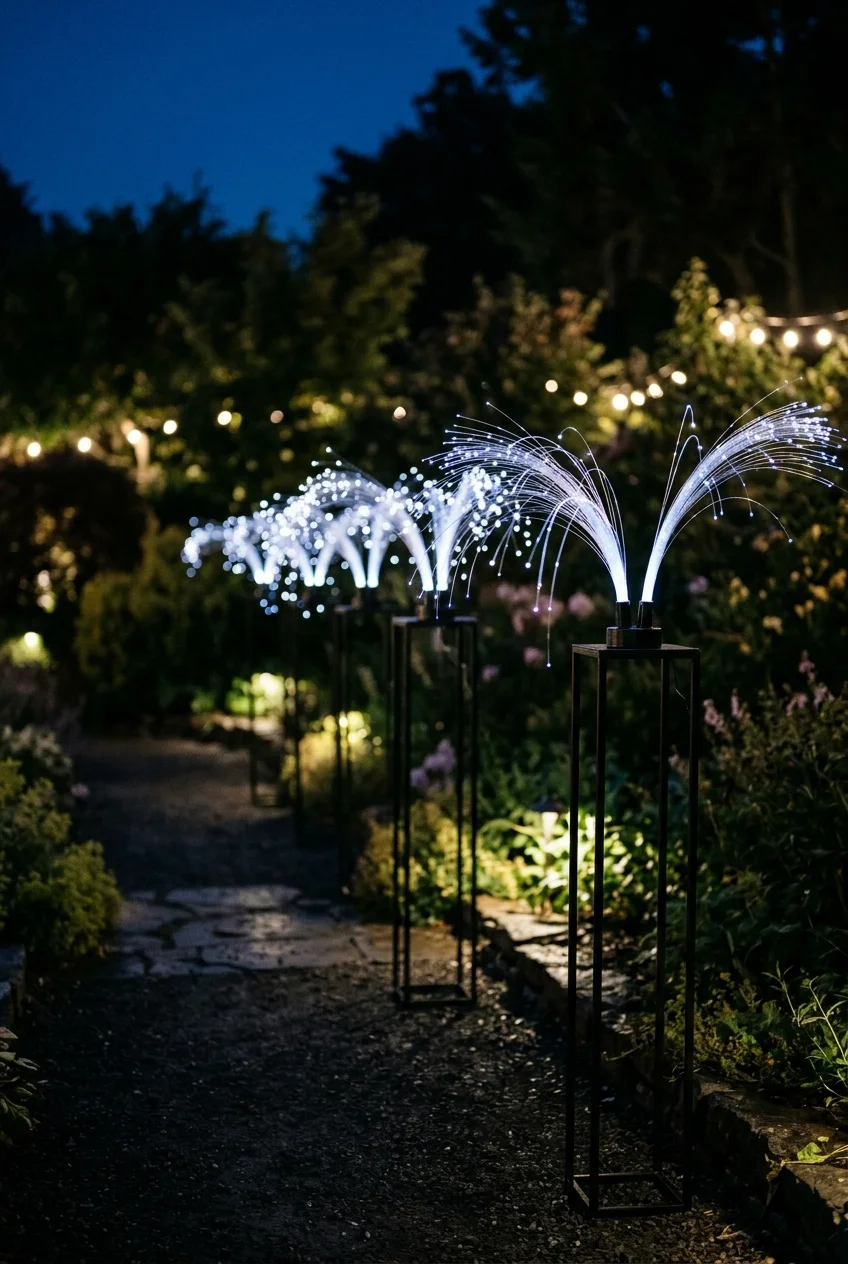
Fiber-optic wands produce many small points of light and a softer look than solid glow sticks. They photograph best against a dark, uncluttered background and can create curved light trails when waved slowly.
Avoid rapid spinning in a crowded line because the fibers can strike nearby faces. A coordinator can demonstrate a small side-to-side motion and keep the center lane wide.
24. Glow Bracelets Worn as a Wall of Color
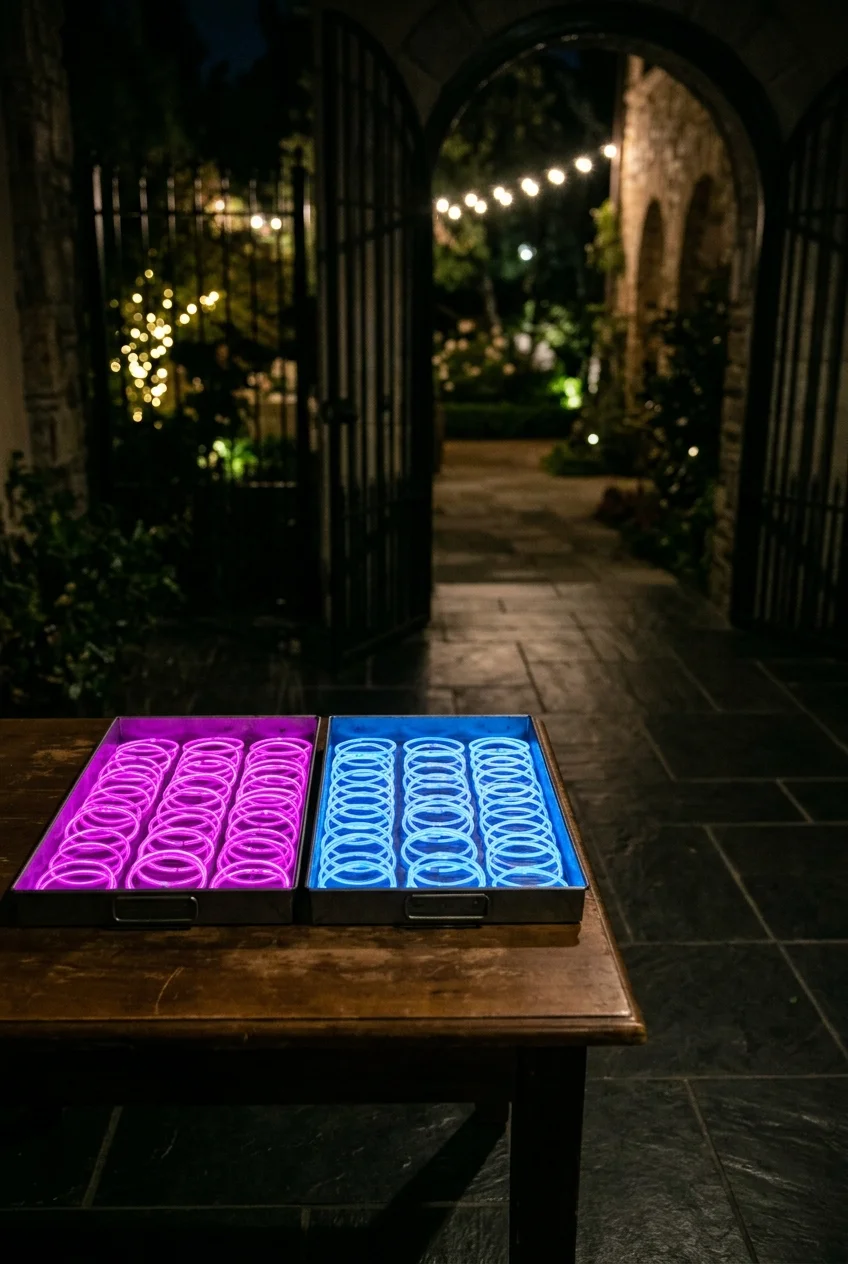
Glow bracelets keep both hands free and create bands of color at the edges of the exit line. Give each side a single color, or use one color throughout for a cleaner visual.
They produce less light than batons, so this is better for a close, intimate path than a large dark driveway. Keep connectors and packaging at the distribution table, not near the exit.
25. Battery Taper Candles for a Formal Evening Line
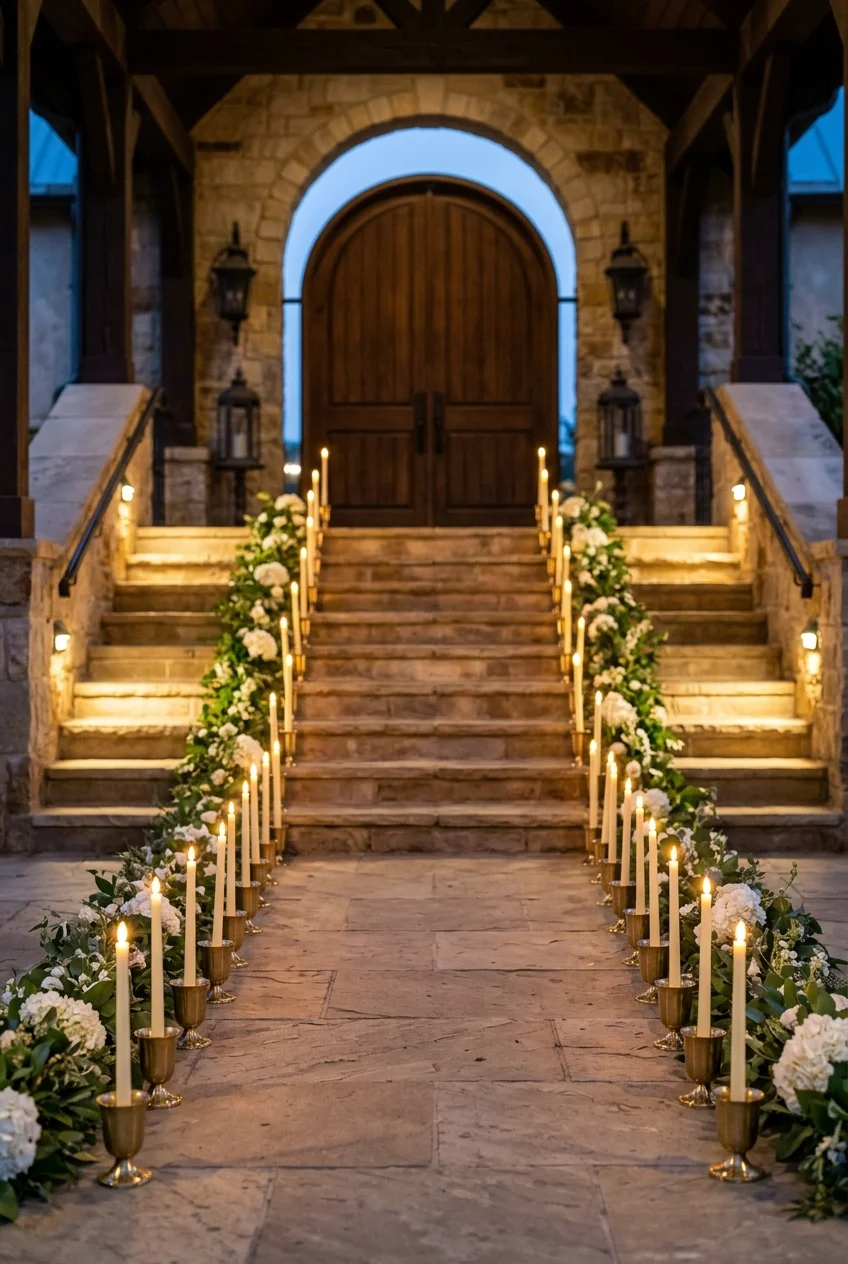
Flameless taper candles create a quieter, formal look and avoid exposed fire. Choose weighted holders or built-in drip cups that are comfortable to grip, with warm LEDs that do not flicker erratically on camera.
Test the brightness in the actual exit location. The candles should act as visible accents, not the only lighting for steps, curbs, or uneven ground.
26. Handheld Battery Lanterns for a Wider Glow
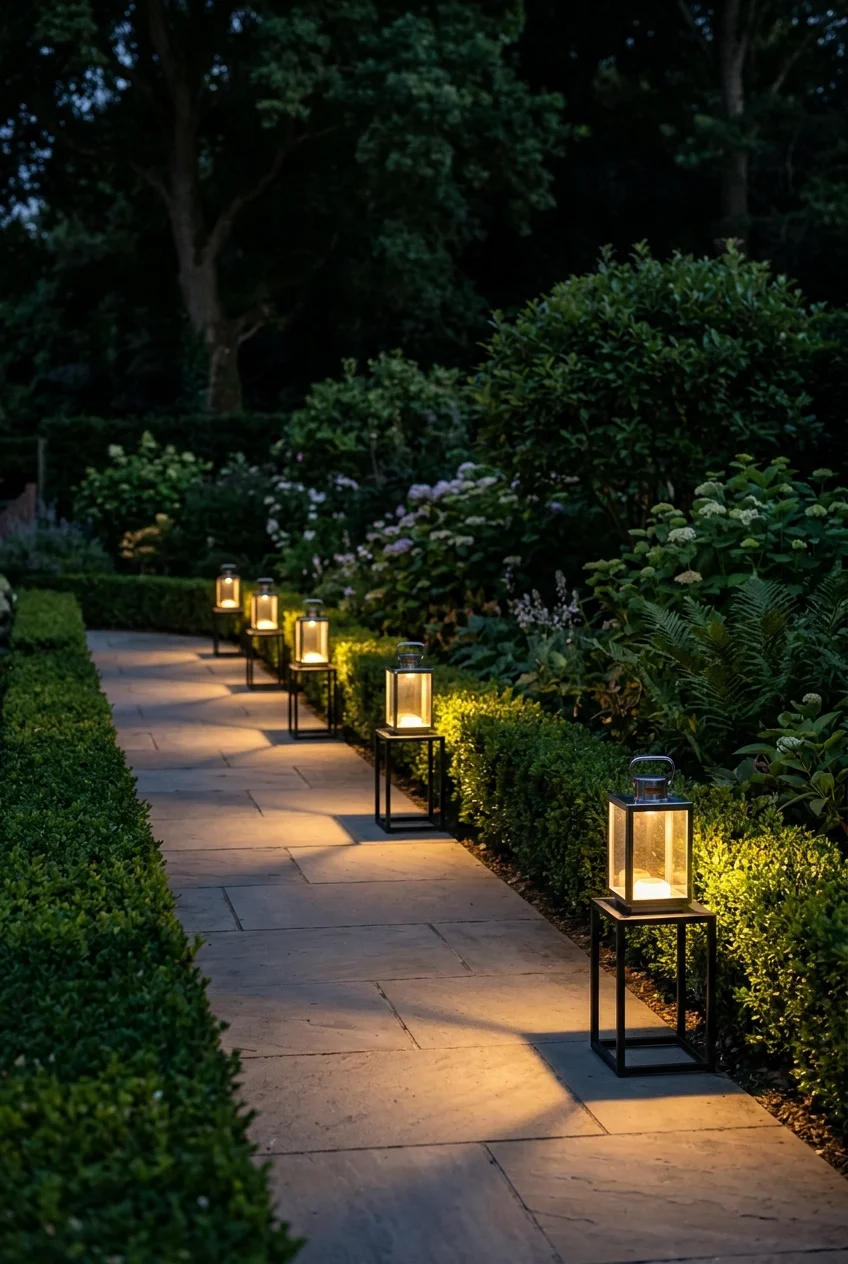
Small battery lanterns cast a broader pool of light than tapers and suit a garden path or courtyard. Keep the lantern body light enough to hold for several minutes and use shatter-resistant panes.
Space lantern holders farther apart than wand users so the fixtures do not knock together. After the exit, collect the lanterns in padded crates rather than leaving them along the route overnight.
27. A Phone-Flashlight Tunnel With No Extra Props
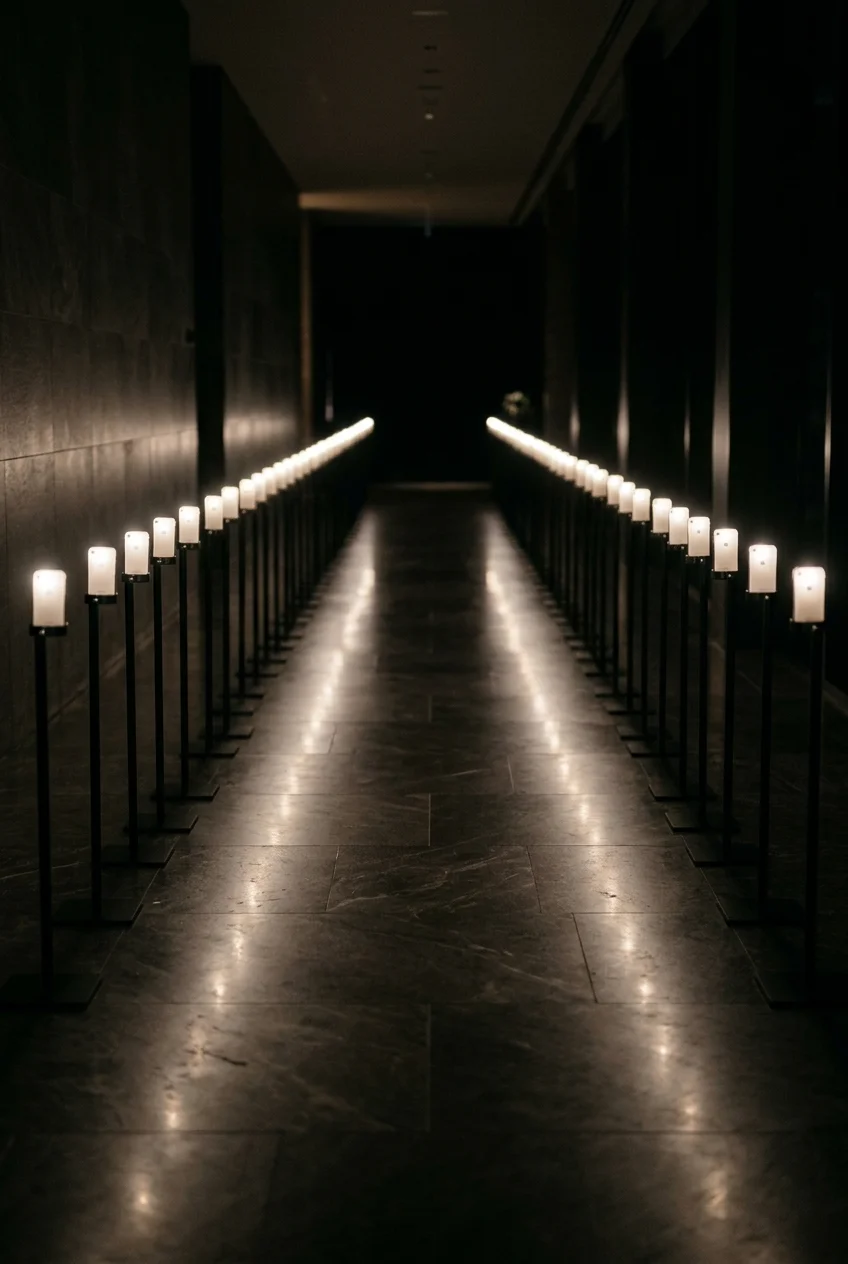
Phone flashlights can create a bright, modern tunnel with equipment guests already carry. Ask everyone to switch to a steady white light and hold phones above shoulder level with screens facing away from the couple.
The photographer should test exposure before the exit because dozens of small direct lights can create harsh hotspots. This idea needs a short announcement and clear cue more than it needs décor.
28. Light-Up Umbrellas for a Rainy Night
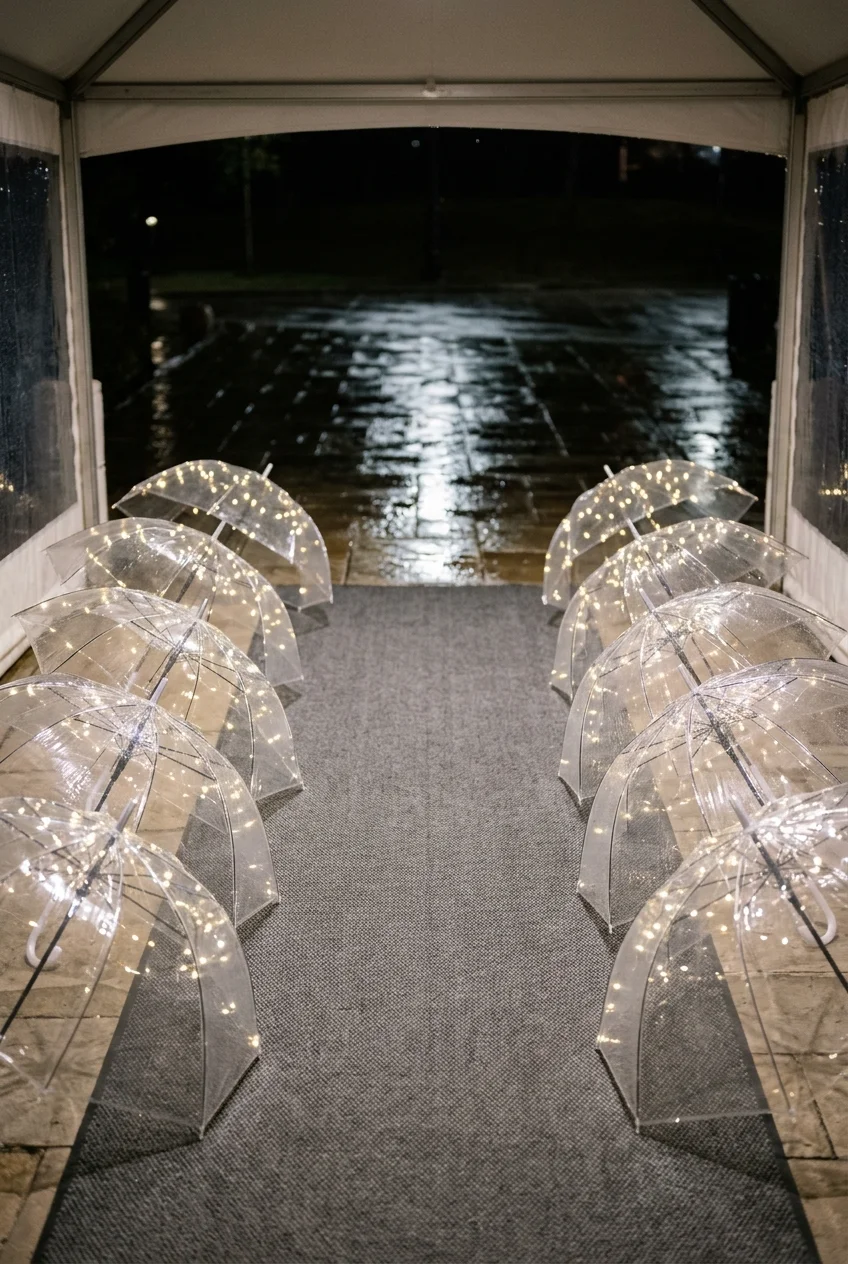
Umbrellas with battery lights turn rain protection into the visual idea. Clear canopies preserve sightlines, while lights along the ribs outline a repeating shape above the exit line.
Use this only where umbrellas can open without crowding the path or catching the doorway. Dry the handles and floor before guests line up, and keep a non-lit backup in case the electrical components are not rated for the weather.
29. A String-Light Corridor Built Into the Route
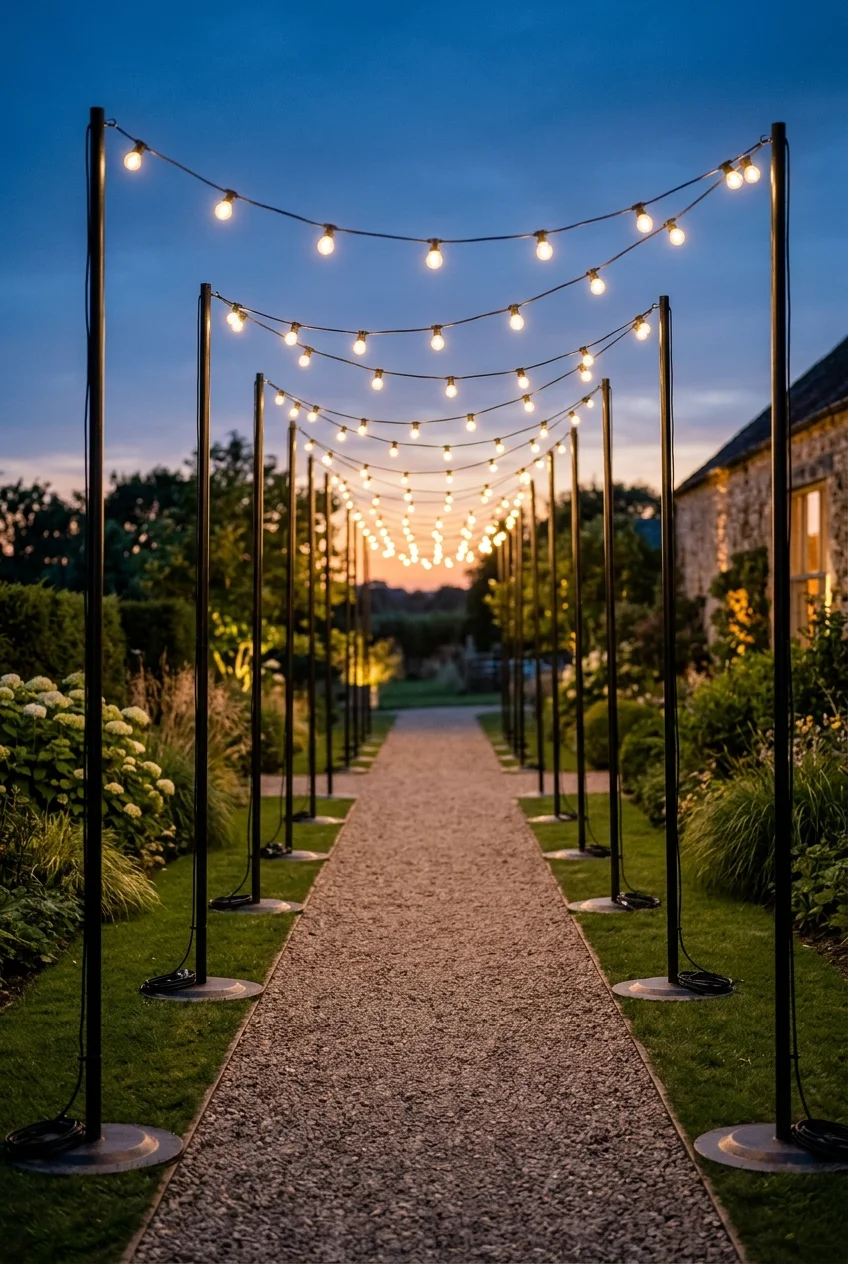
Instead of giving guests a lighted object, frame the route with strings of warm bulbs on freestanding poles. This keeps hands free and makes the exit look finished even if only a small group remains late in the evening.
Use outdoor-rated equipment installed by the venue or a qualified rental team. Bases, cords, and guy lines must sit completely outside the walkway and emergency egress.
30. A Neon-Lit Doorway as the Exit Focal Point
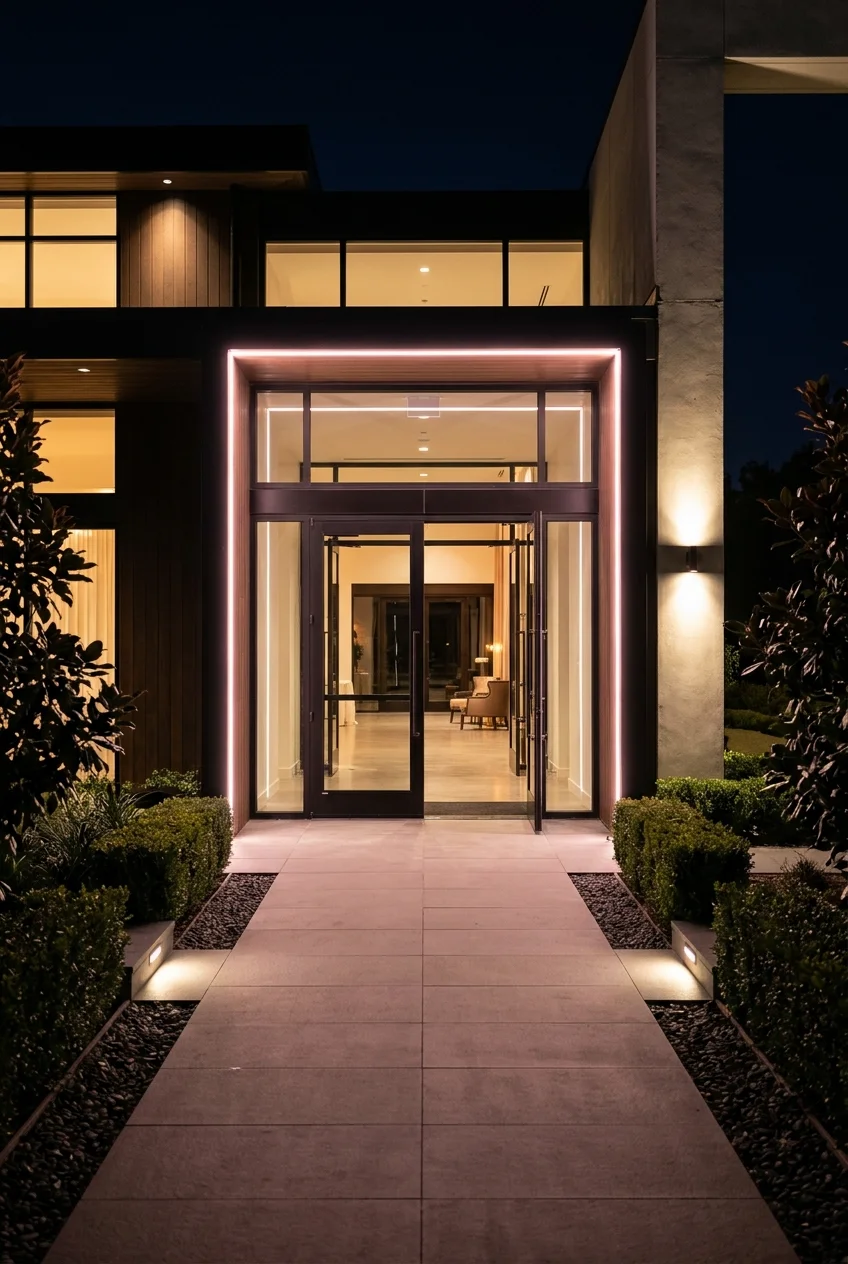
A rented neon-style light or LED outline can turn a plain doorway into the visual end point of the send-off. Use a simple abstract shape or minimal word rather than a long phrase that competes with the couple in photographs.
Mount the fixture securely and keep all power supplies away from the threshold. The doorway still needs enough ordinary light for guests to see steps and changes in level.
31. Getaway-Car Headlights Behind the Exit Line
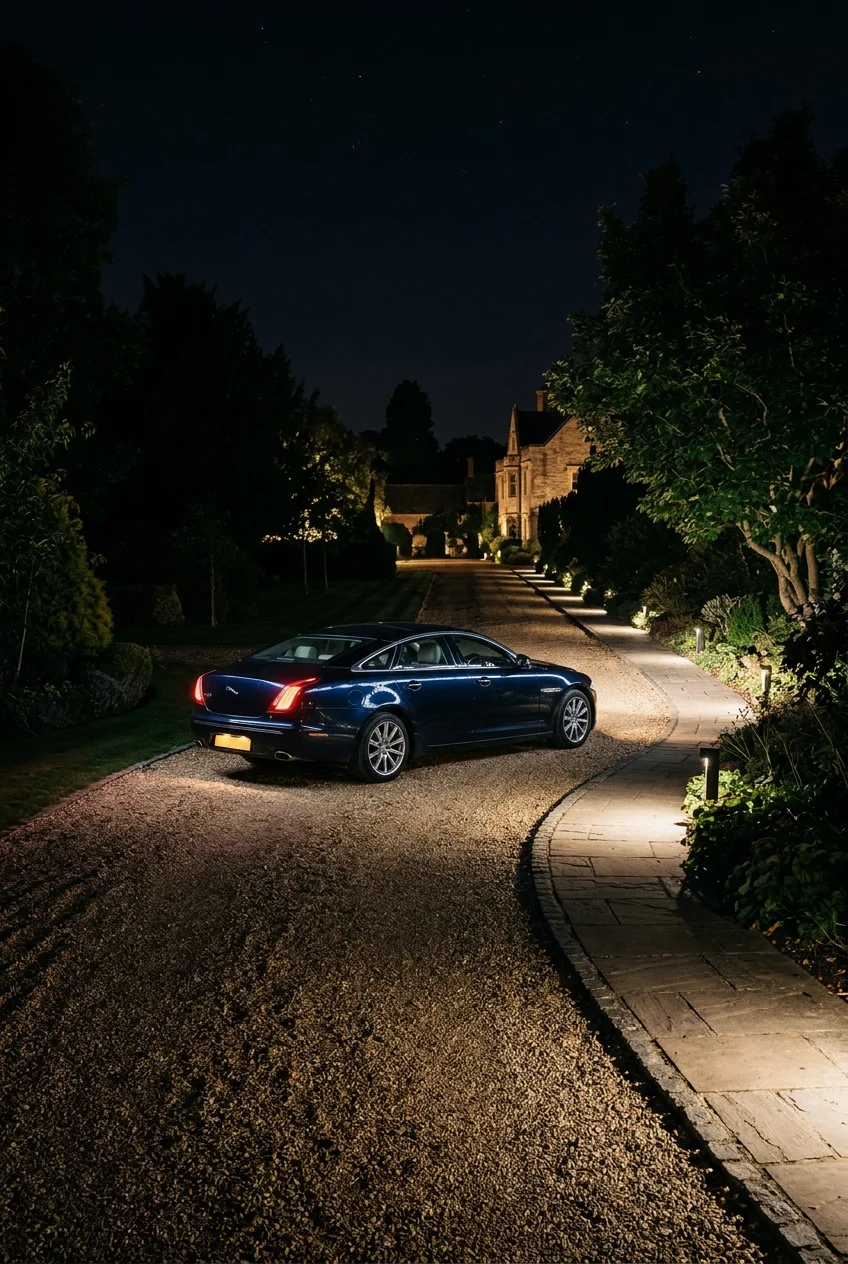
A parked getaway car can provide a strong pool of backlight when its headlights point toward the exit route. The beam separates silhouettes and adds atmosphere without giving every guest a prop.
The vehicle must be stationary, supervised, and positioned so no one stands in its travel path. Ask the photographer about glare and exposure, and switch off high beams if they overpower the scene.
32. Professional Cold-Spark Fountains With a Clear Center Lane
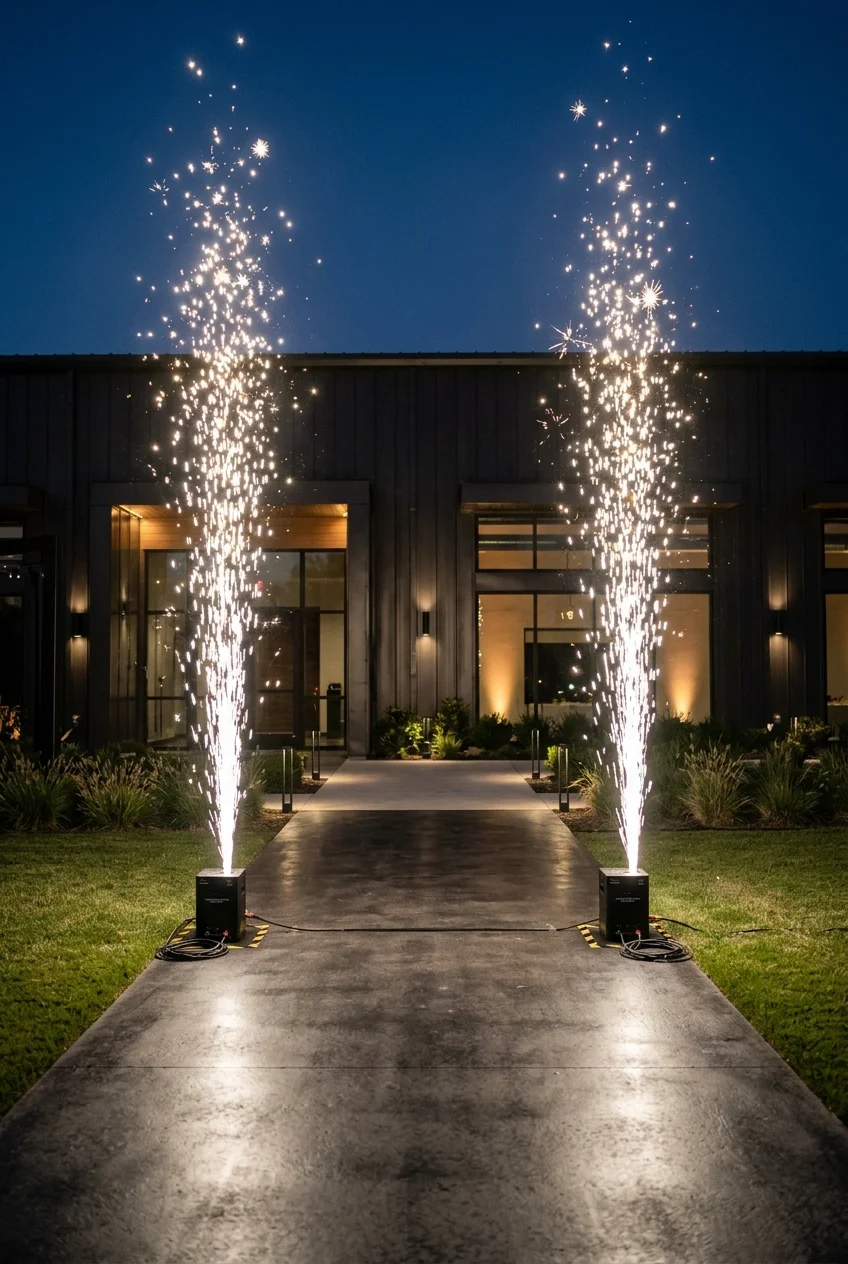
Cold-spark machines can create vertical columns on each side of an exit, but the name does not make them non-pyrotechnic or universally legal. Treat them as a regulated special effect: use a qualified operator, written venue approval, and any required permits, insurance, fire review, and manufacturer clearances.
Plan the effect around the approved machine positions rather than squeezing units into a decorative layout. Massachusetts, for example, classifies cold-spark pyrotechnics with other prohibited devices unless professional licensing, certification, and permitting requirements are met, so local rules matter.
33. A Permitted Professional Fireworks Finale
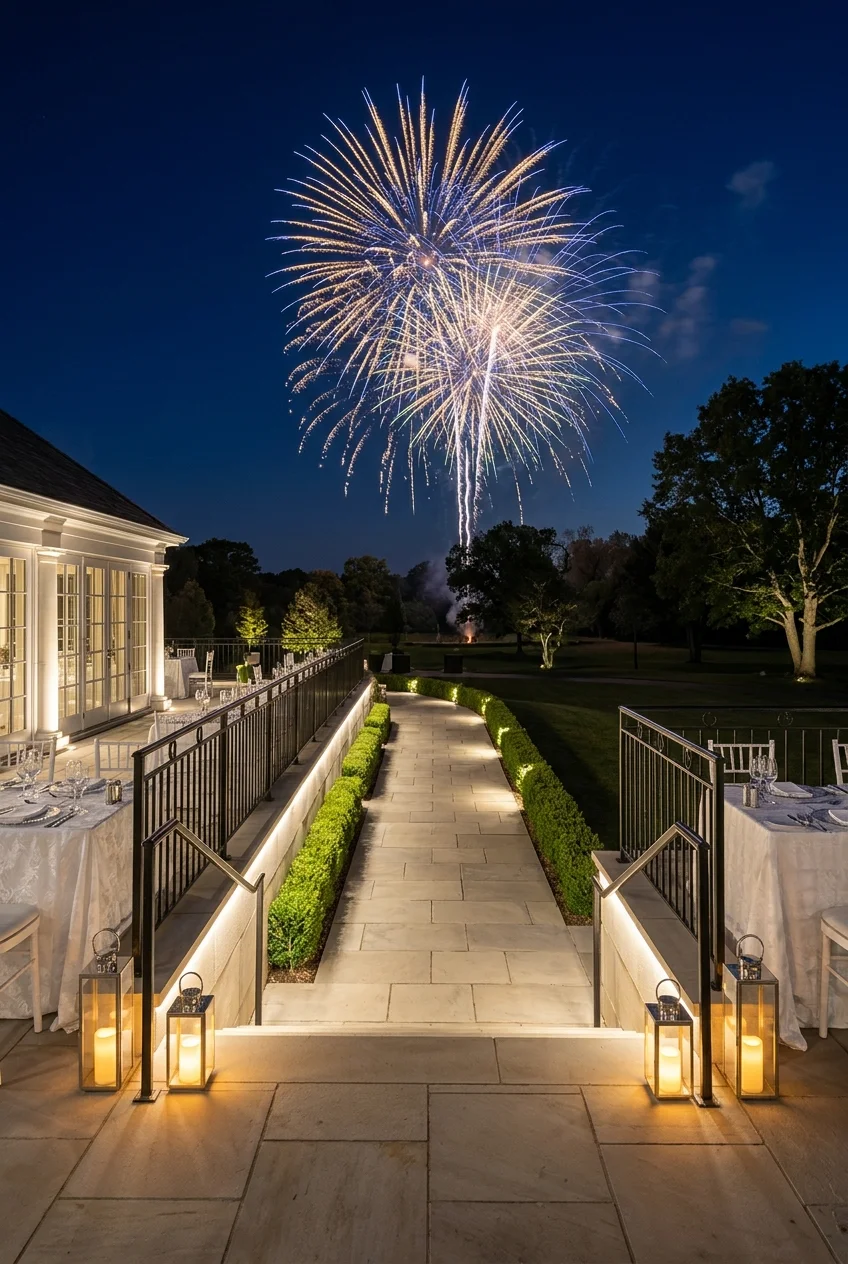
A professional fireworks display works as a distant backdrop rather than a guest-held send-off. It requires a licensed display company, a suitable site, permits, fire and weather review, and coordination with the venue and photographer.
Keep the exit route separate from the launch and fallout zones, and plan a non-pyrotechnic backup if wind, drought, or local restrictions cancel the display. The U.S. Fire Administration advises leaving fireworks to professionals.
Sound and Music Instead of Flying Objects
34. Handbells for a Bright, Traditional Ring
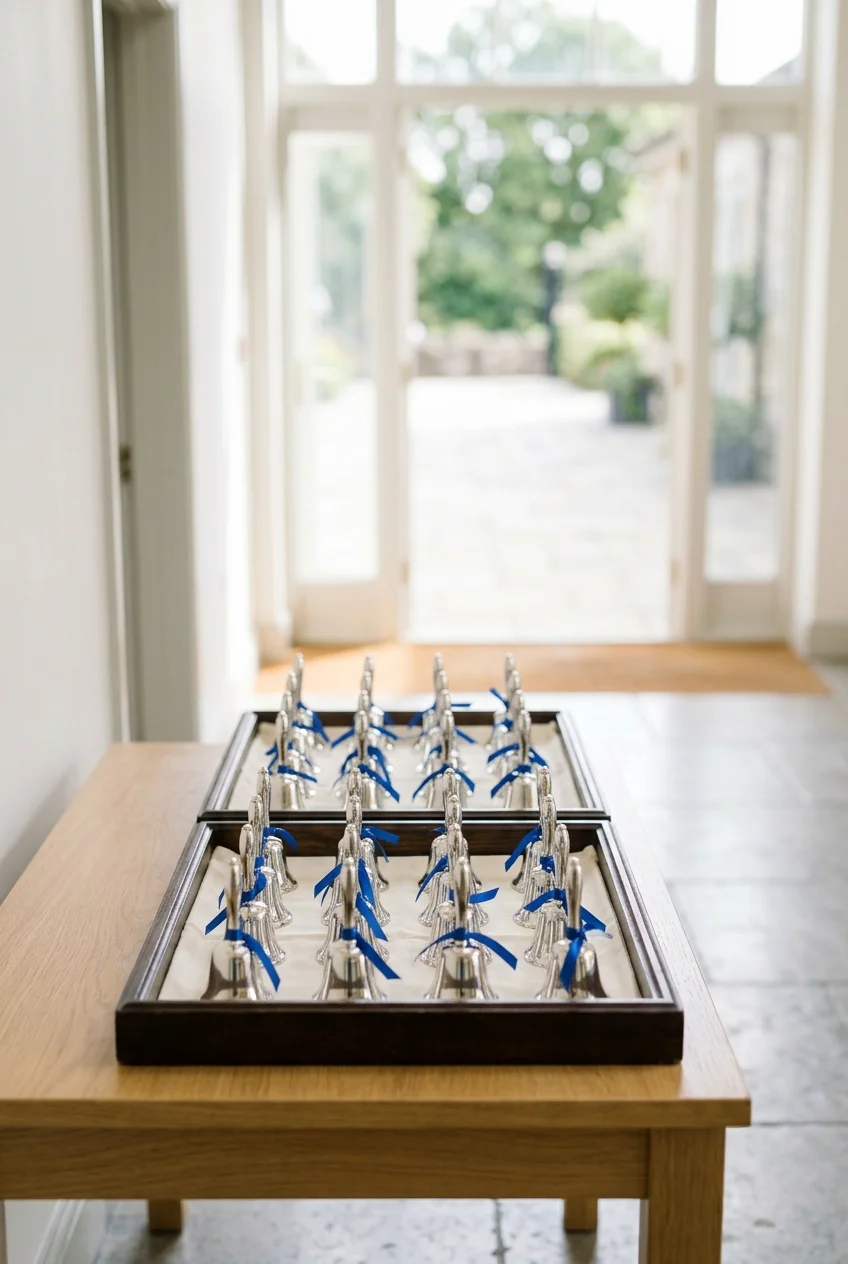
Small handbells create a clear celebratory sound and look polished tied with one narrow ribbon. Use bells with comfortable handles and enough weight to ring without vigorous shaking.
Ask guests to ring after the couple enters the path, not while instructions are being given. Confirm sound restrictions with the venue, particularly near homes, hotels, houses of worship, or late-night quiet hours.
35. Tambourines for a Rhythmic Walkout
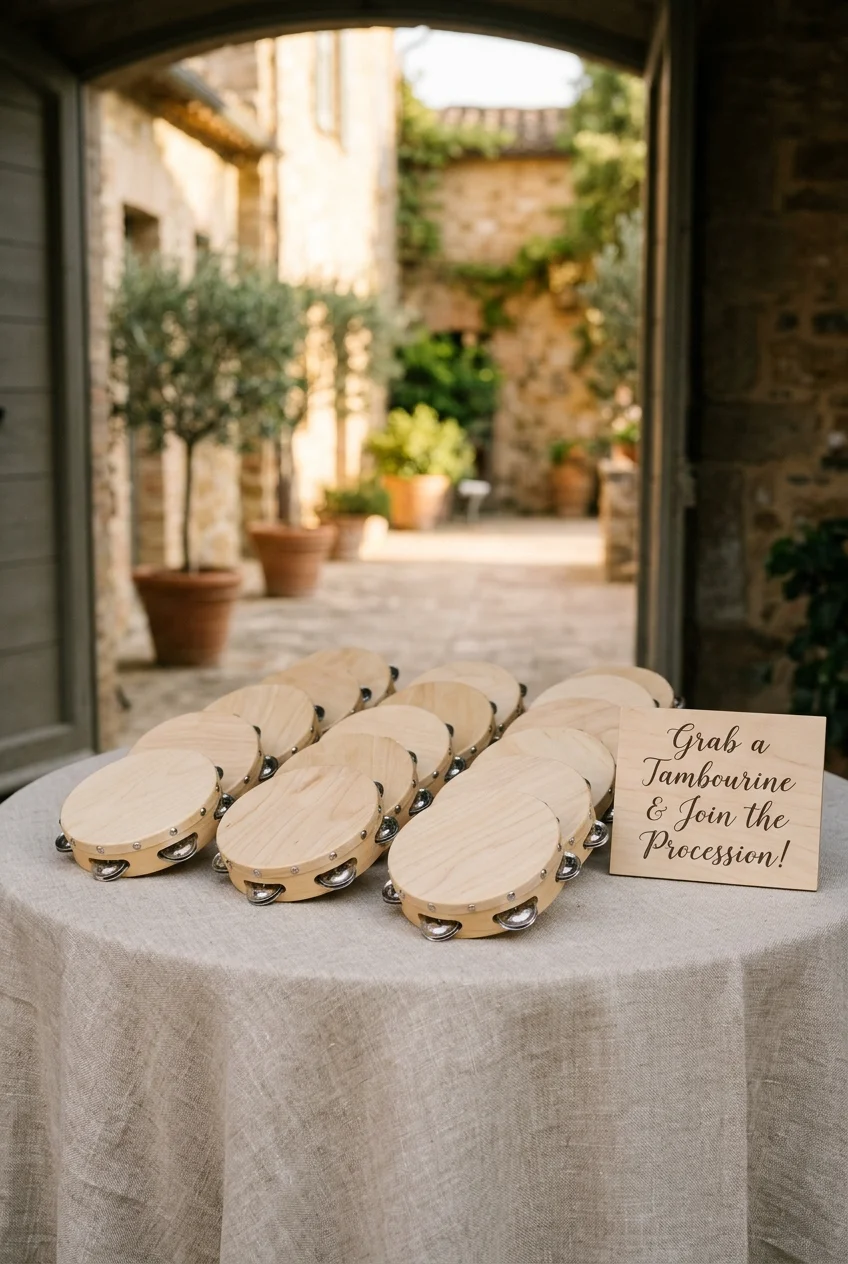
Tambourines make the send-off feel like a procession rather than a silent photo setup. A smaller number distributed to musically confident friends can keep a steady pulse while everyone else claps.
Choose compact instruments with smooth frames and avoid giving one to every guest in a tight indoor space. The sound becomes harsh quickly when dozens are played without a cue.
36. Maracas That Continue a Reception Rhythm

Maracas work especially well when percussion has already been part of the reception music. Keep the color treatment simple and use the instruments as sound-makers, not as a claim of cultural tradition unless they genuinely belong to the couple’s celebration.
Give guests an easy two-beat pattern before the exit starts. Collect rented or reusable instruments at the end of the path so they do not disappear into cars.
37. Kazoos for an Intentionally Playful Exit
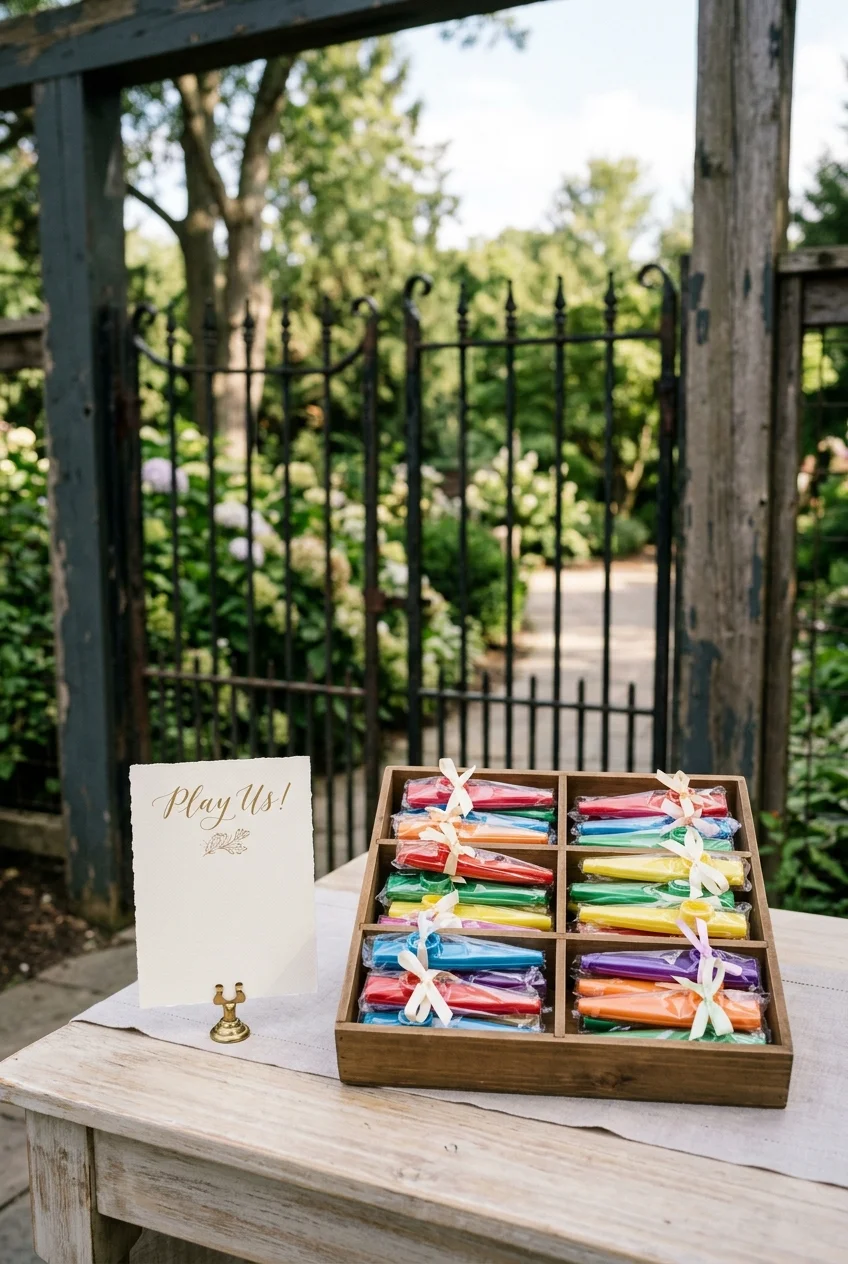
Kazoos turn a familiar tune into a deliberately silly group moment and suit couples who want humor more than polish. Print the tune name on a separate instruction card rather than expecting guests to improvise together.
Use individually wrapped instruments and provide a disposal or take-home bin. This is best outdoors or earlier in the evening, since a late kazoo chorus can conflict with neighborhood noise limits.
38. Wooden Hand Clappers for a Quick, Sharp Beat
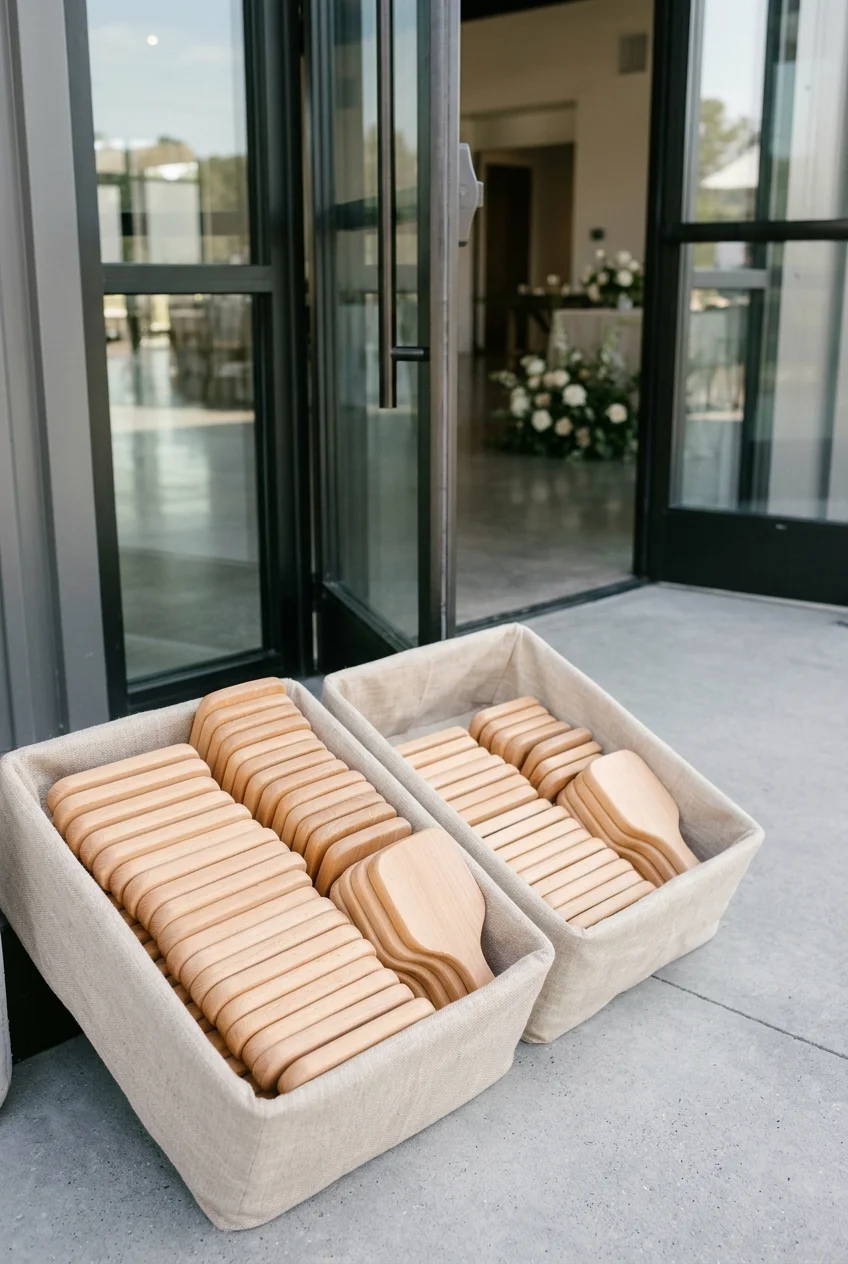
Wooden hand clappers make a short percussive sound and are easy to operate with one hand. They are a useful alternative when loose objects and electronic lights are prohibited but moderate sound is allowed.
Inspect the hinges and edges before distribution, and keep the rhythm simple. A DJ count of four is enough to synchronize the first beat as the couple appears.
39. A DJ-Led Countdown and Clap Tunnel
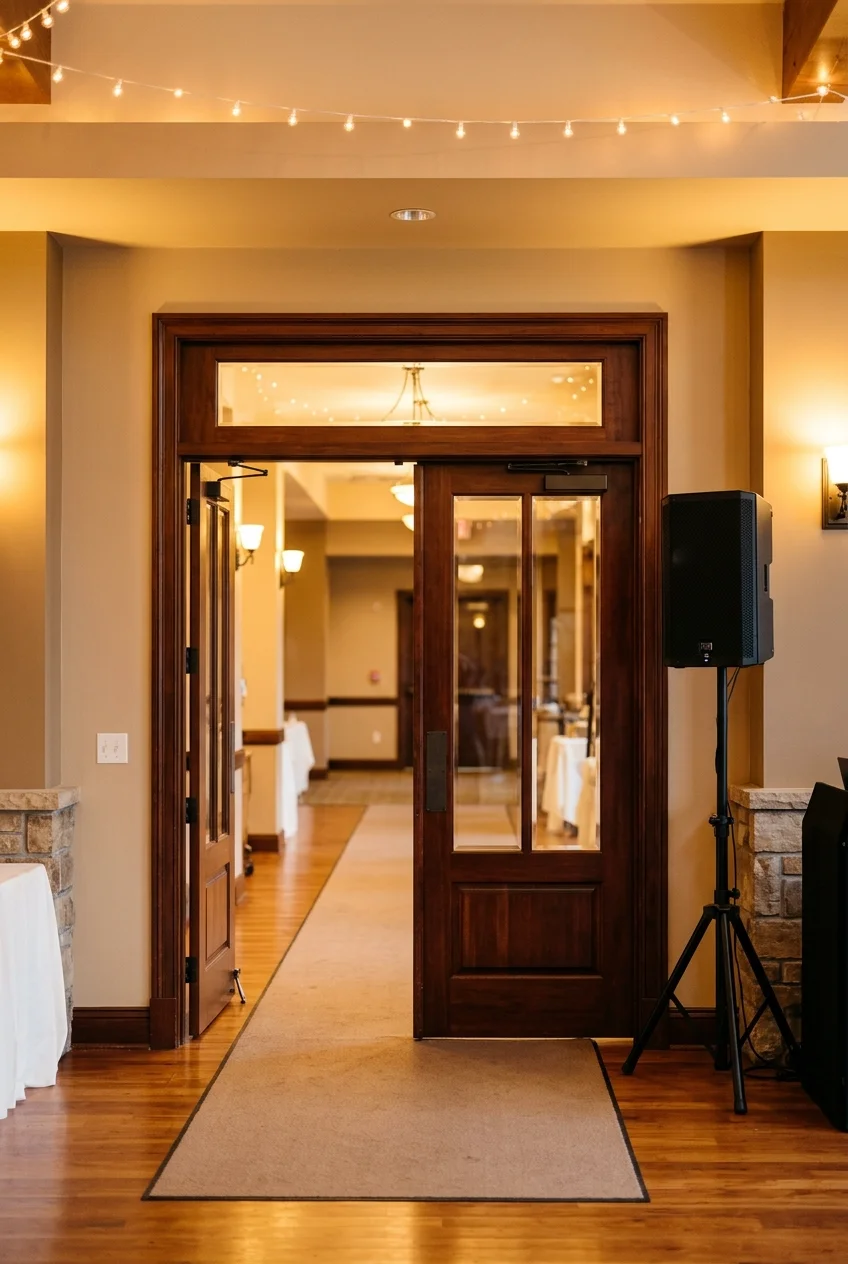
A countdown gives a prop-free exit a clear beginning. The DJ gathers guests, explains the route, counts down from five, then switches to a chosen song as everyone claps in time.
This is useful when the venue bans tosses, flame, and sound-makers but permits amplified music until a set time. Keep the announcement brief and make sure the couple is ready before the countdown starts.
40. A Second-Line-Style Brass Procession
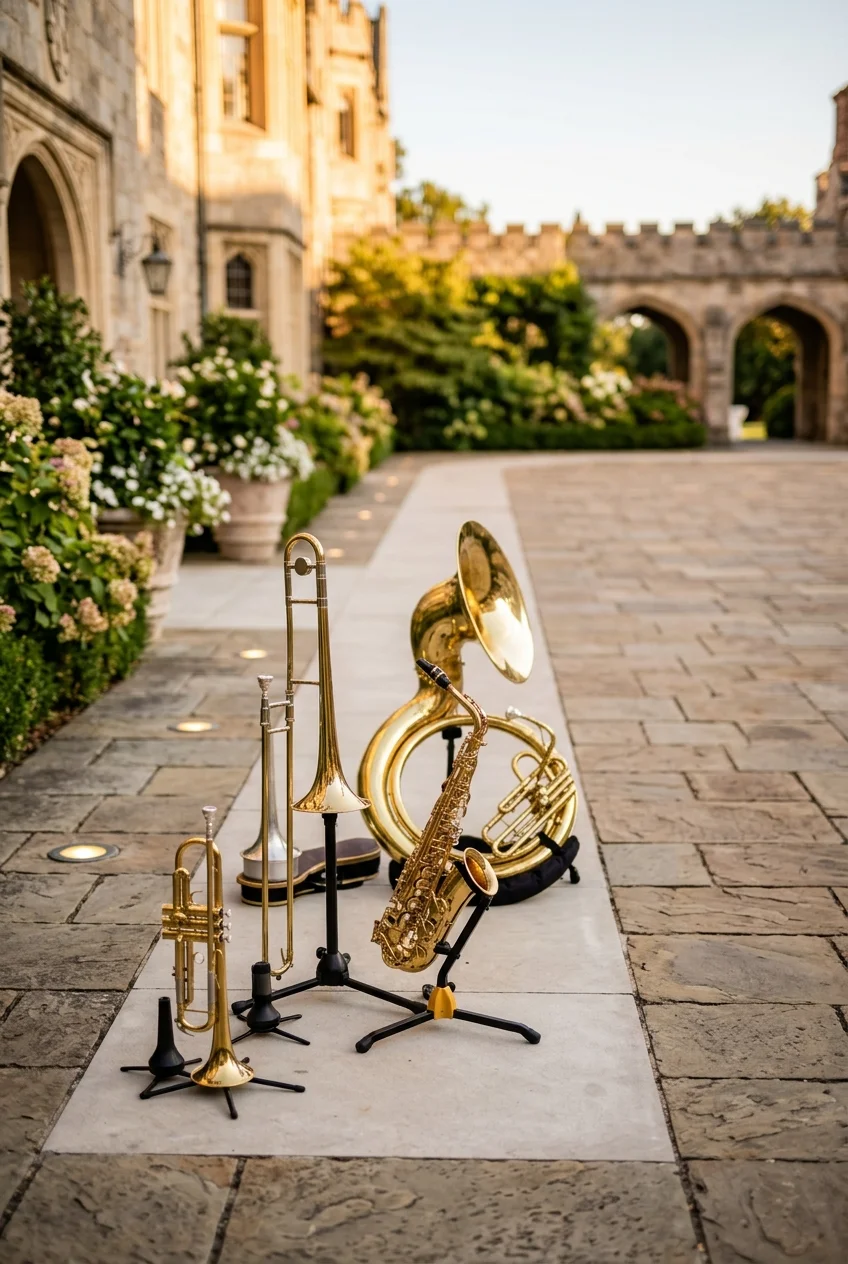
A small brass band can lead the couple from the reception to the getaway point, turning the exit into a moving musical route. Hire musicians who understand the requested style and discuss whether a second-line tradition is personally or culturally meaningful rather than treating it as generic décor.
Map the route, stopping point, volume limits, and weather cover with the band and venue. Leave enough width for instruments and keep stairs or doorways free of gathered guests.
Memorable Routes and Getaway Scenes
41. A Vintage Getaway Car Framed at the Door
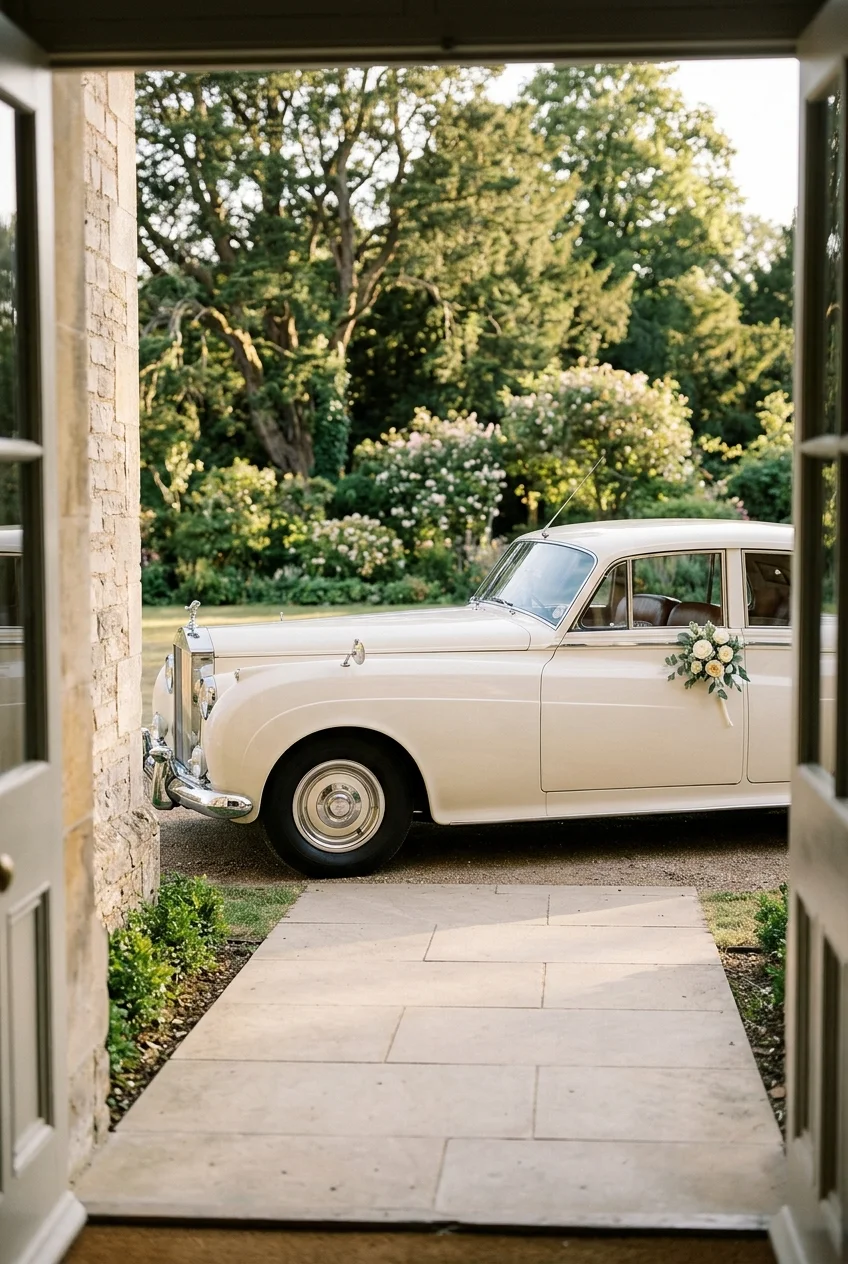
A vintage car supplies the focal point without needing guests to throw or wave anything. Park it beyond the exit line at an angle that shows the body shape while preserving a safe walking route to the passenger door.
Build time into the schedule for delivery, photos, and mechanical checks. Confirm who may drive it, where it may idle, and whether décor can be attached without damaging the vehicle.
42. A Top-Down Convertible Departure
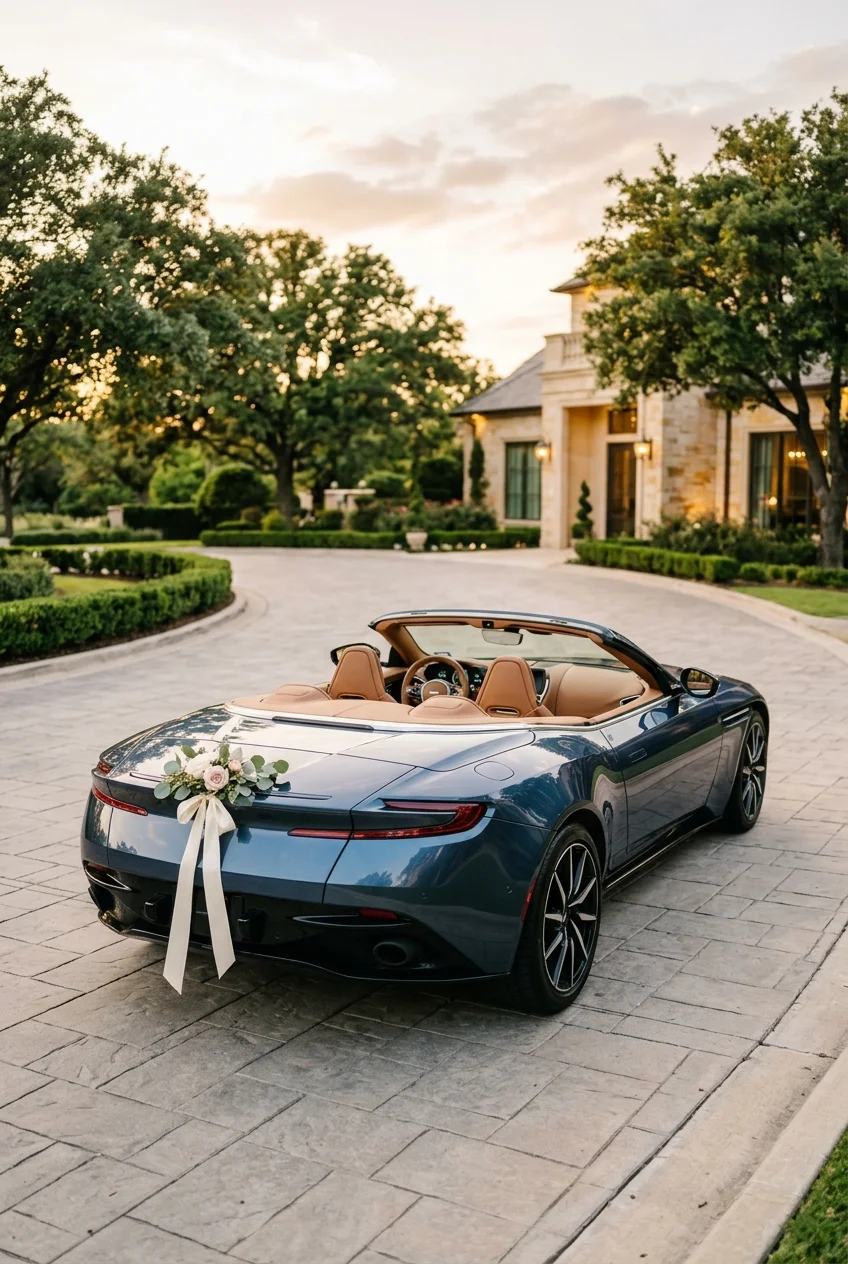
A convertible creates an open final view as the couple leaves, especially on a broad driveway in daylight. Keep any decoration low and secure so it cannot block mirrors, lights, plates, or the driver’s view.
Guests should remain in a stationary line while the car is parked. The vehicle only moves after the route is fully clear and the photographer has stepped into a protected position.
43. A Flower-Trimmed Tandem Bicycle Exit
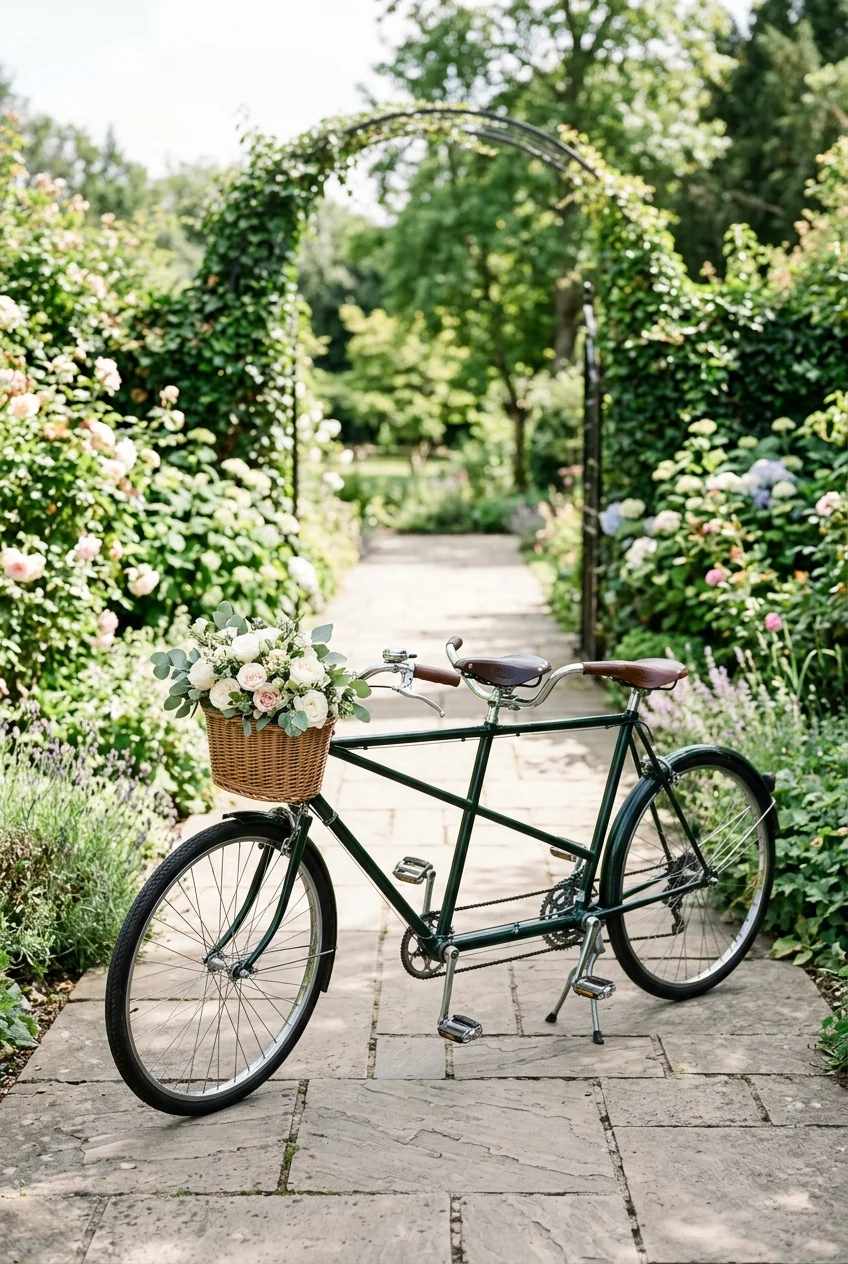
A tandem bicycle makes a playful departure for a flat, short route. Keep flowers and ribbons away from wheels, brakes, pedals, and chains, and use a basket or frame attachment designed for the bicycle.
The couple should practice on the actual model and walk the bicycle through crowded areas. Riding starts only on a clear, smooth path away from guests, traffic, gravel, and long clothing.
44. A Decorated Golf Cart for a Large Property
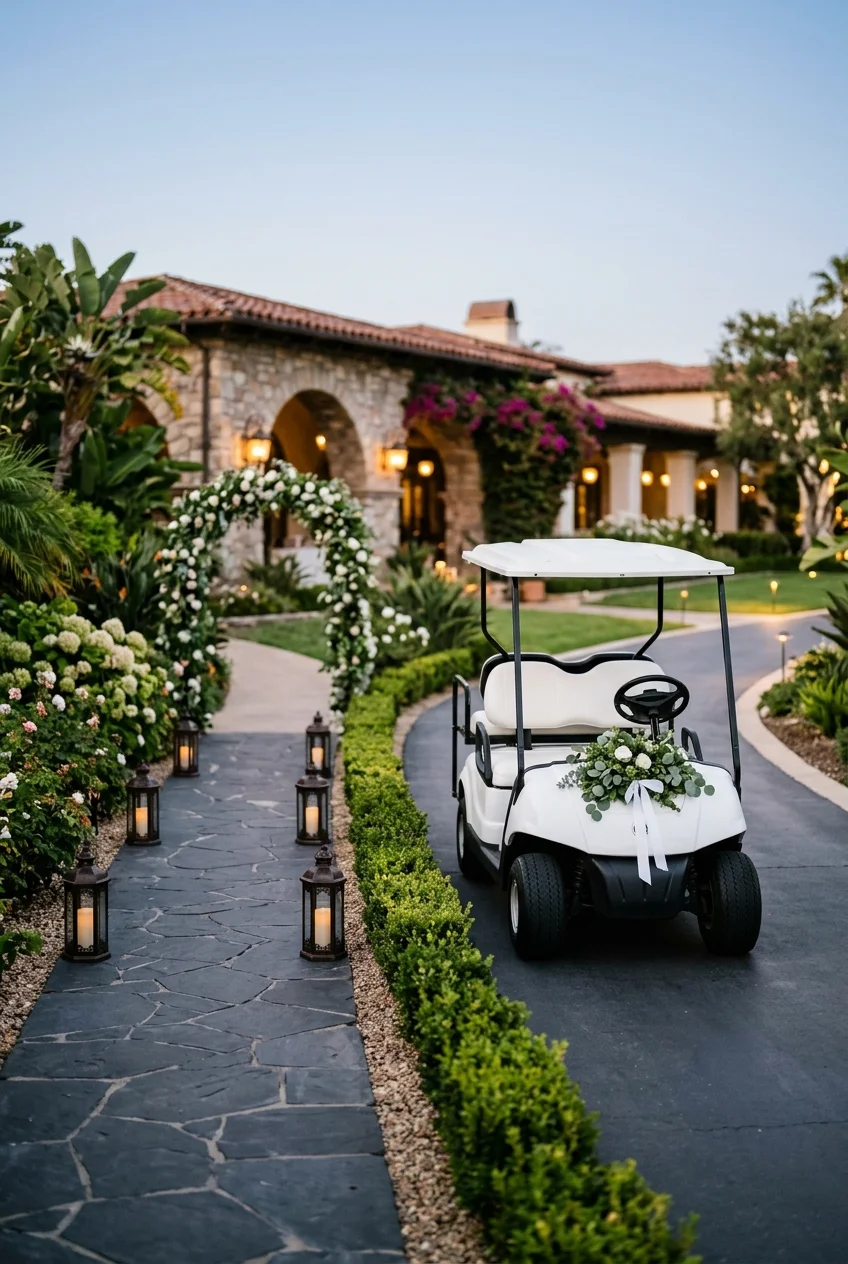
A golf cart is practical when the reception, lodging, and photo locations sit far apart on one property. A small floral piece or removable ribbon can make it feel intentional without interfering with the roof supports or lights.
Use a venue-approved driver, follow the property’s vehicle rules, and keep guests off the cart route. The send-off line should end before the cart begins moving.
45. A Dockside Boat Departure
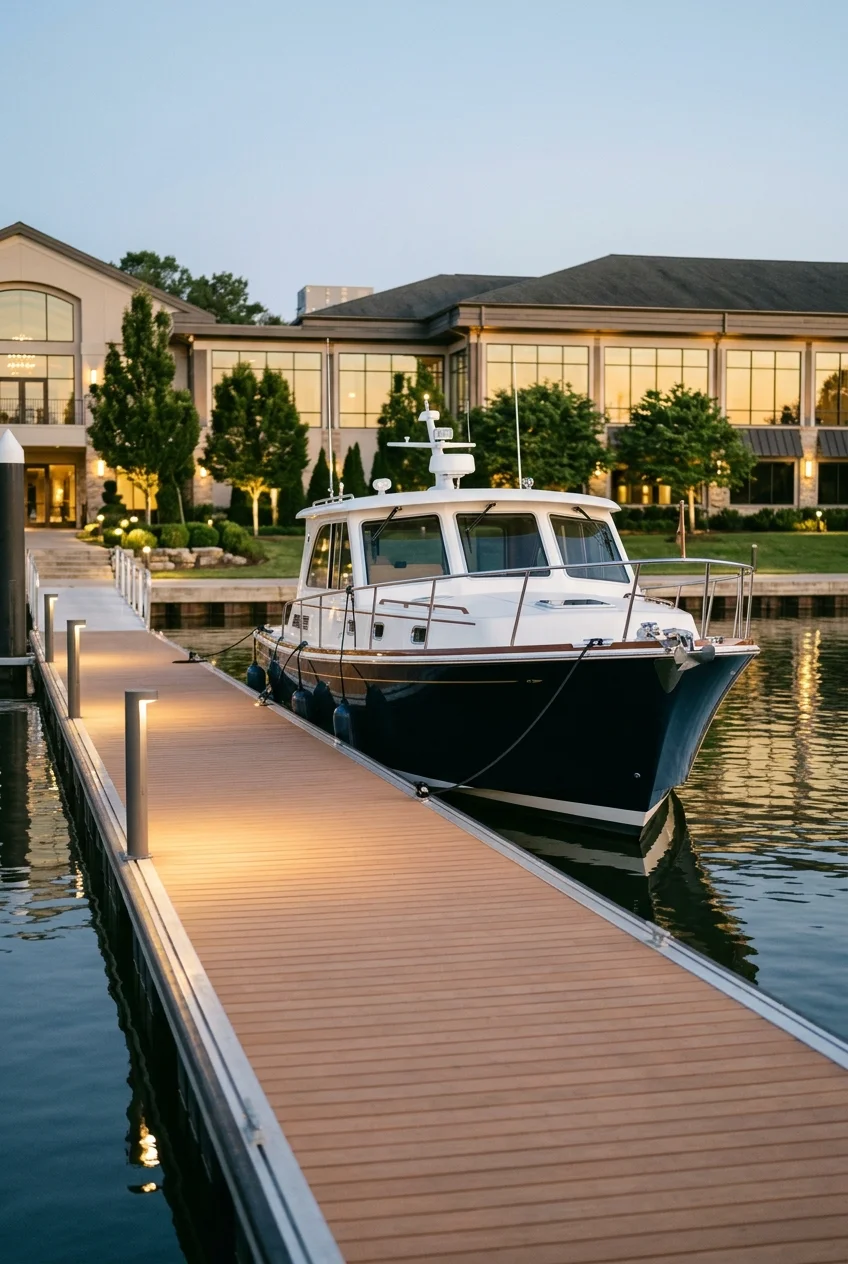
A boat departure can be the send-off when the venue has an approved dock and licensed operator. The strongest view usually comes from positioning guests on shore while the boat remains tied until everyone is settled.
Confirm life-jacket requirements, passenger capacity, lighting, weather limits, and a land-based backup. Keep the dock free of toss items, loose ribbons, spilled drinks, and any décor that could enter the water.
46. A Grand Staircase Descent With Guests Below
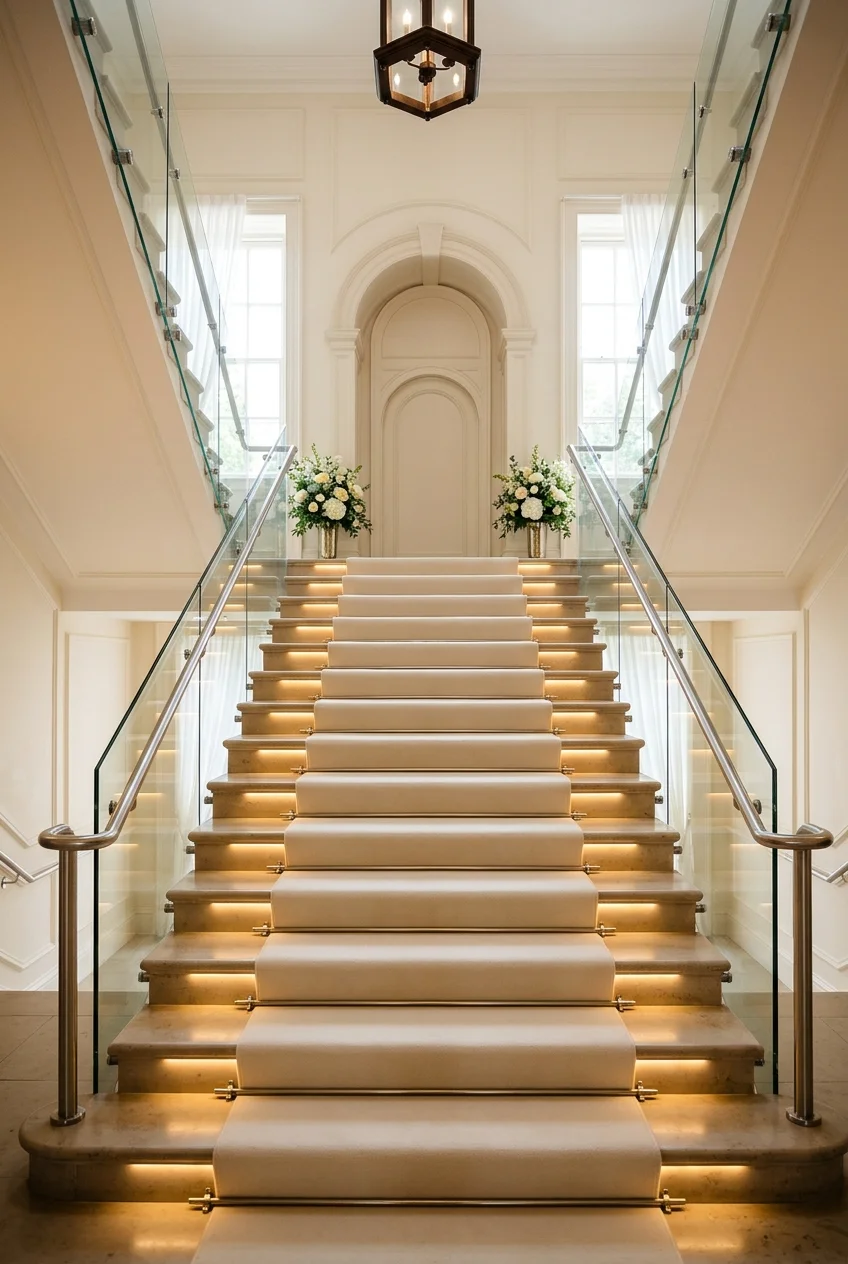
A staircase can supply all the visual structure the exit needs. Position guests on the landing or at the base rather than crowding the steps, leaving the handrails and full descent clear.
This works best with even lighting and a slow walk, not a run. Ask the photographer to decide whether the stronger angle is from below, from the landing, or across the railing before guests take their places.
47. An Elevator-Door Exit in a City Venue
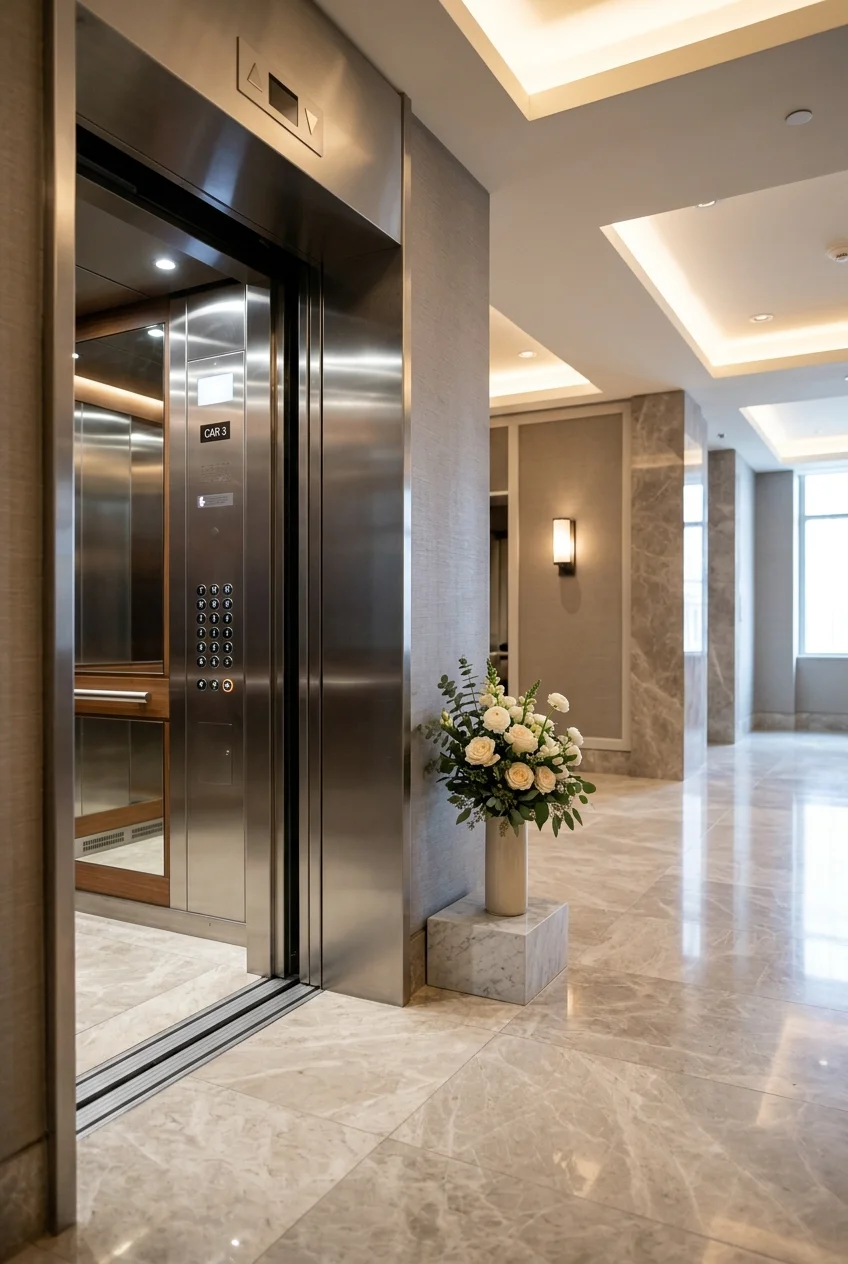
Elevator doors create a natural reveal for a hotel, loft, or city-hall wedding. Guests gather in the lobby outside the elevator zone, then the couple steps in for one last frame as the doors begin to close.
Coordinate with venue staff so the elevator remains available to other guests and never block an emergency route. Skip loose confetti, petals, or props that could enter the door track.
48. An Architectural Doorway Exit With No Added Décor
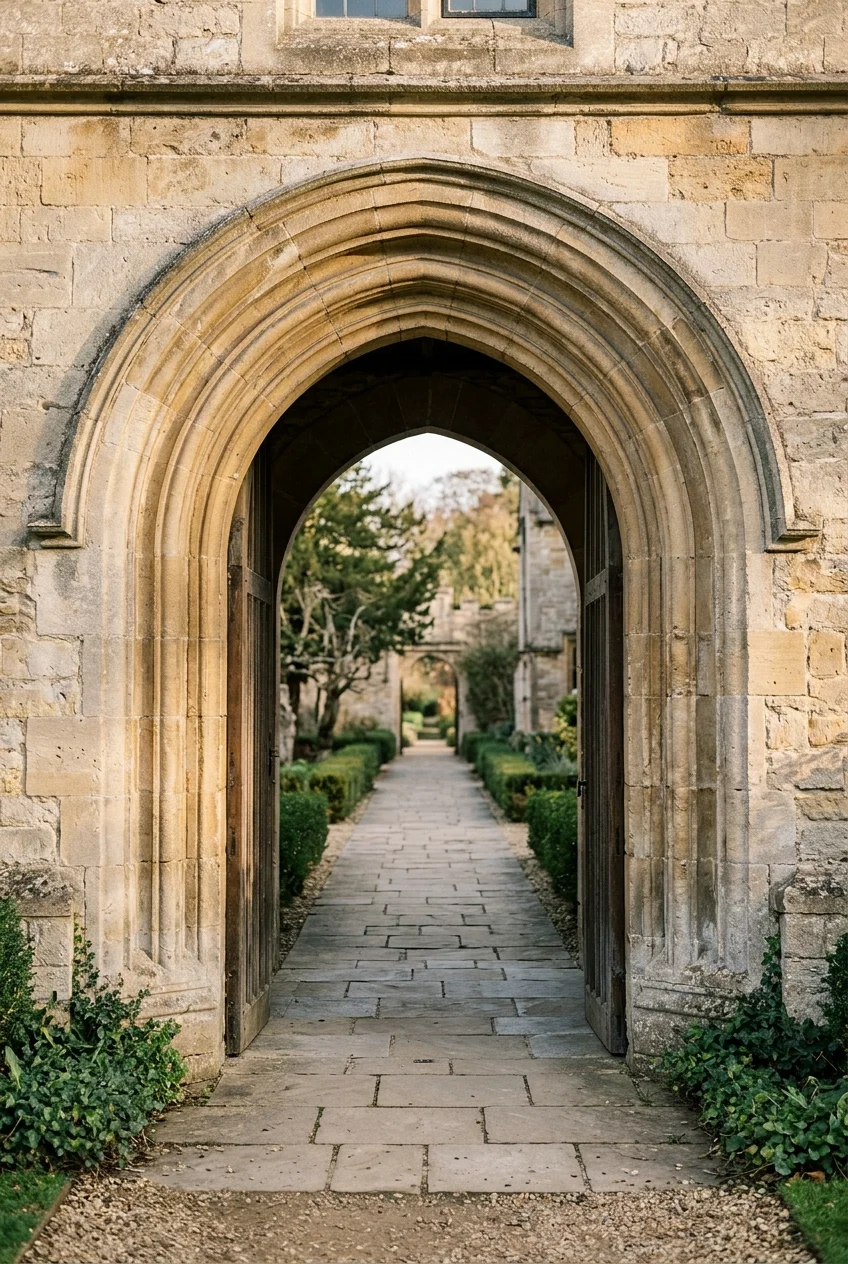
A distinctive church door, courtyard gate, theater entrance, or modern glass portal may already provide a complete send-off frame. Removing signs, delivery carts, and spare furniture can do more for the photograph than adding another prop.
Walk the route at the same time of day as the planned exit to check glare, shadows, and public traffic. Ask what may be moved and who is responsible for returning it afterward.
49. A Covered Walkway With Clear Rain Umbrellas
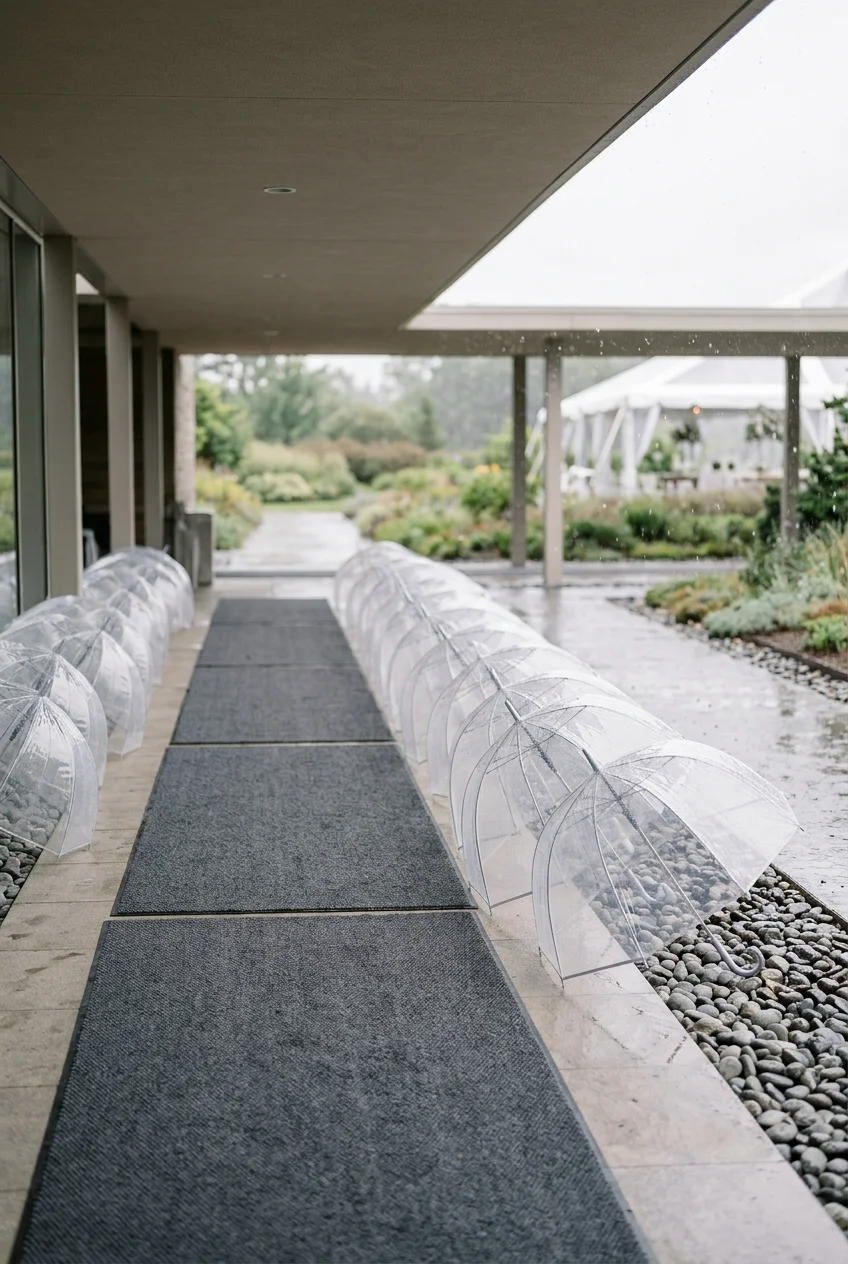
A covered walkway keeps the send-off outside the ballroom without putting everyone in open rain. Line the uncovered edge with clear umbrellas so the weather becomes visible while the central route stays dry.
Provide absorbent mats at both ends and a stand for wet umbrellas. Clear canopies keep sightlines open, but they still need enough room to close before guests re-enter the building.
50. A Pedicab Getaway for a Short City Route
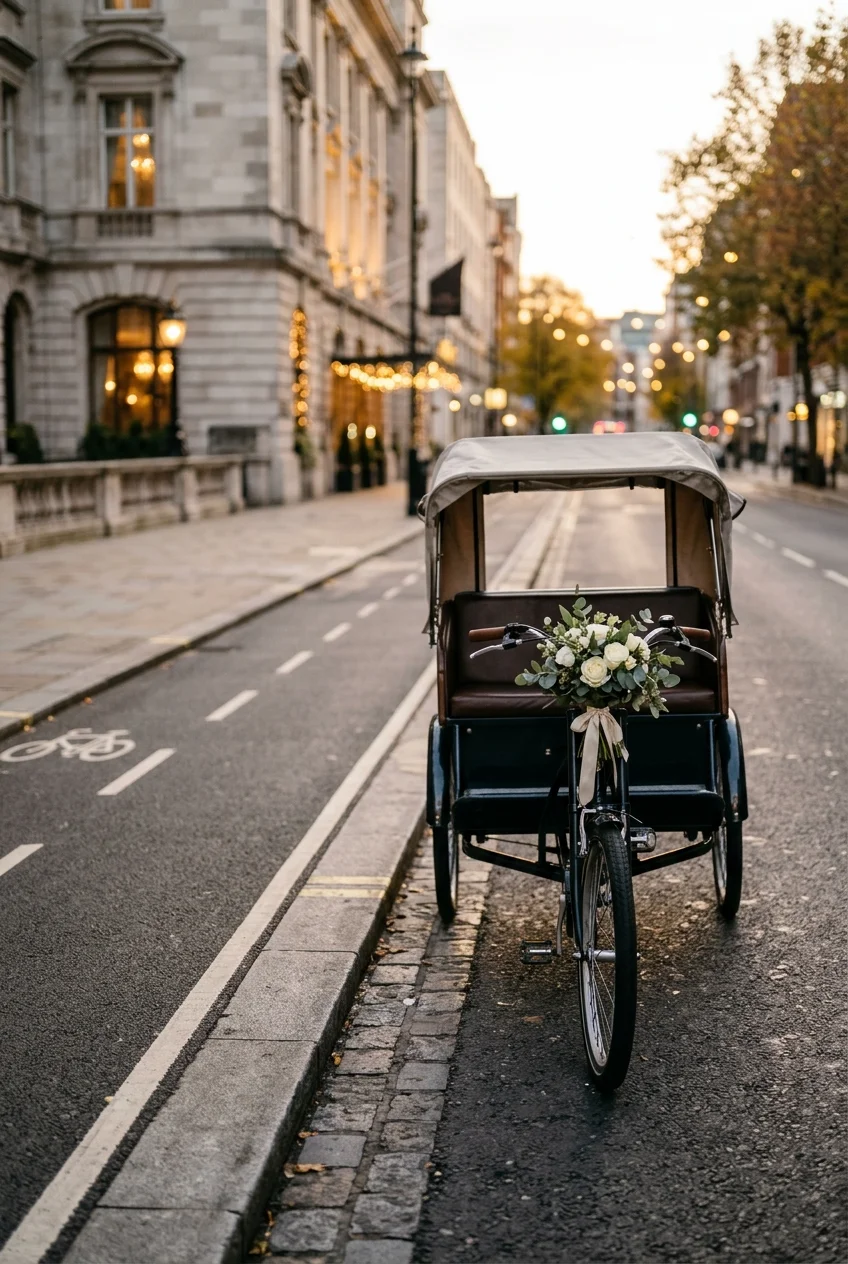
A pedicab creates an open, compact departure when the hotel, after-party, or photo stop is a short city ride away. Choose a licensed operator and a route that does not require guests to stand in the street or bike lane.
Keep decoration light and fully secured, and confirm passenger space for the couple’s clothing. The pedicab should remain parked for the send-off photo and join traffic only after the crowd has cleared.
How do we choose a wedding send-off idea our venue will approve?
Ask in writing about the exact item, location, and timing—not just whether the venue allows “send-offs.” Include whether anything is lit, thrown, released, plugged in, motorized, or likely to leave residue.
- Confirm the approved route and the width of the clear center lane.
- Ask who handles distribution, operation, cleanup, and final inspection.
- Check noise limits, fire rules, surface protection, weather restrictions, and required vendors or permits.
- Get the backup option approved at the same time.
Is a ceremony exit different from a reception send-off?
A ceremony exit usually happens in daylight with most guests already seated and ready to move outside, so petals, ribbons, flags, fans, and bubbles can be easy to coordinate. A reception exit is often darker, later, and attended by fewer guests, which makes lighting, transportation, quiet hours, and a short gathering announcement more important.
You can also use one visual recessional after the ceremony and keep the late-night departure private. There is no requirement to stage two large exits.
When should the photographer plan the send-off?
Discuss it before the final timeline is set. The photographer needs to assess light direction, route width, effect duration, safe camera position, and whether a test or additional lighting is needed.
For a one-shot toss or pyrotechnic effect, choose one person to give the countdown. For a late exit, decide whether the photography team is contracted to stay through that time or whether an earlier staged send-off better fits the coverage.
What are good wedding send-off alternatives to sparklers?
Ribbon wands, pennant flags, rally towels, hand fans, bubbles outdoors, LED foam batons, fiber-optic wands, battery lanterns, handbells, a clap tunnel, or an architectural doorway exit can all create a defined moment without open flame.
Choose by light and space: color and fabric read well in daylight, while LEDs or existing architectural lighting work after dark. The safest alternative is still the one your venue approves for the exact route.
Which popular send-off ideas are best skipped?
Skip any release you cannot retrieve, including balloons and sky lanterns. The National Park Service notes that released balloons become litter and can harm wildlife, while sky lanterns add an uncontrolled flame. Live butterflies, birds, or other animals also introduce welfare, handling, weather, and permitting concerns.
Loose glitter, tiny plastic confetti, rice, birdseed, and food tosses are commonly restricted and can create cleanup, slip, wildlife, or pest problems. If the venue says no loose material, choose a reusable handheld object, sound cue, lit route, or memorable vehicle instead.
This post may contain affiliate links: full affiliate disclosure.