
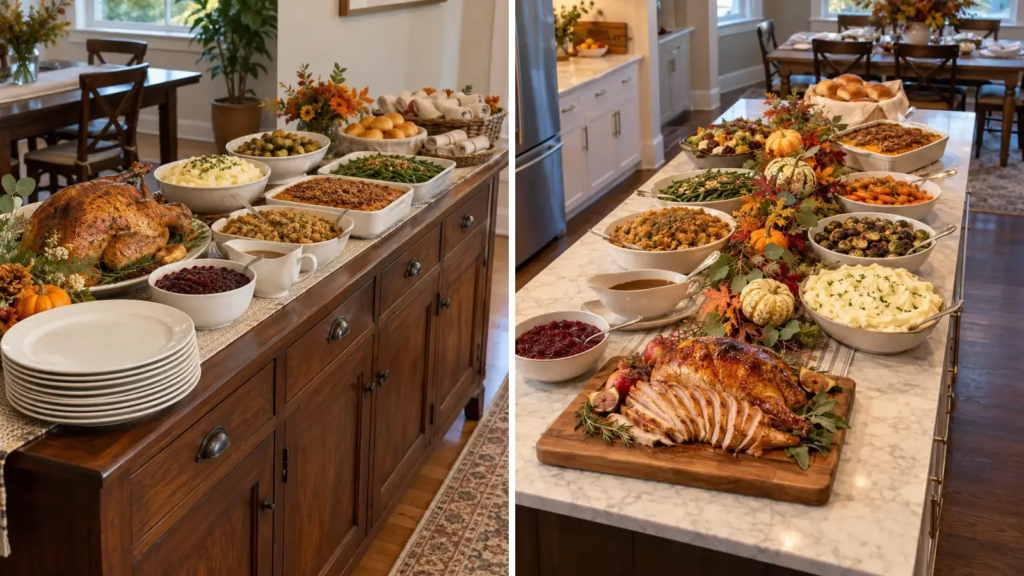
A Thanksgiving buffet can free the dining table, simplify serving, and make a large or small gathering feel less crowded. The key is to plan the room, the food order, and the refill strategy before platters start arriving.
These ideas combine practical buffet layouts, crowd-friendly dishes, inclusive serving zones, and simple styling details. Choose the systems that fit your guest count and surfaces, then test the route from plate stack to seat before guests arrive.
Thanksgiving Buffet Layouts That Keep Guests Moving
Start with the route guests will walk, not the decorations. A clear beginning, an obvious end, and separate refill zones prevent the buffet from becoming the busiest corner of the house.
1. One-Way Sideboard Buffet
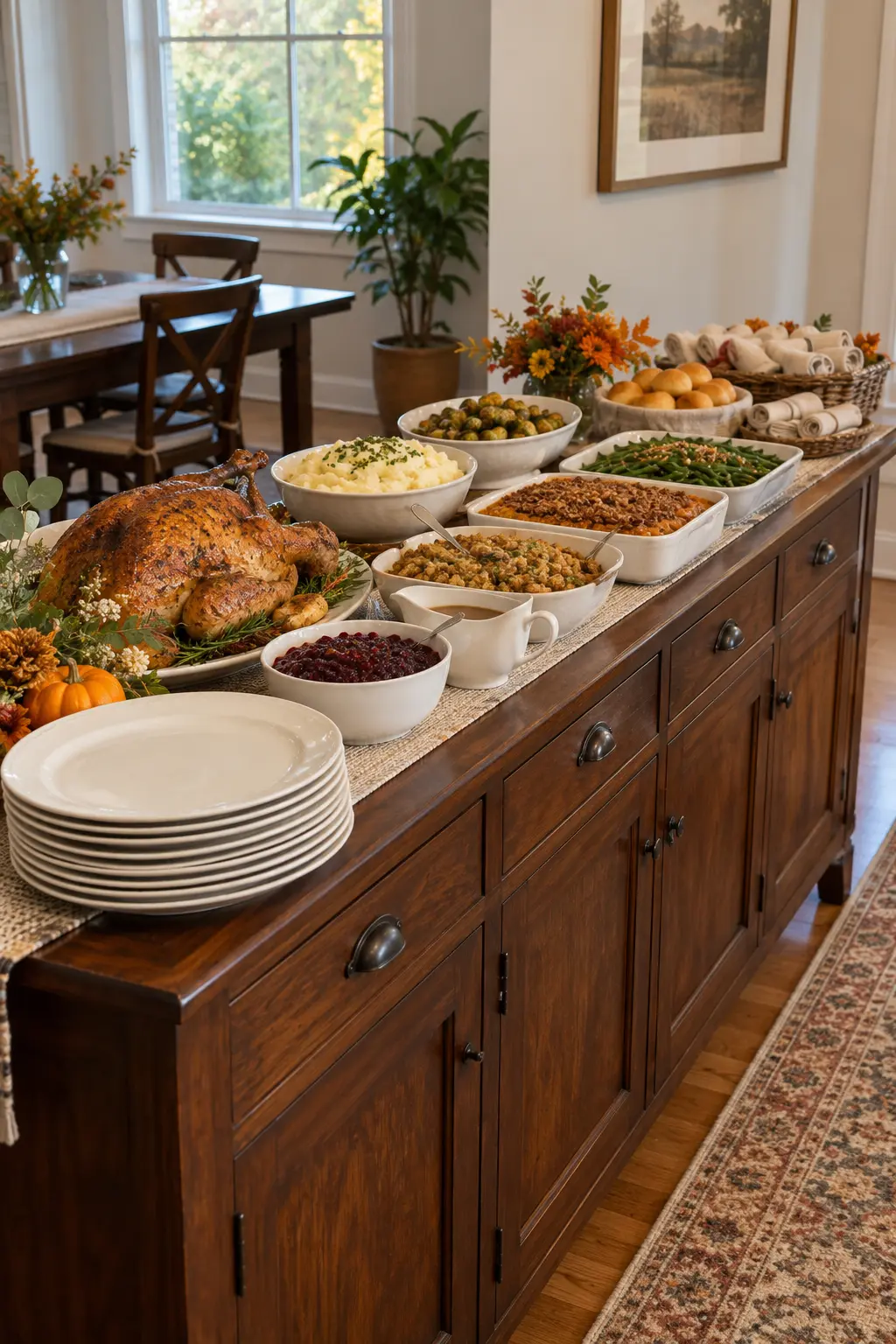
Turn a sideboard into a clear one-way serving line, beginning with plates and ending with napkins and flatware. Keep the dining table free for place settings, water, and conversation instead of crowding it with casserole dishes.
2. Double-Sided Kitchen Island Buffet
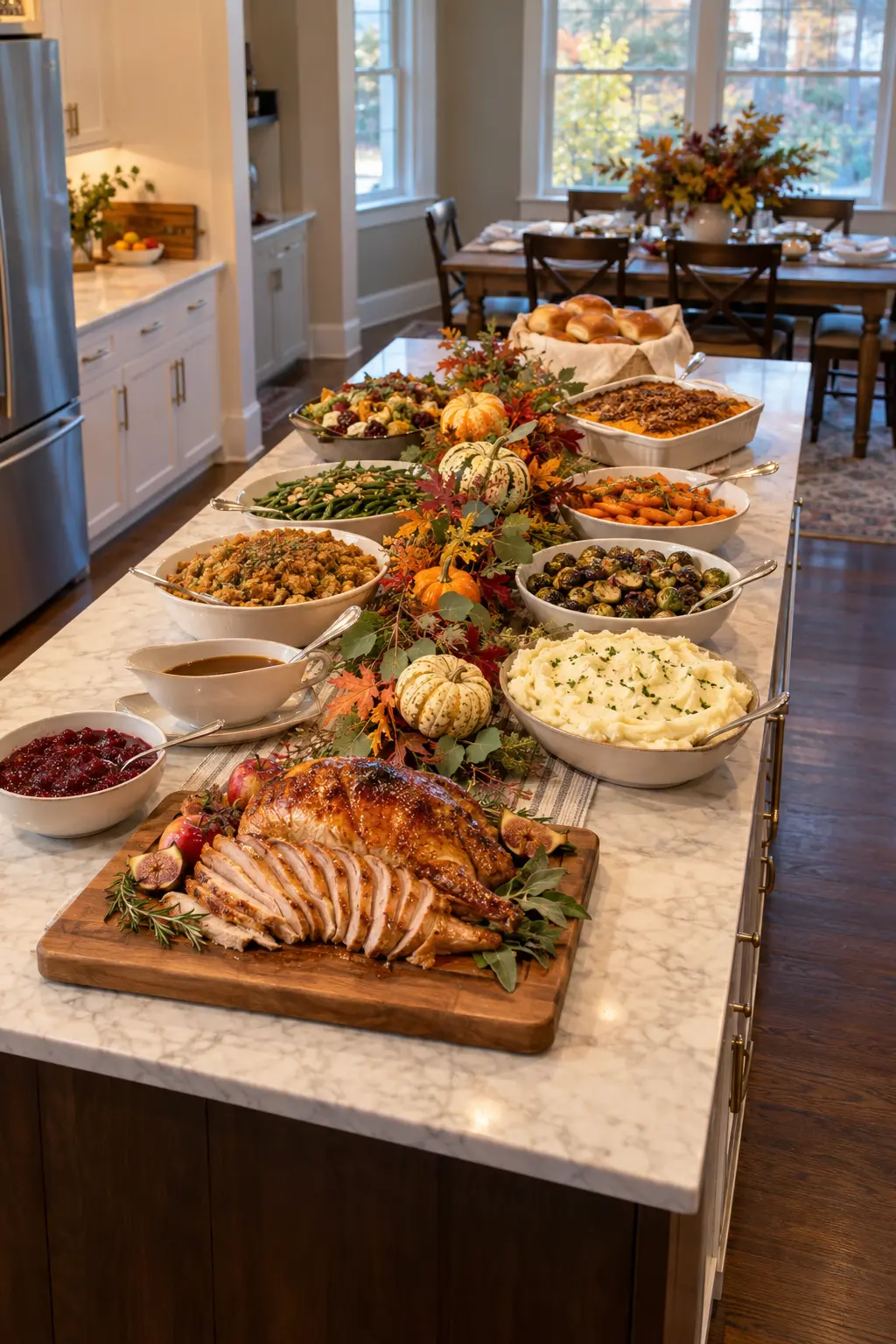
Place serving dishes down the center of a freestanding island so guests can approach from both sides. Duplicate the most-used utensils when possible, and leave both ends open so the line can disperse instead of funneling into one exit.
3. Two-Lane Buffet for a Large Crowd
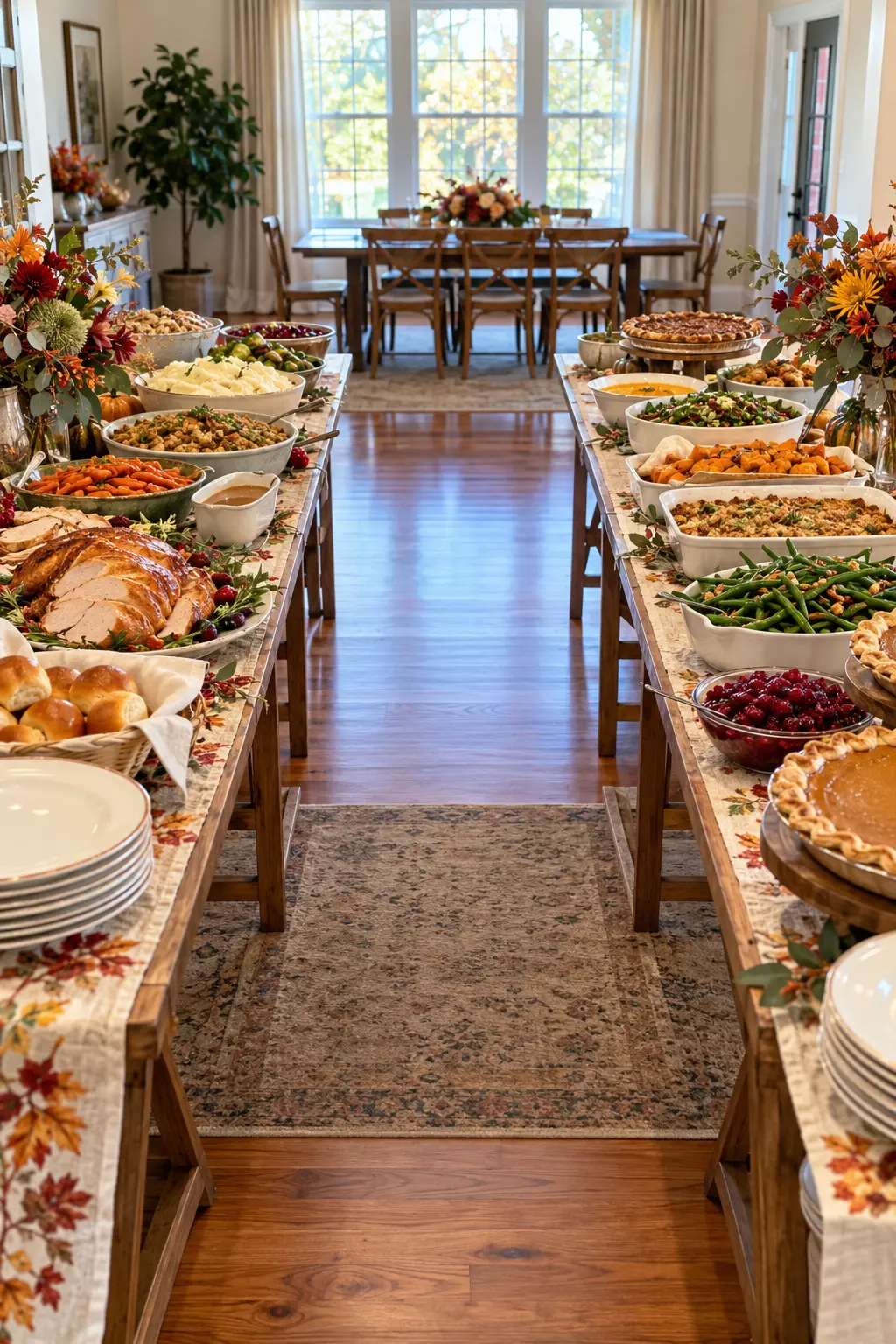
For a large guest list, divide the same menu between two parallel tables rather than making one extra-long line. Each lane needs plates, the core dishes, and flatware so guests can choose the shorter route without doubling back.
4. Small-Space Console Table Spread
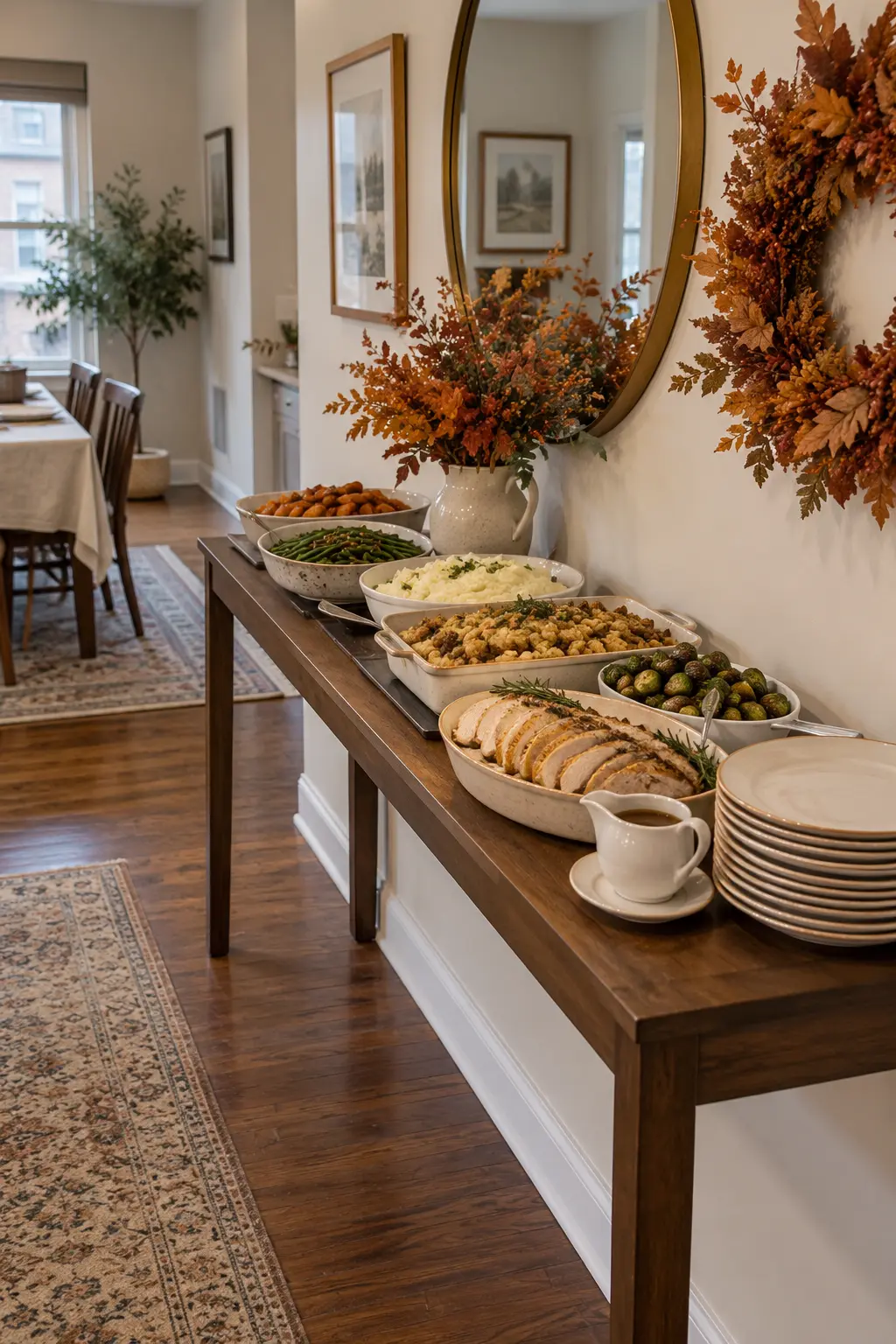
A narrow console can hold a compact buffet when the menu is edited to a few dependable dishes. Use shallow serving pieces, place backups in the kitchen, and keep decor on the wall or back edge so every usable inch stays accessible.
5. Hot-Food Counter Near the Outlets
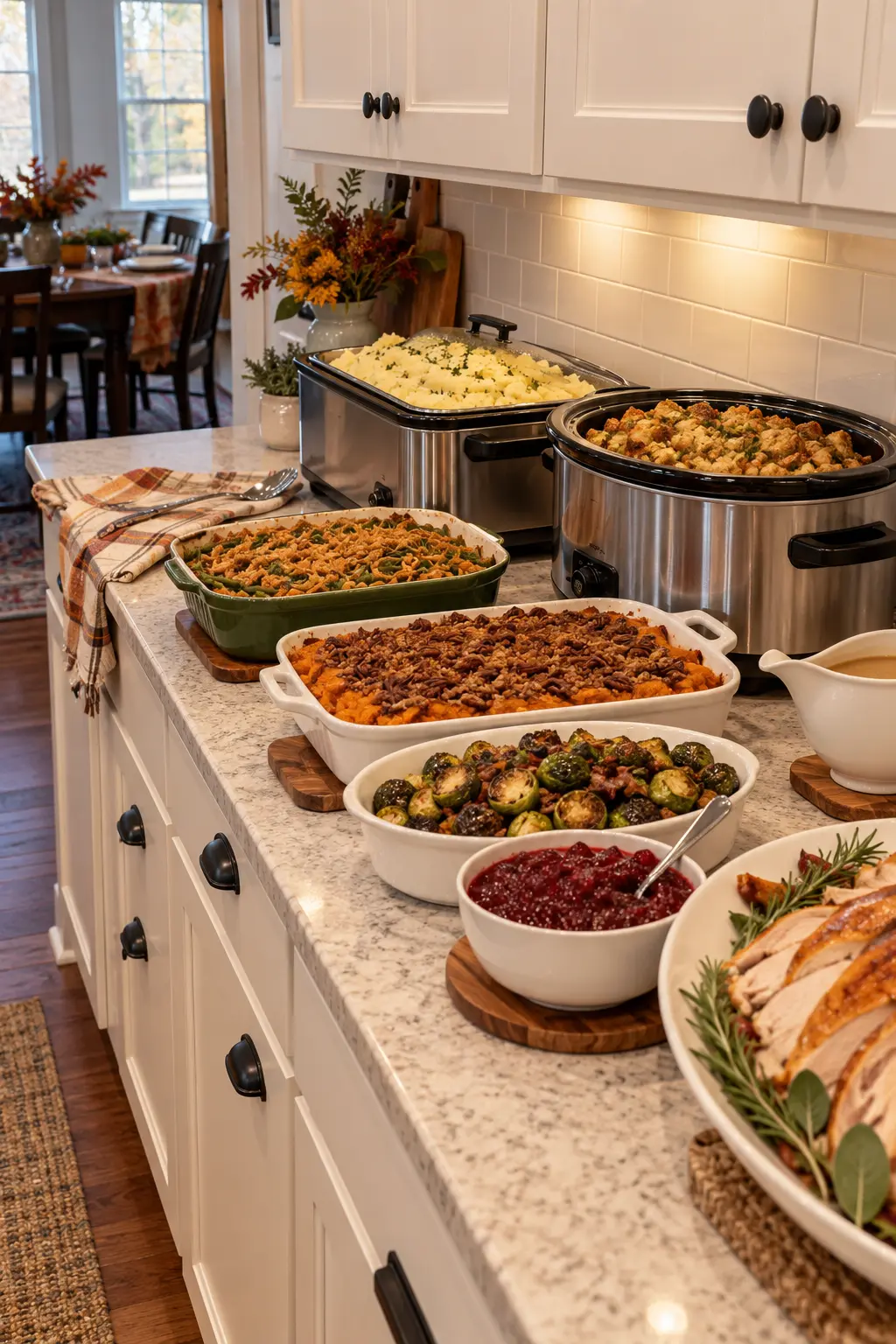
Group warming trays and slow cookers on the counter closest to safe outlets. Route cords behind the appliances, keep them away from sinks and walking paths, and reserve another surface for room-temperature dishes that do not need power.
6. Course-by-Course Food Stations
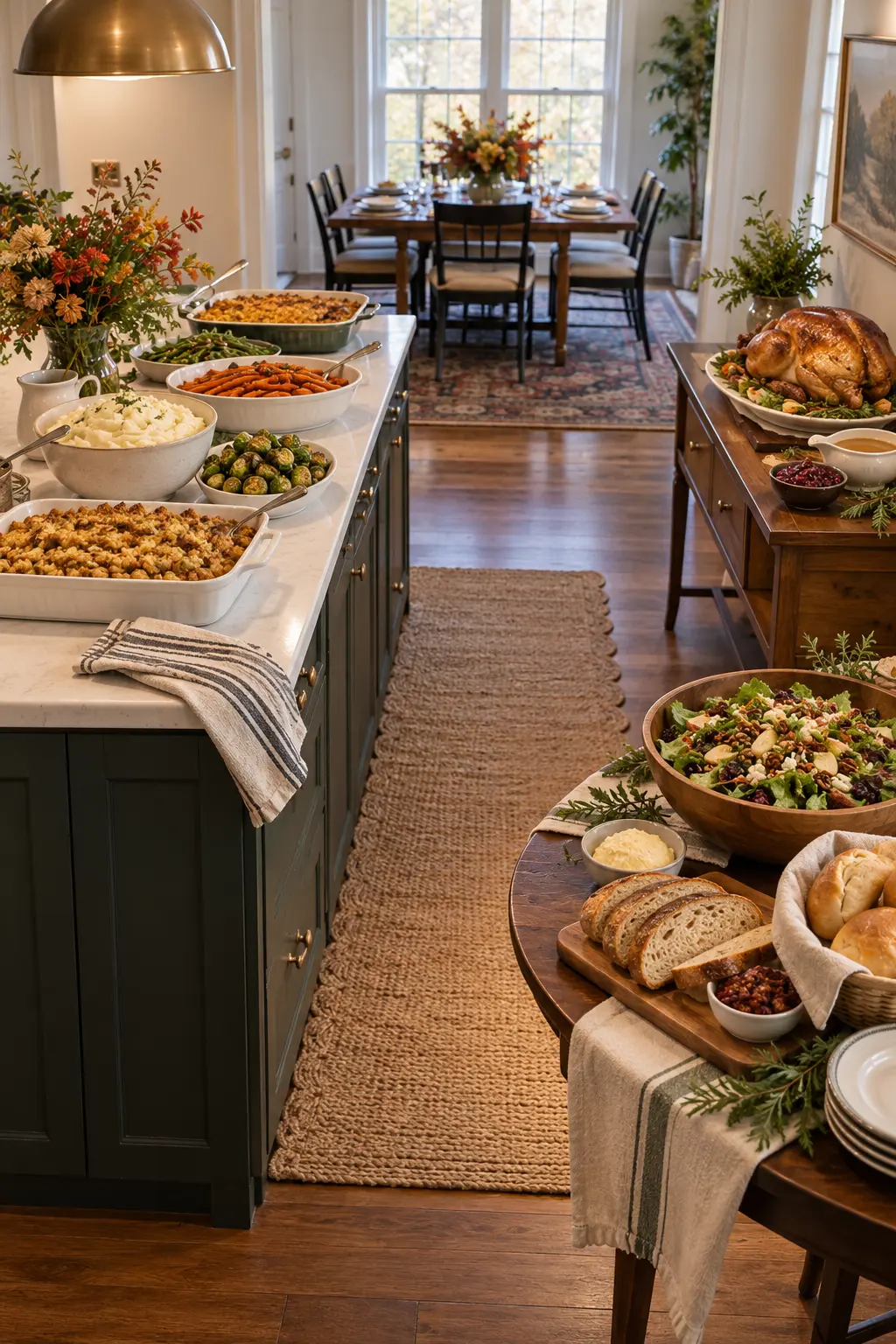
Split a long menu into small zones for turkey, hot sides, cold sides, and bread. Guests can skip sections they do not want, while the host gains room to refill one category without disturbing the entire buffet.
7. Separate Beverage Cart
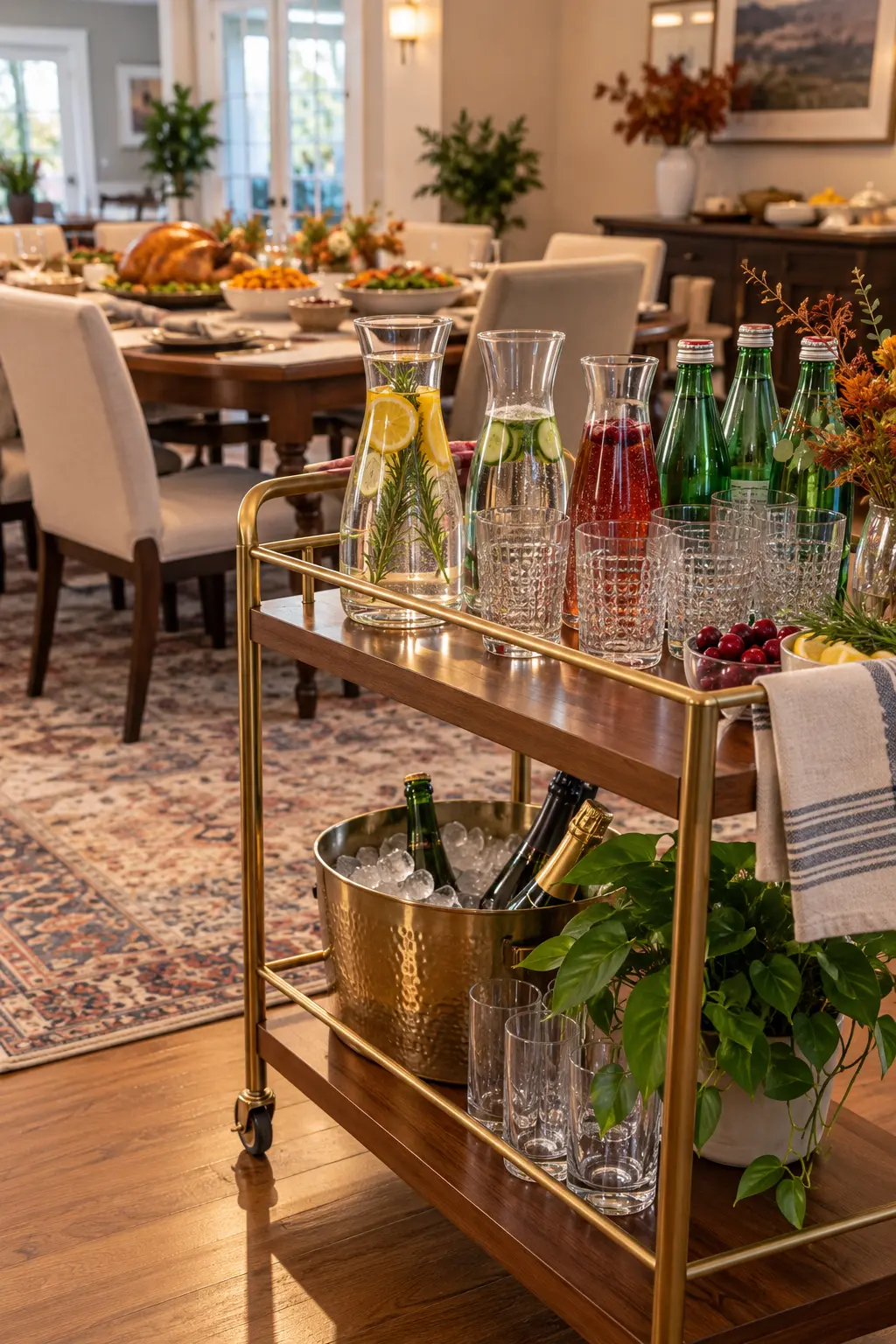
Move water, wine, and nonalcoholic drinks to a cart or small table outside the food route. Guests can return for refills without entering the serving line, and spills stay away from hot pans and crowded plates.
8. Dessert Table That Opens Later
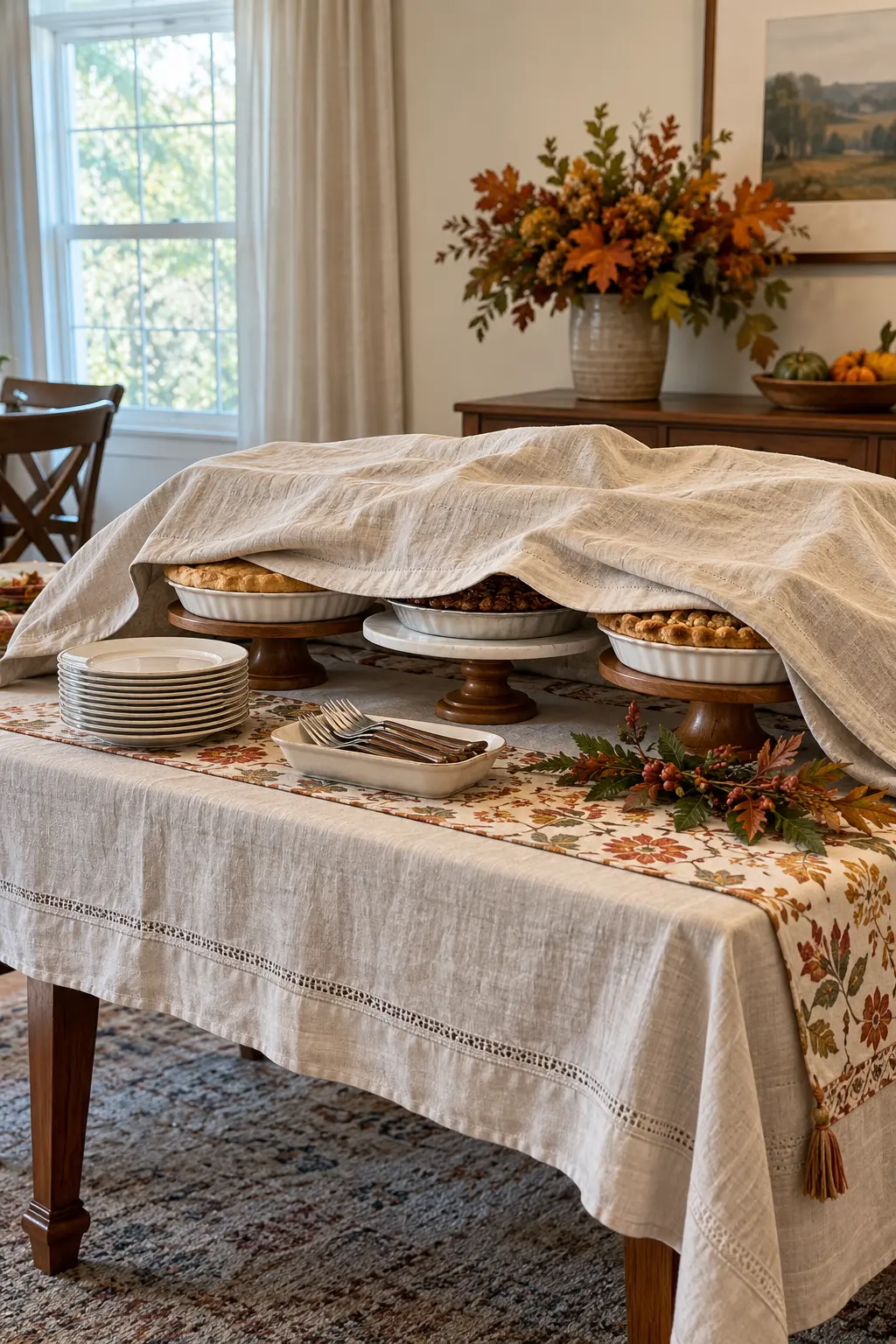
Stage covered pies and dessert plates on a separate table, but keep the station closed until dinner dishes are cleared. This protects valuable space early in the meal and creates a natural second gathering point when coffee is served.
9. Kid-Friendly Lower Serving Station
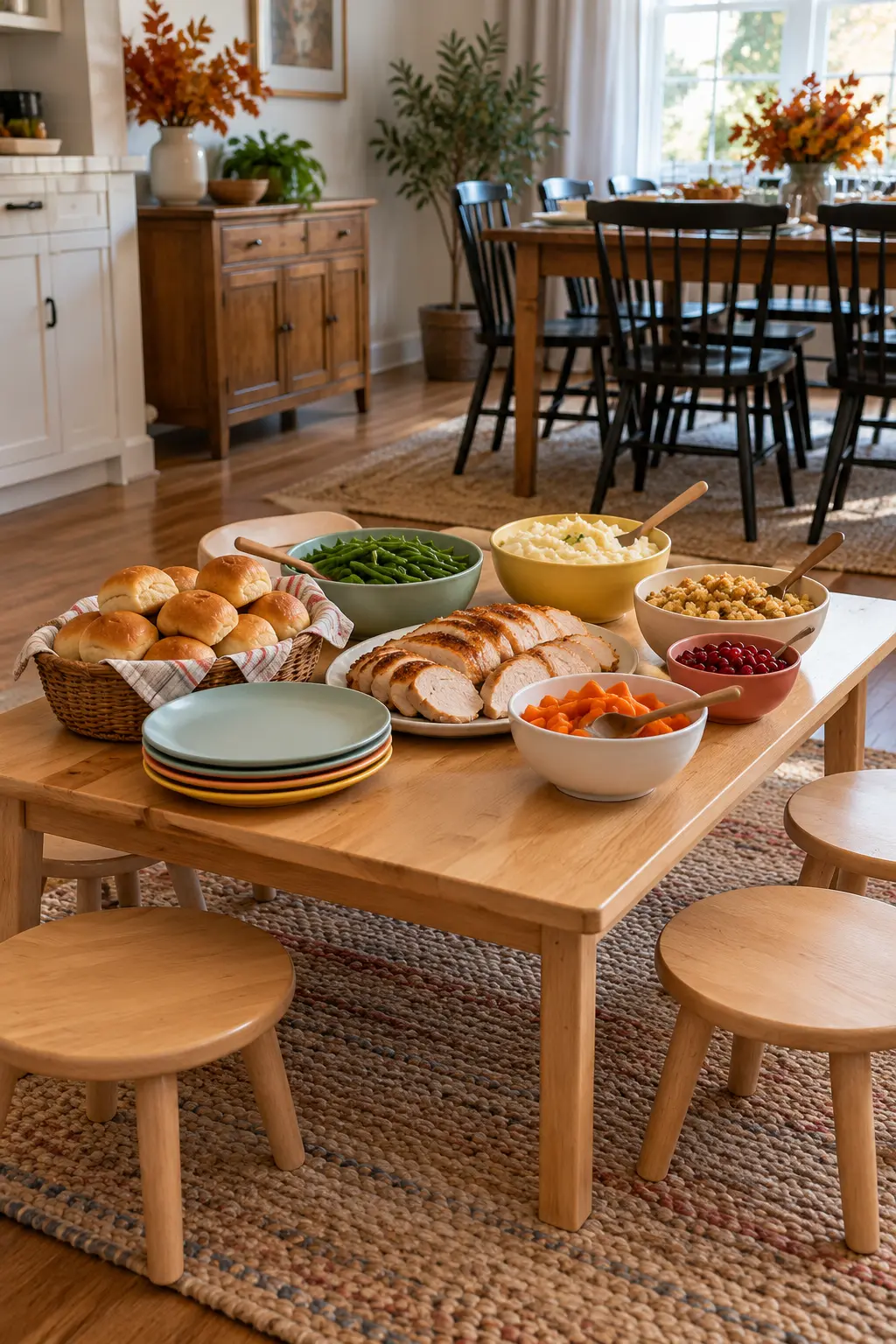
Set a low table with a few familiar foods, sturdy plates, and easy-grip utensils for children who can serve themselves safely. Keep hot equipment and heavy platters on the adult buffet, and ask an adult to supervise younger guests.
10. Potluck Drop-Off Zone
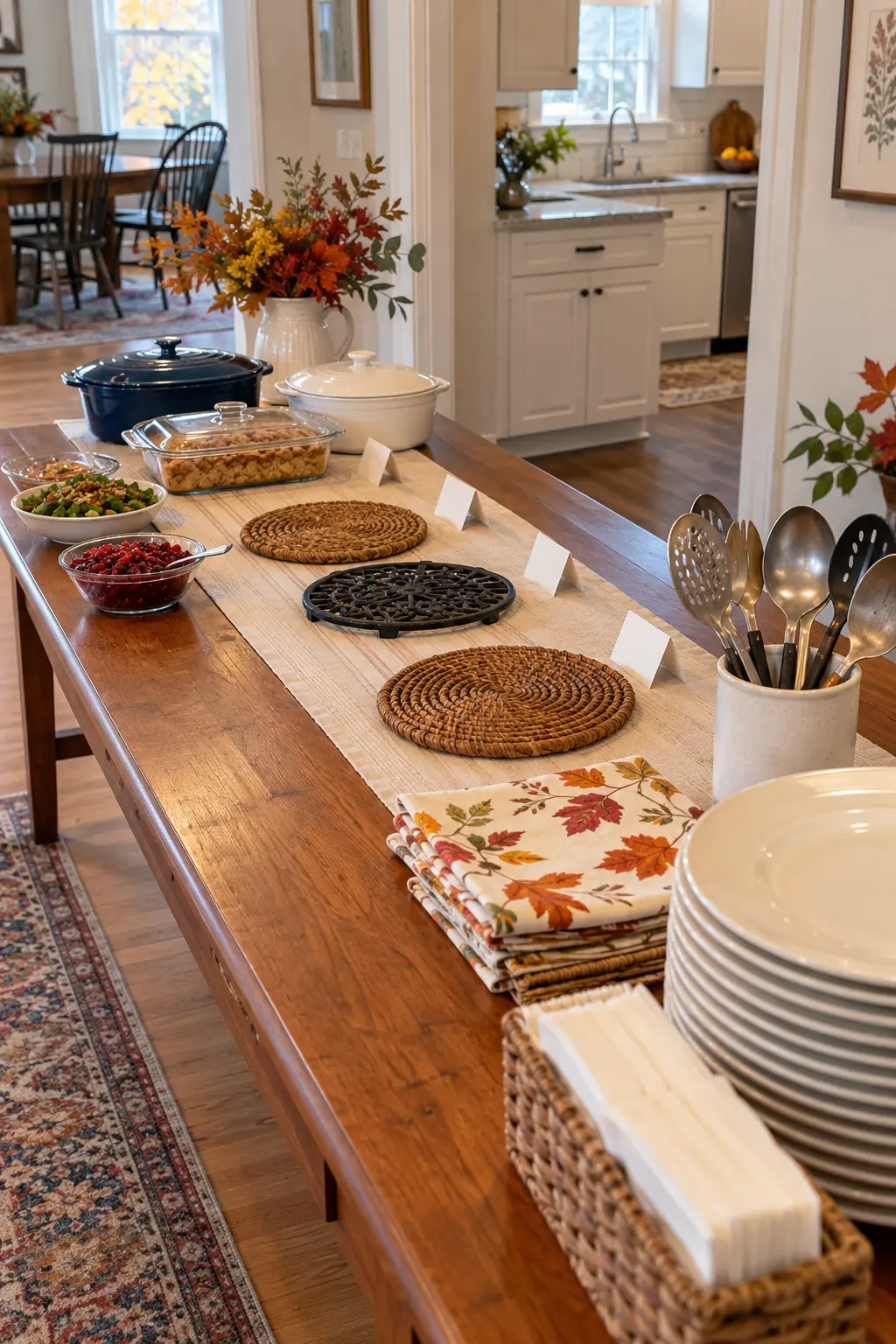
Give arriving dishes a landing surface near the kitchen with open trivets, spare labels, and serving utensils. The host can check what needs warming or chilling before moving each contribution to its final buffet position.
Serving Systems That Keep Food Ready
The most useful buffet tools solve temperature, refilling, or mess. Match each dish with its serving vessel and utensil ahead of time, then keep backup portions ready away from the guest line.
11. Plates First, Flatware Last
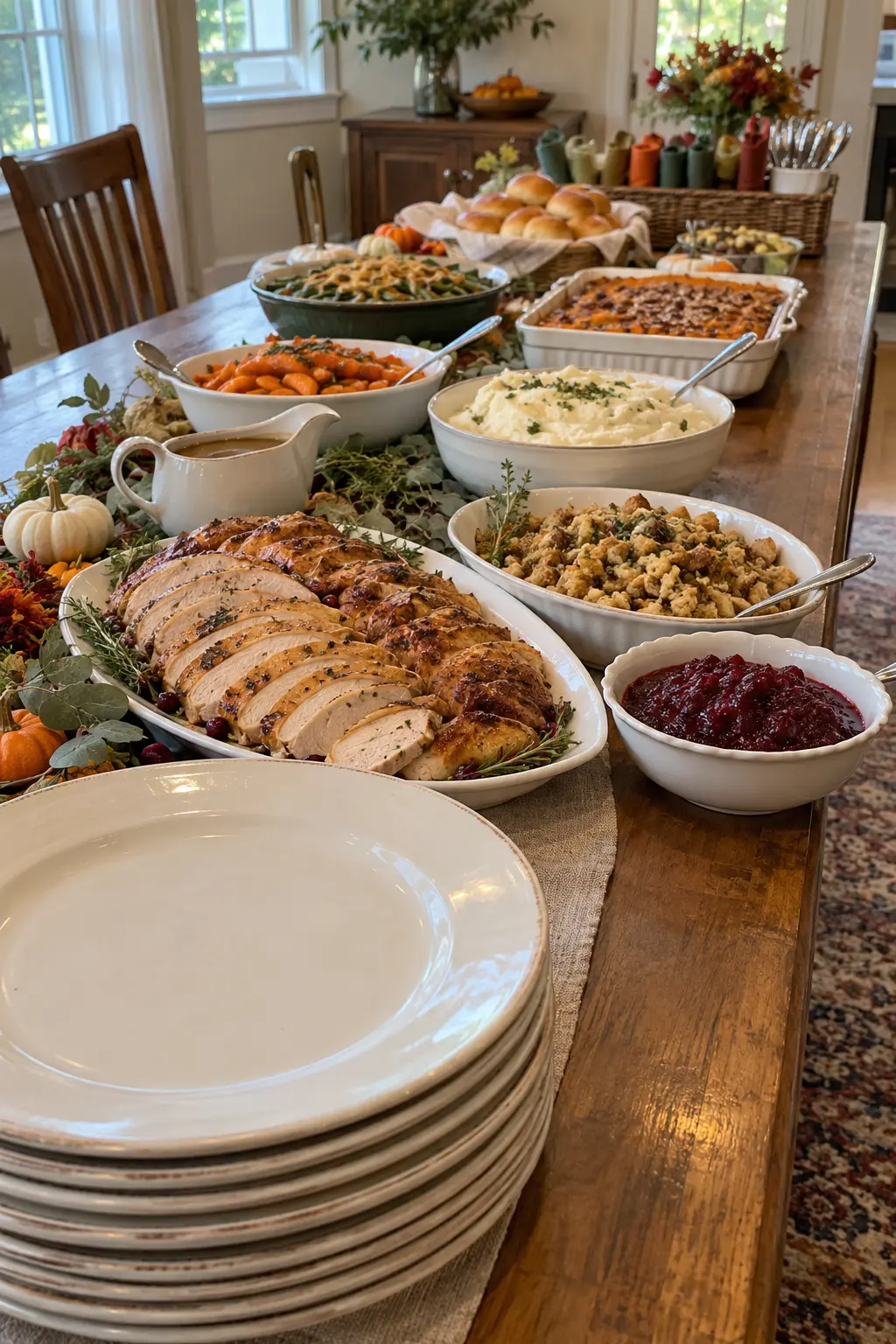
Stack plates at the clear entrance to the buffet and place rolled flatware at the exit. Guests keep one hand free while serving, and no one needs to balance a fork and napkin over the food.
12. Small Refill Trays
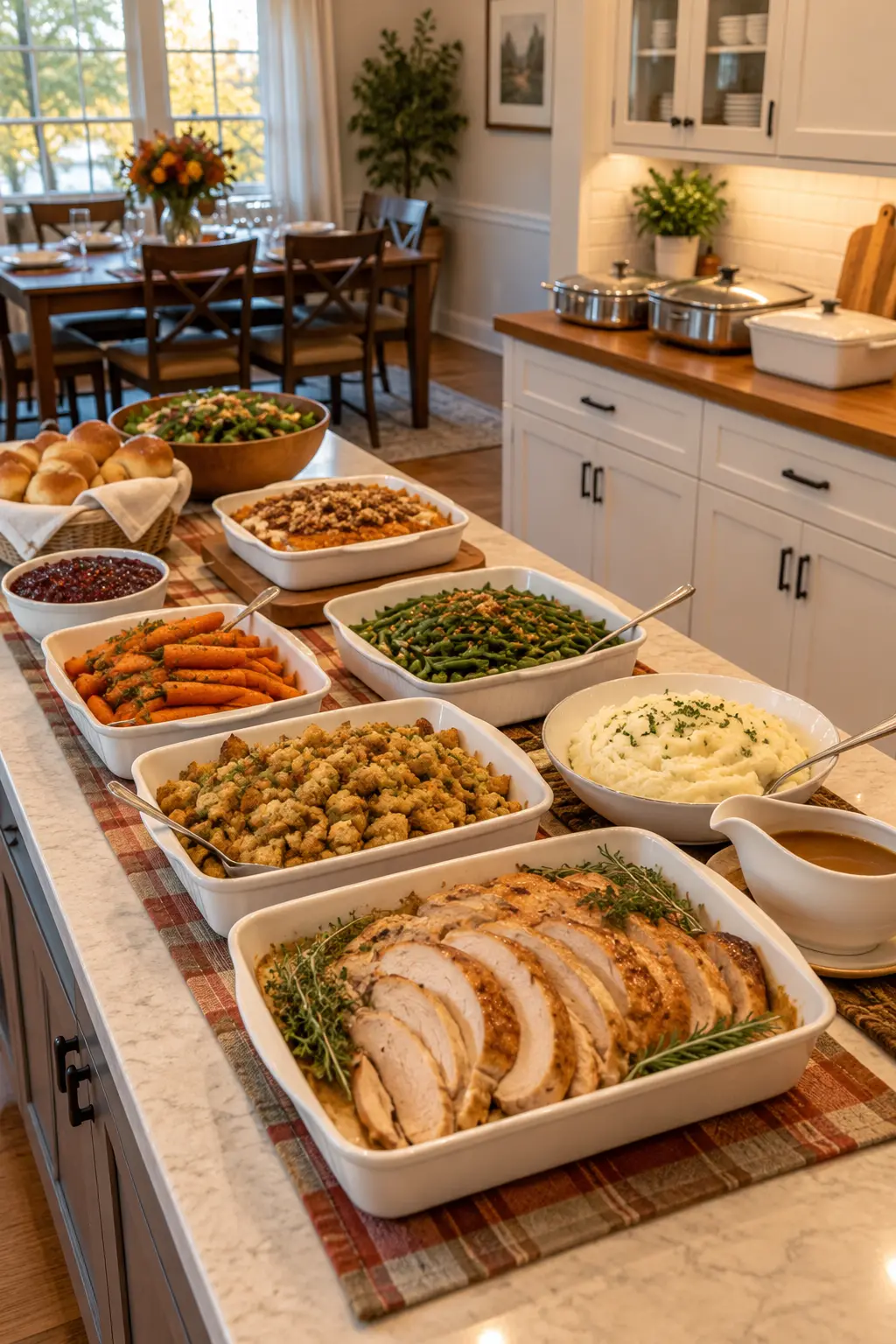
Serve popular foods in smaller pans and replace them more often instead of setting out one oversized container. The display stays fresher, the dishes are easier to lift, and backup portions can remain safely hot or cold until needed.
13. Two-Pan Swap System
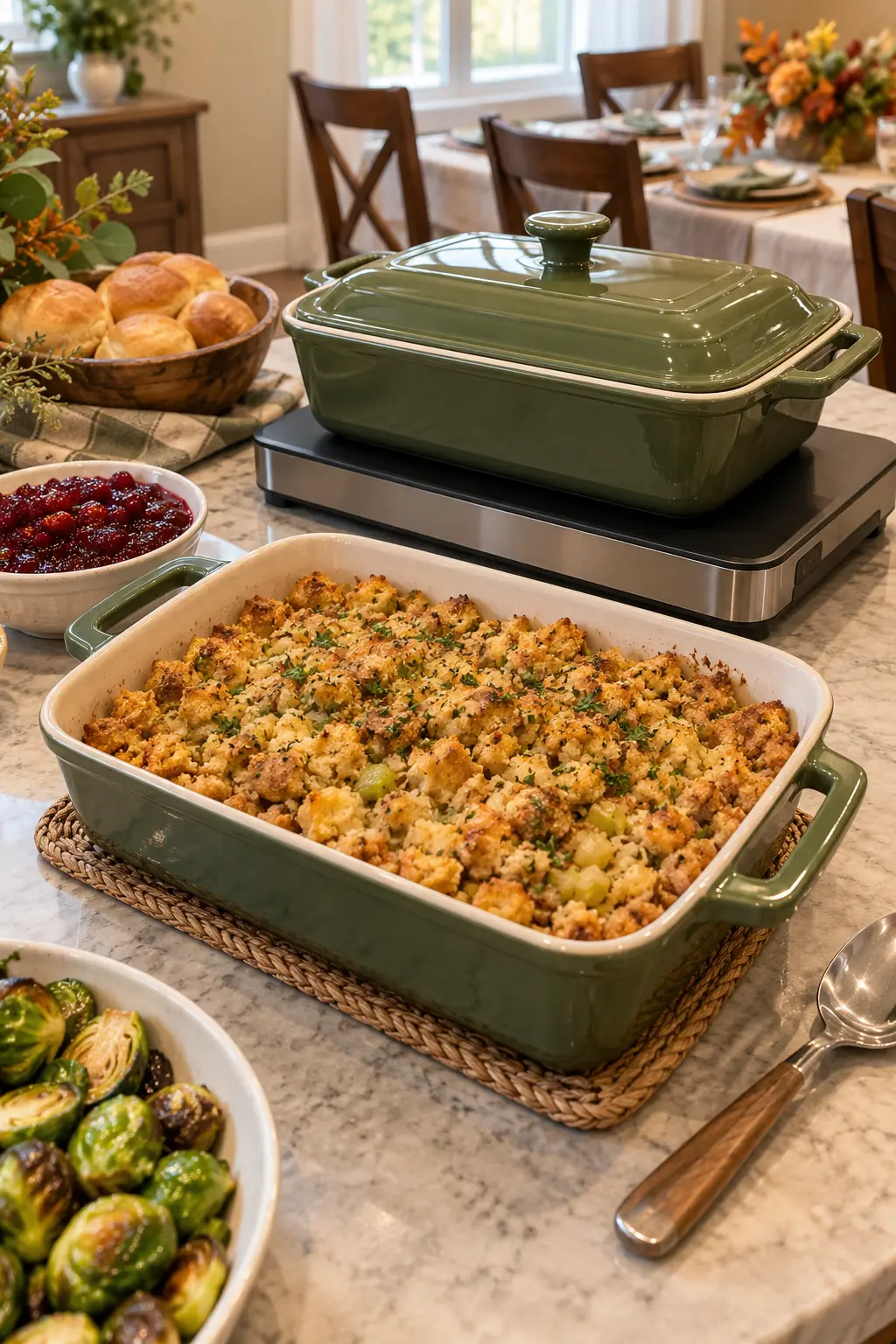
Prepare two matching pans for a high-demand side: one on the buffet and one held at the proper temperature. Swap the fresh pan in before the first looks picked over, then move the partial pan out of guest traffic.
14. Slow-Cooker Side-Dish Row
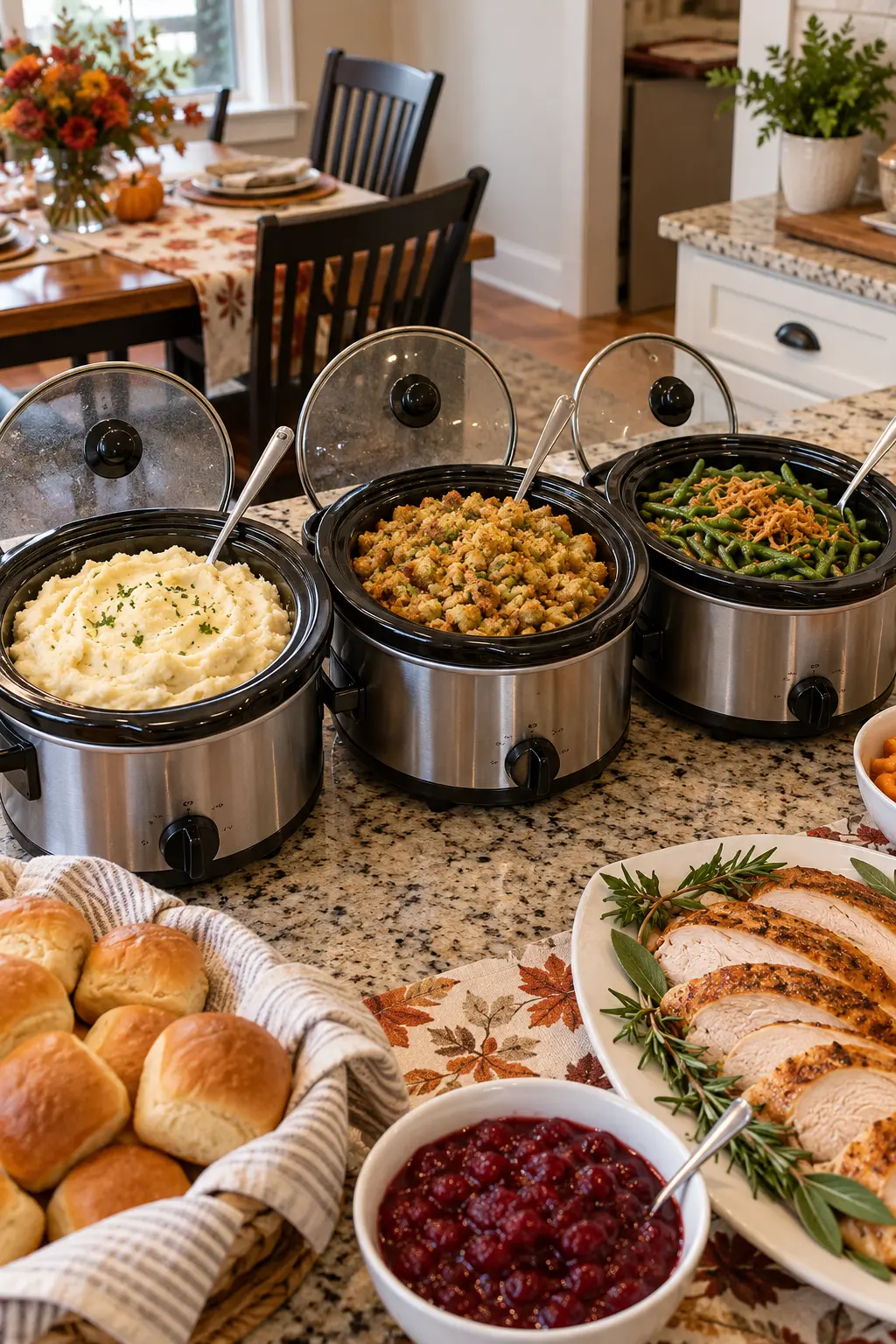
Use compact slow cookers for dishes that hold well, such as mashed potatoes or stuffing. Place each cooker on a heat-safe counter with its own spoon, keep lids nearby, and avoid stretching cords across the route.
15. Covered Chafing-Dish Setup
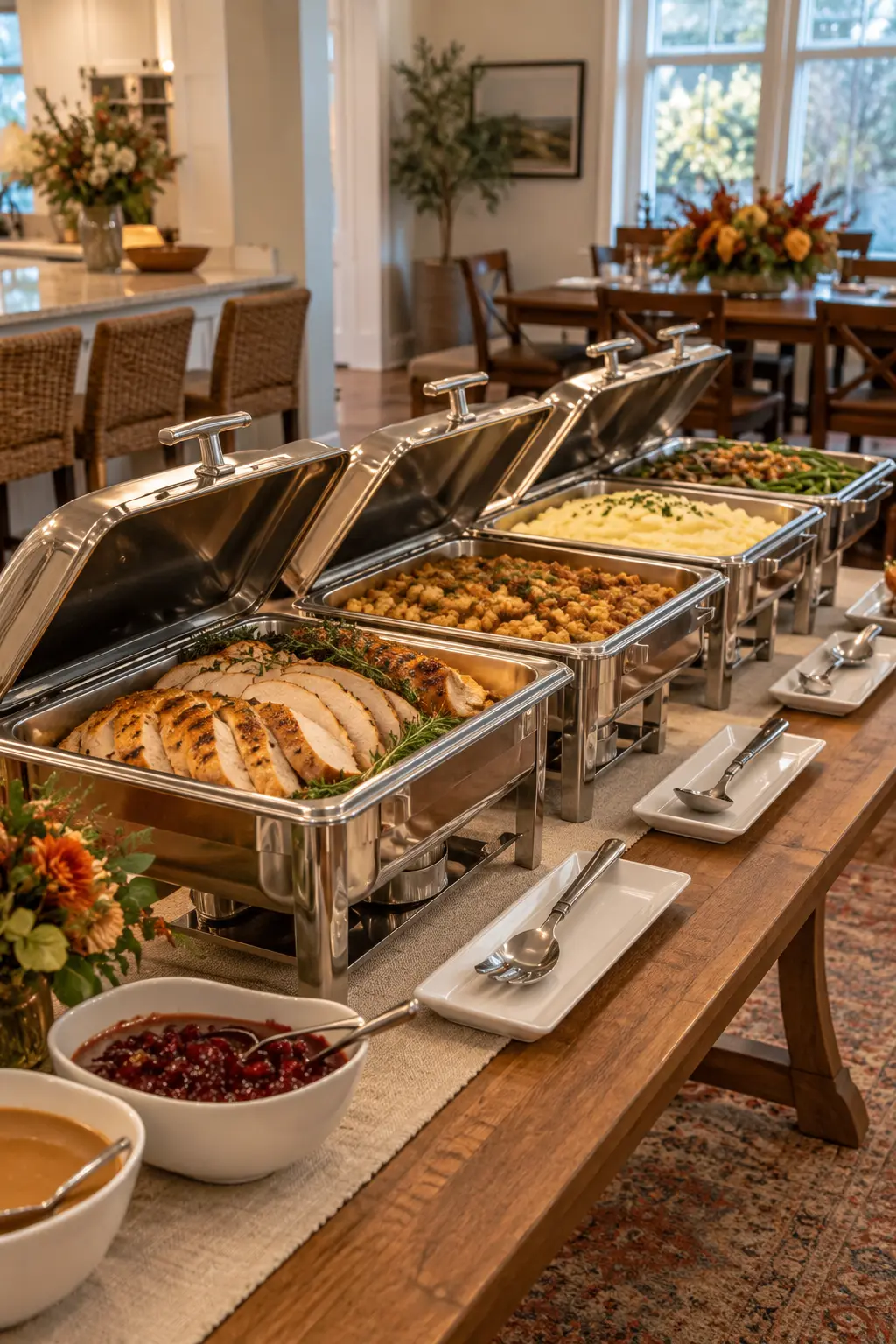
A short row of covered chafing dishes gives a larger gathering a consistent hot-food zone. Leave safe space for lids and utensils, follow the equipment instructions, and position the setup where sleeves and children cannot brush the heat source.
16. Cold Dishes Nested Over Ice
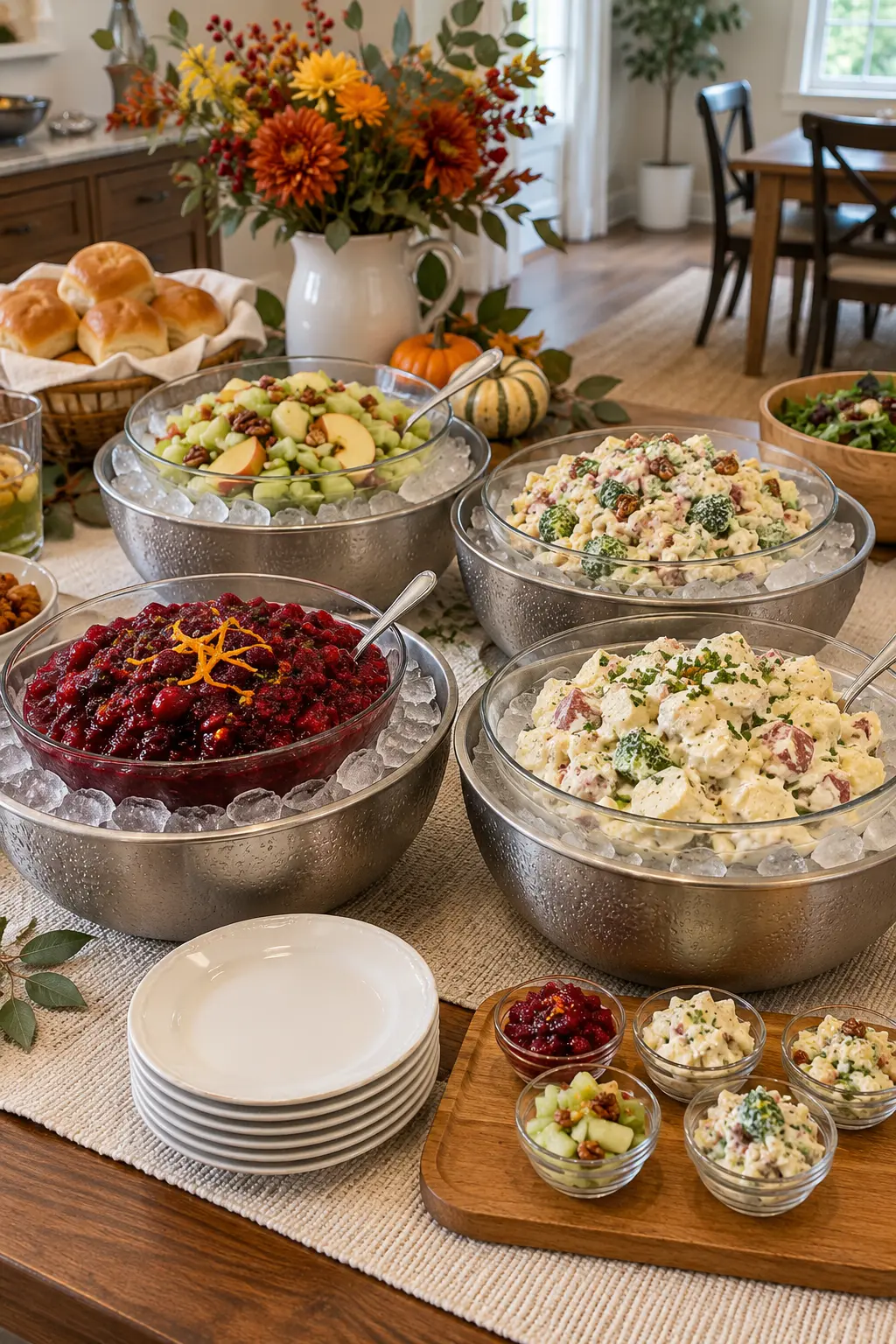
Nest bowls of cold salads, relishes, or dairy-based sides inside larger bowls filled with ice. Use smaller quantities and refresh them as needed so the station looks intentional rather than like a cooler unpacked onto the table.
17. Carving Board with a Catch Tray
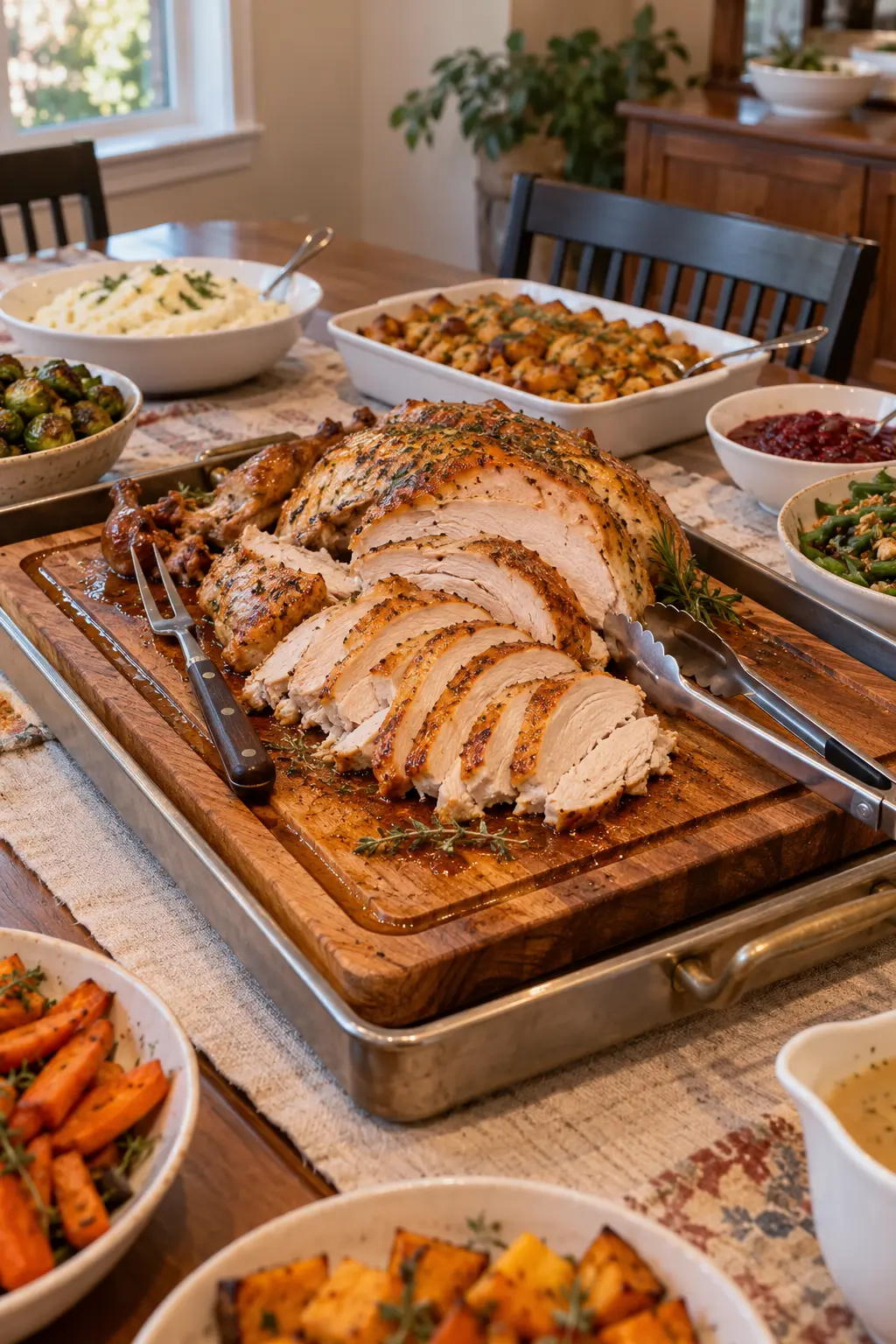
Set a sturdy carving board inside a larger rimmed tray before arranging the turkey. The tray catches juices and stray herbs, while a stable carving fork and separate serving tongs help guests take slices without shifting the board.
18. Gravy and Sauce Warmer
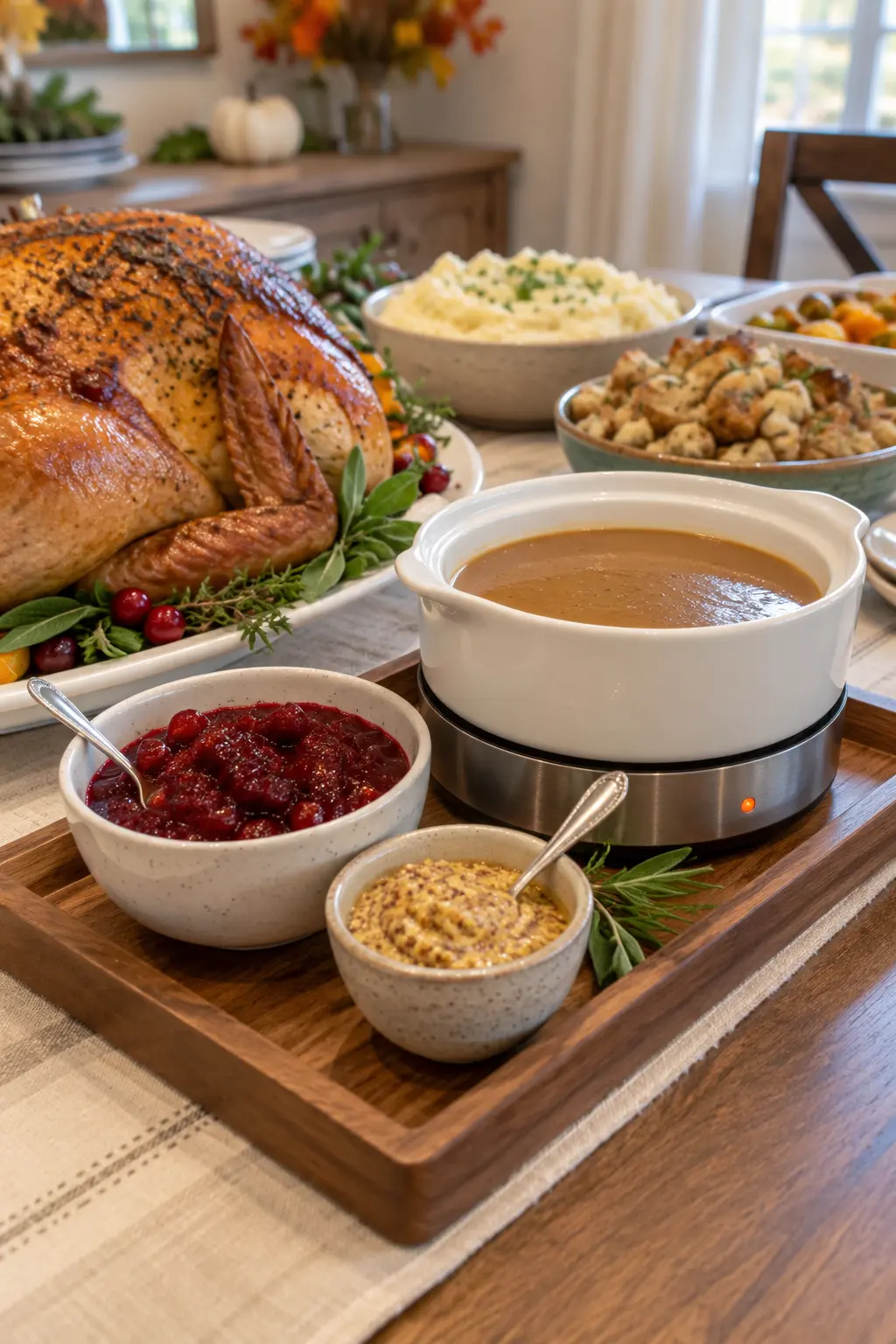
Keep gravy in a small warming vessel beside the turkey, with cranberry sauce and other condiments grouped nearby. A contained sauce zone prevents guests from carrying full plates backward through the line for the finishing touches.
19. Clear Dish and Allergen Labels
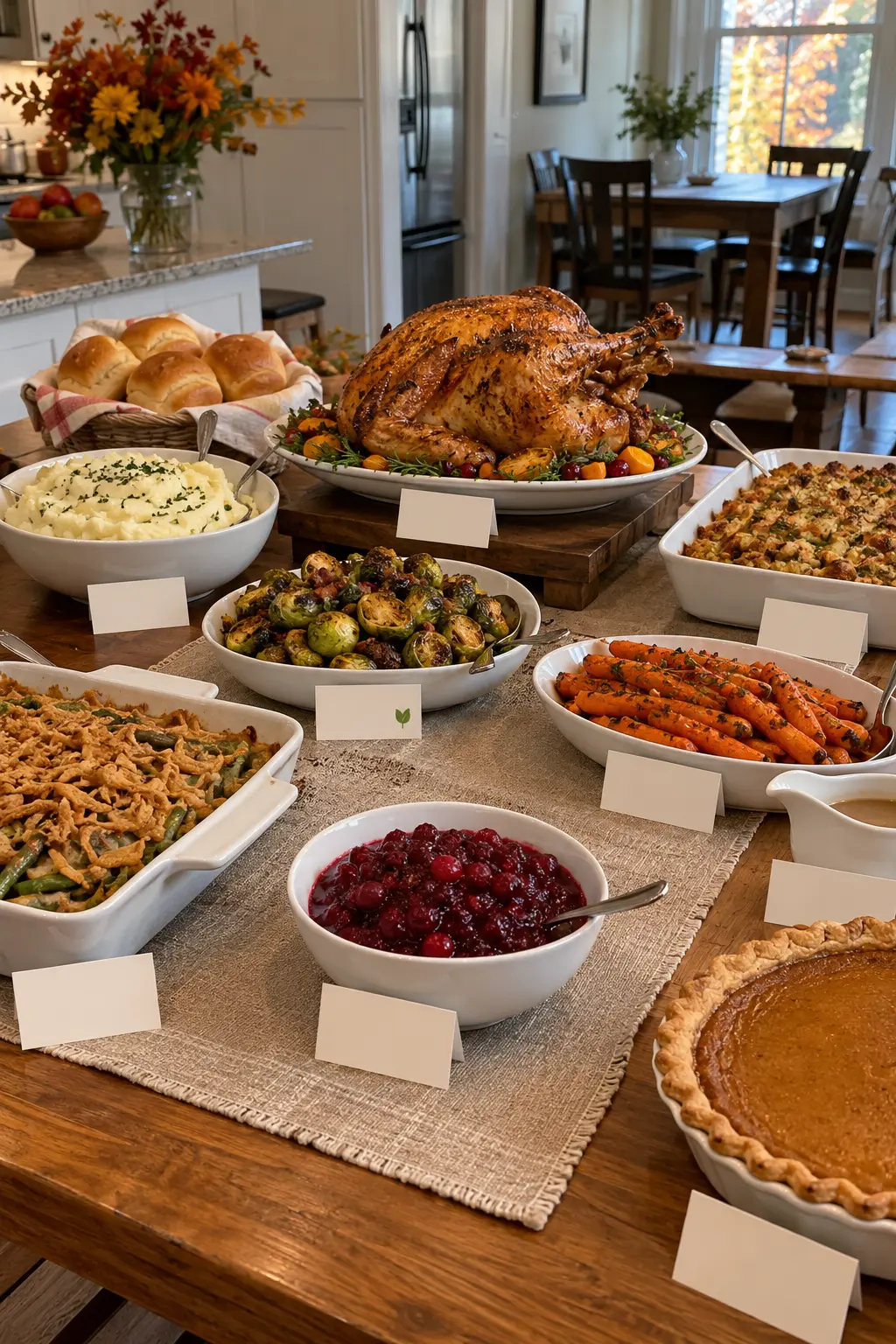
Place a clear card in front of every dish and add confirmed dietary notes where useful. Keep ingredient details factual, avoid promising an allergen-free environment unless it is controlled, and offer a separately handled option when restrictions are serious.
20. Serving-Utensil Rest Station
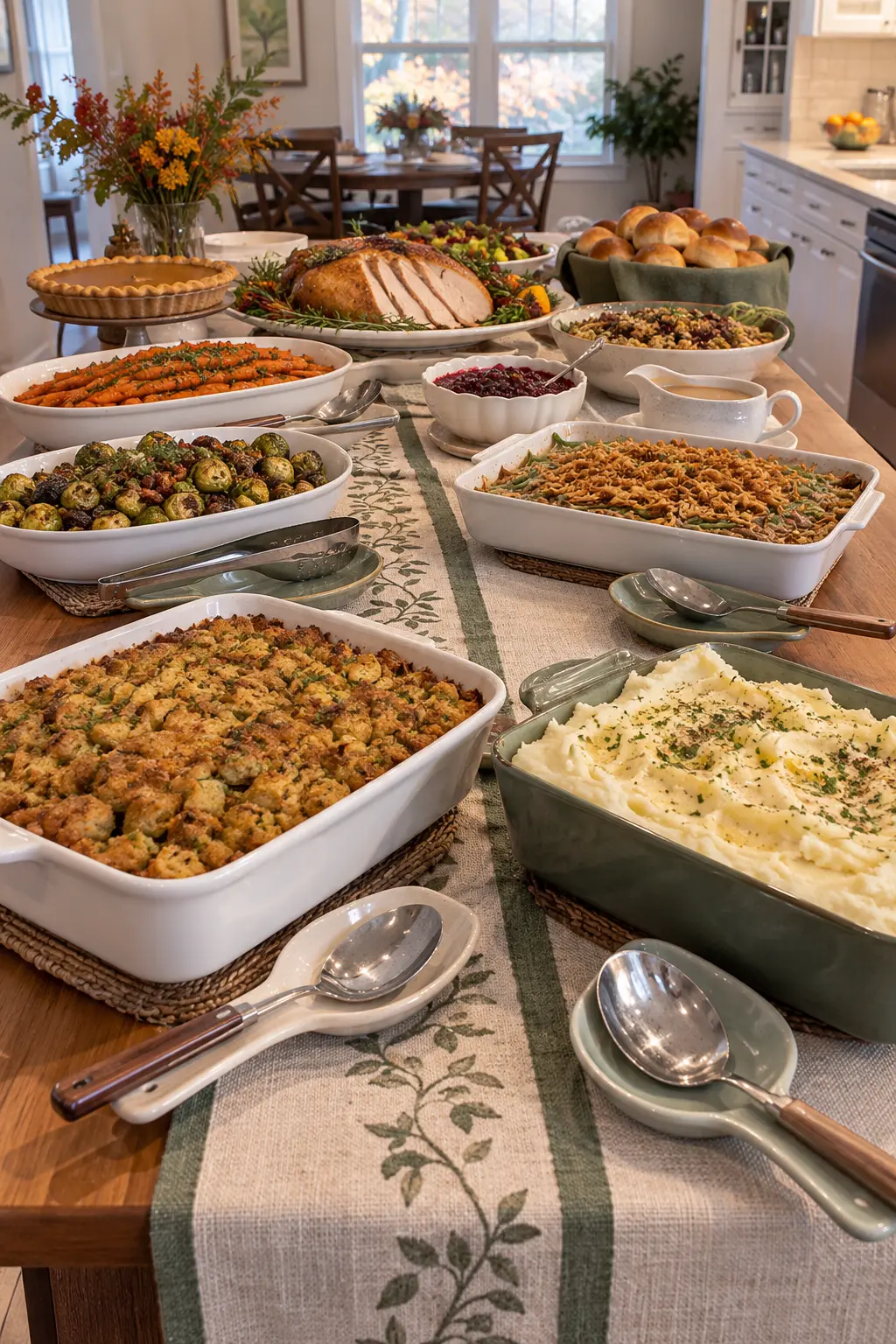
Give every spoon, ladle, and pair of tongs a small rest beside its dish. Drips stay off the tablecloth, utensils are less likely to slide into food, and guests can see which tool belongs with each item.
Buffet-Friendly Ways to Serve Thanksgiving Classics
Classic Thanksgiving food can be easier to serve when portions are visible and utensils have room to move. These formats keep familiar dishes recognizable while making the line faster and tidier.
21. Pre-Sliced Turkey Platter
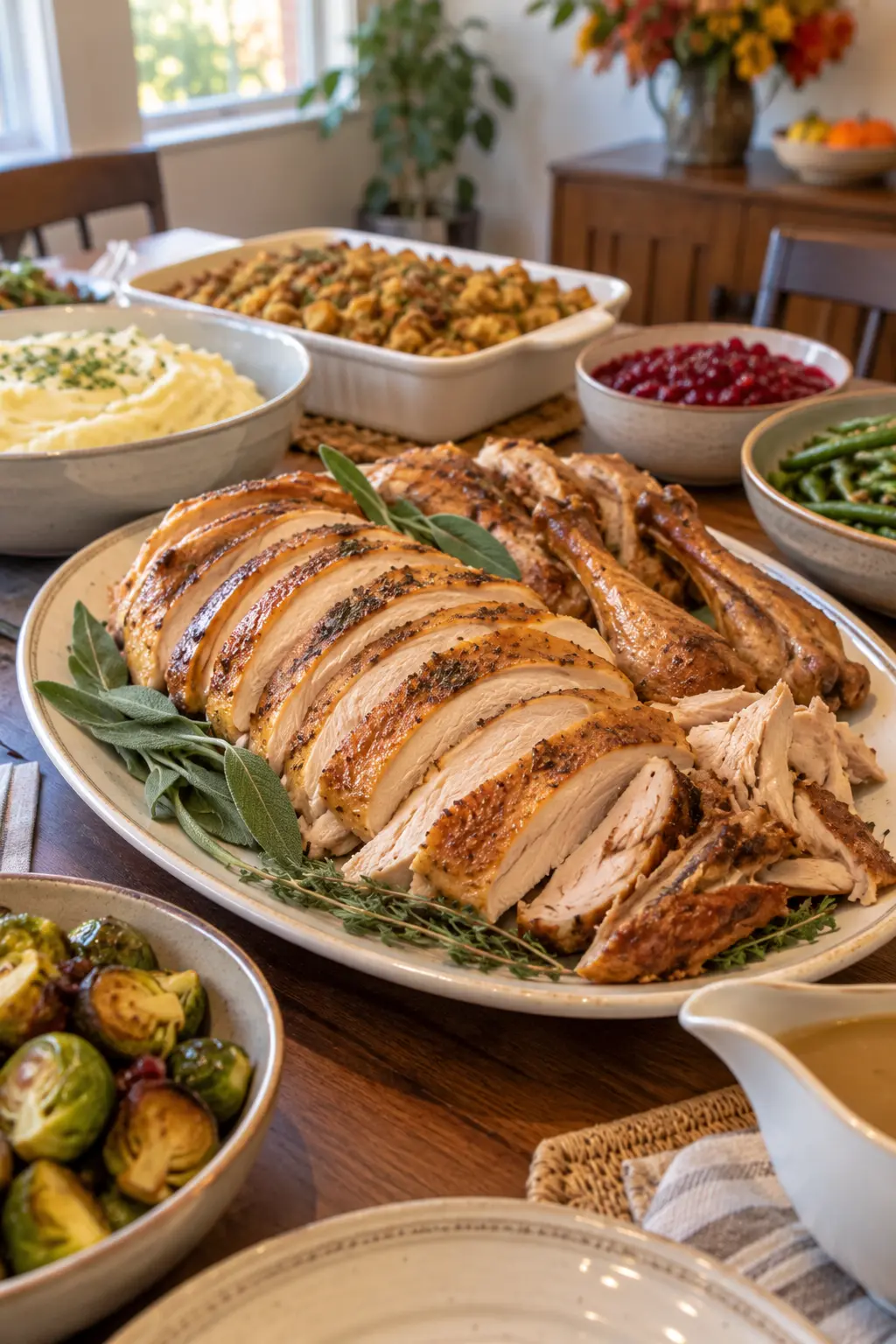
Carve most of the turkey before guests enter the line, then fan the slices on a warm platter with a few herbs for color. Keep a covered backup portion warm so the display can be refreshed without carving in traffic.
22. White-Meat and Dark-Meat Platters
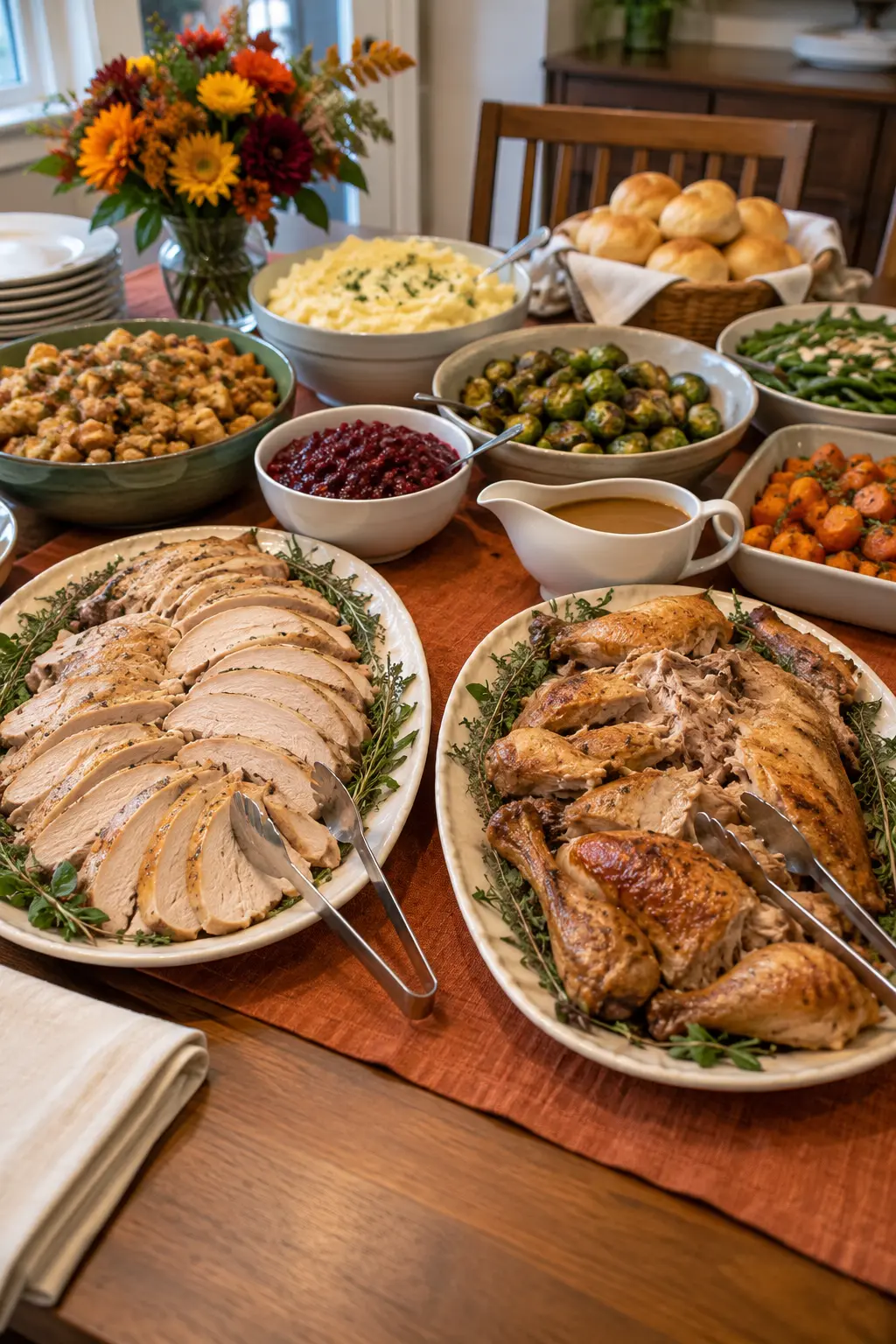
Separate white and dark meat onto two smaller platters so guests can choose quickly. This also makes refilling easier than carrying one heavy tray and keeps serving tongs from disappearing beneath a large pile of turkey.
23. Stuffing Muffin Basket
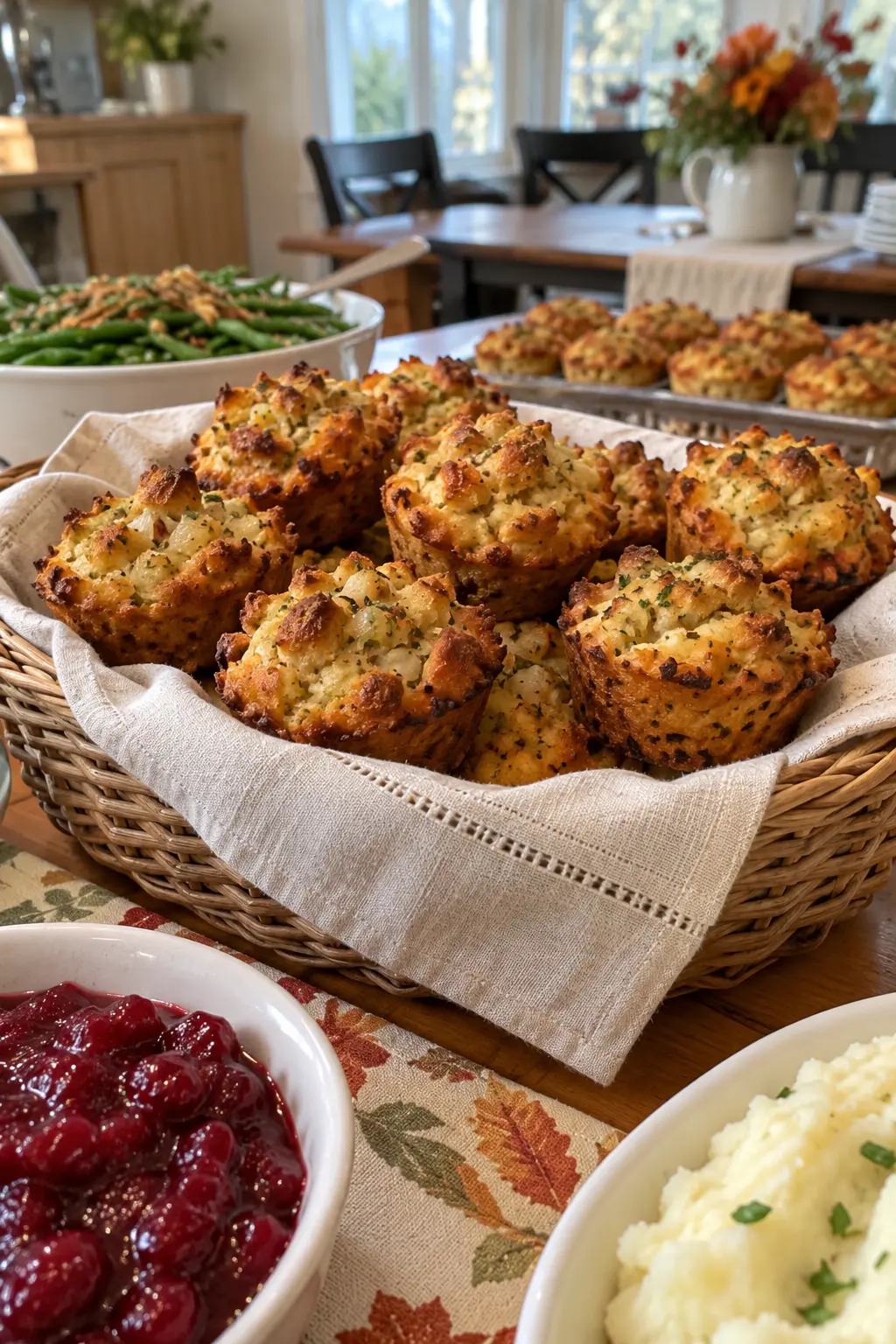
Bake stuffing in muffin portions and arrange them in a lined basket. Guests can take one without digging through a casserole, while the crisp edges and defined portions make the basket easy to refill in small batches.
24. Mashed Potato Crock
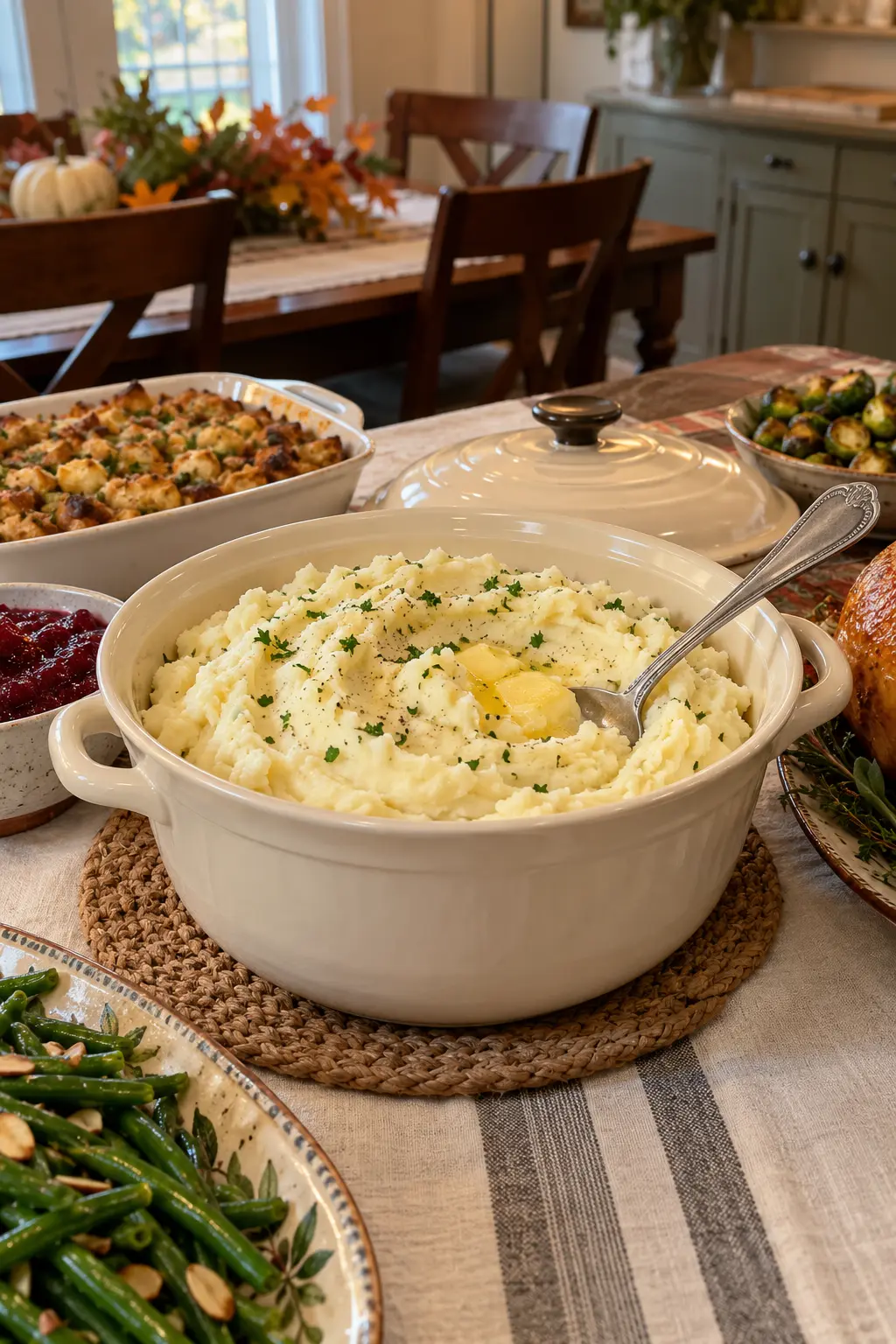
Hold mashed potatoes in a covered ceramic crock or suitable slow cooker and fluff them just before service. Use a broad serving spoon, leave room for the lid, and replenish with a fresh hot batch instead of overfilling the vessel.
25. Individual Sweet Potato Cups
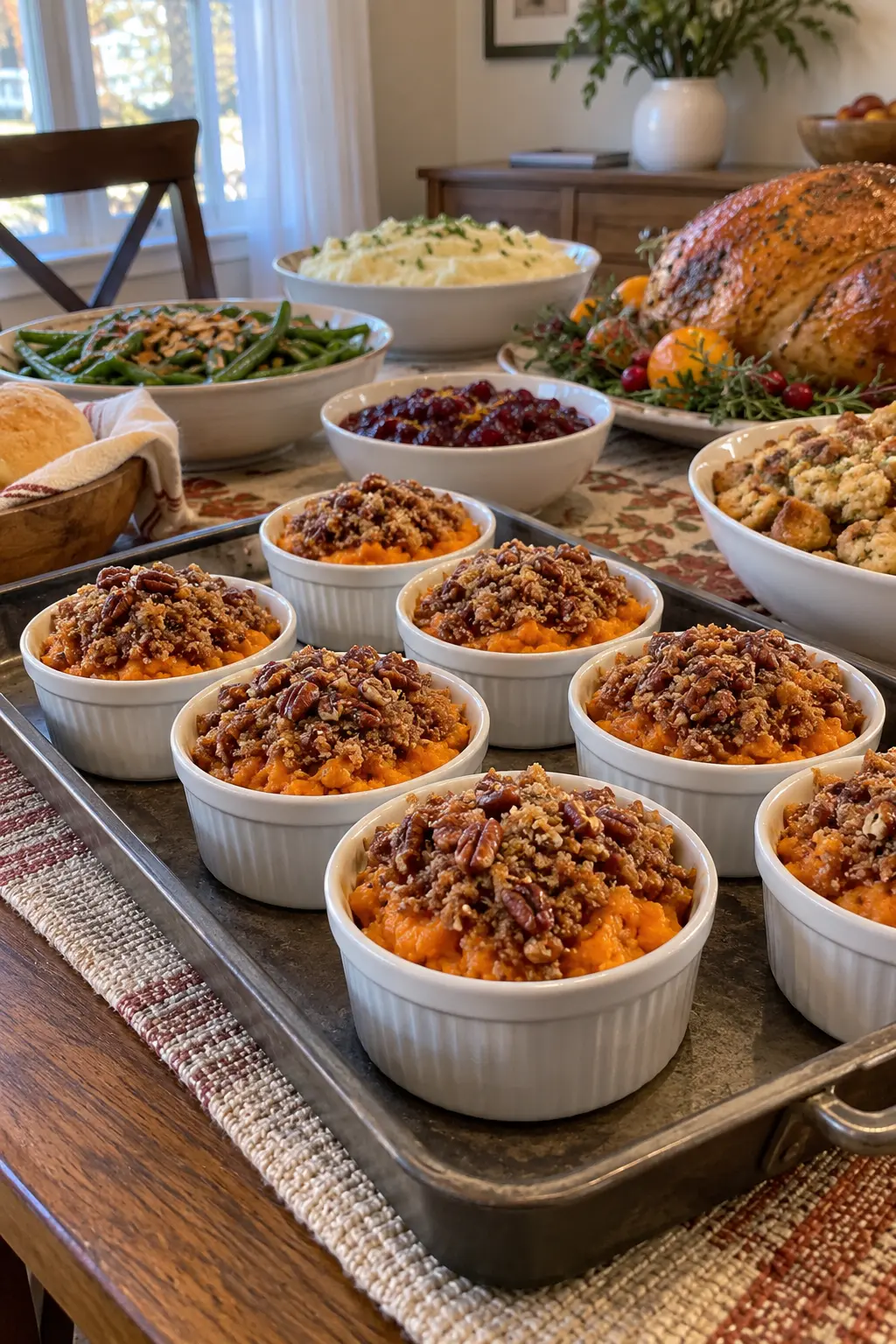
Bake sweet potato casserole in small ramekins for neat portions that hold their shape. Arrange the cups on a sturdy tray and keep the topping modest so guests can carry them without crumbs spilling across the buffet.
26. Green Bean Bundles
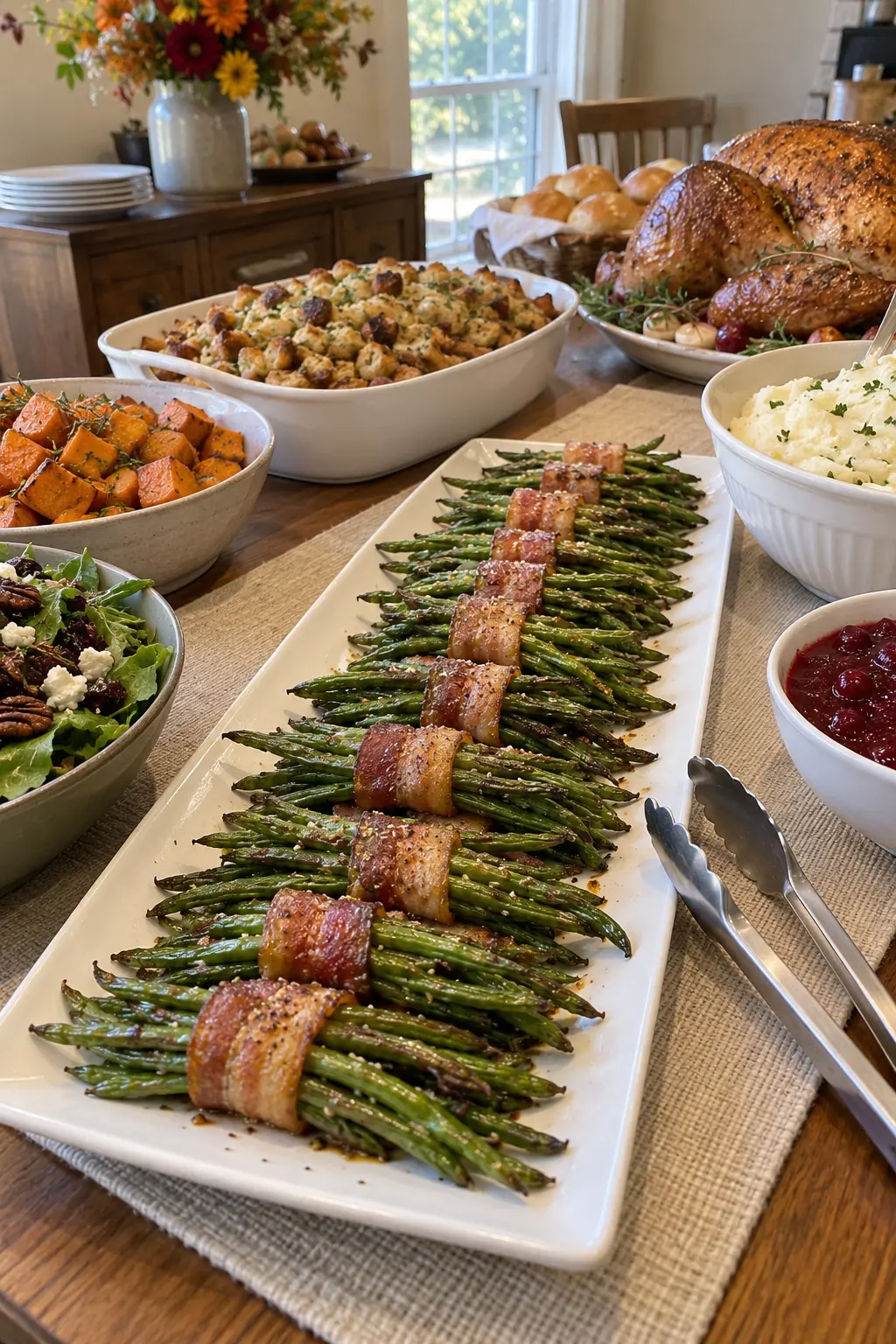
Tie or arrange roasted green beans into small bundles that lift cleanly with tongs. The portions reduce tangled serving and give a familiar vegetable side a polished shape without changing its flavor or adding elaborate garnish.
27. Roasted Root Vegetable Platter
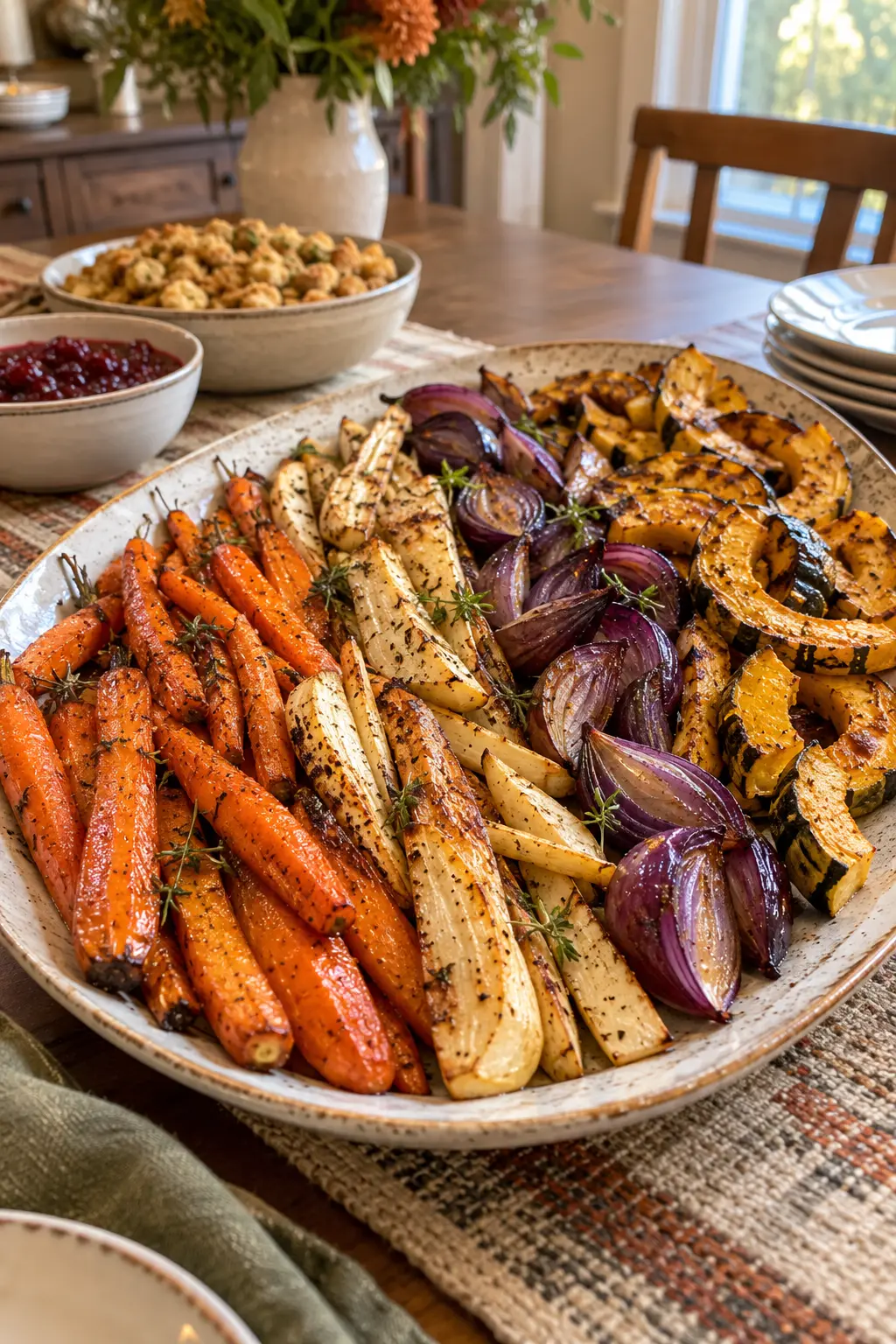
Spread roasted carrots, parsnips, onions, and squash across a wide, shallow platter instead of piling them in a deep bowl. The colors remain visible, and guests can take the vegetables they prefer with one set of tongs.
28. Cranberry Relish Trio
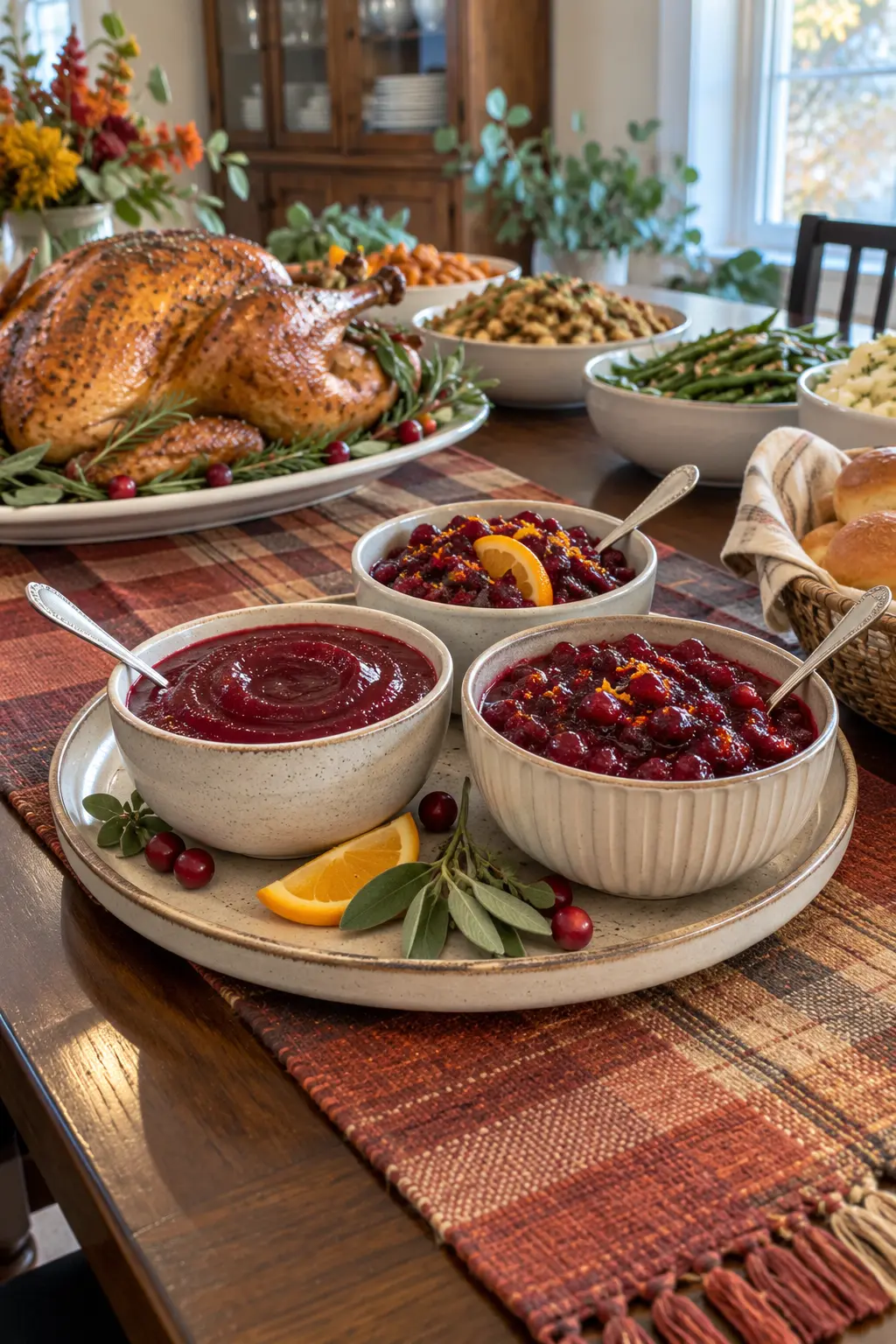
Offer three small cranberry options, such as a smooth sauce, chunky relish, and citrus-forward version. Group the bowls on one tray with separate spoons so the choice feels intentional and does not scatter condiments across the buffet.
29. Cornbread and Roll Basket
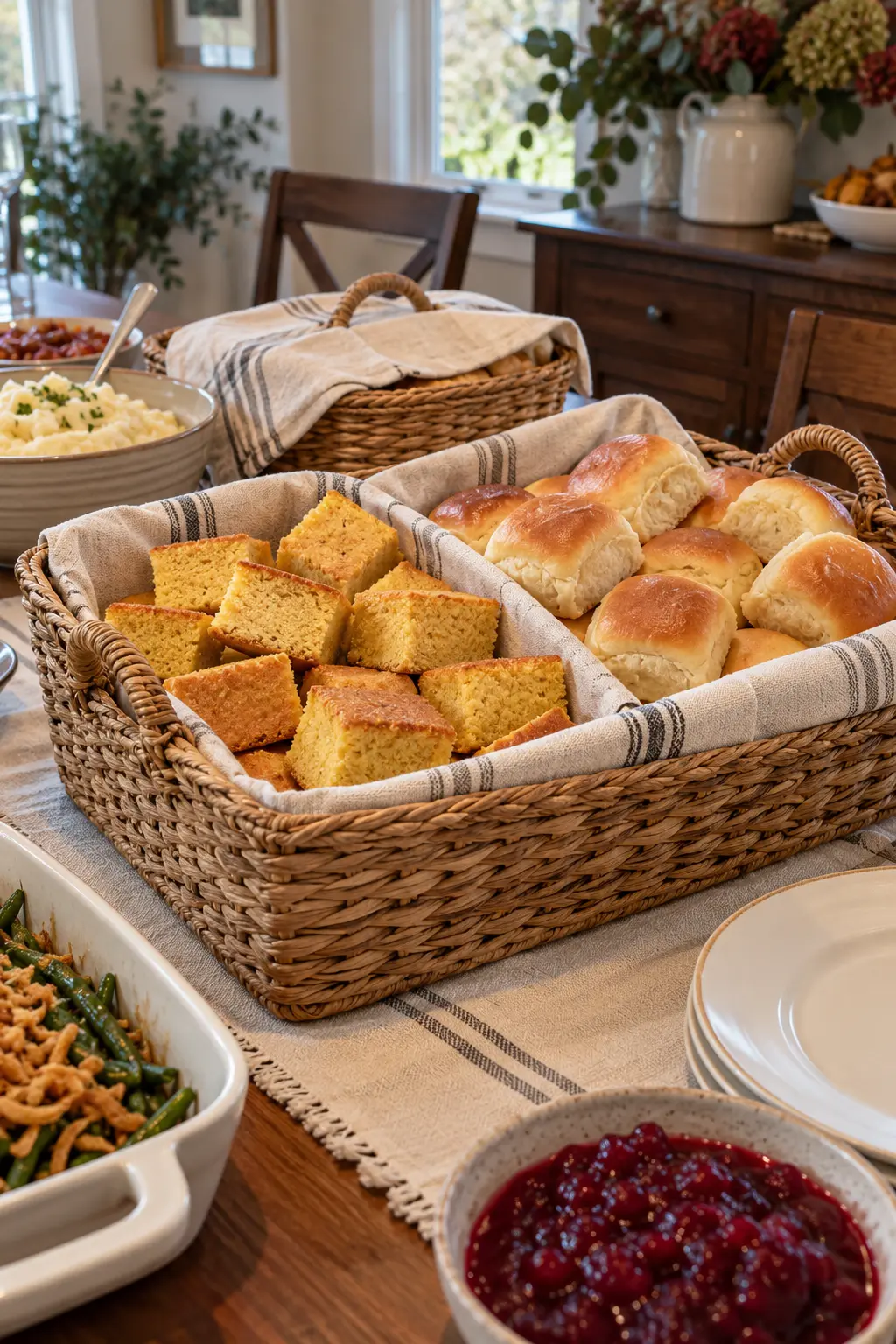
Use one broad basket with a linen divider for cornbread squares and dinner rolls. Place it near the end of the line so bread does not get crushed beneath heavier food, and keep a smaller refill basket covered nearby.
30. Chilled Compound Butter Ramekins
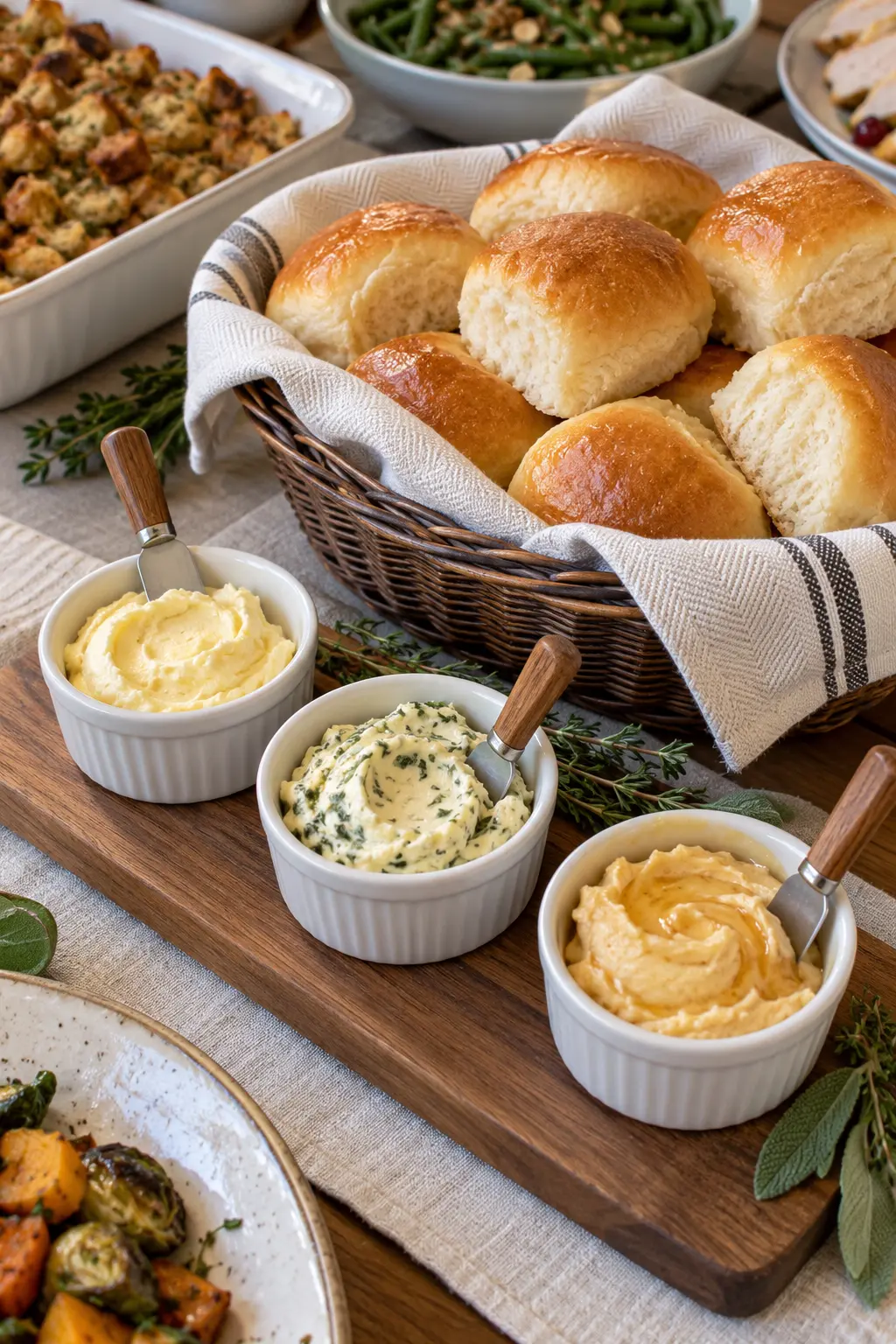
Set out small ramekins of plain, herb, and honey butter beside the bread, replacing them with chilled backups as needed. Individual bowls are easier to manage than one decorative butter board and keep the buffet cleaner.
31. Harvest Salad in Shallow Bowls
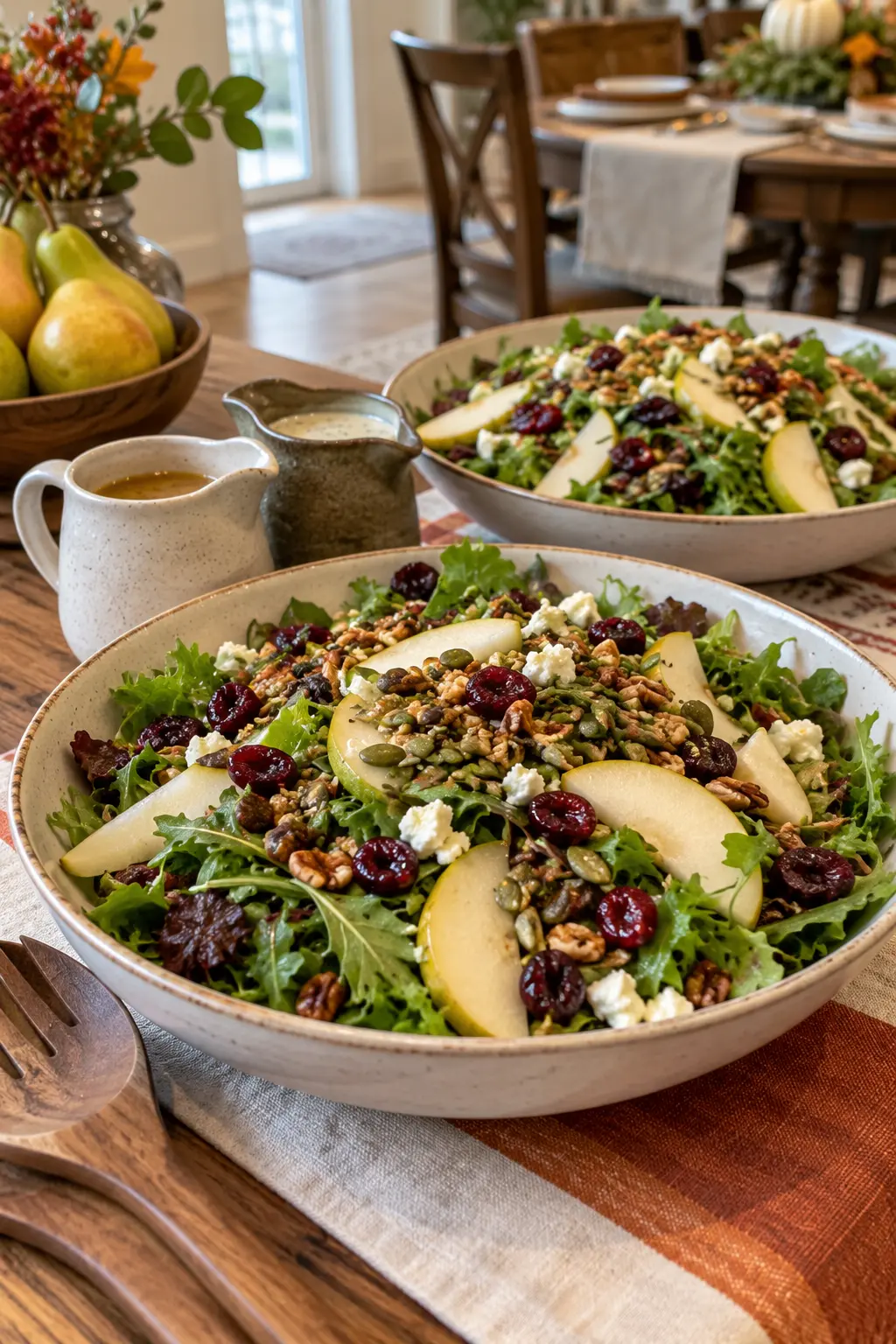
Divide a leafy harvest salad between two shallow bowls instead of compressing it in one deep vessel. Keep dressing in small pitchers on the side so greens stay crisp and guests can control the amount.
32. Mini Vegetarian Pot Pies
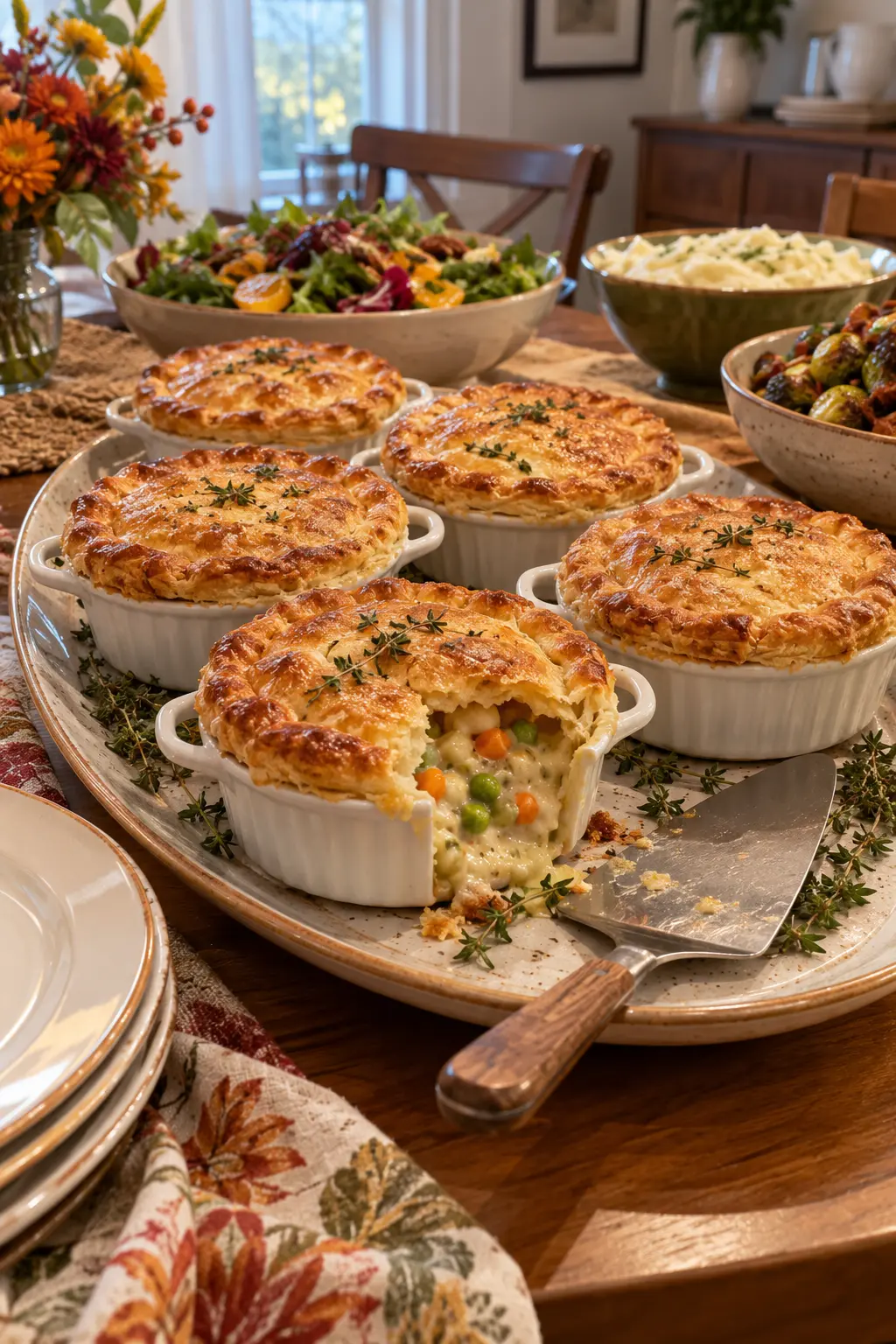
Offer individual vegetable pot pies as a substantial meatless main rather than treating vegetarian guests as an afterthought. Keep them in a clearly identified zone with a dedicated server and enough portions for curious omnivores too.
Interactive and Inclusive Thanksgiving Buffet Stations
A focused station gives guests useful choices without turning dinner into a complicated build-your-own meal. Keep toppings limited, label dietary information clearly, and place each station where people can pause without blocking the main line.
33. Mashed Potato Toppings Bar
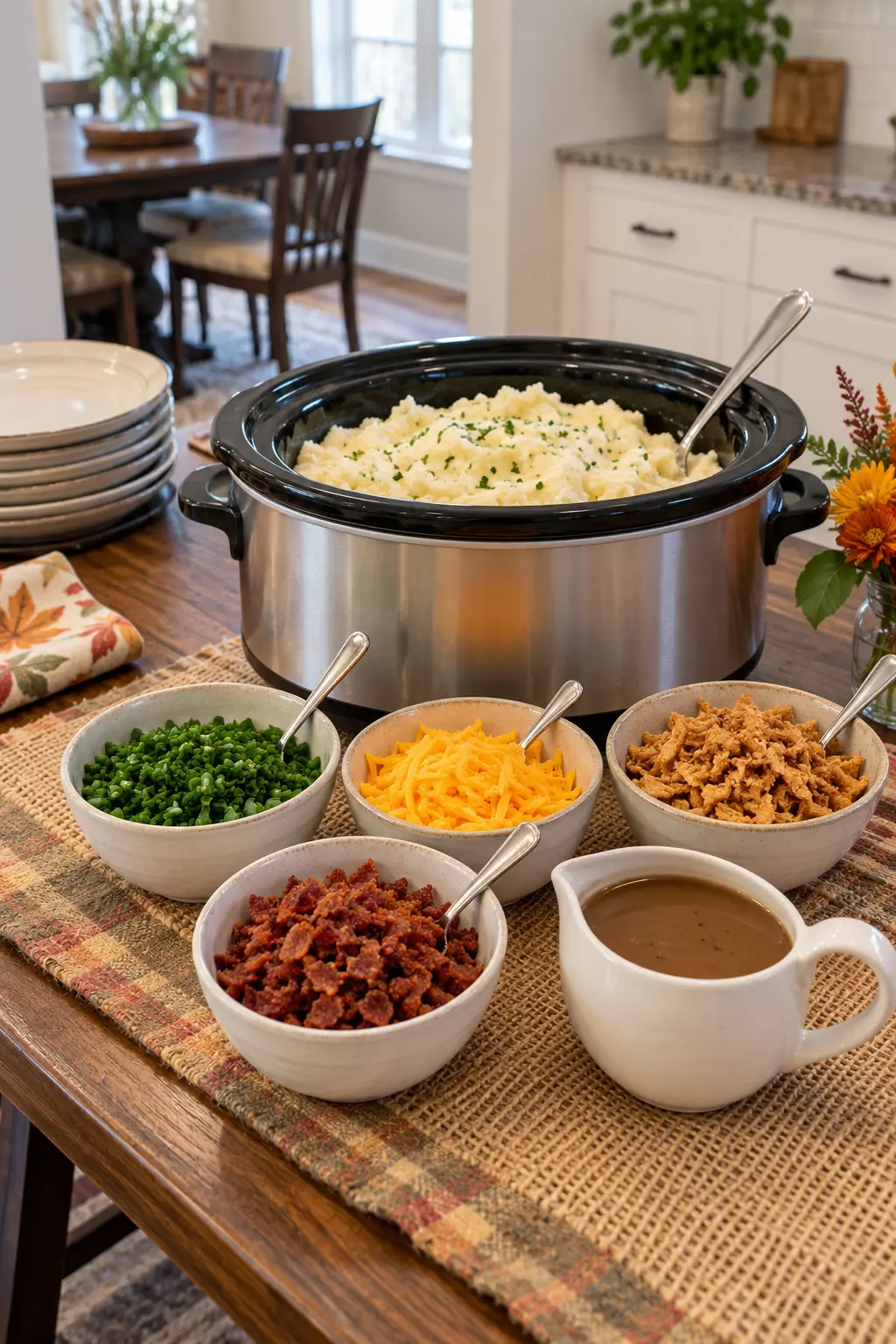
Place a warm mashed potato crock beside four or five simple toppings, such as chives, shredded cheese, crisp onions, and gravy. Small bowls keep the station compact, and limiting the choices prevents a slow, messy line.
34. Mac and Cheese Toppings Station
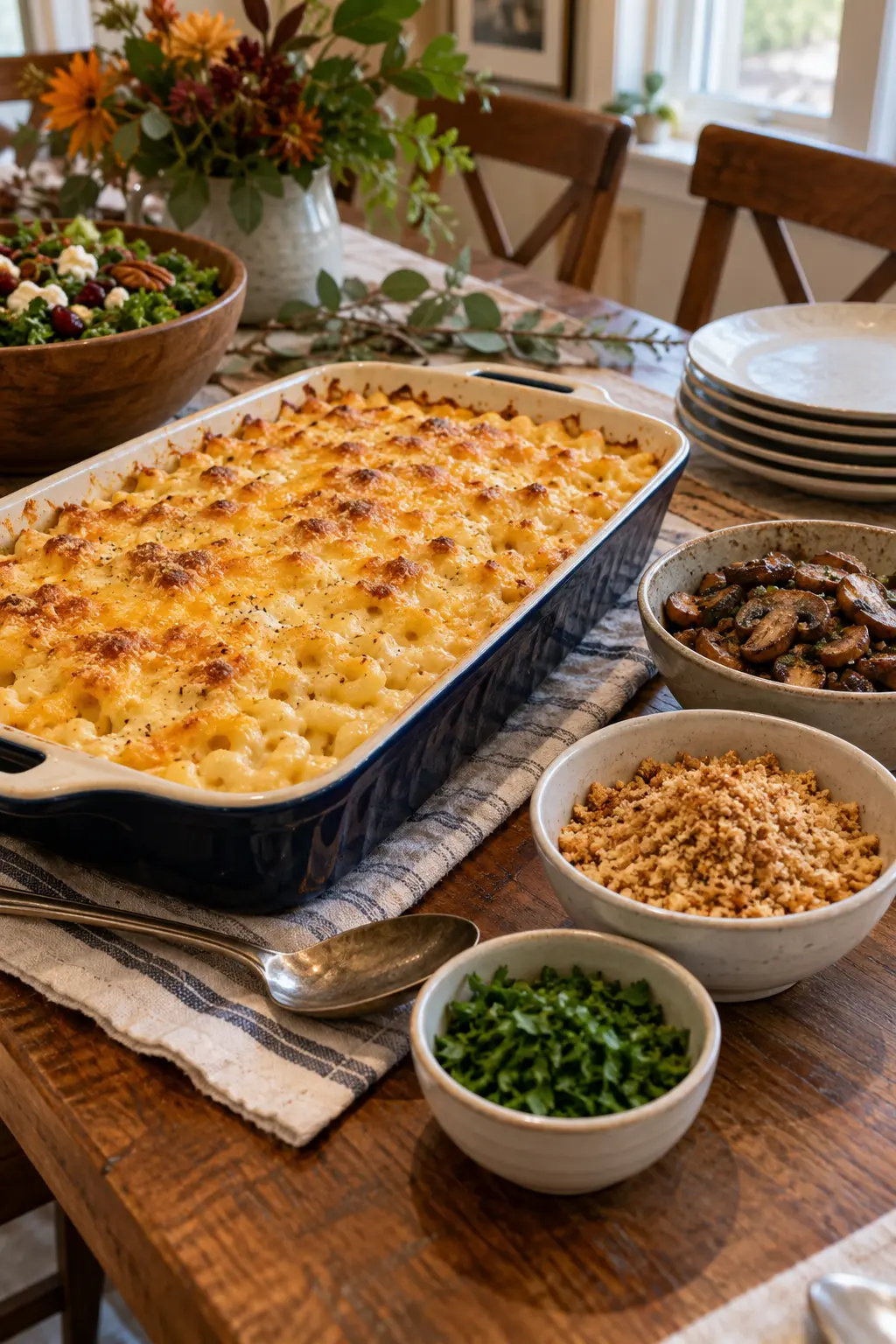
Serve creamy mac and cheese with a short row of crunchy toppings, such as toasted breadcrumbs, herbs, and roasted mushrooms. Put the toppings after the casserole so guests can finish their plate without reaching backward.
35. Build-Your-Own Thanksgiving Bowl
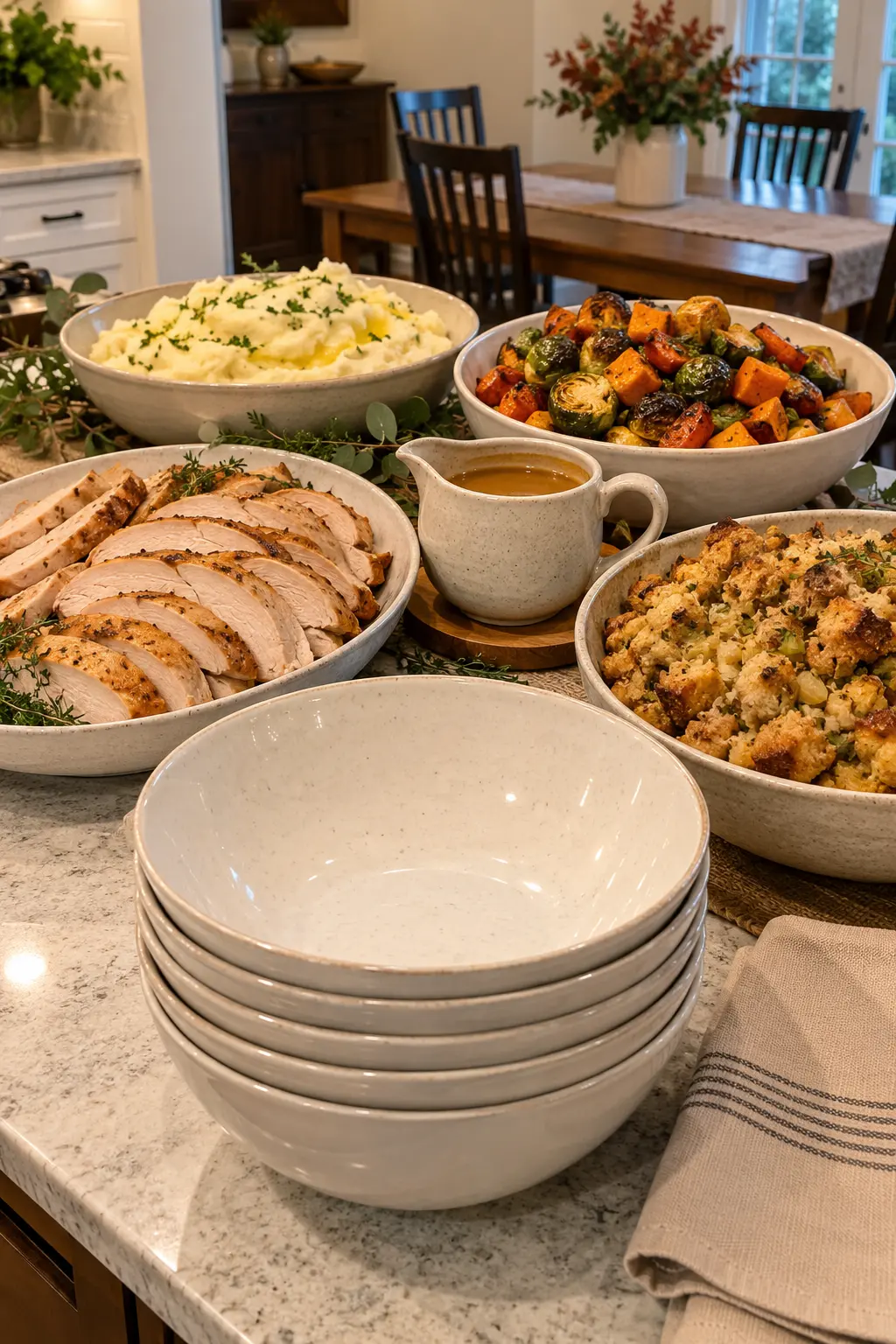
Create a compact bowl station with small scoops of turkey, stuffing, potatoes, vegetables, and gravy. This format suits casual seating and lets guests build balanced portions, but it works best when every ingredient is already available elsewhere on the buffet.
36. Turkey Slider Station
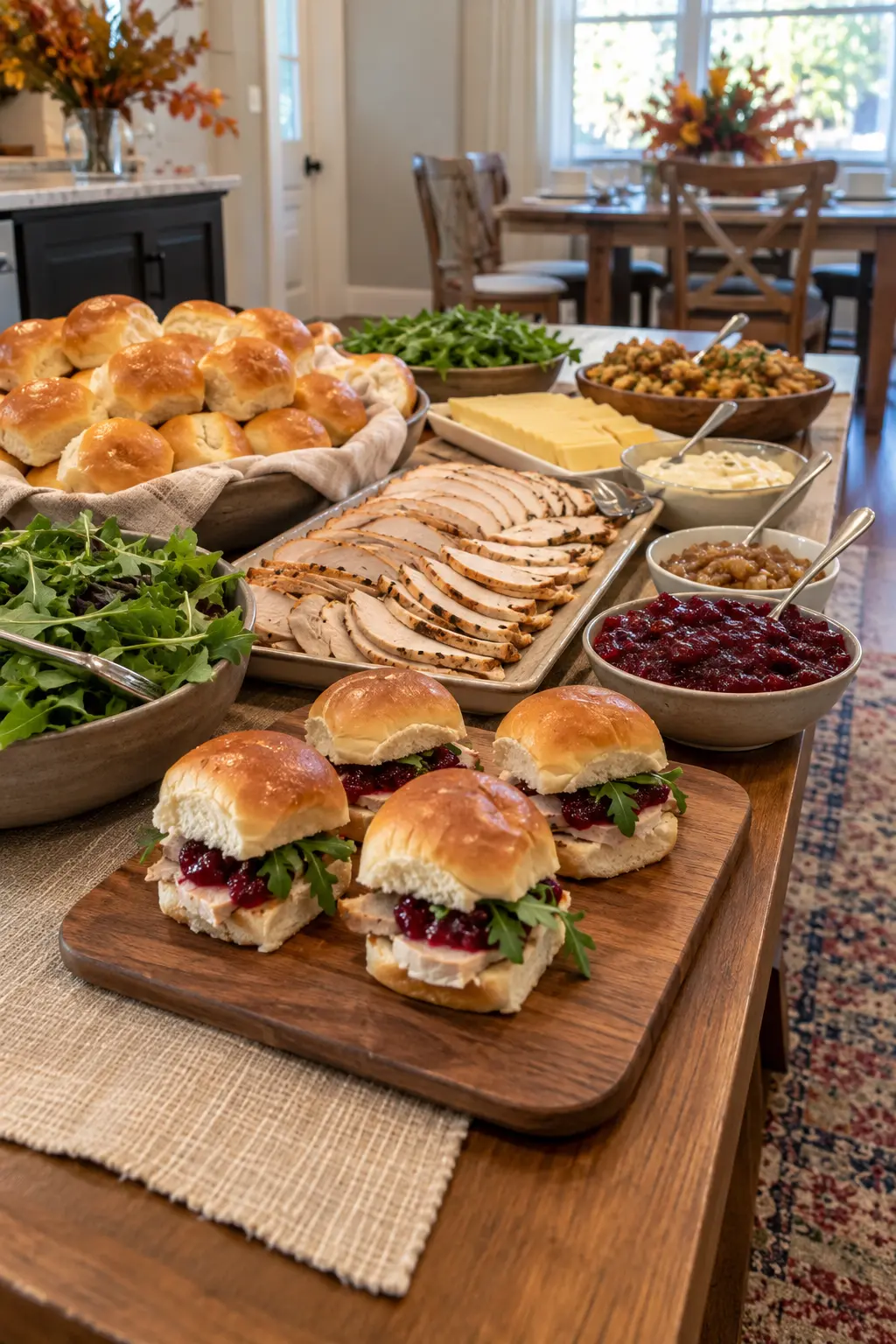
Set out small rolls, sliced turkey, cranberry sauce, and a few toppings for guests who prefer a handheld plate. Keep the choices focused and provide small paper or reusable trays so sliders do not fall apart on the walk back to a seat.
37. Vegetarian Stuffed Squash Platter
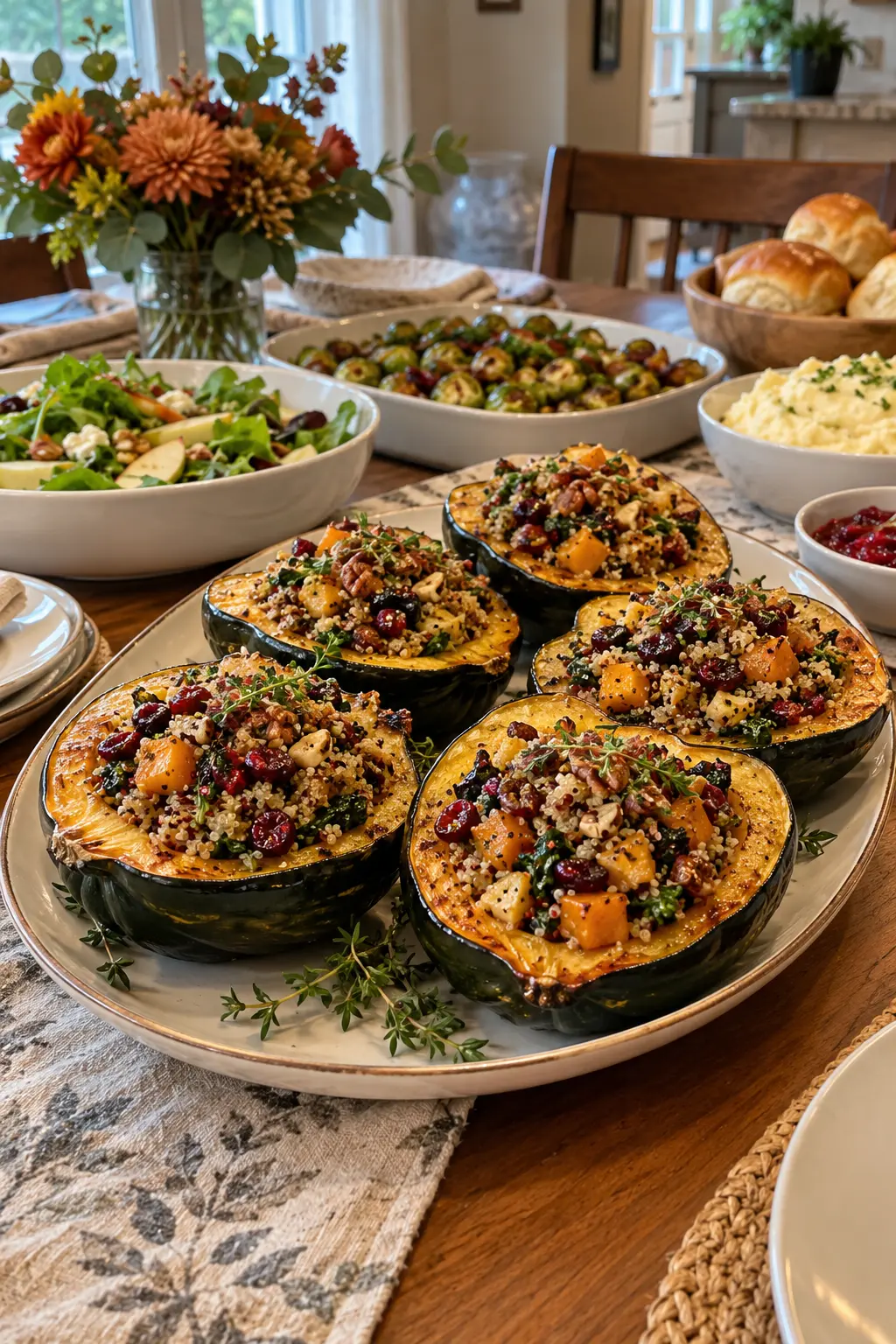
Arrange roasted squash halves filled with grains, herbs, and vegetables on a dedicated platter. The dish reads as a true main course, holds its shape in a buffet, and gives meatless guests something substantial to choose first.
38. Gluten-Aware Serving Zone
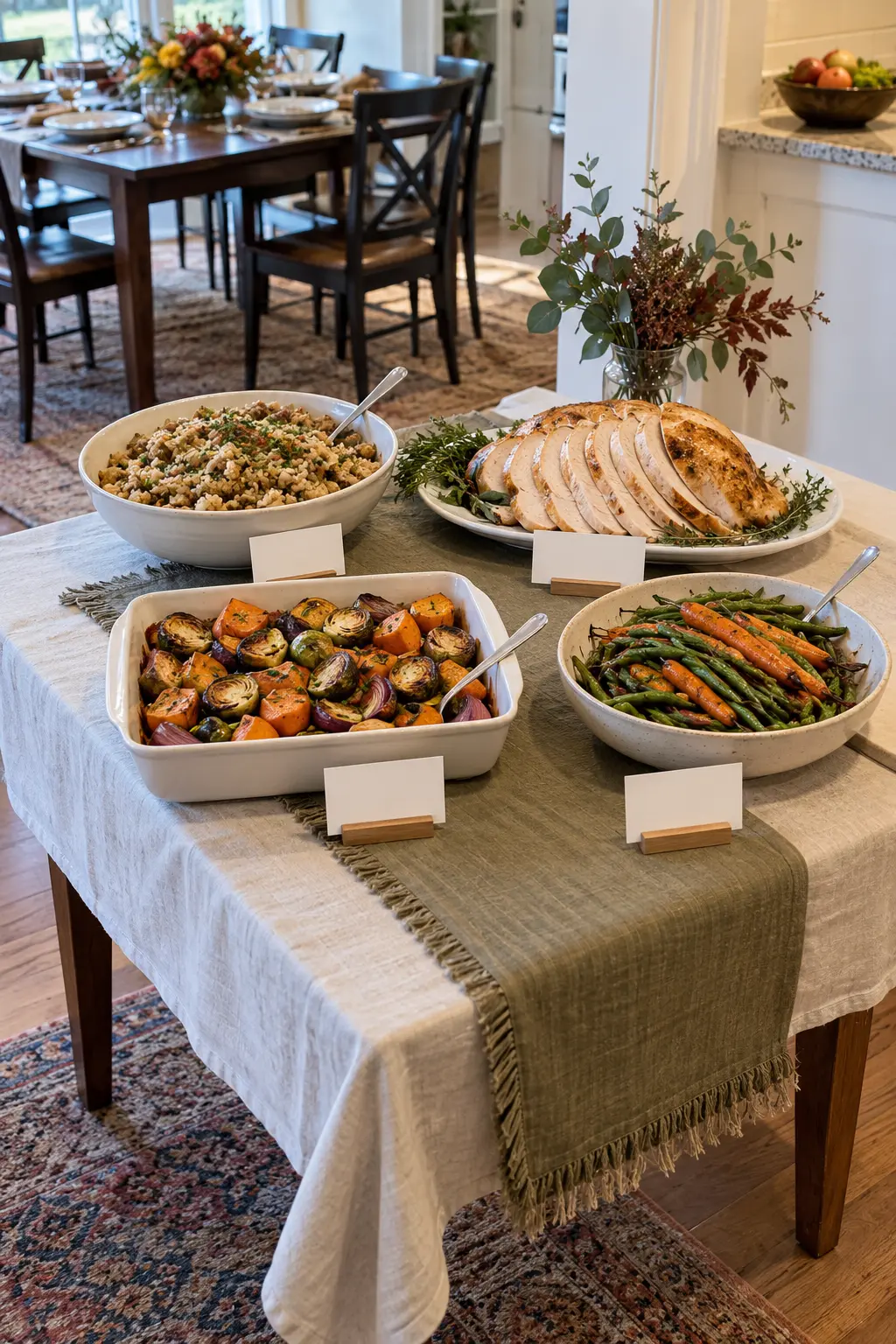
Group suitable dishes on a separate end table with their own utensils and verified labels. Separation can reduce mix-ups, but avoid making medical guarantees unless the kitchen and ingredients were managed to the required standard.
39. Dairy-Free Sides Station
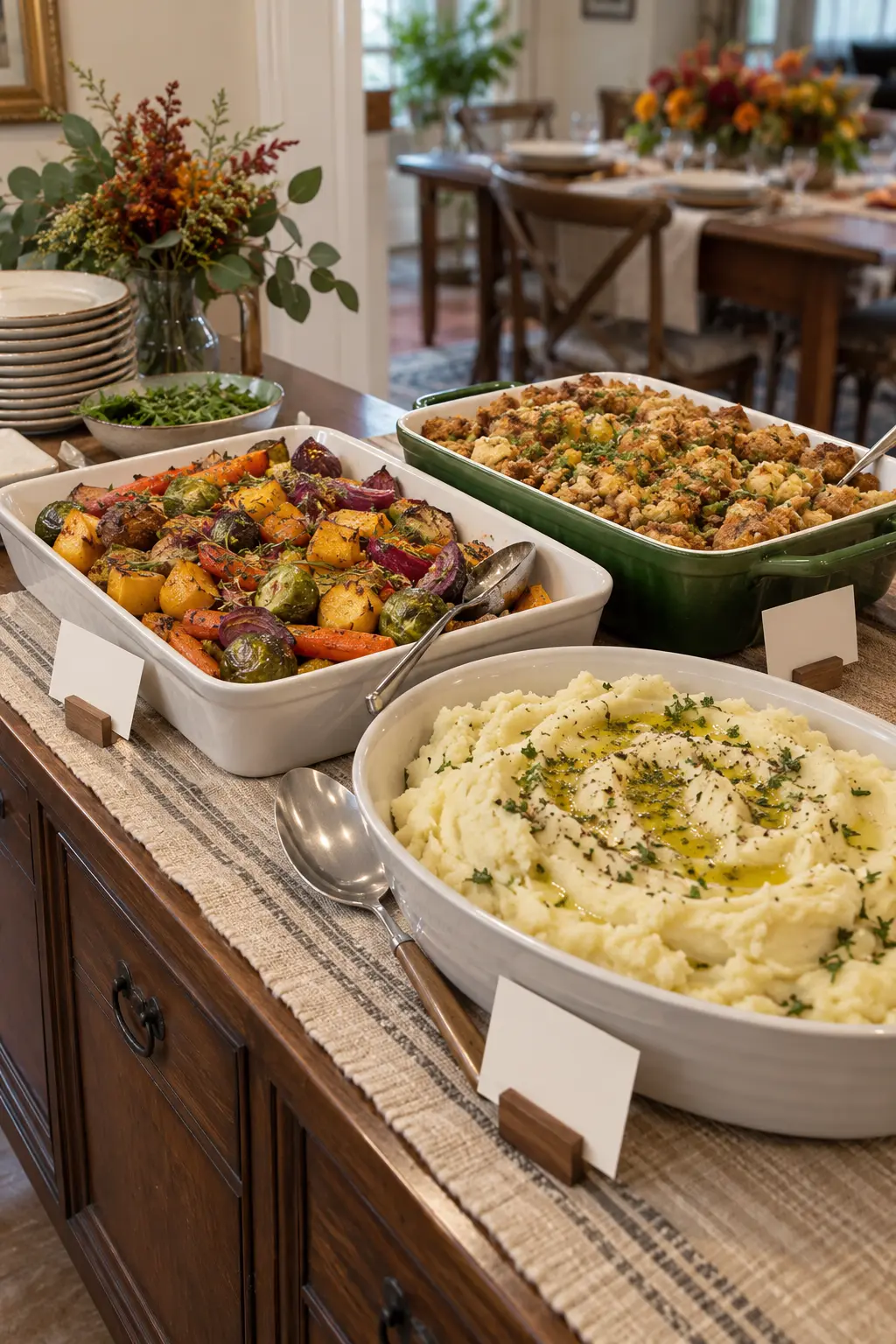
Place confirmed dairy-free sides together with dedicated utensils so guests do not have to inspect every casserole. Use dishes that belong naturally on the menu, such as roasted vegetables and olive-oil potatoes, instead of relying on imitation-heavy replacements.
40. Mild-and-Spicy Sauce Pairing
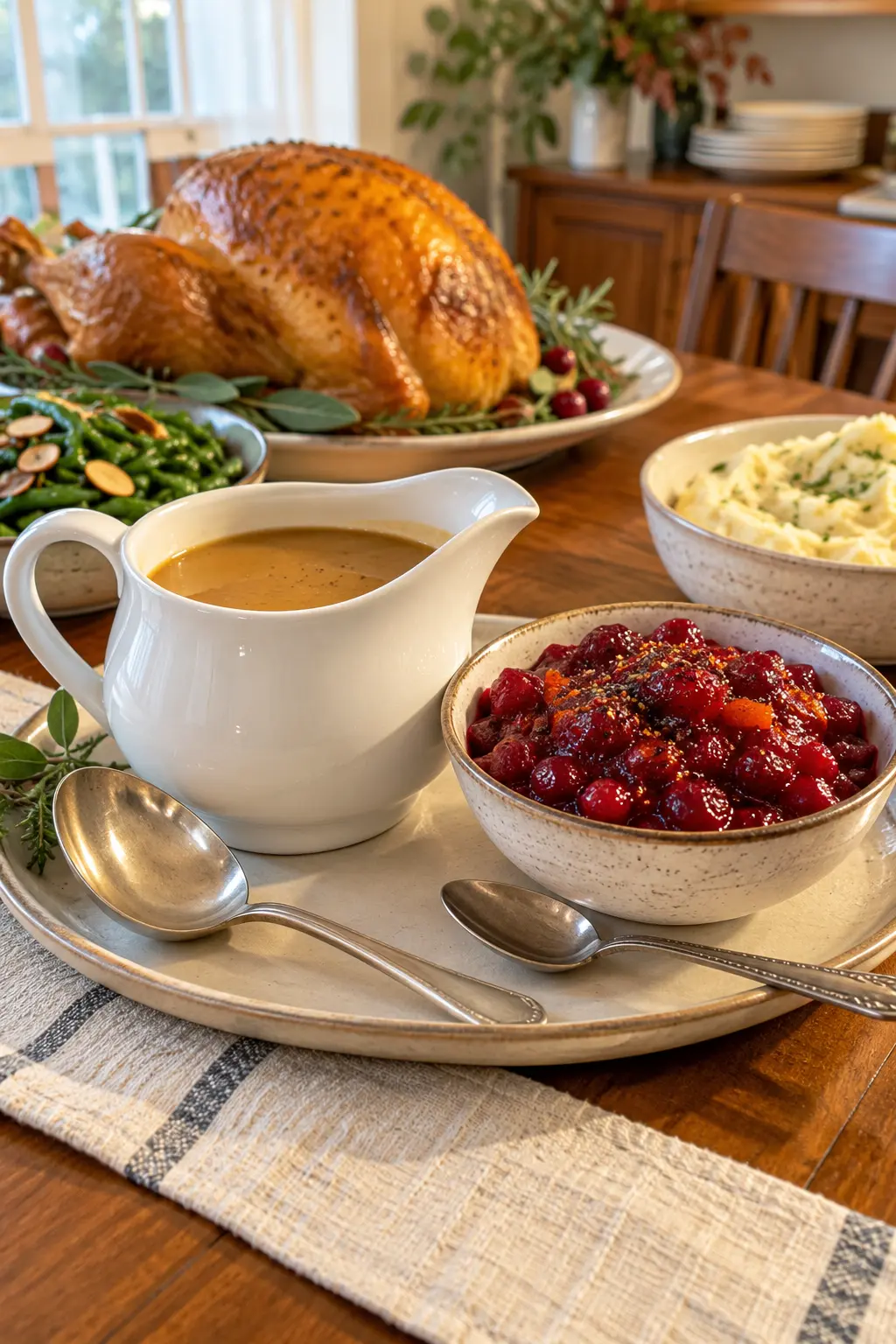
Offer one familiar sauce and one bolder option, such as classic gravy beside a peppery cranberry sauce. Two clearly separated choices add interest without forcing the entire menu to become spicy or creating a long condiment row.
41. Regional Sides Tasting Flight
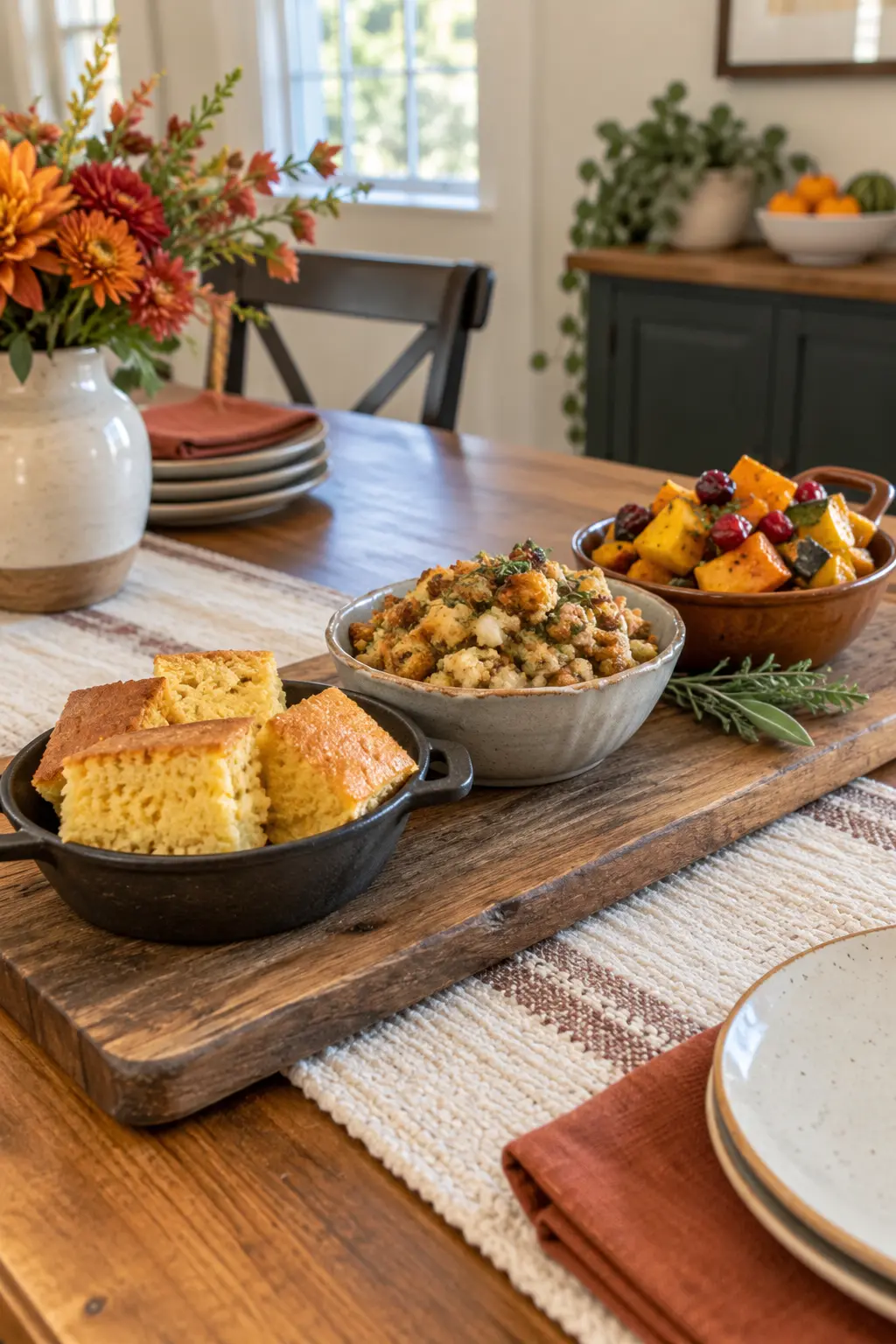
Choose three regional side dishes and serve them in modest tasting portions, such as cornbread dressing, oyster-free coastal-style stuffing, or a Southwestern squash dish. A limited flight adds conversation without doubling the entire menu.
42. Family Recipe Spotlight
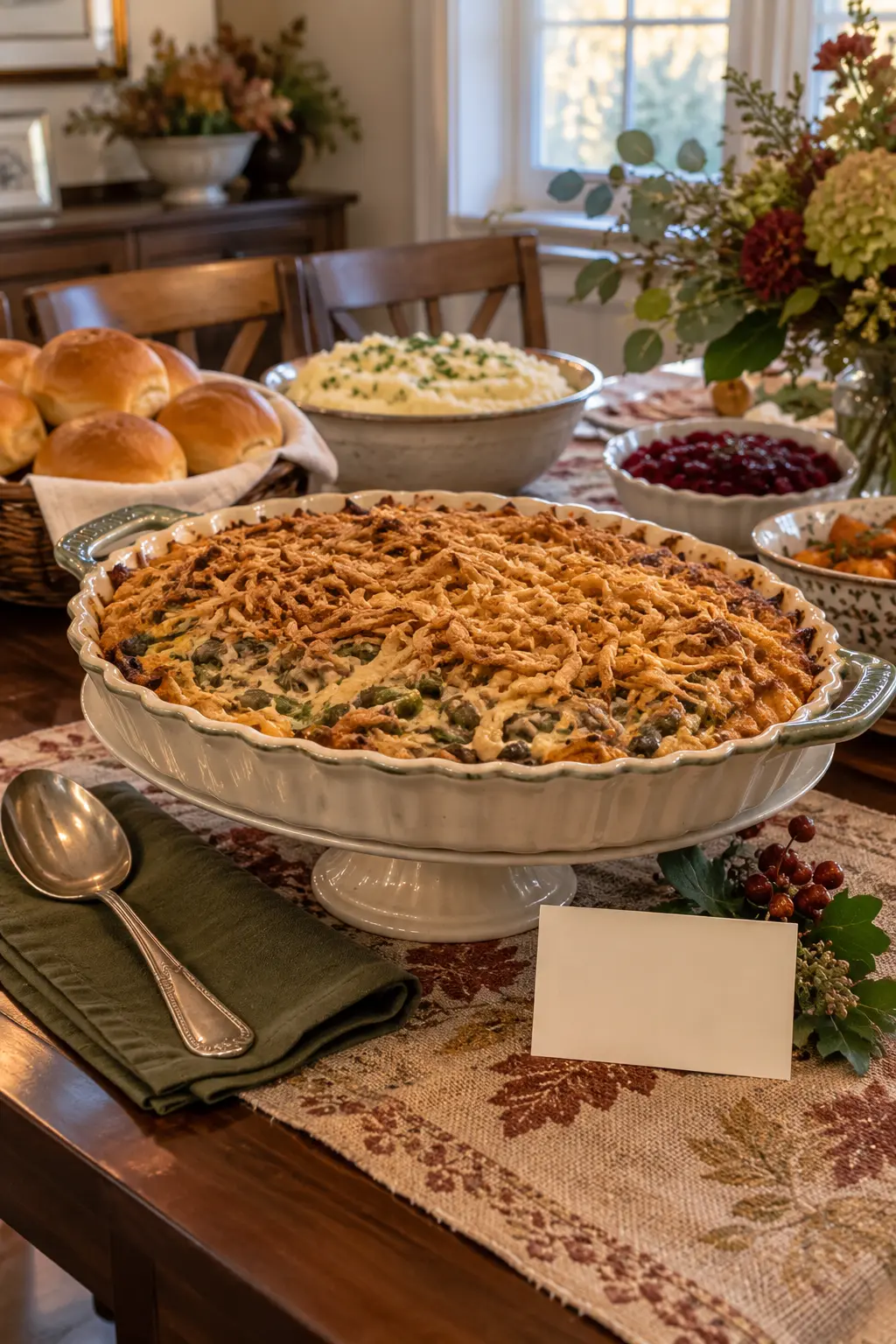
Give one family recipe a prominent position on a low pedestal or special platter. A small blank keepsake card can mark it without requiring a long story in the serving line, while the rest of the buffet stays visually calm.
Simple Thanksgiving Buffet Styling Ideas
Buffet decor should frame the food rather than compete with it. Use the back edge, wall, and table ends for visual interest, leaving the center and front edge clear for serving.
43. Tiered Risers Along the Back
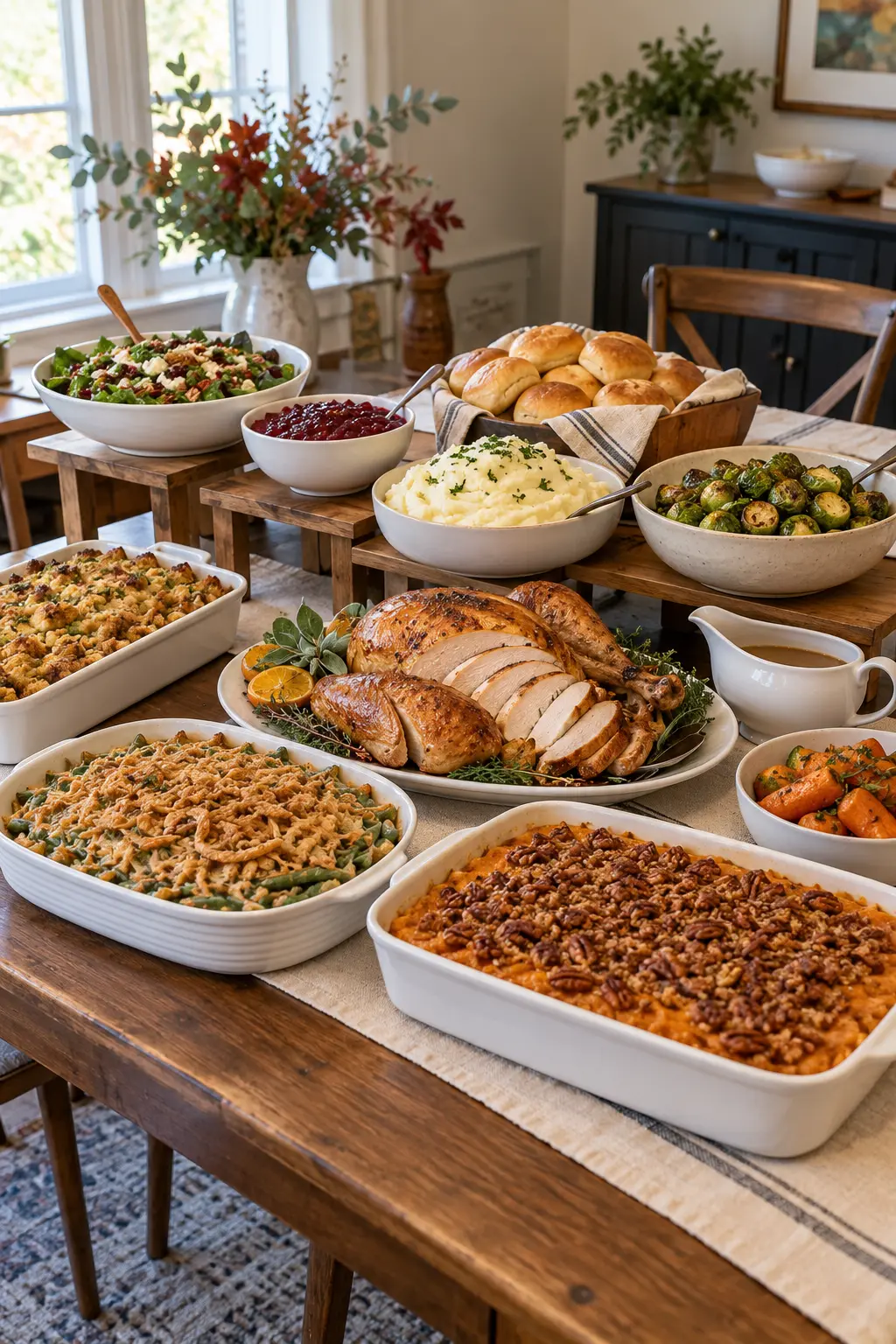
Place sturdy, low risers along the back edge to lift light bowls and bread above flatter dishes. Keep heavy casseroles at table level and test every stand for stability before adding food or letting guests reach around it.
44. Neutral Stoneware Buffet
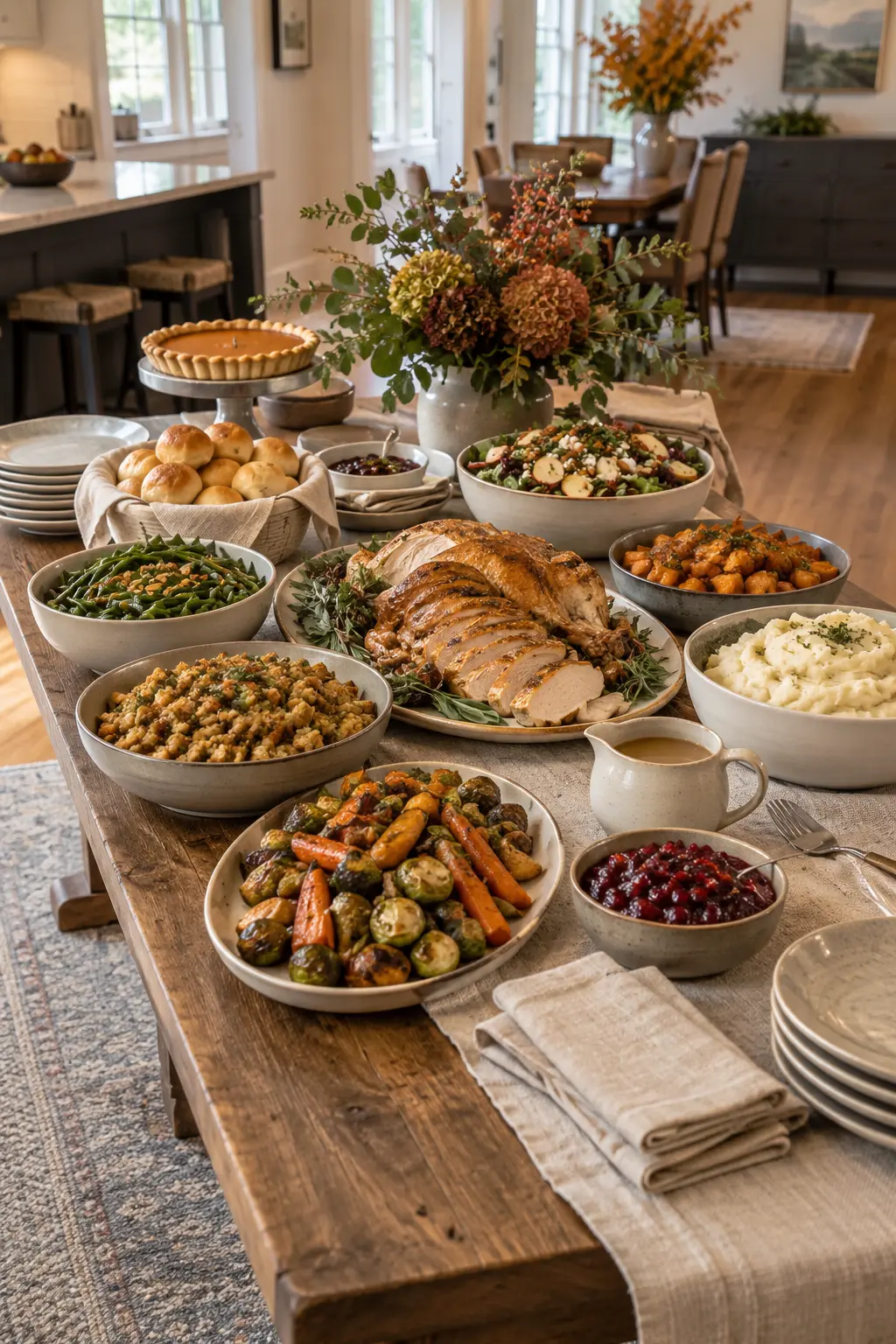
Use coordinated stoneware in cream, taupe, and charcoal to make a mixed menu feel unified. Vary the vessel shapes for practical serving, but repeat a few finishes so the display looks collected rather than matched from one boxed set.
45. Mixed Vintage Serving Pieces
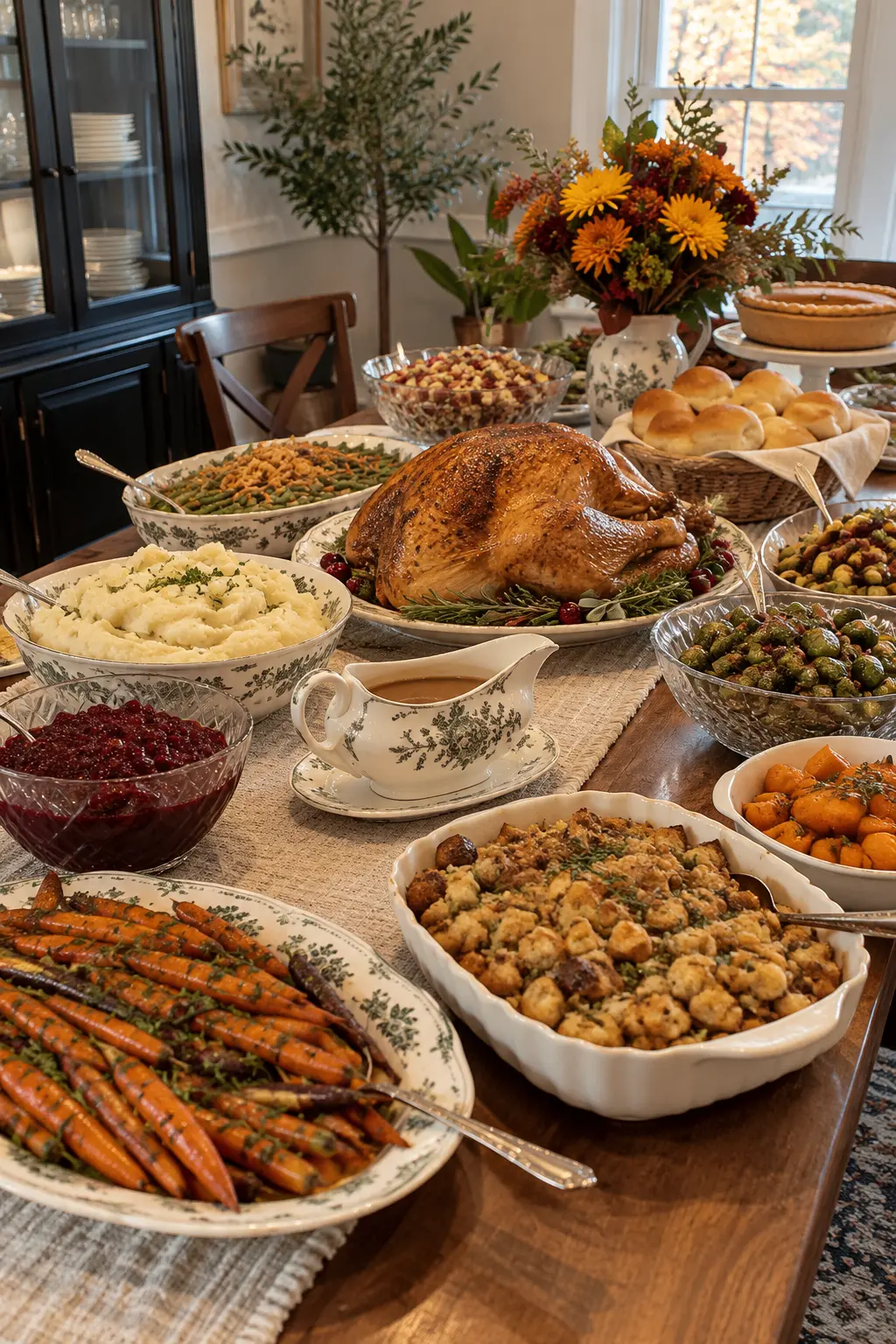
Mix vintage platters, pressed-glass bowls, and a few silver-toned pieces for a collected table. Check older items for food-safe condition, and use liners or modern inserts when a decorative vessel is better suited to holding wrapped bread than moist food.
46. White Pumpkin Backdrop
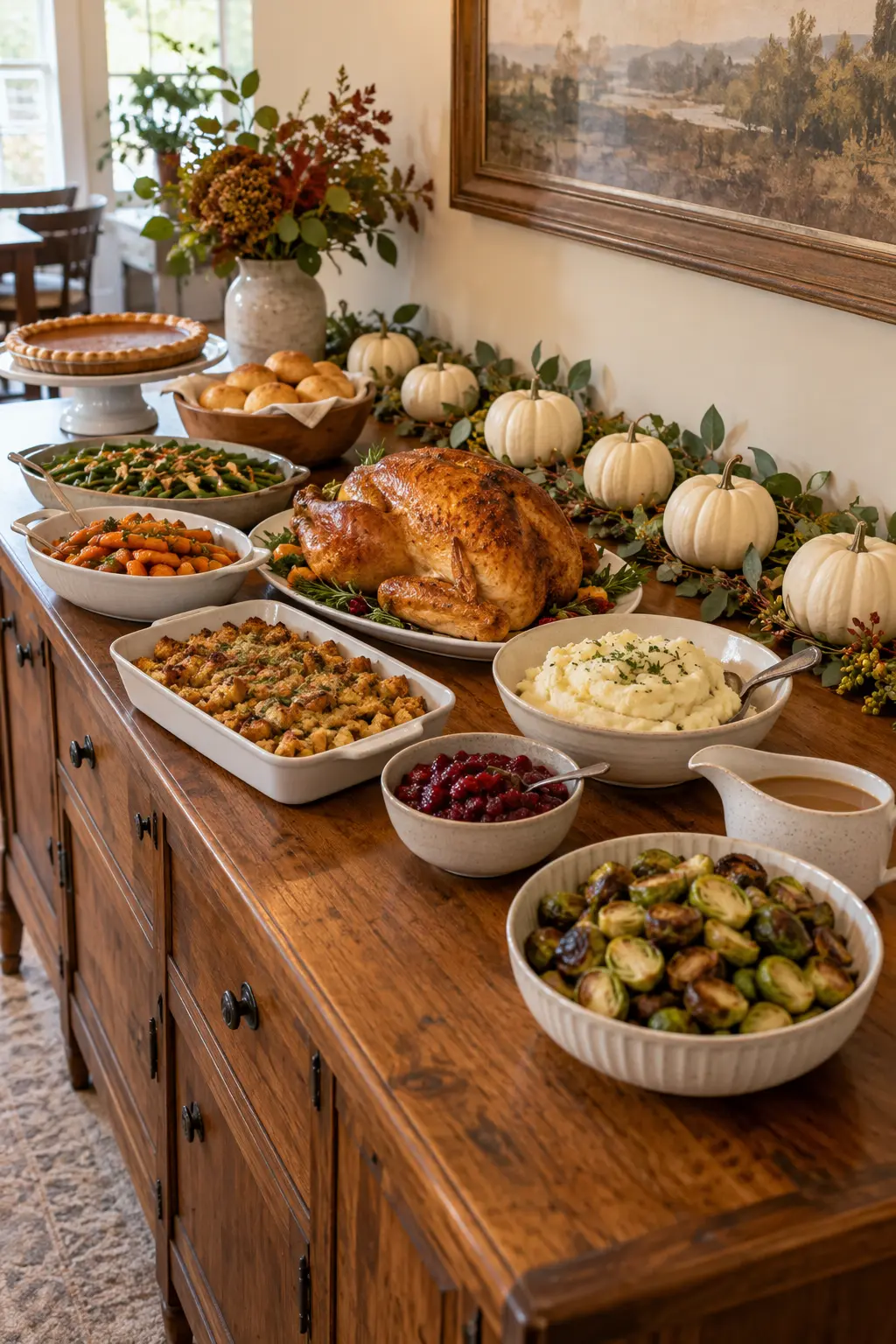
Line a few white pumpkins along the wall or back edge of the buffet, leaving the serving zone open. The repeated shape creates a seasonal backdrop without scattering loose leaves, stems, or decorations where food is being handled.
47. Fresh Herb Greenery
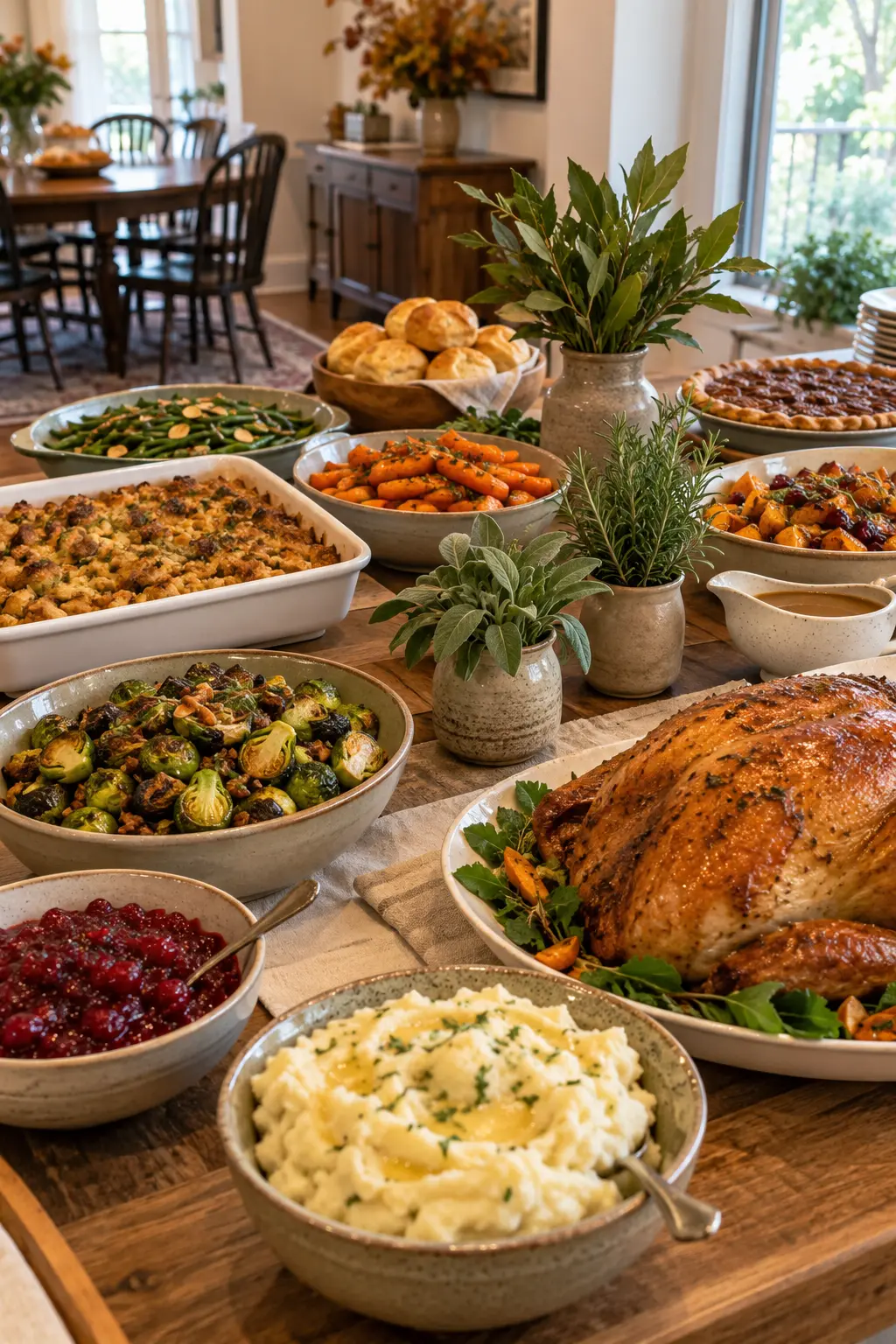
Use clean rosemary, sage, or bay branches in small vessels between serving zones rather than loose across the table. The greenery echoes the menu, takes little space, and can be removed quickly if it begins to wilt.
48. Fall Fruit as Edible Decor
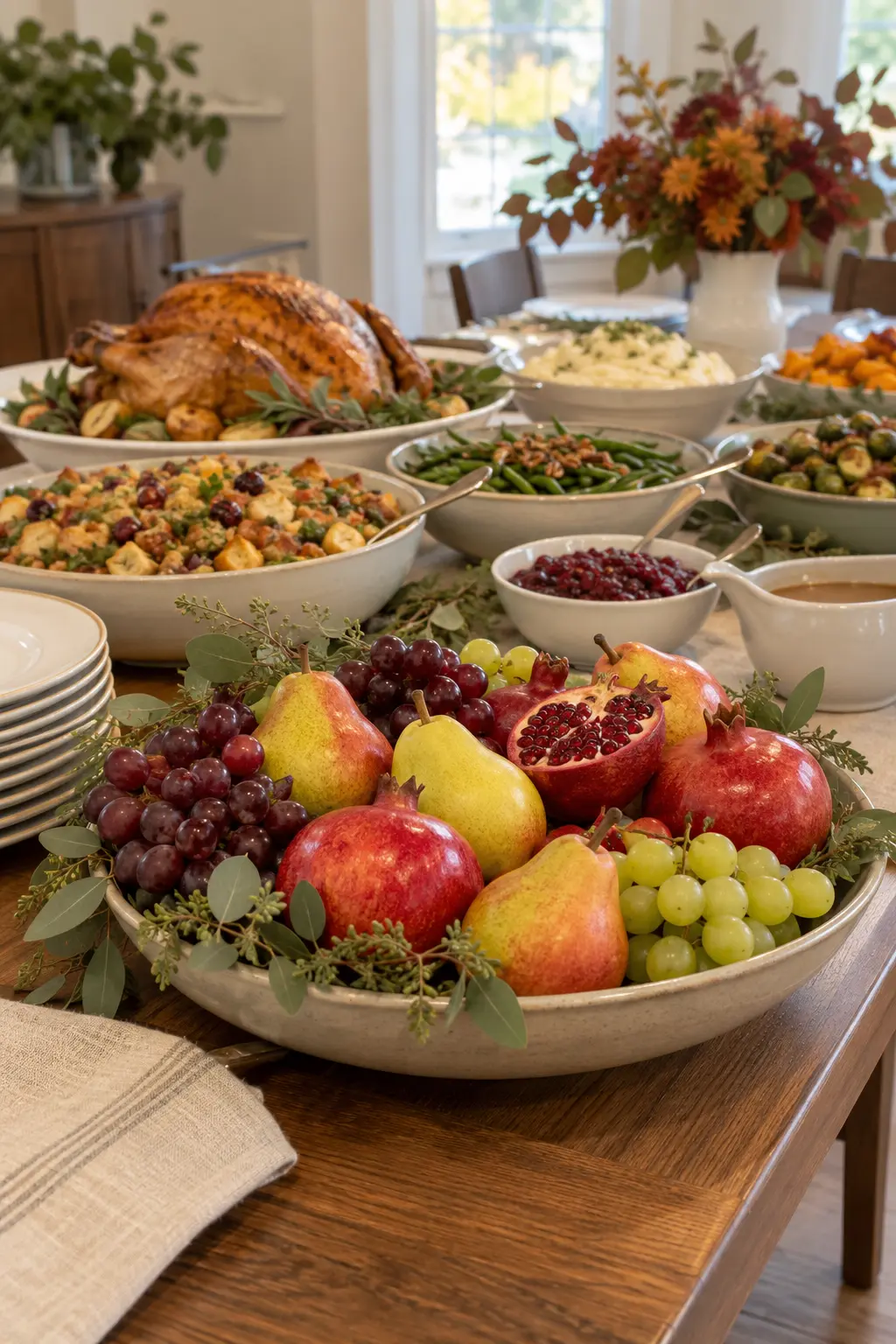
Arrange pears, pomegranates, and small grape clusters in one shallow bowl or at the table ends. The fruit brings color and shape without single-use decor, and any untouched pieces can return to the kitchen after dinner.
49. Layered Linen Runners
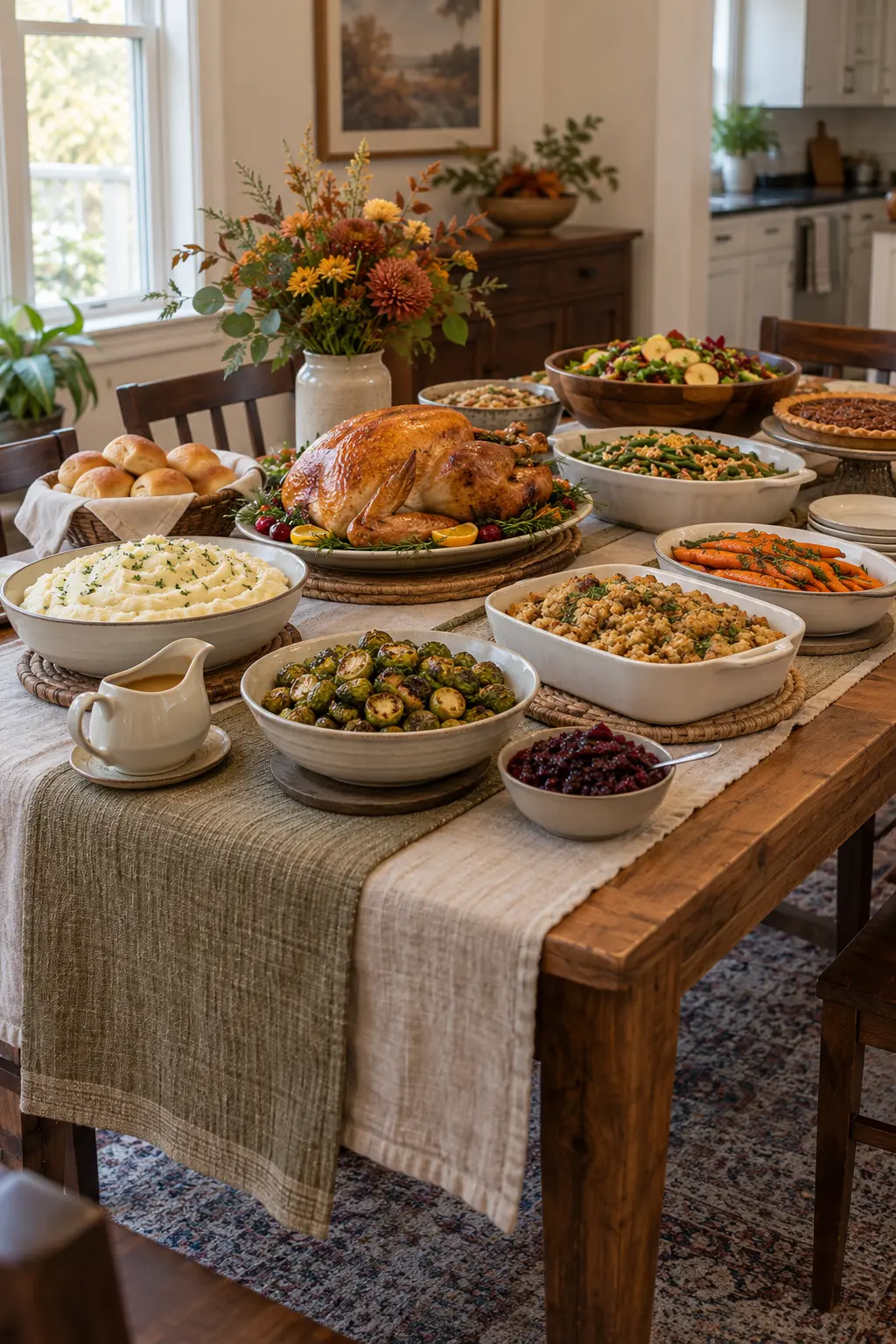
Layer two washable runners across a bare table instead of covering the surface with a full cloth. The wood remains visible, hot dishes still need proper trivets, and individual runners are easier to remove when a spill happens.
50. Warm Battery-Candle Glow
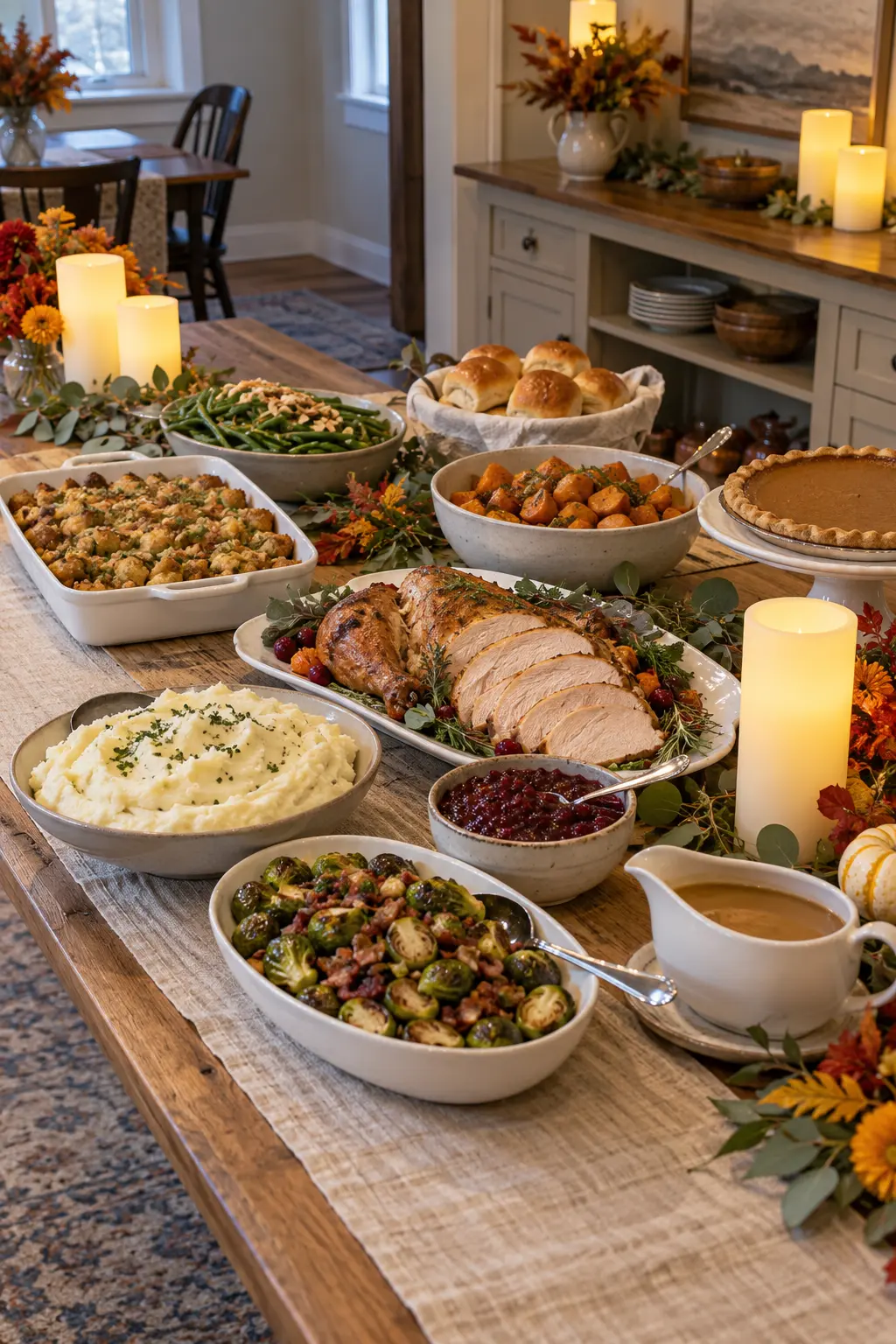
Place flameless pillar candles at the buffet ends or on a shelf behind the food for warm evening light. They create atmosphere without adding an open flame near napkins, sleeves, dried greenery, or busy serving hands.
Dessert, Drinks, Leftovers, and Cleanup
The buffet works better when repeat-traffic zones have their own homes. Plan drinks, dessert, leftovers, and dish return as carefully as the main meal so guests can help themselves without circling back through the hot-food line.
51. Separate Pie Bar
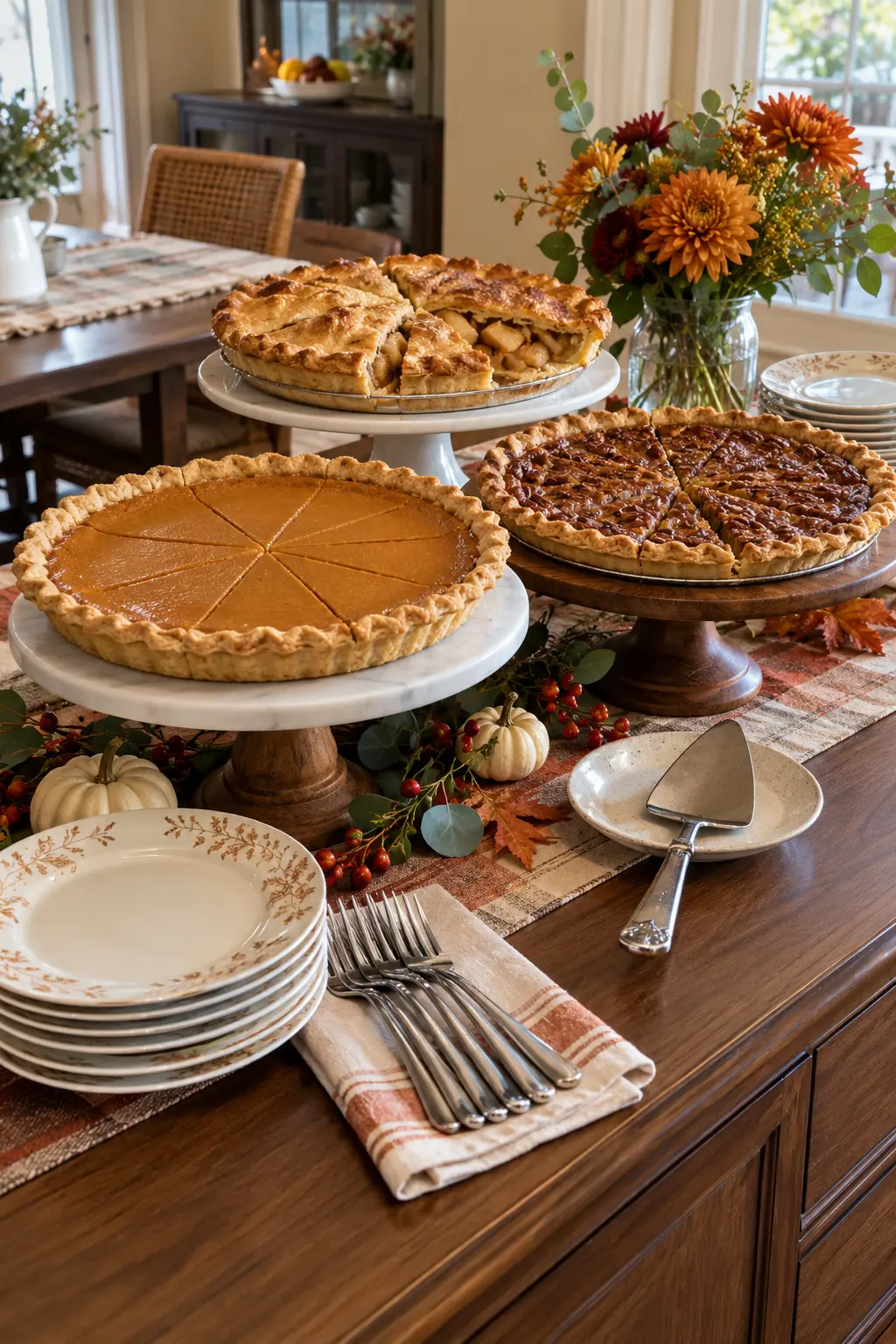
Move pies to their own table with dessert plates, forks, servers, and a place for used utensils. Pre-slice firm pies shortly before serving, while softer desserts can stay whole until the station opens.
52. Bite-Size Dessert Tier
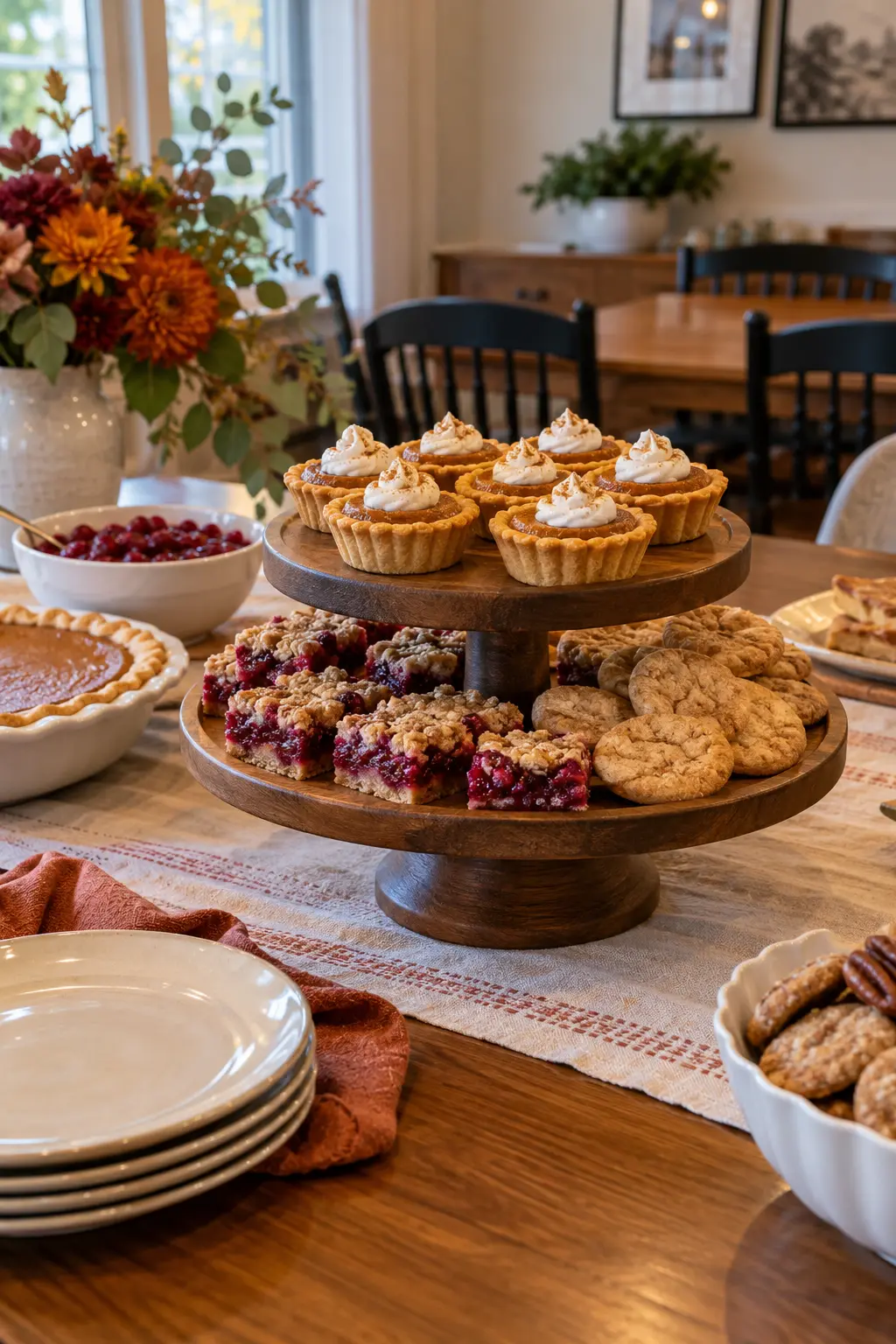
Arrange mini bars, tartlets, and cookies on a sturdy tiered stand so guests can sample more than one dessert without cutting large slices. Keep the stand low enough to remain stable and refill it in small batches.
53. Coffee and Hot Cider Station
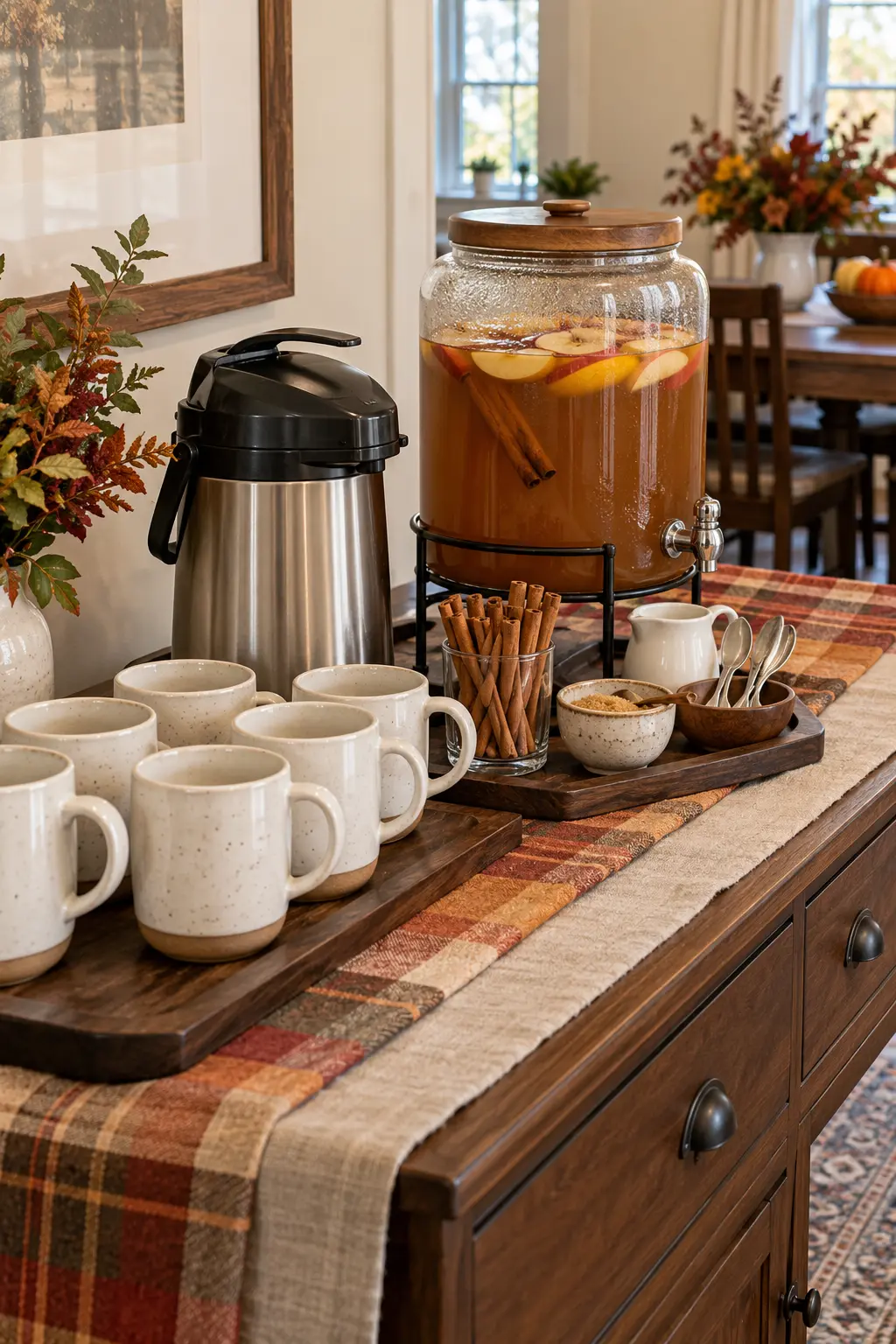
Set coffee and hot cider on a separate heat-safe surface with mugs, spoons, and only a few add-ins. Keep cords behind the station and provide a small tray for drips so guests can linger without blocking dessert service.
54. Leftover Packing Station
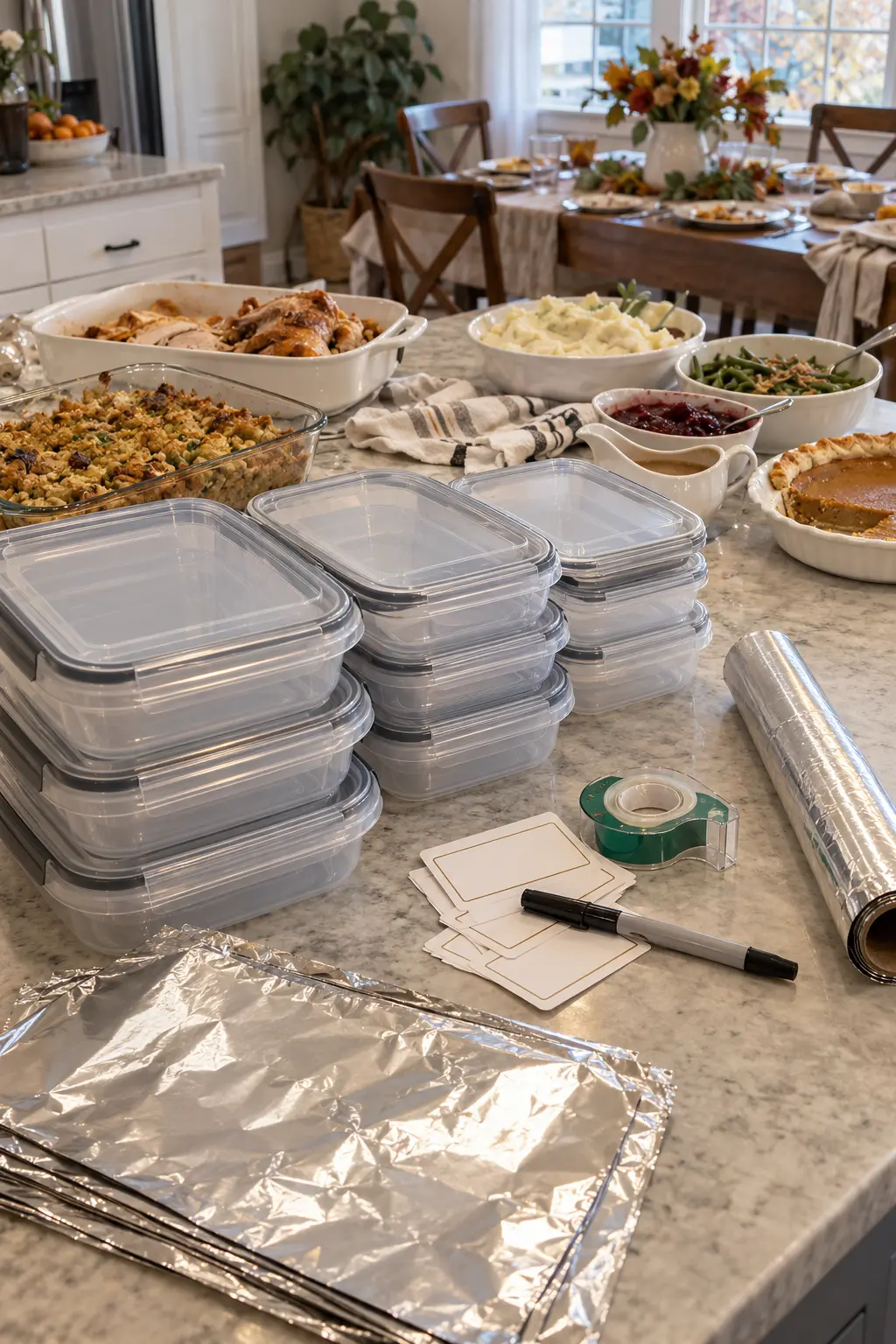
Prepare shallow containers, foil, tape, and a clean marker at an empty counter before dinner. After the meal, pack and refrigerate leftovers promptly rather than leaving guests to search through cabinets while food remains on the buffet.
55. Dish Return and Cleanup Zone
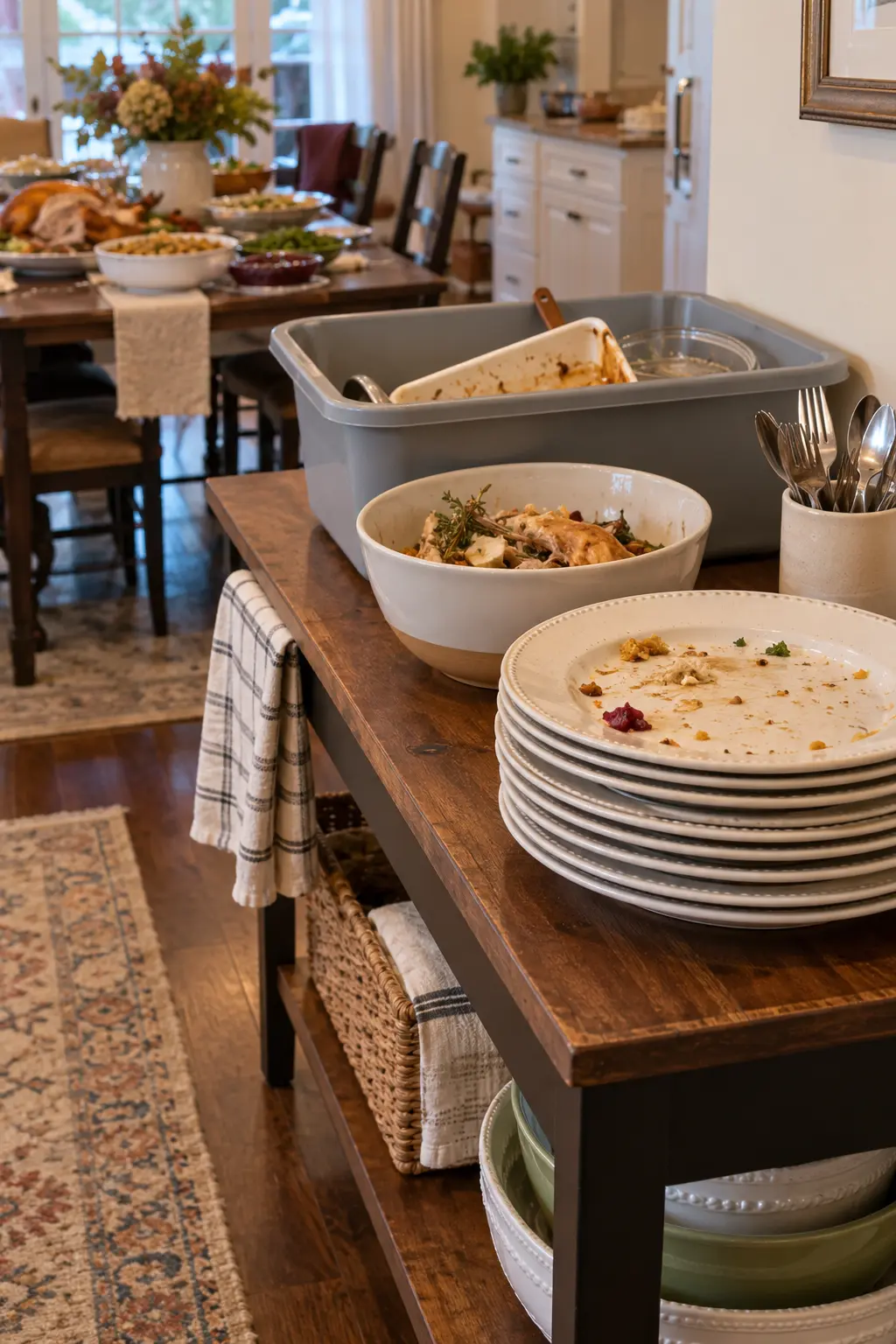
Create a dish-return zone away from food service with a bus tub, scrap bowl, and space for stacked plates. Guests can help clear without entering the kitchen work triangle, and the dining area resets faster for dessert.
Build the Buffet Around Your Space
A successful Thanksgiving buffet does not need matching equipment or an oversized dining room. It needs a clear route, reliable serving temperatures, manageable portions, and enough open space for guests to move comfortably.
Set out empty serving dishes the day before, label where each item belongs, and identify the backup and cleanup zones. That simple rehearsal catches missing utensils, crowded corners, and unsafe cord routes before the meal begins.
Frequently Asked Questions
What order should food go on a Thanksgiving buffet?
Start with plates, then arrange the main dish and sides in a logical sequence. Place sauces near the foods they accompany, with napkins and flatware at the end so guests keep a hand free while serving.
How do you keep Thanksgiving buffet food warm?
Use suitable chafing dishes, warming trays, or slow cookers according to their instructions. Check temperatures with a food thermometer, keep cords out of walking paths, and replenish with smaller hot batches when possible.
How can I set up a Thanksgiving buffet in a small space?
Use a narrow console, sideboard, or cleared counter for a one-way line. Edit the menu, serve in shallow vessels, keep backup food in the kitchen, and move drinks and dessert to separate surfaces.
How long can Thanksgiving food stay on a buffet?
Follow current USDA guidance: keep hot food at 140°F or warmer and cold food at 40°F or colder. Perishable food left at room temperature for more than two hours should be discarded.
This post may contain affiliate links: full affiliate disclosure.