
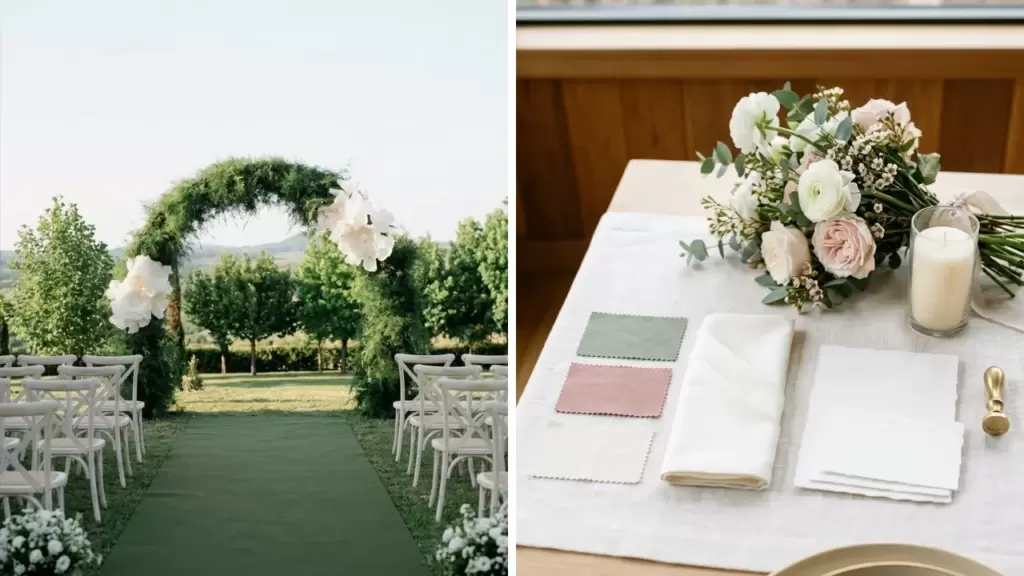
A smaller wedding budget works best when every purchase supports a visible priority, guest comfort, or reliable logistics instead of filling an arbitrary checklist.
These one hundred ideas cover saveable visual details and the practical decisions behind them, so you can compare options without copying someone else’s wedding.
As an Amazon Associate I earn from qualifying purchases.
Start with the choices that affect headcount, venue, food, and photography, then use the styling ideas that fit the money, time, and help remaining.
High-Impact Looks That Cost Less
1. Choose a Venue That Already Looks Finished
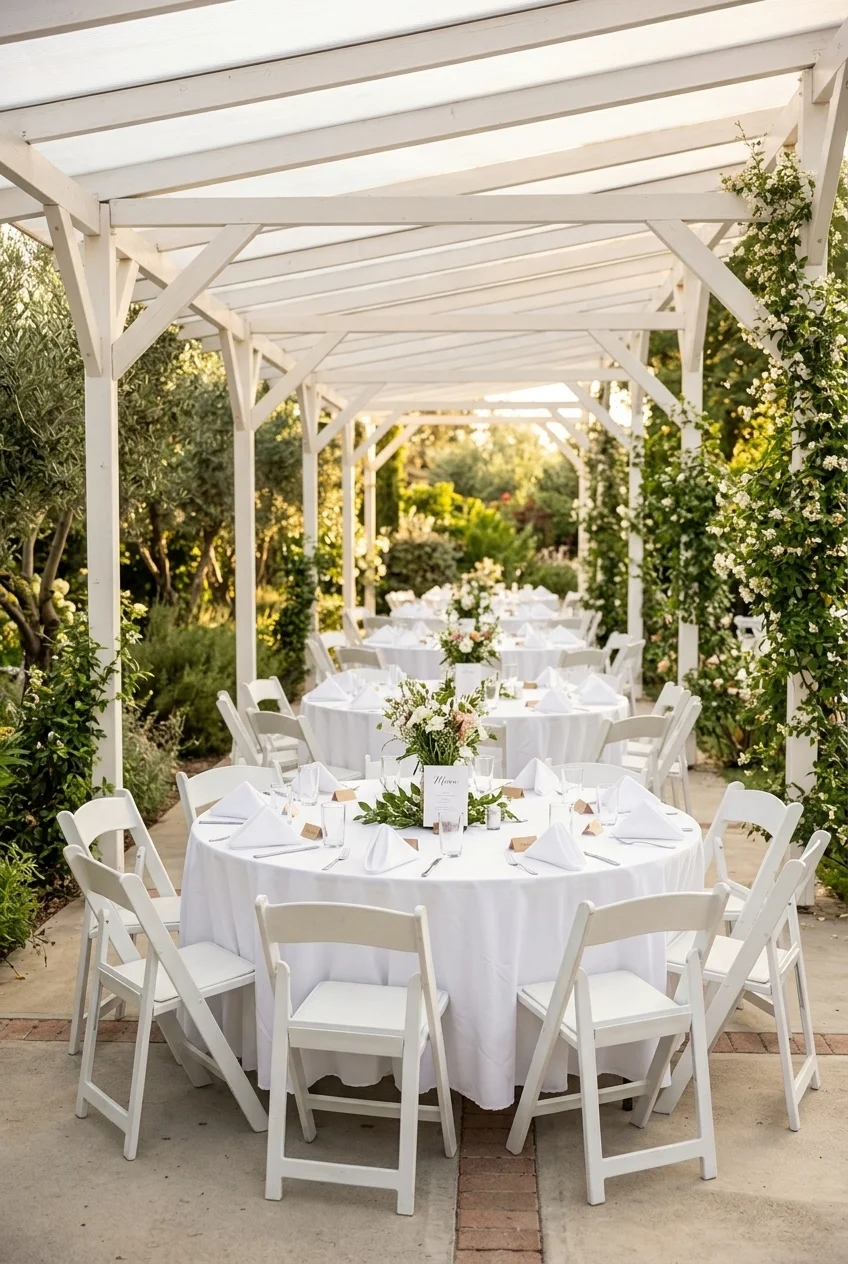
A garden, restaurant, library, or community room with strong architecture needs fewer rentals and decorations. Compare what each fee already includes before booking.
Photograph every included table, chair, light, and display stand during your tour. Those images become a realistic design inventory, not a wish list.
2. Build One Ceremony Focal Point
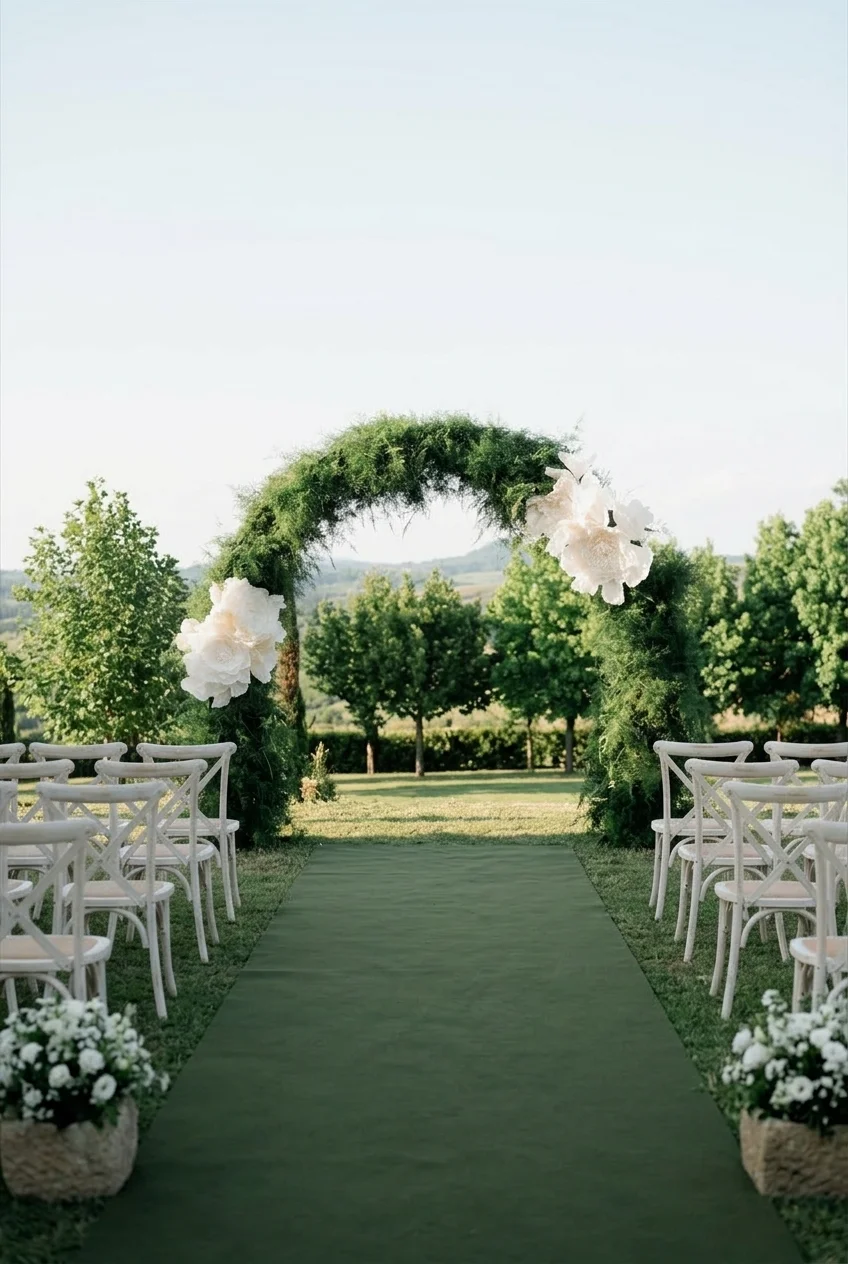
Concentrate flowers, fabric, or greenery at the ceremony backdrop instead of spreading small decorations everywhere. One complete composition reads better in wide photographs.
Move the backdrop behind the sweetheart table or dessert display afterward. Confirm who will relocate it and whether the structure remains stable indoors.
3. Use a Tight Three-Color Palette
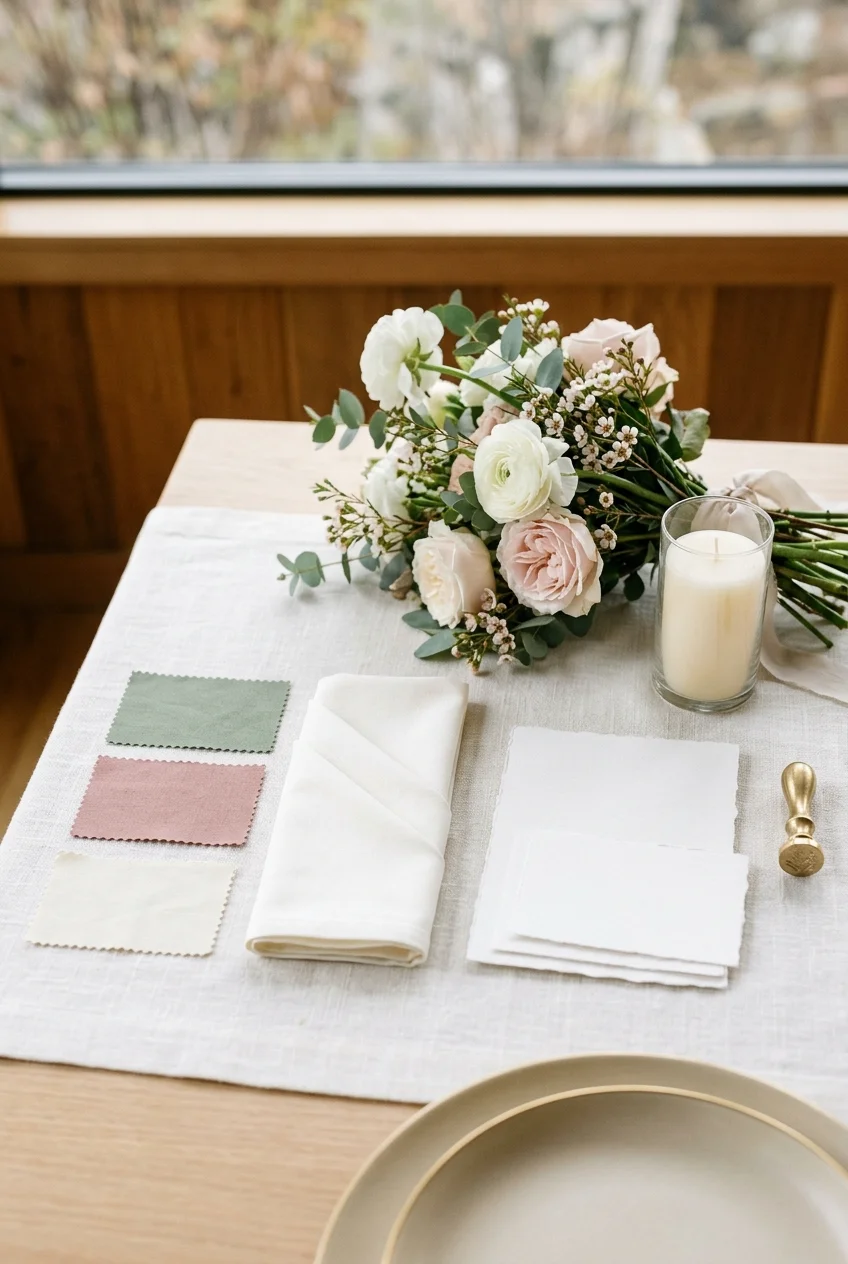
Choose one neutral, one main color, and one small accent. Repeating them across linens, paper, flowers, and candles makes mixed purchases feel coordinated.
Collect swatches before ordering multiples because online colors vary. If two items clash, keep the better one and drop the unnecessary accent.
- Count every repeated unit before purchasing.
- Include delivery, setup, cleanup, and return costs.
- Keep one practical alternative if the original plan changes.
4. Group Candles Instead of Scattering Them
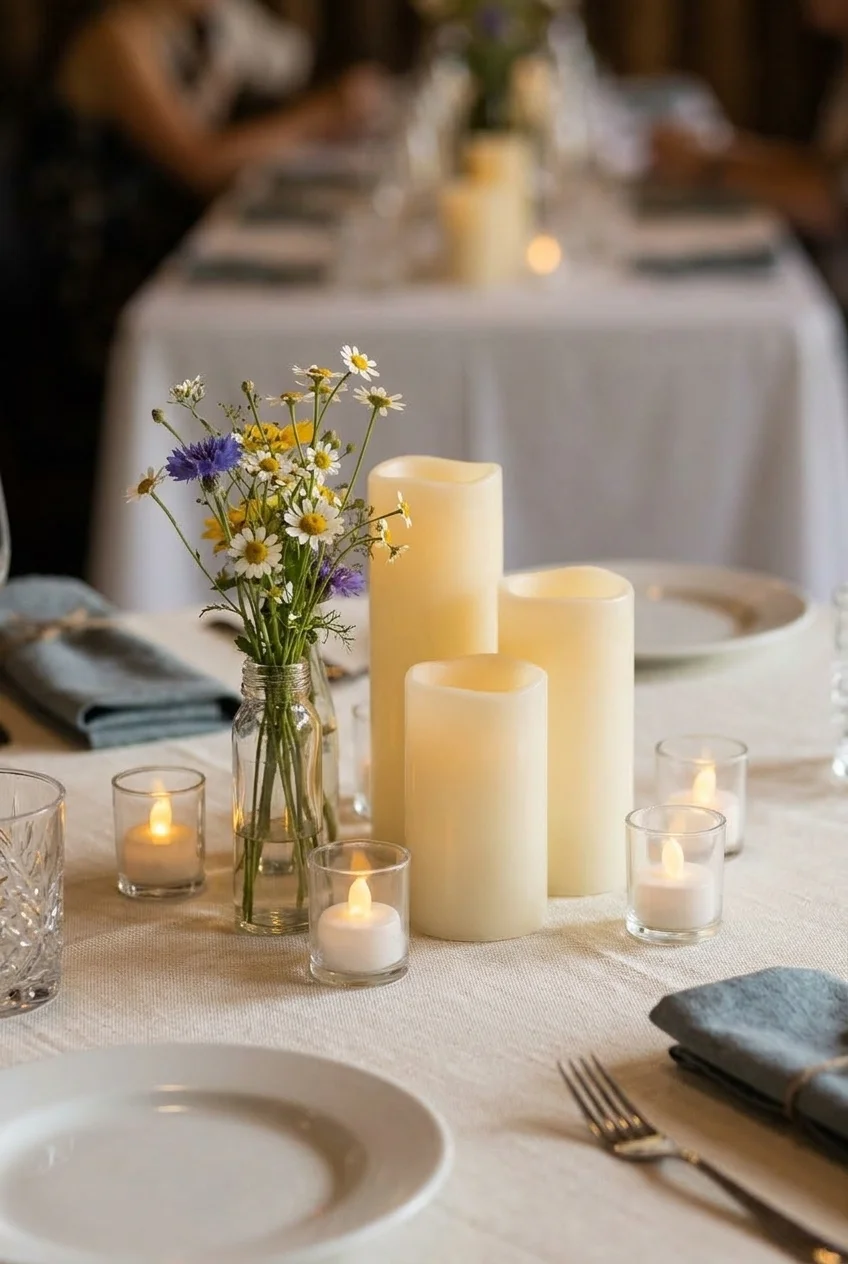
Several candles at varied heights create a deliberate pool of light, while isolated votives disappear on large tables. Repeat compact groups at major focal points.
Ask the venue about open-flame rules before buying anything. Flameless versions are easier where children, trailing fabric, or tight aisles create hazards.
Planning tip Test this choice at realistic scale before ordering the full quantity, and record the final count, setup owner, and removal plan.
5. Frame the Room With Borrowed Fabric
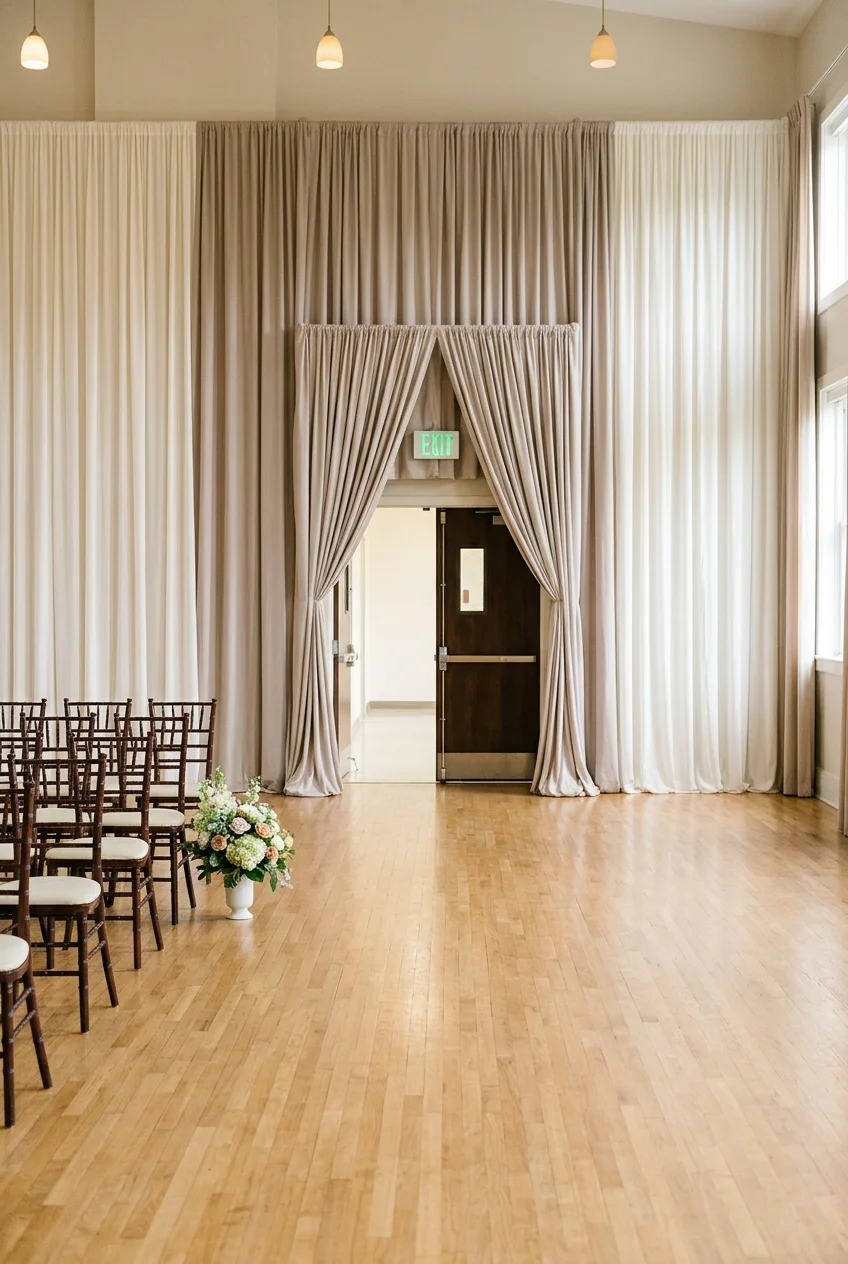
Fabric can soften one unattractive wall, stage, or doorway without covering an entire venue. Choose washable panels in one consistent shade and borrow stands.
Steam panels before installation and secure the bottoms where guests walk. Never attach fabric to sprinklers, emergency signs, or venue equipment.
6. Use Greenery Where Flowers Are Not Needed
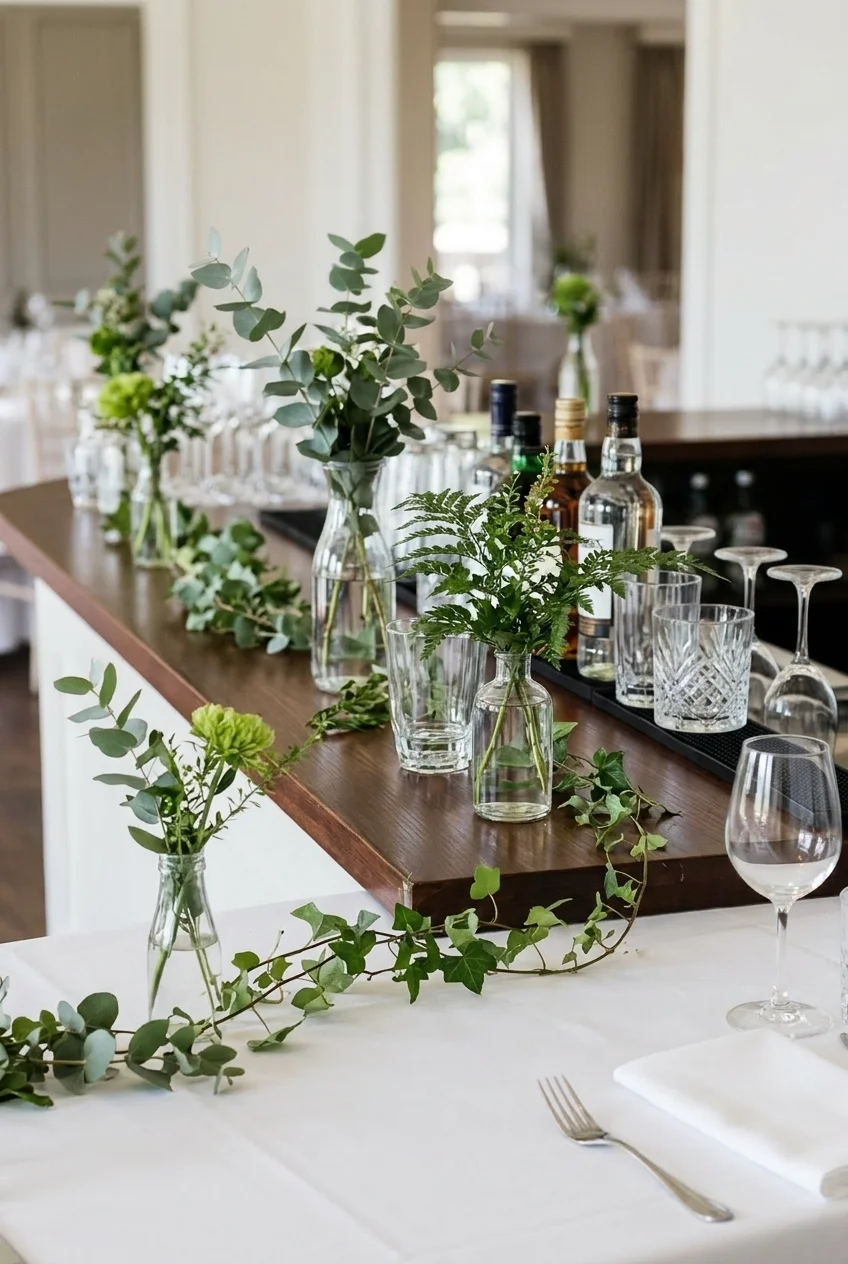
Loose greenery can define a bar, staircase, or table edge without requiring complex arrangements. Use it selectively where the line of foliage will be visible.
Compare fresh, potted, and reusable faux options after considering delivery, water, cleanup, and storage. The cheapest stem price may not mean lowest total cost.
7. Collect Clear Vases From Thrift Stores
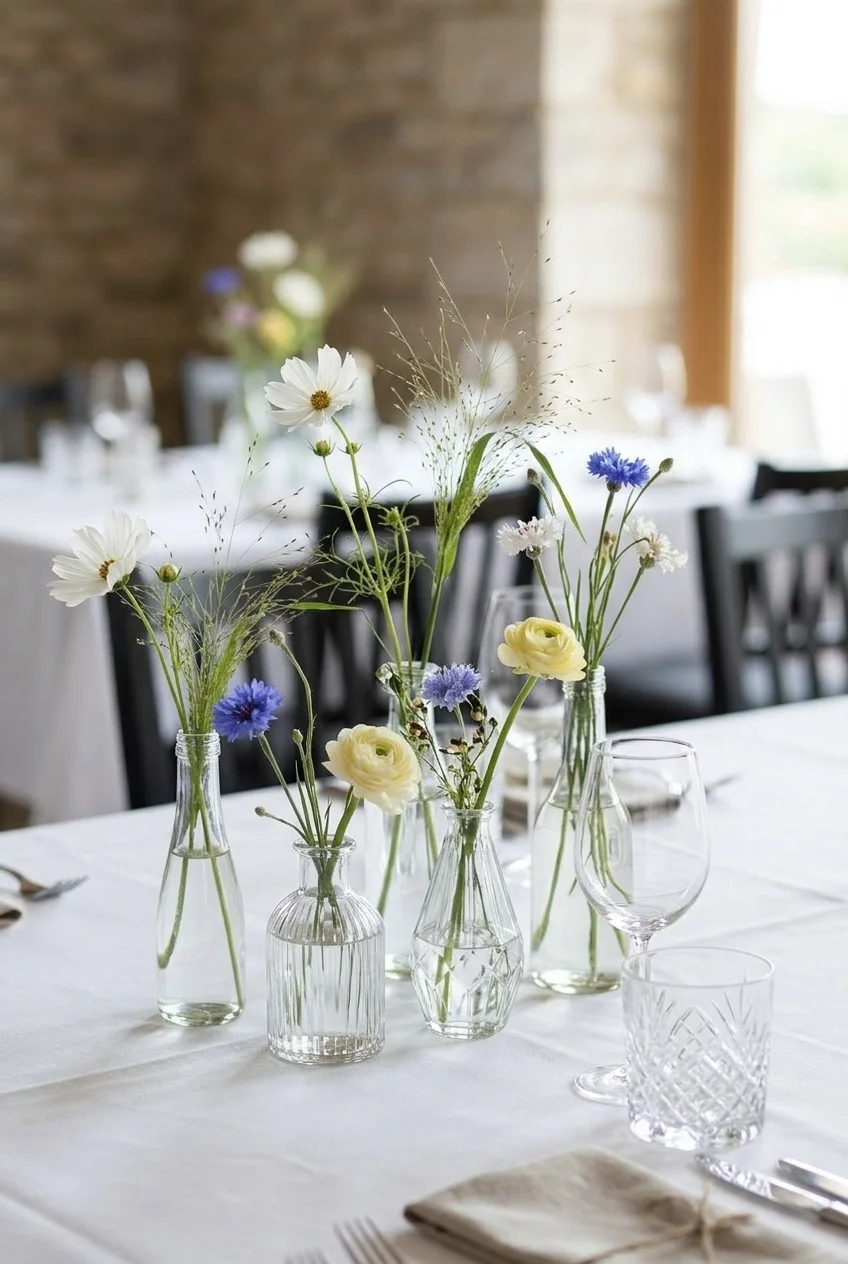
Mixed clear bottles and bud vases look related because the material repeats, even when shapes differ. Check rims for chips and wash every vessel early.
Set out all tableware before choosing quantities. Three small vessels may crowd a narrow table, while one low bottle leaves room for shared dishes.
8. Turn String Lights Into the Ceiling Detail
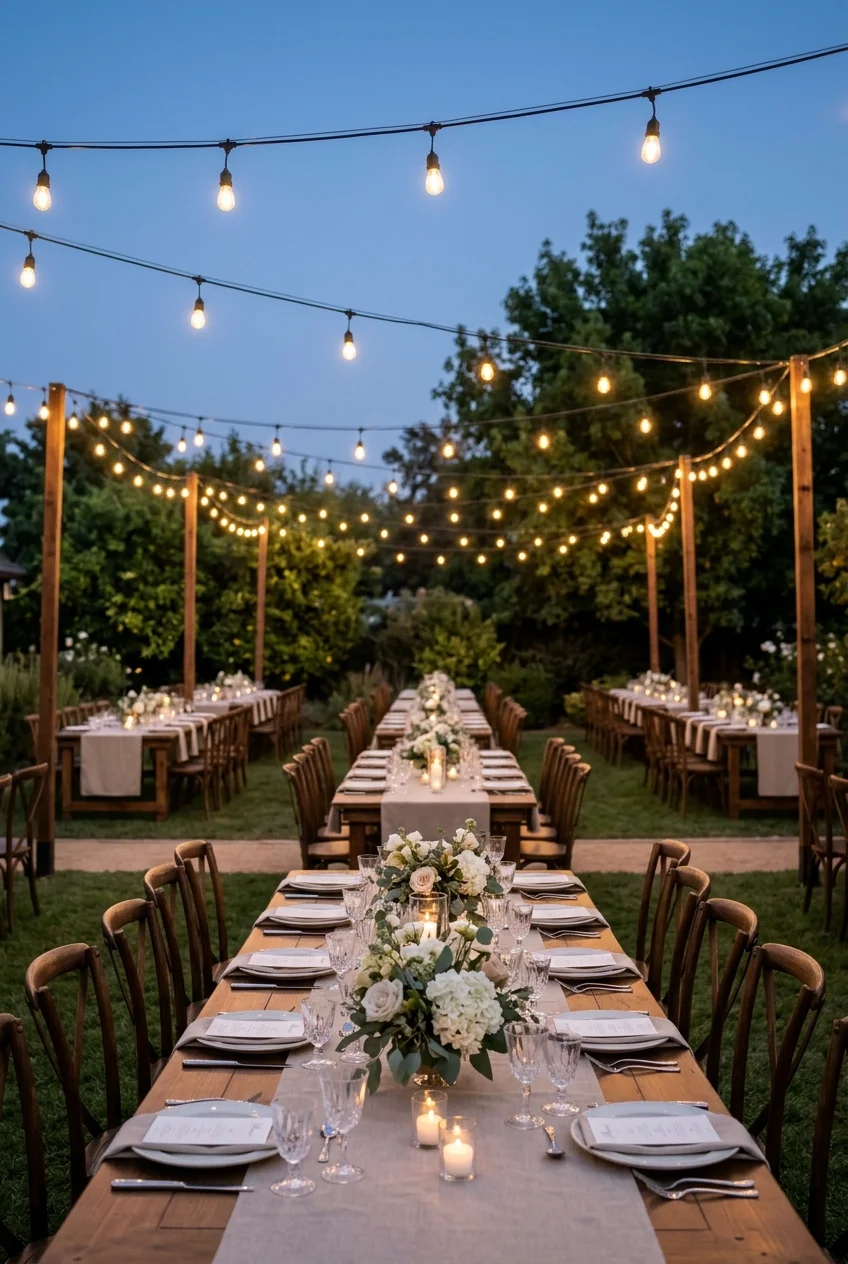
Warm string lights draw attention upward and make a plain tent or backyard feel finished after sunset. Concentrate them over dining and dancing areas.
Use only venue-approved, outdoor-rated equipment where required. Price poles, installation labor, extension coverage, and power access before treating lights as inexpensive.
For more adaptable visual details, compare these garden party decoration ideas and reuse only the elements that fit your venue, schedule, and guest needs.
9. Style One Strong Welcome Moment
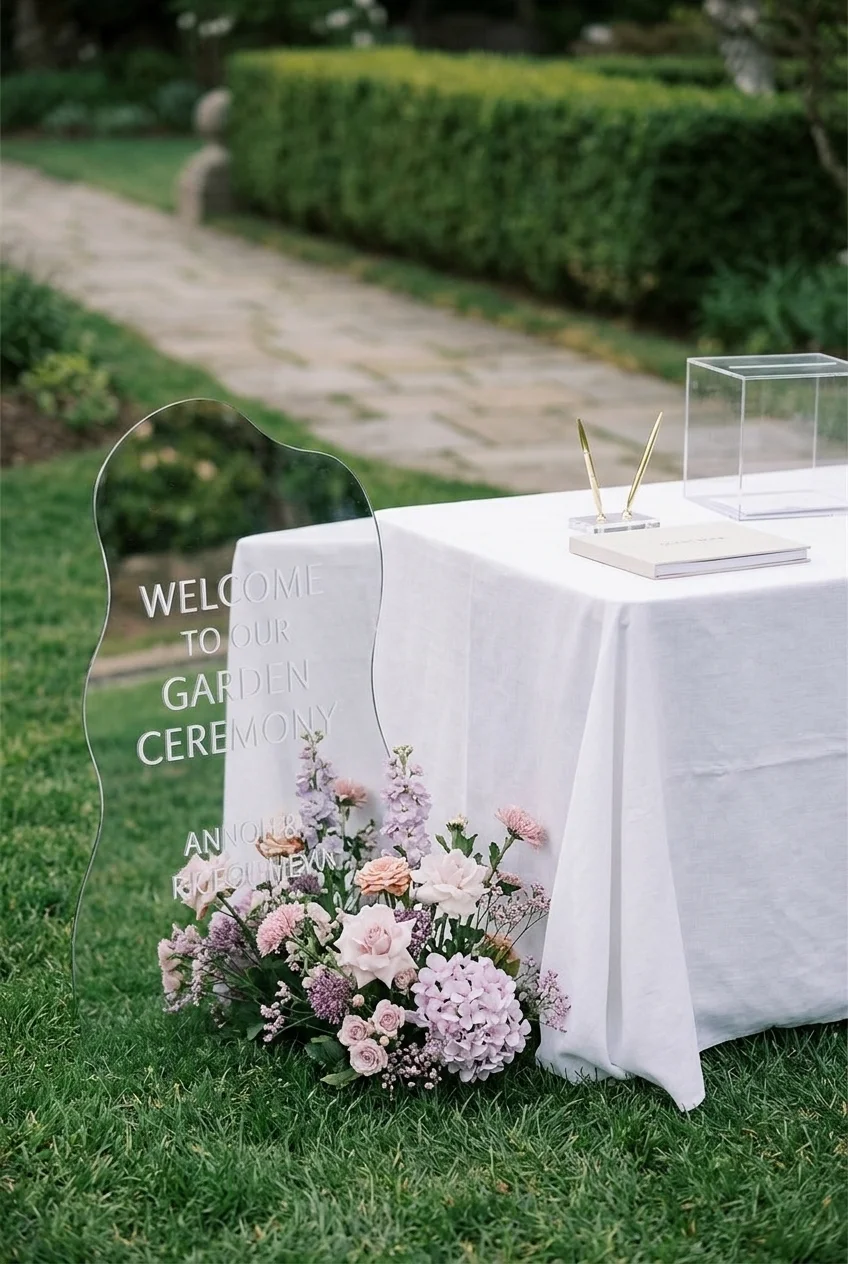
A readable sign, one floral cluster, and a tidy card table can establish the visual direction immediately. Avoid buying several tiny entrance decorations.
Place the arrangement where it will not slow arrivals or block accessibility. Reuse its flowers later beside the cake or guest book.
10. Repeat One Shape Across the Wedding
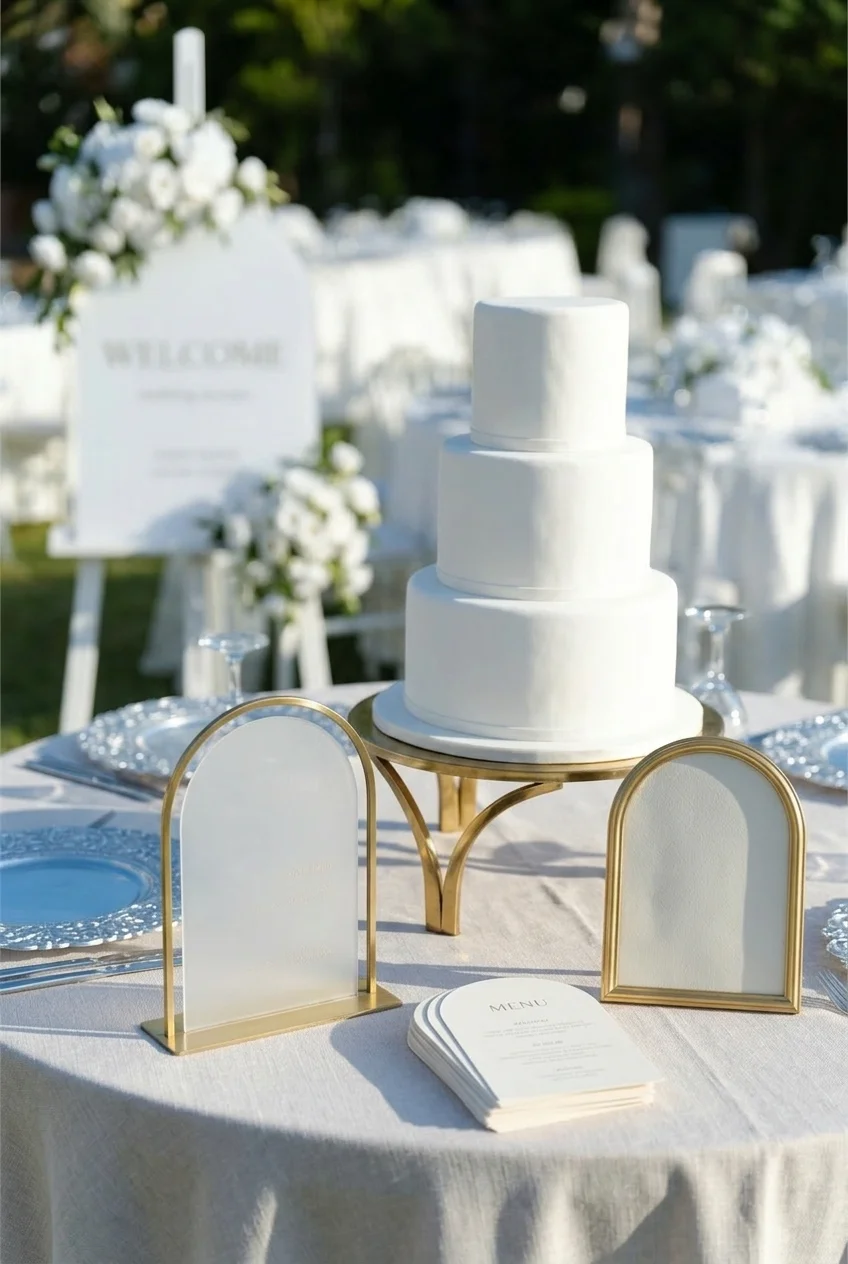
Arches, scallops, circles, or straight lines can connect stationery, signage, and table details without matching every item. Pick one shape guests will notice.
Use the motif three or four times, then stop. Repetition creates connection; covering every label, favor, and napkin with it creates visual clutter.
Affordable Tables and Place Settings
11. Rent Plain Linens in One Color
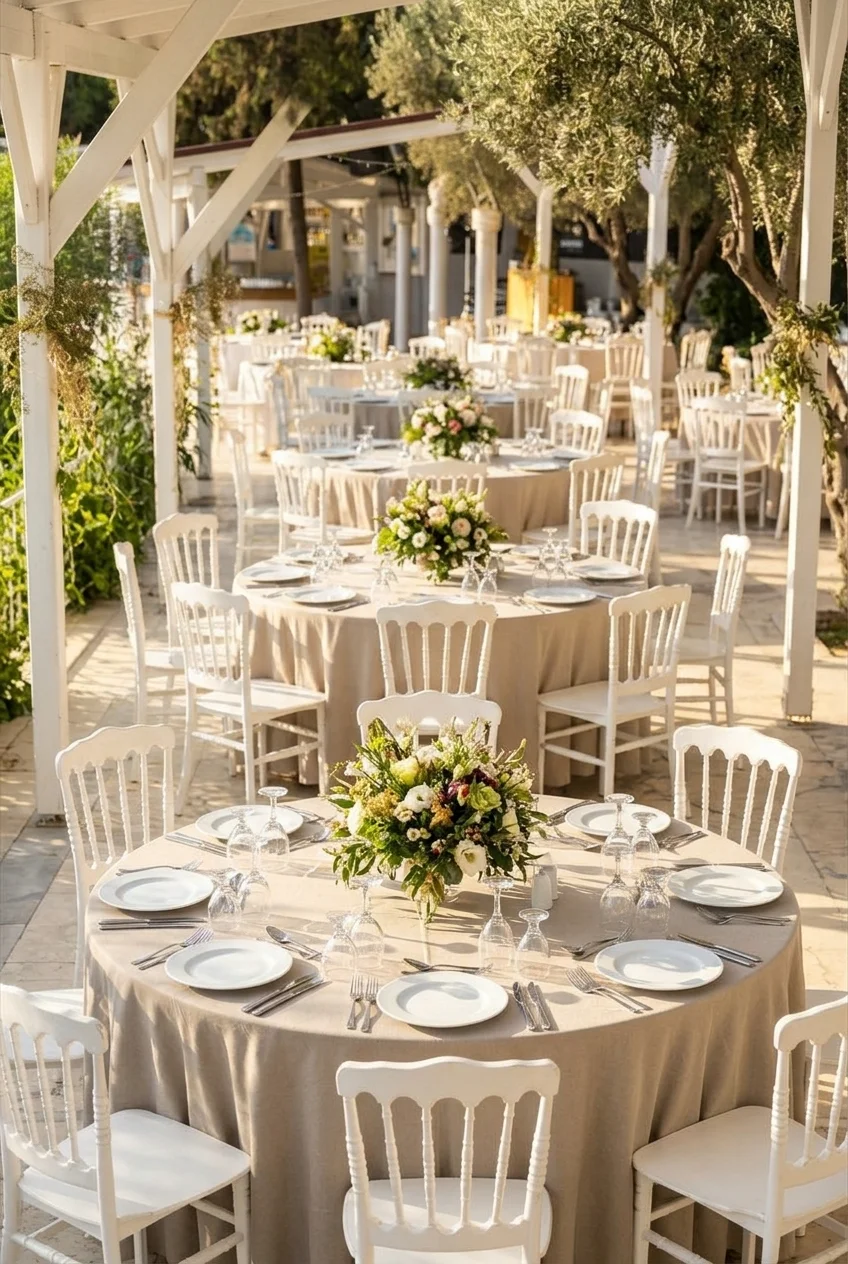
One consistent linen color unifies tables that came from different sources. Compare rental cleaning and return fees against buying fabric you must wash afterward.
Request the exact table dimensions before ordering. A too-short cloth exposes storage legs, while excessive fabric becomes a tripping and chair-tangling problem.
12. Use Napkins as the Main Color Accent
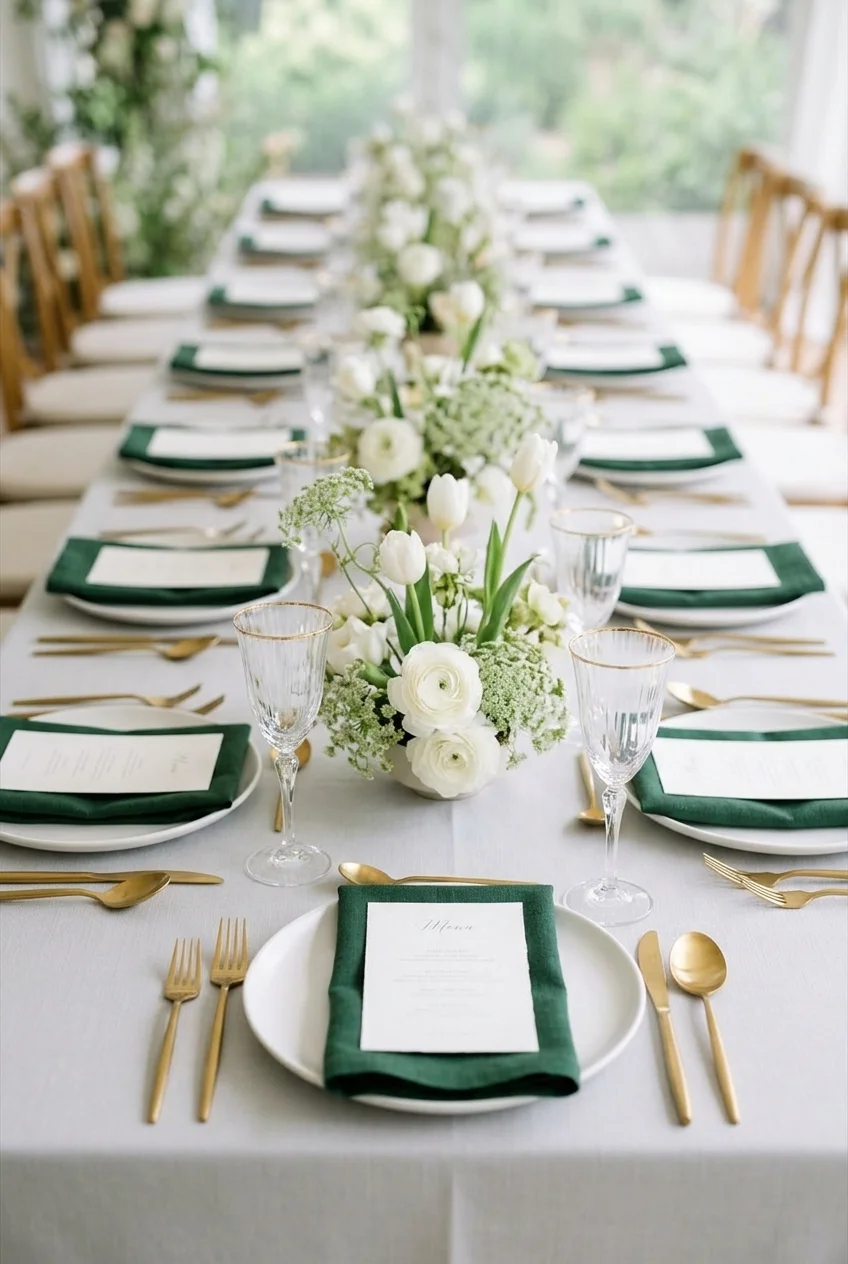
Colored napkins create repeated impact at every seat without requiring colored plates or glassware. Choose a washable fabric or sturdy rental option.
A simple fold or loose knot looks intentional and saves assembly time. Test one complete setting before committing to one hundred identical folds.
Planning tip Test this choice at realistic scale before ordering the full quantity, and record the final count, setup owner, and removal plan.
13. Skip Chargers When Plates Look Complete
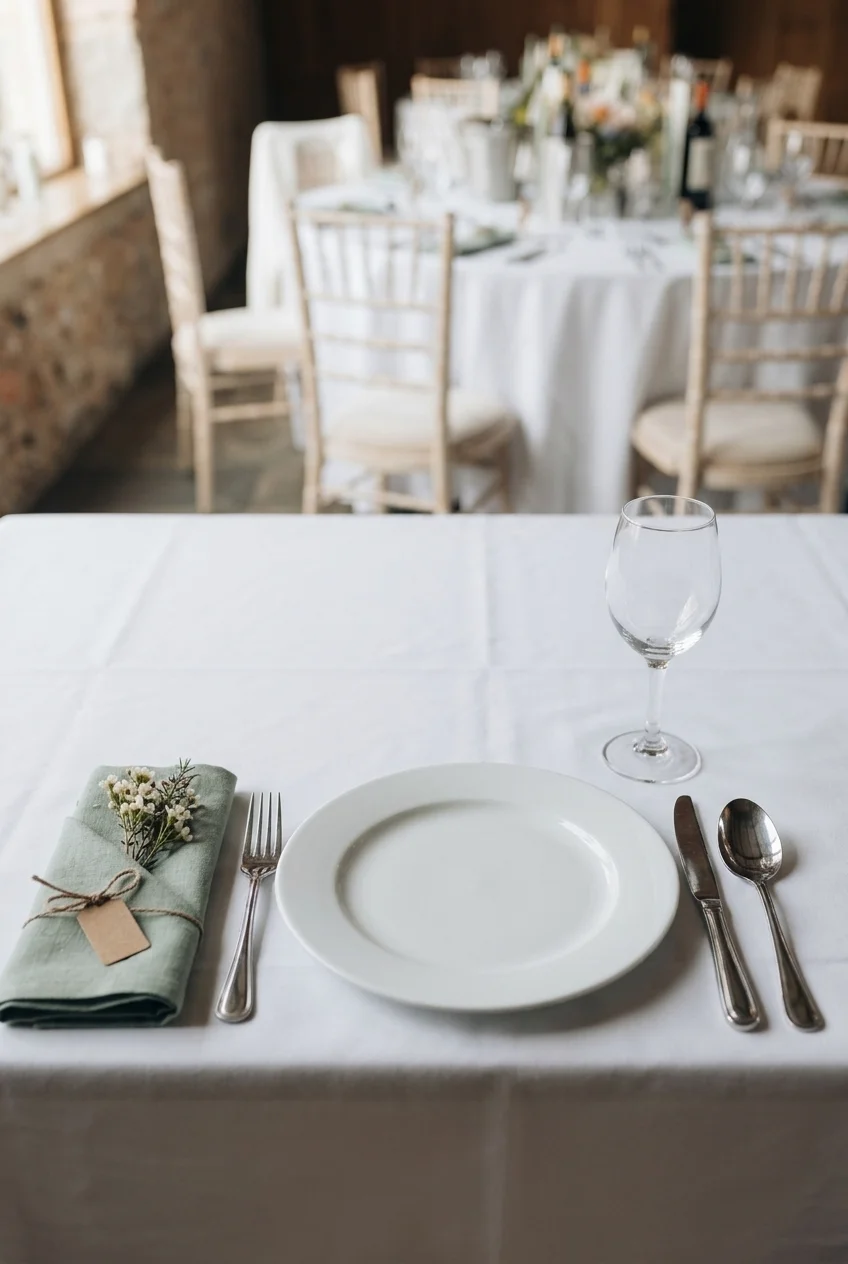
Chargers add another rental or purchase to every seat, yet many settings look finished with a dinner plate, folded napkin, and clear glass.
Photograph a sample with and without the charger. If the plate still feels grounded by the linen or placemat, remove the extra layer.
14. Mix China Within One Color Family
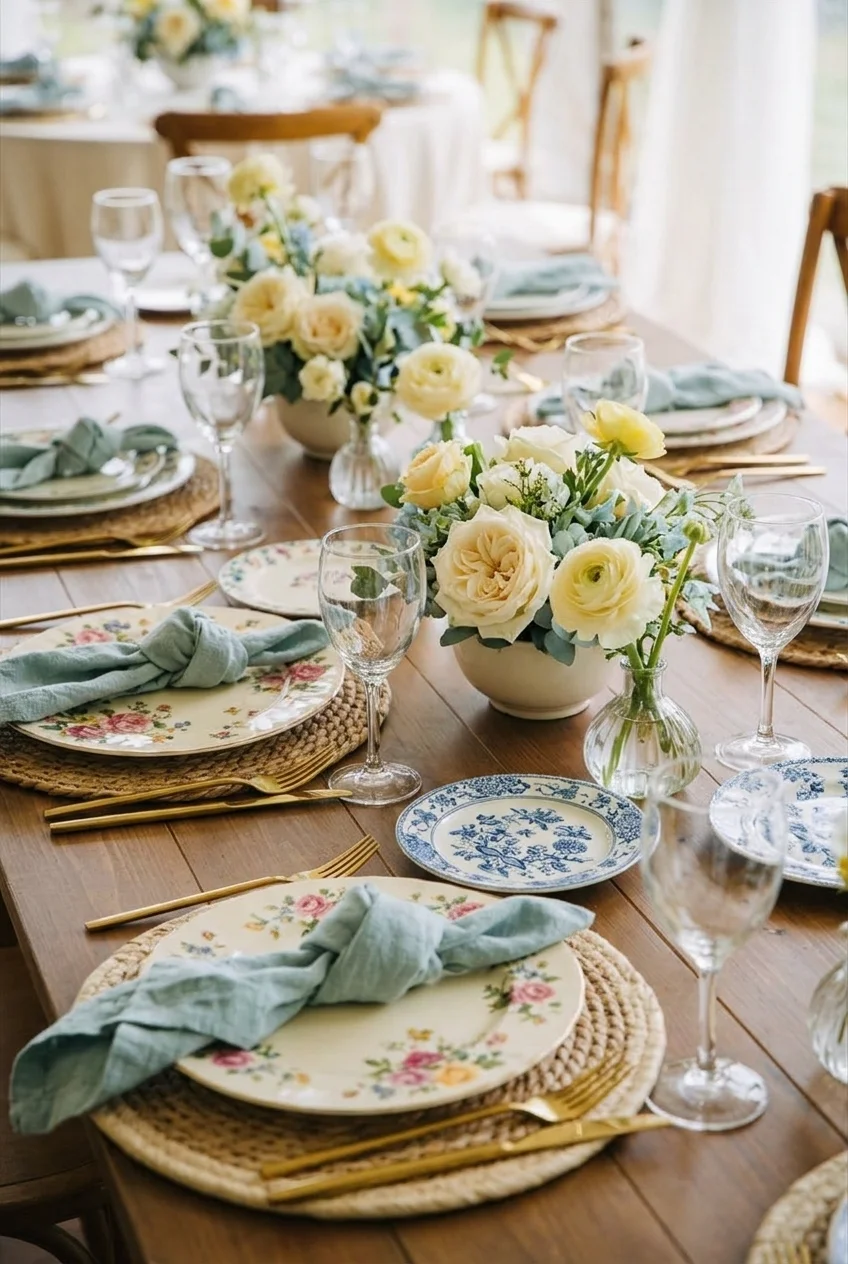
Thrifted plates can look collected rather than random when backgrounds share white, cream, or another dominant color. Reject pieces with cracks or unsafe glazes.
Reserve special plates for dessert or the head table if sourcing full quantities becomes difficult. Rental basics can fill the remaining seats quietly.
For more adaptable visual details, compare these layered tea-party tablescapes and reuse only the elements that fit your venue, schedule, and guest needs.
15. Create Low Grocery-Store Flower Clusters
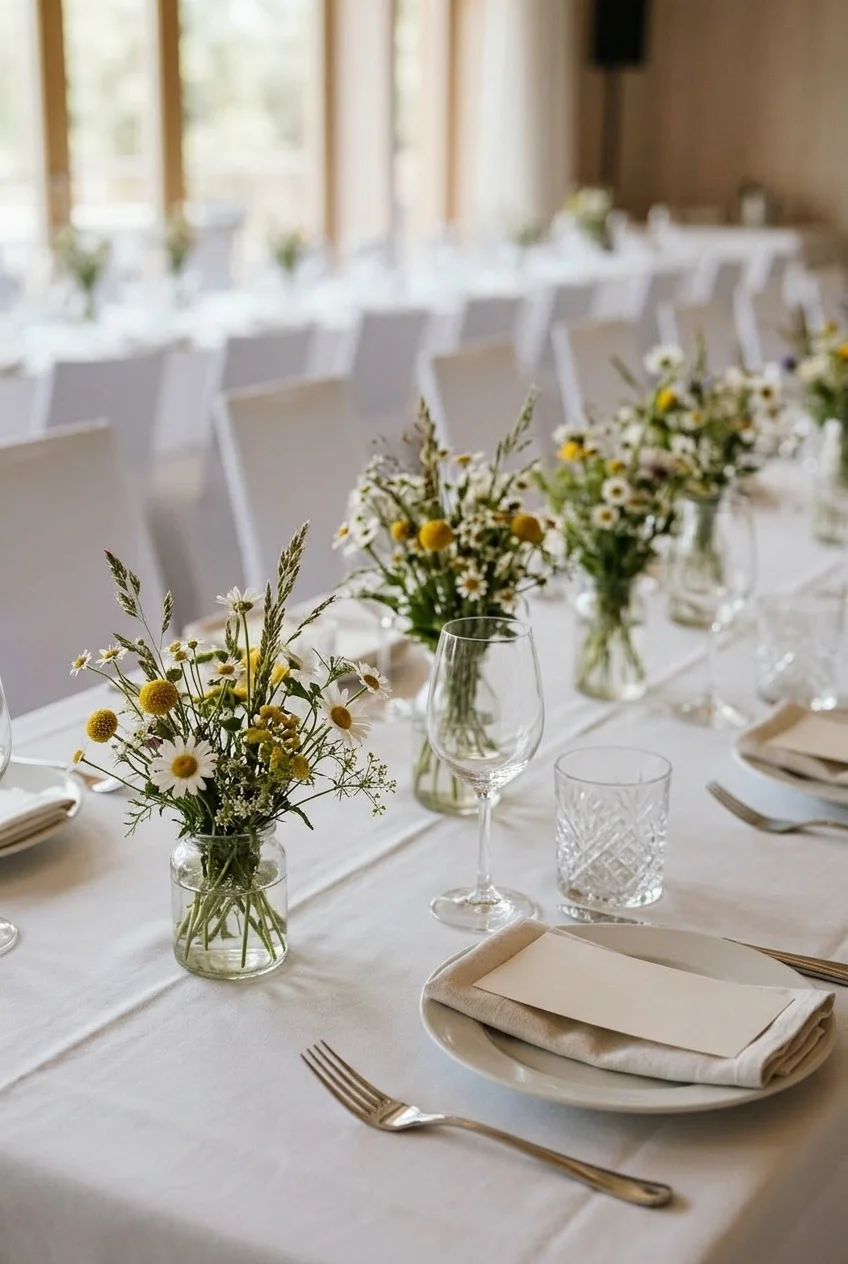
Separate supermarket bouquets by color, remove damaged leaves, and place three to five stems in each small vase. Low clusters protect conversation sightlines.
Arrange one test centerpiece several days ahead using similar stems. Record the vase count, water level, stem length, and assembly time.
16. Run Potted Herbs Down Long Tables
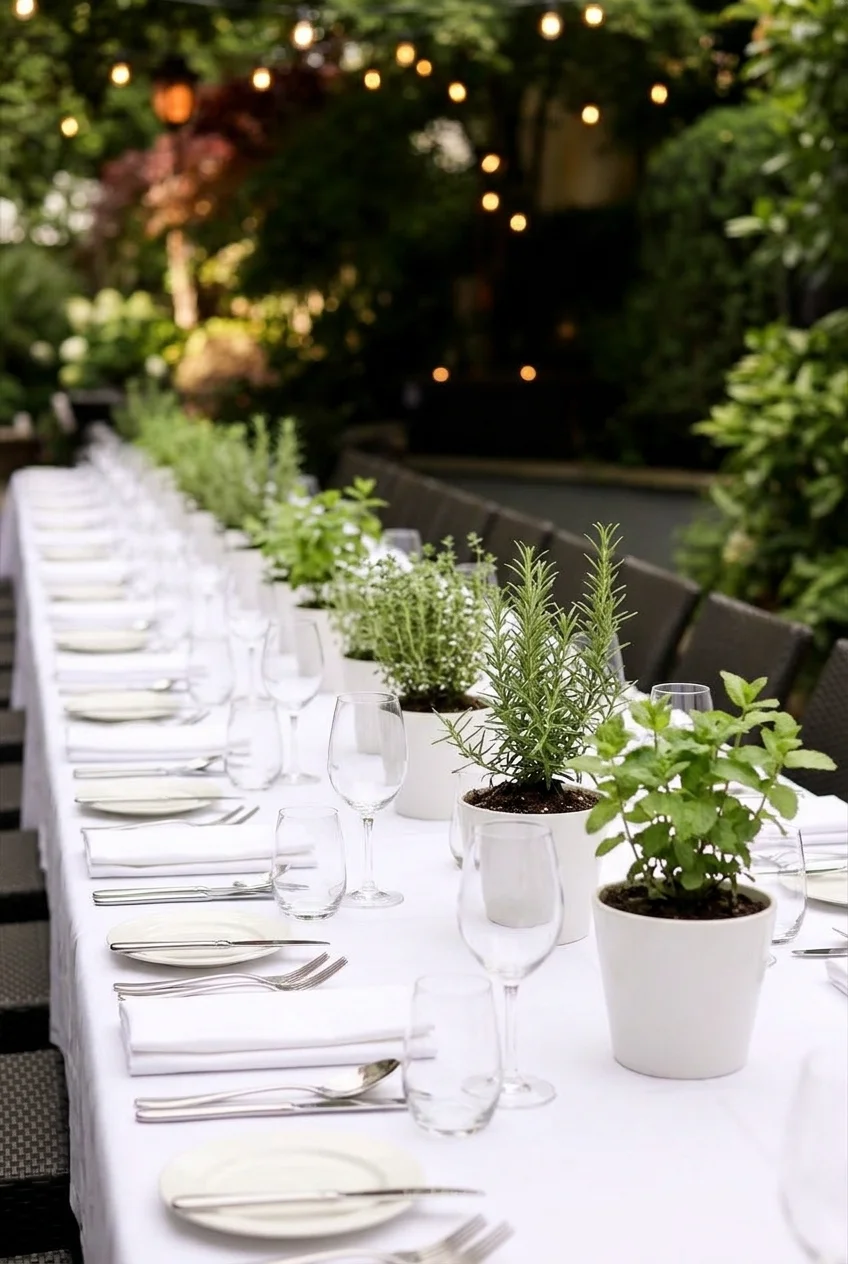
Small herb pots provide repeated greenery and can be replanted or given away. Use clean cachepots so damp nursery containers never touch linens.
Choose unscented or gently scented varieties around food, and confirm no guest has a relevant allergy. Space pots around serving dishes, not through them.
17. Use Fruit as Edible Table Color
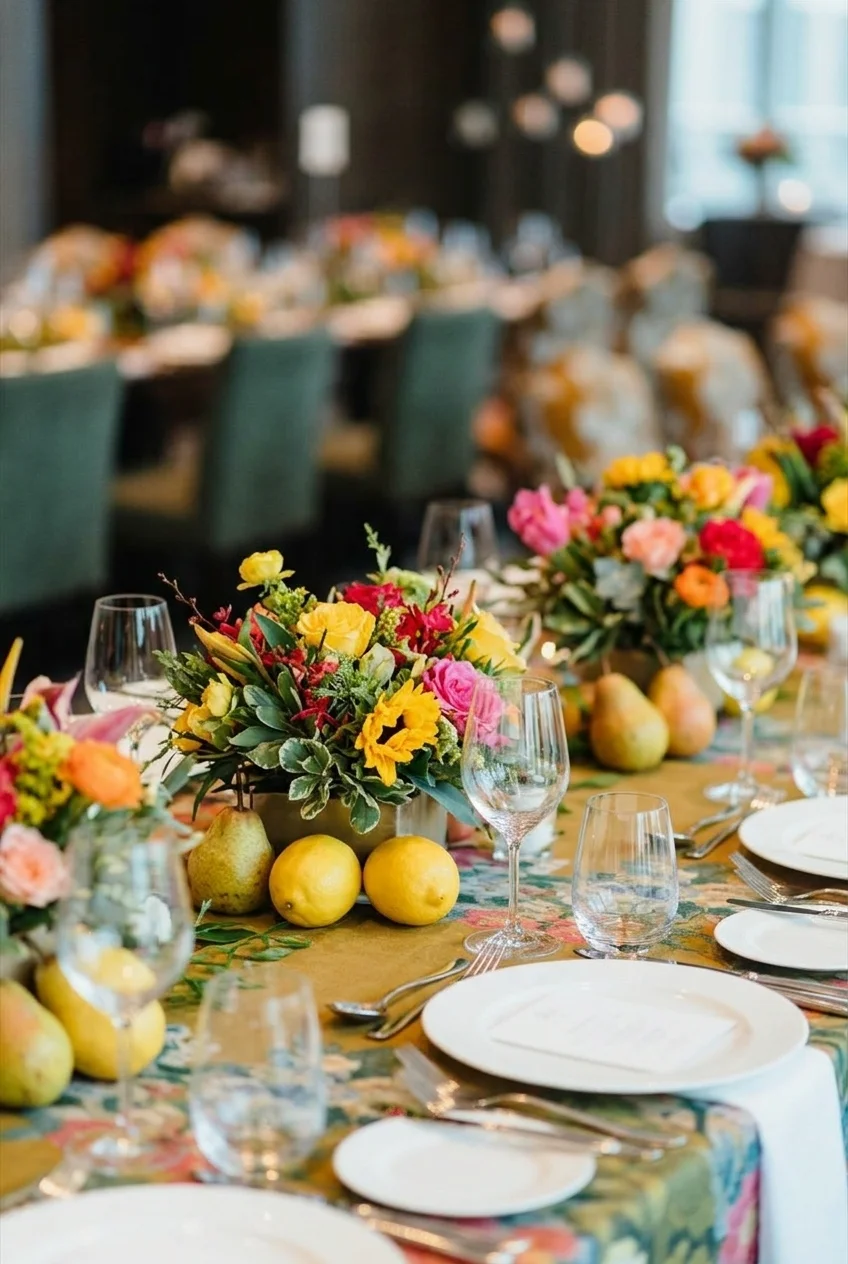
Whole lemons, pears, grapes, or seasonal fruit can add color around low flowers. Select firm pieces and keep anything cut away from room temperature.
Plan a real use afterward, such as brunch, favors, or donation where accepted. Decorative food is not economical if it goes straight into trash.
18. Make Table Numbers From Existing Frames
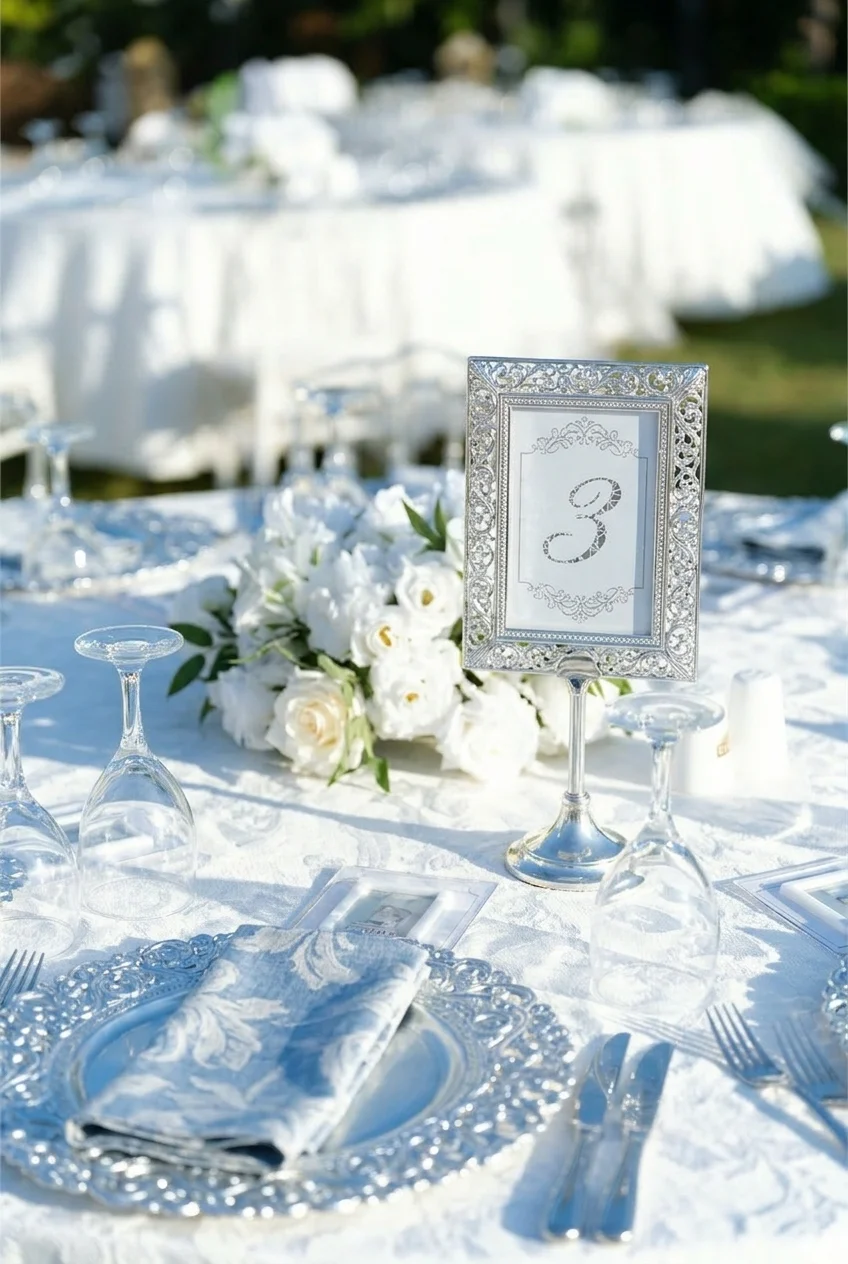
Borrow small frames in varied finishes, then unify them with matching paper inserts. Keep numbers large enough to read while guests are standing.
Place each number above surrounding flowers, but below conversation height. Test visibility from the aisle before opening the room during arrivals.
- Count every repeated unit before purchasing.
- Include delivery, setup, cleanup, and return costs.
- Keep one practical alternative if the original plan changes.
19. Share Menus Between Two Guests
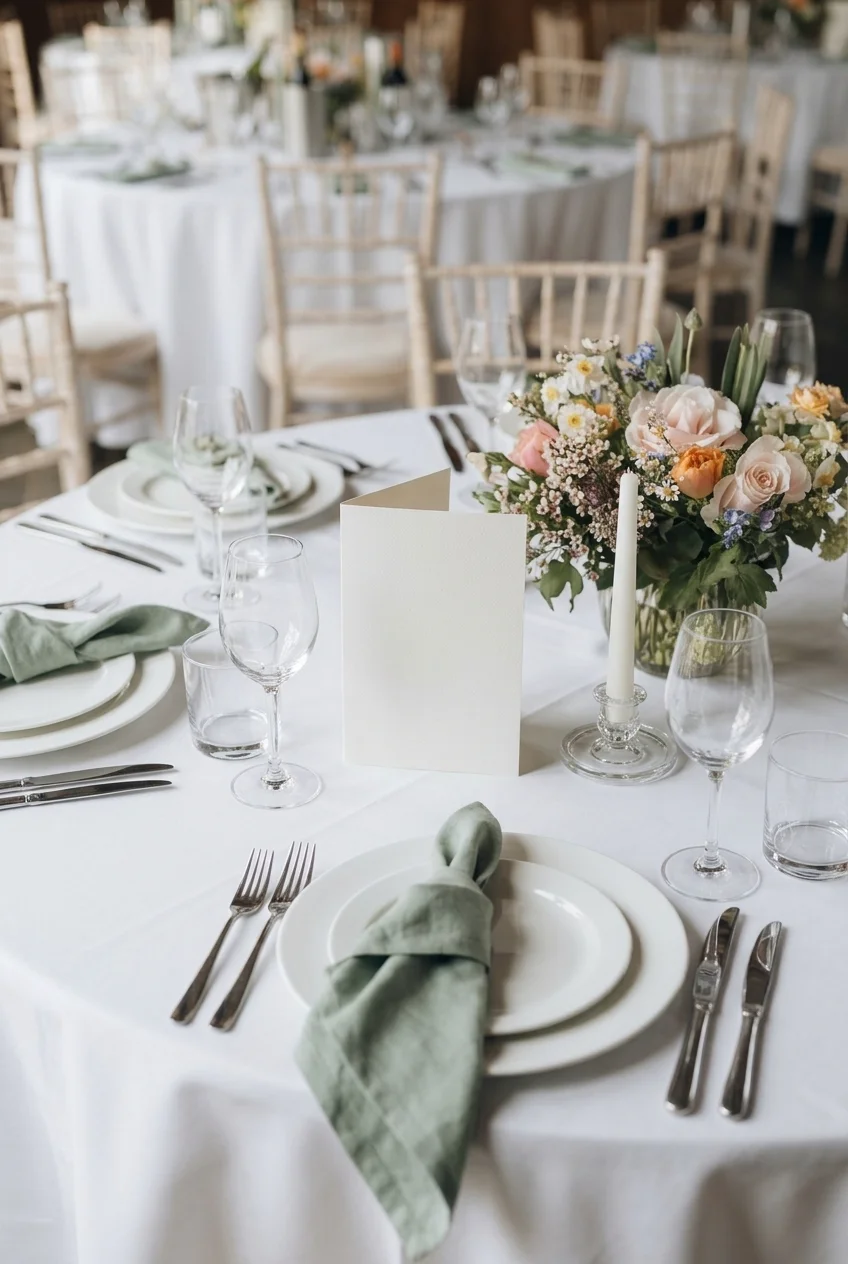
One menu between neighboring settings cuts printing while keeping information within reach. Use a standing card only if it will not block conversation.
Dietary accommodations belong in the catering plan, not tiny menu footnotes. Give affected guests direct, confirmed information before the event.
20. Leave Room for Food and Elbows
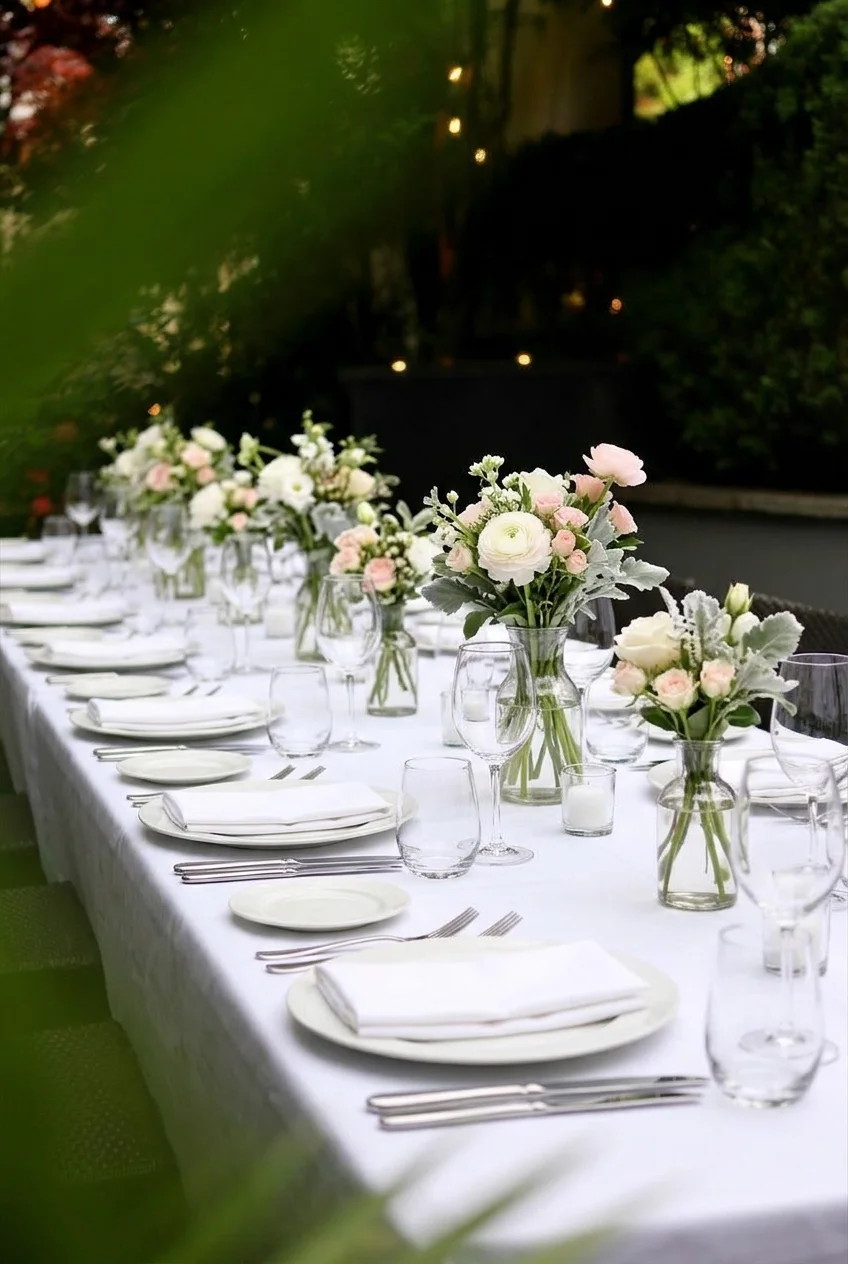
A table feels generous when guests can move glassware and rest their arms. Remove decorative pieces before reducing practical space or crowding shared dishes.
Build one full setting with every rented item, then measure the occupied width. This small test prevents costly extras from becoming day-of obstacles.
Ceremony Details With a Smaller Price Tag
21. Let the View Replace an Elaborate Arch
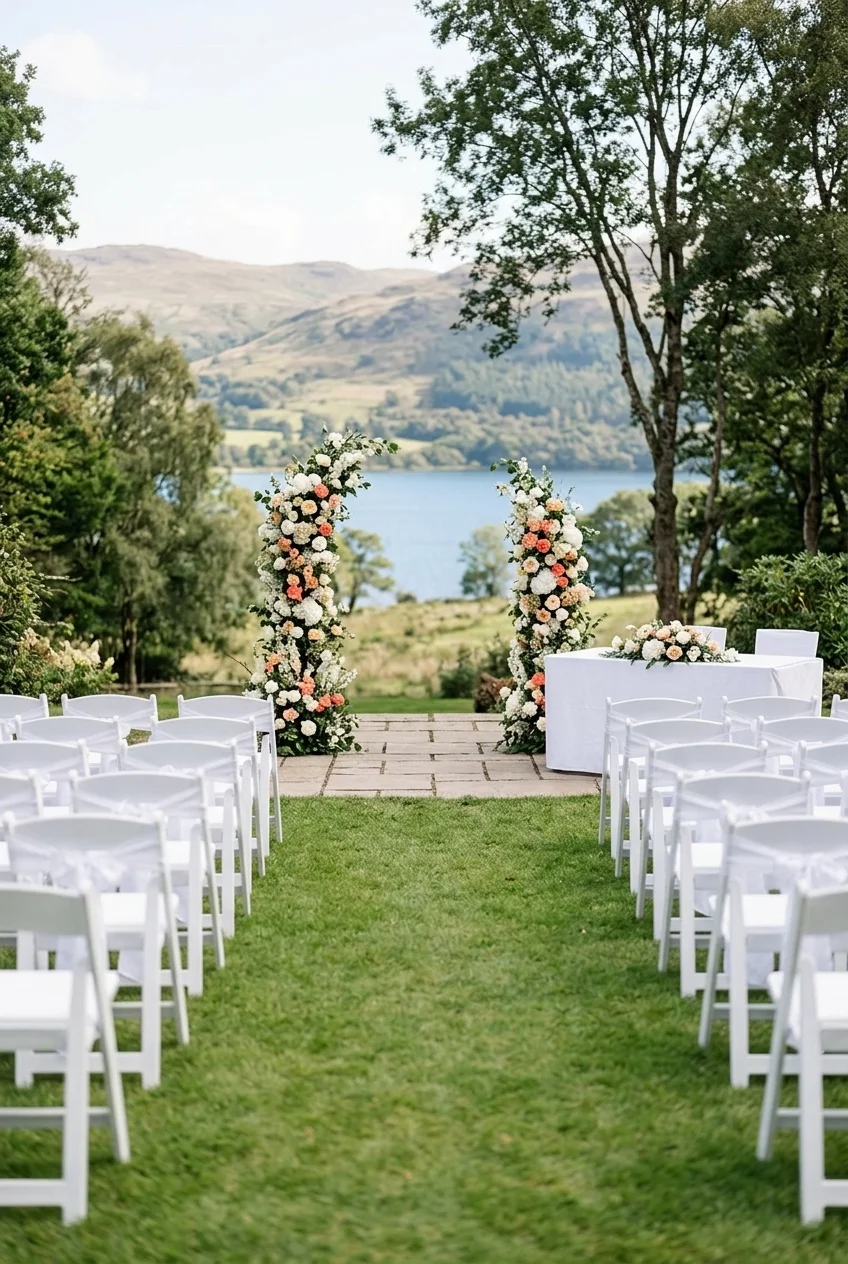
Center the ceremony on an attractive garden, city, water, or architectural view and use only a modest marker where vows will happen.
Visit at the ceremony hour to check glare, wind, noise, and accessibility. A free view is useful only when guests can comfortably experience it.
22. Mark the Aisle With Every Third Row
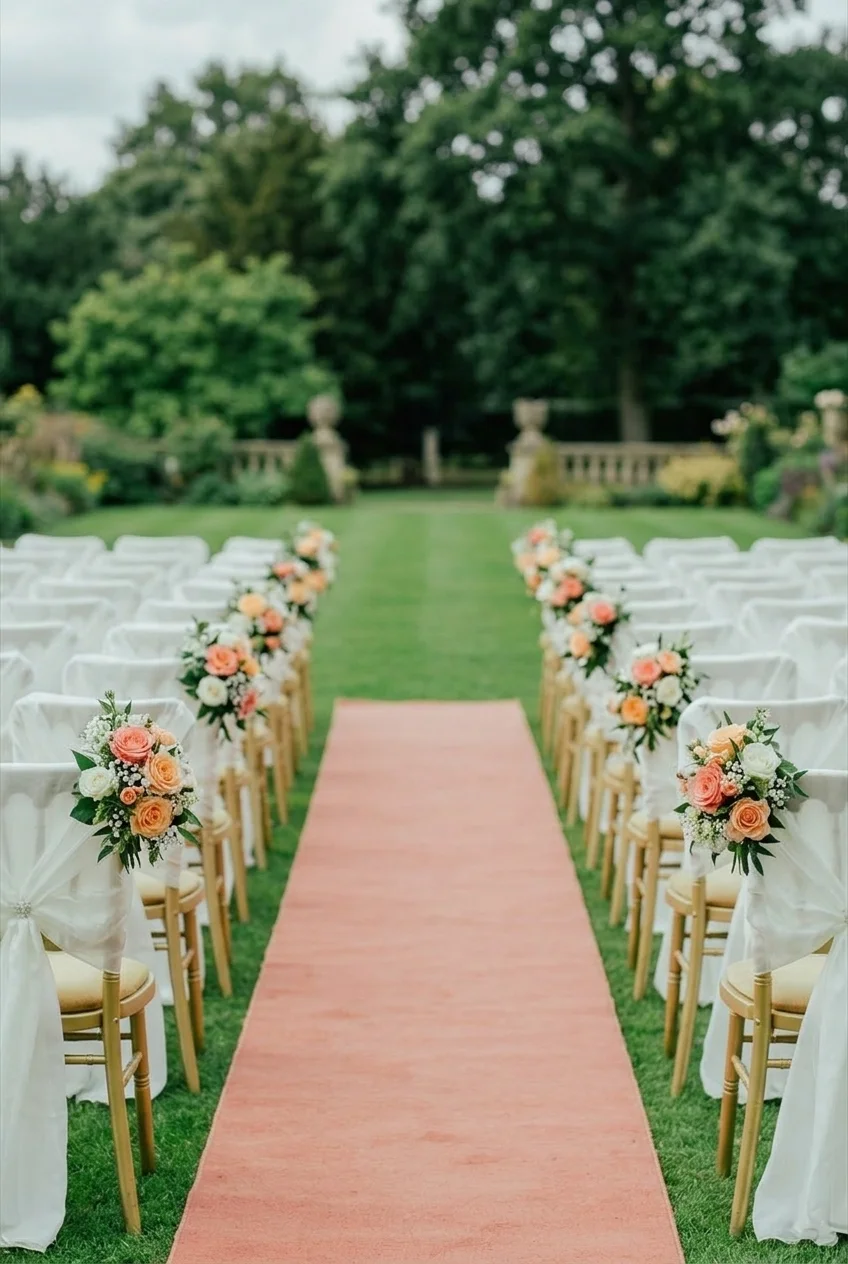
Decorating every third chair creates rhythm without multiplying flowers or ribbons across the whole aisle. Keep each marker compact and securely attached.
Count actual aisle rows after the seating plan is final. Order one spare marker for damage instead of a large, vague surplus.
23. Use Chairs From the Reception Twice
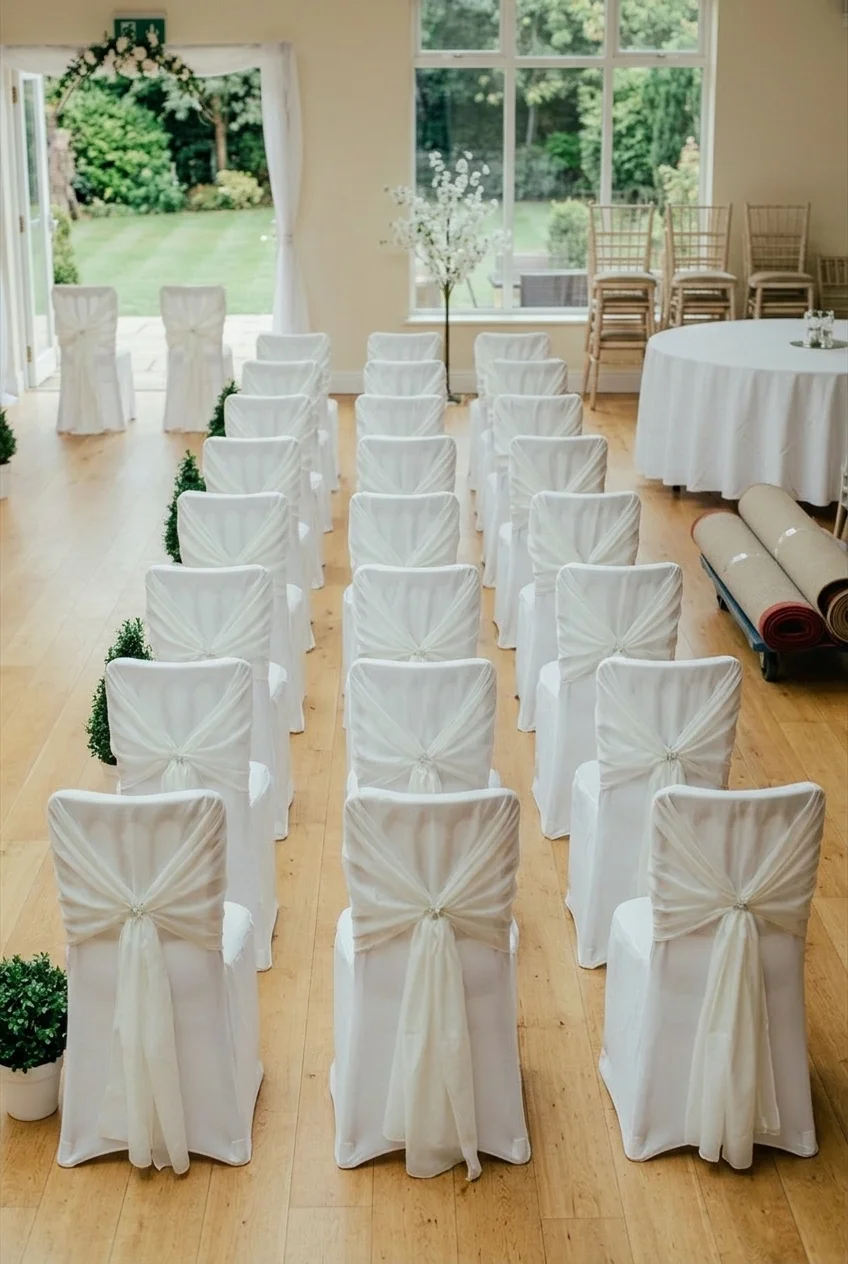
Moving one chair set between ceremony and dinner can avoid duplicate rental quantities when the schedule and distance make the change practical.
Get a written labor plan before choosing this option. Guests should never wait while an understaffed team carries furniture through occupied spaces.
24. Reserve the Front Rows for Flowers
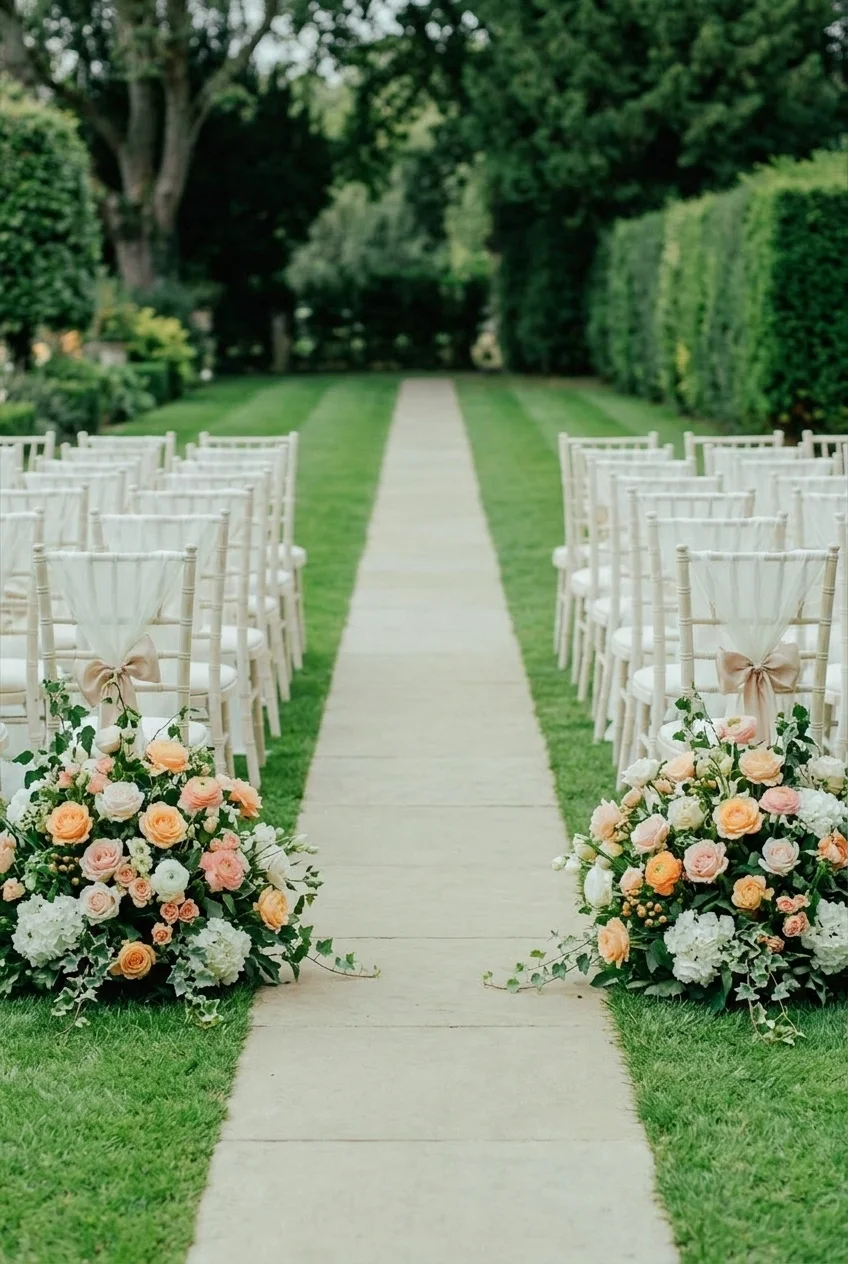
Two fuller arrangements at the aisle entrance can frame the procession more effectively than small pieces on every row. Keep the remaining chairs clean.
After the ceremony, move those arrangements beside the band, bar, or seating chart. Use stable containers that staff can lift without spilling water.
Planning tip Test this choice at realistic scale before ordering the full quantity, and record the final count, setup owner, and removal plan.
25. Borrow a Rug for the Vow Area
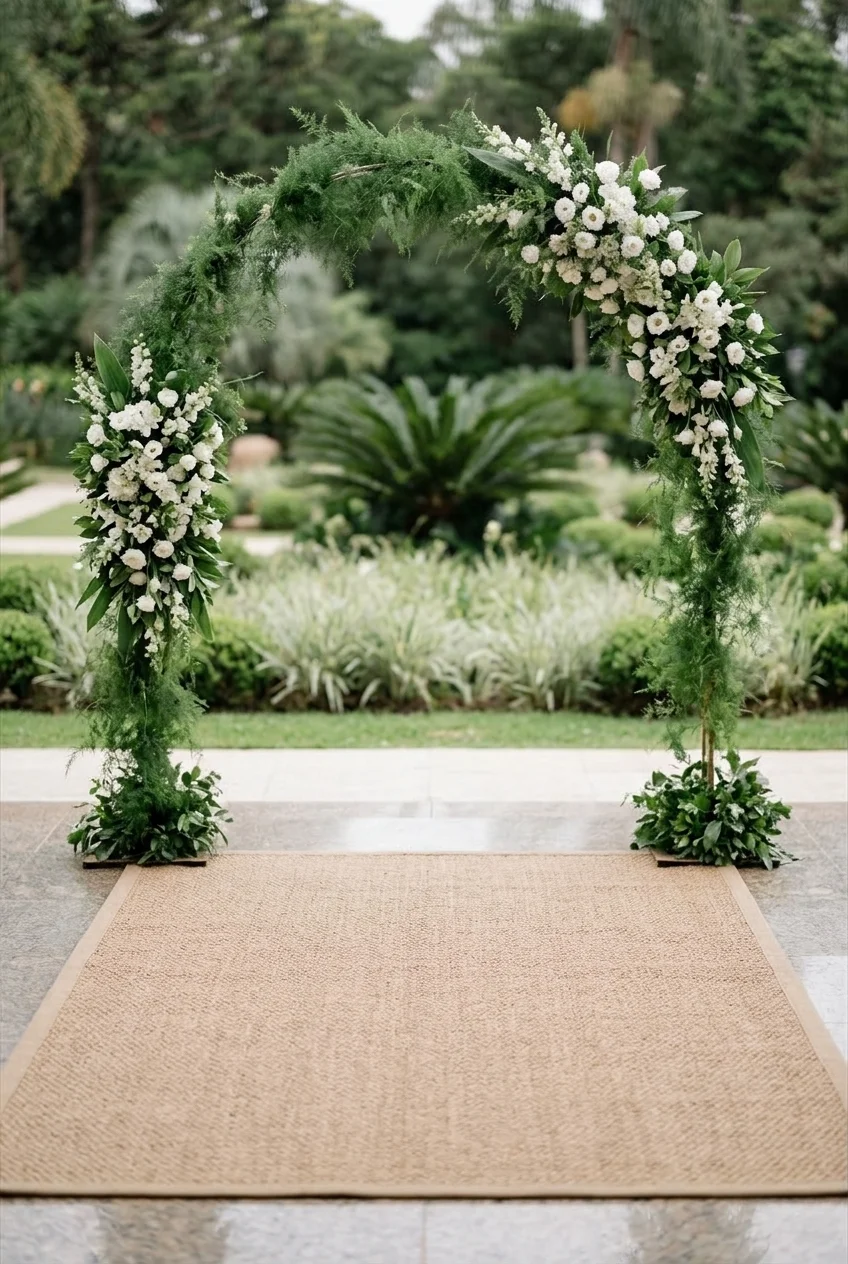
One flat-weave rug defines the ceremony focal point and adds color without building a platform. Choose a size that fits the couple and officiant.
Use a nonslip layer on hard flooring and secure every edge. Outdoor rugs need a dry-weather plan and a surface that stays level.
26. Print Programs Only for Readers Who Need Them
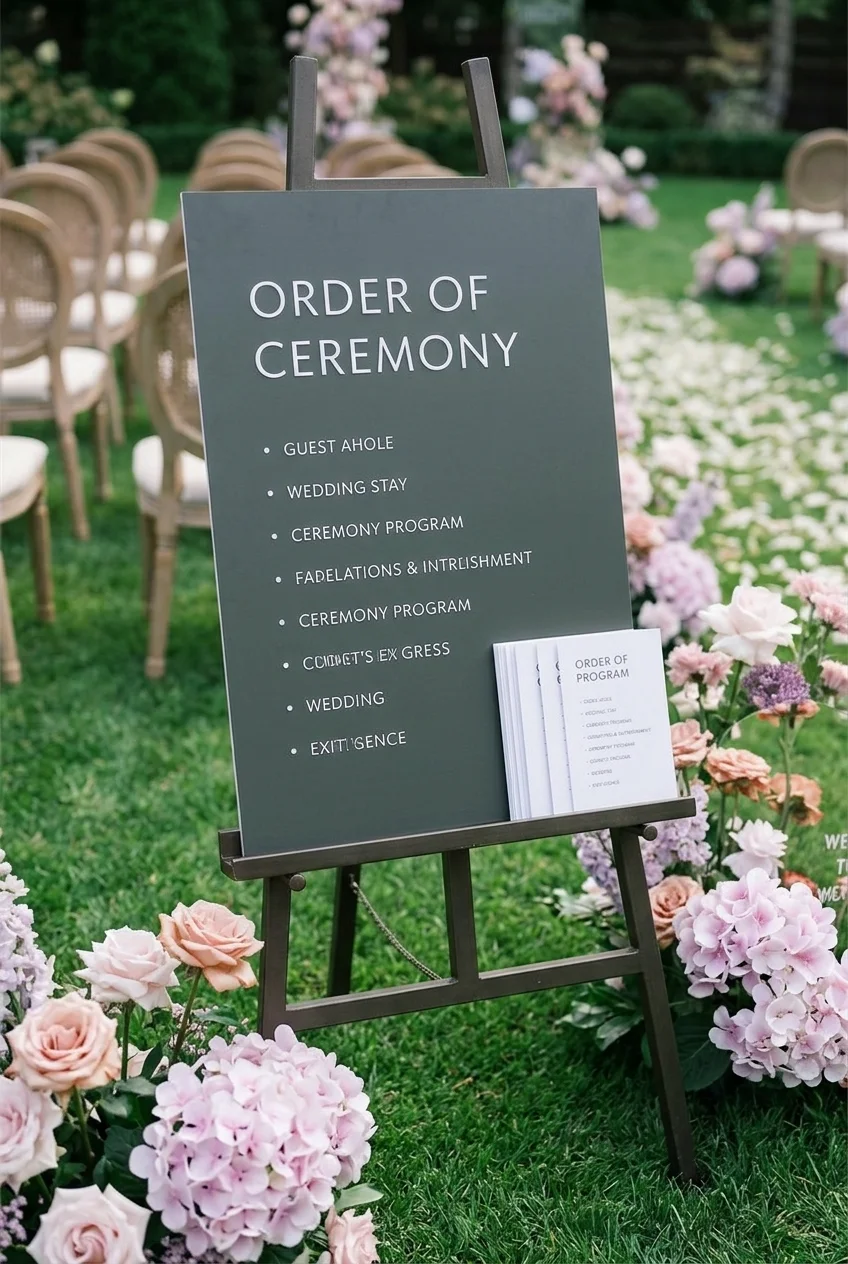
A single ceremony sign can share the order, wedding party, and unplugged request when individual programs would mostly be discarded.
Provide printed copies for guests who need closer text or translations. Large type and strong contrast matter more than ornate paper.
27. Tie Ribbon to Existing Chairs
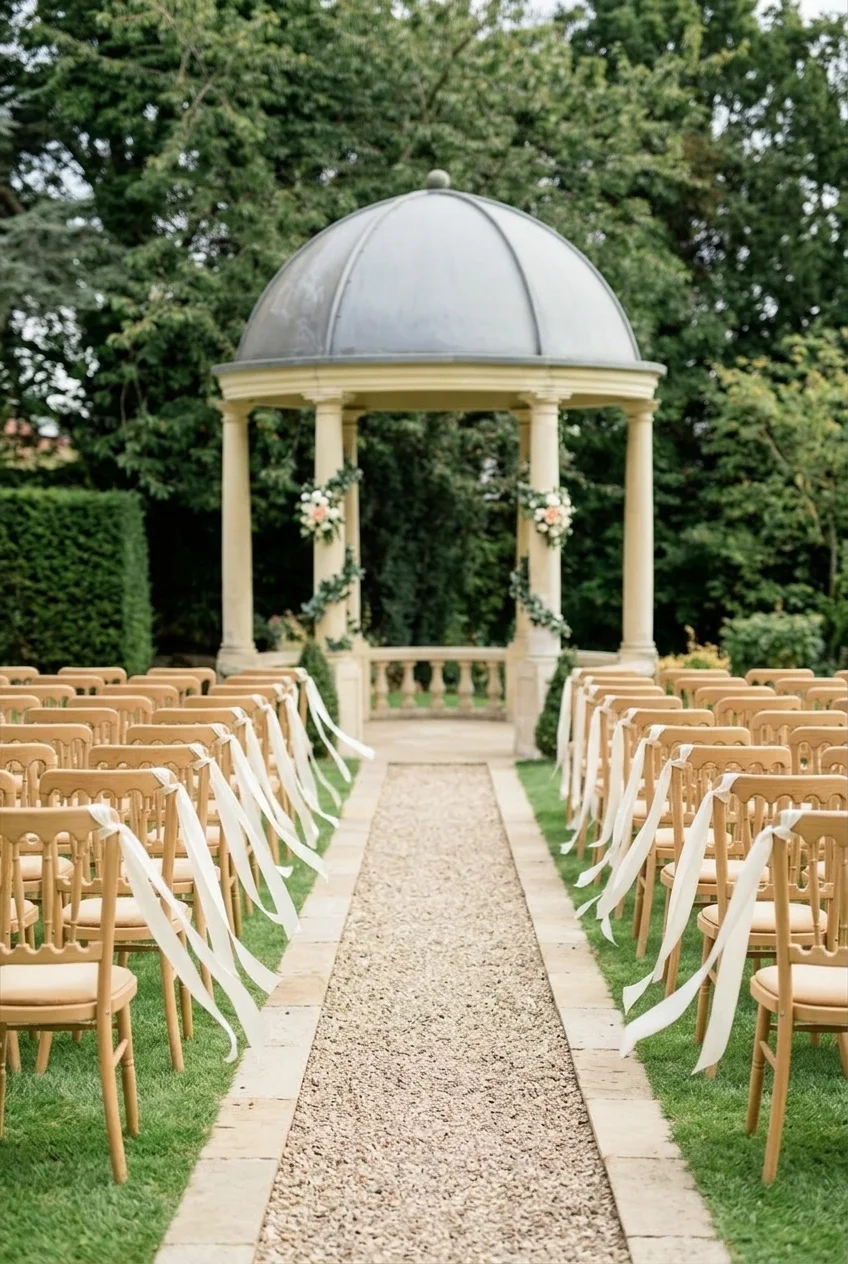
A narrow ribbon tail on aisle chairs adds movement and repeated color with little material. Choose one width and cut every piece consistently.
Test the knot outdoors because wind exposes weak attachments quickly. Keep ribbon clear of nearby walking space and chair mechanisms.
28. Use Potted Plants as Ceremony Anchors
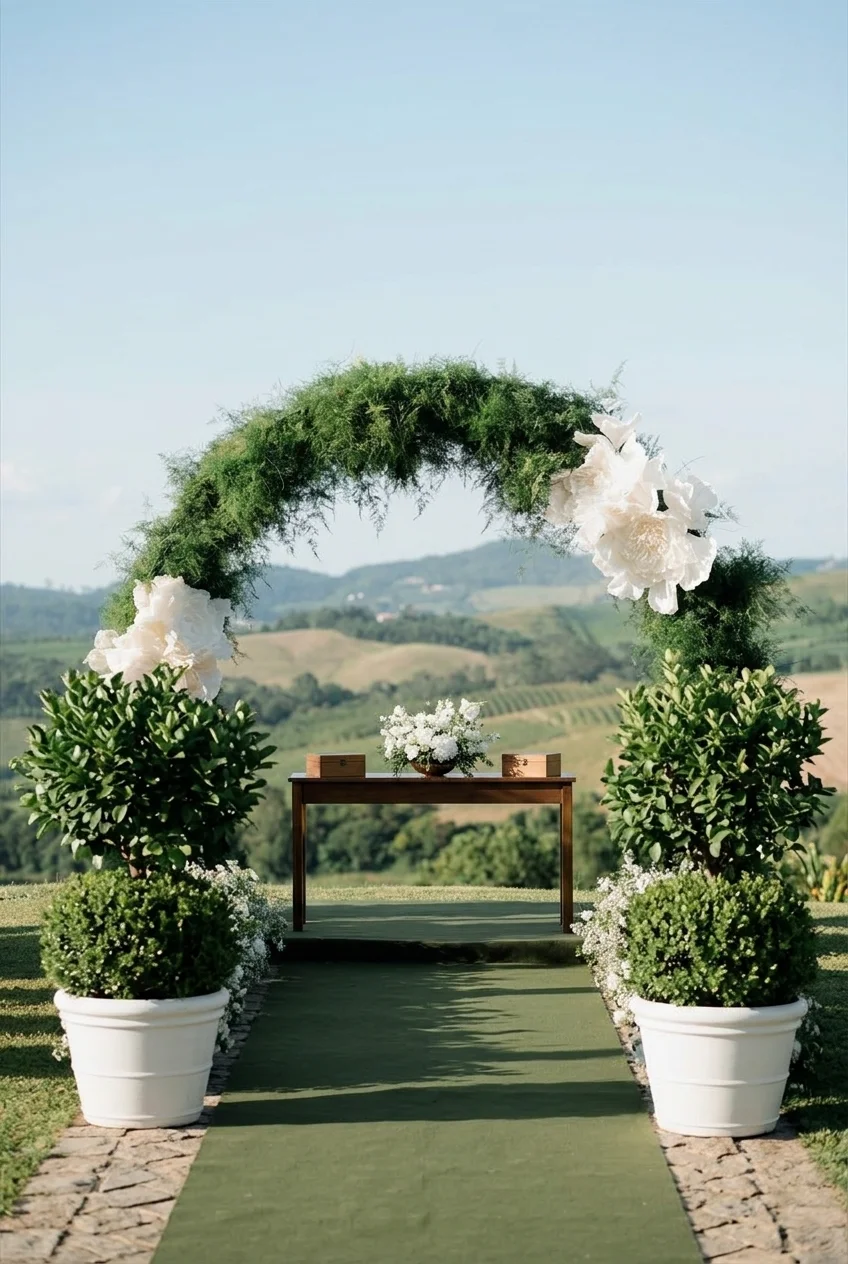
Two healthy potted plants can anchor the vow area and later frame the reception entrance. Select containers that look finished from every visible side.
Account for pot weight, drainage, and transport before committing. Borrowing mature plants may work better than purchasing specimens you cannot move safely.
29. Choose a Shorter Floral Aisle
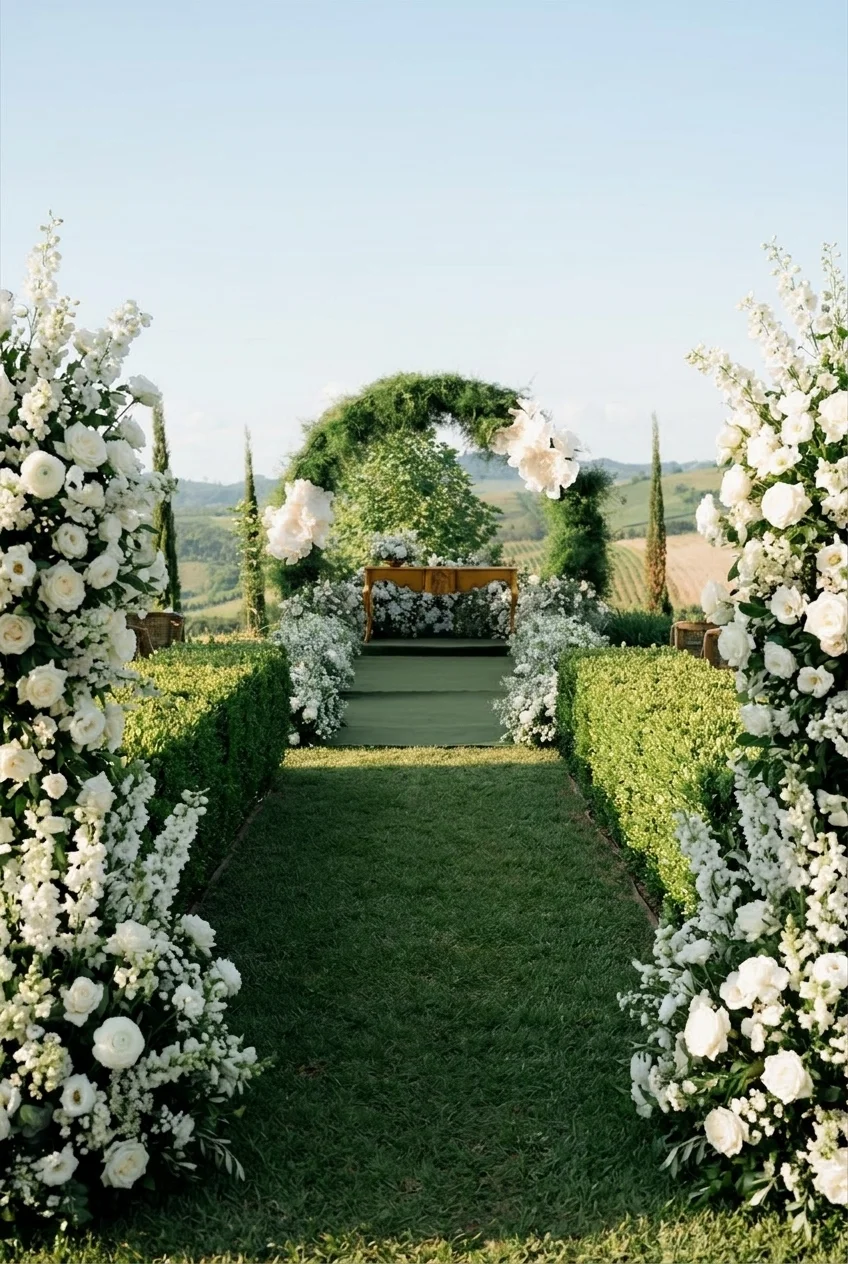
Flowers concentrated near the processional entrance and vow area guide the eye without lining the entire route. Leave the middle section open.
Use photographs of the venue to choose the two camera-visible zones. Spend where arrangements will frame moments instead of disappearing behind chairs.
30. Hold a Beach Ceremony With Minimal Props
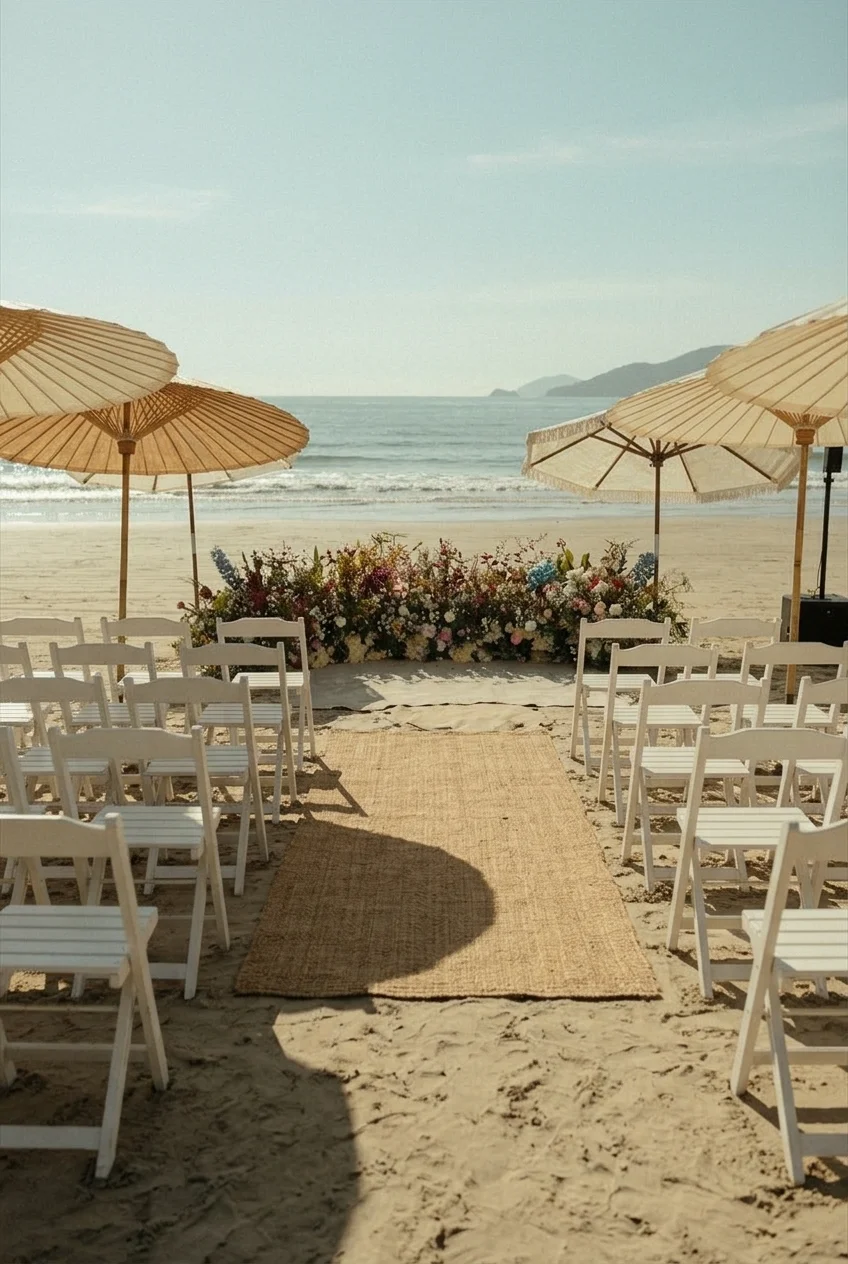
A coastline already supplies color, texture, and scale, so a small grounded arrangement may be enough. Avoid lightweight decorations that become windblown litter.
Check permits, tides, accessibility, shade, and cleanup rules before assuming public sand is free. Simple styling does not remove location logistics.
Paper, Invitations, and Signage
31. Send Digital Save-the-Dates
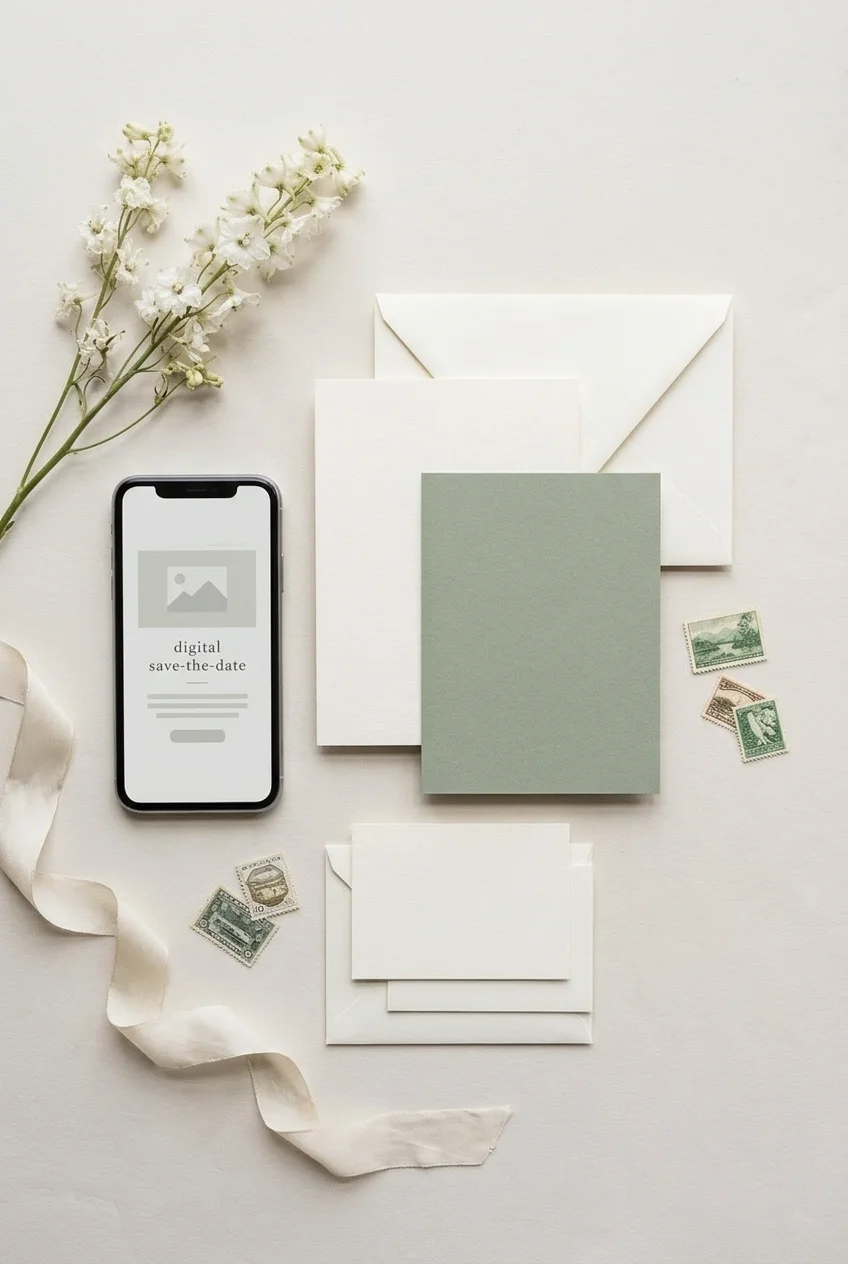
Use digital save-the-dates for guests who reliably read email, then reserve printed pieces for the formal invitation. Keep the design visually consistent.
Collect mailing addresses and accessibility needs through a secure form. Follow up personally with anyone who may miss an electronic announcement.
32. Combine Details on One Insert
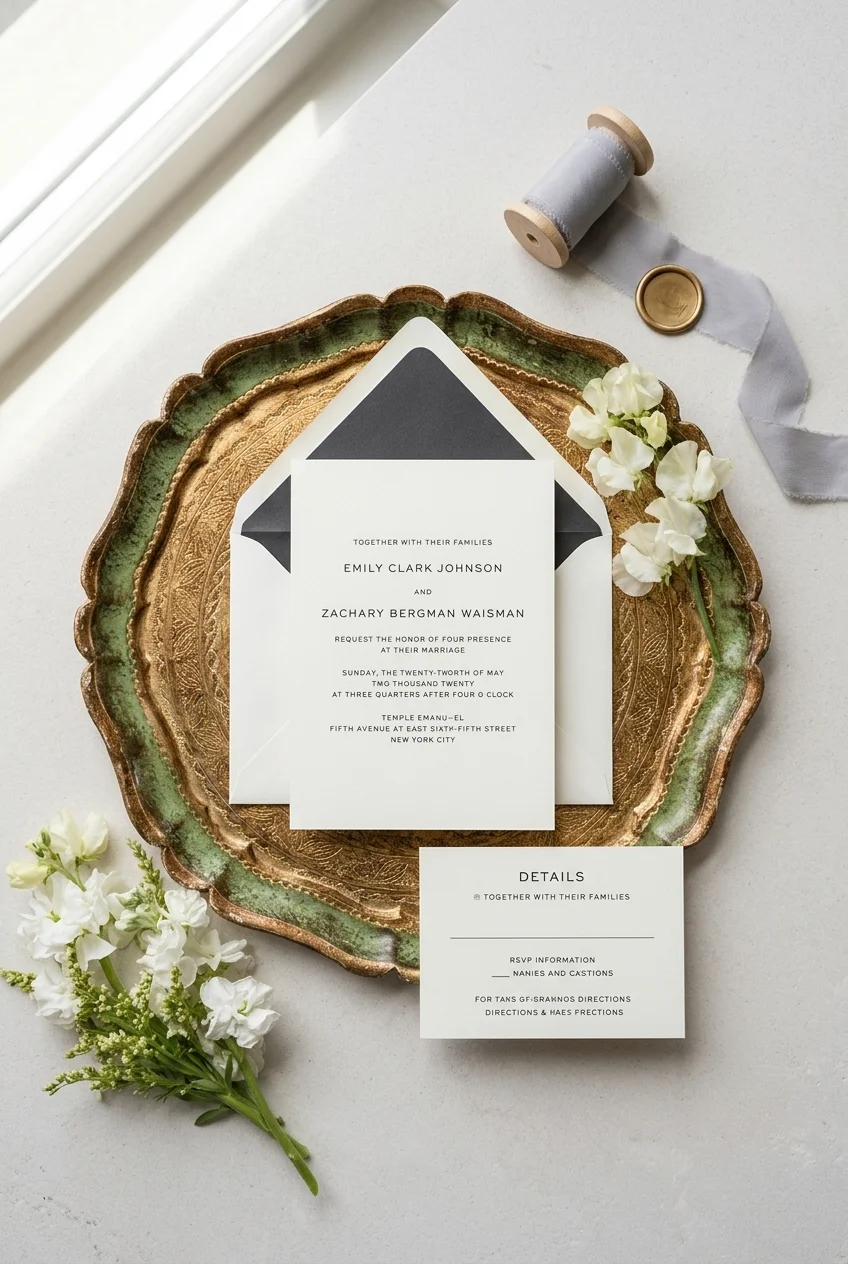
Place travel, attire, parking, and website information on one well-organized card instead of four separate inserts. Use short headings and generous spacing.
Move changeable information online so reprinting is unnecessary. The physical card should carry stable facts and a simple path to updates.
- Count every repeated unit before purchasing.
- Include delivery, setup, cleanup, and return costs.
- Keep one practical alternative if the original plan changes.
33. Use Online RSVPs
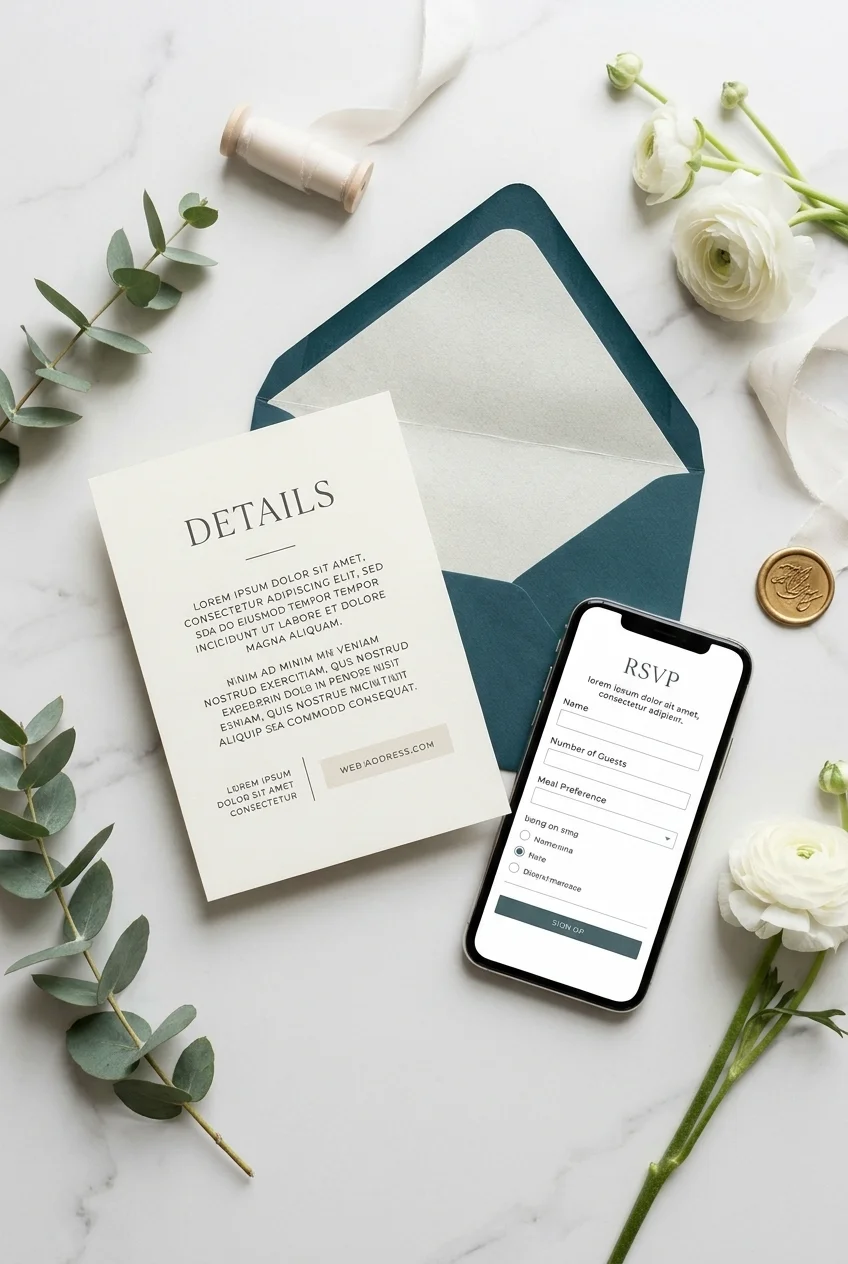
An online response form removes return envelopes and postage while simplifying meal counts. Keep the web address short enough to type accurately.
Offer phone or mail responses for guests who need them. A lower-cost system should not create an access barrier or hide the deadline.
34. Choose Standard Envelope Sizes
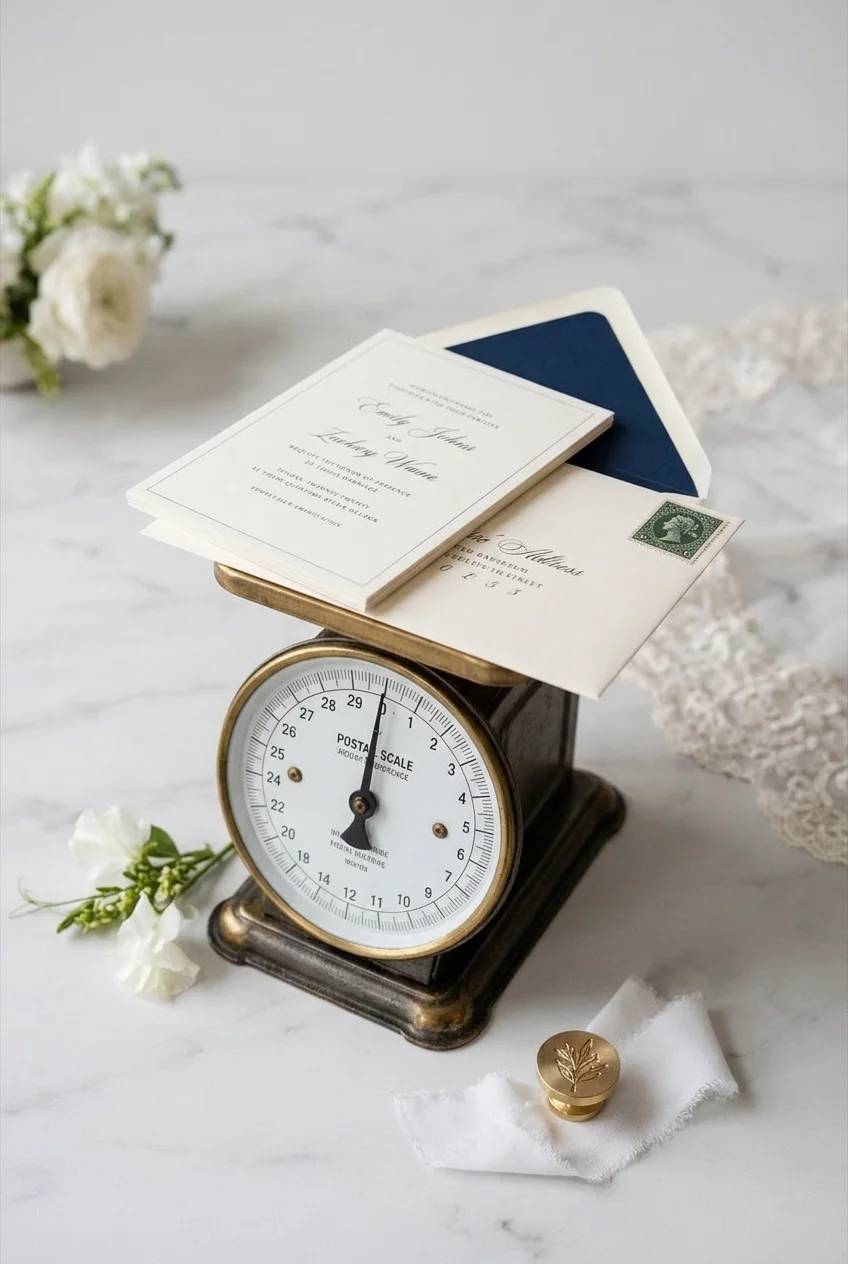
Standard rectangular envelopes are easier to source and may avoid special handling caused by unusual shapes. Weigh a fully assembled invitation before buying postage.
Wax seals, ribbons, rigid pieces, and uneven thickness can change mailing requirements. Take a finished sample to a postal counter for confirmation.
Planning tip Test this choice at realistic scale before ordering the full quantity, and record the final count, setup owner, and removal plan.
35. Print One Sample Before the Full Run
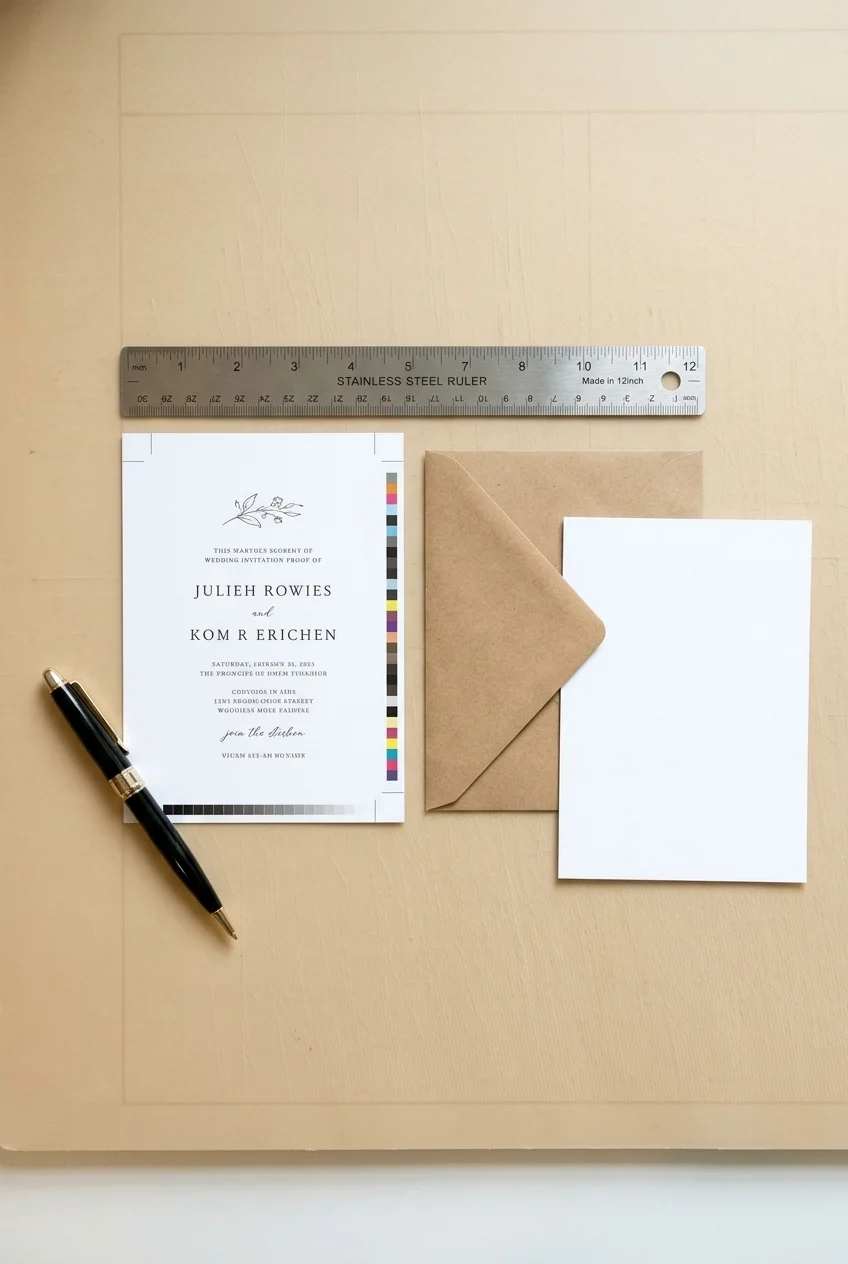
Colors, margins, and small type can change between screen and paper. Print, trim, fold, and place one complete suite inside its envelope.
Show the sample to someone unfamiliar with the plan. If they cannot find the date, location, or response method quickly, revise the hierarchy.
36. Use One Font Pair Everywhere
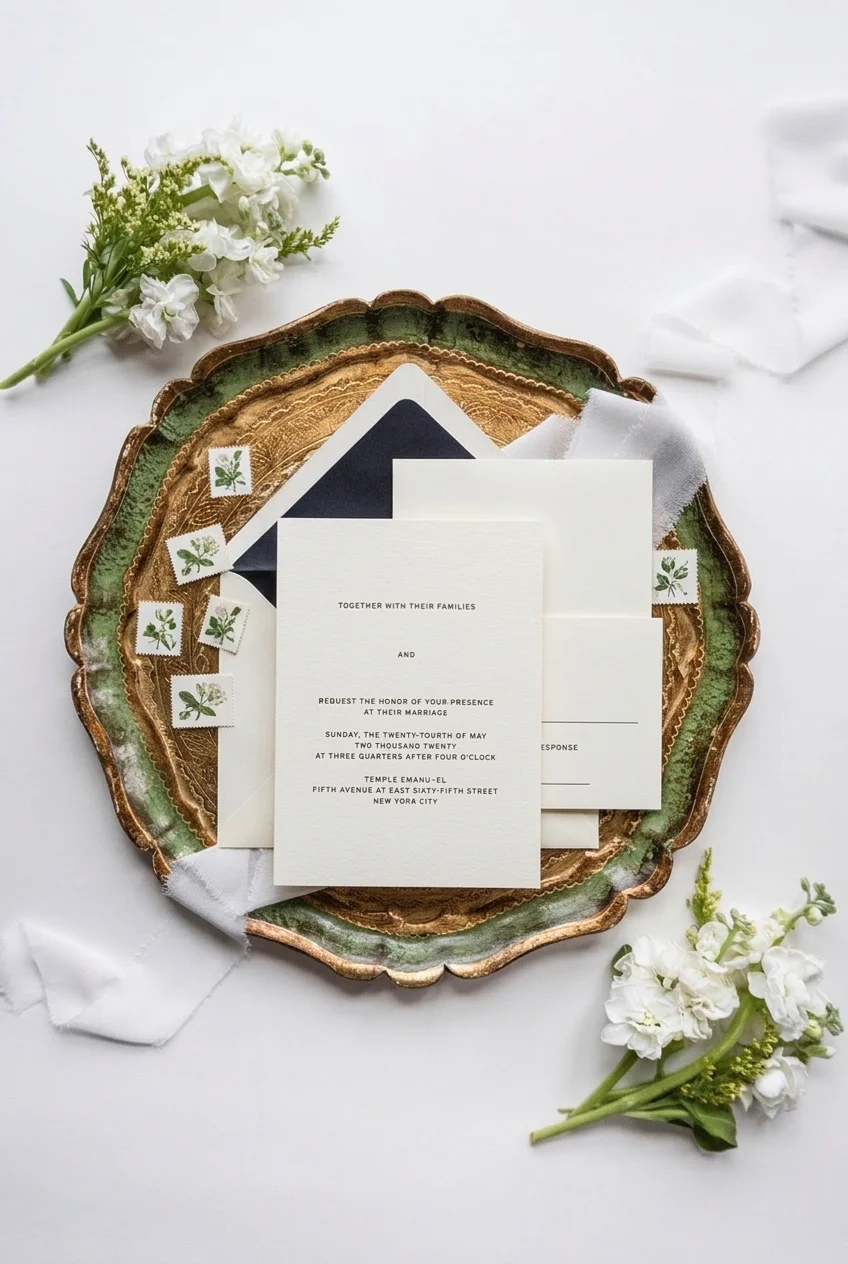
A readable text face plus one restrained display face can connect invitations, menus, signs, and tags. Avoid buying separate templates with competing styles.
Print every practical detail in clear type with strong contrast. Decorative lettering should never obscure times, directions, allergens, or table assignments.
37. Turn the Seating Chart Into the Main Sign
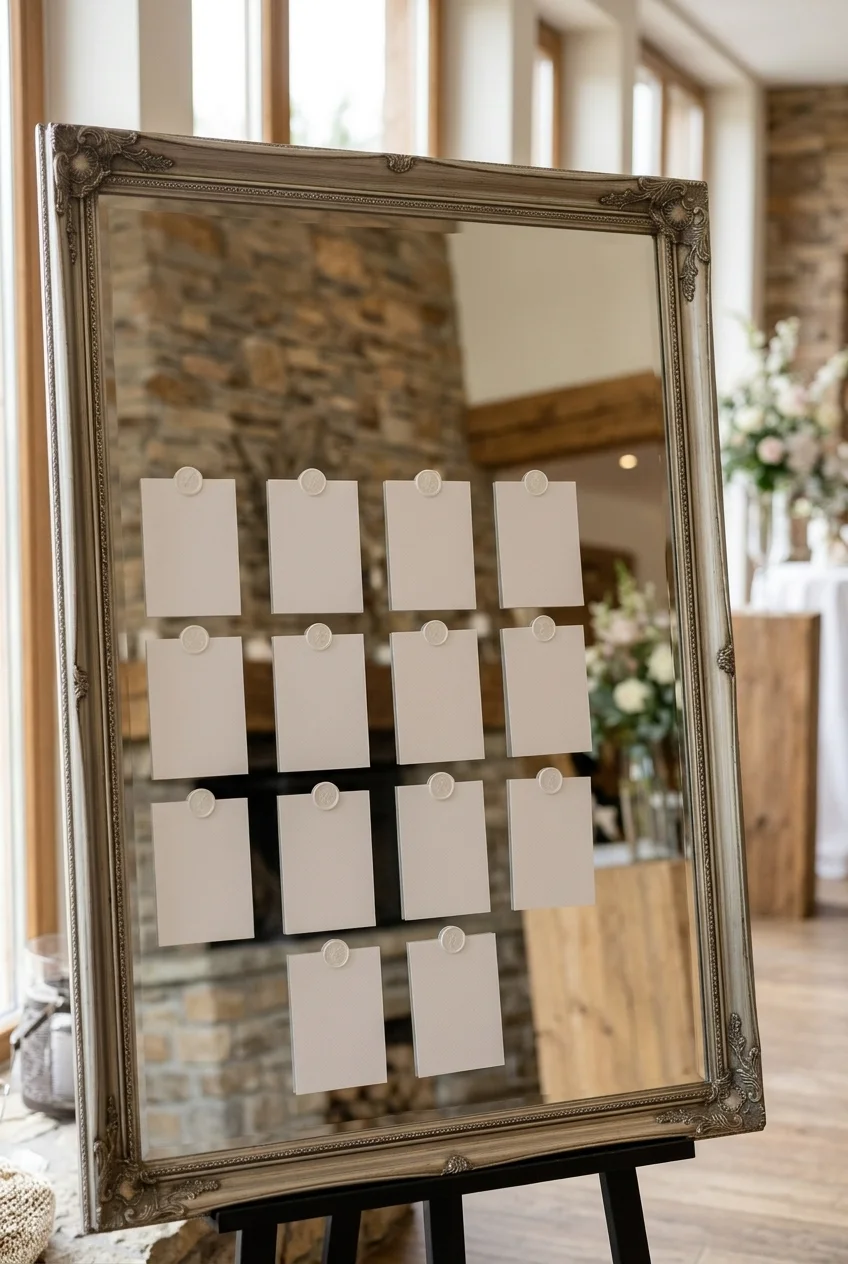
A seating chart is useful and visually prominent, making it a better spending priority than several decorative quote signs. Keep assignments easy to scan.
Alphabetical guest listings reduce searching for larger groups. Place the chart before the dining-room entrance, with enough space for people to pause.
38. Frame Signs You Can Print at Home
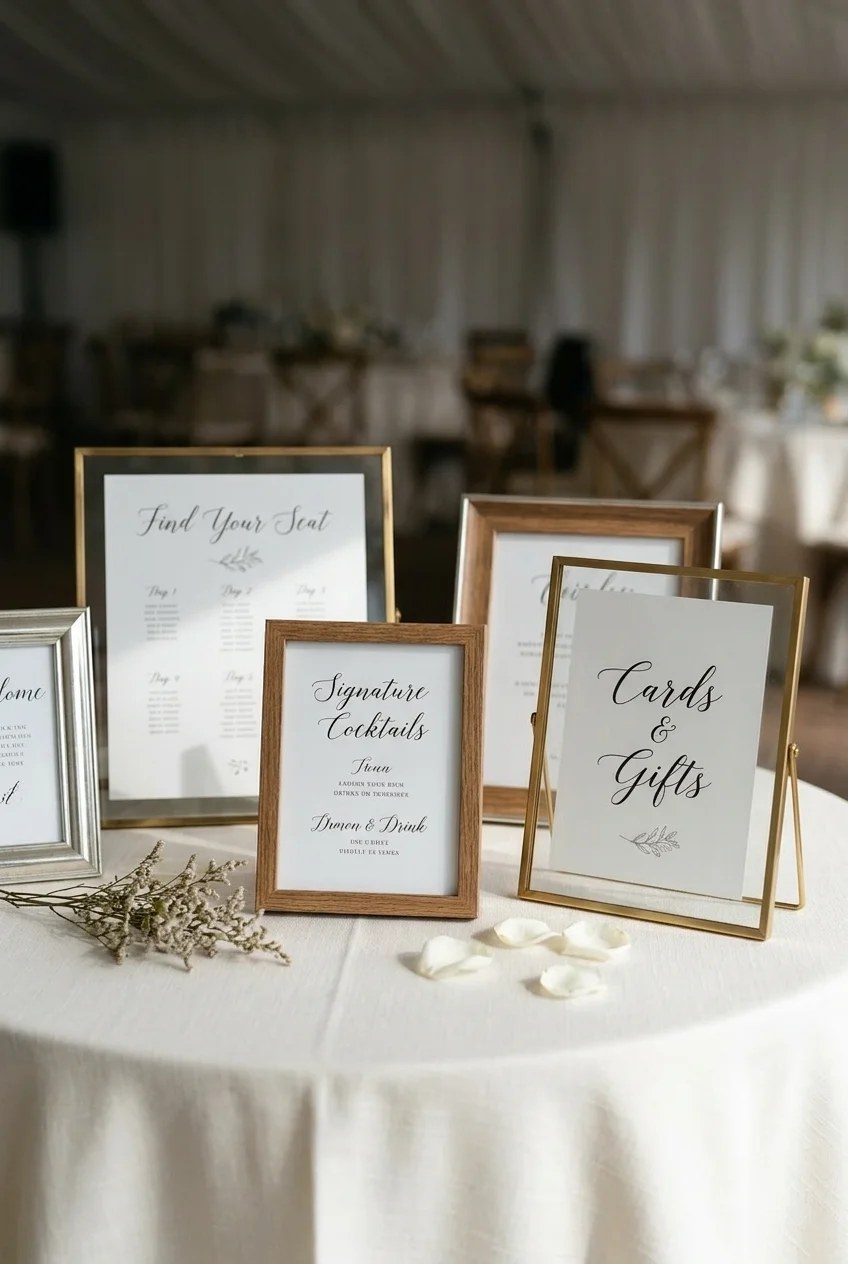
Borrowed frames make ordinary home printing look finished and protect paper from curling. Match insert sizes to frames before finalizing designs.
Limit signs to decisions guests actually need: seating, schedule, drinks, cards, and directions. Decorative instructions often add cost without improving flow.
39. Use Place Cards as Personal Notes
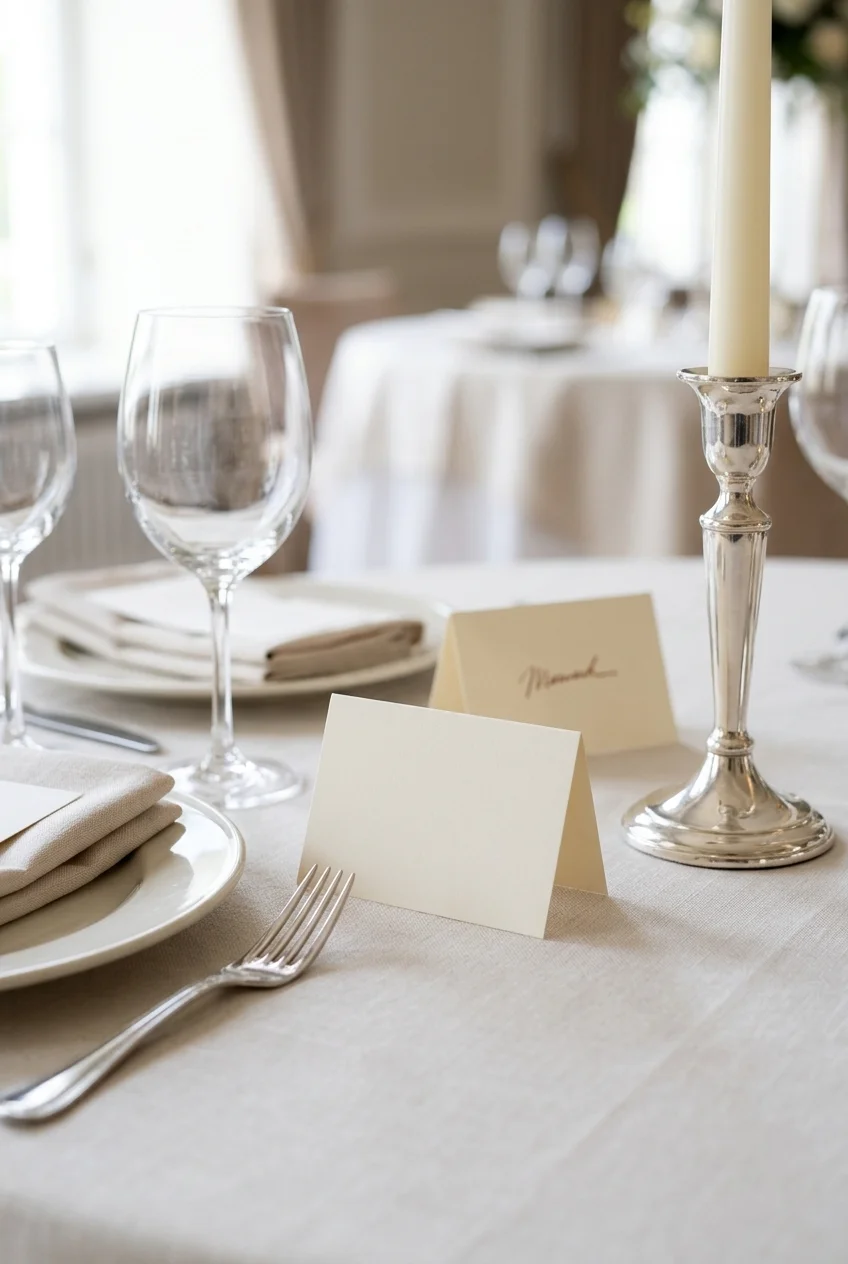
Write a brief thank-you on the back of each place card, combining seating guidance with a meaningful guest detail. Keep the front instantly readable.
Divide the writing between partners and finish early. A rushed note with the wrong name undermines the care this idea is meant to show.
40. Make One Reusable Directional Sign
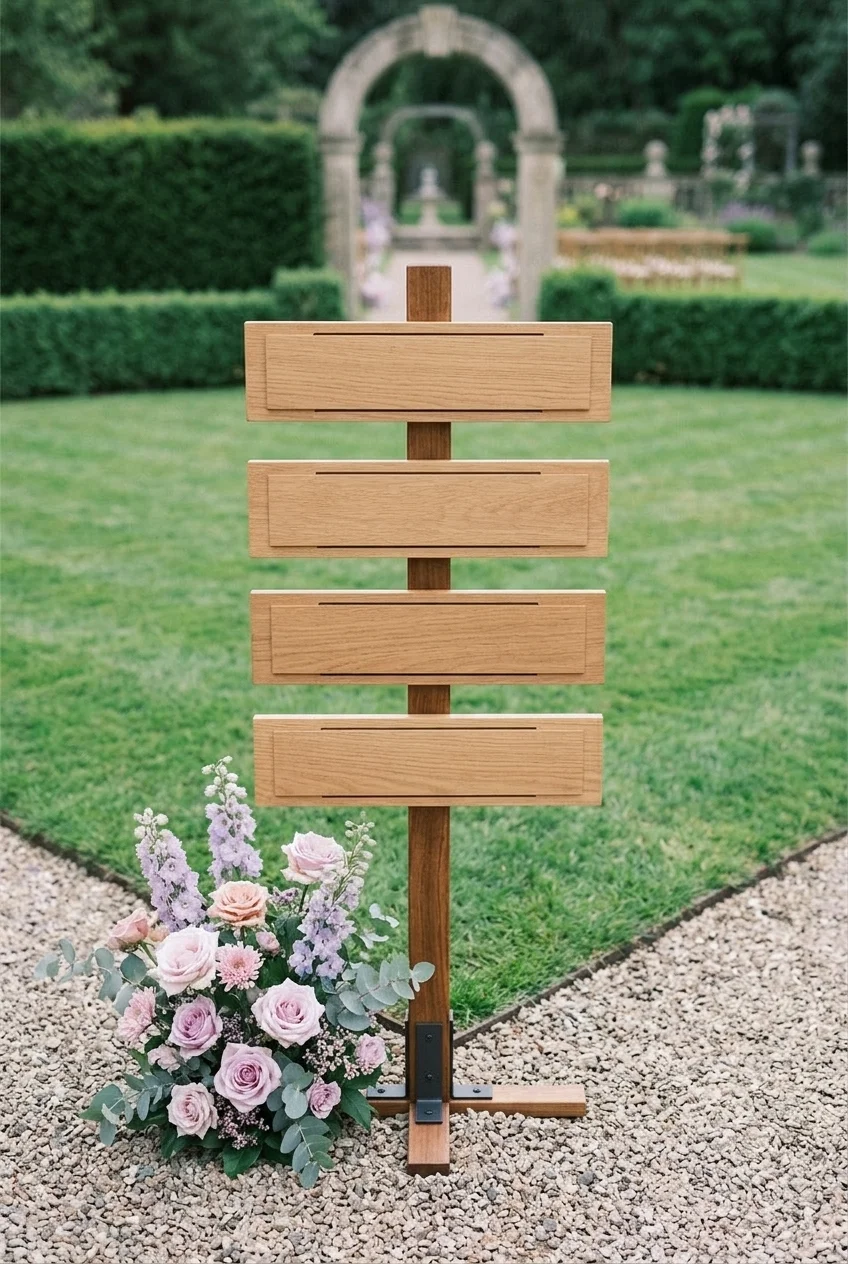
A freestanding board with removable arrows can guide guests between ceremony, drinks, and dinner. Reposition it as the schedule changes.
Assign one person to move it and test the base outdoors. Handwritten corrections on event day usually look less clear than blank replacement cards.
Flowers and Decor With Less Waste
41. Choose Flowers by Shape, Not a Specific Variety
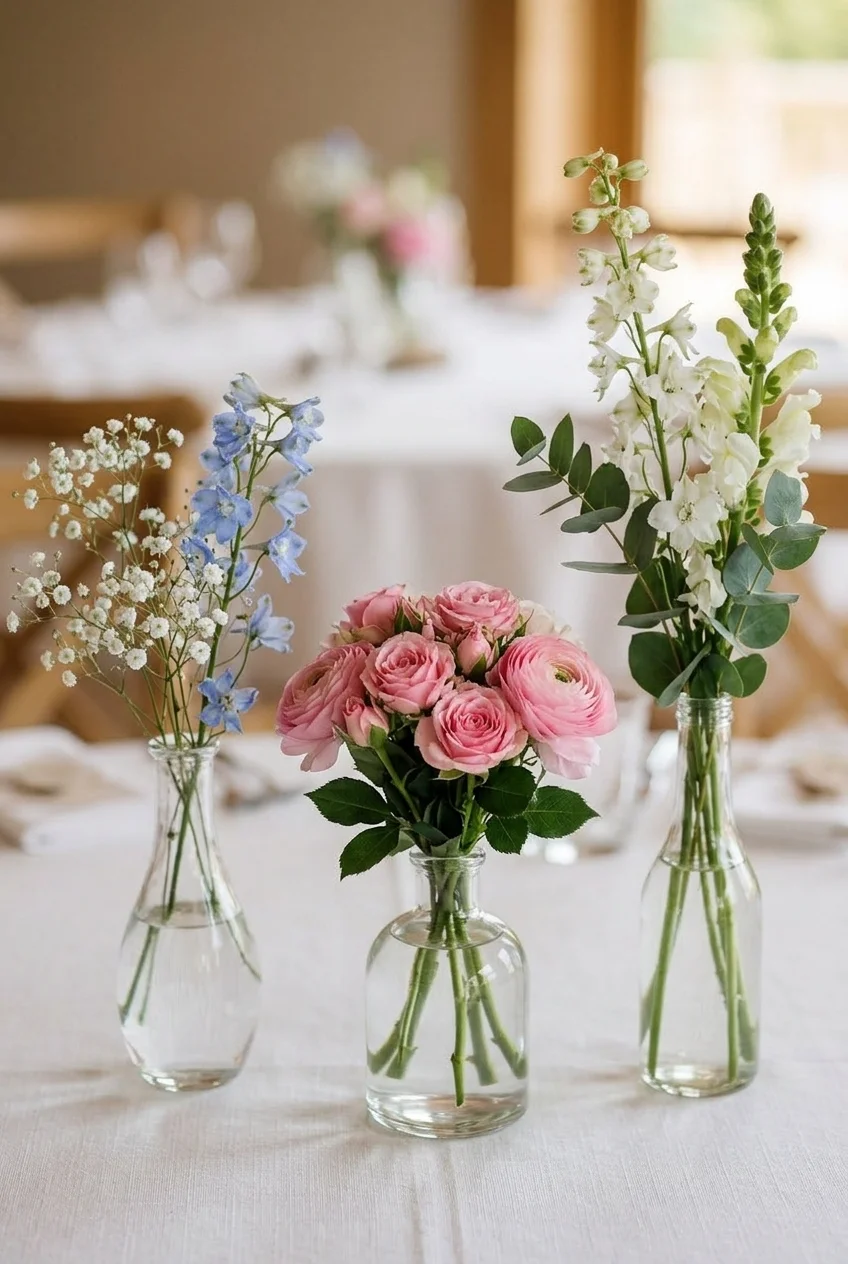
Ask for a color and silhouette rather than one exact bloom. Your florist can suggest available stems that create the same airy, rounded, or linear effect.
Protect any nonnegotiable sentimental flower by naming it separately. Flexibility should support the design, not quietly replace a detail that matters deeply.
42. Use One Focal Flower With Supporting Stems
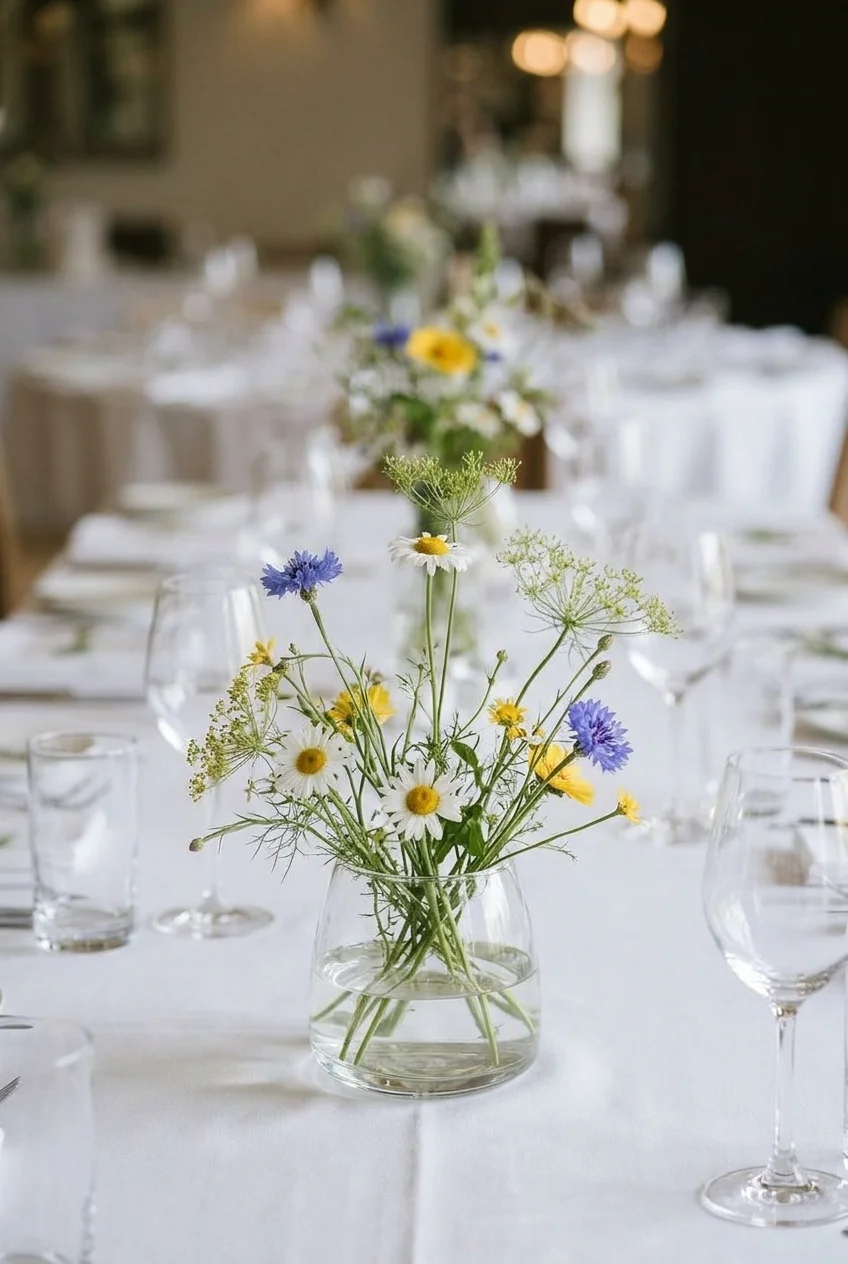
A few larger blooms can establish the arrangement while foliage and smaller flowers provide volume. This avoids filling every vase with premium stems.
Compare recipes by total arrangement cost, including labor and mechanics. A cheaper flower requiring many stems may not produce a cheaper centerpiece.
43. Move Ceremony Flowers to the Reception
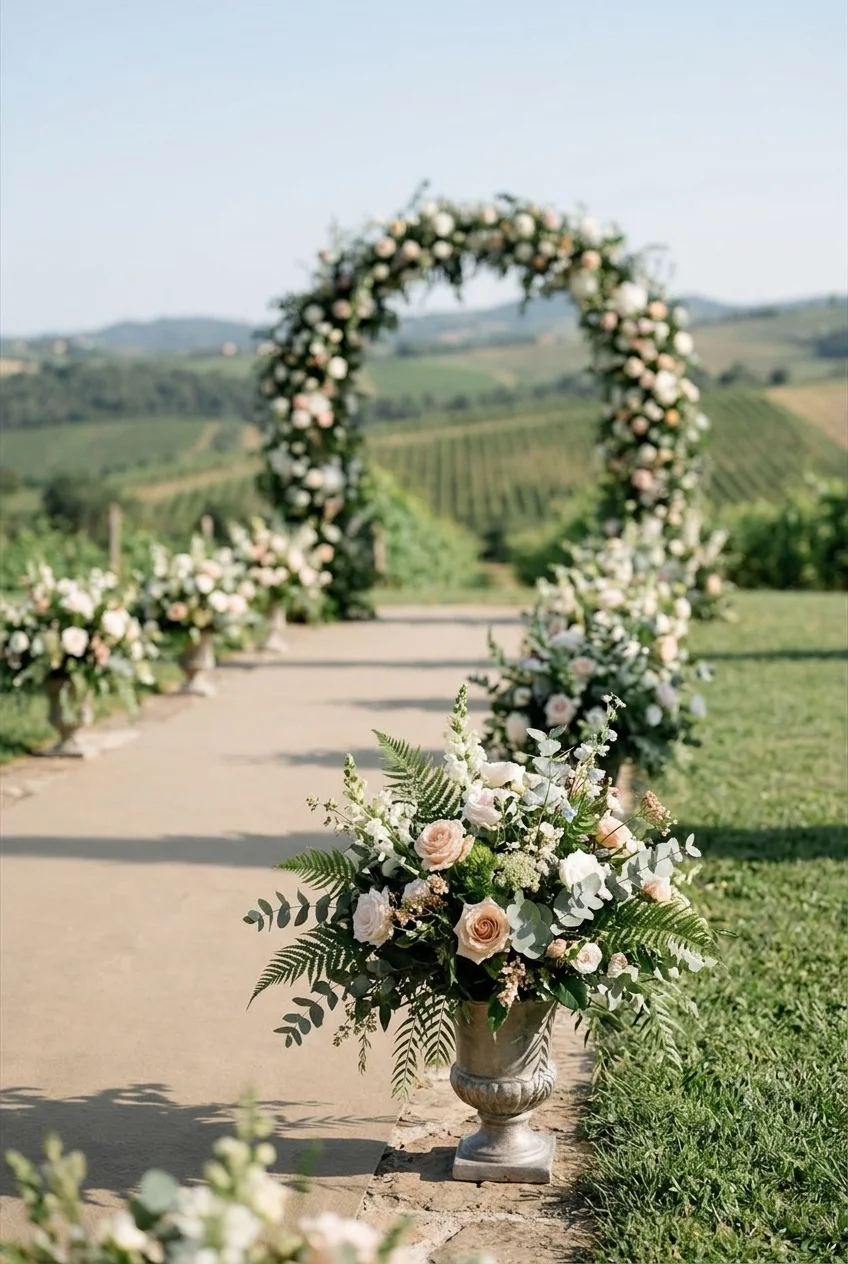
Design aisle and altar arrangements in portable containers so they can flank the seating chart, bar, or band after the ceremony.
Confirm the transfer window, route, vehicle, and responsible person in writing. Reuse saves money only when relocation does not disrupt photographs or service.
44. Rent Large Artificial Installations
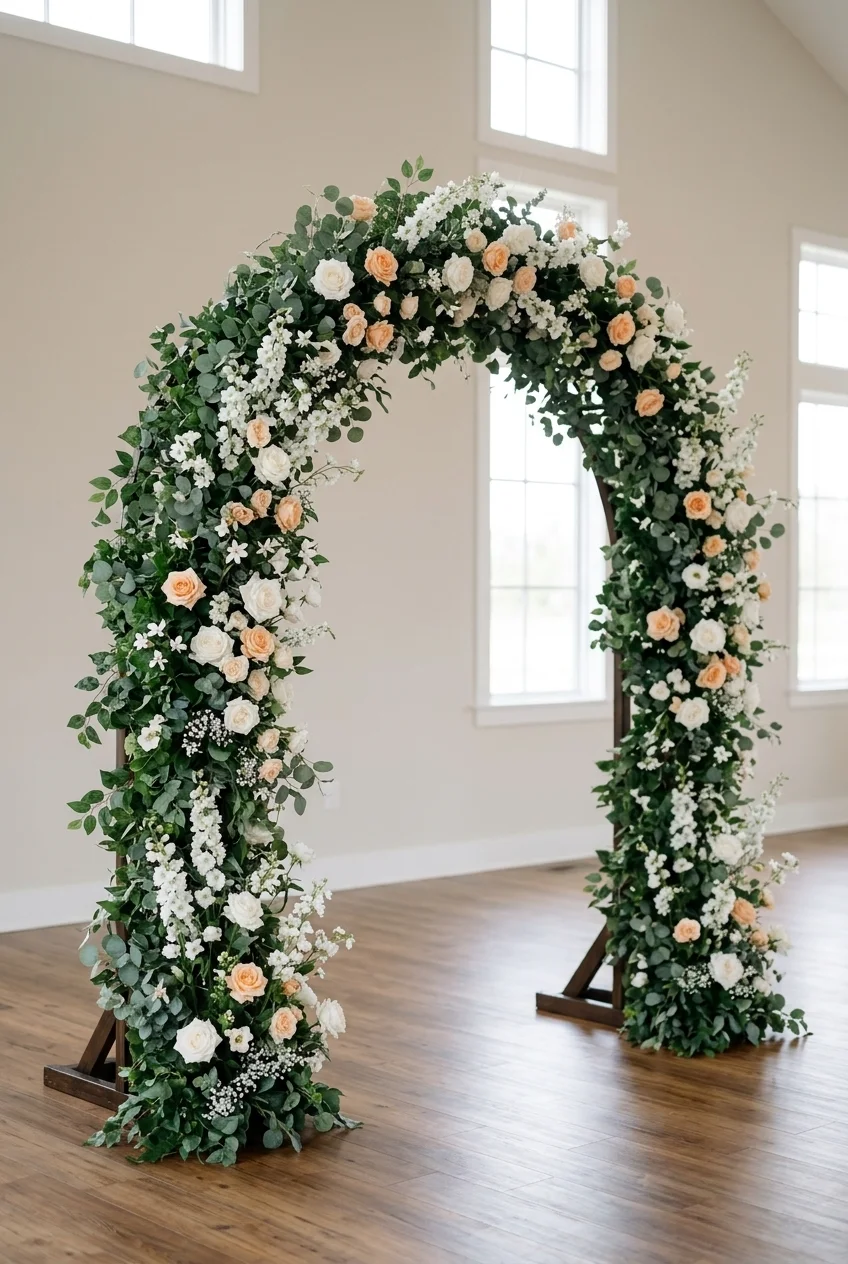
A rented faux arch or flower wall can provide scale without purchasing hundreds of single-use stems. Inspect color, dust, gaps, and backing closely.
Ask what delivery, setup, damage, and removal include. Add a few real flowers only where close photographs need natural texture.
45. Use Branches for Height
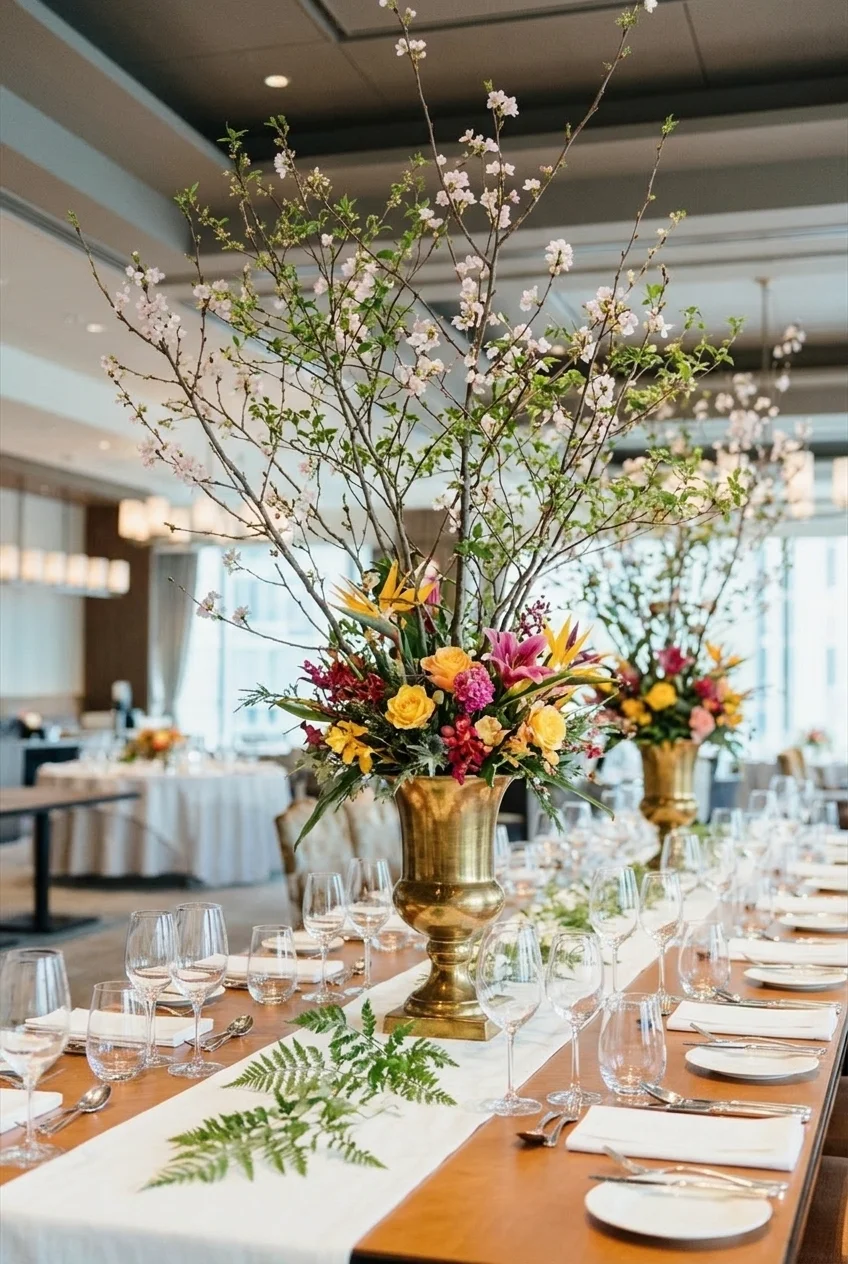
Leafy or bare branches create height with fewer stems than a dense floral arrangement. Secure them in weighted vessels above seated sightlines.
Height adds value only when the base remains stable and the canopy stays clear of lights, sprinklers, and serving routes.
46. Gather Decor Into Clusters
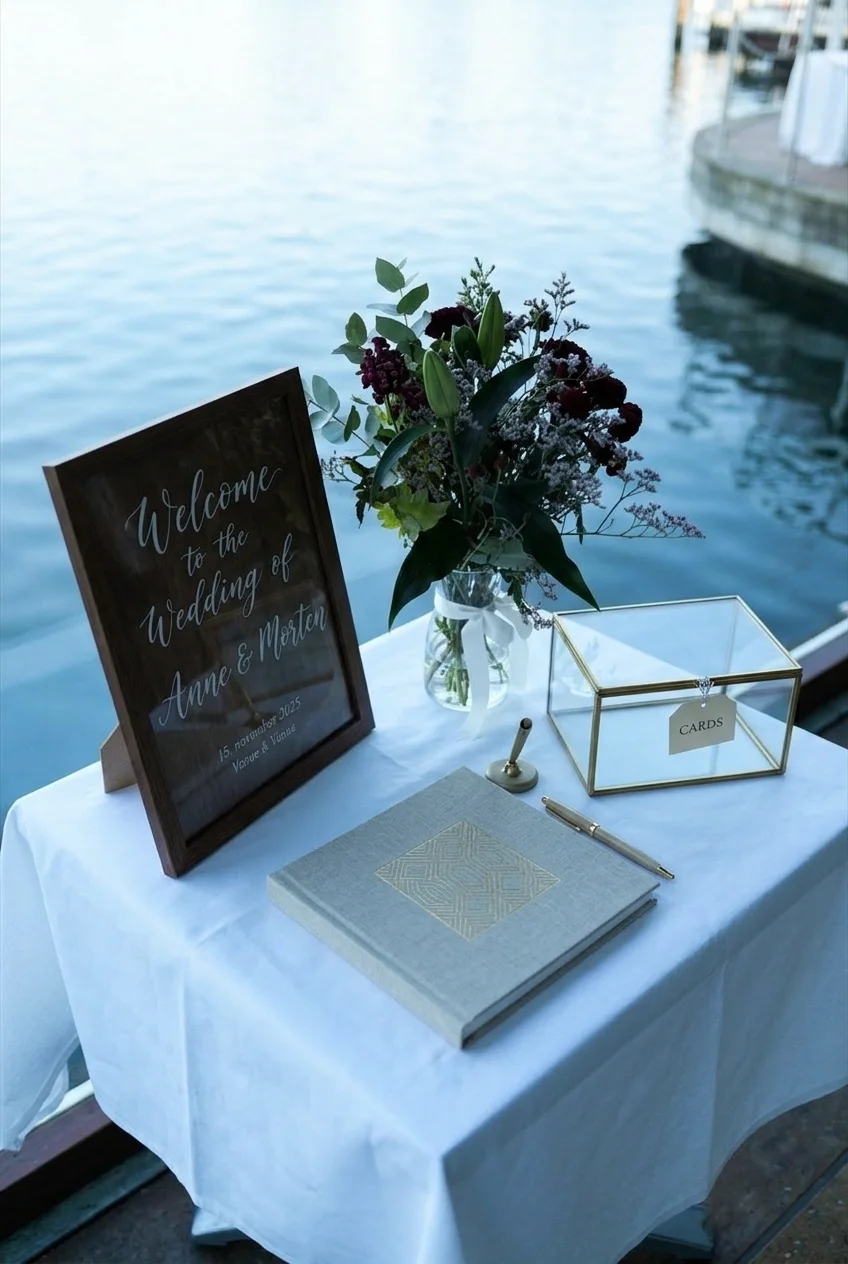
Three related objects in one area usually look stronger than the same pieces scattered across separate corners. Build clusters around actual guest activities.
Pair each cluster with a purpose: arrivals, cards, seating, cake, or drinks. If an object supports nothing, remove it from the purchasing list.
For more adaptable visual details, compare these bridal shower setup ideas and reuse only the elements that fit your venue, schedule, and guest needs.
47. Borrow Pedestals and Cake Stands
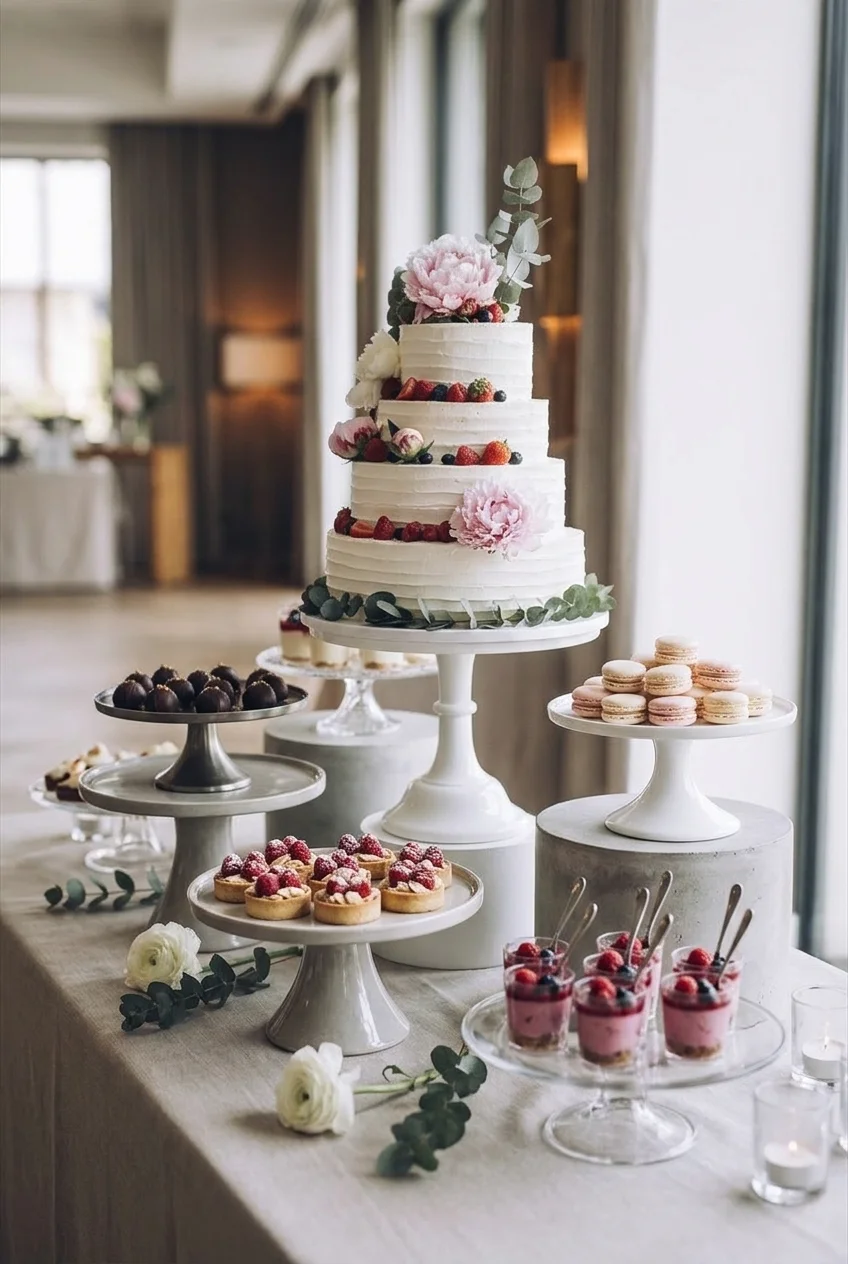
Different heights help a dessert or welcome display look composed without more decorations. Borrow sturdy stands, boxes, or plinths in compatible finishes.
Test every borrowed surface with the real weight and add food-safe barriers where needed. Decorative boxes should never sag beneath cakes or glassware.
Planning tip Test this choice at realistic scale before ordering the full quantity, and record the final count, setup owner, and removal plan.
48. Use Potted Flowers at the Entrance
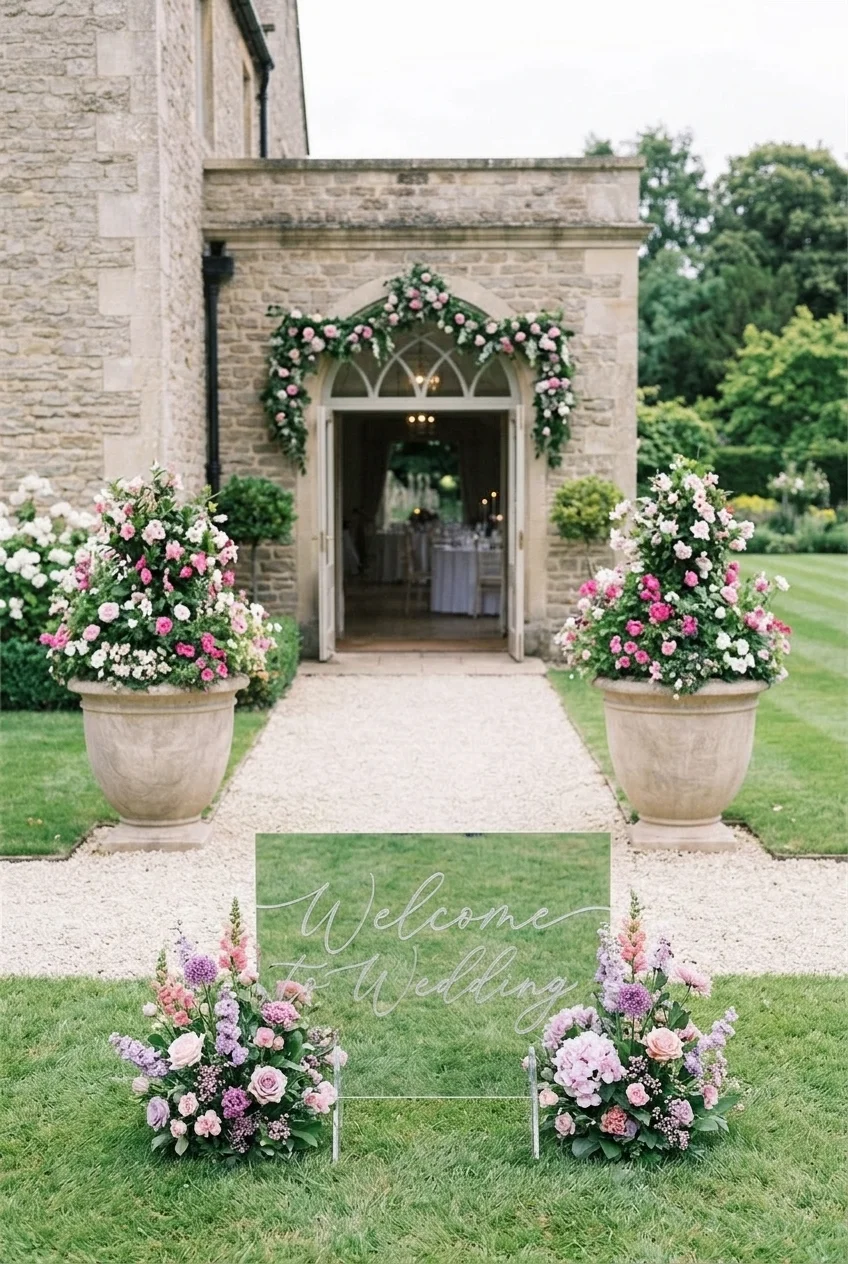
Two pots of flowering plants can frame a doorway, then continue living after the wedding. Choose specimens suited to the actual light and weather.
Hide nursery labels and protect floors from drainage. Oversized containers may cost more to transport than cut flowers, so compare the complete plan.
49. Make Paper Decor in One Repeated Shape
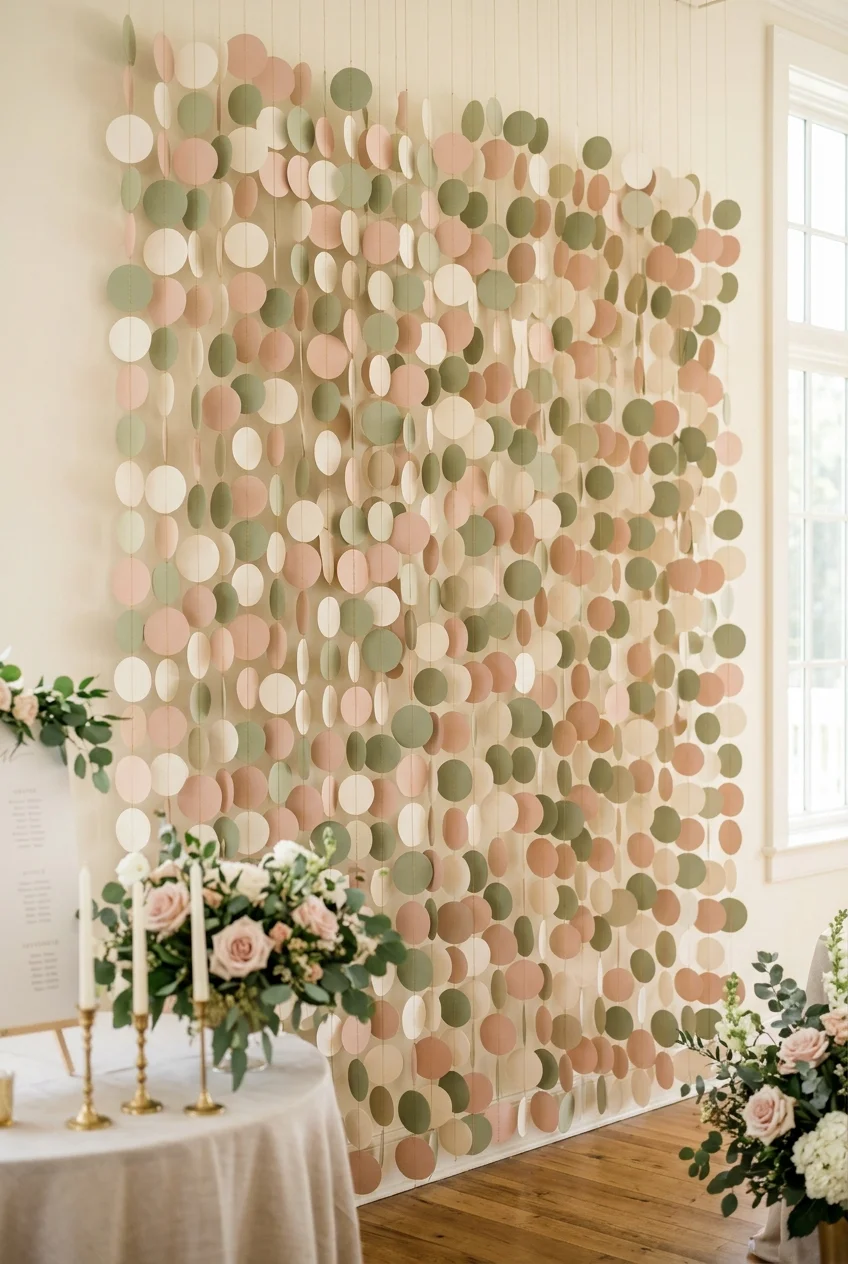
Paper fans, folded stars, or circles can fill one backdrop economically when every piece follows a limited size and color system.
Construct a small section first to calculate paper, cutting, hanging, and labor. Store finished pieces flat and keep them away from flames.
50. Decorate Only Camera-Visible Corners
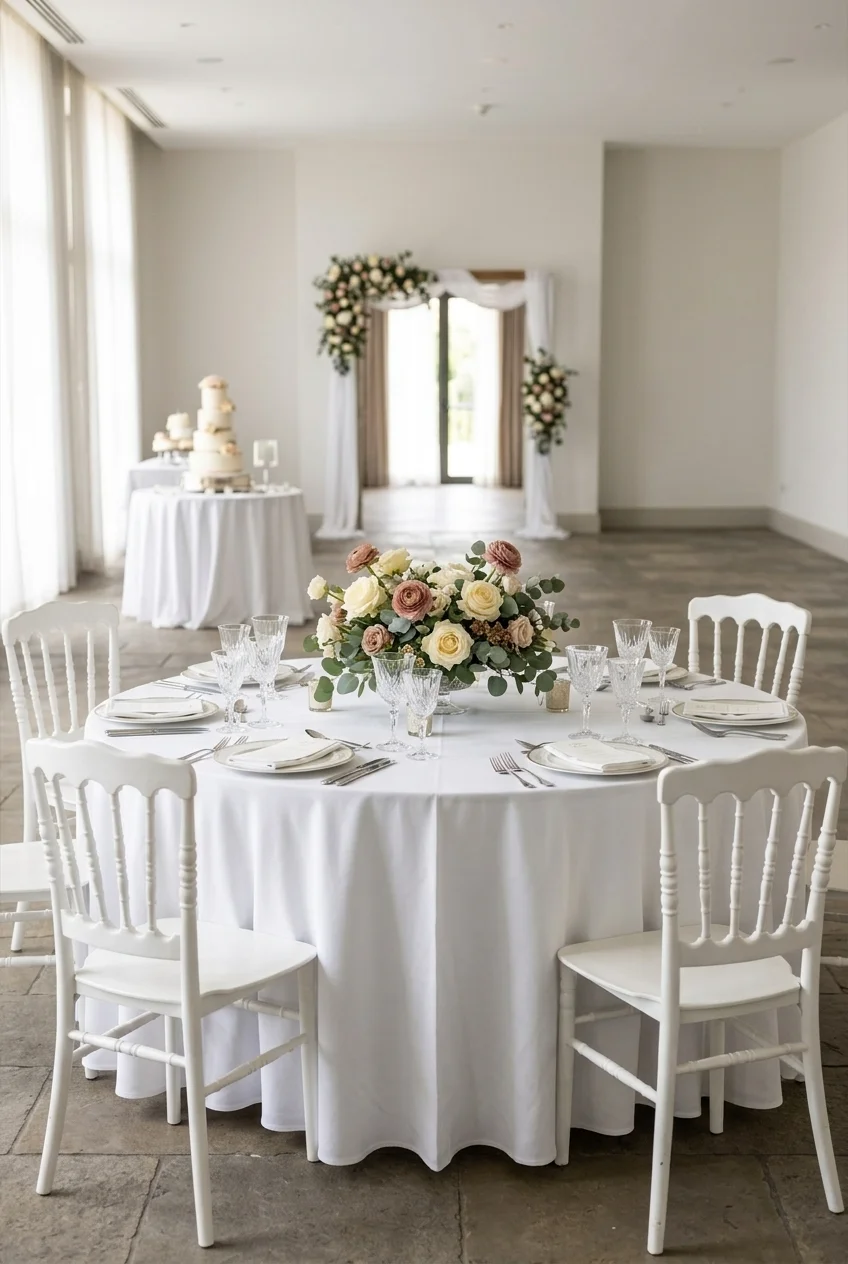
Study venue photographs and the photographer’s likely angles before assigning decor. Complete the ceremony, tables, entrance, and cake area before hidden corners.
This approach is not about faking abundance. It directs limited materials toward spaces guests use and photographs will preserve later.
- Count every repeated unit before purchasing.
- Include delivery, setup, cleanup, and return costs.
- Keep one practical alternative if the original plan changes.
Attire and Beauty Decisions That Protect the Budget
51. Shop Sample Dresses With Alterations in Mind
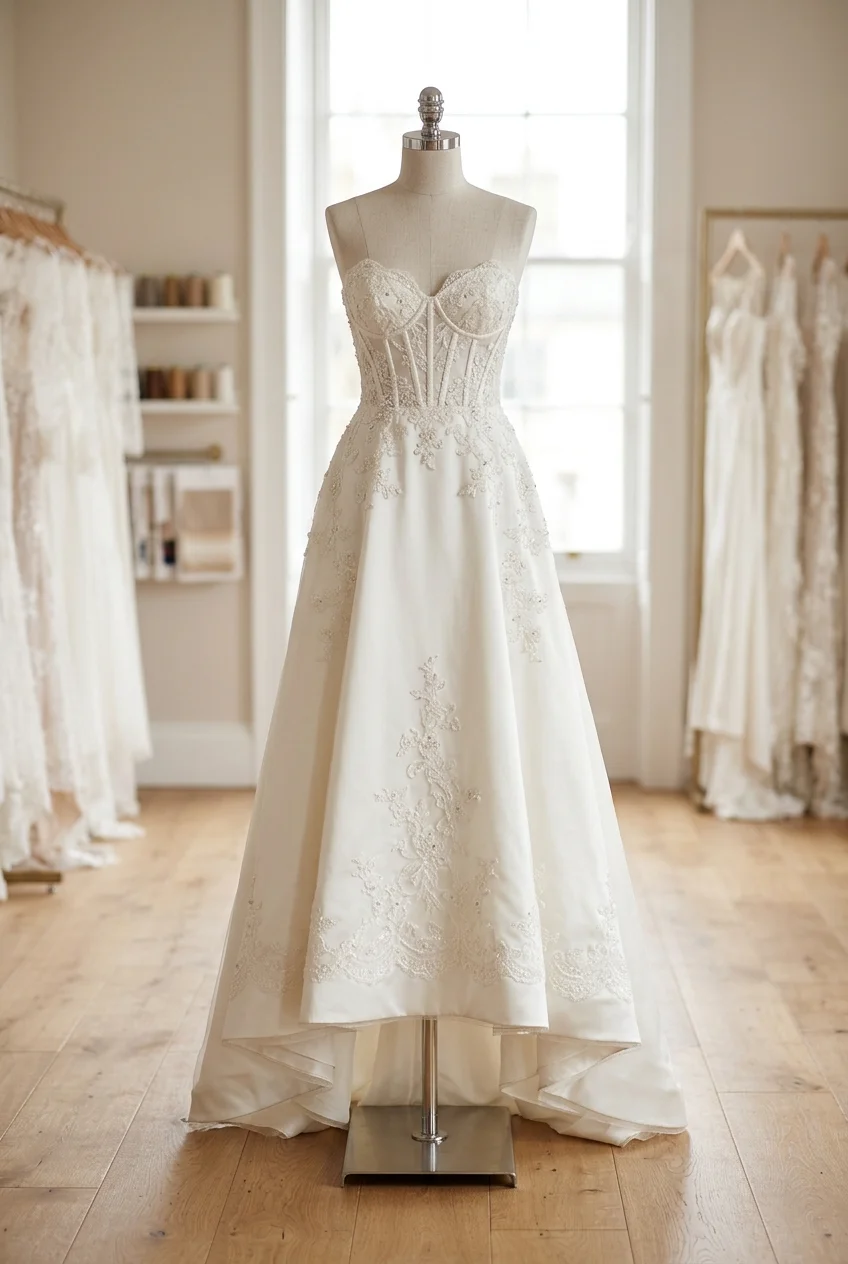
A discounted sample can still require cleaning, repairs, and significant tailoring. Inspect seams, closures, hem, lining, and embellishments before calculating savings.
Get an alteration estimate before purchasing a nonreturnable dress. A slightly higher price in the correct size may cost less overall.
52. Choose a Simple Dress With Strong Fit
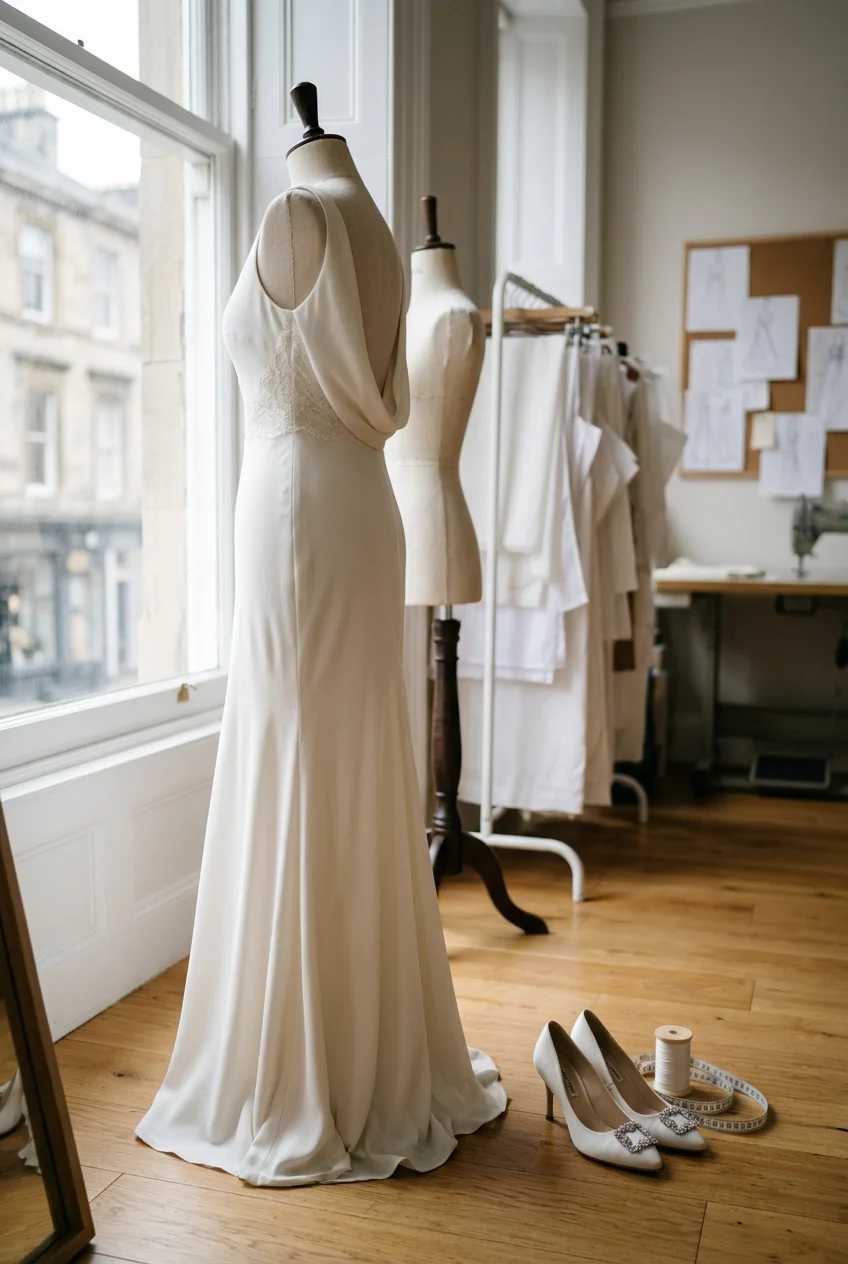
Clean fabric and accurate tailoring can look more considered than inexpensive embellishment. Prioritize the silhouette, movement, support, and finished hem.
Sit, walk, raise your arms, and test the planned shoes during fittings. Comfort problems become expensive when corrected in the final week.
53. Borrow the Ceremony Accessories
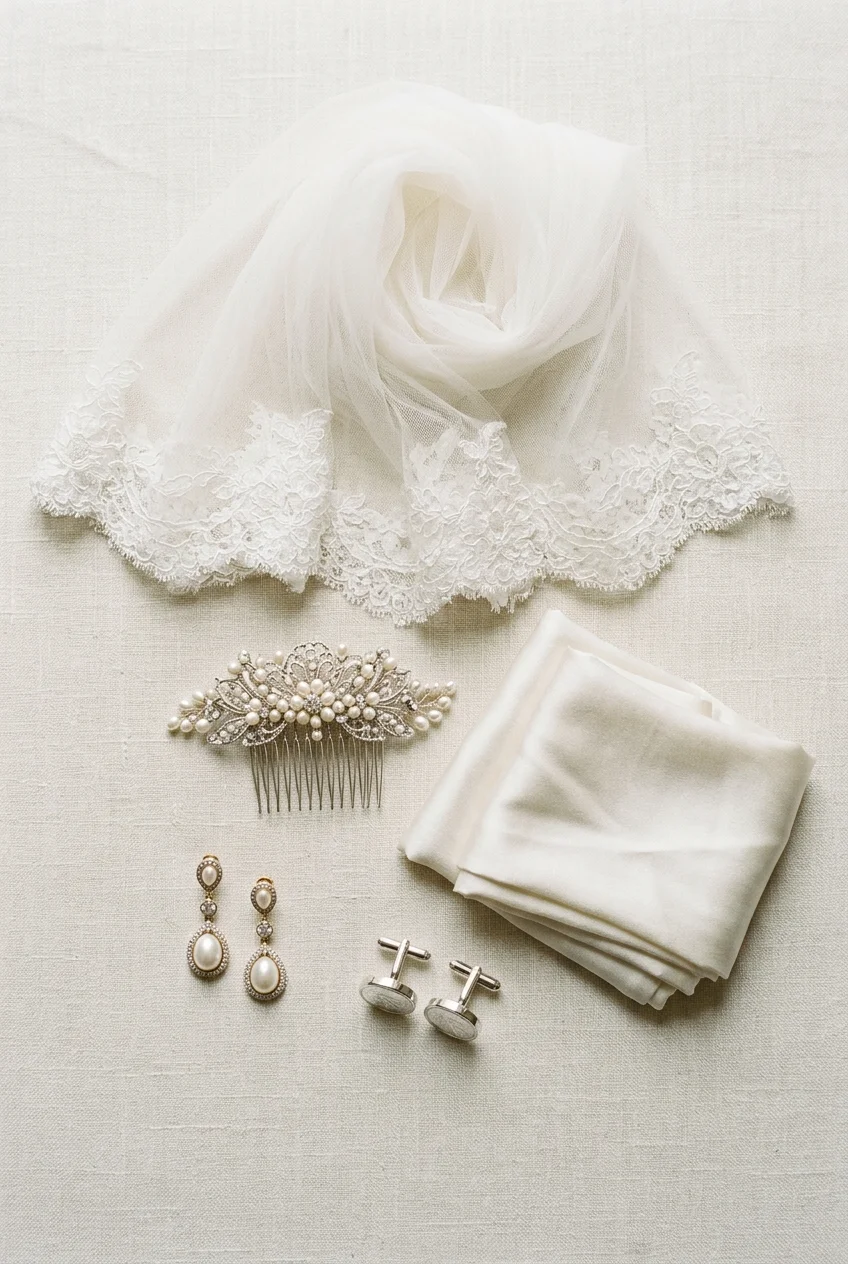
A veil, hairpiece, jewelry, wrap, or cuff links can satisfy tradition without becoming another permanent purchase. Photograph every borrowed item before use.
Agree on cleaning, return timing, and secure storage. Sentimental pieces deserve one named caretaker rather than an open accessories table.
54. Wear Shoes You Can Use Again
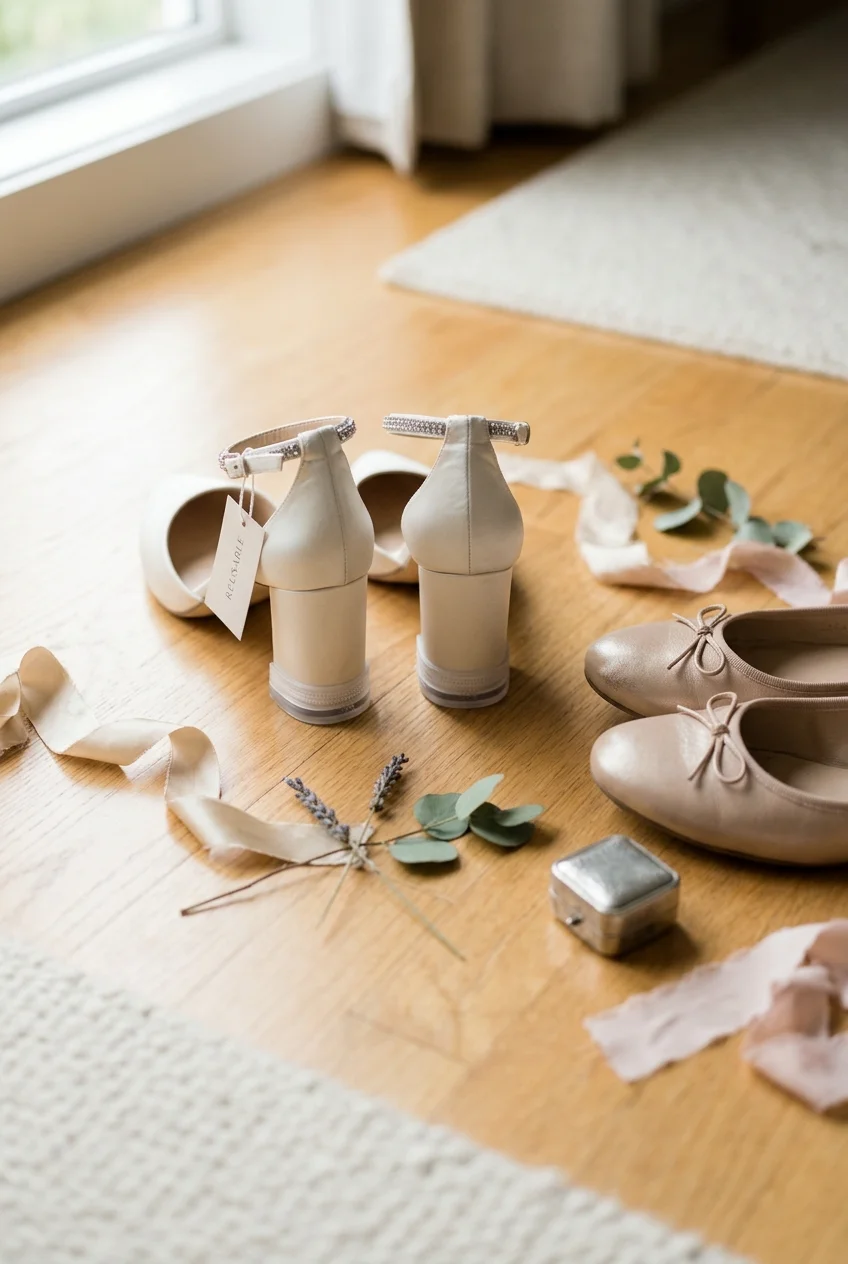
Choose shoes that suit both the venue surface and future occasions. A comfortable neutral, metallic, or colored pair can outlast one formal outfit.
Test soles on grass, stairs, and dance flooring when possible. Add heel protectors or a second practical pair before discomfort forces an emergency purchase.
55. Let the Wedding Party Choose Within a Palette
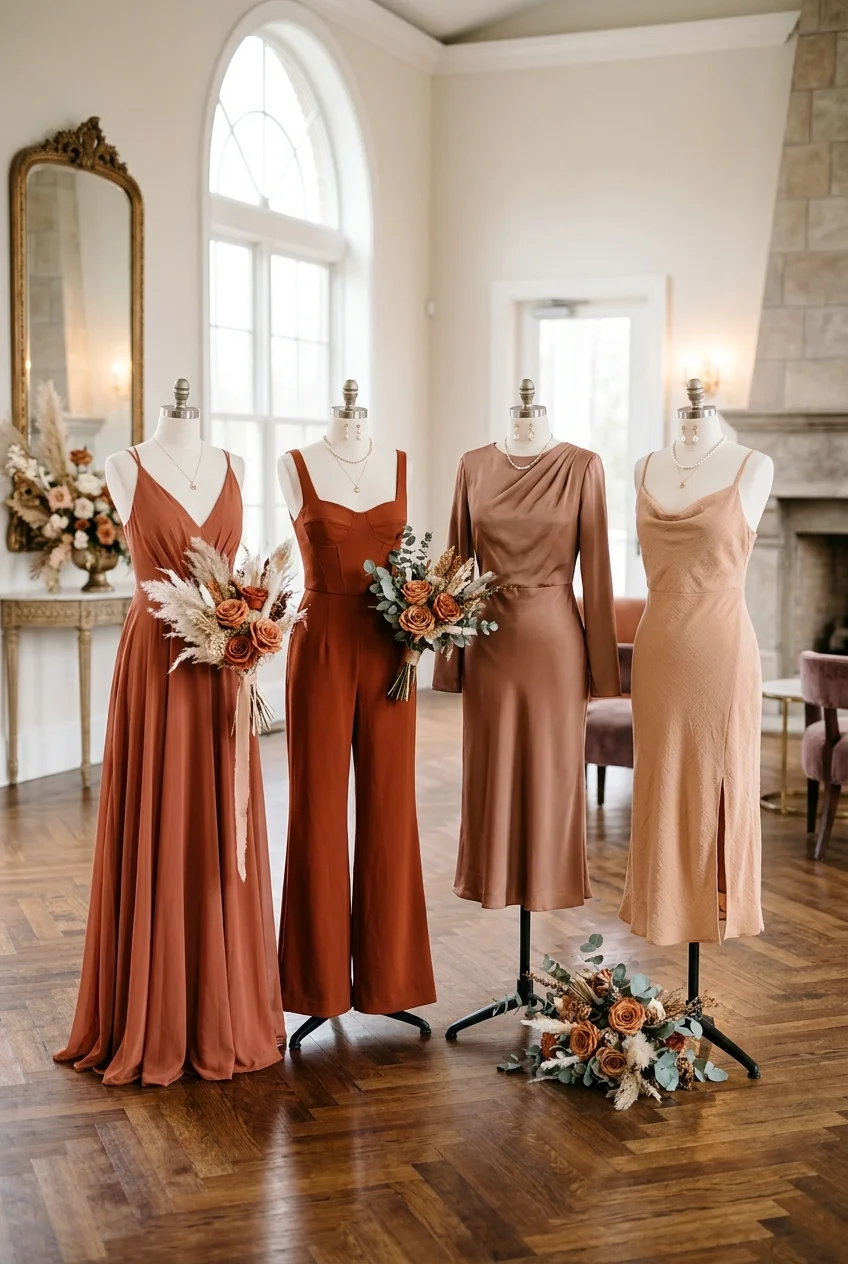
A defined color range lets attendants shop different brands, seasonal sales, and secondhand options while preserving a coordinated group appearance.
Share fabric examples and formality expectations, not a vague color name. Confirm choices early enough for returns without requiring identical bodies to wear identical cuts.
56. Rent Formalwear With Clear Return Terms
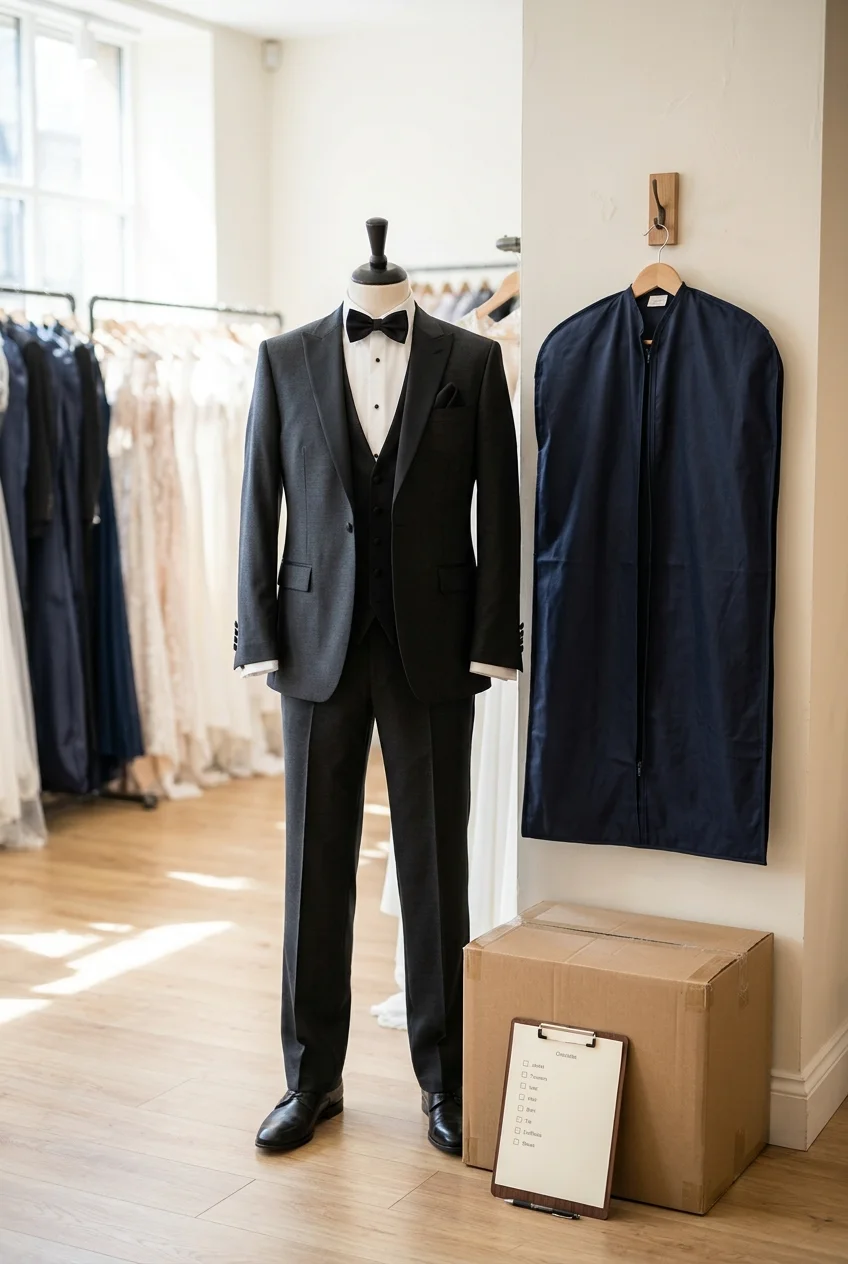
Rental can reduce closet waste, but late fees, damage rules, shipping, and backup sizing affect the real cost. Read the complete return process.
Schedule arrival with enough time for exchanges and try every piece immediately. Photograph the packed return before handing it to the carrier.
57. Use One Floral Hair Accent
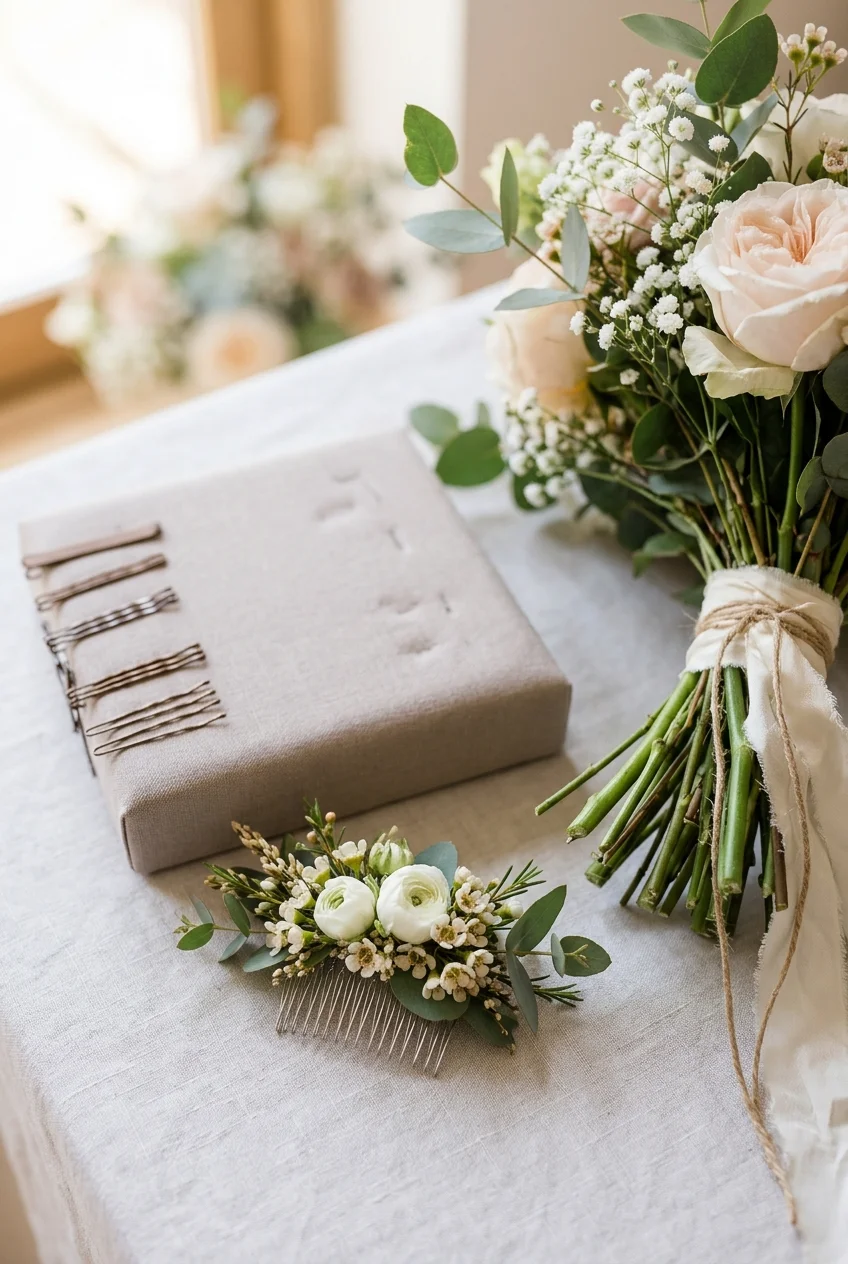
A small comb of fresh or preserved flowers can connect the bouquet to a simple hairstyle without purchasing multiple decorative accessories.
Ask which blooms tolerate handling and warmth. Test the comb’s weight and placement during the hair trial, not on the wedding morning.
58. Book Beauty Services Around Priorities
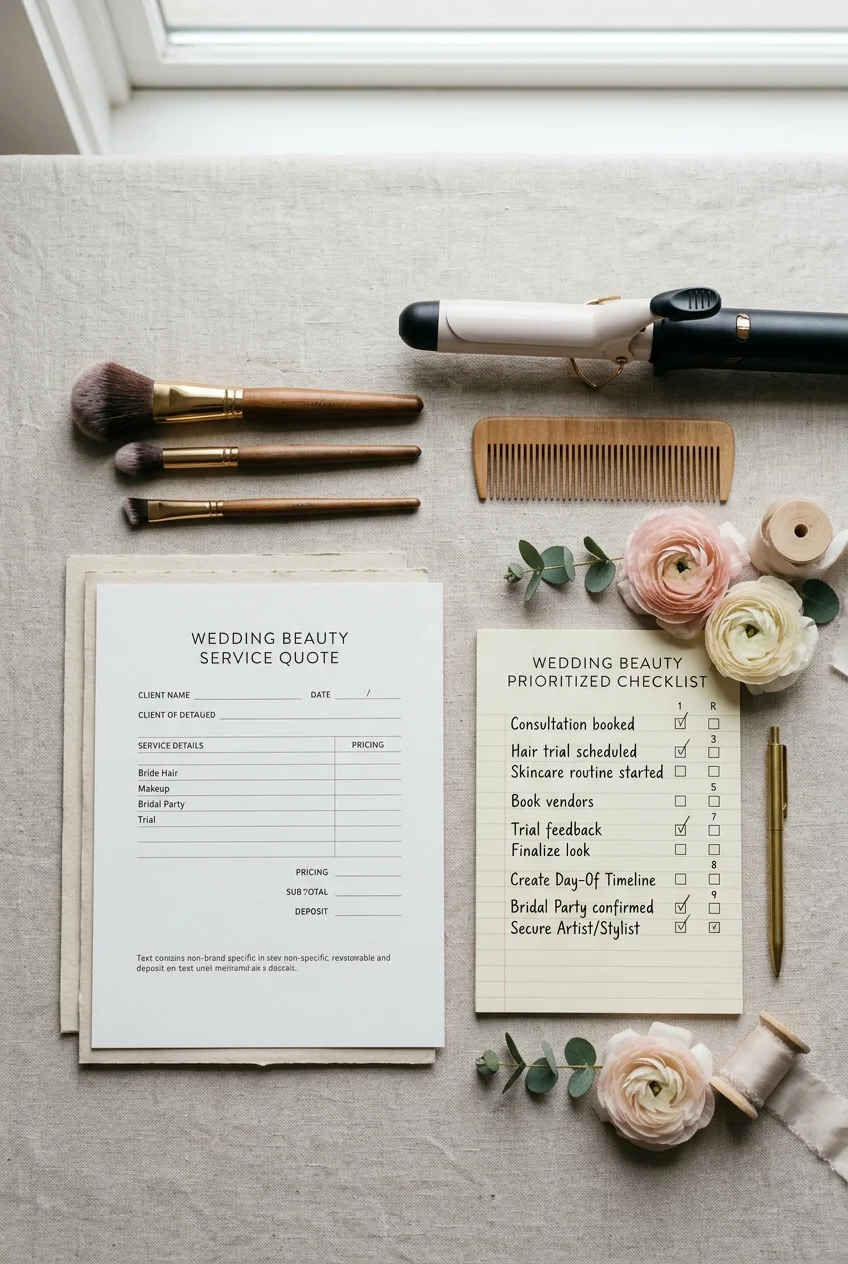
Pay for the service that requires the most confidence, then simplify the rest. One person may prioritize hair while another values professional makeup.
Trials, travel, gratuity, minimum bookings, and early-start fees belong in the comparison. A lower service price can carry a higher final invoice.
59. Use Everyday Grooming Products You Trust
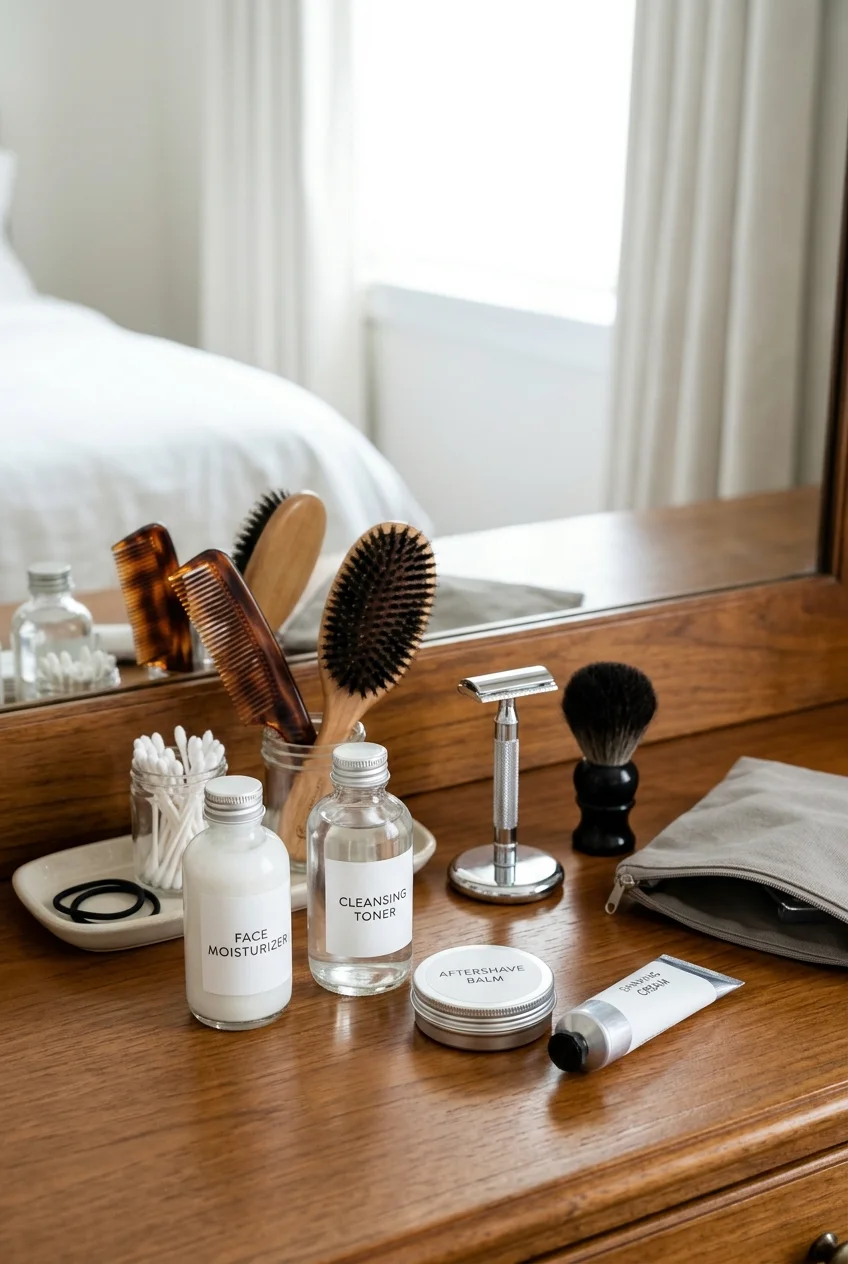
Wedding week is a poor time to experiment with unfamiliar skincare, fragrance, or hair products. Familiar basics prevent unnecessary purchases and surprises.
Decant only what you need into clearly labeled travel containers. Keep prescription and allergy-sensitive items separate from shared getting-ready supplies.
60. Choose One Statement Attire Detail
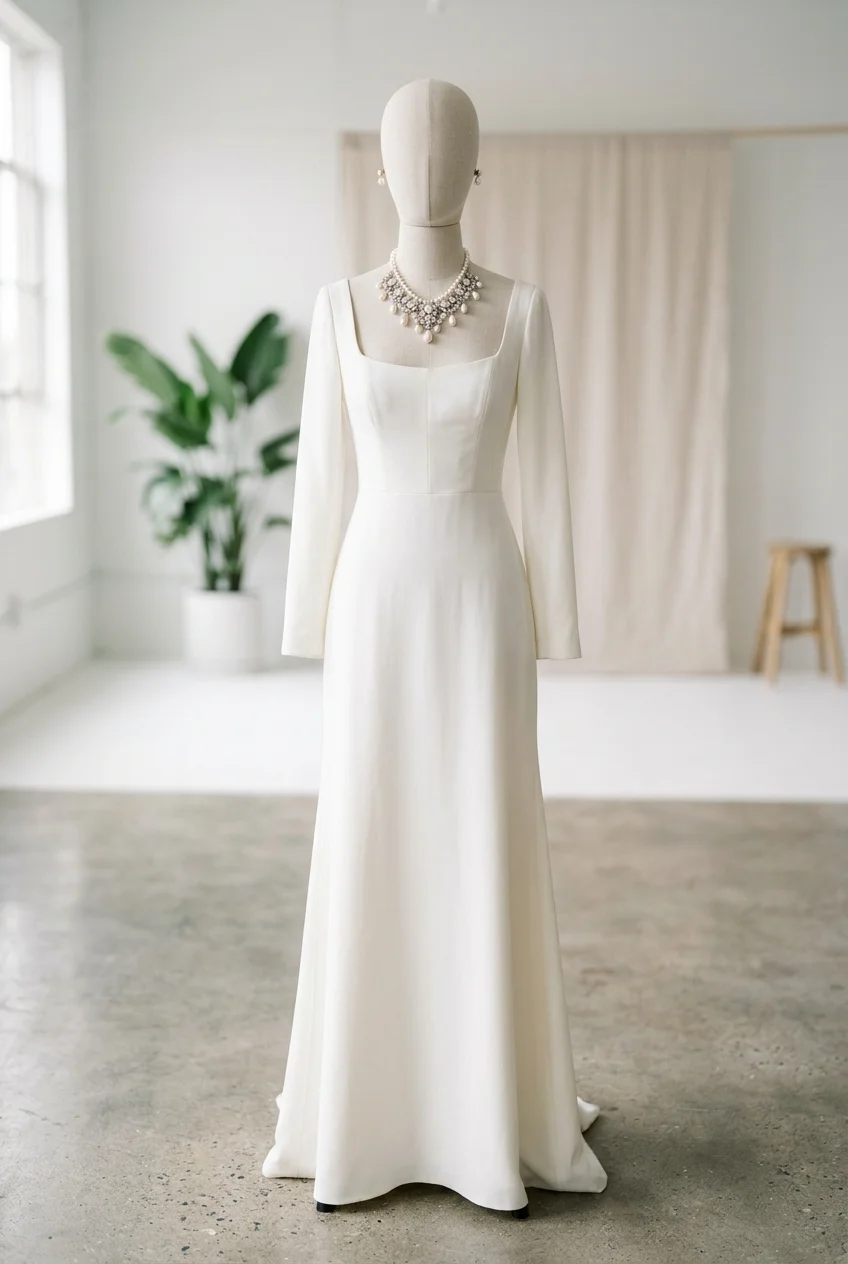
A colored jacket, embroidered veil, patterned tie, or sculptural earrings can carry the look without adding several costly competing accessories.
Photograph the complete outfit before buying the final detail. If the image already has a focal point, spend elsewhere instead.
Food, Drinks, and Cake That Feel Generous
61. Serve Brunch or Lunch
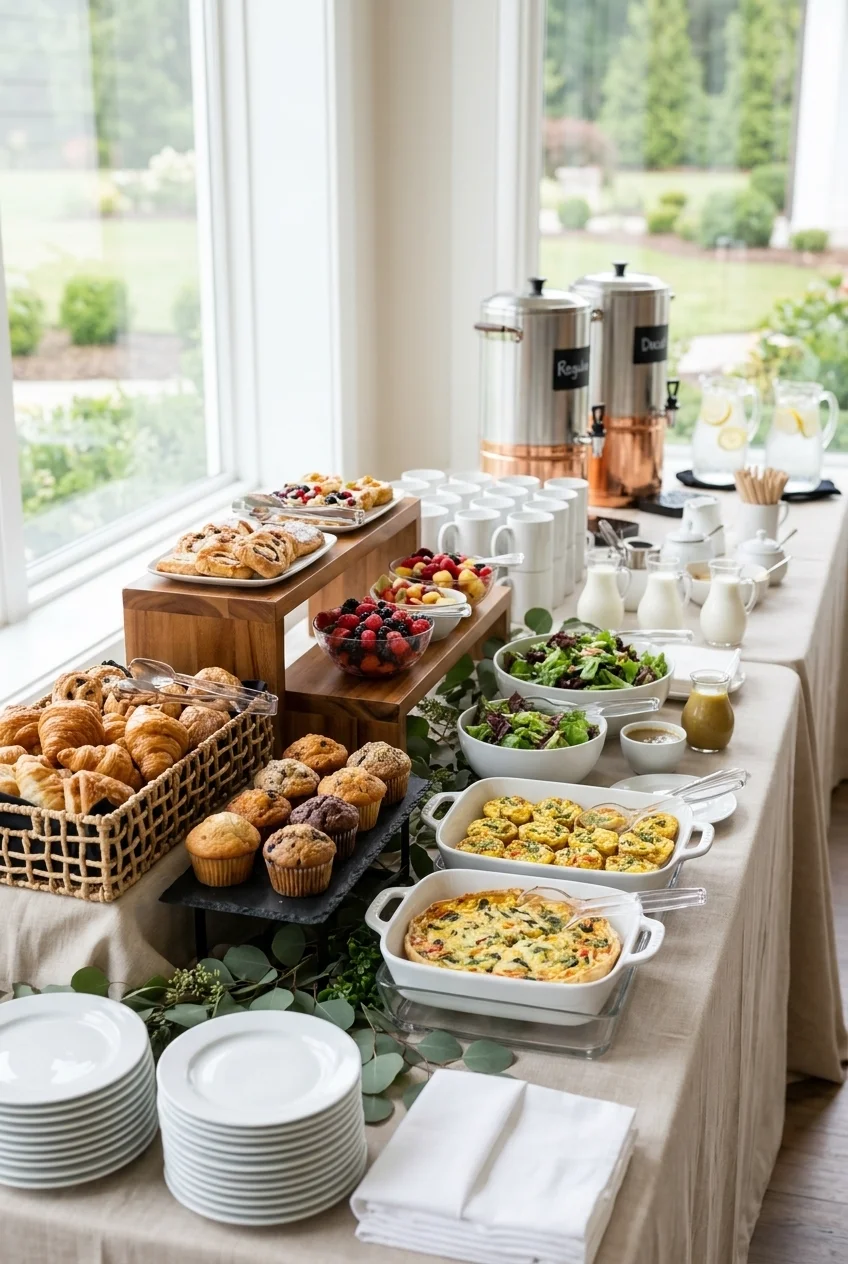
A daytime menu can center on pastries, eggs, salads, sandwiches, coffee, and sparkling drinks instead of an elaborate evening dinner.
Compare venue minimums and staffing, not just ingredient prices. Provide enough substantial food for the ceremony time and total event length.
62. Choose a Restaurant Reception
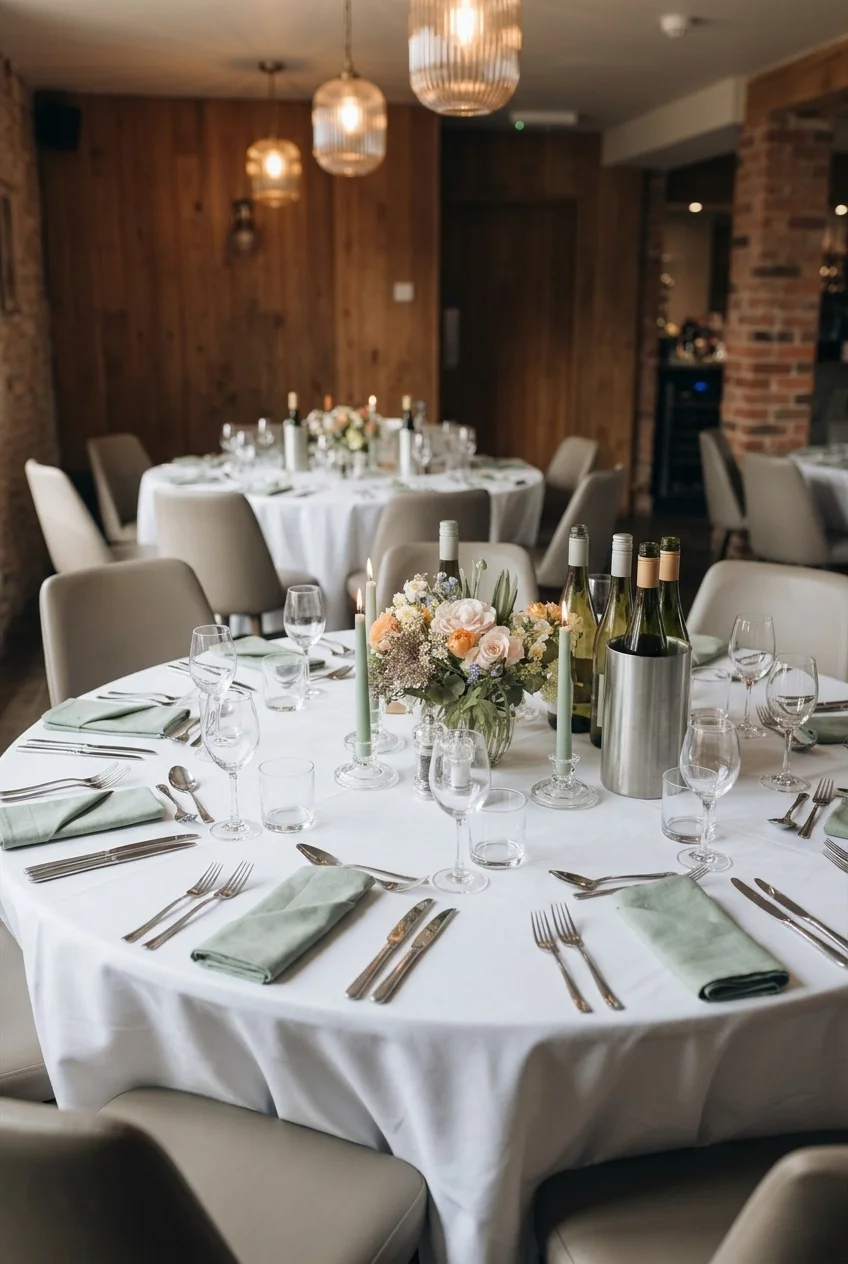
A private dining room may include tables, chairs, dishes, staff, lighting, and decor. Compare the package against an empty venue plus rentals.
Ask about minimum spend, service charges, cake fees, music limits, accessibility, and closing time. Included infrastructure matters only when the terms fit.
63. Offer One Signature Drink
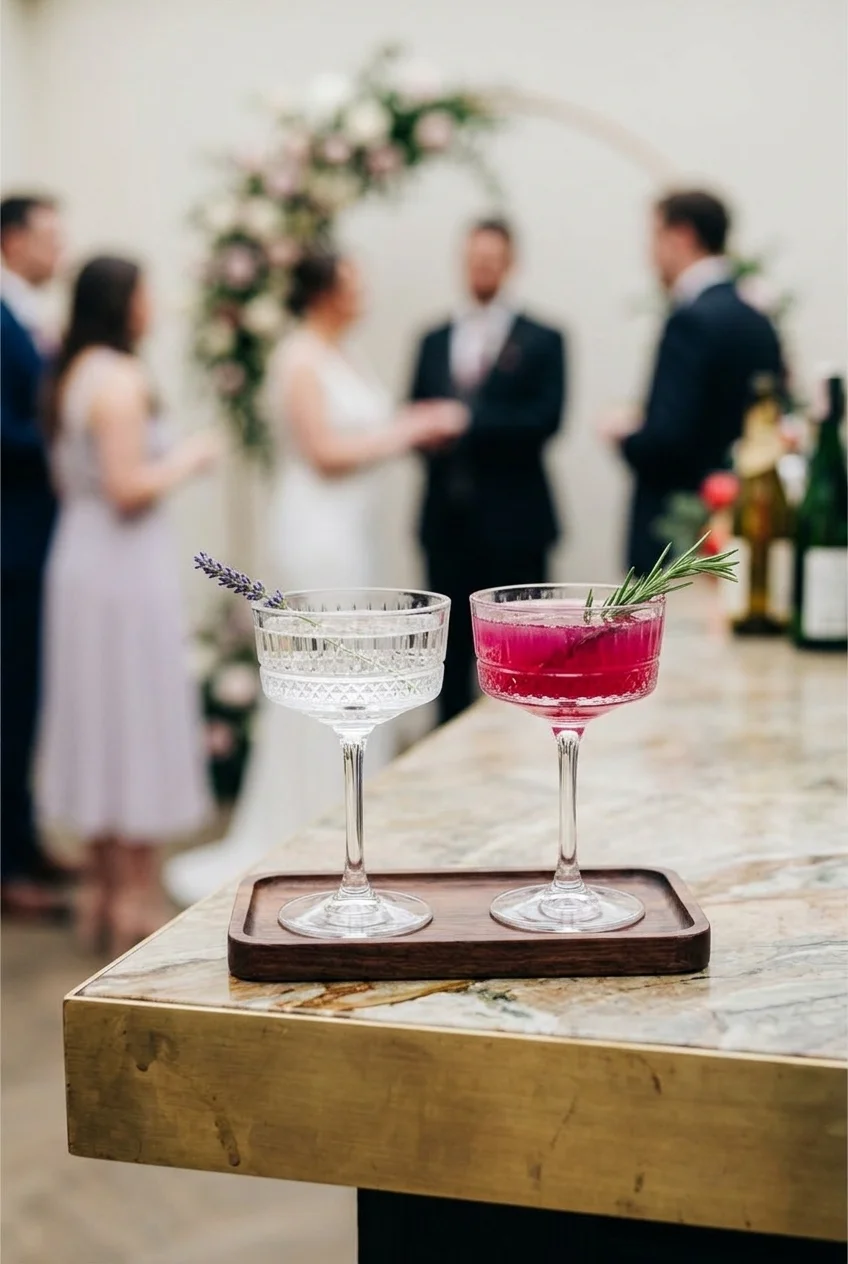
One alcoholic cocktail and one matching zero-proof option can create a recognizable drink moment without stocking a large specialty menu.
Use ingredients already carried by the bar and choose garnishes staff can prepare quickly. Confirm alcohol service rules with the venue and caterer.
64. Keep Water Beautiful and Easy to Reach
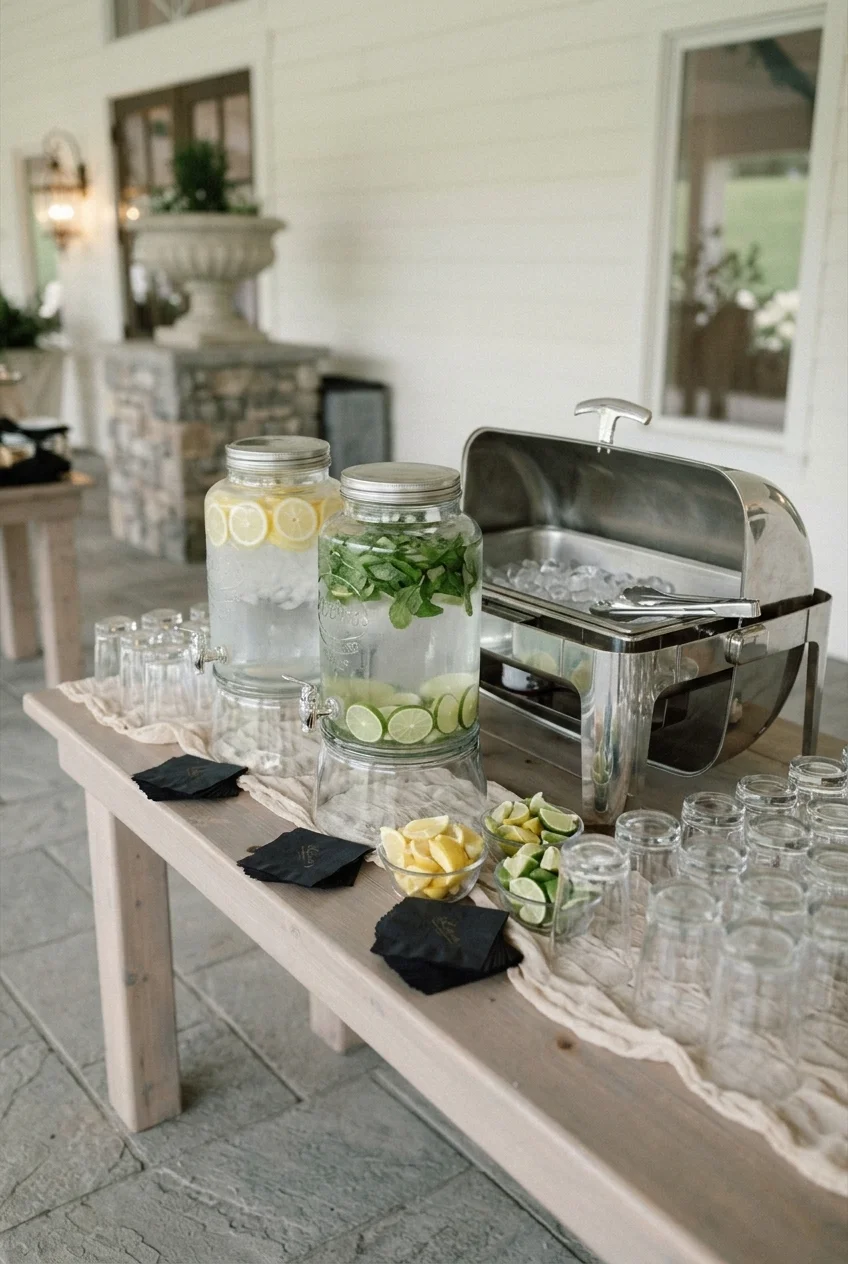
Large dispensers or staffed carafes make water visible, reducing bar lines and disposable bottles. Place stations near dining, dancing, and outdoor areas.
Plan refilling, ice, drainage, and clean cups rather than treating water as decoration. Citrus or herbs should never complicate allergen communication.
65. Serve Family-Style Food Where It Fits
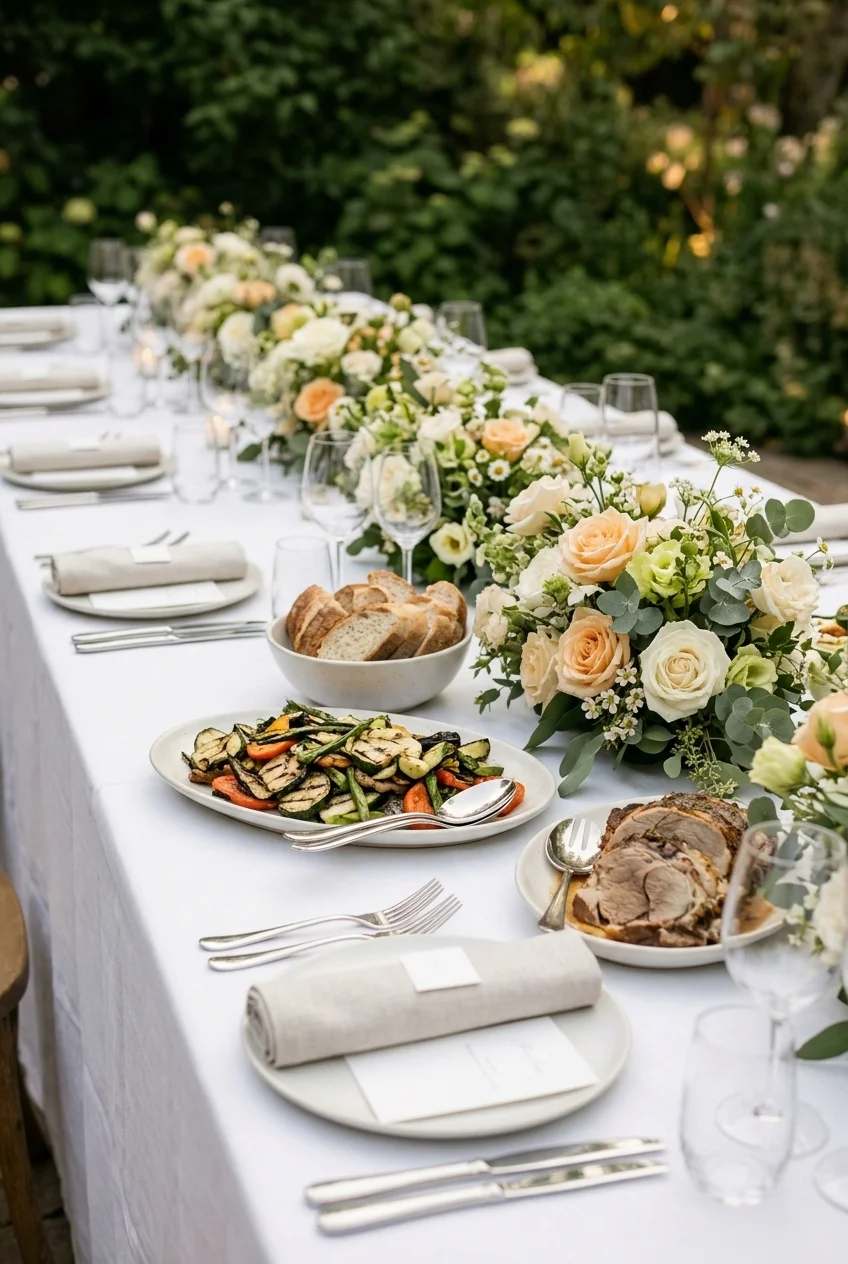
Shared platters can feel generous and reduce formal plating, but tables need space and staff still need a safe replenishment plan.
Price serving pieces, table size, dietary separation, and leftovers with the caterer. Family style is not automatically cheaper for every menu.
66. Choose an Informal Favorite With Polished Service
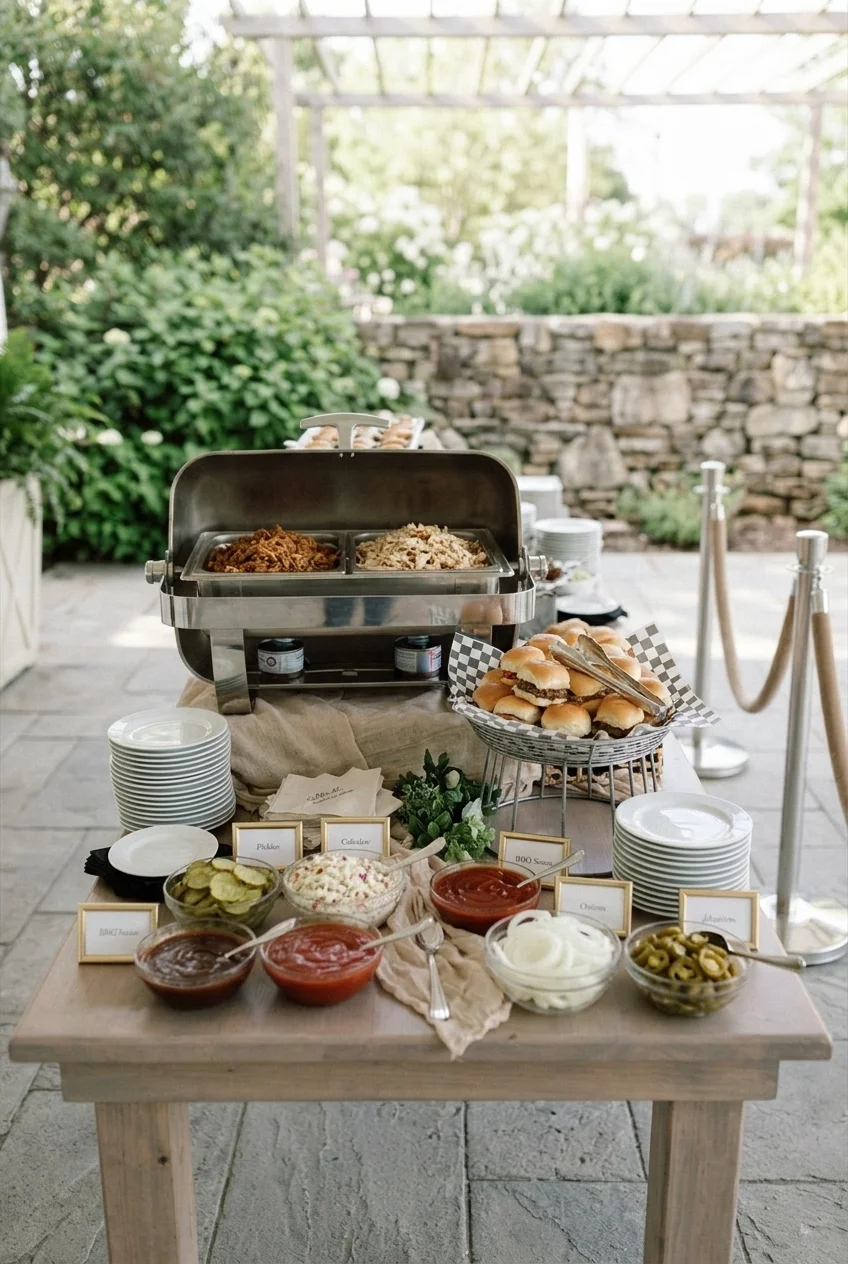
Pizza, tacos, barbecue, or another favorite can feel intentional when portions, serving times, plates, and condiments are planned as carefully as formal food.
Select one format the venue can serve efficiently. Long lines and lukewarm food cost more goodwill than decorative menu upgrades can recover.
67. Use Small Buffet Platters and Refill Them
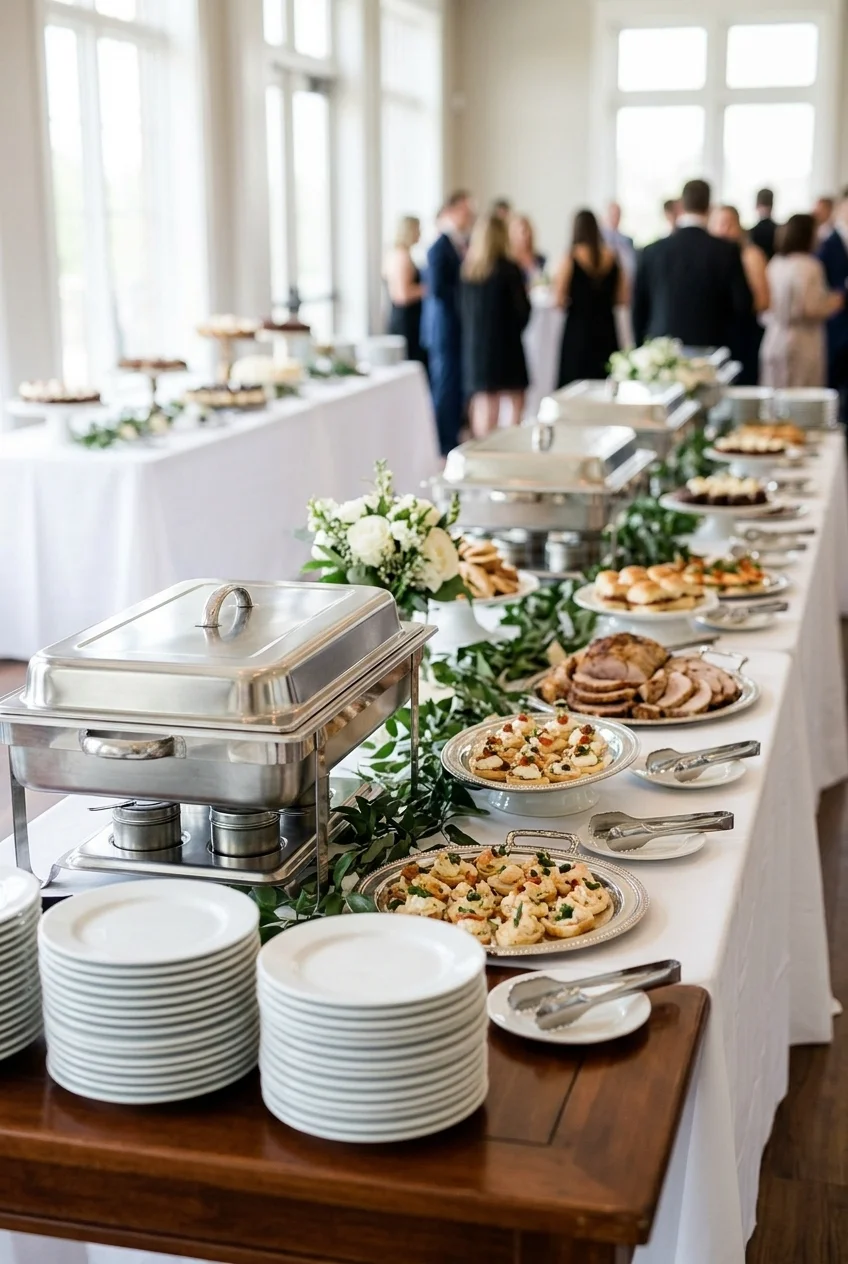
Smaller platters look abundant and help caterers replace food safely instead of leaving large quantities at room temperature for extended periods.
Assign temperature control and replenishment to the caterer or a trained server. Decorative buffet styling must never replace safe food handling.
Food-safety note Test this choice at realistic scale before ordering the full quantity, and record the final count, setup owner, and removal plan.
68. Display a Small Cake and Serve Sheet Cake
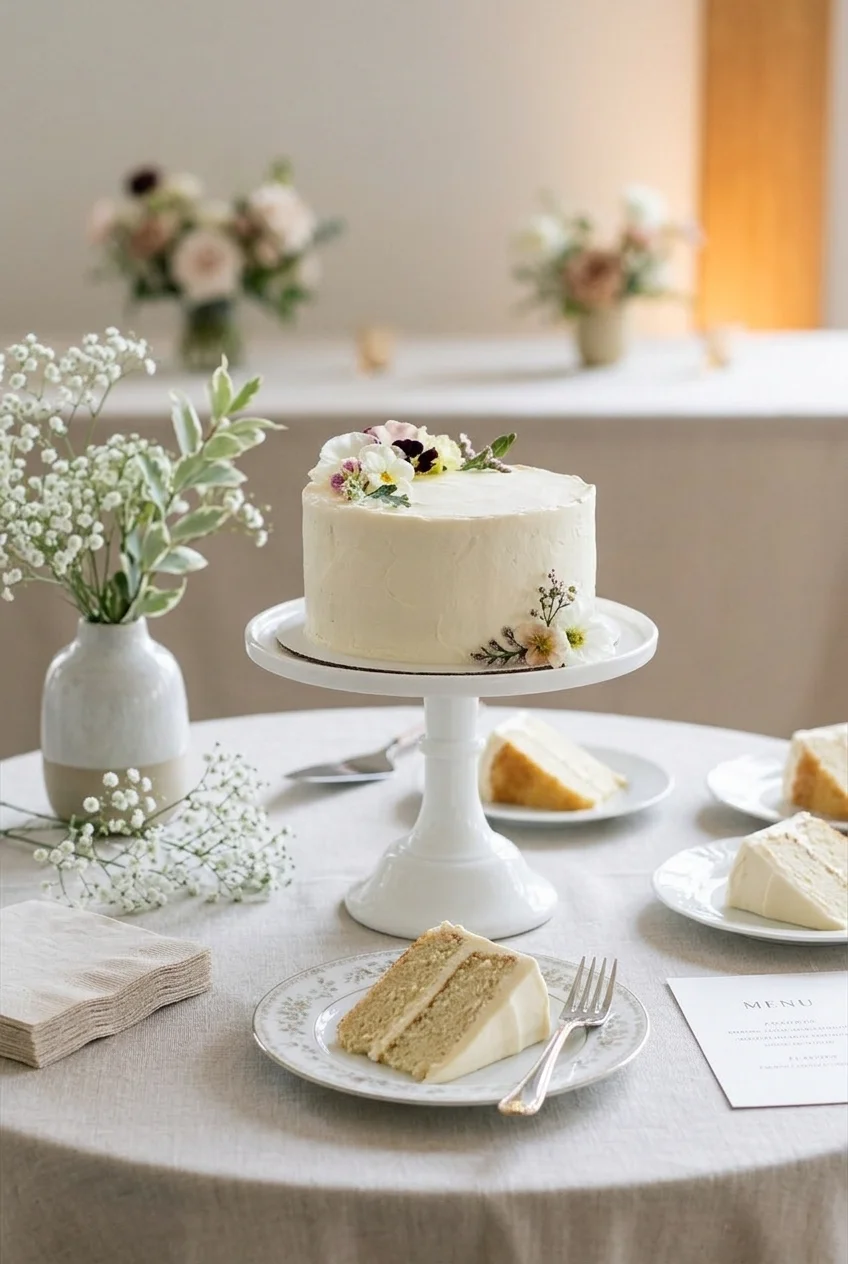
A compact decorated cake provides the cutting moment, while a kitchen cake supplies additional portions. Coordinate flavors and icing colors with the baker.
Confirm slicing, plating, storage, staffing, and cake-cutting fees before ordering. Savings disappear when the venue adds unexpected service charges later.
69. Decorate a Plain Cake With Fruit
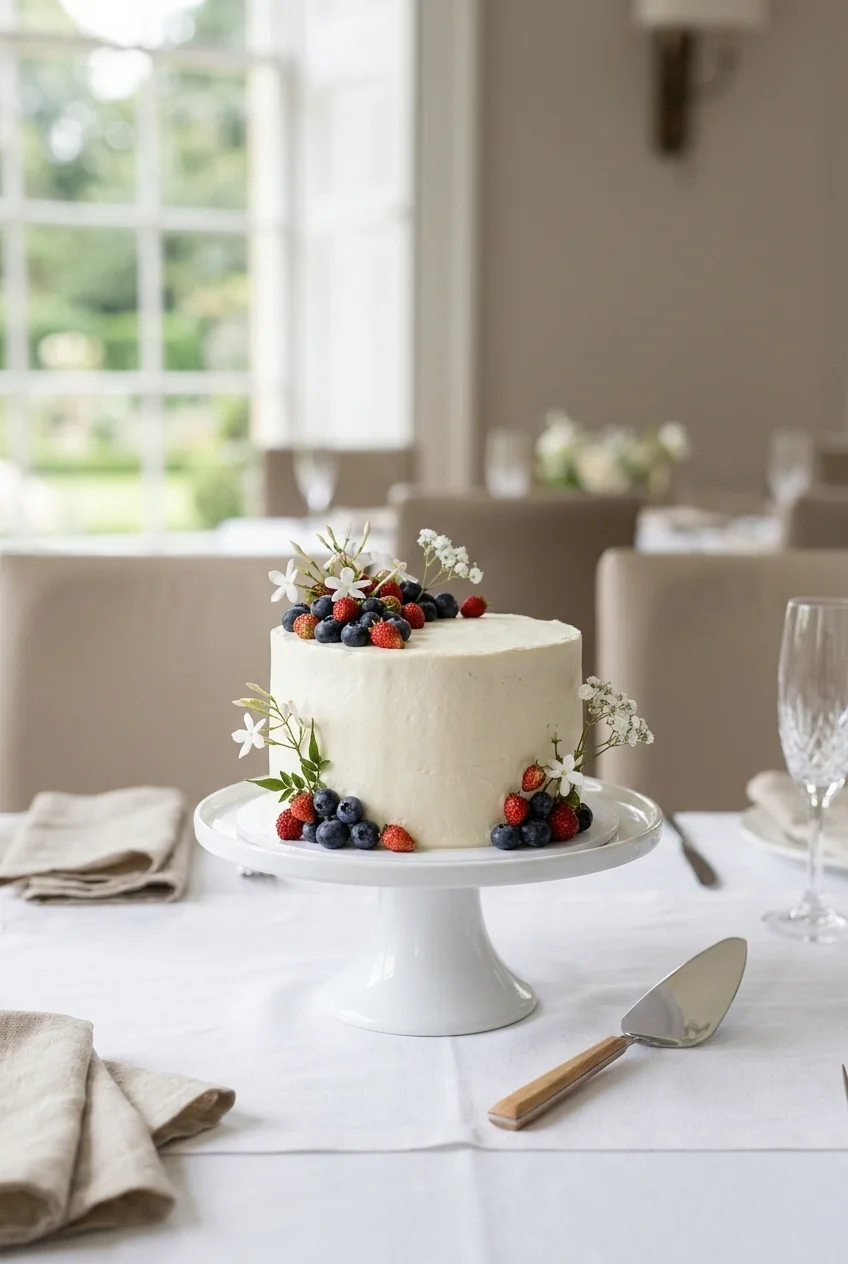
Fresh berries or sliced seasonal fruit can add color to simple icing without intricate sugar work. Let the baker select stable, food-safe placement.
Keep the display temperature and timing appropriate for the cake. Fruit that weeps, stains, or slides can make a simple design harder.
70. Make Dessert the Table Centerpiece
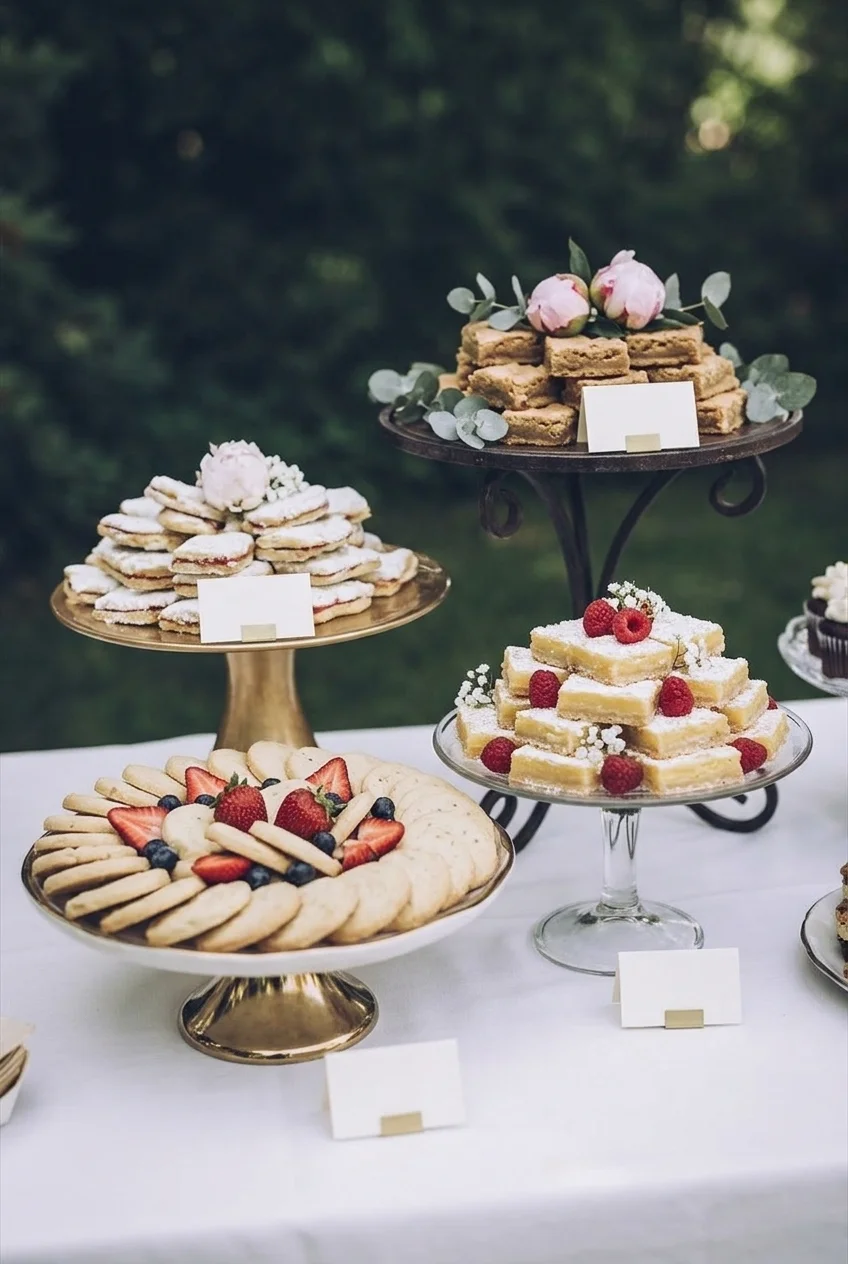
Arrange a focused selection of cookies, bars, or family desserts on borrowed stands so the food supplies much of the display.
Label allergens clearly and keep backups covered. Use a caterer-approved service plan for perishable fillings, cream, custard, and cut fruit.
Music, Photos, and Entertainment
71. Hire Live Music for One Key Hour
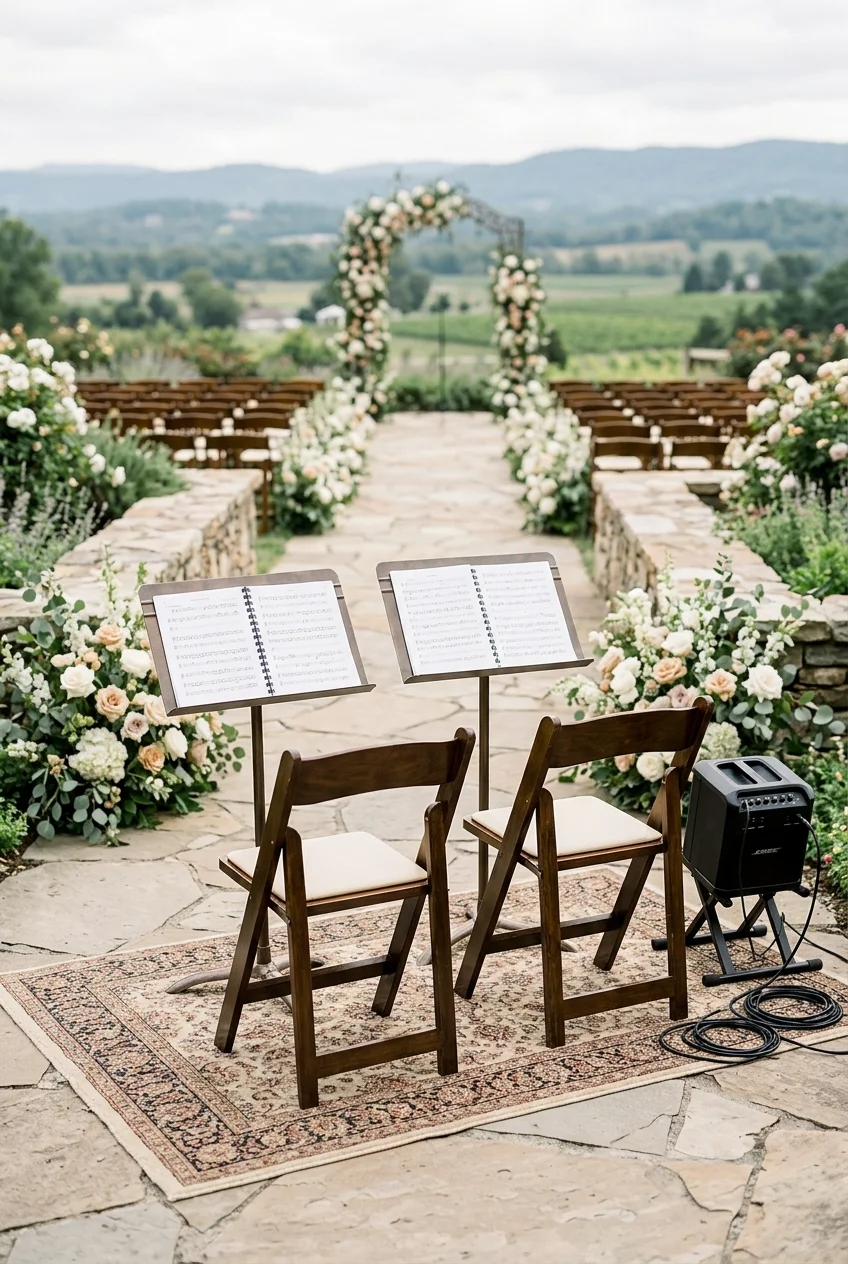
A musician or small ensemble can focus on the ceremony, cocktail hour, or dinner entrance instead of covering the entire event.
Compare setup, amplification, breaks, travel, and song requests before choosing the hour. One well-placed performance should support the schedule, not complicate it.
72. Build Separate Playlists for Each Mood
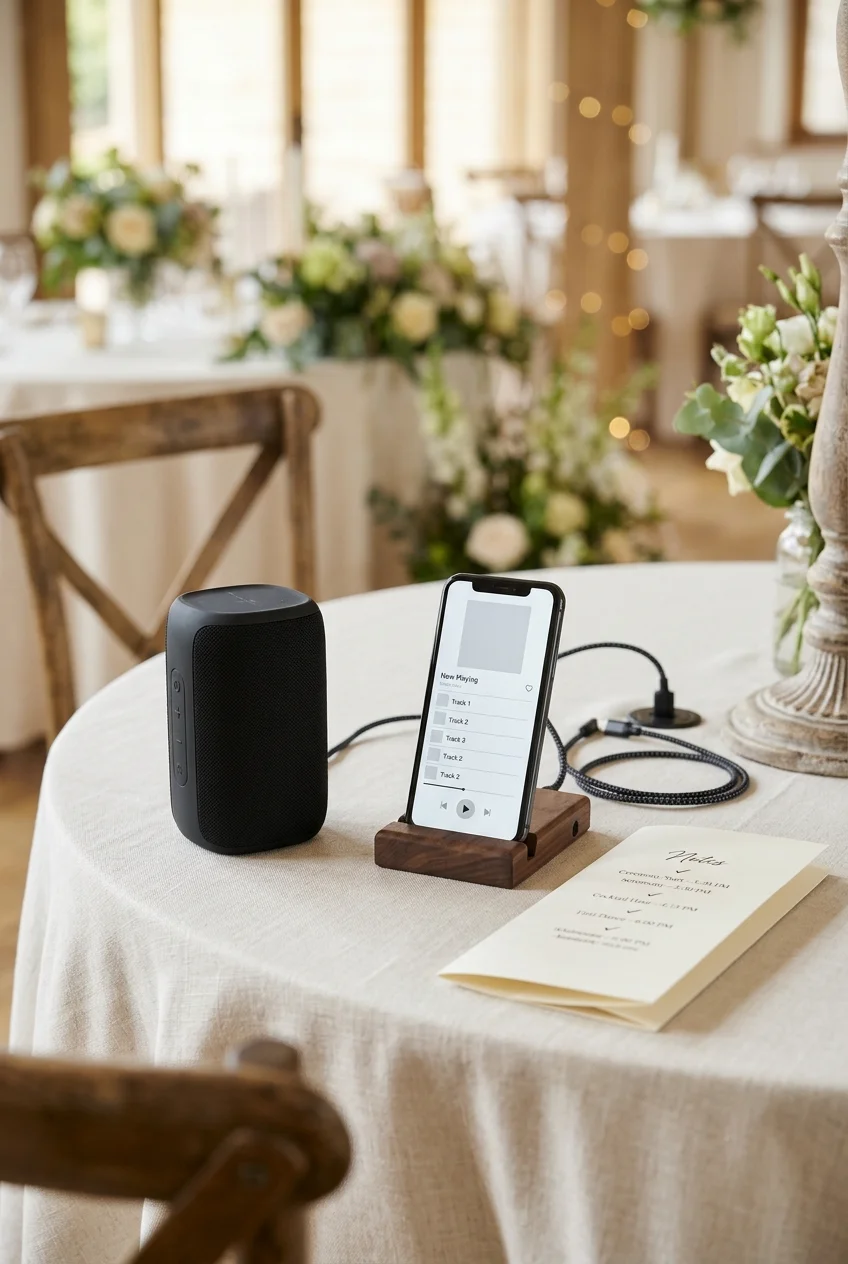
Create distinct arrival, dinner, and late-night playlists so music changes with the event. Download tracks and remove explicit versions where inappropriate.
Assign one person to control volume and transitions using reliable equipment. A phone left on shuffle is not an adequate event plan.
- Count every repeated unit before purchasing.
- Include delivery, setup, cleanup, and return costs.
- Keep one practical alternative if the original plan changes.
73. Use the Venue Sound System First
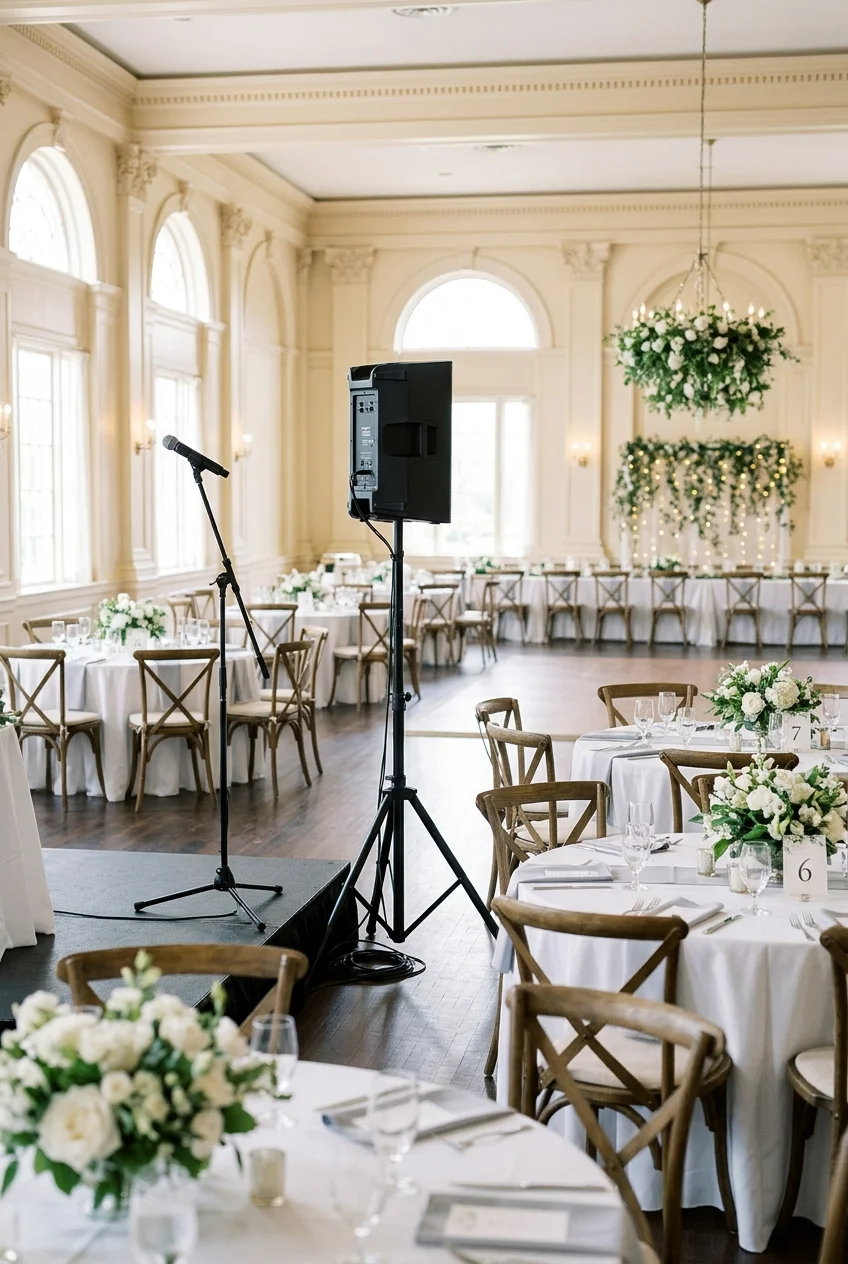
Ask what microphones, speakers, stands, cables, and technicians are included before renting another package. Test speech coverage from the farthest table.
Included equipment may suit vows and toasts but not dancing. Match the system to each use rather than assuming one setup handles everything.
74. Create a Family Photo Display
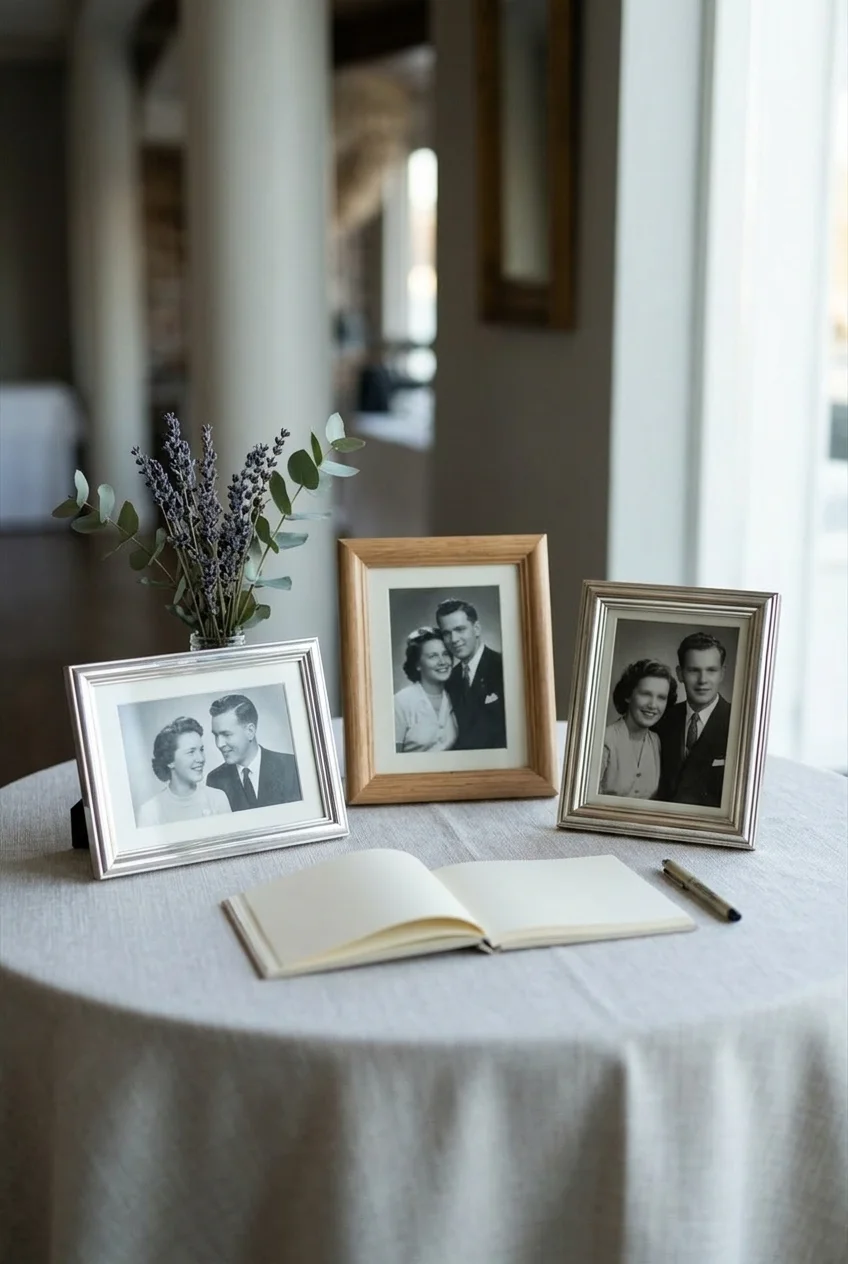
Borrow matching or similarly colored frames and display family wedding photographs together. The personal material gives a plain corner a clear purpose.
Scan irreplaceable originals and use copies at the venue. Keep the display compact so guests can pause without blocking entrances or buffet lines.
75. Plan Portraits Around Existing Light
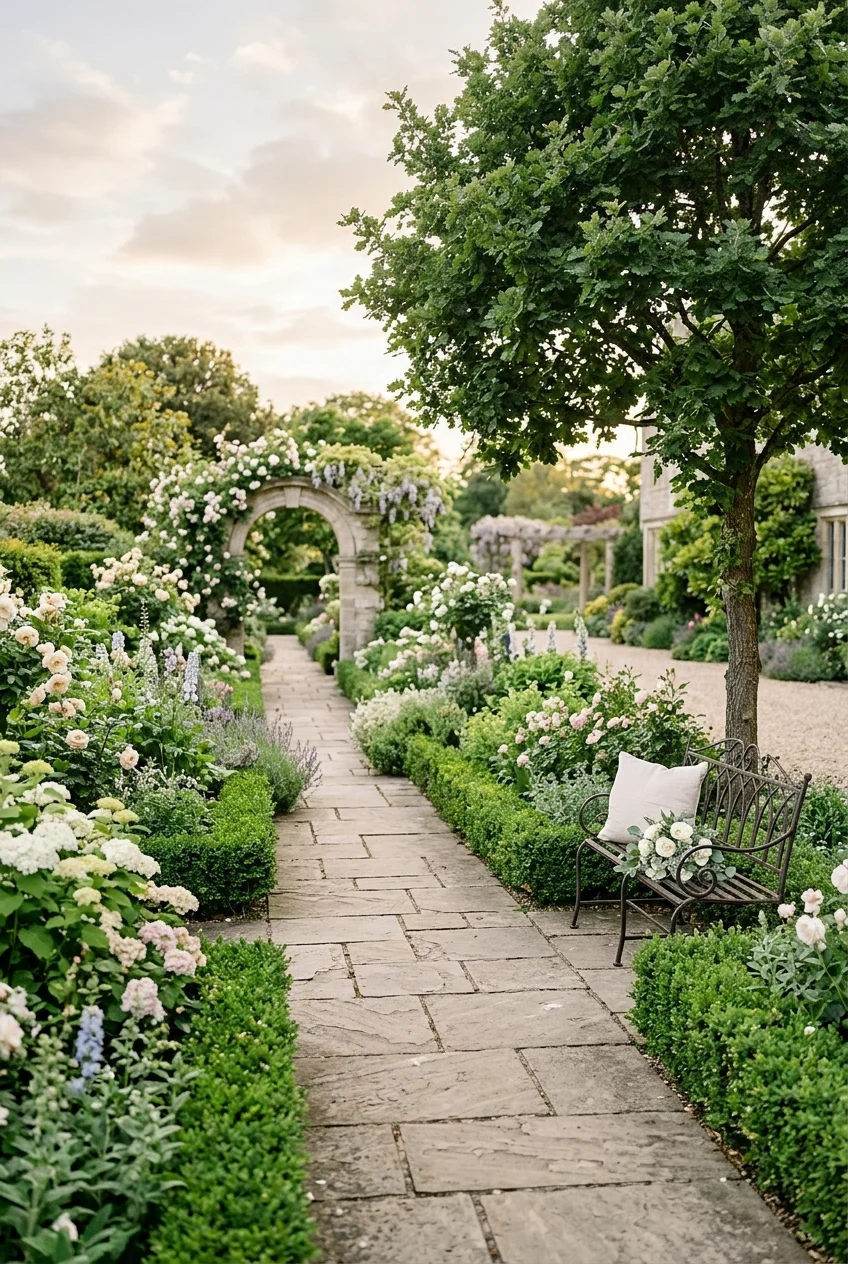
Ask the photographer when each venue area has usable light, then schedule portraits accordingly. Good timing can reduce the need for decorative photo setups.
Build weather and mobility time into the plan. A free sunset location is not useful if reaching it delays dinner or excludes family members.
76. Make a Concise Family Photo List
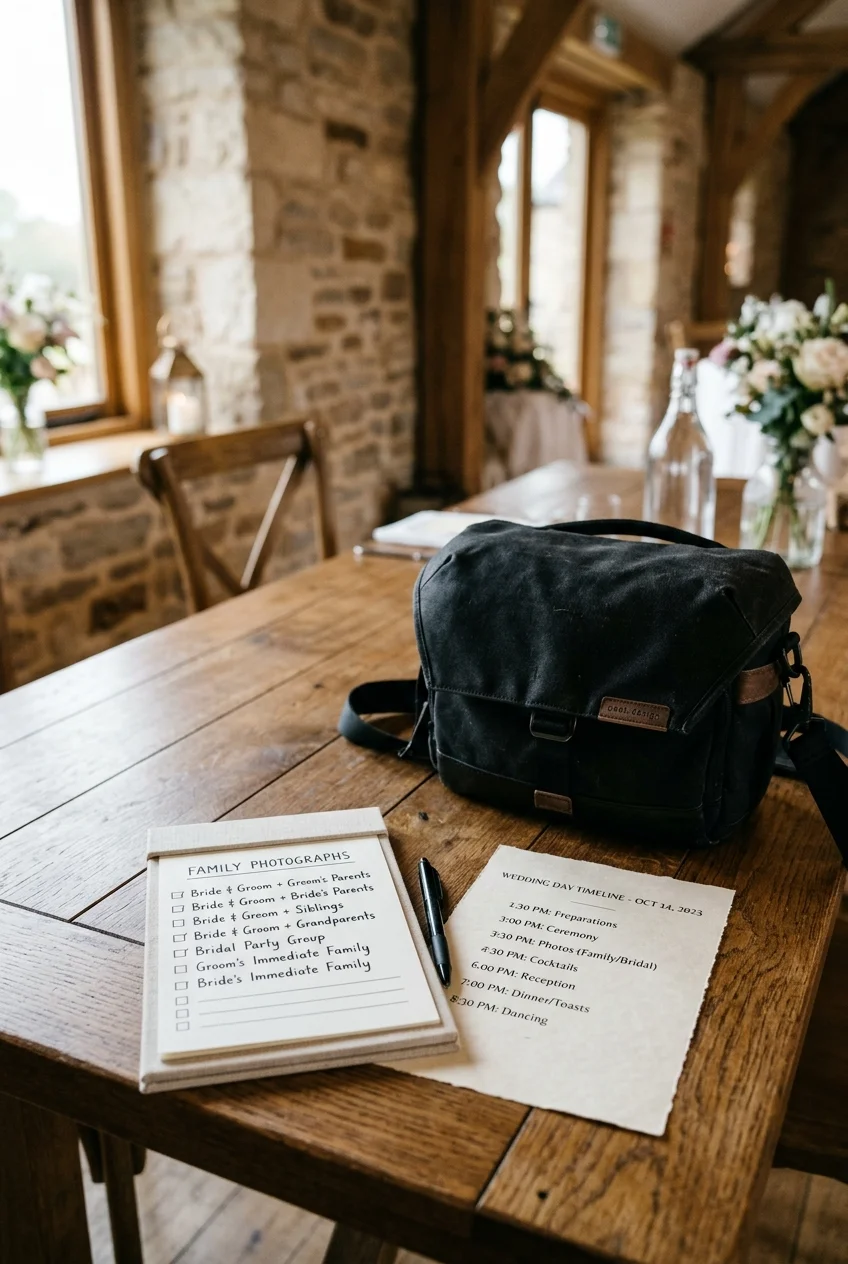
List essential family combinations in a logical order and name a helper who knows everyone. Efficient gathering protects paid photography time.
Keep the list focused and alert the people involved before the wedding. Surprise searches for missing relatives create avoidable delays.
77. Set Up Borrowed Lawn Games
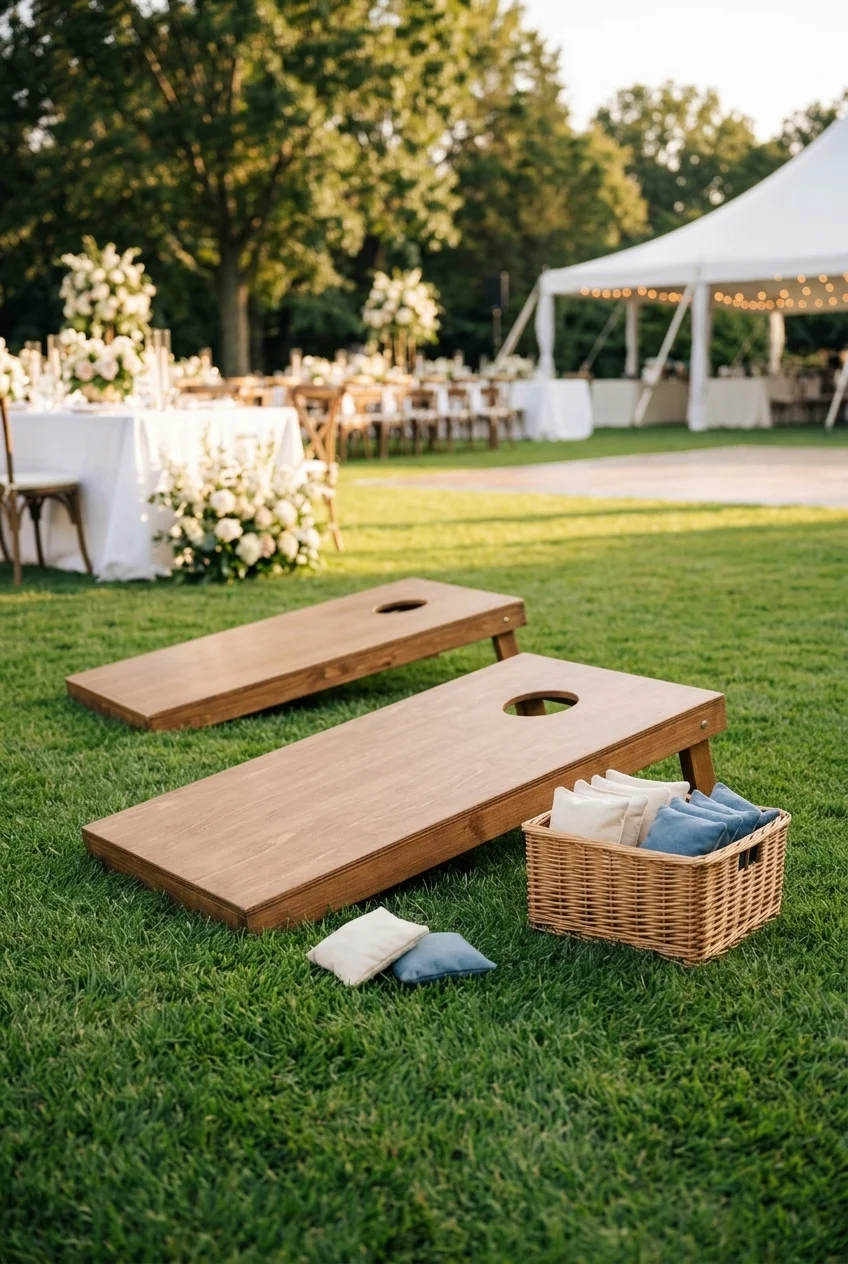
Cornhole, ring toss, or ladder toss can fill the cocktail hour without performers. Borrow sets and choose only games suited to the available lawn.
Create distance from drinks, windows, roads, and formal clothing. Inspect every piece for splinters, broken cords, unstable legs, or missing parts.
Planning tip Test this choice at realistic scale before ordering the full quantity, and record the final count, setup owner, and removal plan.
78. Turn the Guest Book Into an Activity
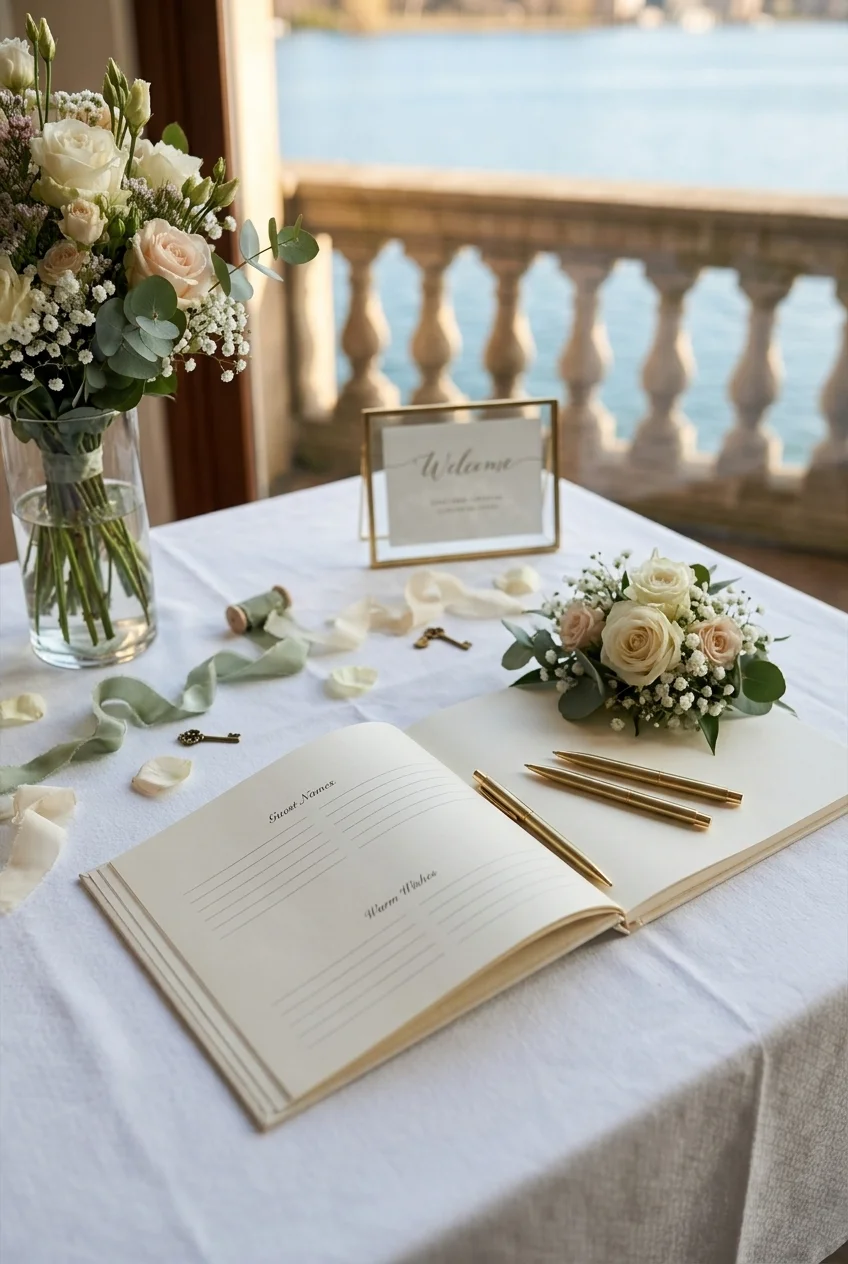
Ask one focused question, such as a favorite shared memory or anniversary suggestion. Specific prompts usually produce more useful entries than signatures alone.
Provide tested pens and enough writing space for several guests. Place the book where people naturally wait, not on an isolated decorative table.
79. Use a Simple Fabric Photo Backdrop
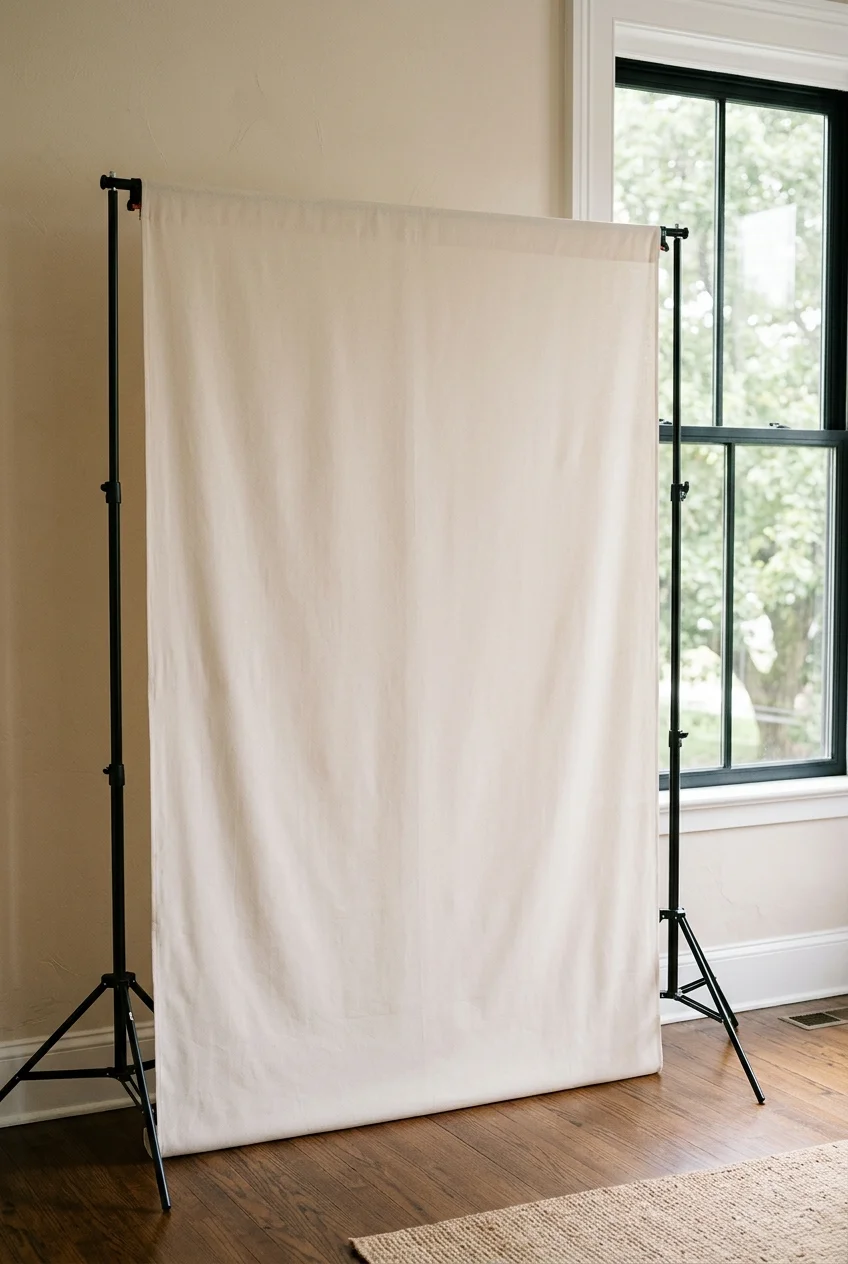
One well-steamed fabric panel in strong natural light can create a cleaner photo area than a large collection of inexpensive props.
Secure the stand, mark safe boundaries, and keep fabric away from candles. Check the camera view for exits, bins, and storage doors.
80. Schedule Toasts in One Block
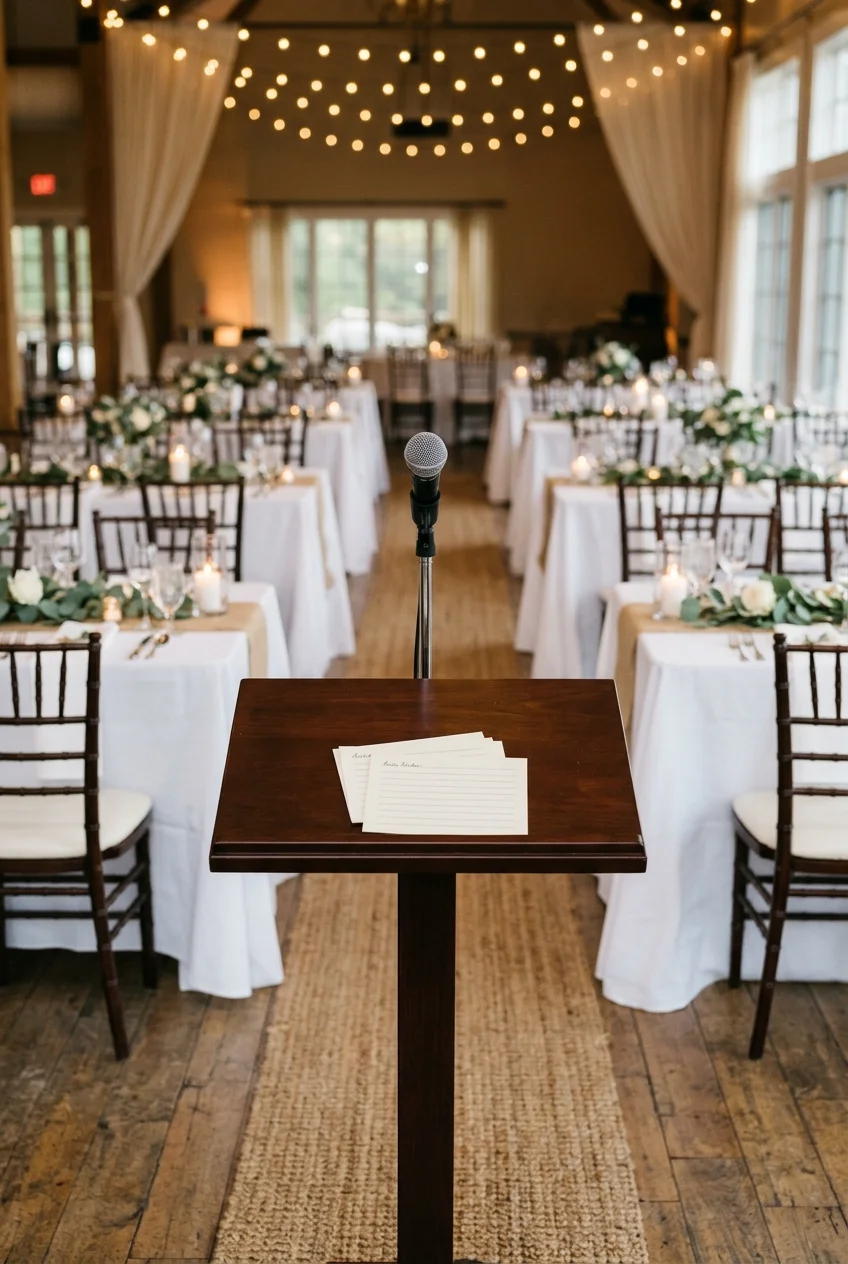
Grouping planned toasts reduces microphone changes and keeps food service moving. Give each speaker a clear time limit and order.
A coordinator or trusted host should manage the handoff. Open-mic surprises can stretch paid venue, staffing, photography, and transportation time.
Guest Comfort and Useful Favors
81. Skip Favors That Do Not Serve a Purpose
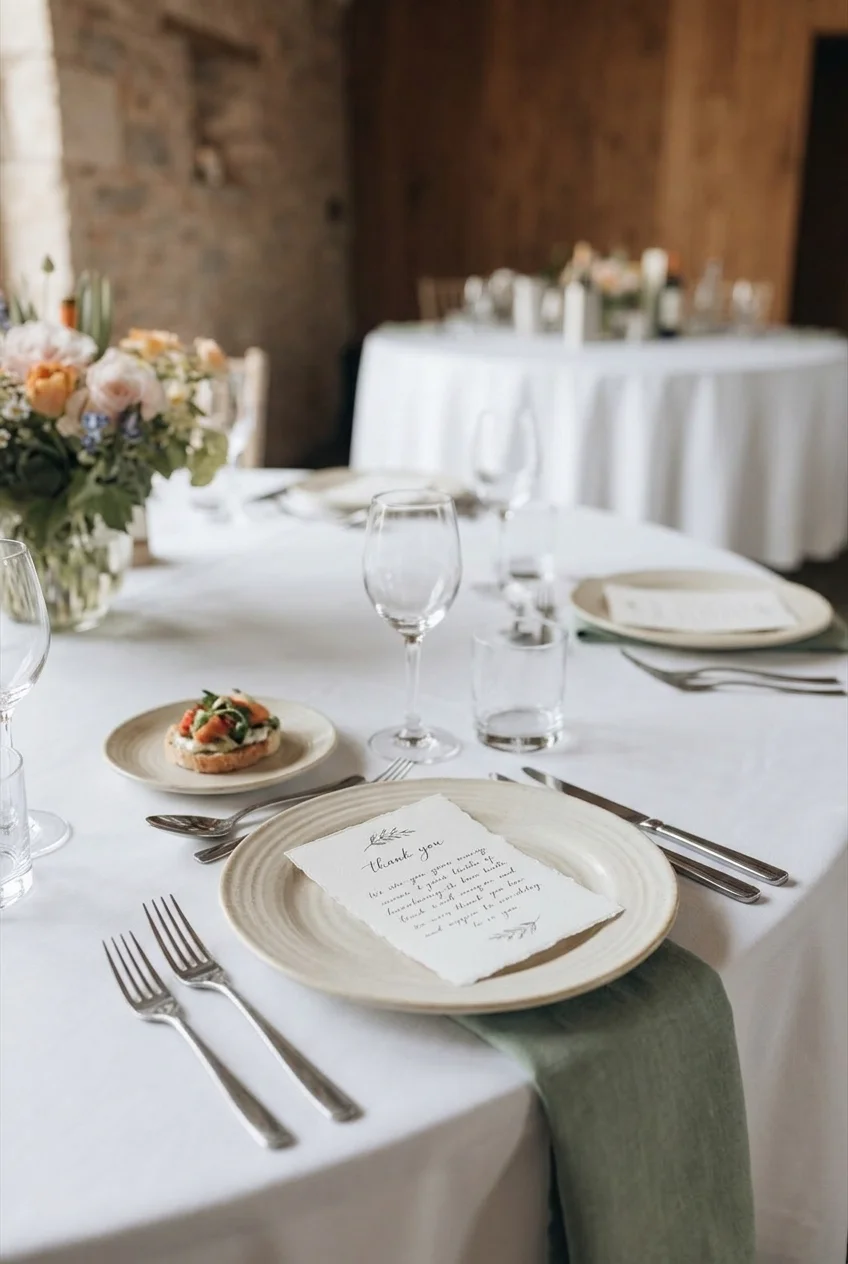
A warm note, late-night snack, or comfortable experience may matter more than a branded object. Remove favors before cutting food, seating, or accessibility.
If you keep them, choose something guests can eat, use, or take easily. Avoid personalized quantities until the attendance count is firm.
82. Give One Edible Favor Per Household
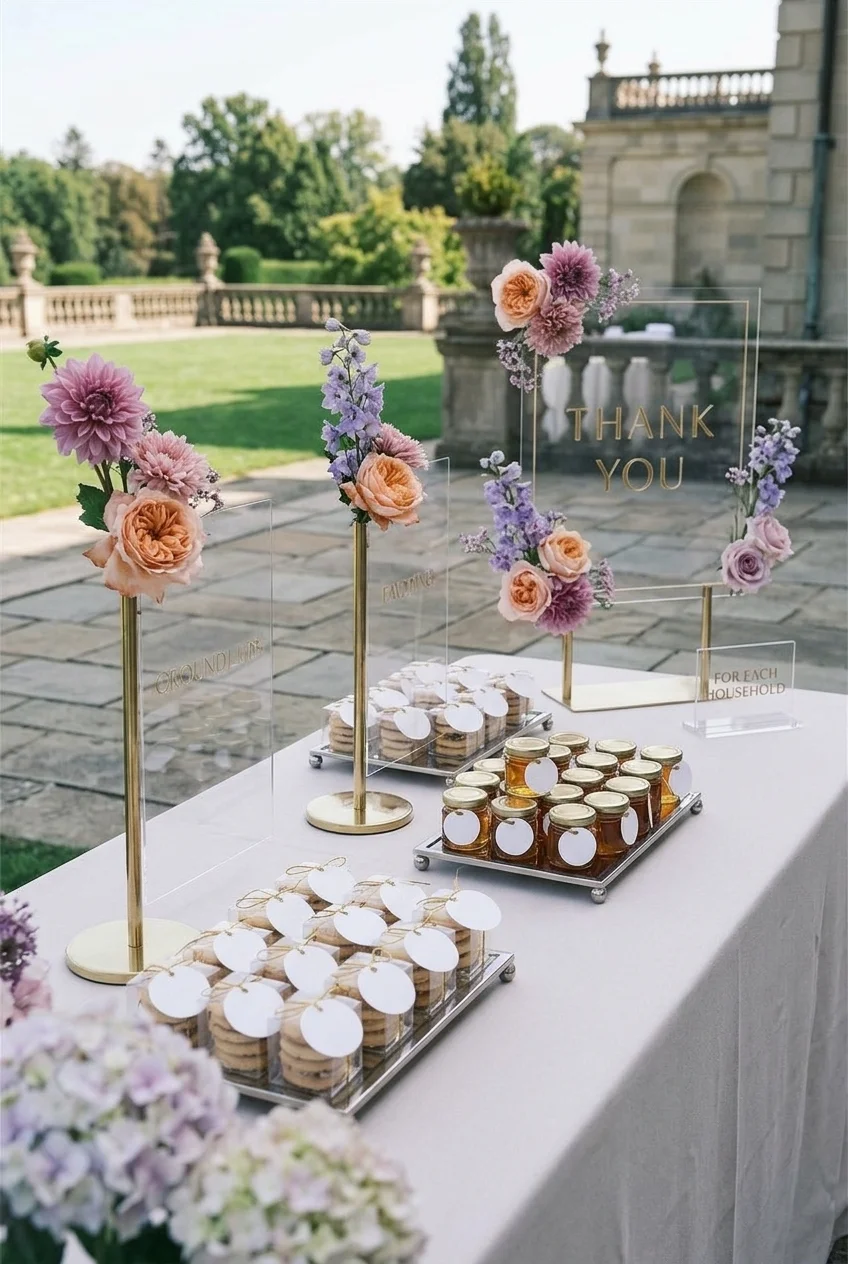
A small jar, bakery box, or bag of a local treat can be shared, reducing packaging and leftovers. Label ingredients and allergens accurately.
Place favors by household at the exit or assign them on the seating plan. Individual settings encourage accidental duplicates and abandoned extras.
83. Create a Practical Bathroom Basket
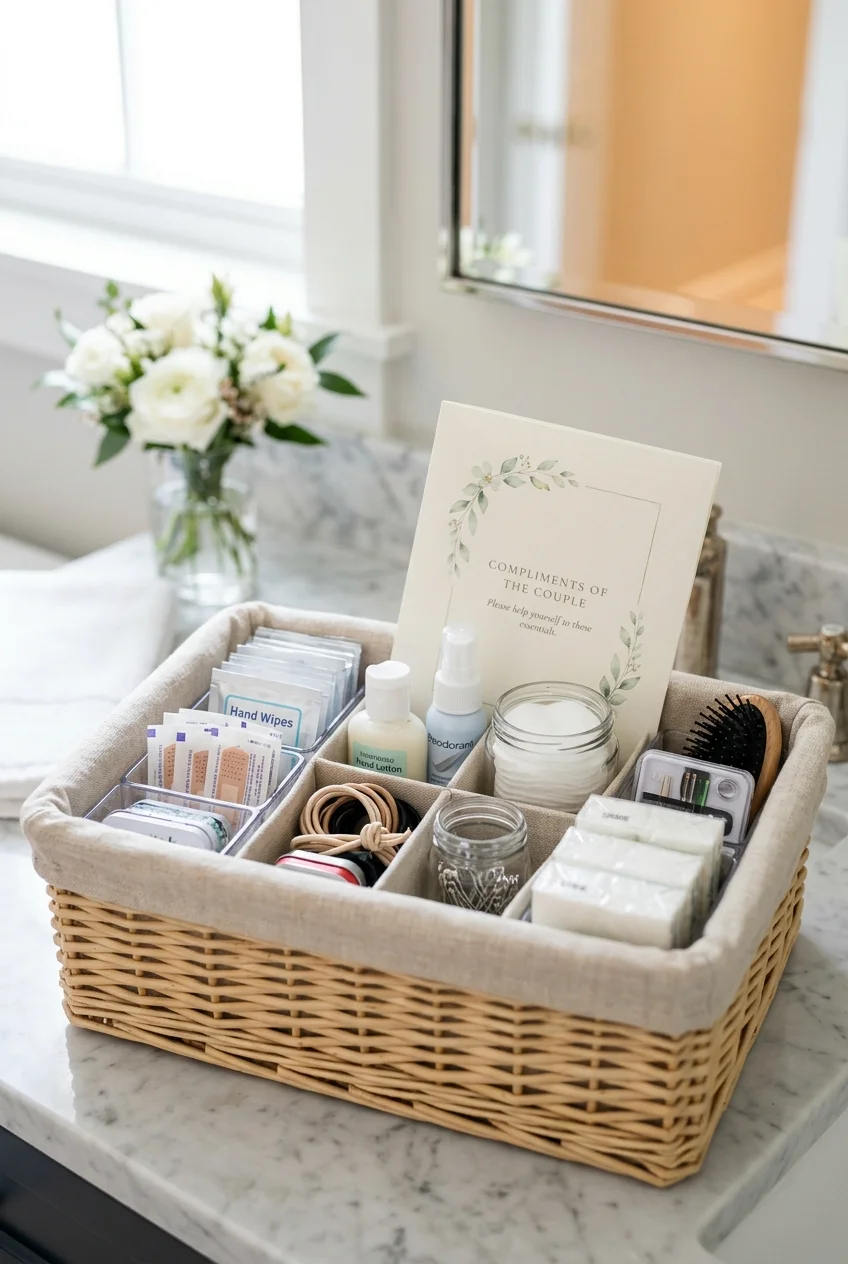
Stock a small basket with tissues, stain wipes, safety pins, period products, bandages, and mints. Use sealed items and clear labels.
Check the basket during the reception and remove medications or liquids the venue does not allow. Practical quantity matters more than decorative packaging.
Planning tip Test this choice at realistic scale before ordering the full quantity, and record the final count, setup owner, and removal plan.
84. Offer Blankets Only When Weather Supports Them
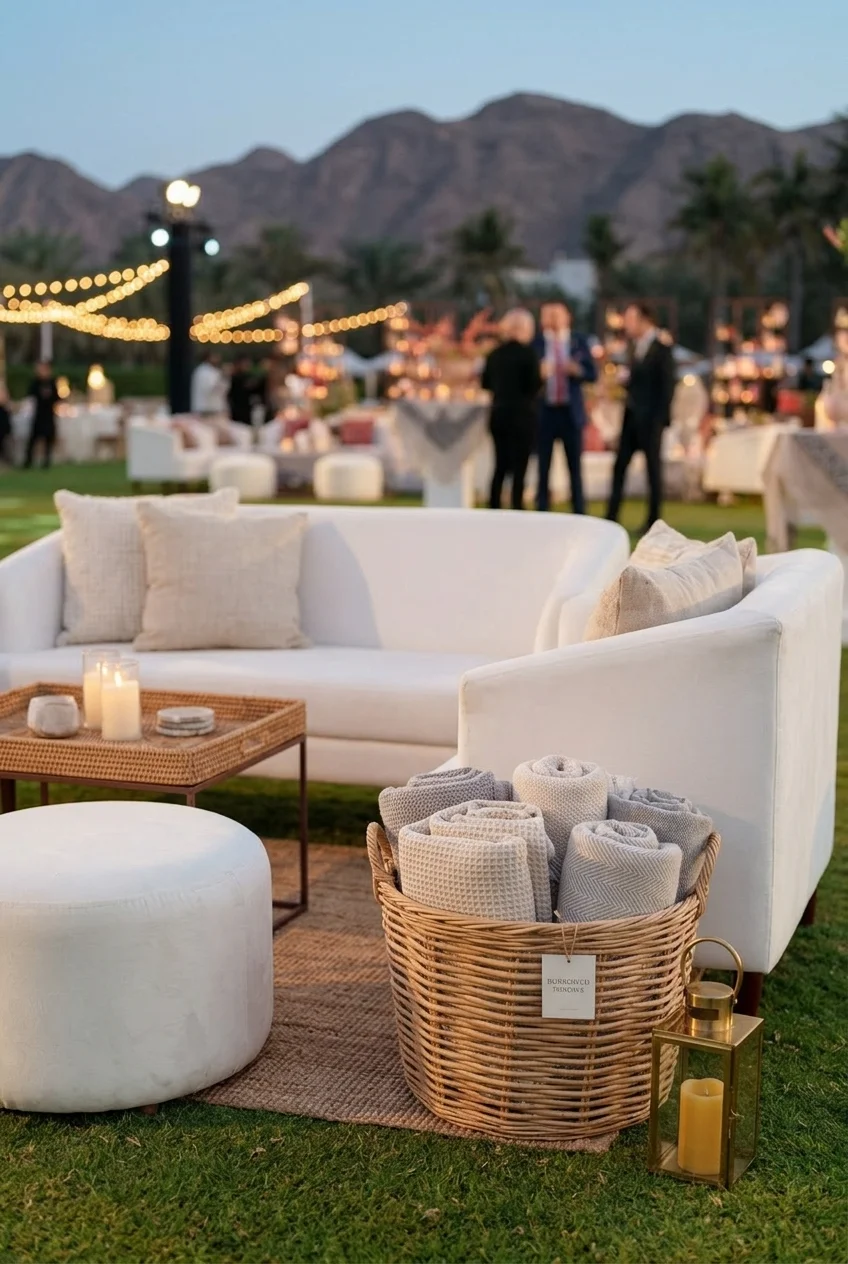
Borrow clean throws for a genuinely cool outdoor evening rather than buying themed blankets automatically. Place them near seating after temperatures fall.
Arrange laundering, dry storage, and return well in advance. A basket of damp fabric creates work without improving anyone’s comfort.
85. Make Shade Part of the Layout
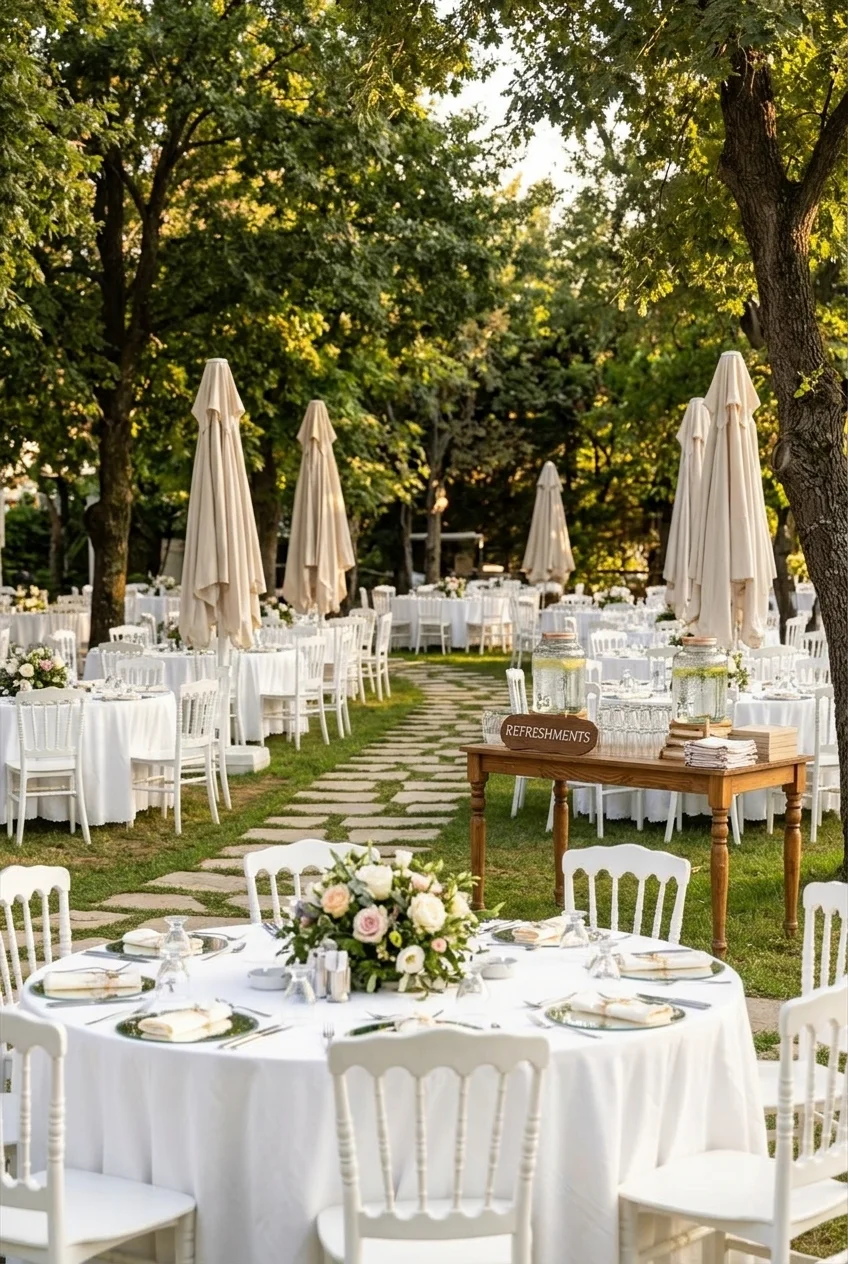
Use existing trees, covered patios, umbrellas, or tents when planning seats and water. Shade affects comfort more than small decorative upgrades.
Observe the sun at event hours because shade moves. Keep accessible routes, food, and older guests protected without isolating them from activities.
86. Create a Quiet Seating Corner
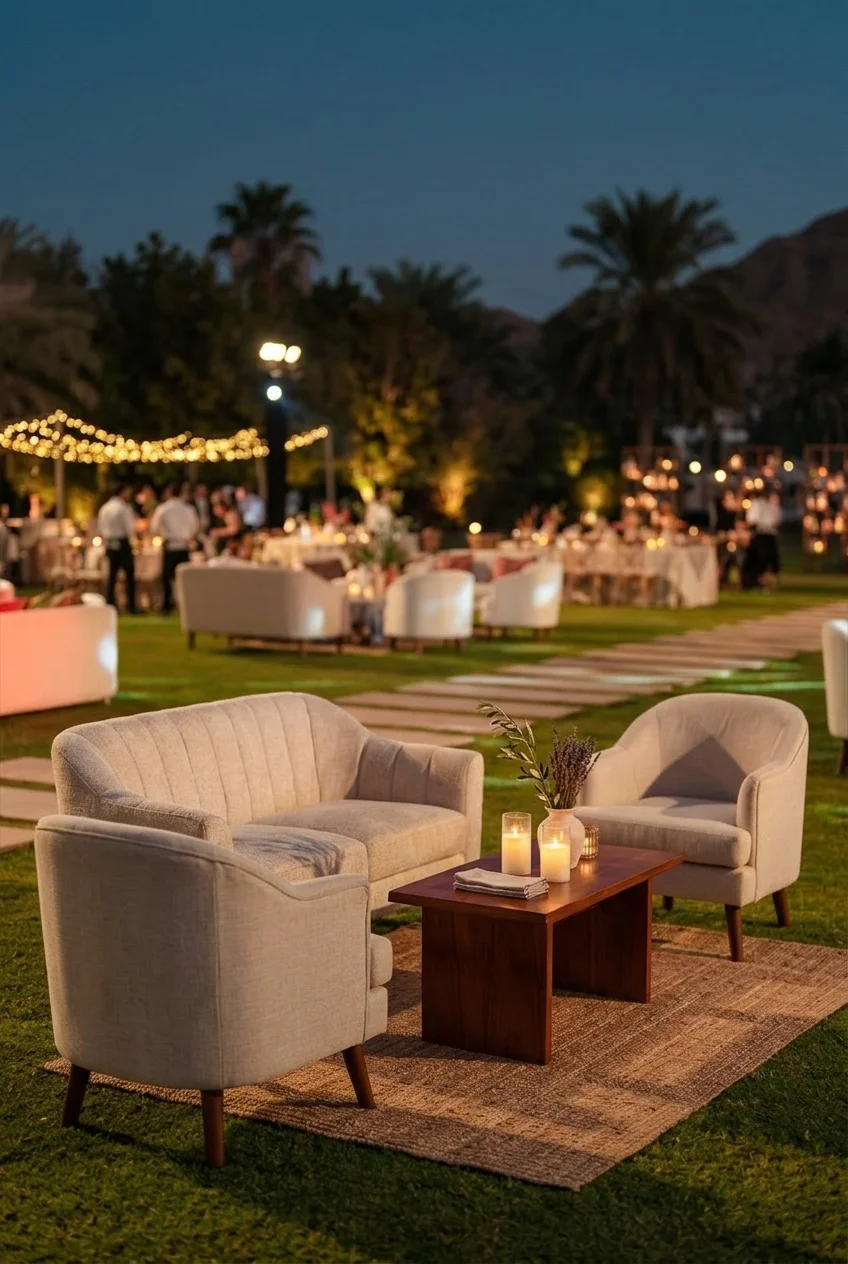
A few chairs away from speakers give older guests, nursing parents, and anyone needing a break somewhere comfortable to pause.
Borrow existing lounge furniture or relocate dining chairs after dinner. Keep the route lit and avoid labeling the area in a stigmatizing way.
87. Provide Comfortable Shoe Storage
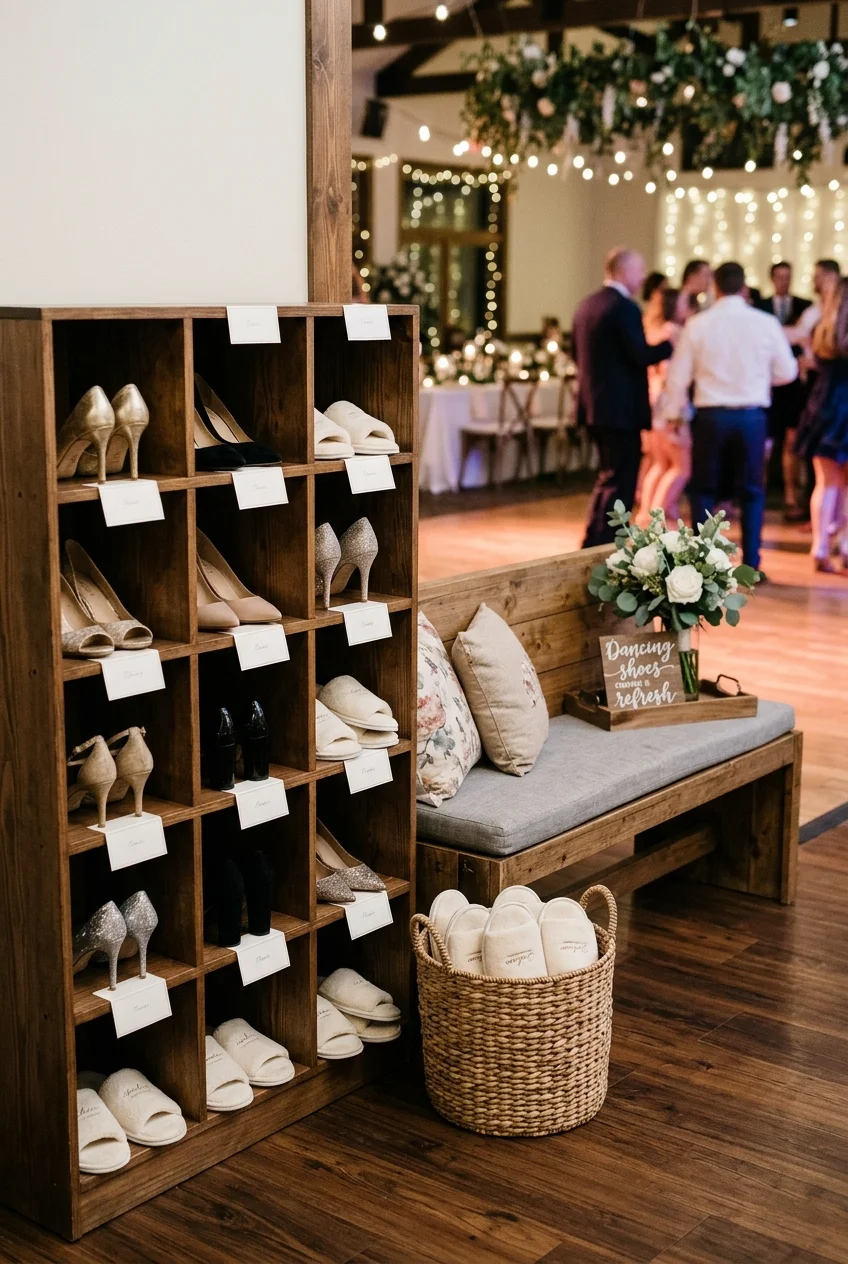
If guests may change footwear, offer a labeled shelf or basket area rather than loose shoes beside the dance floor.
Do not promise flip-flops in every size unless you can supply them responsibly. Mention uneven ground beforehand so guests can choose suitable shoes.
88. Use Leftover Flowers as Thank-You Bouquets
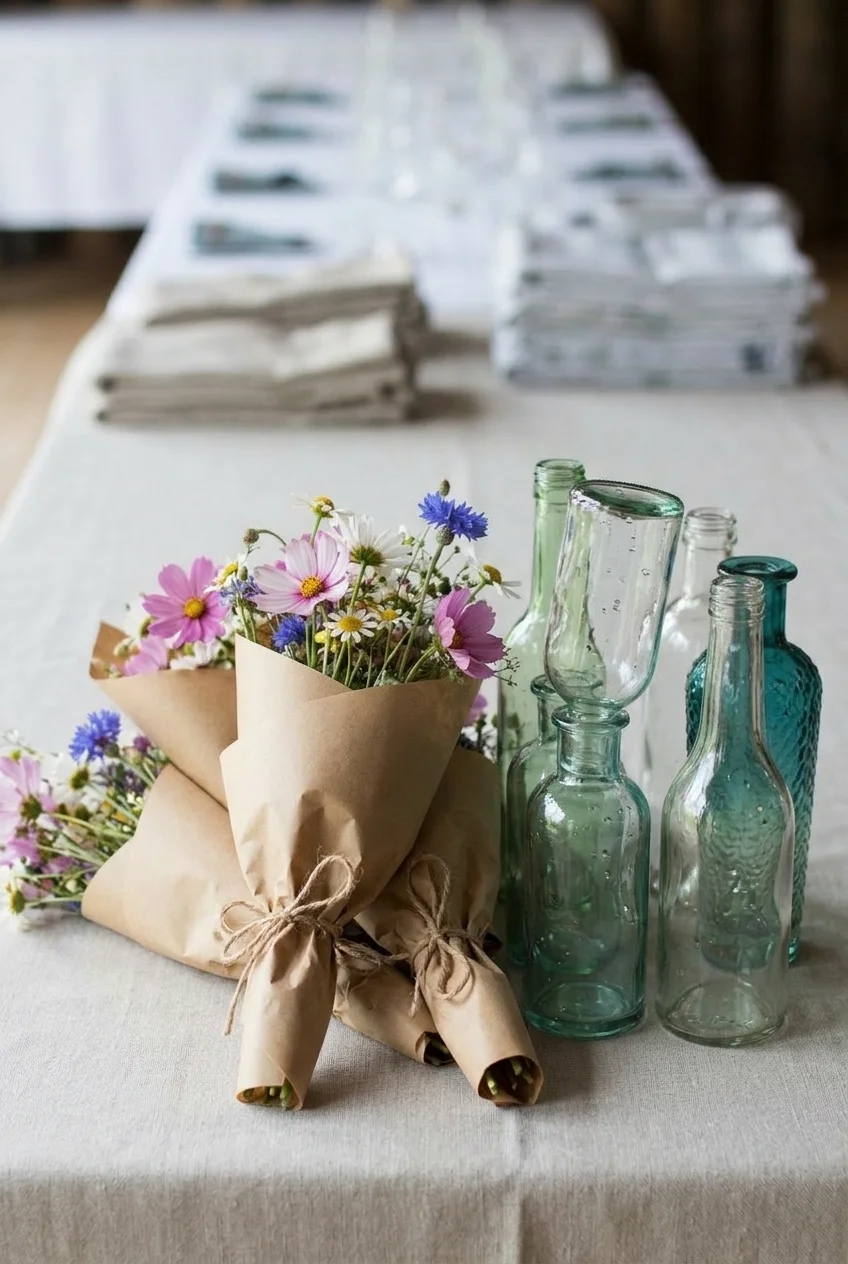
Place reception flowers into simple paper wraps for helpers or local recipients where accepted. Decide destinations before the event, not during cleanup.
Ask the florist which vessels and flowers may leave. Rentals, floral foam, and venue-owned containers can complicate an otherwise thoughtful plan.
89. Serve a Late Snack From the Main Menu
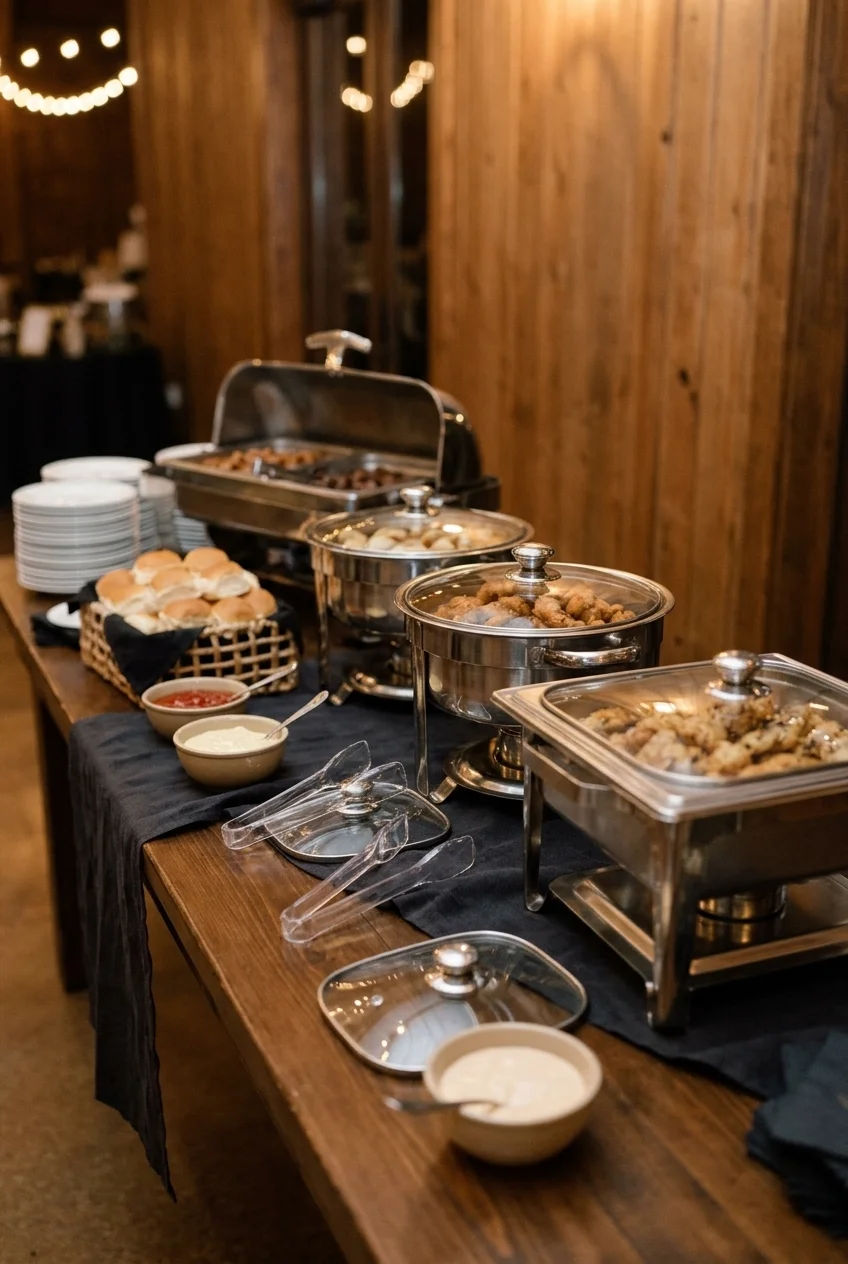
Instead of ordering a separate food concept, ask whether safe held-back portions or a simple related item can become the late snack.
Catering staff must manage storage, reheating, service, and disposal. Do not reserve buffet food at room temperature for later use.
90. Send Guests Home With Cake
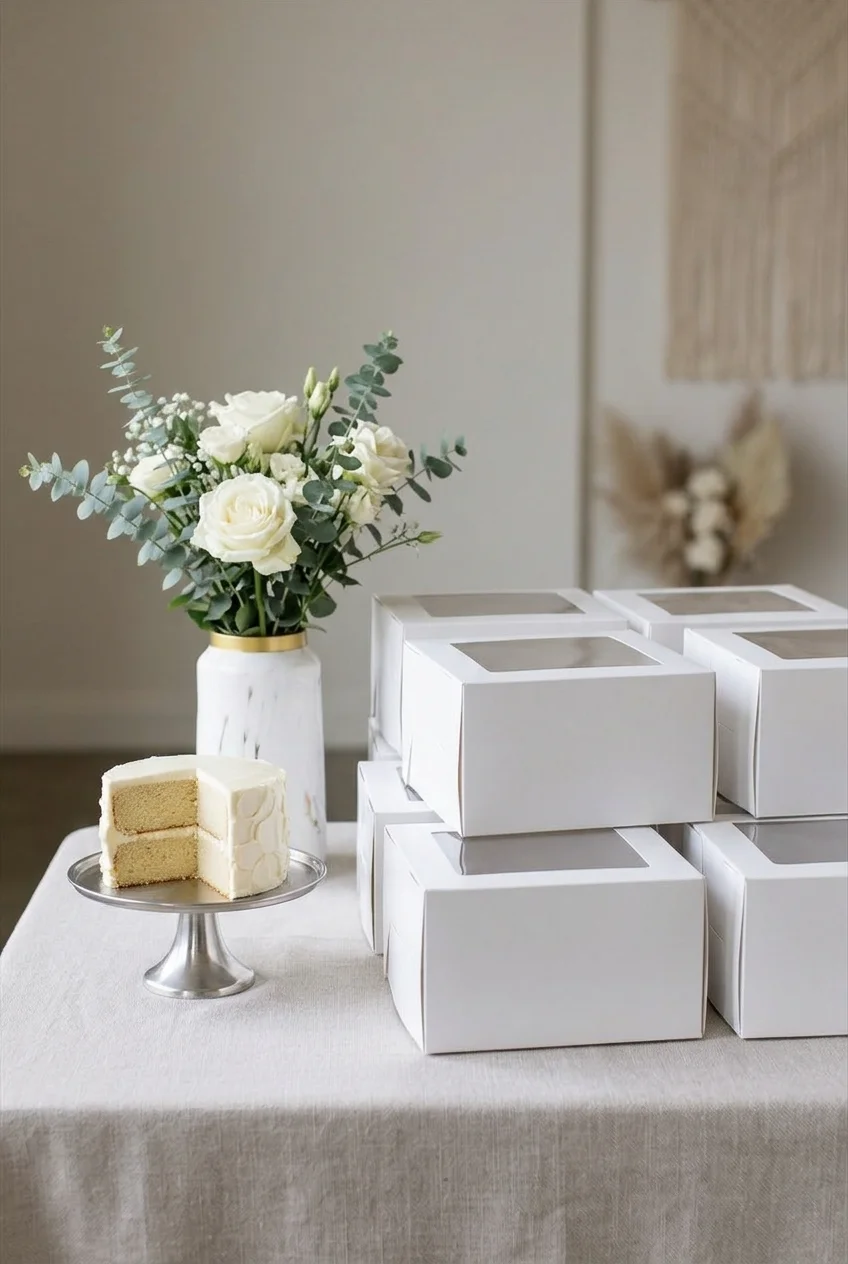
If the cake is generous, provide simple food-safe boxes near the exit. This turns planned dessert into the favor and reduces leftovers.
Confirm when boxes can be filled and how long servings remain safe. Guests should not package pieces from an unattended display.
Budget Decisions That Prevent Expensive Surprises
91. Set a Maximum Before Requesting Quotes
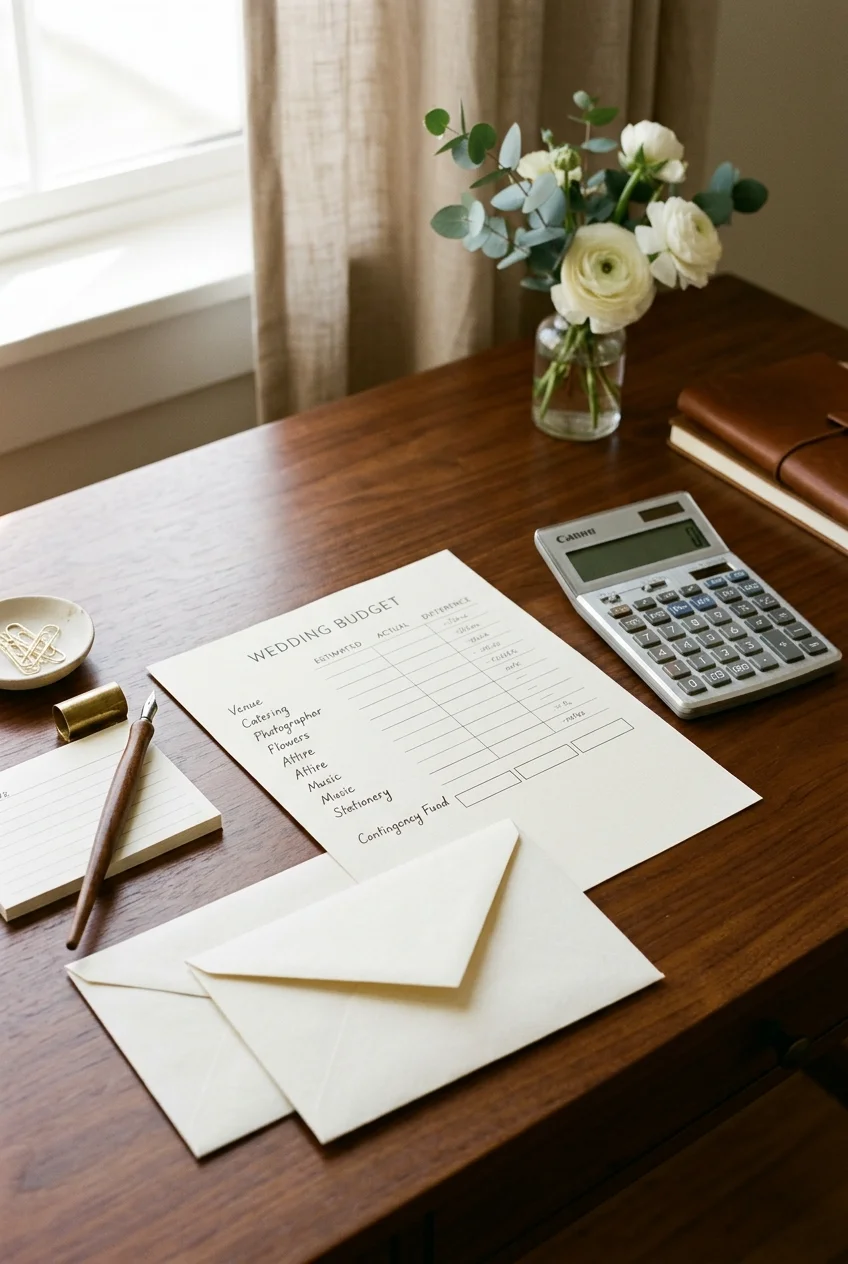
Choose the total amount you can spend without relying on gifts, credit, or uncertain income. Hold back a contingency before assigning category amounts.
Share realistic ranges with vendors whose services you are considering. Clear limits help them recommend workable options instead of preparing unusable proposals.
92. Name Three Shared Priorities
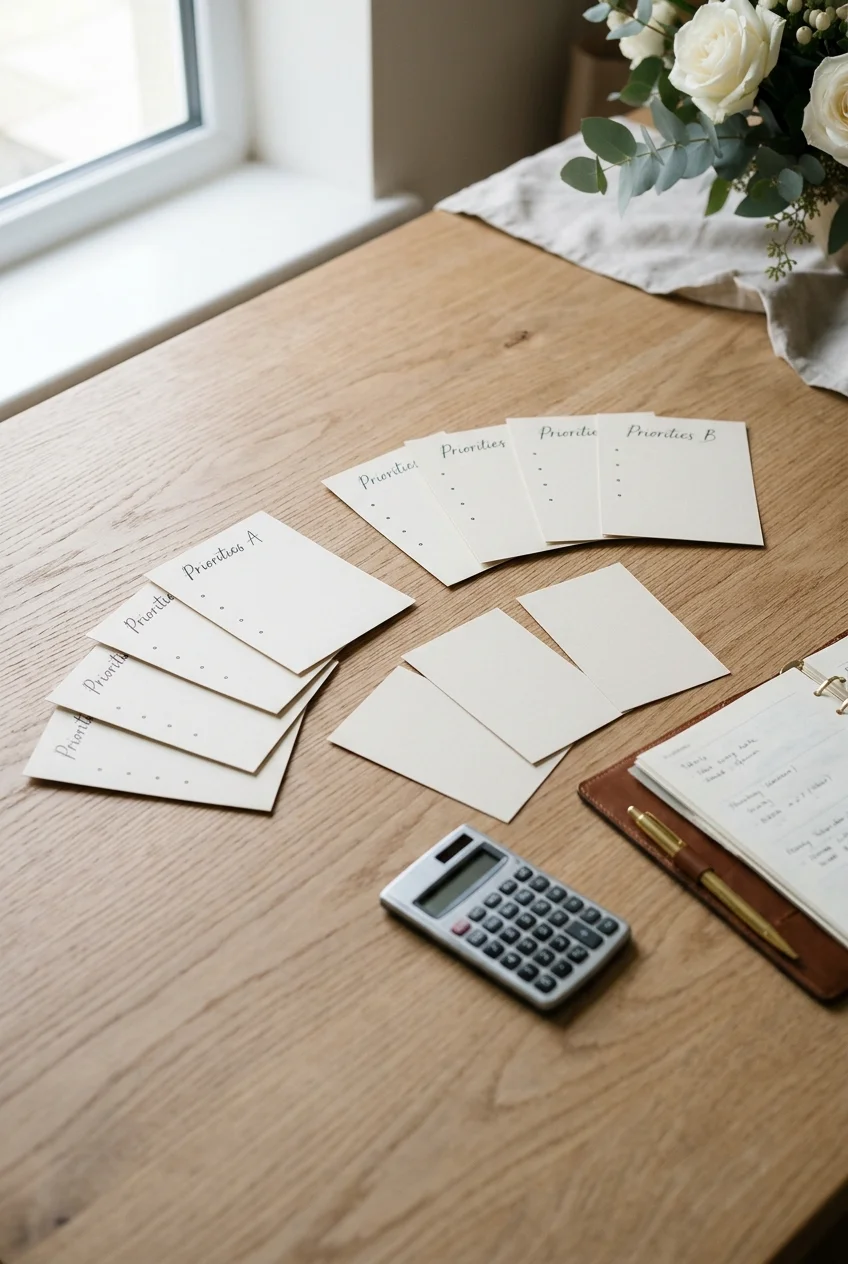
Each partner should list three priorities, then compare them. Fund the overlapping choices first and simplify categories neither person values strongly.
Translate broad wishes into decisions: excellent dinner, live ceremony music, comfortable seating, or strong photography. Specific priorities are easier to price.
93. Price Every Idea Per Guest
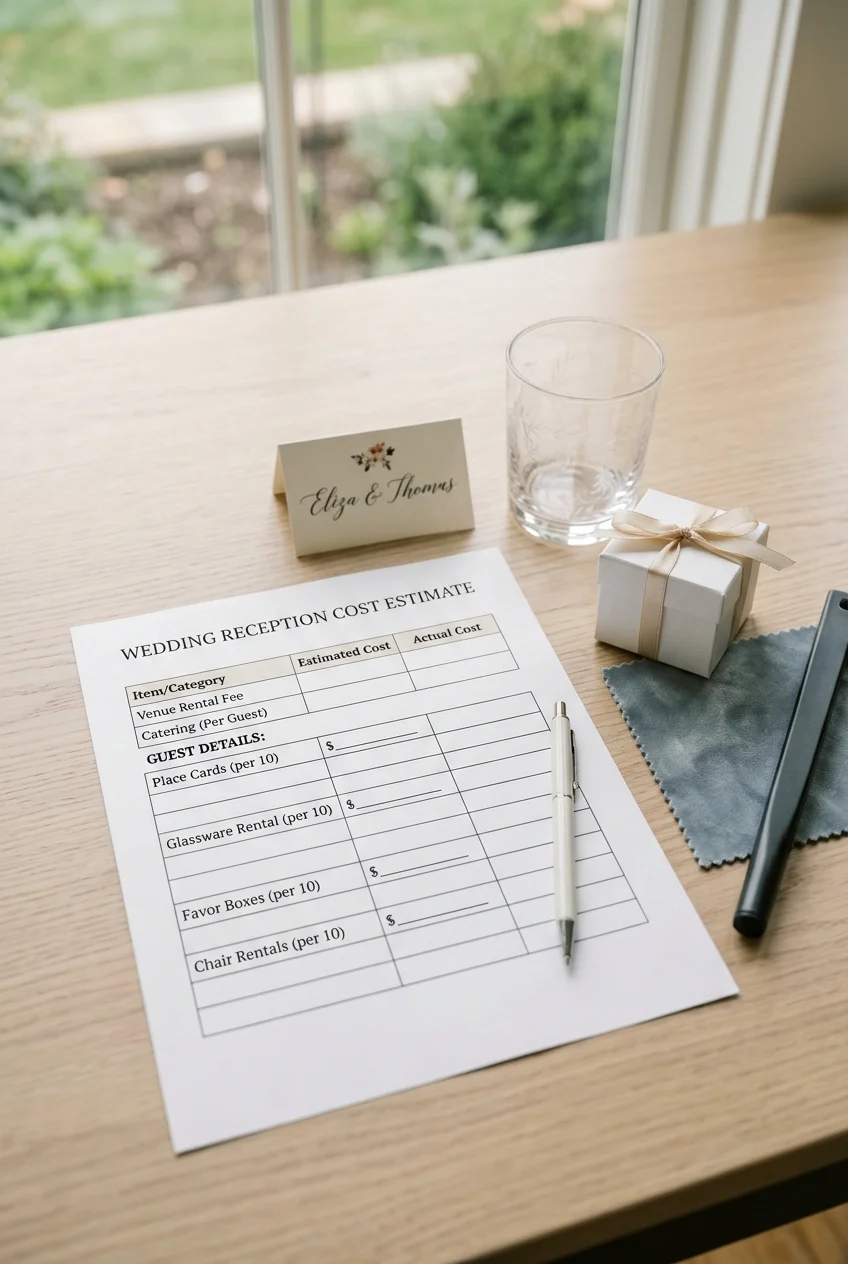
A small unit cost becomes substantial across invitations, chairs, drinks, favors, and rentals. Always multiply before approving any repeated detail.
Include tax, service, delivery, setup, and waste in the total. The per-item sticker price rarely describes the full category cost.
- Count every repeated unit before purchasing.
- Include delivery, setup, cleanup, and return costs.
- Keep one practical alternative if the original plan changes.
94. Compare Packages Line by Line
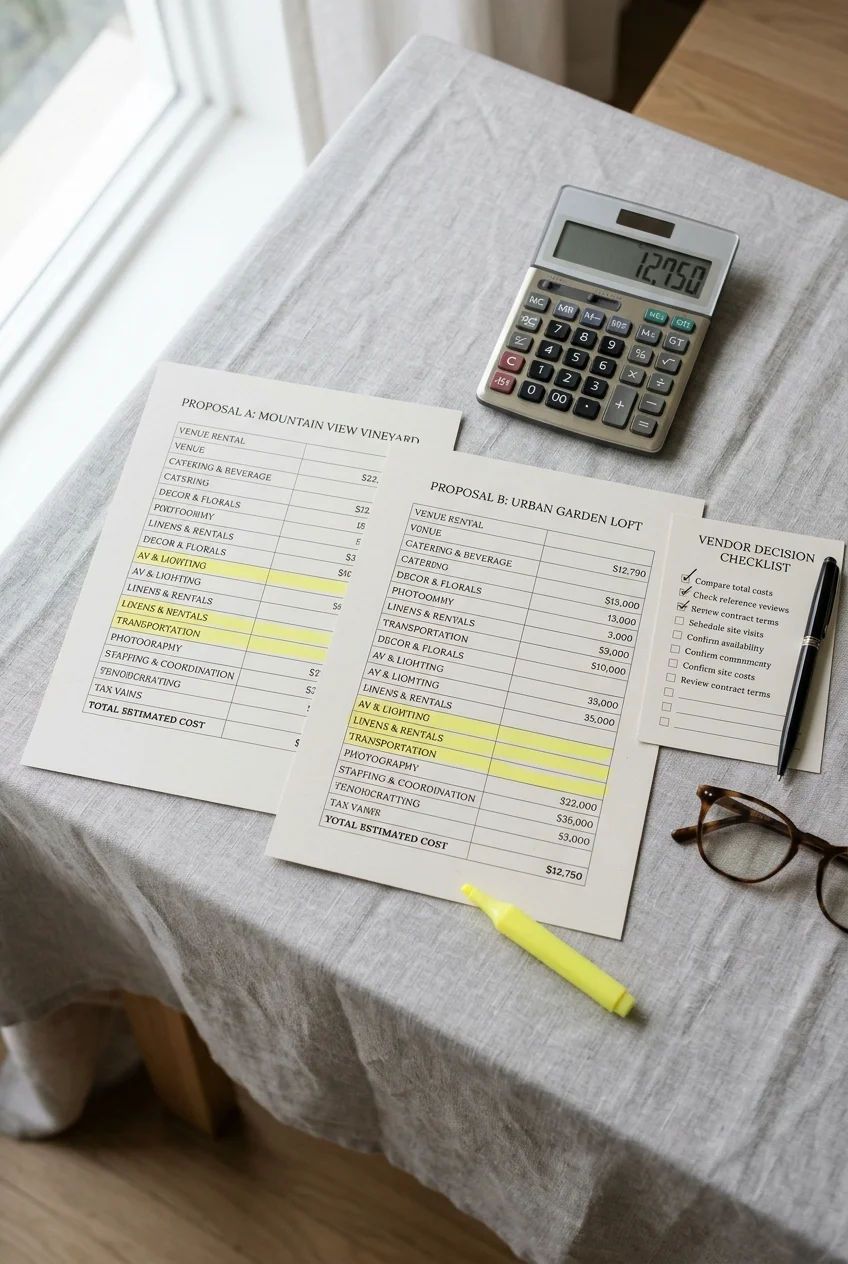
Place venue or catering proposals in matching categories so omissions become visible. Compare hours, staffing, rentals, cleanup, food, drinks, and taxes.
Ask vendors to clarify unclear items in writing. A higher quote may be better value when it replaces several separate contracts and deliveries.
95. Track Deposits and Final Due Dates
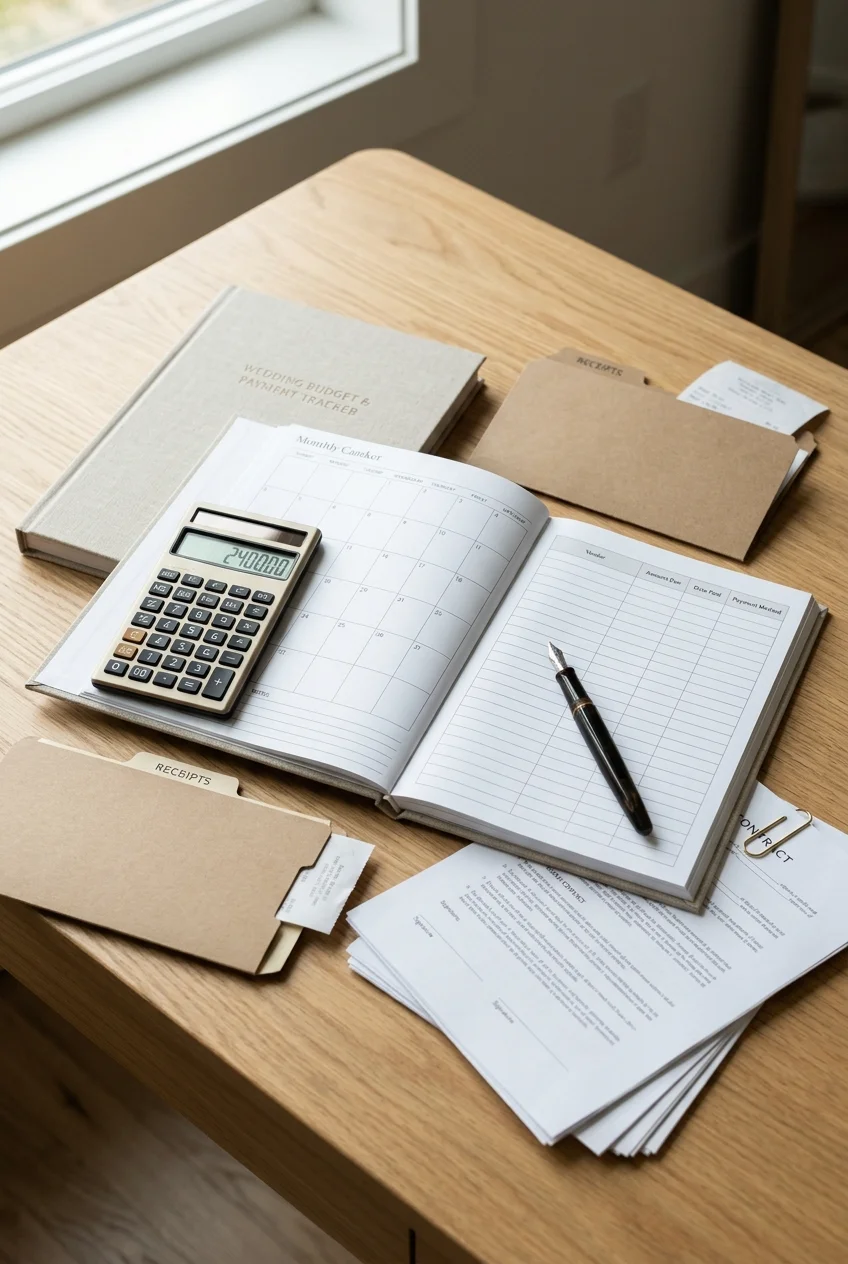
Record every payment amount, method, due date, and cancellation term in one place. Calendar reminders should arrive well before the actual deadline.
Save receipts and signed contracts together using consistent file names. A deposit without documented terms is not a complete planning record.
96. Read Setup and Cleanup Rules Early
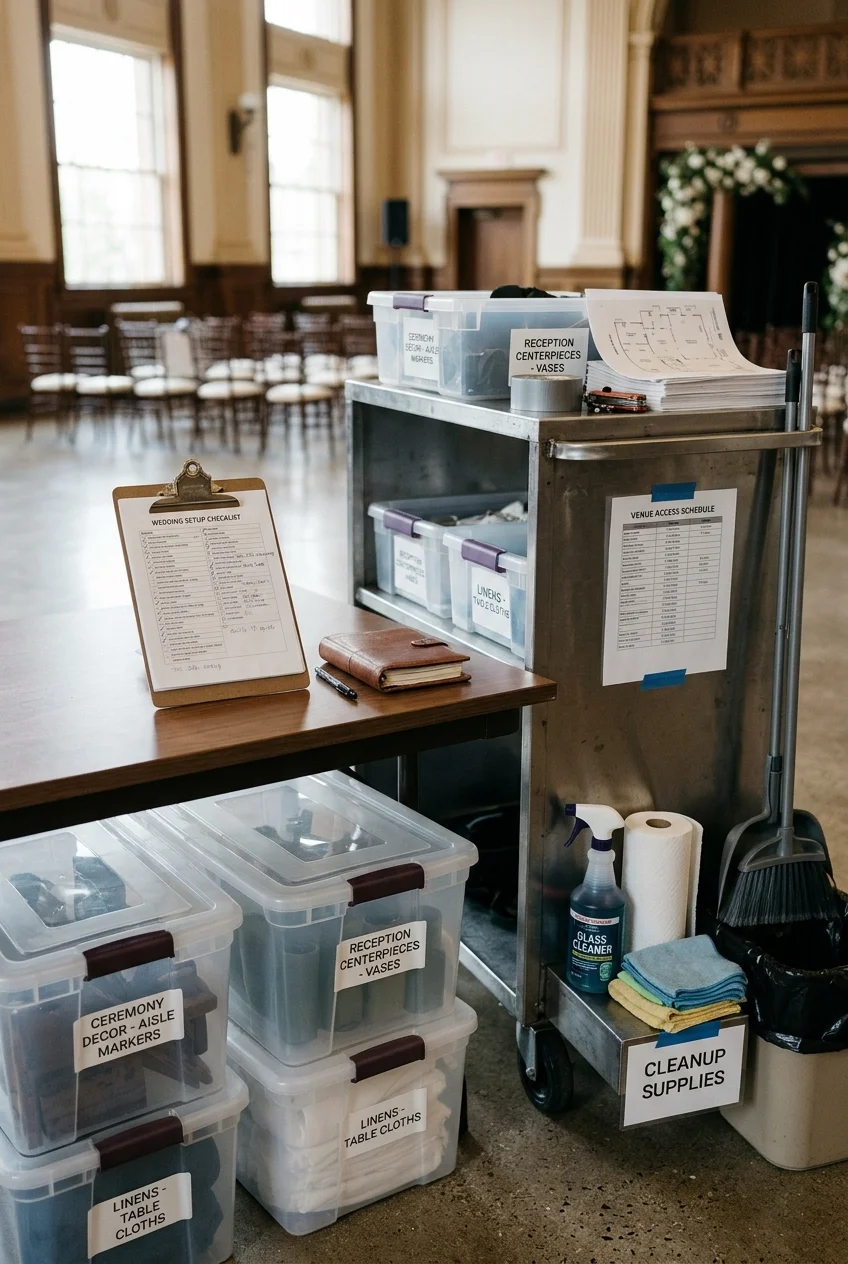
Venue hours can turn inexpensive DIY decor into costly labor when access begins late or everything must disappear immediately after the reception.
List who transports, installs, removes, stores, and returns each item. Assigning ownership exposes ideas that are cheap to buy but expensive to manage.
Planning tip Test this choice at realistic scale before ordering the full quantity, and record the final count, setup owner, and removal plan.
97. Use One Delivery Window Where Possible
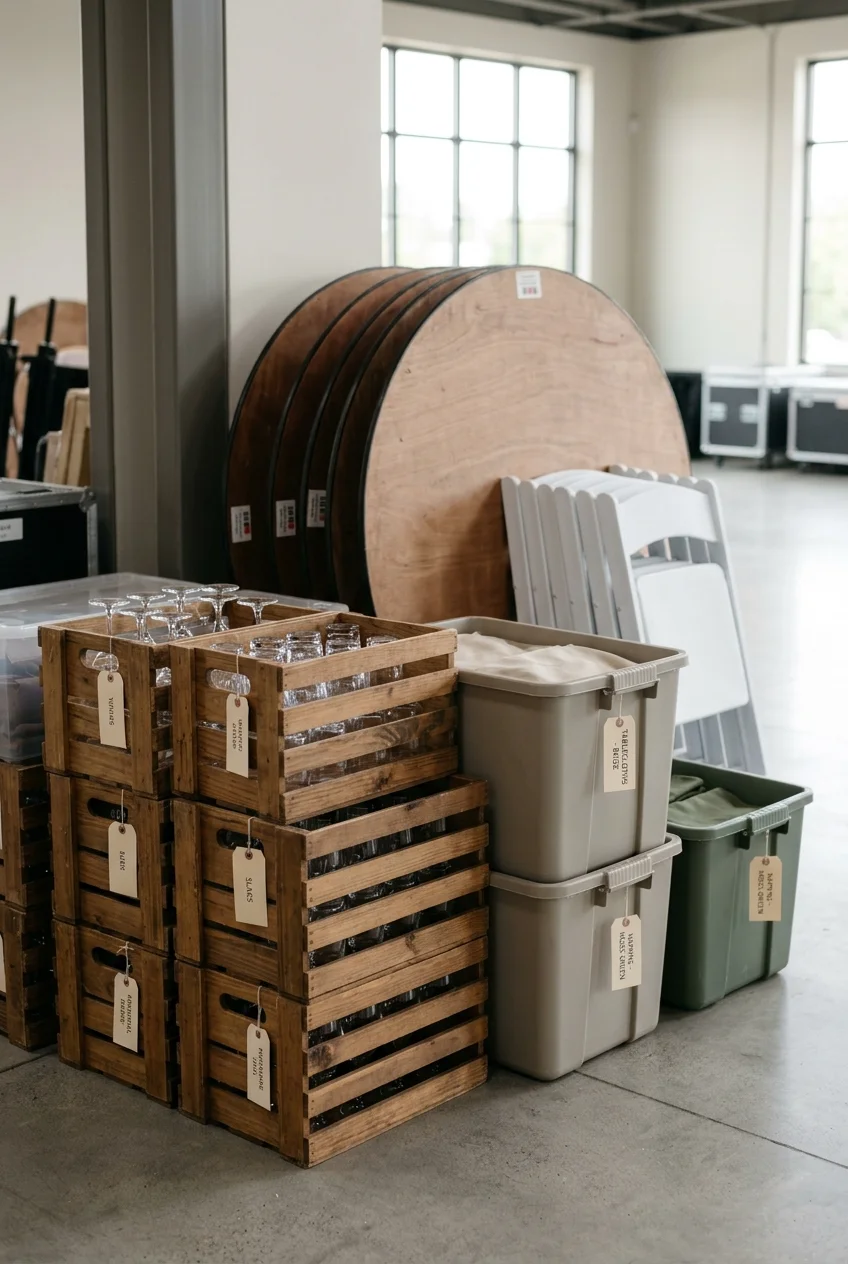
Coordinating compatible rentals into fewer deliveries can reduce fees and curbside confusion. Ask one supplier to quote related tables, linens, and tabletop pieces.
Confirm exact arrival, pickup, storage, and responsibility for counts. Combining orders helps only when missing items still have a clear owner.
98. Borrow With a Written Inventory
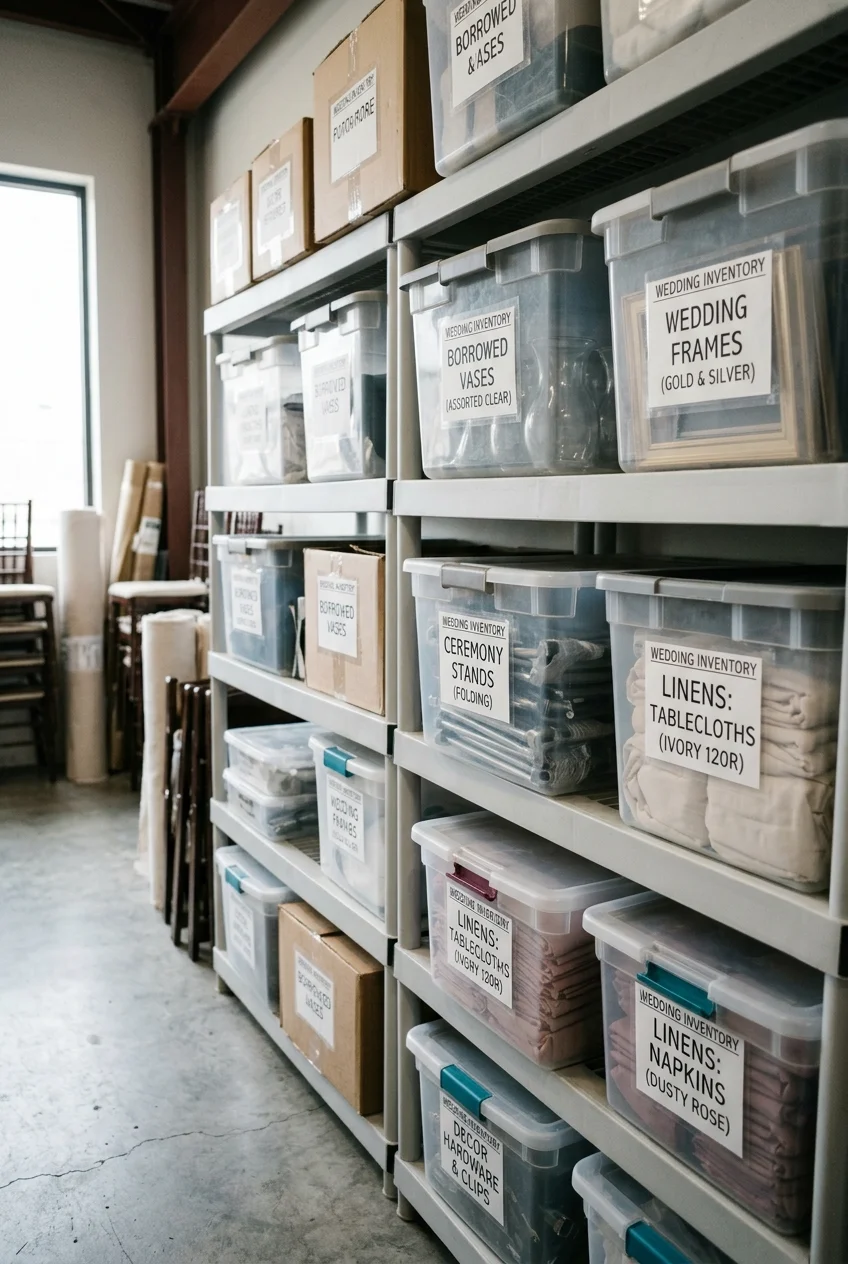
Photograph borrowed objects, note quantities and condition, and label their containers. Generosity works best when returns do not depend on memory.
Keep sentimental or fragile items out of high-traffic service areas. Replaceability matters when deciding what friends should lend for a crowded event.
99. Buy Only After the Final Layout
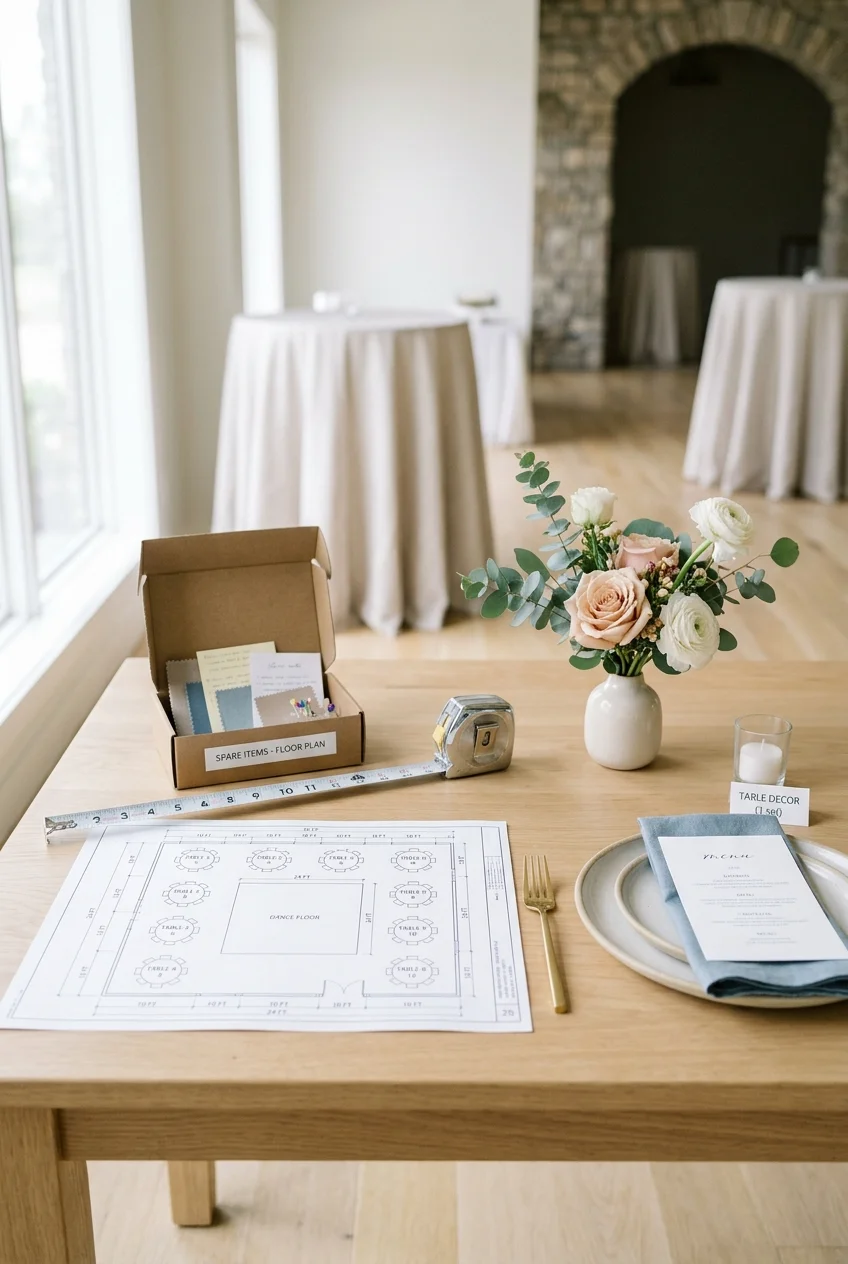
Floor plans determine table counts, aisle markers, centerpieces, signs, and lighting runs. Purchasing before layout approval invites expensive surplus later.
Use the venue’s measured plan, not a social-media photo, to calculate quantities. Keep a small documented spare amount for breakage only.
100. Keep a No-Spend List
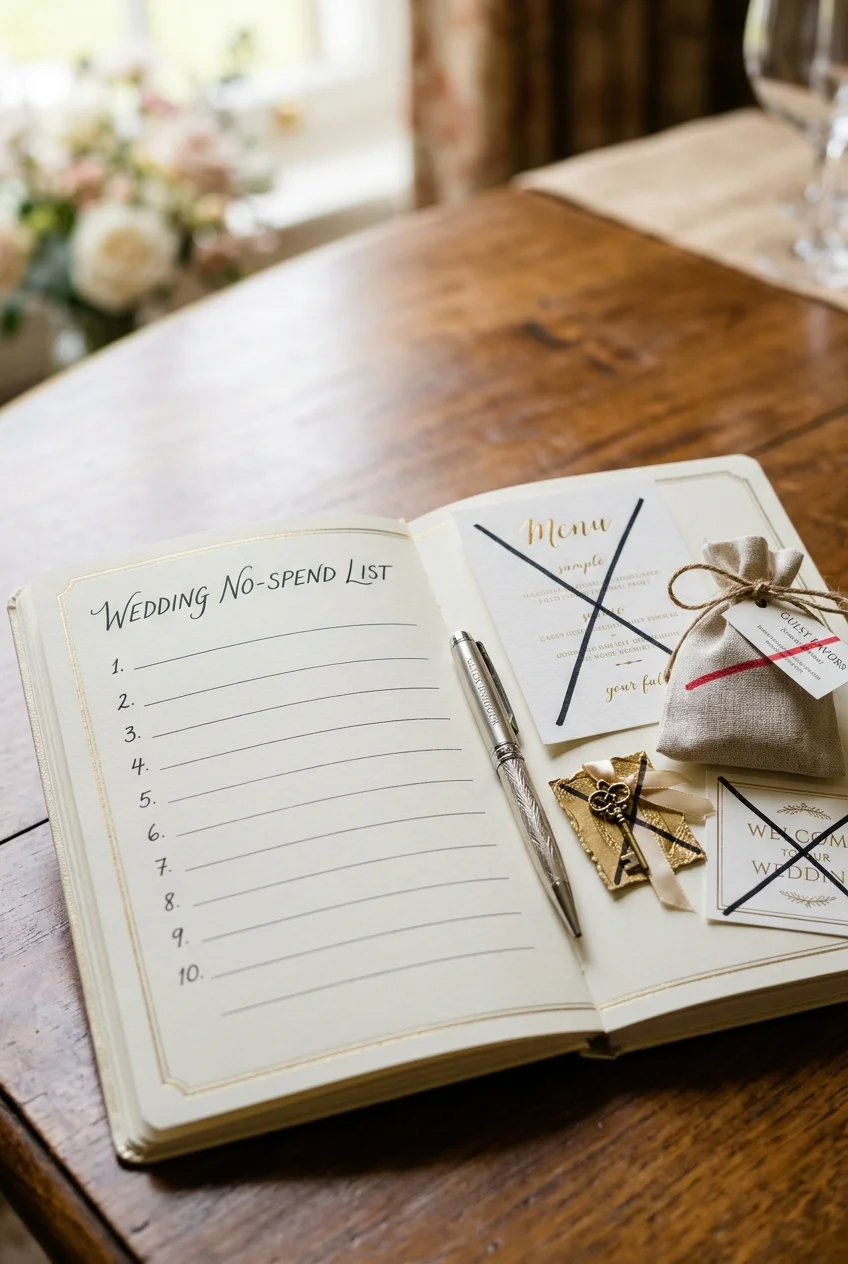
Write down attractive extras you are intentionally skipping, such as duplicate signs, unused lounge props, excessive favors, or decorations for hidden rooms.
Review the list whenever a new inspiration image appears. A clear boundary protects the choices already funded and keeps the wedding visually focused.
What should we cut first when the wedding budget is too high?
Reduce guest count, simplify the venue or date, and remove repeated extras before cutting adequate food, safe staffing, accessibility, or weather protection.
Is DIY wedding decor always cheaper?
No. Include materials, tools, prototypes, storage, transportation, setup, cleanup, and your available time before comparing DIY with rental or professional service.
How can a budget wedding still look coordinated?
Repeat a limited palette, one shape, and consistent paper style across the most visible areas, while leaving low-priority corners clean instead of partly decorated.
Where should we spend more rather than choosing the cheapest option?
Protect sufficient food, comfortable seating, reliable vendors, safe equipment, accessible plans, necessary alterations, and the photography or entertainment you genuinely value most.
This post may contain affiliate links: full affiliate disclosure.