
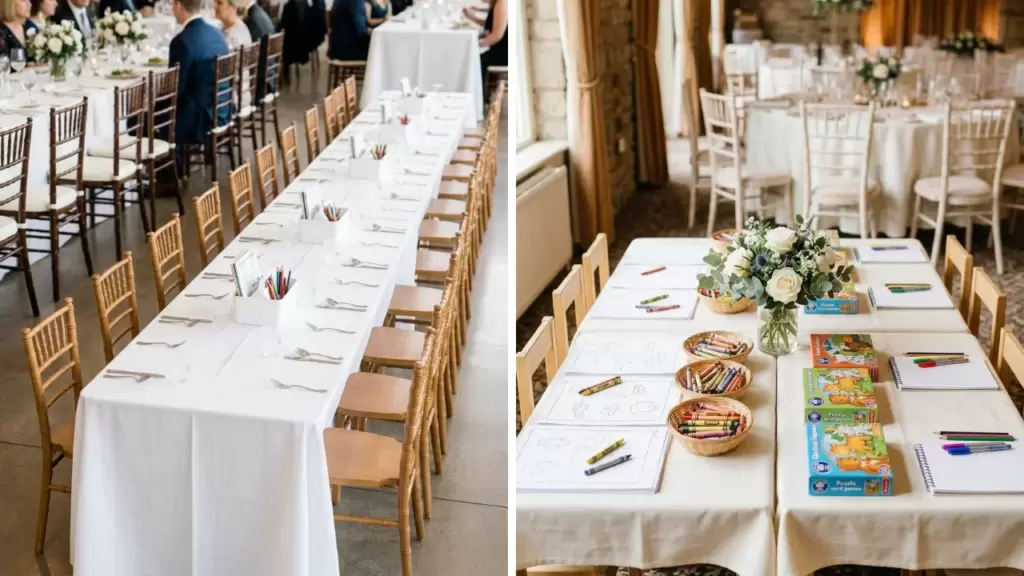
A useful wedding kids’ table gives children a comfortable place to eat, one or two things worth doing, and an easy connection back to their parents. It does not need to look like a miniature classroom or disappear into a back room.
The ideas below begin with layouts and coordinated place settings, then move into quiet activities, shared games, food service, comfort, and cleanup. Choose for the actual children attending: their ages, interests, seating preferences, food needs, and the adults available to supervise matter more than a perfectly matched supply set.
Babies and toddlers generally need to remain with their parents, using an appropriate high chair or booster supplied or approved by the family and venue. For older children, ask parents whether a separate table will feel enjoyable before finalizing the seating chart.
Kids’ Table Layouts That Keep Children Part of the Reception
1. A Long Kids’ Table Beside the Family Tables
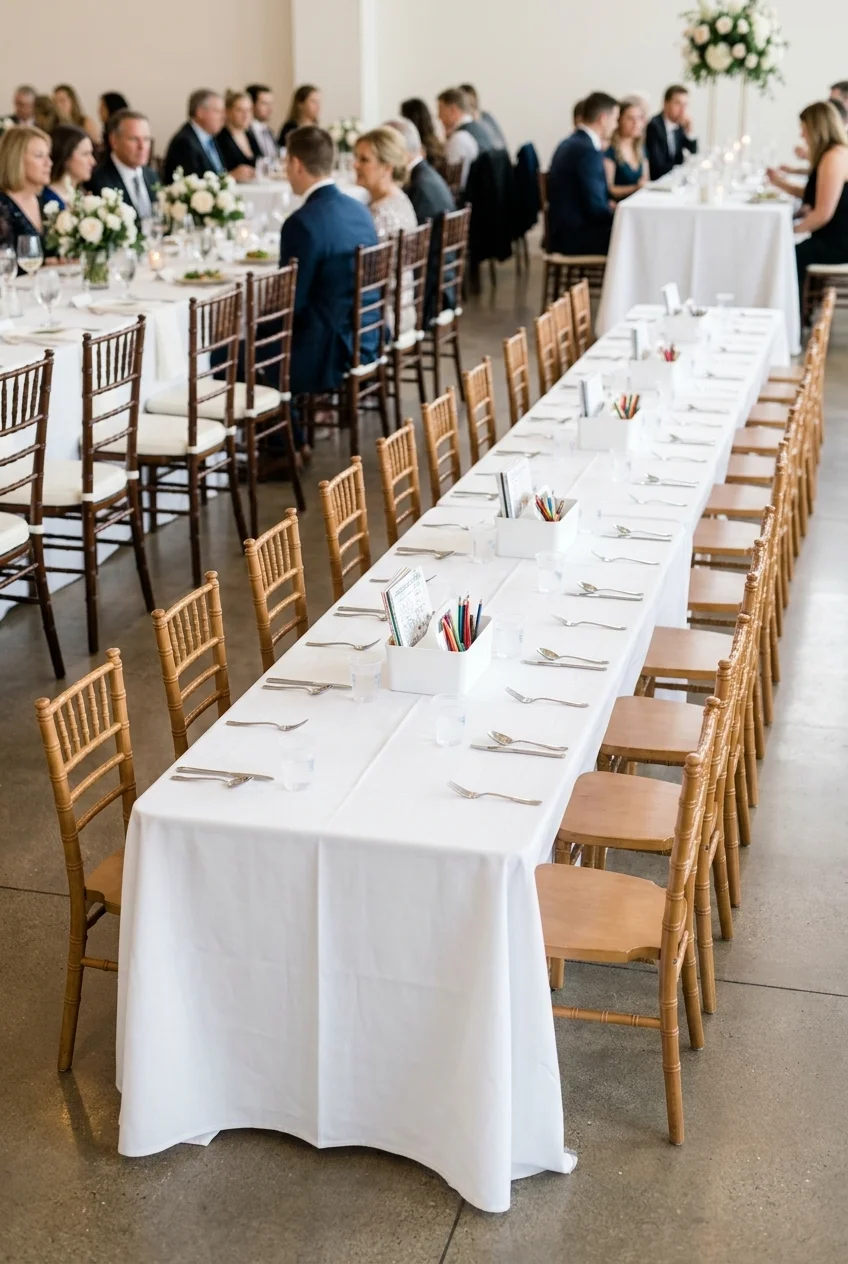
A narrow rectangular table can seat several school-age children while keeping the group visually connected to the rest of dinner. Place it parallel to nearby family tables so parents can look over easily and servers can approach one long side without squeezing between small chairs.
For more examples of child-height layouts and mixed-age zones, the site’s Thanksgiving kids’ table ideas offer arrangements that can be adapted with wedding colors and nonseasonal activities.
2. A Kids’ Zone at One End of the Main Table
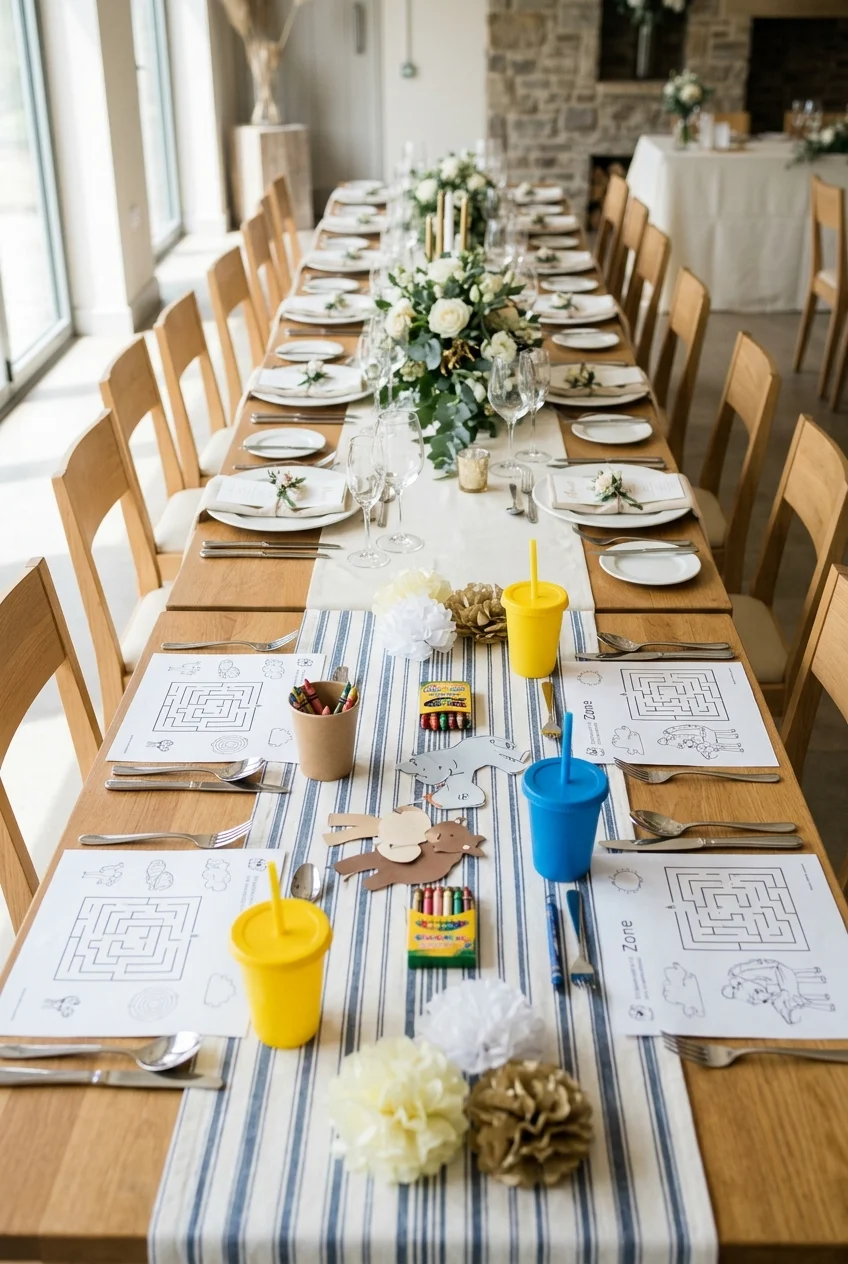
When only two or three children are attending, one end of a family table may work better than a separate island. Use a wipe-clean runner and activity placemats to define their zone while keeping each child next to a parent or familiar adult.
Move candles, glass decor, and hot serving dishes toward the adult end. The children still get a recognizable area of their own without being asked to eat apart from the people they know.
3. Two Smaller Tables Split by Activity Level
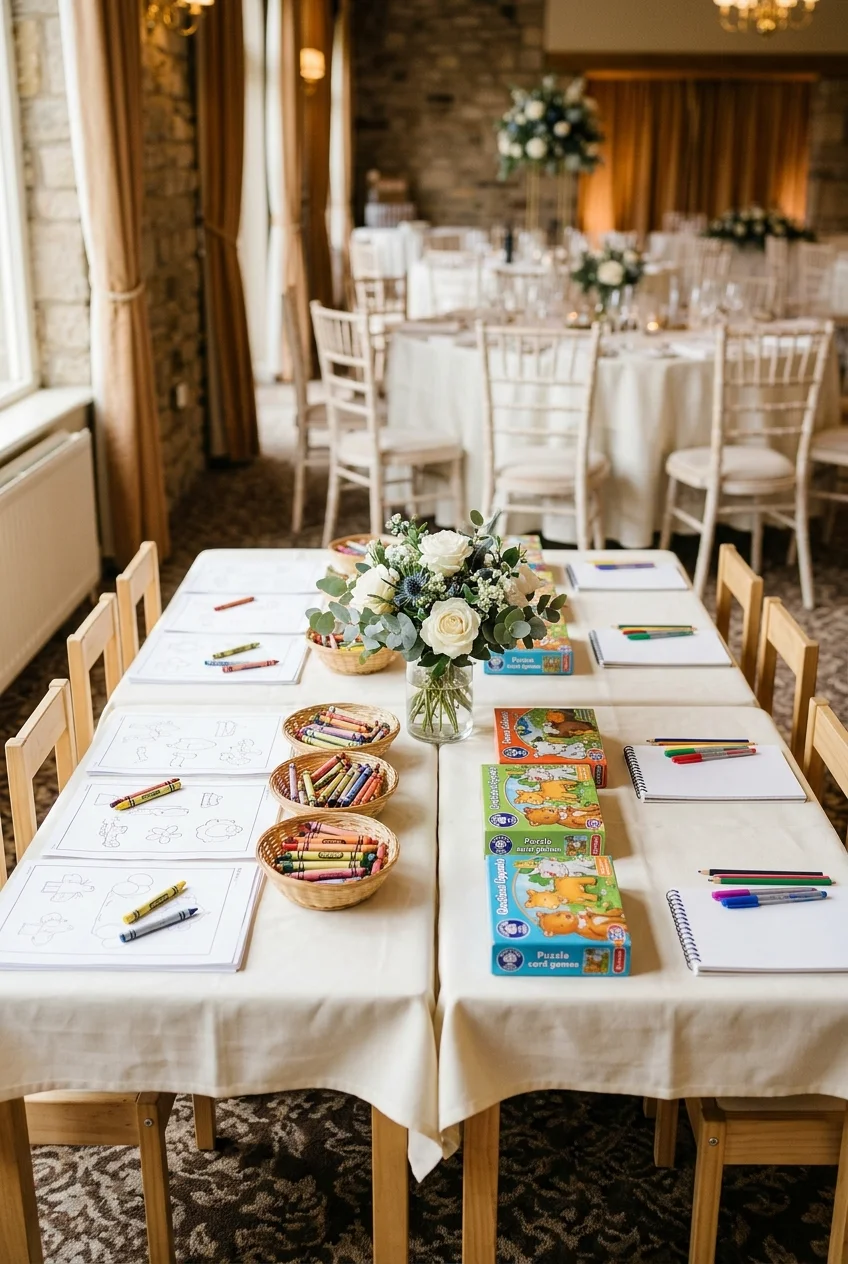
A wide age range rarely needs the same supplies or pace. Two compact tables let younger children use broad crayons and large pieces while older children work on puzzles, trivia, or drawing prompts that would feel too easy at a preschool setup.
Keep both tables in the same sightline and tell parents where their children will sit before the wedding. The split should solve a practical mismatch, not publicly label one group as babies and the other as grown-ups.
4. A Low Picnic Table for Children Comfortable on the Floor
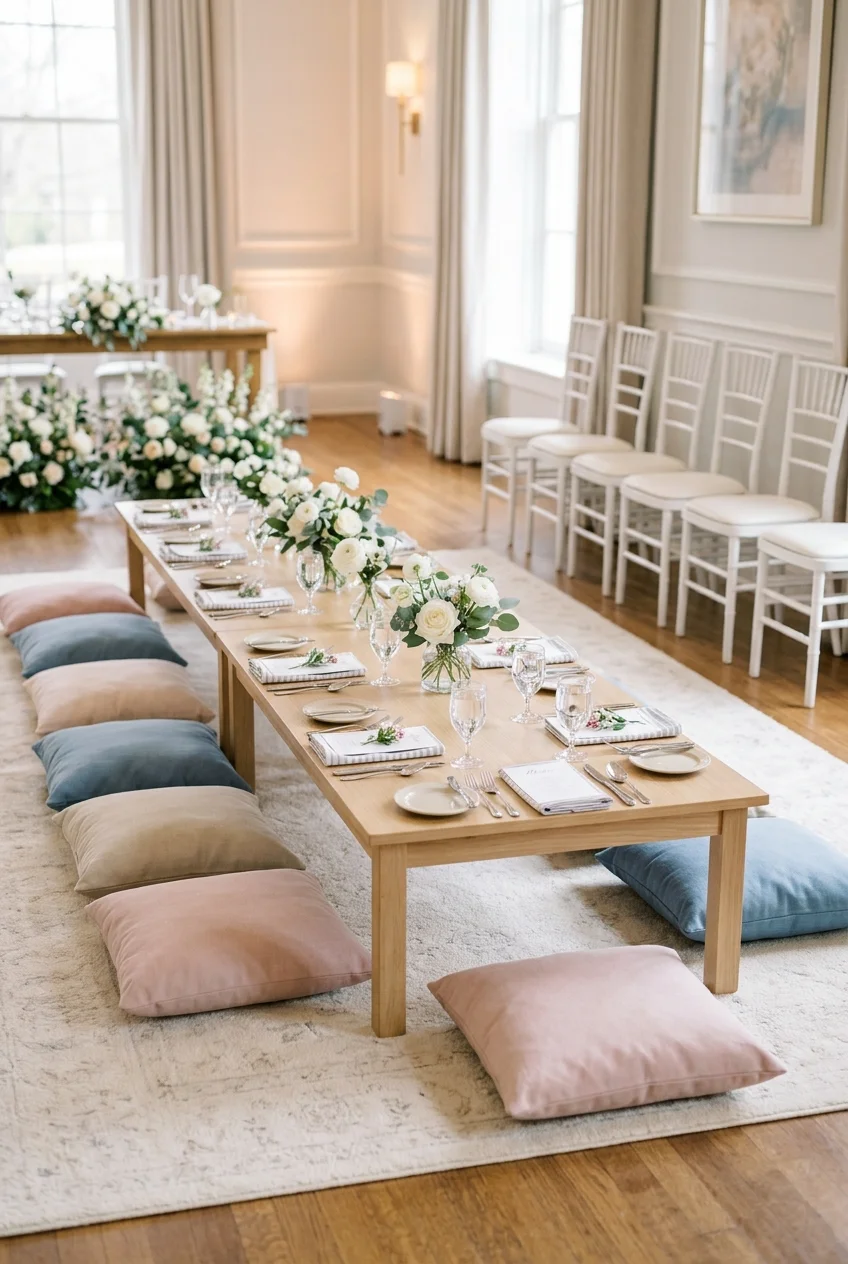
A sturdy low table with firm floor cushions can suit preschool and early school-age children who already sit comfortably at that height. Use lightweight place settings and leave enough space behind every cushion for a child to stand without backing into an aisle.
This is not a substitute for an appropriate high chair or booster, and it is not right for every child. Confirm the plan with parents, keep the setup away from foot traffic, and provide ordinary chairs as an alternative.
5. A Round Kids’ Table With an Easy-to-Reach Center
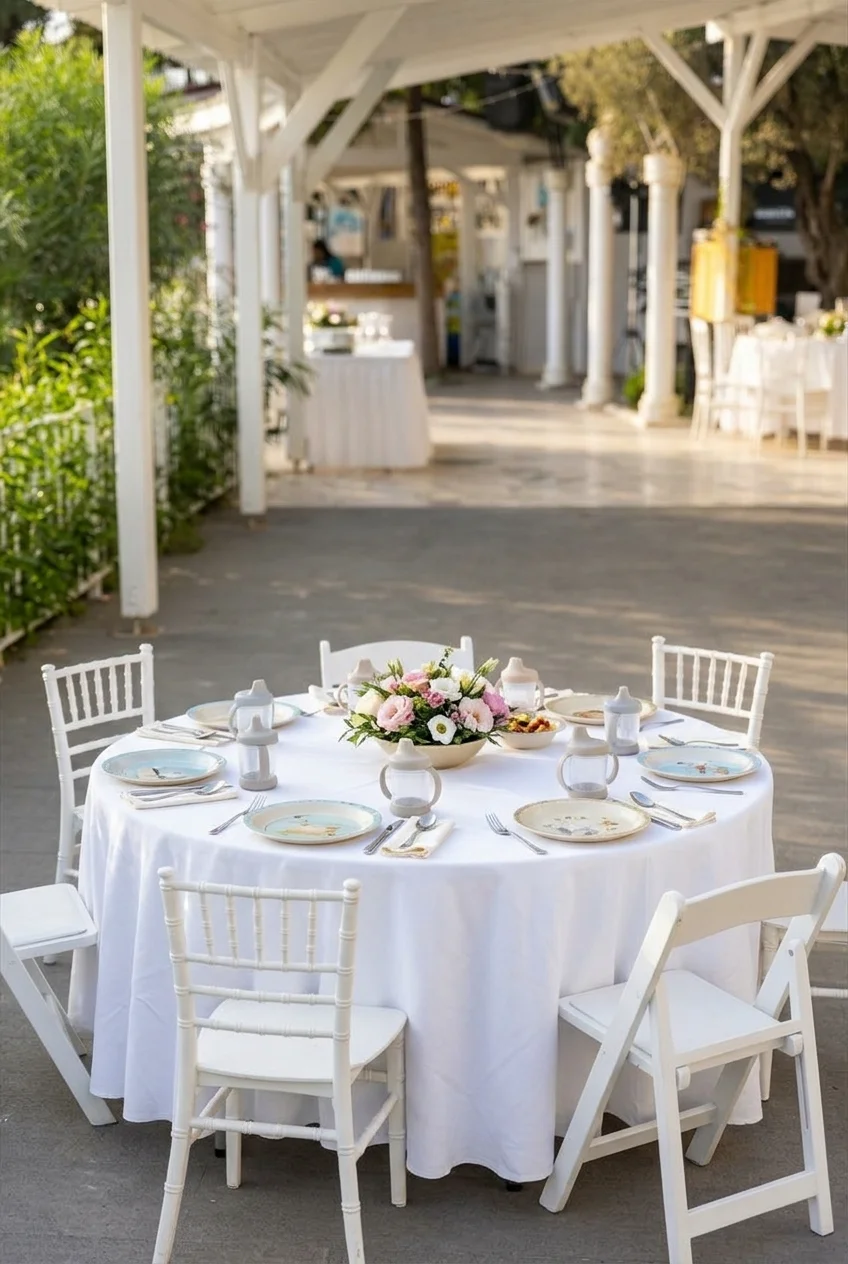
A round table keeps every child within similar reach of shared crayons or cards and avoids a far end that feels disconnected. Choose a diameter that leaves room for plates and elbows once the activity tray is in place.
A low rotating organizer can work for older children if it turns smoothly and stays stable. For younger groups, several small supply cups are easier to manage than one tempting centerpiece.
6. An L-Shaped Table With Eating on One Side and Activities on the Other
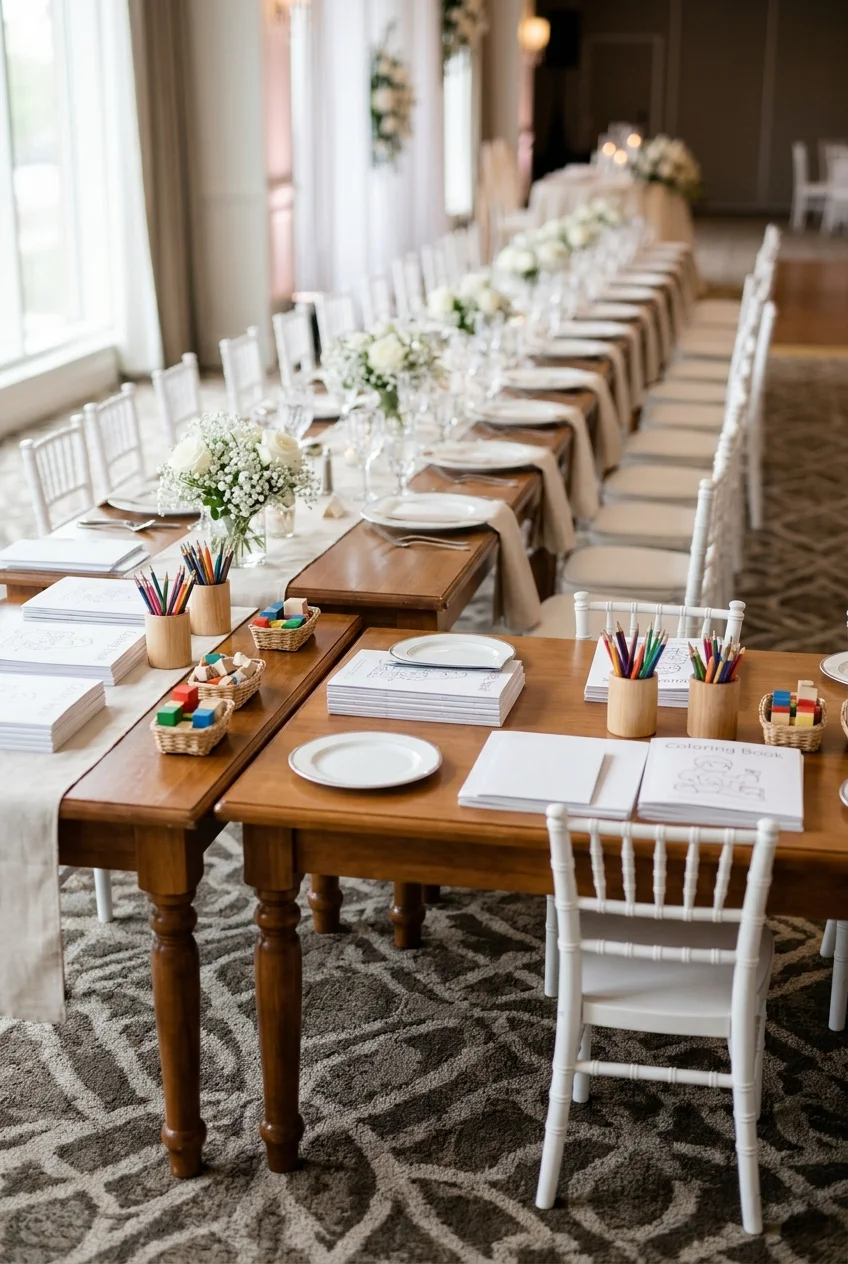
An L shape can separate plates from art supplies without sending children to another part of the room. Use the longer side for dinner and the shorter return for clean, dry activities that can stay available between courses.
Leave the inside corner open; it should not become a trap for chairs, bags, or a supervising adult. Measure the layout at the venue because two tables joined at home may block a service path in the reception room.
7. Side-by-Side Eating and Craft Tables
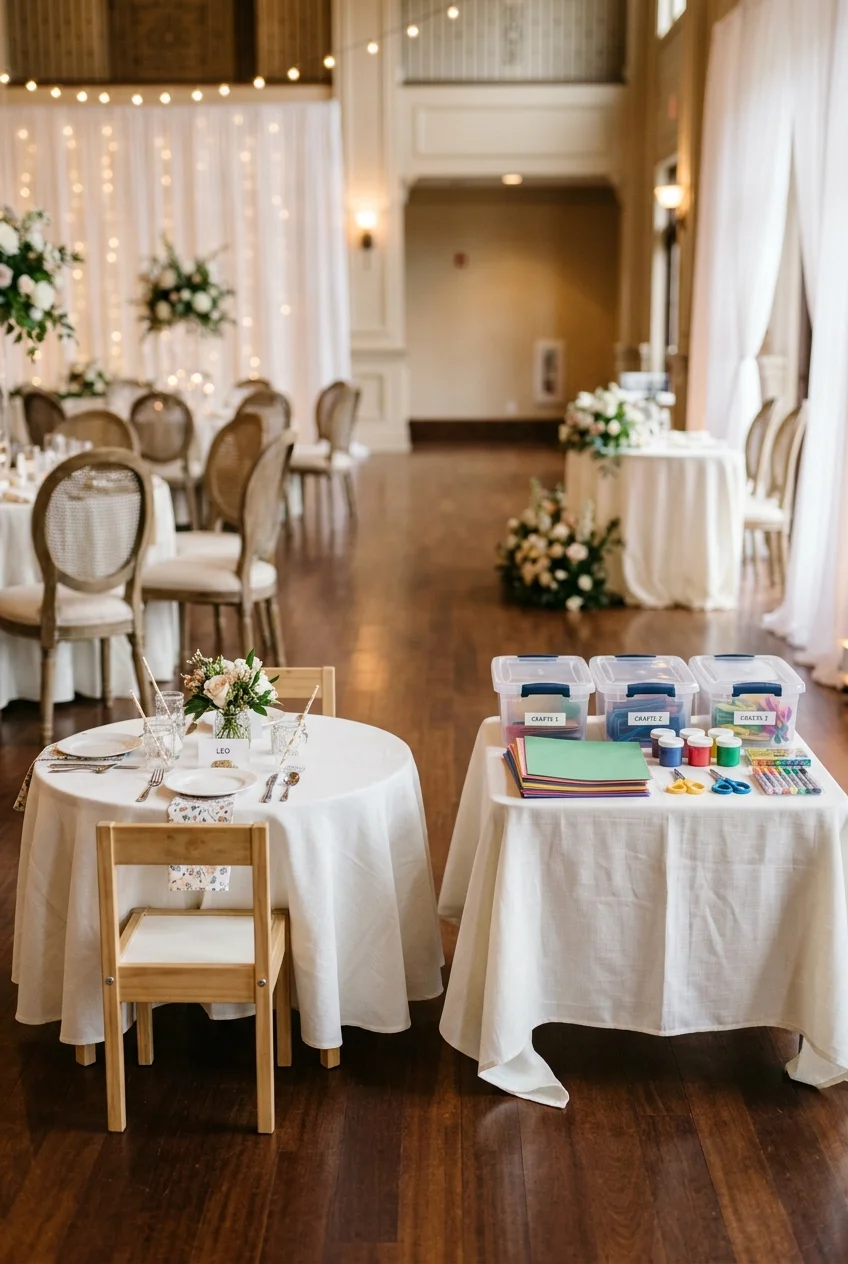
Two separate surfaces are useful when activities involve glue sticks, paper scraps, or anything that should not share space with dinner. Children can finish eating, then move to the adjacent craft table after plates are cleared.
Keep the craft table closed until it is needed. A lidded supply bin prevents the most interesting materials from distracting everyone before food arrives.
8. A Wall-Side Table With No Chair Trapped in the Corner
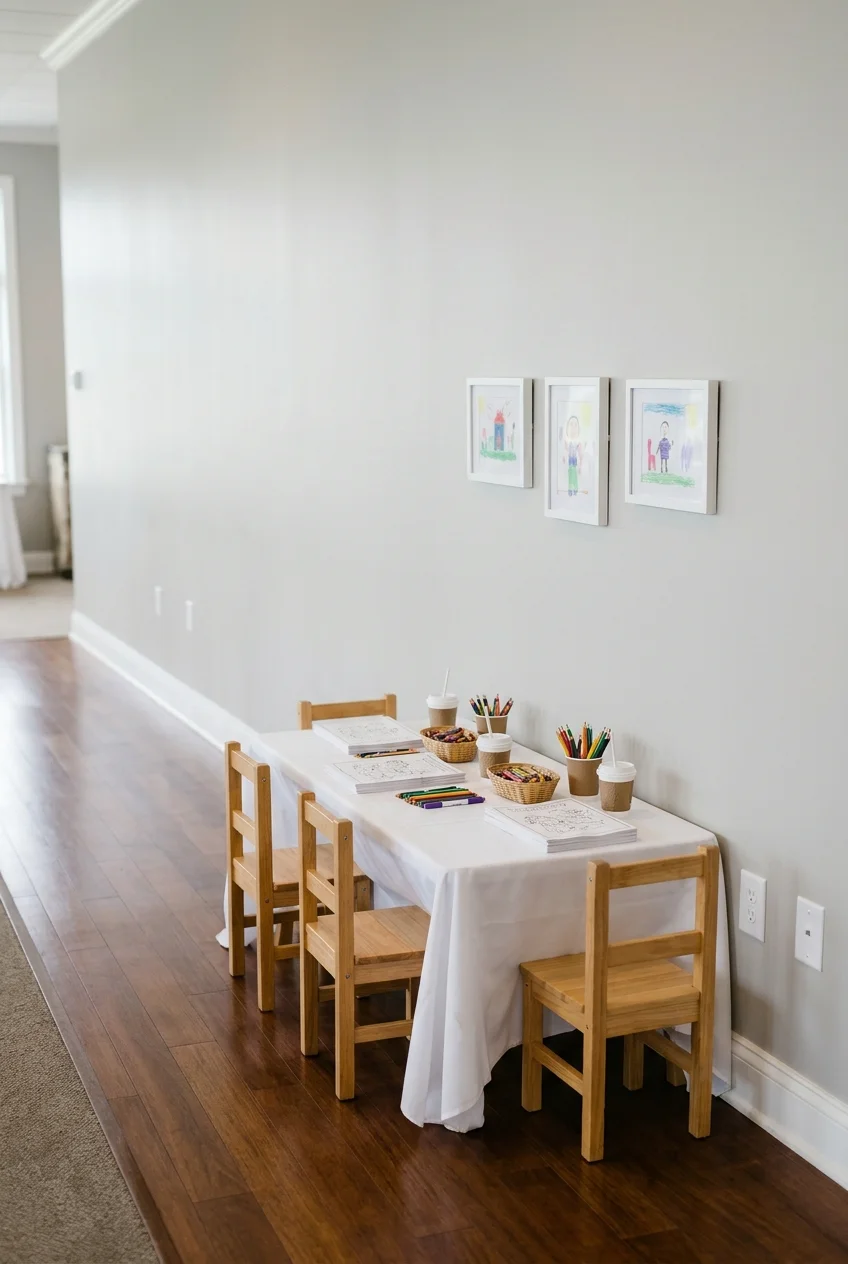
Using a wall can protect one side of the table from traffic and create a natural backdrop for displaying artwork. Keep all occupied seats on accessible edges so no child has to climb behind another chair to leave.
Check that the wall does not contain doors, curtains, heaters, outlets, or decor children can pull. A plain surface is more useful than a dramatic backdrop if it keeps the area predictable.
9. Sibling and Cousin Pods Instead of One Large Table
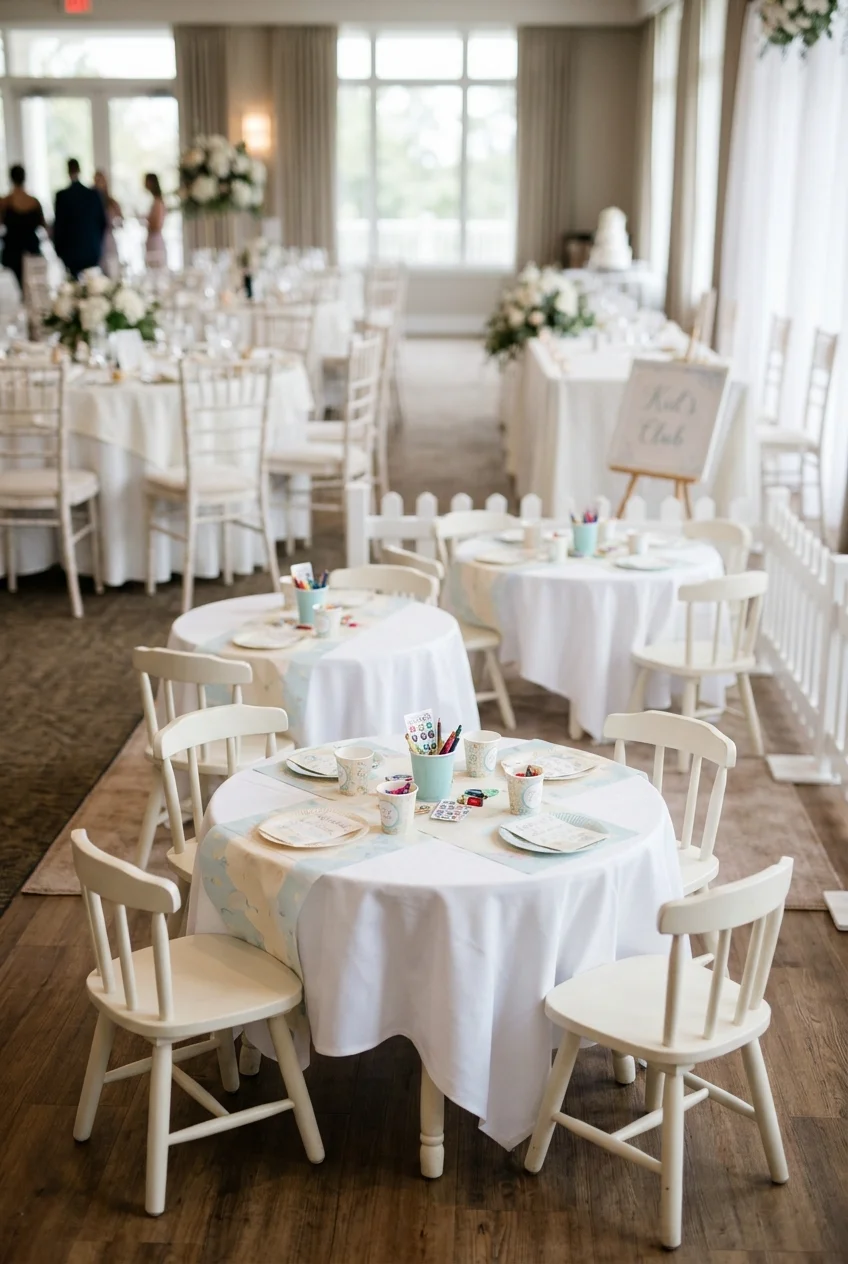
Several two-to-four-seat tables can feel easier for children who already know one another. Group siblings or familiar cousins together, then repeat one shared visual element—such as the same paper runner or crayon colors—so the pods still read as one planned area.
Ask parents about pairings rather than assuming every child of the same age gets along. Keep the pods close enough for one agreed adult to see all of them.
10. A Supervised Kids’ Corner Connected to the Dining Table
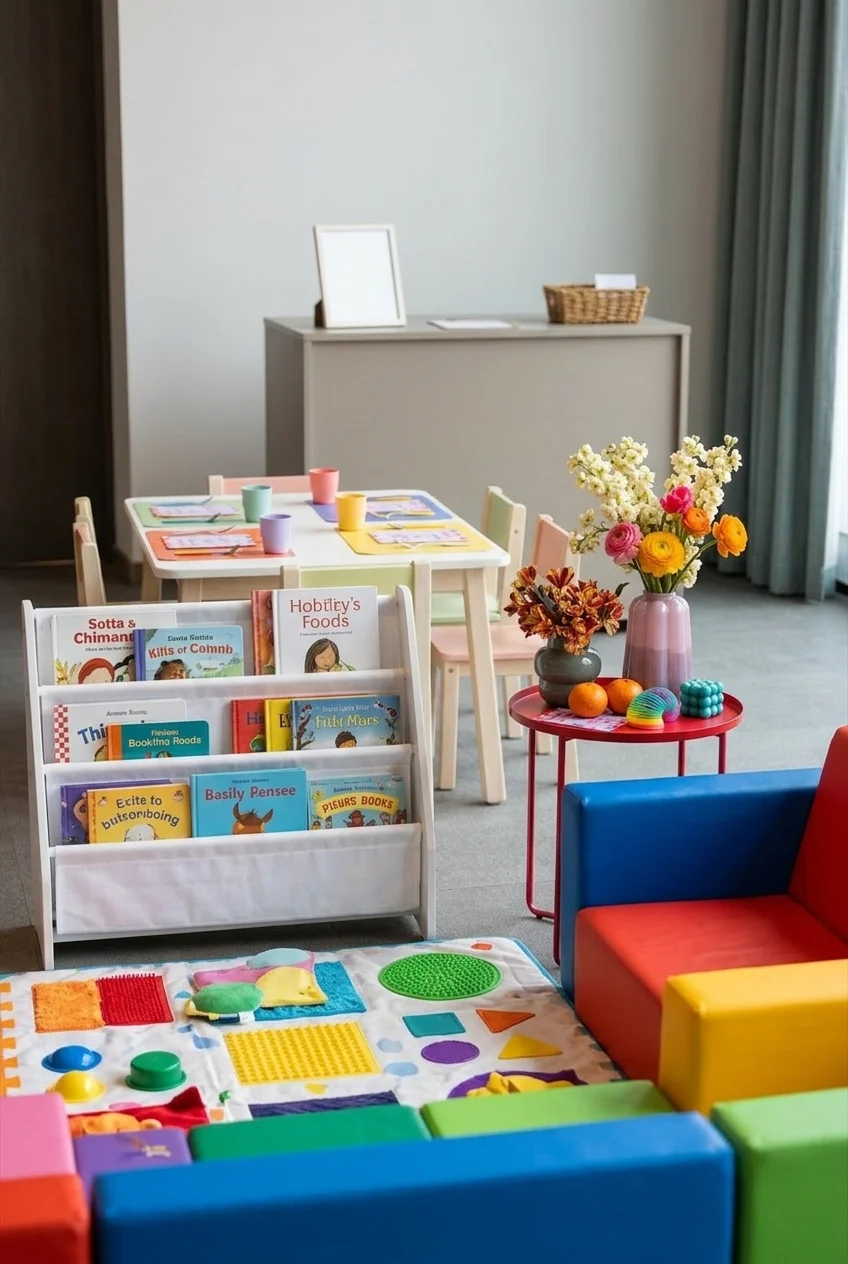
A nearby corner can hold books, soft seating, and one larger activity while the table remains reserved for meals. The connection should be obvious: children and parents can see the route between the two spaces, and the activity area does not sit behind a closed door.
An activity corner is not automatically childcare. If the couple hires event nannies or sitters, define who may sign children in or out, the ages served, and where parents can find the caregivers.
Place Settings and Table Details Children Can Actually Use
11. Color-Coded Plates, Cups, and Napkins
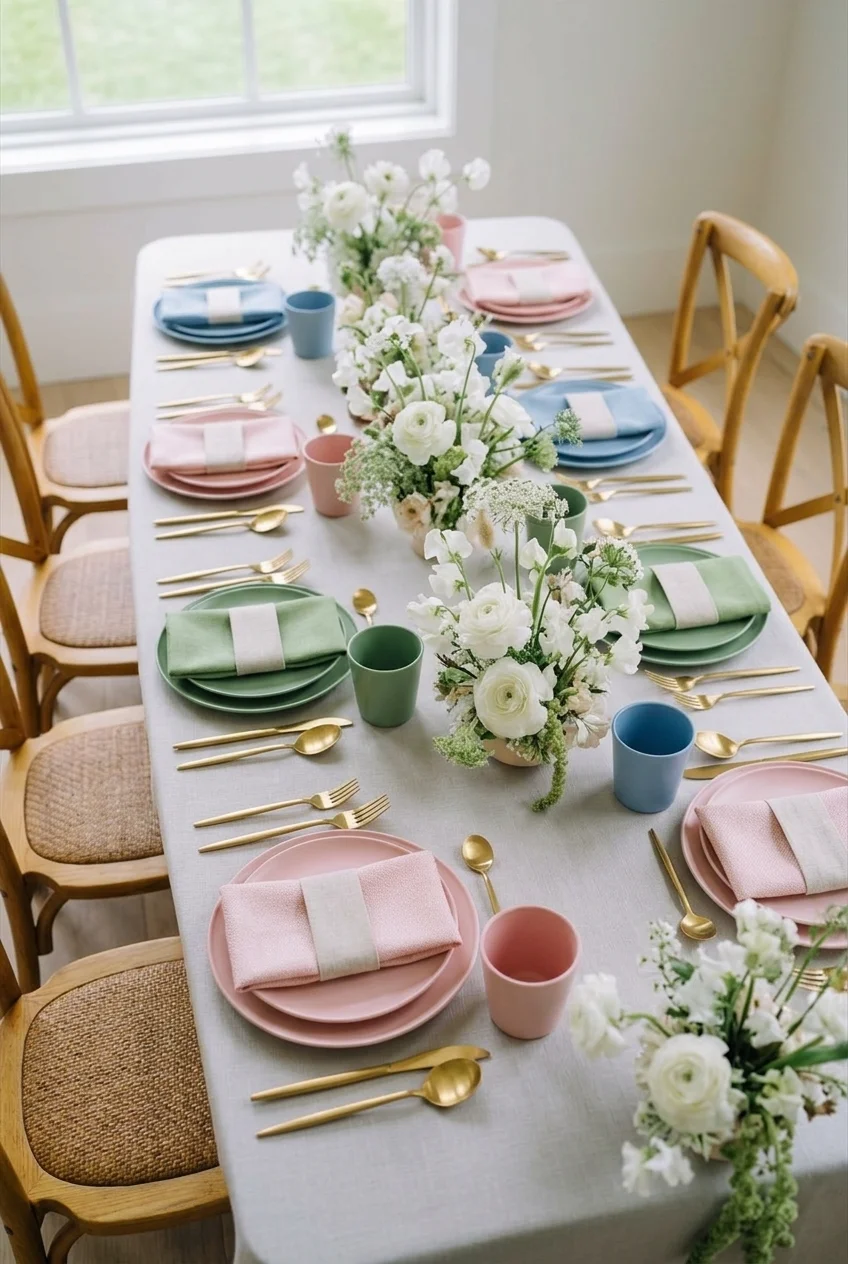
Give each seat one accent color across the plate, cup, and napkin band. Children can find their place again after an activity break, and adults can quickly return an abandoned cup without reading a tiny label.
Use two or three colors already present in the wedding rather than buying a full rainbow set. The table will still feel connected to the room while being easier for children to navigate.
12. Photo Place Cards for Early Readers
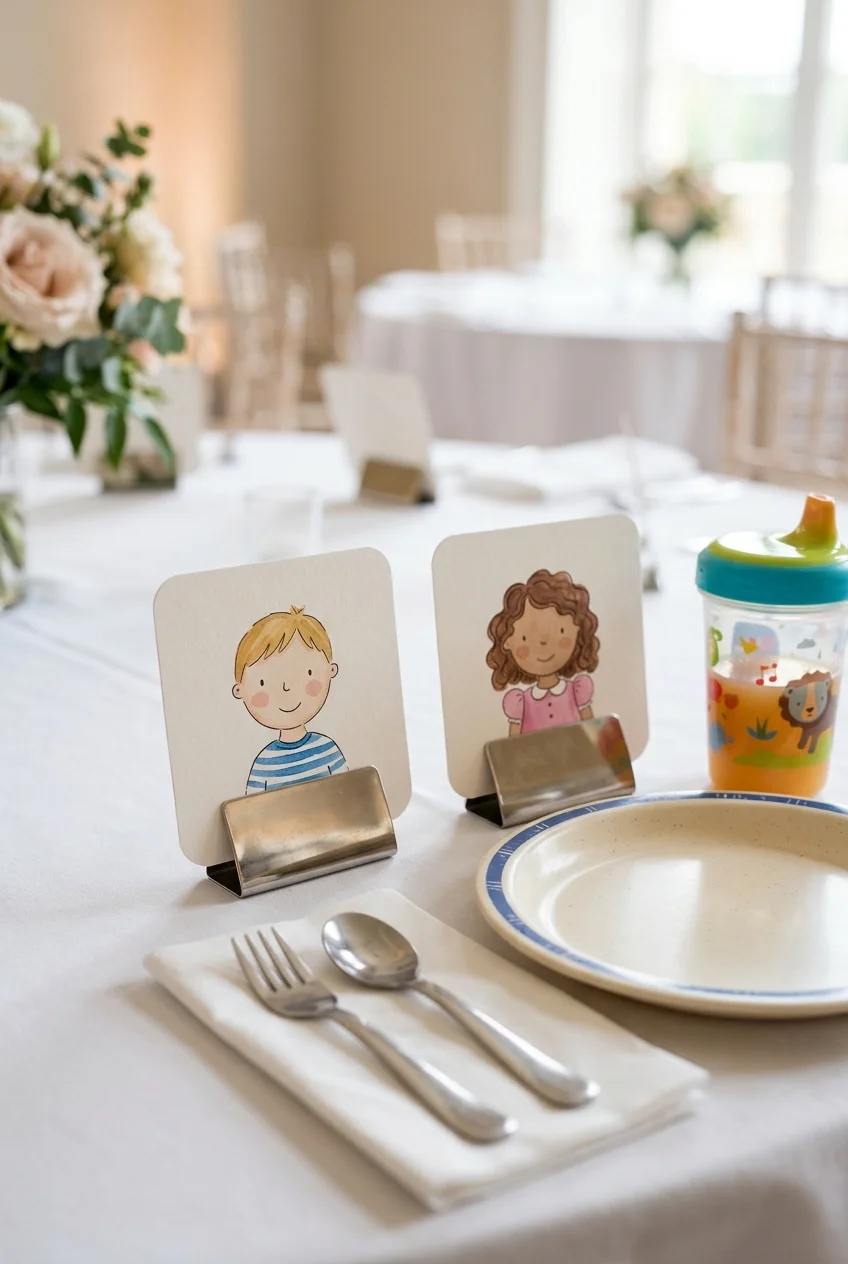
A casual printed photo helps a young child recognize a seat without needing to read. Mount each image on folded cardstock with the first name on the back for adults, then use a low holder that cannot tip into the plate.
Avoid glass frames and send the photos home in envelopes. Ask parents before displaying children’s images, especially if the reception photos may be shared publicly.
13. Large Name Flags That Double as Take-Home Bookmarks
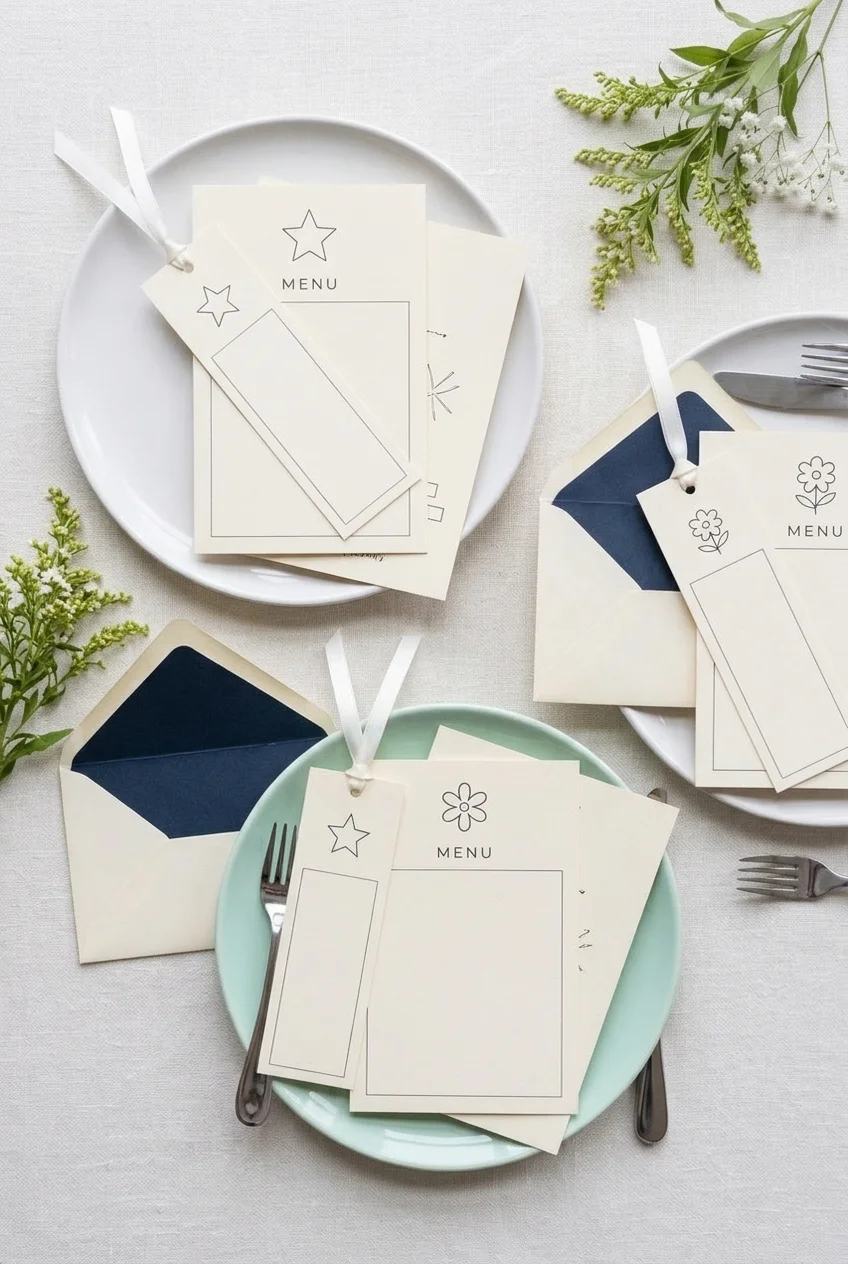
A broad paper flag laid flat beside the plate is easier to spot than a miniature tent card. Print one first name in large type, add a simple icon, and extend the paper into a bookmark shape that fits inside the child’s project folder later.
Keep the piece flat so it cannot fall into a drink. Skip sticks, clips, and loose charms that add no useful function.
14. Wipe-Clean Coloring Placemats With the Correct Crayons
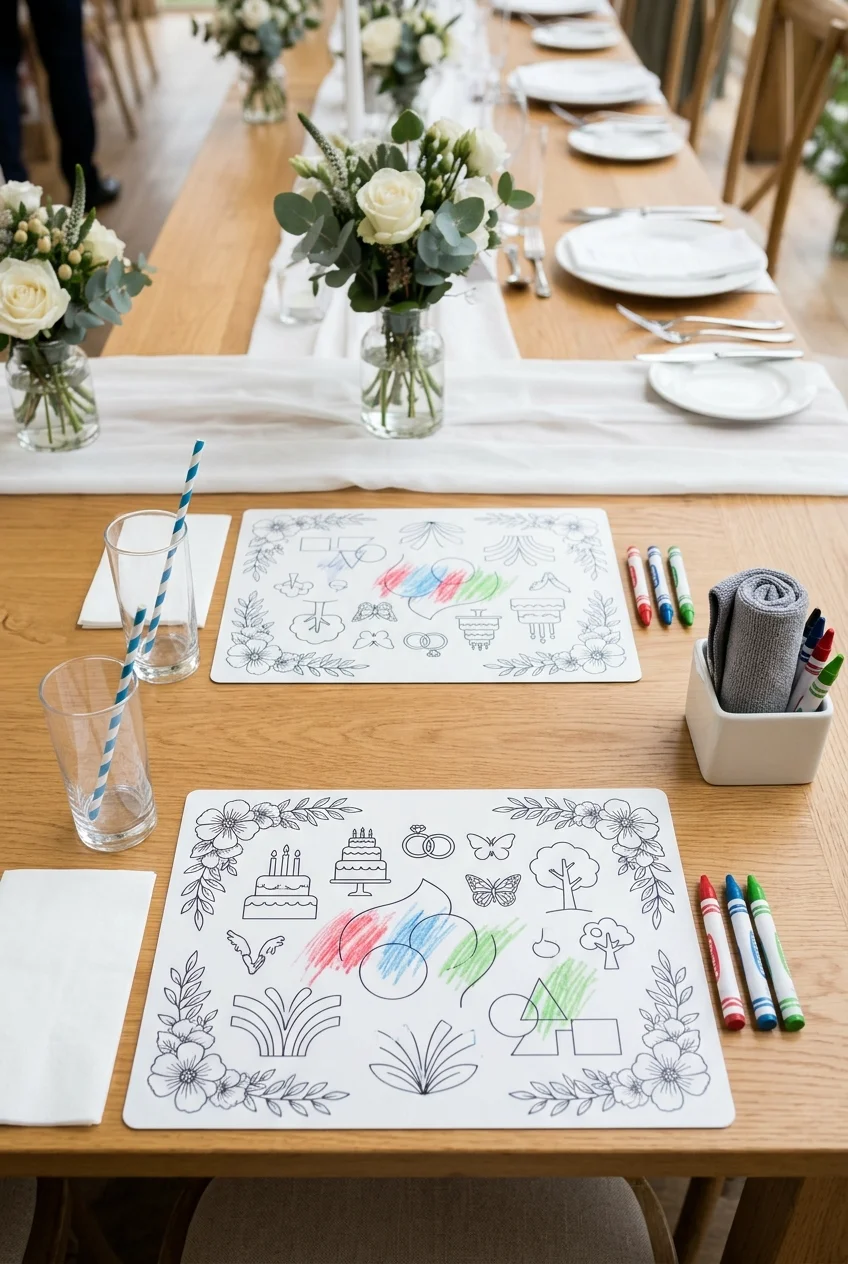
Reusable mats define each child’s space and can be cleared before dessert. Choose a surface-and-crayon combination designed to wipe clean, then test it before ordering enough for the whole table.
The activity should match the children’s ages and the product’s labeling. Keep the cleaning cloth with an adult’s supply basket instead of leaving a damp item beside the meal.
15. A Kraft-Paper Runner Children Can Draw Across
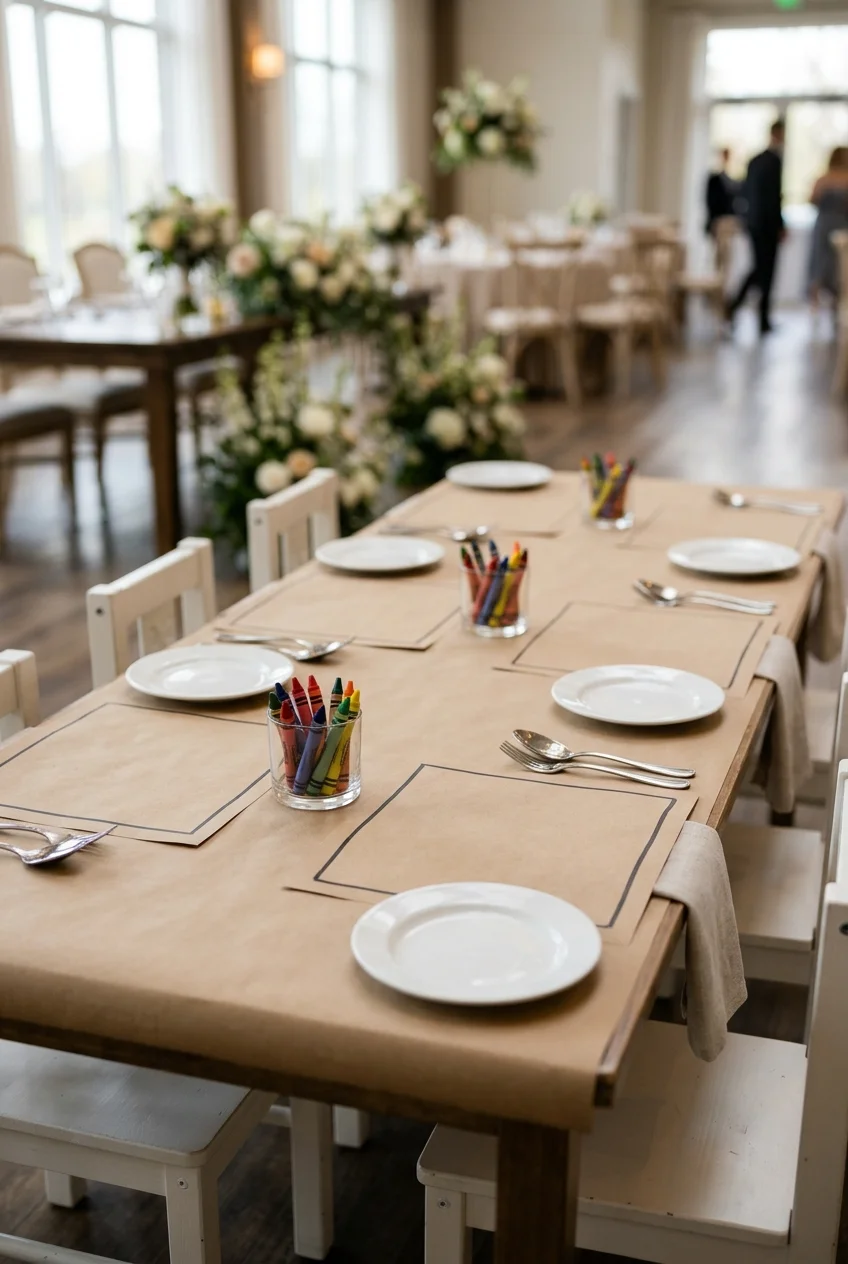
A roll of kraft paper creates one shared drawing surface and protects the linen beneath it. Tape the paper under the table edges, mark out a few broad frames or paths, and leave open space at every seat for original drawings.
Keep crayons in short, wide cups and remove the runner before wet food or candles reach the table. Skip permanent markers even if the paper looks thick enough.
16. Divided Plates With Short, Wide-Bottomed Cups
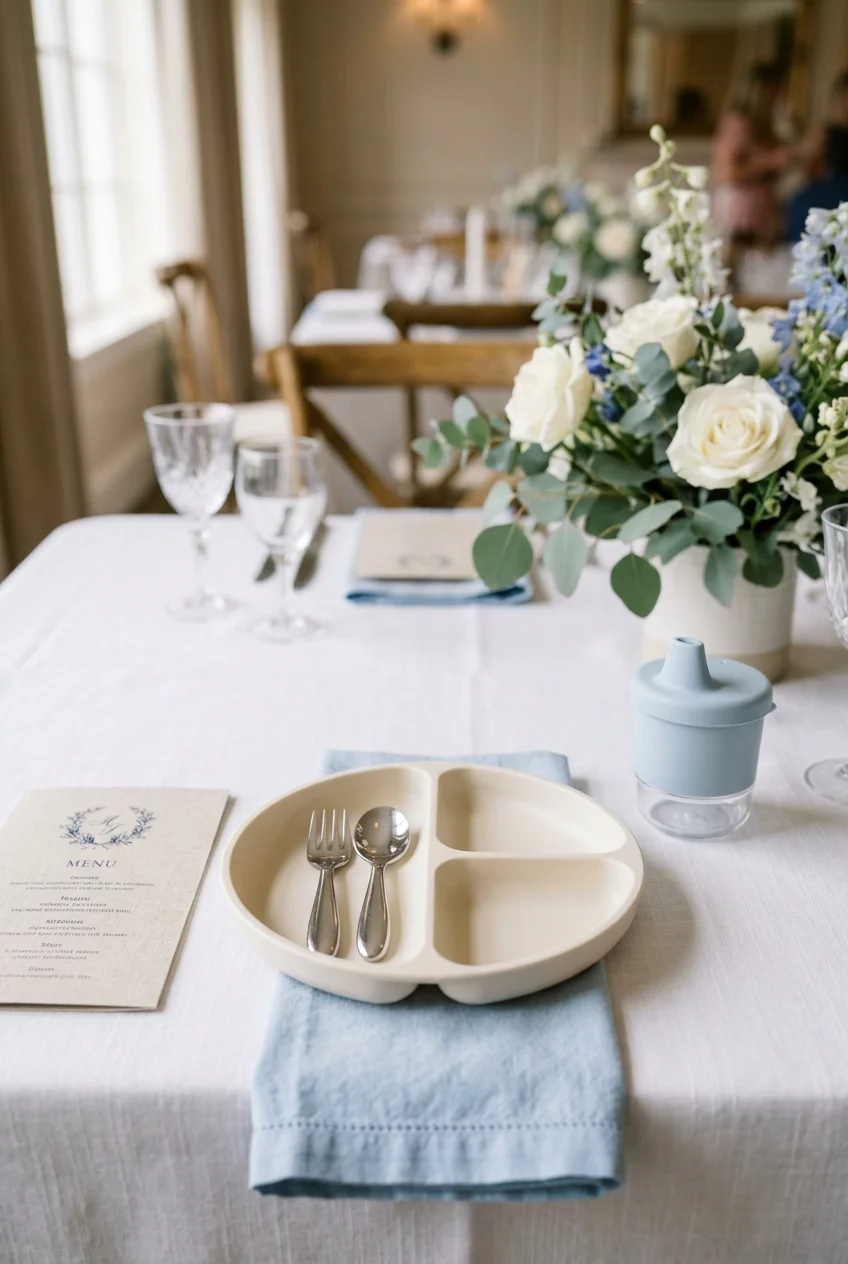
Divided plates help keep unfamiliar foods and sauces separate, while a low cup with a broad base is harder to tip than a tall tumbler. Use tableware intended for children and confirm that each child can manage the lid or utensils provided.
Ask parents and the caterer about food needs in writing. Tableware can reduce mess, but it does not make a meal suitable for a child or remove the need for supervision.
17. Low Handled Caddies for Shared Supplies
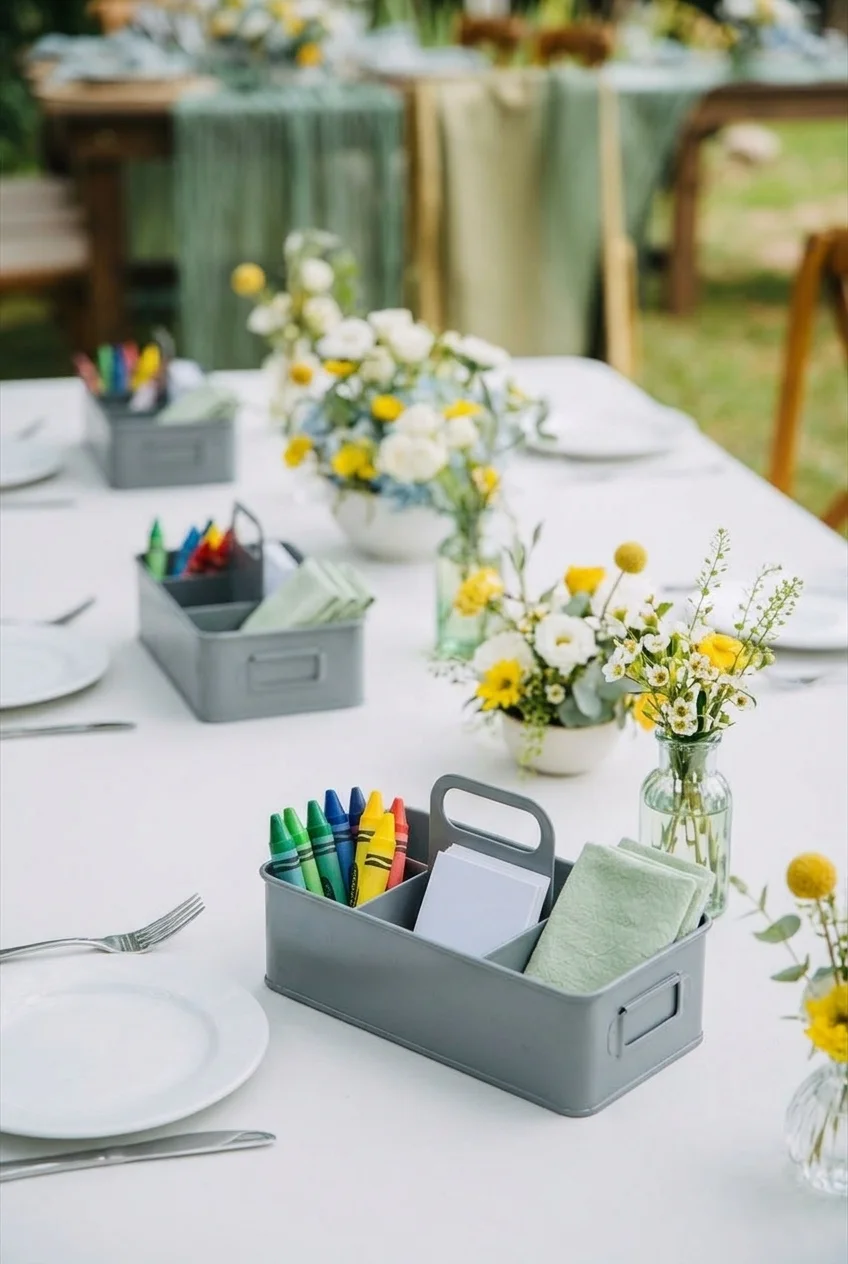
Two or three low caddies prevent children from reaching across the whole table for one central cup. Use separate compartments for crayons, blank cards, and spare napkins, and leave empty space so nothing spills when one item is pulled out.
Count shared tools at cleanup and choose supplies for the youngest child using the caddy. A handle helps an adult remove the whole activity before food service.
18. A Flat Paper-Flower Runner Instead of Loose Scatter
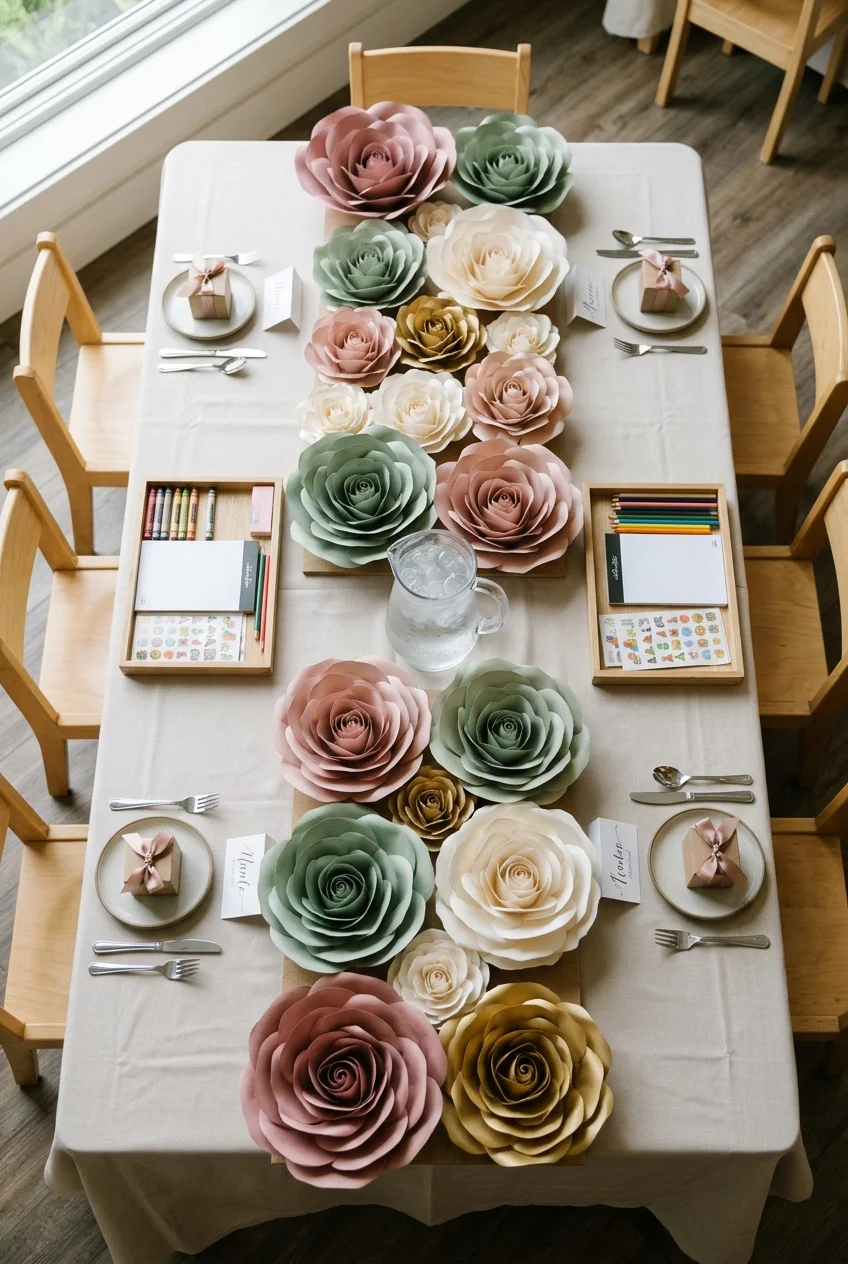
Large flat paper flowers can bring the wedding palette to the children’s table without fragile vases or handfuls of confetti. Overlap a few shapes down the middle and secure them from underneath so the runner lifts away in one piece.
Leave breaks for water, activity trays, and serving bowls. The table needs more usable surface than decoration.
19. Crayon Cups as the Functional Centerpiece
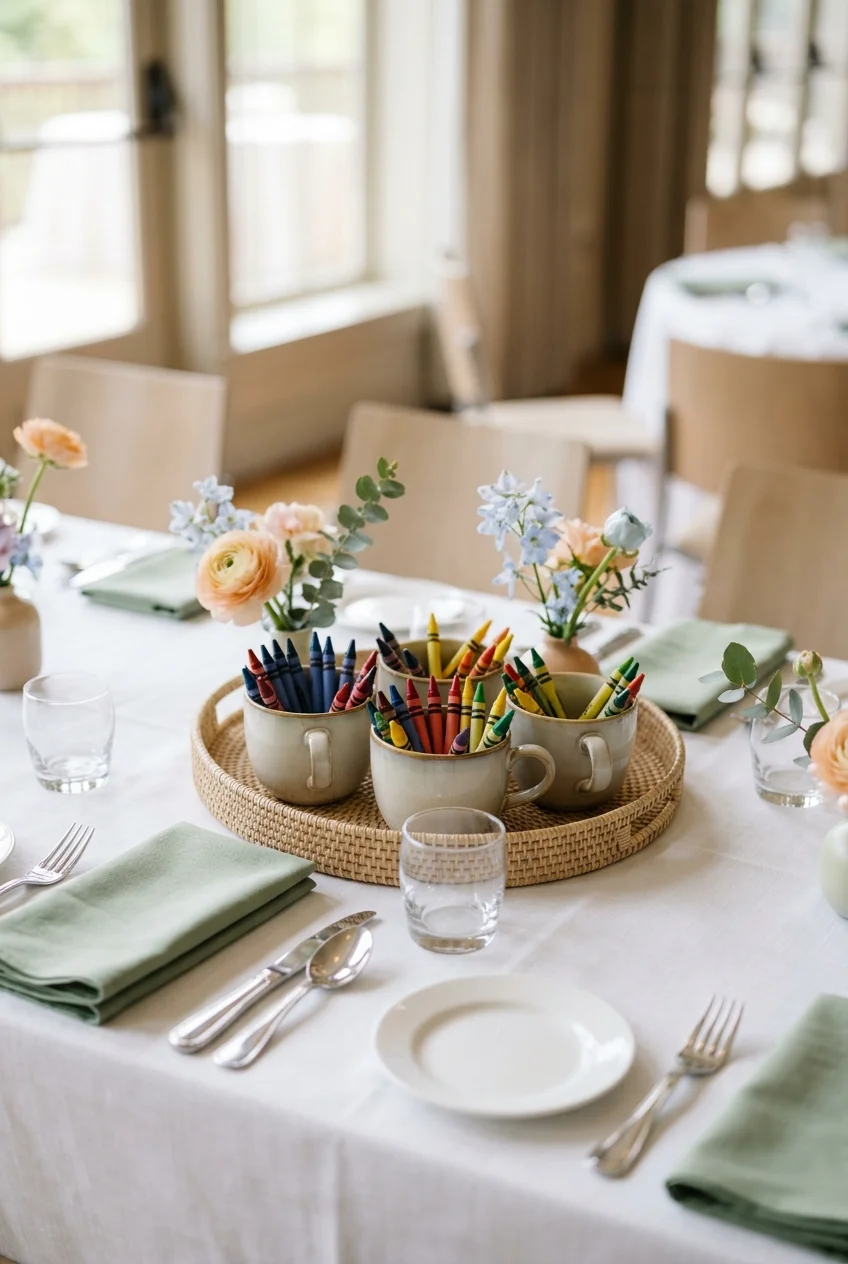
Several short crayon cups on one shallow tray add color and support the table’s main activity. Distribute the colors across the cups so children do not pass one container back and forth during dinner.
Use washable crayons appropriate for the ages present and keep the tray low enough for clear sightlines. A functional centerpiece is useful only if plates still fit comfortably around it.
20. A Freestanding Kids’ Table Sign With Parent-Friendly Wording
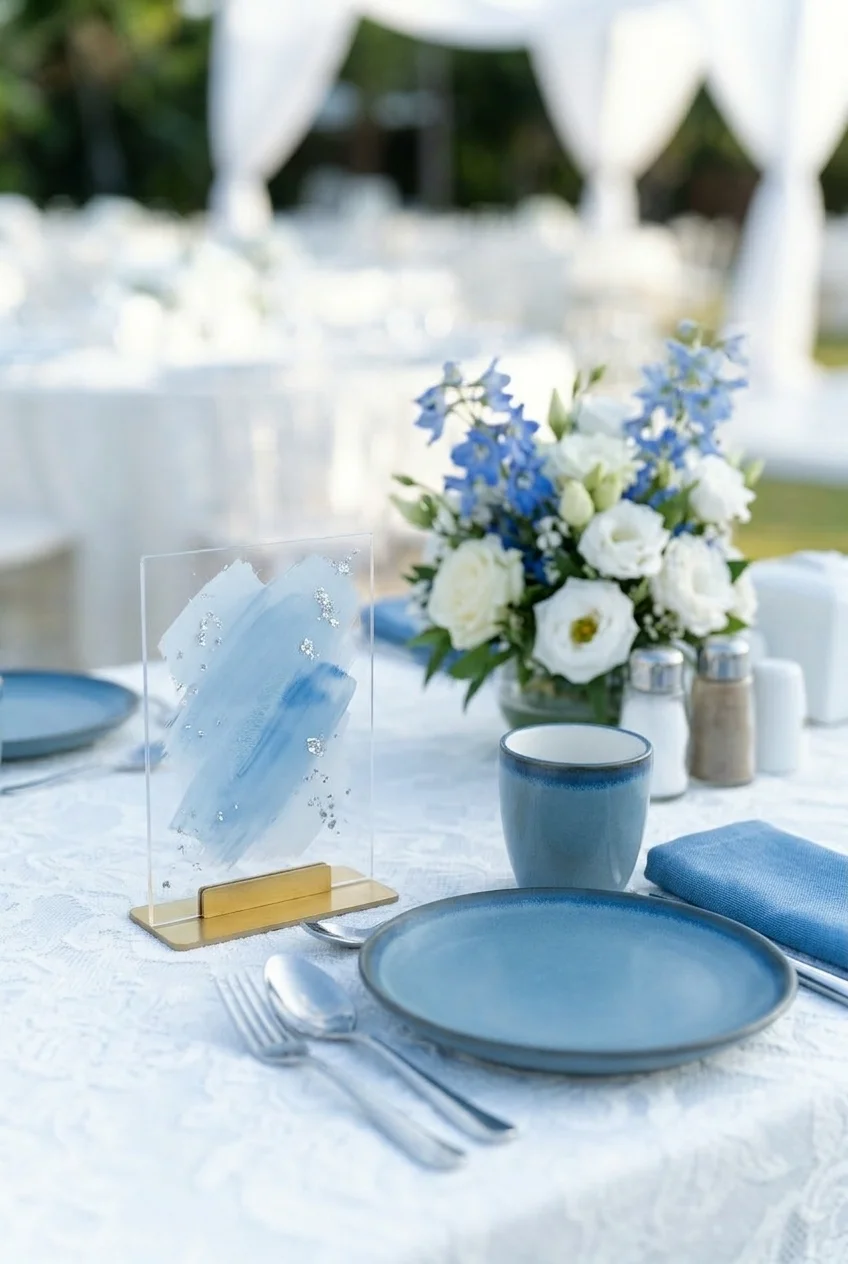
A small tabletop sign can identify the area without declaring that adults are forbidden. Friendly wording such as a welcome and a simple age or activity note is more useful than a joke that discourages parents from checking in.
Use a broad, stable base and keep the sign below face level. Detailed instructions belong on a separate adult handoff sheet, not in tiny print children cannot read.
Quiet Activities That Fit at Each Place Setting
21. Wedding Coloring Pages With Large Open Shapes
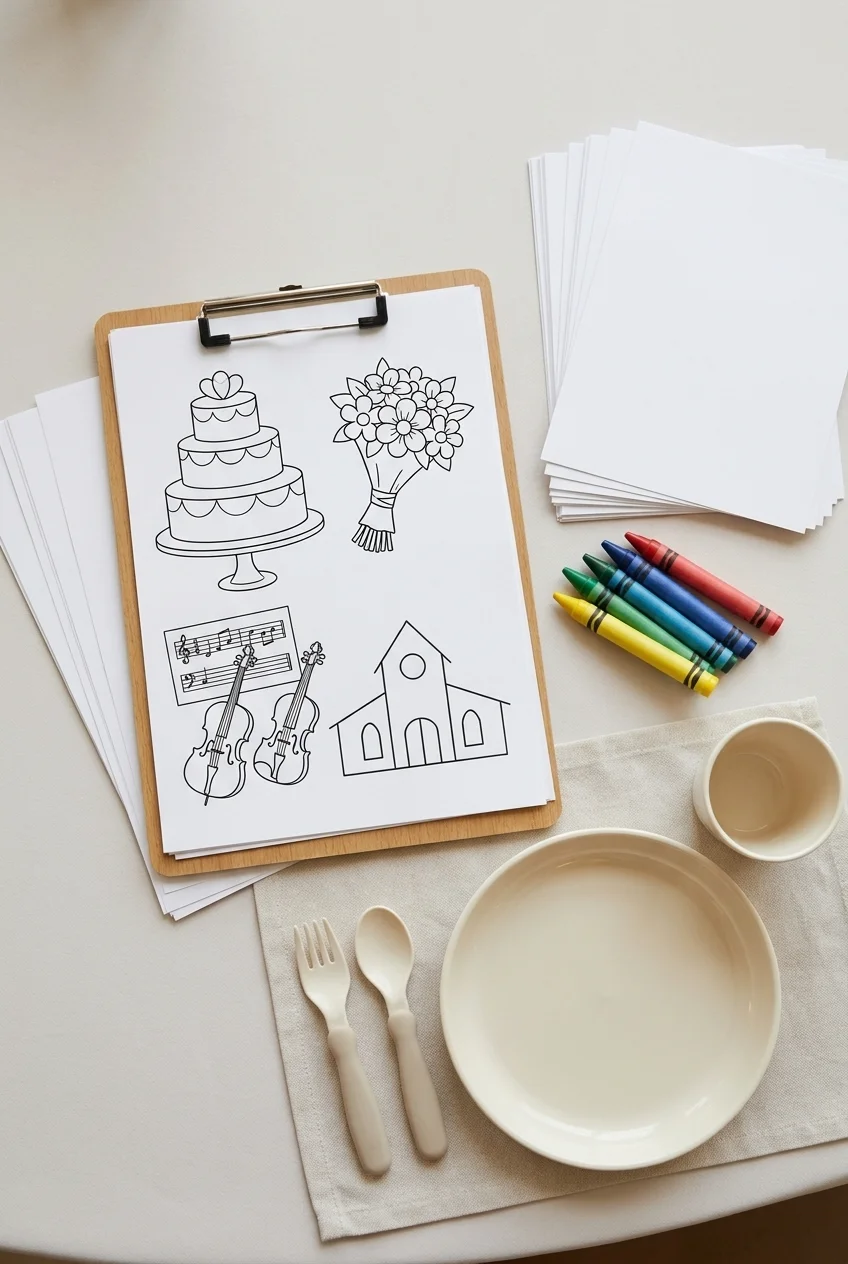
Choose line drawings with broad spaces—cake tiers, flowers, rings, music notes, or a venue outline—rather than intricate adult coloring designs. A clipboard or firm paper folder keeps each page usable even when the tablecloth is soft.
Use generic wedding imagery that reflects the celebration without asking children to copy the couple’s faces. Provide blank paper for anyone who would rather draw something else.
22. A Maze and Seek-and-Find Activity Placemat
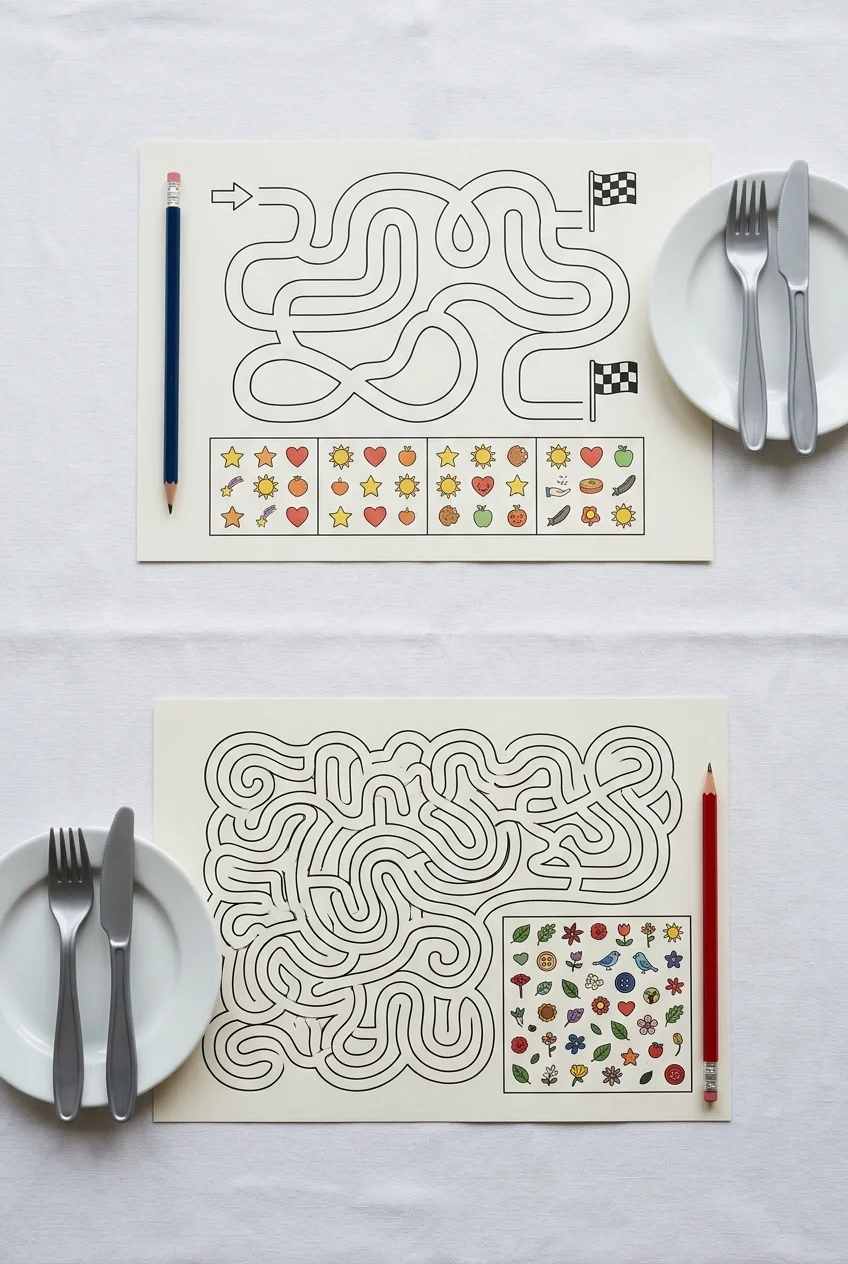
One large maze and one short picture search are enough for a disposable placemat. Crowding the page with tiny puzzles makes it harder to use and less effective at protecting the table from crumbs.
Print an easier and a harder version, then mark the level on the back. Children can switch quietly without having their age or reading ability announced to the table.
23. Reusable Sticker Scenes That Stay on One Mat
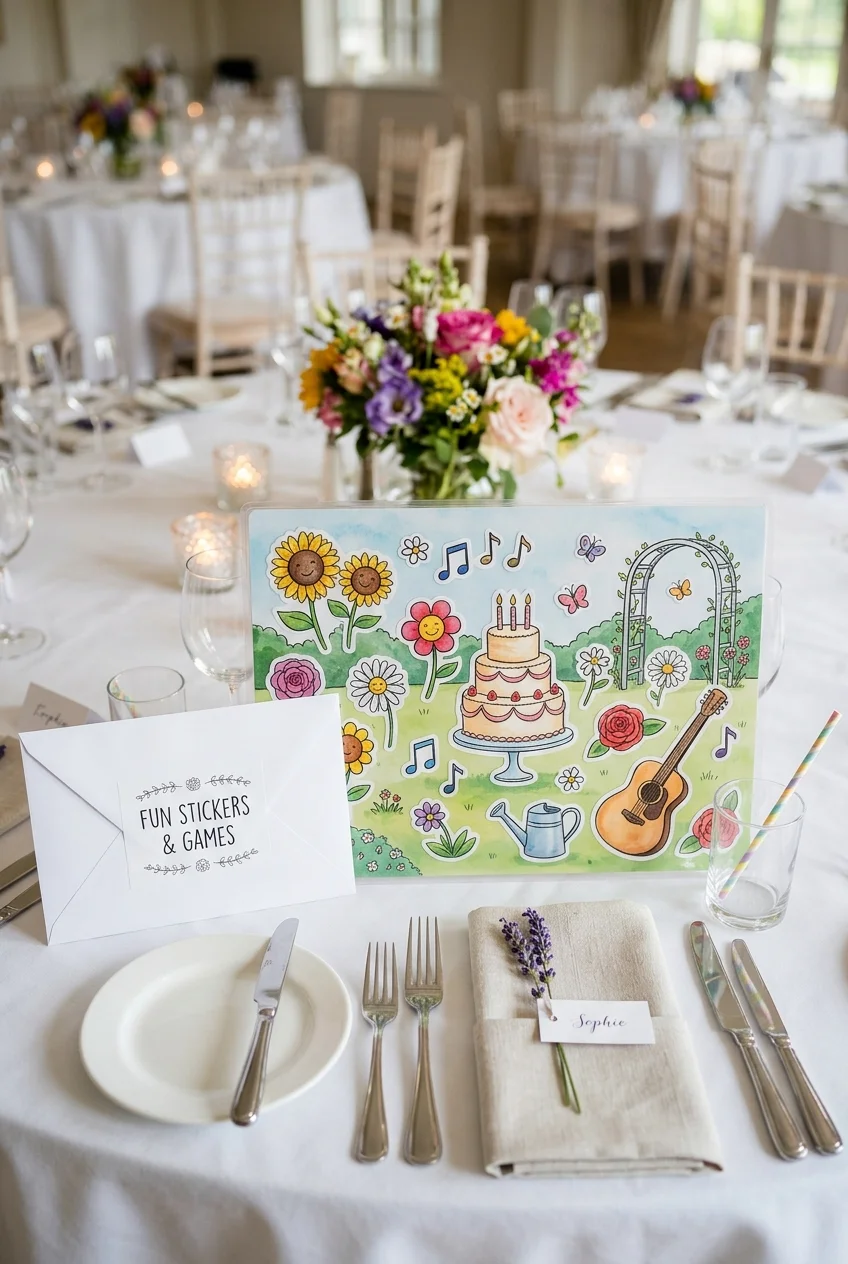
A reusable scene board and large repositionable pieces offer quiet play without glue or paper scraps. Give each seat its own set or divide the table into pairs so children are not reaching across plates for one shared sheet.
Follow the product’s age guidance and remove torn or damaged pieces. Keep sticker play away from very young children when the components are not suitable for them.
24. A Large-Piece Puzzle on a Slide-Away Tray
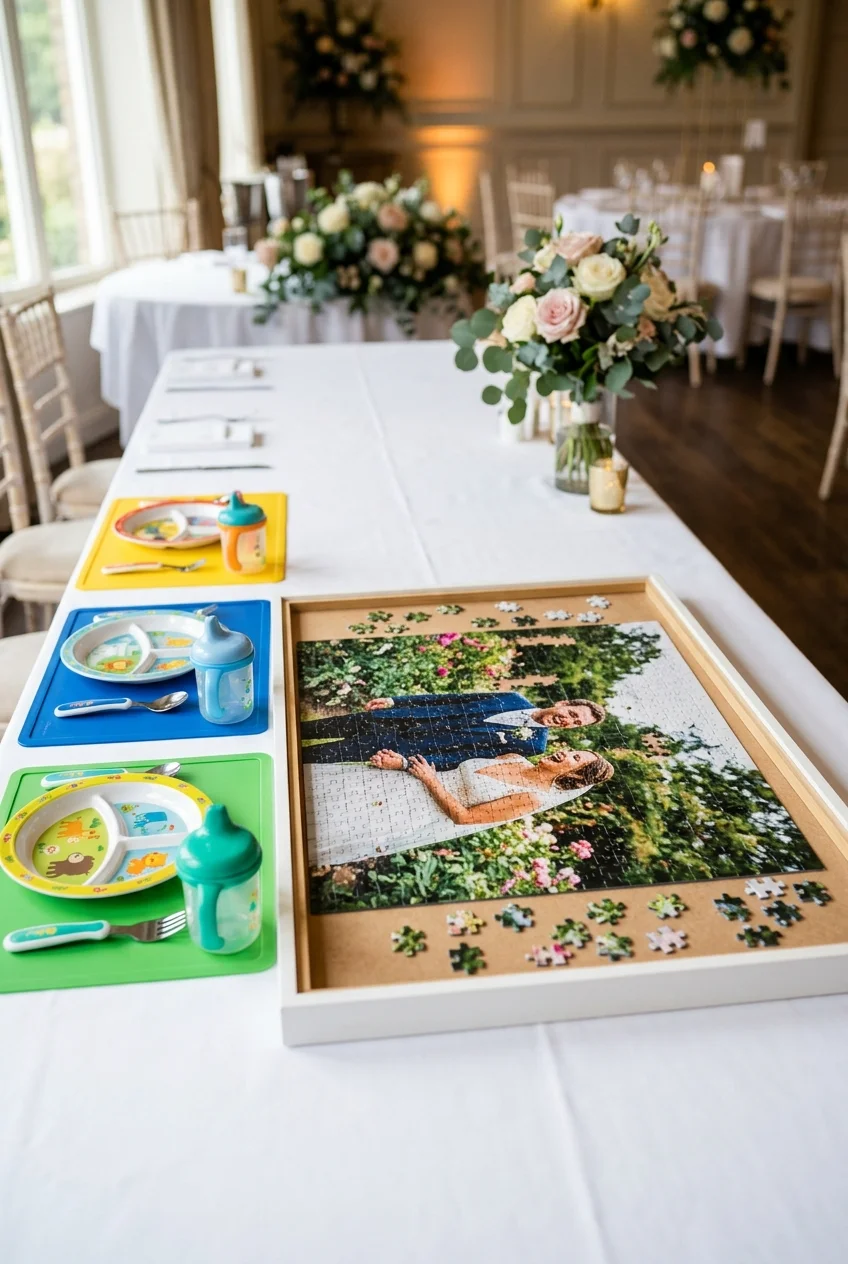
Start the puzzle border on a rigid tray and set it between two or three older children. They can add pieces while waiting, then an adult can lift the entire puzzle away when dinner is served.
Choose a piece count the group can make visible progress on. A nearly impossible puzzle looks appealing in a flat lay but creates one more unfinished task at the end of the night.
25. Bead-Free Lacing Cards With Short, Thick Cords
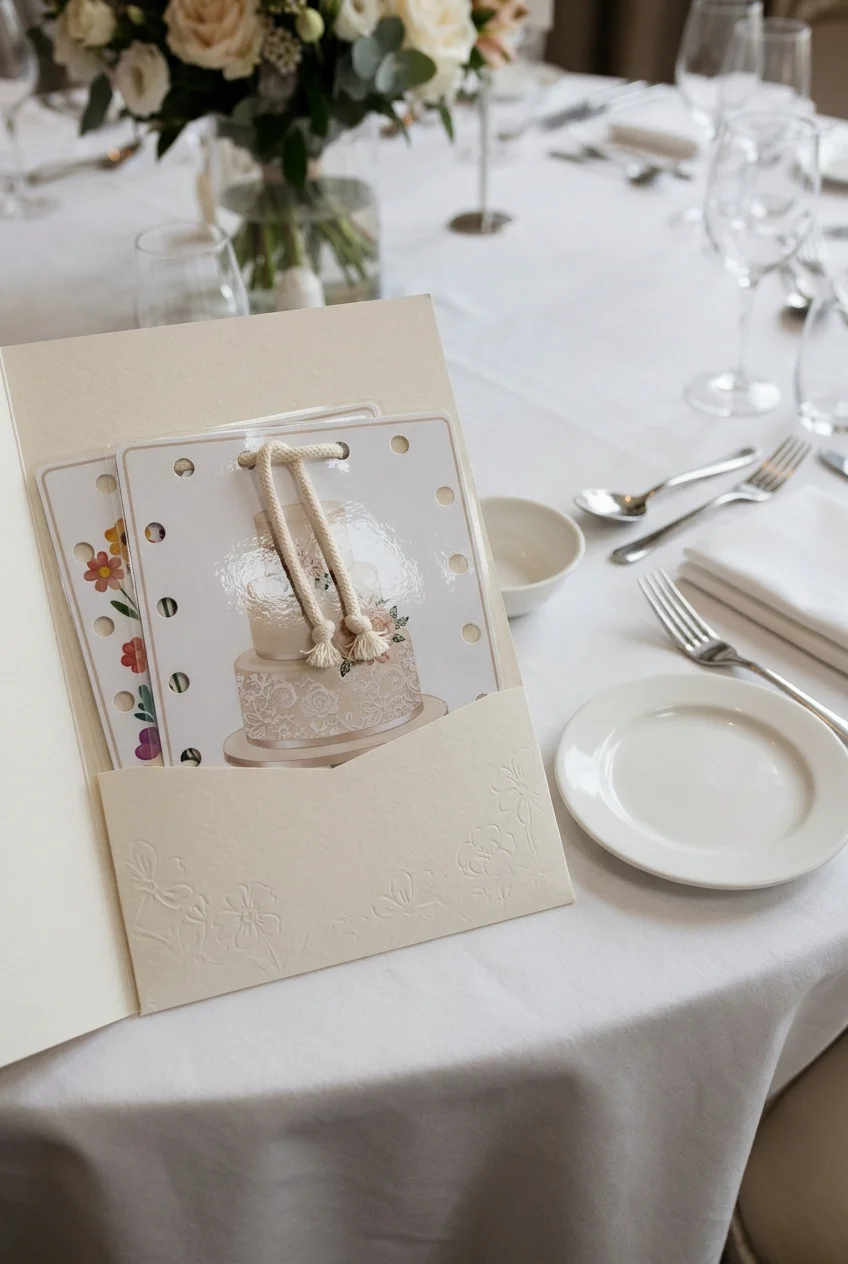
Laminated heart, flower, bow-tie, or cake shapes can become reusable lacing cards when the holes are broad and the cords are short and thick. The activity packs flat and creates no beads that can roll under the table.
Select the card and cord design for the children’s ages and supervise younger users. Store each cord with its card so a tangled pile does not replace the activity.
26. A Felt Wedding Scene With Oversized Pieces
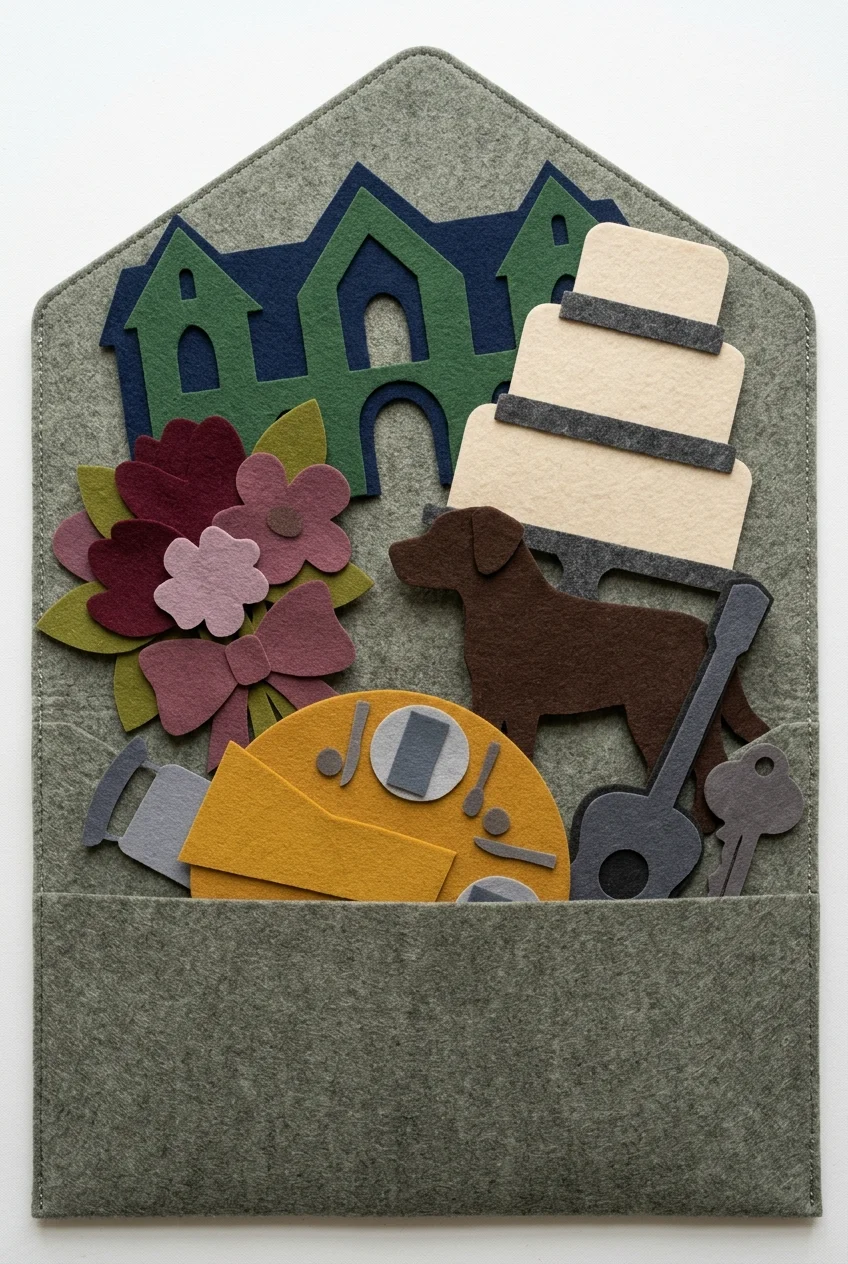
A felt board can hold a venue, cake, flowers, pets, tables, and musical instruments that children rearrange into their own celebration. Large flat pieces stay quiet and need no adhesive.
Use generic characters without fixed gender pairings so the scene fits the actual wedding and leaves room for imagination. Inspect every piece before packing the set and skip small embellishments.
27. Magnetic Shape Boards for Older Children
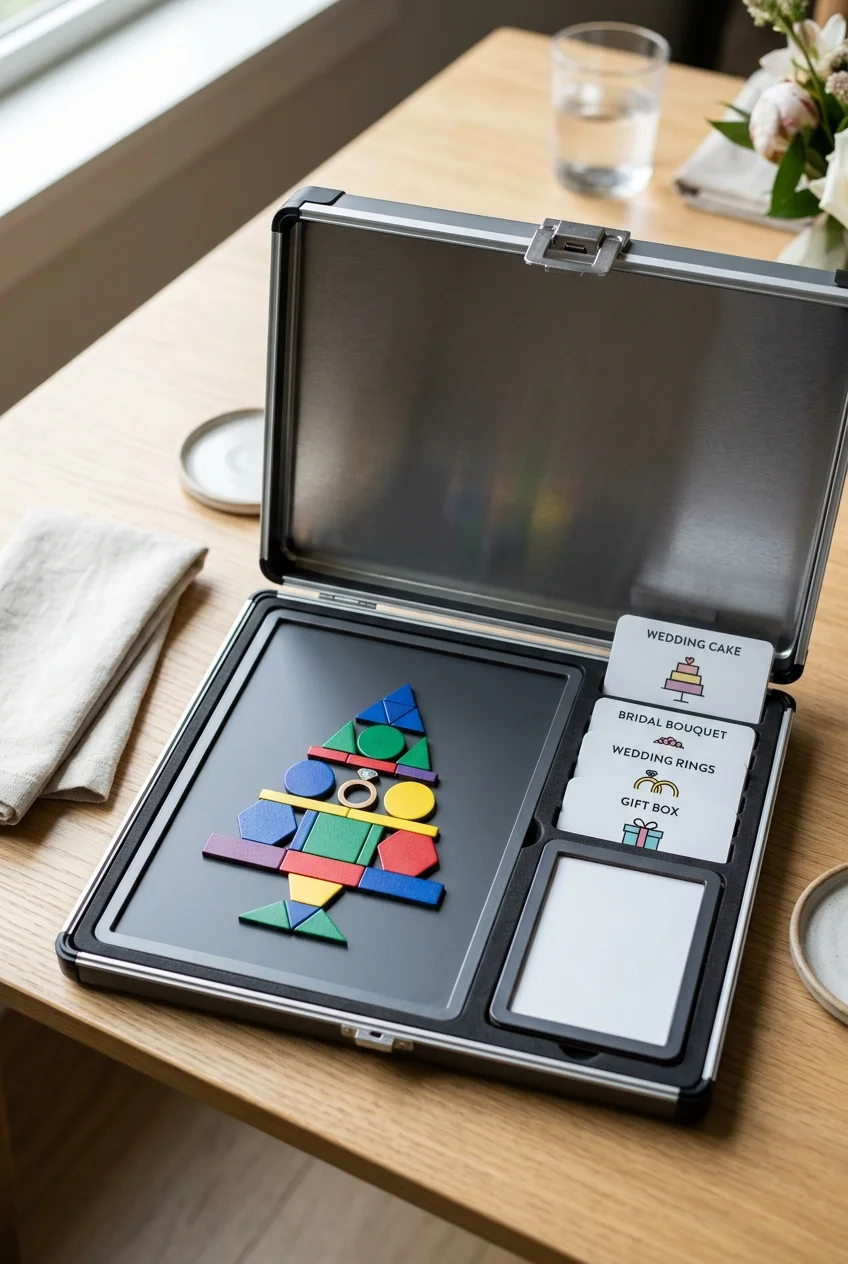
A compact magnetic board keeps geometric shapes more contained than loose tangrams. Include a few picture prompts—an arch, cake, bouquet, or dance floor—then leave one blank frame for an original design.
Reserve magnets for children whose parents consider them age-appropriate, and check the set for damaged or exposed pieces. Younger children need a different activity, not the same board with closer supervision.
28. Water-Reveal Painting Books for a Lower-Mess Option
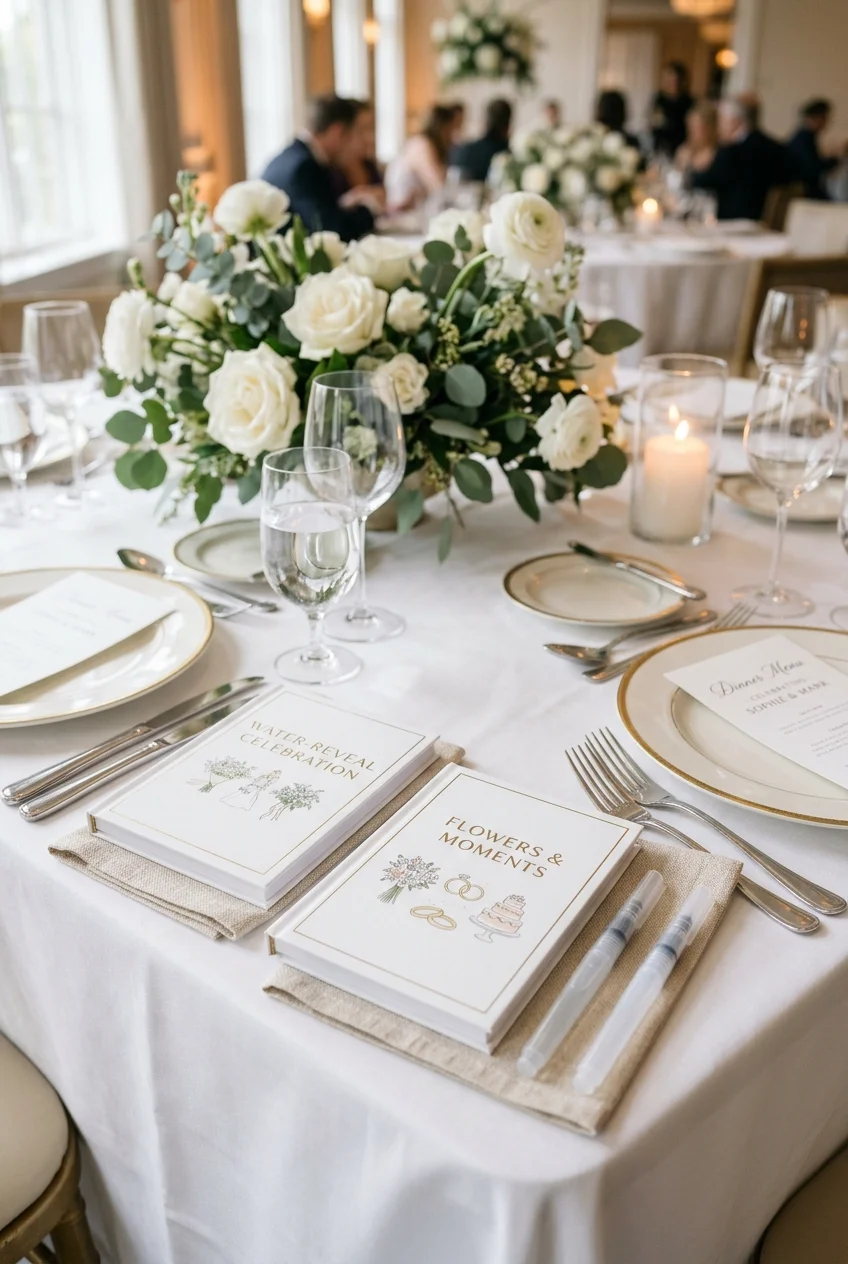
A water-reveal book uses a refillable brush and pages designed for water, avoiding open paint pots at the dinner table. Put a small absorbent mat under each book and fill brushes only partway so leaks are easier to contain.
Keep the refill water at an adult station. The activity still needs the manufacturer’s age guidance and a test run; some books remain damp longer than the meal gap allows.
29. Blank Comic Panels for Telling the Wedding-Day Story
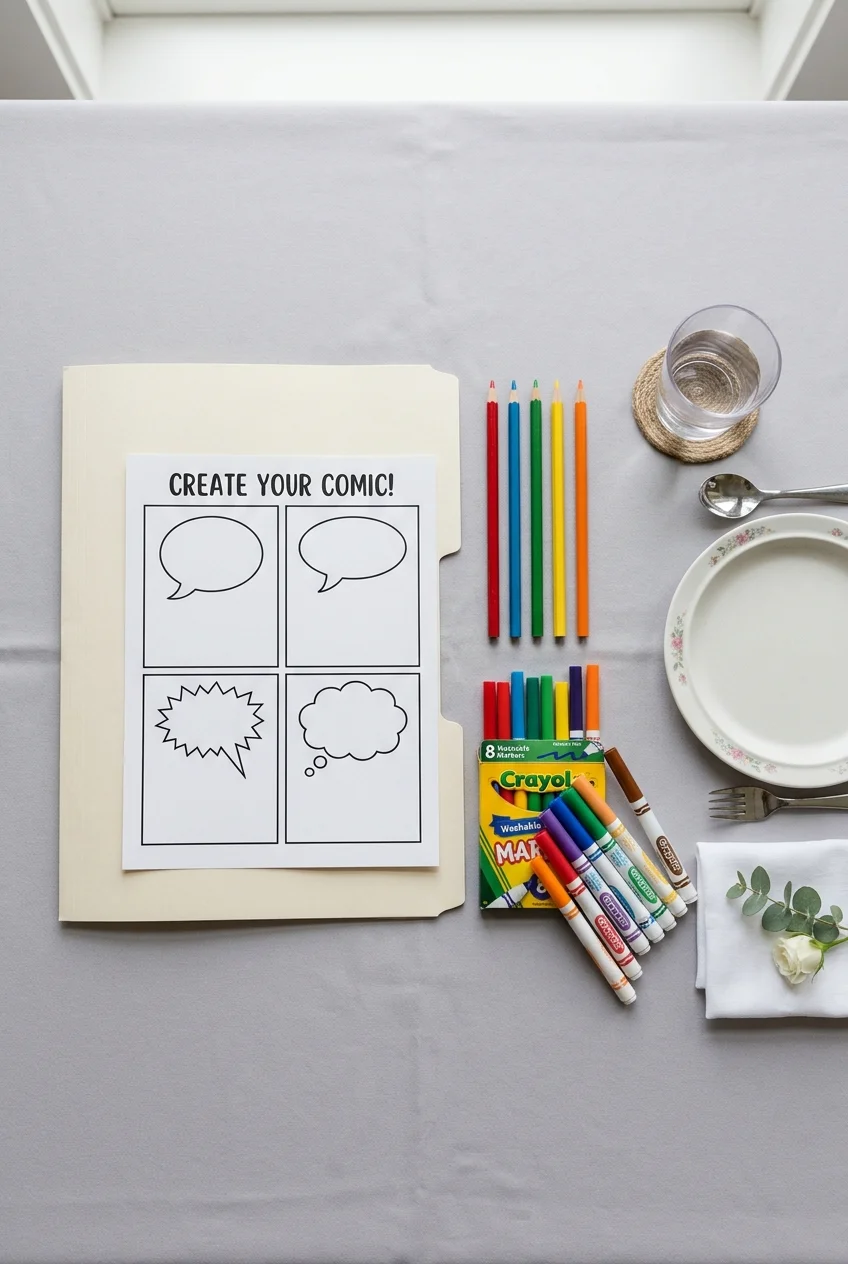
A four-panel comic sheet gives older children a structure without prescribing the ending. Prompts can suggest arrival, ceremony, dinner, and the funniest imagined dance move, with speech bubbles left entirely blank.
Keep the activity playful rather than asking children to reproduce private family details. A folder beneath the sheet prevents marker impressions from transferring to the linen.
30. Draw-a-Postcard for the Couple
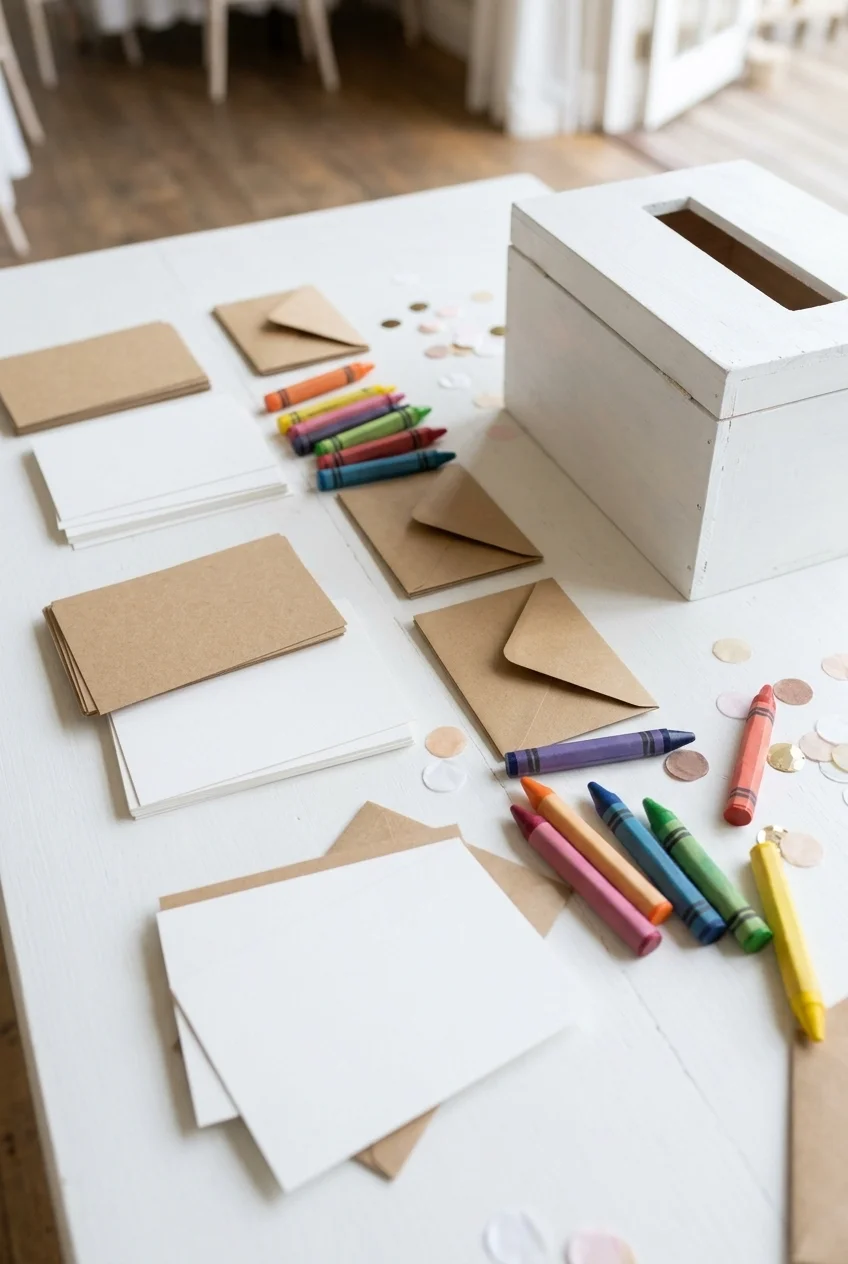
A sturdy blank postcard invites a child to draw one scene or write one short note for the couple. The finished cards can be collected in a box and read later rather than competing with a formal guestbook.
An adult can add names or dates afterward, so no private information needs to sit on the table. Offer envelopes for children who want their message kept private.
Shared Games and Creative Projects for the Whole Kids’ Table
31. Picture Bingo With Broad Cardboard Markers
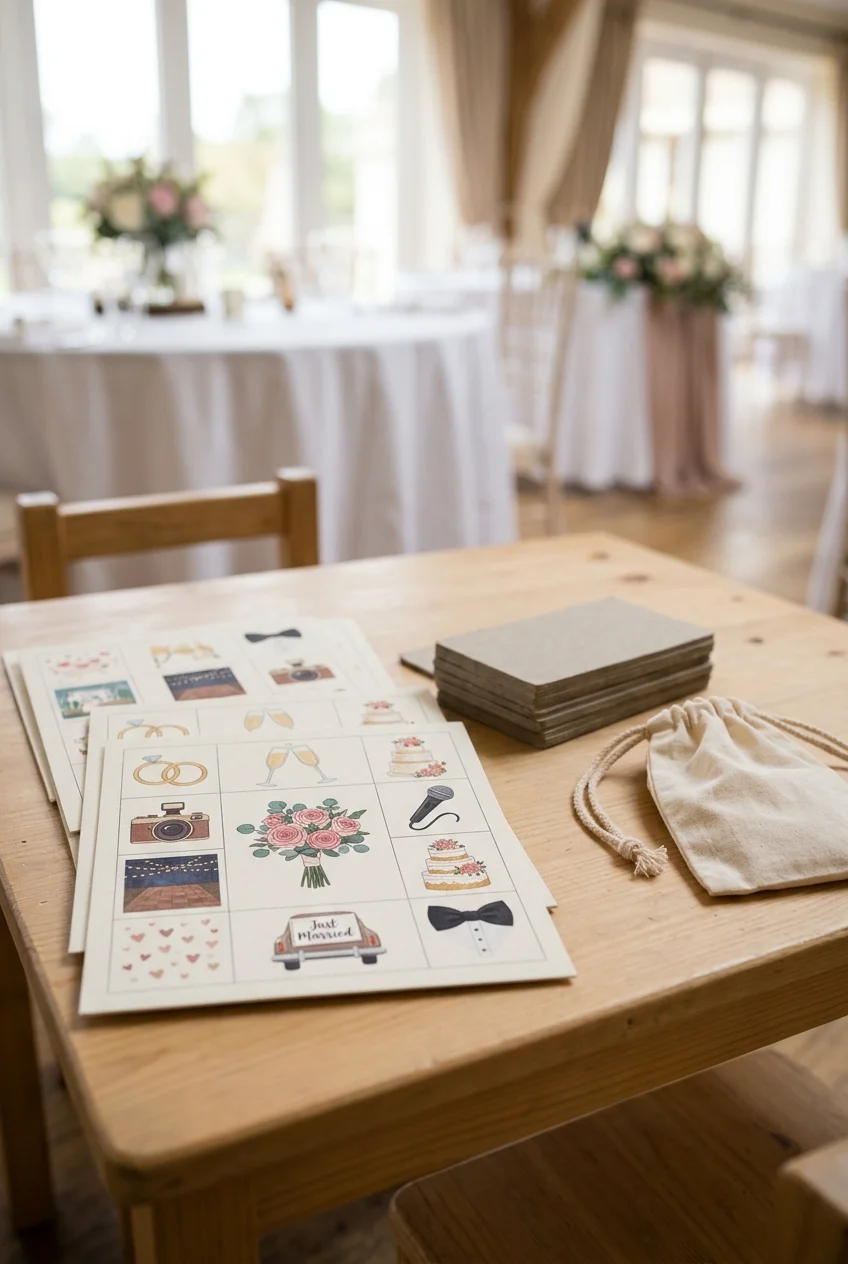
Picture squares let readers and nonreaders share one short bingo round. Use wedding objects children can genuinely spot—flowers, a cake, a microphone, a camera, a bow tie—and large flat markers that stay visible on the card.
Play one row rather than waiting for a full card. If speeches begin, the game can stop without anyone feeling that an hour of work was lost.
32. An I-Spy Card for Details Children Can Find From Their Seats
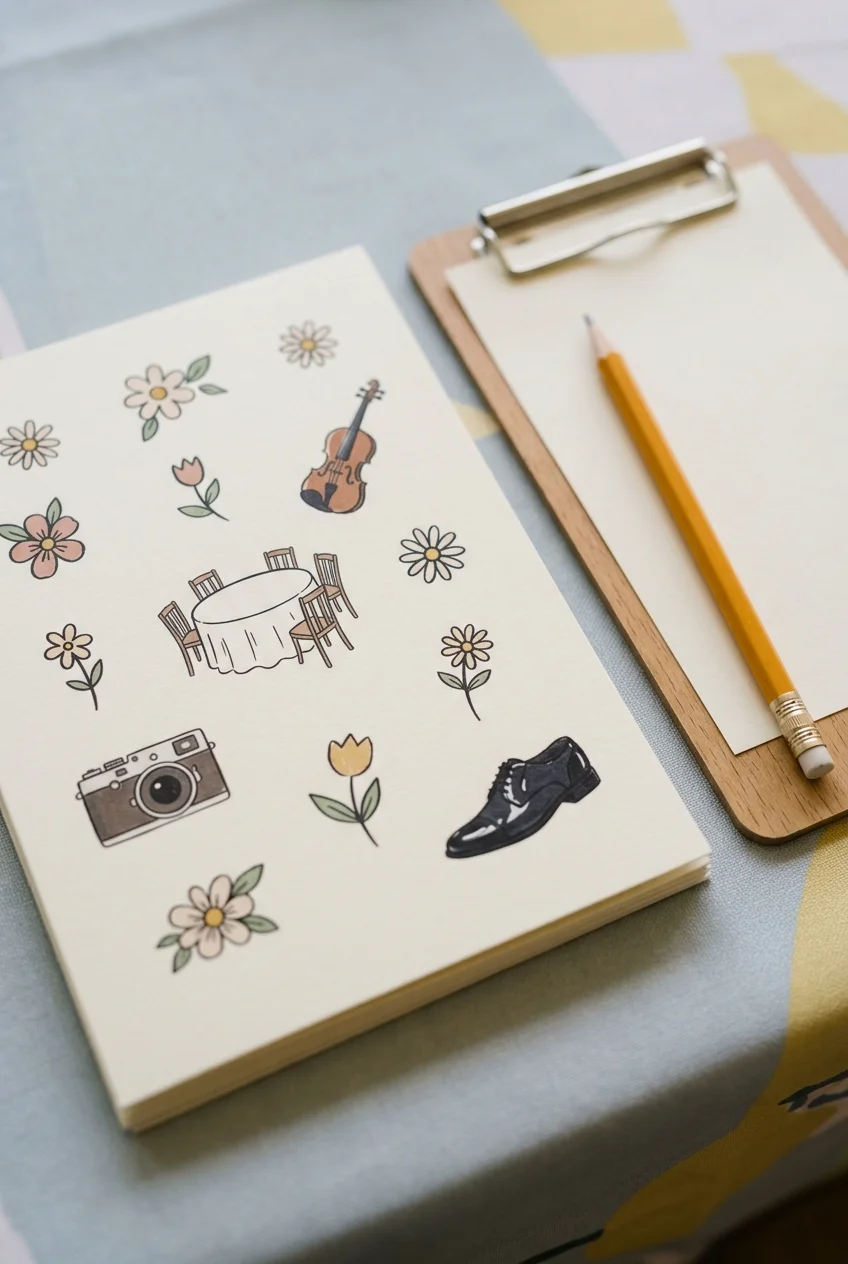
An I-spy list should focus on safe, visible details rather than sending children through service areas. A centerpiece color, a musical instrument, a round table, and a sparkling shoe can all be spotted without interrupting the photographer.
Use illustrations beside each prompt and make photography optional. A child can check boxes by observation alone, which keeps the game accessible to anyone without a phone or camera.
33. Roll-a-Picture With One Large Foam Die
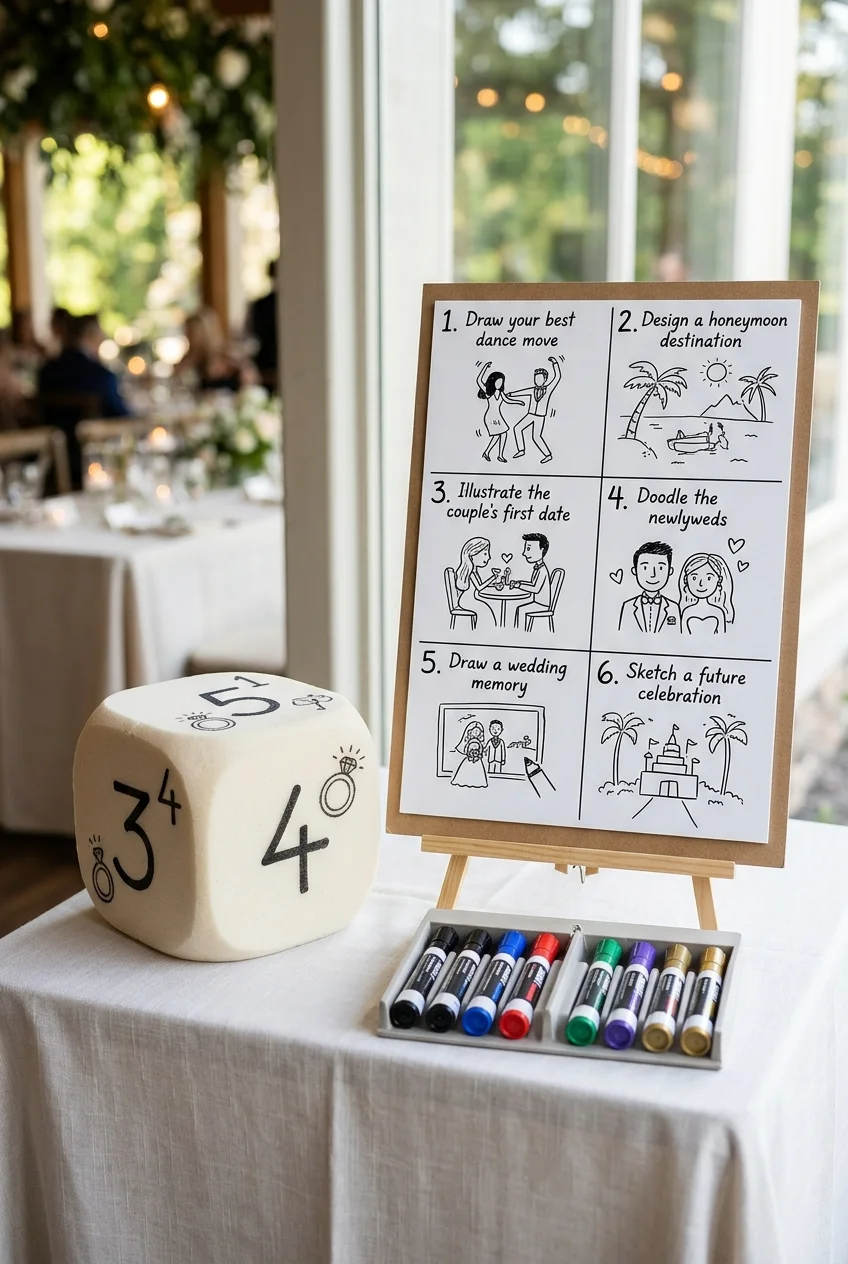
Each number on a large foam die can add one element to a shared drawing: venue, cake, flowers, music, pets, or weather. Children take turns rolling and drawing, so one simple object creates a complete table game.
Use a die large enough to remain visible and collectable, not tiny dice that disappear among plates. Move the drawing board to a side table before food arrives.
34. Picture Cards for a Round-Robin Wedding Story
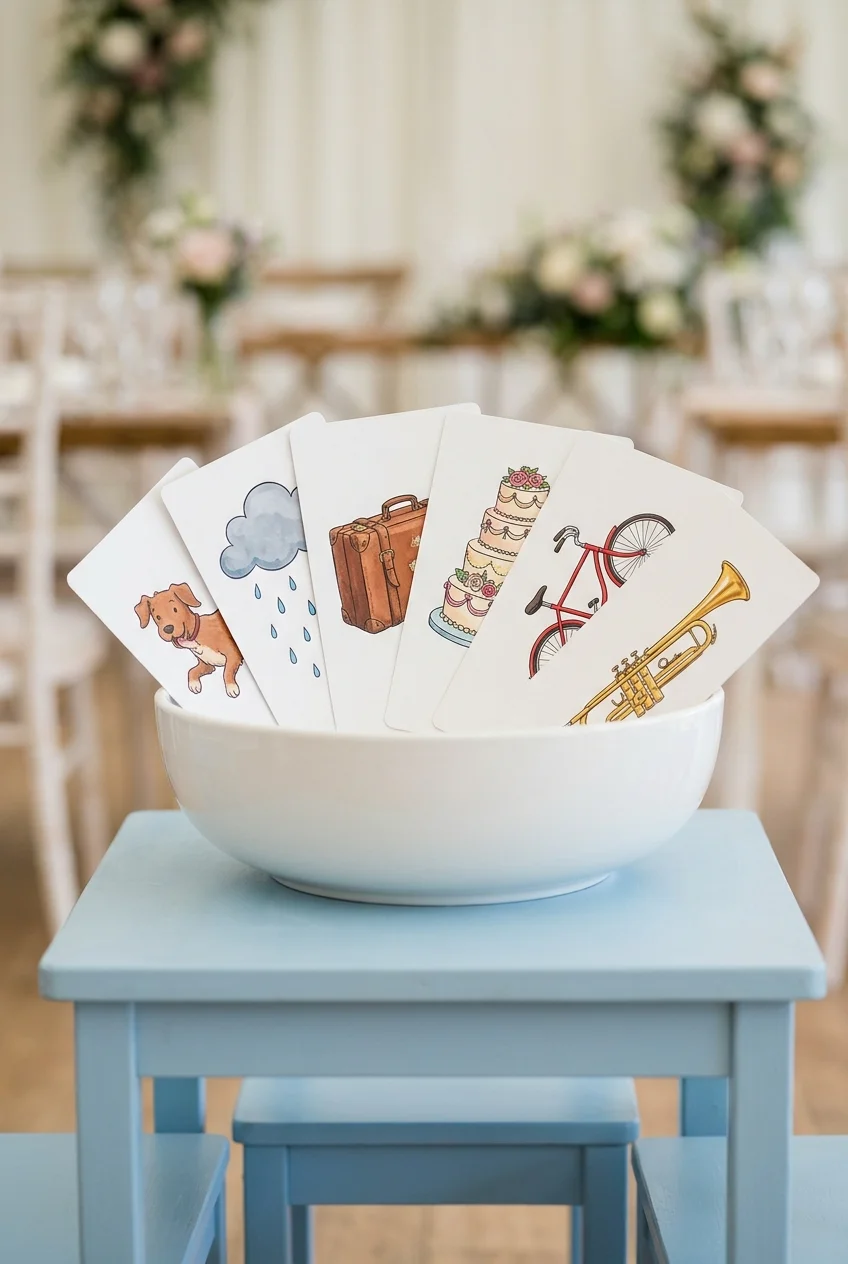
A bowl of large image cards can prompt a story one sentence at a time. A dog, rain cloud, suitcase, cake, bicycle, and trumpet give children enough variety without relying on reading skills.
Let the story become silly and stop after one trip around the table. Record it only if children and parents are comfortable; the game works perfectly well as a moment that is not saved.
35. Speech Bingo for Older Children and Tweens
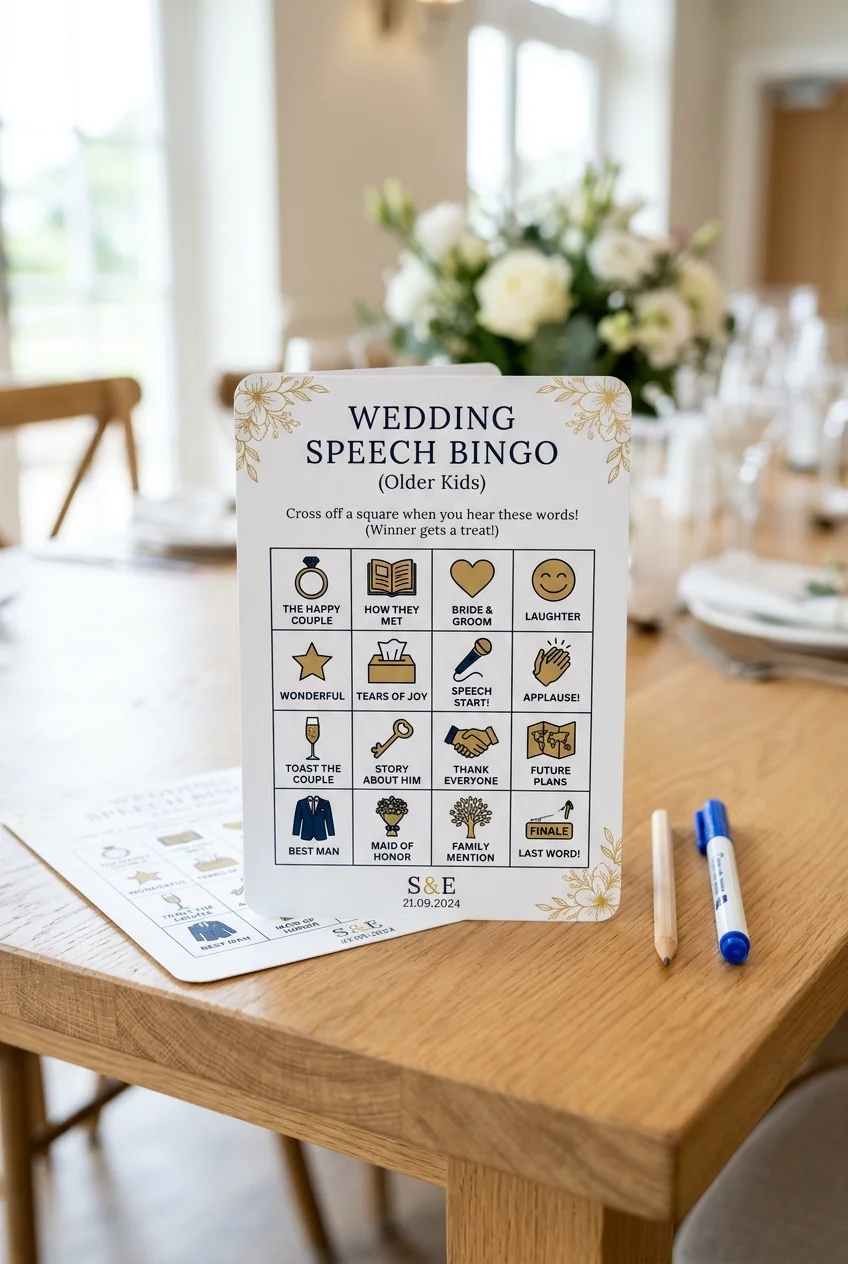
A bingo card can give older children a reason to listen during speeches without turning private jokes into a quiz. Use broad events such as a toast, a childhood story, laughter, happy tears, or applause rather than guessing which relative will say a specific phrase.
Make the card optional and quiet. It should not encourage calling out during a speech or scoring emotional moments competitively.
36. A Family Conversation Prompt Jar
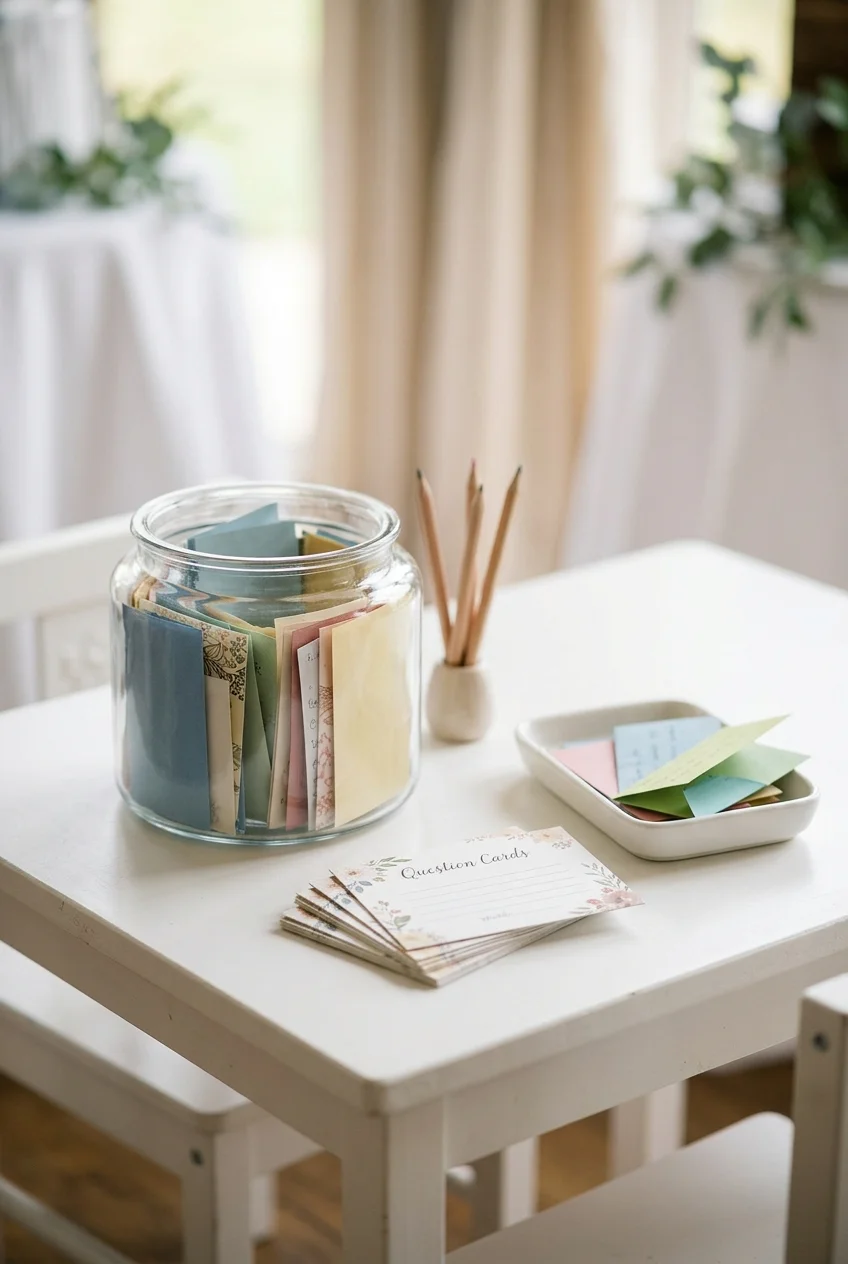
Short prompts can help cousins or family friends talk while waiting for dinner. Ask about favorite celebrations, pets, music, imaginary vacations, or the best thing to put on a cake rather than testing how well children know the couple.
For more low-pressure question and game formats, see these family reunion games for all ages; choose only the options that suit the reception space and the children attending.
37. A Large-Block Build Challenge on a Separate Mat
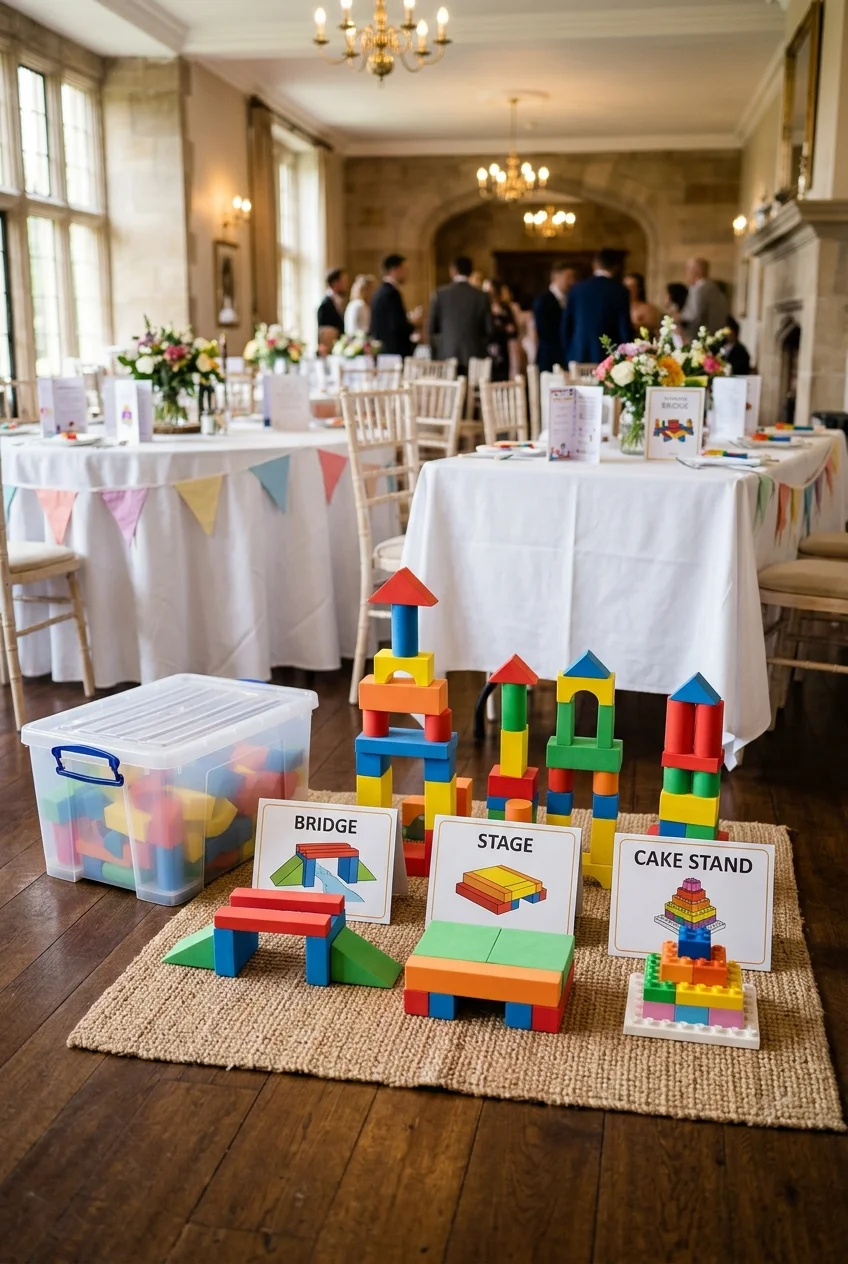
Large interlocking blocks can turn a floor mat beside the table into a cooperative building zone. Picture cards might suggest a bridge, stage, cake stand, or tiny venue, but children should be free to ignore the examples.
Use only blocks appropriate for the youngest participating child, follow the product’s age guidance, and keep pieces out of the service route. The mat defines where the build stays.
38. A Deck of Quick Picture-Matching Cards
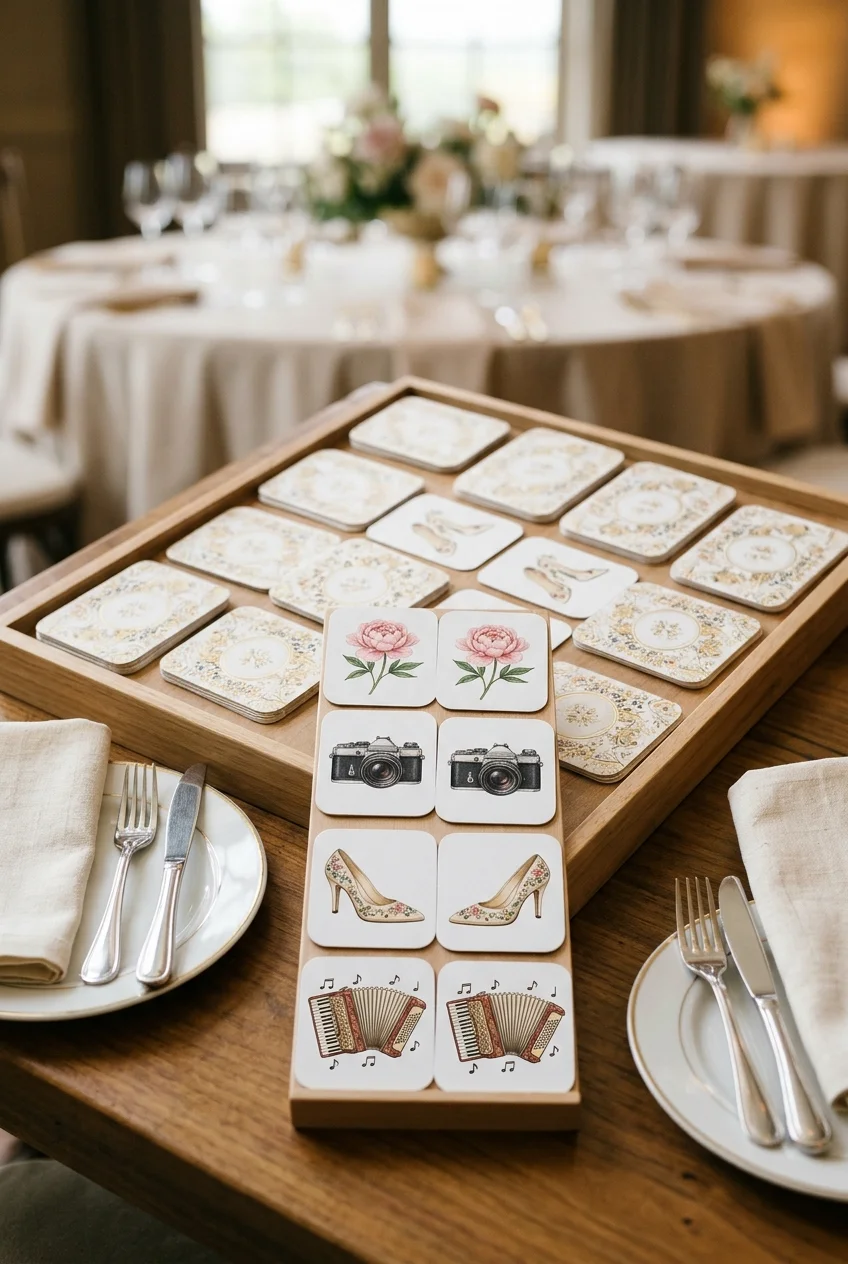
A matching game with large cards can be played by two or three children in short rounds. Use pairs of generic wedding objects and keep the deck small enough to fit on one tray without taking over the meal area.
Rounded laminated cards survive repeated use and wipe clean more easily than thin paper. Check the product or homemade set for age suitability and damaged edges before the reception.
39. A Soft Tabletop Toss Game After Plates Are Cleared
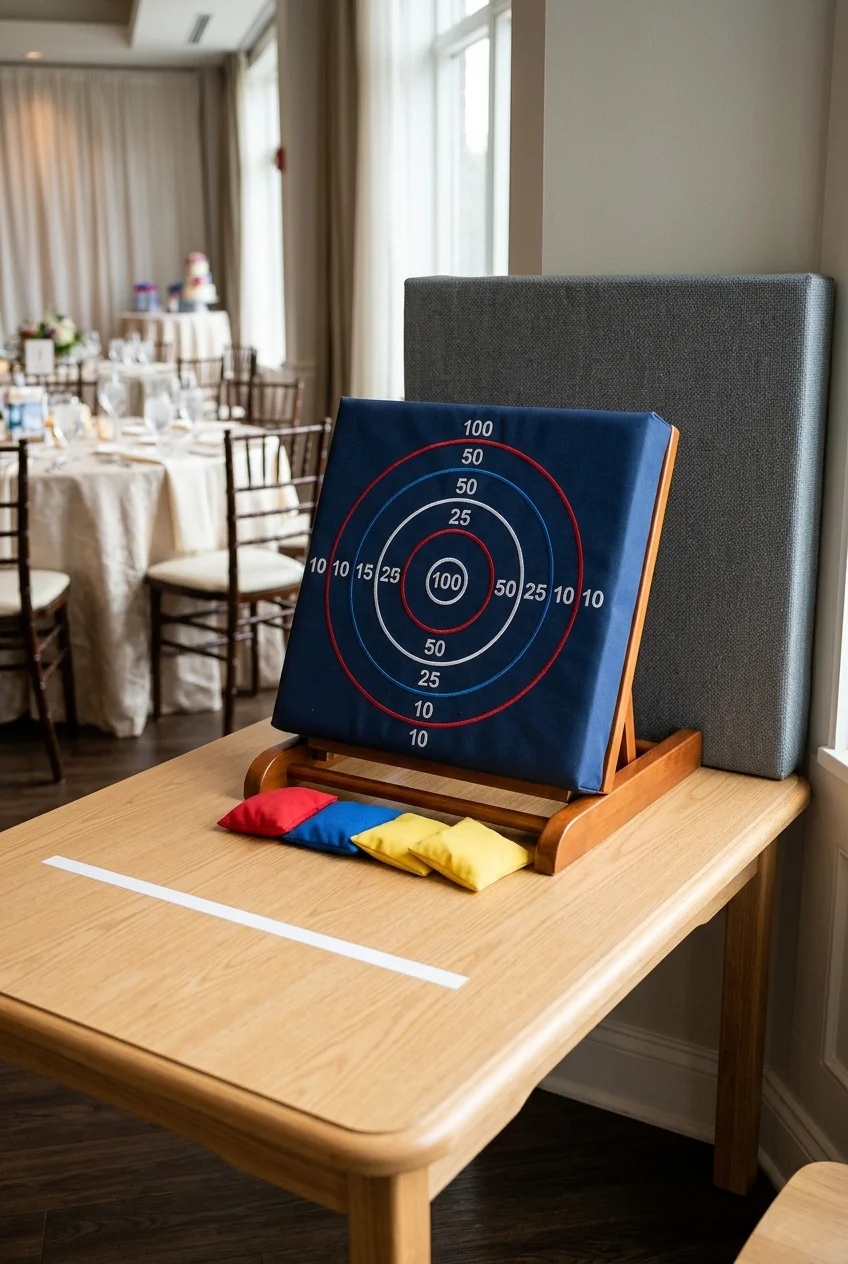
A tabletop target and soft fabric beanbags can give older children a short movement break once dinnerware is gone. Place the target at the activity table, set one clear throw line, and keep the game pointed away from glass and other guests.
This belongs after the meal, not between water cups and plates. Stop the game if the pieces start traveling beyond the defined area.
40. A Collaborative Welcome Banner on a Side Table
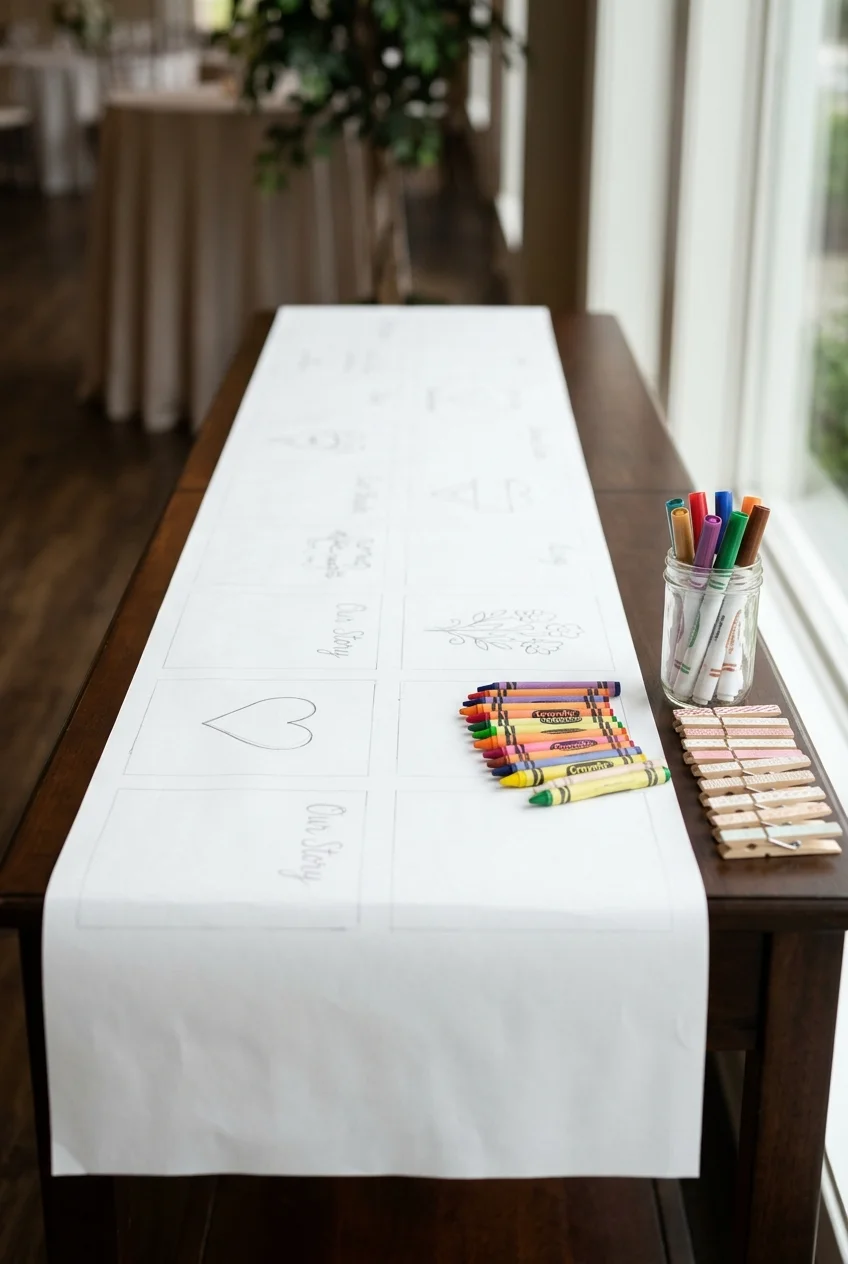
A long paper banner lets children contribute one drawing or hand-lettered shape to a piece the couple can keep. Lightly mark separate spaces so the design remains readable even when several children work at once.
Use washable tools and keep the banner flat until it is dry. An adult can hang it later; children should not be climbing chairs or handling wall fasteners during the reception.
Food, Comfort, Supervision, and Cleanup Details
41. A Child-Height Water Station With a Catch Tray
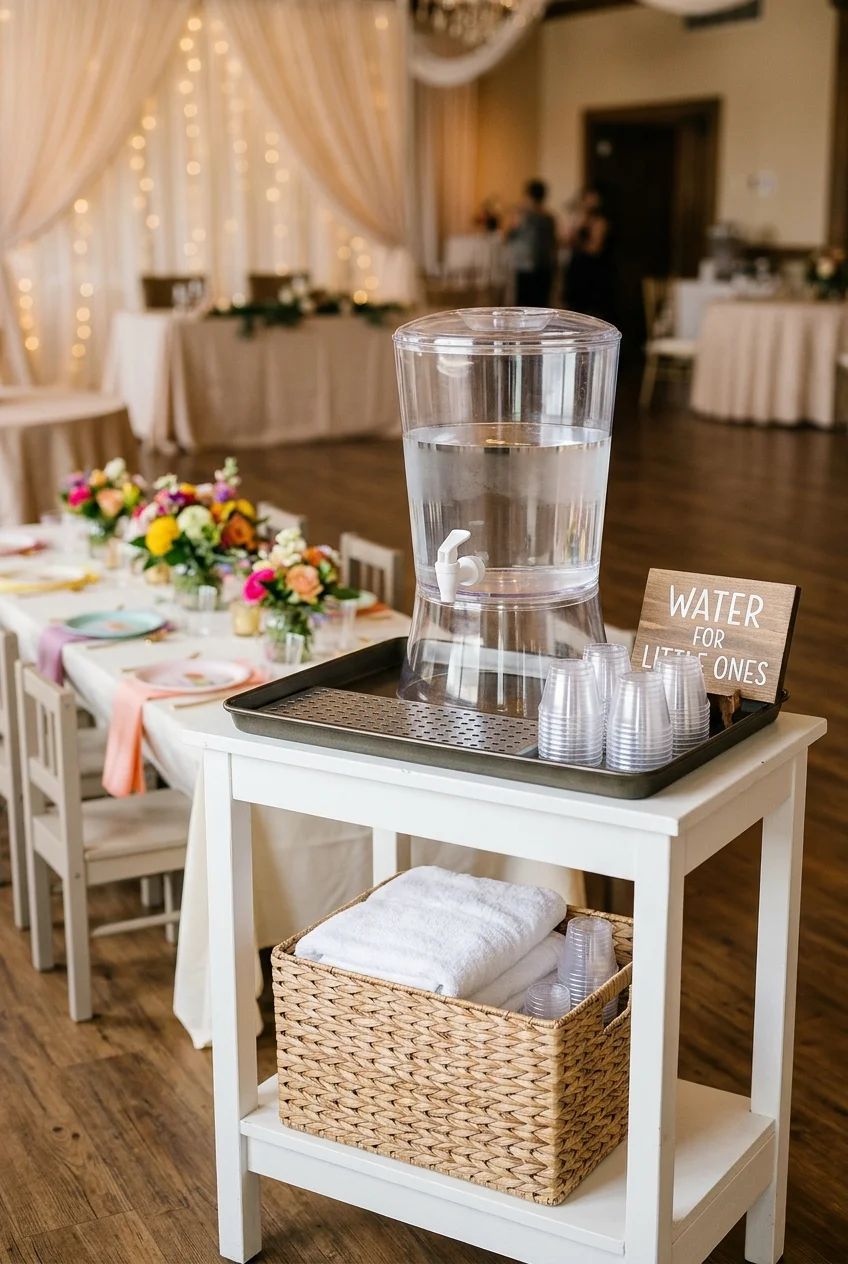
A small water station can reduce repeated trips to the bar when the dispenser is stable and the tap is easy to operate. Use short cups, an absorbent tray, and a towel in the nearby adult basket.
An adult should fill, position, and test the dispenser. Skip self-service if the stand can tip, the tap drips badly, or the children are too young to use it safely.
42. Parent-Approved Snack Cups With Ingredient Cards
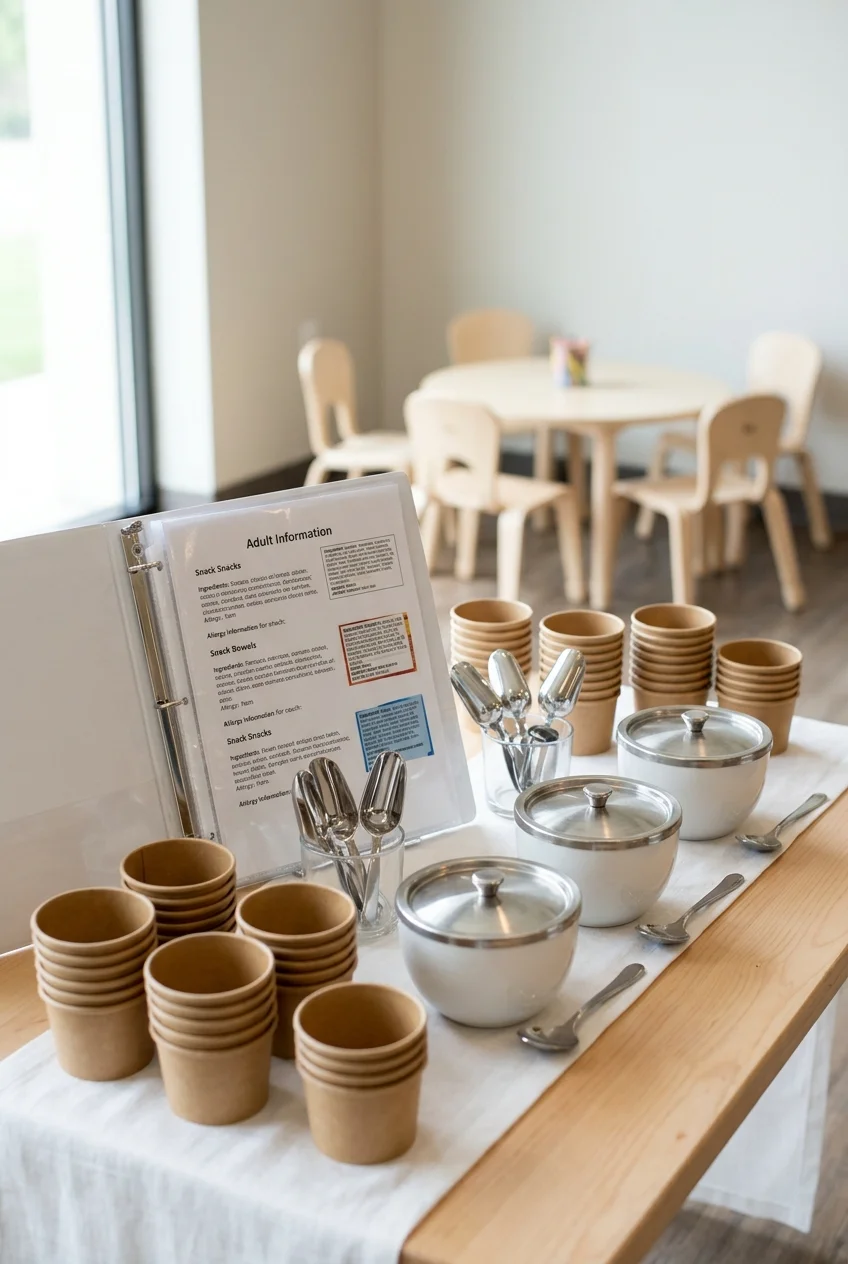
If children arrive well before dinner, an adult can assemble modest snack cups from options approved by their parents. Keep original packages or complete ingredient information available rather than relying on a handwritten guess about allergens.
Avoid common choking hazards for young children and match preparation to each child’s development. Children should sit while eating, with an adult supervising the meal area.
43. Mini Meal Trays Assembled by an Adult
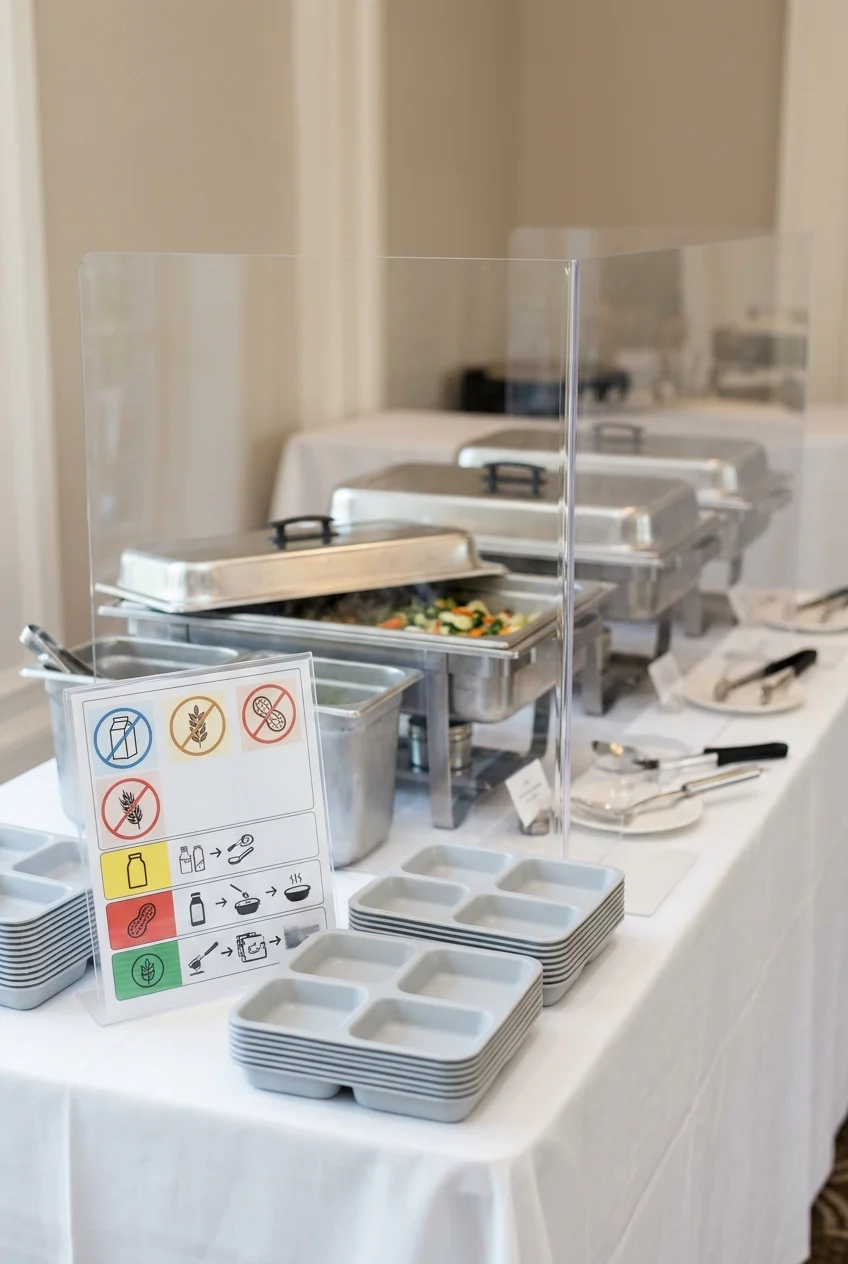
Small trays let an adult add modest portions based on what each child will eat, rather than handing a young guest an oversized buffet plate. Keep hot serving dishes and sharp tools on the adult side of the station.
Ask the caterer whether children can be served before the main course and how allergies will be identified. A colored tray system may help staff, but the caterer’s documented process should control the meal.
44. Large Dessert Choice Cards Instead of a Second Line
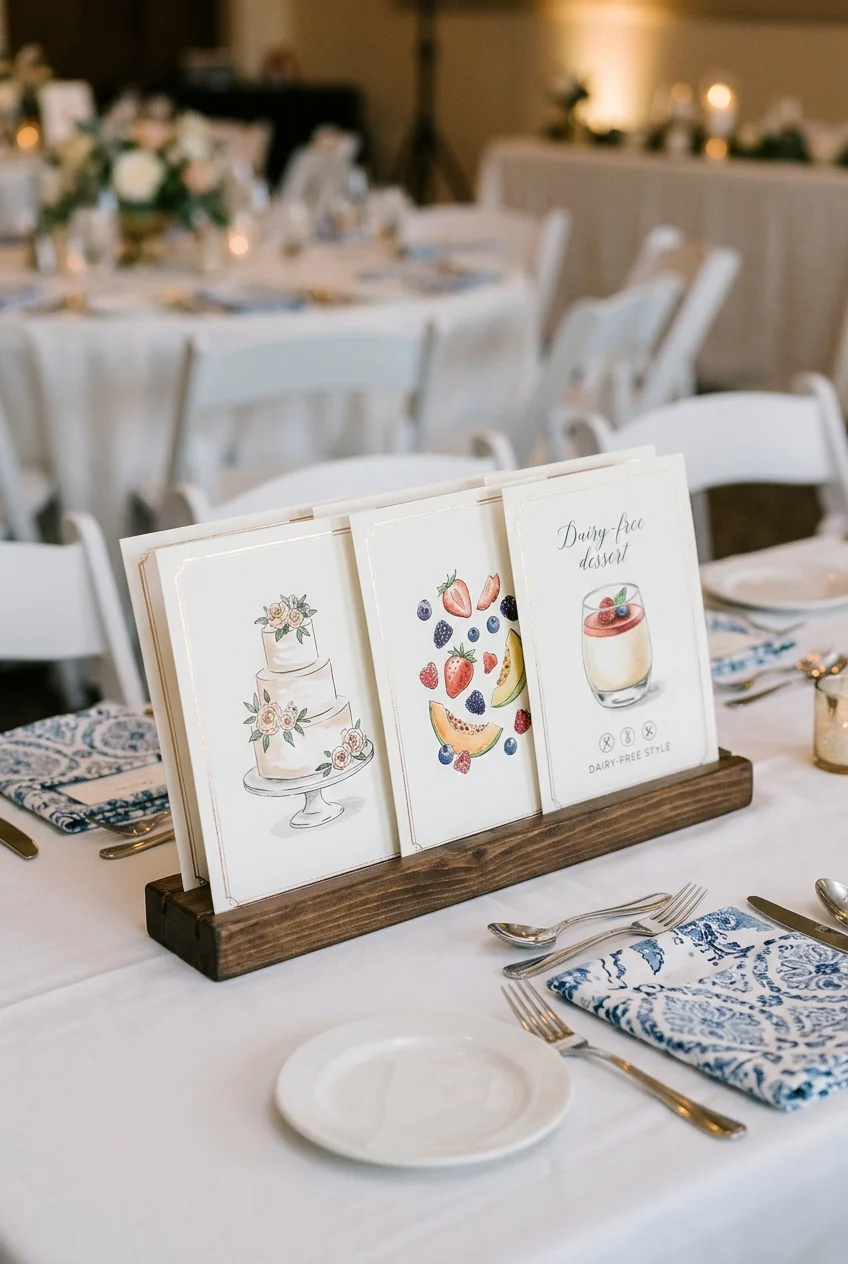
After dinner, children can select a dessert by handing an adult one large illustrated choice card. The adult brings the item back, avoiding another crowded queue around the cake or dessert display.
Use accurate pictures and include a simple alternative. Choice cards organize service; they do not replace allergy confirmation or ingredient information.
45. A Bib and Washable Apron Rack by Size
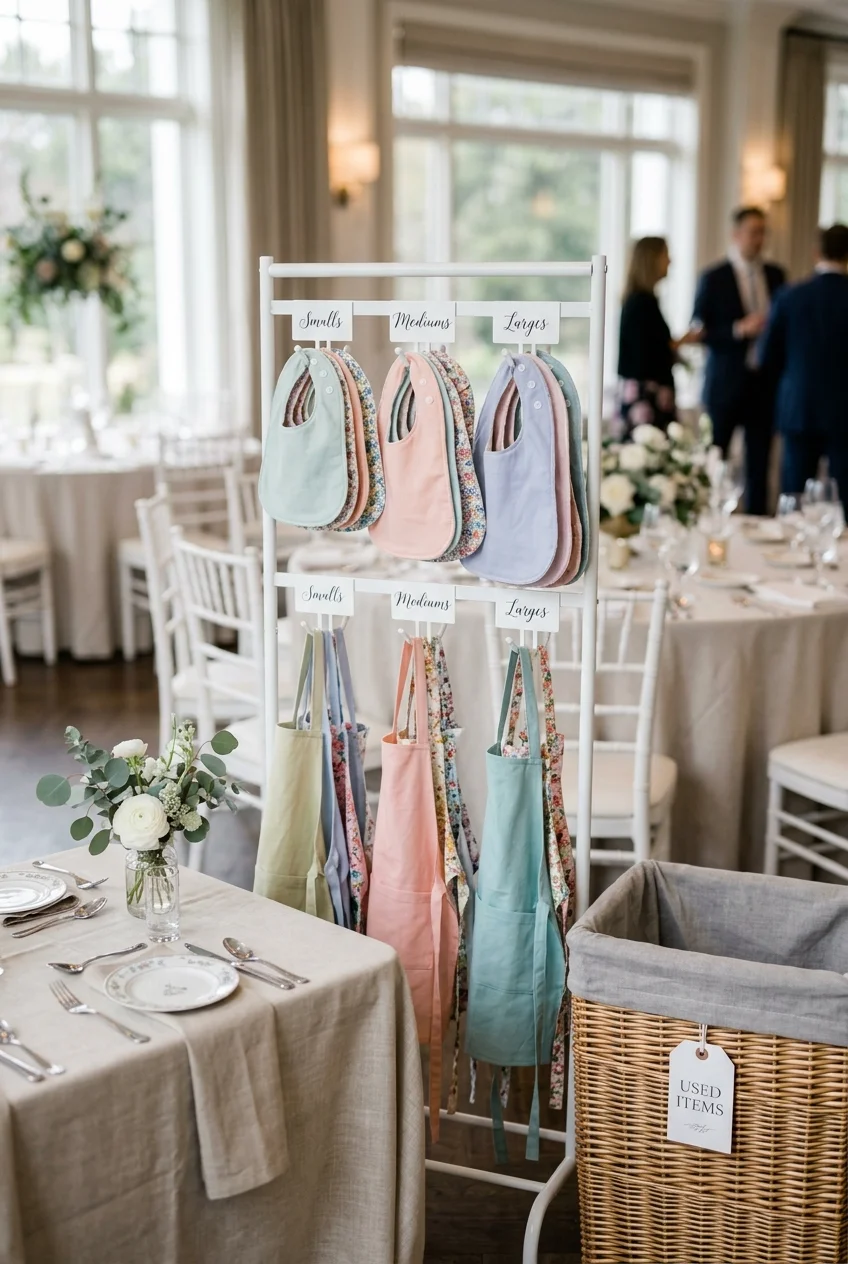
A few bibs and art aprons can hang on low hooks near the table for children who want them. Group by size or closure type and keep long ties away from chair legs and walkways.
Participation should be optional. Older children may prefer a large napkin, and parents may bring familiar protection for younger children.
46. A Quiet End Seat With a Book and Extra Space
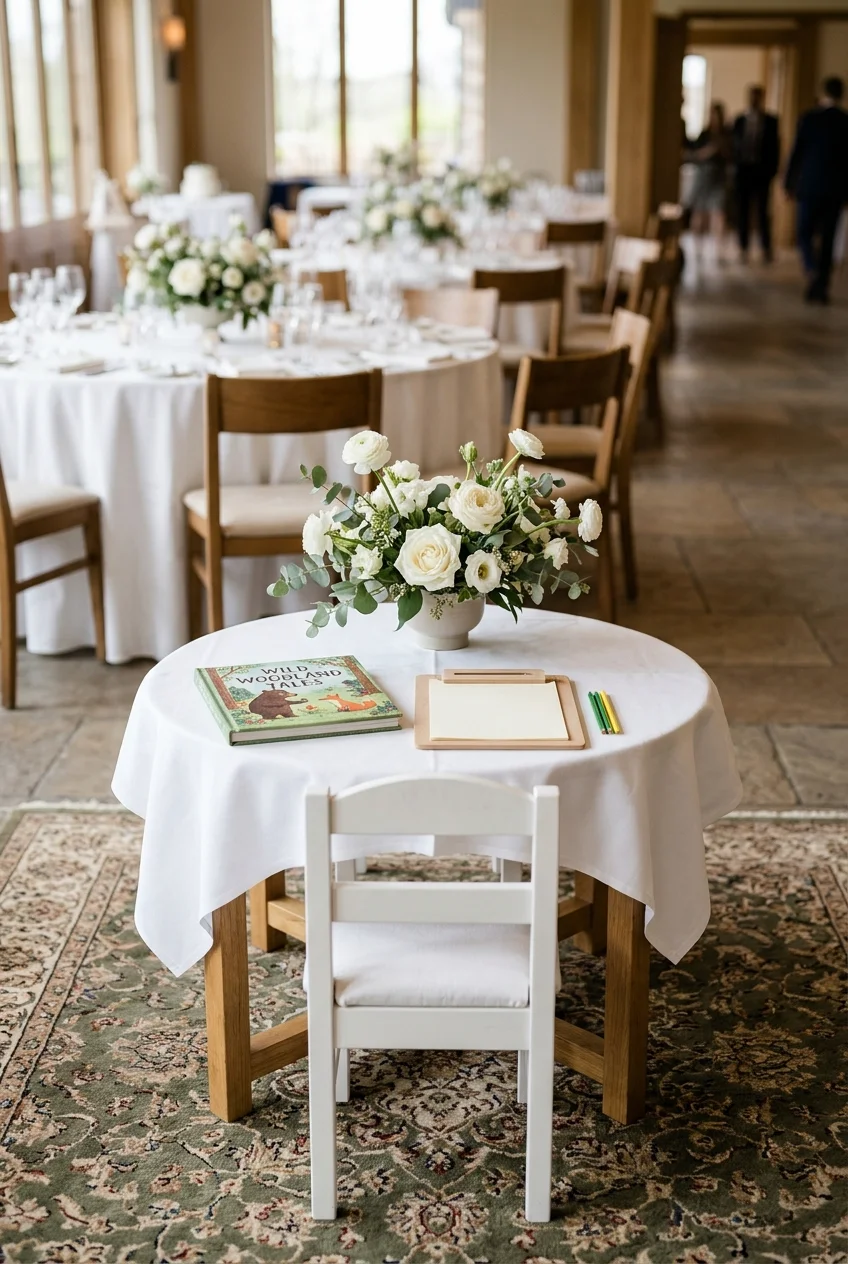
Leave one end place with a little more breathing room and a quiet choice such as a picture book or drawing board. It can help a child who wants less conversation without sending them to a separate room.
Ask the parent whether the seat would help and avoid labeling it as a special-needs place. Any child should be able to use the quieter option.
47. A Calm Box With Familiar, Low-Sensory Choices
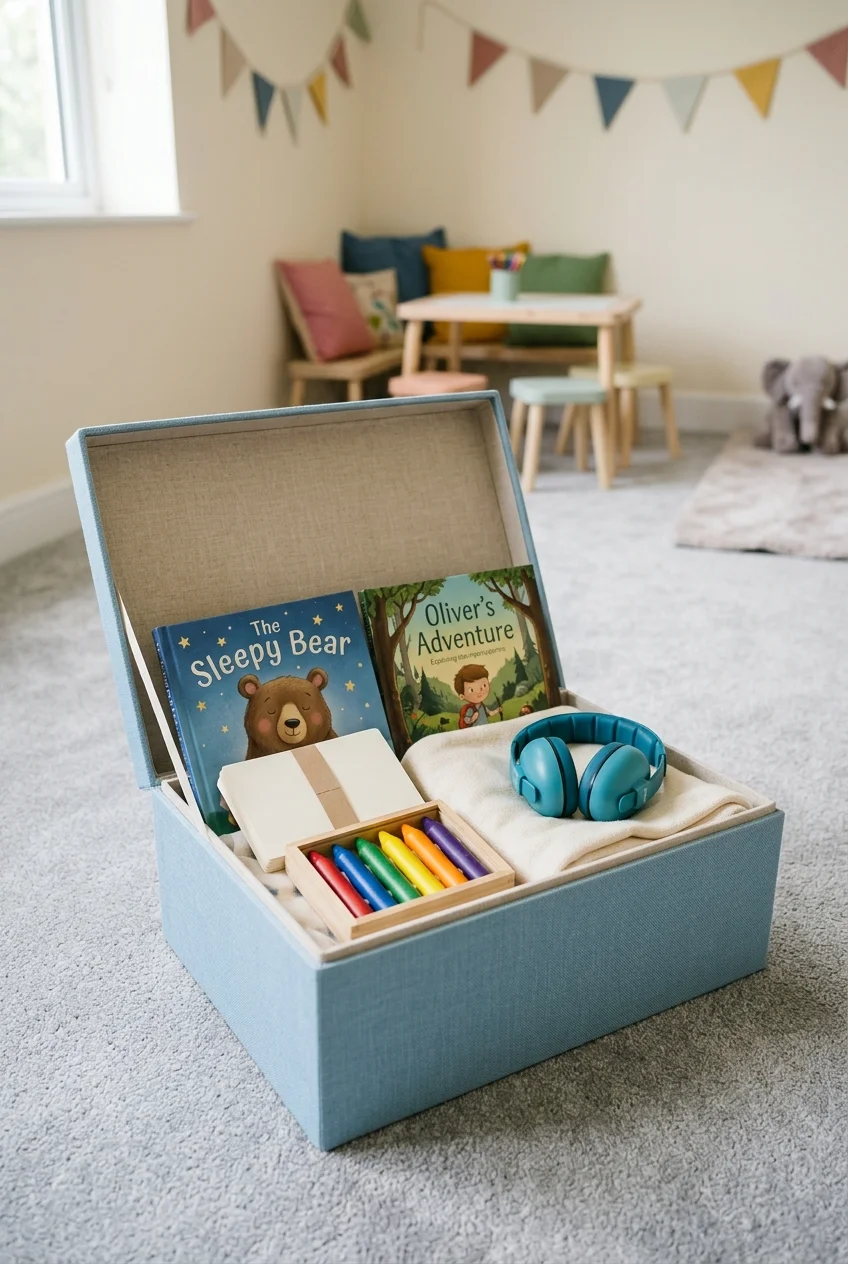
A lidded box can hold a soft fabric item, a few picture books, blank drawing cards, and child-safe hearing protection supplied or approved by parents. Keep the contents simple enough that the box feels like a break, not another crowded activity kit.
Invite parents to bring familiar comfort items when needed. The wedding host should not guess at therapeutic tools or promise that a generic box meets every child’s sensory needs.
48. A Rolling Activity Cart That Appears After Dinner
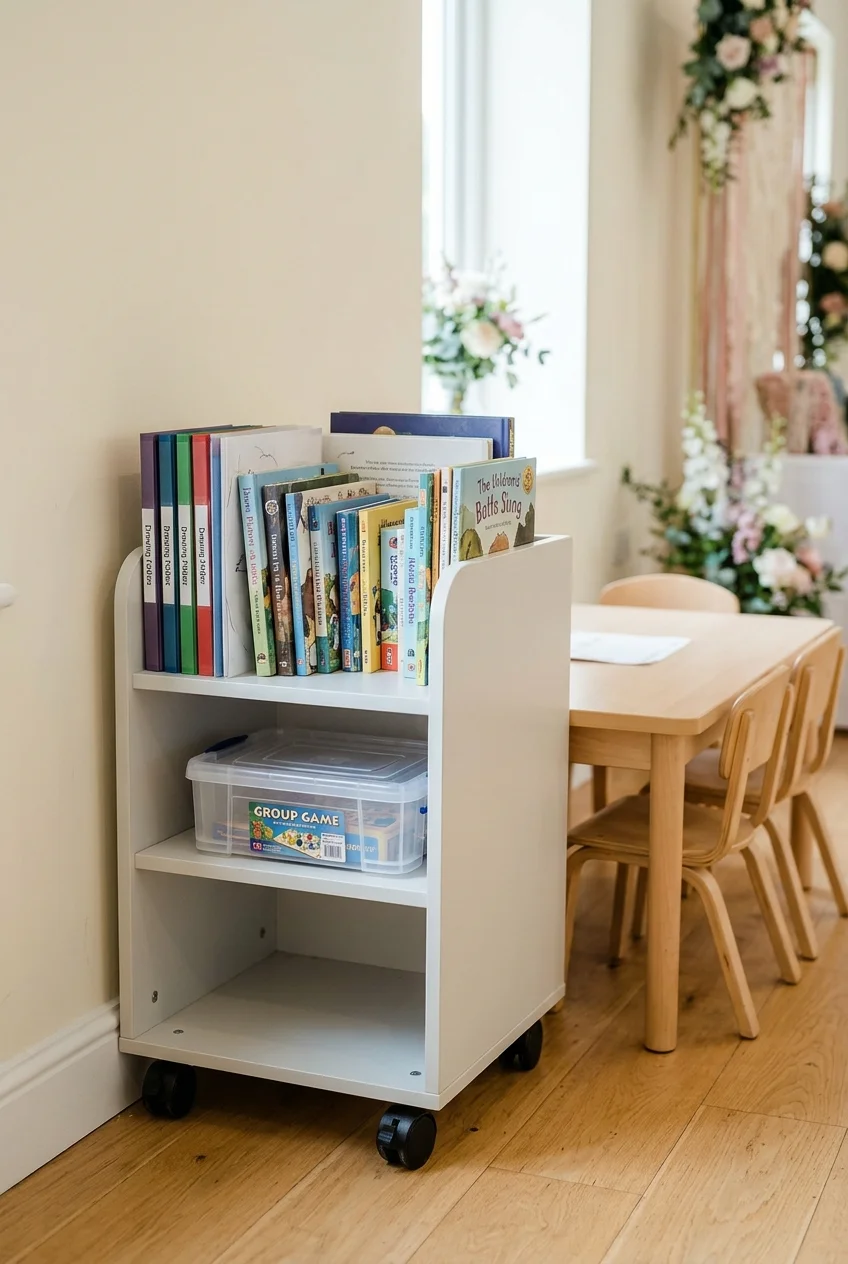
Load a small cart with books, drawing supplies, and one group game, then keep it out of sight until plates are collected. Rolling it in creates a clear transition and prevents activities from competing with the meal.
Use locking wheels or park the cart against a wall. No child should be asked to move it through the reception room.
49. Named Project Folders and an Adult Cleanup Basket
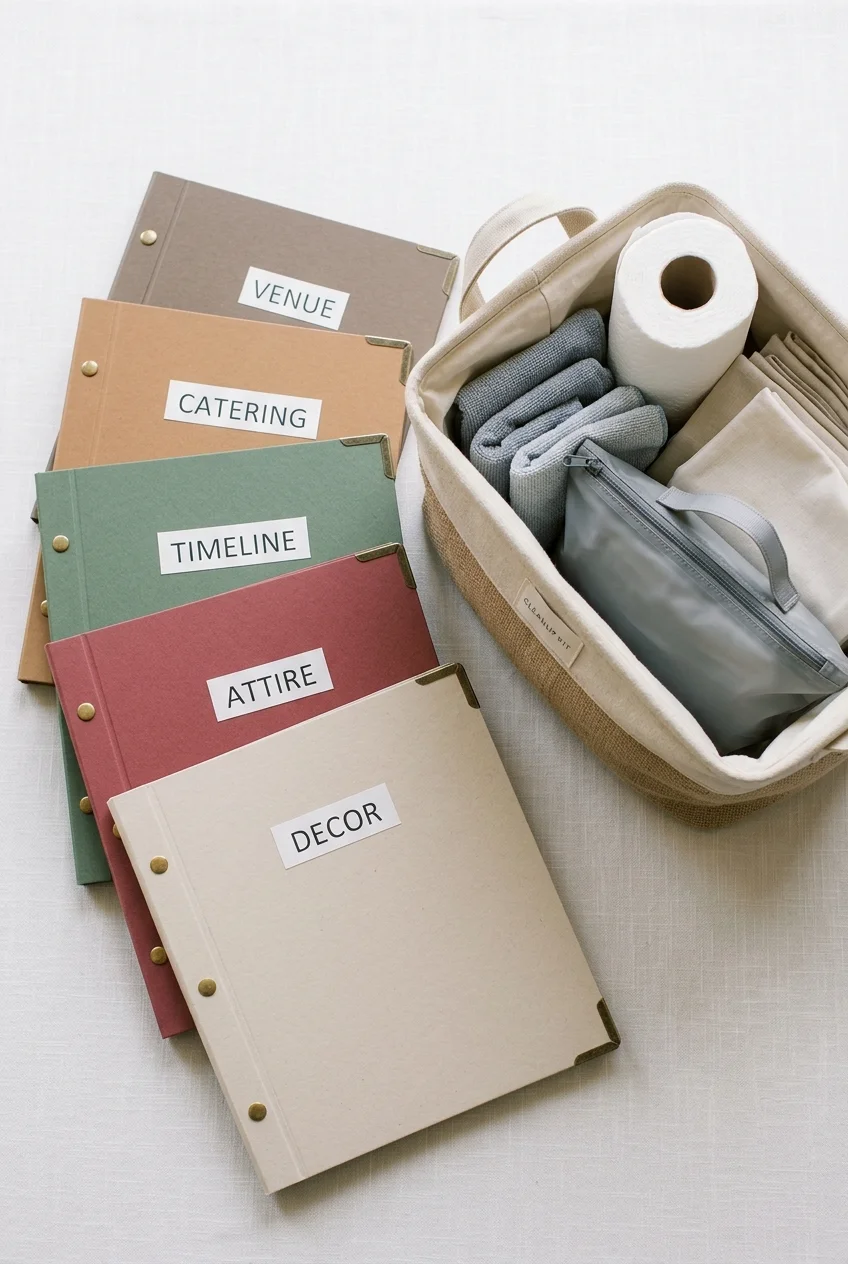
Give each child one large paper folder for drawings, postcards, and game sheets, then place finished pieces inside throughout the reception. A handled adult basket nearby can hold paper towels, spare napkins, washable cloths, and a bag for damp items.
Keep cleaning sprays elsewhere and hand the folders to parents at departure. The system protects keepsakes while making it clear which paper belongs to the child and which belongs in recycling.
50. A Parent Information and Helper Handoff Folder
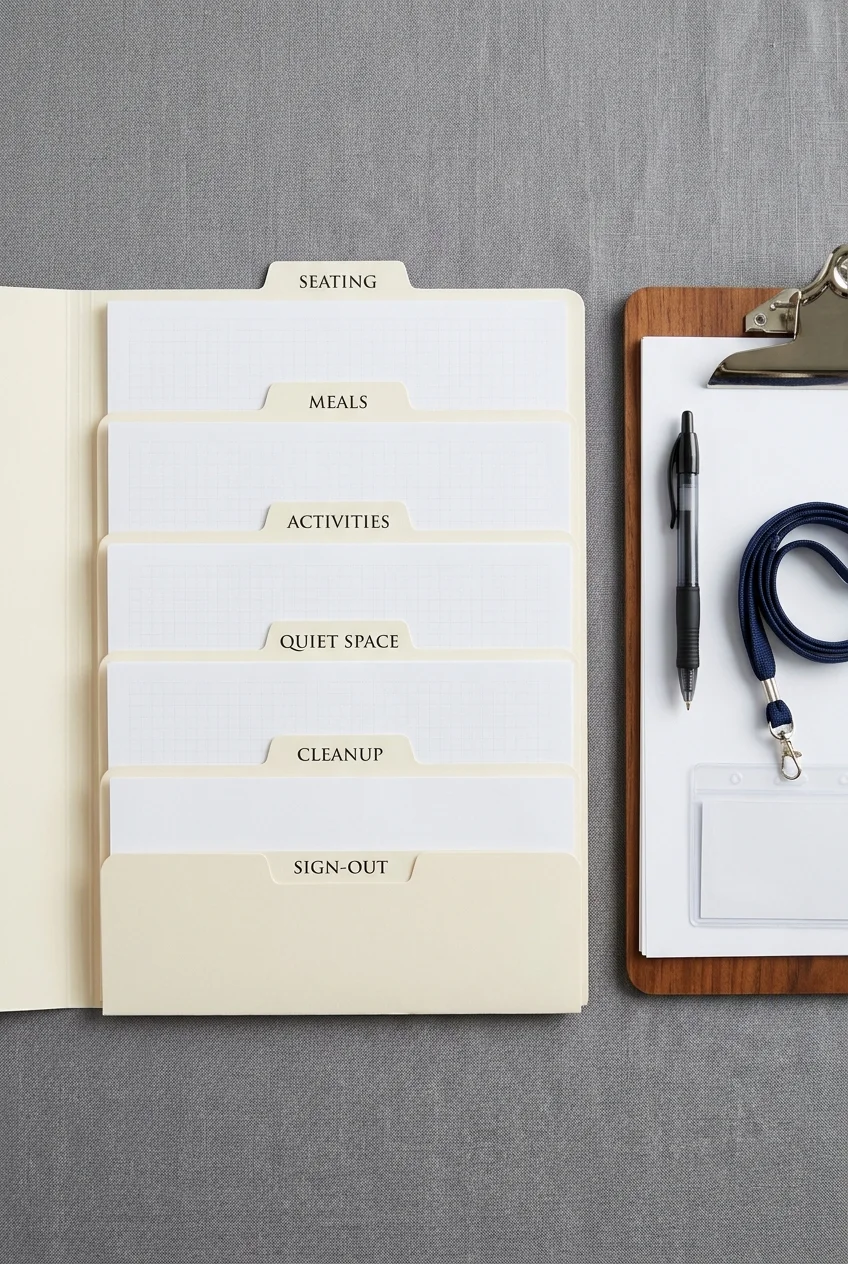
One adult-facing folder can hold the seating plan, parent contacts kept private, allergies and meal notes supplied to the caterer, approved activities, quiet-space location, cleanup timing, and the name of the person who has agreed to watch the area.
The folder coordinates adults; it does not turn an untrained relative into childcare. If professional sitters are hired, follow their check-in, staffing, emergency, and sign-out procedures.
Planning tip Tell parents the seating and supervision plan before the wedding. A separate children’s table should never be a surprise at the reception entrance.
What ages should sit at a wedding kids’ table?
There is no universal cutoff. Babies and toddlers usually stay with their parents, while school-age children may enjoy a separate table when they know one another and can manage the meal comfortably. Ask each parent, and seat teenagers with adults or peers unless they specifically want the children’s area.
Where should the kids’ table go at the reception?
Keep it within sight of the relevant parents and away from speakers, exits, the bar, candles, and kitchen or server routes. Children should feel included in the room, not parked in a distant corner.
Who supervises a wedding kids’ table?
Parents remain responsible unless a specific adult or professional childcare provider has agreed to supervise. Name that person before the event and define the schedule, ages, activity area, parent contact process, and handoff or sign-out plan. Do not assume an older sibling or teenager is the babysitter.
What should go in a wedding kids’ activity pack?
Choose two or three supplies that fit the child: broad washable crayons, a coloring or puzzle sheet, blank drawing paper, a large-piece activity, and a folder for finished work. Follow age labels, avoid unsuitable small parts, and keep messy materials off the eating surface.
How do you handle food allergies and choking hazards at the kids’ table?
Collect allergies and dietary needs from parents in writing and give the caterer the information in its requested format. Keep original ingredient information available, prepare food for each child’s age and development, avoid known choking hazards, and have young children sit and remain supervised while eating.
This post may contain affiliate links: full affiliate disclosure.