
Engagement party games work best when they give guests an easy reason to talk, celebrate the couple, or try something together. They should support the party rather than become an obligation for everyone in the room.
Choose one mingling game and one main round, then offer an optional quiet or lawn game if the space suits it. The 50 options below include competitive games and a few cooperative rounds with clear endings.
For a smaller guest list, these small engagement party ideas can help you choose a setting with enough room for conversation and your selected games.
All timings and shortened formats below are suggested party rules, not claims about official tournament play. Explain the rules first, make participation optional, and approve personal questions with both partners.
As an Amazon Associate I earn from qualifying purchases.
Icebreakers That Help Guests Mix
1. Find-the-Guest Bingo
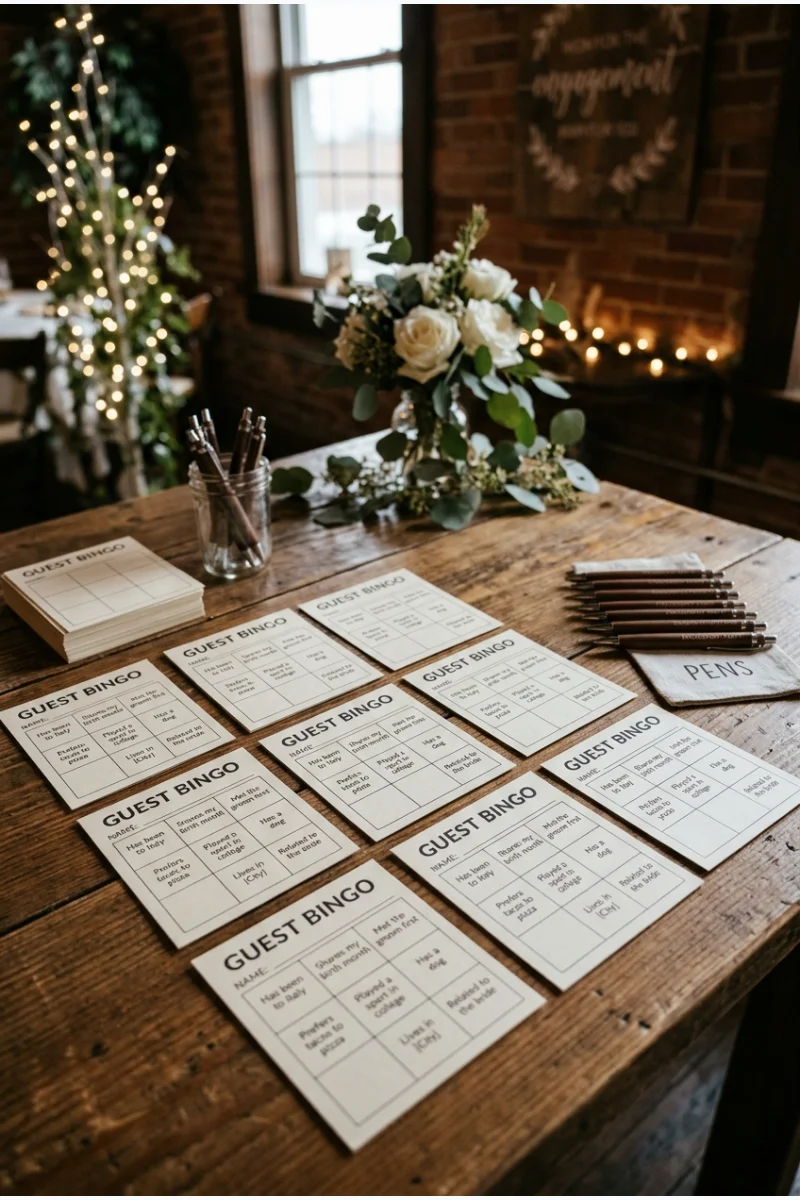
Make three-by-three bingo cards with friendly facts such as enjoys hiking, has a pet, or knows the couple from school. Guests talk to one another and collect a different name for each square.
The first verified row, column, or diagonal wins. Allow about ten minutes and choose facts that several guests can answer without sharing anything private.
2. Find Your Fictional Partner
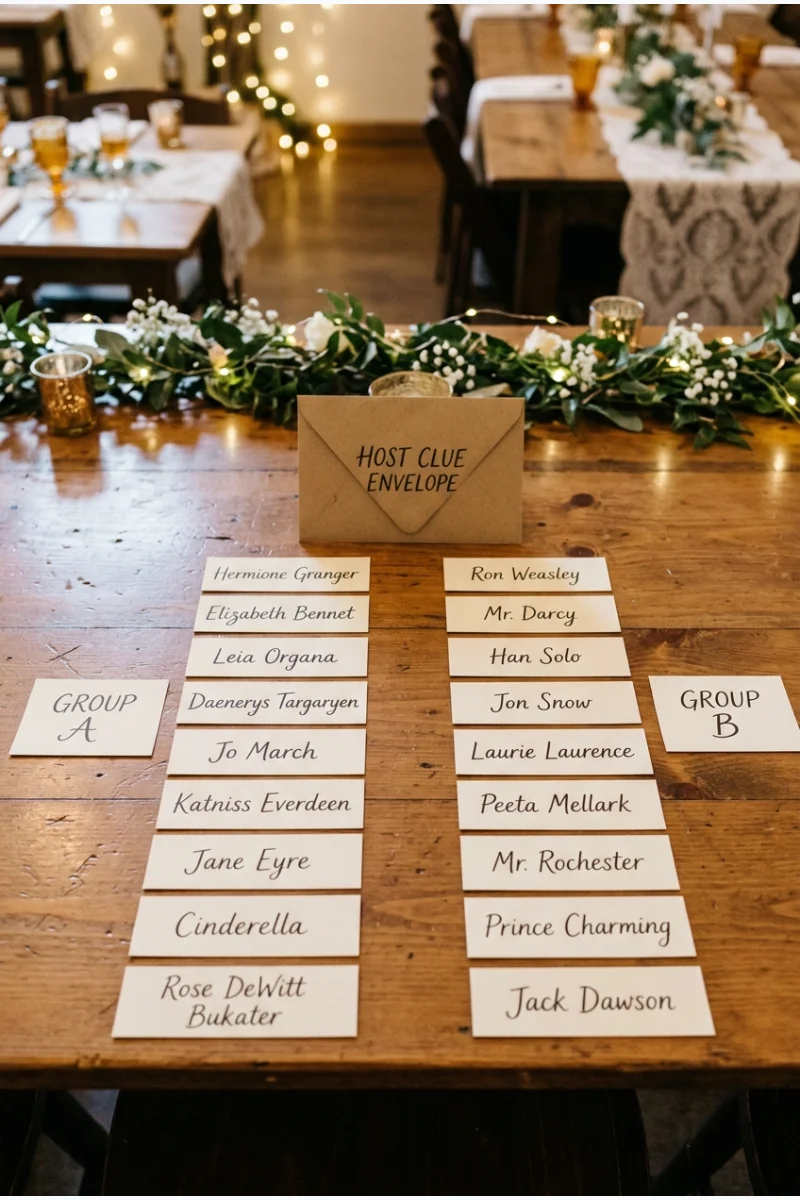
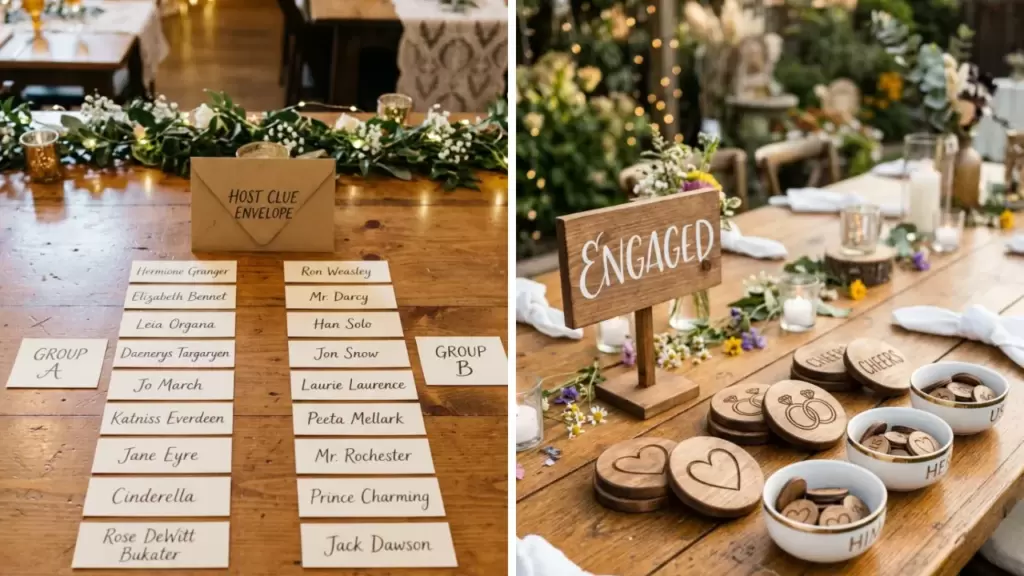
Prepare paired name cards for familiar fictional duos, then give each guest one half. Guests describe their character without saying its name while looking for the matching partner.
Once matched, pairs introduce themselves and share one thing they learned about each other. Treat it as a cooperative opener: everyone who finds a match completes the game. Offer a host-held clue card when needed.
3. Do Not Say Engaged
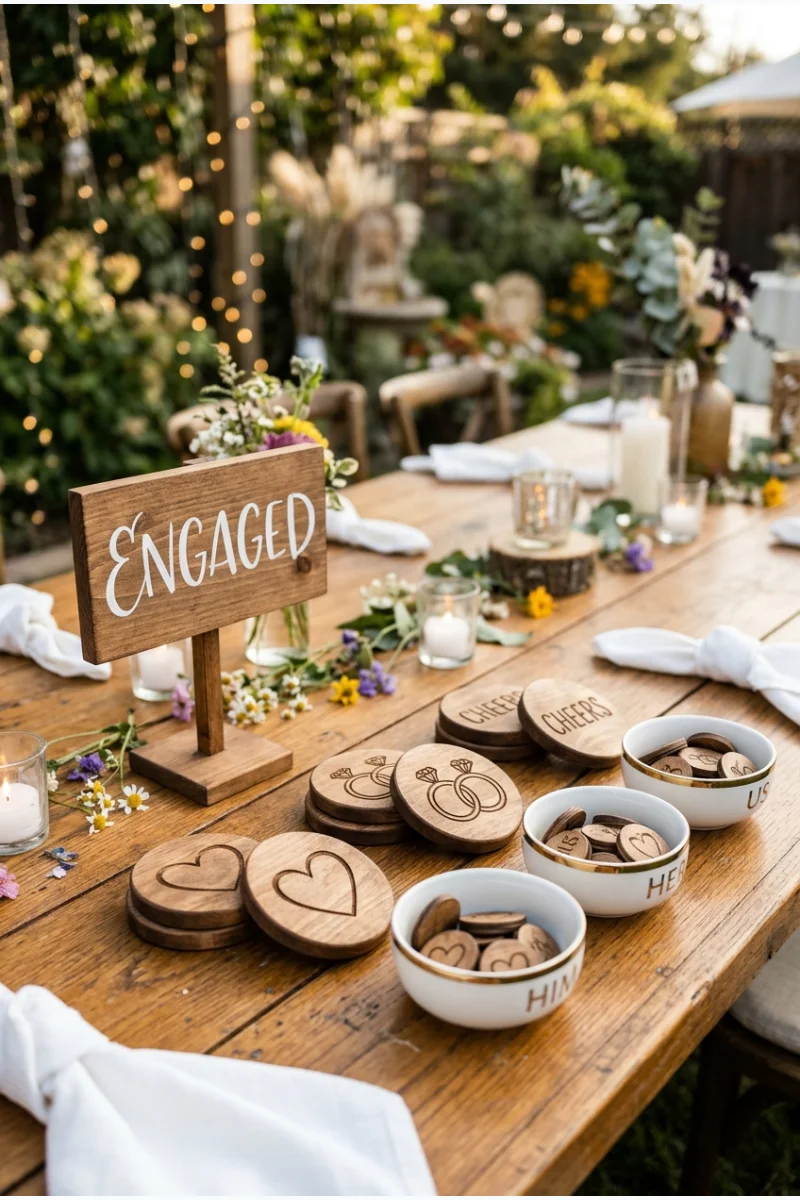
Give each player three large tokens and announce that engaged is the forbidden word for the next twenty minutes. Anyone who hears it can politely request one token from the speaker.
Tokens are handed over voluntarily, never grabbed. Guests with none can keep chatting but cannot collect more; most tokens at the announced finish wins. Participation is optional.
4. Name-and-Date Memory Chain
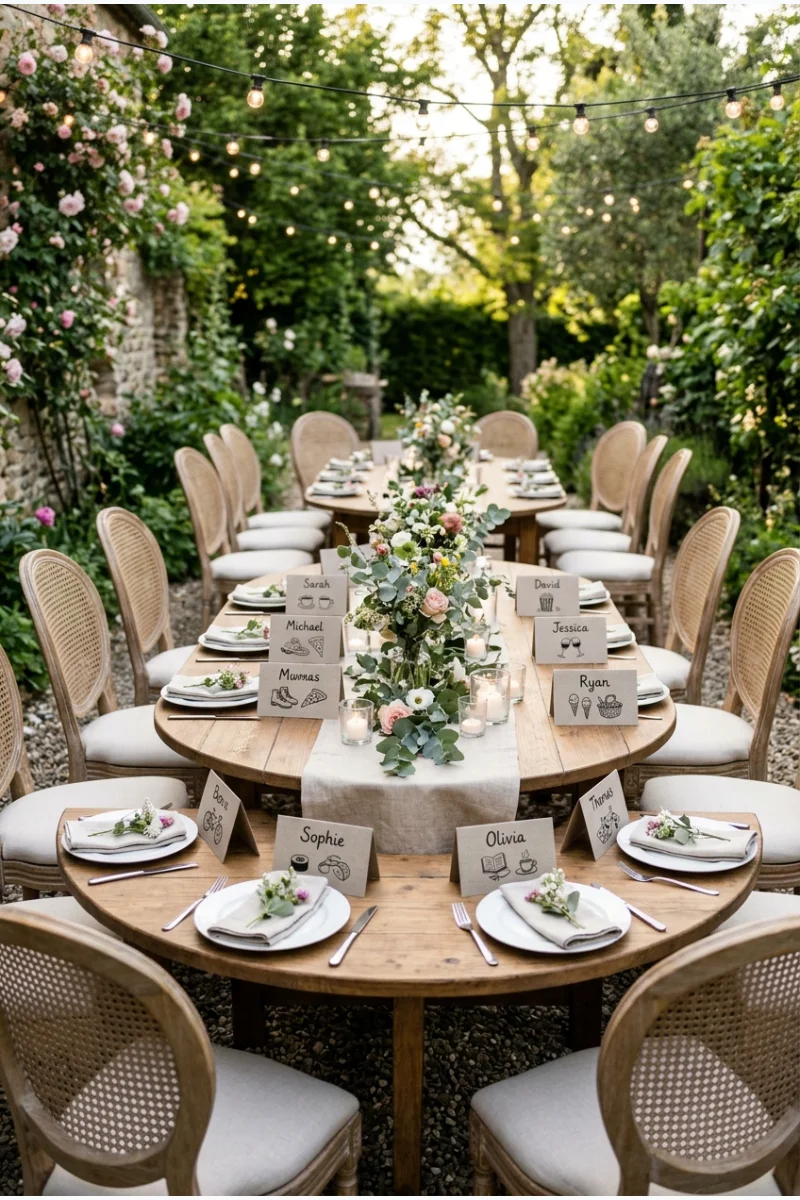
In a seated circle, each guest gives their first name and an imaginary date activity, such as Sam, stargazing. The next guest repeats the growing chain before adding their own.
Complete one round without eliminating anyone. Allow one group hint per turn and aim to finish the full chain together; this works best with a small group.
5. Secret Kindness Missions
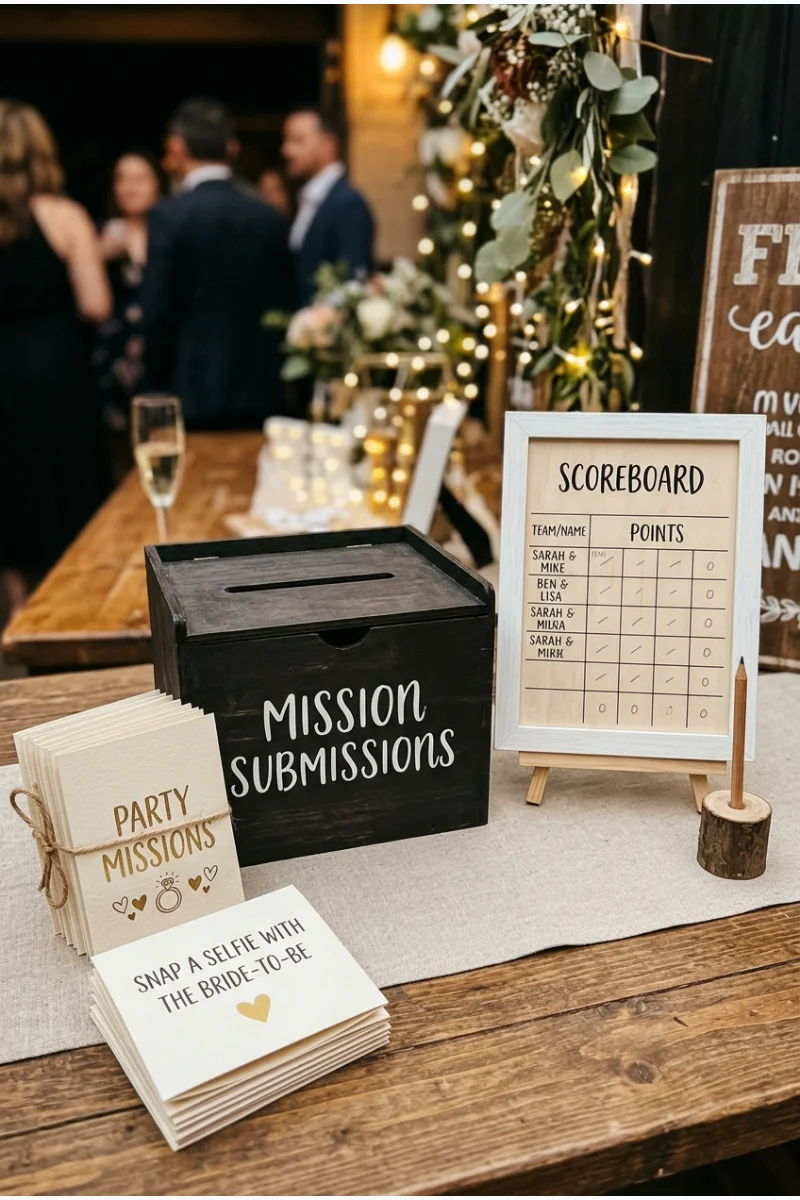
Give willing guests a card with a social mission, such as introduce two people or learn a new hobby from someone. Each mission should be possible without tricking or embarrassing anyone.
Players return to the host when finished and receive another card. Award one point per completed mission; the highest total after twenty minutes wins. Ask for a brief description rather than photographs as proof.
6. Three Things in Common
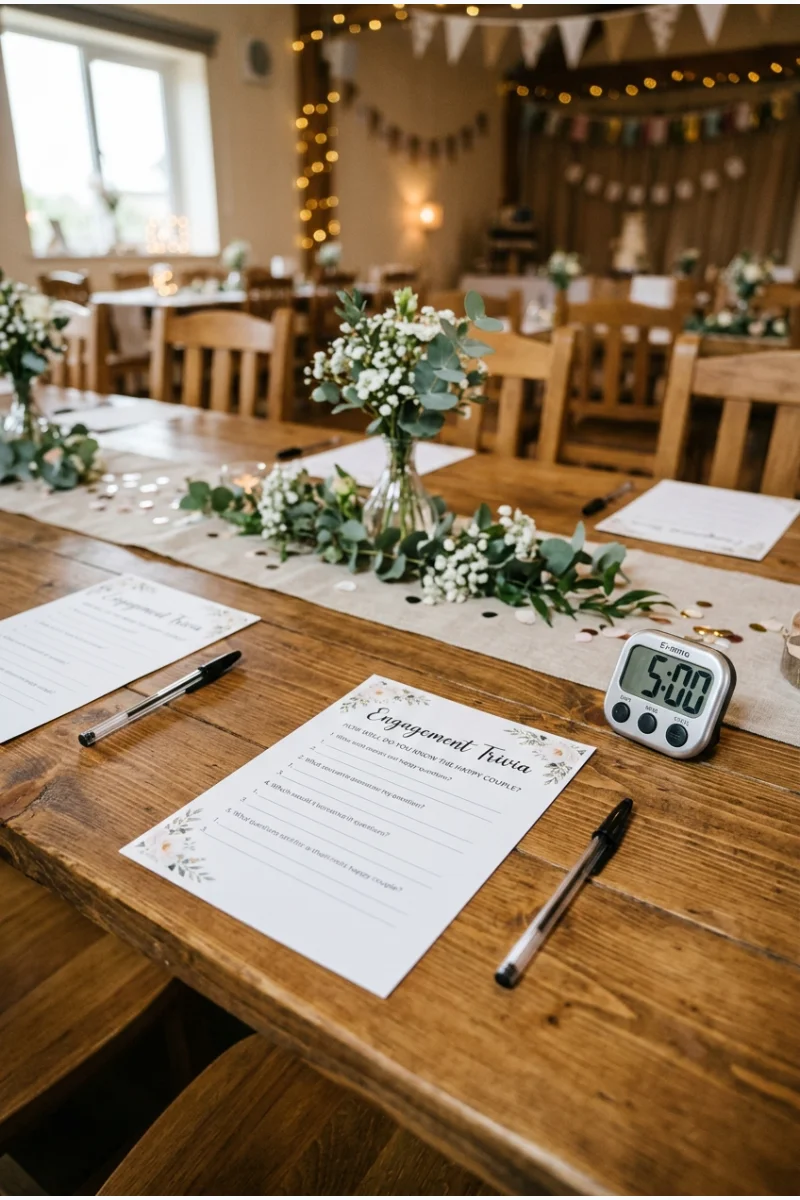
Mix guests into teams of four and give them five minutes to discover three shared interests or experiences. Exclude automatic answers such as attending this party.
Each genuinely shared item earns a point, with one bonus point for an item no other team submits. Teams explain their answers briefly; the highest score wins.
Games about the Engaged Couple
7. Who Knows the Couple Best?
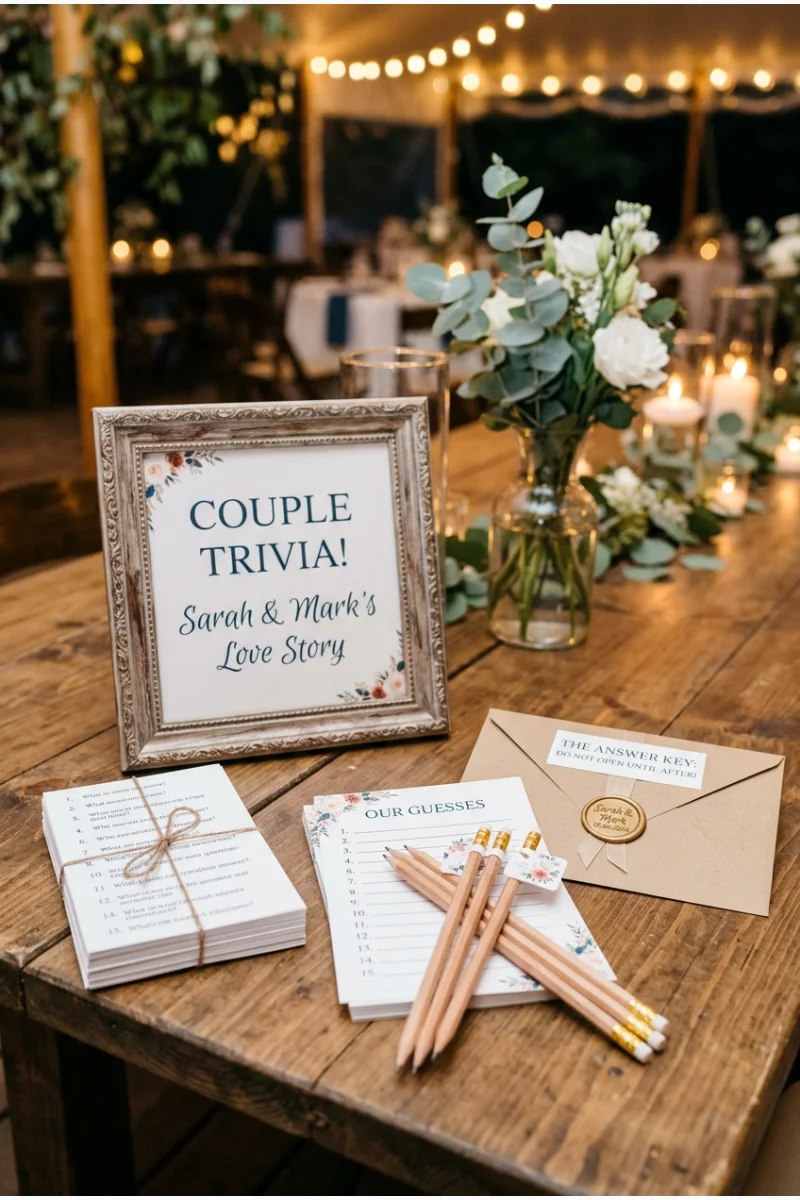
Ask the couple to approve ten factual questions and an answer key before the party. Mix easy questions with a few details guests can reasonably guess.
Guests or small teams write answers before the reveal, earning one point per correct response. Highest score wins; use one prepared numerical estimate as a tiebreaker. Avoid questions about money, arguments, or former partners.
8. Who Said It?
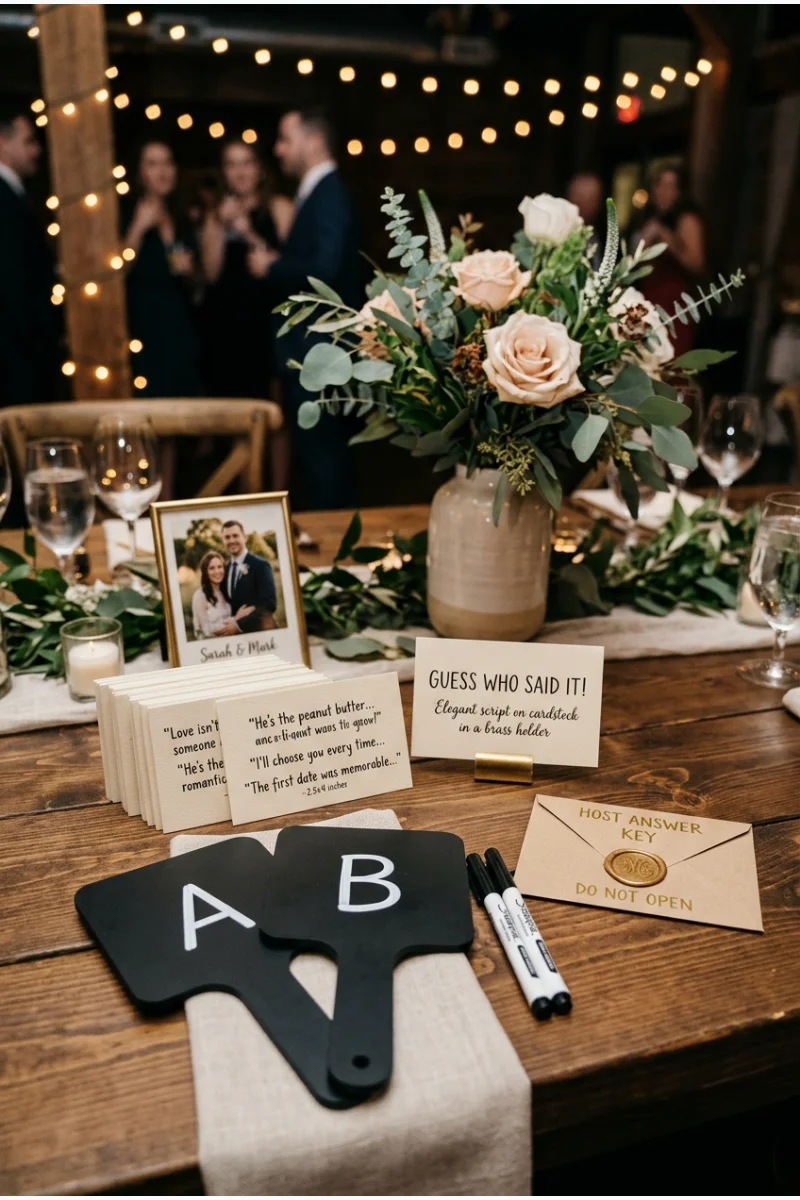
Collect eight lighthearted statements from the partners separately and mark the answer key A or B. Read each statement while guests reveal which partner they think supplied it.
Award one point for each correct attribution and share short explanations after the reveal. Accept both only when the prepared key says both.
Reusable dry-erase answer paddles are an optional supply; mark the partners A and B rather than relying on gendered labels.
9. The Shoe Game
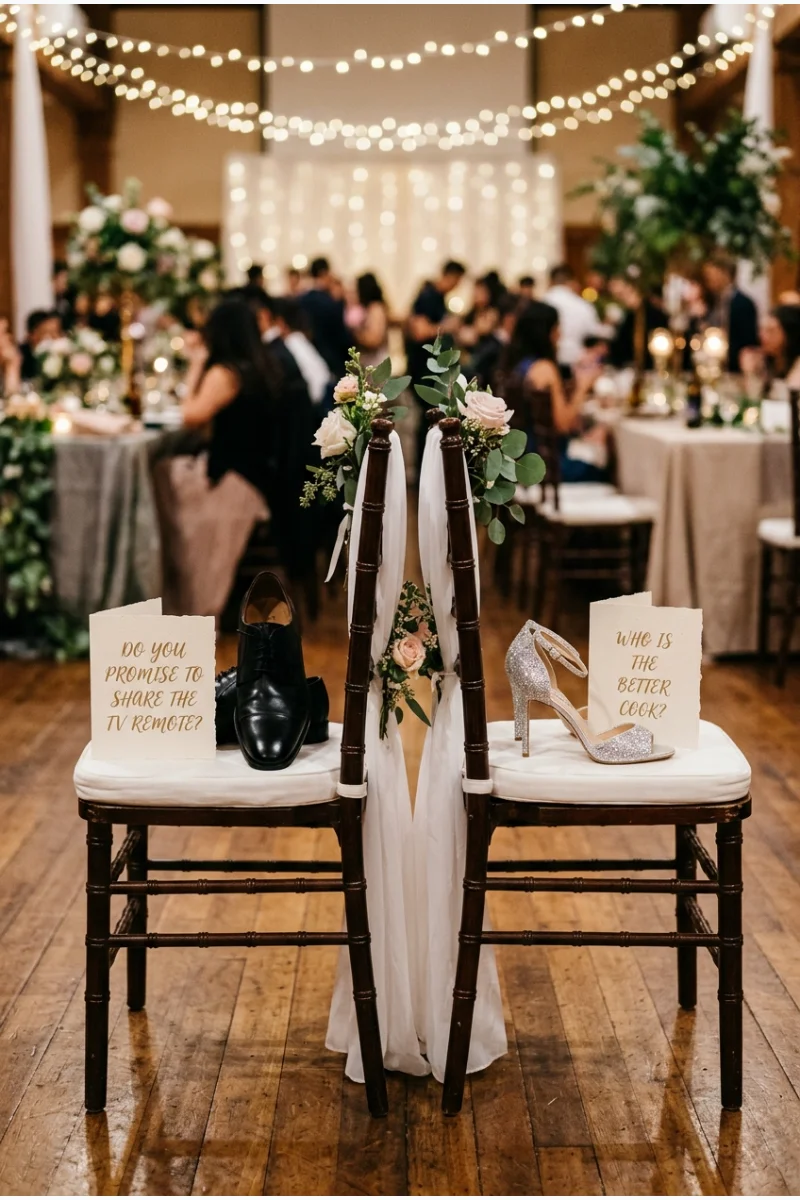
Seat the partners back-to-back and give each one a shoe belonging to each partner. A host reads eight to ten approved who-is-more-likely questions; both raise the shoe representing their answer.
Count matching answers as one shared point and try to beat a target the couple chooses beforehand. This is a short couple spotlight, not a test of relationship quality. Use labeled paddles if shoes are inconvenient.
10. Put Their Story in Order
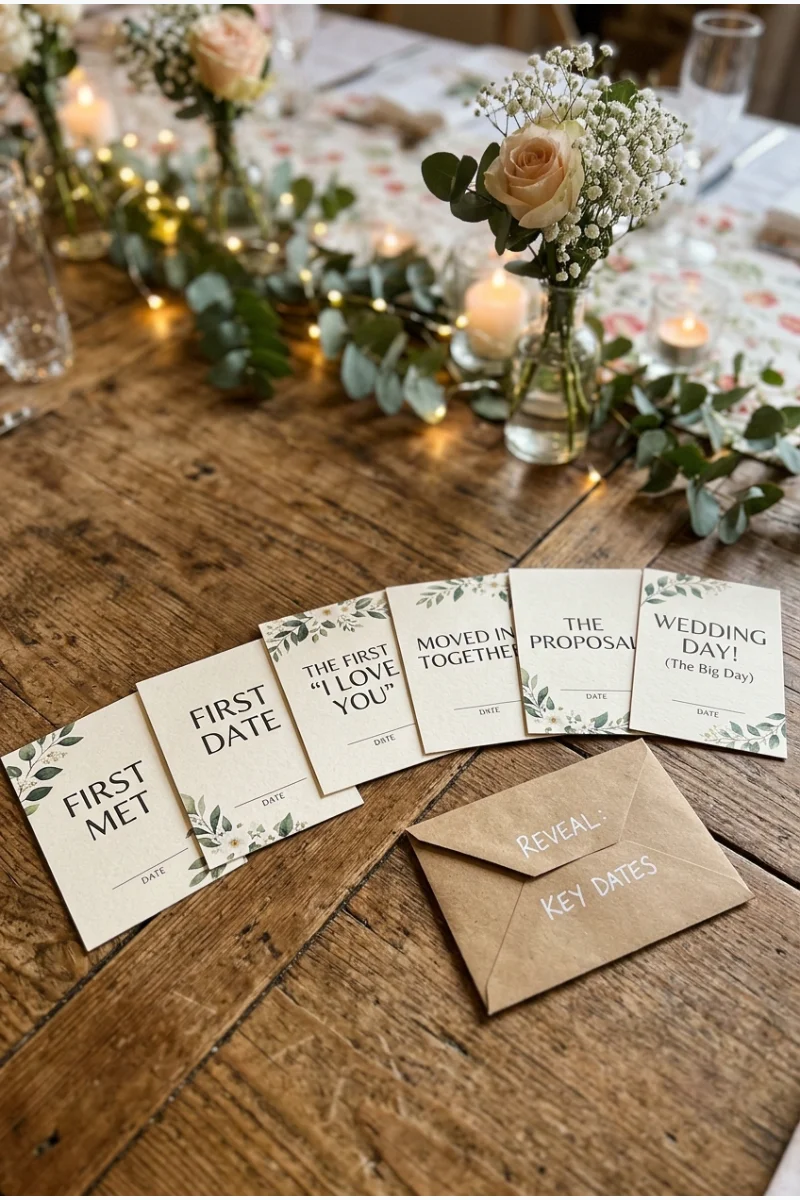
Print six real relationship milestones on separate cards without dates. Teams arrange the cards chronologically before the couple reveals the sequence.
Allow four minutes, then award one point for each card in its correct position. Highest total wins. Use milestones the couple is happy to share and keep a dated answer key.
11. Map the Relationship
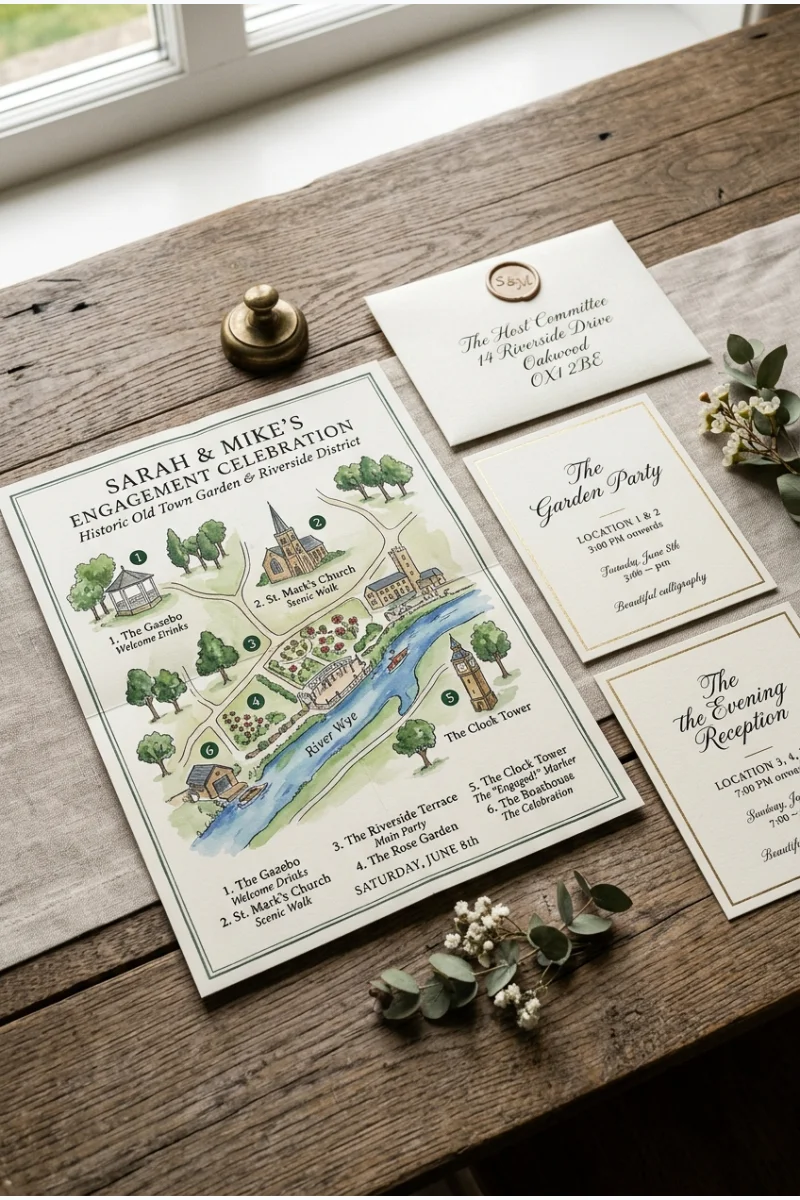
Put numbered markers on a printed map of places connected to the couple. Give teams matching event cards, such as first trip or proposal location.
Teams assign each event to a marker within four minutes. Score one point per correct match; highest score wins. Use the actual locations with permission, and avoid revealing private home addresses.
12. Engagement Survey Showdown
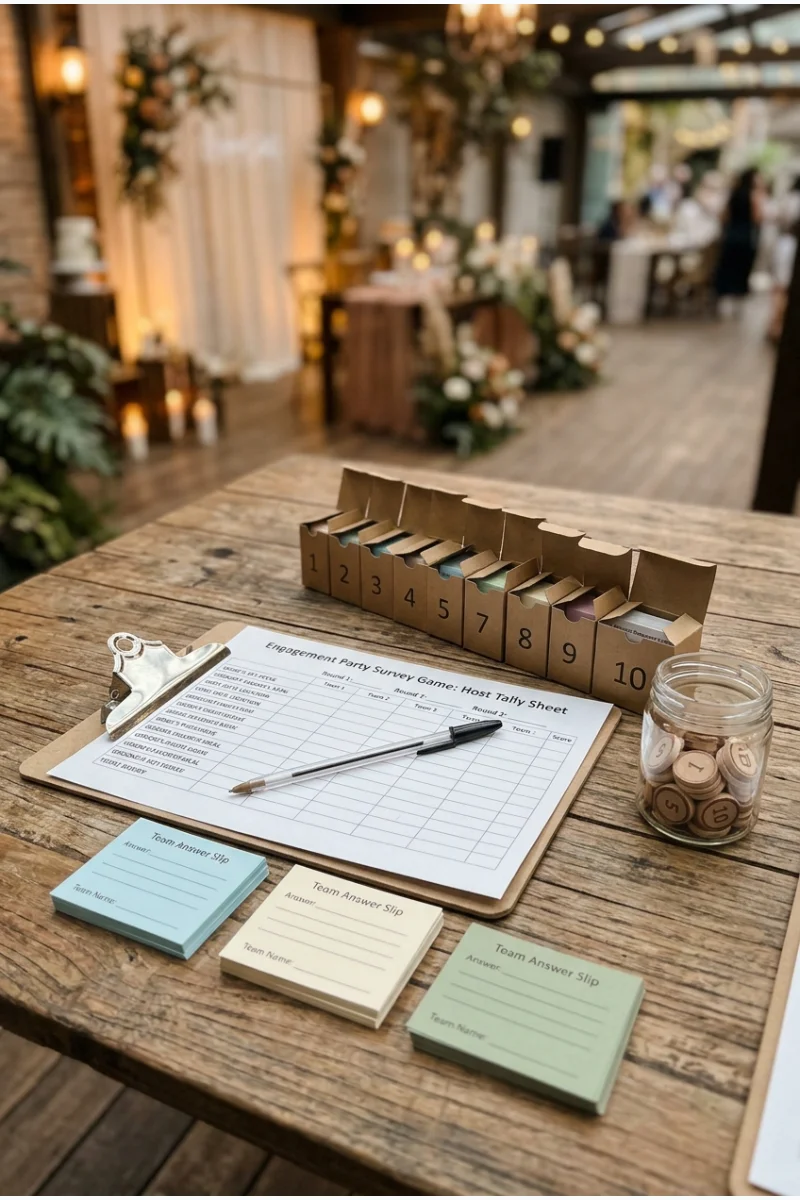
Before the party, ask willing guests one-answer questions such as best rainy-day date. Tally their real responses and combine clearly equivalent answers.
Teams take turns guessing responses to three questions, with three guesses per team per question. Each newly found answer scores its actual response count. Highest total wins; keep the original tally for checking.
13. Two Truths and One Invented Story
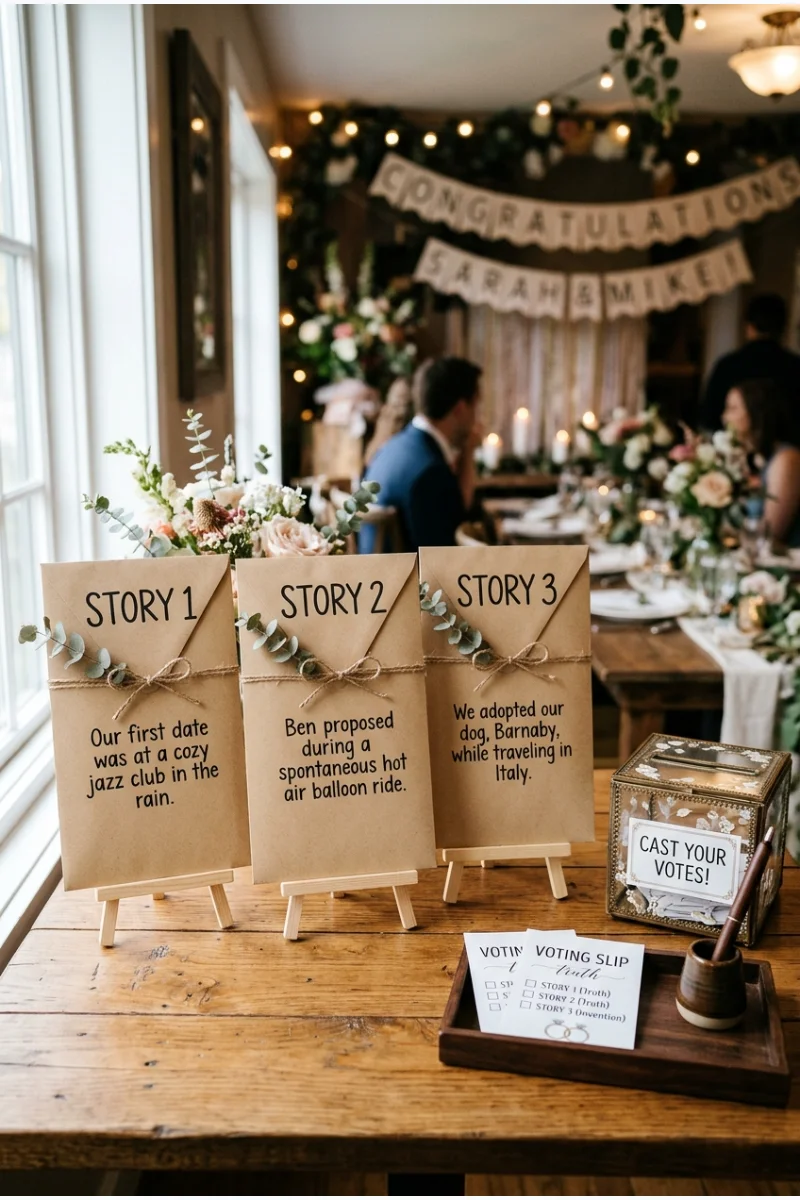
Have the couple prepare three brief relationship stories: two true and one invented. Guests discuss in teams and vote for the invented story.
Play three rounds and award one point per correct vote. The couple explains the true stories after each reveal. Approve every story beforehand so nobody has to defend an uncomfortable memory.
14. Who Wrote This Memory?
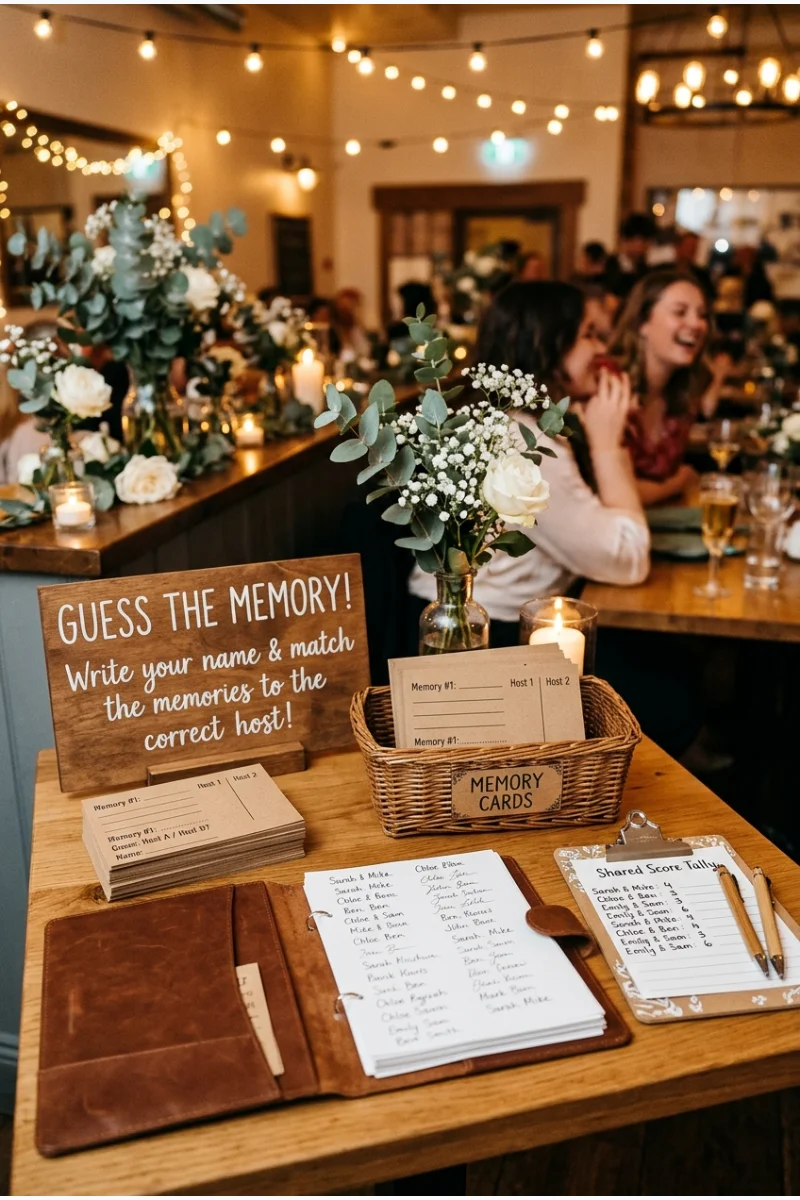
Ask guests to submit a short memory involving the couple, signing it privately for the host. The host reads selected memories without naming the writers.
The couple gets one guess per memory and earns a shared point for each correct author. Set a ten-card limit and reveal the writer after every guess. Save the cards as a keepsake.
Quiet Puzzles and Observation Games
15. Guess the Jar Count
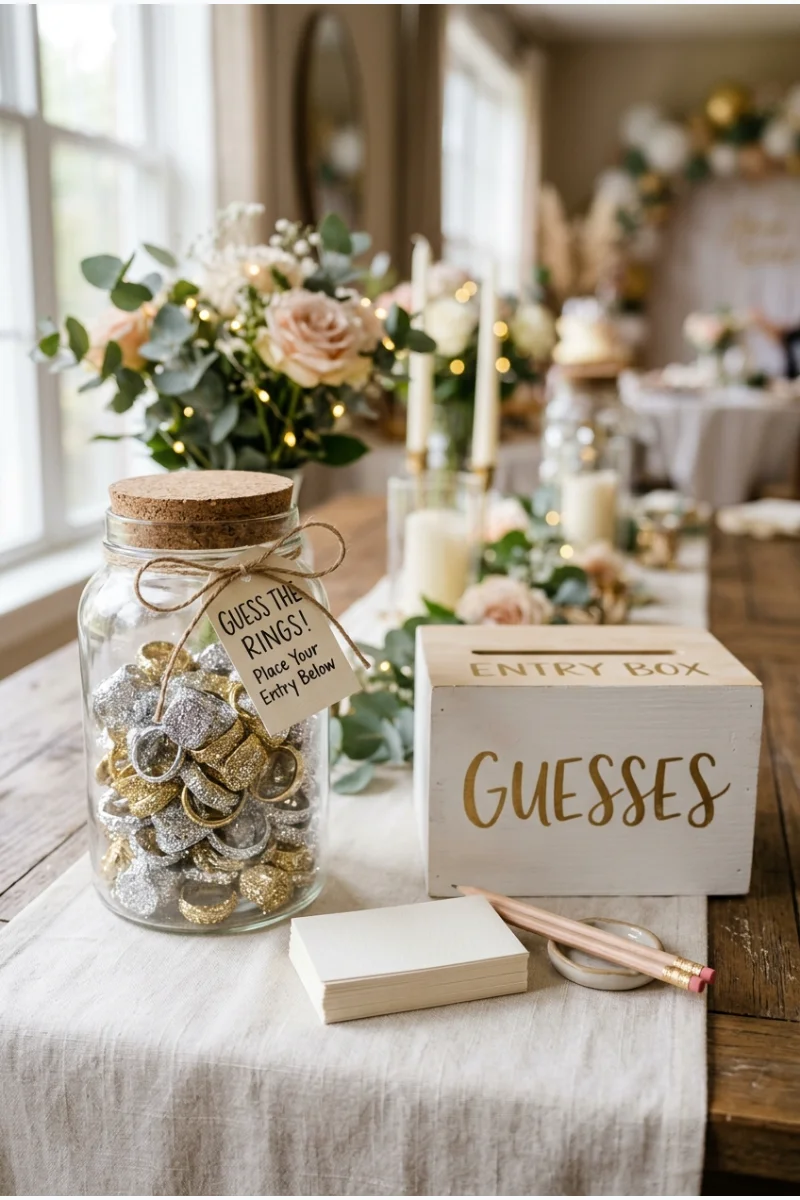
Count a collection of large decorative ring tokens, seal them in a clear jar, and keep the total secret. Guests submit one estimate each without opening it.
The closest absolute estimate wins; equal-distance guesses share the win. Close entries at a stated time and reveal the count. Keep loose pieces away from young children.
16. The Engagement Memory Tray
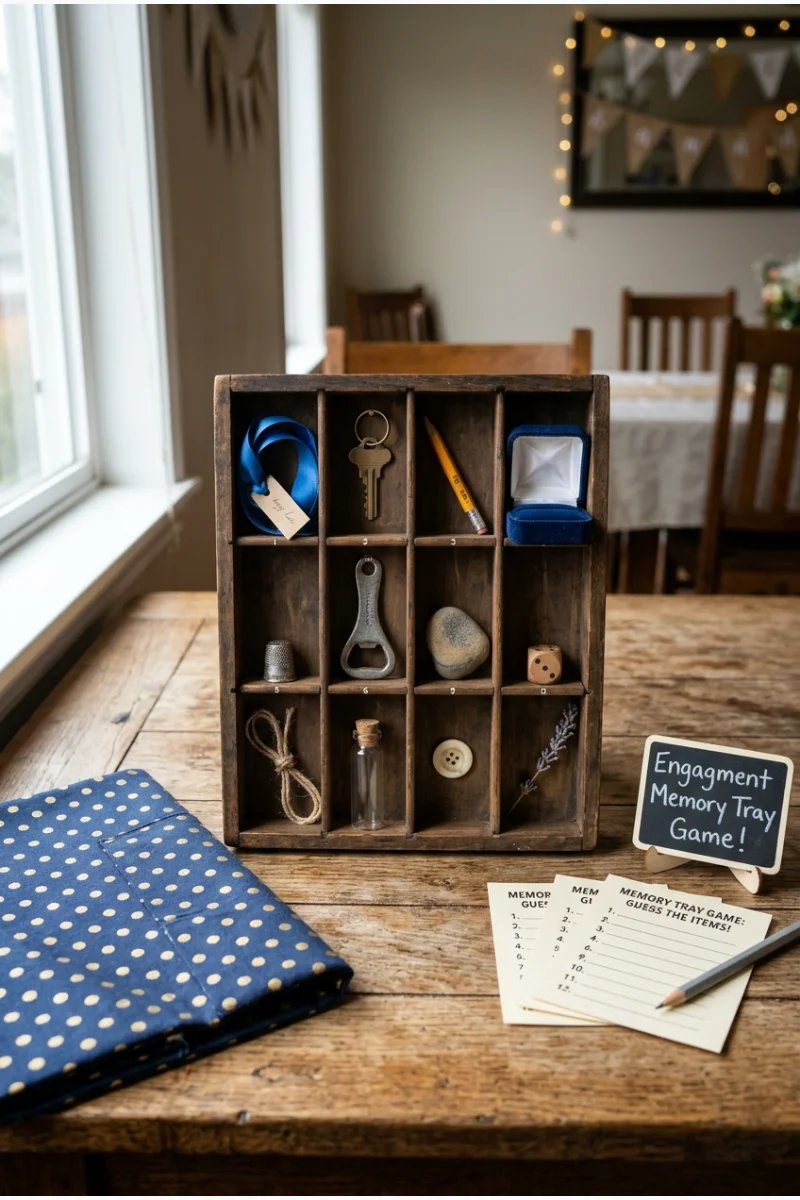
Place twelve distinct objects, such as a ribbon, key, pencil, and empty ring box, on a tray. Let guests study it for thirty seconds before covering it.
Give everyone one minute to list remembered objects. Score one point per correct item, counting duplicates once; highest total wins. Read the objects aloud during the reveal.
17. Face-Down Symbol Match
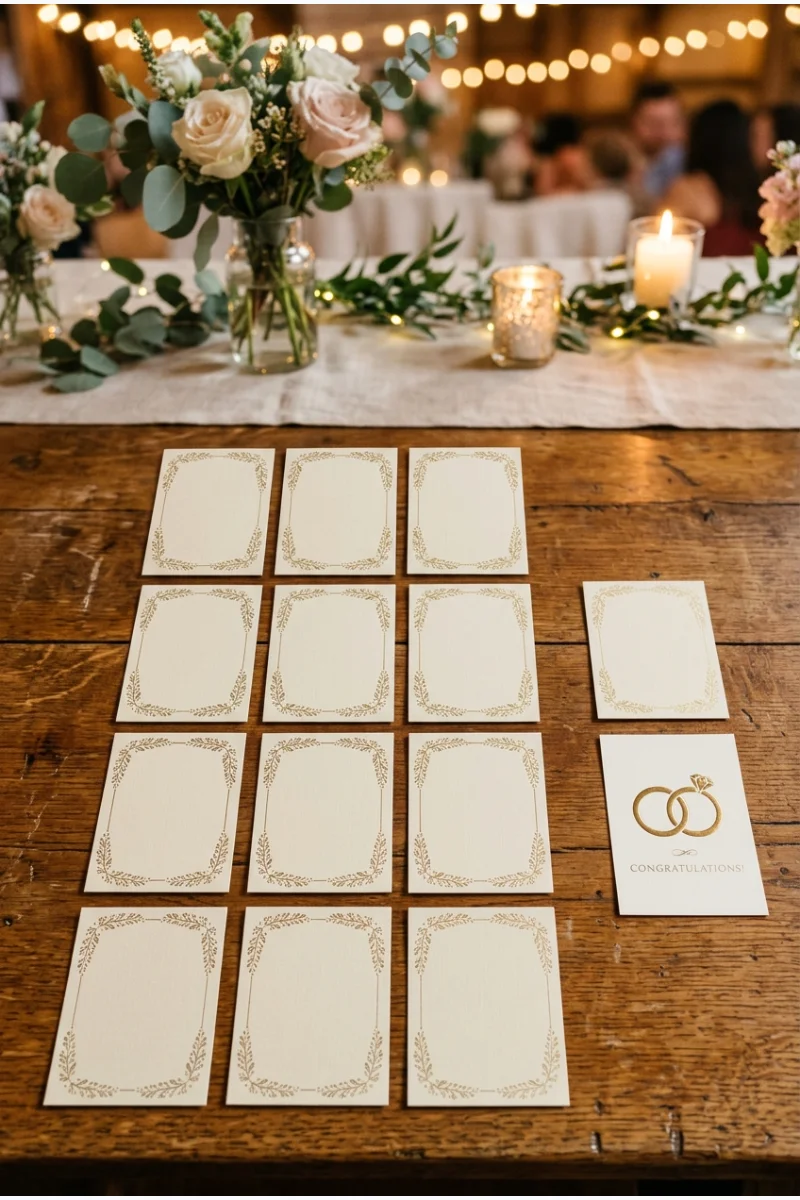
Make twelve cards showing six pairs of simple symbols, such as rings, cake, and a heart. Shuffle and place them face-down in a three-by-four grid.
Players turn over two cards each turn. Matching pairs are kept and earn another turn; unmatched cards return face-down. Most pairs wins after all six are found.
18. Mystery Object Bag
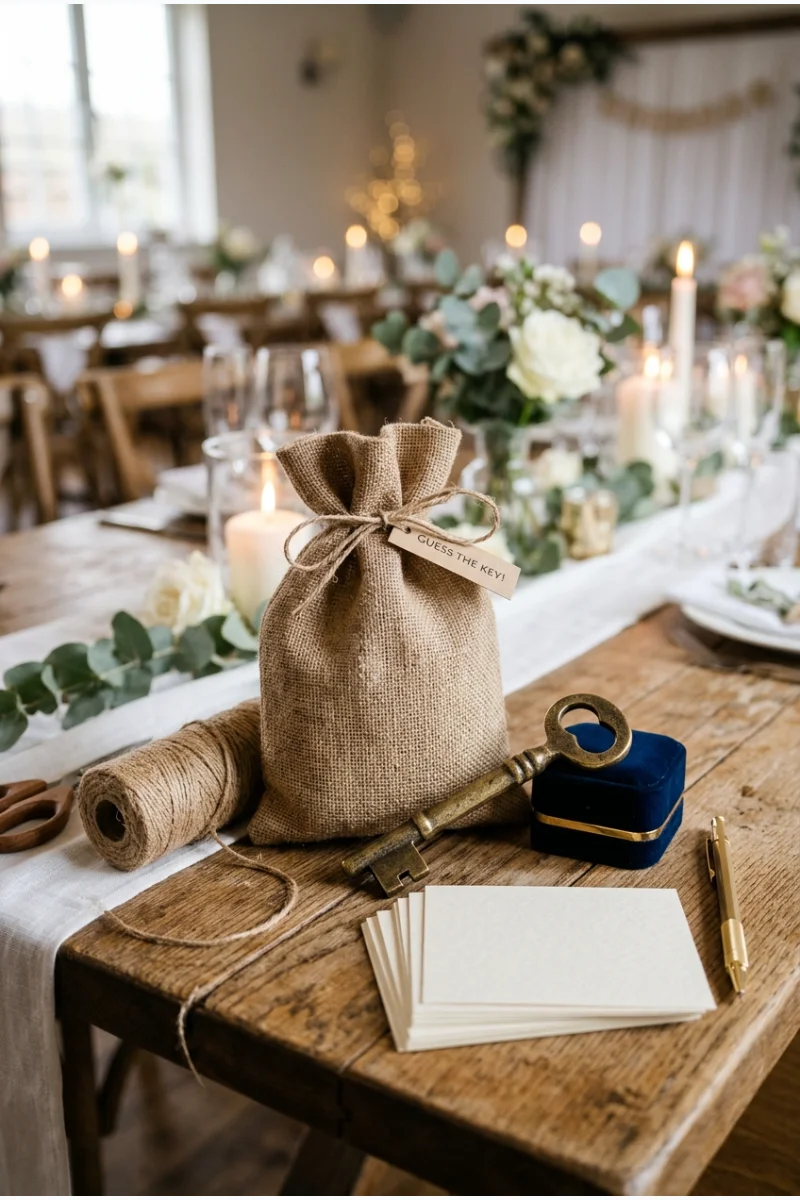
Put a few sturdy, harmless objects in an opaque bag, such as a ribbon spool, large key, and smooth ring box. Give each player the same brief feel of the bag without looking.
Guests privately list what they identify. One point per correct object determines the winner. Use no sharp, fragile, food, or personal items, and offer a visual alternative for anyone who prefers it.
19. Spot the Setup Differences
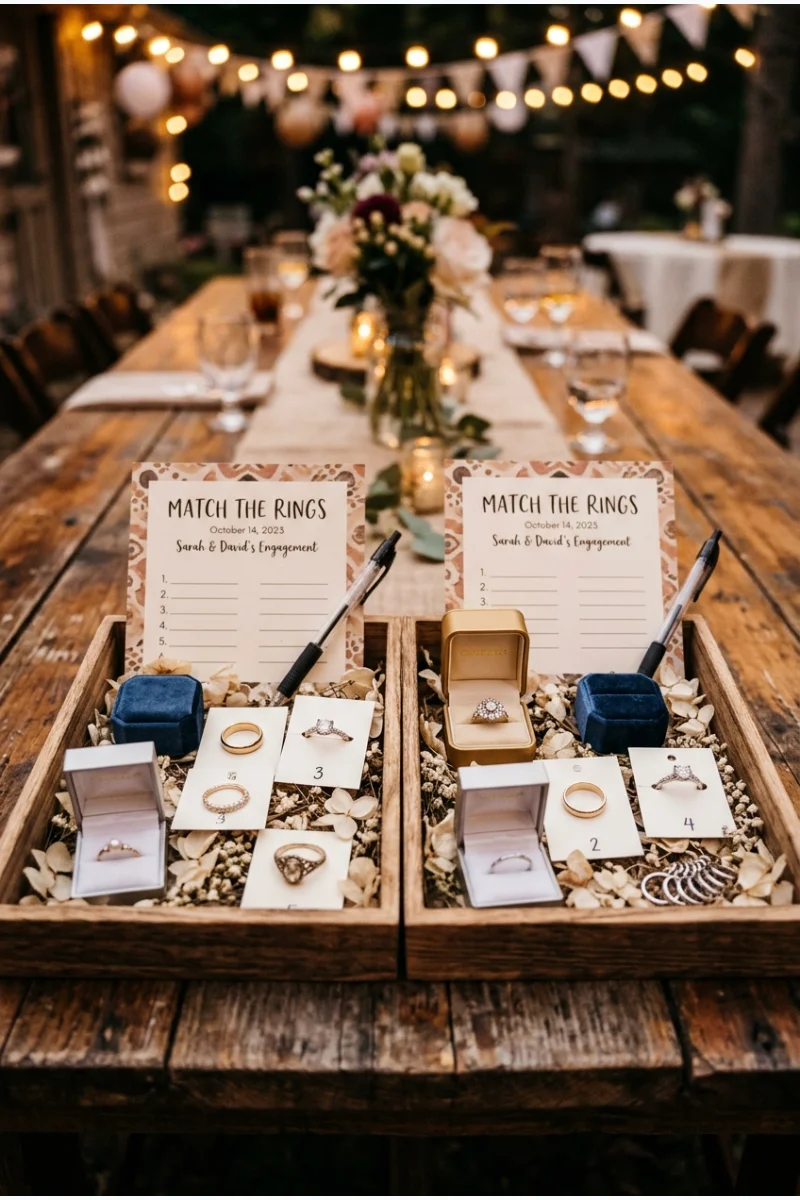
Prepare two small tabletop arrangements with five deliberate differences. Guests compare them without touching anything and write down the changes.
Allow two minutes and award one point for each correct difference. Highest total wins; use a prepared key. Changes in object count, placement, and open or closed containers work well.
20. Solve a Seating Logic Puzzle
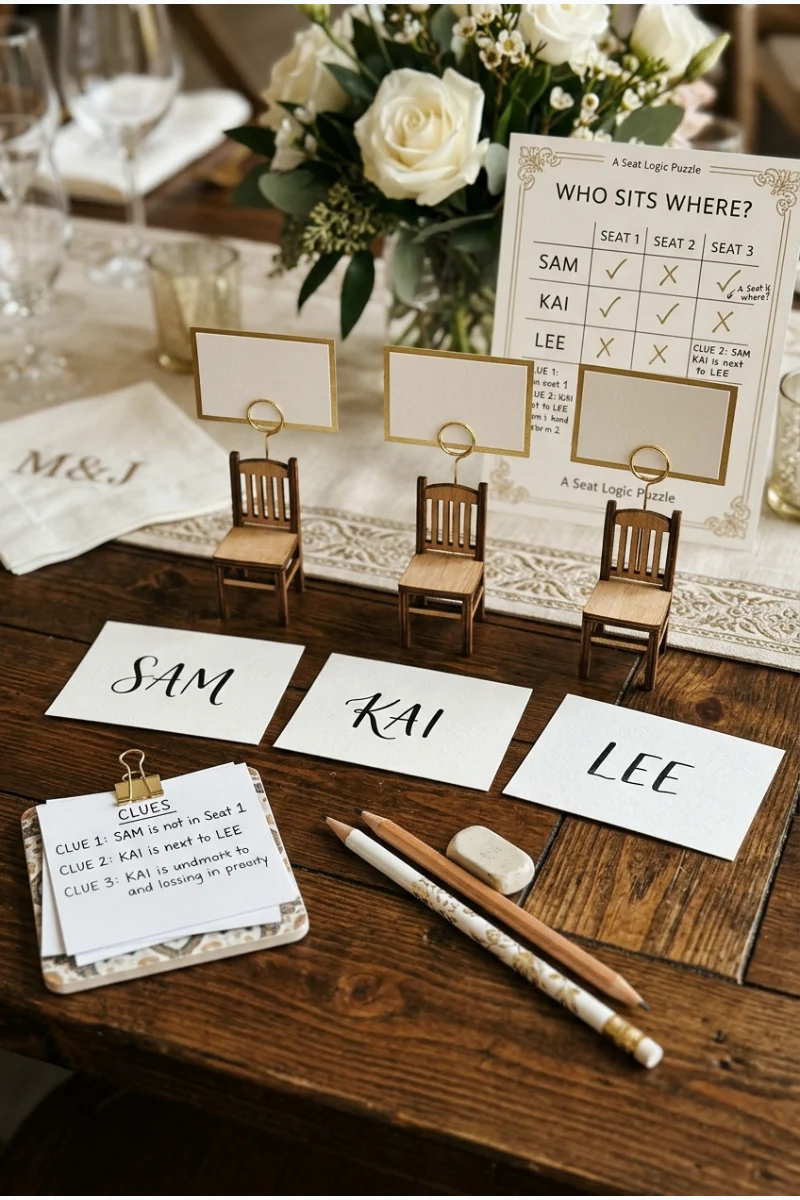
Give guests this fictional puzzle: three seats run left to right; Kai sits immediately left of Lee; Sam is not on the right. Players must write the complete order.
The answer is Sam, Kai, Lee. Allow two minutes, then award a point for each correctly placed name. Share the win among perfect answers rather than making handwriting speed decisive.
21. Engagement Word Search
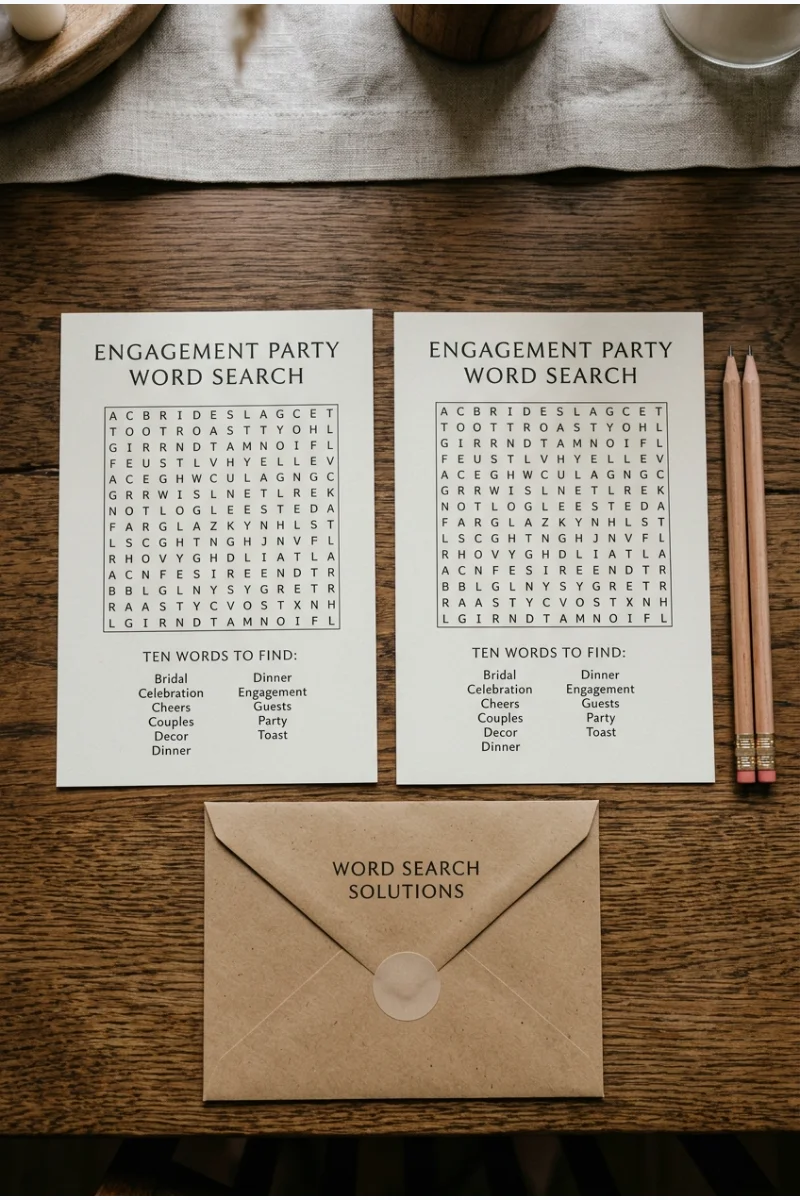
Prepare and test a word-search grid using ten words such as ring, toast, cake, date, vows, party, love, music, dance, and couple. Give everyone the same grid and word list.
After four minutes, score one point per correctly marked word. Highest total wins, with a shared win for ties. Keep an answer key and use print large enough for comfortable reading.
For a seated home celebration, adapt the game-station approach in these bridal shower ideas at home while keeping the content focused on both partners.
22. The Couple Crossword
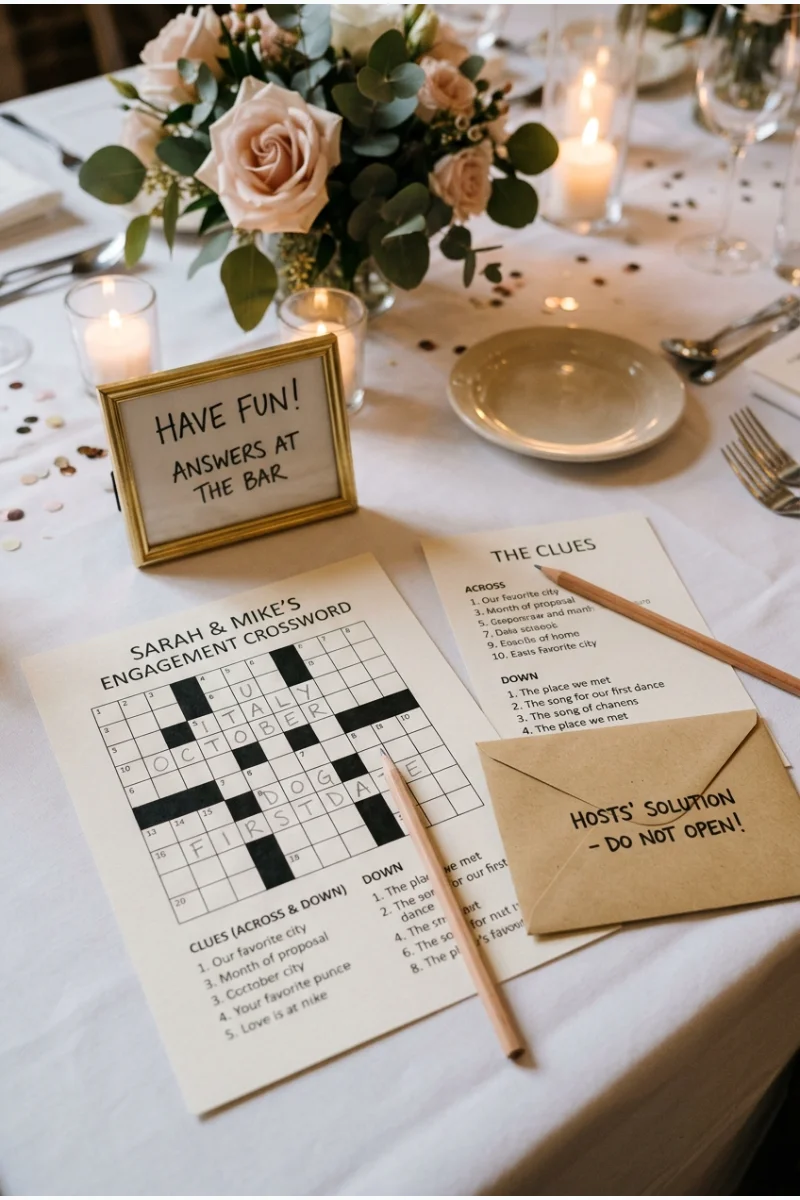
Create a small crossword from approved couple facts, with a few general engagement clues so newcomers can contribute. Test the finished grid and keep a complete answer key.
Teams of two work for five minutes and earn one point per fully correct answer. Highest total wins. Offer optional hints after the first two minutes, with the same hint available to everyone.
23. Unscramble the Engagement Words
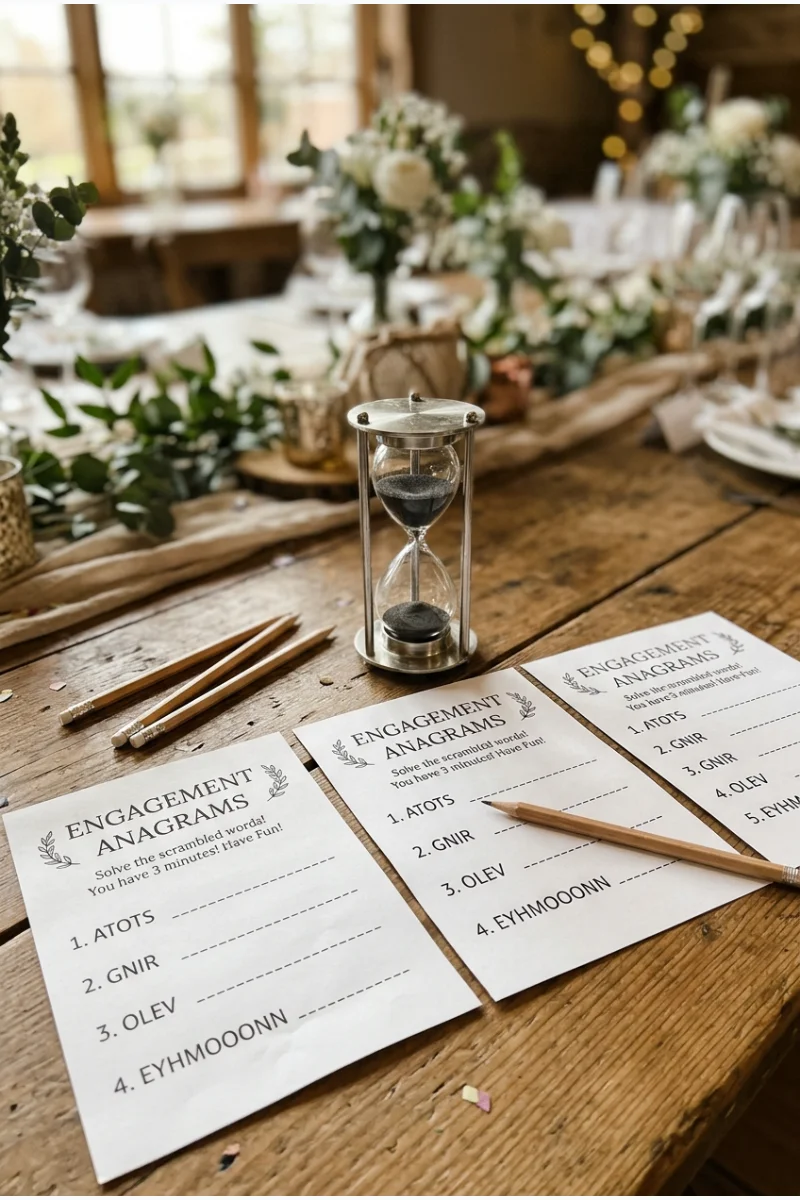
Give guests ten scrambled words, such as GNIR for RING and ATOTS for TOAST. Check every scramble and answer before printing identical sheets.
Allow three minutes and award one point per solved word. Highest total wins. Include an optional first-letter hint sheet, deducting one point only if that rule was announced before play.
Drawing, Acting, and Music Games
24. Describe It without the Obvious Words
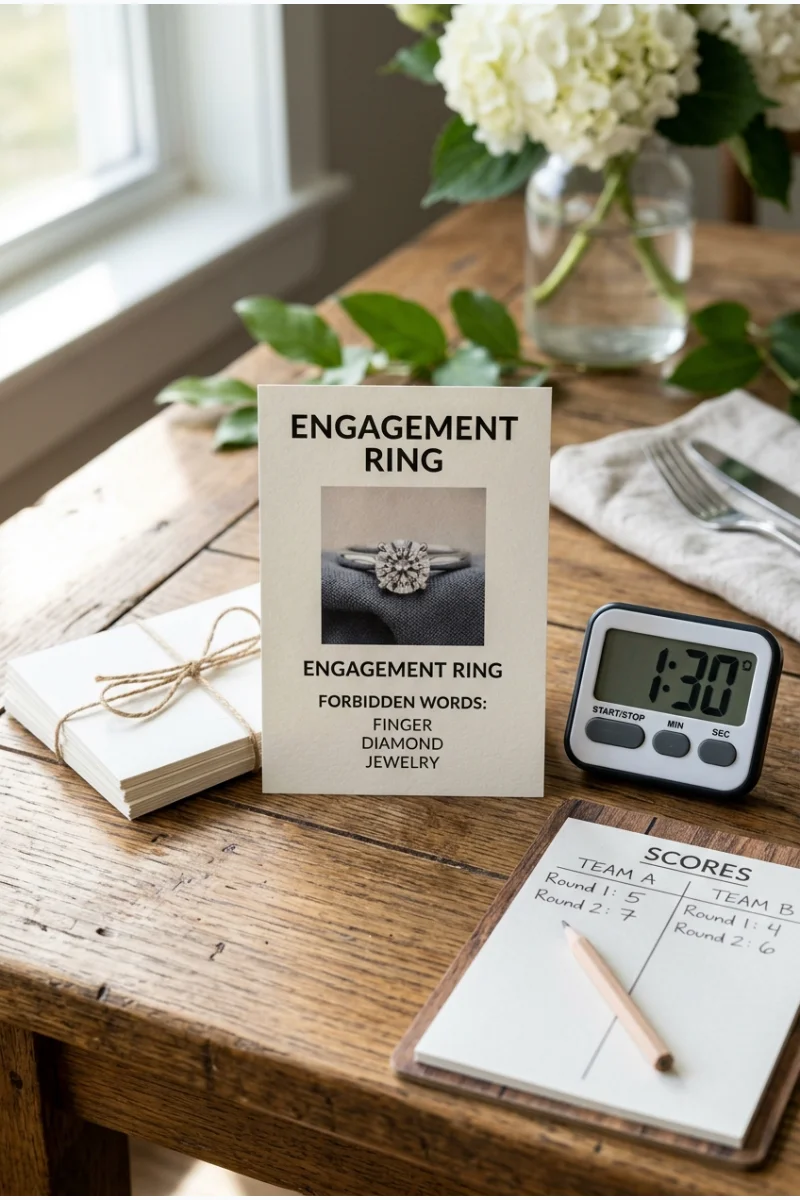
Write a target word and three forbidden clues on each card. For ring, the forbidden words might be finger, diamond, and jewelry. Teams take turns describing targets for sixty seconds.
Each correct guess scores one point; a forbidden word or pass ends that card without a point. Give every team the same number of turns.
You can make the deck on REGUICORP blank playing cards using your own engagement-related targets and clue restrictions.
25. Drawing Telephone
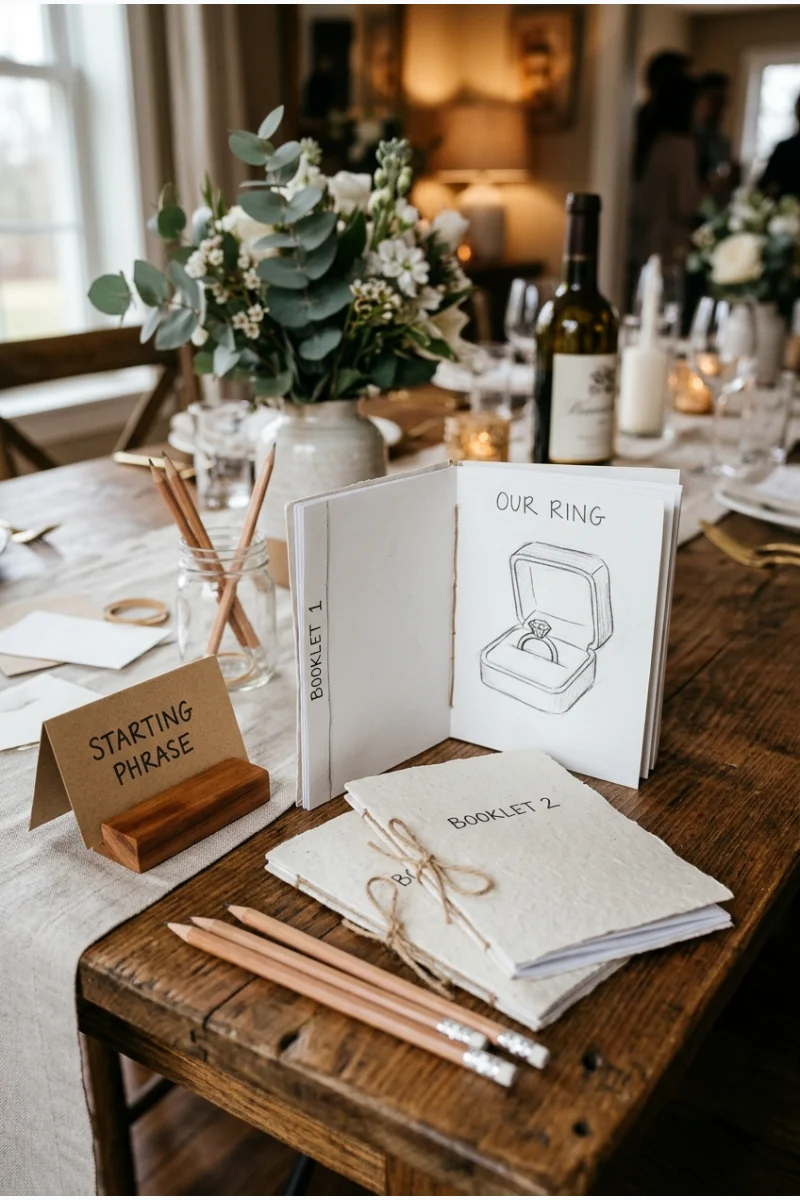
Give each player a folded booklet with one original engagement-related phrase on its first page. The next person draws it, folds the phrase away, and passes it on.
Alternate written guesses and drawings until each booklet returns to its owner. Reveal the changes together. This is cooperative comedy with no winner; use object prompts rather than drawing real guests.
26. Wedding Charades
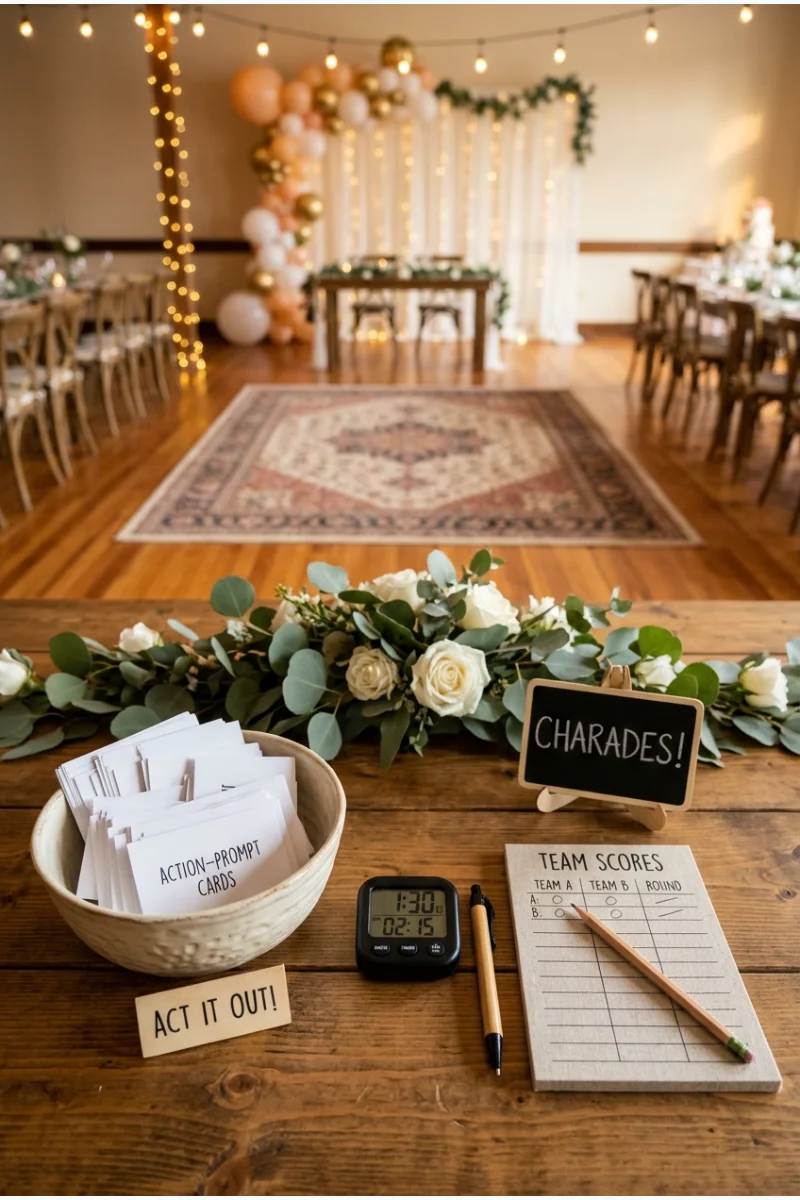
Put action prompts such as cutting a cake or searching for a lost ring in a bowl. Teams alternate sending one volunteer to act silently for sixty seconds.
A correct guess scores one point; passes are allowed. Give each team three turns and let the highest total win.
The charades format in these bachelorette party games can be adapted for an engagement party by including both partners and keeping prompts suitable for the guest list.
27. Draw the Engagement Clue
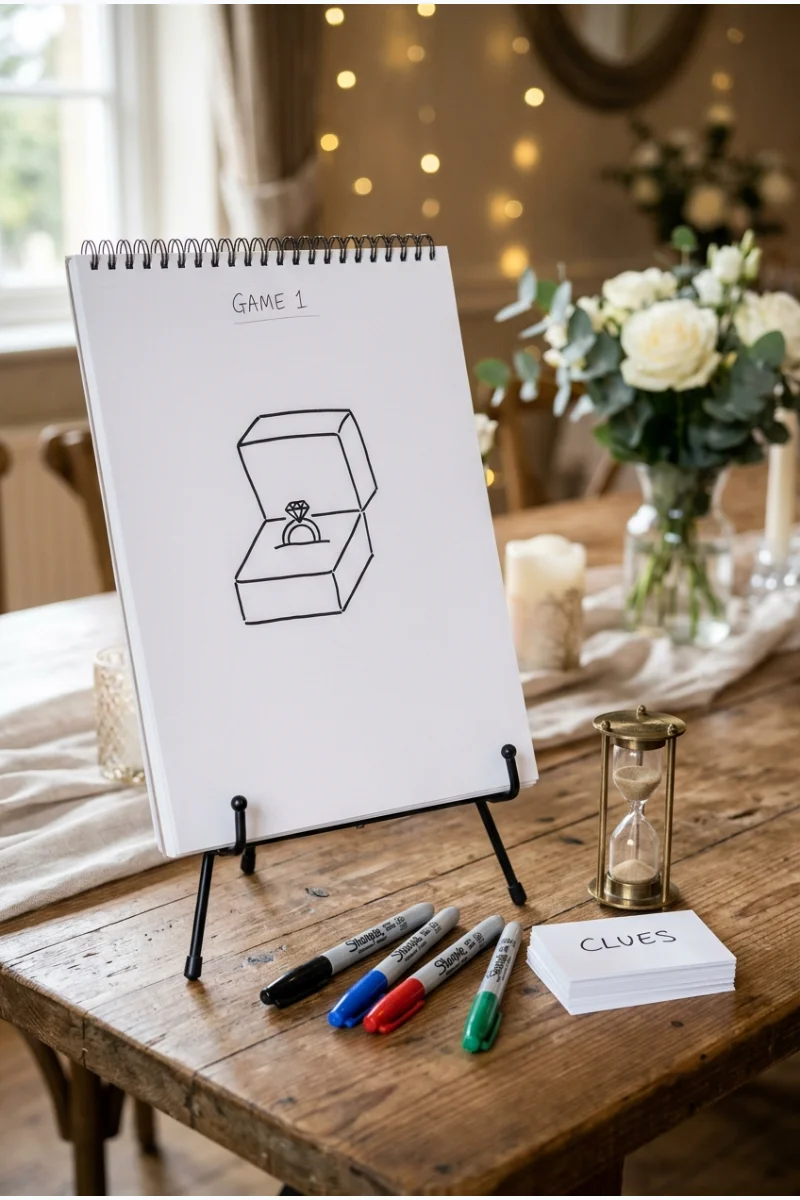
Prepare object and action clues for teams to draw, such as ring box, bouquet, or first dance. One volunteer draws while teammates guess for sixty seconds.
No letters, numbers, or spoken clues are allowed. Score one point per solved card and give each team three equal turns. Highest total wins; offer a clue-reader role for guests who prefer it.
28. Decode the Emoji Phrase
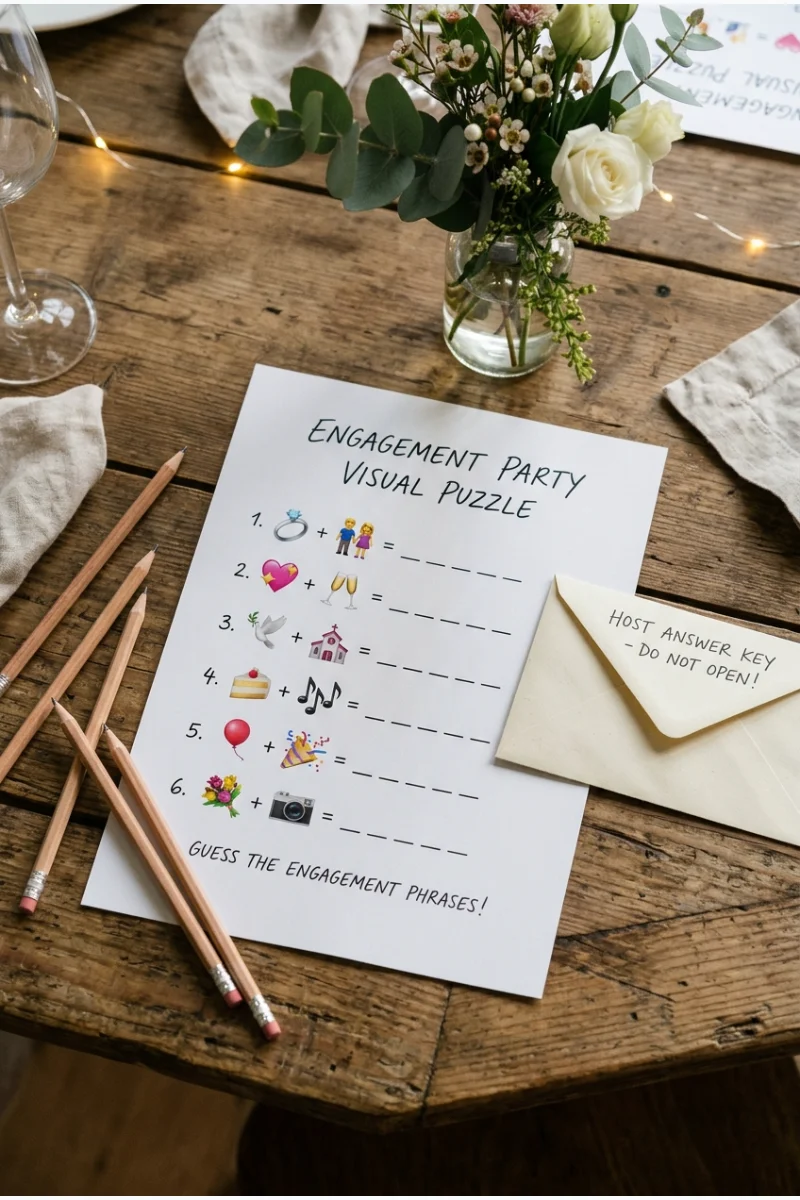
Prepare eight picture-symbol combinations for engagement phrases and test them with someone outside the planning team. Give small teams identical sheets and an answer key for the host.
Allow five minutes and award one point per correct phrase. State acceptable alternative wording beforehand. The goal is solving visual clues, not guessing an obscure private joke.
29. Name That Shared Playlist Tune
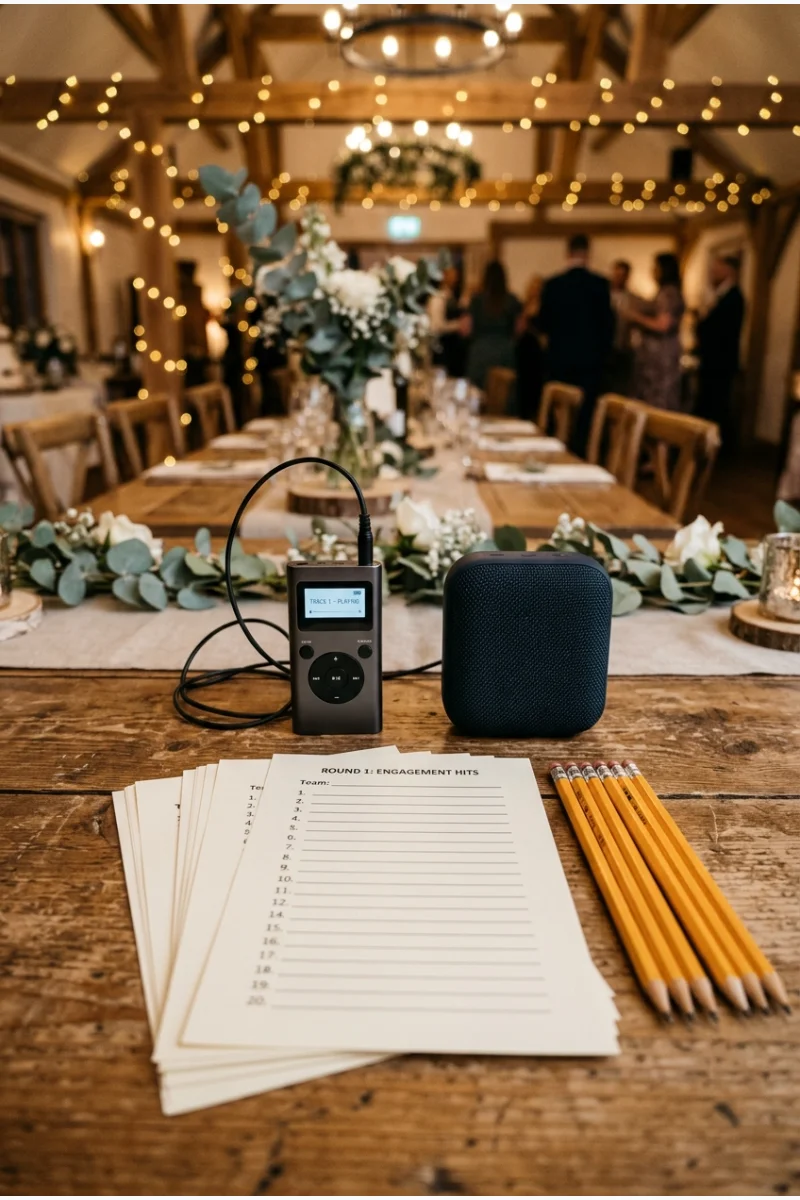
Choose ten short music excerpts from songs the couple approves, mixing styles so different guests have a chance. Teams write the song title after each clip.
Award one point per correct title and announce whether artists earn a bonus before starting. Highest total wins. Keep answer sheets private until the reveal rather than using the fastest shout.
30. Love-Song Listening Bingo
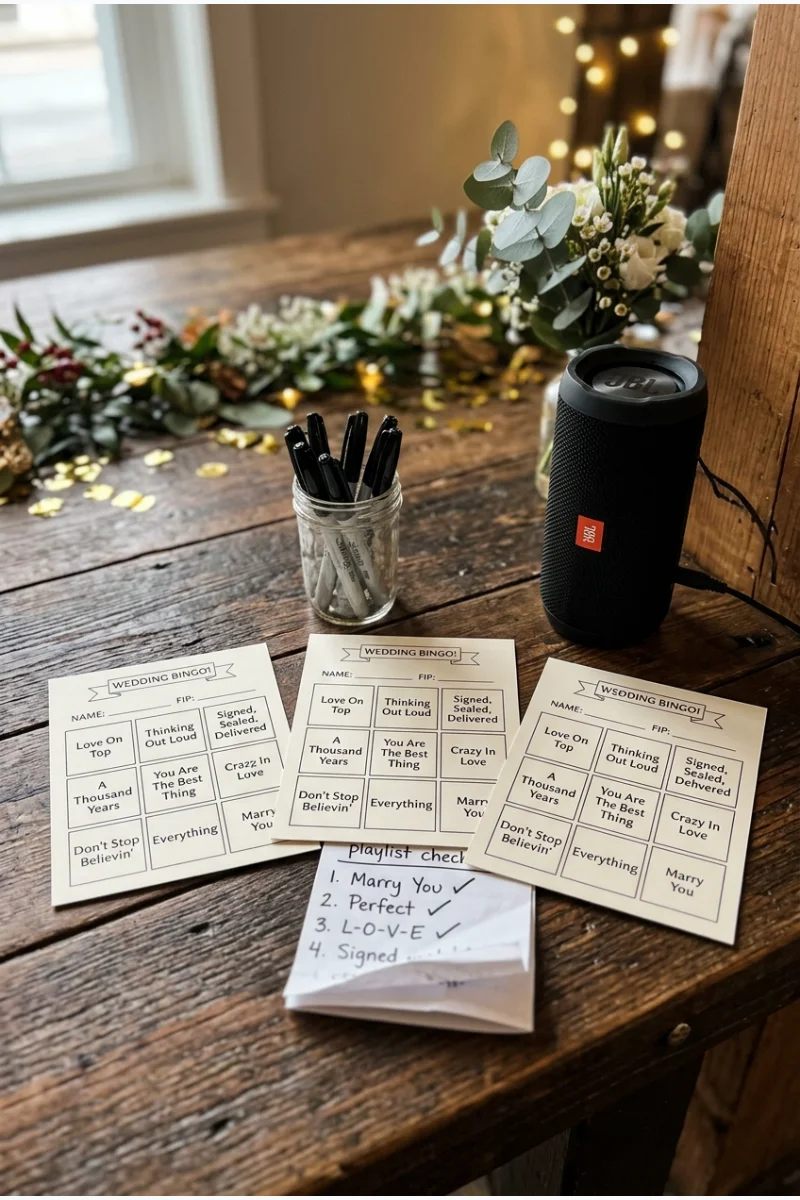
Make different three-by-three bingo cards using titles from one prepared playlist. Play short excerpts in a shuffled order while guests mark titles they recognize.
The first verified row, column, or diagonal wins. The host checks against the tracks actually played. Use music from several eras and keep the volume comfortable.
Creative Games with a Clear Finish
31. Build a Date with Fictional Tokens
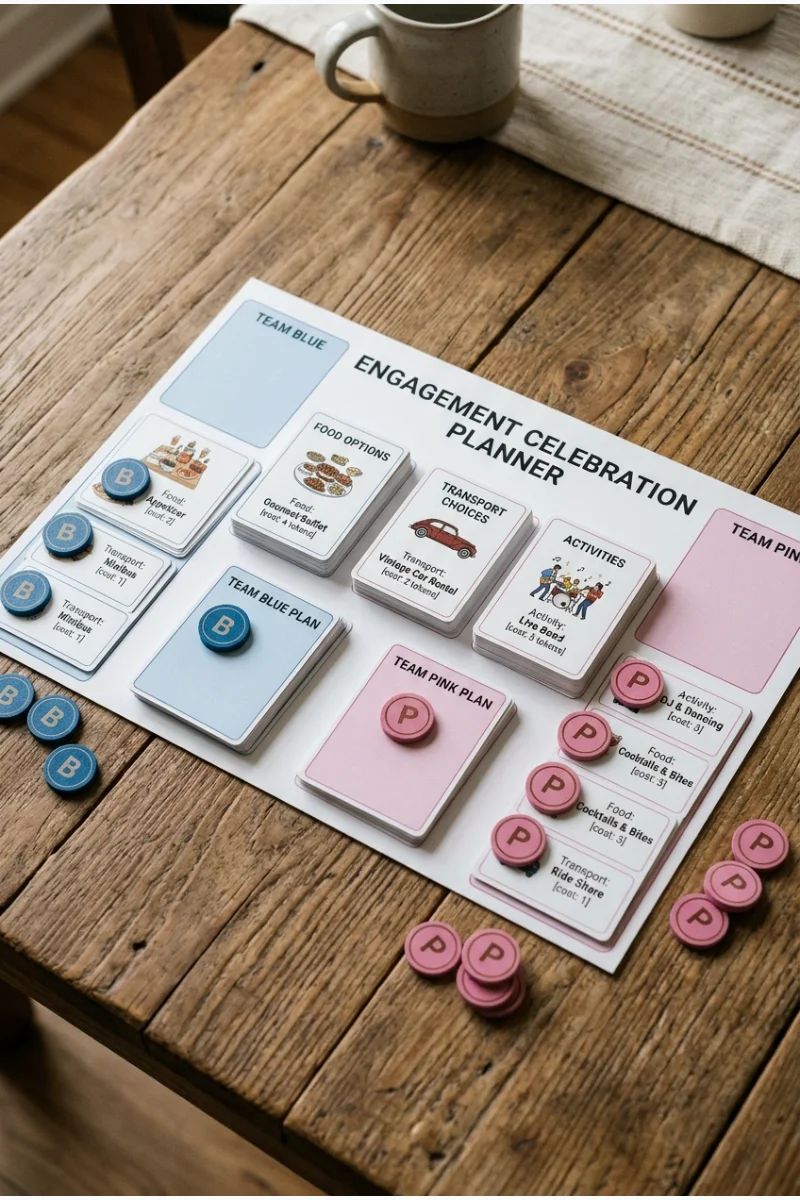
Give teams twelve pretend tokens and cards for food, transport, and an activity, each with a clearly fictional token cost. They assemble a date within the allowance.
Award one point each for staying within budget, including all three parts, and explaining how both partners would enjoy it. The couple chooses among tied teams. This tests planning and creativity, not real-world price knowledge.
32. Caption the Object Photo
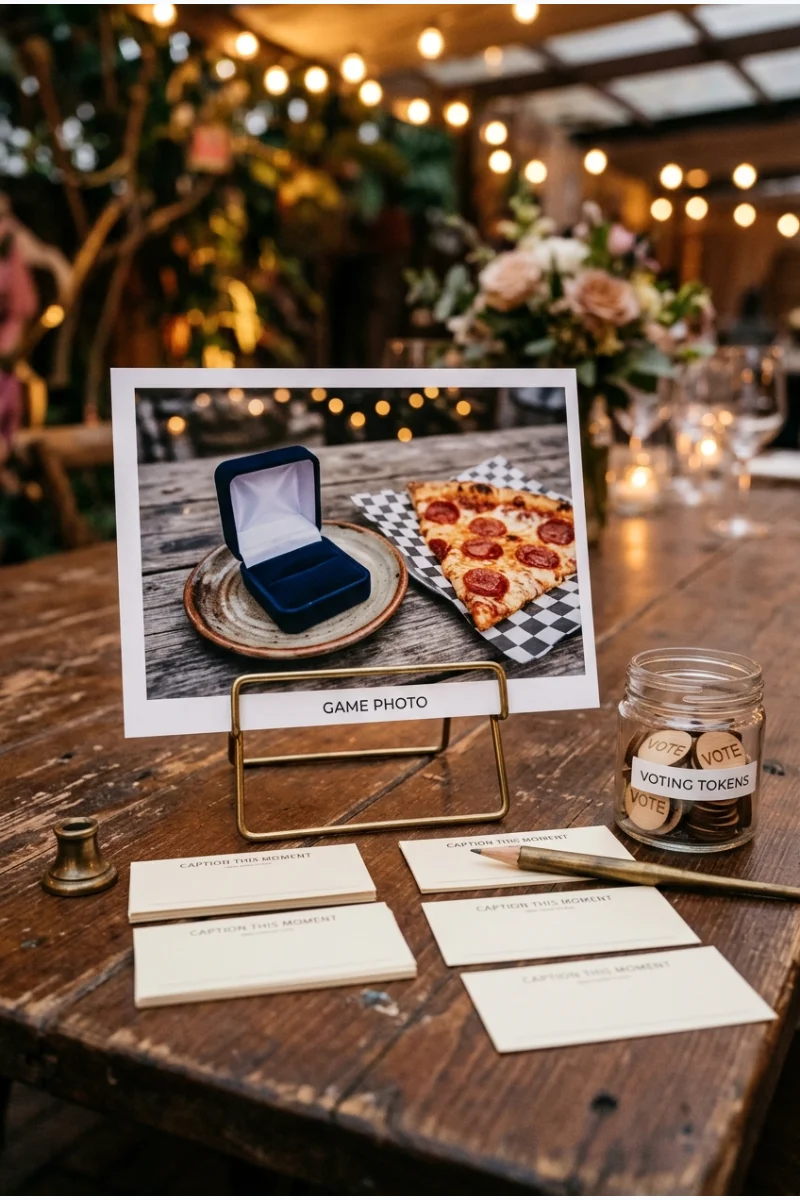
Stage a funny still-life photograph, such as an empty ring box beside a pizza slice. Teams write one short caption without putting words in a real guest's mouth.
Read captions anonymously and give each guest one vote, excluding their own team. Most votes wins. Keep the actual photograph on display while voting.
33. The Three-Word Toast Challenge
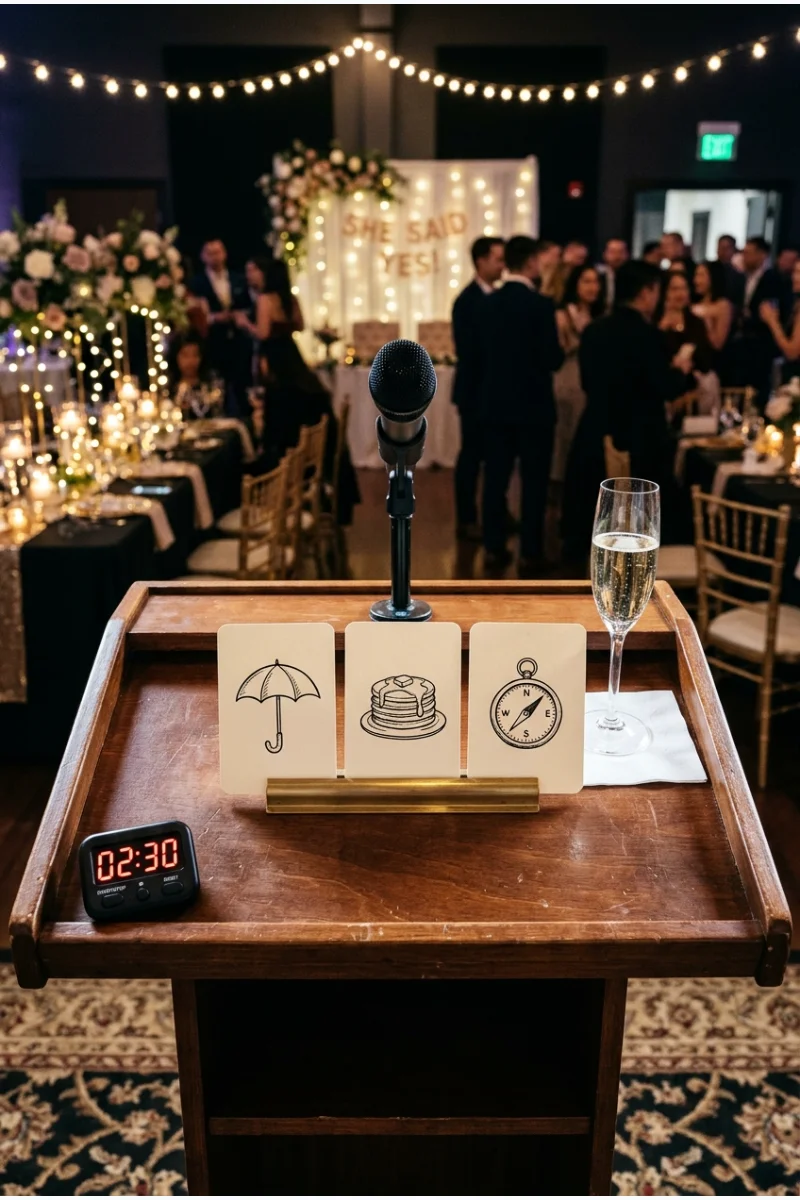
Each volunteer draws three harmless nouns, such as umbrella, pancake, and compass, then has thirty seconds to prepare a short celebratory toast using all three.
Award one point per included word and one point for finishing within forty-five seconds. Highest score wins, with a shared win for ties. Guests may pass or perform in pairs.
34. Fill-in-the-Blank Love Story
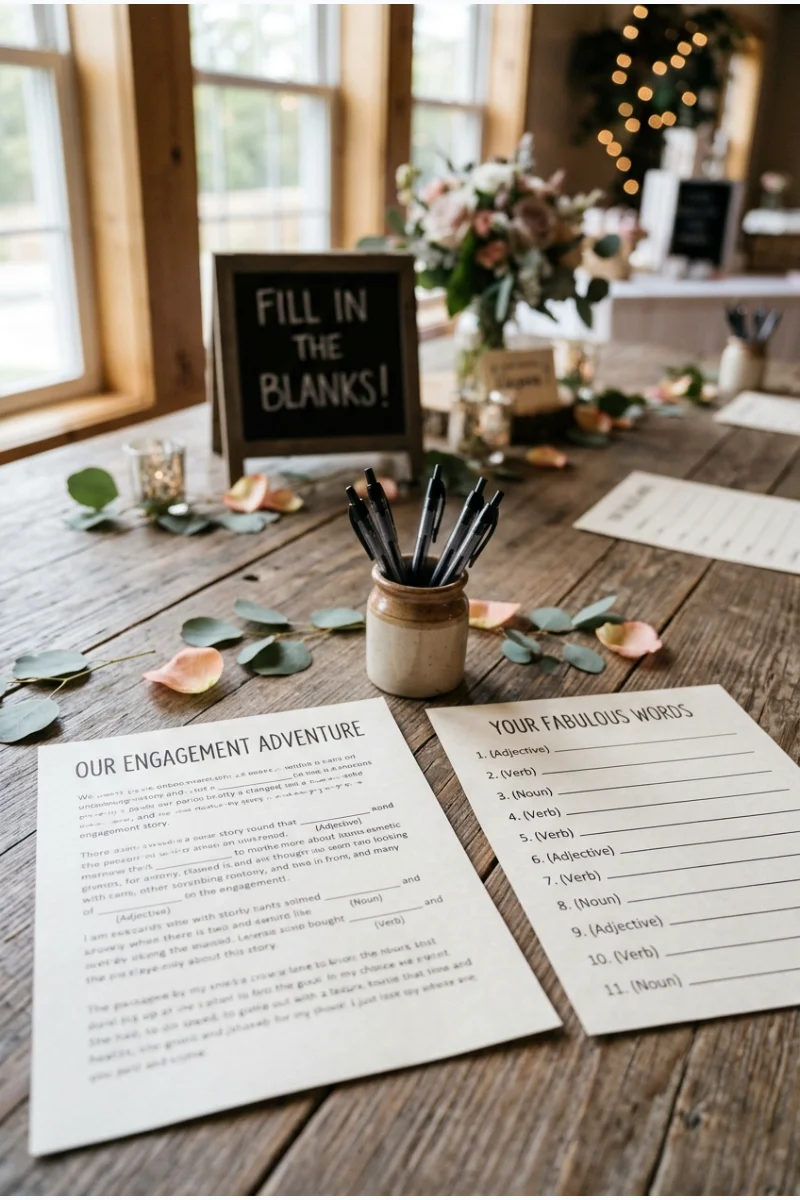
Write an original short story with blanks labeled noun, adjective, or verb. One partner supplies words without seeing the story while the other fills them in.
Read the completed stories at each table, then swap roles. This is a cooperative laughter game without scoring; keep the original template short and avoid private details.
35. One-Sentence Story Circle
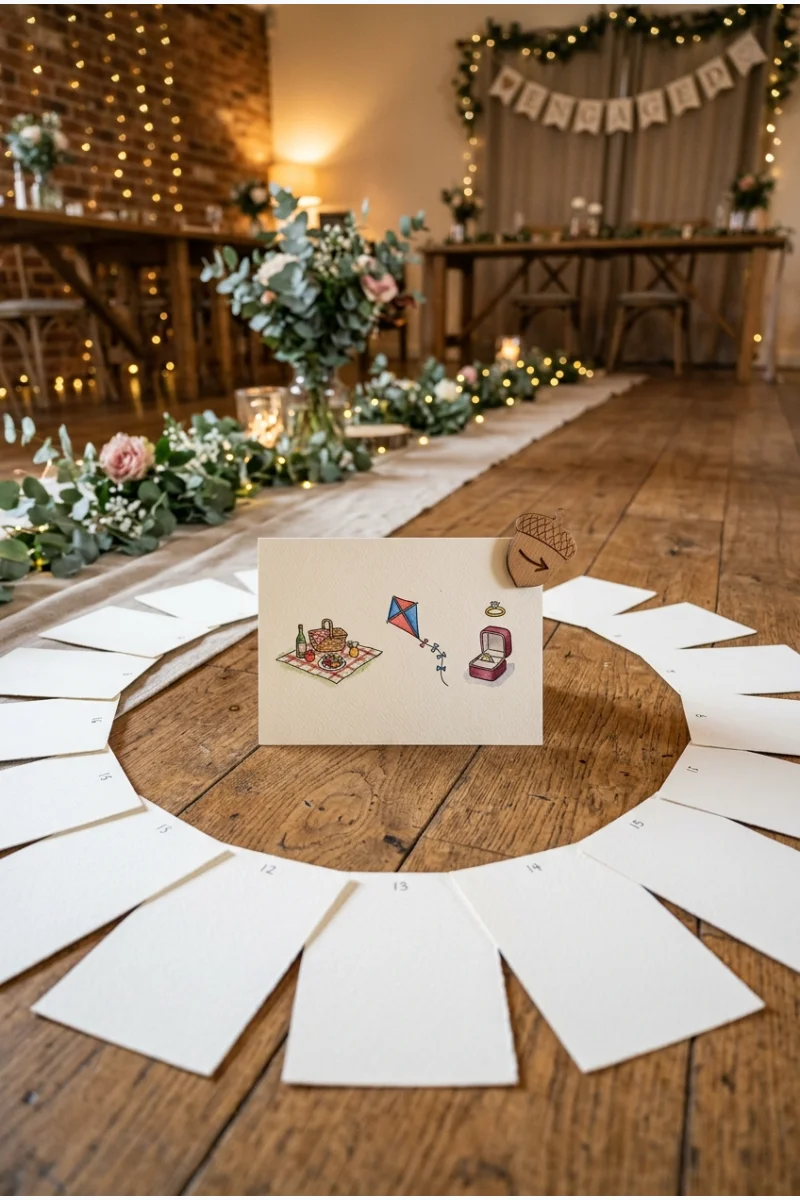
Start with an invented premise such as a picnic proposal interrupted by a runaway kite. Each player adds one sentence, continuing what came before.
Give everyone one turn, then ask the final player to supply an ending. The group wins by completing a coherent story together; passing is allowed and nobody needs to discuss their real relationship.
36. Build a Freestanding Paper Ring
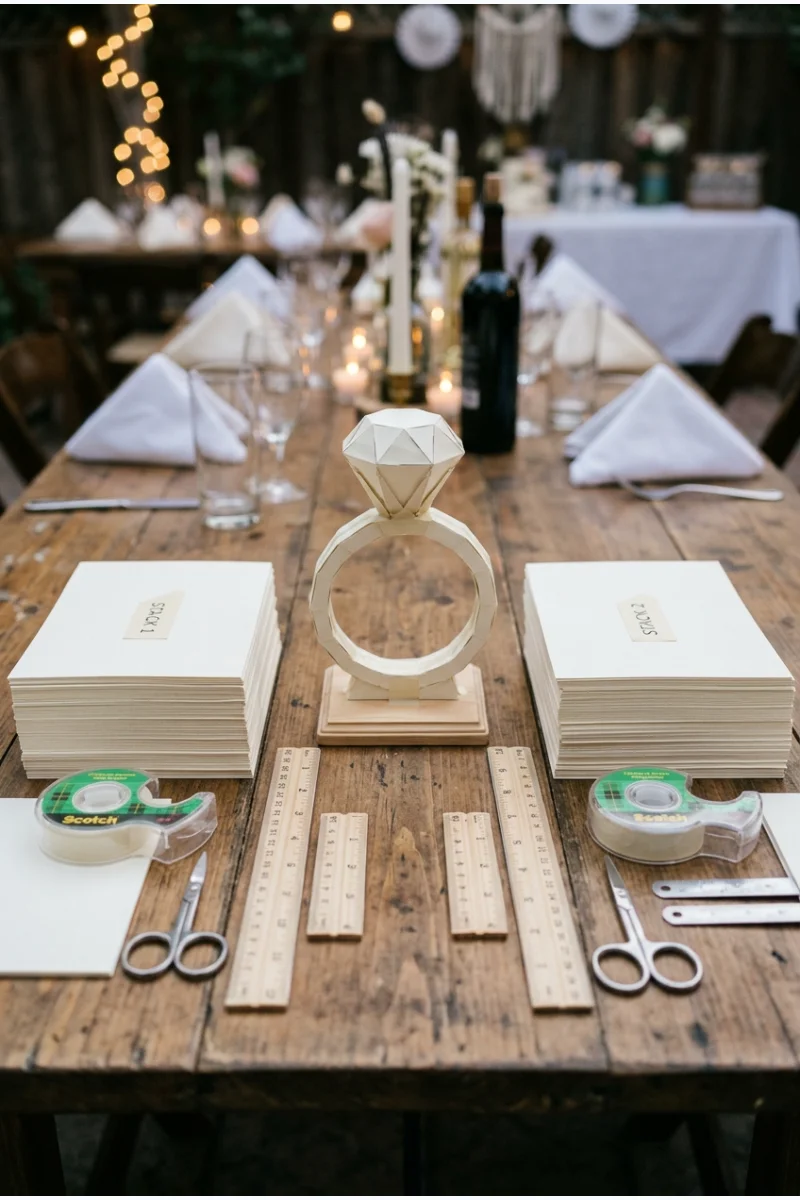
Give teams equal amounts of card stock and tape to build a freestanding engagement-ring sculpture with a band and a recognizable gem shape. Allow five minutes.
Score one point for each required feature and one for standing unaided for ten seconds. The tallest qualifying sculpture wins a tie. Keep scissors at a shared supervised supply station if needed.
Hands-On Tabletop Challenges
37. The Gift-Wrap Duel
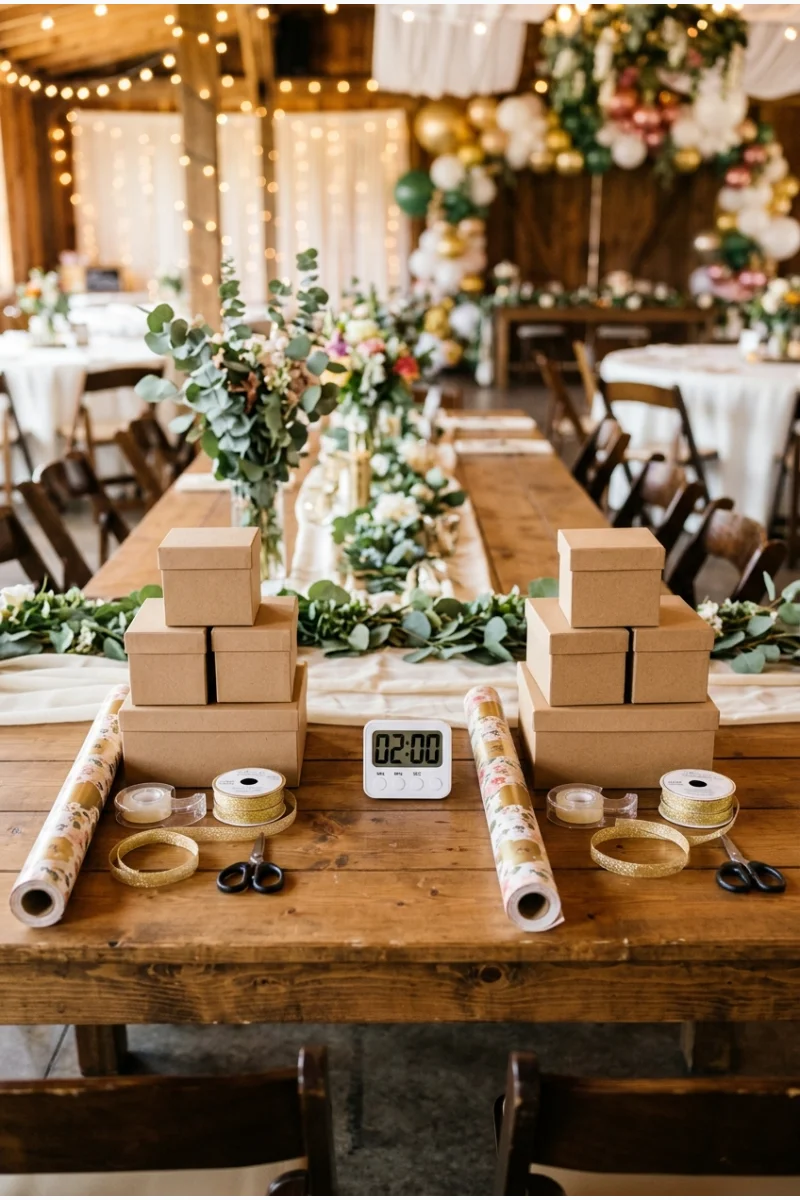
Give each player the same empty box, paper, tape allowance, and ribbon. They have two minutes to wrap the box completely.
Award one point each for covered faces, secure seams, and a tied ribbon. Highest total wins; neatness is not a hidden extra rule. Use empty practice boxes rather than actual engagement gifts.
38. Stack and Reset the Cups
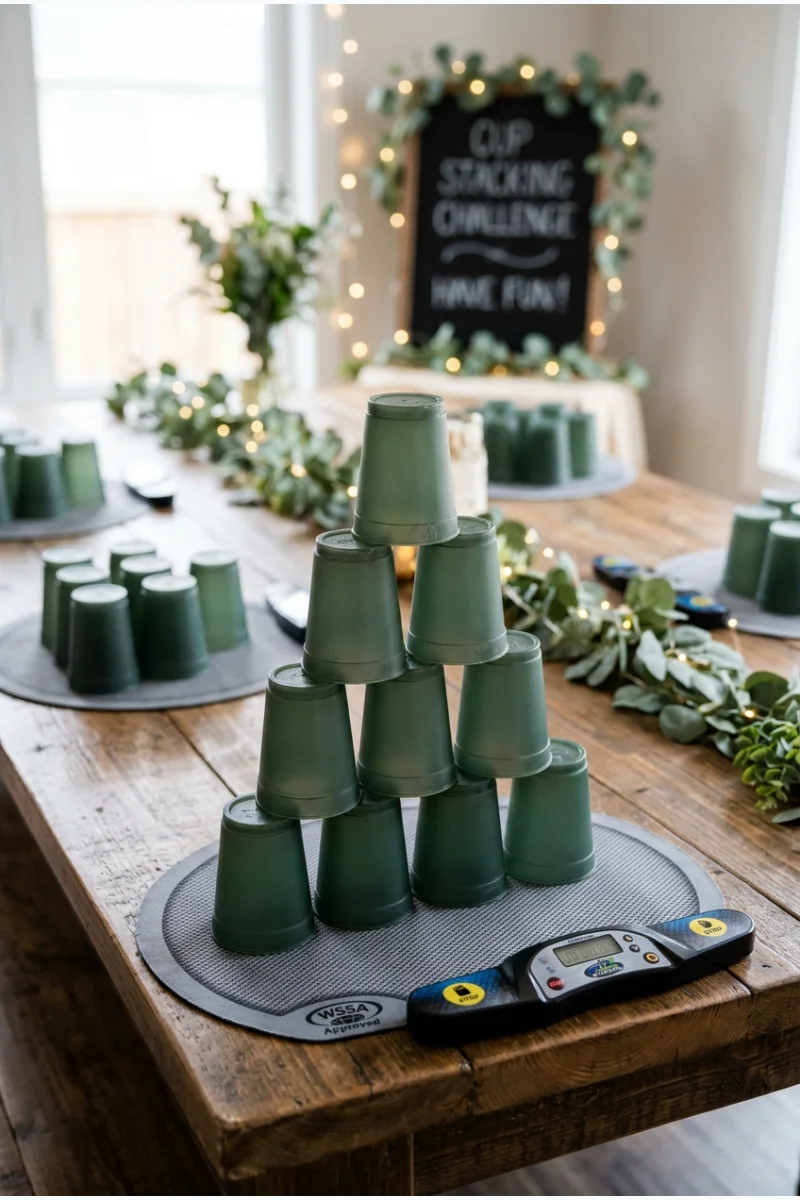
Give each player ten identical reusable cups. They build a four-three-two-one pyramid, then return all ten cups to one nested stack.
Allow two attempts and record the faster completed time. Fastest wins. A toppled pyramid can be rebuilt during the attempt; use a stable table and identical starting positions.
39. Four-in-a-Row Mini Tournament
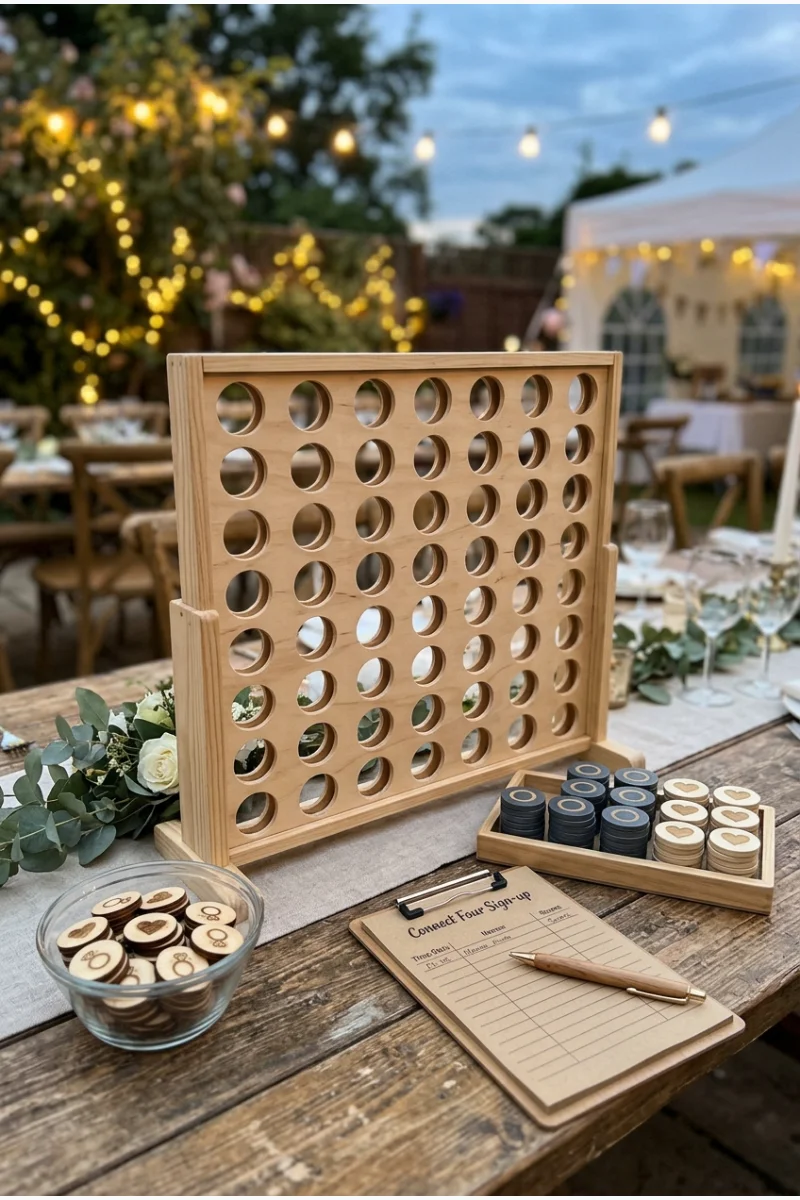
Set out a vertical four-in-a-row game for two players. They alternate dropping one counter into a column, trying to connect four horizontally, vertically, or diagonally.
Play best of three and alternate who starts. A full grid without four in a row is a draw and gets replayed. Keep a signup list so different guests can join between matches.
40. The Tabletop Block Tower
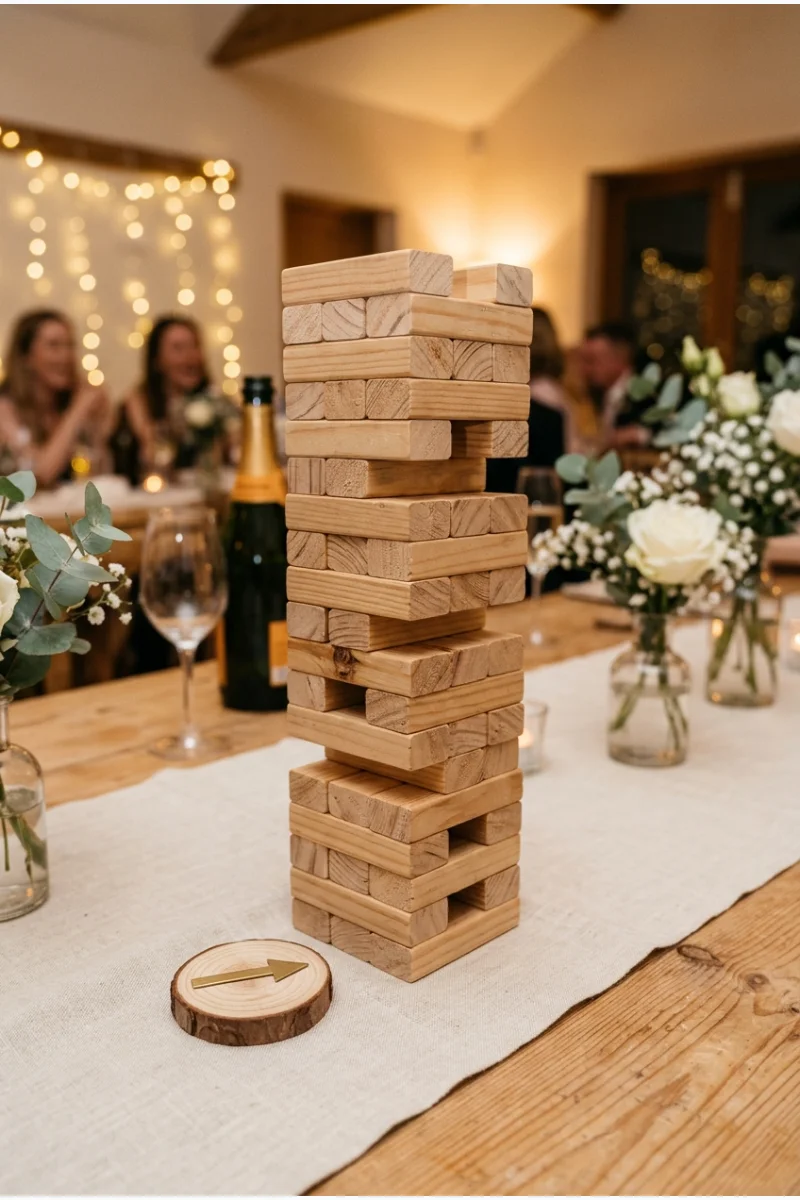
Build a tabletop stacking tower and invite guests to take turns removing one block below the highest completed level, using one hand, then placing it on top.
The last player to complete a turn before the tower falls wins. Keep the area around it clear and use a tabletop-sized set rather than a heavy tower beside seated guests.
41. Chopstick Ring Transfer
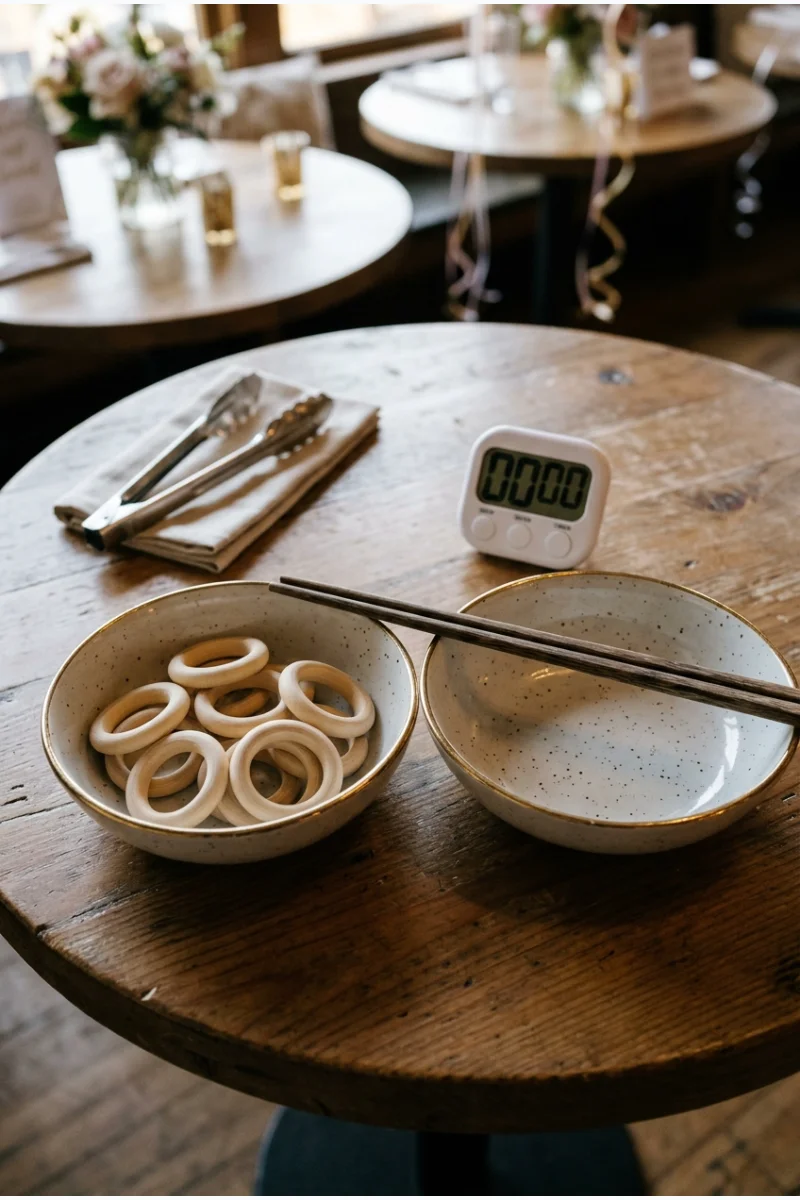
Give each player matching bowls, blunt chopsticks, and ten large lightweight craft rings. Players move rings one at a time between bowls without using their free hand.
Most rings transferred in one minute wins. A dropped ring returns to the starting bowl. Offer tongs as a separate division so different tools are not compared on one scoreboard.
42. Bounce a Ball into the Cups
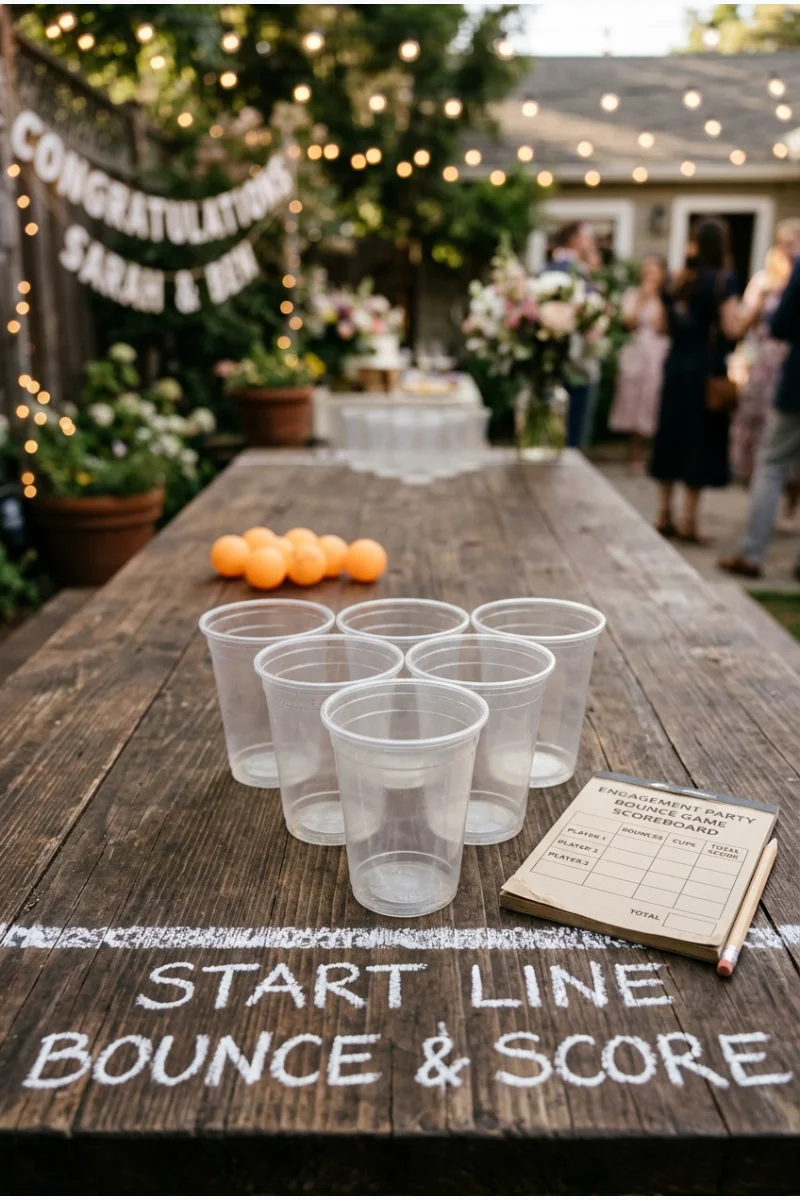
Arrange six empty reusable cups in a triangle behind a marked bounce line. Each player gets six identical lightweight balls and tries to bounce each once into a cup.
Each successful landing earns one point; highest total wins. Retrieve balls after the turn and reset the same layout. No drinking is involved, and a seated throwing position works too.
43. Pass the Parcel
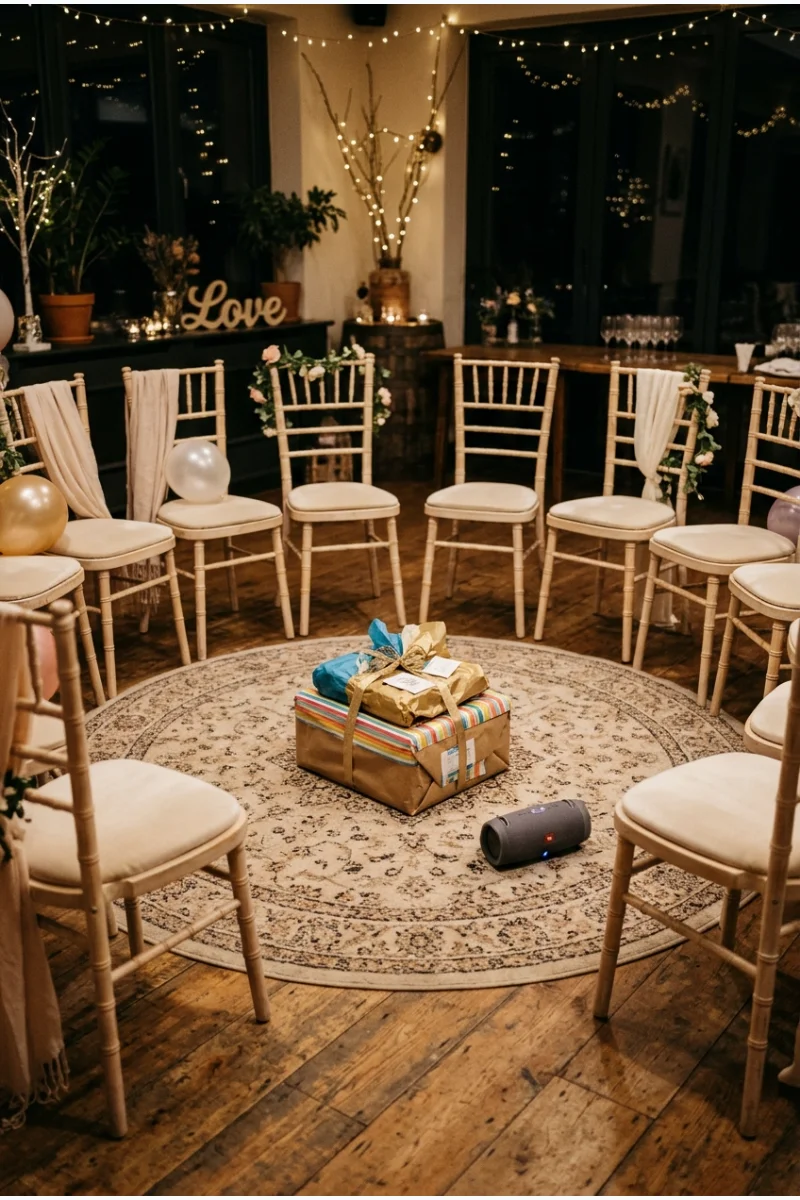
Wrap a small prize in several layers and pass it around a seated circle while music plays. When the host stops the music, the holder removes one layer.
The guest who opens the final layer wins. Nobody is eliminated, and the host should stop the music without watching the parcel. Use a lightweight package with easy-to-remove wrapping.
Lawn Games and Party Hunts
44. Engagement Ring Toss
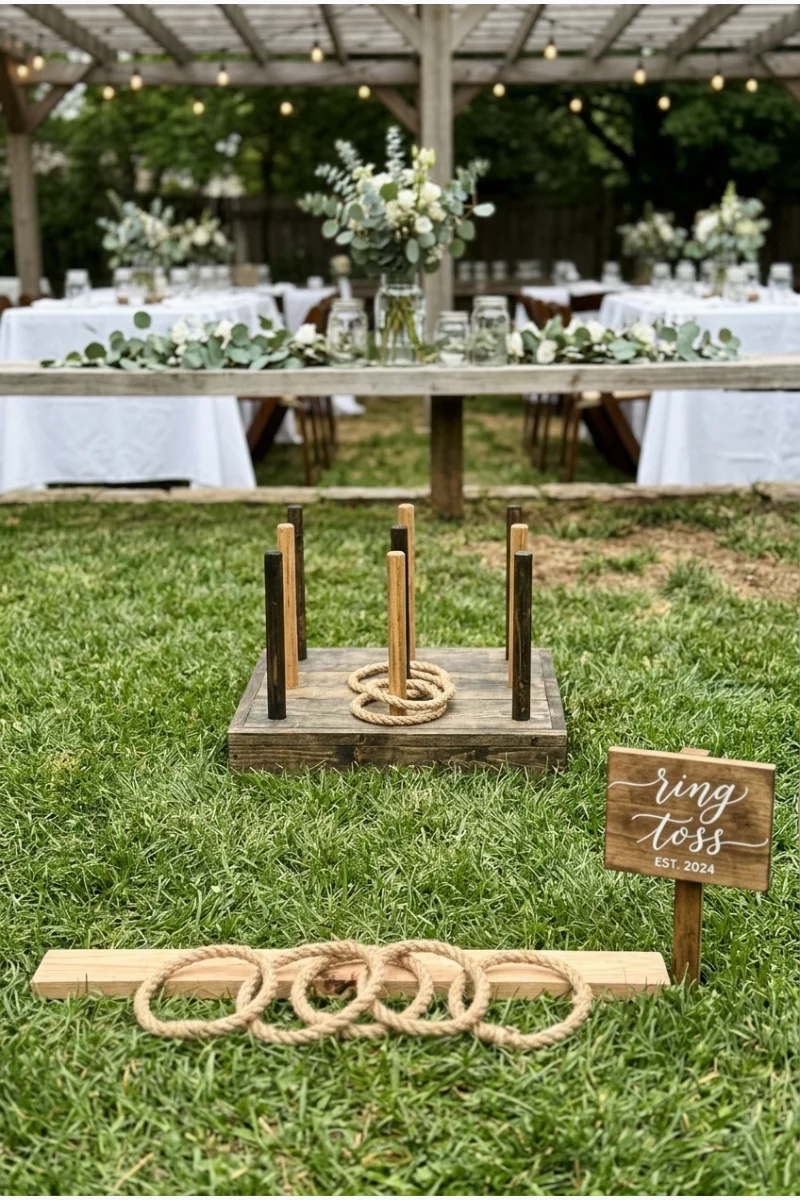
Set a peg target beyond a marked throwing line and give each player five rope rings. Award one point for each ring that fully surrounds a peg.
Everyone gets two rounds; highest combined score wins. Use the same line for each division and keep the landing area separate from food and circulation.
The MABUA ring-toss set is one optional equipment choice for this house scoring format.
If games share space with refreshments, adapt the station layout from these bridal shower setup ideas while preserving a clear throwing lane for your engagement party.
45. Mixed-Team Cornhole
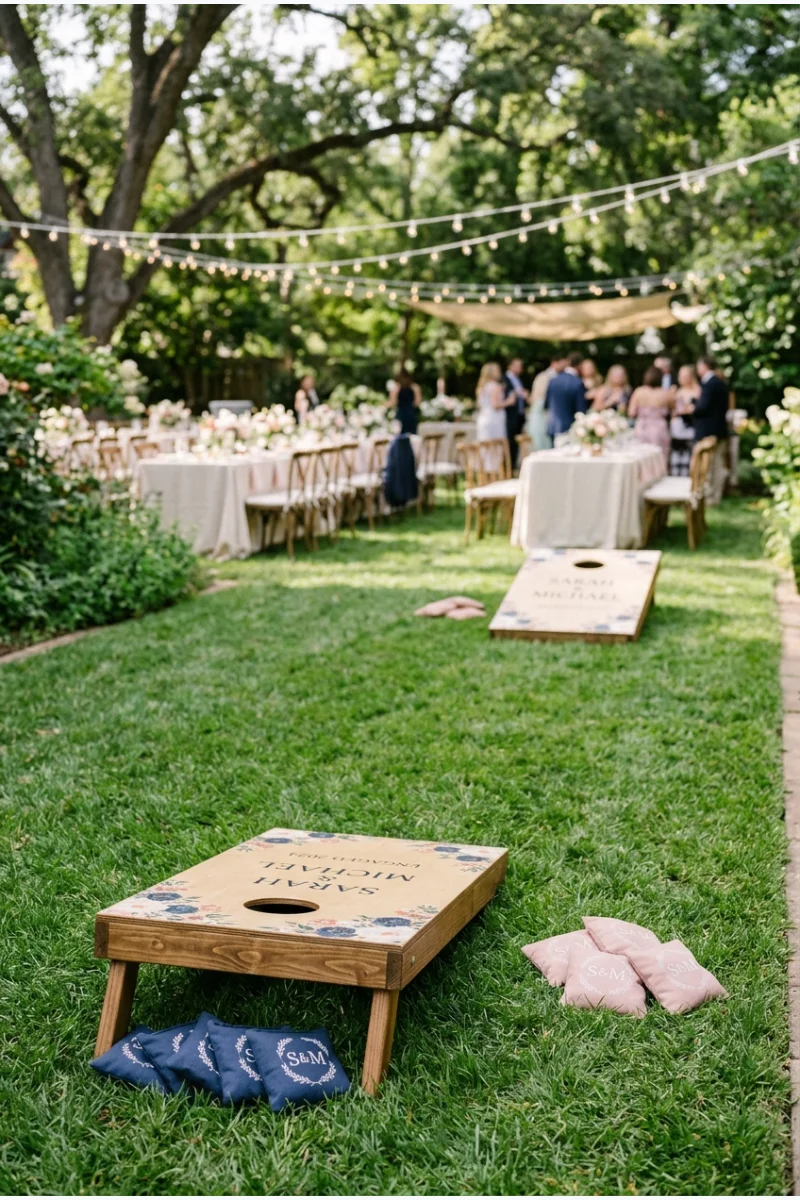
Pair guests from different social groups for cornhole. Teams alternate four bags each per frame; a bag resting on the board scores one and a bag through the hole scores three.
Subtract the lower frame total from the higher, so only one team scores each frame. For this party format, play five frames and highest total wins; tied teams play another frame.
46. Bocce Partner Challenge
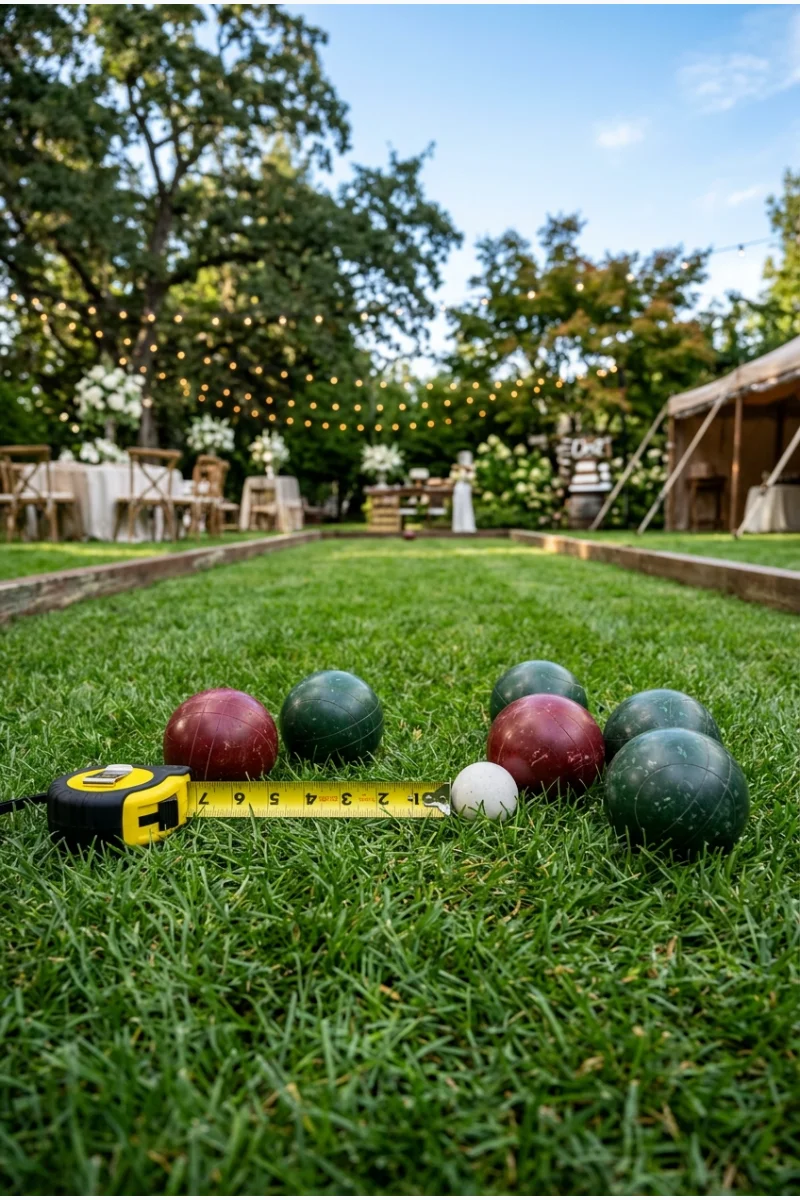
Form two teams and roll a small target ball into a clear lawn area. The team farther from the target keeps rolling until it gets closer or runs out of balls.
After all balls are played, only the closer team scores: one point per ball closer than the opponents' nearest ball. Use this house format for three ends; highest total wins, with a single-ball closest-roll tiebreaker.
47. Short-Course Croquet
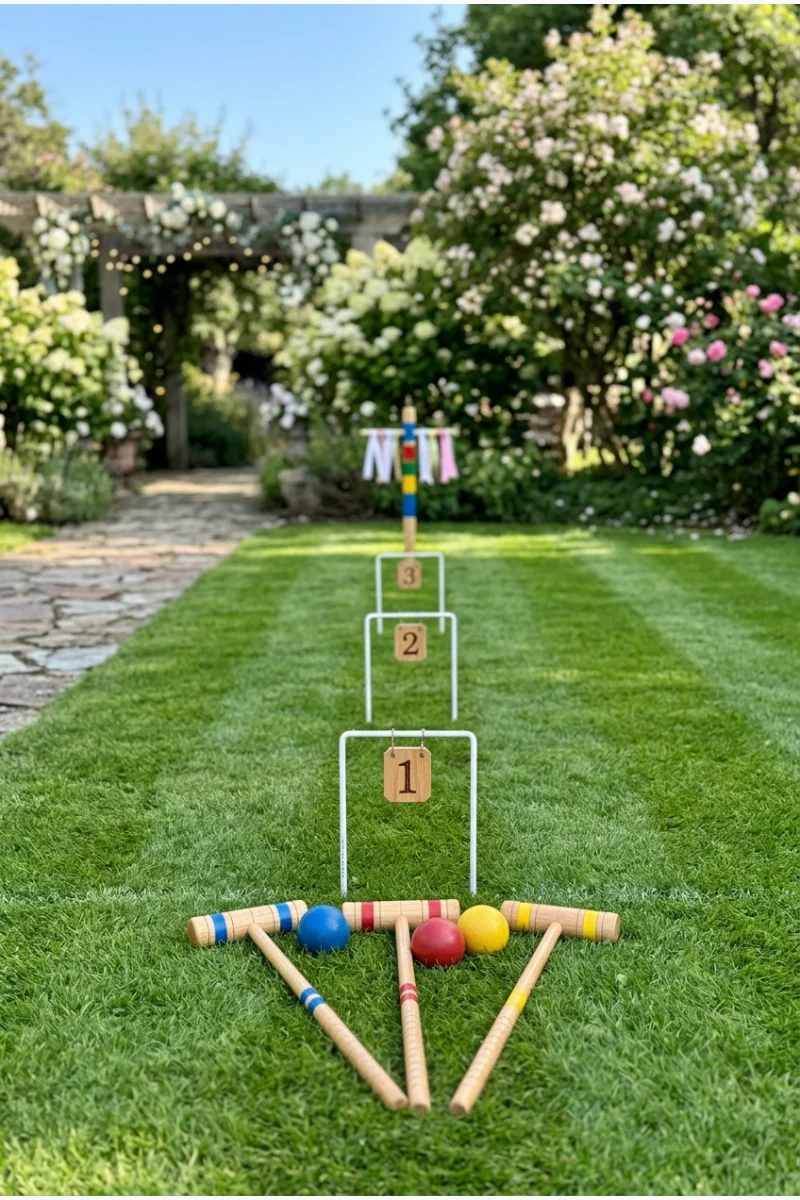
For this simplified house game, place three numbered hoops and a finishing stake on a clear lawn. Each player has a ball and takes one stroke per turn through the route in order.
Passing the next hoop earns one bonus stroke; ignore ball-contact bonuses. First to clear all hoops and hit the stake wins. For an announced timed round, most completed hoops wins; tied players share the win.
48. Towel Volleyball
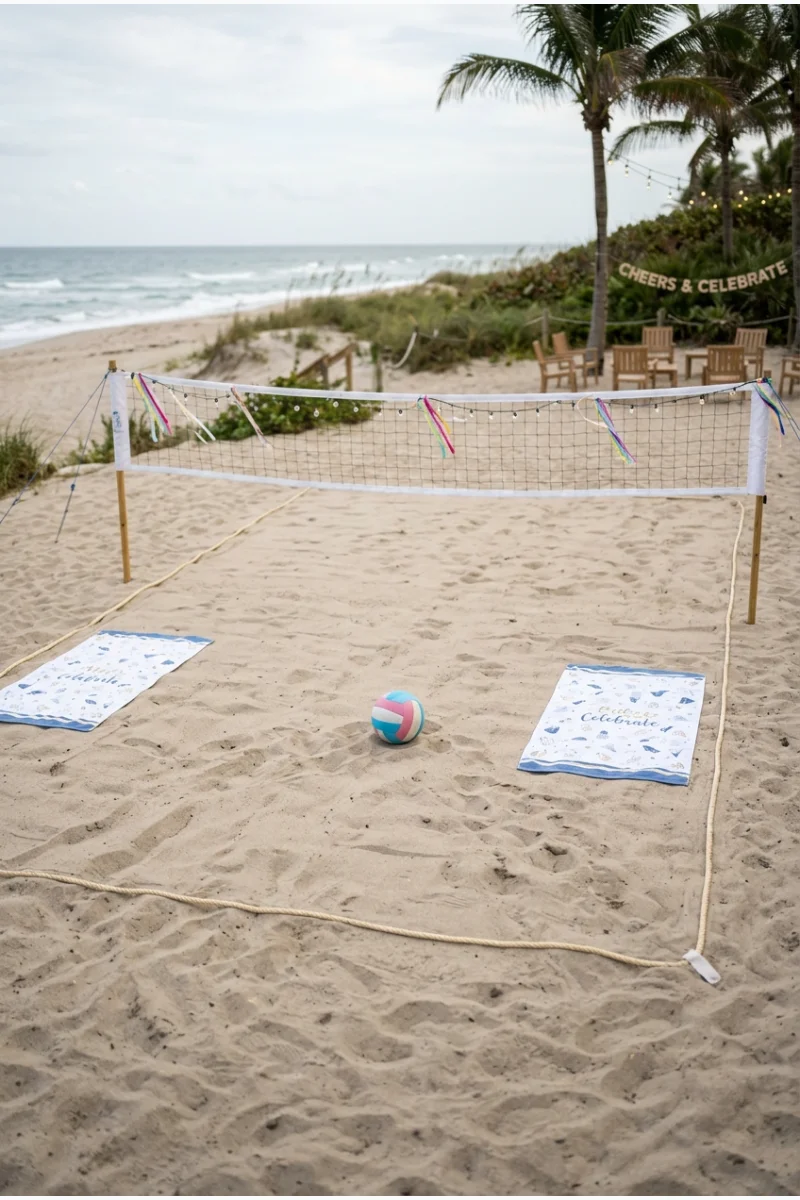
Make two teams of two, each holding the ends of a towel. They launch a soft ball over a low net and try to catch the return in their towel.
A team scores when the ball lands in the opposing court or the opponents send it out. First to five wins. Mark boundaries, use gentle launches, and keep spectators outside the court.
49. The Three-Clue Code Hunt
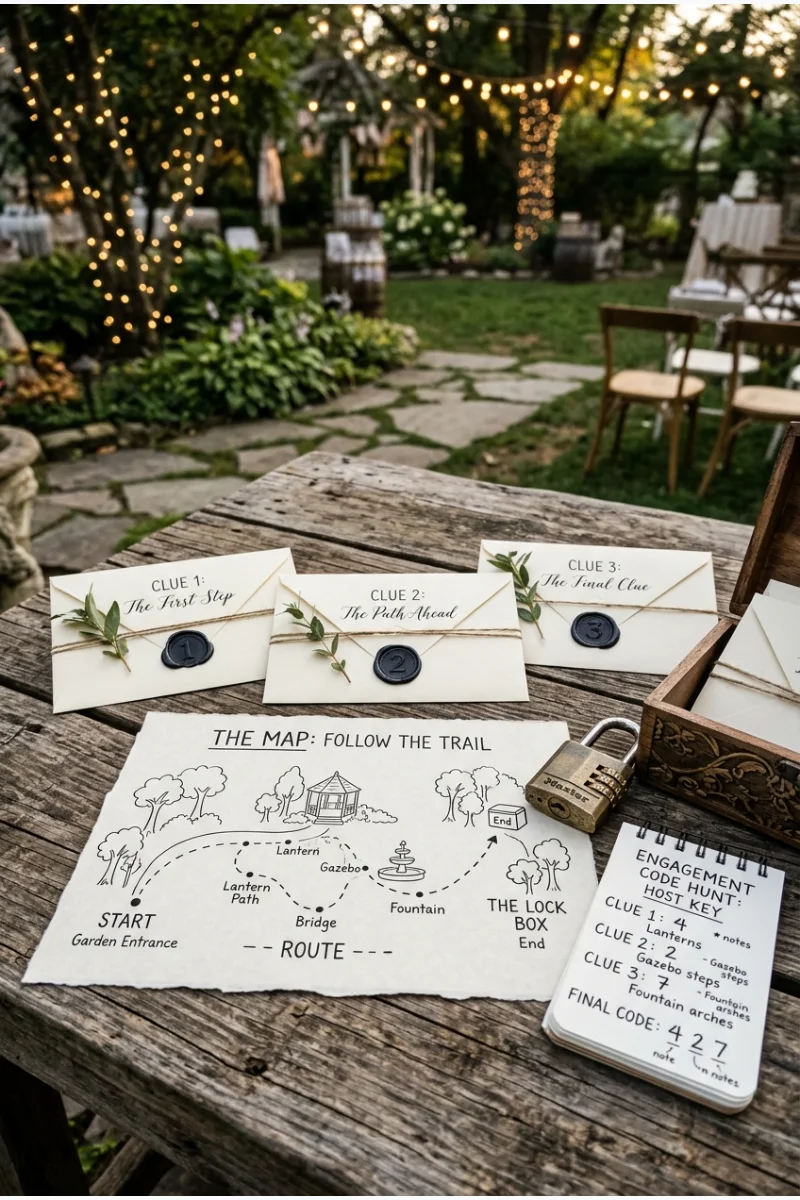
Write three location clues within the party area and place a numbered envelope at each answer. Each envelope holds one digit for a final three-digit practice lock.
Teams solve the clues in order, record the digits, and report the code to the host. First correct code wins. Test the whole route and keep every clue in an accessible public party space.
50. The Hidden Ring Hunt
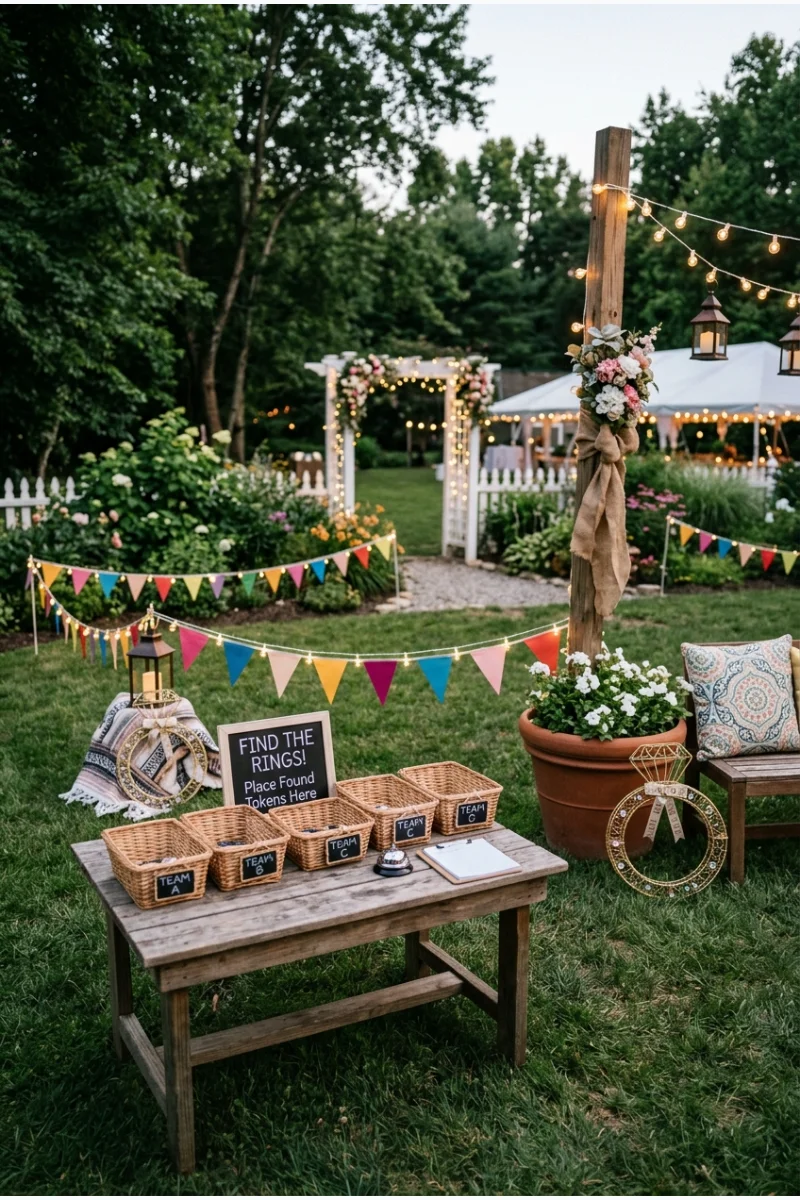
Hide large decorative ring tokens only within a clearly marked party area. Tell guests how many exist and which furniture or rooms are off limits.
After five minutes, guests bring finds to the host and the largest collection wins. Keep tokens visible without climbing or moving belongings, and count every piece back in afterward.
This post may contain affiliate links: full affiliate disclosure.