
Planning a family reunion involves finding activities that unite different generations.
These games focus on simple rules and minimal supplies to keep the focus on building connections and making memories.
This collection offers low-stress options for everyone from toddlers to seniors.
Icebreaker Games for Reconnecting
1. Human Bingo
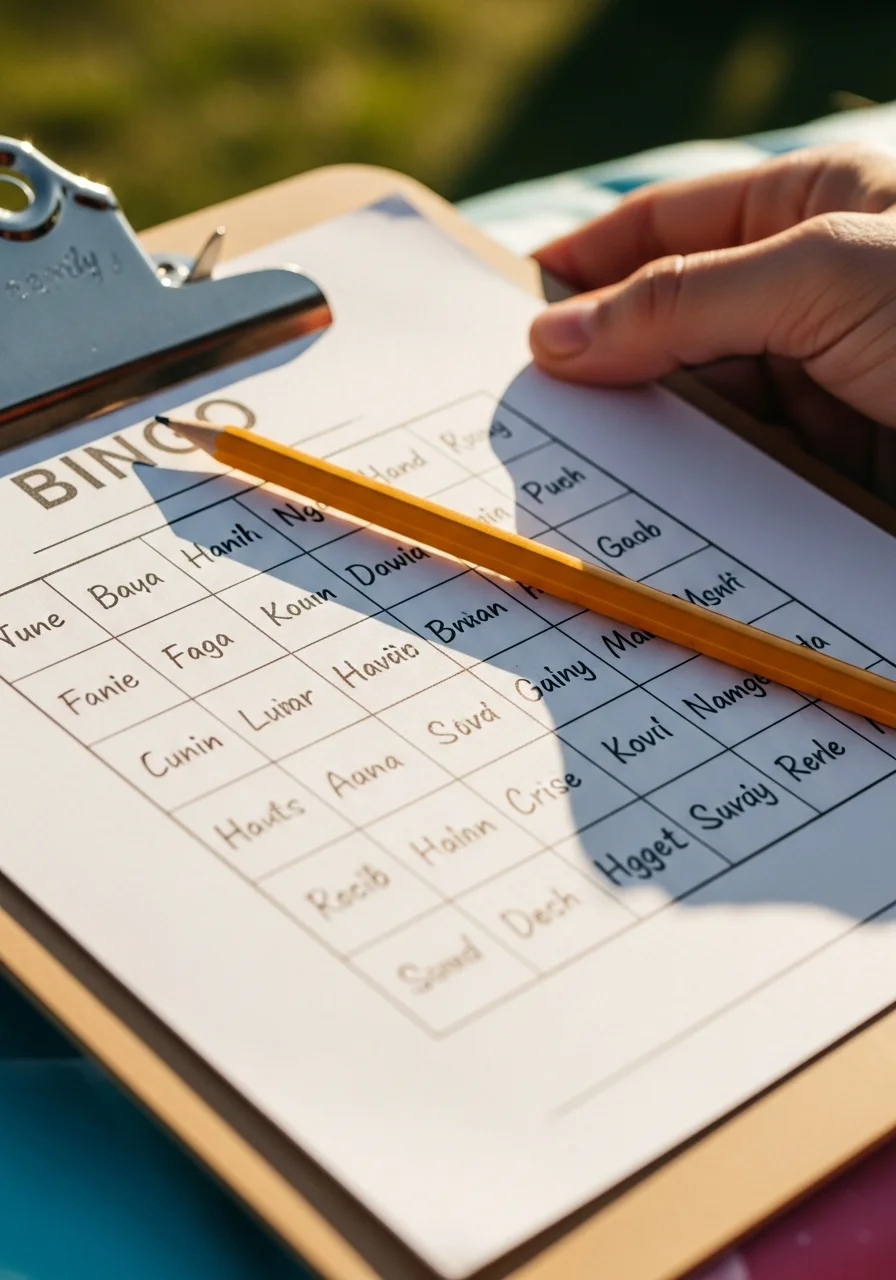
Create a 5×5 grid with family traits or facts like ‘Has more than three kids’ or ‘Traveled over 500 miles to be here.’
This encourages cousins and distant relatives to speak with one another to fill their cards. It works well because it requires zero athletic ability and focuses on personal discovery.
Print cards on heavy white cardstock and provide clipboards with pencils. Offer a small prize for the first person to get five in a row.
2. Name Tag Trivia
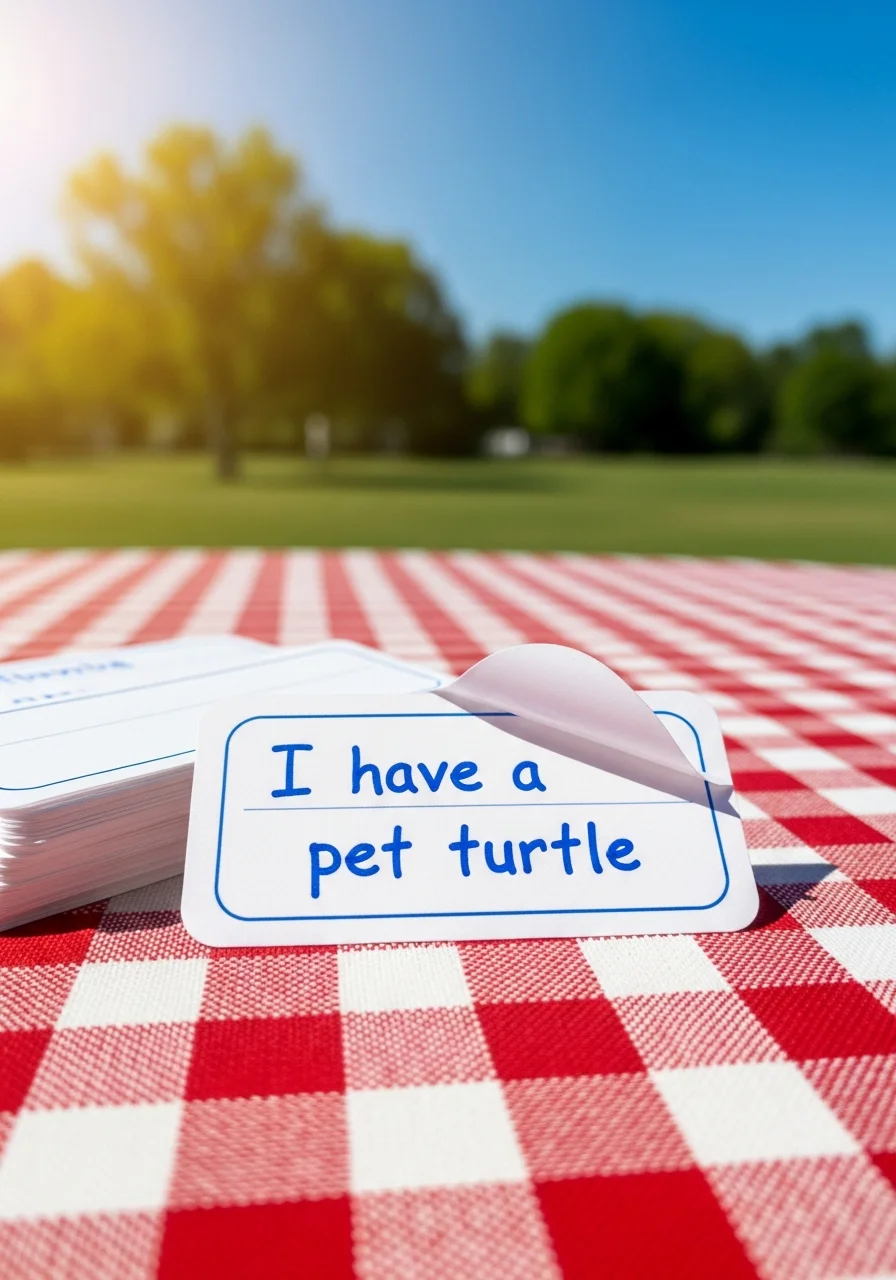
Write a unique, fun fact about each person on the back of their name tag when they arrive.
It gives people an immediate conversation starter. Guests can ask ‘Is it true you once met a celebrity?’ based on the hidden fact.
Ask for the fun fact in the RSVP form to save time during registration. Use adhesive tags that won’t damage clothing.
3. Conversation Starter Jars
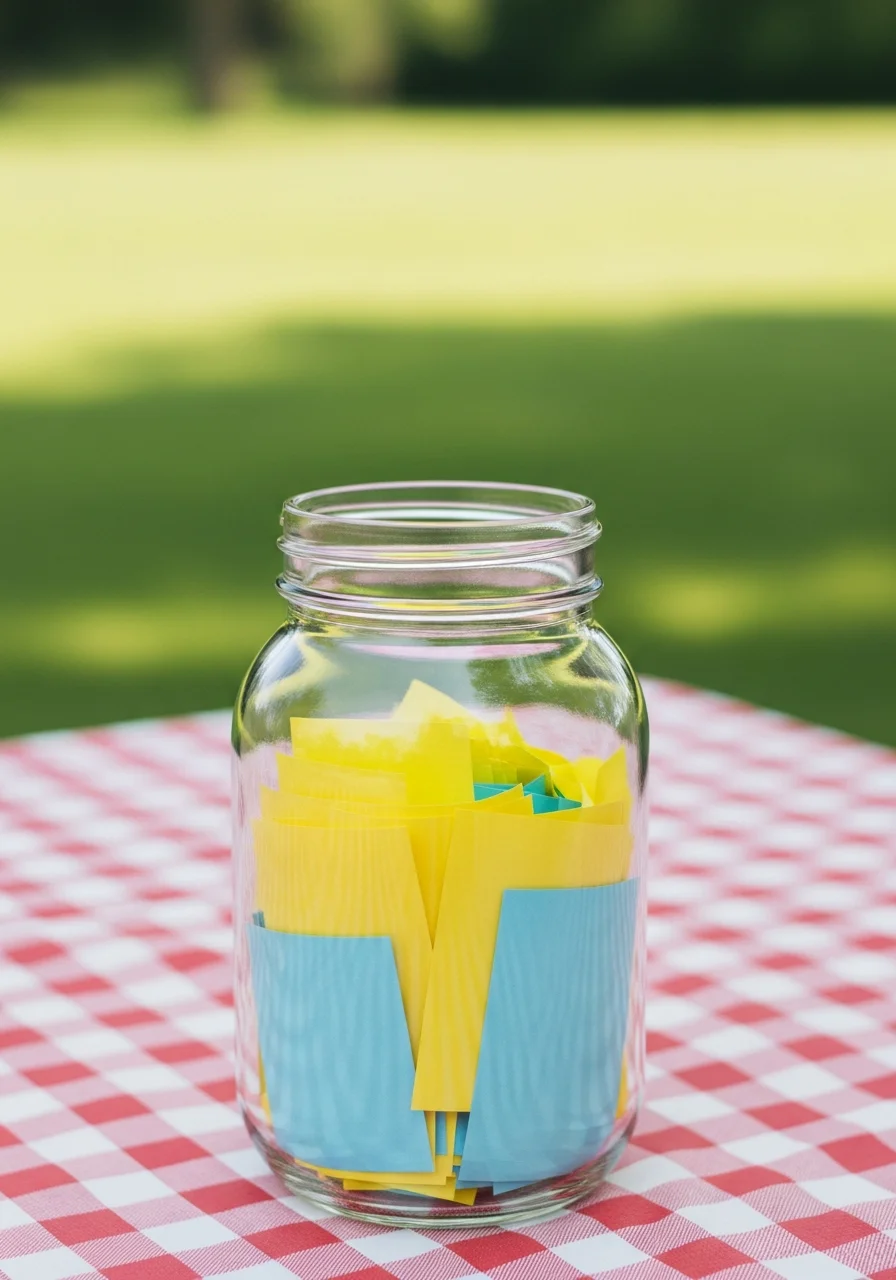
Place jars on every table filled with prompts like ‘What was your favorite childhood chore?’ or ‘What is the best meal you’ve ever had?’
It eliminates awkward silences during lunch or dinner. These prompts help younger generations learn about the lives of their elders in a relaxed way.
Color-code the slips of paper. Blue for kids, green for adults, and yellow for everyone to ensure the questions are age-appropriate.
4. Map Your Roots
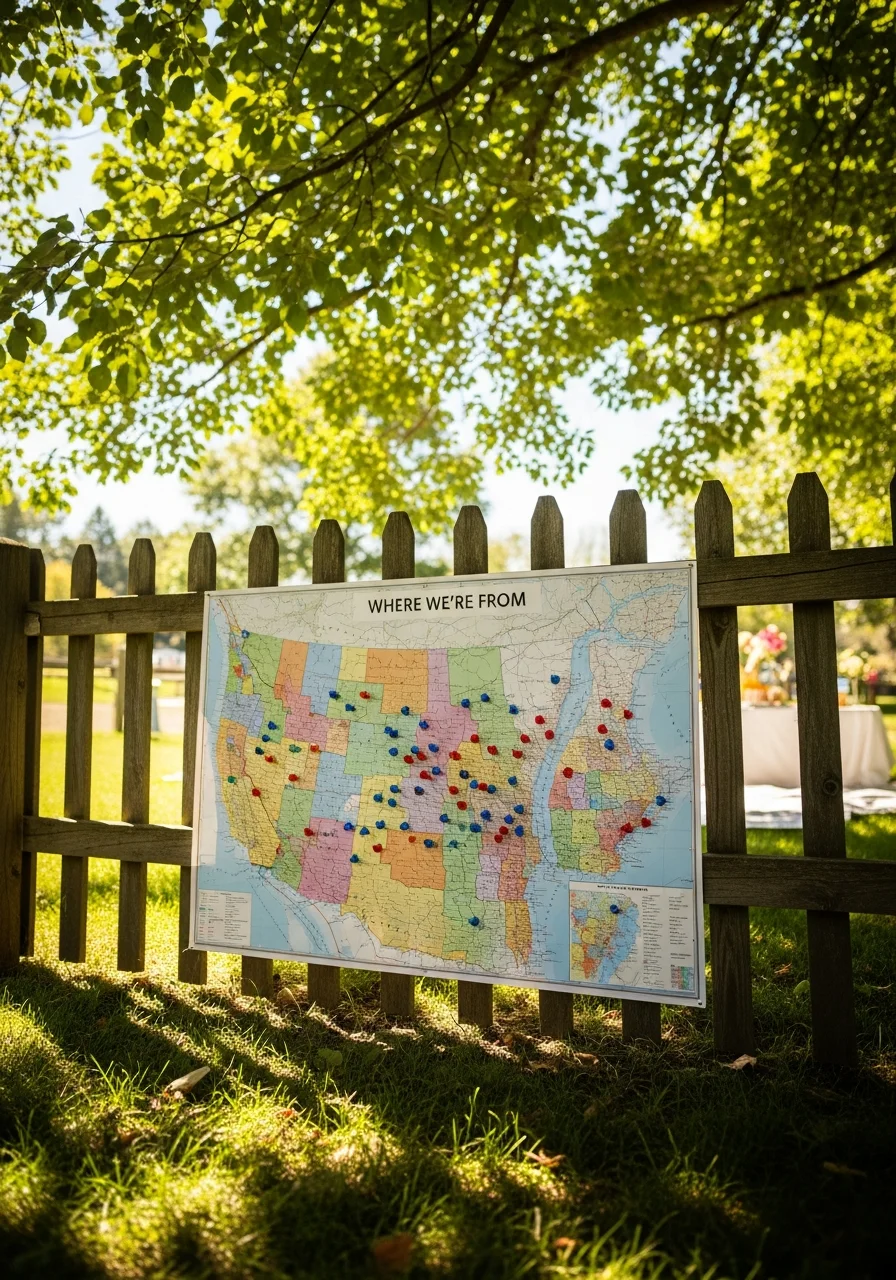
Post a large map of the country or world and have guests pin where they currently live and where they were born.
It visualizes the family’s growth and movement over time. It creates a natural gathering spot for people to discuss their hometowns.
Provide different colored pins for different branches of the family tree to show geographic clusters.
Heritage & Trivia Games
5. Guess the Baby Photo
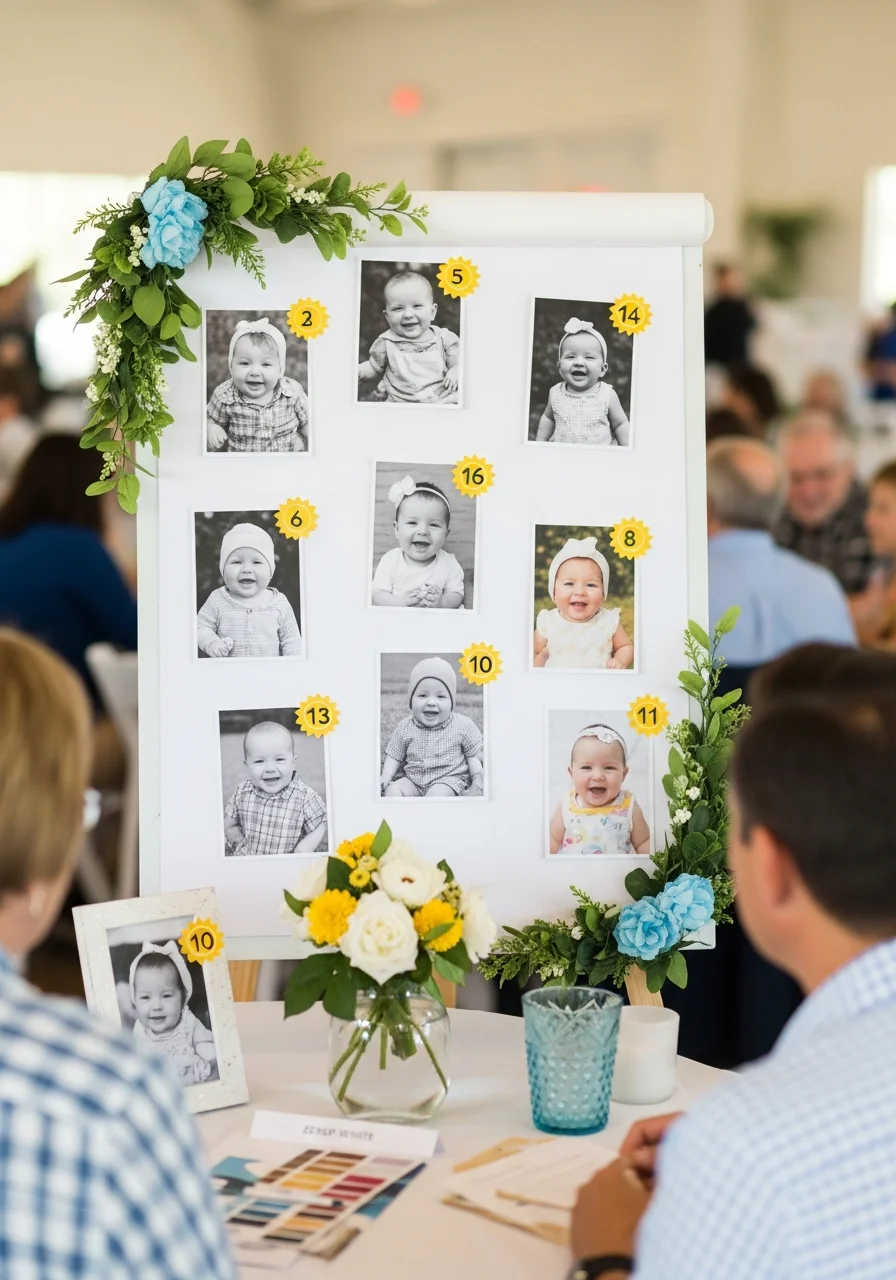
Display numbered photos of family members as babies and have guests guess who is who.
It honors the family legacy and highlights shared physical traits across generations. It’s a great conversation piece for the main gathering area.
Mount photos on a large board with ‘Who Am I?’ at the top. Provide numbered sheets for people to submit their guesses.
6. Family Tree Trivia
A quiz focused on the history of the family, such as the year the first ancestors arrived or the original family business.
It educates younger members about their heritage in an engaging format. It rewards the elders who share these stories often.
Conduct the trivia during dessert when everyone is seated. Use a microphone if the group is large so everyone can hear the questions.
7. Ancestor Photo Matching
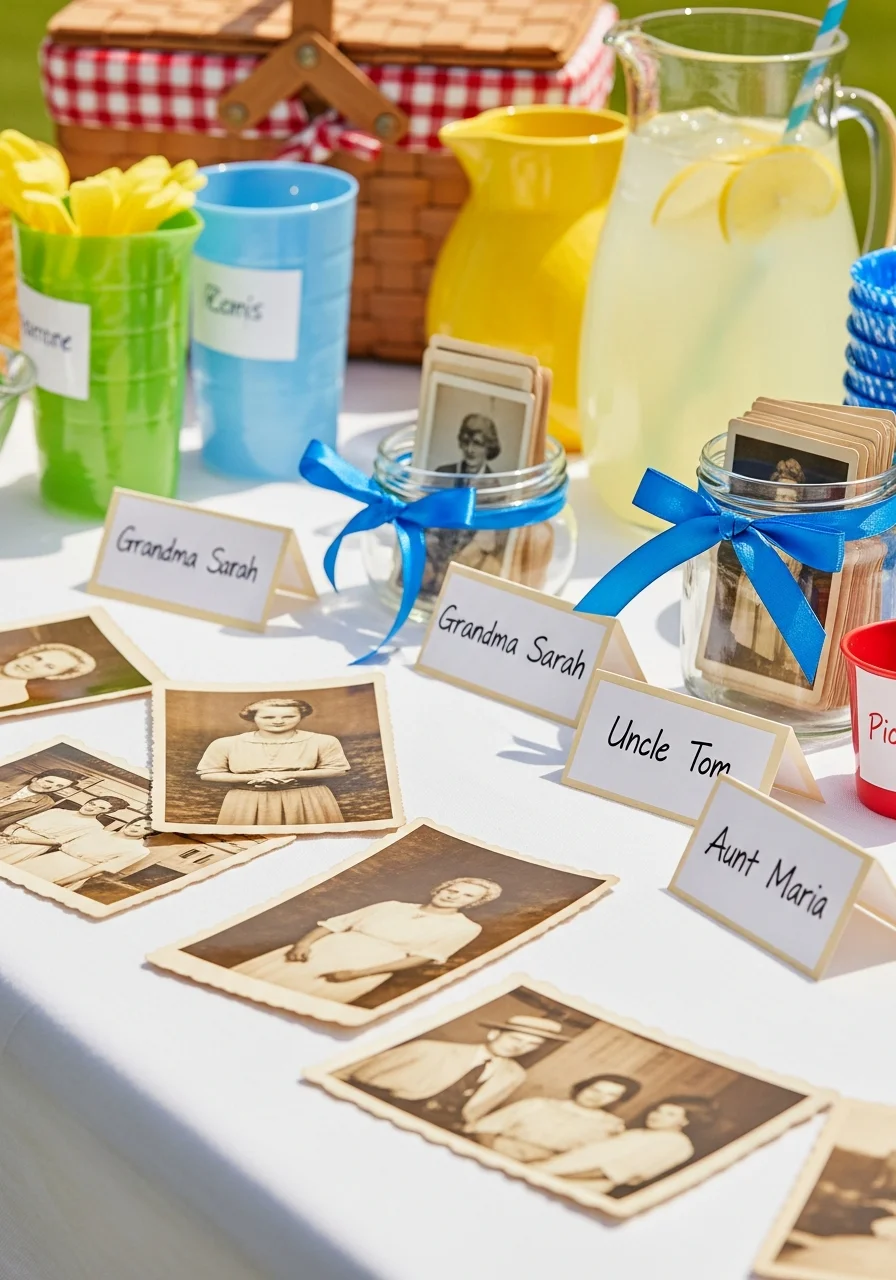
Place old photos of ancestors on one side and their names or descriptions on the other, asking guests to match them.
This helps put faces to the names people hear in family stories. It is a tactile way to engage with genealogy.
Laminate the photos to protect them from spills or fingerprints during the event.
8. Legacy Story Swap
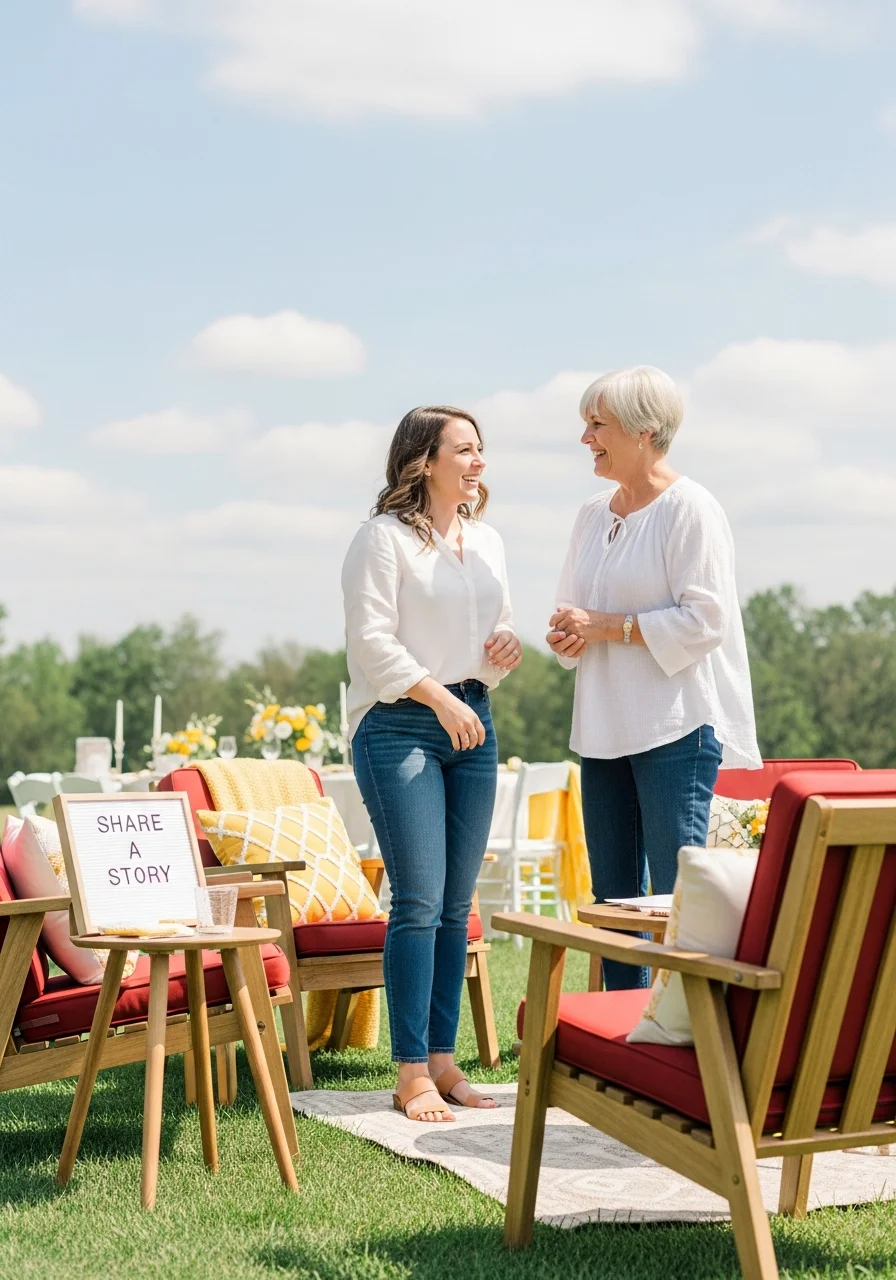
Provide prompt cards that ask for a specific memory, like ‘Tell us about your first car’ or ‘What was your favorite school subject?’
It facilitates the sharing of oral history. These personal stories often provide more connection than dates and names on a tree.
Designate a ‘Story Corner’ with comfortable seating and a quiet atmosphere to encourage longer conversations.
High-Energy Outdoor Classics
9. Potato Sack Relay
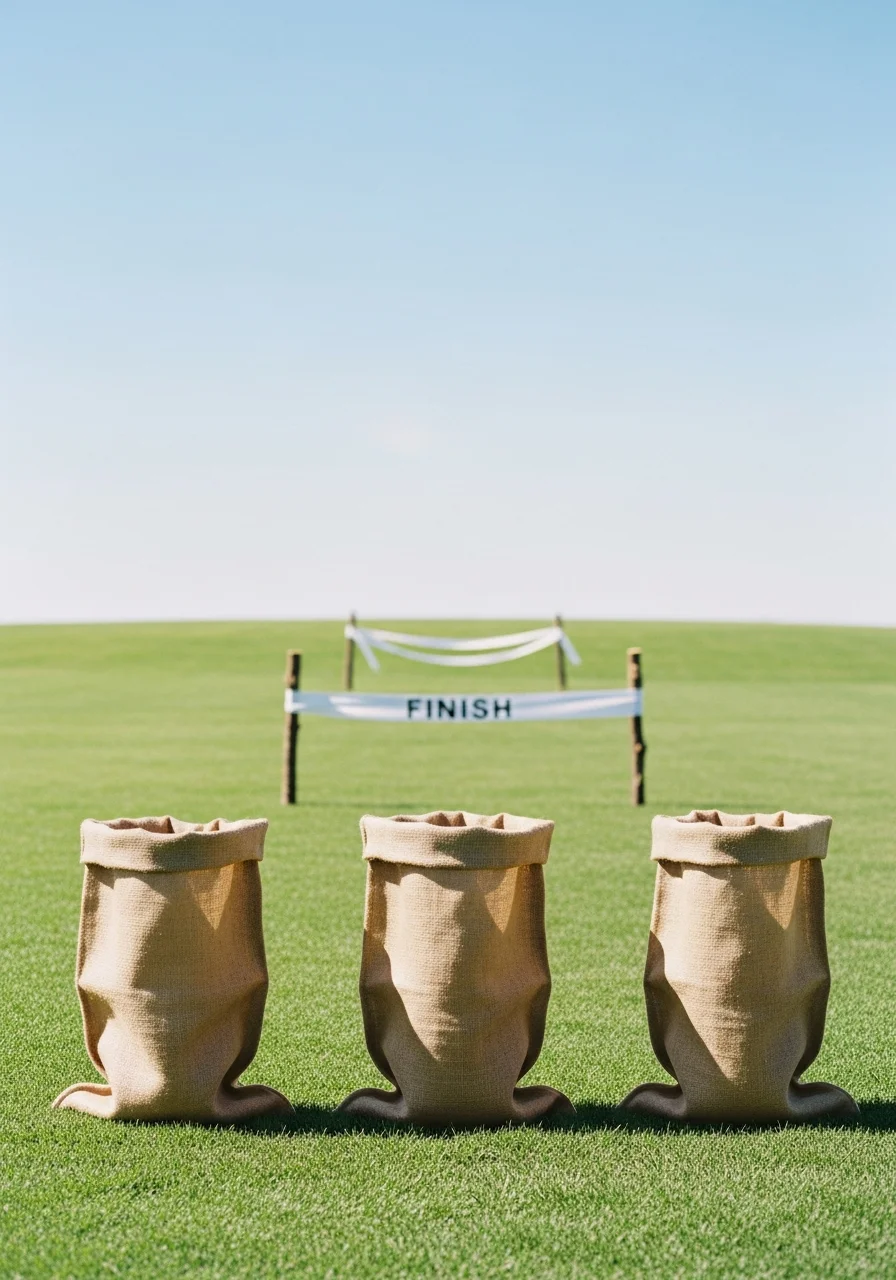
Participants hop to a finish line and back inside a large burlap sack before passing it to the next team member.
The rhythmic hopping is entertaining for spectators and participants alike. It levels the playing field since speed is determined by coordination rather than just running ability.
Use clean burlap sacks or heavy-duty pillowcases for smaller children. Ensure the race takes place on soft grass to prevent scraped knees.
10. Three-Legged Walk

Pairs tie their inside legs together and race to a designated point.
This game requires communication and synchronization between partners. Pairing an adult with a child creates a fun dynamic that isn’t overly competitive.
Use soft fabric strips or wide elastic bands instead of thin rope to prevent skin irritation around the ankles.
11. Soft Rope Tug-of-War
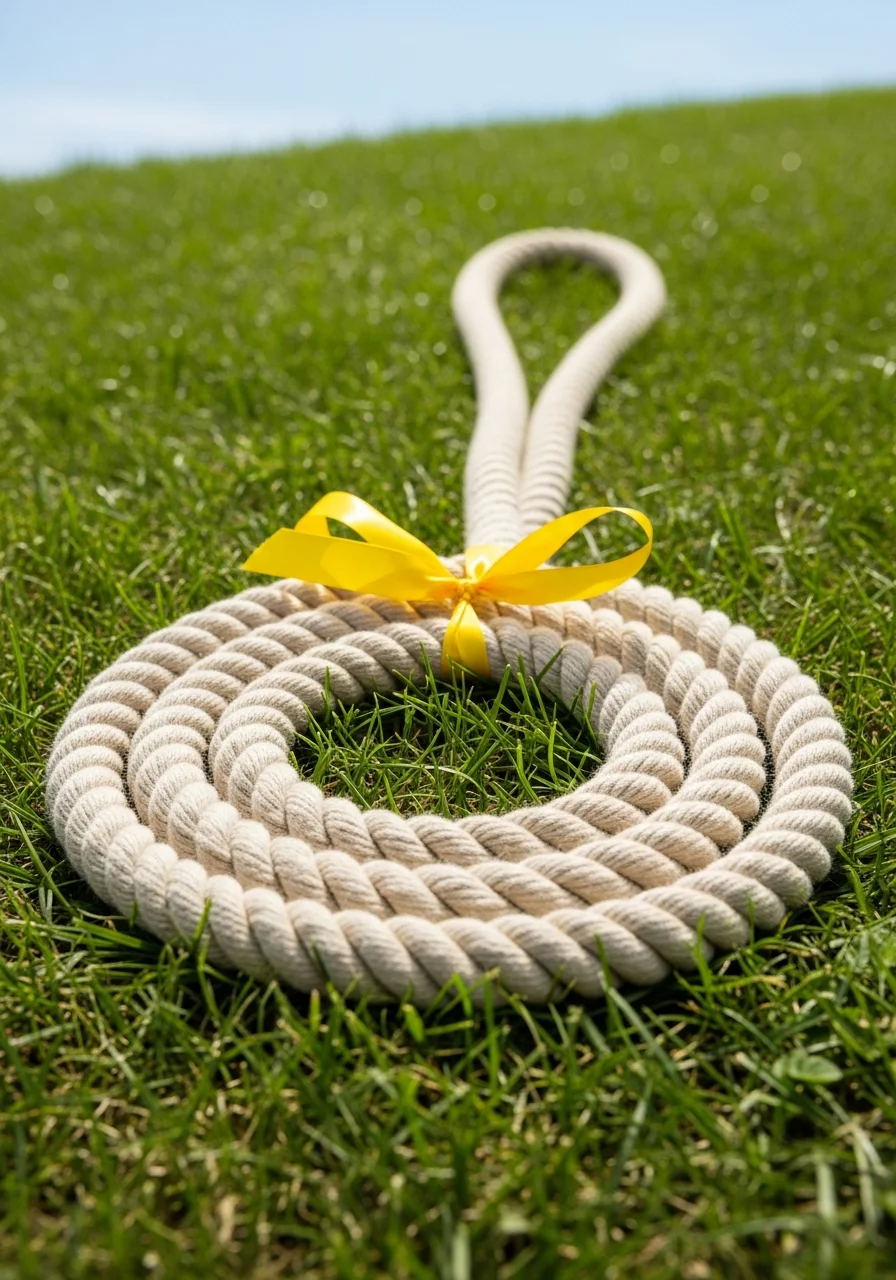
Two teams pull on opposite ends of a rope to move a center marker across a line.
It is a classic display of team effort. Dividing teams by ‘Birth Month’ or ‘Left-Handed vs Right-Handed’ keeps the competition lighthearted.
Use a thick cotton rope rather than nylon to avoid rope burn. Mark the center point with a bright yellow ribbon.
12. Egg and Spoon Balance
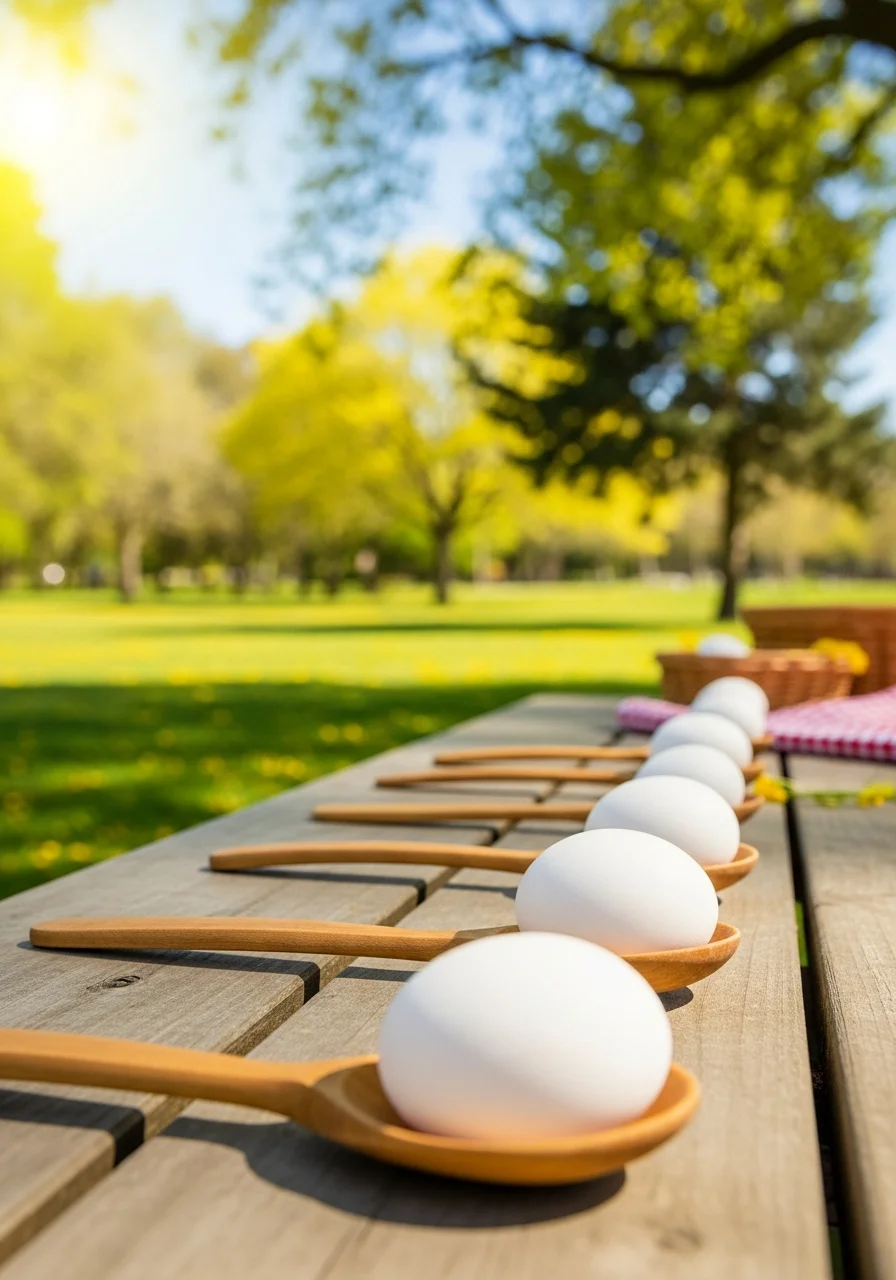
Racers carry a hard-boiled egg on a spoon without dropping it.
It focuses on steadiness and patience. It is an excellent choice for a variety of ages because it rewards a slow and steady approach.
Use wooden spoons with a shallow dip to make it more challenging. Hard-boil the eggs beforehand to avoid a mess if they fall.
13. Beach Ball Volleyball
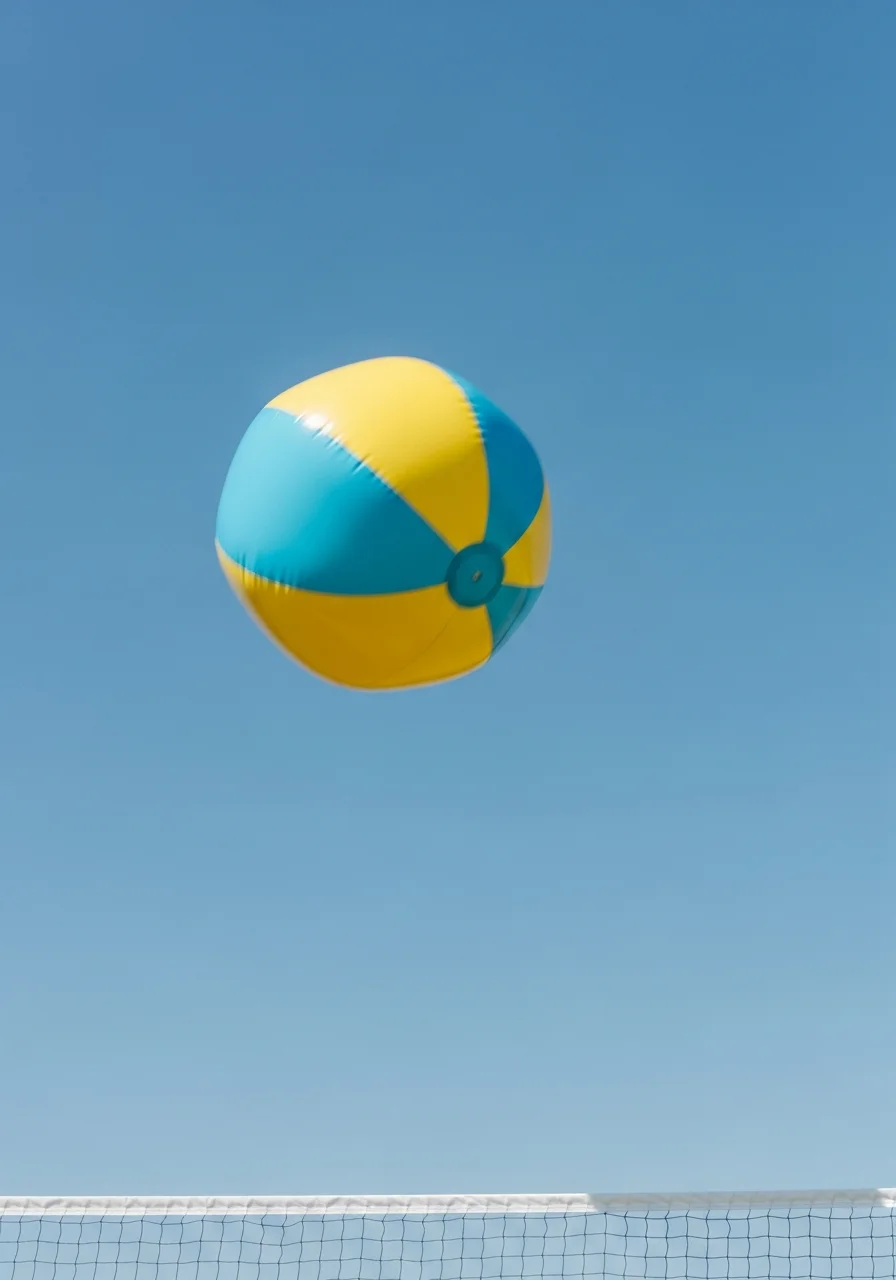
Use a lightweight beach ball and a low net for a casual game of volleyball.
Beach balls move slowly, giving everyone more time to react and hit the ball. It reduces the risk of injury and keeps the game accessible.
Set the net lower than standard height so children can easily hit the ball over. No scorekeeping is necessary for a more relaxed vibe.
Low-Impact Games for Seniors
14. Family Bingo
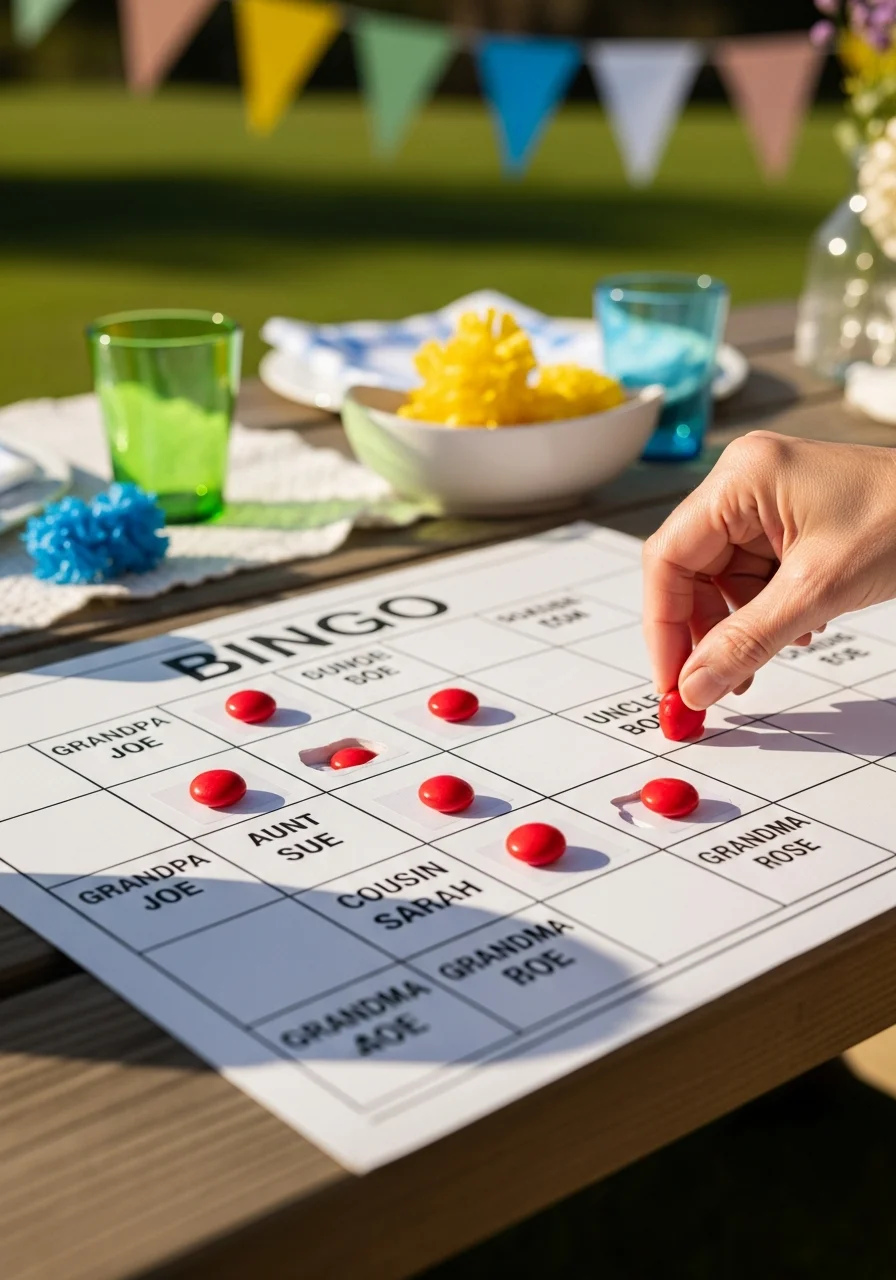
Play bingo using family names or common family phrases instead of numbers.
It is a familiar game that can be played while sitting comfortably. It keeps the mind active and focuses on family identity.
Use large-print cards to ensure they are easy to read for all participants. Use dried beans or small candies as markers.
15. Name That Tune
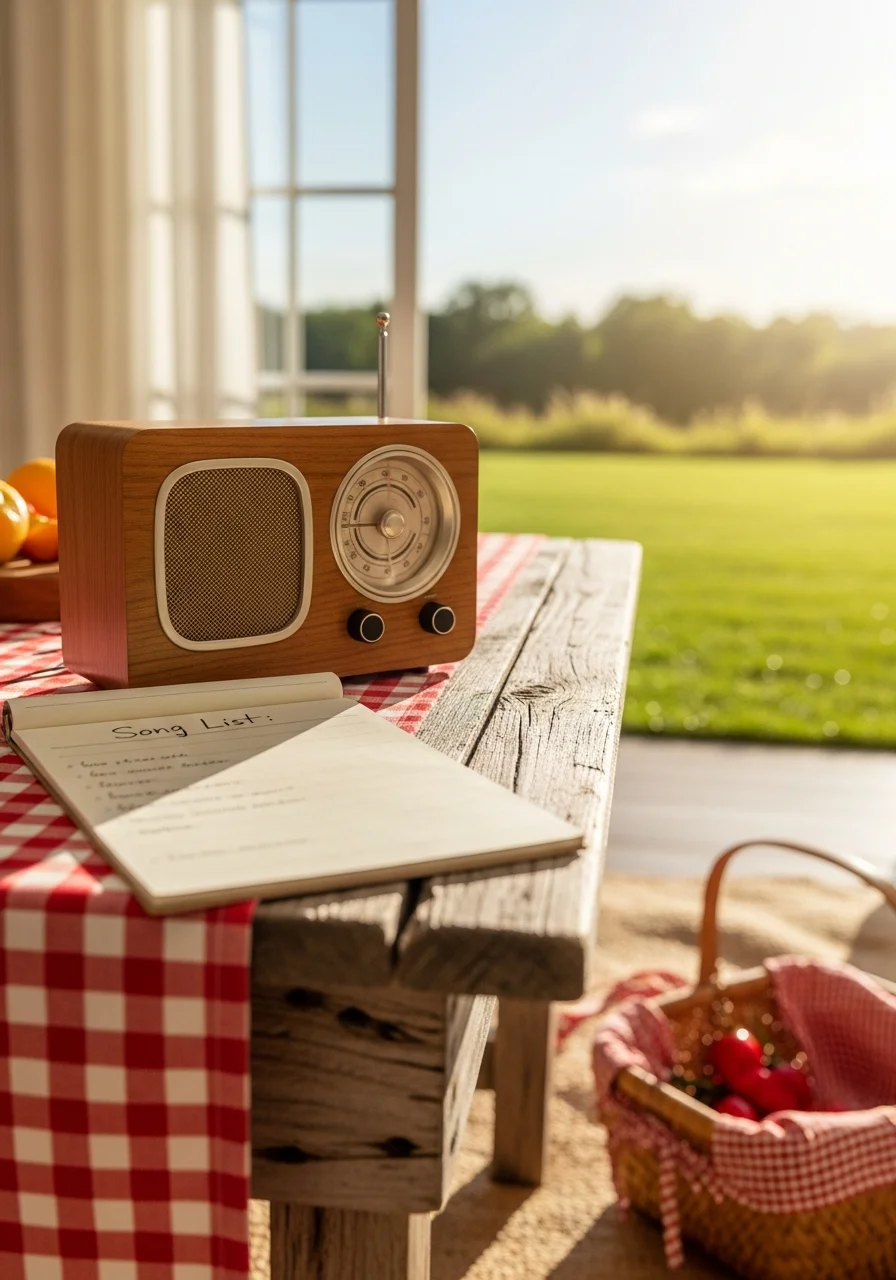
Play short clips of popular songs from different decades and have people guess the title.
Music is a powerful memory trigger. It allows seniors to share their favorite era of music with the younger generation.
Include songs from the 1940s through the present day to ensure every age group has a chance to participate.
16. Giant Crossword
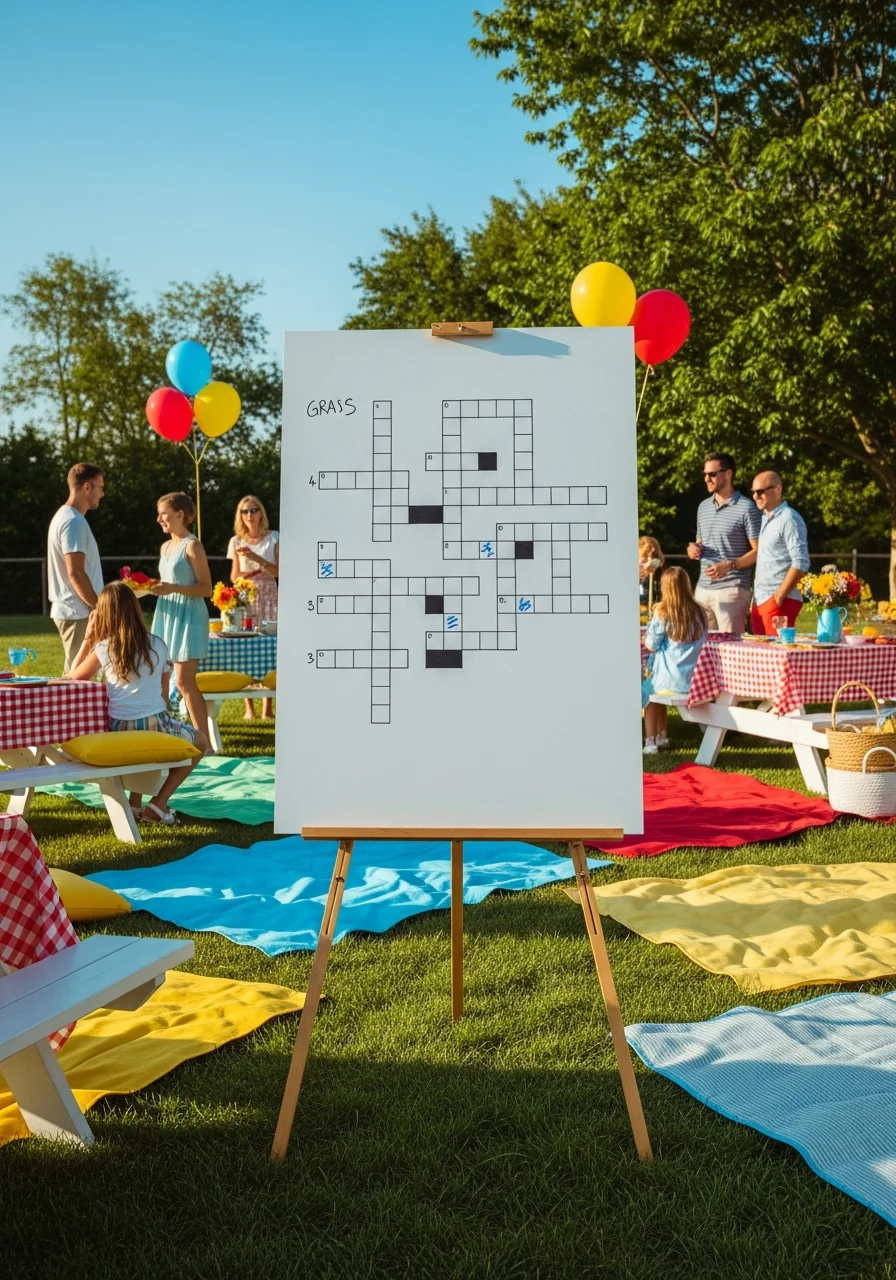
Create a large crossword puzzle on a poster board with clues based on family members.
It is a collaborative activity that people can contribute to throughout the day at their own pace.
Hang the board in a central, shaded area. Provide thick markers in various colors for people to write in the answers.
17. Card Game Tournament
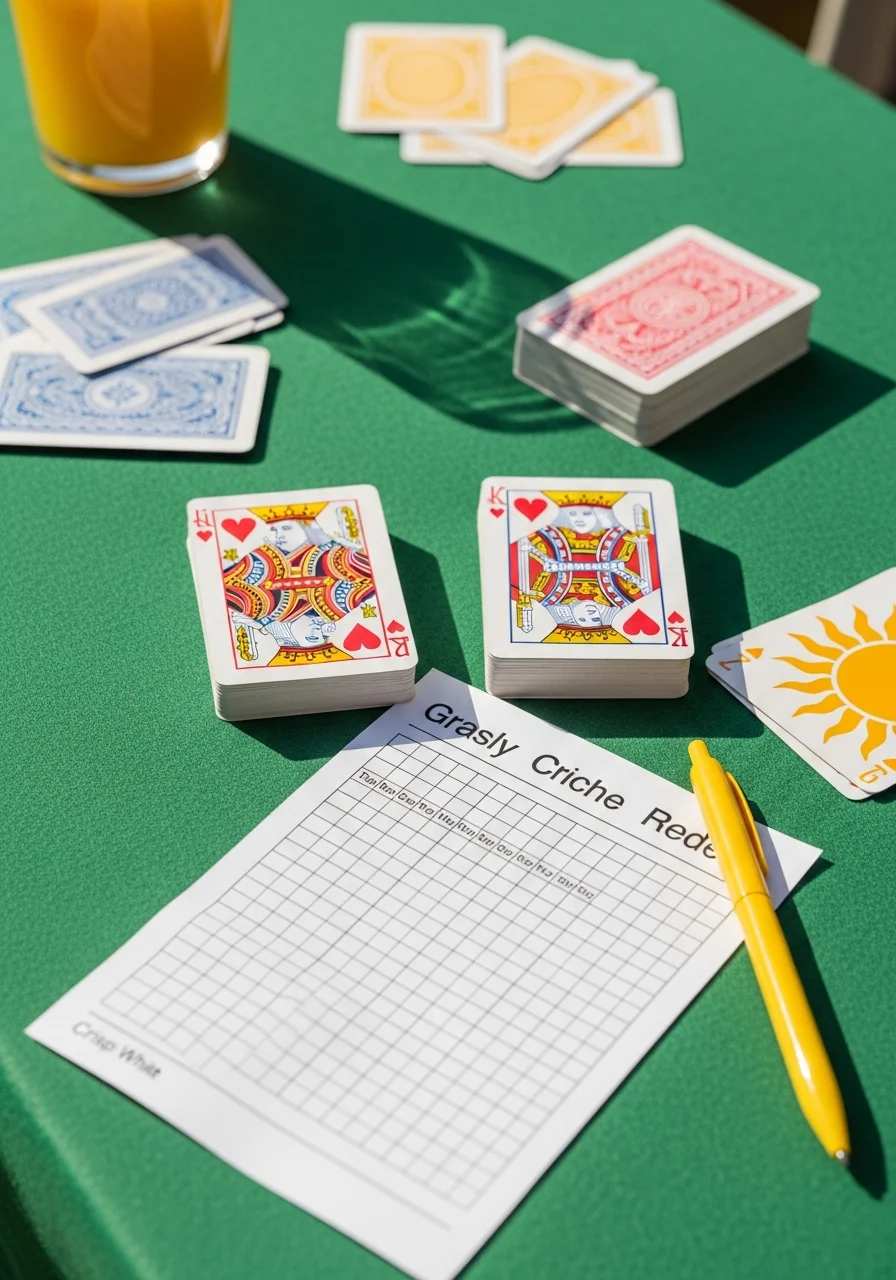
Set up a dedicated table for classic card games like Hearts, Rummy, or Spades.
Many seniors are experts at these games and enjoy teaching them to younger relatives. It provides a structured but low-energy way to bond.
Provide multiple decks of cards and a clear score-tracking sheet for each table.
Team-Building Challenges
18. Photo Scavenger Hunt
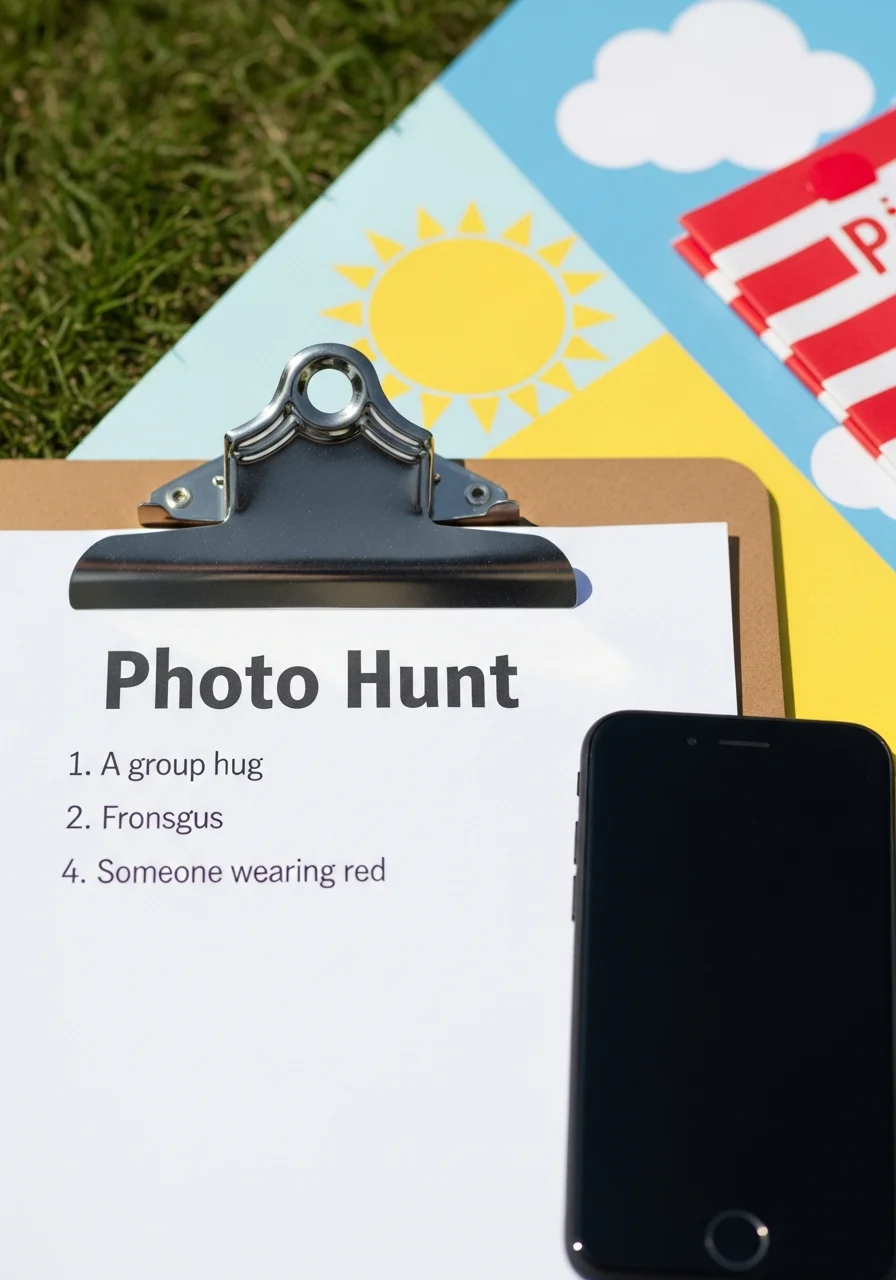
Give teams a list of items or moments to capture with their phone cameras, like ‘Three generations in one shot.’
It encourages different branches of the family to interact and results in a collection of photos for the reunion album.
Create a shared digital folder or a specific hashtag where teams can upload their photos instantly.
19. Human Knot
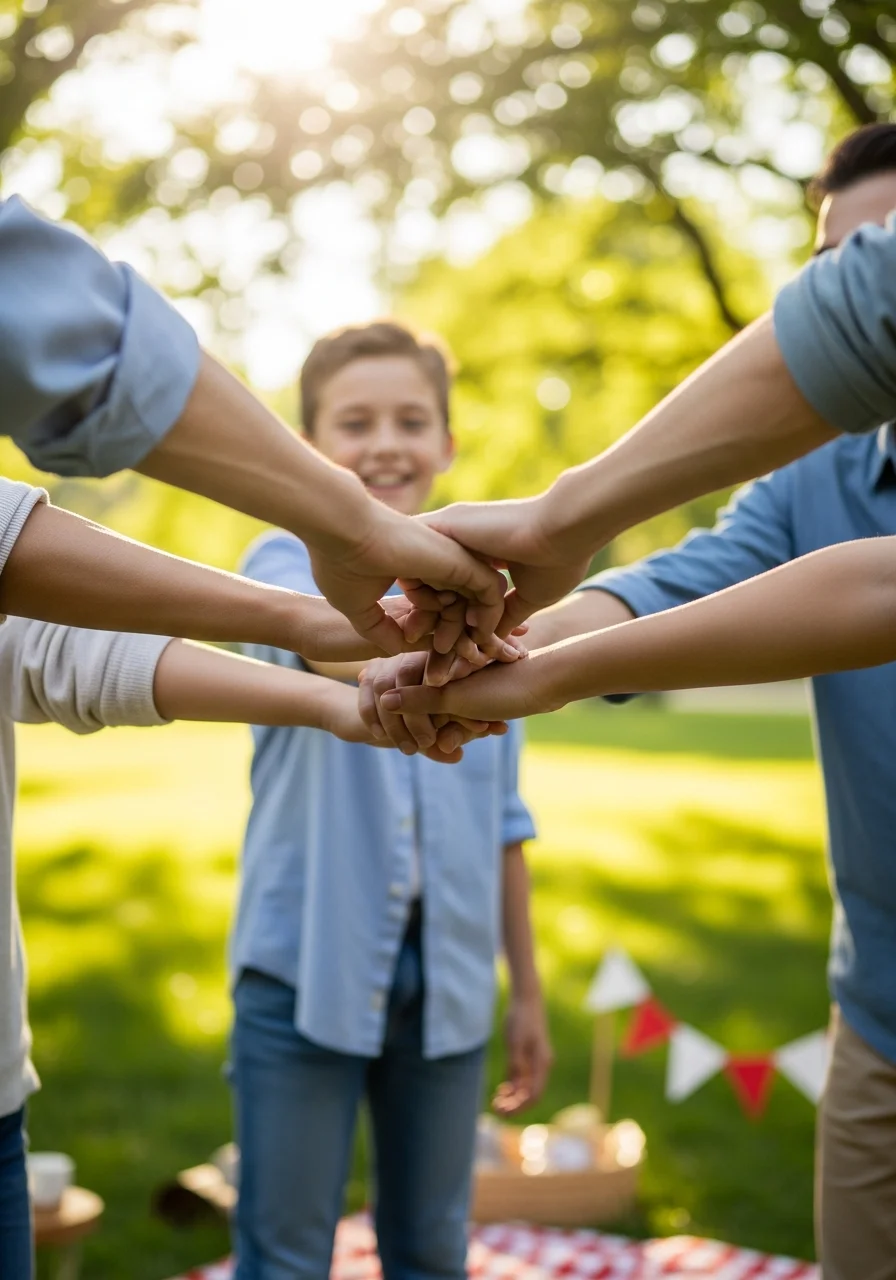
A group stands in a circle, grabs hands with two different people across from them, and tries to untangle without letting go.
It requires physical cooperation and problem-solving. It’s a great way to break down physical barriers and encourage laughter.
Keep groups to 8-10 people. If the group is too large, the knot becomes nearly impossible to untangle.
20. Marshmallow Engineering
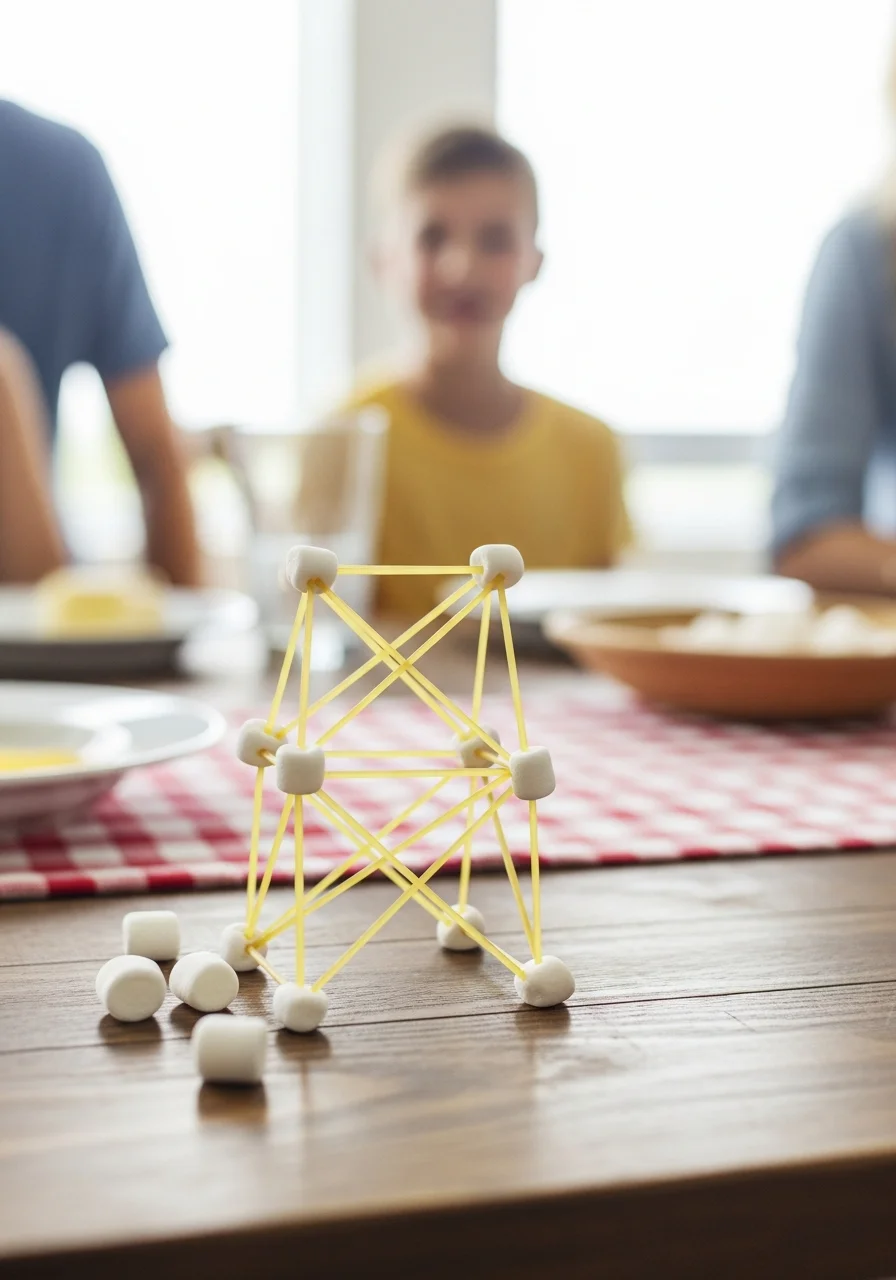
Teams use dry spaghetti and marshmallows to build the tallest possible tower in a set amount of time.
It is a quiet, focused activity that encourages creative thinking. It’s especially popular with school-aged children and teens.
Provide a flat surface like a sturdy picnic table or individual cardboard bases for each team’s tower.
21. Hula Hoop Pass
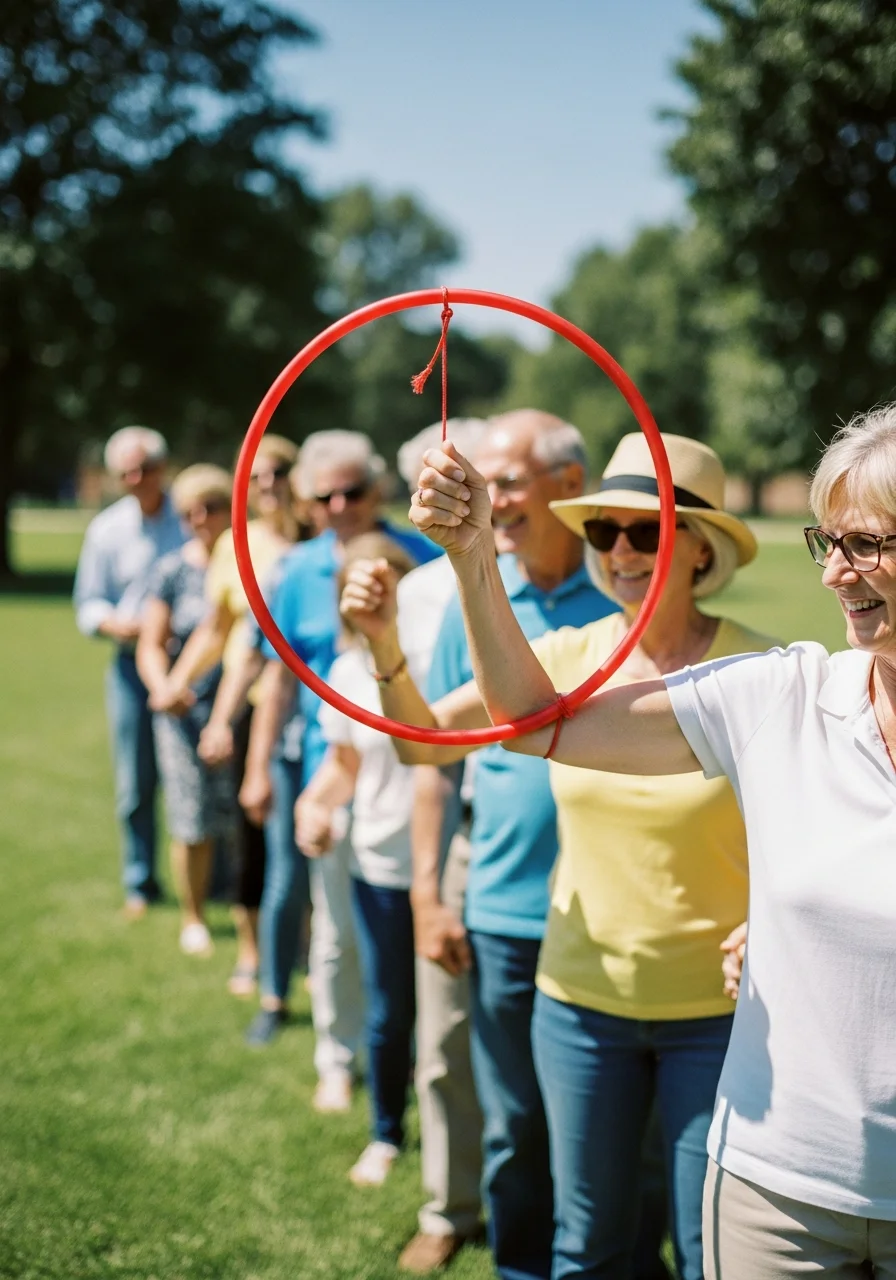
A team stands in a circle holding hands and must pass a hula hoop all the way around without breaking the chain.
It emphasizes body awareness and group coordination. It is a fast-paced game that generates a lot of cheering.
Use a standard-sized hula hoop for adults and a slightly larger one if the group includes very young children to make it easier to step through.
Water Games for Summer Reunions
22. Water Balloon Toss
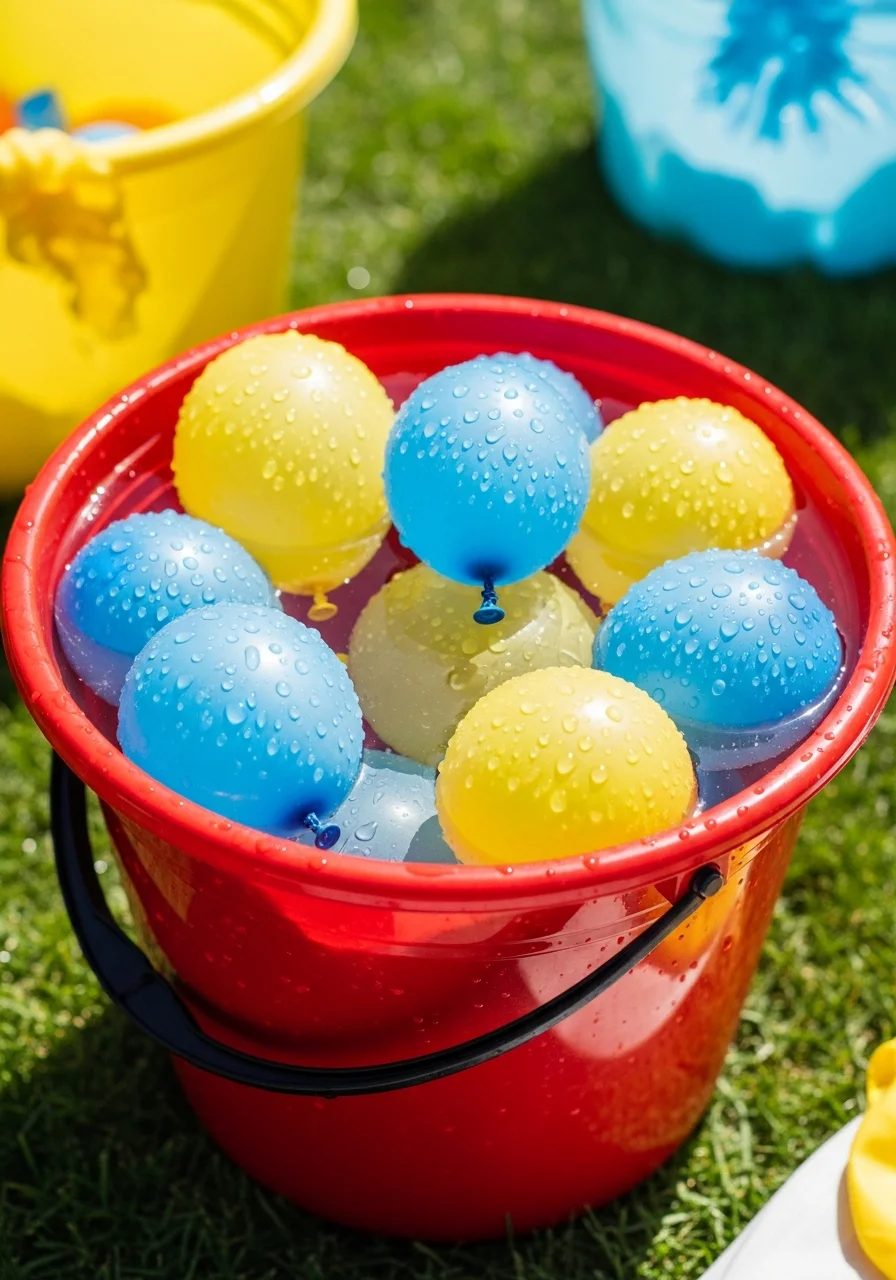
Pairs toss a water balloon back and forth, taking a step back after every successful catch.
The suspense of the balloon breaking is a crowd-pleaser. It’s a fast way to cool down in the summer heat.
Fill the balloons just enough so they are soft; overfilled balloons pop too easily. Have a bucket of ‘back-up’ balloons ready.
23. Sponge Bucket Relay
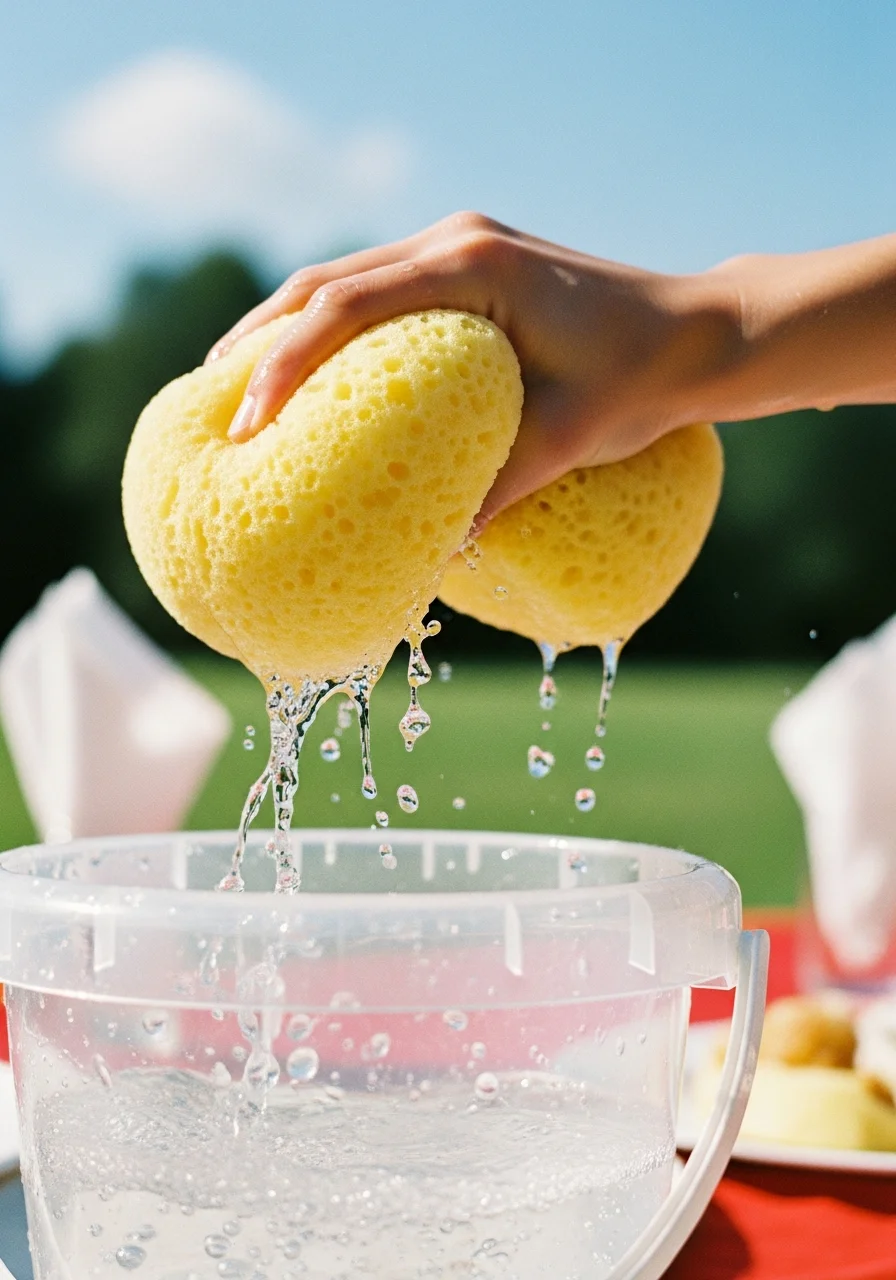
Teams soak a sponge in a full bucket, run to an empty bucket, and squeeze the water out to fill it.
It is less messy than water balloons and safer for younger children. It keeps everyone moving and cool.
Use large car-wash sponges as they hold the most water. Ensure the ‘fill’ line on the target bucket is clearly marked with tape.
24. Drip Drip Drop
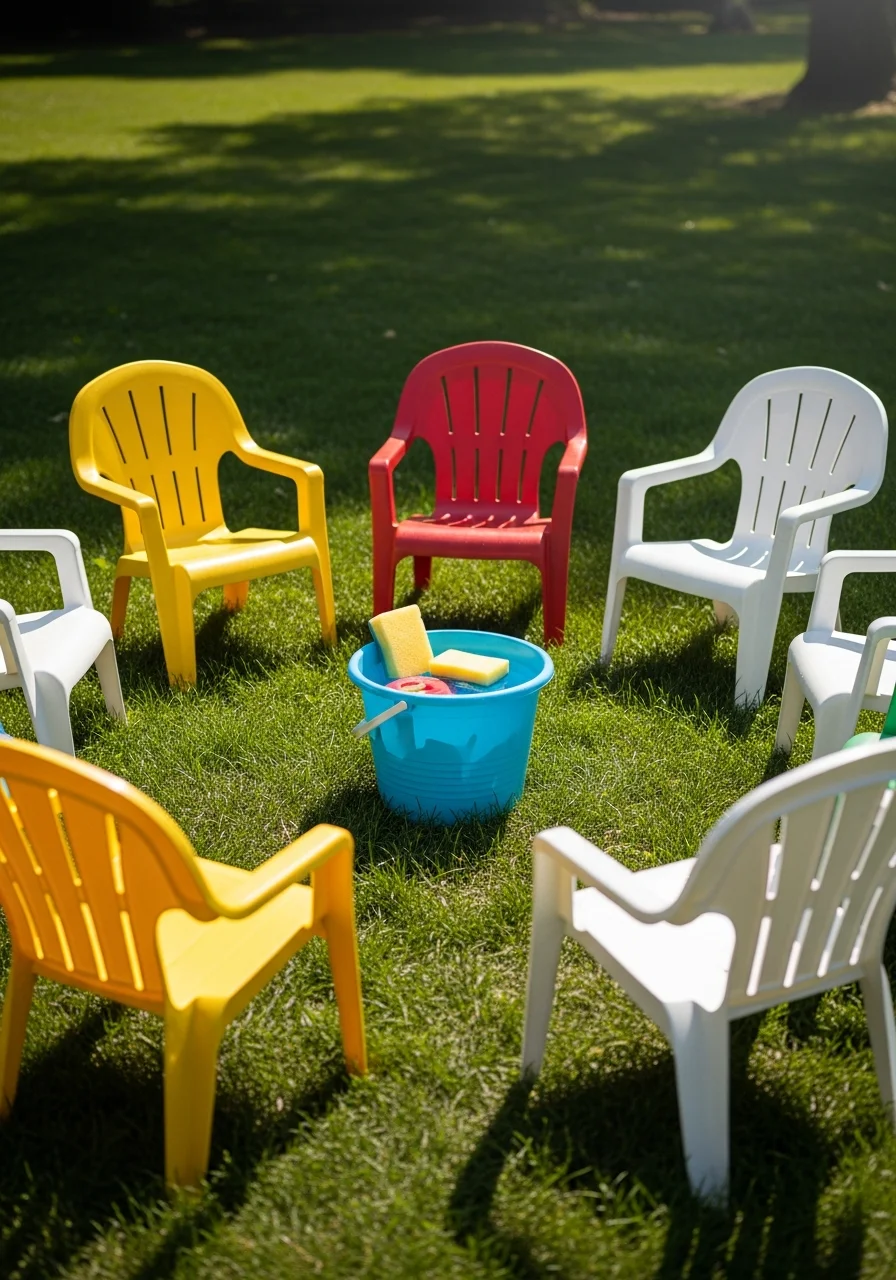
A variation of Duck Duck Goose where the ‘it’ person drips a wet sponge on heads and ‘drops’ the whole sponge on the chosen person.
It is a high-engagement game for children that provides a cooling effect without the intensity of a full water fight.
Have several sponges soaking in a central bucket so the ‘it’ person can quickly grab a fresh, cold one.
25. Kiddie Pool Fishing
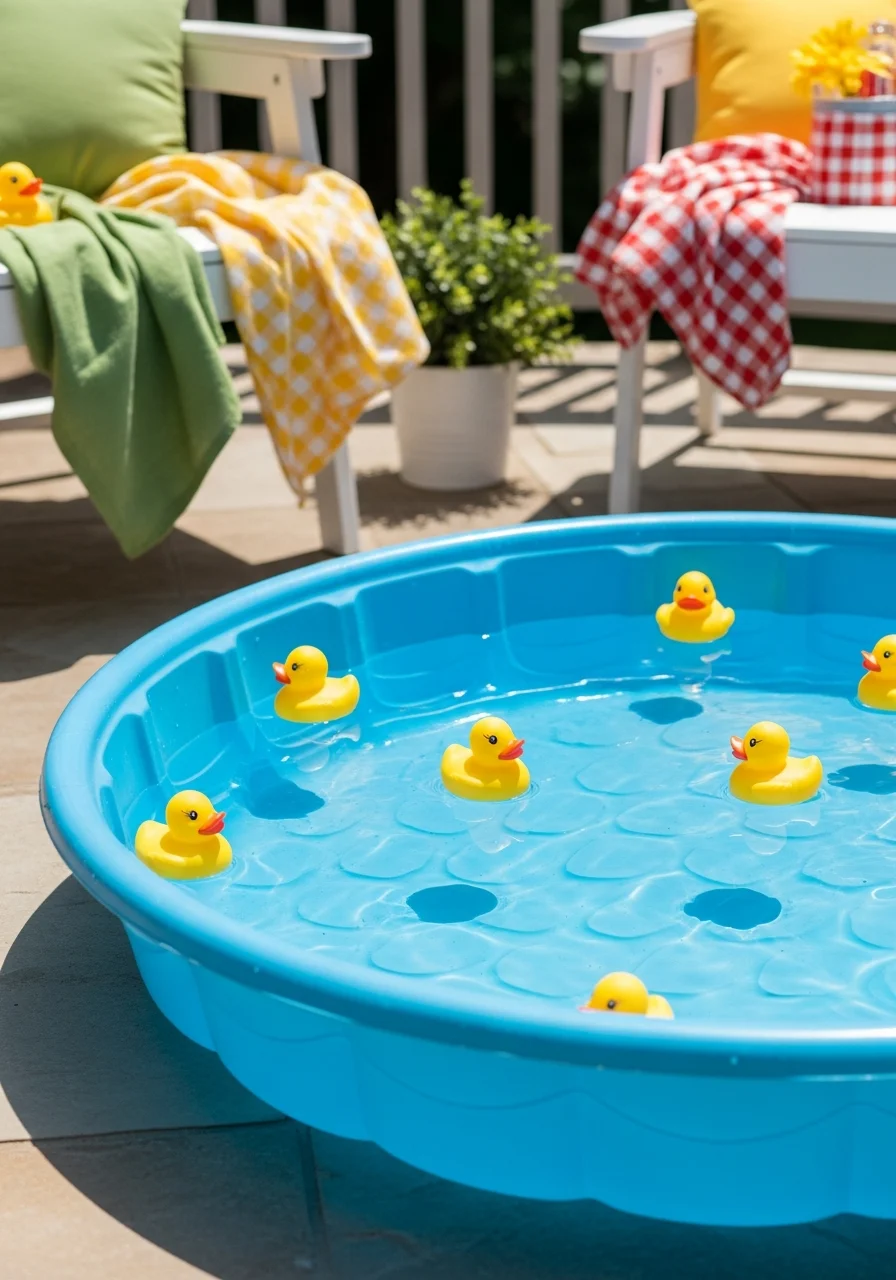
Fill a small pool with water and floating toys or magnetic fish for the youngest family members.
It keeps toddlers entertained in a contained, safe environment. It allows them to participate in the ‘water’ theme without being overwhelmed.
Supervise this station at all times. Use plastic ducks or magnetic rods for a frustration-free experience.
DIY Game Stations
26. Giant Wooden Blocks
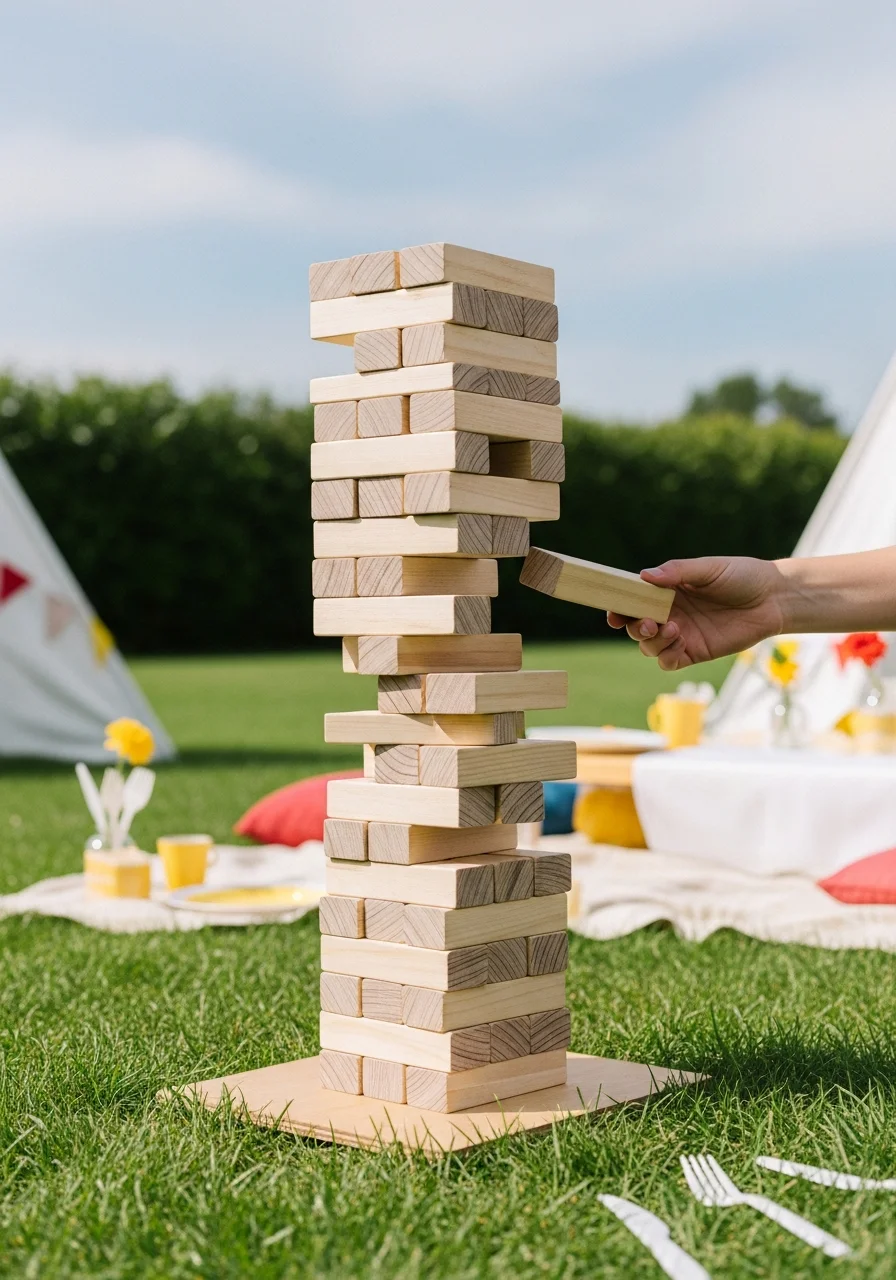
An oversized version of a stacking tower game using 2×4 wooden blocks.
It is a familiar game that people can jump in and out of. The scale makes it feel special for a large gathering.
Sand the edges of the blocks thoroughly to avoid splinters. Set it up on a flat, stable surface like a piece of plywood on the grass.
27. Custom Cornhole
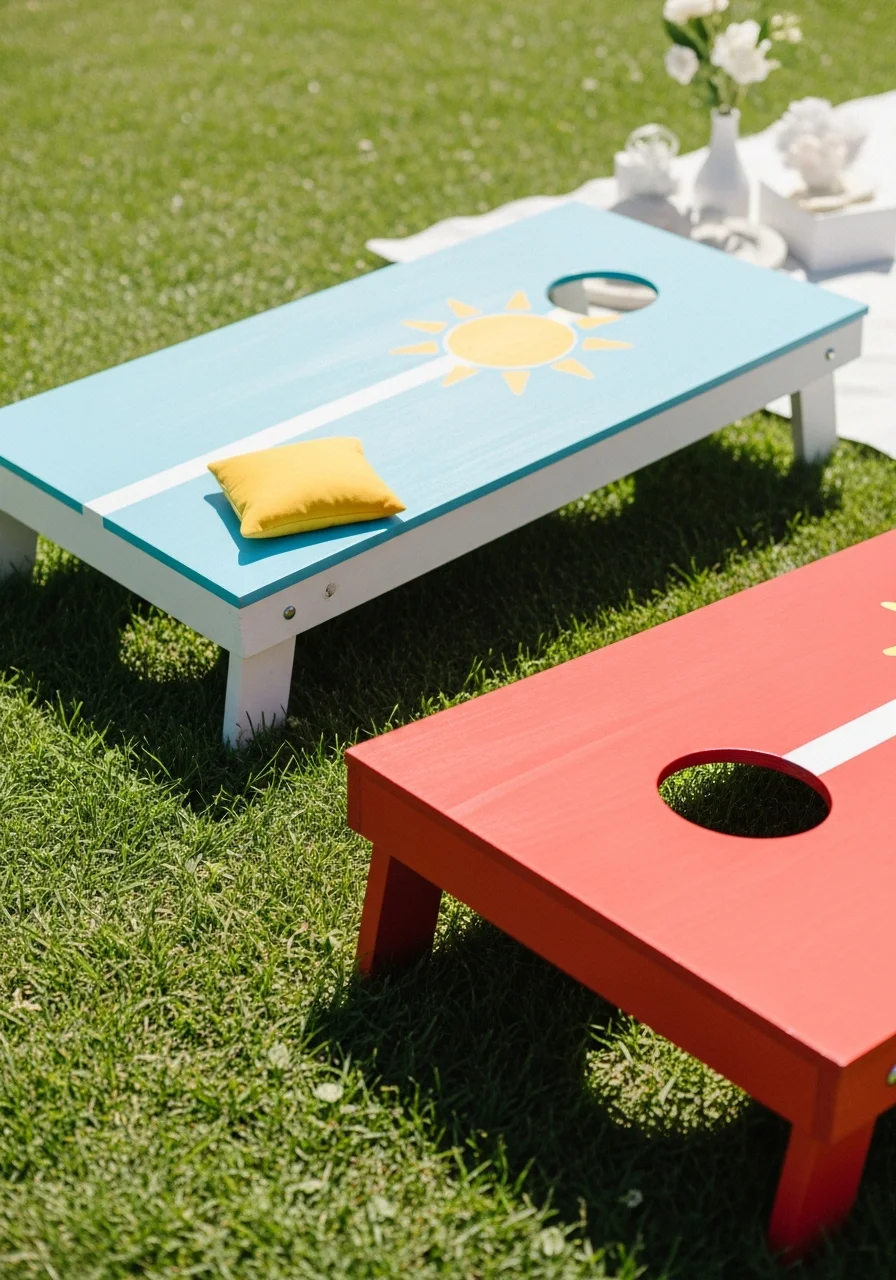
A bean bag toss game with wooden boards, often painted in family colors.
It is the quintessential lawn game. It allows for casual conversation while playing and is easy for all skill levels.
If you don’t have time to build them, buy plain sets and let the kids decorate them with stickers or markers on the day of the reunion.
28. Ring Toss
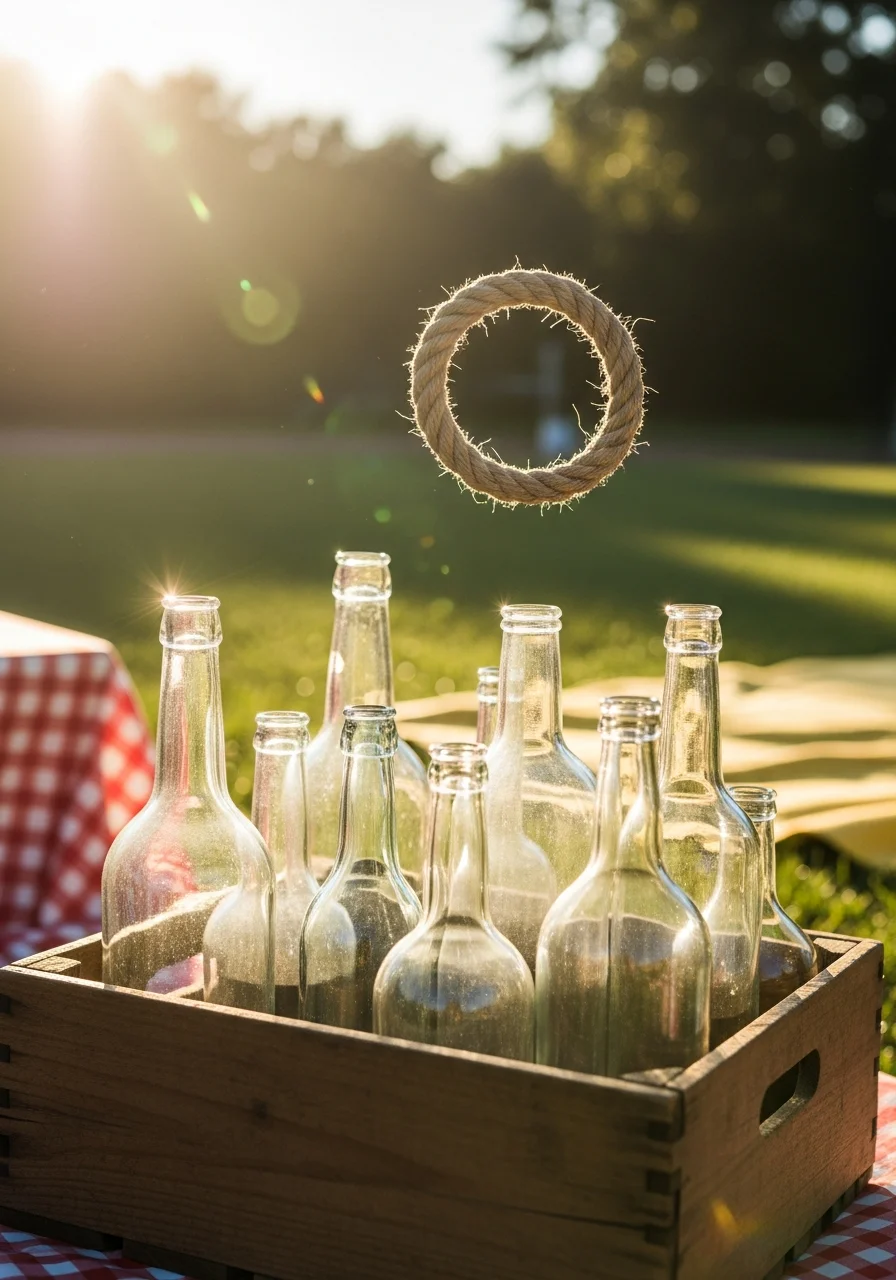
Toss plastic or rope rings onto the necks of glass or plastic bottles.
It’s a nostalgic carnival-style game. It’s easy to set up and can be adjusted in difficulty by moving the throwing line back.
Weight the bottles with sand or water so they don’t tip over when hit by a ring.
29. Lawn Tic-Tac-Toe
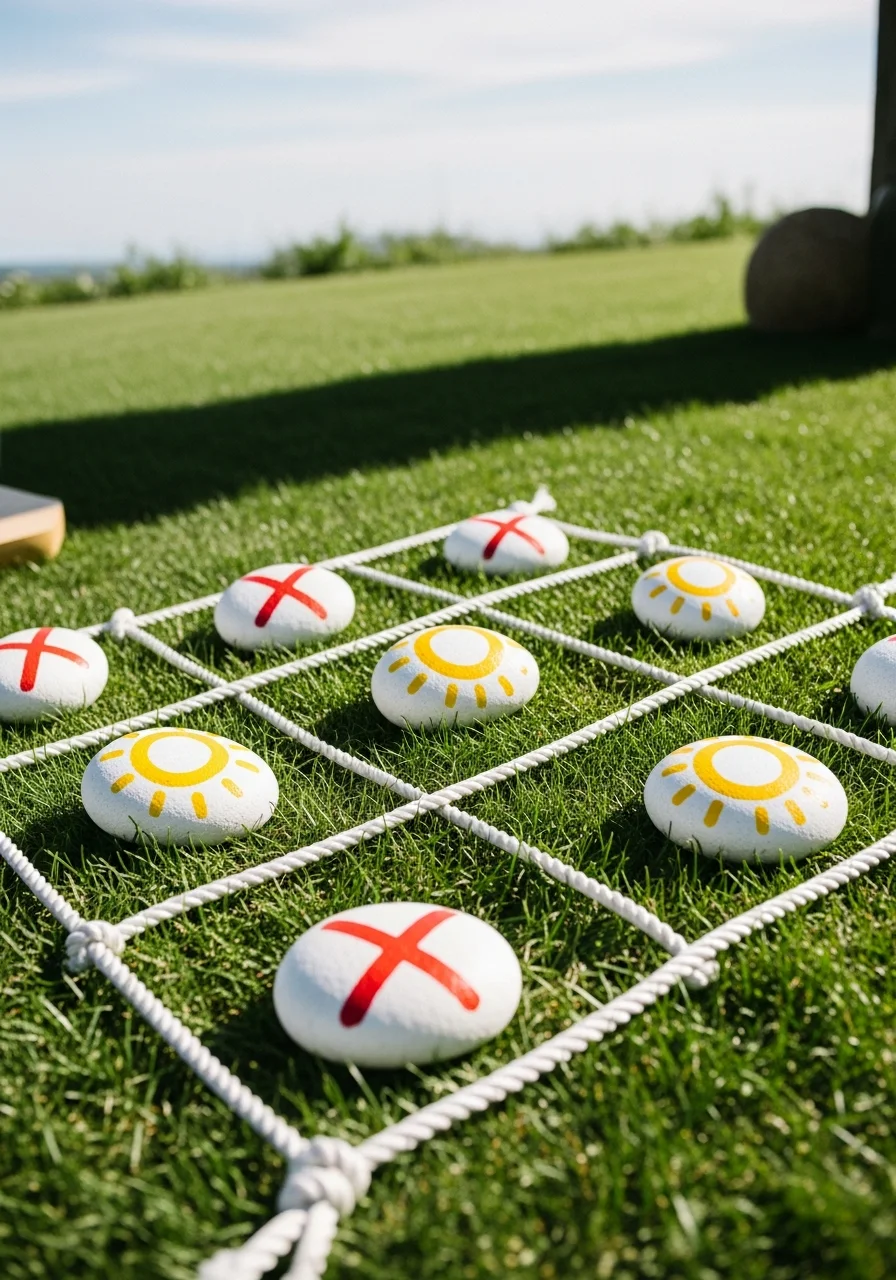
Use a large grid made of rope and painted rocks or frisbees as ‘X’ and ‘O’ markers.
It is a visually appealing station that requires no explanation. It’s perfect for keeping kids occupied between main events.
Use white rope for the grid and paint half the rocks sun yellow and the other half picnic red.
30. Bean Bag Ladder Toss
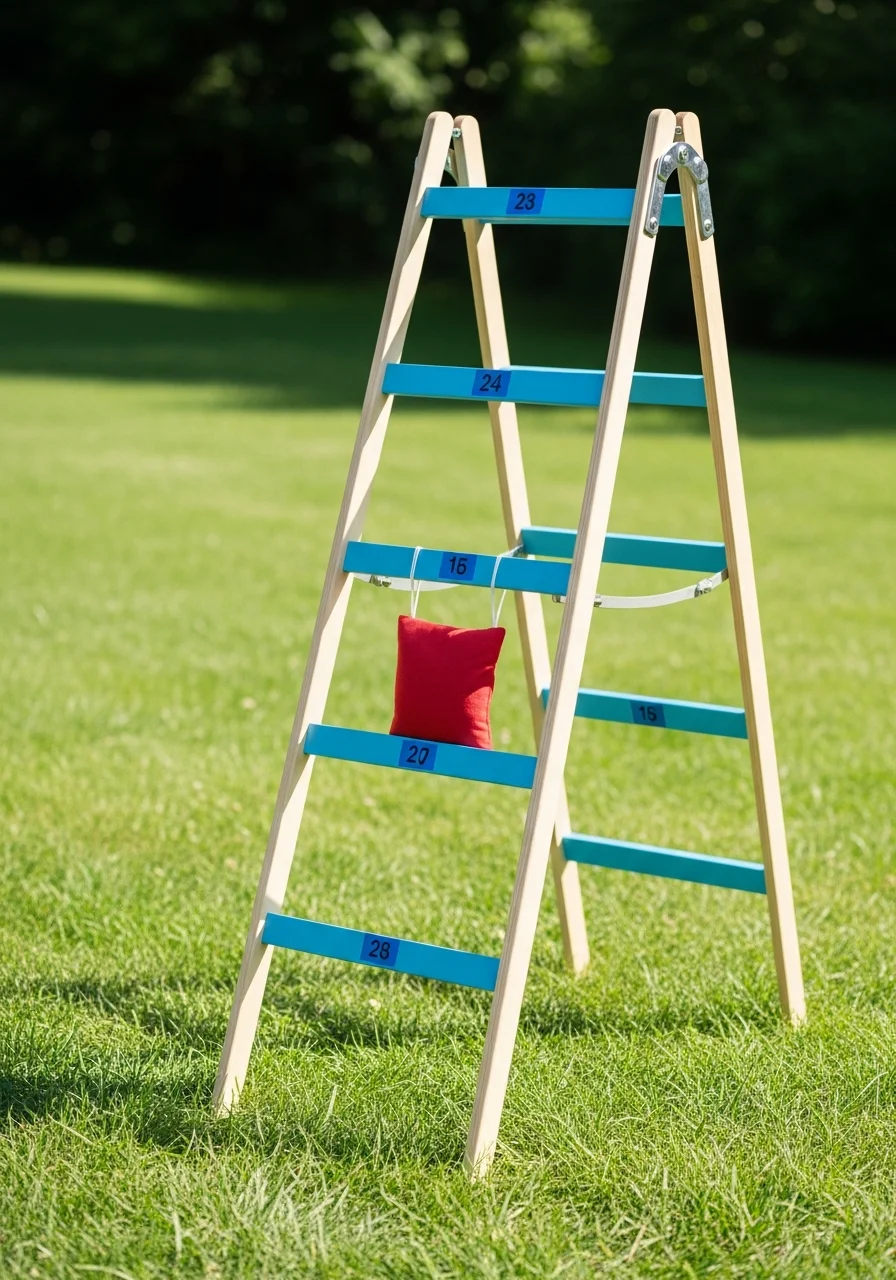
Toss bean bags into the rungs of a ladder, with higher rungs worth more points.
It utilizes items you likely already have (a ladder). It’s a vertical game that saves space in smaller yards.
Tape point values (10, 20, 50) onto the rungs using bright blue painter’s tape for easy visibility.
Frequently Asked Questions
How do I choose games that include both toddlers and seniors?
Focus on activities that prioritize shared knowledge or simple physical tasks over speed and strength. Heritage games like ‘Guess the Baby Photo’ or ‘Family Bingo’ are ideal because they rely on recognition and luck rather than mobility. Collaborative team-building challenges, such as a scavenger hunt where teams must find items based on family history, allow younger children to do the running while seniors provide the historical clues.
What are the best low-budget family reunion games?
Traditional field day classics like sack races using old pillowcases or ‘Drip Drip Drop’ ( a water-based version of Duck Duck Goose) require minimal investment. Heritage trivia only requires paper and pens, while ‘Storytelling Circles’ use the family’s own history as the primary entertainment. DIY stations like a ring toss can be easily assembled using painted bottles and plastic hoops found at home.
How many games should I plan for a 4-hour reunion?
Aim for three to four structured activities to keep the schedule moving without feeling rushed. Start with one low-pressure icebreaker to help everyone reconnect, followed by one high-energy outdoor game or water activity for those who want to be active. Leave a large block of time for DIY stations like Cornhole or Giant Jenga that guests can play at their own pace, and finish with a seated heritage game or trivia session.
What are some good prizes for family reunion game winners?
Focus on sentimental or practical items rather than expensive gadgets. Custom ‘Family Reunion’ ribbons, small trophies, or ‘bragging rights’ certificates are popular and nostalgic. Useful items like personalized water bottles, family tree posters, or small gift cards to local ice cream shops also work well. For heritage games, consider prizes like a framed copy of an old family photo or a collection of family recipes.
How do I handle game participation for family members with mobility issues?
Incorporate low-impact games that can be played while seated, such as ‘Family Tree Trivia’ or ‘Storytelling Circles.’ For team-based activities like scavenger hunts, assign roles that do not require movement, such as the ‘Team Captain’ or ‘Clue Solver’ who coordinates the group from a central table. Ensure that DIY game stations are set up on flat, accessible surfaces like a paved patio or a short-grass area near the main seating.
This post may contain affiliate links: full affiliate disclosure.