
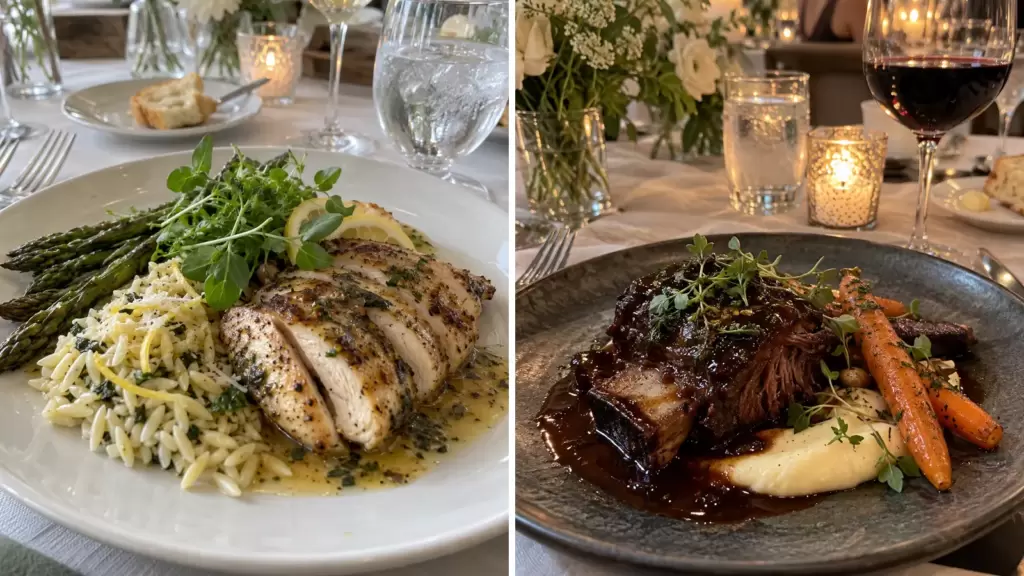
A memorable wedding menu is more than a list of dishes. The food, service style, and presentation should work together so guests can understand their choices quickly and enjoy the meal at the pace of the reception.
Use these 50 concrete combinations as visual starting points, then adapt ingredients to your venue, season, budget, and confirmed guest needs. Your caterer can help translate the look into safe quantities, holding methods, staffing, and service timing.
Plated Wedding Menu Ideas
Use plated combinations when timing, portion consistency, and a polished presentation matter most. These menus give every guest a complete entrée with supporting sides.
1. Lemon-Herb Chicken Garden Plate
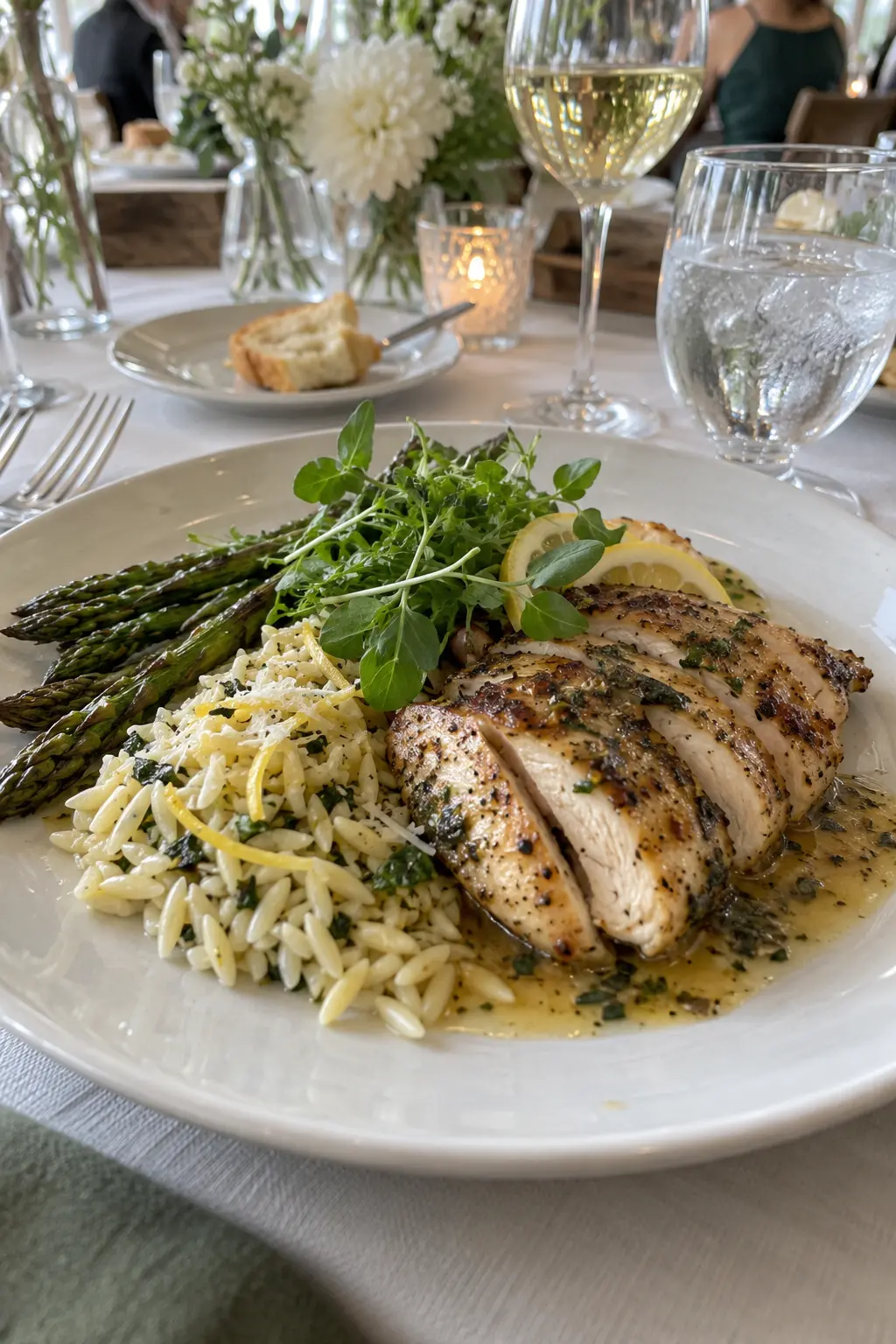
Pair roast chicken with lemon orzo, asparagus, and pea shoots for a plated dinner that feels fresh but familiar. Ask the caterer to sauce the chicken lightly at service so the crisp edges and green vegetables stay attractive.
2. Red-Wine Short Rib Supper
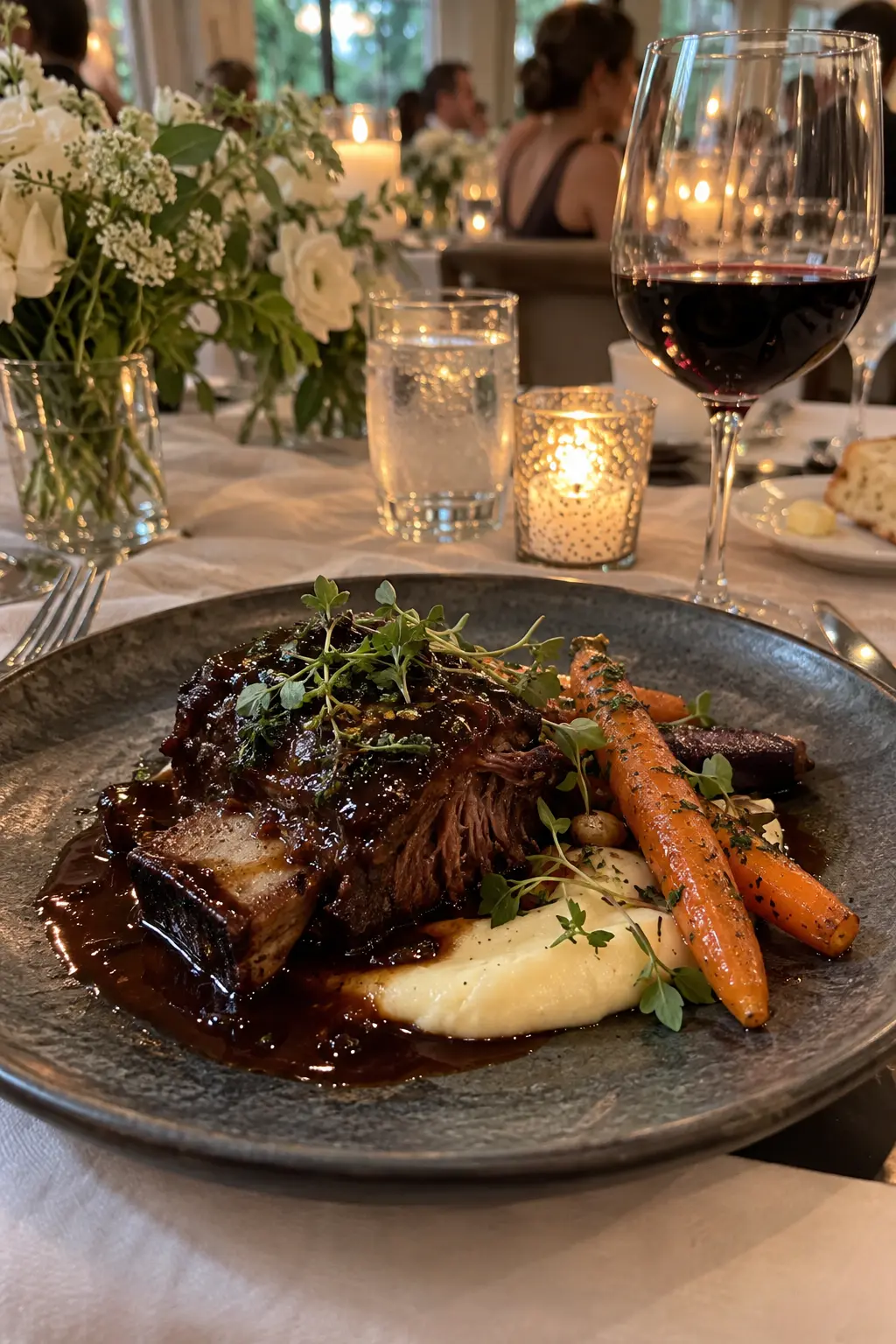
Braised short rib, potato purée, glazed carrots, and red-wine jus create a comforting formal plate. This combination suits cool-weather receptions because the beef can be cooked ahead and finished consistently as guests are seated.
3. Citrus Salmon Coastal Plate
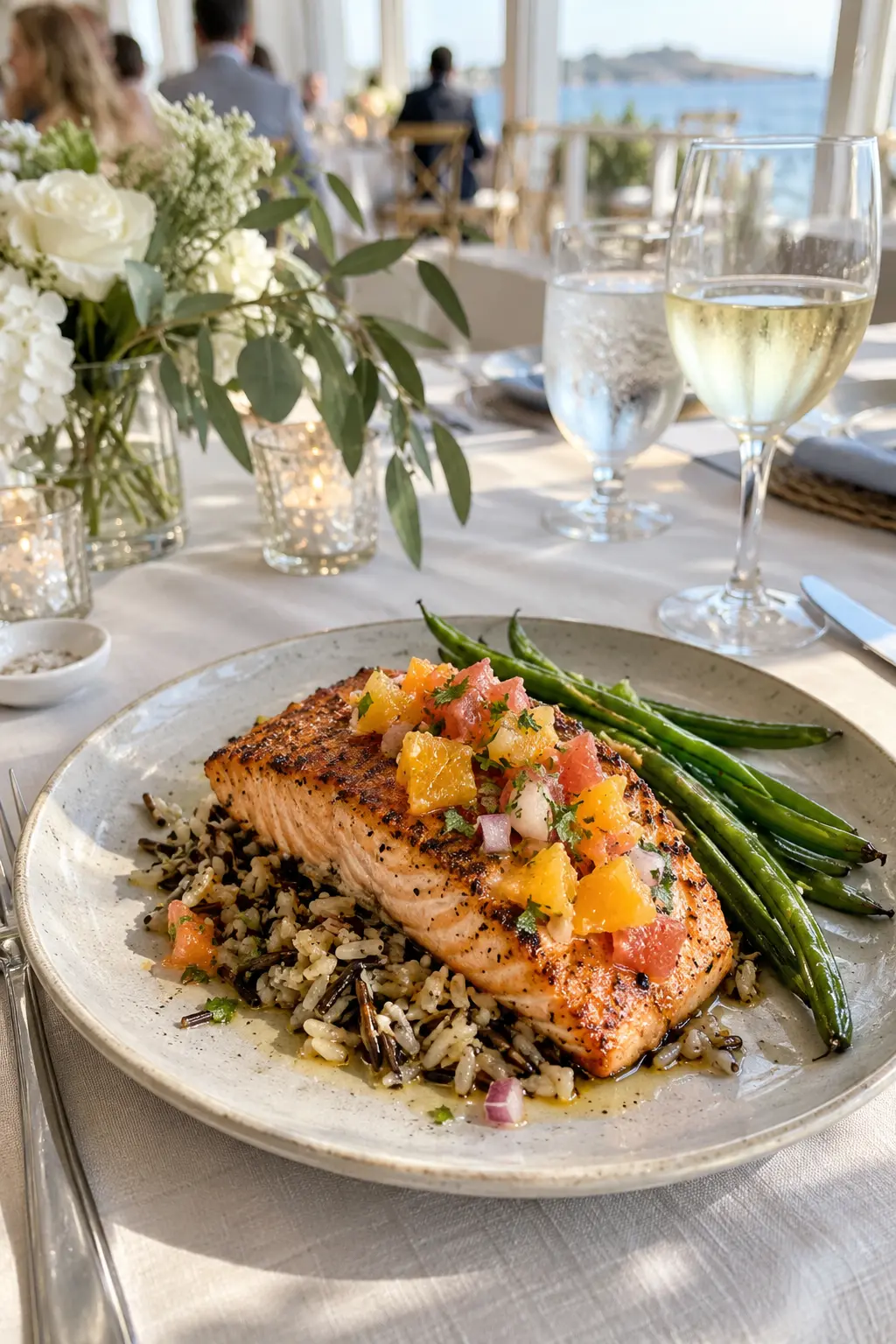
Serve seared salmon over wild rice with green beans and citrus relish for a bright coastal menu. Keep the relish separate until plating, which protects the fish texture and makes the orange and pink colors look deliberate.
4. Mushroom Ravioli Vegetarian Plate
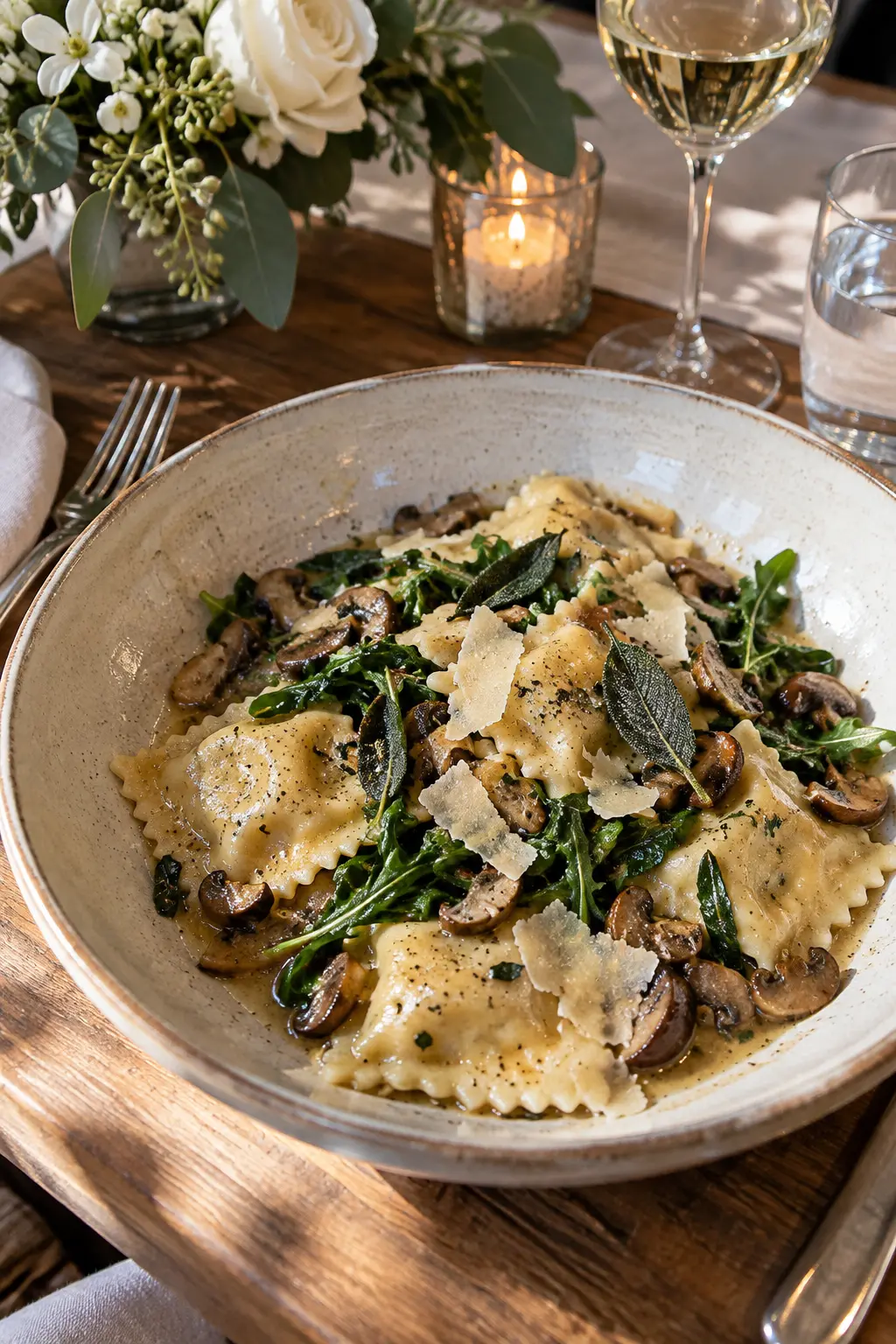
Wild-mushroom ravioli with brown butter, arugula, and crisp sage feels like a complete entrée rather than a substitute. Request a generous portion and a dairy-free sauce alternative for guests whose needs overlap.
5. Steak-Frites Bistro Plate
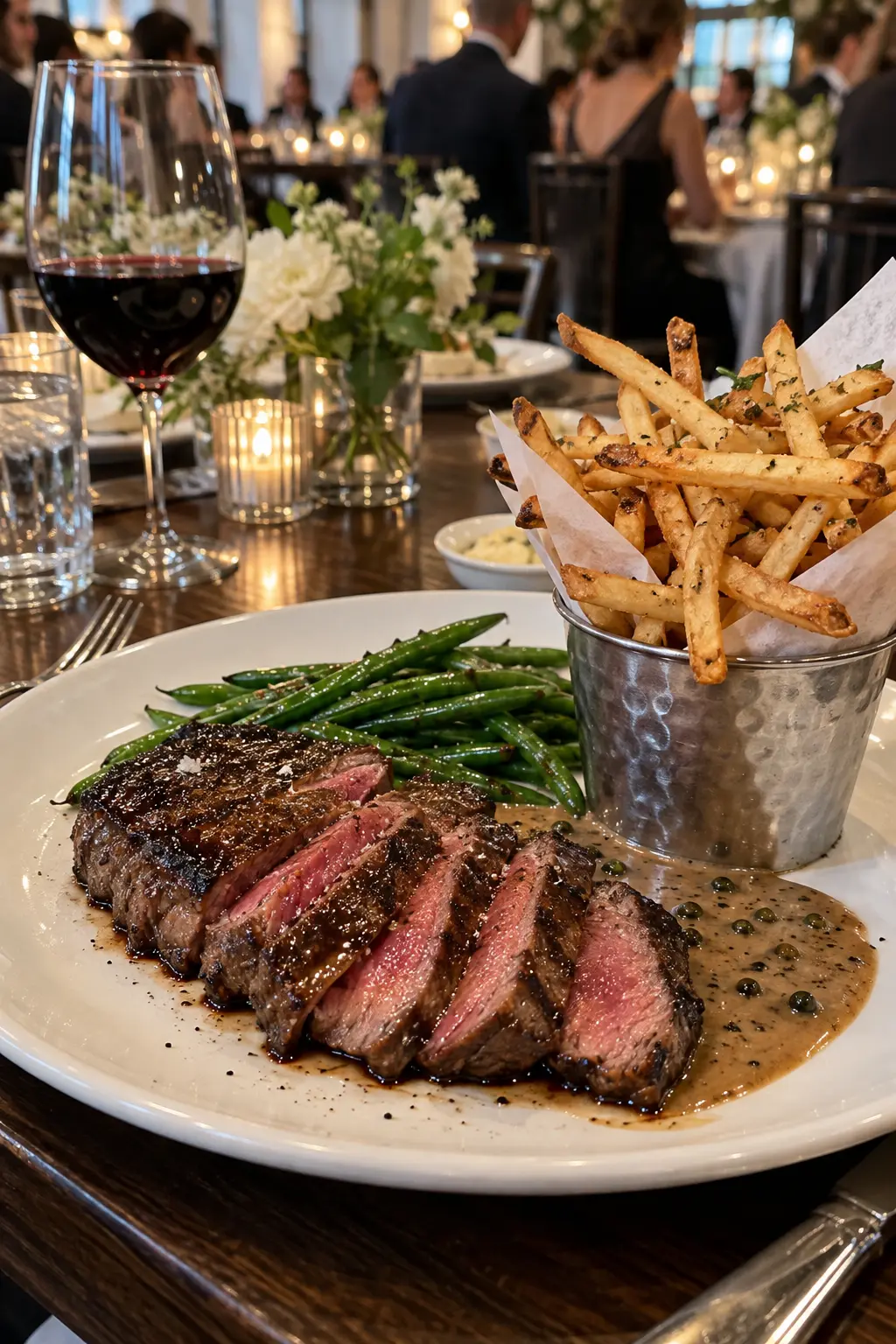
Sliced steak, crisp fries, haricots verts, and peppercorn sauce bring restaurant energy to a city reception. Serve the fries in a small cup so they stay distinct from the sauce and remain easy for staff to plate quickly.
6. Southern Chicken and Biscuit Plate
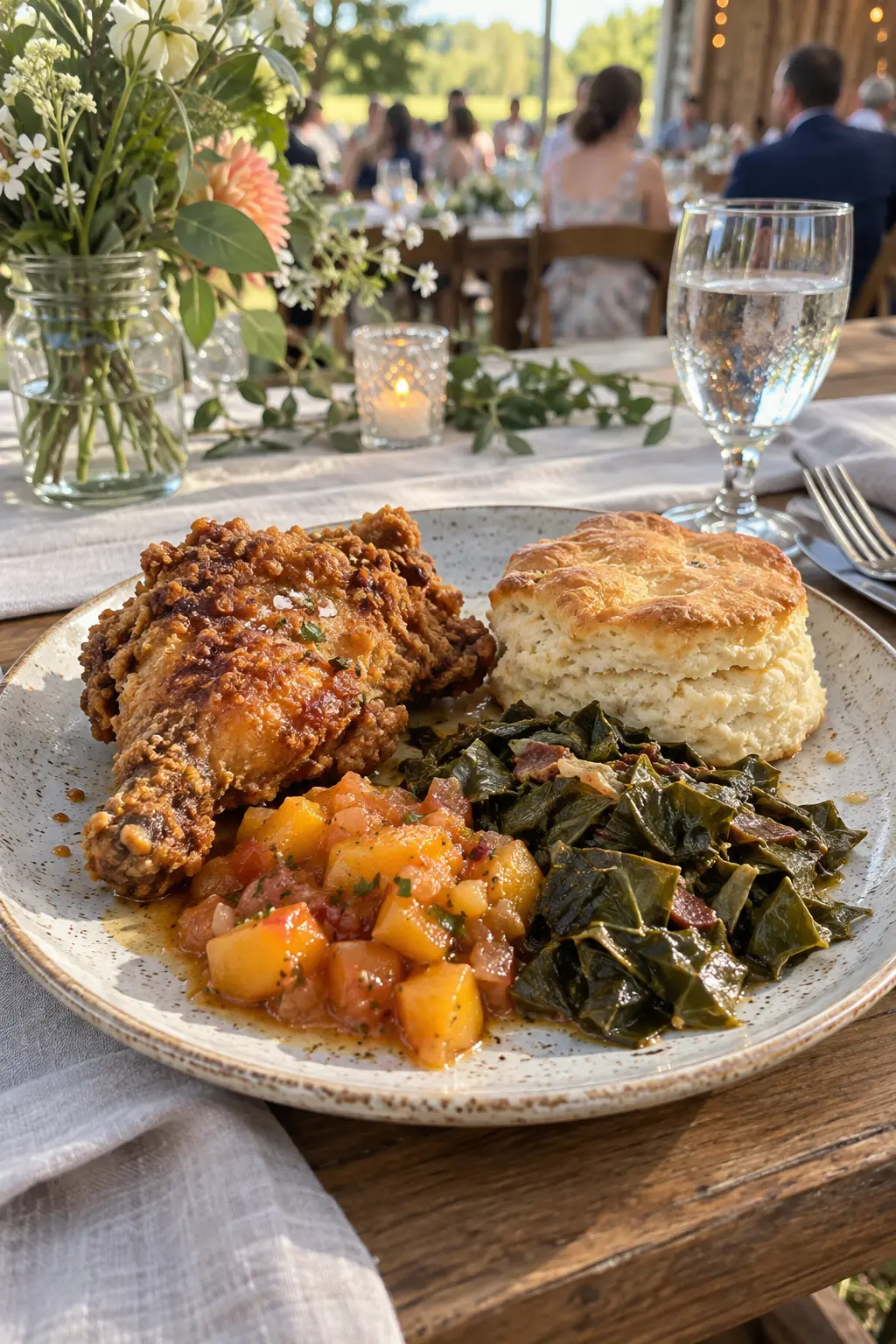
Build a relaxed Southern plate with fried chicken, a flaky biscuit, collard greens, and peach relish. Choose boneless or easy-to-handle pieces if guests will be dressed formally, and provide the relish as a bright counterpoint.
7. Crab Cake and Corn Succotash Plate
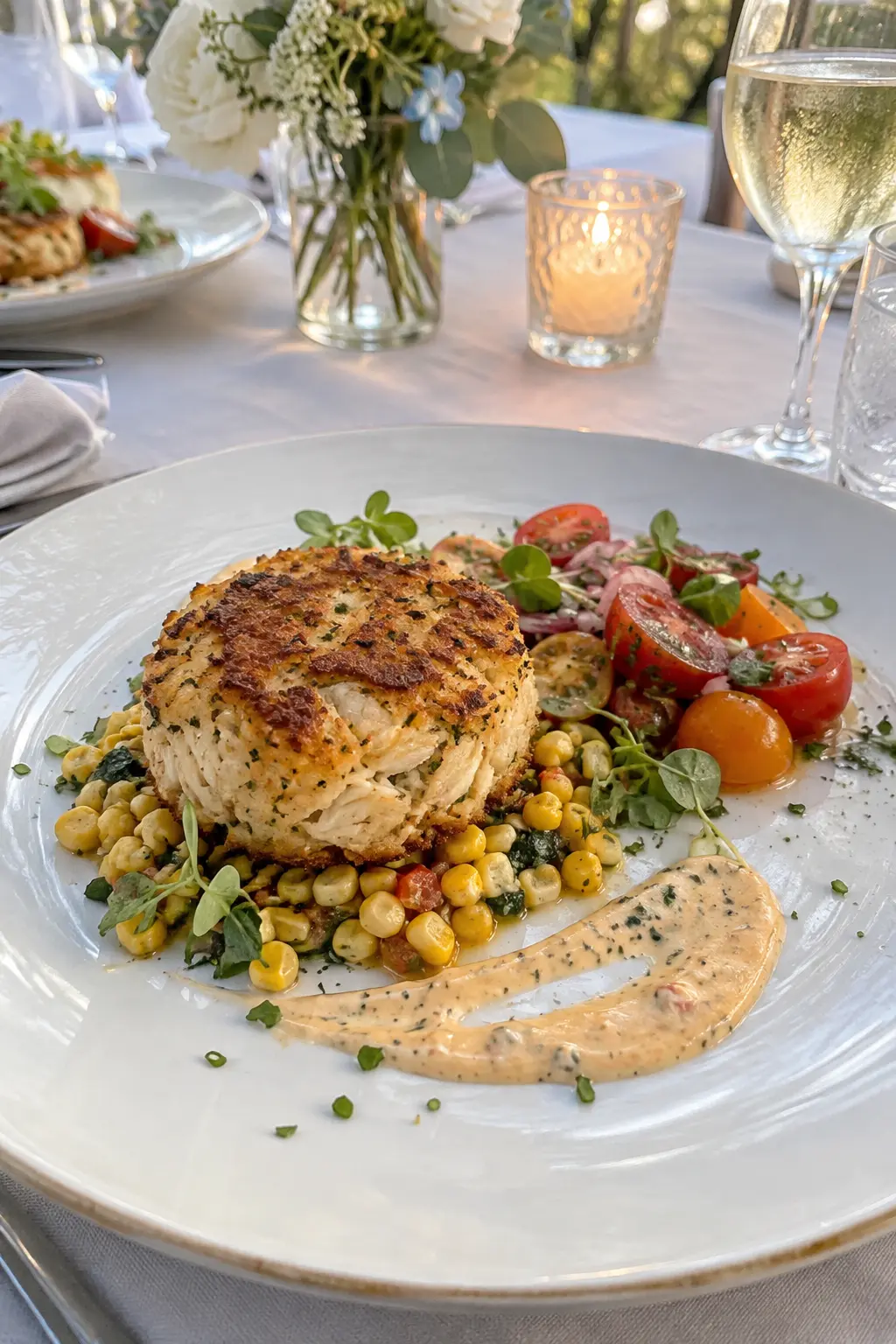
A seared crab cake with corn succotash, tomato salad, and remoulade makes a colorful summer entrée. Confirm shellfish allergies early and offer a similarly composed vegetable cake so both plates look equally considered.
8. Cauliflower Steak Vegan Plate
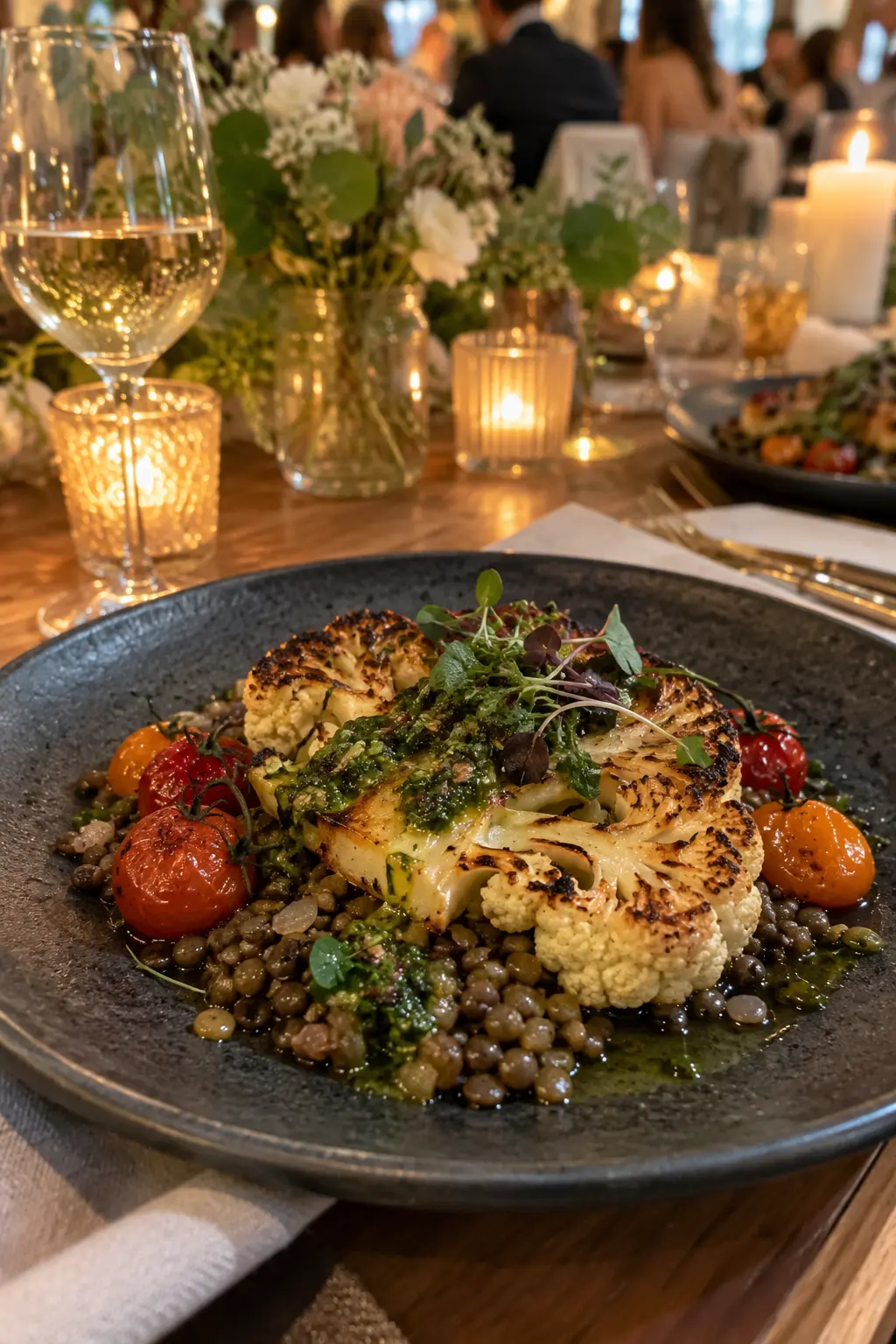
Center a thick roasted cauliflower steak over lentils, blistered tomatoes, and herb sauce for a vegan plate with real structure. The lentils provide substance while the charred edges make the entrée visually satisfying.
Buffet and Family-Style Wedding Menus
Shared dishes and buffets can feel generous and intentional when each spread has a clear flavor direction, enough duplicate serving points, and a plan for temperature.
9. Mediterranean Family-Style Feast
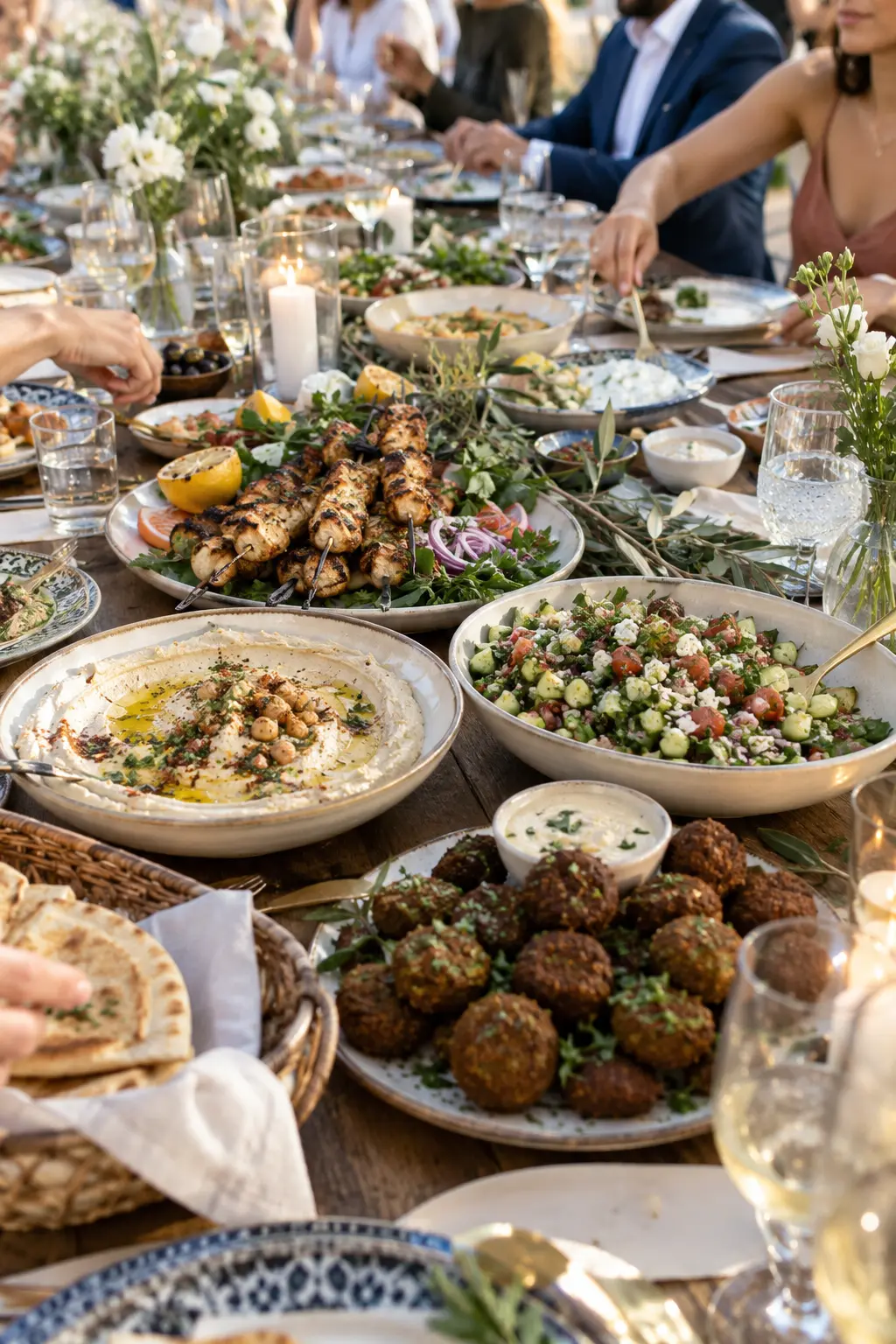
Fill the table with chicken skewers, falafel, hummus, chopped salad, warm pita, and roasted vegetables. Use several medium platters instead of one oversized board so guests can pass food comfortably without crowding glassware.
10. Italian Sunday Table
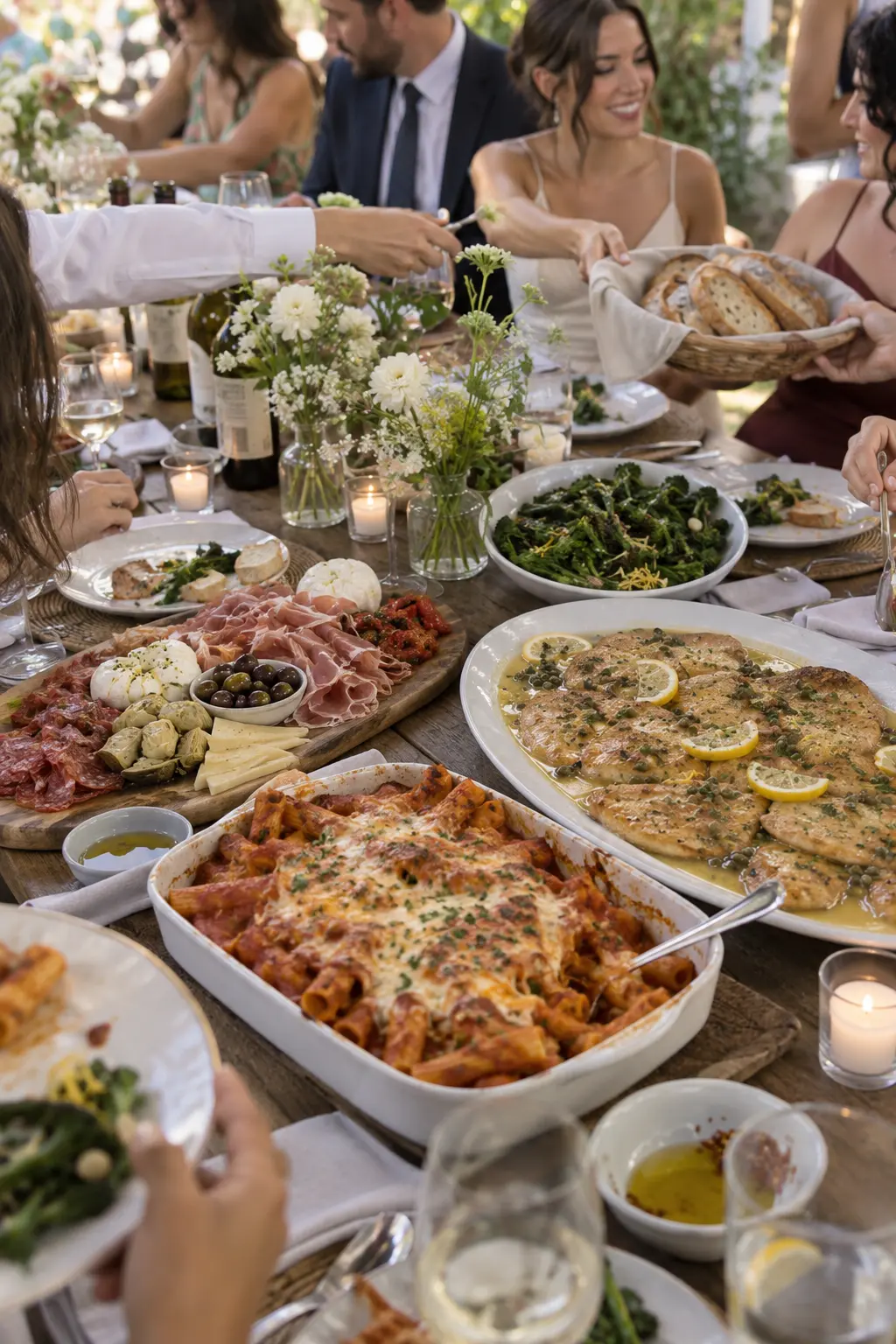
Serve antipasti, baked rigatoni, chicken piccata, broccolini, and bread in generous shared dishes. Place duplicate platters along long tables so guests are not waiting for one heavy casserole to travel the full length.
11. Backyard Barbecue Buffet
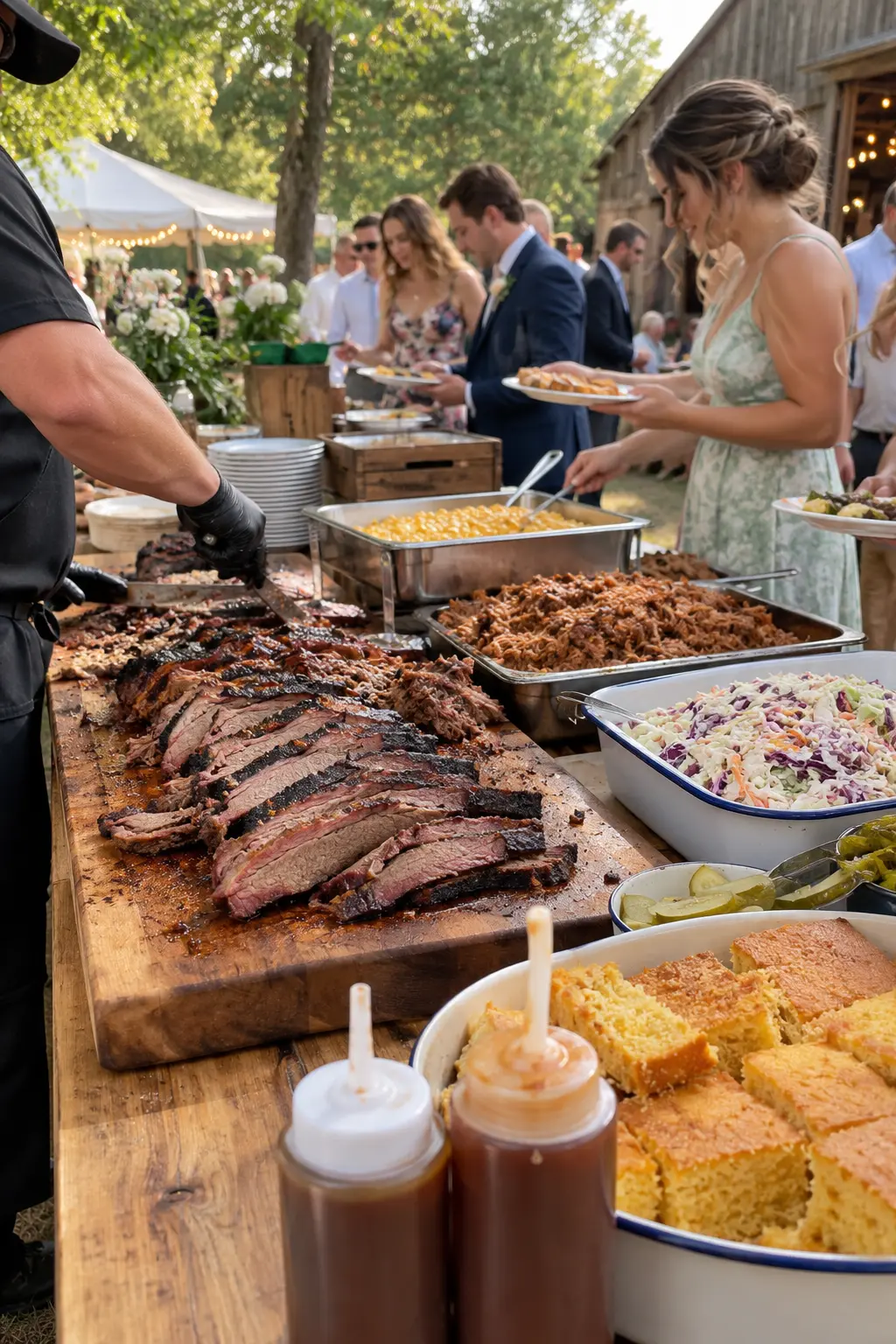
Offer sliced brisket, pulled pork, macaroni and cheese, slaw, and cornbread for a casual outdoor reception. A staffed carving board keeps portions moving, while covered pans protect hot sides from cooling or drying out.
12. Indian Celebration Buffet
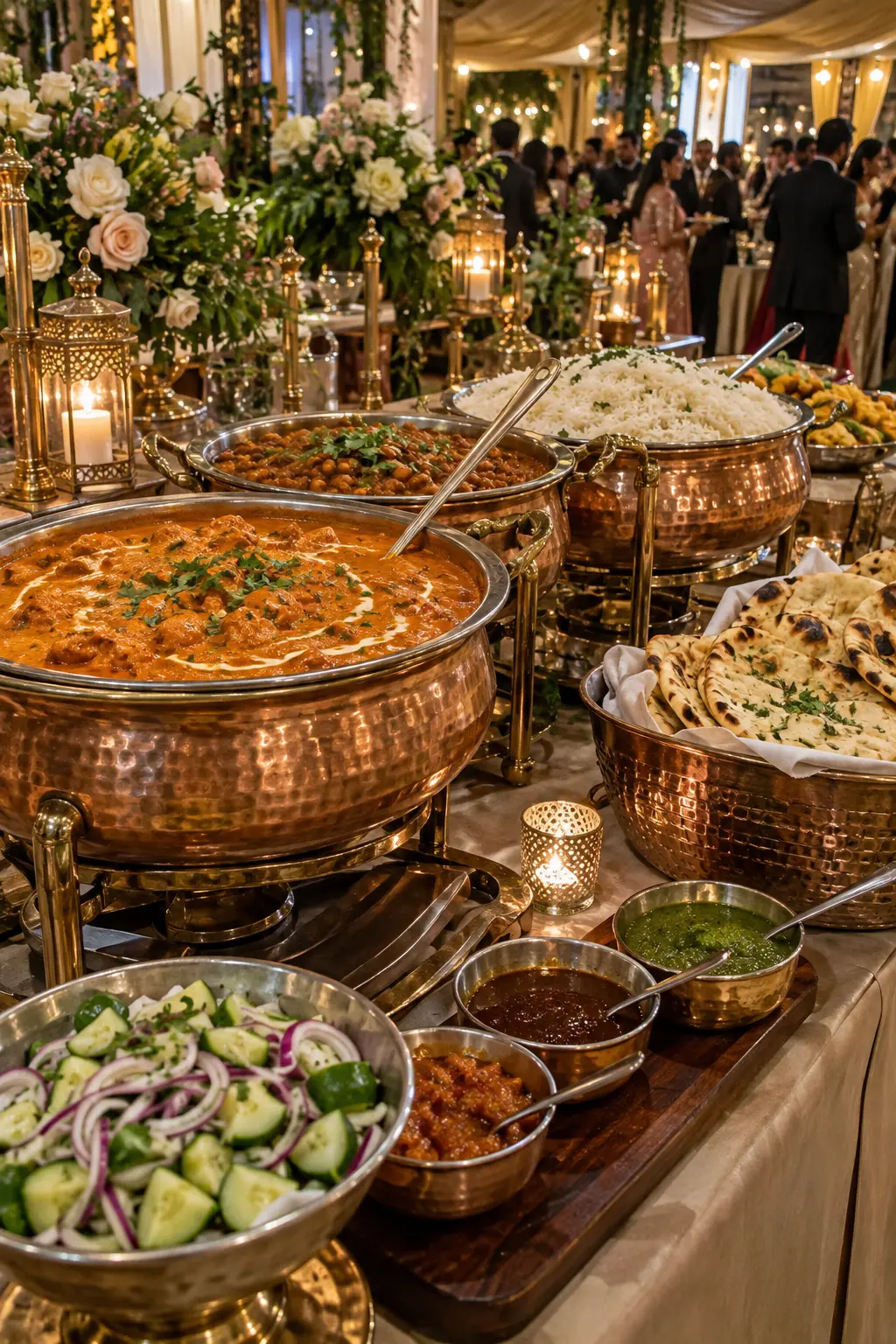
Butter chicken, chana masala, basmati rice, naan, cucumber salad, and chutneys create a buffet with contrasting colors and textures. Keep breads replenished in smaller covered baskets so they stay soft throughout dinner.
13. Lowcountry Shrimp-and-Grits Spread
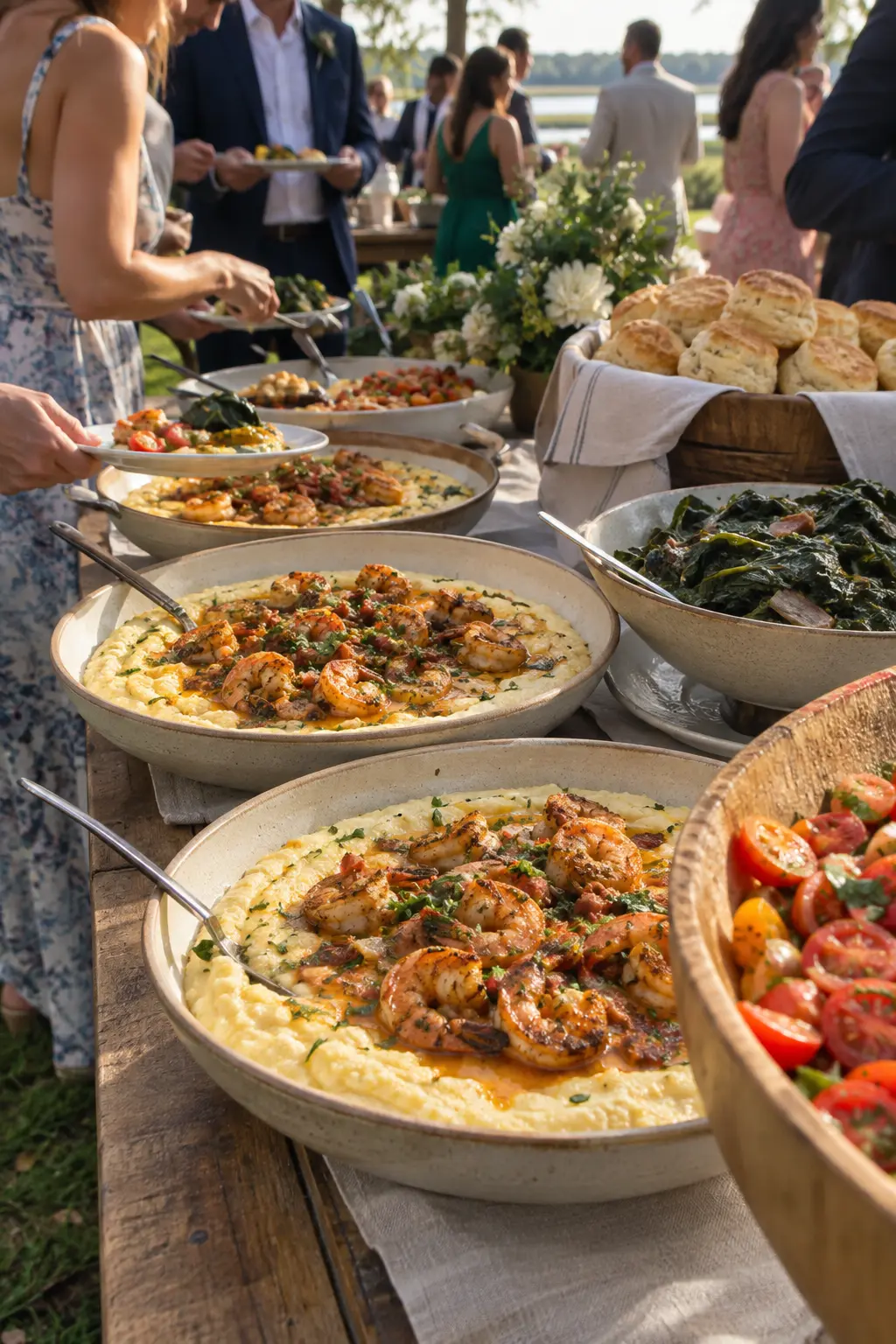
Serve creamy grits in wide bowls with seasoned shrimp, then add greens, biscuits, and tomato salad. Offering the shrimp as a topping lets guests control portions and keeps a plain grits option available for children or selective eaters.
14. New England Seafood-Boil Tables
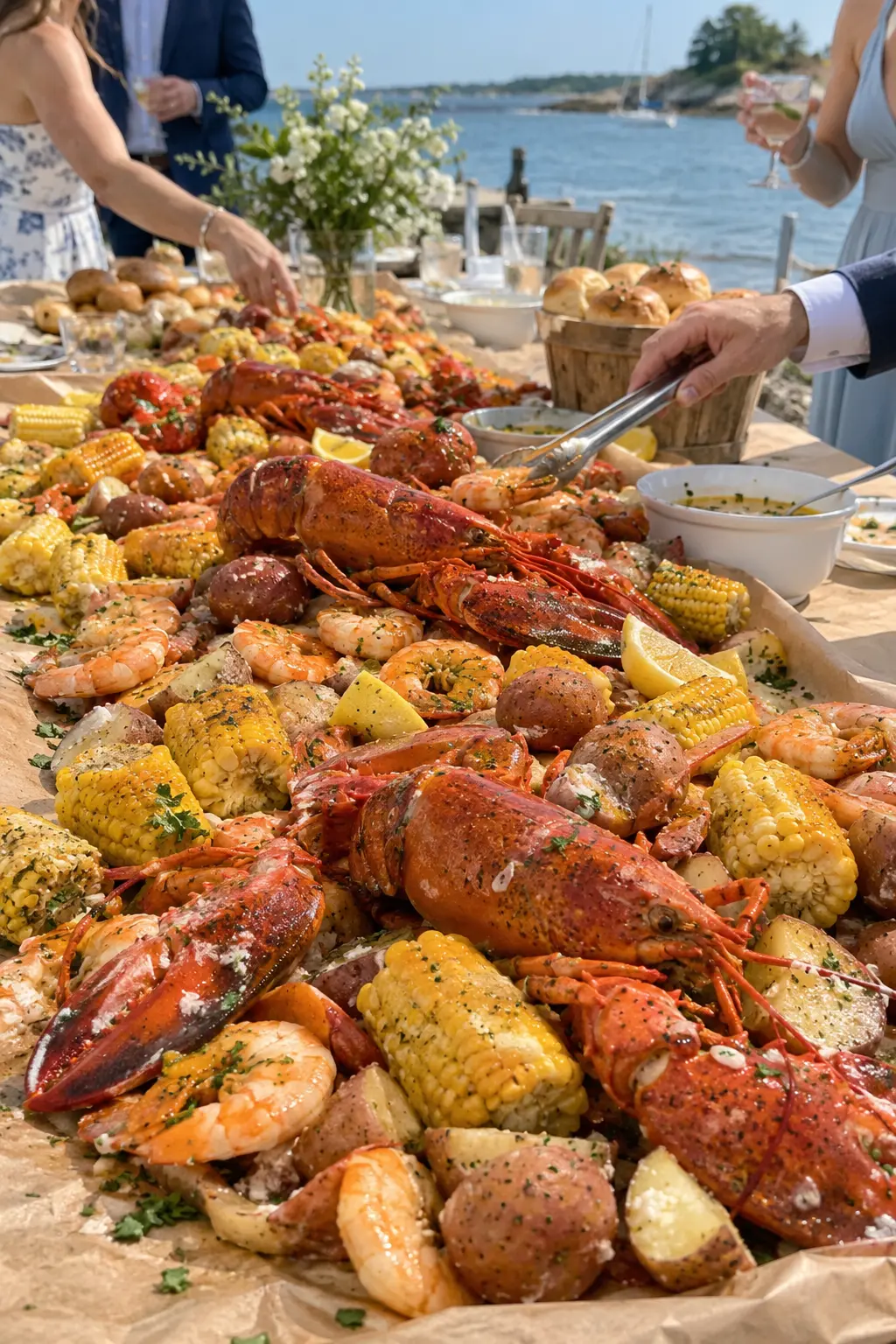
Spread lobster, shrimp, corn, and potatoes across paper-lined communal tables for a hands-on coastal dinner. Add rolls, shell bowls, sturdy napkins, and a clearly separate non-shellfish meal so the service feels generous rather than messy.
15. Autumn Roast Buffet
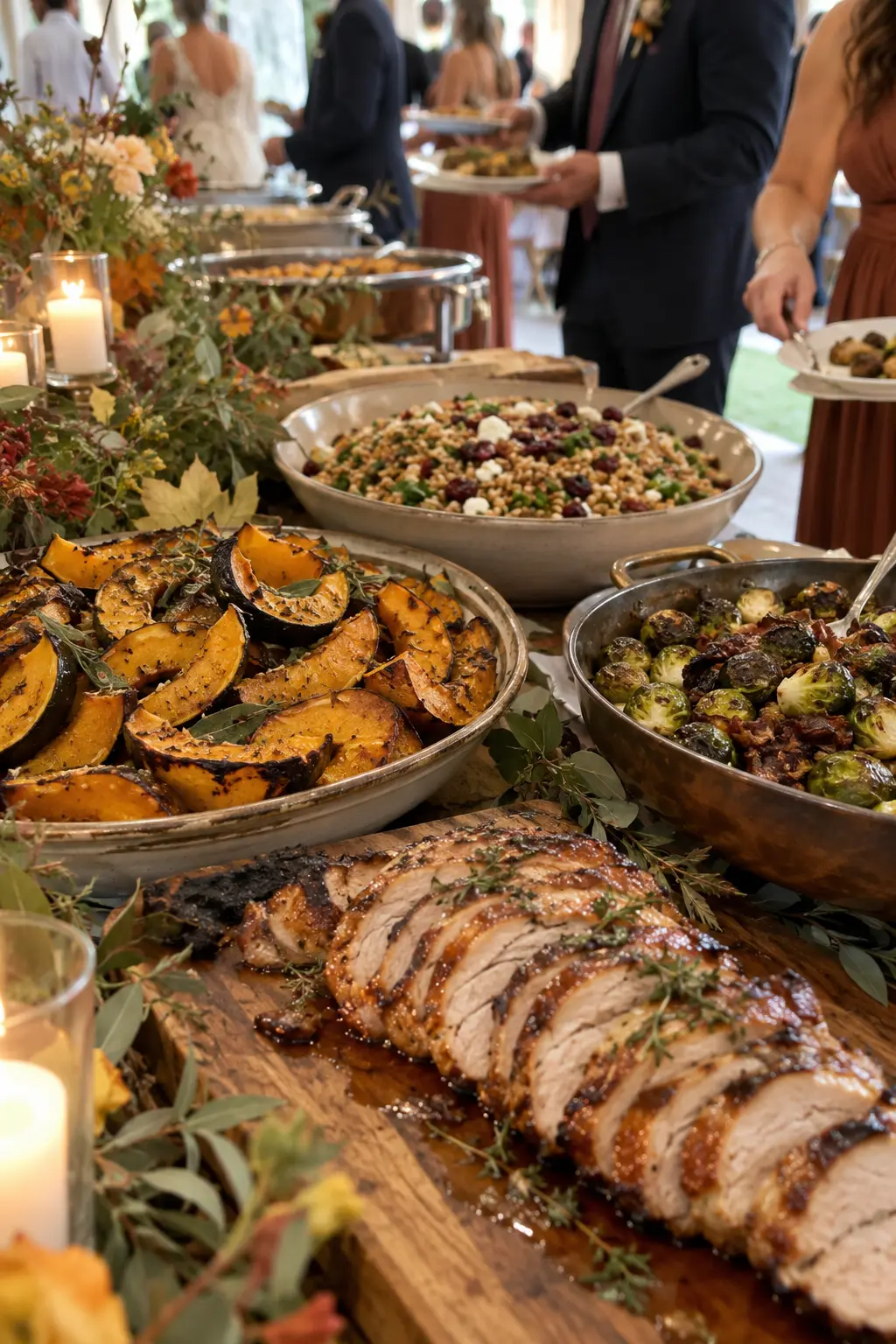
Sliced cider-glazed pork, roasted squash, farro salad, and Brussels sprouts form a cohesive fall buffet. Choose two vegetable preparations with different textures so the menu still feels varied when guests skip the meat.
16. Middle Eastern Mezze Supper
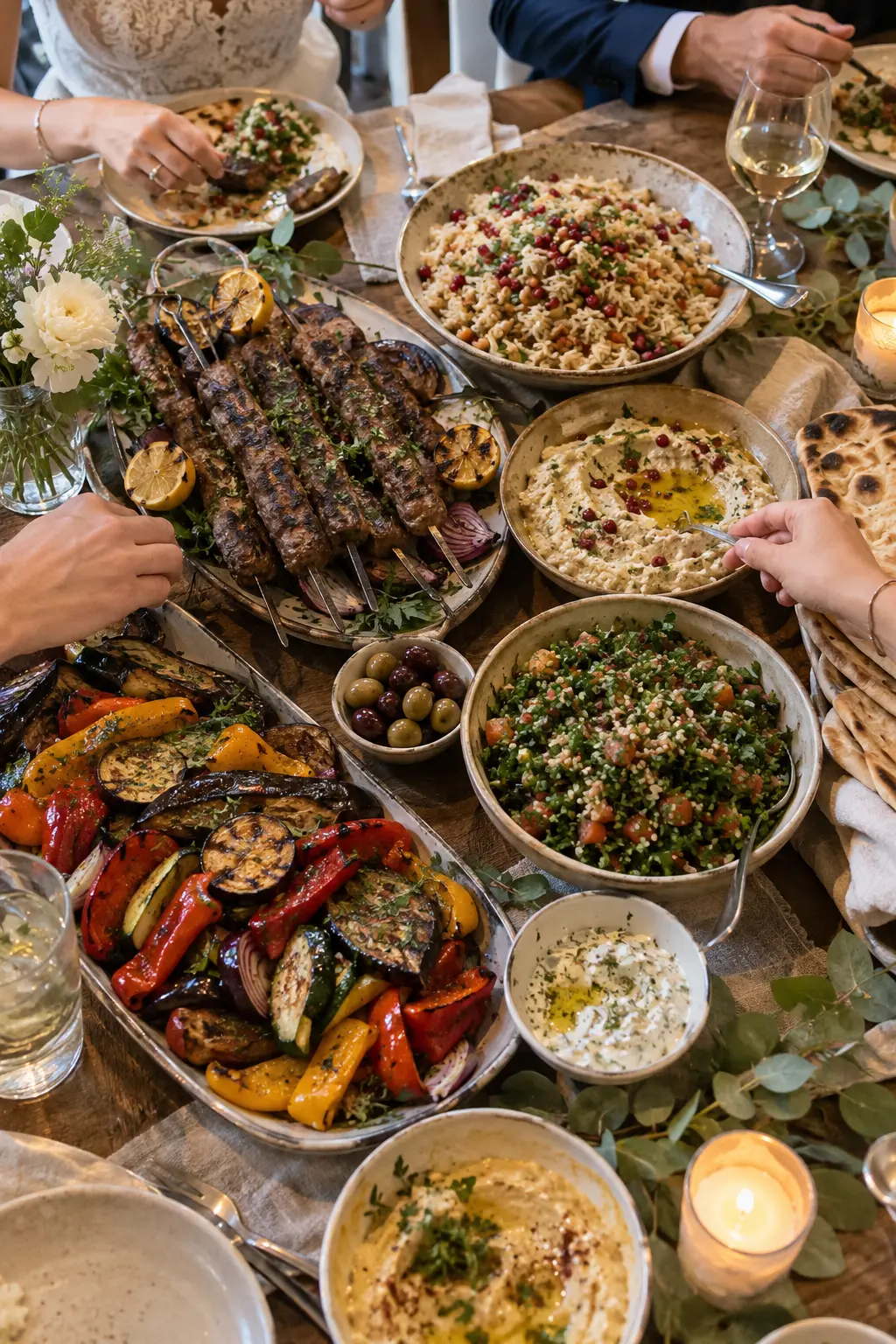
Combine kofta, jeweled rice, baba ganoush, tabbouleh, roasted vegetables, and flatbread for an abundant shared supper. Distribute dips and bread at both ends of each table to prevent the meal from bottlenecking around one platter.
Interactive Wedding Food Stations
A good station offers a visible action and a complete serving, not just a row of toppings. Keep choices focused so the experience stays lively without creating a slow line.
17. Fresh Pasta Action Station
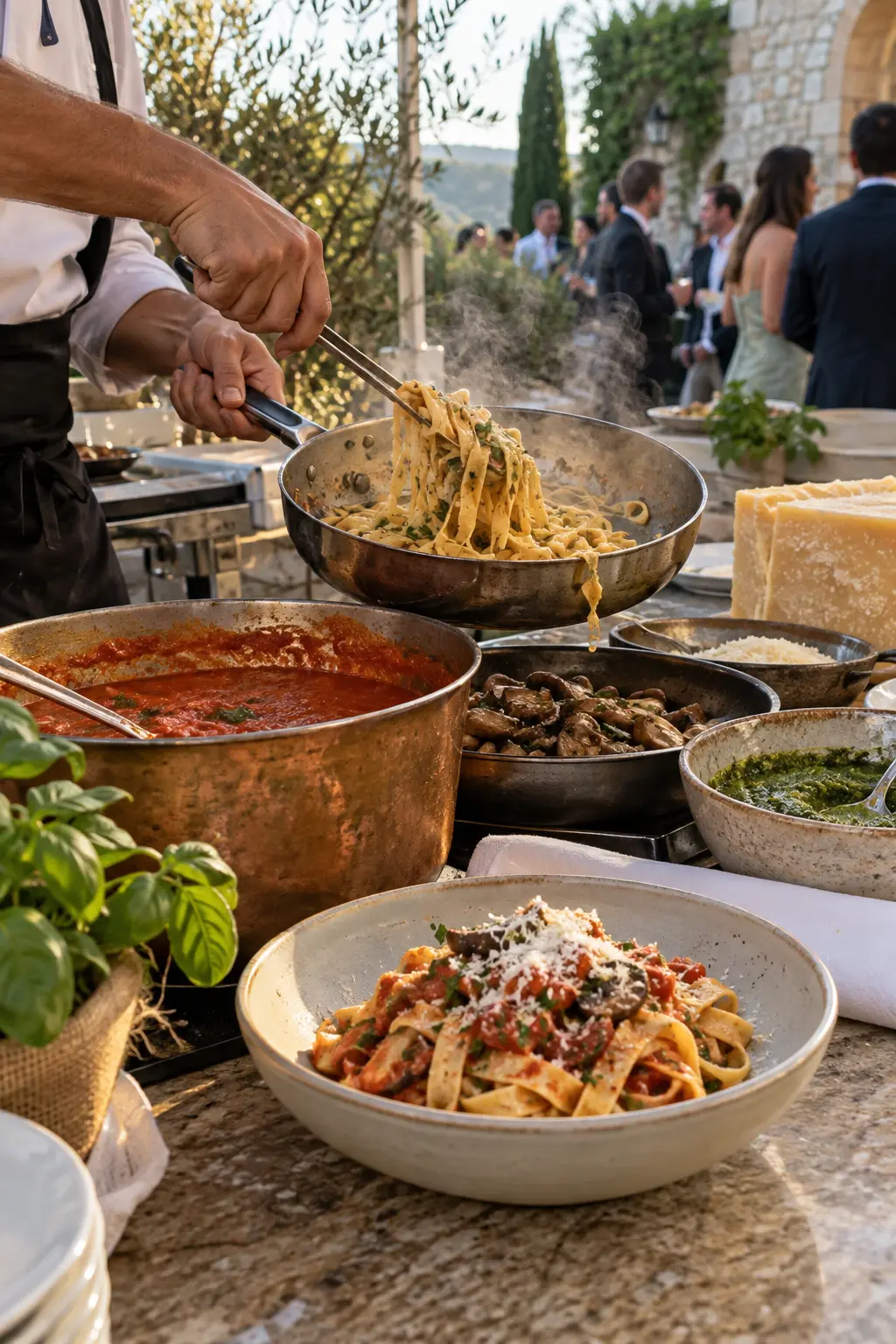
Let guests choose tagliatelle with tomato sauce, pesto, mushrooms, or parmesan while a chef finishes each bowl. Limit the combinations to a few proven pairings so the line moves and every serving stays balanced.
18. Street-Taco Station
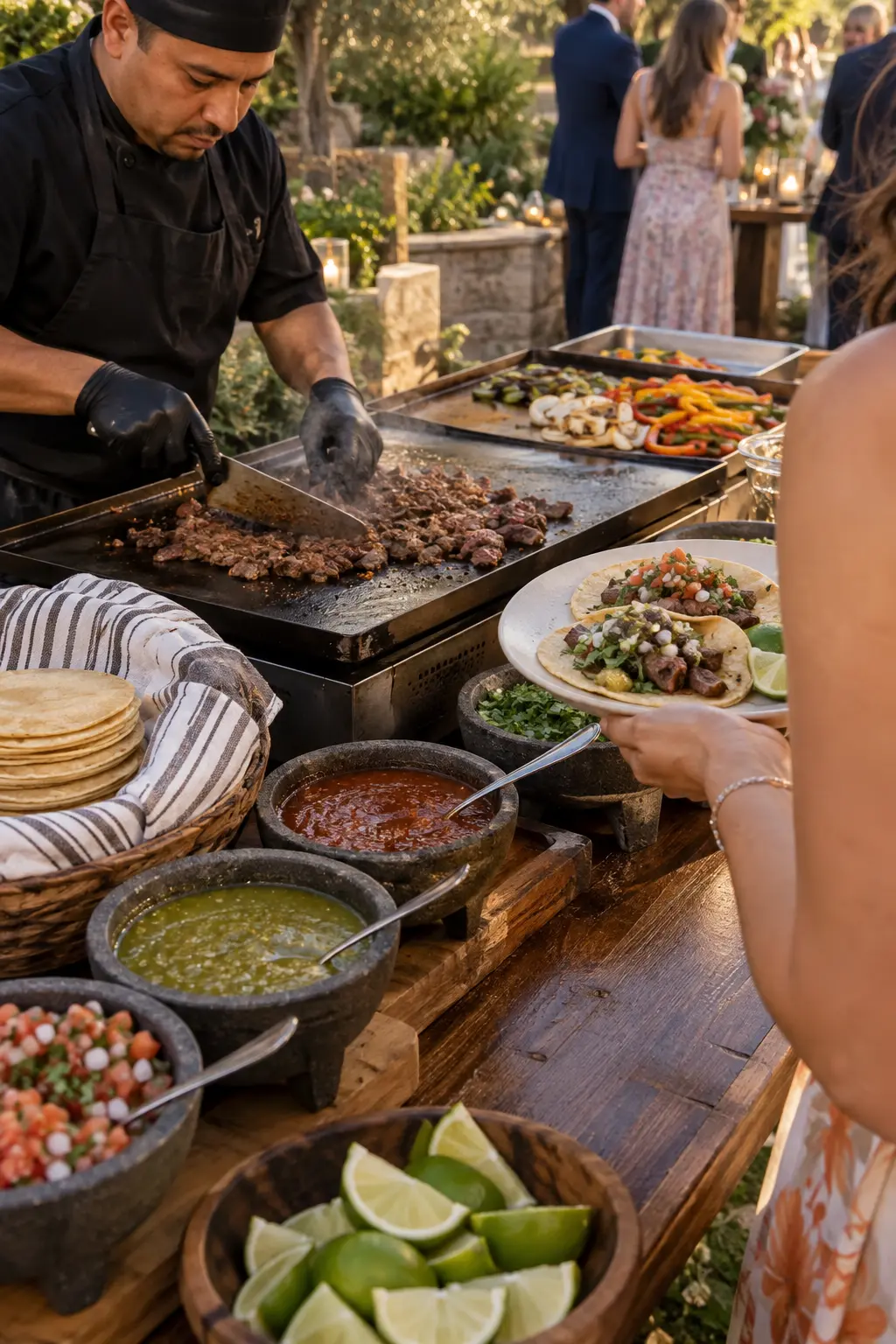
Set out warm corn tortillas, carne asada, grilled vegetables, three salsas, and lime around a staffed griddle. Two pickup points for tortillas and toppings reduce the queue and make vegetarian plates easy to assemble separately.
19. Sushi and Hand-Roll Bar
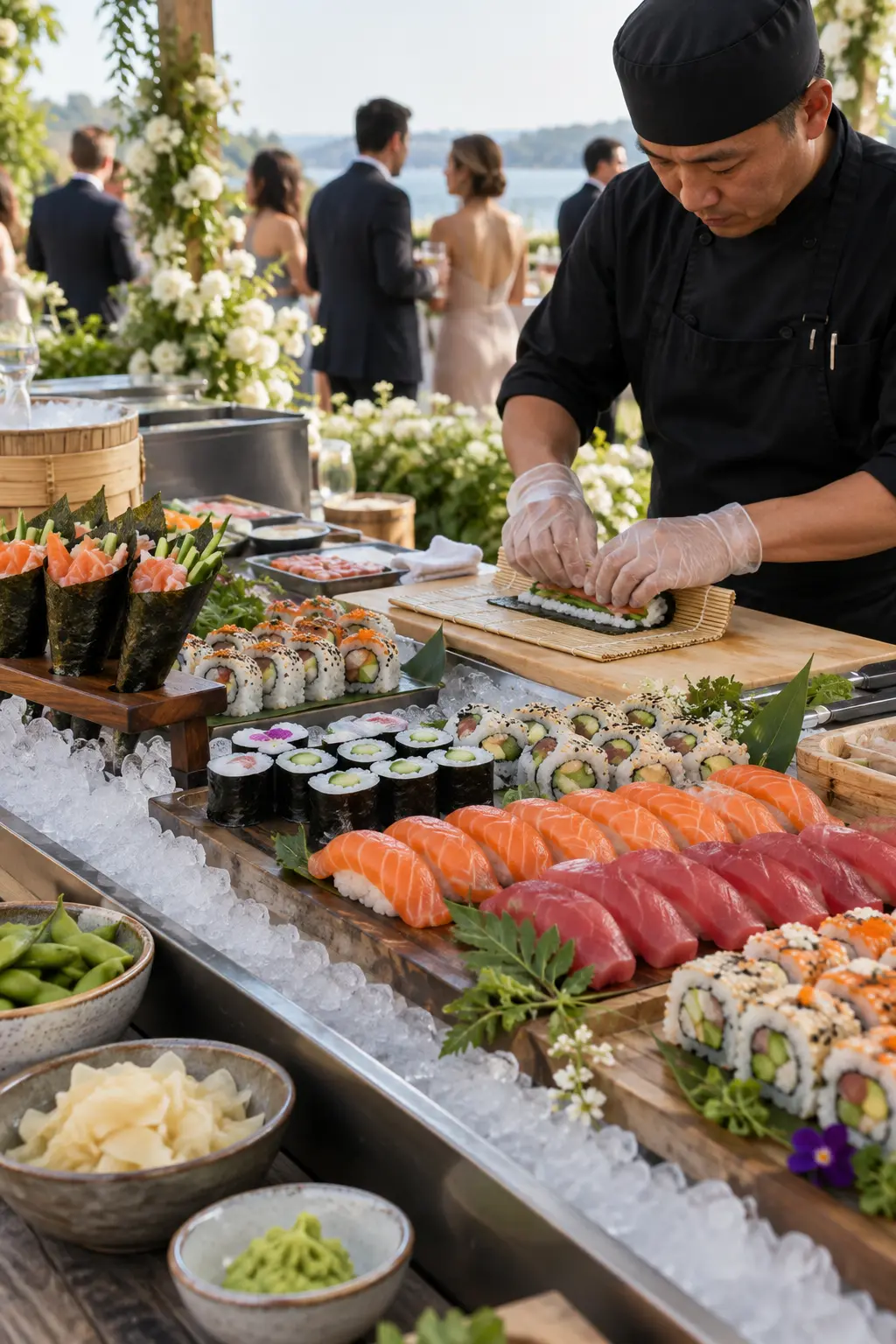
Display nigiri, maki, cucumber rolls, edamame, and pickled ginger over a properly chilled counter. A chef-made hand-roll option adds movement, while clearly separated vegetarian pieces give non-seafood guests a complete choice.
20. Slider and Fry Bar
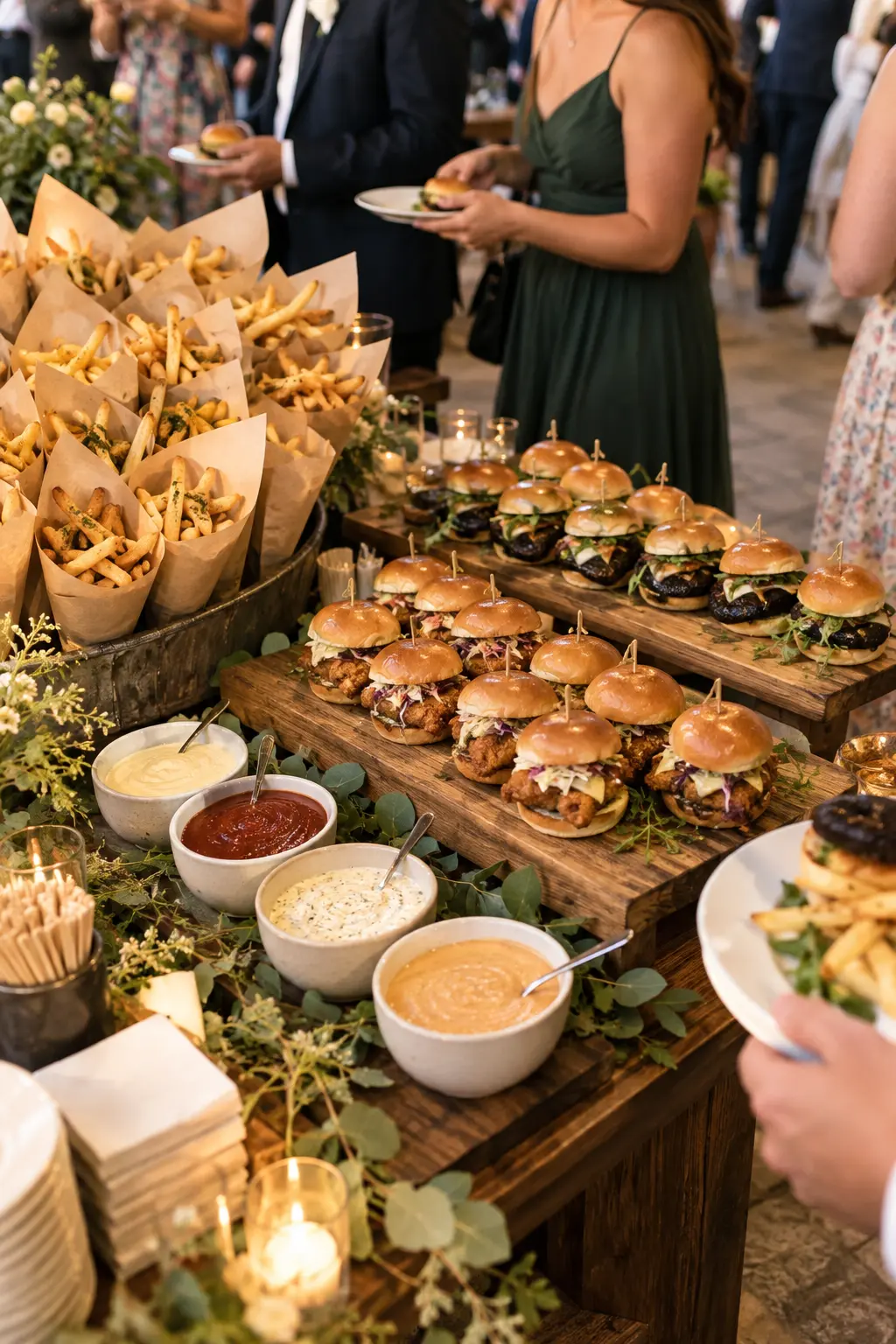
Offer beef, crispy chicken, and portobello sliders with fry cones and a short row of sauces. Keep each slider style on its own tier, using separate tongs, so guests can identify choices without opening every bun.
21. Wood-Fired Pizza Courtyard
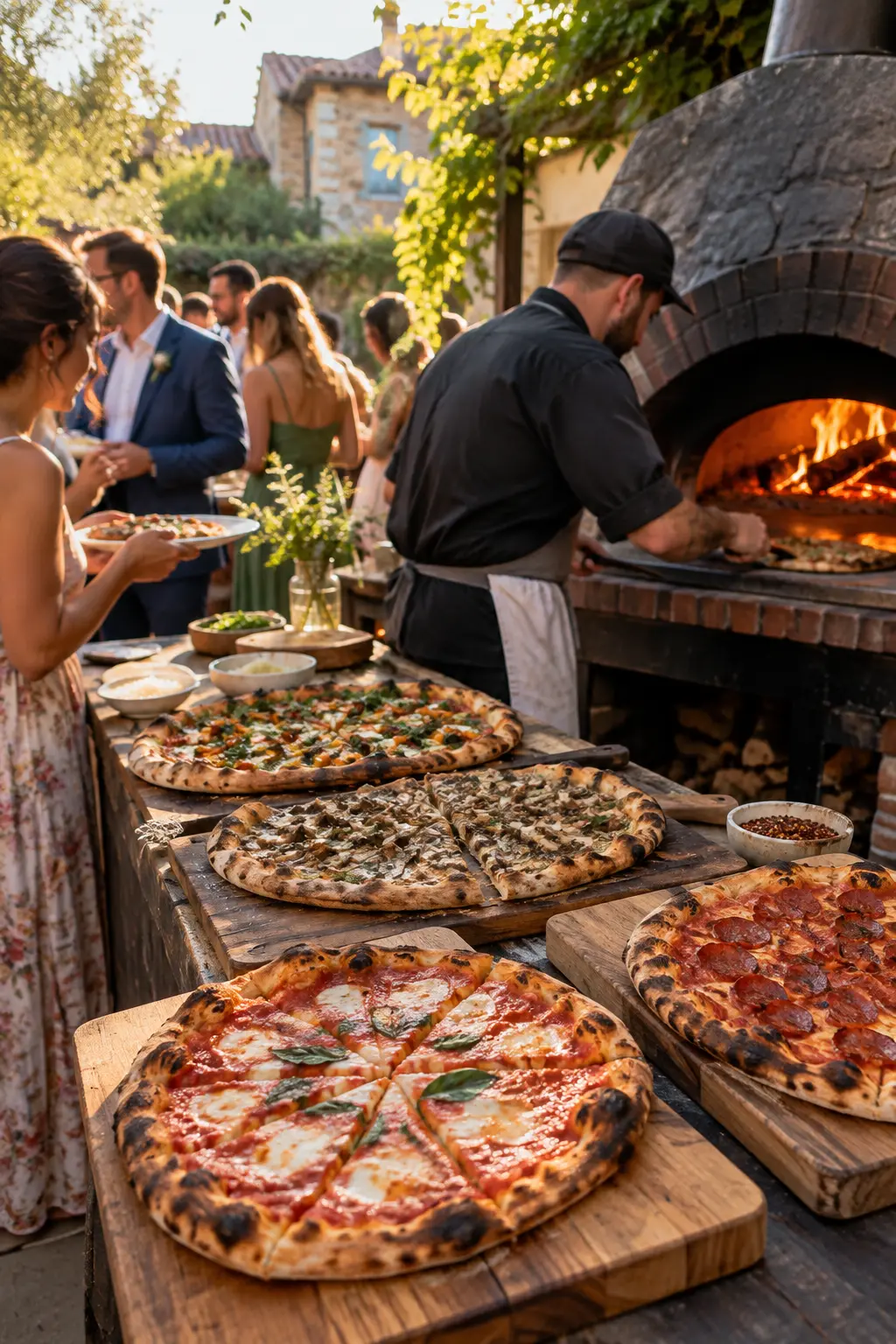
Serve margherita, mushroom, pepperoni, and seasonal vegetable pizzas from a visible oven or warming counter. Cut each pie into smaller slices so guests can sample two styles without creating unnecessary waste.
22. Chef-Carved Roast Station
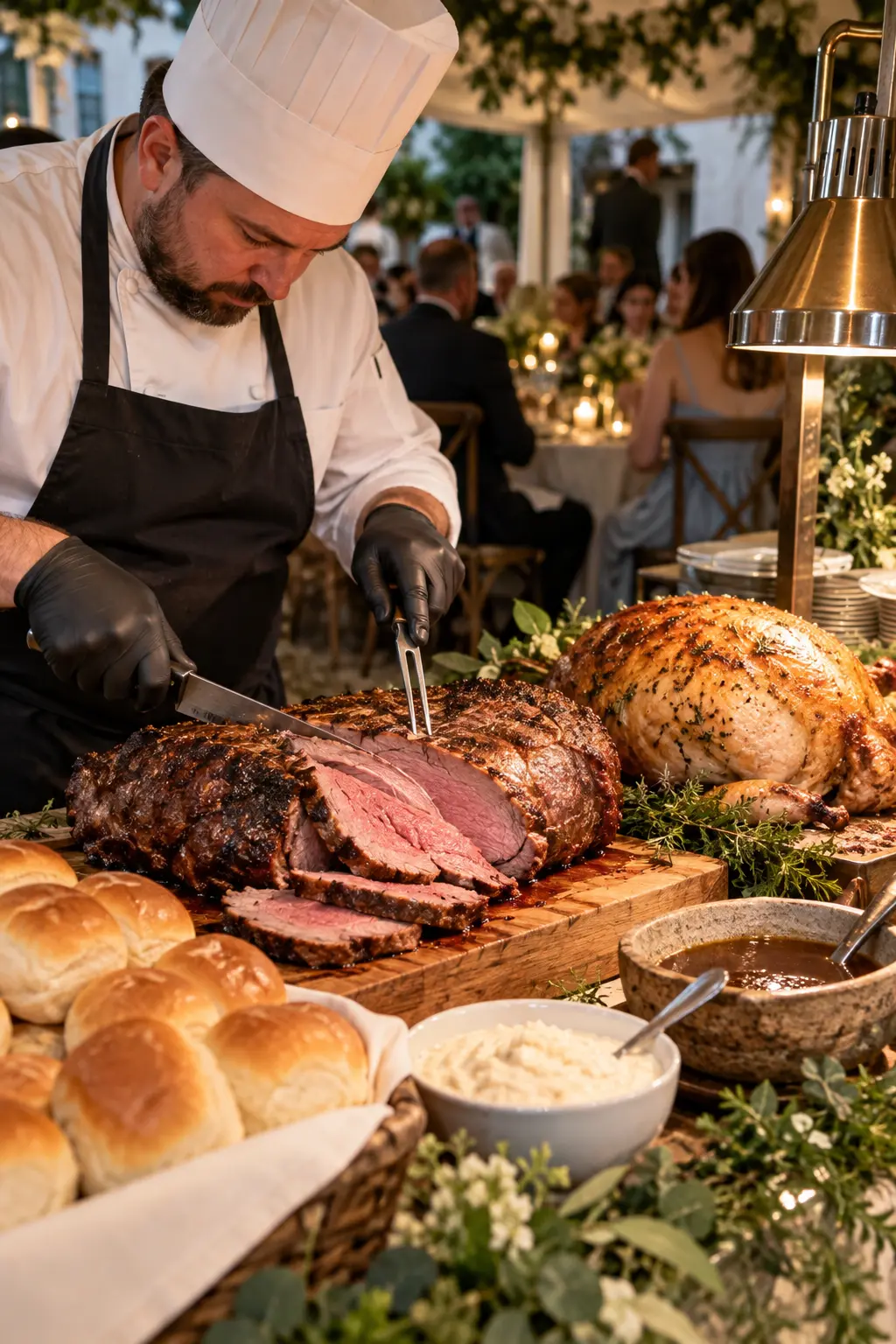
Pair carved prime rib and turkey breast with rolls, horseradish, and jus for a classic action station. Ask the chef to offer smaller first cuts; guests can return, and the display remains plentiful longer.
23. Noodle-Bowl Bar
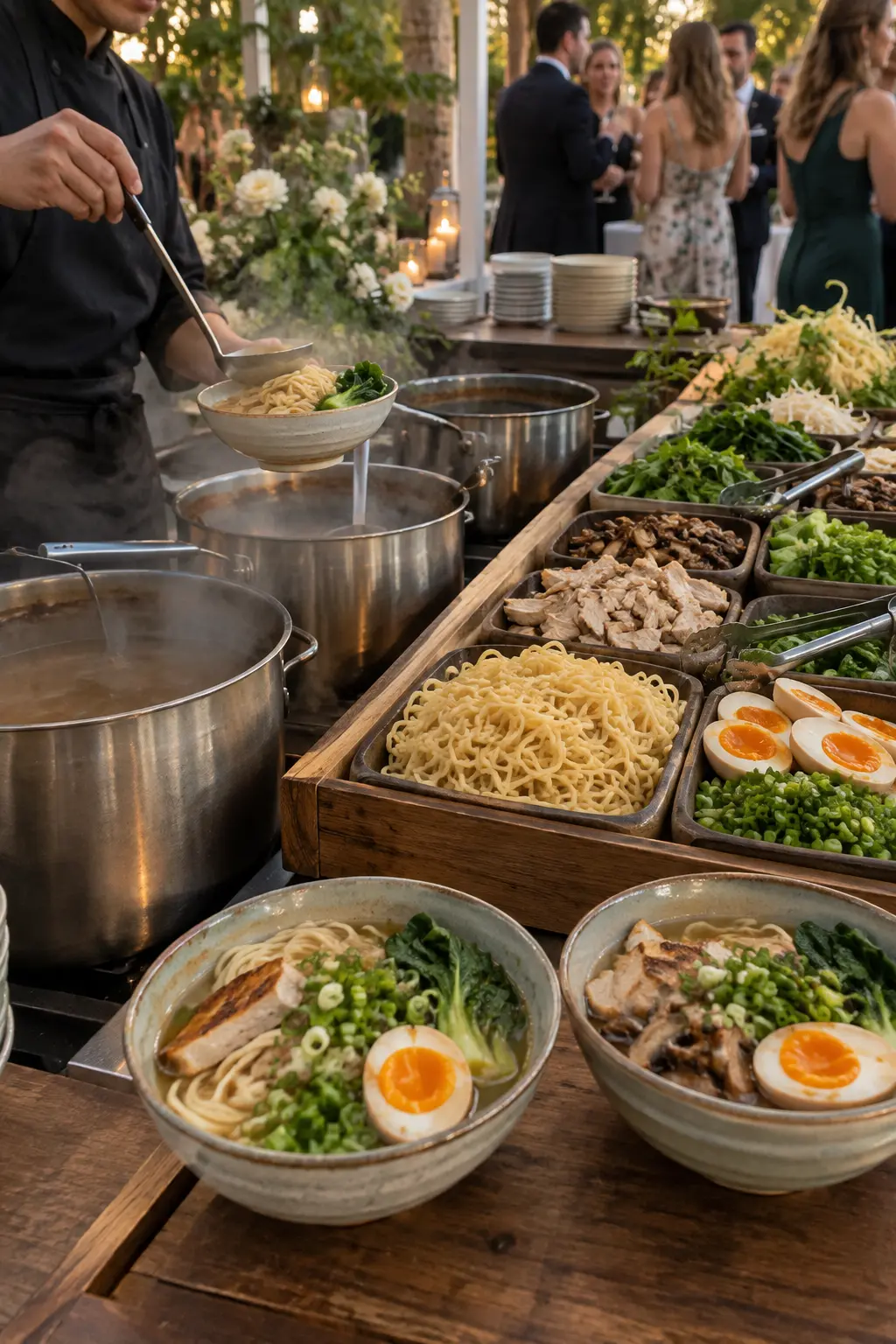
Build bowls from broth, ramen noodles, tofu, chicken, eggs, mushrooms, and greens. Have staff add hot broth after guests choose toppings, which controls temperature and prevents an open pot from slowing the entire line.
24. Loaded Baked-Potato Bar
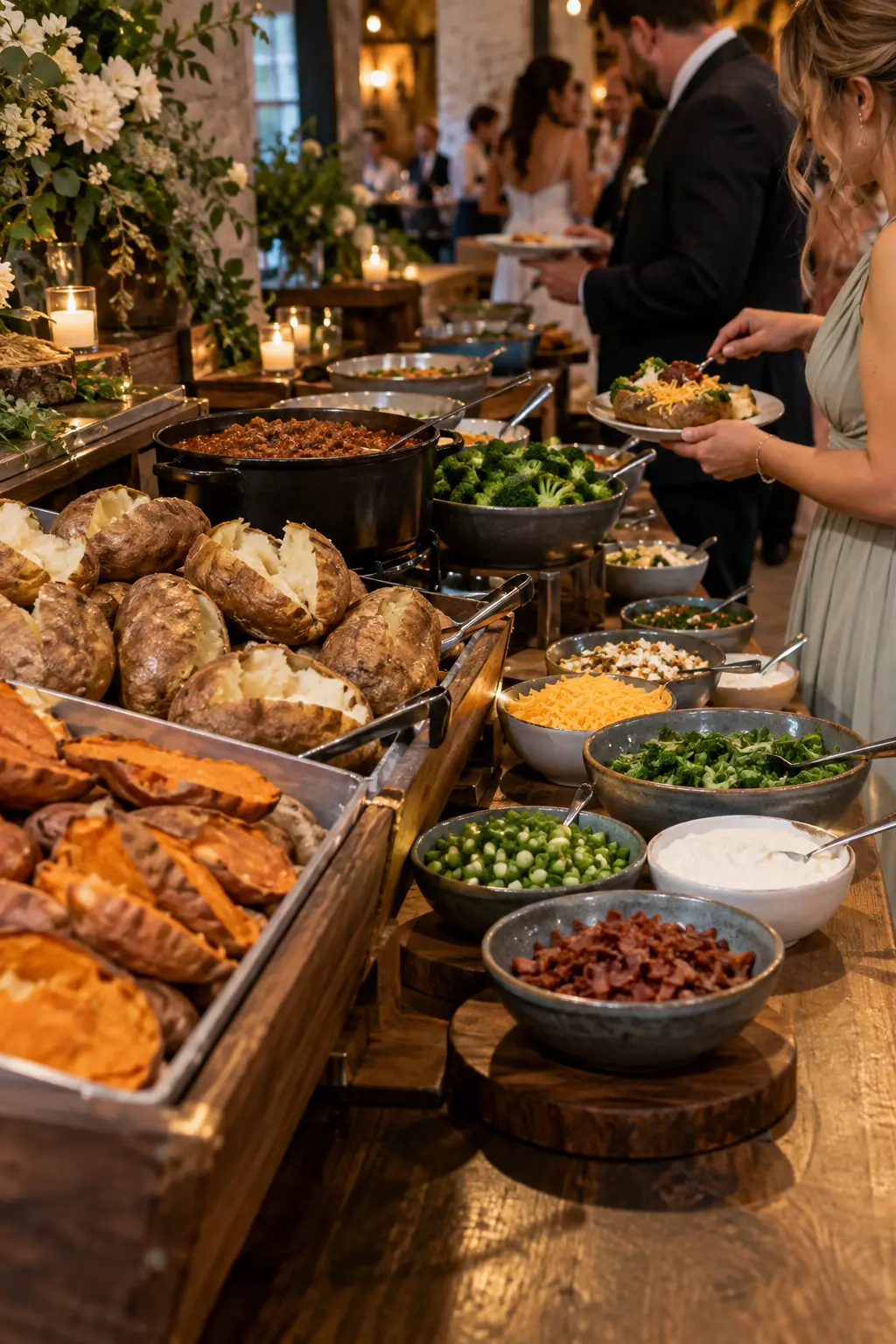
Offer russet and sweet potatoes with chili, broccoli, cheese, scallions, and herbs for an adaptable comfort-food station. Keep hot toppings in compact pans and cold toppings on a chilled tray for safer, cleaner service.
25. Paella Pan Station
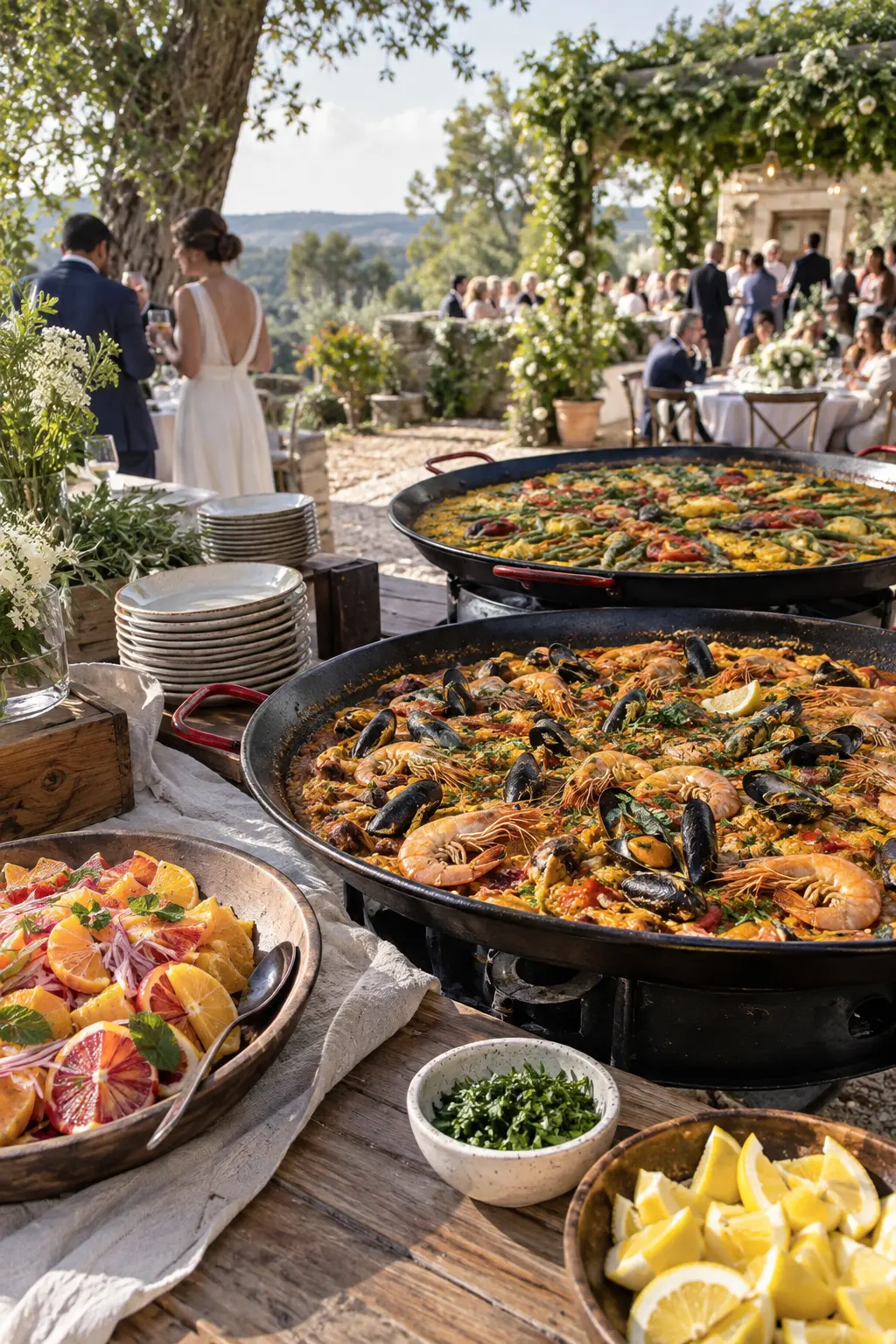
Cook seafood paella and vegetable paella in separate wide pans, then serve citrus salad alongside. The pans create an instant focal point, but separate spoons and clearly divided service areas protect the vegetarian option.
26. Dumpling and Bao Counter
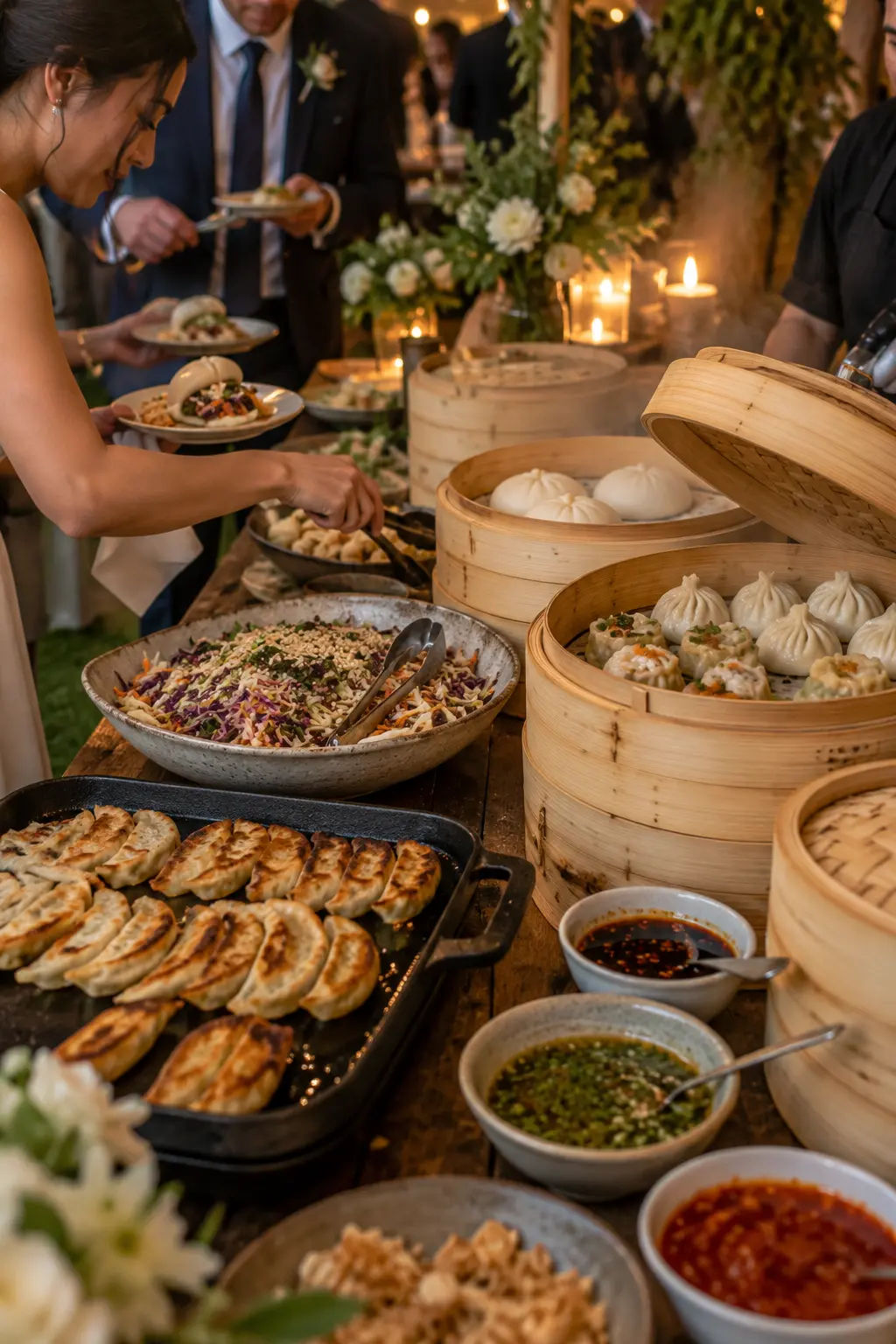
Stack bamboo steamers with bao and vegetable dumplings beside a griddle of potstickers, slaw, and dipping sauces. Refill the steamers in small batches so the wrappers stay tender instead of turning damp.
Brunch and Daytime Wedding Menus
Daytime receptions invite lighter pacing, bright ingredients, and familiar brunch favorites. Balance sweet displays with savory food substantial enough to carry guests through the celebration.
27. Chicken-and-Waffles Brunch Buffet
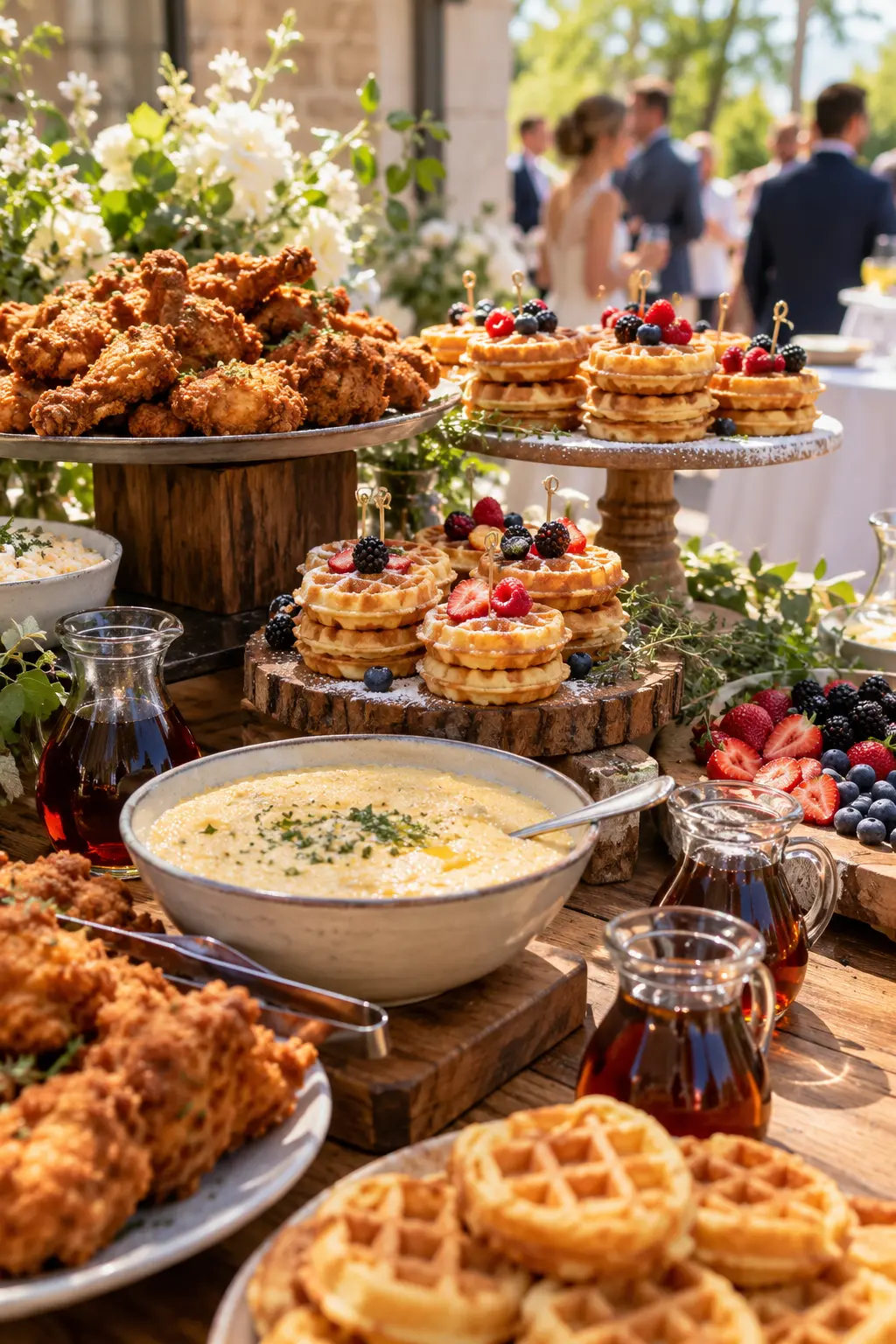
Combine mini waffles, crisp chicken, creamy grits, berries, and maple syrup for a recognizable brunch centerpiece. Mini portions are easier to hold, and syrup carafes placed after the plates help keep the buffet surface clean.
28. Bagel and Smoked-Salmon Board
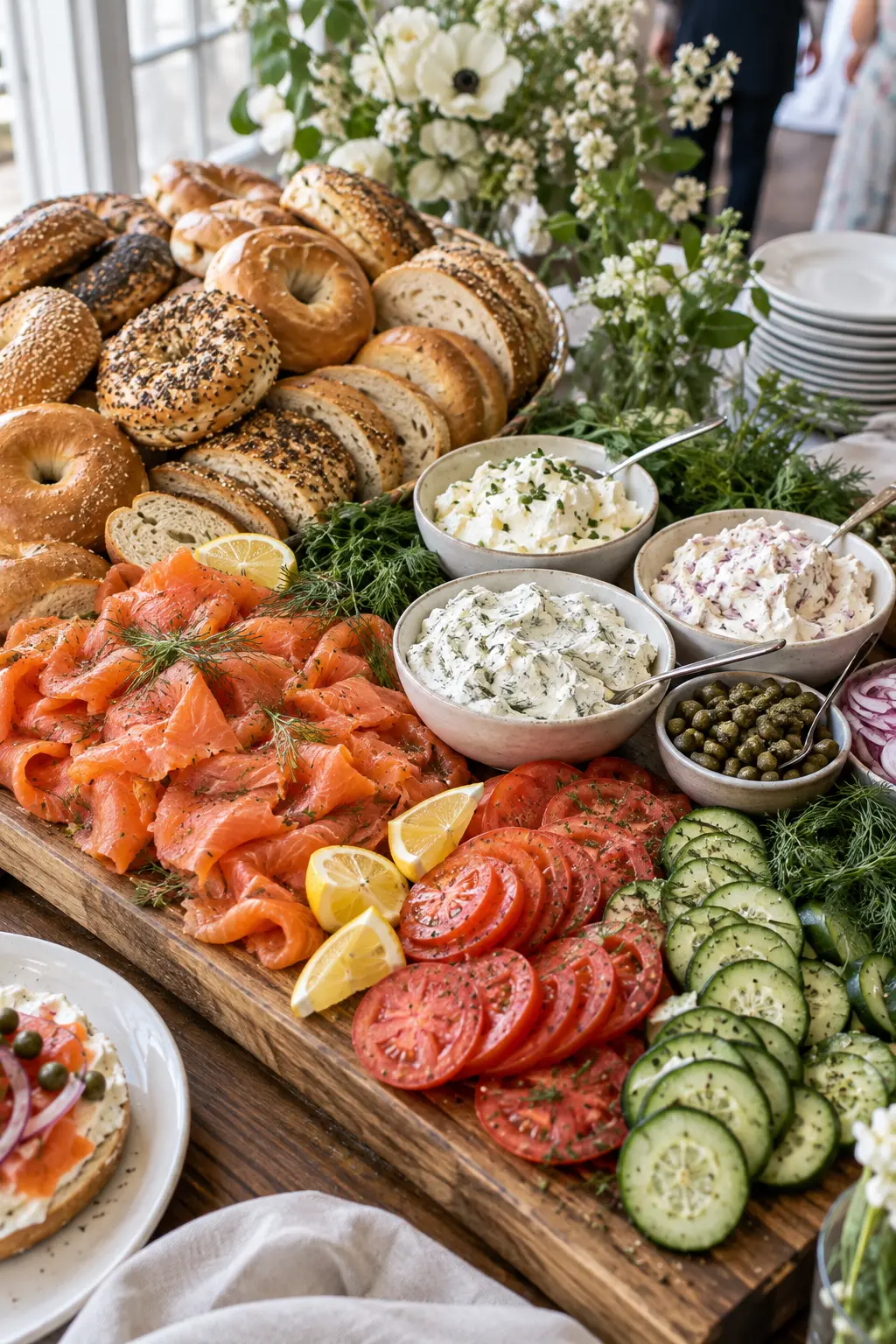
Arrange sliced bagels, smoked salmon, several cream cheeses, tomatoes, cucumbers, capers, and herbs on one generous brunch board. Keep extra salmon and spreads chilled below, replenishing the display instead of overloading it.
29. Omelet and Frittata Station
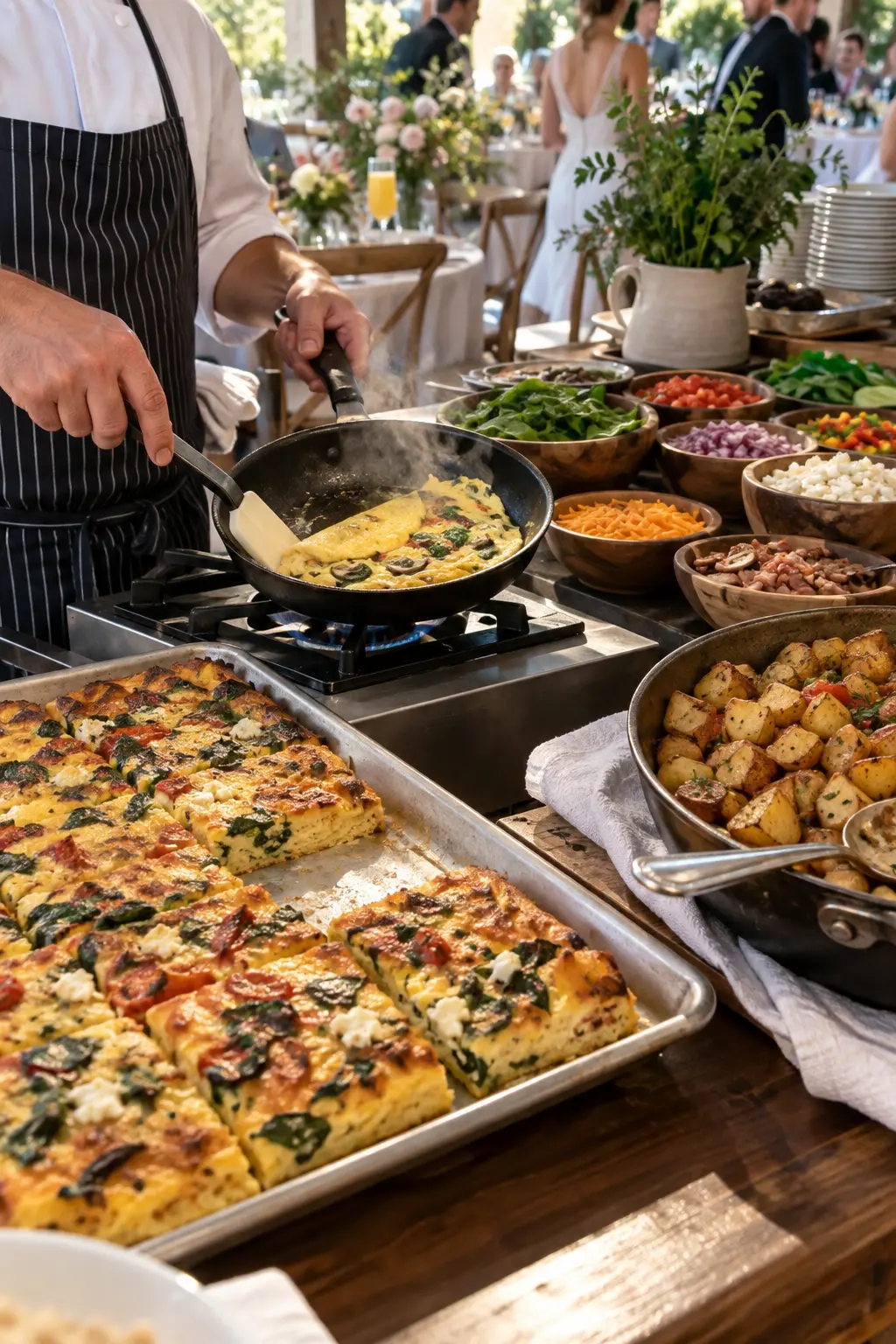
Use made-to-order omelets as the interactive choice, then keep sliced vegetable frittata and breakfast potatoes ready for guests who prefer speed. This two-track setup delivers customization without making everyone wait at the pan.
30. Pancake and French-Toast Bar
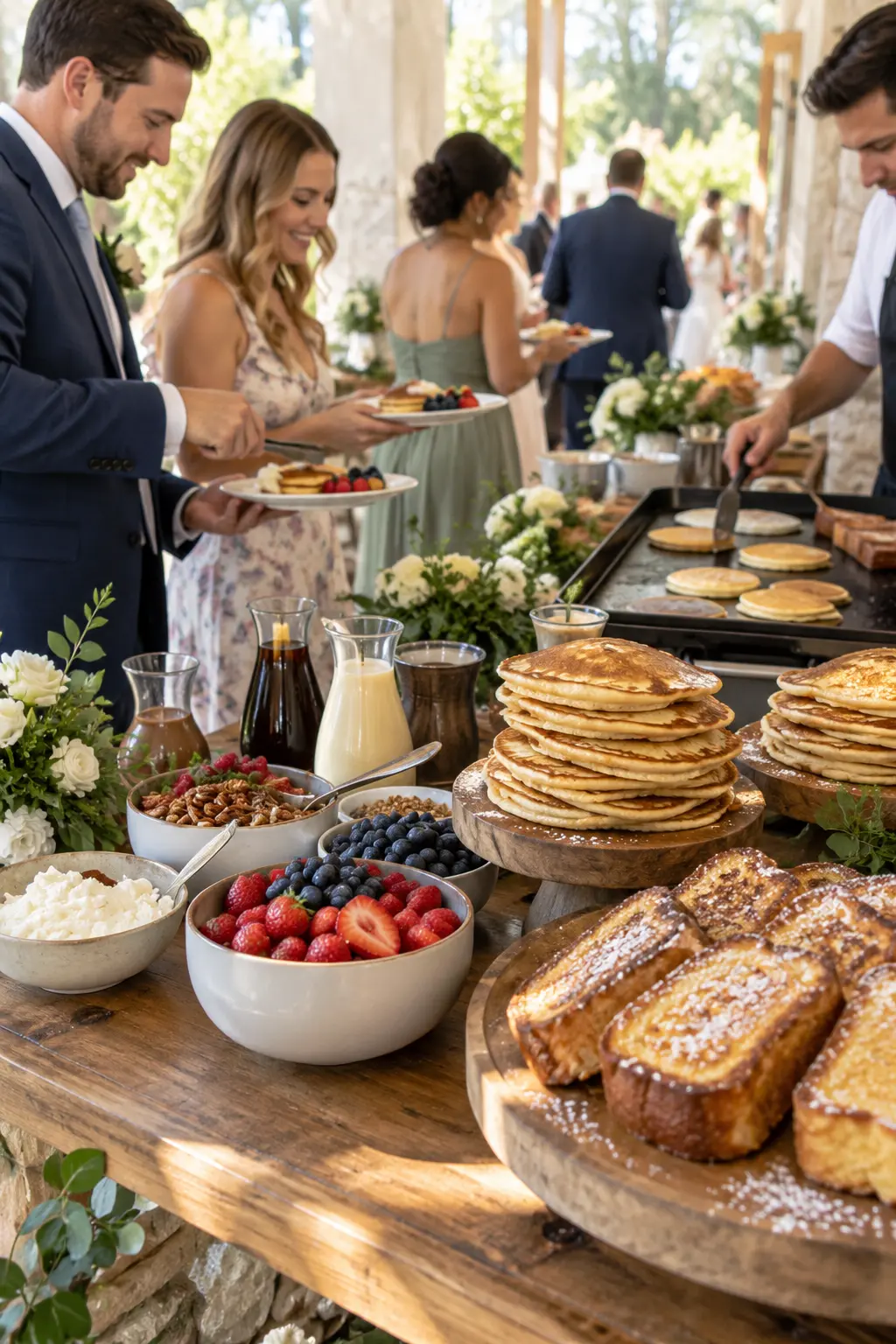
Serve pancakes and brioche French toast with berries, toasted nuts, whipped ricotta, and two sauces. Use shallow stacks that can be refreshed often, preventing the bottom pieces from becoming compressed or soggy.
31. Garden Tea Lunch
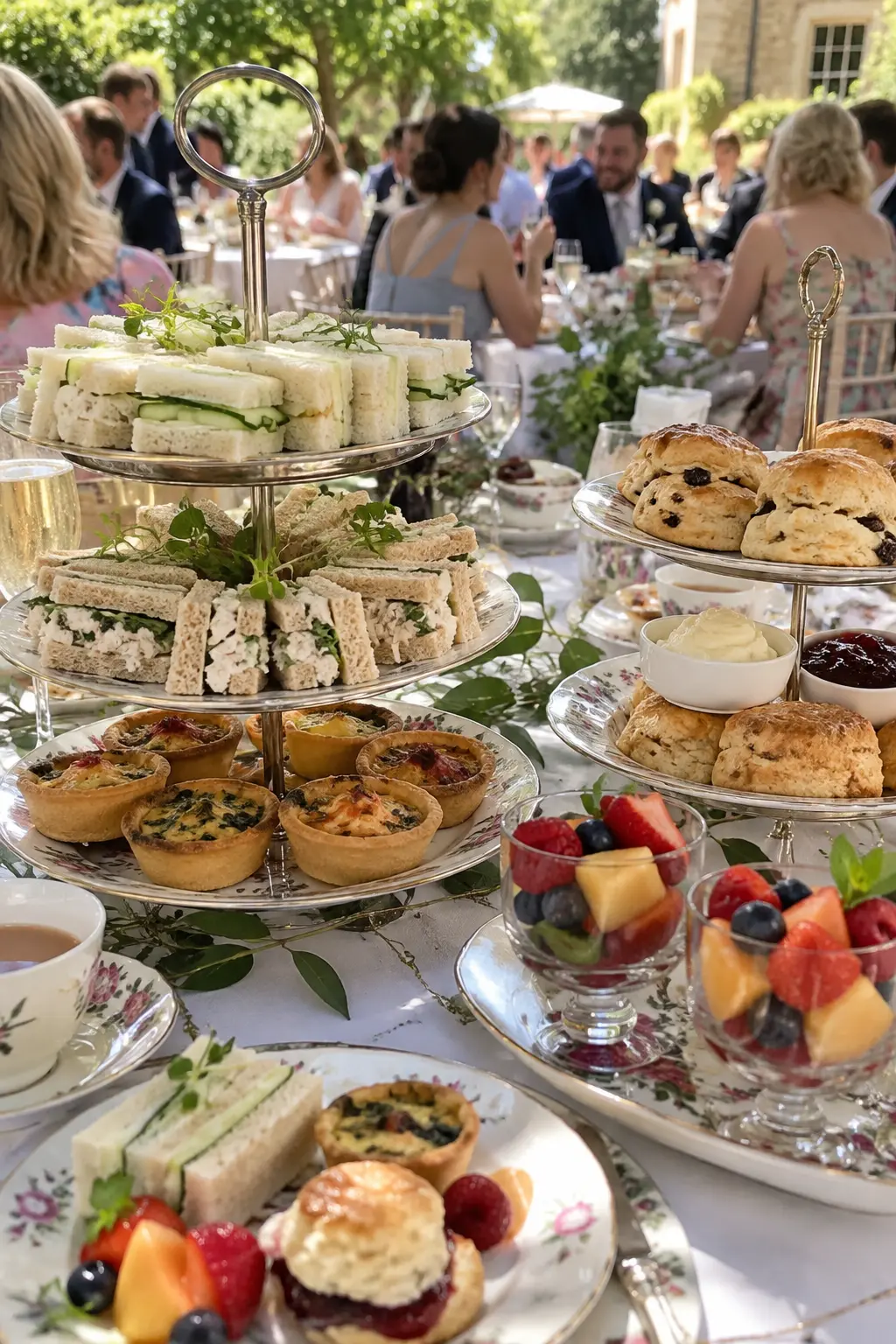
Layer tea sandwiches, savory tartlets, scones, and fruit cups on tiered stands for a graceful daytime meal. Include enough savory pieces per guest so the format reads as lunch, not a dessert table.
32. Farmers-Market Brunch Table
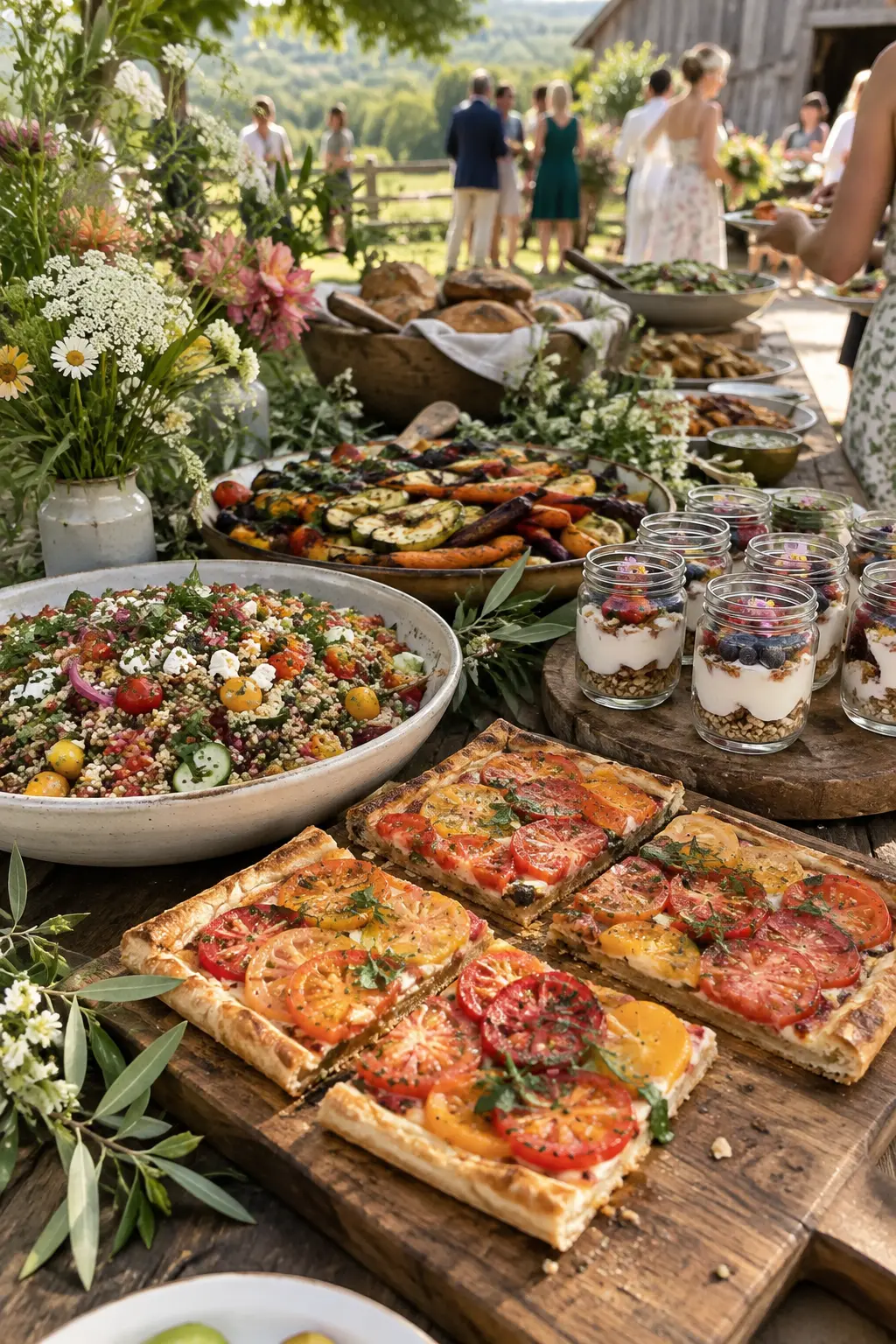
Build a colorful daytime spread from tomato tart, grain salad, roasted vegetables, and yogurt parfaits. This menu works best when the caterer repeats ingredients thoughtfully, using herbs and market produce across several dishes without duplicating flavors.
Seasonal and Dietary-Inclusive Menus
Seasonal menus feel cohesive when ingredients reappear in different preparations. Inclusive menus work best when alternatives are complete, clearly separated, and planned with the caterer from the start.
33. Spring Garden Menu
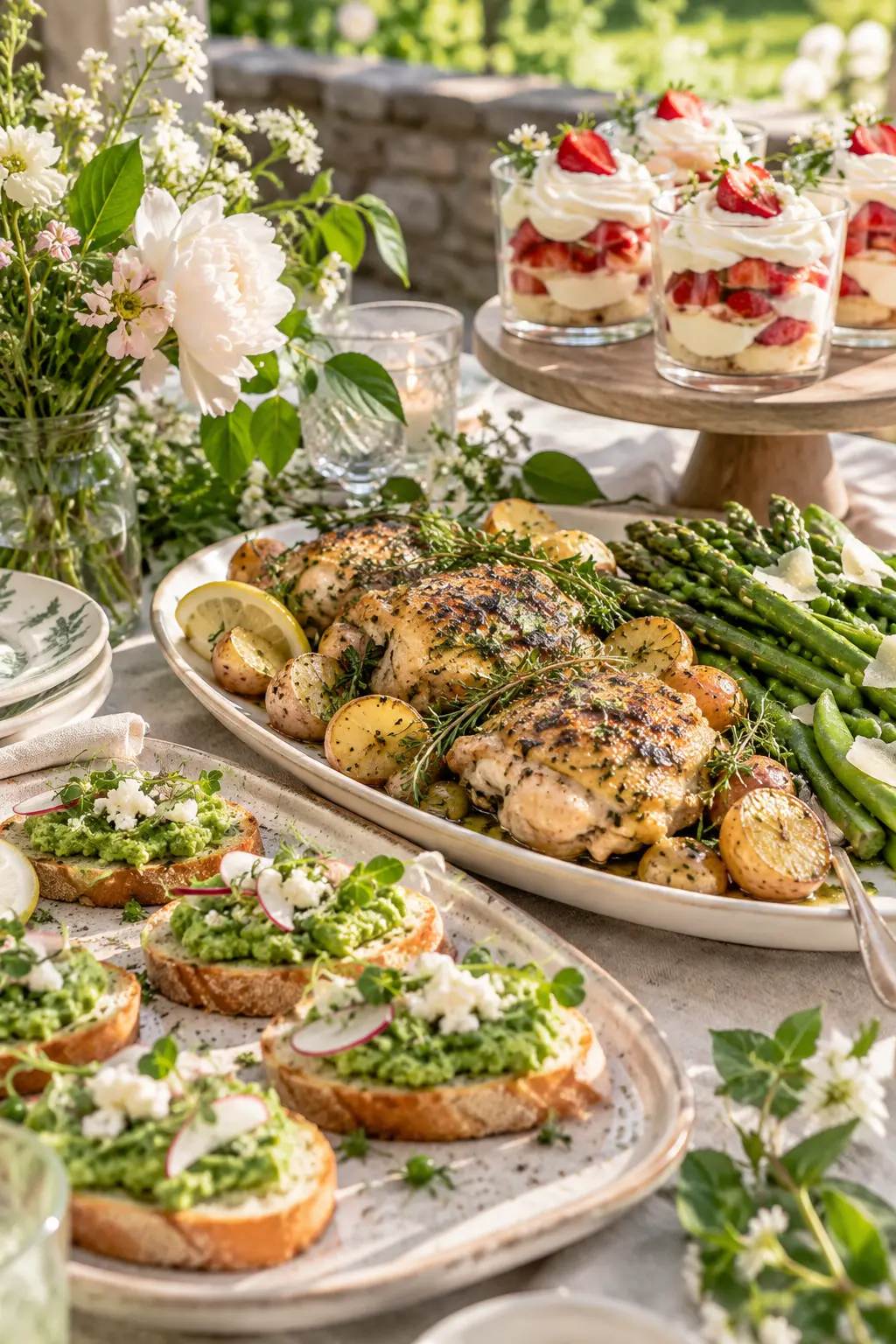
Start with pea crostini, follow with herb chicken, new potatoes, and asparagus, then finish with strawberry shortcake cups. The complete sequence feels seasonal because fresh green ingredients appear in different forms rather than one repeated garnish.
34. Summer Coastal Menu
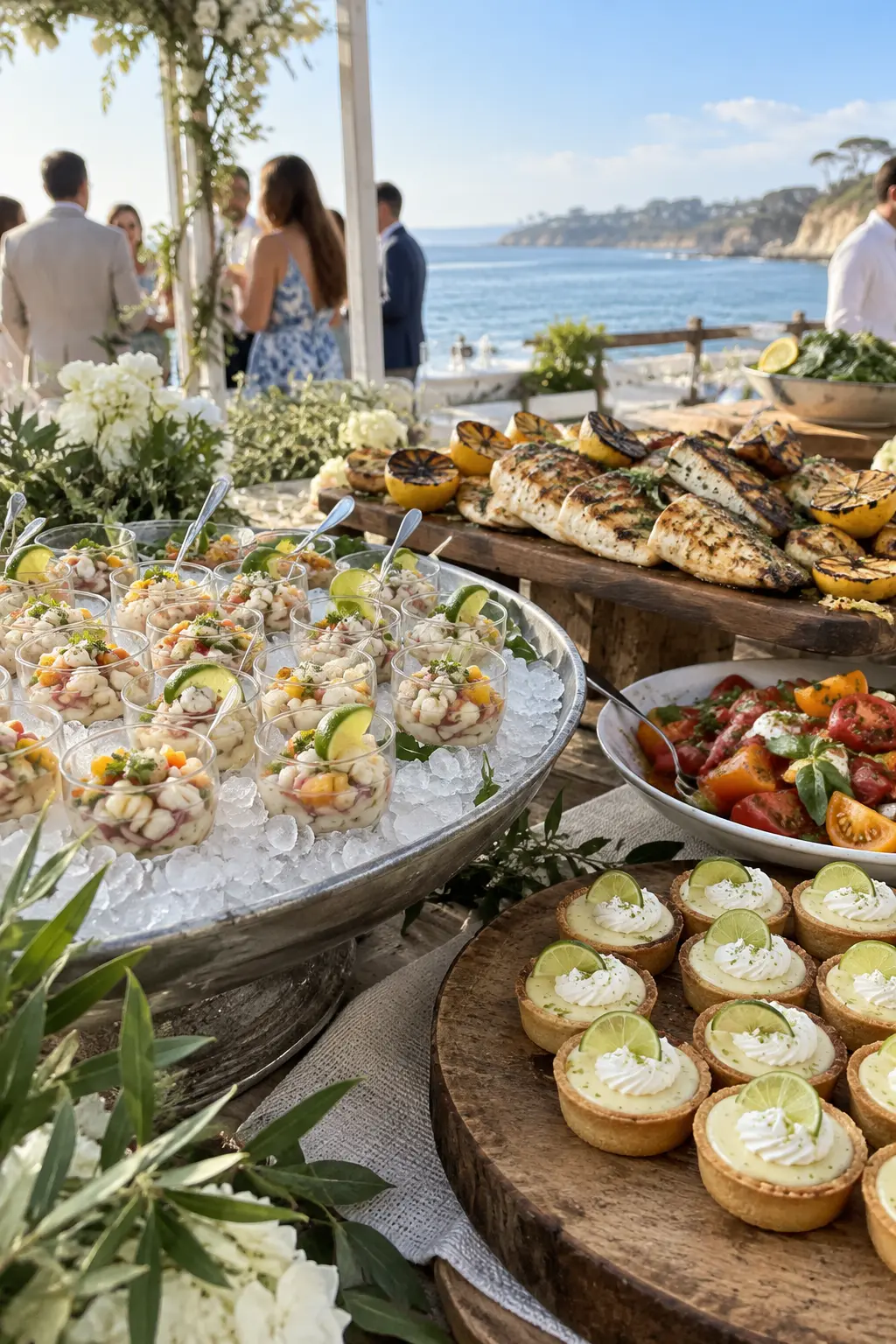
Pair chilled ceviche cups with grilled fish, ripe tomato salad, and mini key-lime tartlets. Keep the cold starter on ice and the fish close to the grill so the menu stays refreshing without compromising service temperature.
35. Fall Orchard Menu
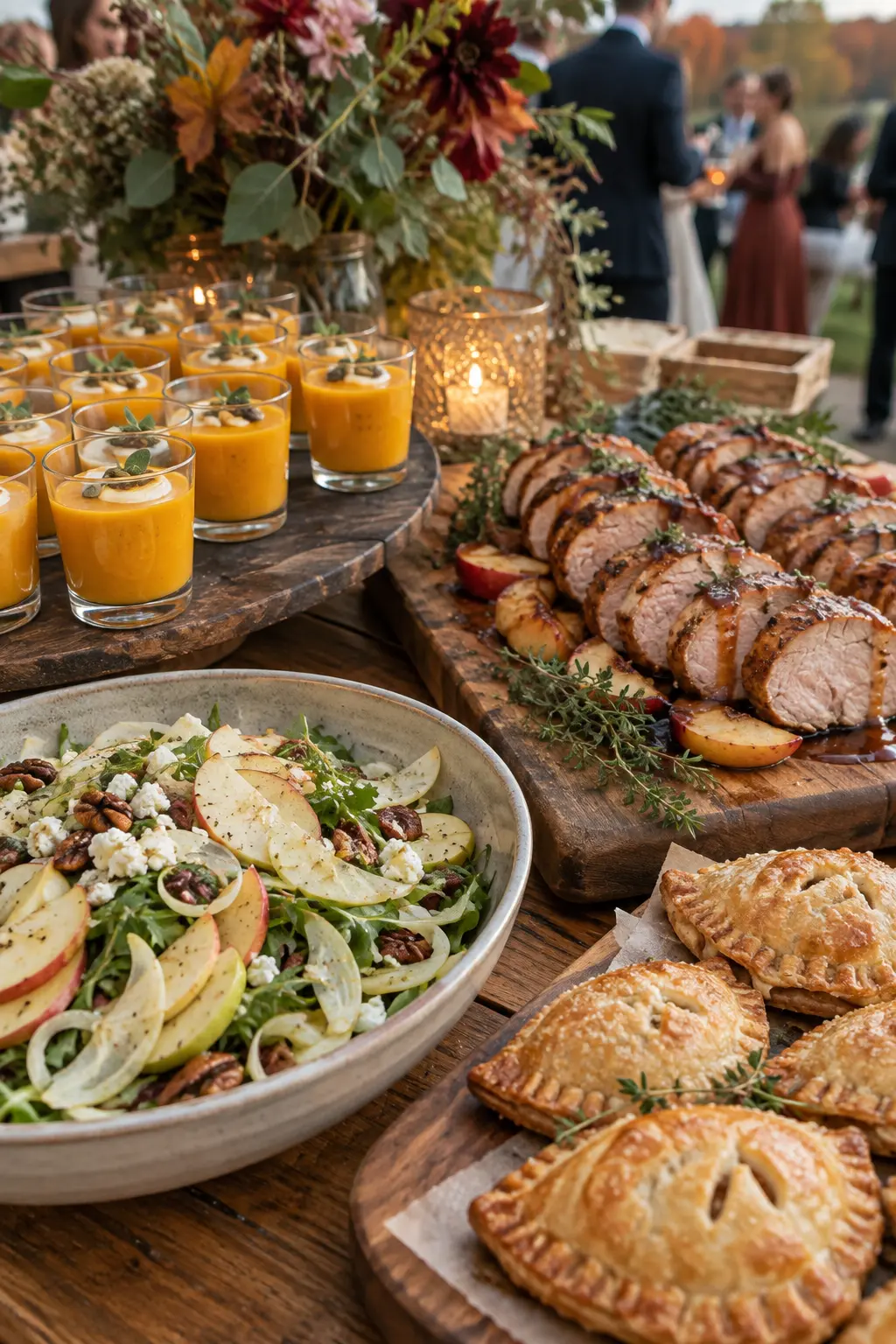
Open with squash soup shooters, then serve cider pork and apple-fennel salad before passing small hand pies. Apples connect the menu, but their preparation changes from savory crisp slices to a warm dessert filling.
36. Winter Comfort Menu
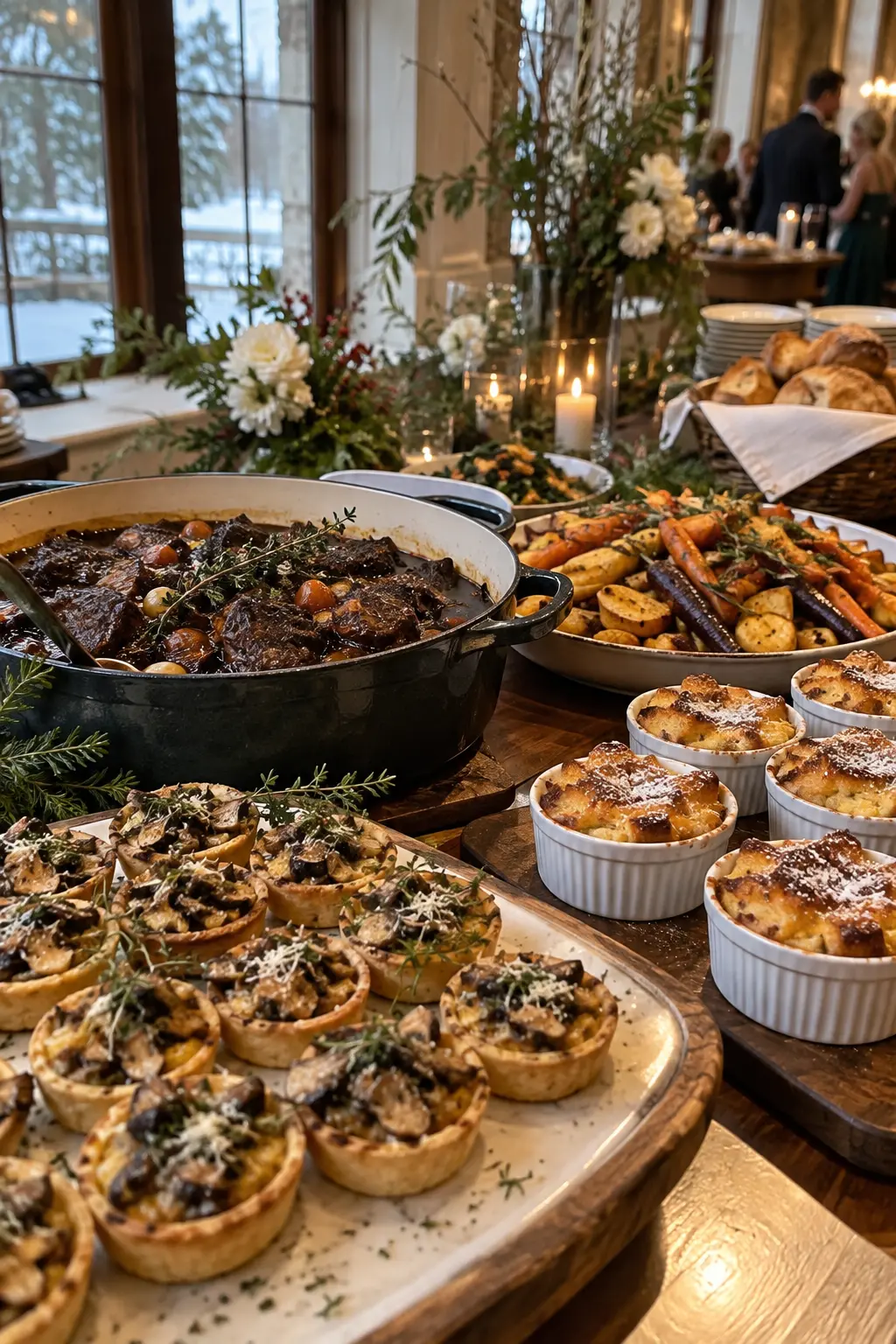
Mushroom tartlets, pot roast, roasted root vegetables, and bread pudding create a warm winter progression. Use smaller appetizer and dessert portions because the braised entrée is rich and guests will appreciate a balanced pace.
37. Plant-Forward Mediterranean Menu
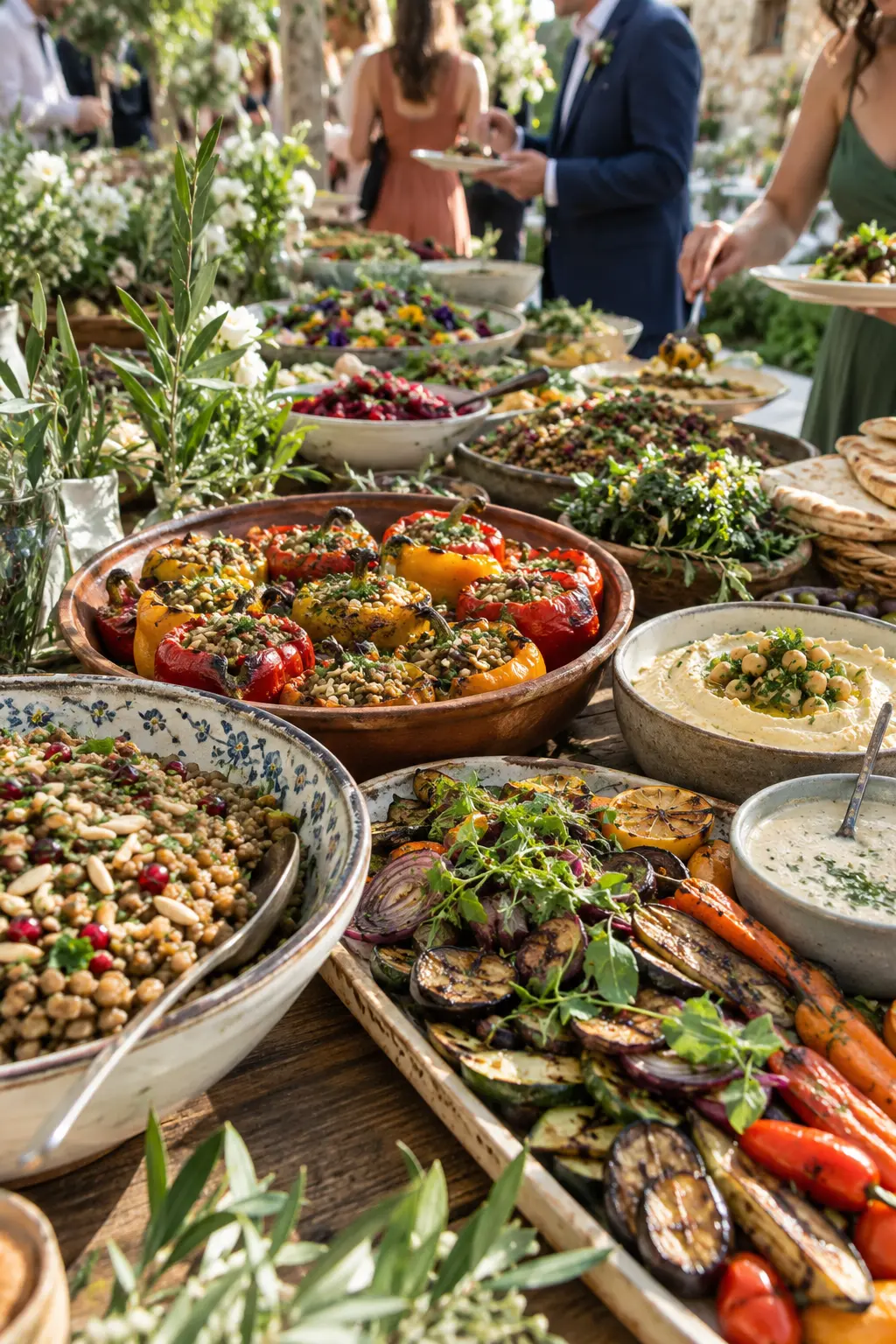
Stuffed peppers, lentil pilaf, roasted vegetables, hummus, and tahini make a vegan buffet with varied protein, color, and texture. Place the sauce beside the main dishes so guests can add richness without softening roasted surfaces.
38. Gluten-Free Latin Grill
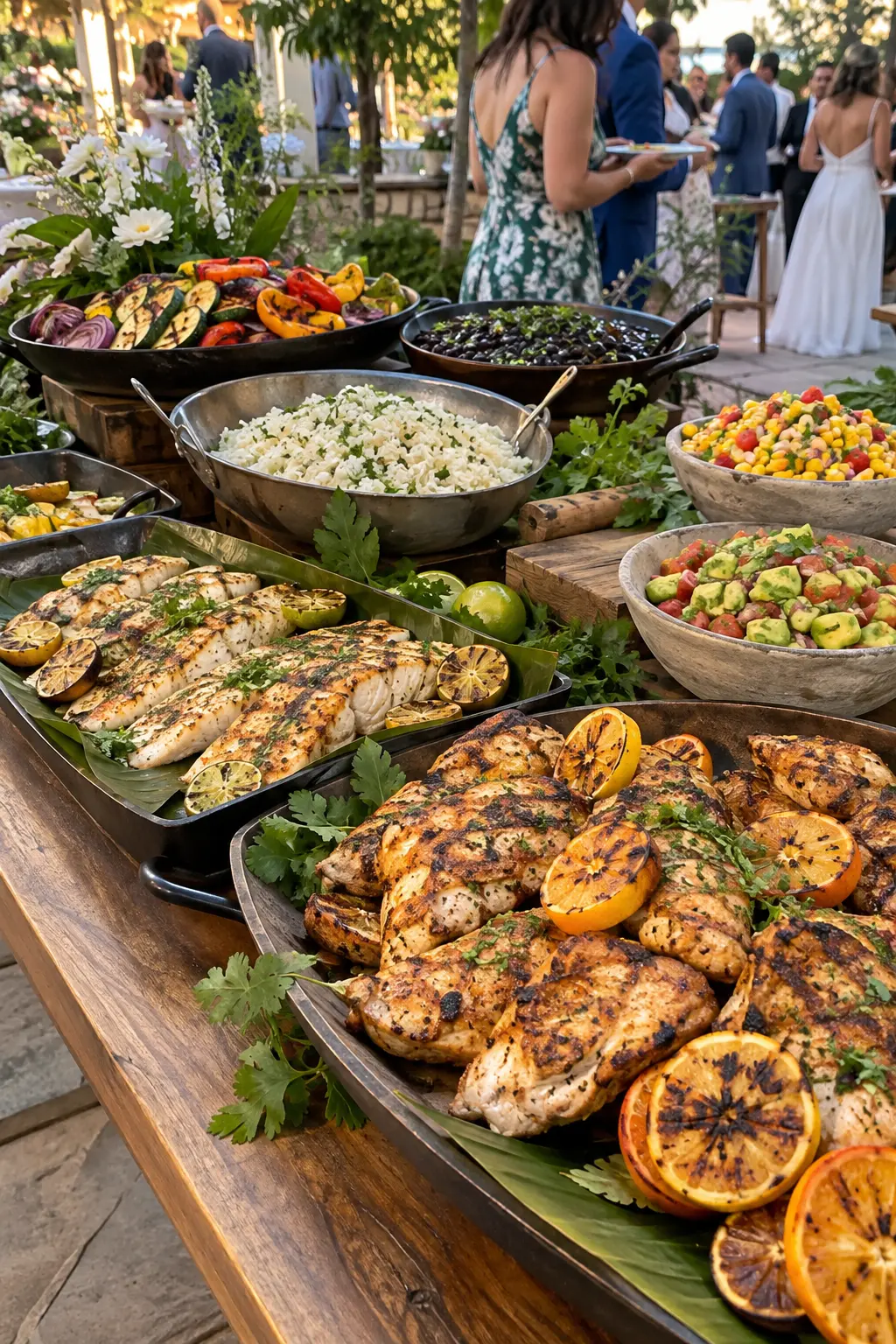
Serve citrus chicken, grilled fish, rice, black beans, corn salad, avocado salsa, and vegetables in separate vessels. Confirm marinades and seasonings with the caterer, since a bread-free display alone does not guarantee gluten-free preparation.
39. Dairy-Free Asian Family Supper
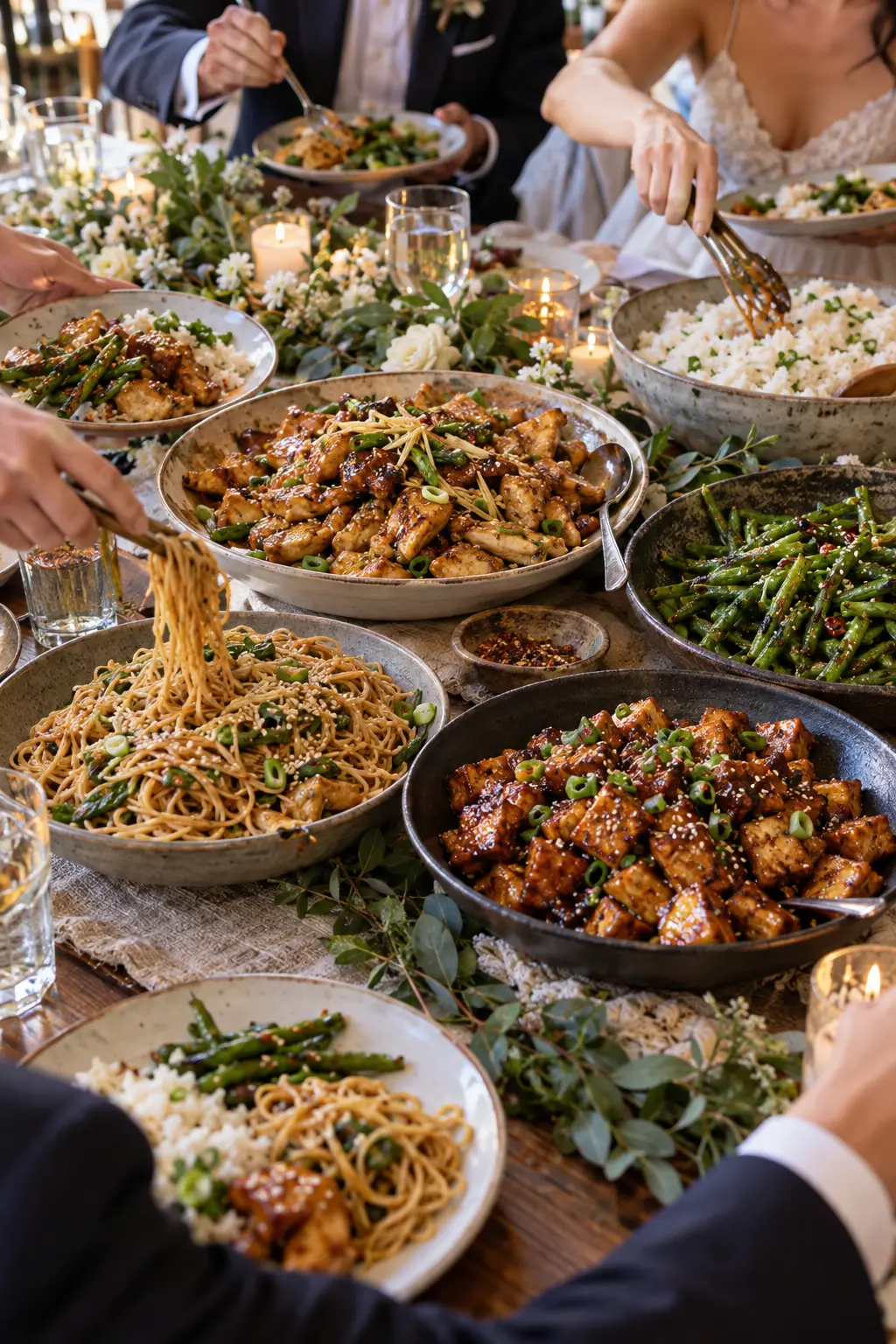
Share ginger chicken, glazed tofu, sesame noodles, green beans, and rice without butter or creamy sauces. Put tofu on its own platter with separate utensils so it remains a dependable plant-based entrée.
40. Allergy-Aware Choice Buffet
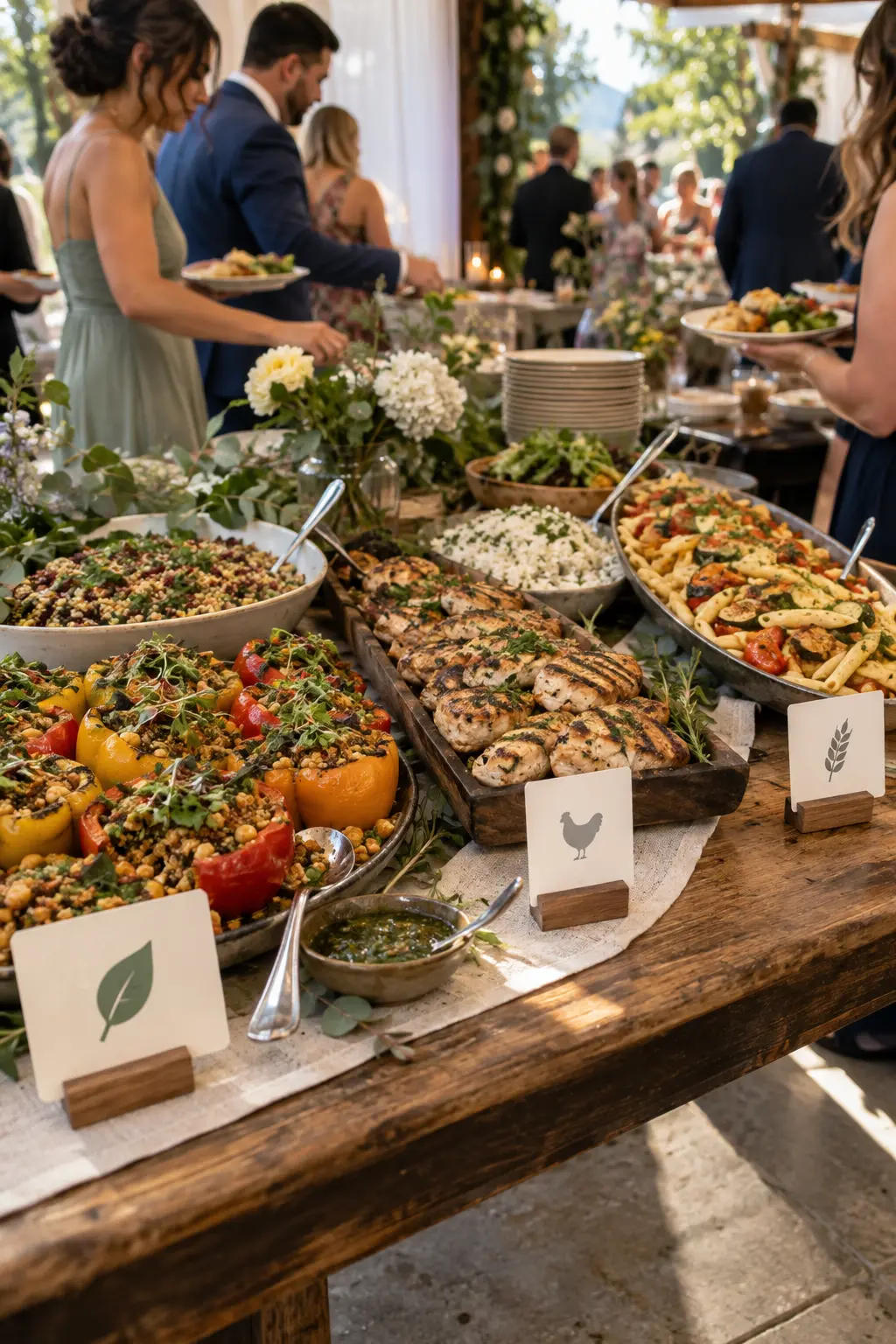
Create physically separate lanes for plant-based, gluten-free, and standard dishes, each with dedicated utensils and simple symbols. Confirm every recipe and cross-contact procedure with the caterer rather than treating display labels as the safety plan.
Casual, Formal, Dessert, and Display Ideas
Service style shapes how guests experience the food. These final ideas range from formal courses to mobile meals, dessert stations, welcome refreshments, and menu displays that clarify what is being served.
41. Cocktail-Style Small-Plate Reception
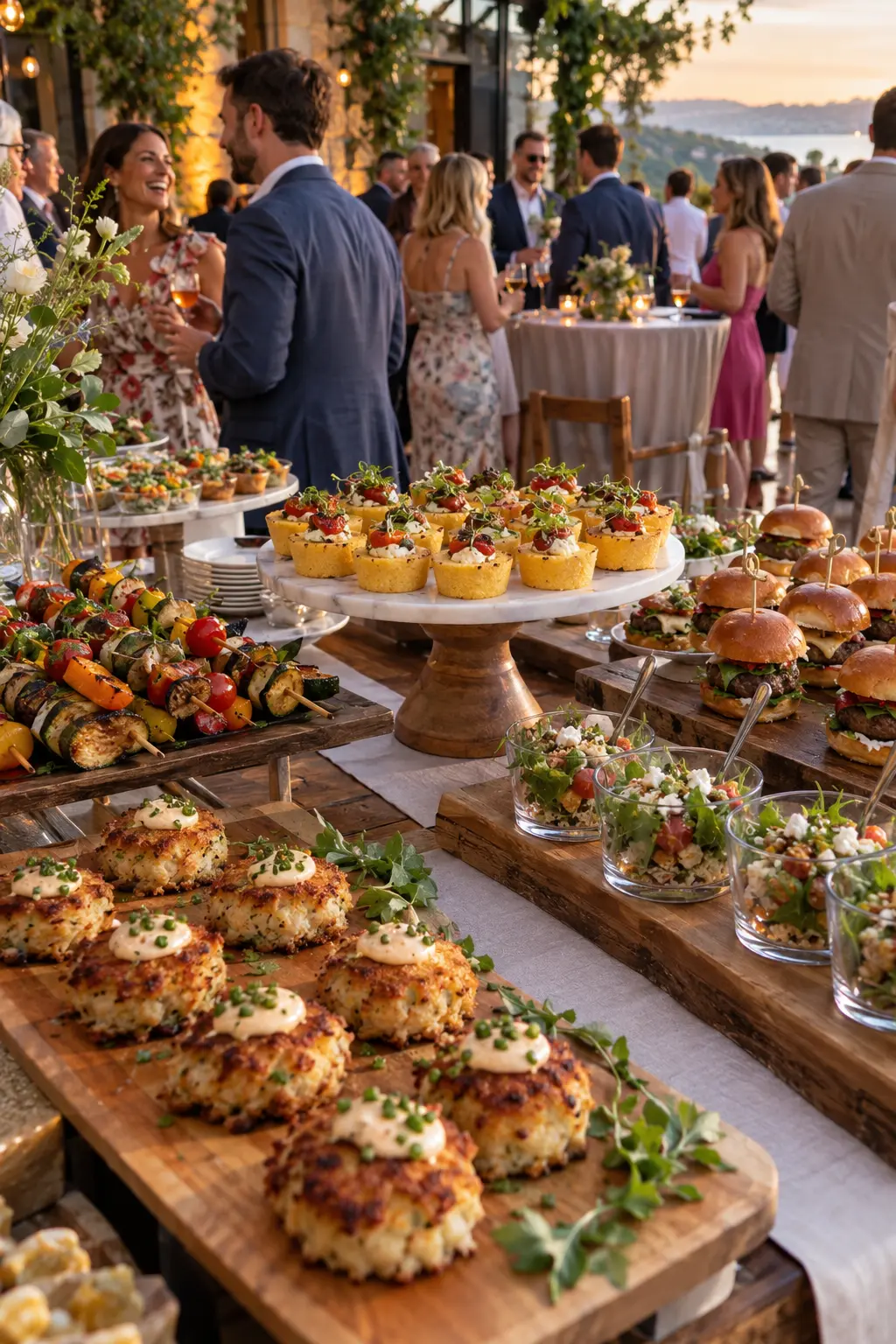
Make a standing reception feel like dinner with crab cakes, polenta cups, vegetable skewers, sliders, and salad cups circulating in waves. Mix passed trays with two stationary displays so guests can find substantial food throughout the event.
42. Formal Three-Course Dinner
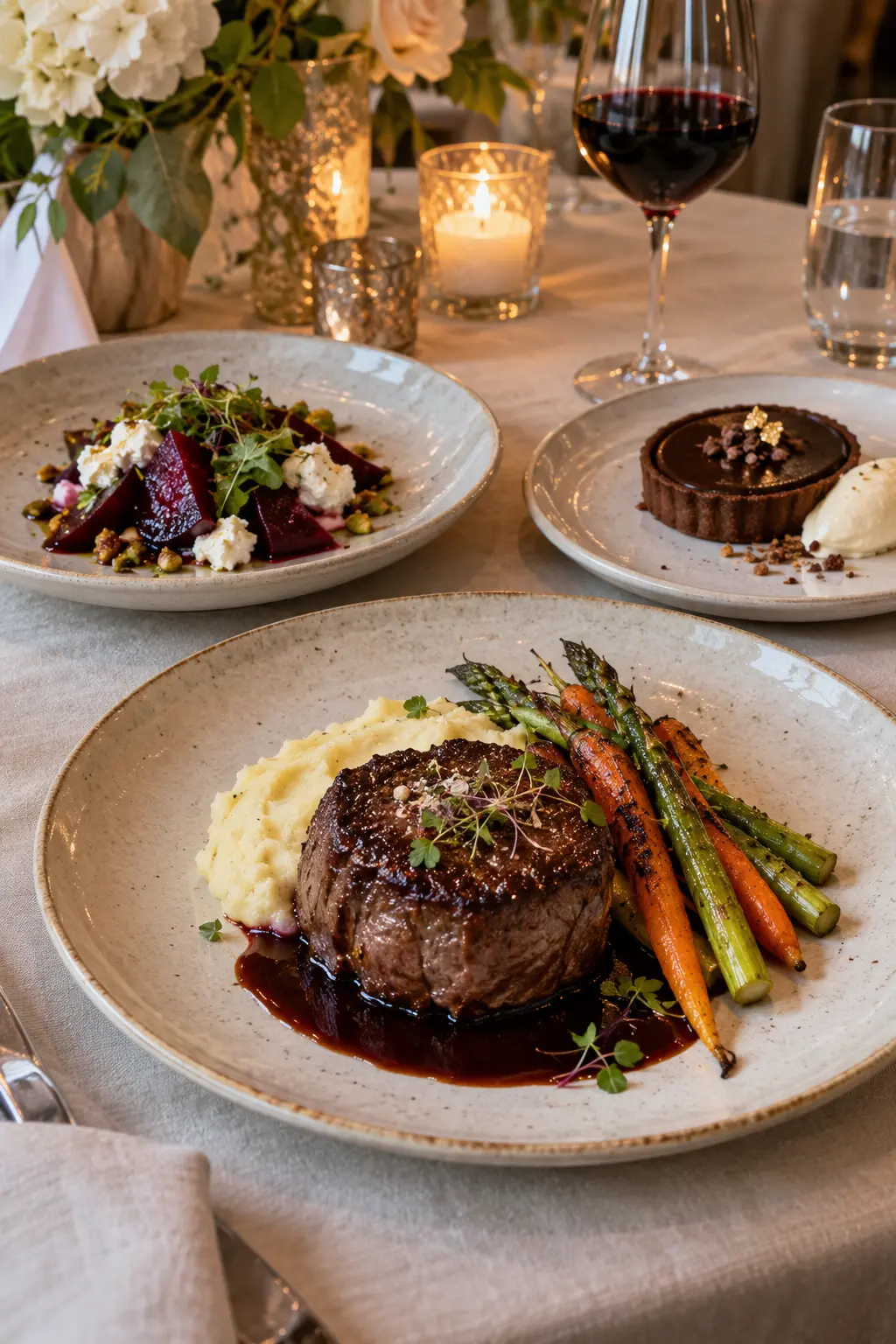
Begin with a beet salad, follow with filet, potatoes, and vegetables, then serve a small chocolate tart. A focused three-course sequence gives the kitchen time to plate carefully while keeping the evening moving toward speeches and dancing.
43. Picnic-Box Lawn Supper
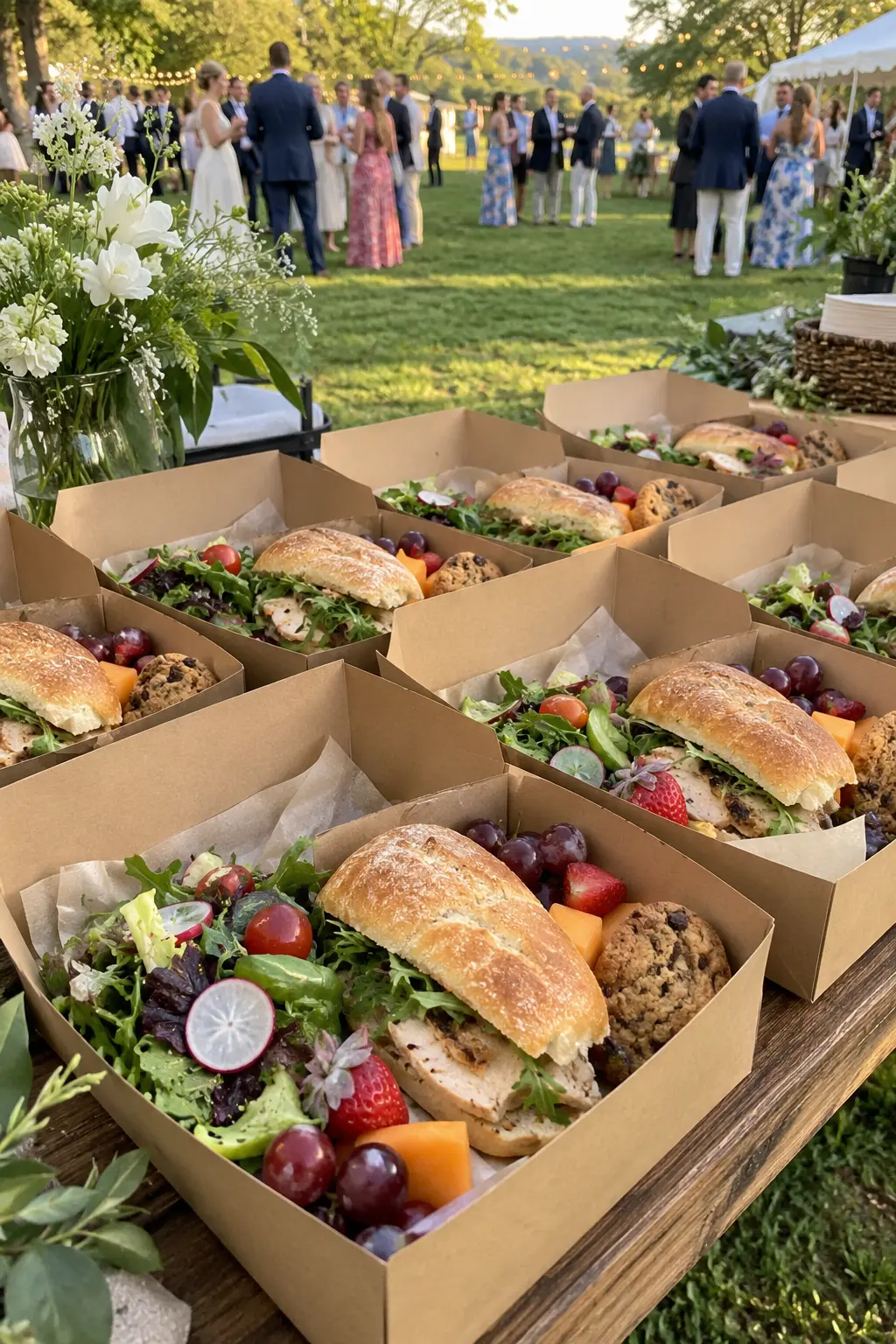
Pack each box with a roast-chicken sandwich, crisp salad, fruit, and a cookie for an outdoor reception. Label boxes outside the image-generating workflow with real printed names or dietary symbols, then arrange separate pickup zones.
44. Food-Truck Courtyard Dinner
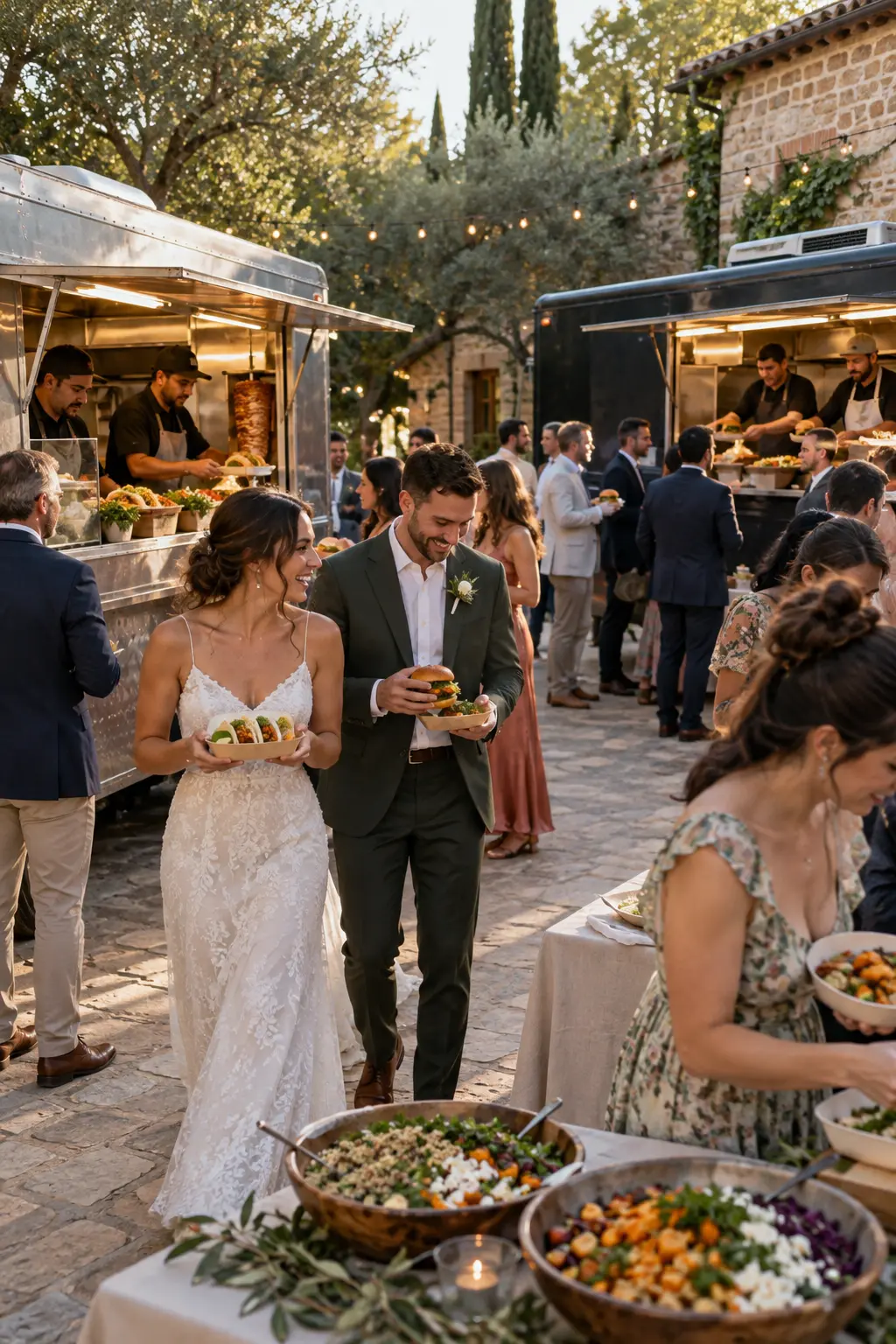
Invite trucks to serve tacos and burgers, then add a staffed vegetarian bowl table for a complete third choice. Stagger table releases and provide visible pickup zones so guests spend the evening eating together instead of waiting in one long line.
45. Mini-Pie Dessert Bar
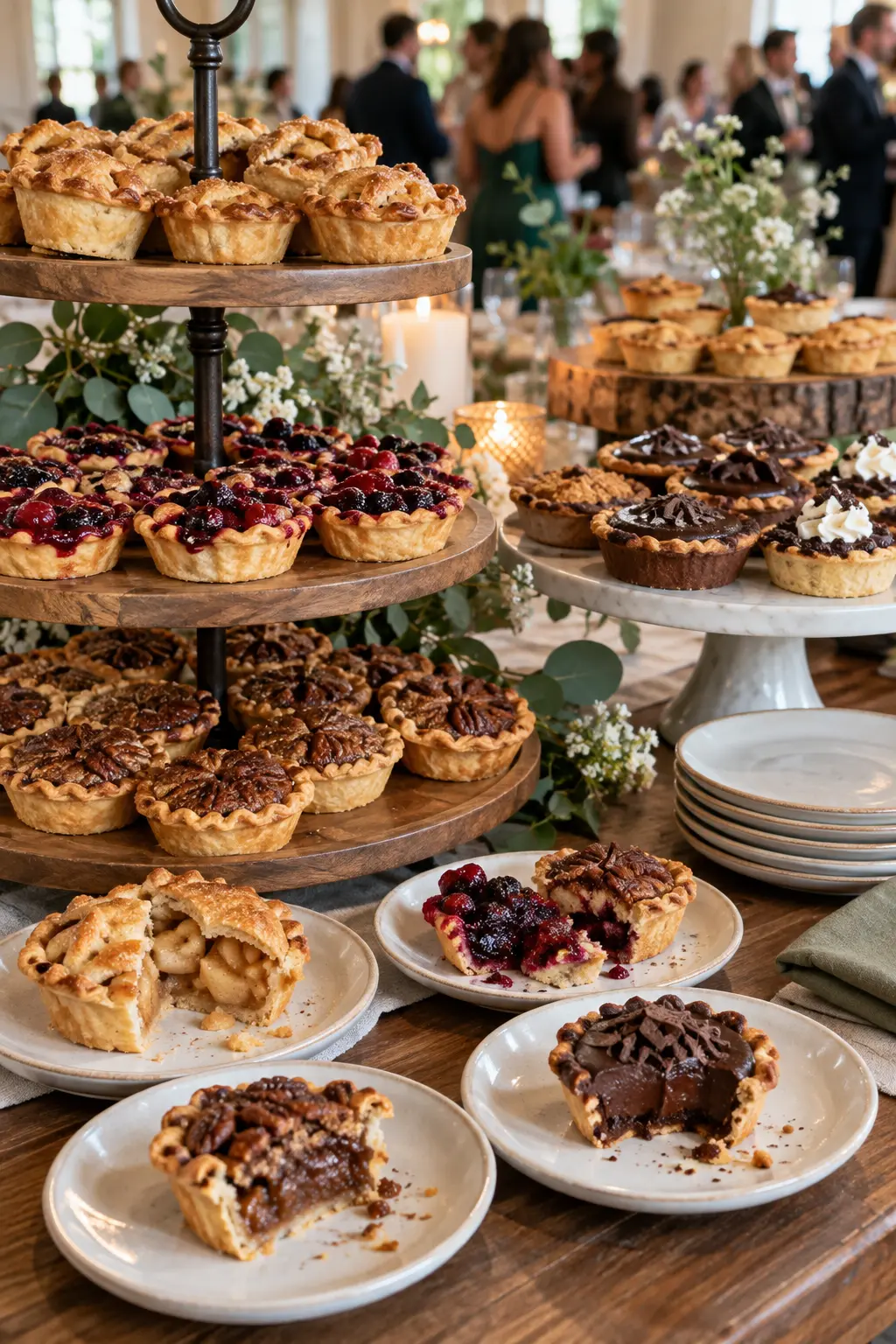
Offer apple, berry, pecan, and chocolate mini pies with several cut examples so guests can see the fillings. Small plates and forks make the display easier to use, while varied flavors replace the need for a cake-only finale.
46. Gelato and Sorbet Cart
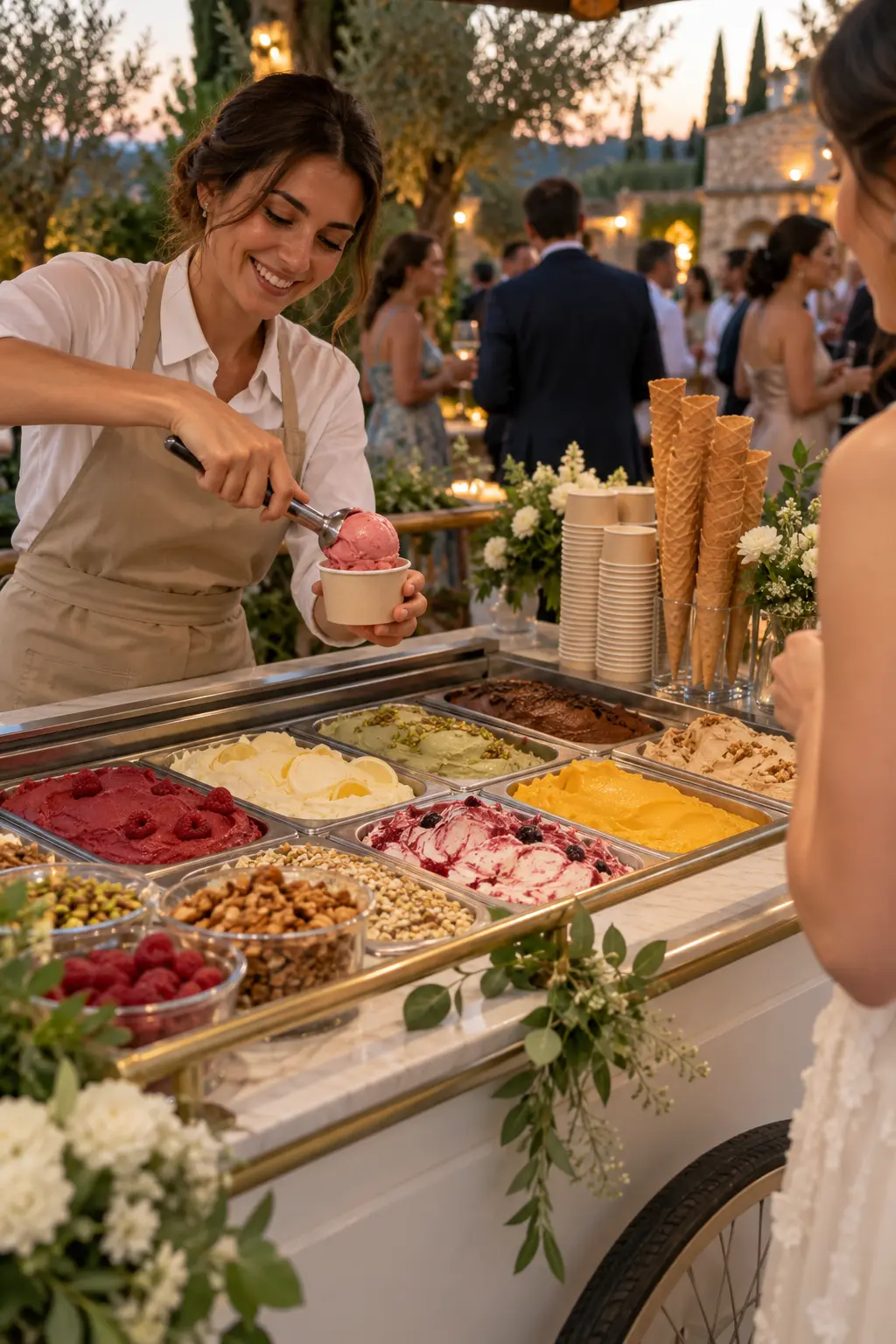
Serve a short list of gelato and fruit sorbets from a chilled staffed cart with cups, cones, nuts, and fruit. Include at least one dairy-free scoop, and keep toppings limited enough that the cart remains quick to serve.
47. Espresso and Tiramisu Station
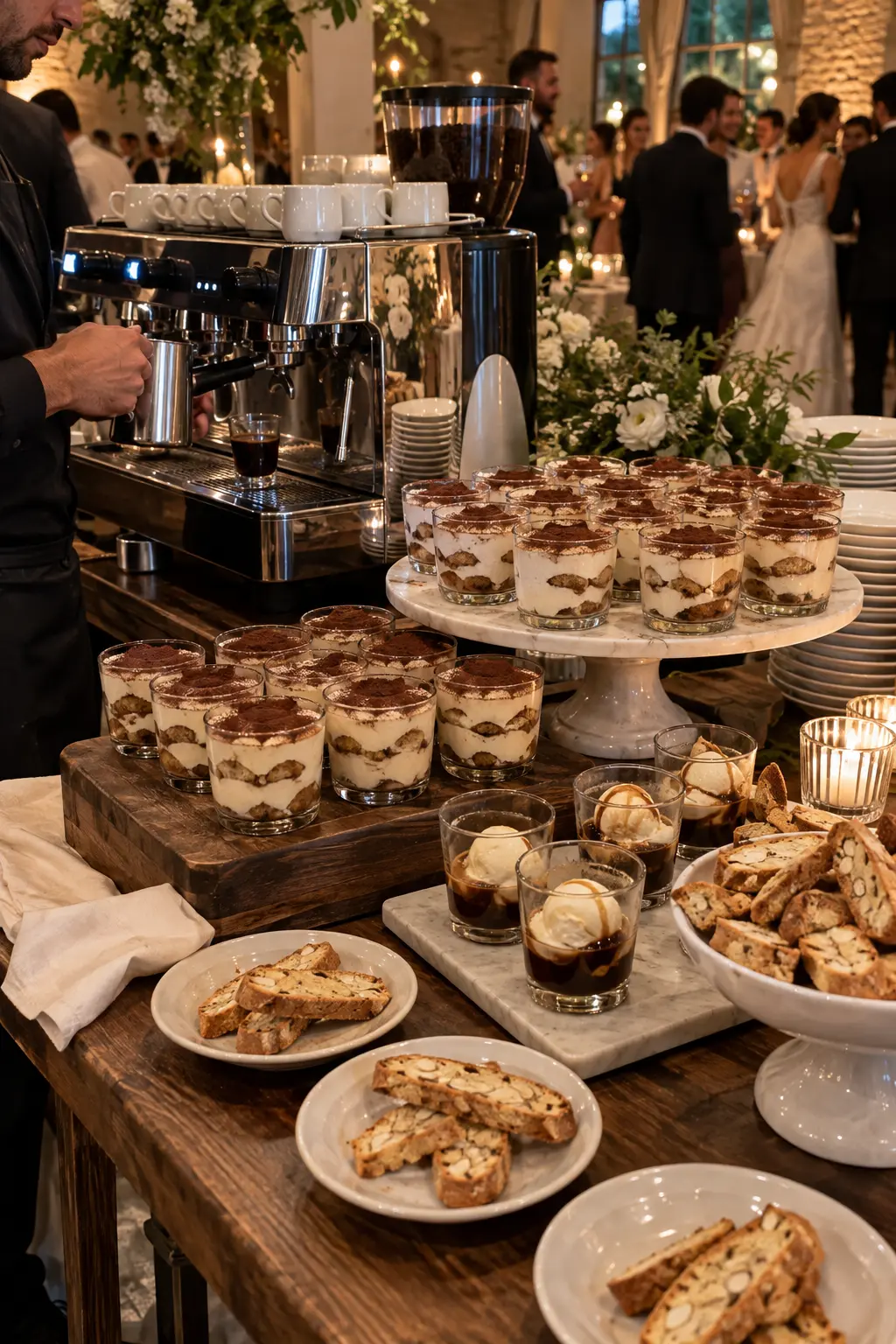
Pair freshly pulled espresso with tiramisu cups, affogato glasses, and biscotti for an after-dinner station that feels complete. Position it away from the dance-floor entrance so the coffee queue does not interrupt guest flow.
48. Welcome Spritz and Savory Bites
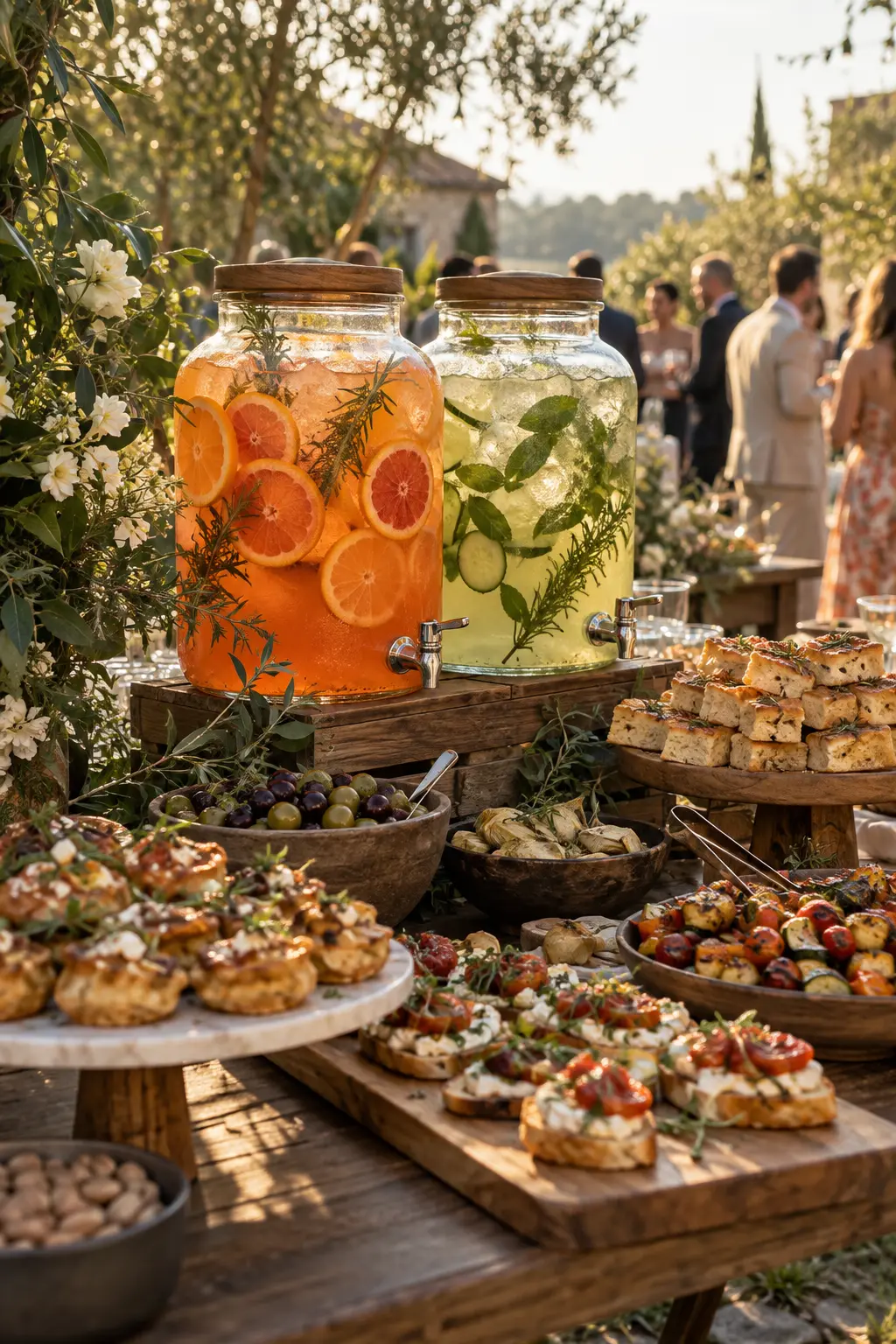
Set citrus spritz and zero-proof herb cooler dispensers beside olives, focaccia, skewers, and substantial savory bites. Guests receive a celebratory drink and enough food immediately, while both beverage choices share the same polished presentation.
49. Family-Style Table Menu Display
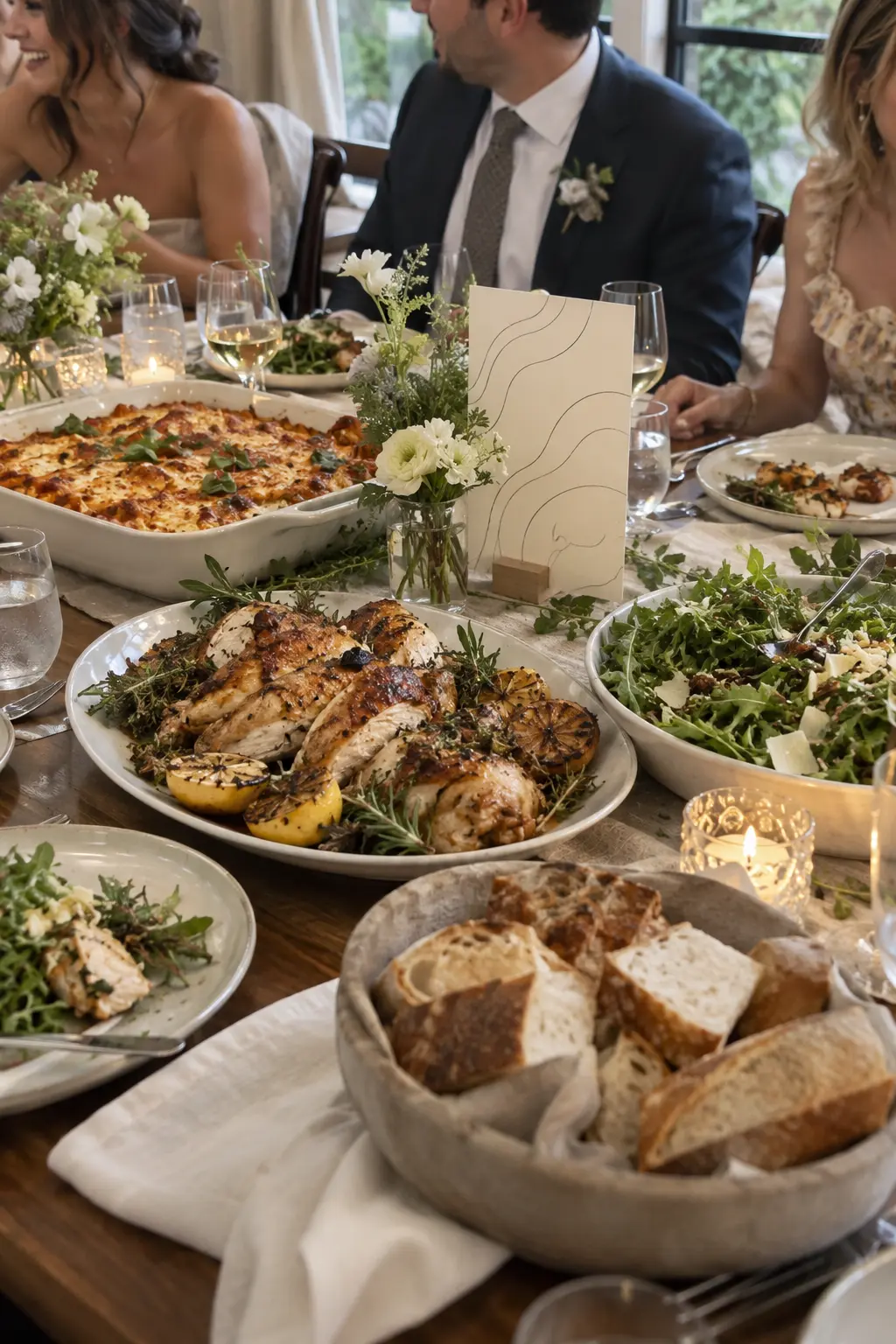
Place one simple standing menu card beside shared roast chicken, baked pasta, salad, and bread. The card previews the meal while duplicate platters along the table ensure guests can begin serving without passing heavy dishes too far.
50. Allergen-Smart Buffet Label System
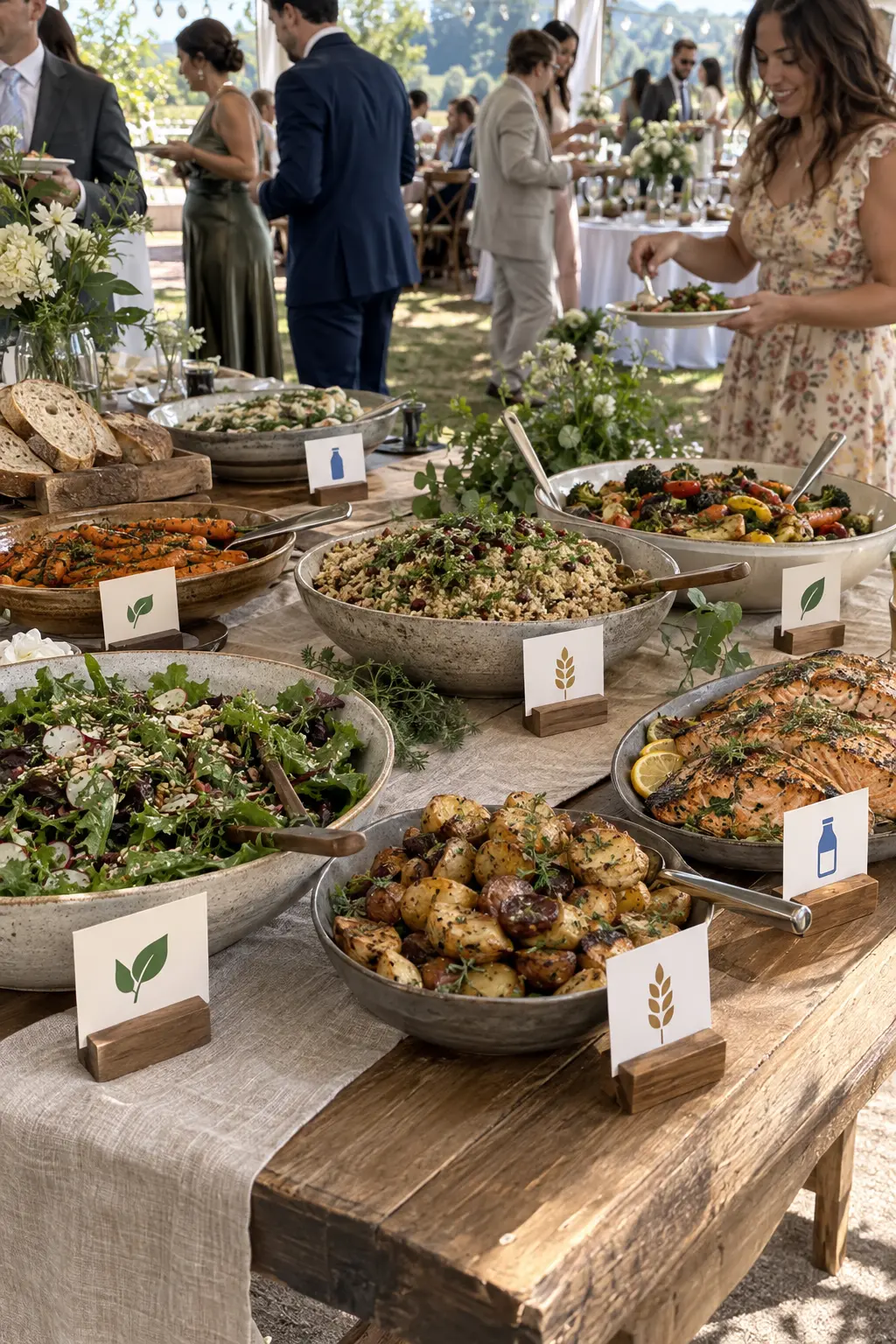
Use icon-led labels, separate utensils, and generous space between dishes to help guests navigate a varied buffet. Pair the visual system with verified recipes and trained staff, because symbols support communication but do not replace accurate allergy procedures.
Choose a Wedding Menu That Fits the Way You Want to Host
Start with the service experience you want guests to have, then shortlist two or three food directions that suit the venue and season. A cohesive menu with one strong interactive or visual moment usually feels more generous than too many disconnected choices.
Before finalizing, confirm dietary needs, kitchen capacity, holding temperatures, staffing, rentals, and the transition from cocktail hour to dinner. Those practical details protect the beautiful presentation you saved for inspiration.
Wedding Menu FAQs
What foods work best for a wedding reception?
Choose dishes your caterer can prepare and hold well for the selected service style. Braised meats, composed fish plates, pasta stations, colorful buffets, and substantial small plates can all work when timing, temperature, and guest flow are planned together.
How many entrée choices should a wedding menu have?
Two main choices plus a complete vegetarian or vegan option is a practical starting point for plated service. Buffets and stations can offer more variety, but each extra choice adds preparation, labeling, space, and replenishment needs.
How can a wedding menu include guests with dietary restrictions?
Collect needs in advance, share them with the caterer, verify ingredients and cross-contact procedures, and provide complete alternatives rather than removing one component. Use accurate labels and trained staff to help guests identify the food prepared for them.
Is a buffet or plated dinner better for a wedding?
A plated dinner offers controlled pacing and a formal guest experience, while a buffet offers visible variety and flexible portions. The better choice depends on kitchen access, room layout, staffing, guest count, and the atmosphere you want.
How do you make a wedding menu feel cohesive?
Repeat a few seasonal ingredients, cooking styles, or regional flavors across courses without duplicating the same dish. Keep the strongest idea as the focal point, then choose sides, drinks, and desserts that support it.
This post may contain affiliate links: full affiliate disclosure.