
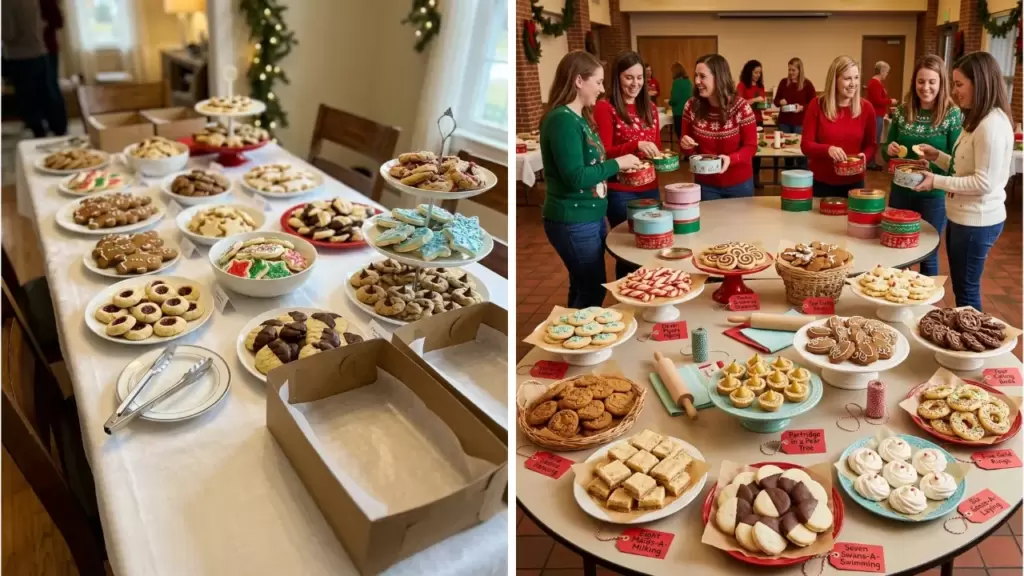
The holiday season often brings a busy baking schedule, but a cookie exchange offers a clever way to stock up on various treats by baking just one signature batch. This guide covers essential elements for a successful swap, from establishing clear portion rules and organizing a balanced dessert table to selecting festive packaging for guests to transport their haul.
Managing dietary restrictions and ensuring a diverse selection of flavors requires early communication with guests to prevent duplicate recipes and accommodate allergies. The following sections detail creative setup ideas, interactive games, and beverage pairings to turn a simple swap into a memorable community tradition.
Cookie Exchange Party Setup Ideas
1. Classic Christmas Cookie Exchange
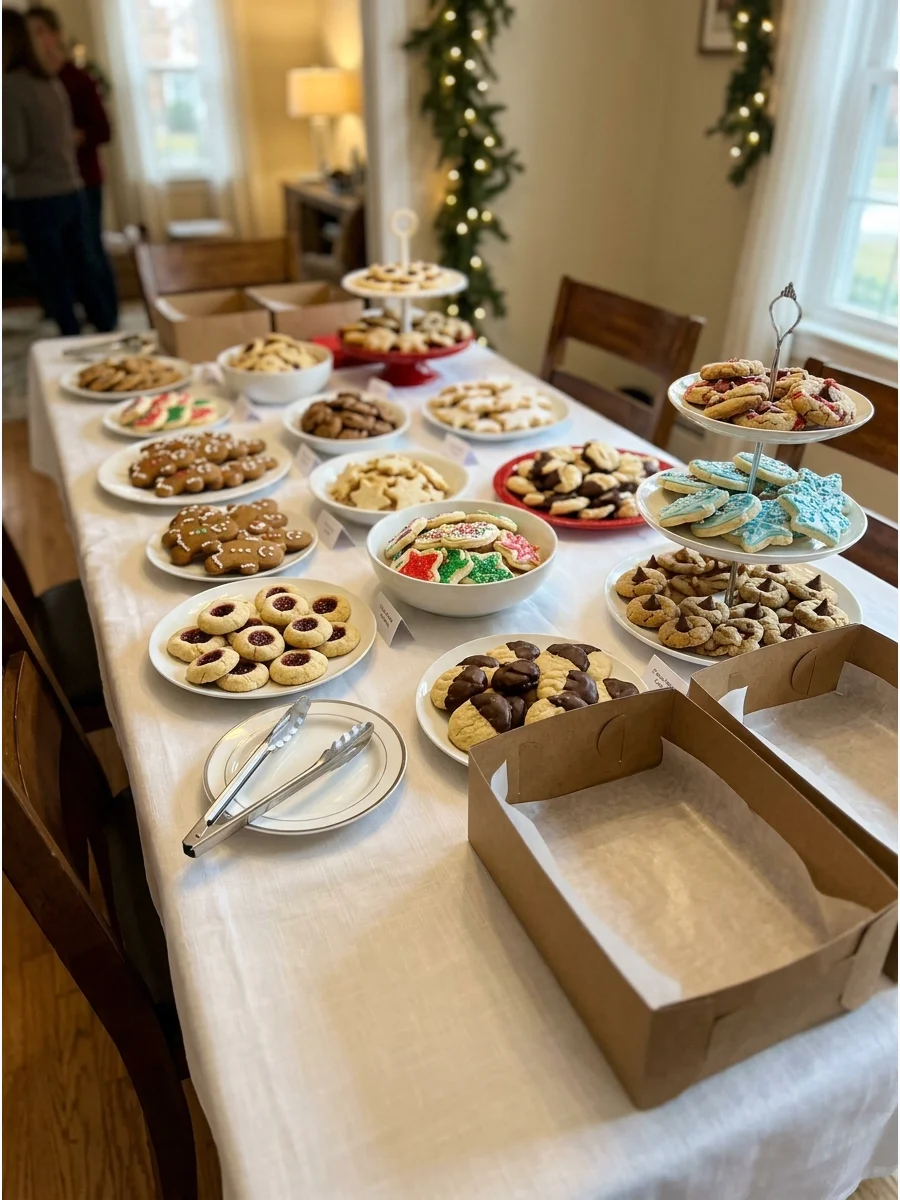
Invite each guest to bake one favorite Christmas cookie in a large enough batch to share and exchange. Display every variety separately, then let everyone fill a take-home box with an assortment at the end of the party.
It simplifies the baking process for everyone. Guests focus on mastering one recipe while receiving many different types in return.
Set a specific count per guest like three dozen cookies. Provide sturdy cardboard boxes with wax paper layers for safe transport.
2. Twelve Days of Cookies Exchange
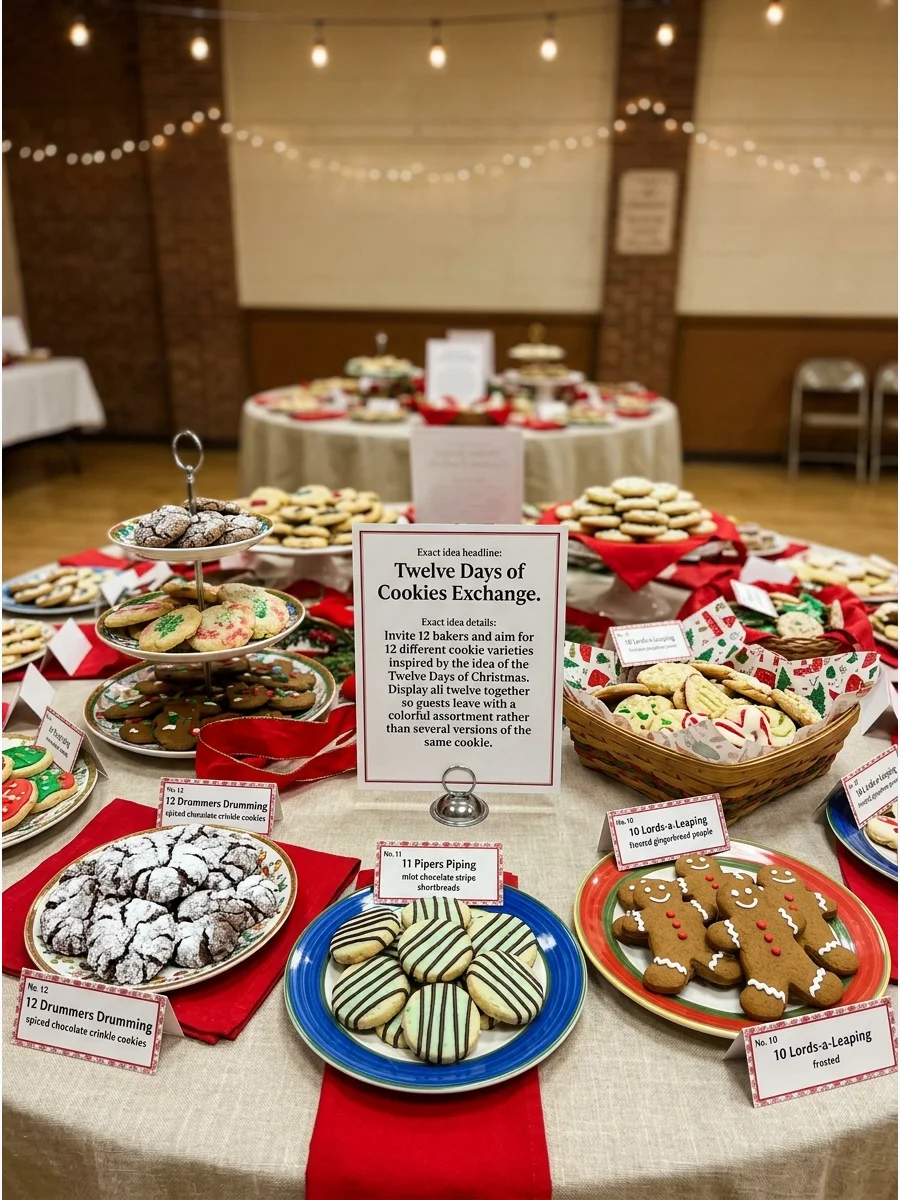
Invite 12 bakers and aim for 12 different cookie varieties inspired by the idea of the Twelve Days of Christmas. Display all twelve together so guests leave with a colorful assortment rather than several versions of the same cookie.
It guarantees a diverse selection for every participant. The structured theme makes the final assortment look curated and intentional.
Use a digital sign-up sheet to track recipe choices. Send a reminder one week early to confirm everyone has a unique flavor.
3. Favorite Family Recipe Cookie Swap
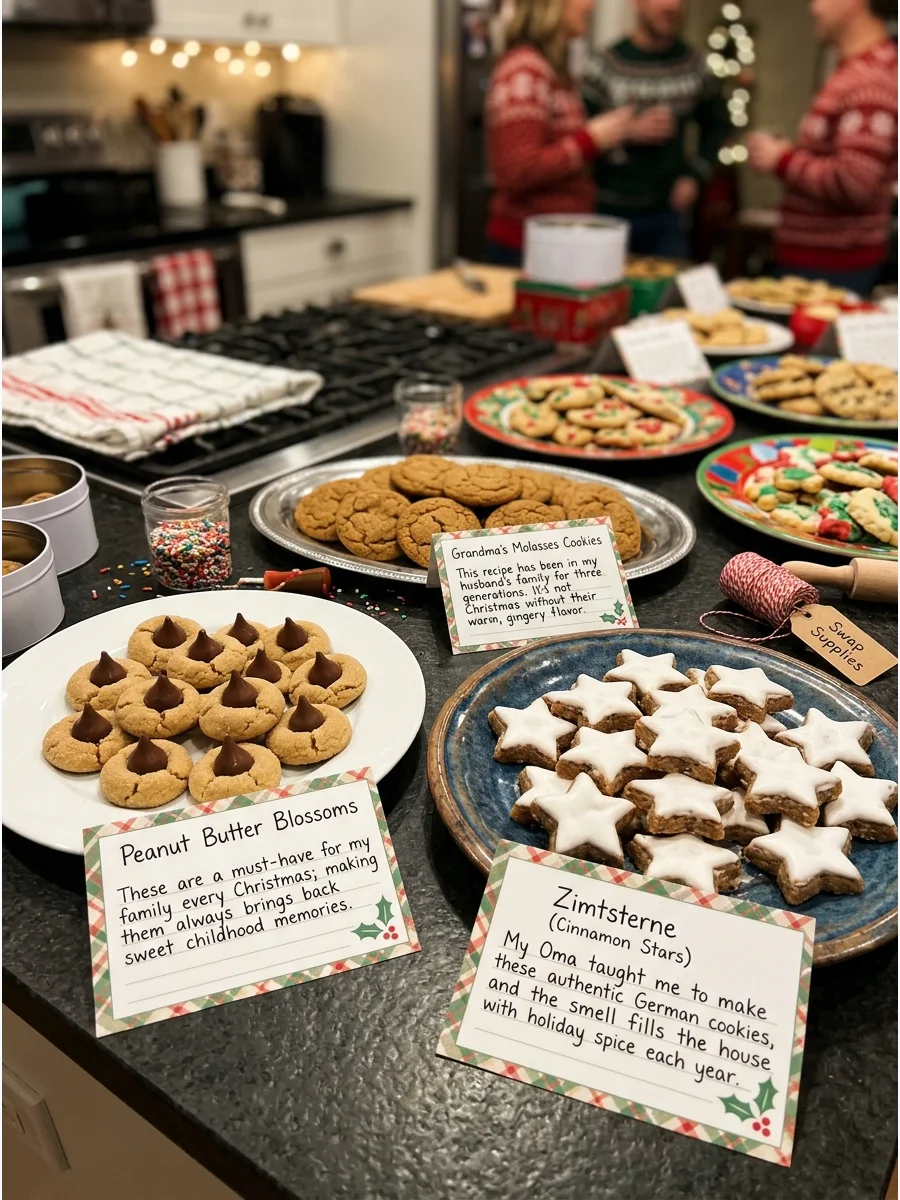
Ask every guest to bake a cookie connected to their family or holiday traditions. Place a small card beside each platter explaining the cookie’s name and story so the exchange becomes personal as well as delicious.
It turns the exchange into a meaningful storytelling event. Guests learn about different cultures and personal histories through food.
Print uniform recipe cards for guests to fill out. Include a space on the card for a short 2-sentence story about the recipe.
4. Vintage Christmas Cookie Exchange
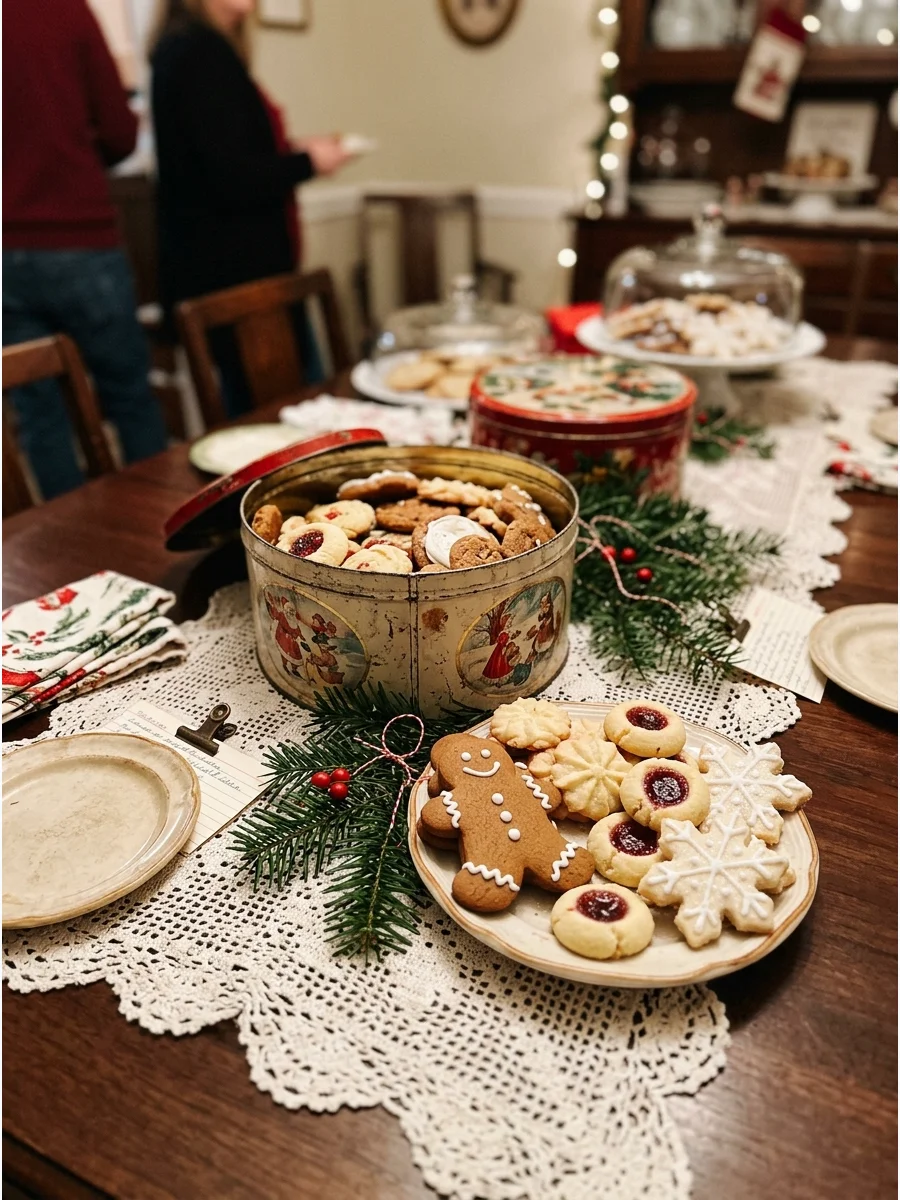
Build the party around nostalgic Christmas cookies and retro holiday decorations. Encourage guests to bring recipes passed down through their families or classic cookies they remember eating during childhood Christmas celebrations.
The retro theme creates a warm and familiar atmosphere. It highlights timeless flavors like gingerbread, shortbread, and linzer cookies.
Decorate the table with vintage tins and lace doilies. Use classic evergreen sprigs to fill gaps between the serving platters.
5. Around-the-World Christmas Cookie Exchange
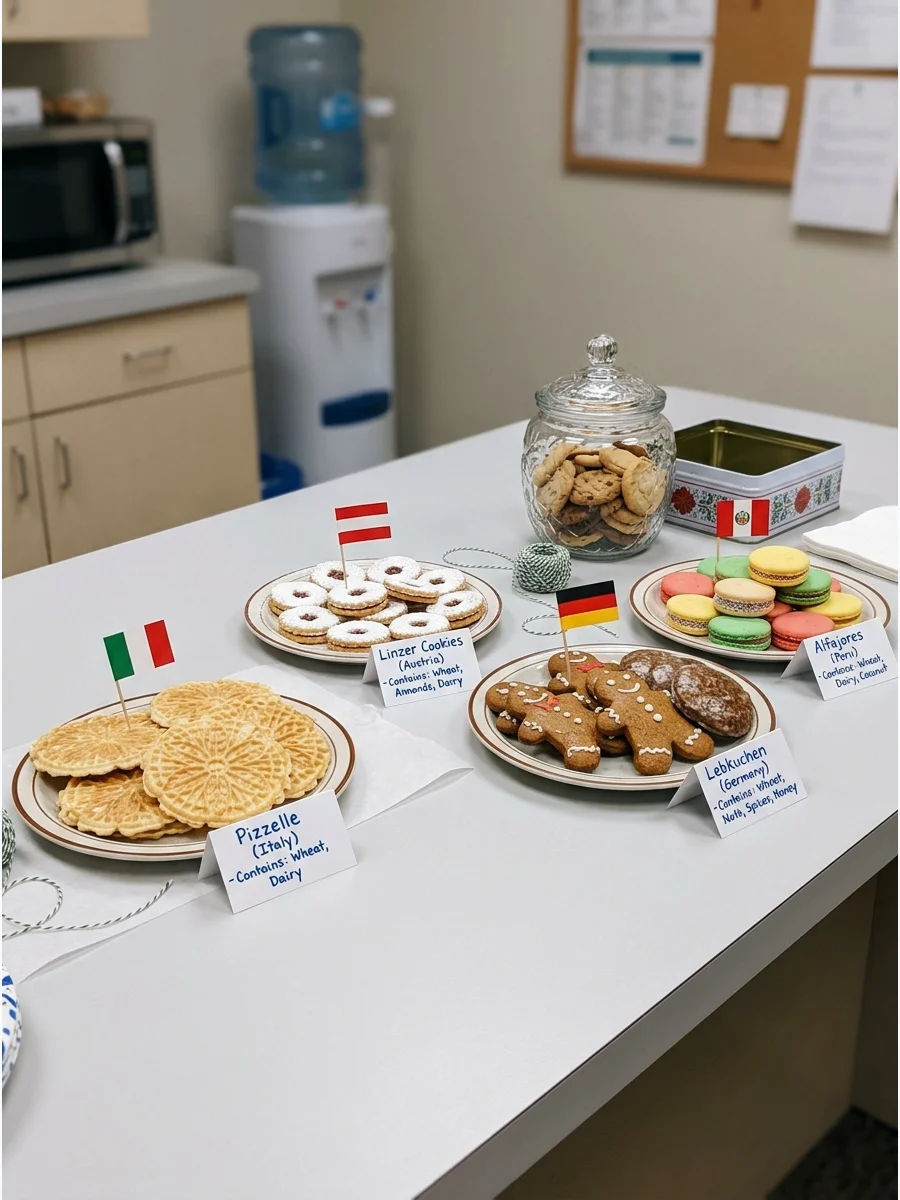
Ask each guest to bring a Christmas cookie connected to a different country or cultural tradition. Label each cookie with its name and origin so guests discover new holiday flavors while building their take-home assortment.
It expands the variety of spices and textures beyond standard sugar cookies. Guests enjoy a culinary tour of global holiday traditions.
Provide small paper flags representing each country. Place a list of common allergens next to each international treat.
6. Christmas Cookie Exchange Brunch
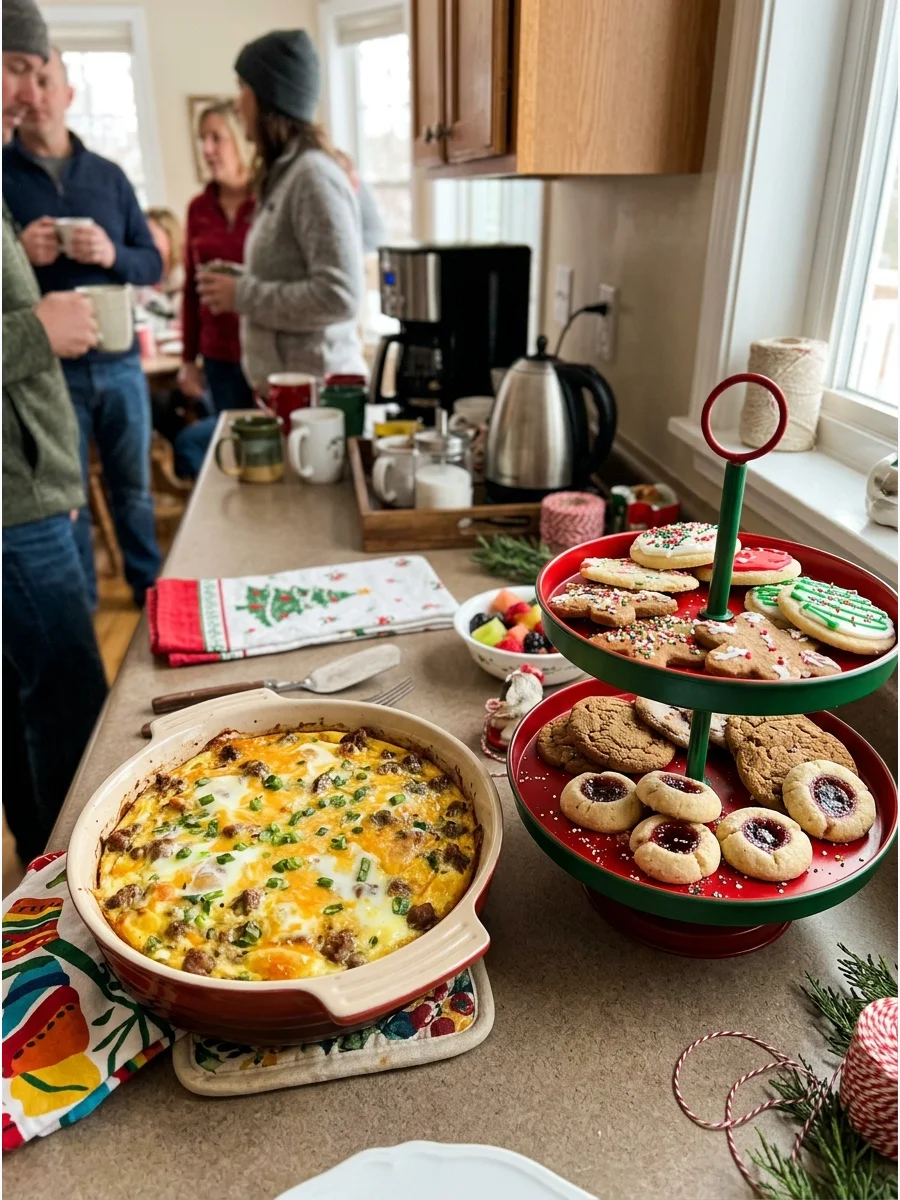
Host the swap during late morning and serve coffee, tea, breakfast casseroles, fruit, and savory brunch dishes before the cookie tasting begins. This keeps guests from filling up entirely on sweets.
Morning events often fit better into busy weekend schedules. Savory food prevents guests from feeling overwhelmed by sugar early in the day.
Set up a separate beverage station with coffee and tea. Use tiered stands to keep the cookies organized in a smaller space.
7. Cozy Evening Cookie Exchange
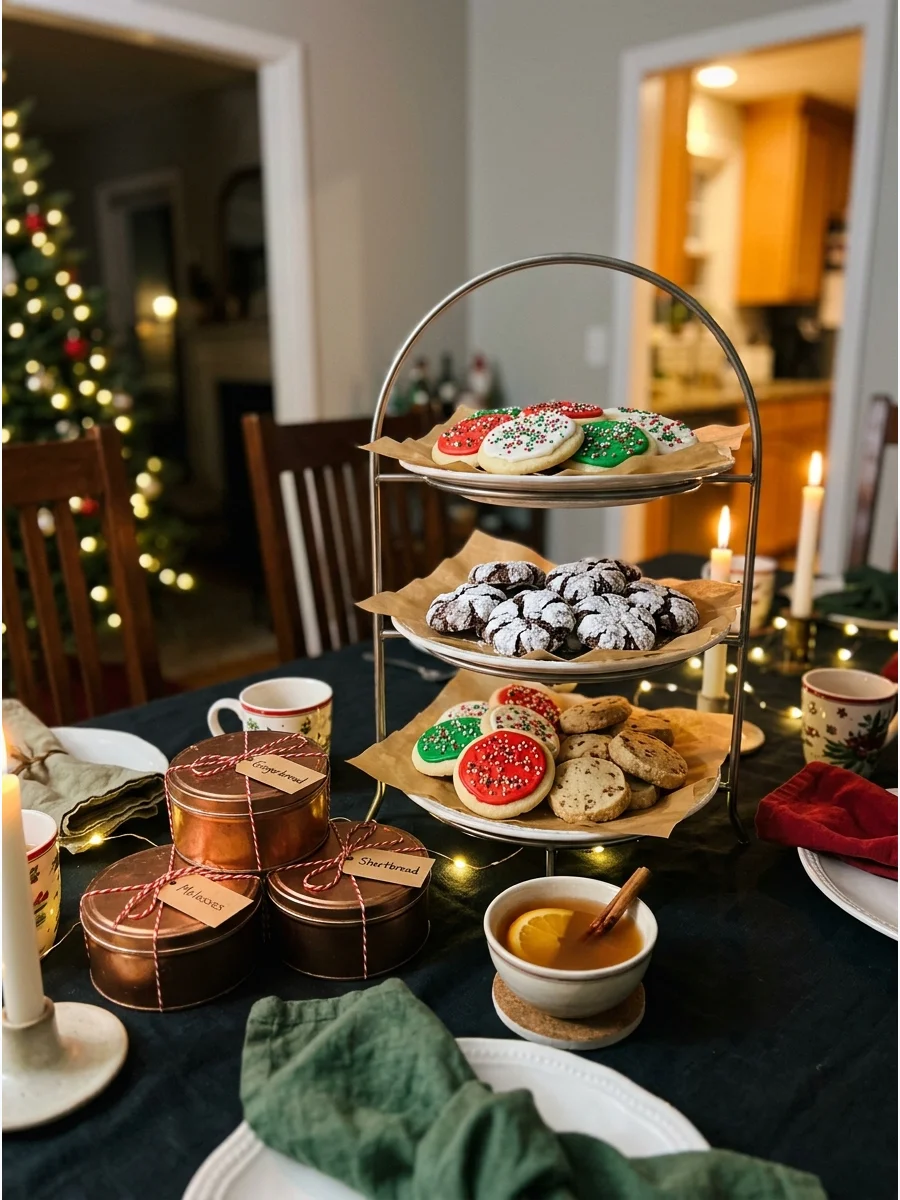
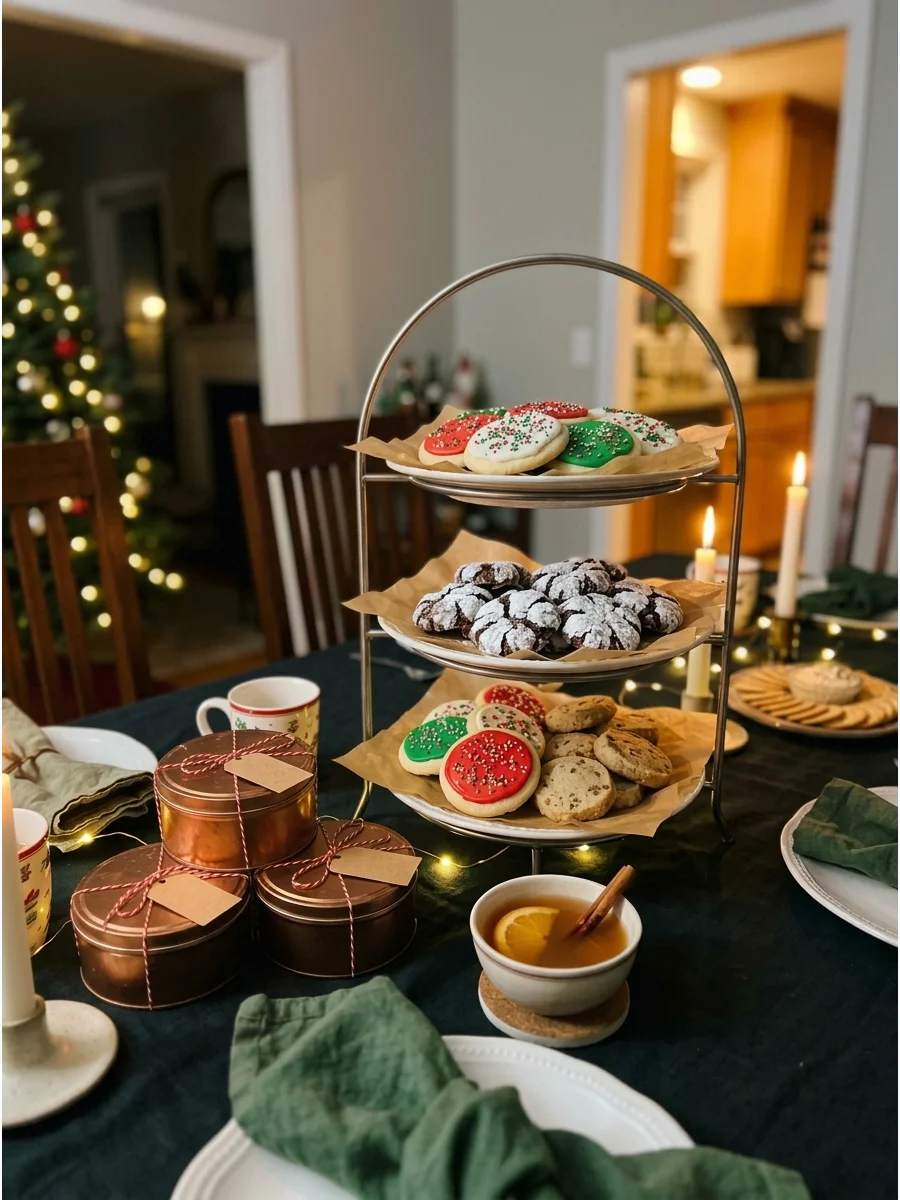
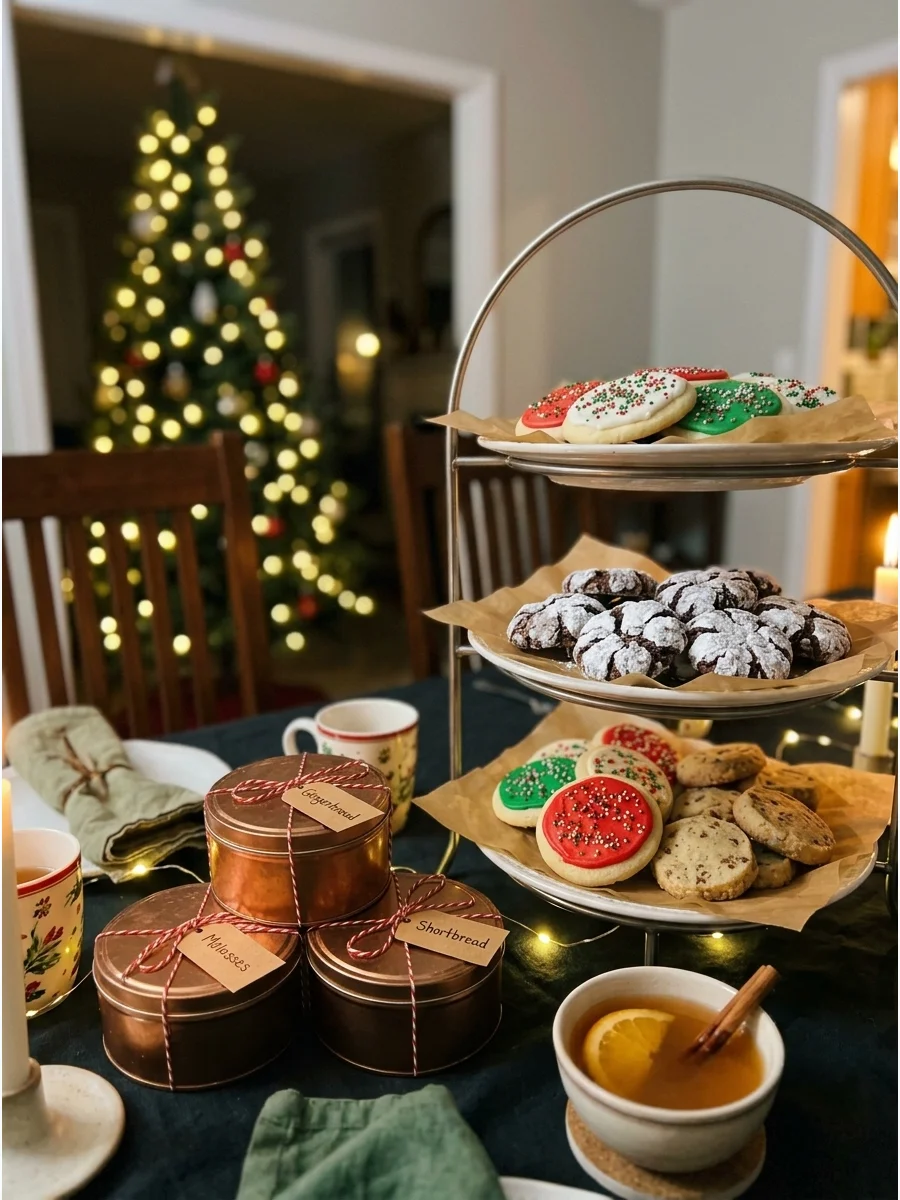
Turn the exchange into an evening gathering with candles, Christmas lights, warm drinks, soft music, and a cozy dessert-table setup. Serve a few savory appetizers before opening the cookie buffet.
The evening timing feels more formal and festive. Soft lighting and warm beverages create a relaxing environment for socializing.
Use battery-operated fairy lights around the cookie platters. Keep the savory snacks in a different area to avoid flavor mixing.
8. Christmas Pajama Cookie Exchange
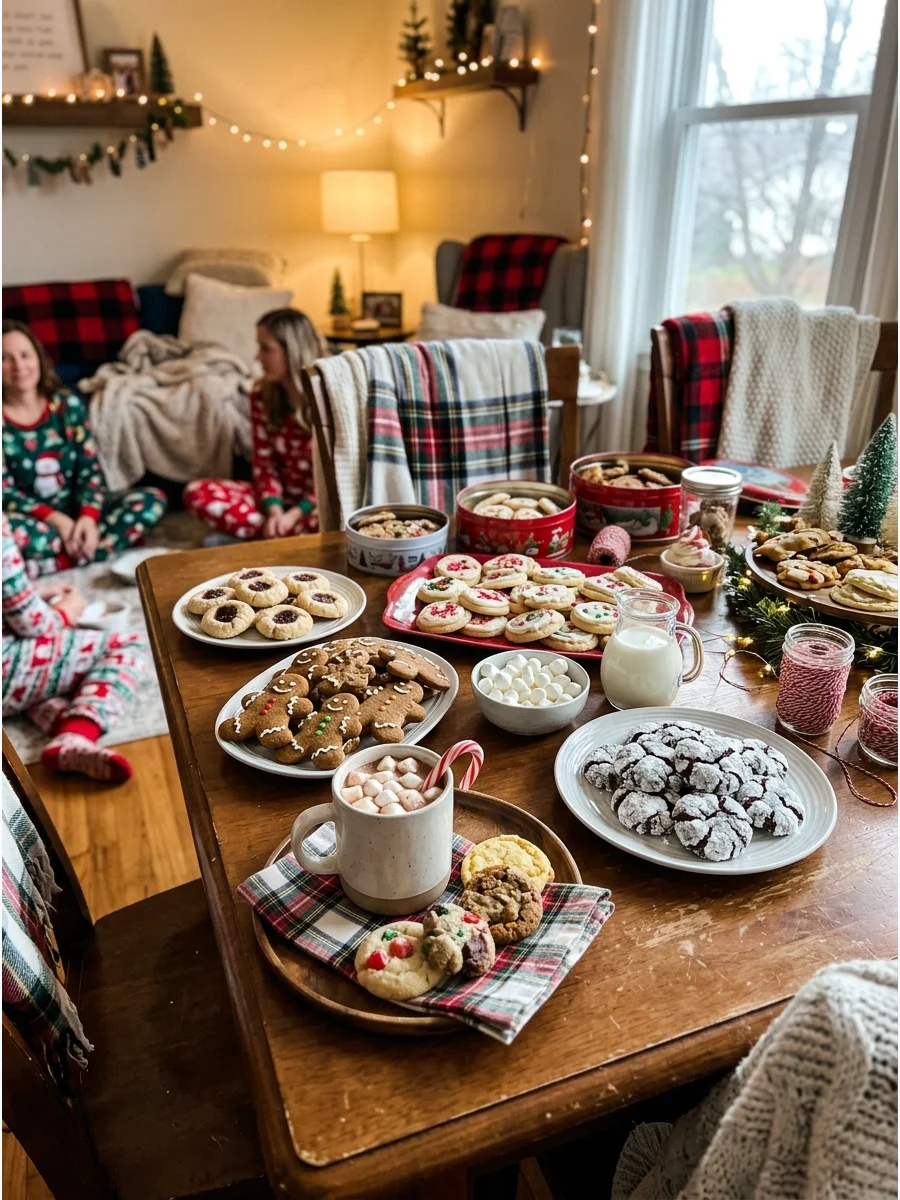
Ask guests to arrive in Christmas pajamas and make the party deliberately relaxed. Pair the cookie swap with hot cocoa, Christmas movies, blankets, and casual holiday snacks.
It removes the pressure of dressing up during a busy season. The casual vibe encourages guests to stay longer and enjoy the treats.
Clear a large floor area for guests to sit comfortably. Provide trays so people can easily manage their cocoa and cookies.
9. Ugly Sweater Cookie Exchange
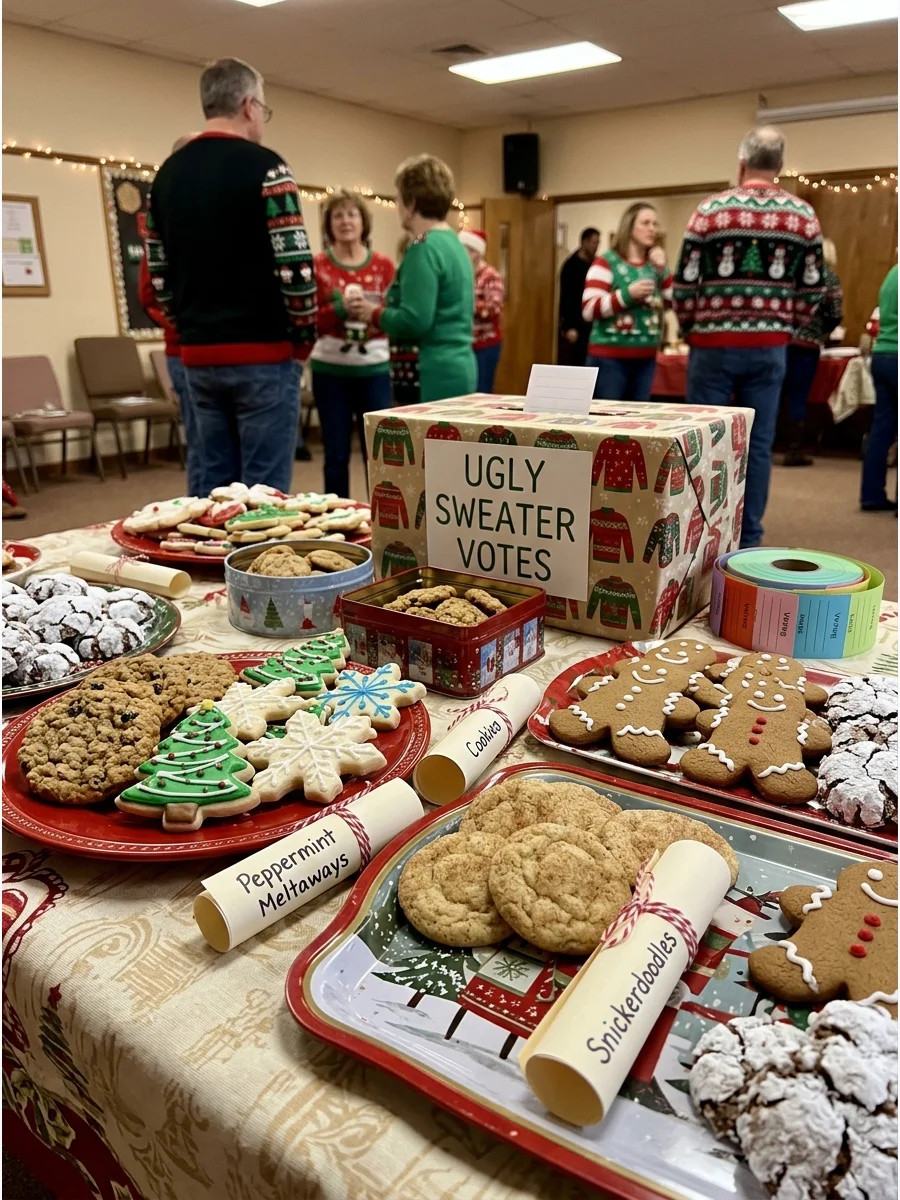
Combine two Christmas traditions by requiring guests to wear ugly Christmas sweaters while bringing a batch of cookies. Add a sweater contest alongside cookie awards so the party has more than one main activity.
It adds a humorous and lighthearted element to the swap. The theme provides an easy conversation starter for guests who do not know each other.
Set up a simple voting station with paper slips. Use a decorated shoebox to collect the votes for the best sweater.
10. Girls’ Night Cookie Exchange
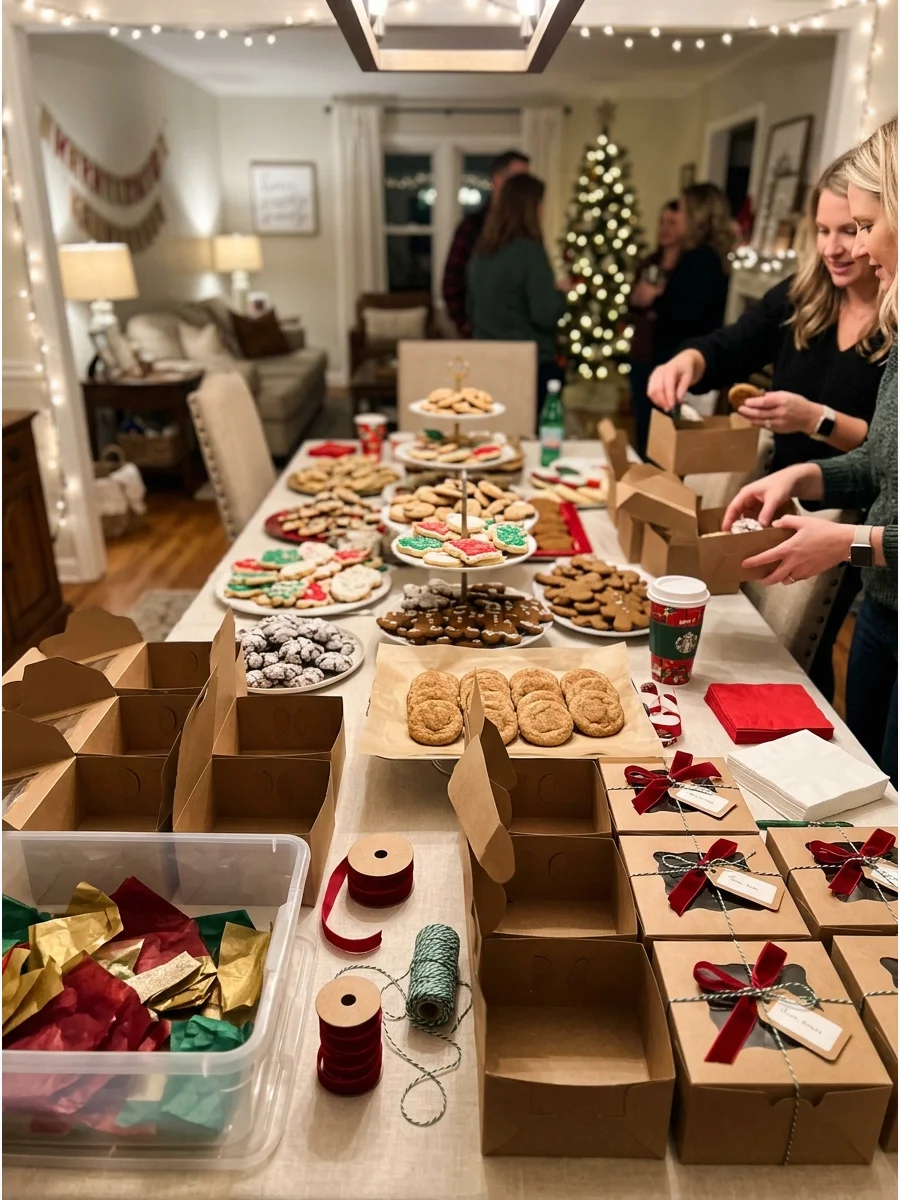
Create a relaxed Christmas girls’ night centered on cookies, festive drinks, music, and conversation. Use an attractive dessert table and provide take-home boxes so everyone leaves with treats for the rest of the holiday season. Cookie Exchange Rules and Organization
It combines a social outing with a productive holiday task. Guests leave with their holiday baking finished in just one evening.
Provide colorful tissue paper and ribbons for the boxes. Set up a dedicated packing station at the end of the table.
11. Cookie Sign-Up Sheet to Prevent Duplicates
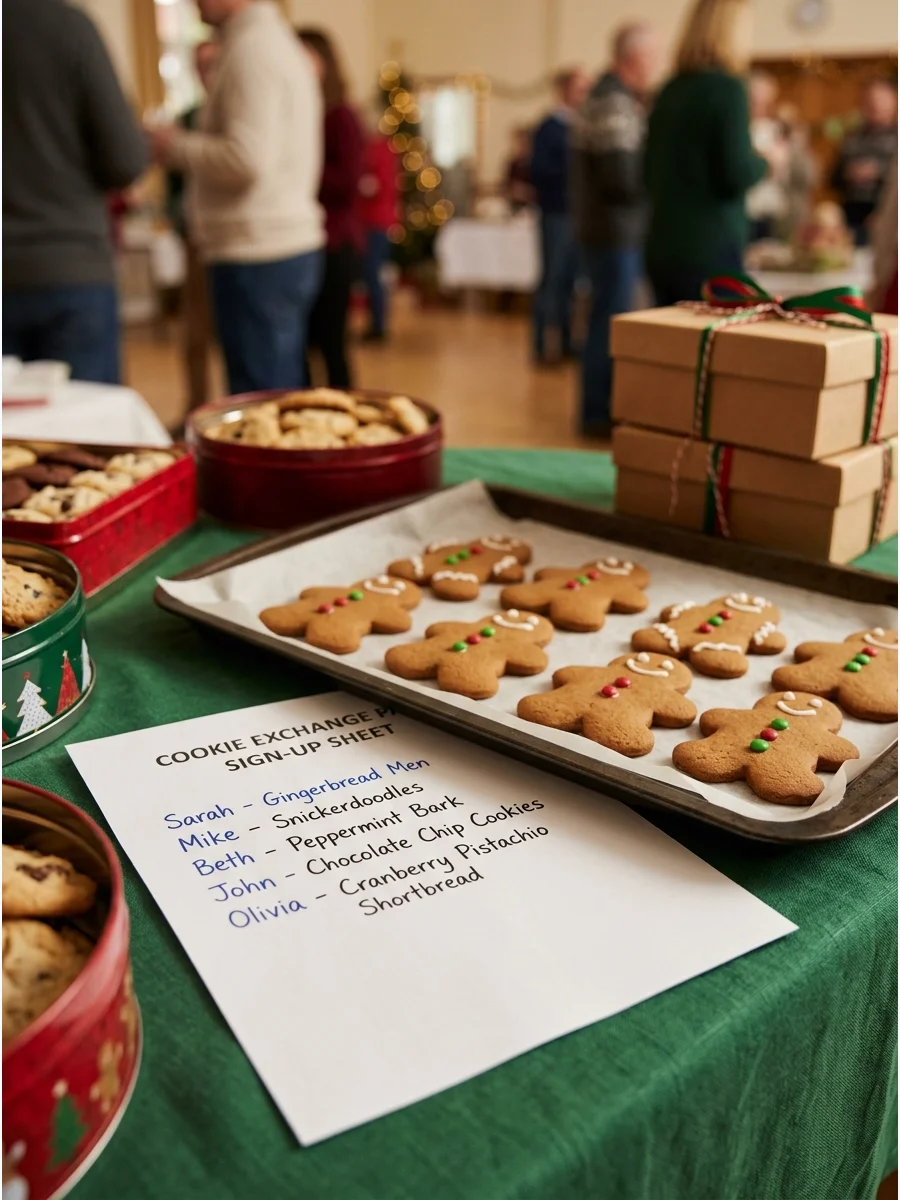
Have guests list the cookie they plan to bring before the party. This helps avoid ending up with several identical chocolate chip or sugar cookies and creates a more interesting final assortment.
This prevents multiple people from bringing the same type. It ensures a wide variety for the final swap.
Send the sign-up link two weeks before the party. Remind guests to check the list before they shop.
12. Simple One-Cookie-One-Baker Rule
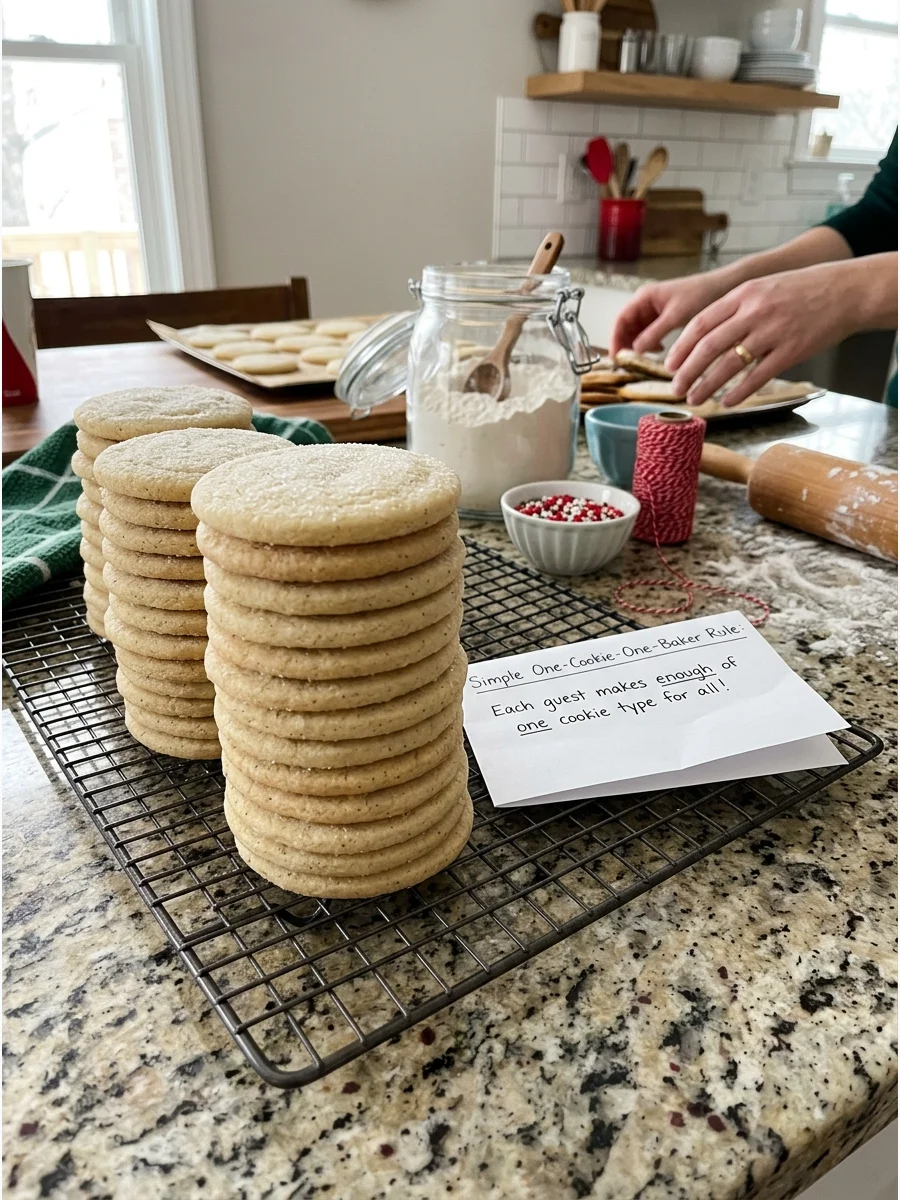
Ask each guest to choose one cookie recipe and make enough of that single variety for everyone. Keeping the rule simple makes the party easier to understand and prevents guests from feeling pressured to bake several desserts.
It reduces stress for the participants. The rules are clear and easy to follow.
Mention the rule clearly on the invitation. Suggest choosing a sturdy cookie that is easy to stack.
13. Bring Extra Cookies for Tasting
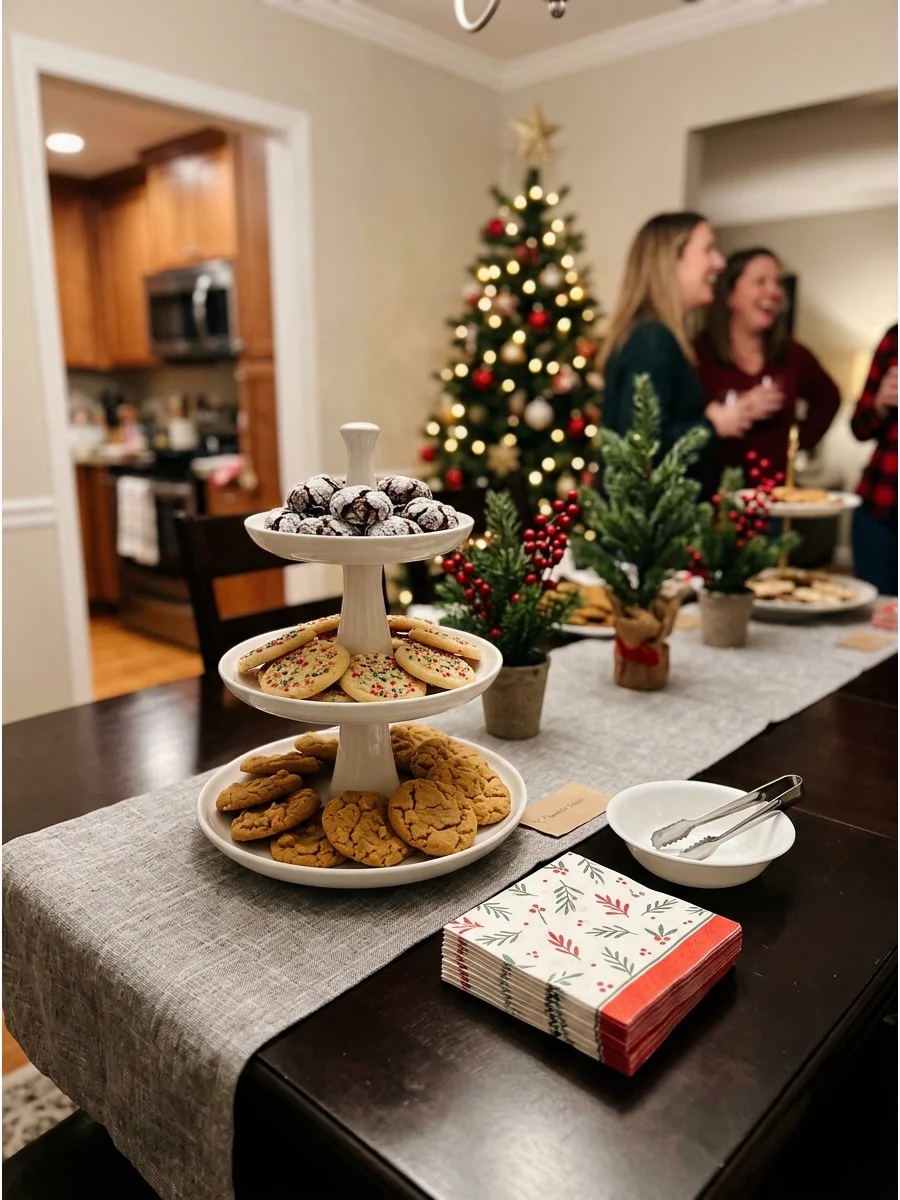
Ask guests to bring a separate small batch for sampling in addition to the cookies intended for exchanging. Everyone can taste the entries before deciding which cookies they want in their take-home box.
Guests can taste everything before choosing their favorites. It keeps the exchange cookies untouched and ready for packing.
Place the tasting platter in a central spot. Provide small napkins and tongs for easy serving.
14. Set a Clear Cookie Quantity
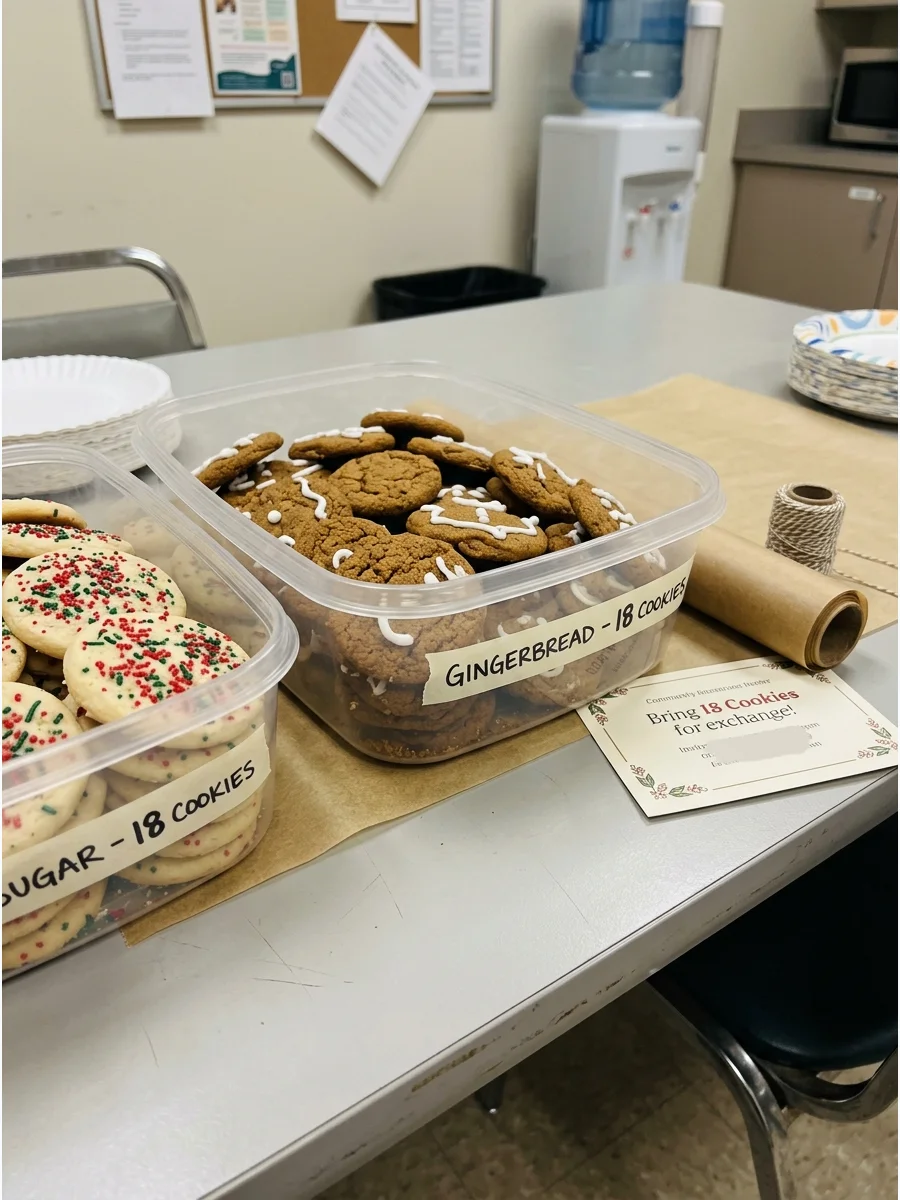
Tell guests exactly how many cookies to bring based on the number of attendees. A clear quantity avoids situations where some people arrive with dozens of cookies while others bring only a small plate.
It ensures everyone leaves with a fair amount. No one feels cheated by bringing more than they receive.
Put the final number in bold on the invite. Provide extra parchment paper for layering cookies in boxes.
15. Homemade Cookie Exchange
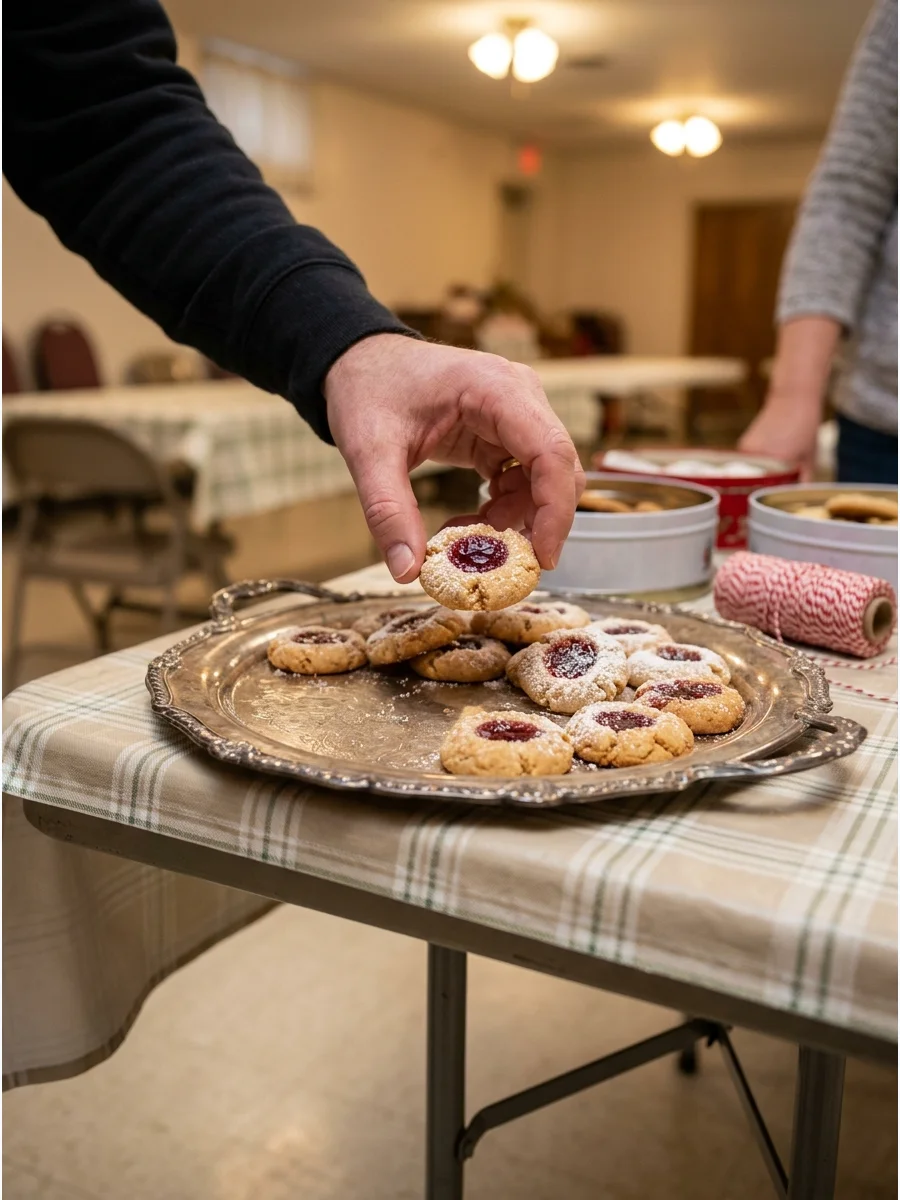
Make homemade cookies the central rule for guests who enjoy baking. Explain this clearly on the invitation so everyone knows that the party is focused on sharing homemade holiday recipes.
It results in high-quality and unique treats. Guests enjoy sharing the effort put into their dough.
Ask guests to avoid using pre-made mixes. Emphasize the homemade rule in the description.
16. Semi-Homemade Cookie Exchange
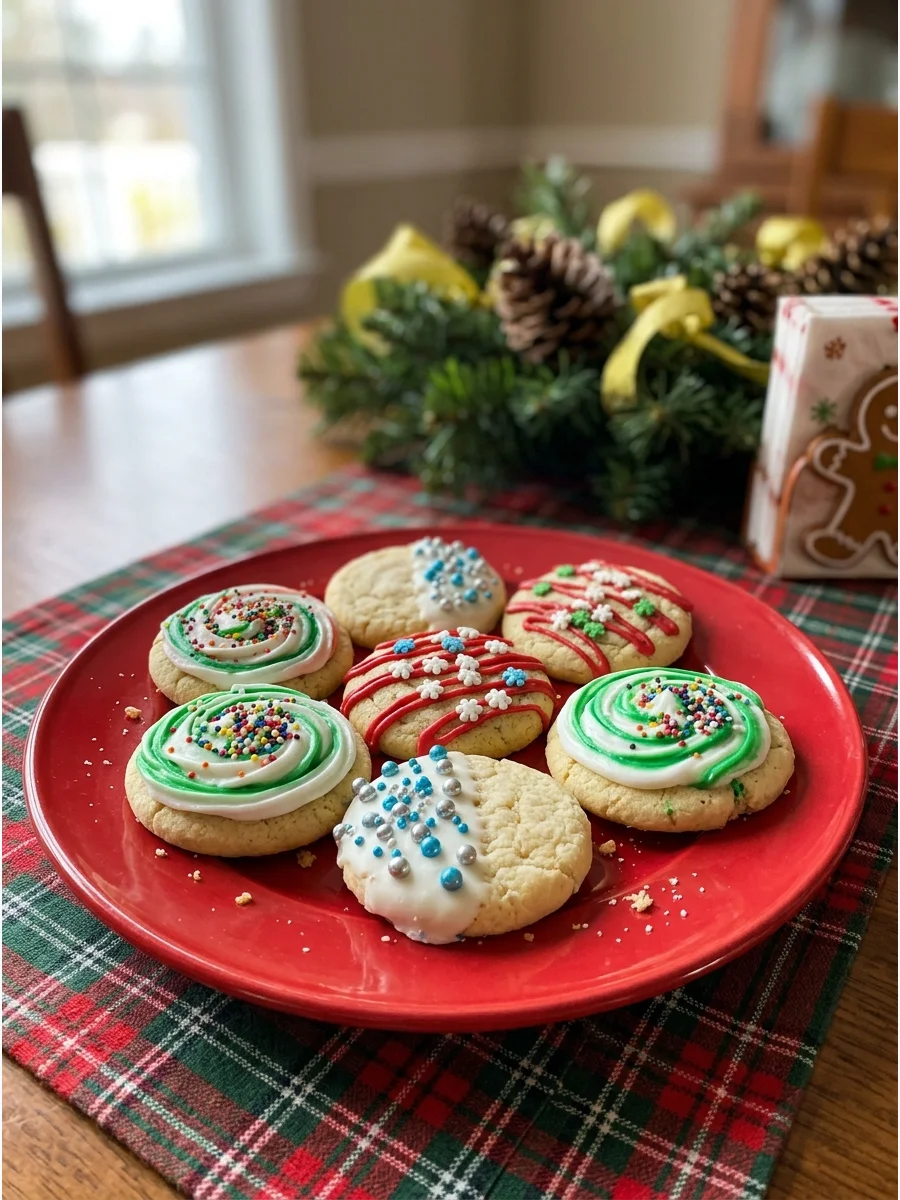
Make the party more beginner-friendly by allowing decorated store-bought cookies, premade dough, no-bake treats, and simple homemade recipes. This keeps the event accessible for guests who enjoy the party but are not confident bakers.
It makes the party inclusive for non-bakers. The event stays low-pressure and fun for everyone.
Suggest using store-bought shortbread with melted chocolate. Provide a list of easy decoration ideas for inspiration.
17. Cookie and Bar Dessert Exchange
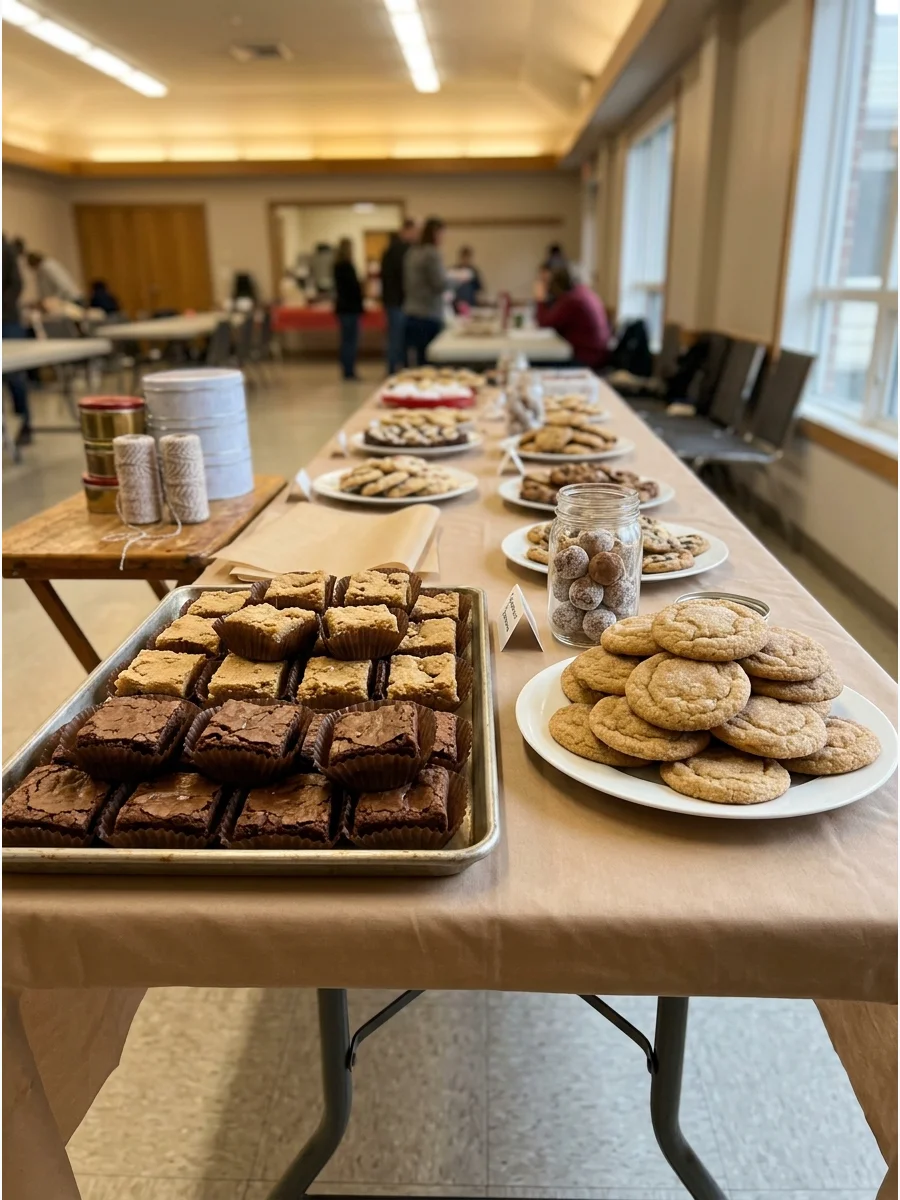
Allow brownies, blondies, bars, truffles, and other sturdy handheld holiday treats in addition to traditional cookies. This creates more variety without moving too far away from the cookie-exchange concept.
It adds different textures to the cookie selection. Bars are often faster to bake in large batches.
Use a ruler to cut bars into even sizes. Pack bars in cupcake liners to prevent sticking.
18. Nut-Free Cookie Exchange
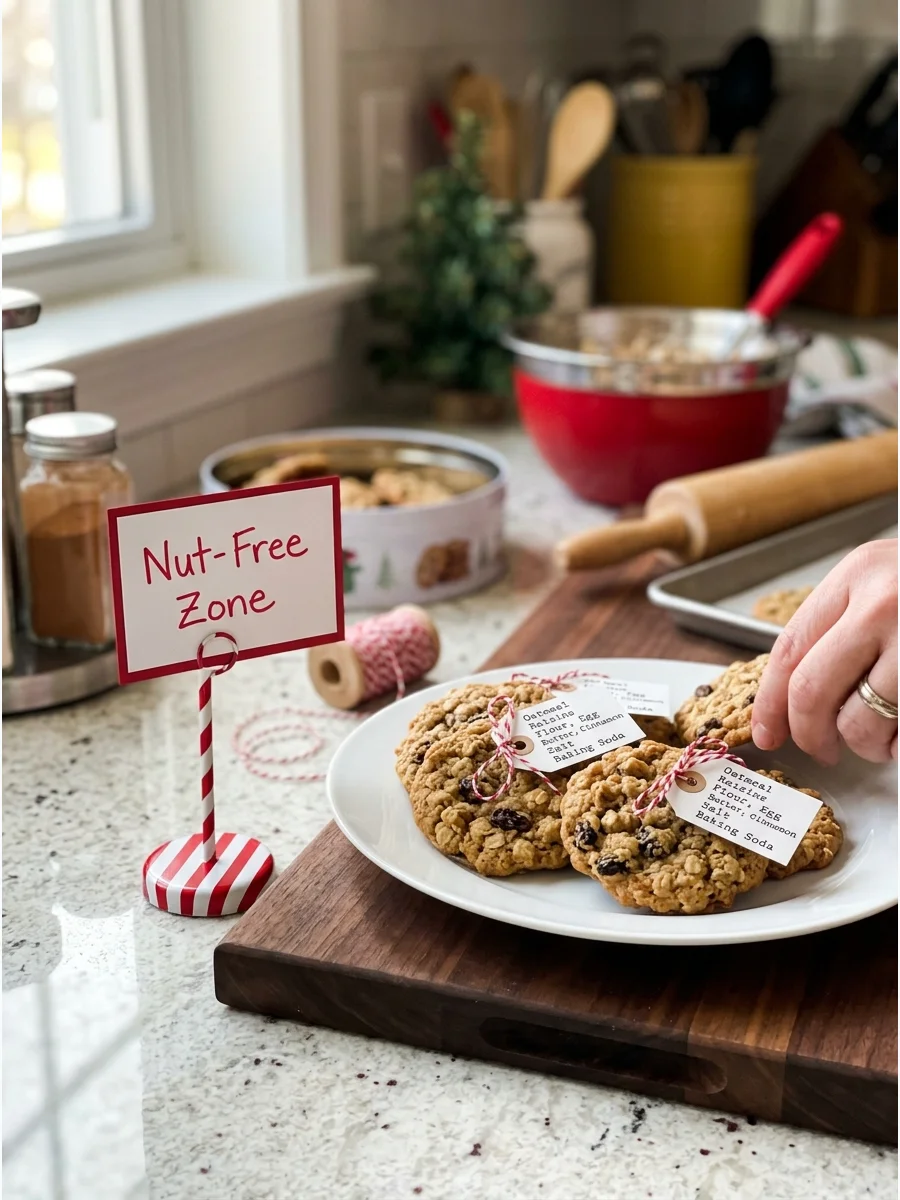
Ask guests to avoid nuts when someone attending has an allergy or when you want a simpler shared table. Clearly label ingredients and remind guests about cross-contact when allergies are a concern.
It allows everyone to sample every cookie safely. Safety is the top priority for this gathering.
Ask guests to check labels on chocolate chips. Ensure no almond extract is used in the baking.
19. Cookie Allergen Label System
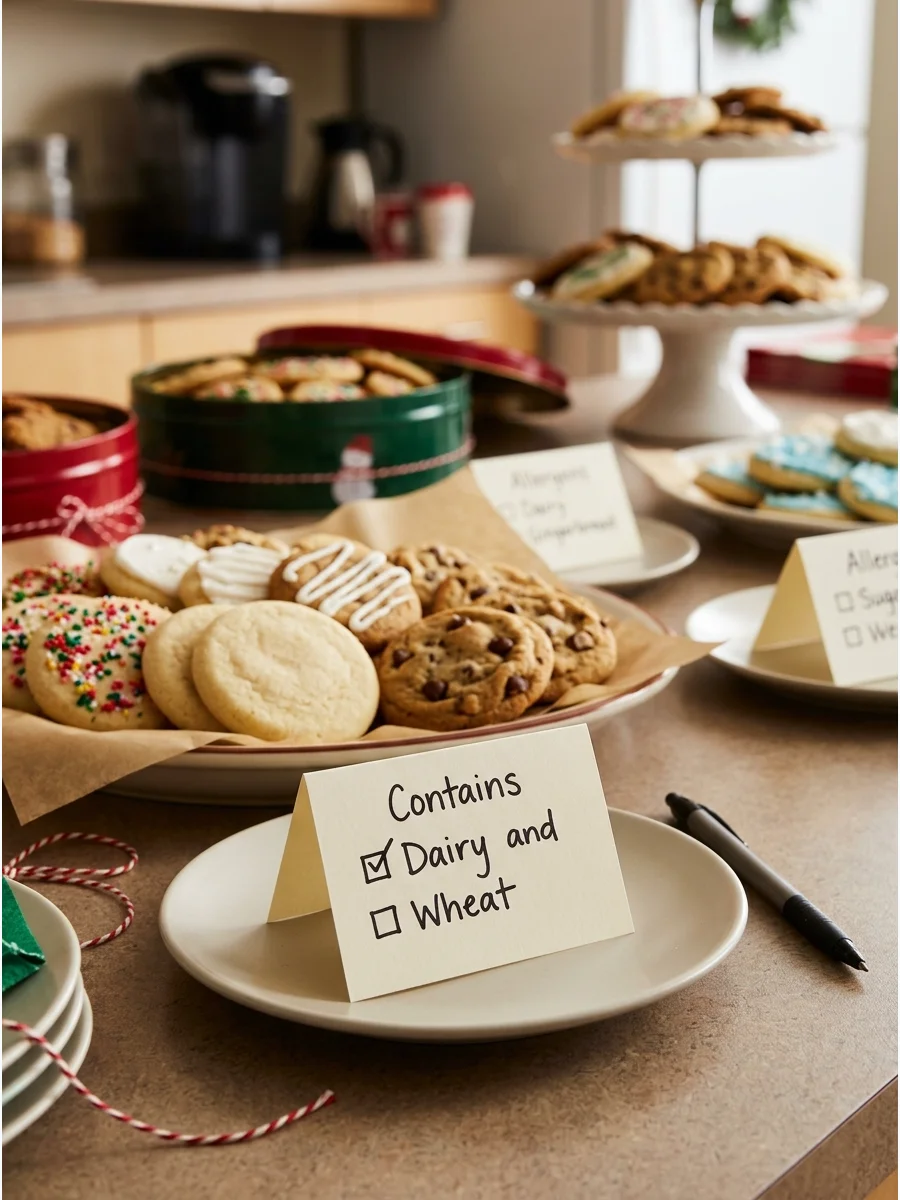
Place small cards beside every platter listing common allergens such as nuts, dairy, eggs, wheat, or soy. The labels help guests quickly identify which cookies may or may not work for them.
It helps guests with dietary restrictions find safe options. People can quickly scan the table for ingredients.
Provide pre-printed cards with checkboxes for nuts and dairy. Keep extra pens near the display table.
20. Cookie Exchange Recipe Cards
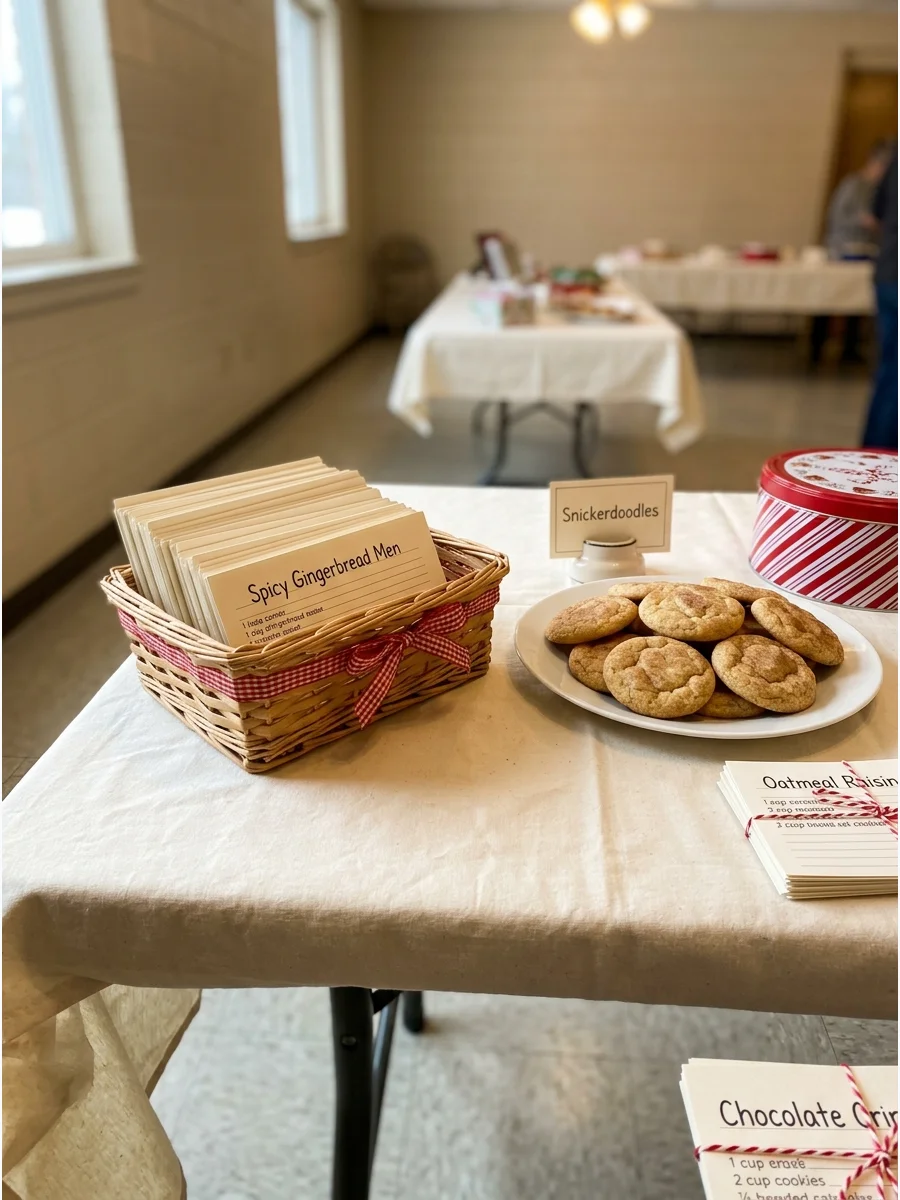
Ask each baker to bring printed or handwritten copies of their recipe. Guests can take the recipes for cookies they love and recreate their favorites after the party.
It lets the holiday tradition continue at home. Guests can recreate their favorite treats later.
Place recipe cards in a basket near each plate. Use heavy cardstock for a more durable card.
Cookie Display and Dessert Table Ideas
21. Christmas Cookie Buffet Table
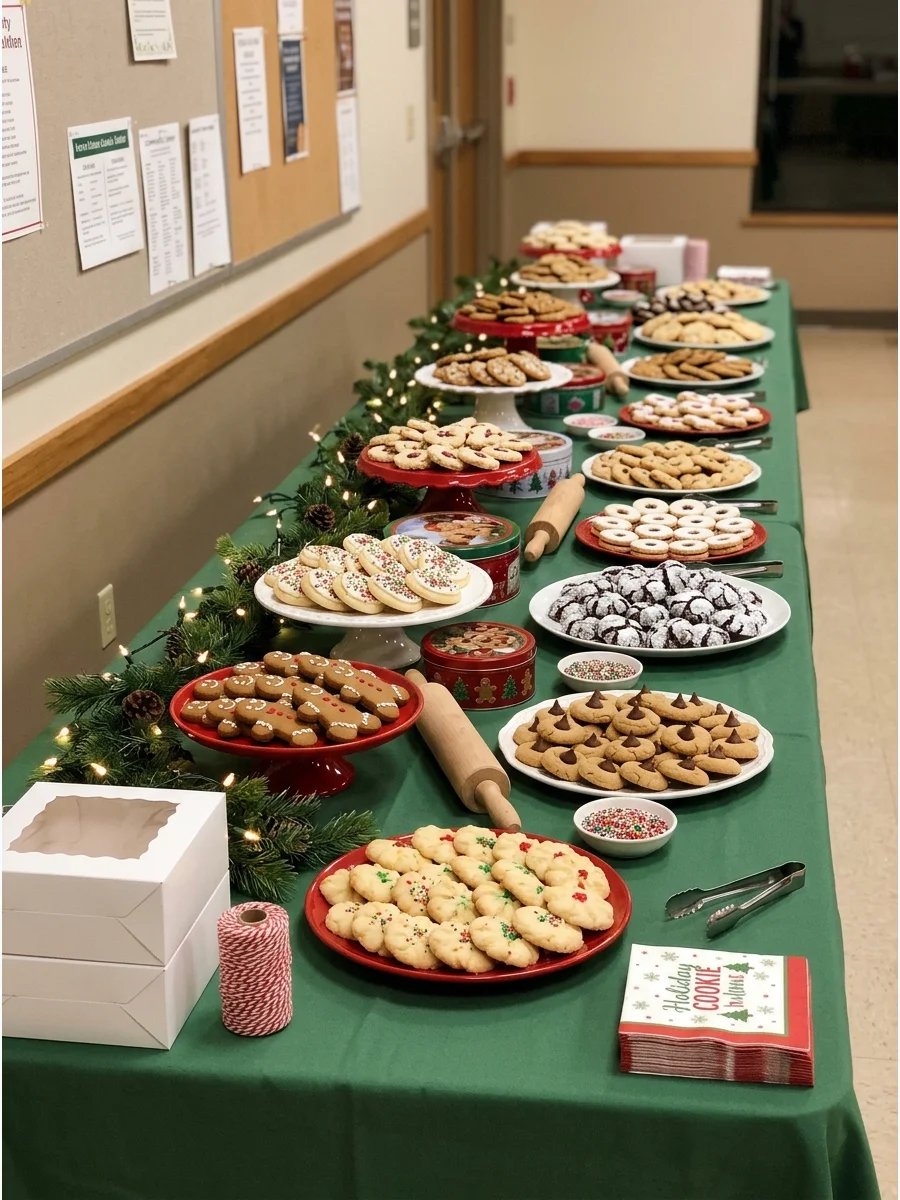
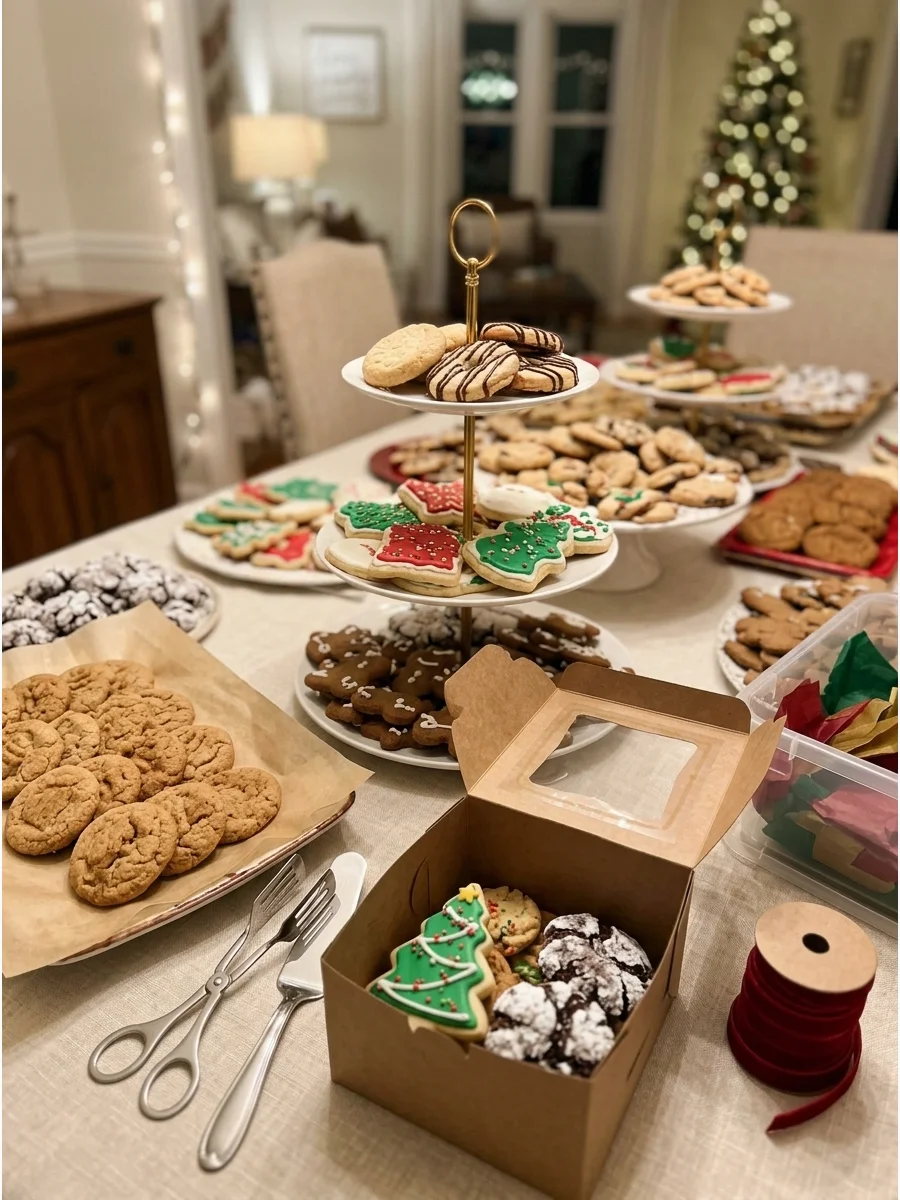
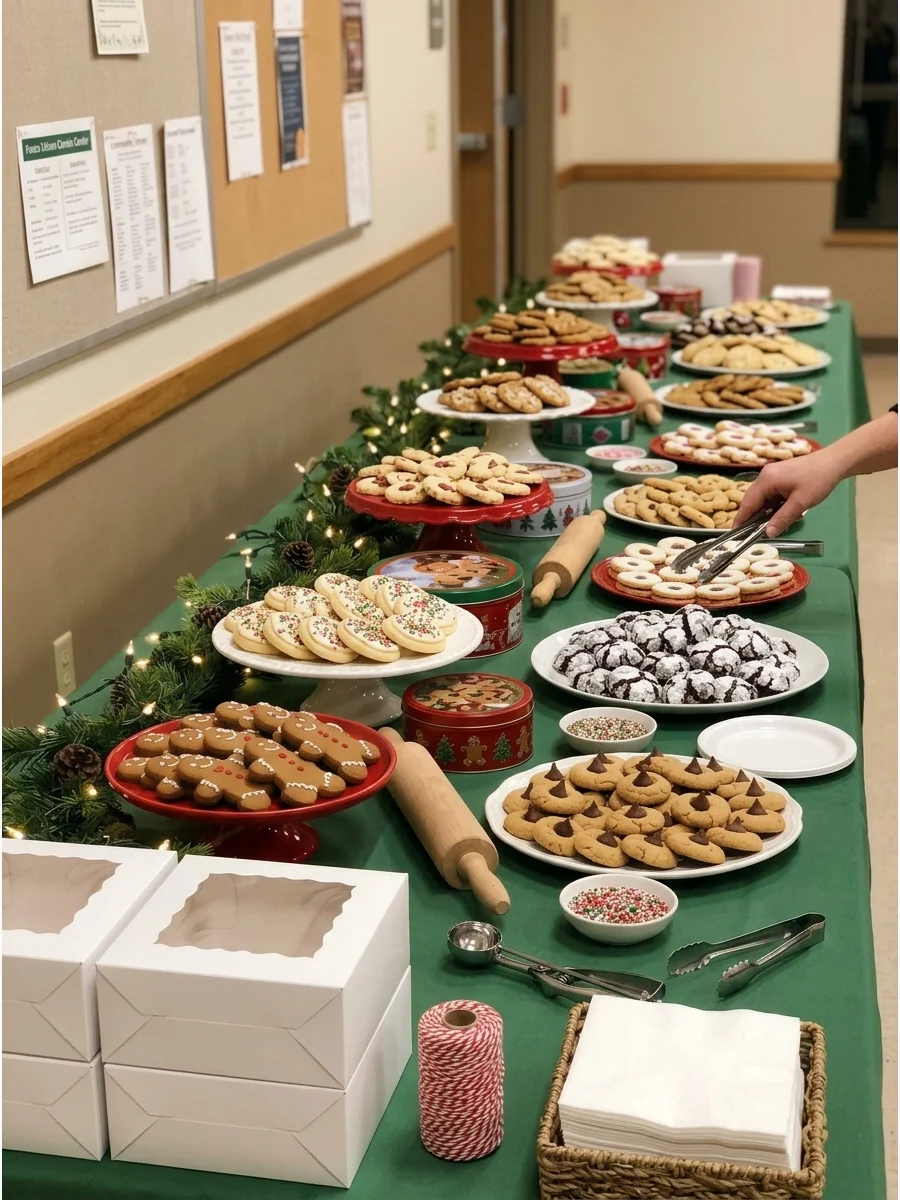
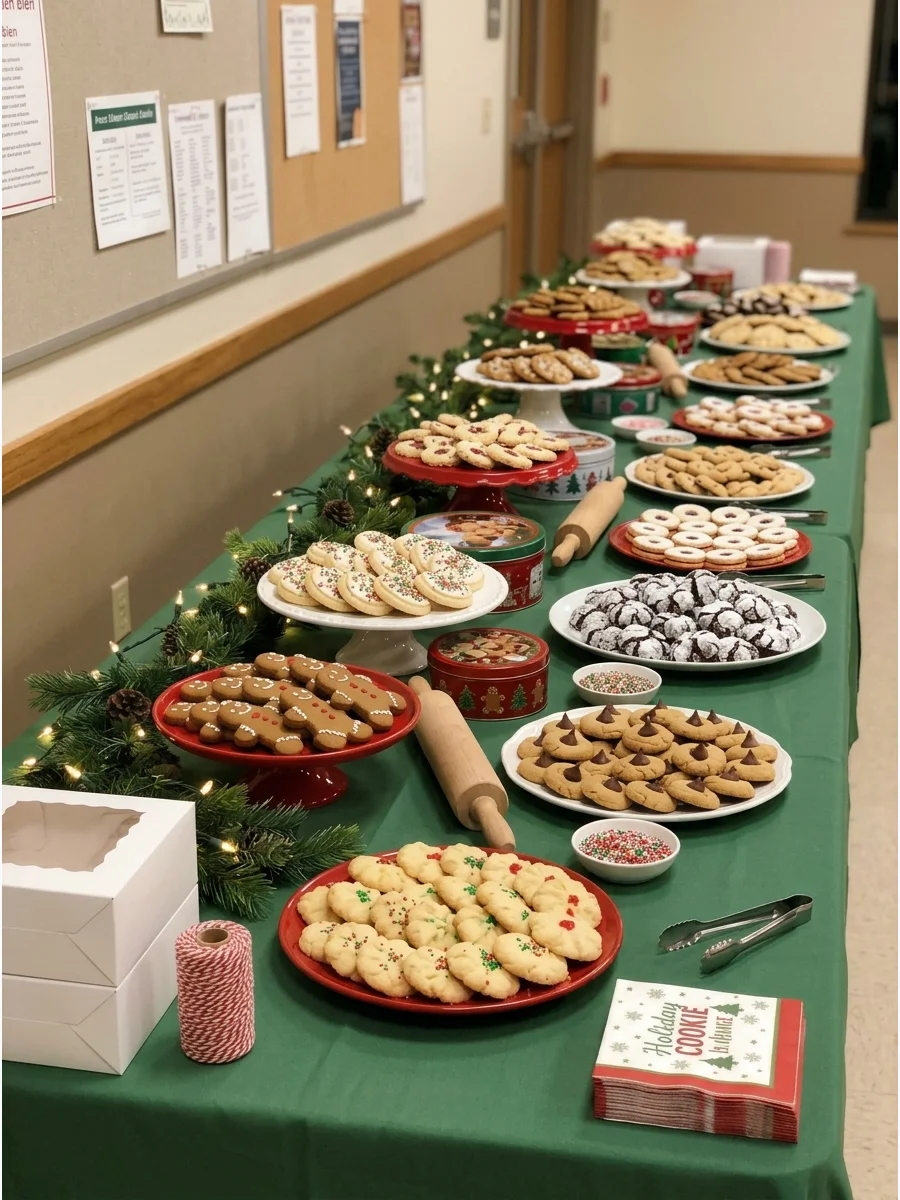
Dedicate one large table entirely to the cookies and arrange the platters so guests can walk along the display easily. Use Christmas linens, greenery, lights, and serving stands to make the cookie collection the visual centerpiece.
This layout prevents traffic jams. Guests move in one direction to fill their boxes.
Place empty boxes at the start of the line. Put napkins and tongs at the end.
22. Tiered Cookie Display
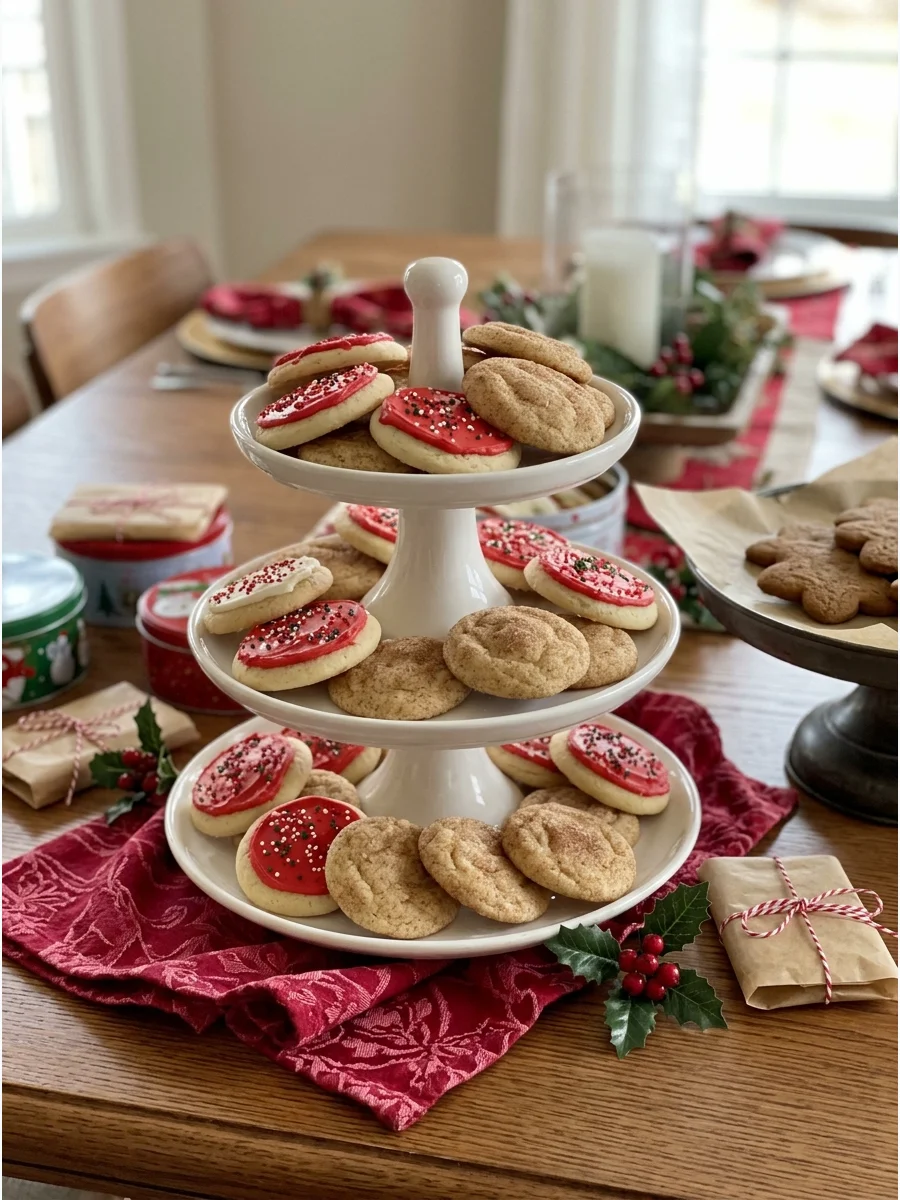
Use cake stands, tiered trays, and raised serving boards to place cookies at different heights. The layered arrangement helps dozens of similar-sized cookies look more organized and creates a stronger Pinterest-style party display.
Vertical displays save space on crowded tables. They make the cookie variety look more impressive.
Ensure stands are sturdy and balanced. Heavy gingerbread cookies should stay on lower levels.
23. Individual Cookie Name Cards
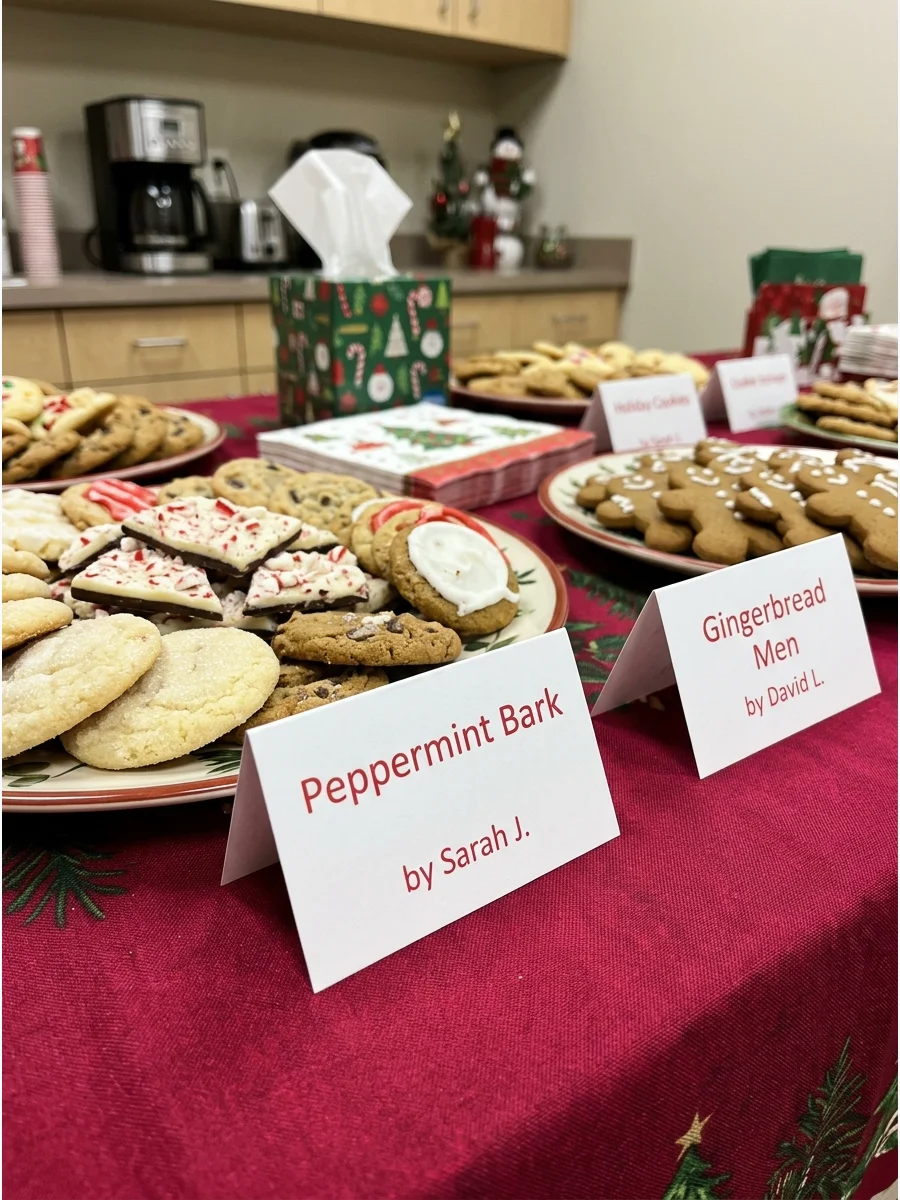
Place a small label in front of every cookie variety with the cookie name and baker’s name. This prevents confusion and makes it easier for guests to remember which recipe they enjoyed.
Guests can identify flavors quickly. It helps people with specific tastes find their favorites.
Use cardstock so the labels do not flop over. Place them directly in front of the corresponding platter.
24. Baker Spotlight Cards
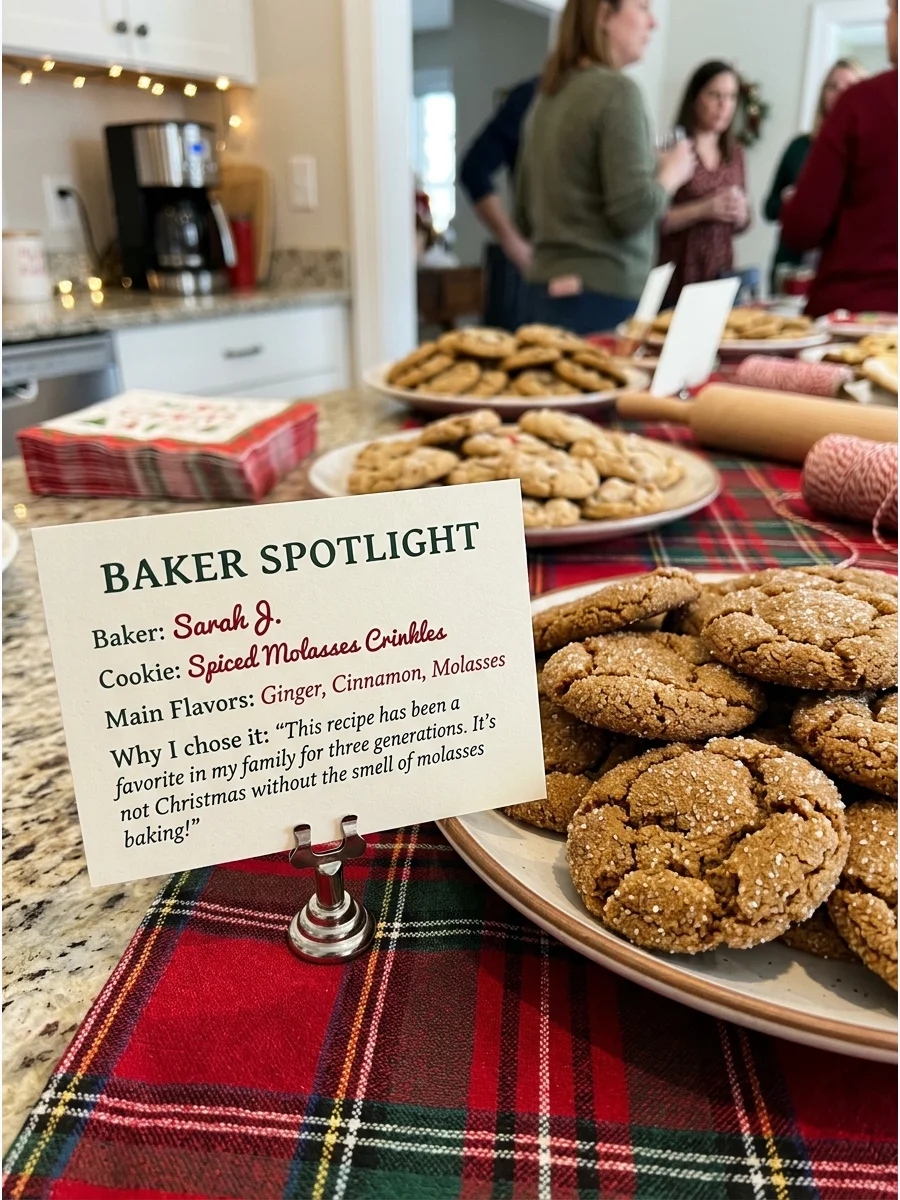
Create a small card for each cookie that includes the baker’s name, cookie name, main flavors, and a short sentence about why they chose the recipe. Display the cards beside each platter.
This adds a personal touch to the swap. It sparks conversation among guests who do not know each other.
Ask guests for these details before the party. Print the cards in advance for a uniform look.
25. Christmas Tree Cookie Display
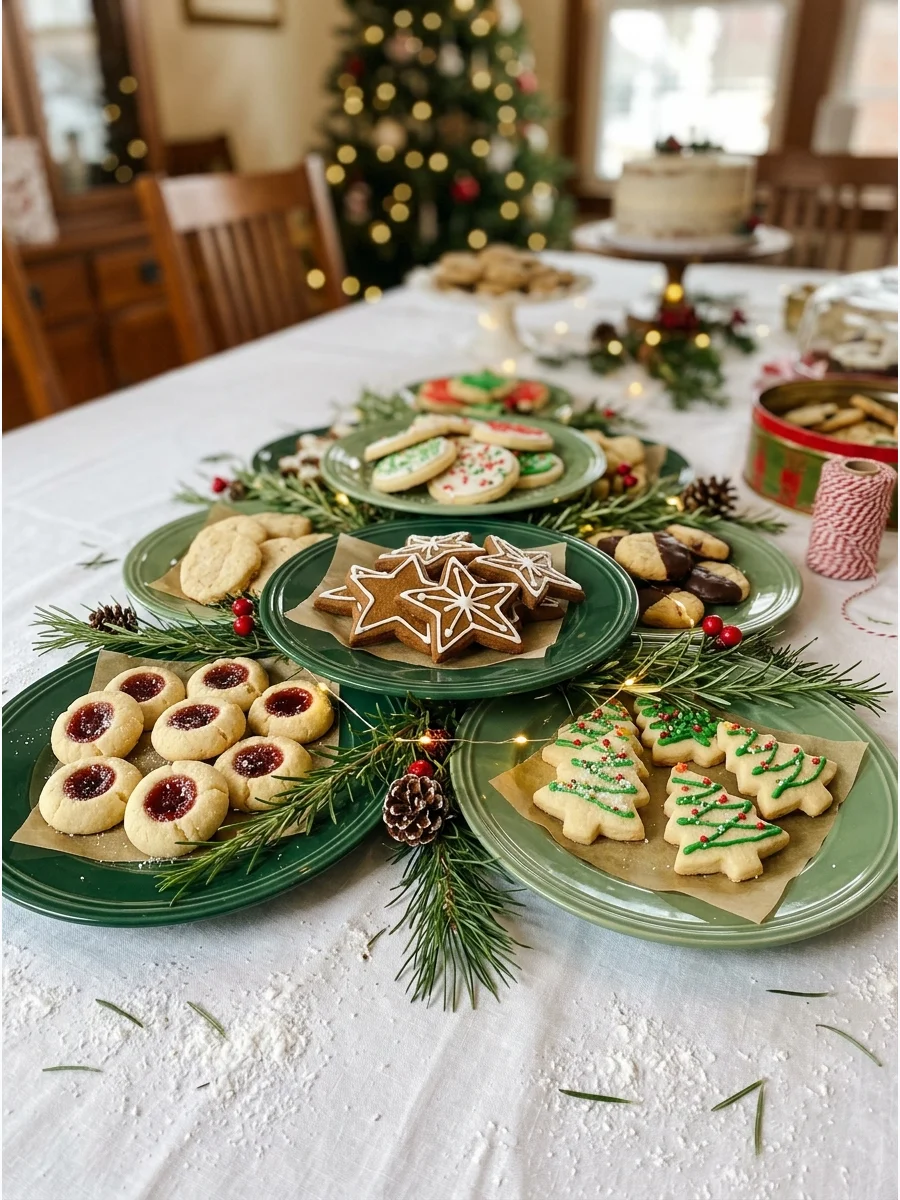
Arrange several cookie platters into the shape of a Christmas tree, using greenery or small decorations between them. Keep each cookie variety separated so guests can still identify what they are choosing.
The shape creates a festive focal point. It organizes the cookies into a recognizable holiday symbol.
Use different shades of green plates for depth. Fill gaps with sprigs of fresh rosemary.
26. Cookie Table With Glass Cake Stands
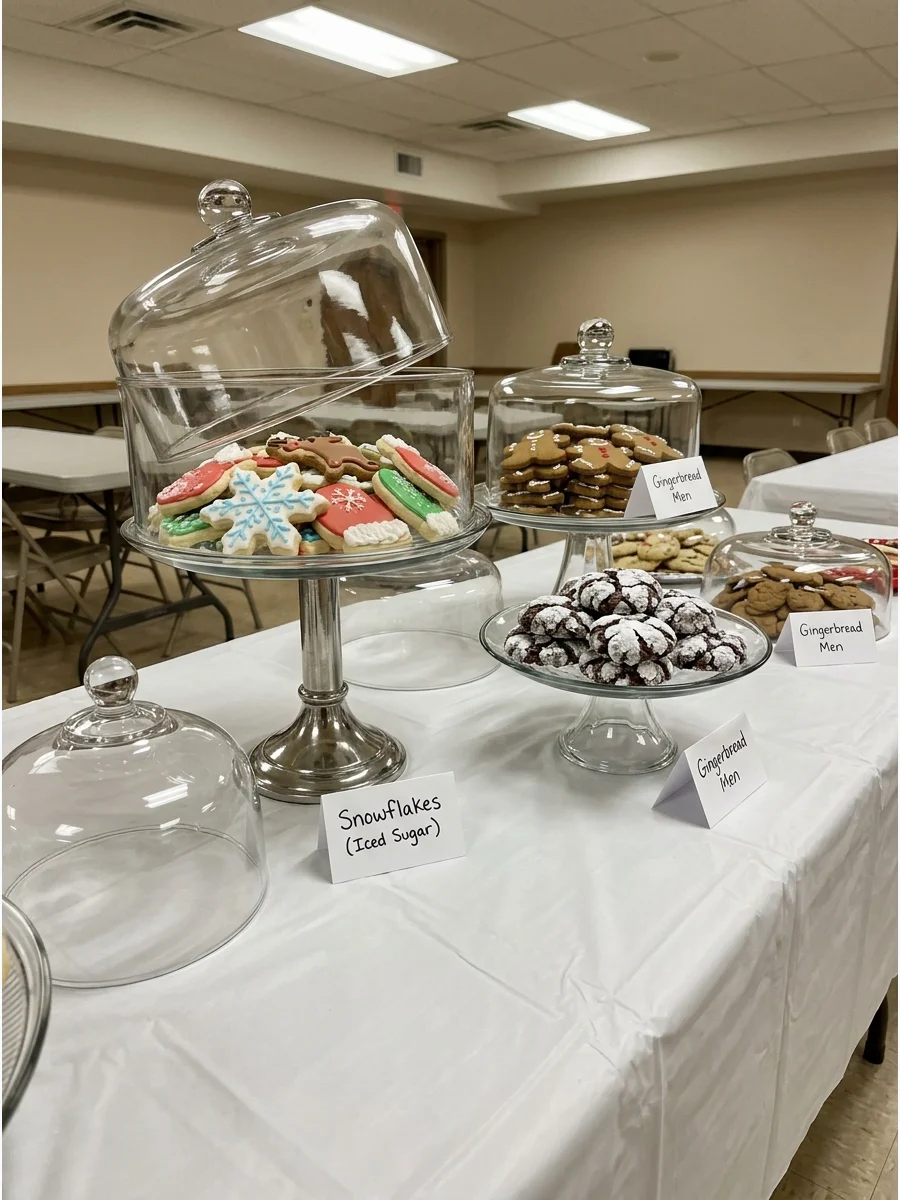
Display cookies on clear glass stands and under cake domes for a more elegant Christmas exchange. Mix different stand heights while keeping labels visible beside every cookie.
Glass domes keep cookies fresh during the party. The clear material shows off intricate icing details.
Leave the lids off during the actual swap. Replace them once guests finish picking their cookies.
27. Rustic Cookie Exchange Table
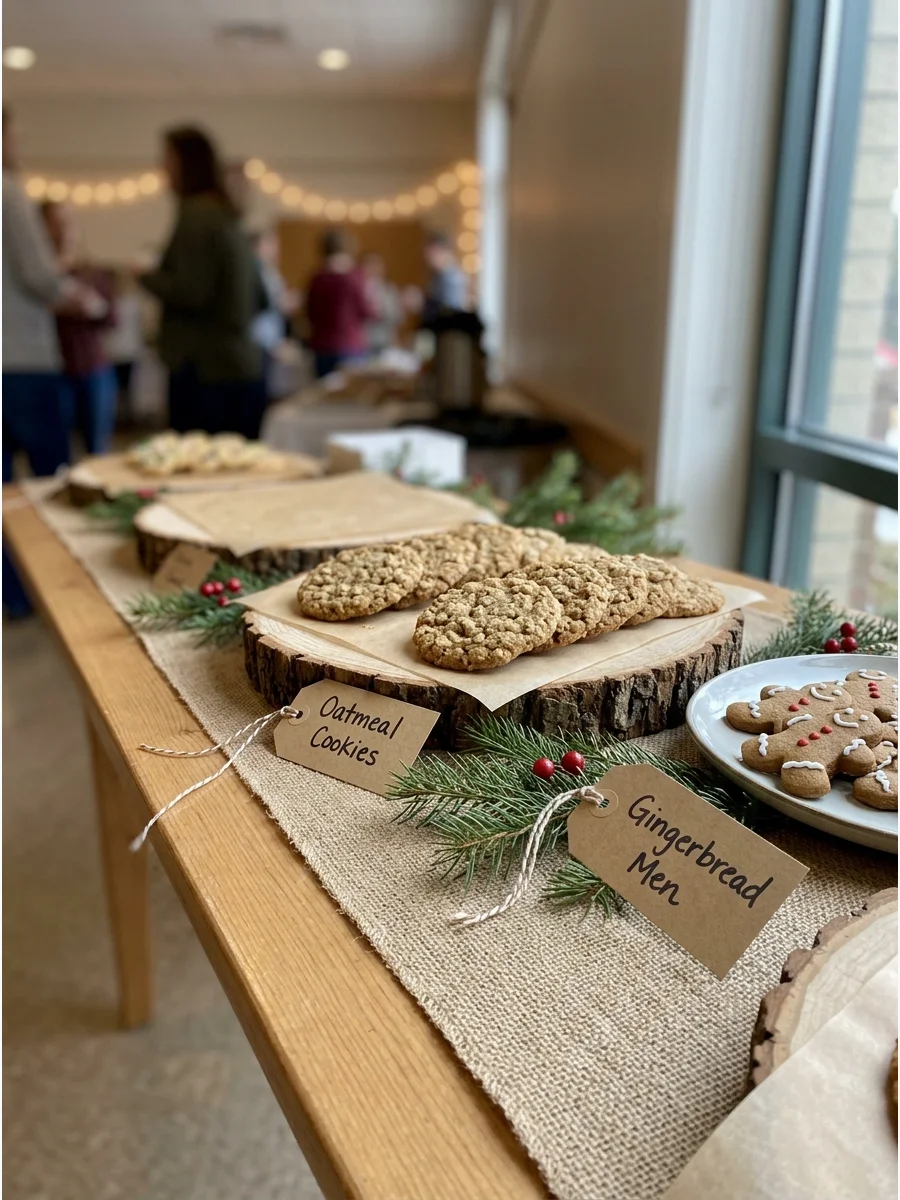
Use wooden boards, parchment paper, kraft labels, pine greenery, and simple ceramic platters. Keep the food presentation clean and organized so the rustic details enhance rather than overpower the cookies.
The neutral tones make the cookie colors pop. It feels warm and homey for a winter gathering.
Line wooden boards with parchment paper. This prevents butter stains on the wood.
28. Red and White Cookie Exchange Table
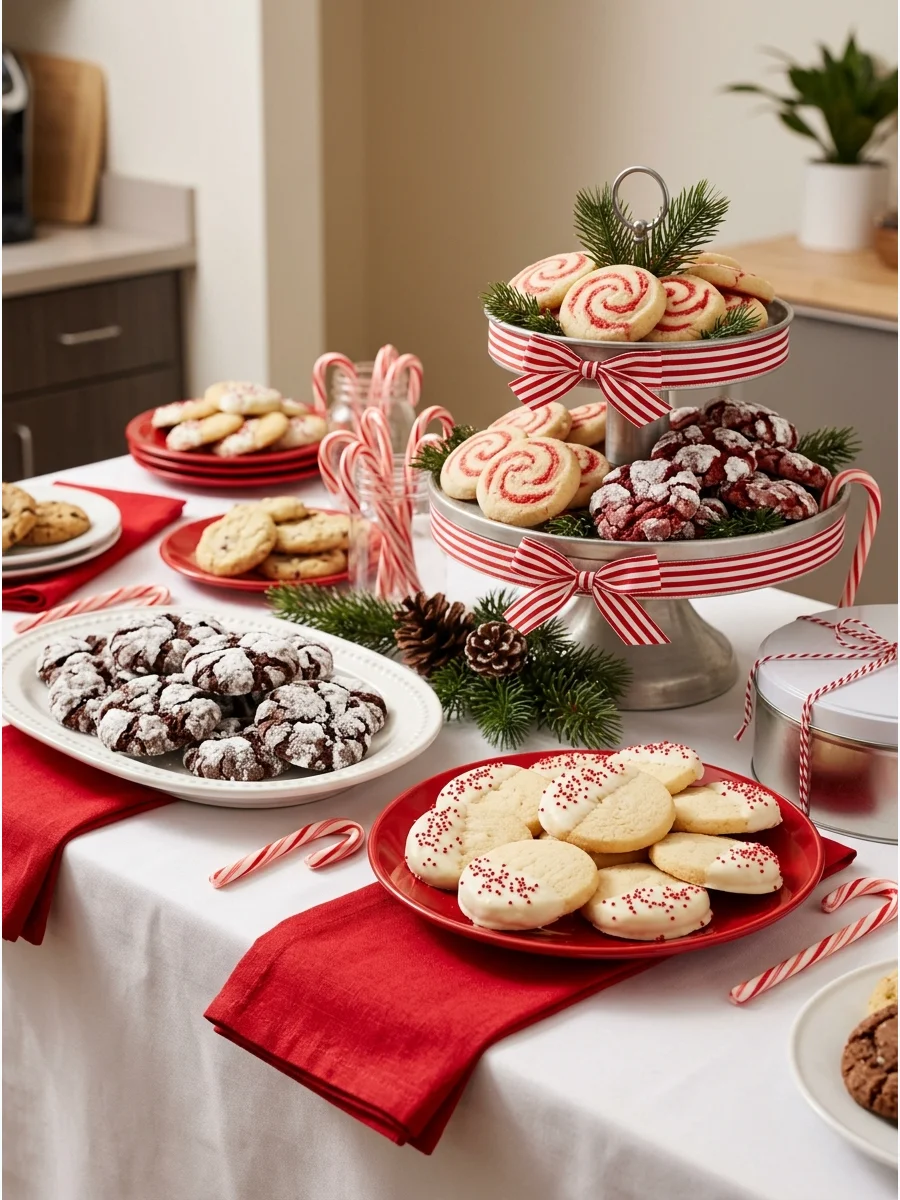
Build the entire dessert display around red and white Christmas colors with striped ribbons, candy canes, white platters, red napkins, and small evergreen accents. Let the different cookie colors add extra variety.
A limited color palette looks professional and clean. It ties different cookie styles together visually.
Use white ceramic plates for dark cookies. Use red plates for light cookies like shortbread.
29. Vintage Christmas Cookie Table
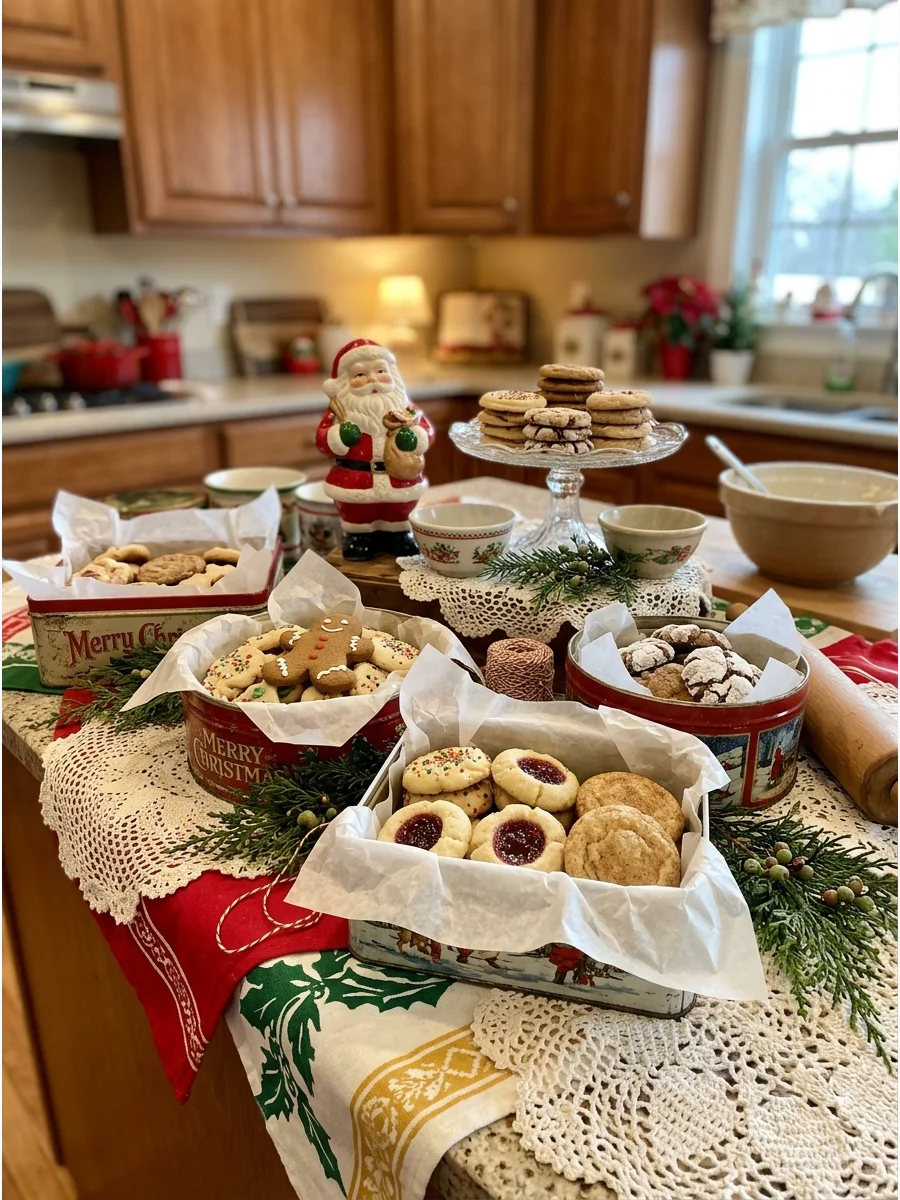
Use vintage-style Santa decorations, retro Christmas linens, old-fashioned tins, glass cake stands, and nostalgic serving pieces. Display traditional cookies to reinforce the old-fashioned holiday-baking atmosphere.
It creates a nostalgic atmosphere. The varied tins add height and visual interest.
Check that vintage tins are food-safe. Line them with wax paper before adding cookies.
30. Minimal Elegant Cookie Display
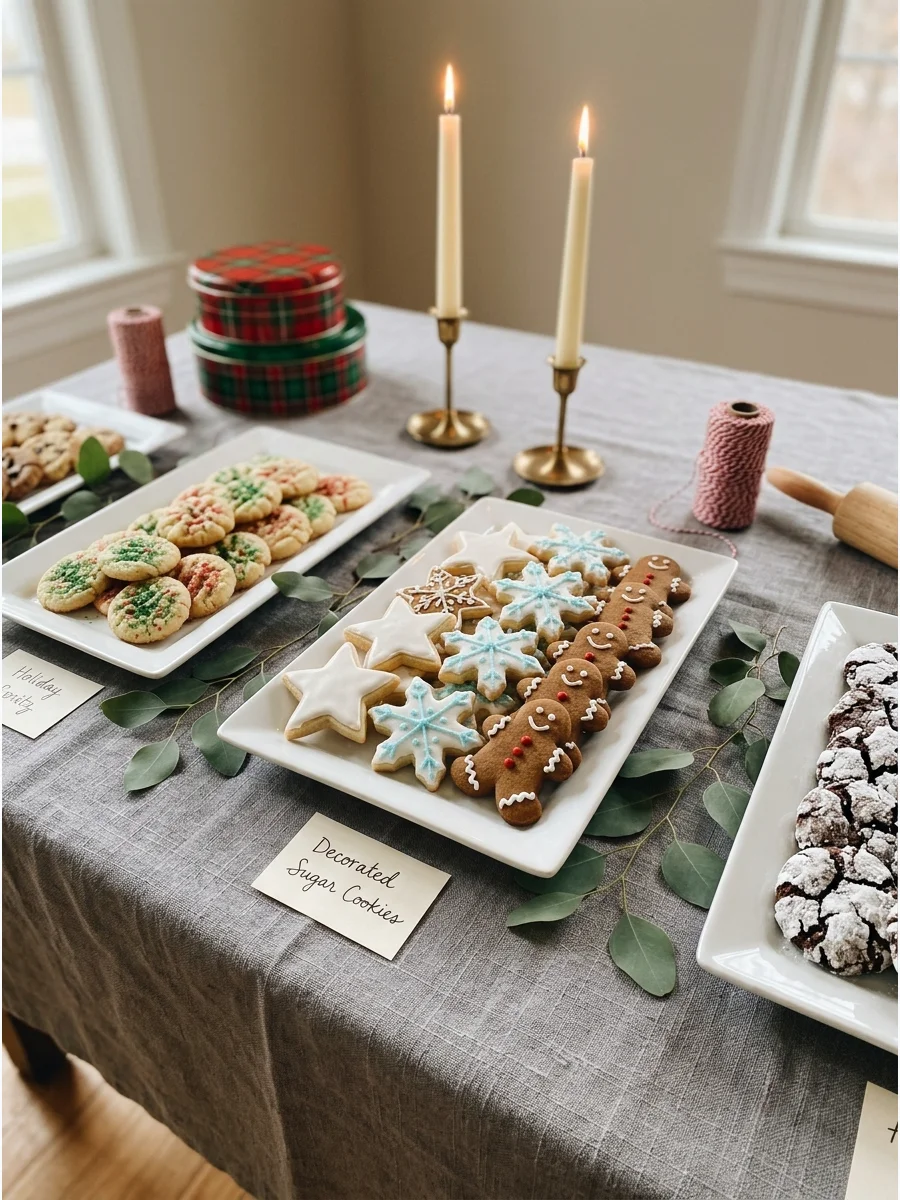
Use neutral linens, white serving platters, simple greenery, taper candles, and small handwritten labels. This understated setup lets colorful and decorated Christmas cookies become the main visual focus.
The focus stays entirely on the cookies. It looks modern and sophisticated in any room.
Space the platters evenly across the table. Use a single type of greenery like eucalyptus.
Cookie Packaging and Take-Home Ideas
31. Build-Your-Own Cookie Box Station
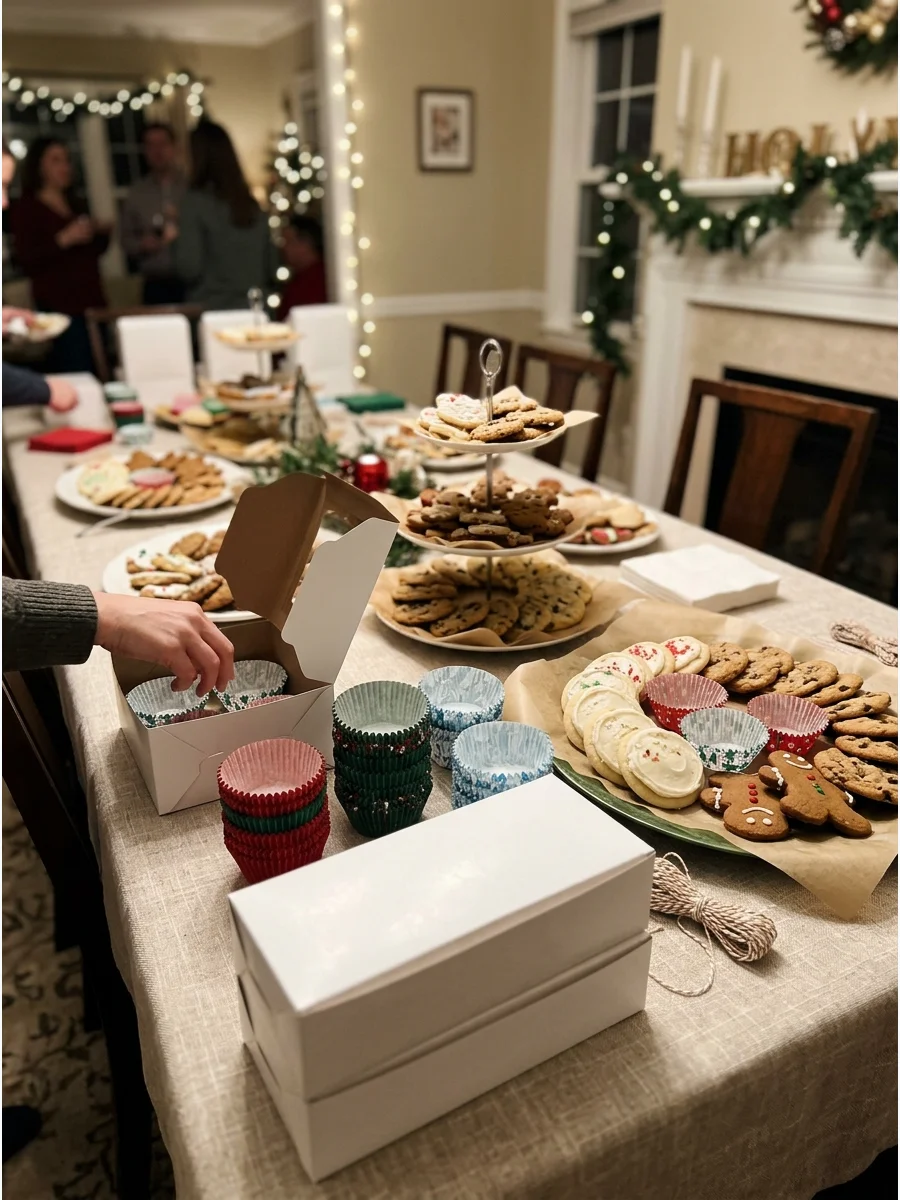
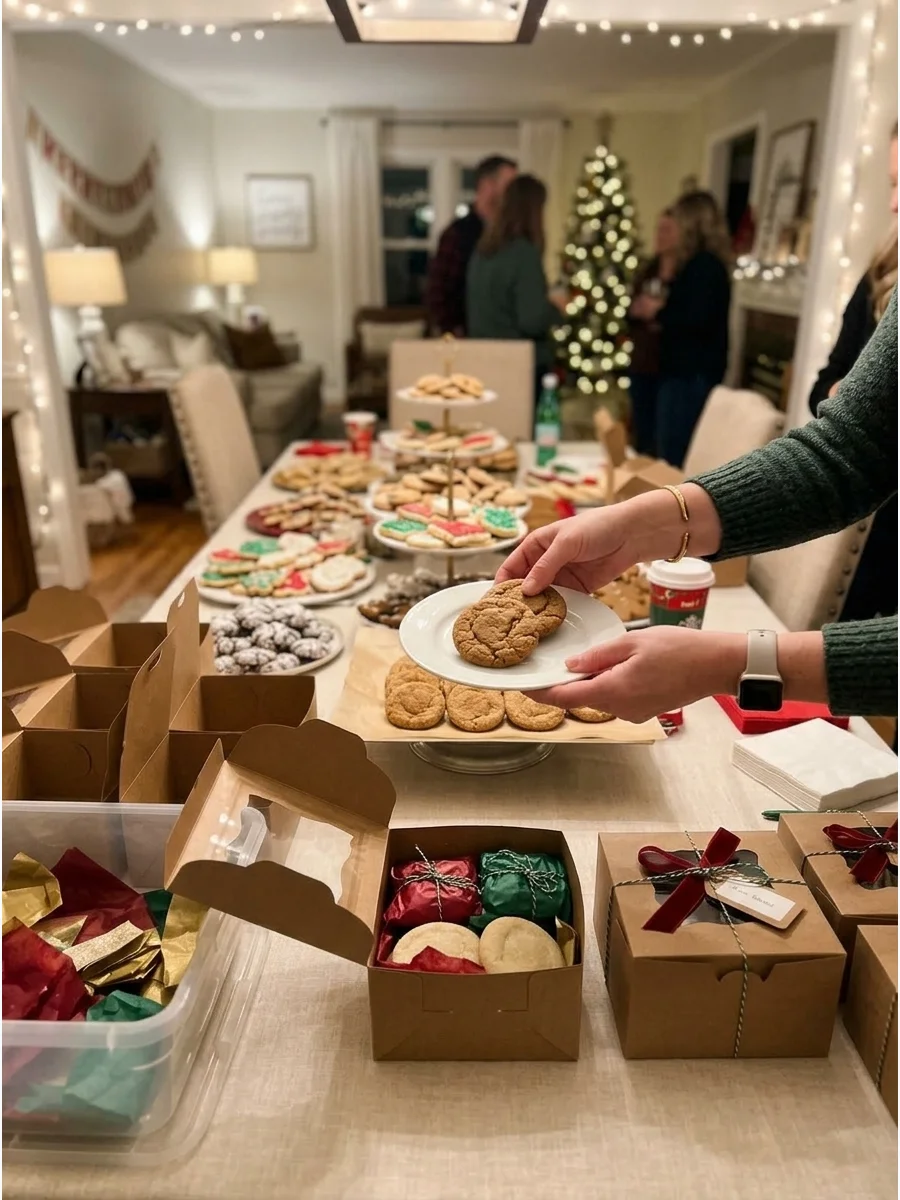
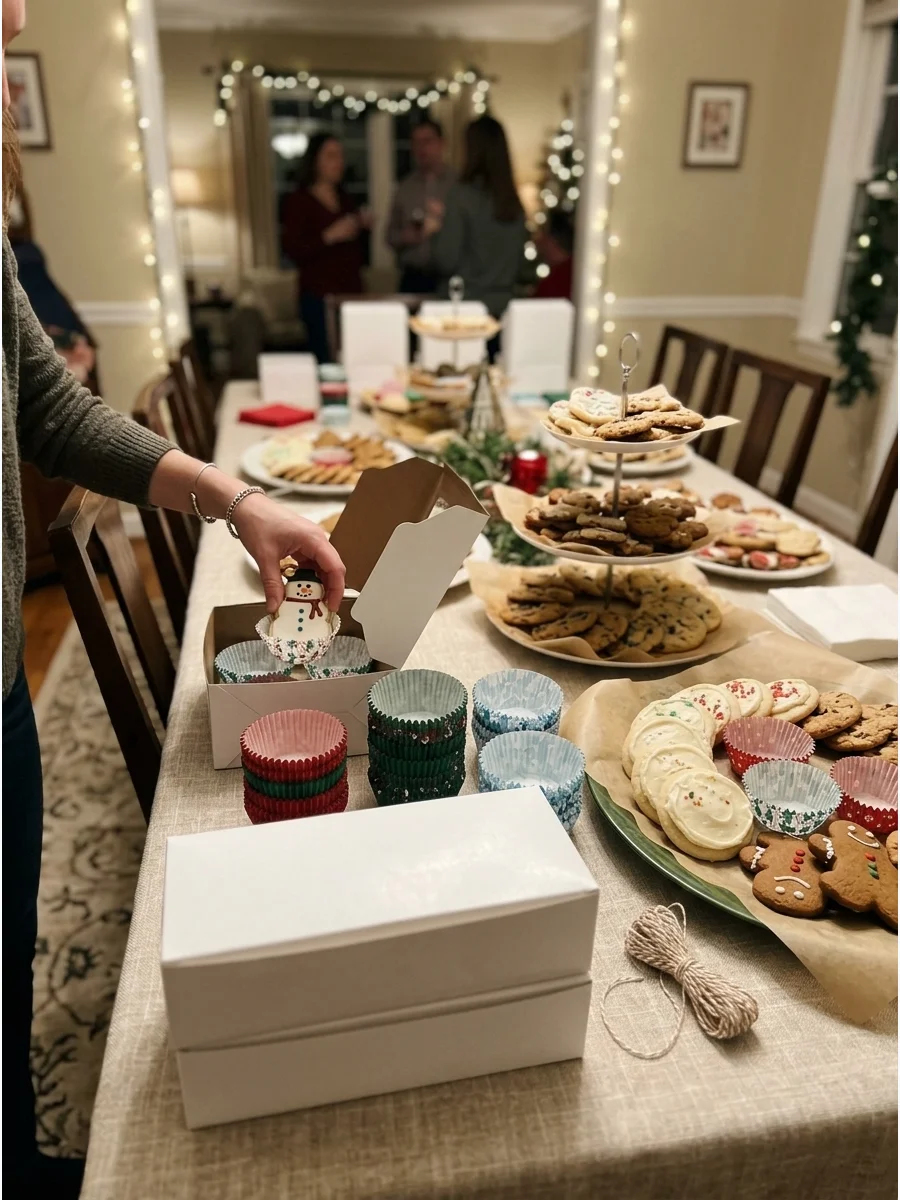
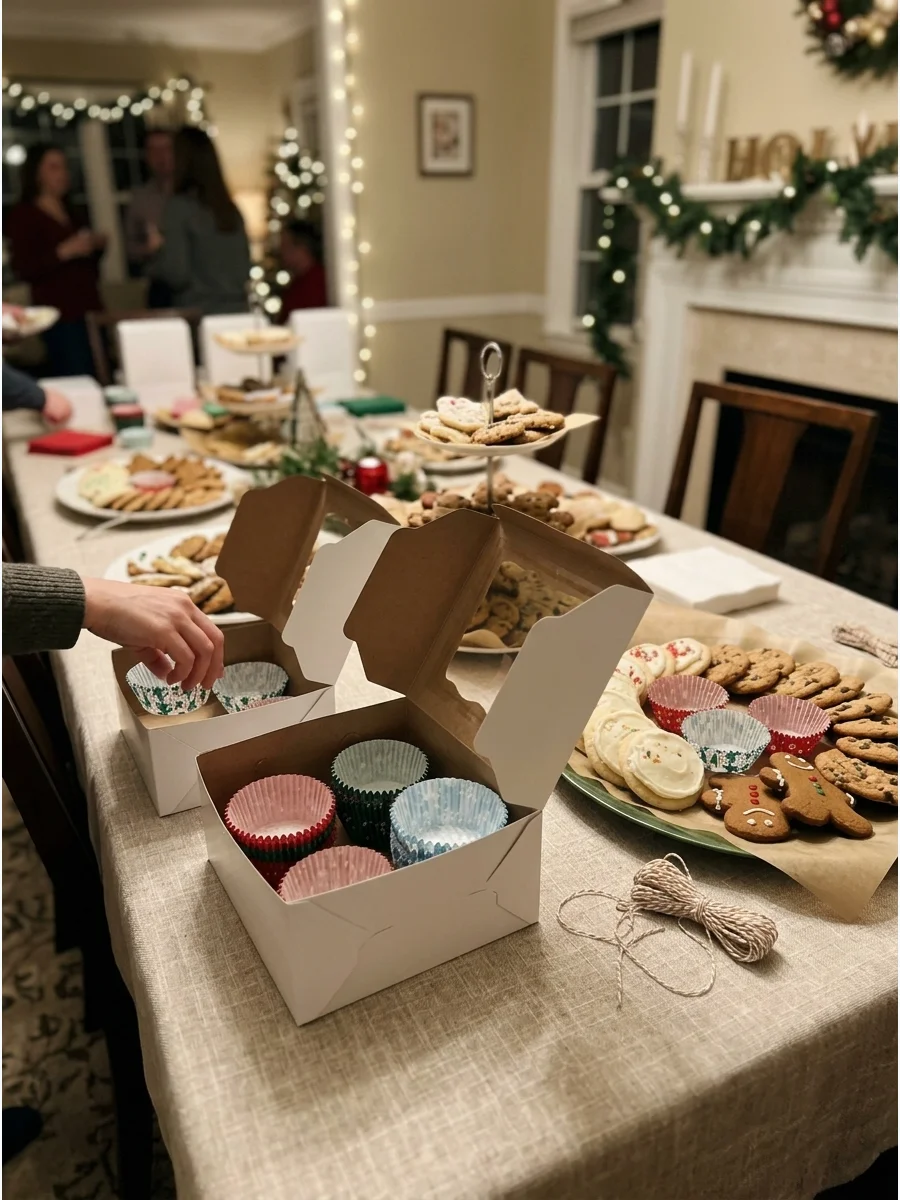
Provide empty bakery boxes and let guests select their favorite cookies from the exchange table. Include liners or cupcake papers inside the boxes to help separate different flavors and protect decorated cookies.
This lets guests pick exactly which cookies they want. It keeps the process orderly and prevents broken cookies.
Place the station at the end of the buffet line. Use cupcake liners to keep different flavors from touching.
32. Christmas Cookie Tin Take-Home Station
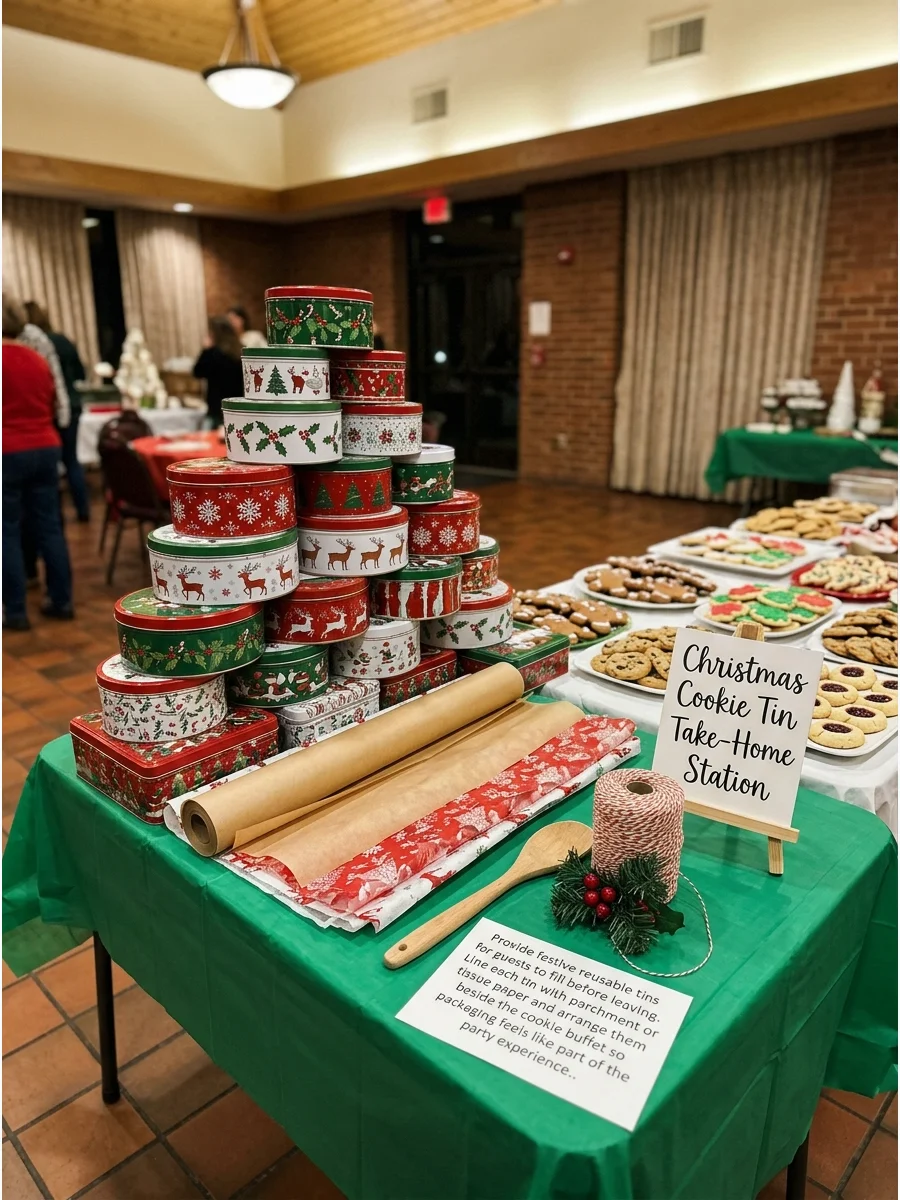
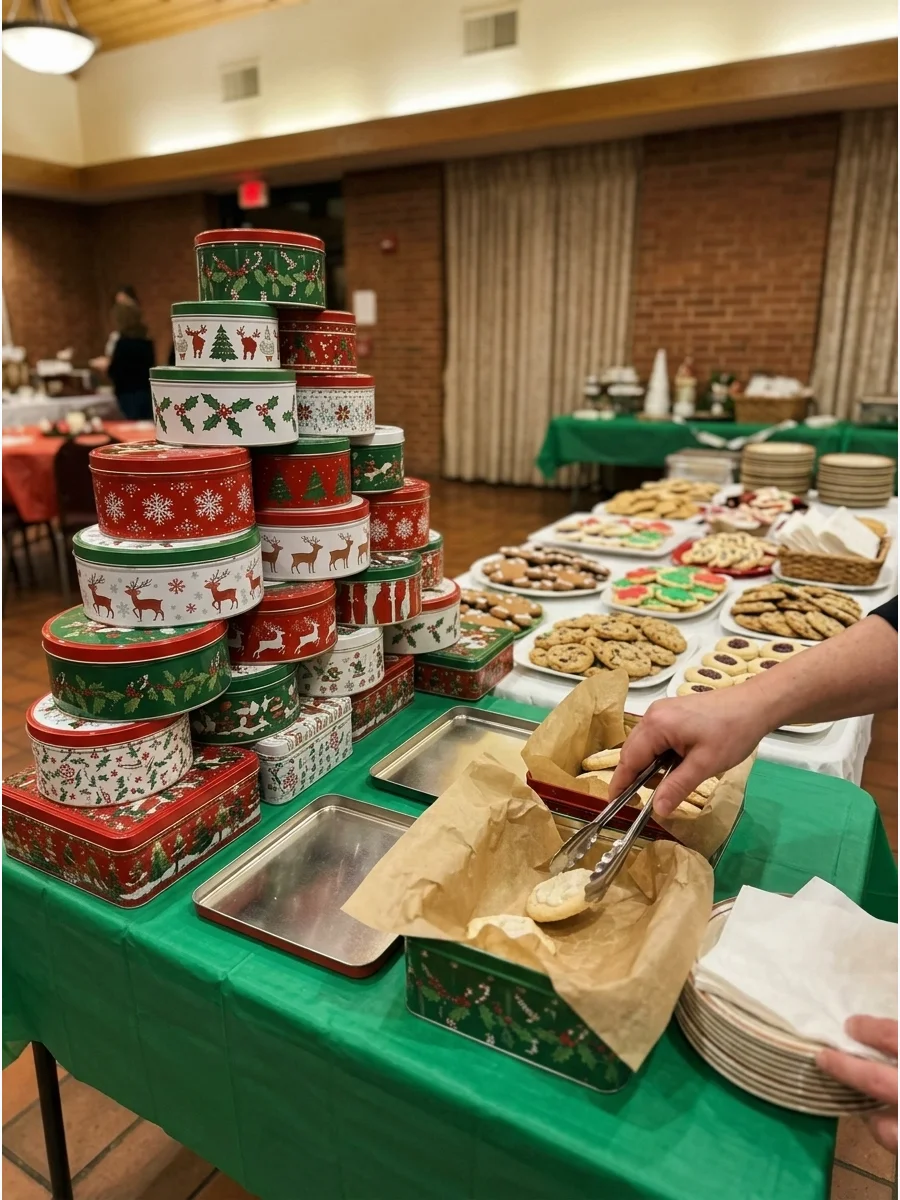
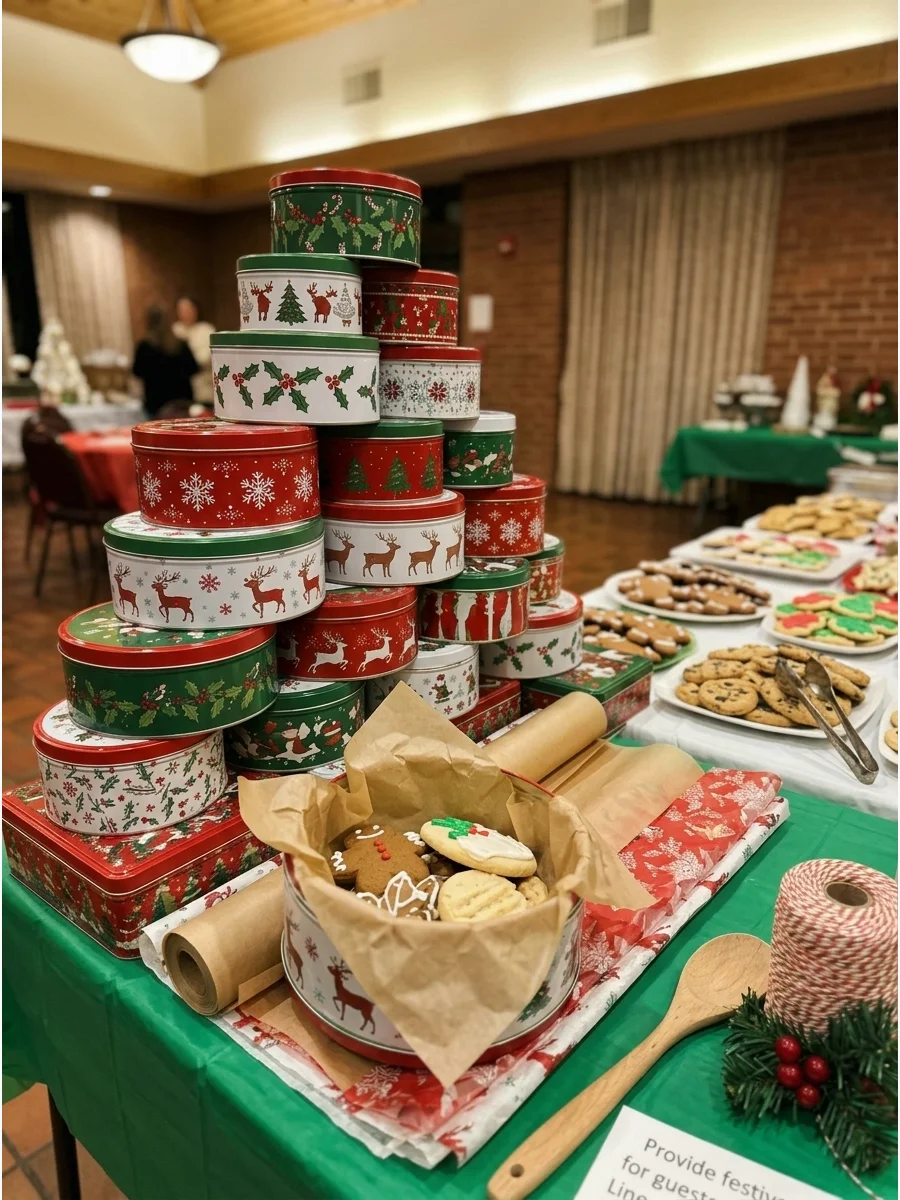
Provide festive reusable tins for guests to fill before leaving. Line each tin with parchment or tissue paper and arrange them beside the cookie buffet so packaging feels like part of the party experience.
Metal tins are sturdy and protect cookies during the drive home. They also keep the treats fresh for a longer time.
Stack the tins in a pyramid shape to save space. Buy tins in bulk at craft stores to save money.
33. Kraft Bakery Box Cookie Favors
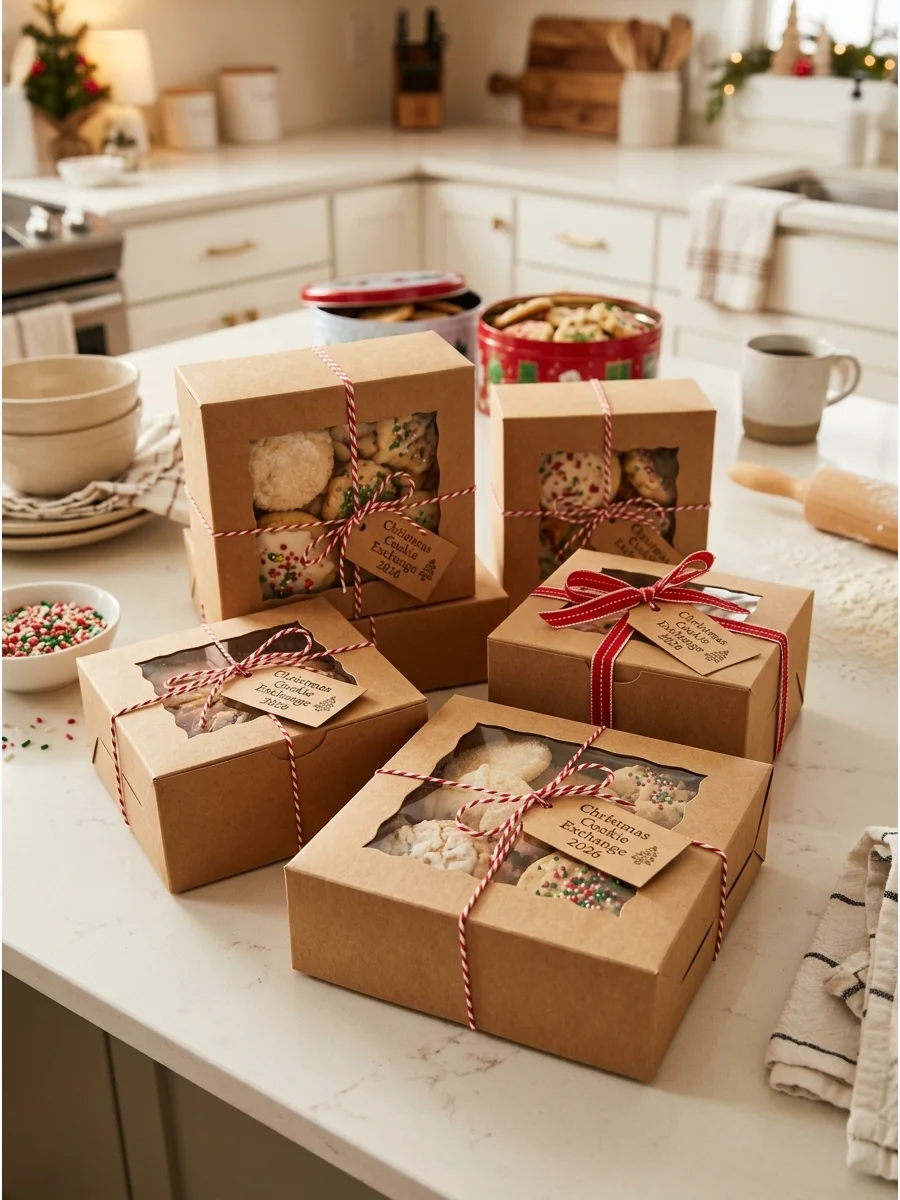
Use simple kraft bakery boxes tied with Christmas ribbon or twine. Add a small tag such as Christmas Cookie Exchange 2026 so each guest leaves with a gift-like package.
These boxes are affordable and easy to recycle. The neutral color makes the bright holiday cookies stand out.
Use grease-proof liners inside the boxes. This prevents oil spots from showing on the brown cardboard.
34. Clear Window Cookie Boxes
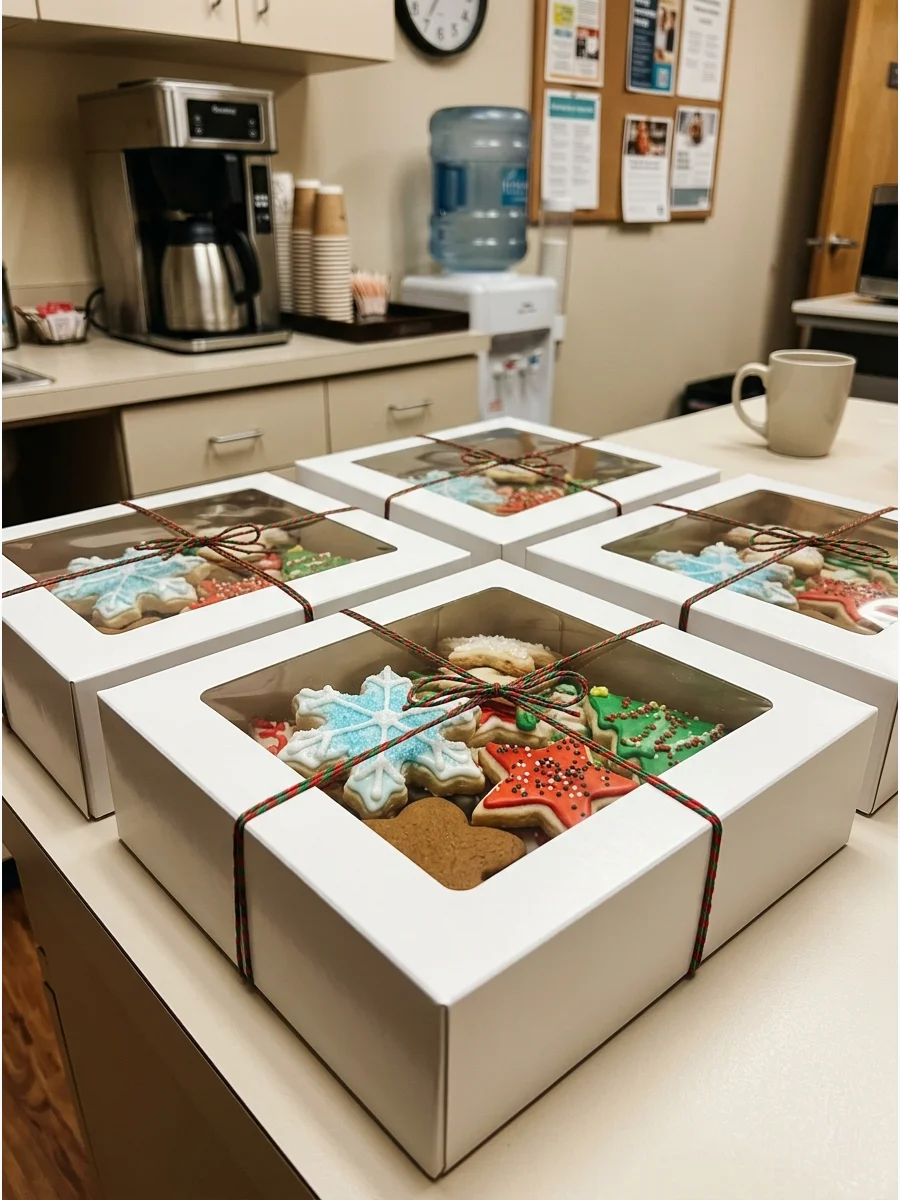
Choose bakery boxes with transparent windows so guests can see the assortment they collected. Colorful Christmas cookies become part of the packaging without requiring much additional decoration.
Guests can see the beautiful assortment they collected immediately. It reduces the need for extra ribbons or decorations.
Avoid overfilling the boxes. This keeps the window clear and prevents frosting from smudging.
35. Cookie Box Divider Station
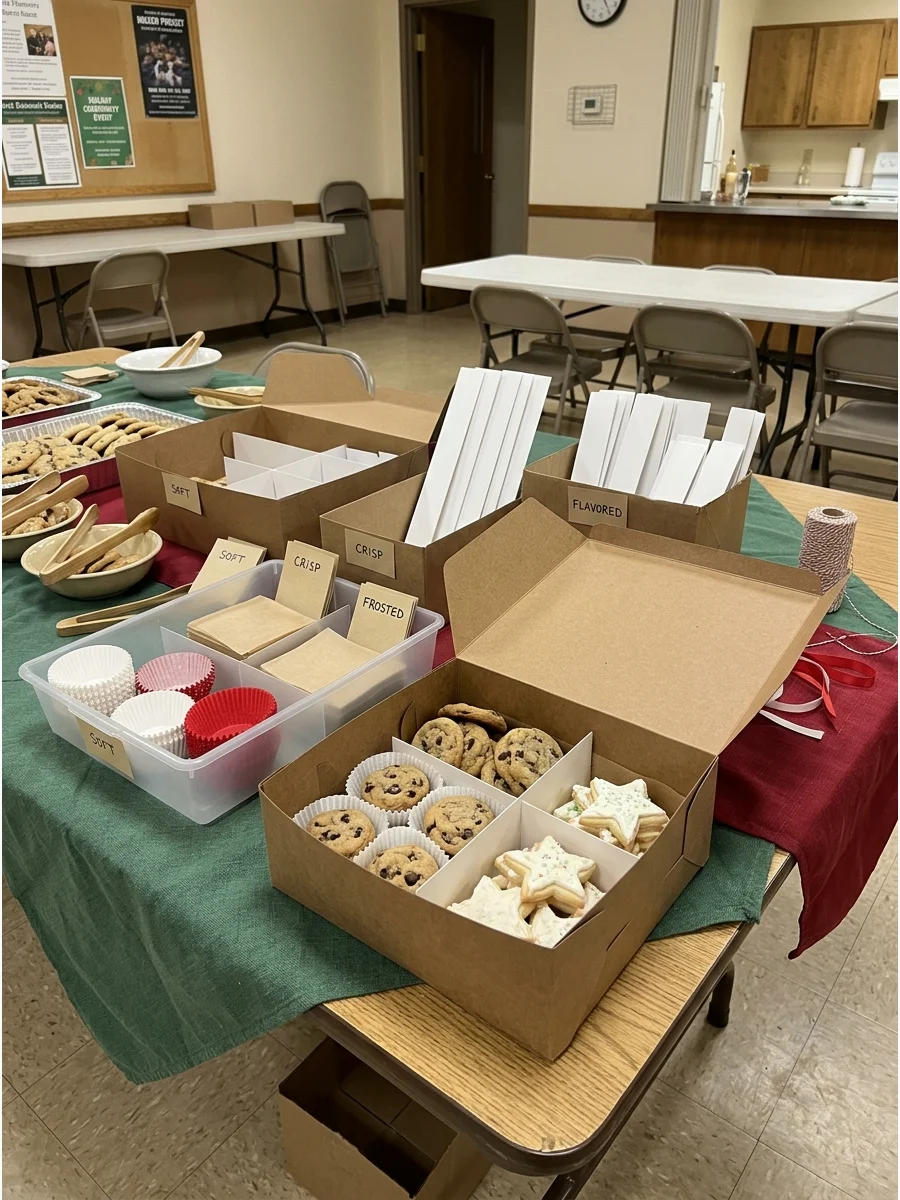
Provide cupcake liners, parchment squares, and small paper dividers so guests can separate soft, crisp, frosted, and strongly flavored cookies inside their take-home boxes.
Dividers keep peppermint or spice flavors from mixing with others. They also protect delicate cookies from being crushed.
Show a sample box with dividers already in place. This helps guests see how to organize their own box.
36. Personalized Cookie Boxes
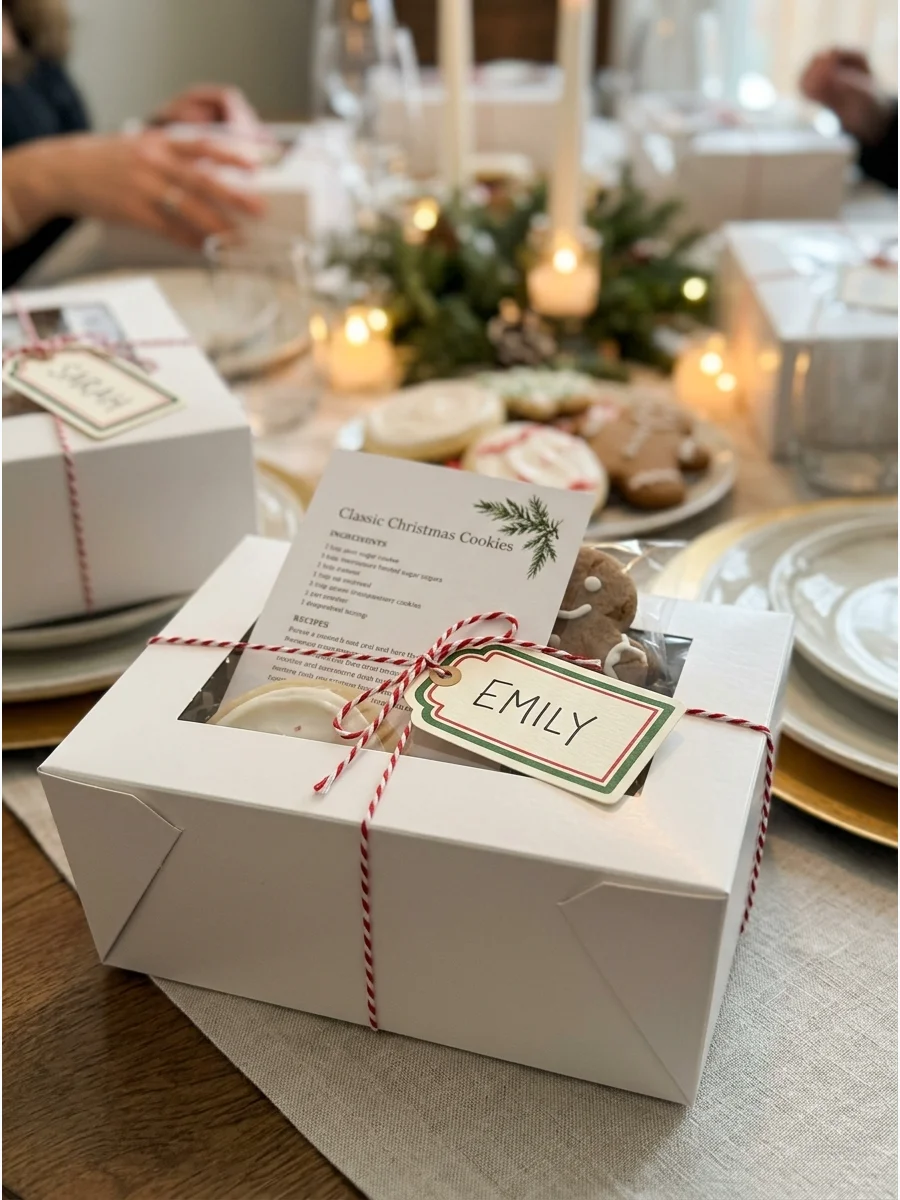
Prepare a take-home container labeled with each guest’s name. This adds a thoughtful personal detail and ensures everyone has suitable packaging ready when the exchange begins.
Personalized boxes make guests feel special and welcome. It also ensures no one takes the wrong box home.
Set the labeled boxes at each person’s seat. Include a copy of the recipe cards inside the box.
37. Christmas Cookie Bags for Small Exchanges
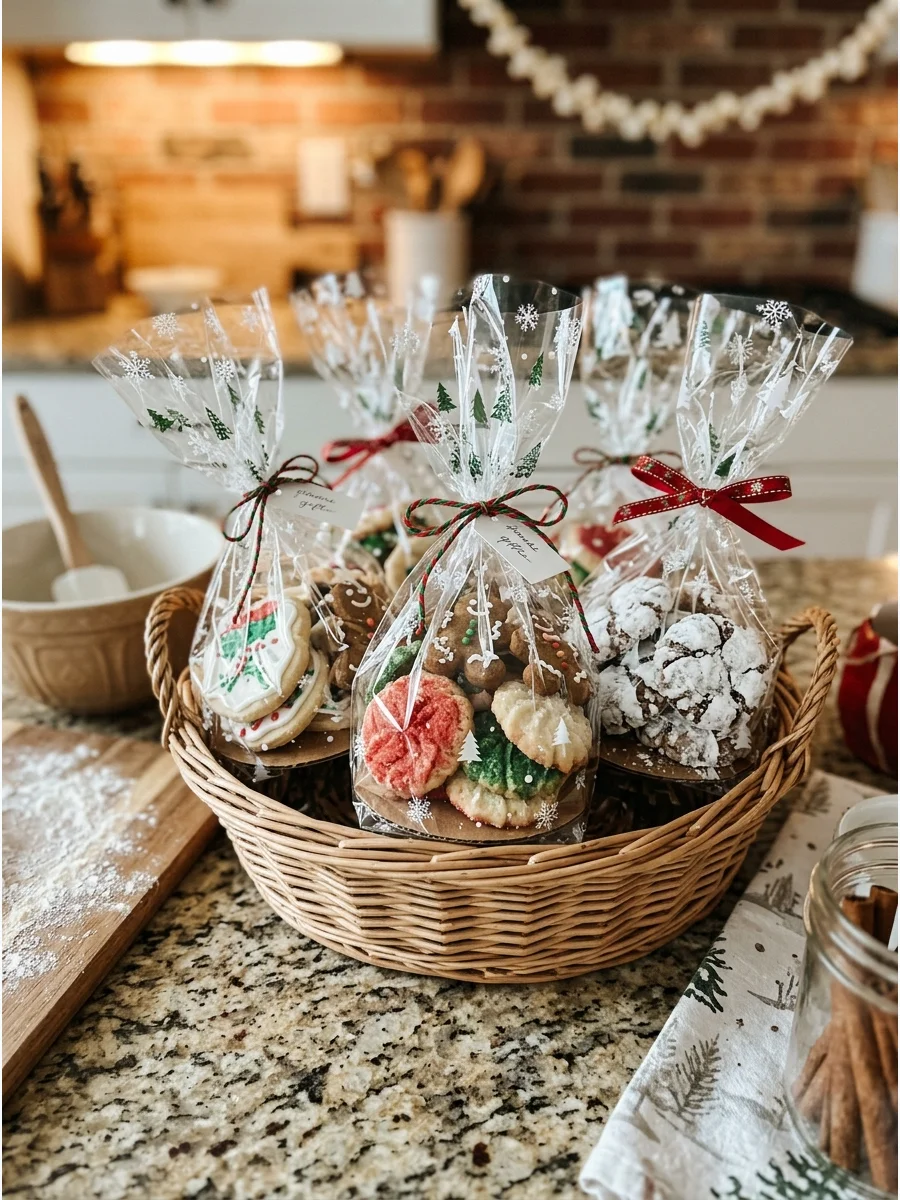
For a smaller casual party, provide patterned cellophane or paper treat bags instead of large boxes. Guests can fill several bags with different cookie varieties and tie them with ribbon.
Bags are perfect for smaller groups with fewer cookie varieties. They take up very little space on a display table.
Place a stiff cardboard circle at the bottom of the bag. This keeps the cookies flat and prevents them from breaking.
38. Cookie Packaging Decorating Station
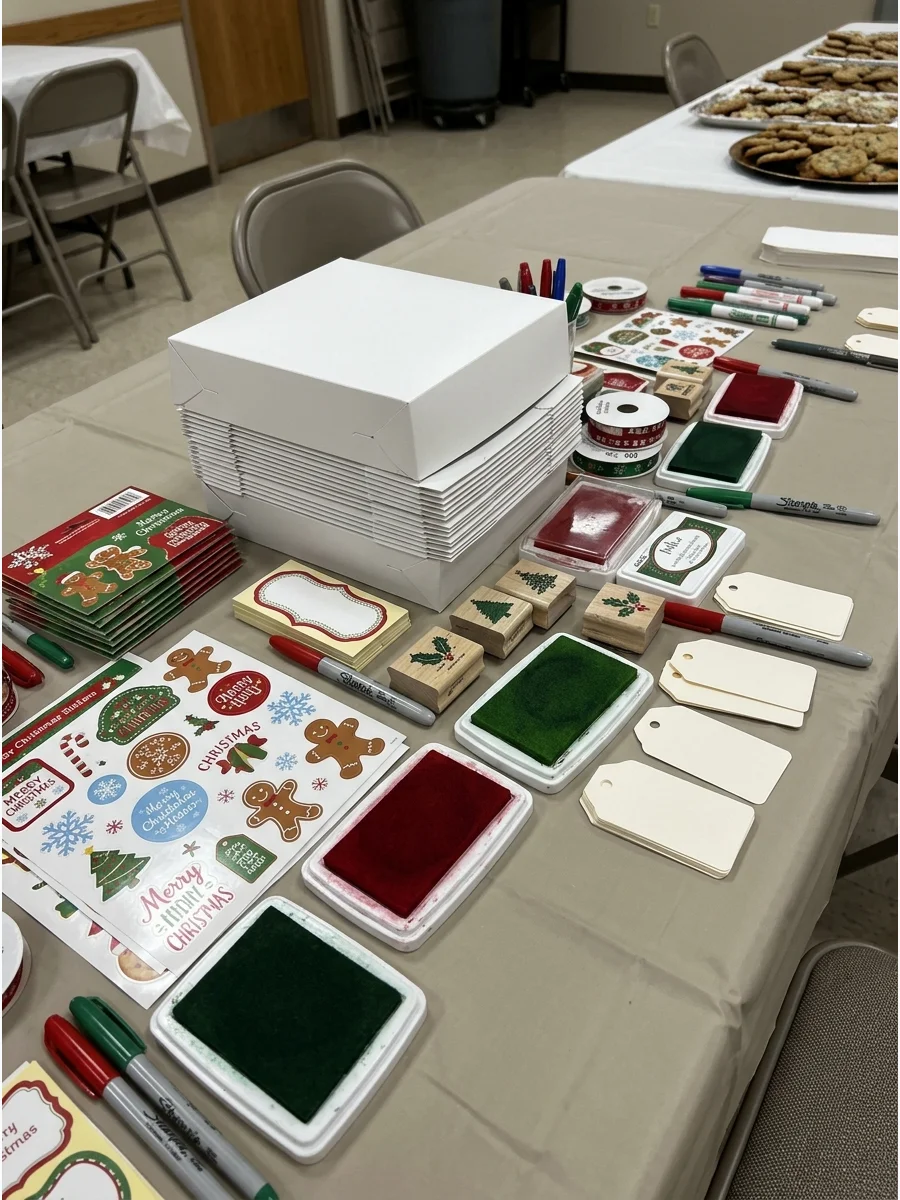
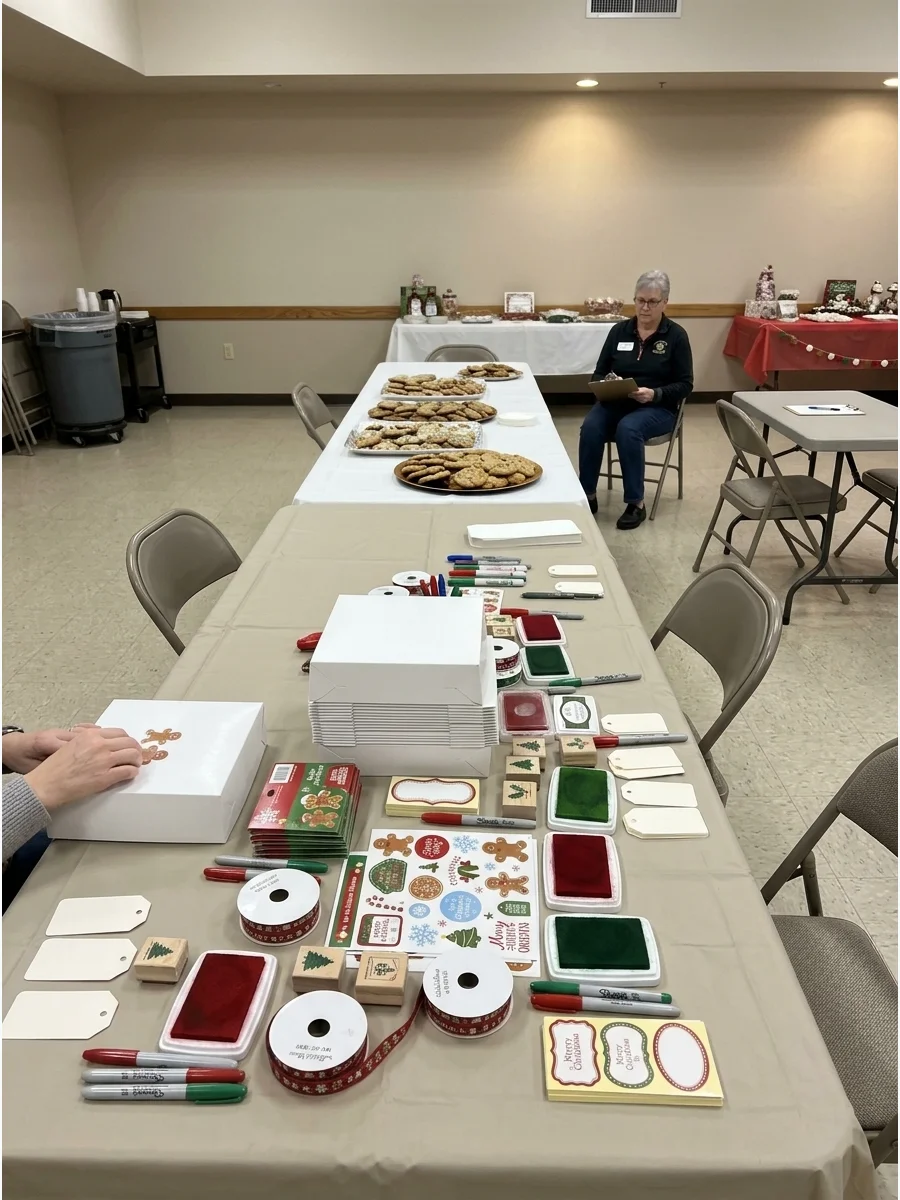
Provide plain boxes plus Christmas stickers, ribbon, stamps, markers, labels, and gift tags. Guests can decorate their own box before filling it with exchanged cookies.
This activity keeps guests engaged while they wait to swap cookies. It adds a handmade touch to the party favors.
Use quick-drying ink to prevent smudges on the boxes. Provide plenty of table space for the craft supplies.
39. Cookie Gift Box for Someone at Home
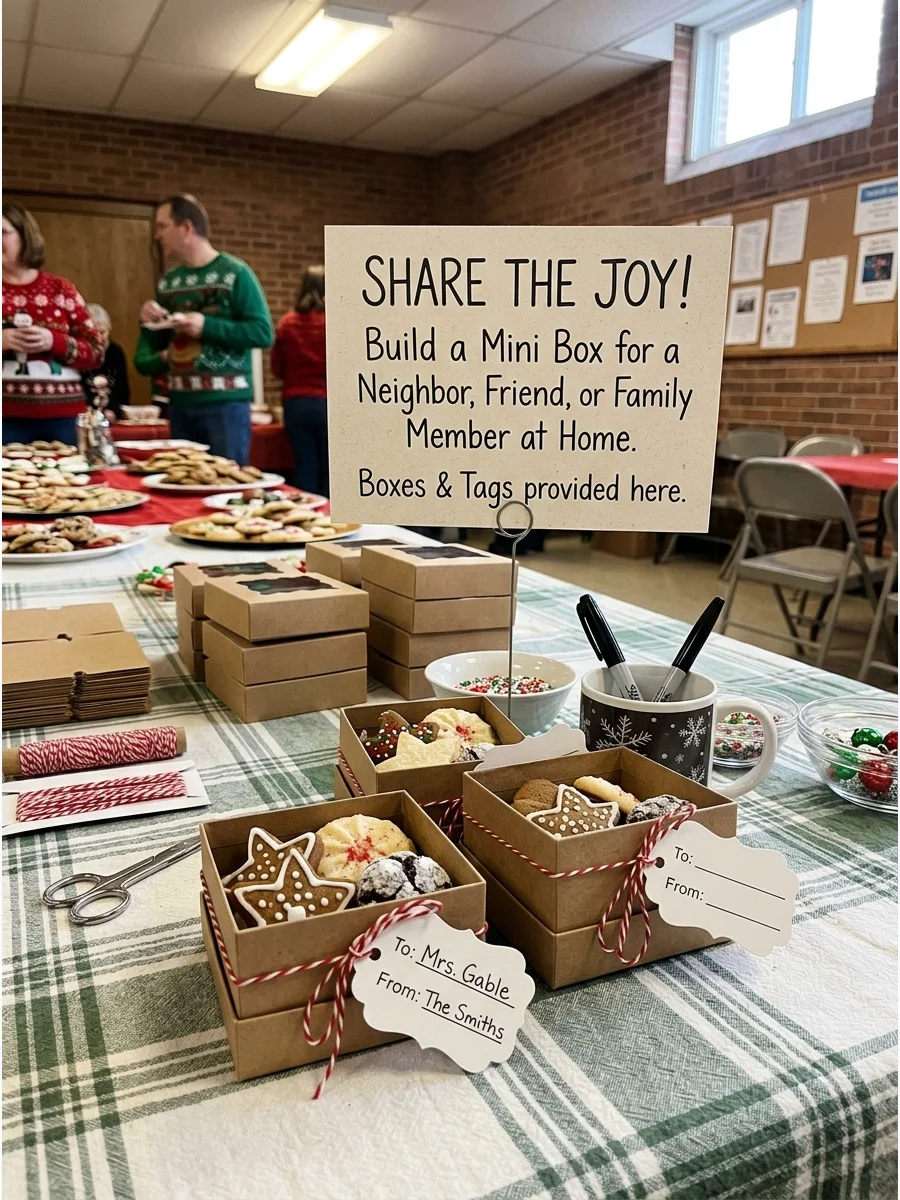
Give each guest one additional small box specifically for a partner, child, neighbor, or family member who could not attend. Guests can build a second mini assortment to share.
This spreads the holiday spirit to people who could not attend. It encourages guests to share the variety of treats.
Include a small ‘To and From’ tag on the second box. Keep these boxes separate from the main packaging station.
40. Freeze-for-Later Cookie Packs
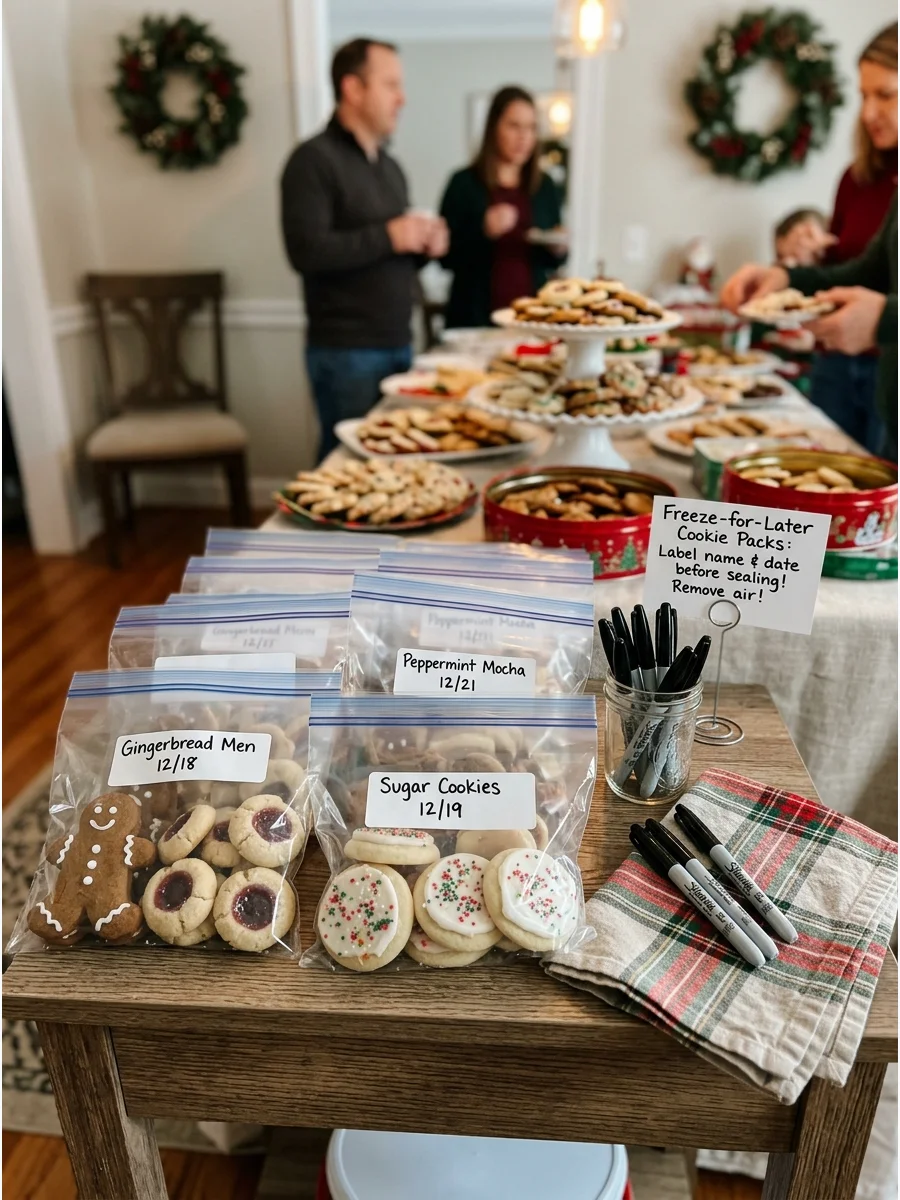
Provide freezer-safe bags or containers so guests can separate part of their cookie collection for later. Add blank labels for the cookie name and date to make holiday storage easier. Cookie Exchange Games and Awards
This prevents guests from feeling overwhelmed by too many fresh cookies. Labels help them identify the flavors later.
Provide permanent markers for writing the date and cookie name. Remind guests to remove the air before sealing.
41. Best Overall Cookie Award
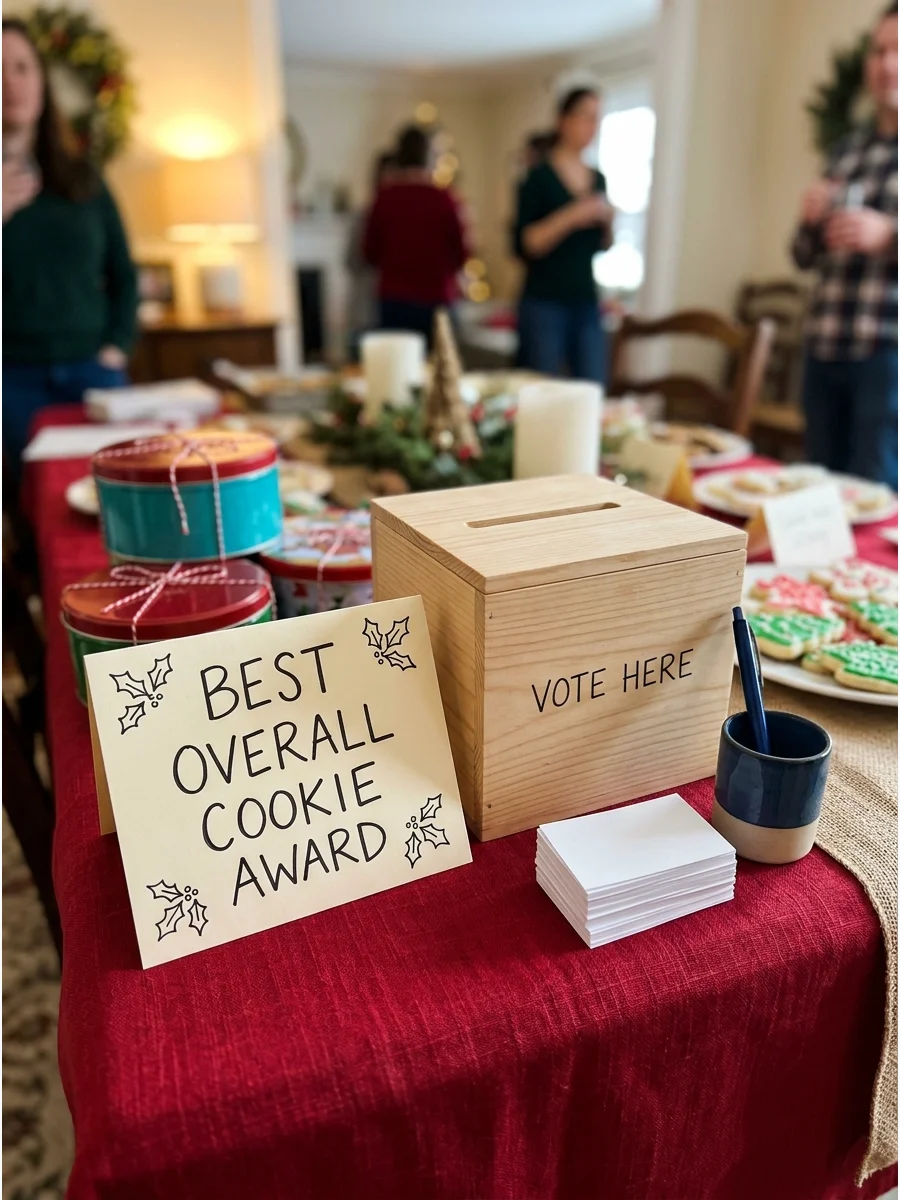
Let every guest taste the cookies and anonymously vote for their favorite overall. Announce the winner near the end of the party and give a small baking-related prize.
It creates a sense of friendly competition. Everyone feels involved in choosing the winner.
Keep the voting anonymous to ensure fair results. Give a small prize like a festive spatula or a new whisk.
42. Prettiest Christmas Cookie Award
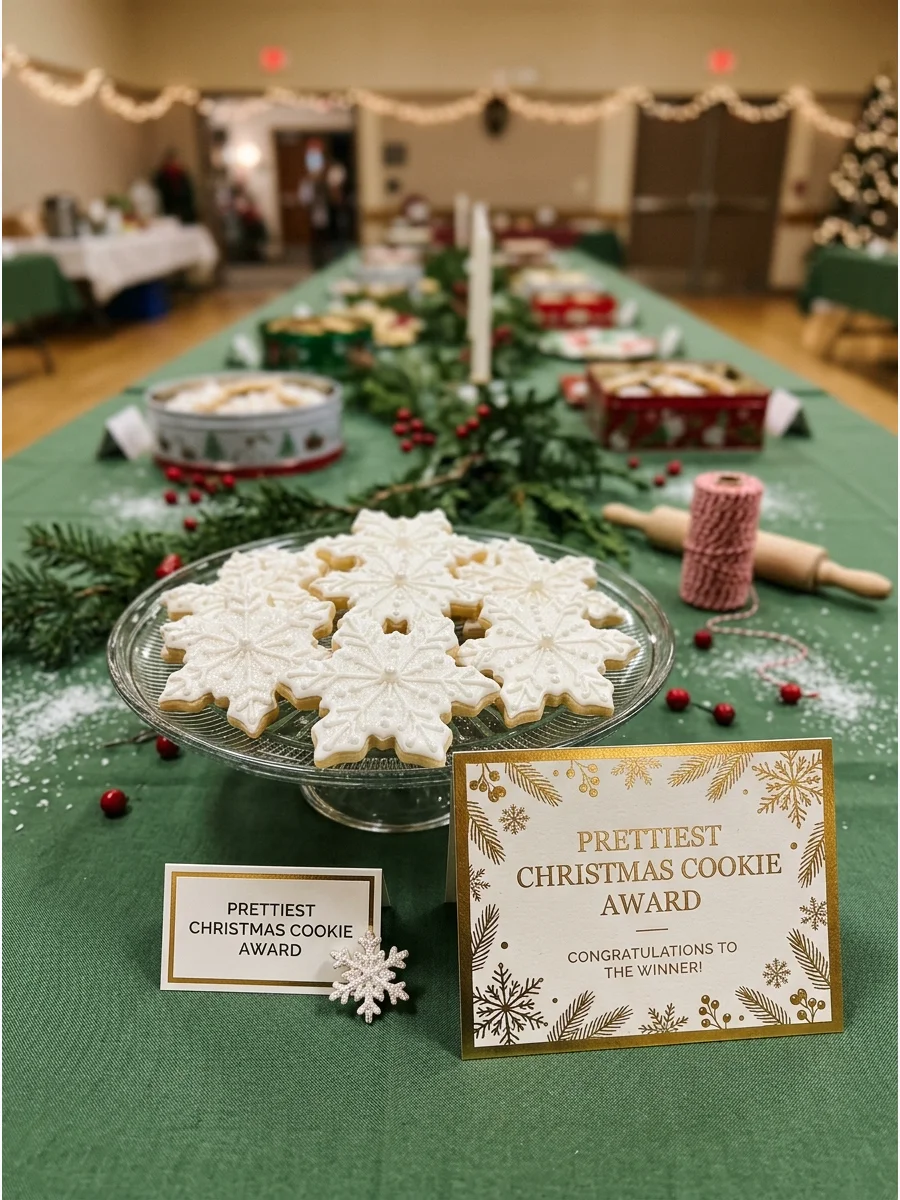
Create an award specifically for the most visually impressive cookie. Focus the judging on decoration, color, presentation, and Christmas appearance rather than flavor.
It rewards the hard work spent on decorating. This category highlights the most photogenic treats on the table.
Provide a small gold-foiled certificate for the winner to take home. Display the winning plate in a central spot for photos.
43. Most Creative Cookie Award

Reward the baker who brings the most unexpected flavor, shape, decoration, or cookie concept. This encourages people to try something different rather than bringing only familiar recipes.
It adds variety to the cookie selection. It sparks conversation about new baking trends and techniques.
Ask the baker to briefly explain their inspiration for the recipe. A specialty extract set makes an excellent prize for this category.
44. Most Traditional Christmas Cookie Award

Create a category celebrating the cookie that best represents classic Christmas baking. Gingerbread, shortbread, decorated sugar cookies, molasses cookies, and traditional family recipes can compete in this category.
It values family traditions and time-tested recipes. It ensures that classic favorites get the recognition they deserve.
Look for authentic textures and traditional spice blends. A vintage-style cookie tin is a perfect prize for this winner.
45. Best New Cookie Flavor Award
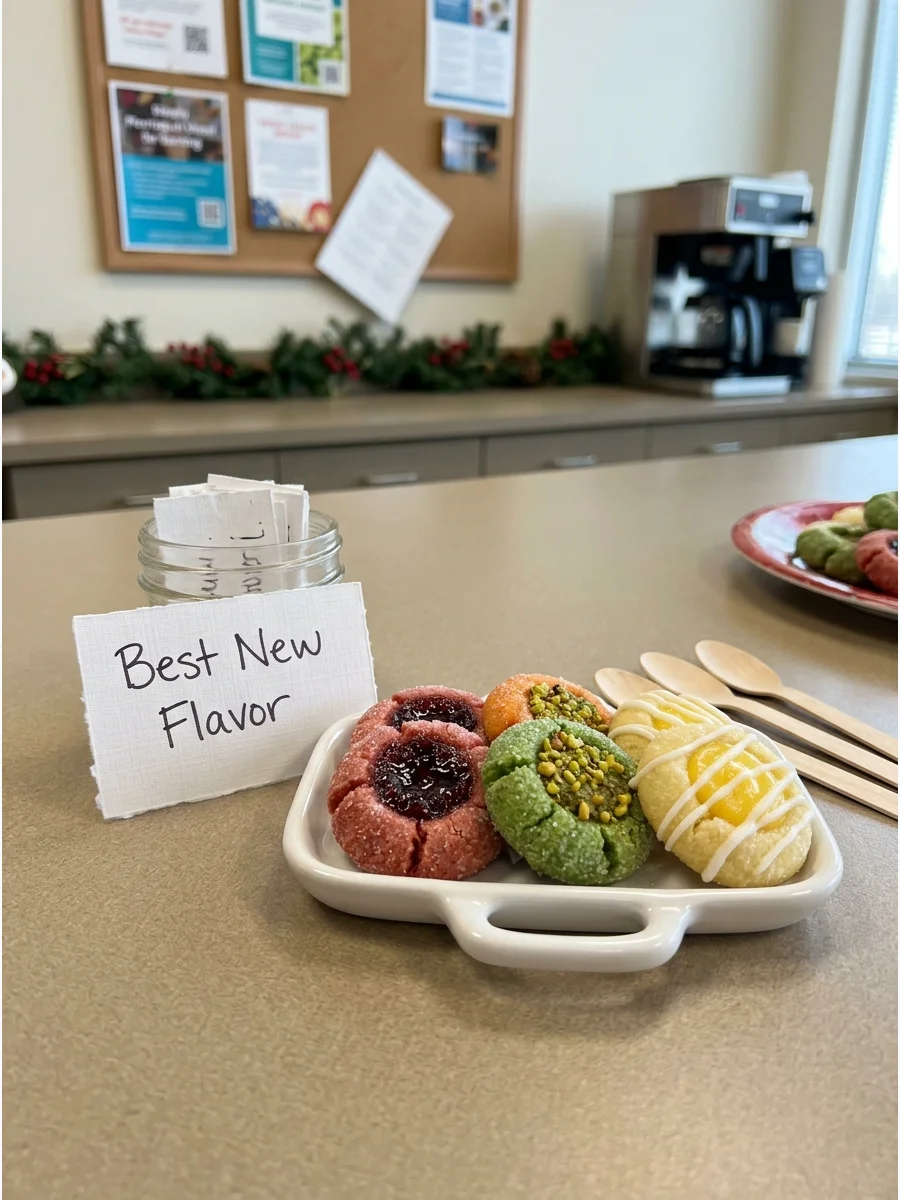
Ask guests to vote for the flavor combination that feels freshest or most interesting. This category works well for cookies using ingredients such as pistachio, cranberry, citrus, chai spice, salted caramel, or peppermint.
It keeps the exchange feeling fresh and modern. Guests get to discover new favorite flavor profiles.
Provide small tasting spoons for cookies with soft or liquid fillings. A dessert cookbook is a great prize for the winner.
46. Blind Cookie Taste Test
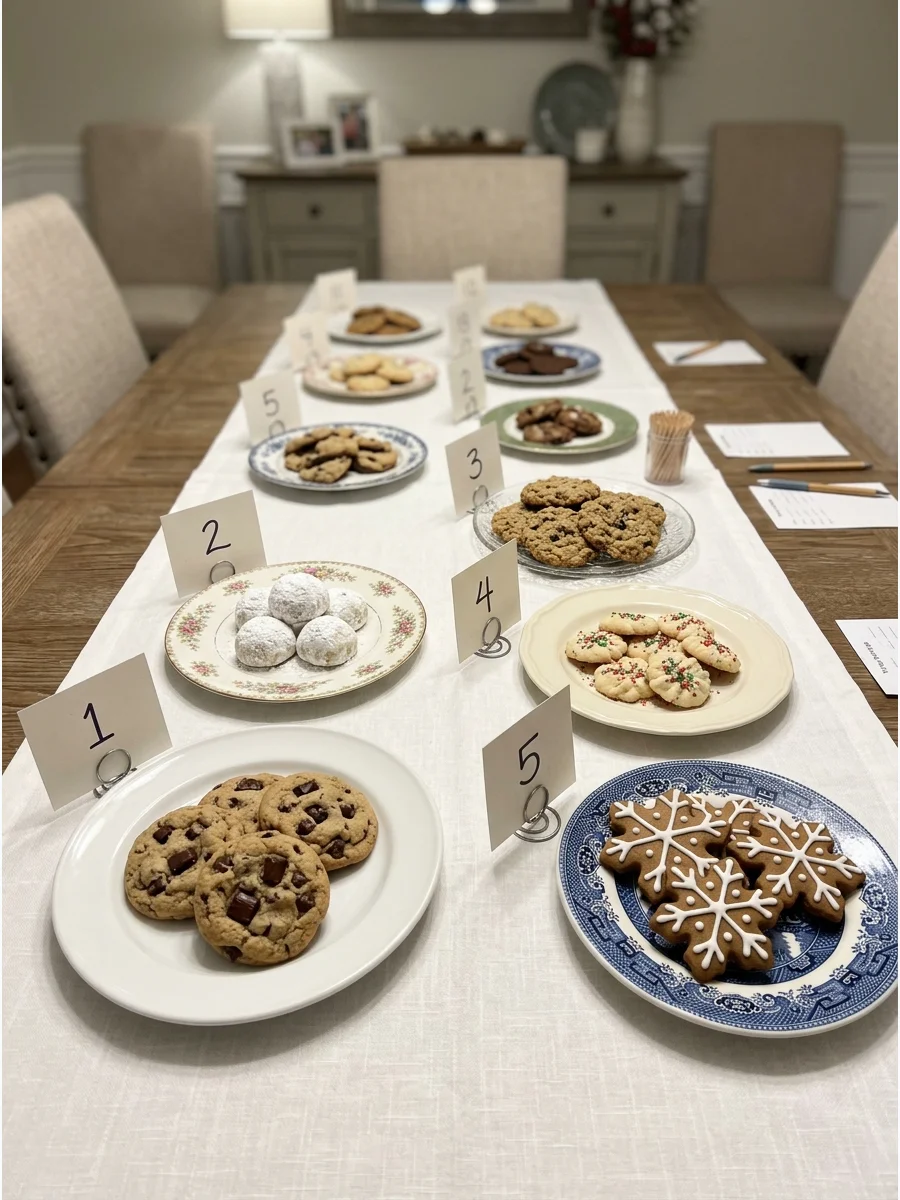
Number several cookie samples without revealing who baked them and have guests rate their favorites. Reveal the bakers only after the voting is complete to keep the tasting focused on the cookies.
It removes personal bias from the judging process. The activity turns tasting into a focused and fun event.
Keep a master list of numbers and names hidden until the end. Reveal the bakers only after all scores are tallied.
47. Guess the Cookie Flavor Game
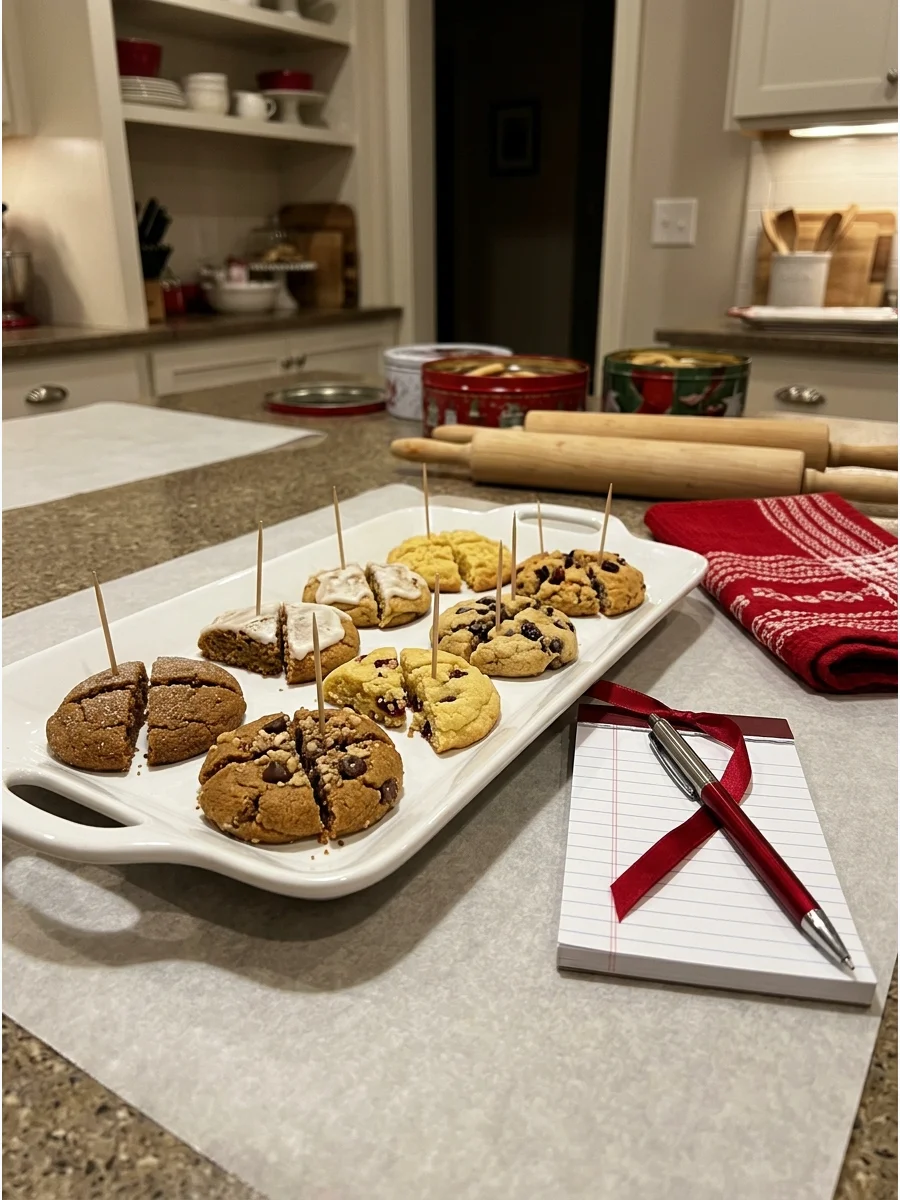
Prepare bite-sized cookie samples with unusual or seasonal ingredients and have guests guess the main flavors. Use spices, extracts, fruit, chocolate varieties, or fillings that are recognizable but not immediately obvious.
It engages the senses and sparks fun debates. It highlights the subtle spices and extracts used in baking.
Use toothpicks for easy and hygienic sampling. Offer a small prize for the person with the most correct guesses.
48. Christmas Cookie Trivia
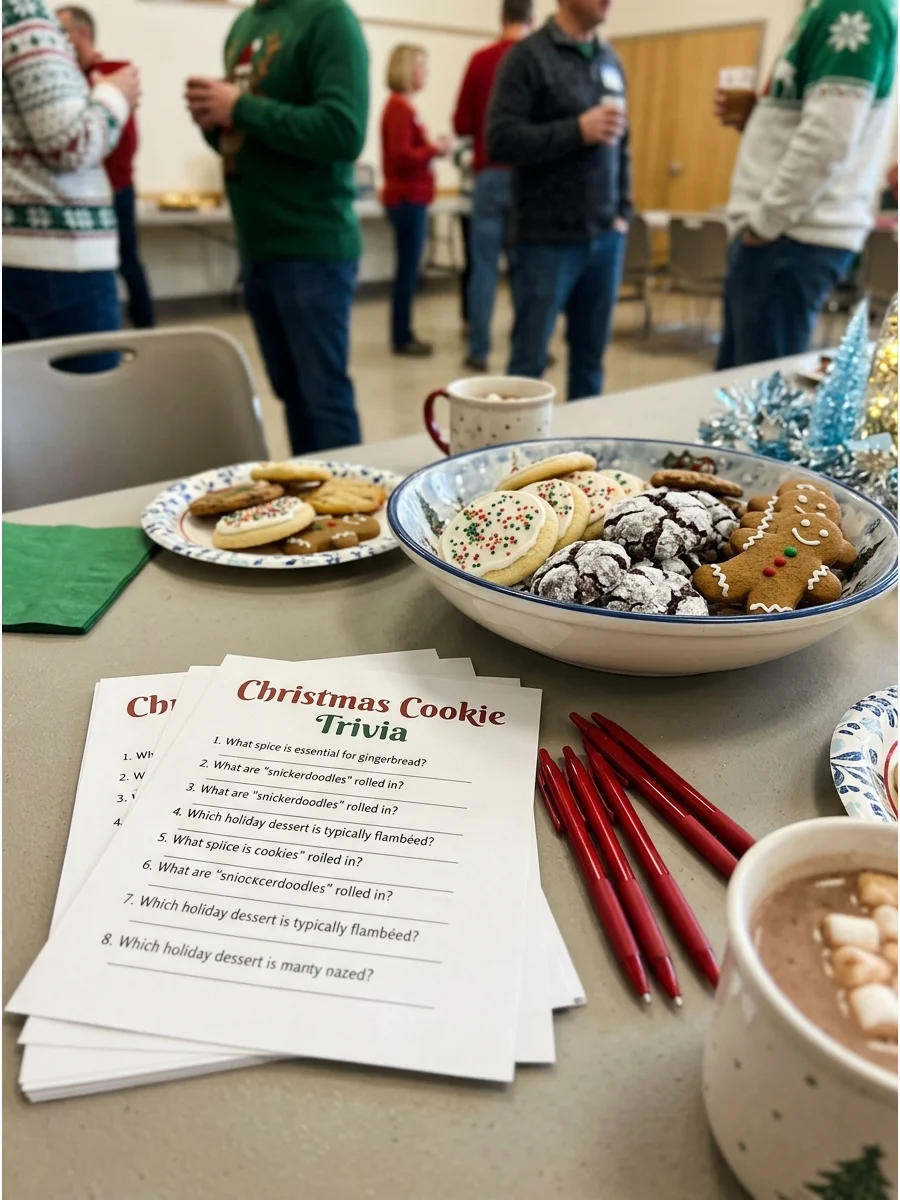
Create a quick trivia game about baking, Christmas desserts, holiday foods, and famous cookie varieties. Play it while guests enjoy coffee or cocoa before the exchange starts.
It fills the time while guests arrive or wait for the swap. It is an easy activity for groups of all ages.
Read the answers aloud to the group for a shared laugh. Keep the quiz short with about ten questions.
49. Decorate-a-Cookie Competition
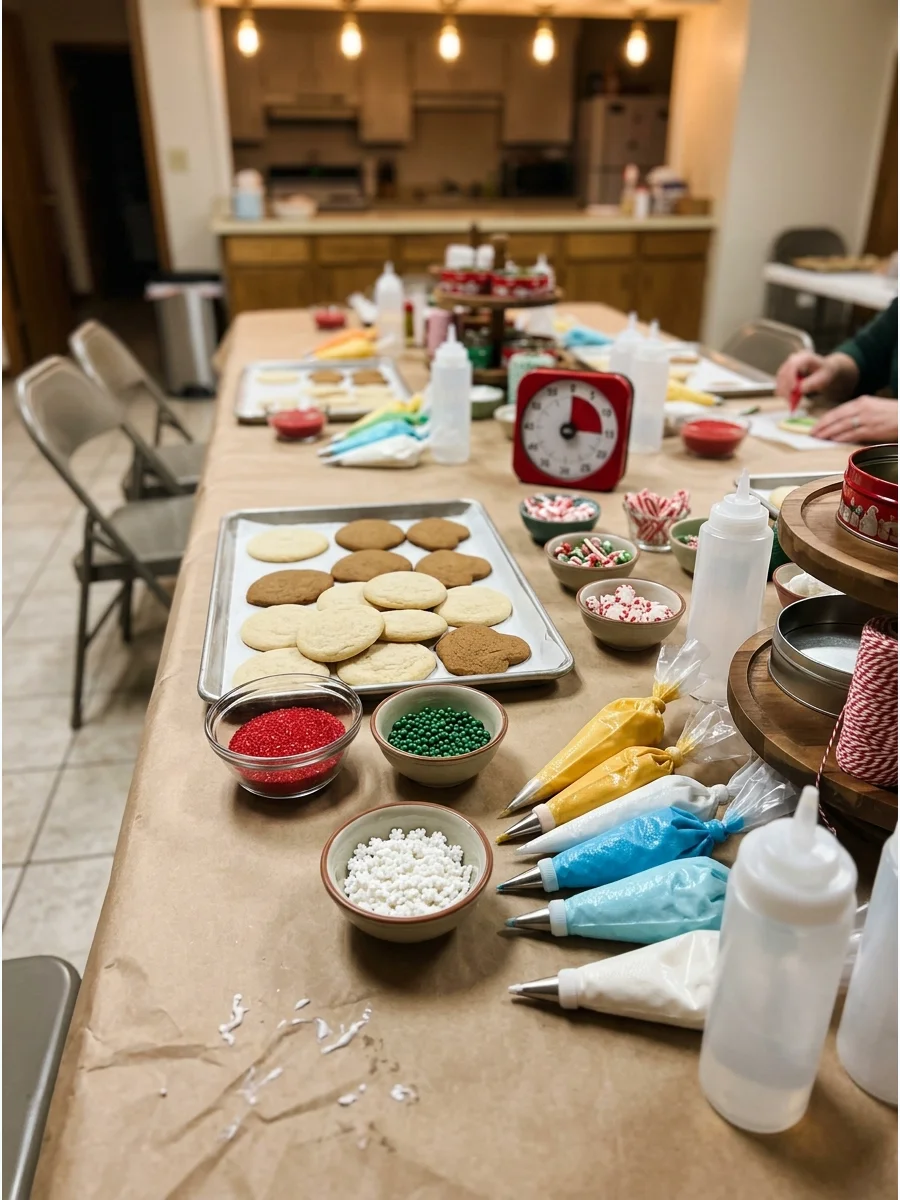
Provide plain sugar or gingerbread cookies along with frosting, piping bags, sprinkles, and candy. Give everyone a short decorating period, then vote for the best Christmas design.
It adds a hands-on creative activity to the party. Guests can show off their artistic skills in a fun way.
Use squeeze bottles for frosting to keep the area tidy. Set a timer to keep the energy high during the challenge.
50. Mystery Decorating Challenge
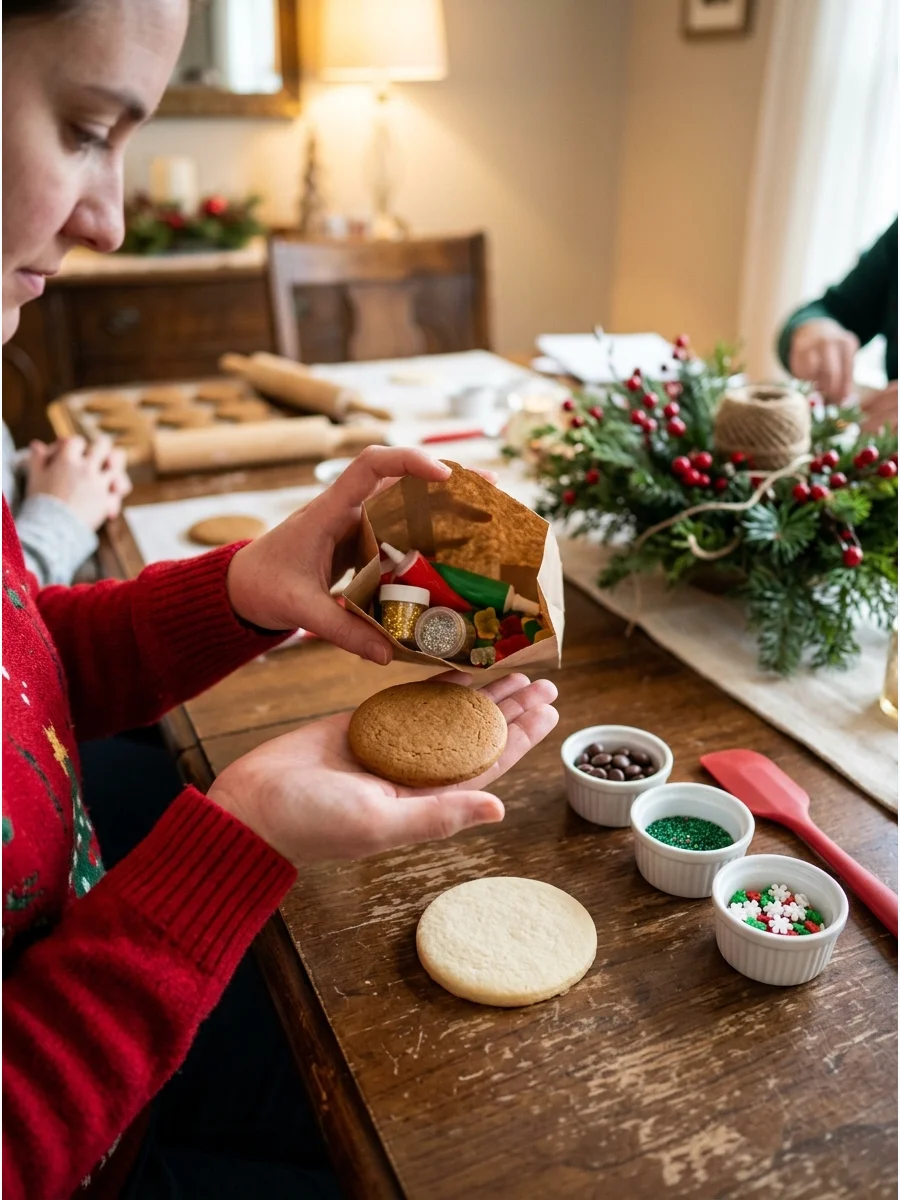
Give each participant a small random assortment of frosting colors and decorations they must use on one cookie. The limited ingredients encourage funny, creative results and make the activity different from normal cookie decorating.
It challenges creativity under pressure. The limited ingredients often lead to funny and unique results.
Include a mix of edible glitters, candies, and icing colors in each bag. Award a prize for the most resourceful design.
Food and Drink Ideas
51. Cookie Exchange Hot Cocoa Bar
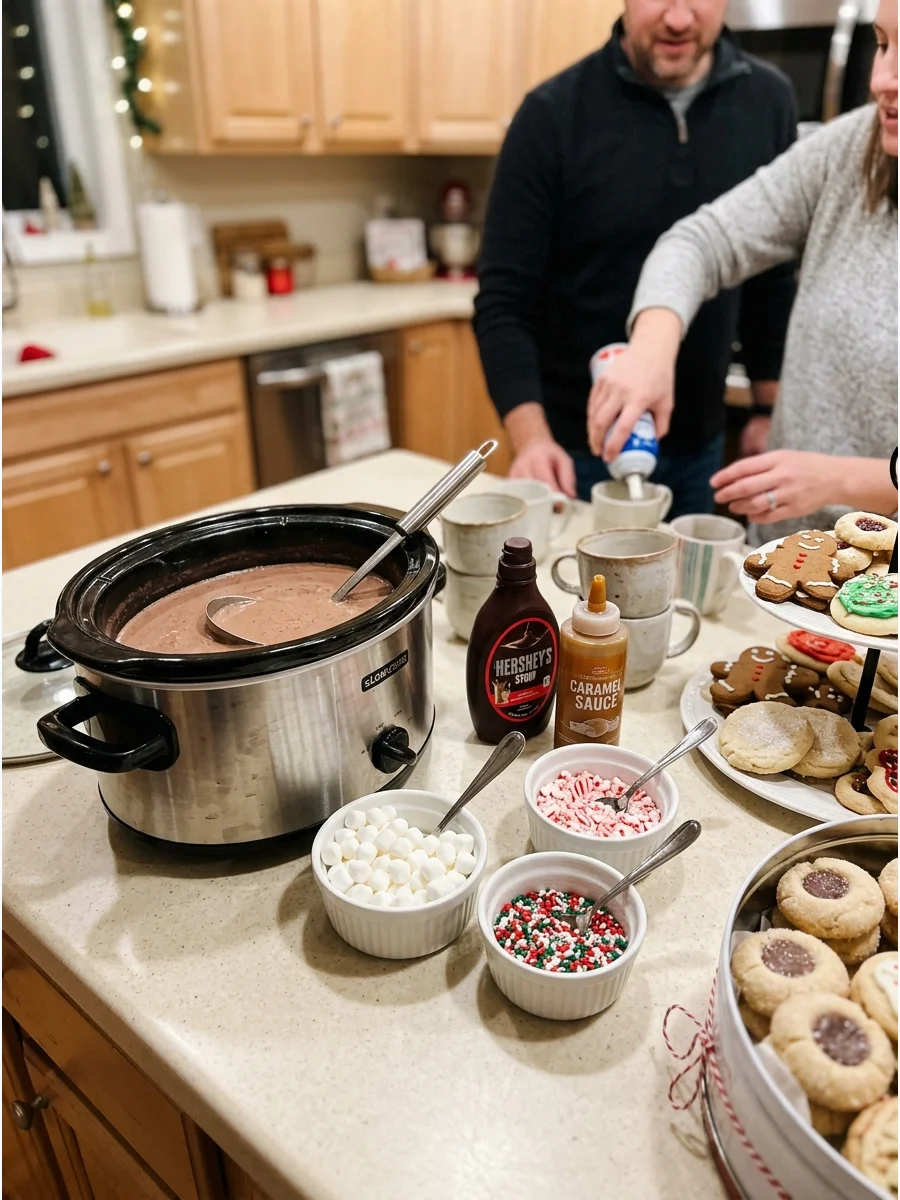
Set up hot cocoa with marshmallows, peppermint, whipped cream, chocolate sauce, caramel, and Christmas sprinkles. Guests can customize drinks while sampling the different cookies.
It provides a warm drink that pairs perfectly with chocolate cookies.
Use a slow cooker to keep the cocoa warm. Place toppings in small bowls with spoons.
52. Christmas Coffee Bar
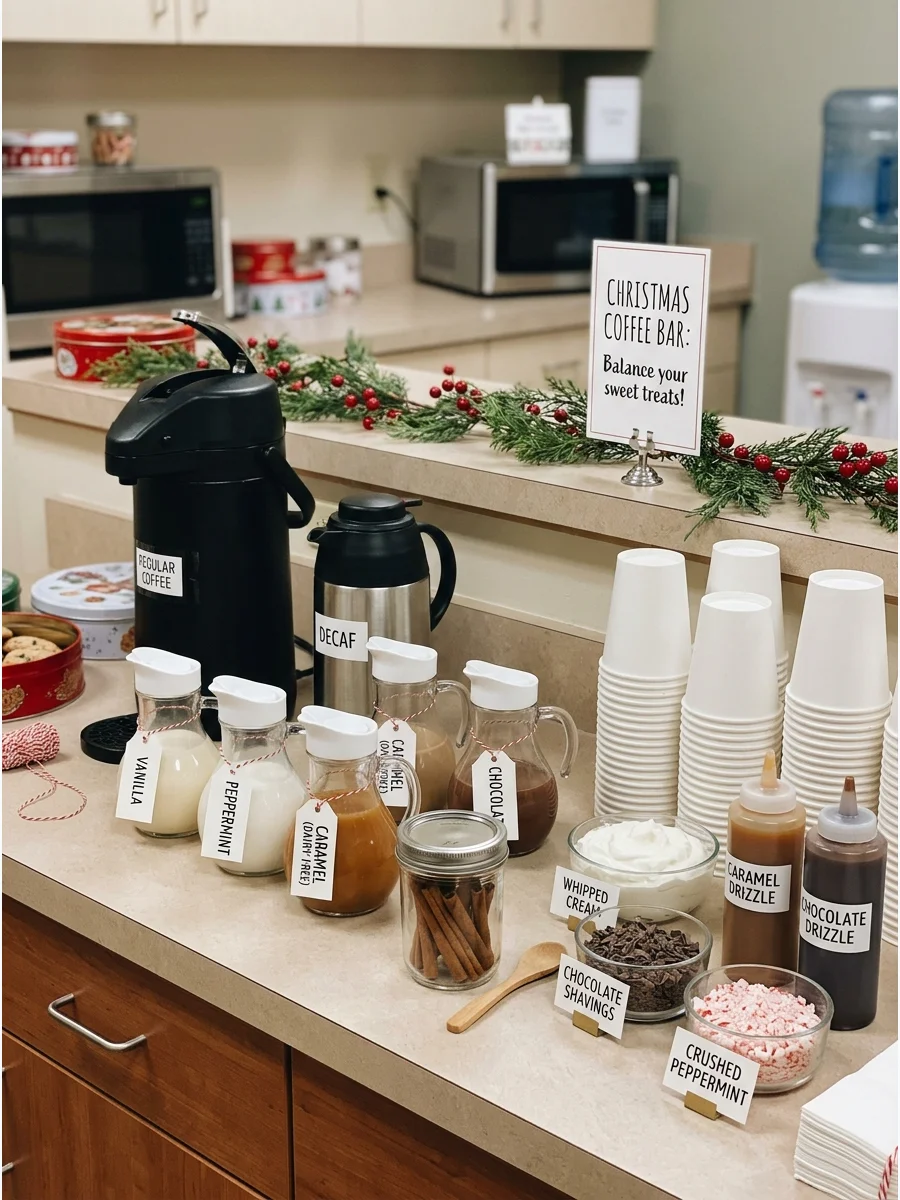
Serve regular and decaf coffee with flavored creamers, cinnamon, whipped cream, chocolate, caramel, and peppermint options. Coffee gives guests a less-sweet drink to balance the large cookie selection.
Coffee cuts through the sweetness of the cookies.
Label the creamers clearly for guests with dietary needs. Keep a stack of sturdy paper cups nearby.
53. Coffee and Cookie Pairing Table
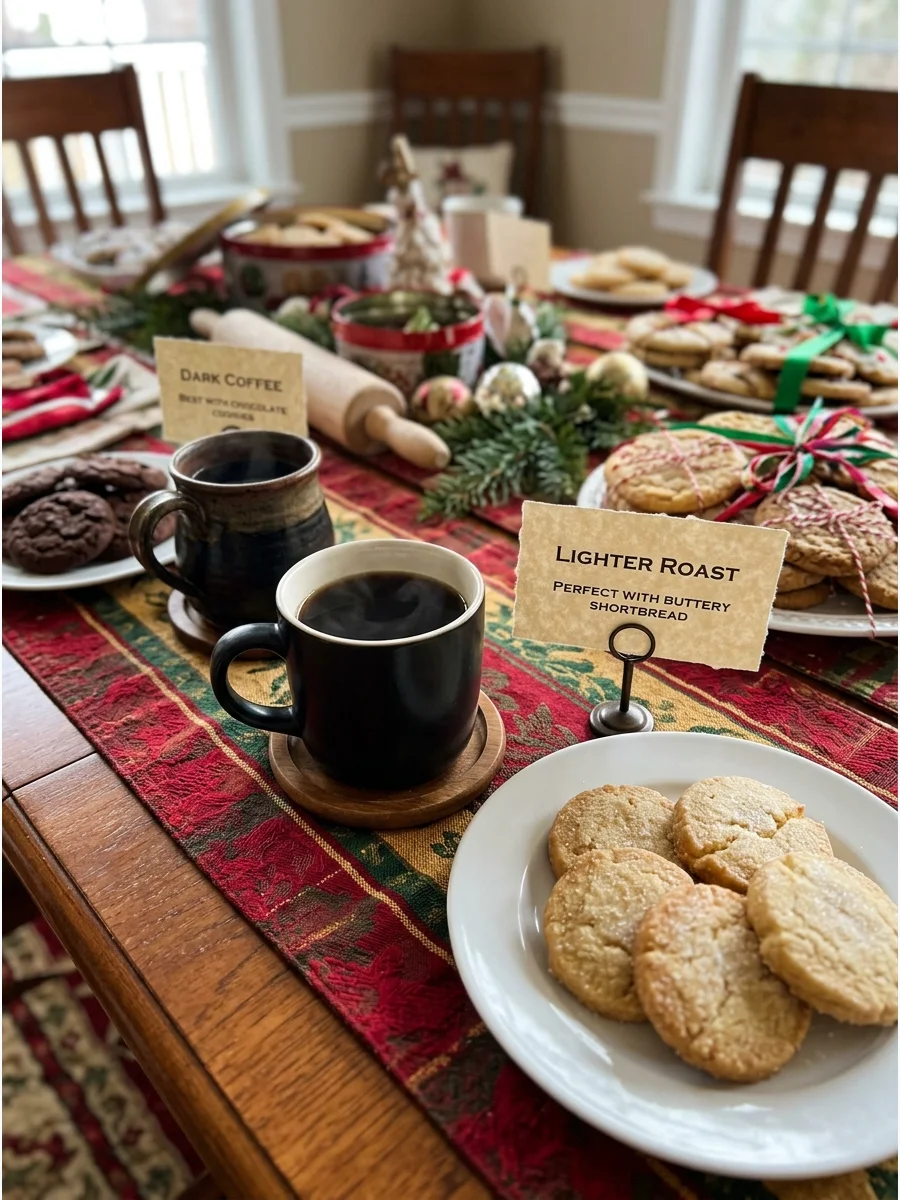
Suggest different coffee styles to pair with particular cookies, such as dark coffee with chocolate cookies or a lighter roast with buttery shortbread. Place simple pairing cards beside the cookie table.
It elevates the tasting experience for guests.
Print small cards explaining each pairing. Place the cards next to the corresponding cookie platters.
54. Christmas Tea and Cookie Exchange
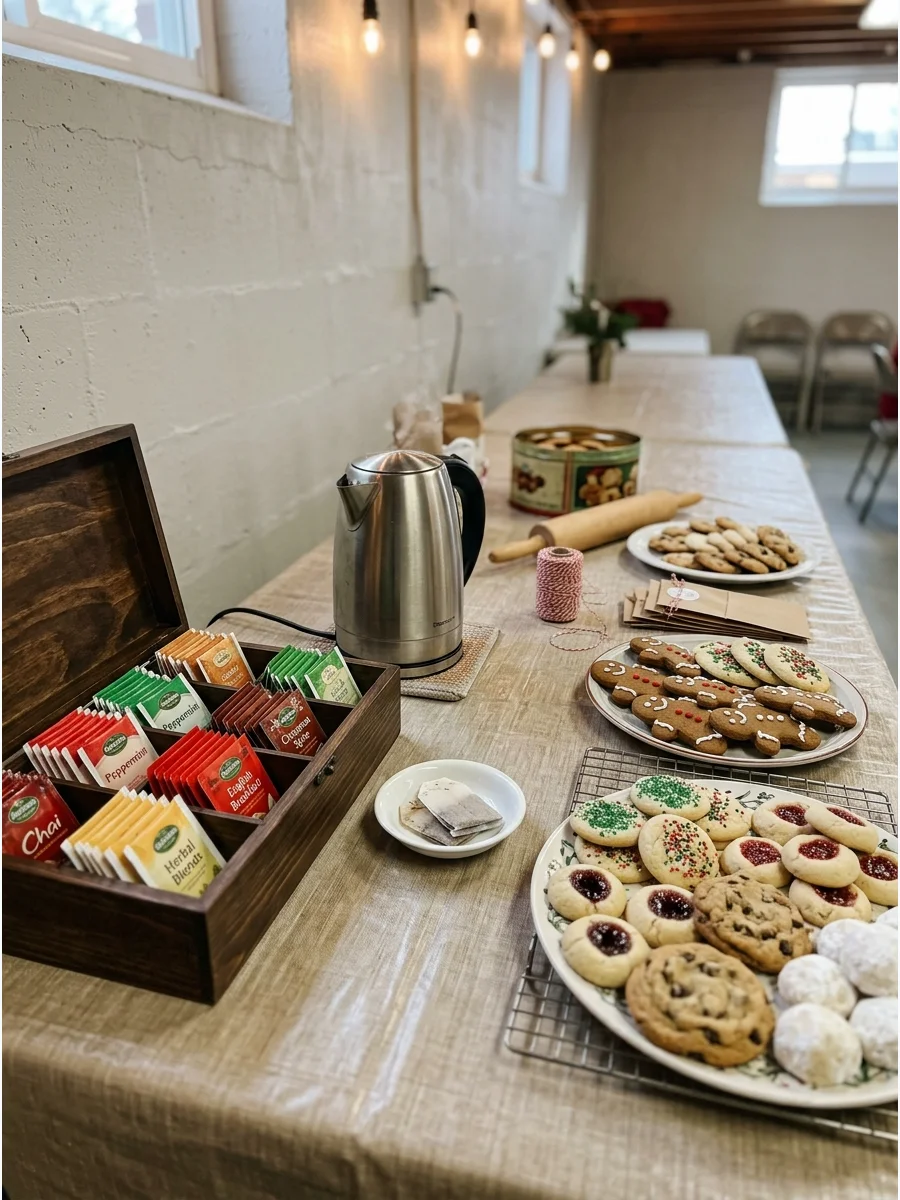
Offer several teas such as chai, peppermint, black tea, cinnamon spice, and herbal blends. Arrange tea bags and hot water near the cookies so guests can choose a drink that complements their desserts.
Tea offers a lighter alternative to heavy cocoa or coffee.
Arrange tea bags in a wooden organizer. Include a small dish for used tea bags.
55. Savory Appetizer Table
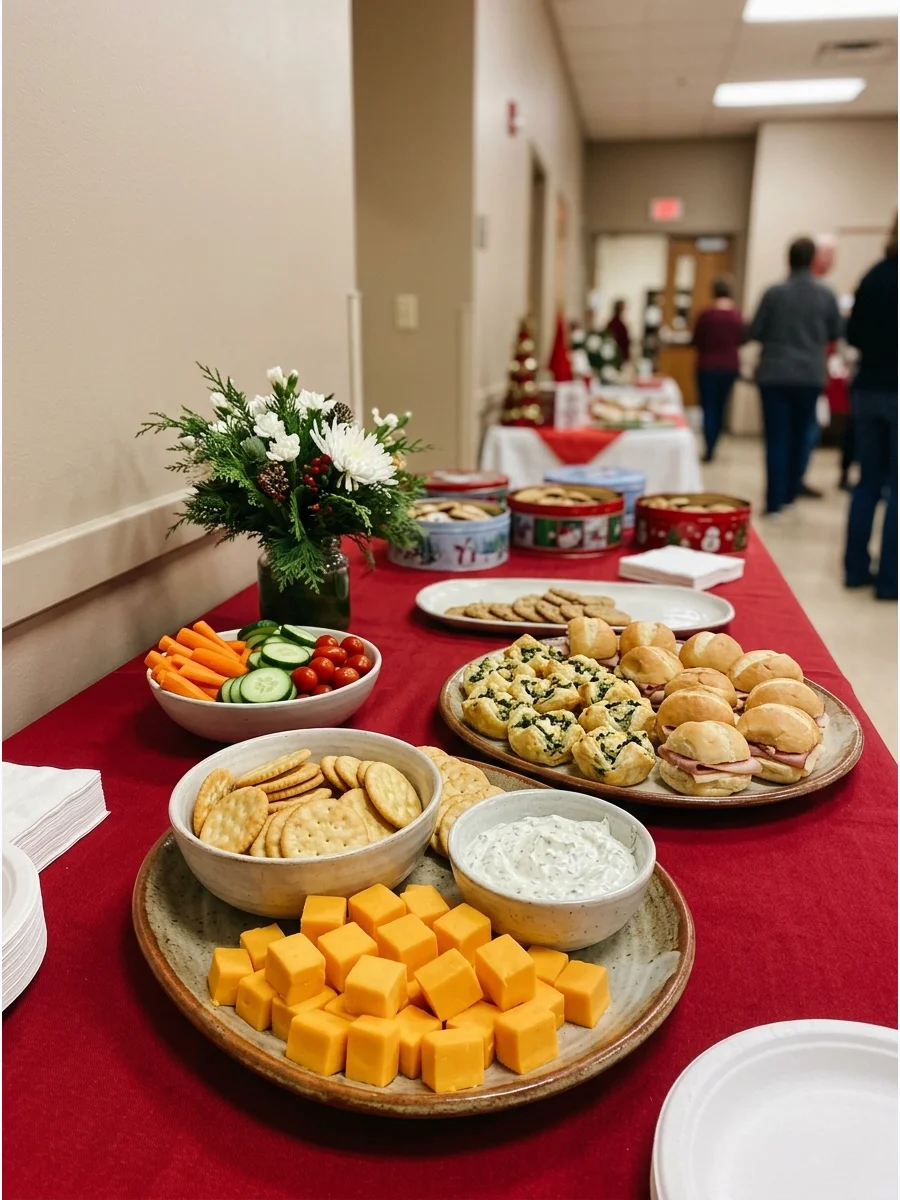
Balance the sugar with a separate table of cheese, crackers, vegetables, dips, small sandwiches, or warm appetizers. Keeping savory food away from the cookie table makes both displays easier to navigate.
Savory snacks prevent guests from getting a sugar crash.
Place this table away from the cookies. Use pre-cut cheese cubes to make serving faster.
56. Cookie and Ice Cream Sandwich Bar
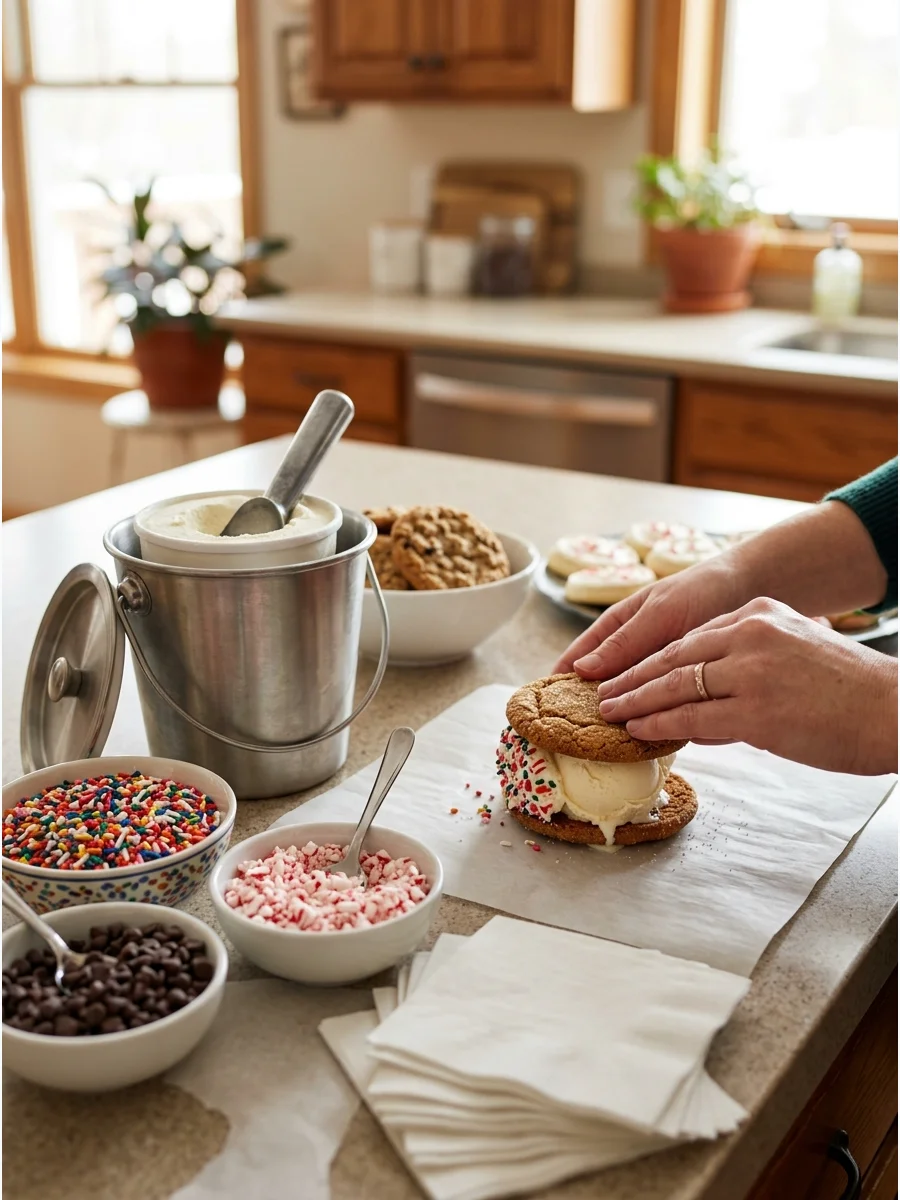
Provide a few compatible cookie varieties and tubs of ice cream so guests can build mini cookie sandwiches during the party. Add sprinkles, crushed peppermint, or chocolate chips for decorating the edges.
It turns the cookies into a new, interactive dessert.
Keep the ice cream in an insulated bucket. Provide small napkins for the messy edges.
Cookie Exchange Activities and Special Touches
57. Christmas Cookie Recipe Book
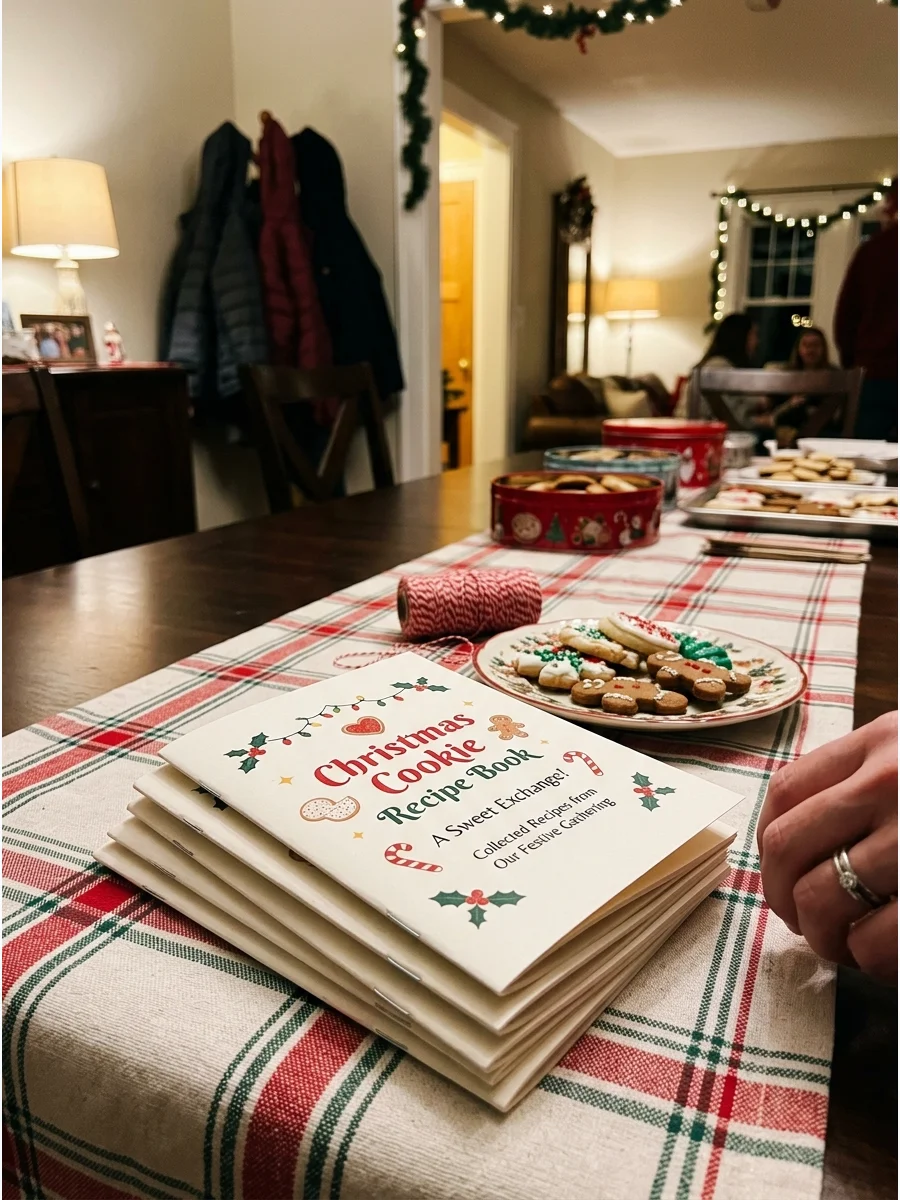
Collect every guest’s recipe before the party and combine them into one simple digital or printed recipe book. Give each guest a copy so the exchange creates something they can use for future Christmas baking.
Guests can recreate their favorite cookies at home.
Ask for recipes two weeks in advance. Use a simple binder or a stapled cover.
58. Cookie Recipe Story Circle
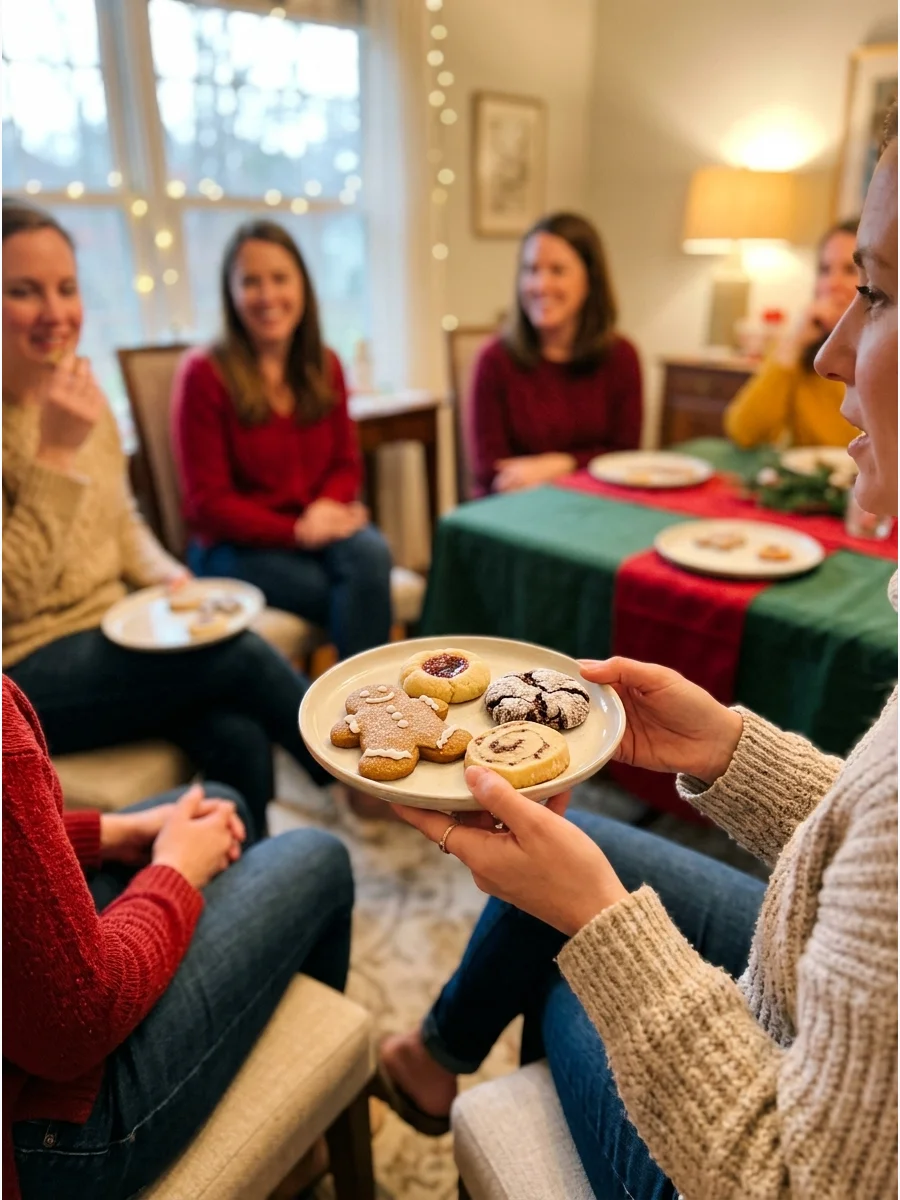
Invite each baker to briefly explain why they chose their cookie while everyone samples it. Stories about family traditions, childhood memories, recipe mistakes, or annual Christmas baking make the gathering more personal.
It adds a personal connection to the food.
Keep the stories brief to maintain energy. Hold the circle while everyone is seated.
59. Cookie Exchange Photo Booth
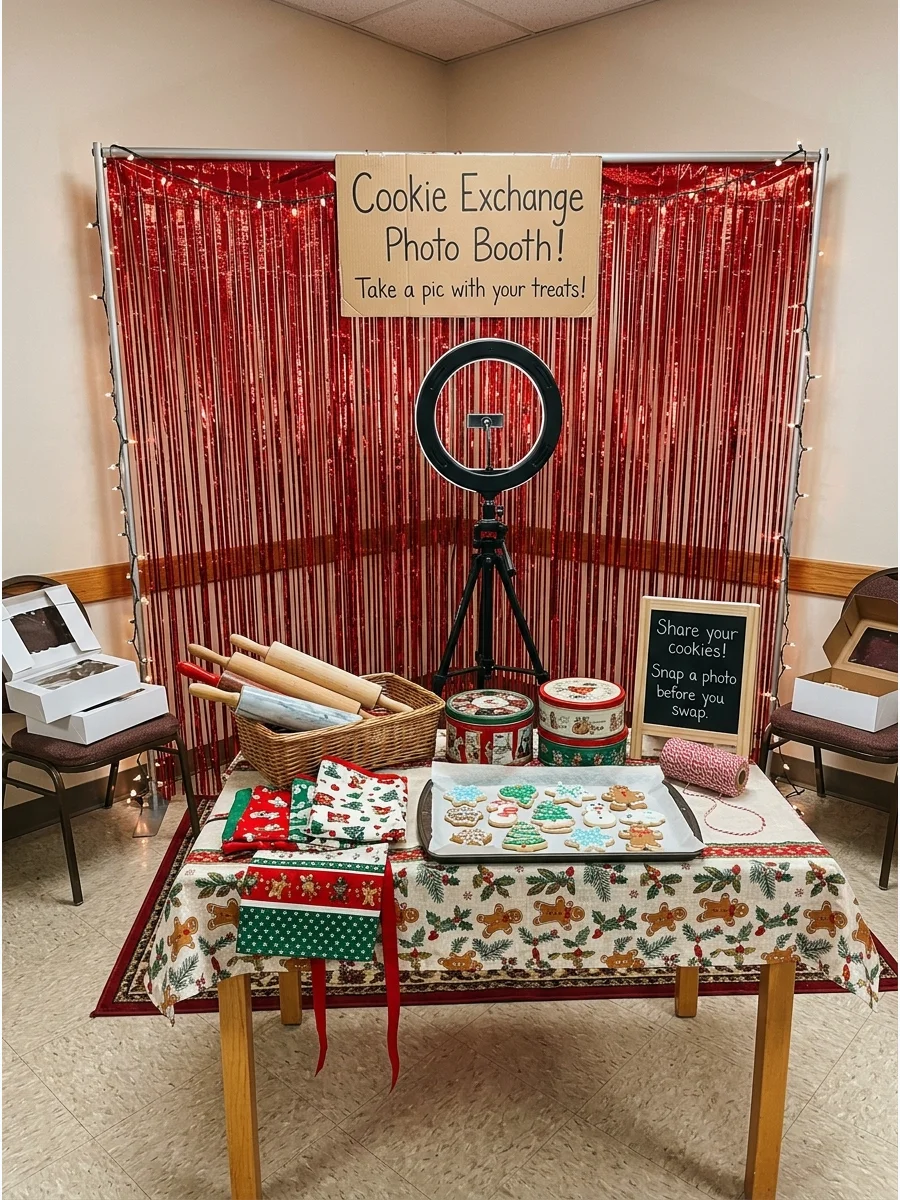
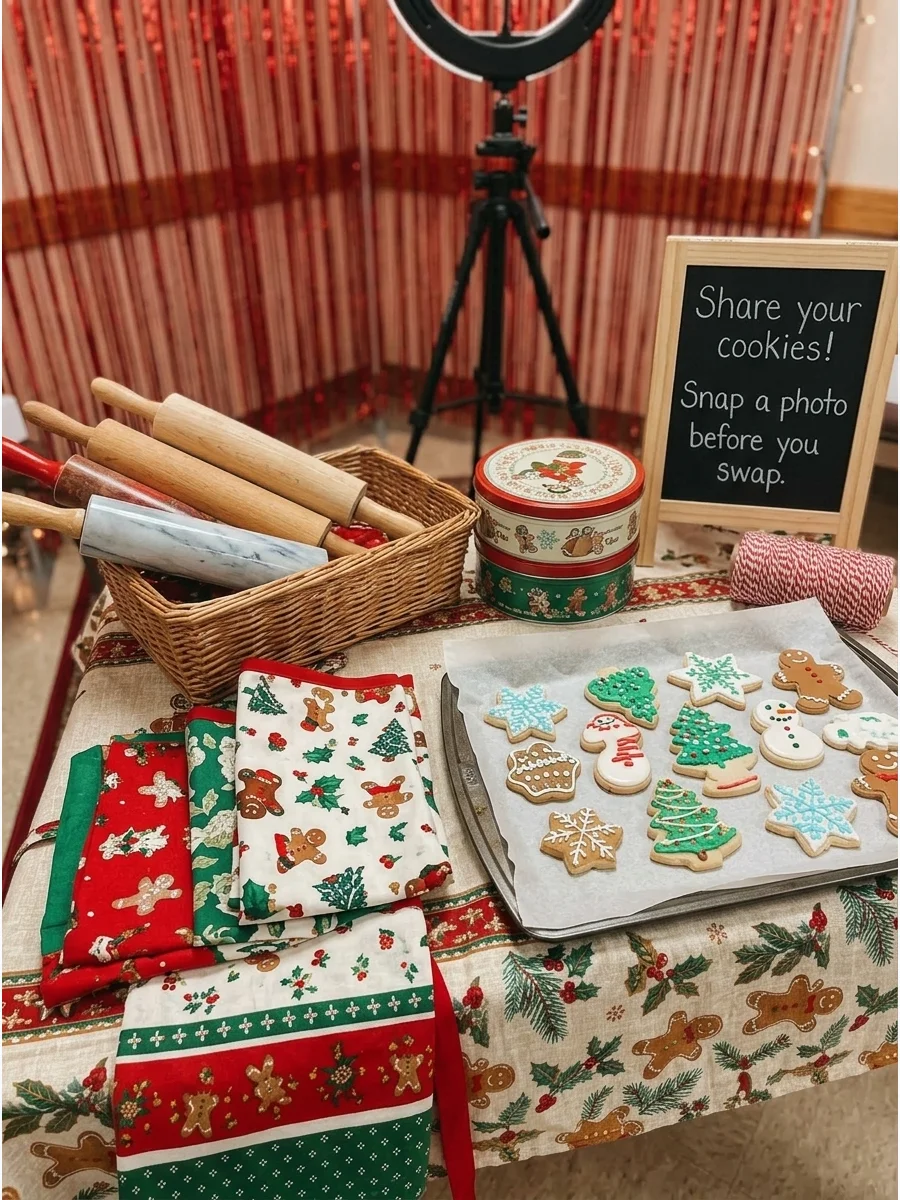
Create a Christmas photo area with a festive backdrop, baking props, aprons, rolling pins, cookie trays, and holiday signs. Encourage each baker to take a photo with the cookies they brought before the exchange begins.
It provides a fun way to document the event.
Use a ring light for better photos. Place the booth in a corner with plenty of space.
60. Annual Cookie Exchange Tradition
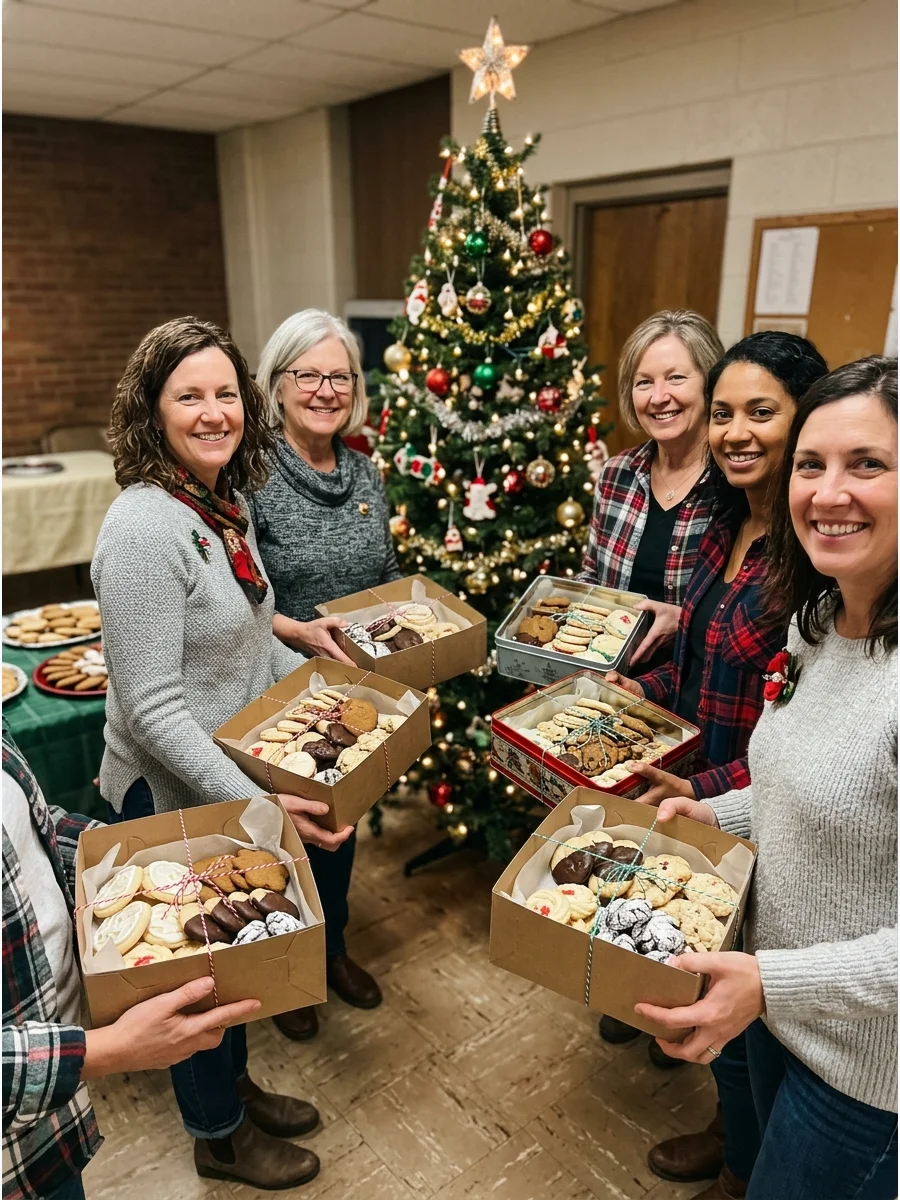
Turn the event into a yearly tradition by photographing the group, saving the winning recipes, and recording each year’s cookie lineup. Change one theme or activity annually while keeping the basic exchange format familiar.
It builds a long-term tradition that friends look forward to.
Keep a notebook to track popular recipes. Rotate the host duties to share the work.
Frequently Asked Questions
How many cookies should each guest bring to a cookie exchange?
A standard rule is for each guest to bring one dozen cookies for every participant, plus an extra dozen for sampling during the event. For larger groups, requesting six cookies per person is a practical way to ensure everyone leaves with a variety without requiring guests to bake excessive quantities.
What is the best way to package cookies so they do not break or smudge?
Use sturdy containers like tin boxes or cardboard bakery flats lined with parchment paper. Layer cookies with sheets of wax paper in between to prevent icing from sticking. Place heavier, denser cookies like gingerbread at the bottom and delicate items like lace cookies or meringues on the top layer.
How should food allergies be handled at a cookie swap?
Request that every guest brings a printed recipe card or a clear list of ingredients for their cookies. Create a dedicated section on the display table for cookies that are free from common allergens like nuts, gluten, or dairy to prevent cross-contamination during the swap.
Should cookies be strictly homemade or are store-bought options acceptable?
The tradition usually centers on homemade cookies to highlight different doughs and decorations. However, the host can set the rules based on the group’s skill level. Options include ‘semi-homemade’ where guests use pre-made dough but apply custom icing and toppings, or allowing high-quality bakery selections for those who do not bake.
What are some effective ways to display cookies at the party?
Utilize multi-tiered cooling racks or cake stands to create vertical interest on the dining table. Group cookies by texture or flavor profile, using small placards to identify the cookie name and the baker. Keep the display organized by providing tongs for each platter to maintain hygiene as guests make their selections.
This post may contain affiliate links: full affiliate disclosure.