
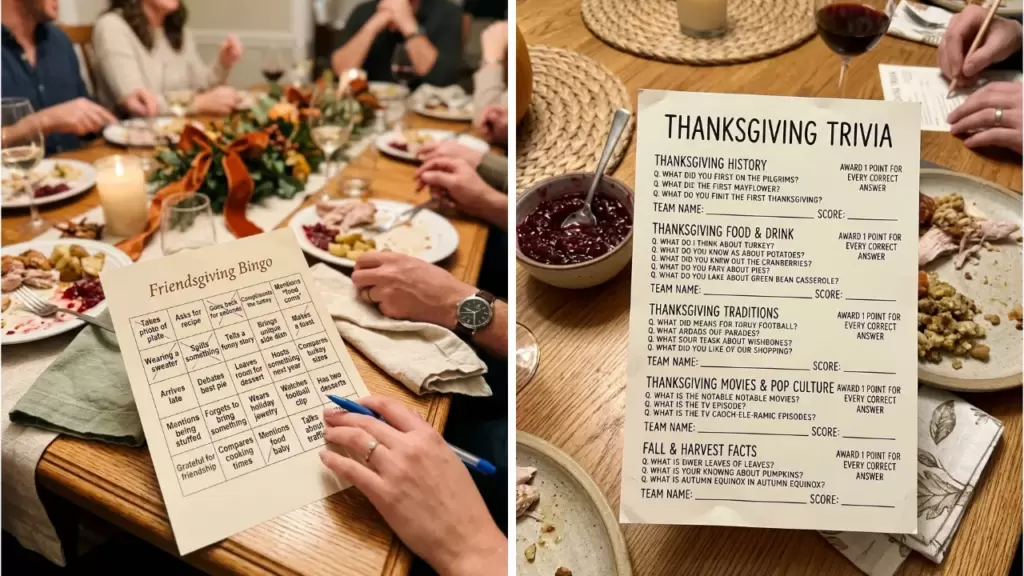
Hosting a Friendsgiving gathering involves more than just a shared meal.
Incorporating interactive games and activities helps break the ice, encourages connection among different social circles, and provides a structured way to celebrate shared history and gratitude.
This list offers 50 distinct ideas ranging from low-prep paper games to high-energy active challenges suitable for any adult group.
Printable & Paper-Based Classics
1. Friendsgiving Bingo
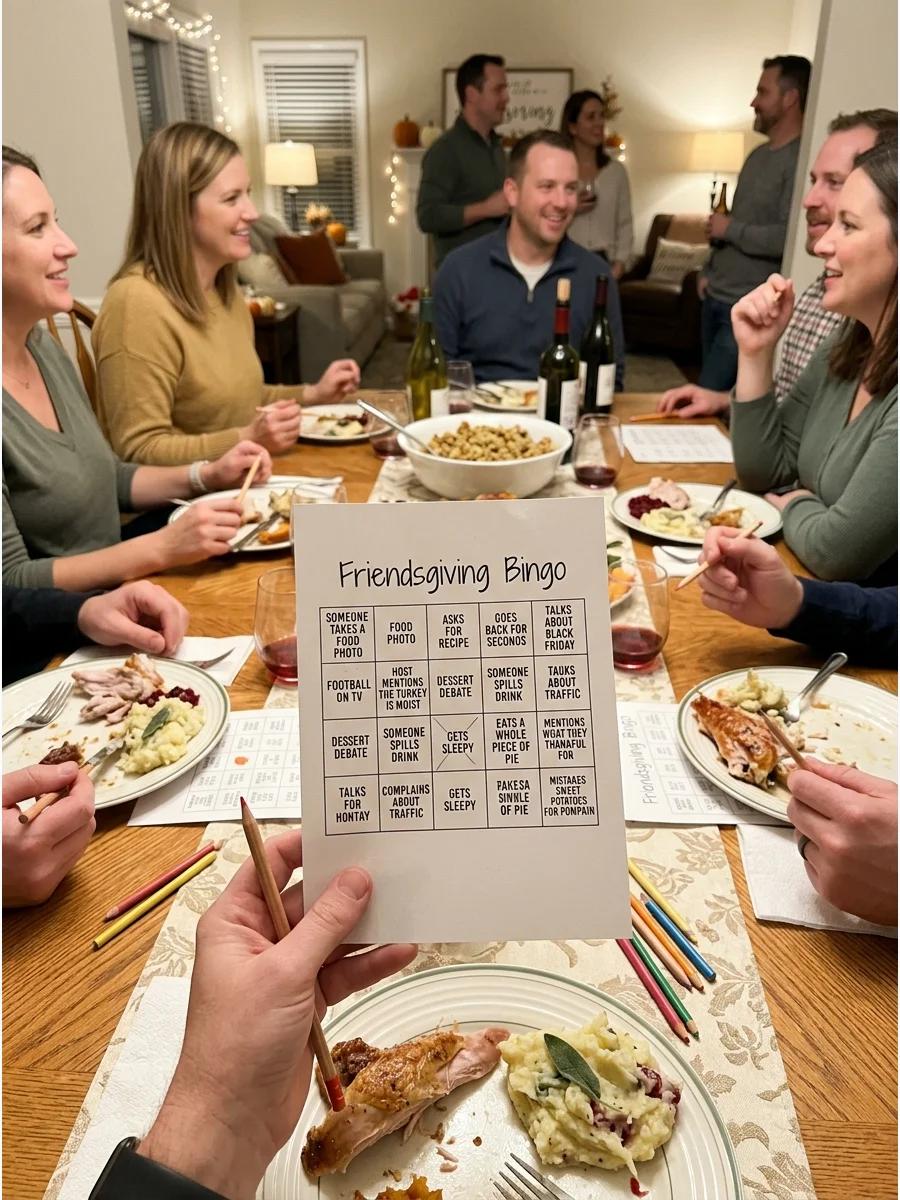
Create bingo cards featuring common Friendsgiving moments, such as someone taking a food photo, asking for a recipe, or going back for seconds. The first guest to complete a row wins a small seasonal prize.
This keeps guests observant and engaged with the environment rather than their phones.
Use small seasonal candies like candy corn as markers to keep the game festive and edible.
2. Thanksgiving Trivia
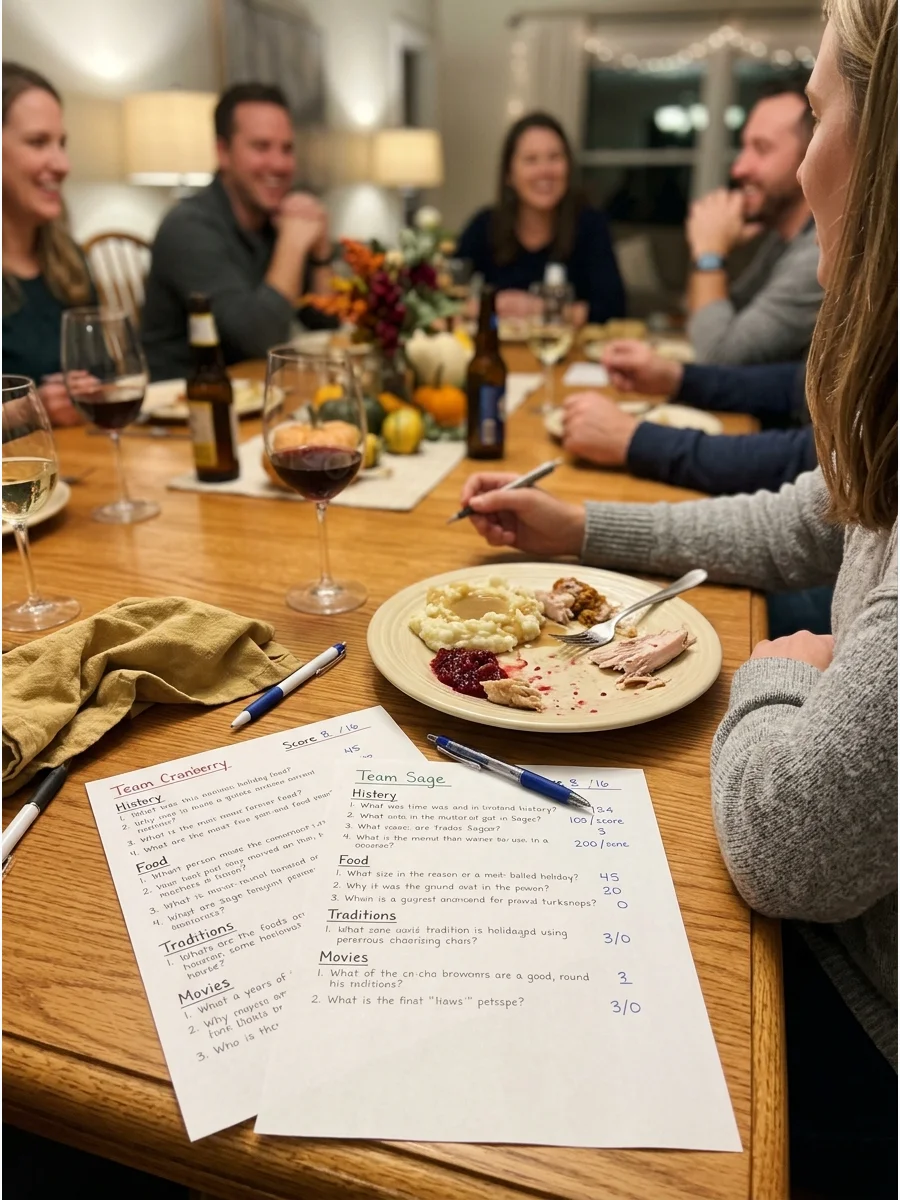
Prepare questions about Thanksgiving history, food, traditions, movies, and fall facts. Divide guests into teams and award one point for every correct answer.
It encourages friendly competition and allows guests with different knowledge bases to contribute.
Provide small notebooks and pens for each team to write down their answers quietly.
3. Friendsgiving Jeopardy
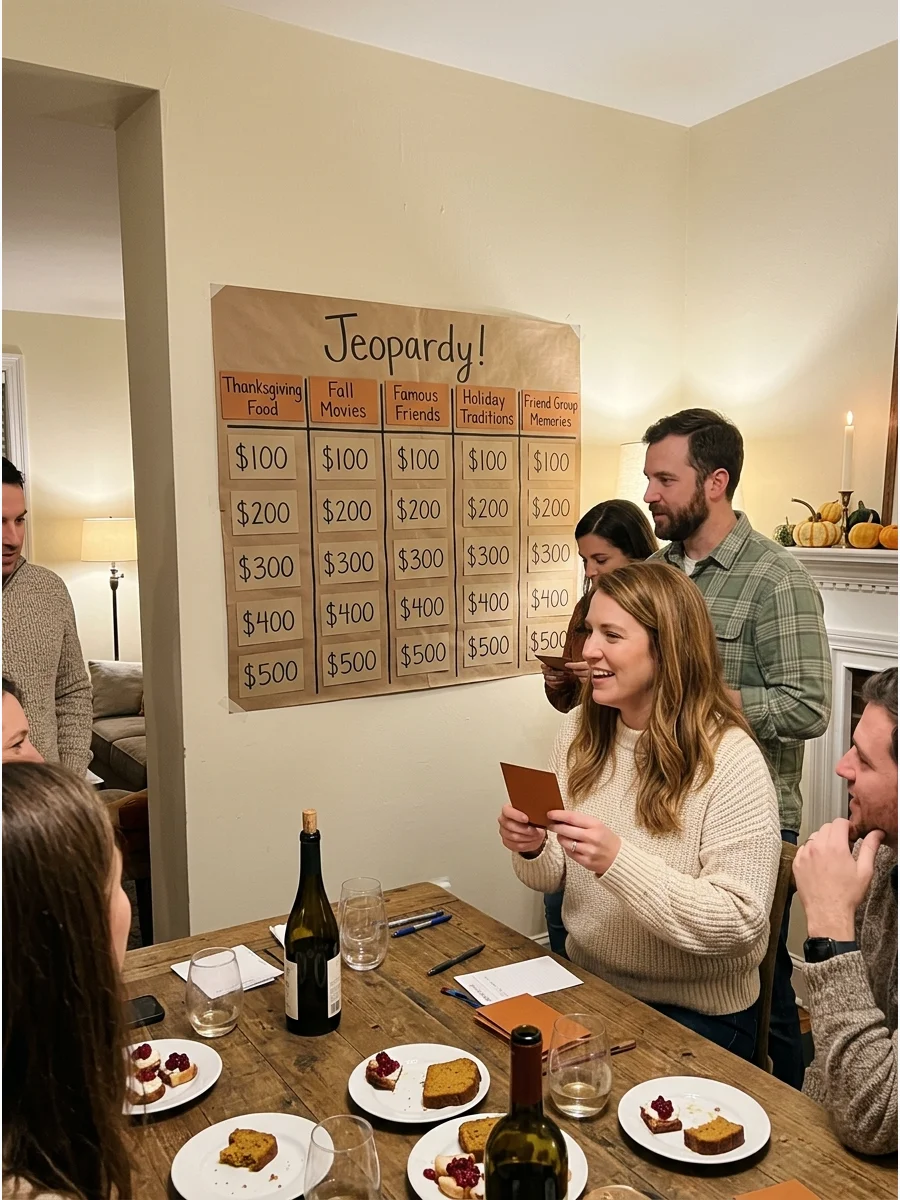
Create categories such as Thanksgiving Food, Fall Movies, Famous Friends, Holiday Traditions, and Friend Group Memories. Guests can compete individually or work together in teams.
The structured format provides a clear pace and keeps the energy high throughout the game.
Use a large foam board and sticky notes for a physical version that guests can see from across the room.
4. Friendsgiving Family Feud
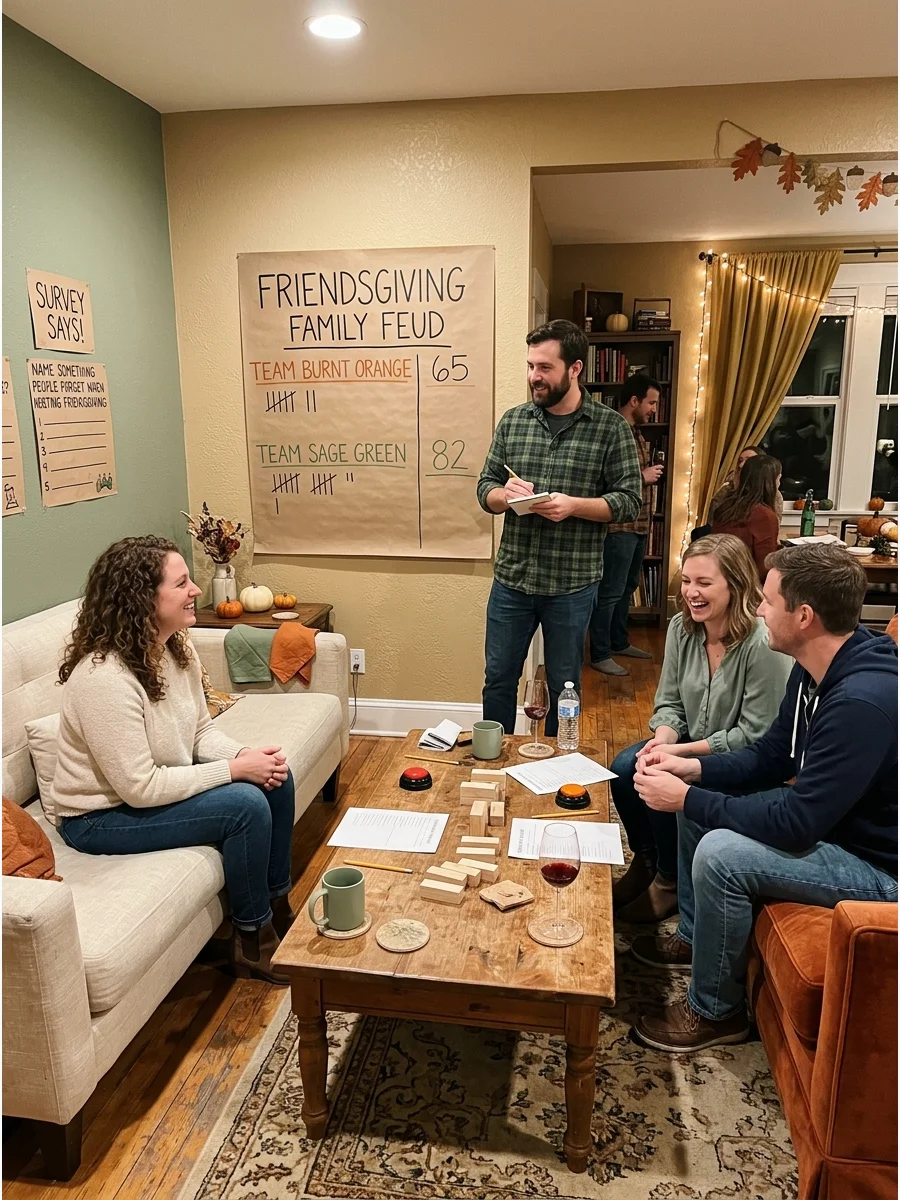
Write survey-style questions such as “Name a popular Thanksgiving side dish” or “Name something people forget when hosting Friendsgiving.” Teams earn points by guessing the most common answers.
It relies on common knowledge, making it accessible for everyone regardless of their trivia skills.
Designate one person as the host to read the questions and manage the buzzer sounds.
5. Turkey Charades

Write Thanksgiving-related words and phrases on individual cards. Players take turns acting out turkeys, pumpkin pie, Black Friday shopping, football, and other seasonal prompts without speaking.
Physical movement helps re-energize the room after a heavy meal.
Keep the prompts in a decorative cranberry-colored bowl for easy access.
6. Fall Pictionary
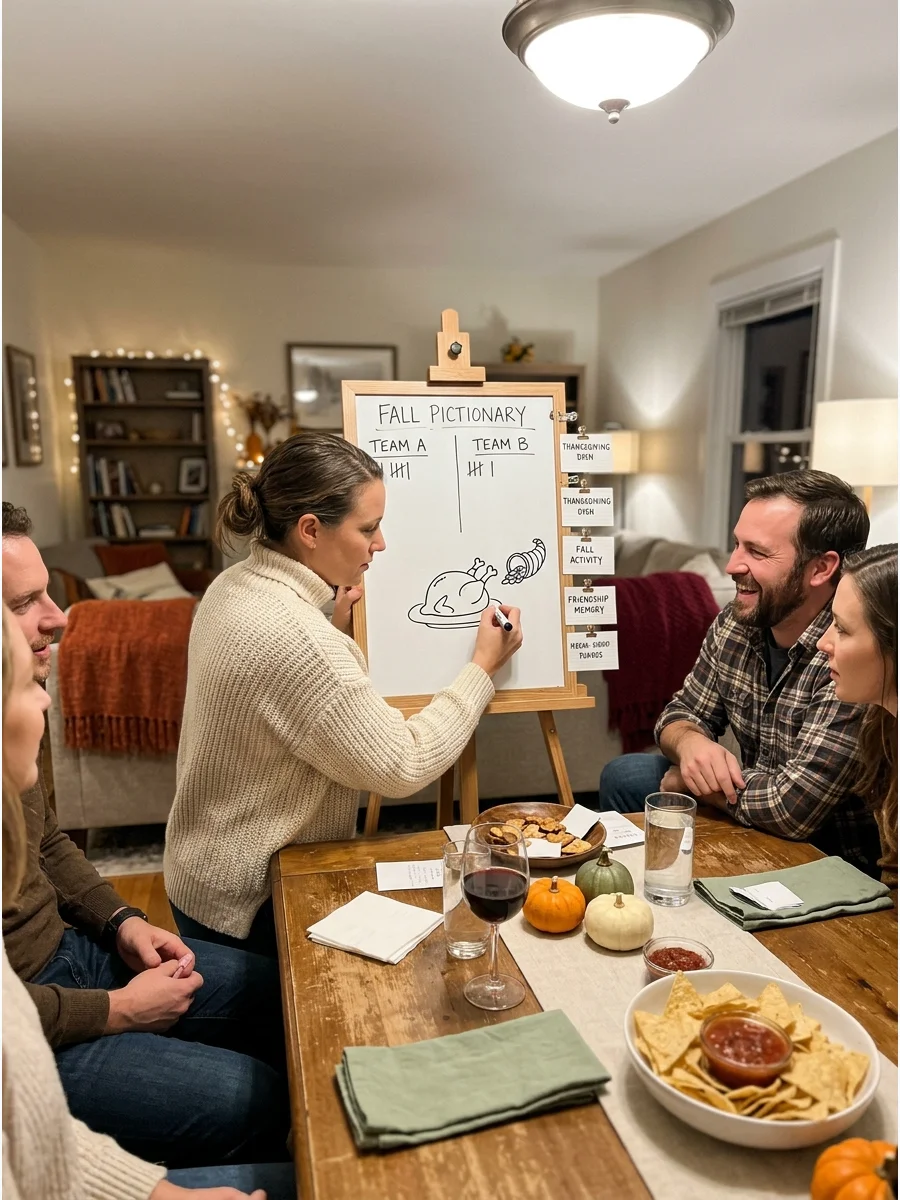
Prepare drawing prompts related to fall, friendship, food, and Thanksgiving. Divide everyone into teams and give each artist a limited amount of time to draw the answer.
Visual games provide a break from verbal interaction and reveal hidden artistic talents.
Ensure the markers are fresh and the drawing surface is large enough for everyone to see clearly.
7. Friendsgiving Scattergories
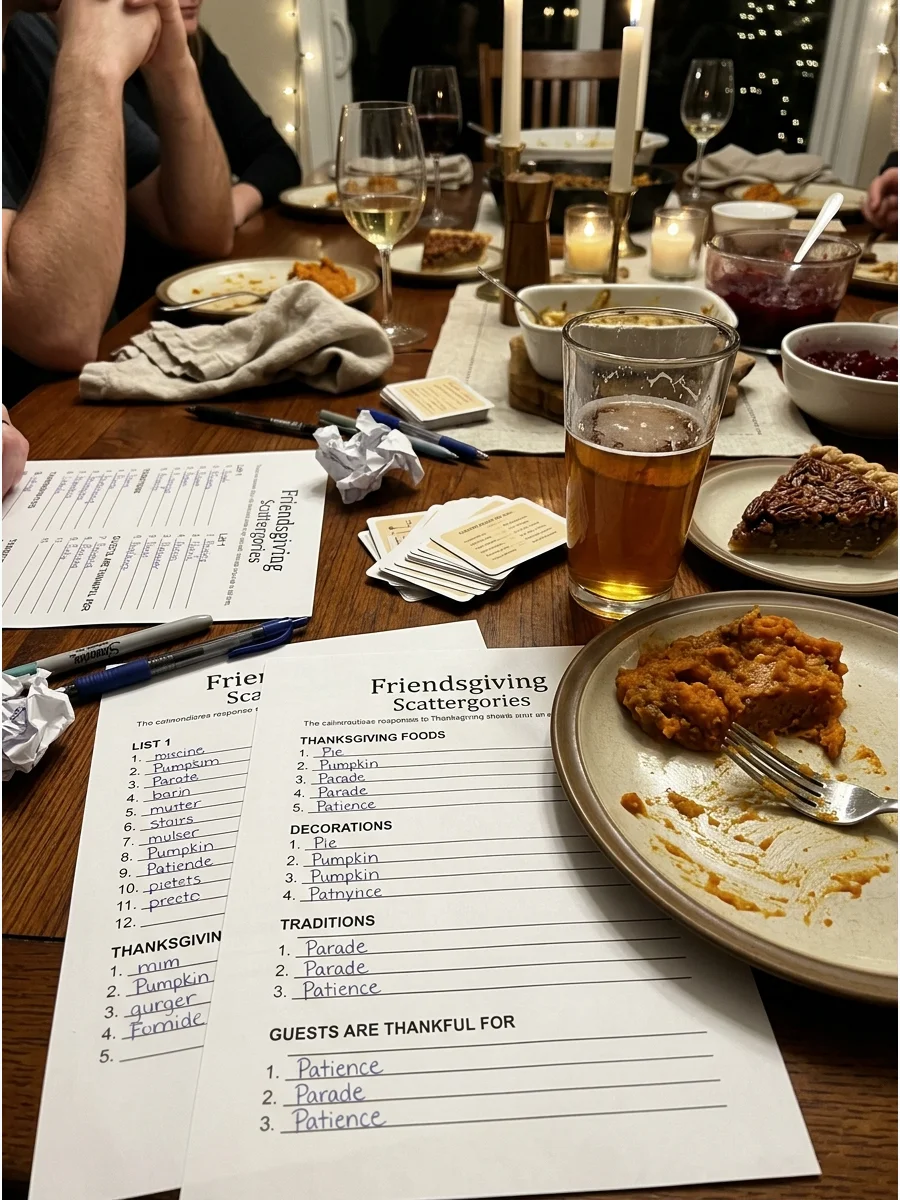
Choose Thanksgiving-themed categories such as foods, decorations, traditions, and things guests are thankful for. Players must think of unique answers beginning with the selected letter.
It rewards creative thinking and leads to funny debates over which answers qualify.
Use a kitchen timer to keep rounds short and fast-paced.
8. Thanksgiving 5-Second Rule
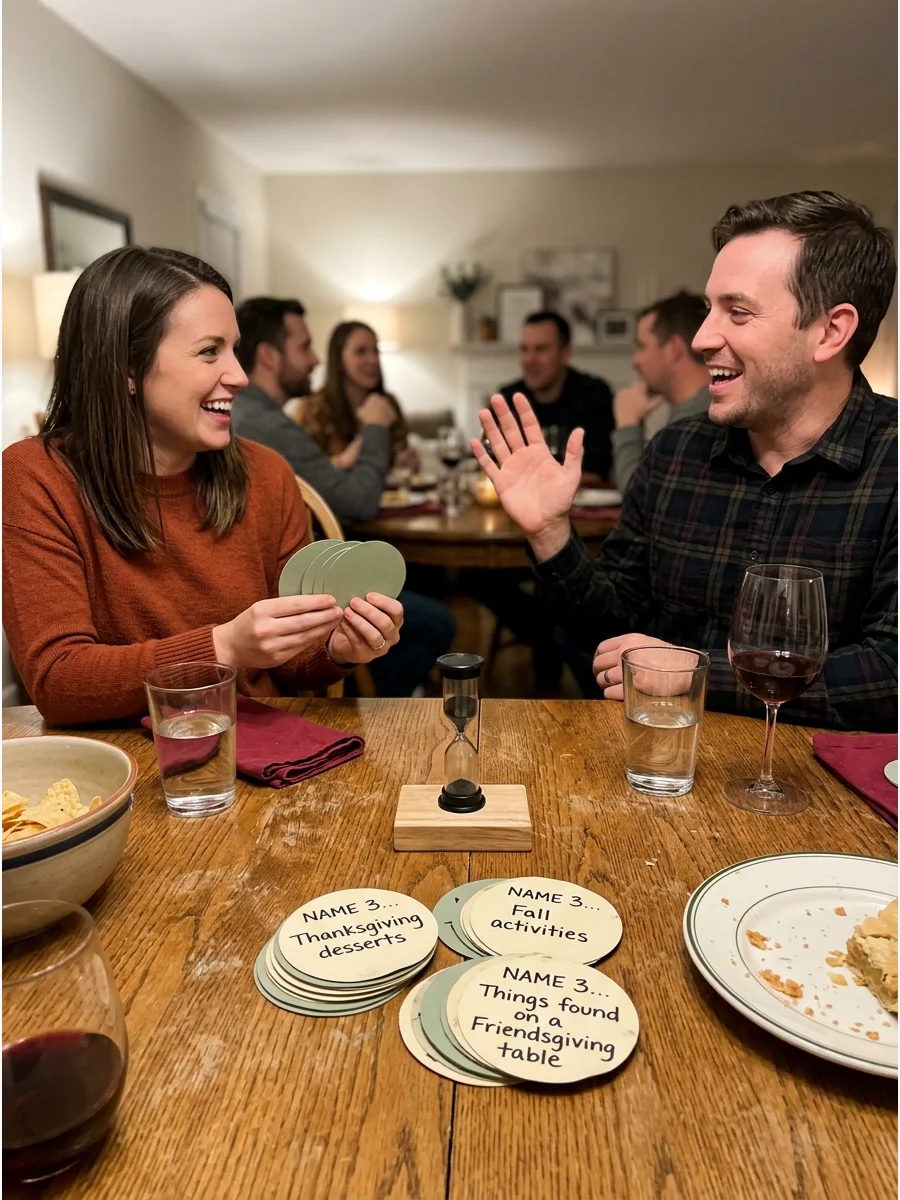
Ask players to name three items from a category within five seconds. Prompts might include three Thanksgiving desserts, three fall activities, or three things found on a Friendsgiving table.
The time pressure leads to funny, nonsensical answers and keeps the pace brisk.
Prepare a list of at least 30 categories beforehand to keep the game moving without pauses.
9. Thanksgiving Word Scramble
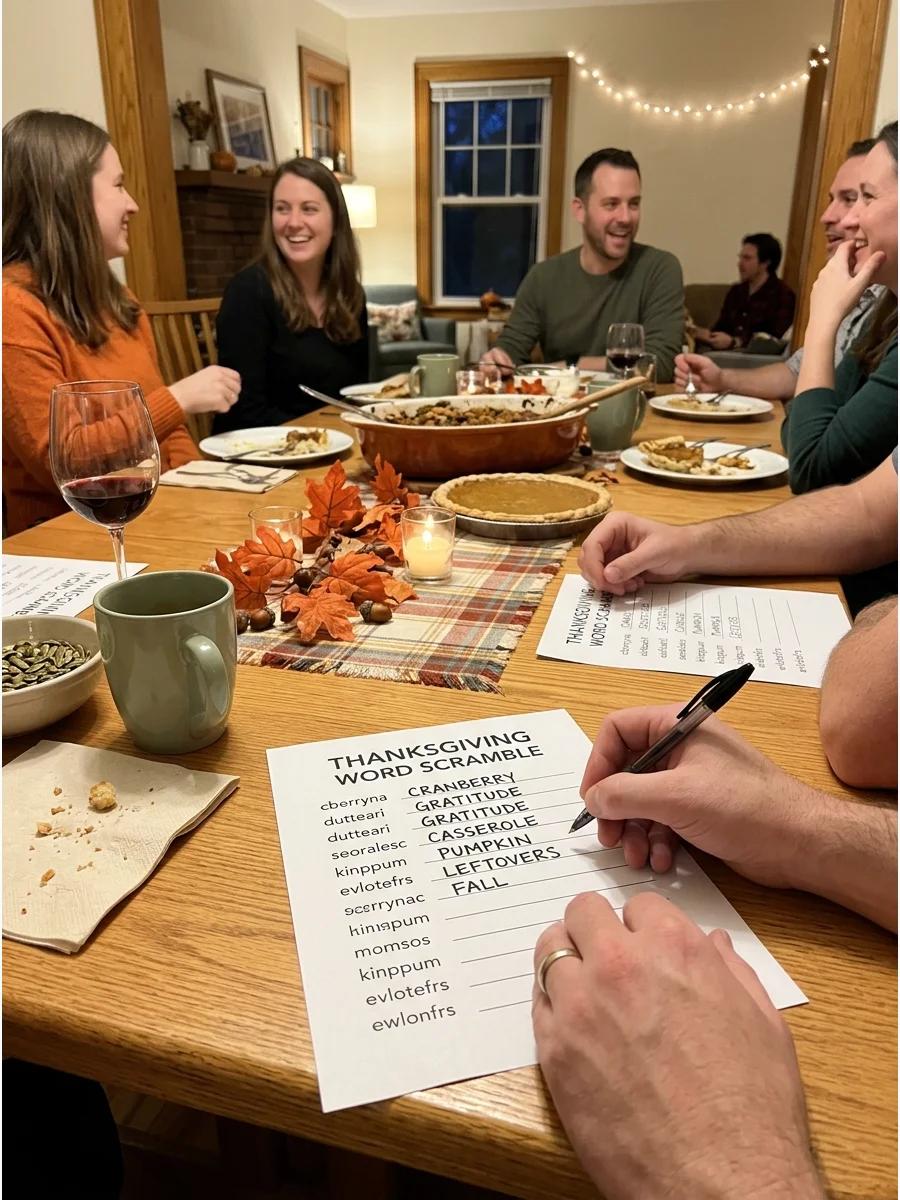
Create a printable page containing scrambled seasonal words such as cranberry, gratitude, casserole, pumpkin, and leftovers. The first person to unscramble every word correctly wins.
This works well as a quiet activity while waiting for the turkey to finish cooking.
Print the sheets on heavy cardstock for a more premium feel.
10. Friendsgiving Emoji Quiz
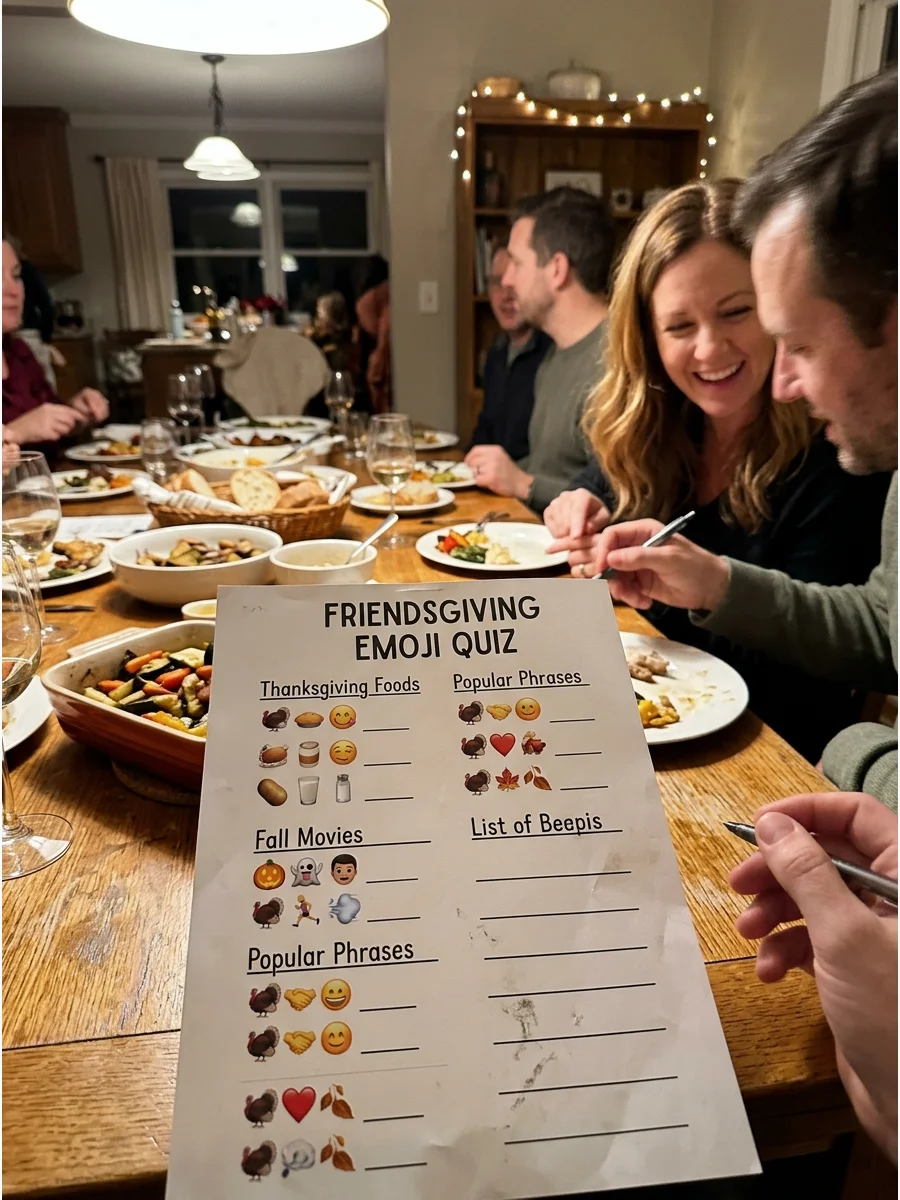
Write Thanksgiving foods, fall movies, and popular phrases using only emojis. Guests must figure out what each emoji combination represents.
It appeals to a modern sensibility and provides a visual puzzle for guests to solve.
Display the emoji strings on a TV screen or tablet so everyone can see them at once.
11. Friendsgiving Mad Libs
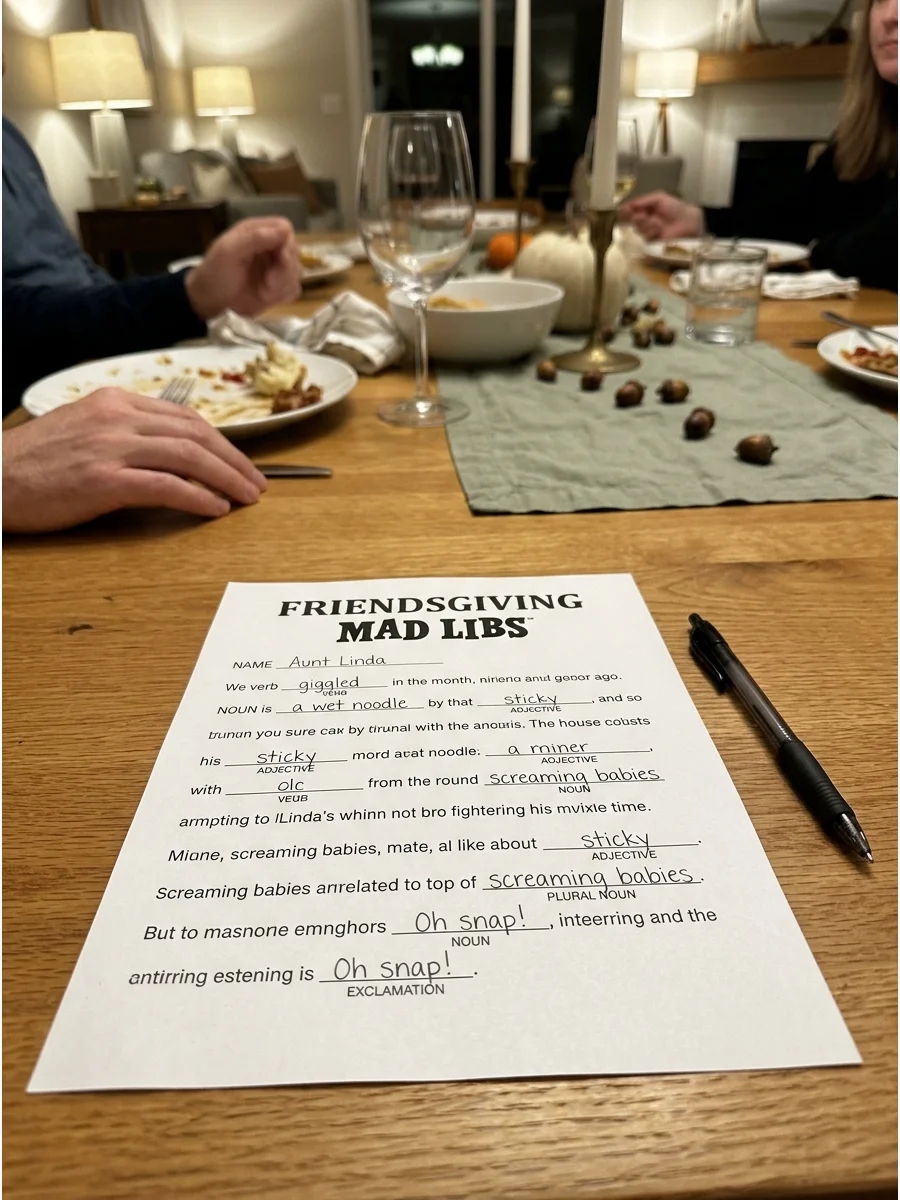
Prepare a funny Friendsgiving story with blank spaces for nouns, verbs, adjectives, and names. Ask guests for random words before reading the completed story aloud.
The results are usually absurd and provide a lighthearted transition to dessert.
Read the finished story aloud after the main course is cleared.
12. Finish the Thanksgiving Phrase
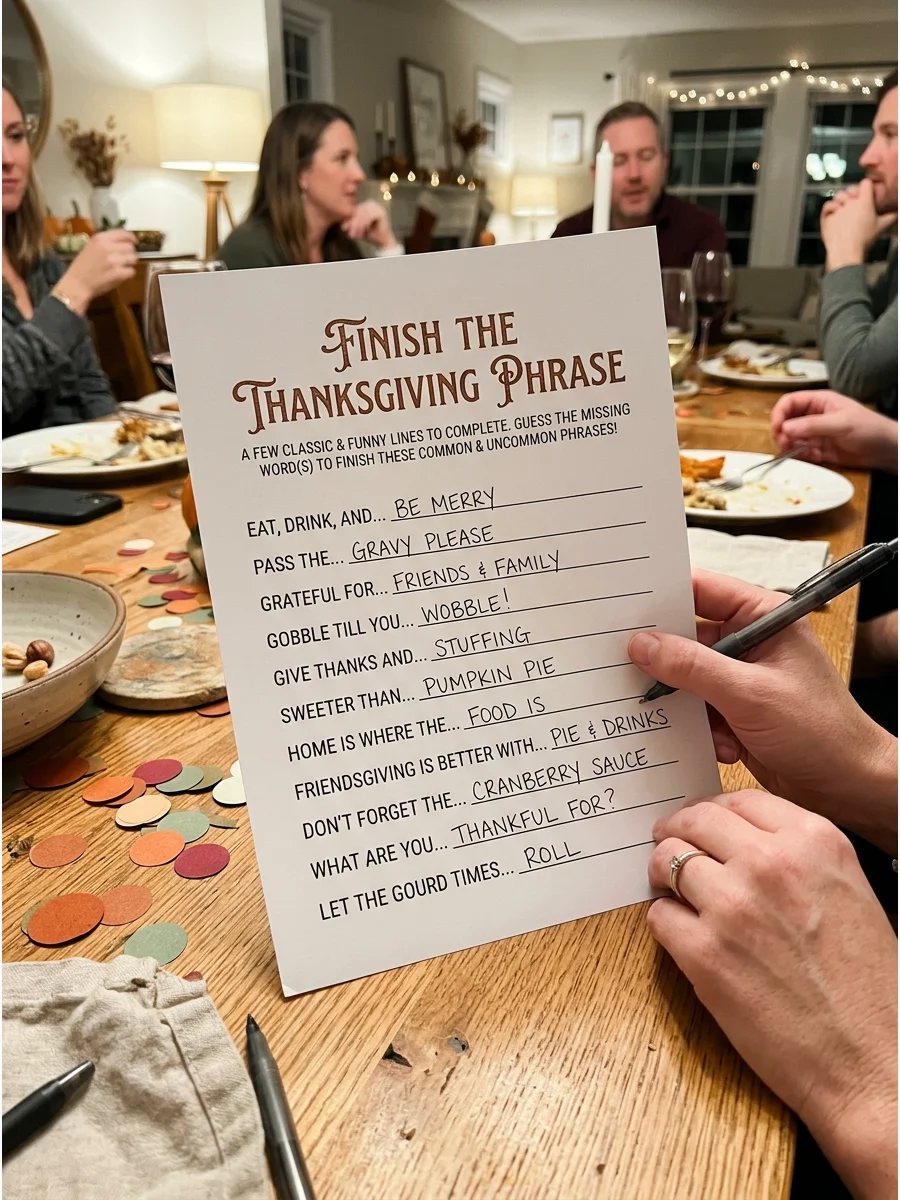
Begin familiar seasonal phrases and ask guests to complete them. Include traditional sayings, food-related expressions, and funny Friendsgiving sentences.
It is a low-stress game that can be played while guests are still seated for dinner.
Use a mix of traditional idioms and modern slang to keep it interesting.
13. Thanksgiving A-to-Z Race
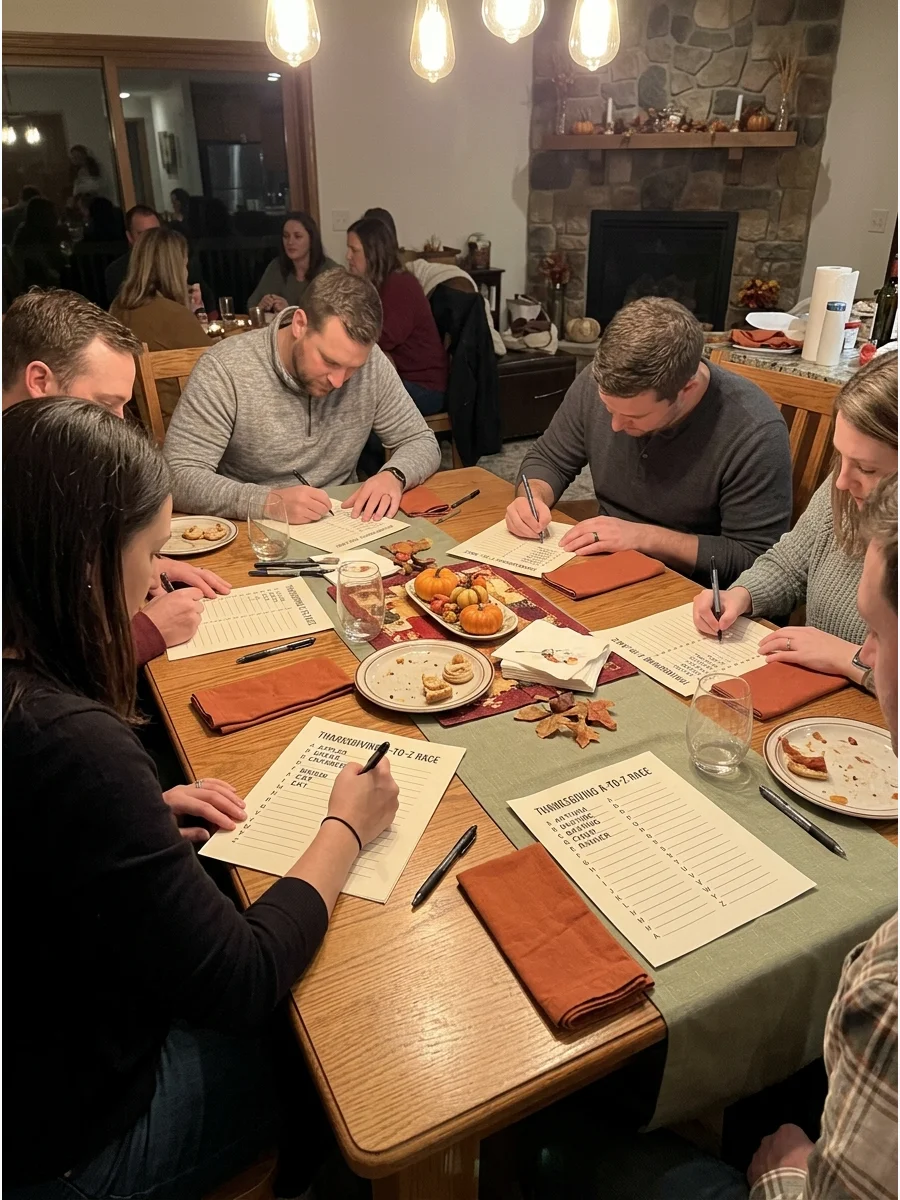
Give each guest a page containing every letter of the alphabet. Players must write one Thanksgiving or fall-related word beginning with each letter.
It is highly competitive and gets the whole group thinking simultaneously.
Offer a small prize, like a bottle of local cider, for the first person to finish.
14. Name That Thanksgiving Dish
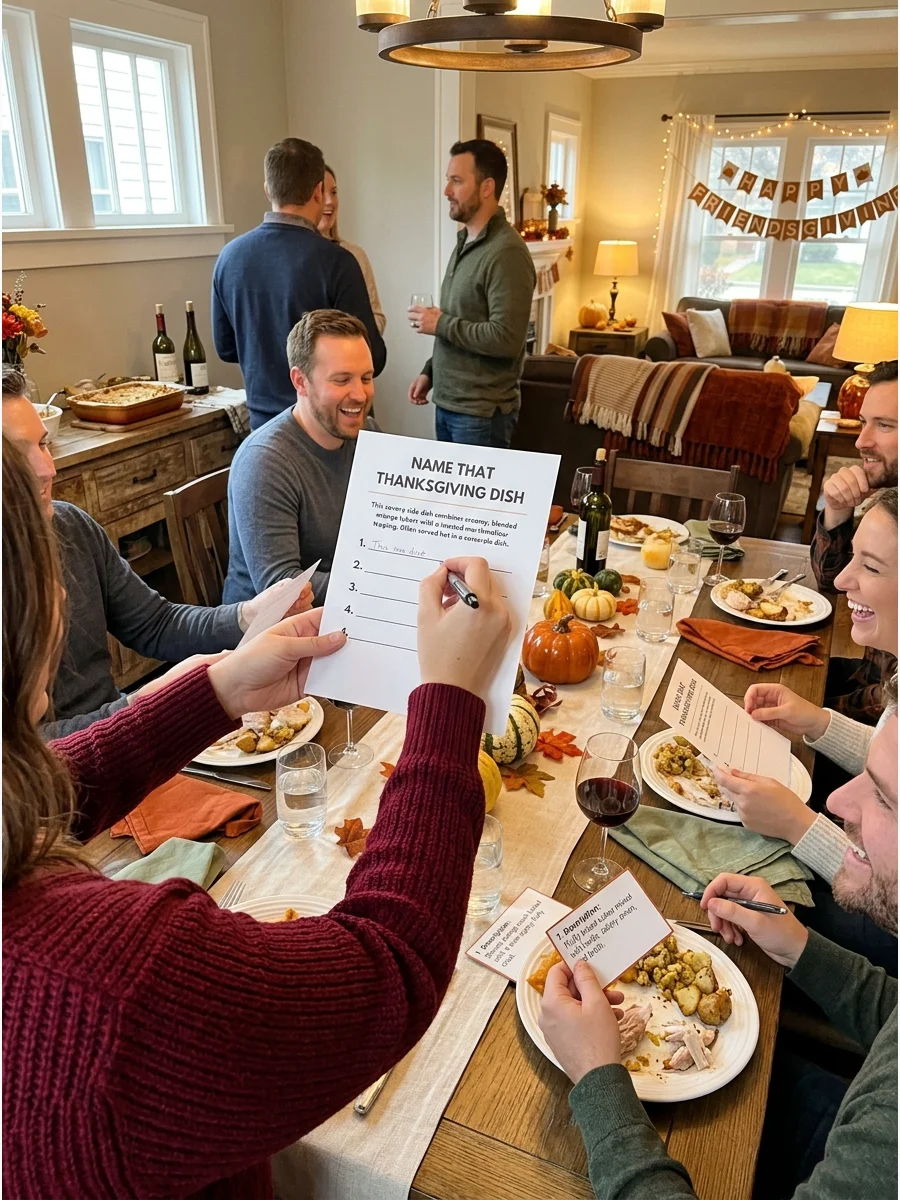
Describe a Thanksgiving dish without saying its name or most obvious ingredients. The first person to identify the dish earns a point.
It highlights the variety of the potluck and sparks interest in the recipes.
Encourage the person who brought the dish to give the clues.
15. Guess the Secret Ingredient
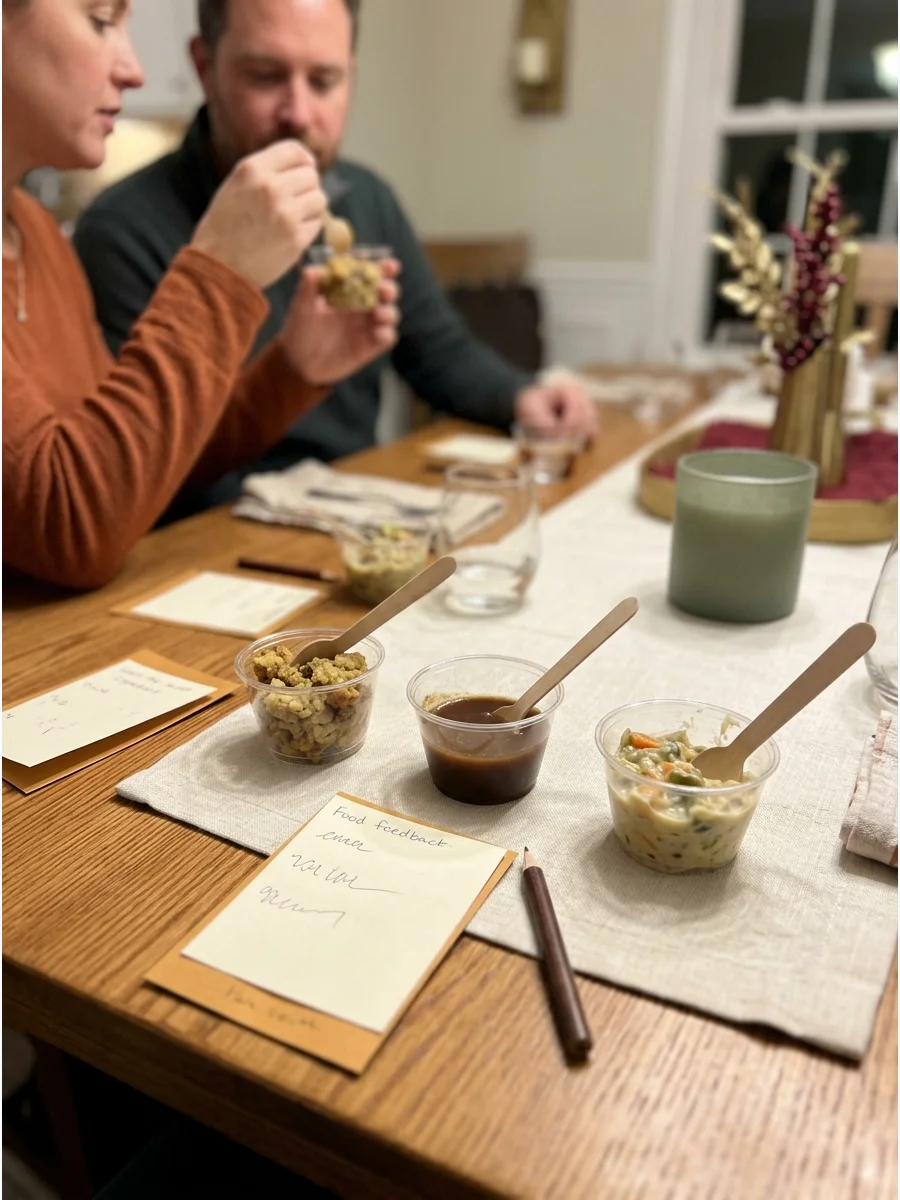
Serve small samples of familiar Friendsgiving foods containing one unexpected ingredient. Guests taste each sample and try to identify the mystery addition while considering any food allergies.
It turns the meal into a sensory experience and starts conversations about cooking techniques.
Use small white ceramic tasting spoons for a clean, organized presentation.
16. Thanksgiving Spice Smell Test
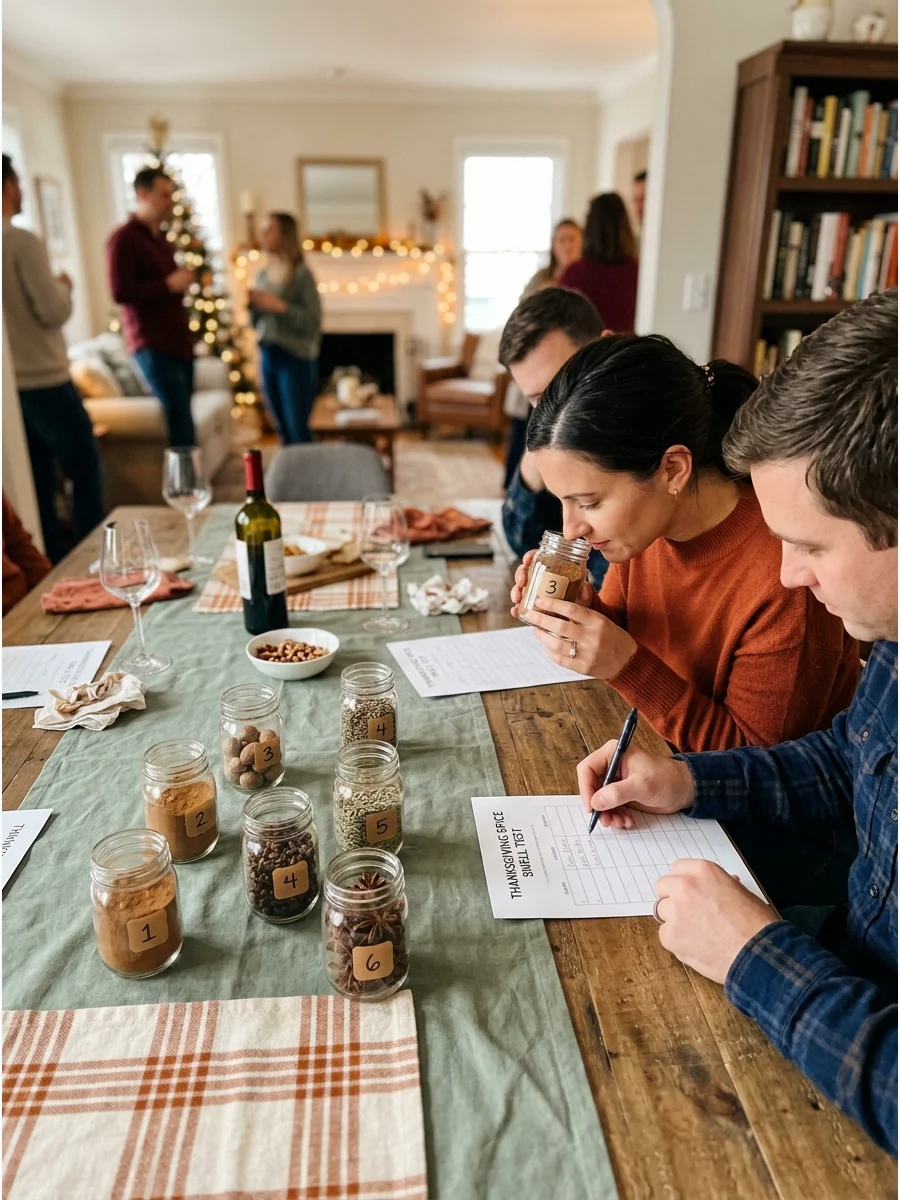
Place cinnamon, nutmeg, cloves, sage, rosemary, and other seasonal spices in numbered containers. Guests smell each container and write down their guesses.
This is a great tactile activity that doesn't require extra eating.
Wrap the jars in opaque paper so the color of the spice doesn't give it away.
17. Pie Flavor Taste Test
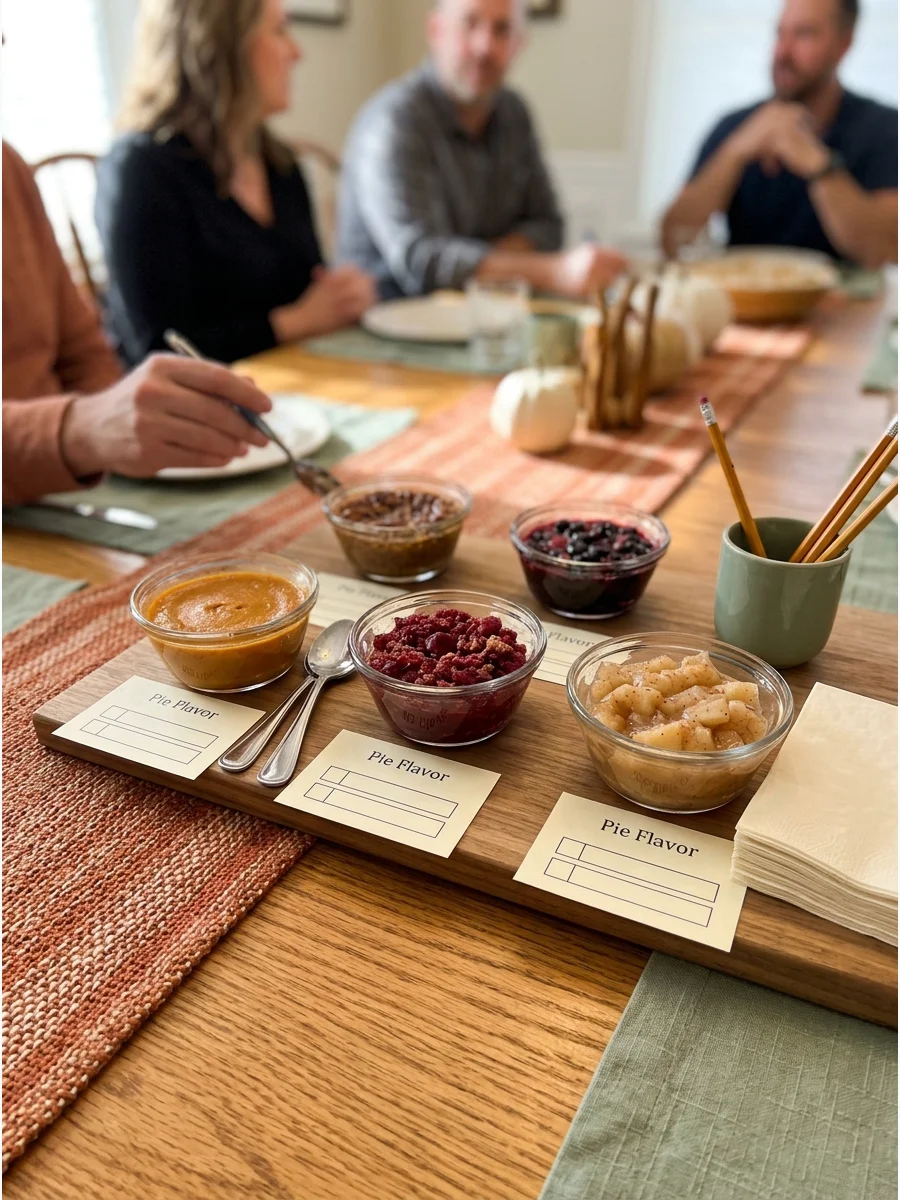
Offer small bites of several pies and ask guests to identify each flavor. Use familiar options and a few unusual choices to make the challenge more difficult.
It is a fun way to serve dessert while making it interactive.
Provide a small glass of water between samples to cleanse the palate.
18. Name That Fall Tune
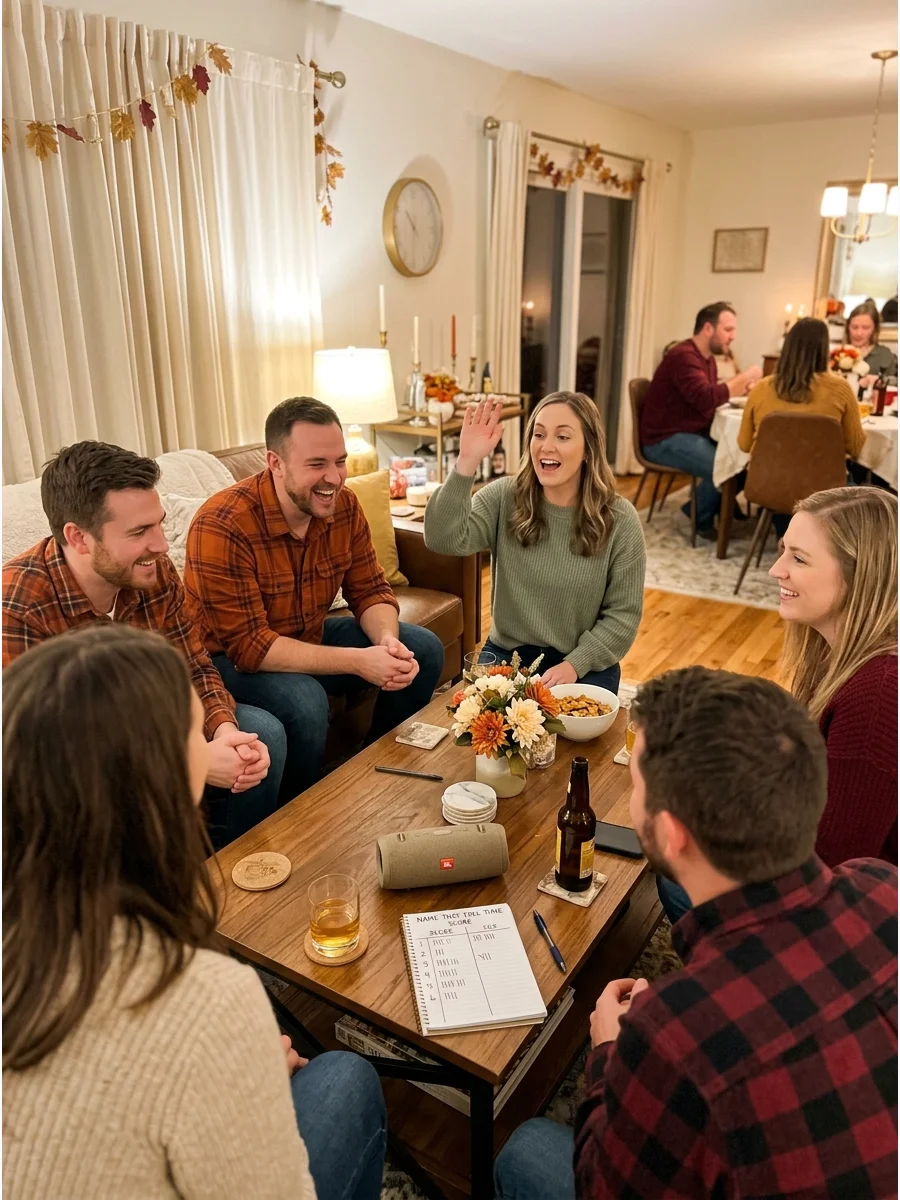
Play short clips from songs associated with friendship, autumn, celebrations, or nostalgia. The first person to identify the song or artist earns a point.
Music naturally sets a mood and encourages guests to sing along.
Use a high-quality Bluetooth speaker placed centrally for clear sound.
19. Friendsgiving Playlist Challenge
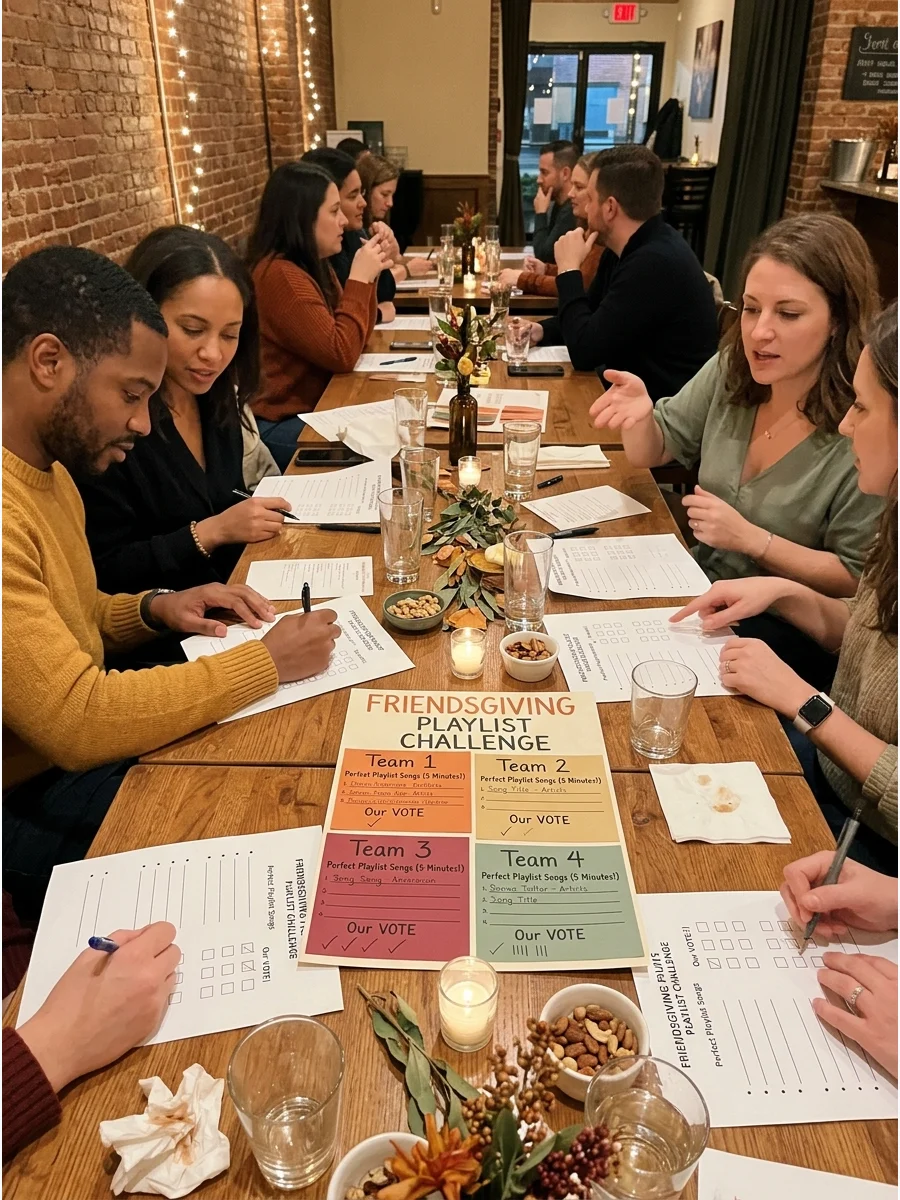
Divide guests into teams and give them five minutes to create the perfect Friendsgiving playlist. Everyone votes for the playlist they would most like to hear during dinner.
It allows guests to share their personal tastes and curate the evening's background music.
Play the winning playlist during the final hour of the party.
20. Thanksgiving Movie Quote Quiz
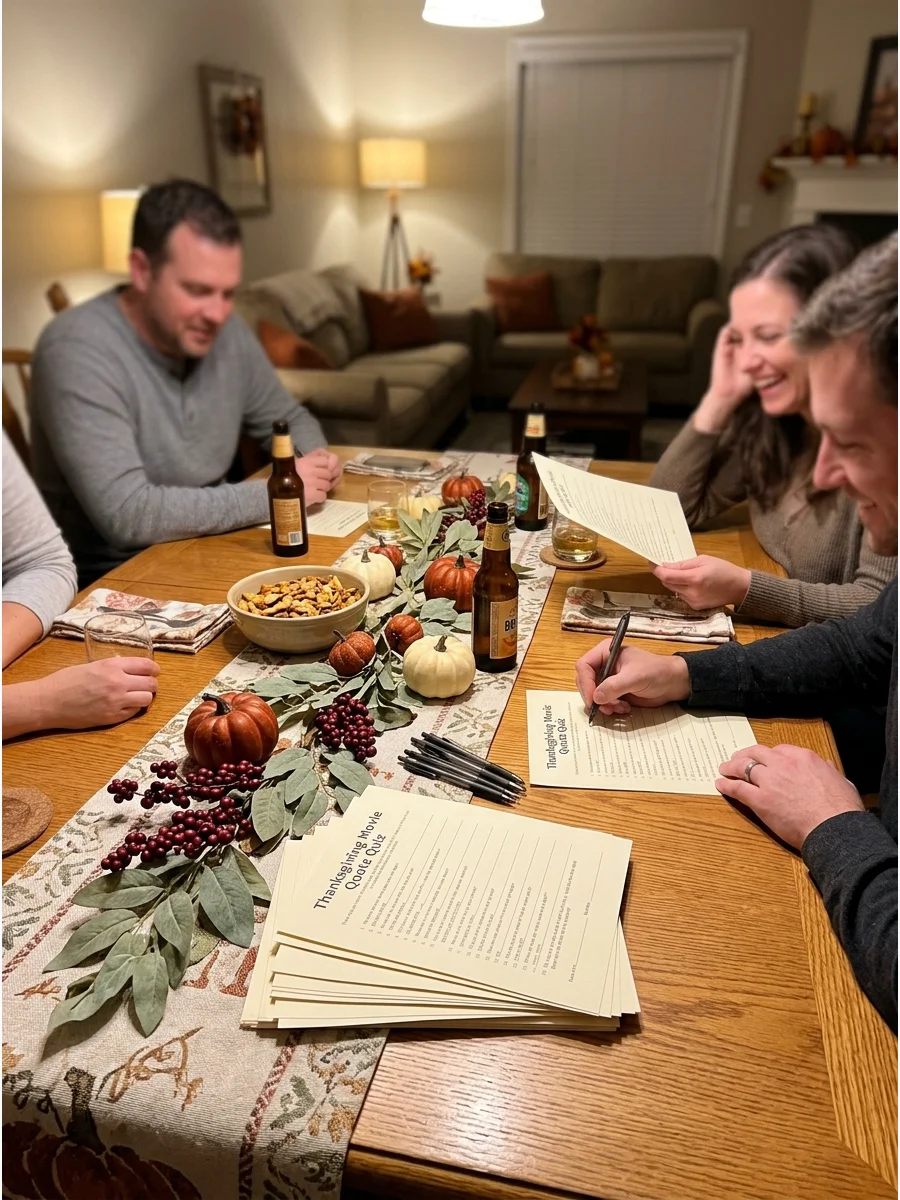
Read quotes from popular Thanksgiving episodes, fall movies, and family comedies. Players must identify the movie, television show, or character.
Nostalgia is a powerful connector for adult friend groups.
Include quotes from both classic films and modern TV sitcom specials.
21. Friendsgiving Movie Charades
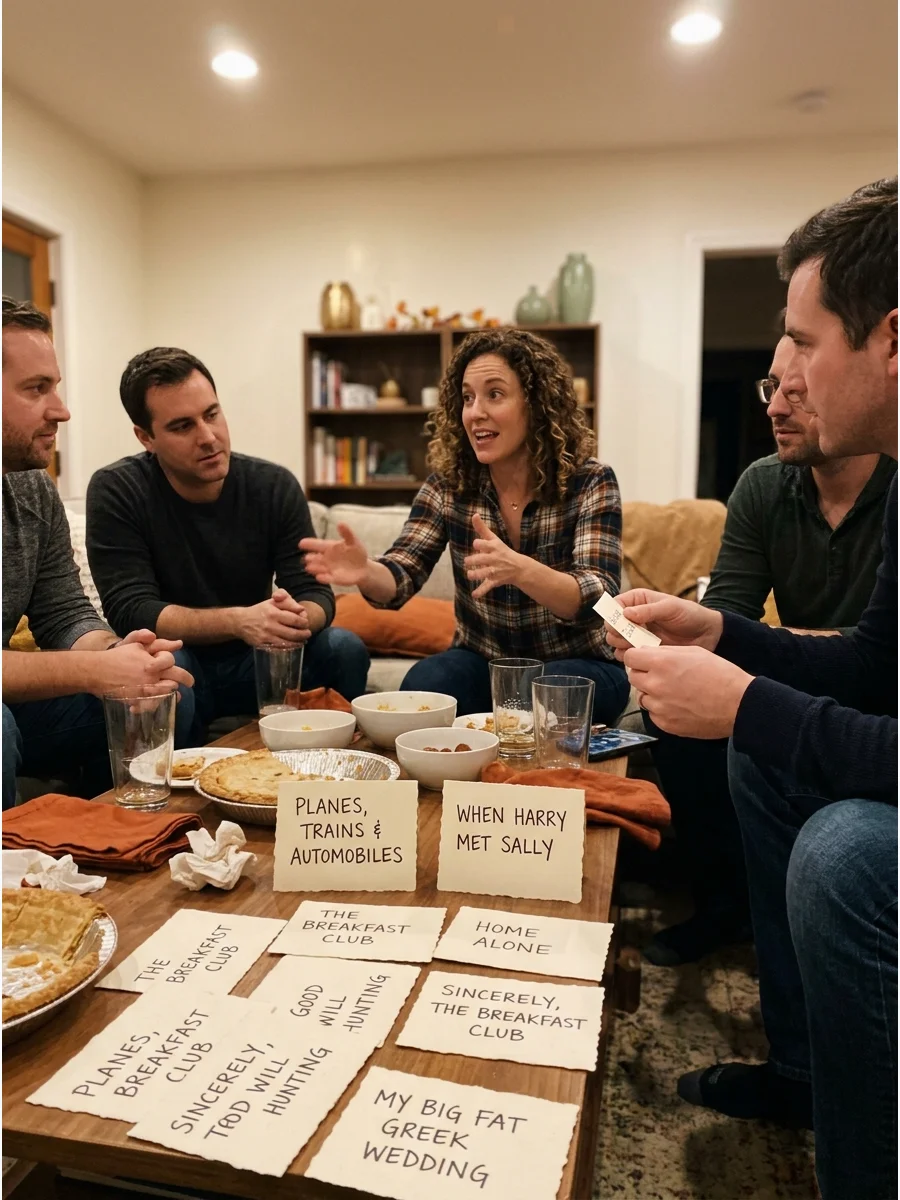
Use movie titles instead of ordinary charades prompts. Include comedies, nostalgic favorites, fall films, and movies about friendship.
It limits the scope of charades, making it easier for guests to guess correctly.
Print movie posters or title cards to show the group once a movie is guessed.
22. Guess the Famous Friendship
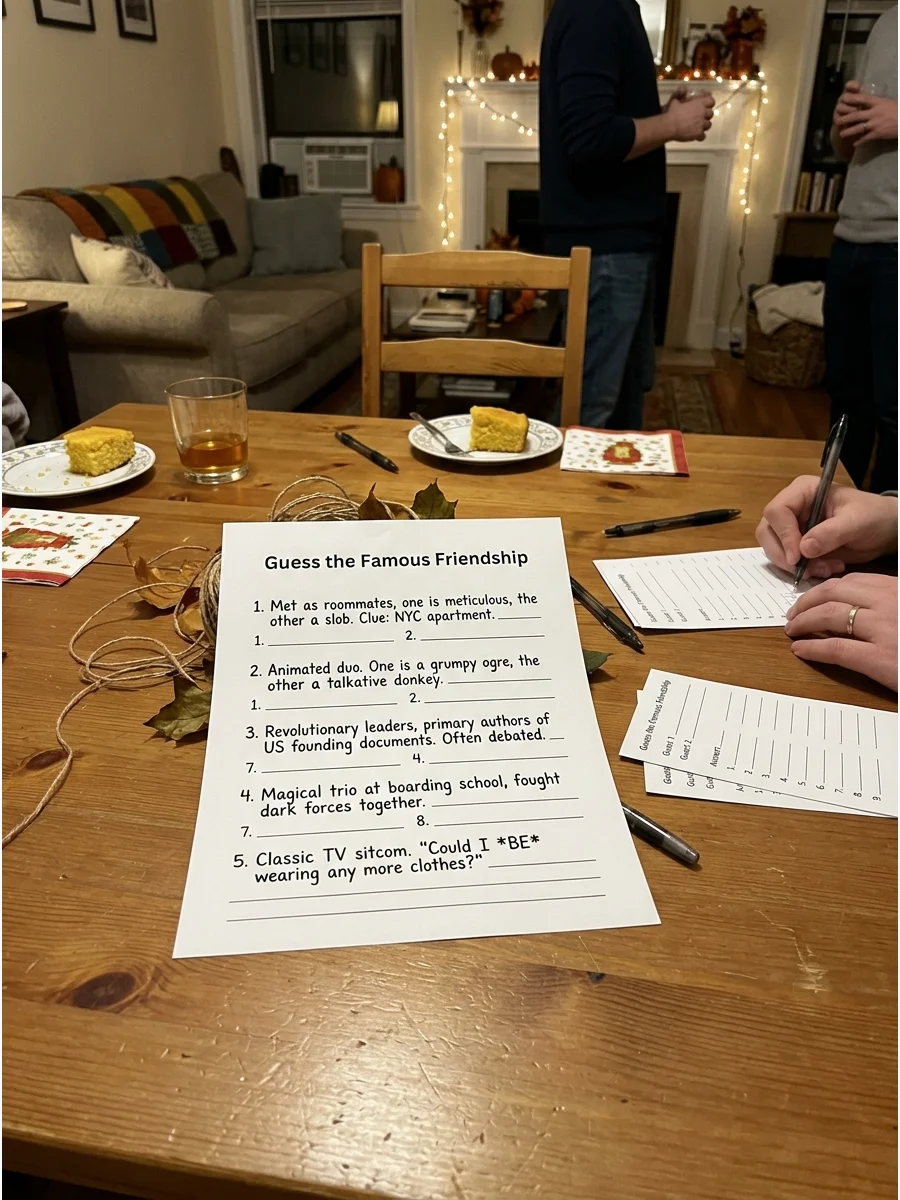
Give clues about famous friendships from movies, television, books, or history. Guests must identify both people or characters in the friendship.
It celebrates the theme of friendship without being overly personal.
Start with obscure clues and make them easier as the round progresses.
23. Who Knows the Host Best?
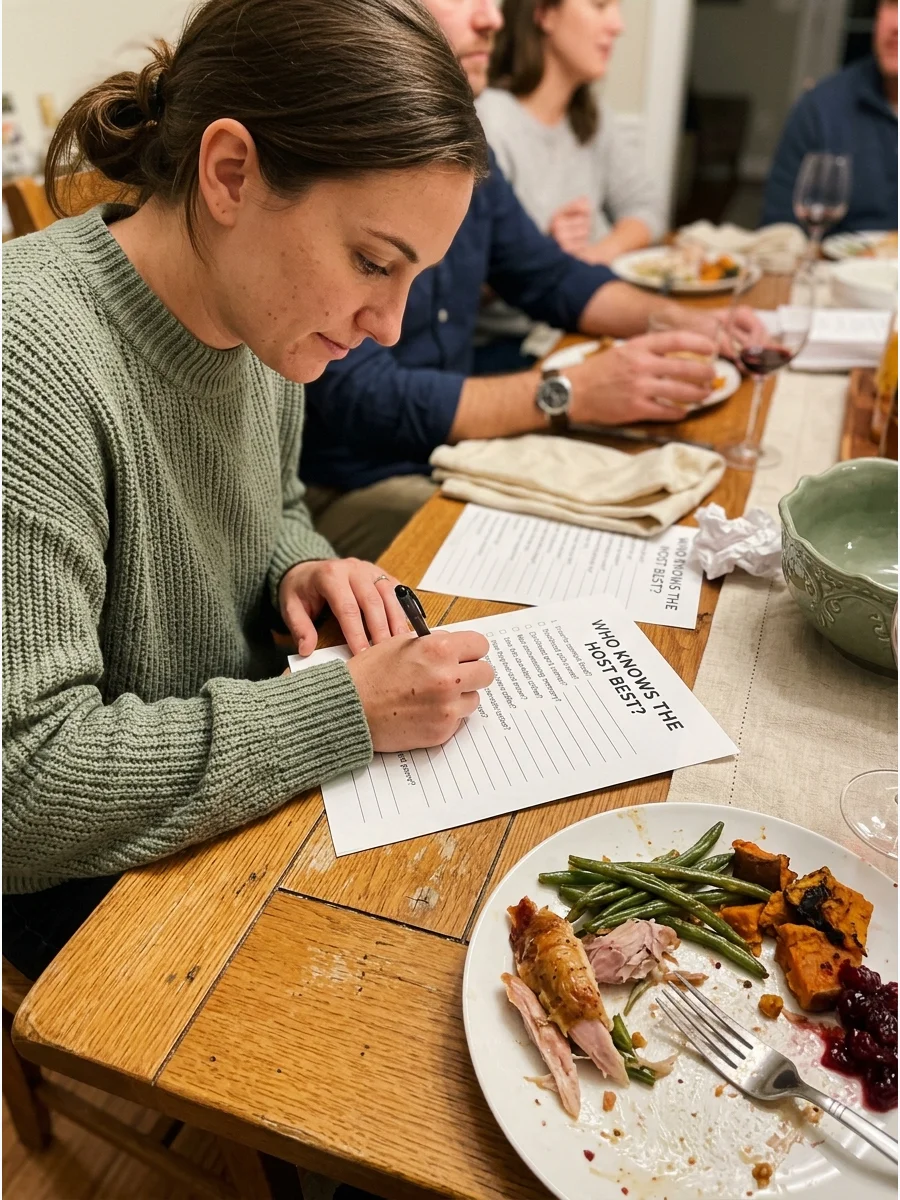
Prepare questions about the host’s favorite foods, habits, memories, and personality. The guest with the greatest number of correct answers wins.
It honors the person who organized the event and reveals funny personal facts.
Keep the questions light, focusing on things like 'favorite late-night snack.'
24. Who Knows the Friend Group Best?
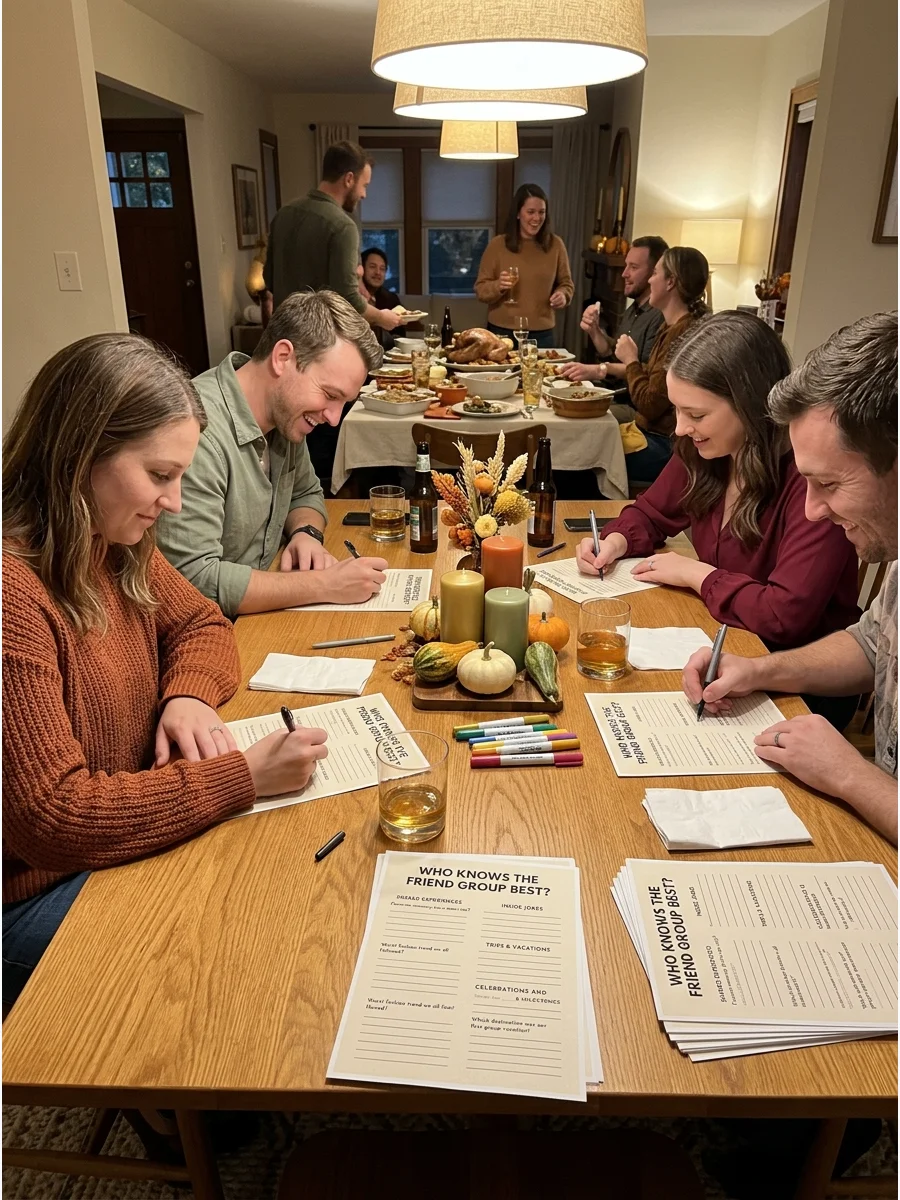
Ask questions about shared experiences, inside jokes, trips, celebrations, and important moments. This game works especially well for a group that has known one another for several years.
It reinforces the shared bond of the group and sparks long-forgotten stories.
Use photos from the events mentioned to verify the answers.
25. Friend Group Superlatives
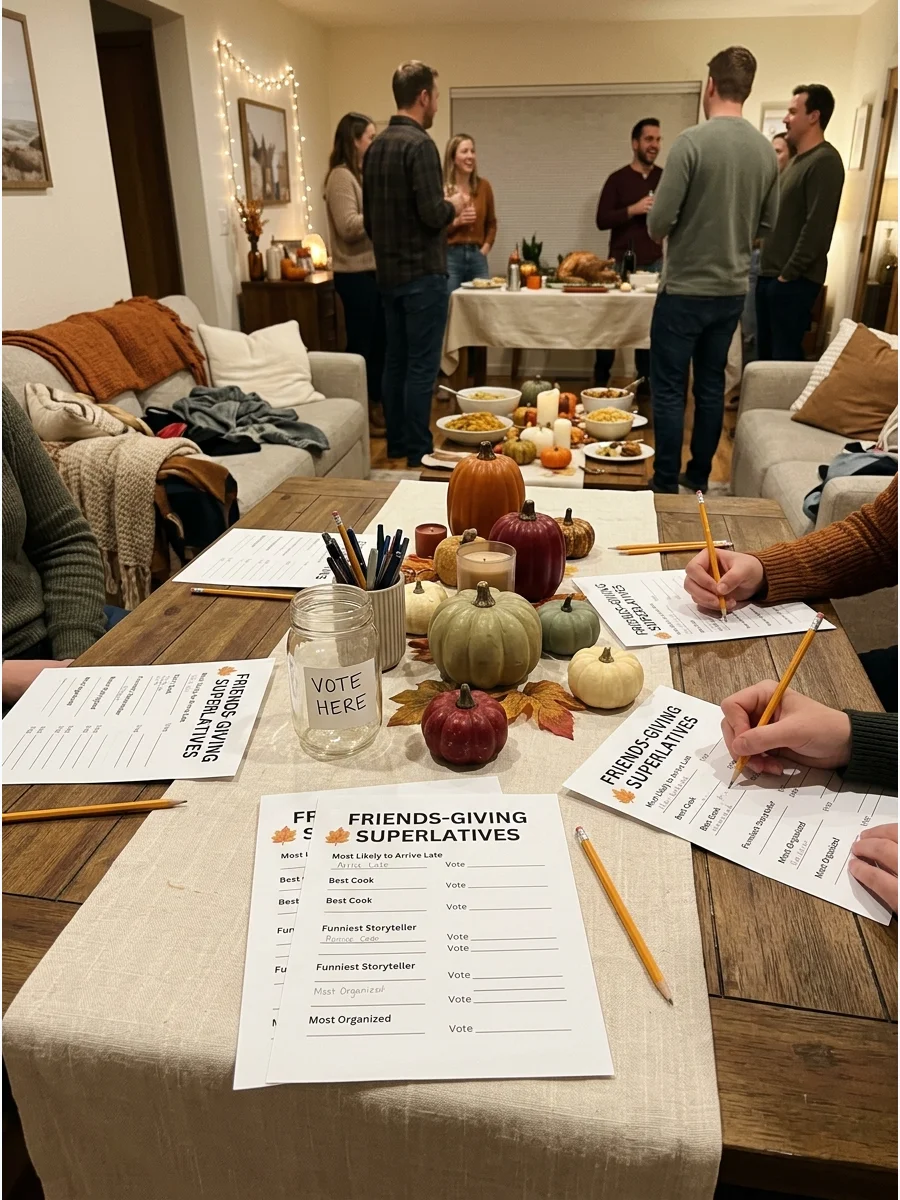
Create categories such as Most Likely to Arrive Late, Best Cook, Funniest Storyteller, and Most Organized. Guests secretly vote before the winners are announced.
It is a playful way to acknowledge everyone's personality within the group.
Provide small paper ballots and a box to keep the voting anonymous.
26. Most Likely To
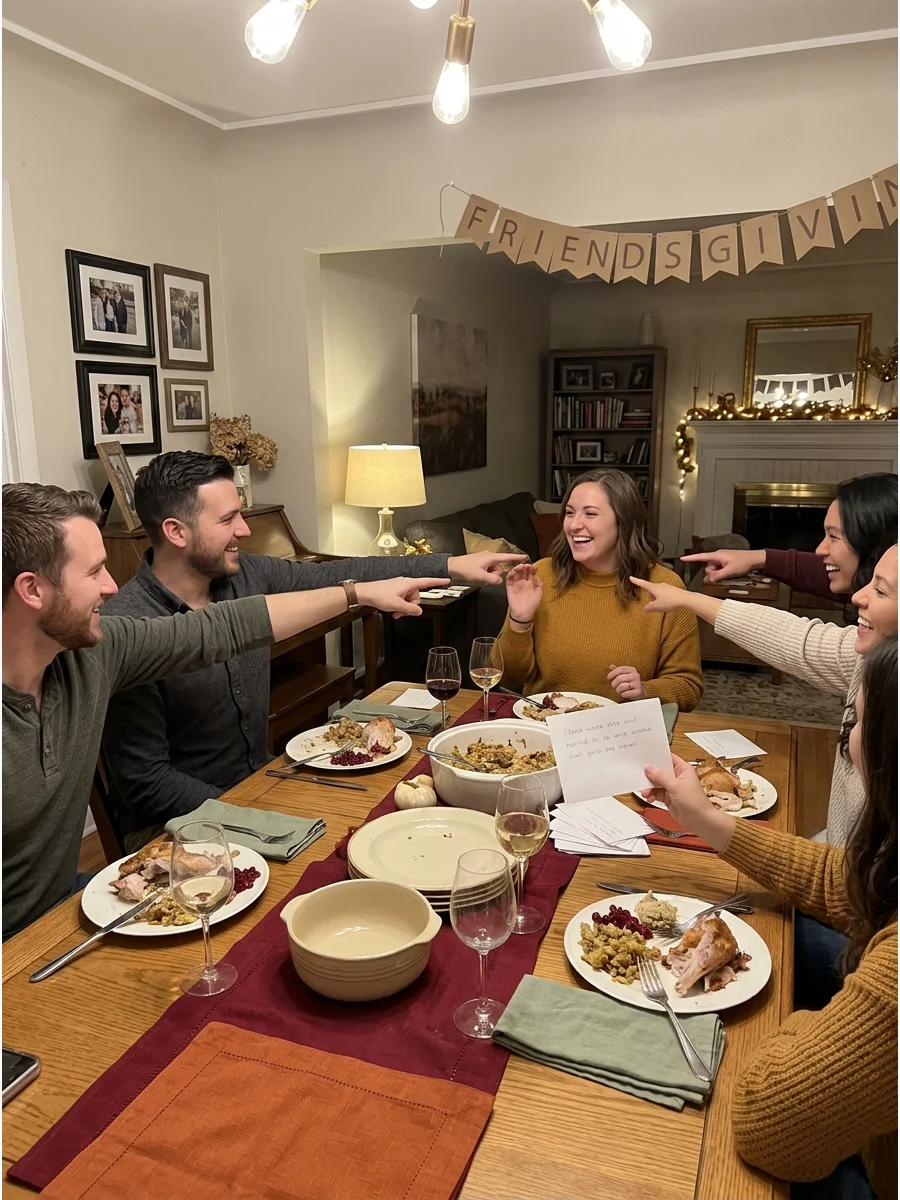
Read funny or relatable statements and have everyone point to the person who best fits each description. Keep the prompts friendly so nobody feels embarrassed or excluded.
It is fast-paced and creates immediate, high-energy reactions from the group.
Ensure the prompts are positive or lighthearted to avoid hurt feelings.
27. Two Truths and a Turkey
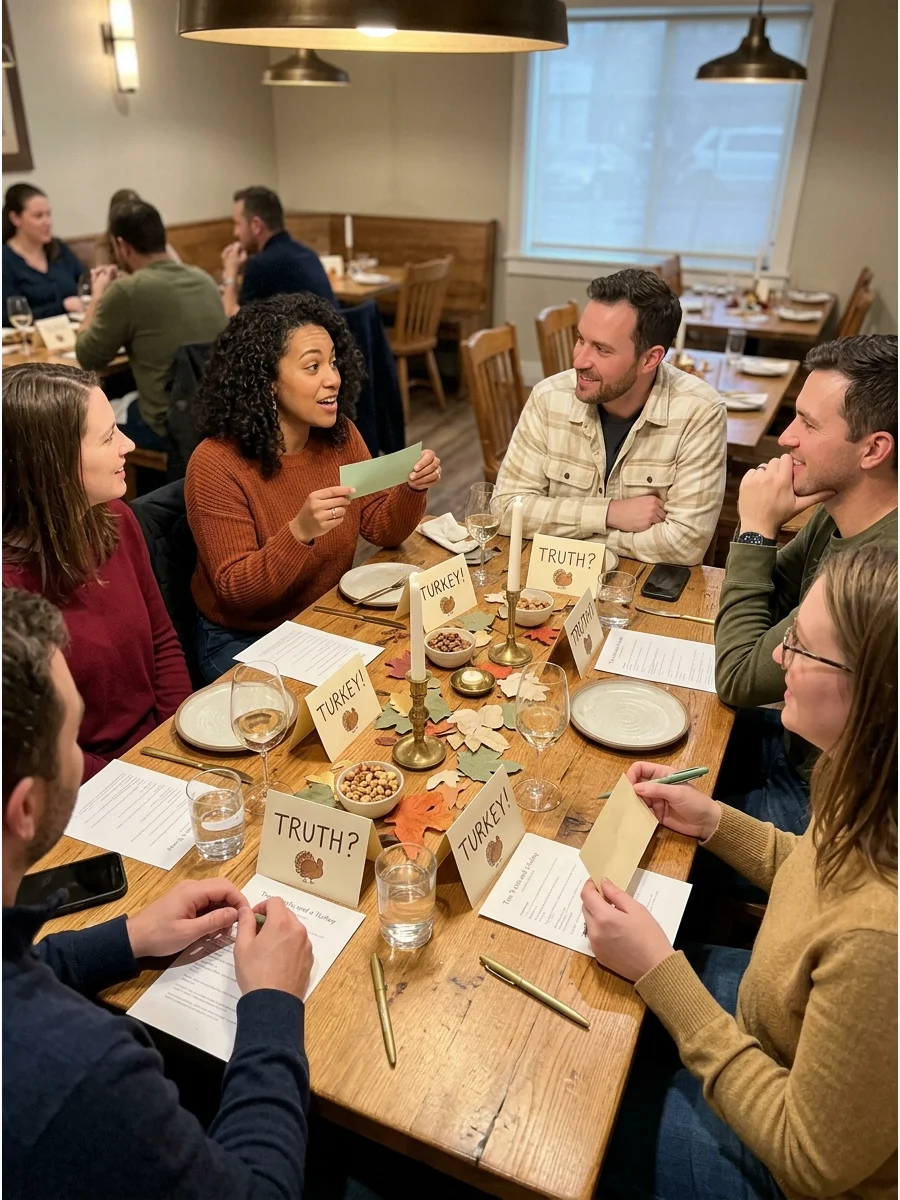
Each guest shares two true statements and one made-up statement about a past Thanksgiving or holiday experience. Everyone else tries to identify the fictional story.
It is a great way to learn surprising new things about long-time friends.
Encourage guests to make their 'truth' as unbelievable as possible.
28. Never Have I Ever: Friendsgiving Edition
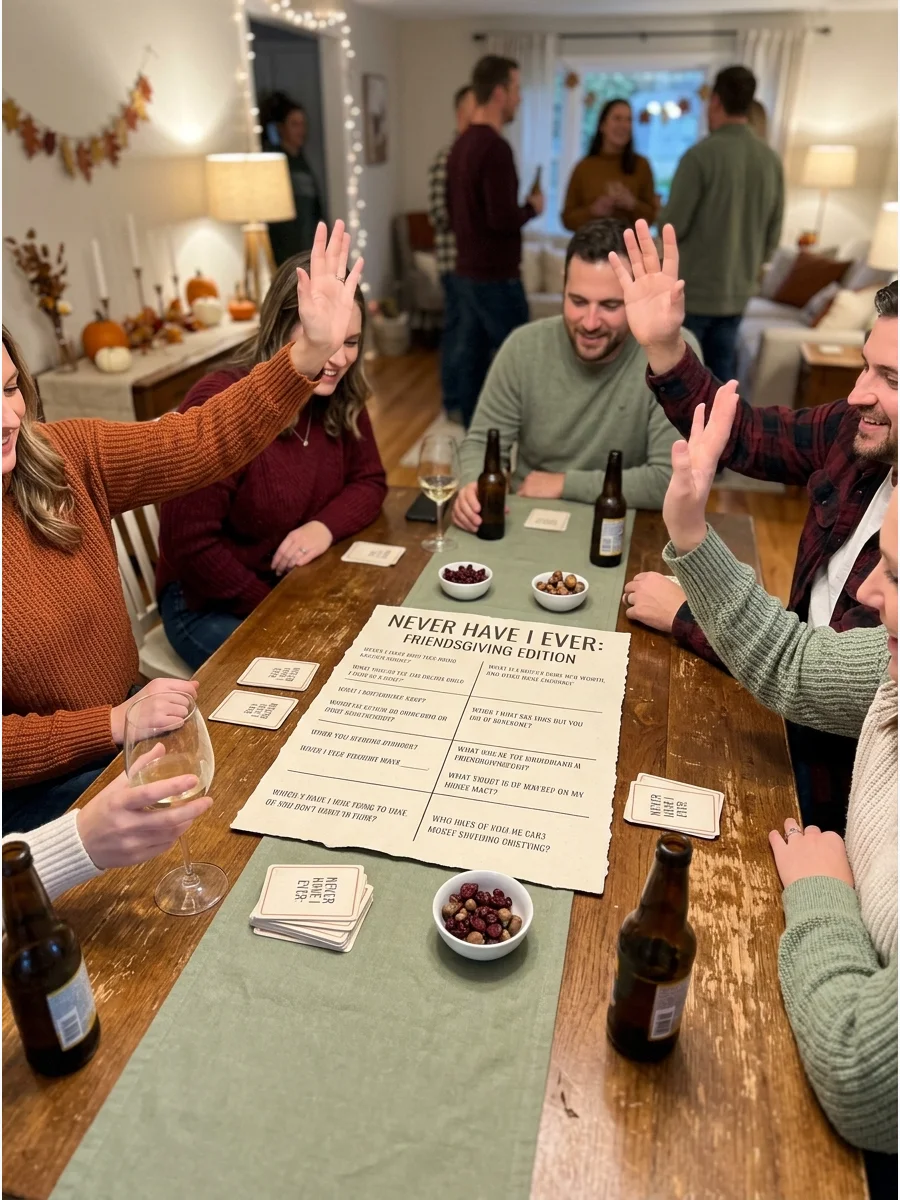
Read lighthearted statements about cooking mistakes, holiday travel, fall activities, and friendship experiences. Guests raise a hand or keep score whenever the statement applies to them.
It reveals common experiences, like burning a dish or forgetting an ingredient.
Use ten fingers to track points so no extra materials are needed.
29. Friendsgiving Would You Rather?
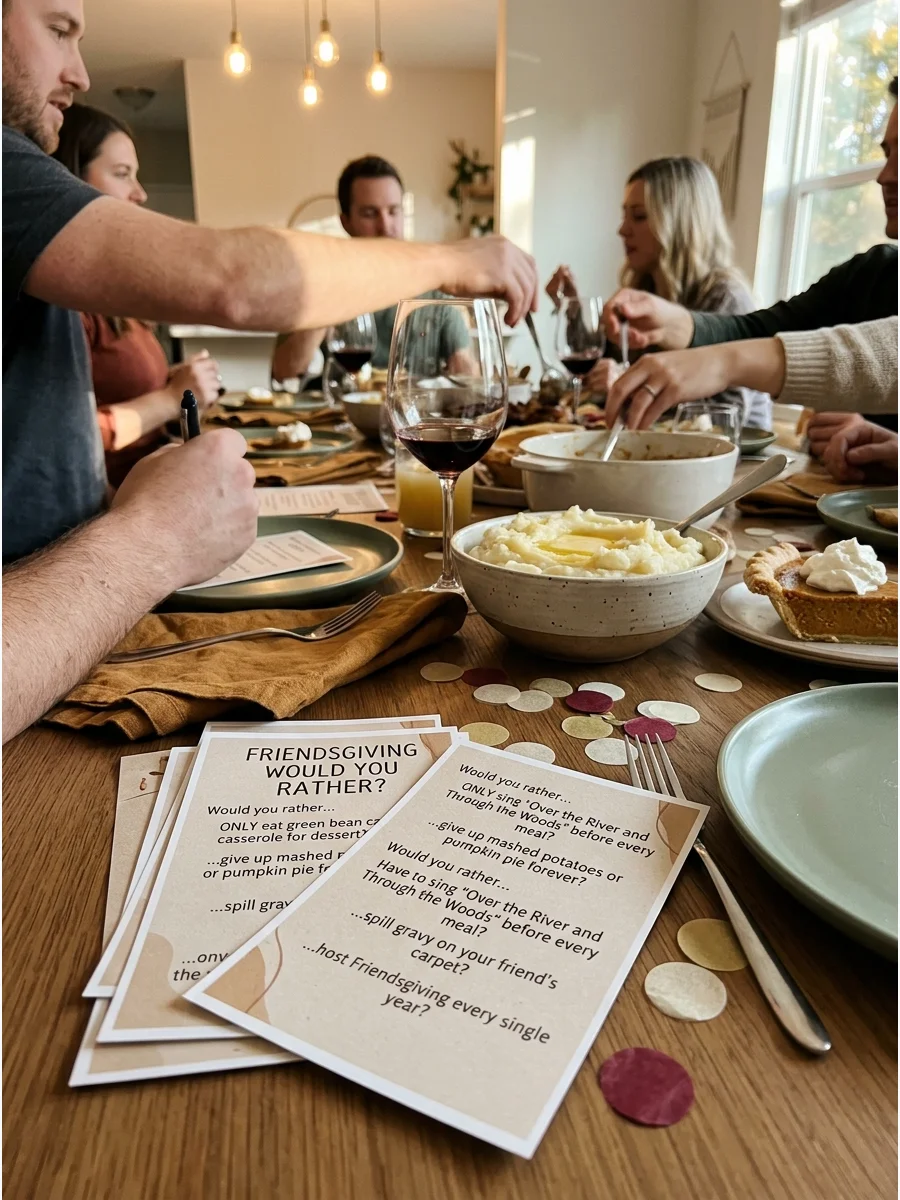
Ask seasonal questions such as whether guests would rather give up pie or mashed potatoes. Mix food choices with funny friendship and holiday situations.
It prompts funny debates about food preferences and holiday habits.
Have guests physically move to different sides of the room based on their choice.
30. Friendsgiving This or That
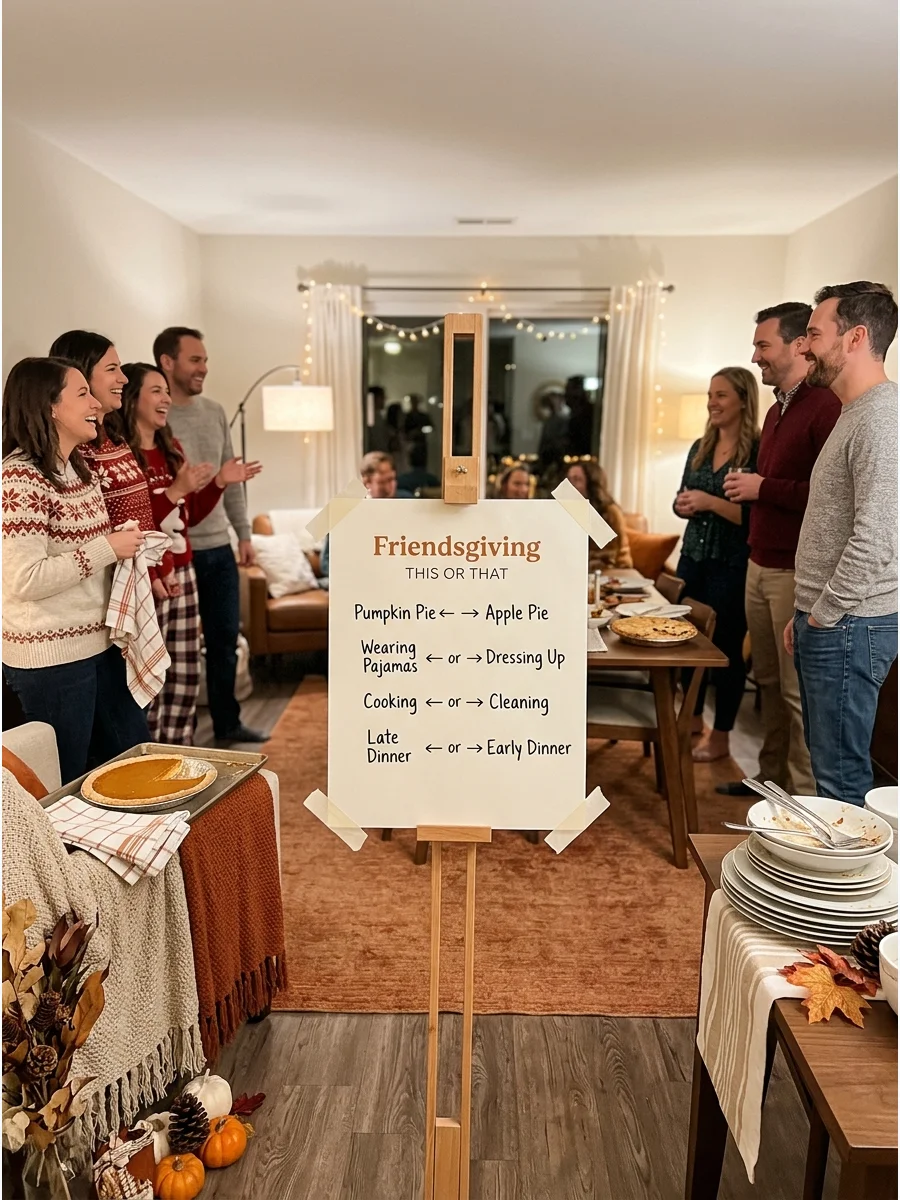
Prepare quick choices such as pumpkin pie or apple pie, dressing up or wearing pajamas, cooking or cleaning, and early dinner or late dinner. Guests can move to different sides of the room to show their answers.
It is a very fast way to get the group talking and energized.
Keep the pace moving quickly with only 5 seconds to decide per pair.
31. Human Friendsgiving Bingo
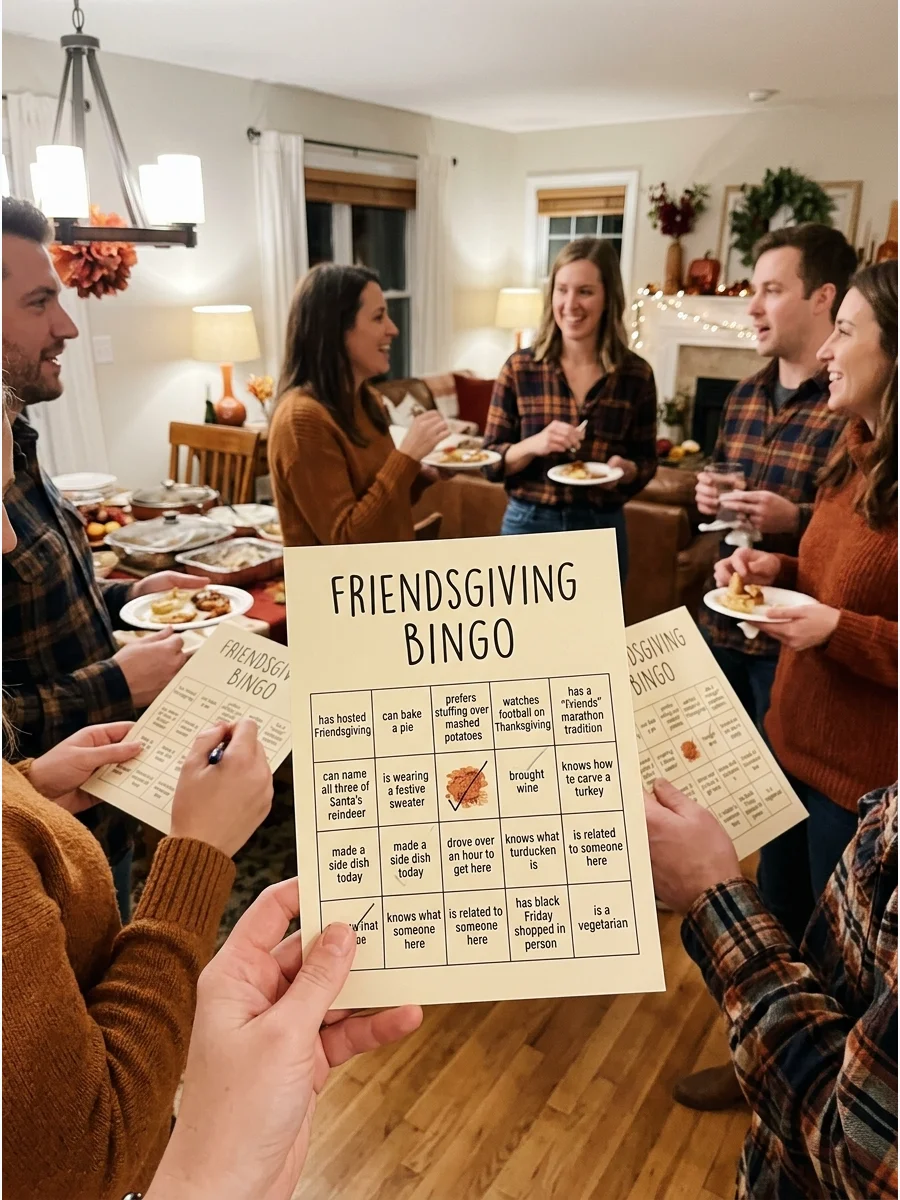
Create cards containing descriptions such as “has hosted Friendsgiving,” “can bake a pie,” or “prefers stuffing over mashed potatoes.” Guests mingle to find someone who matches each square.
It forces guests to talk to people they might not know as well.
Include a mix of easy and difficult traits to find.
32. Find the Guest
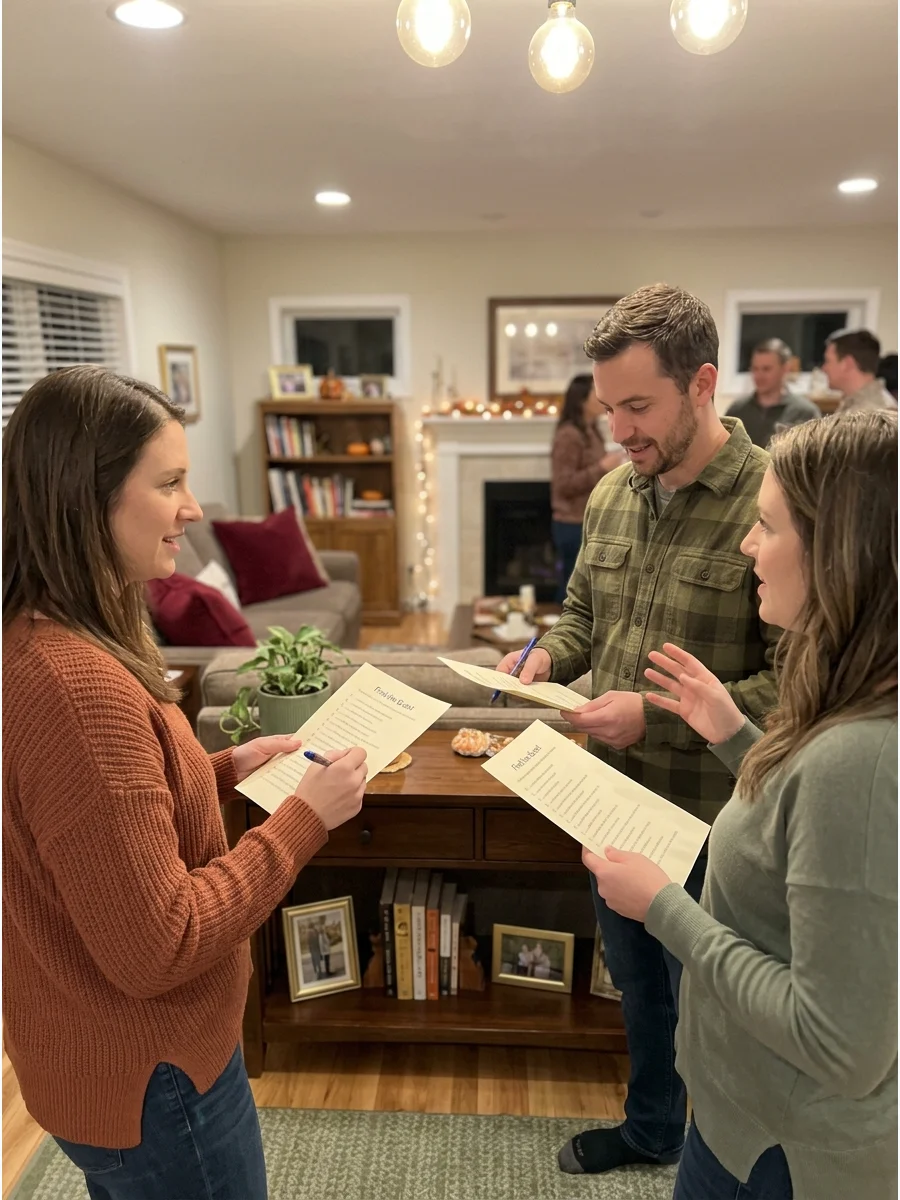
Give everyone a list of interesting facts collected from the guests before the party. Players must speak to one another and match each fact to the correct person.
It acts as a sophisticated icebreaker for larger groups.
Collect the facts via the RSVPs to save time on the day of the event.
33. Guess Who Wrote It
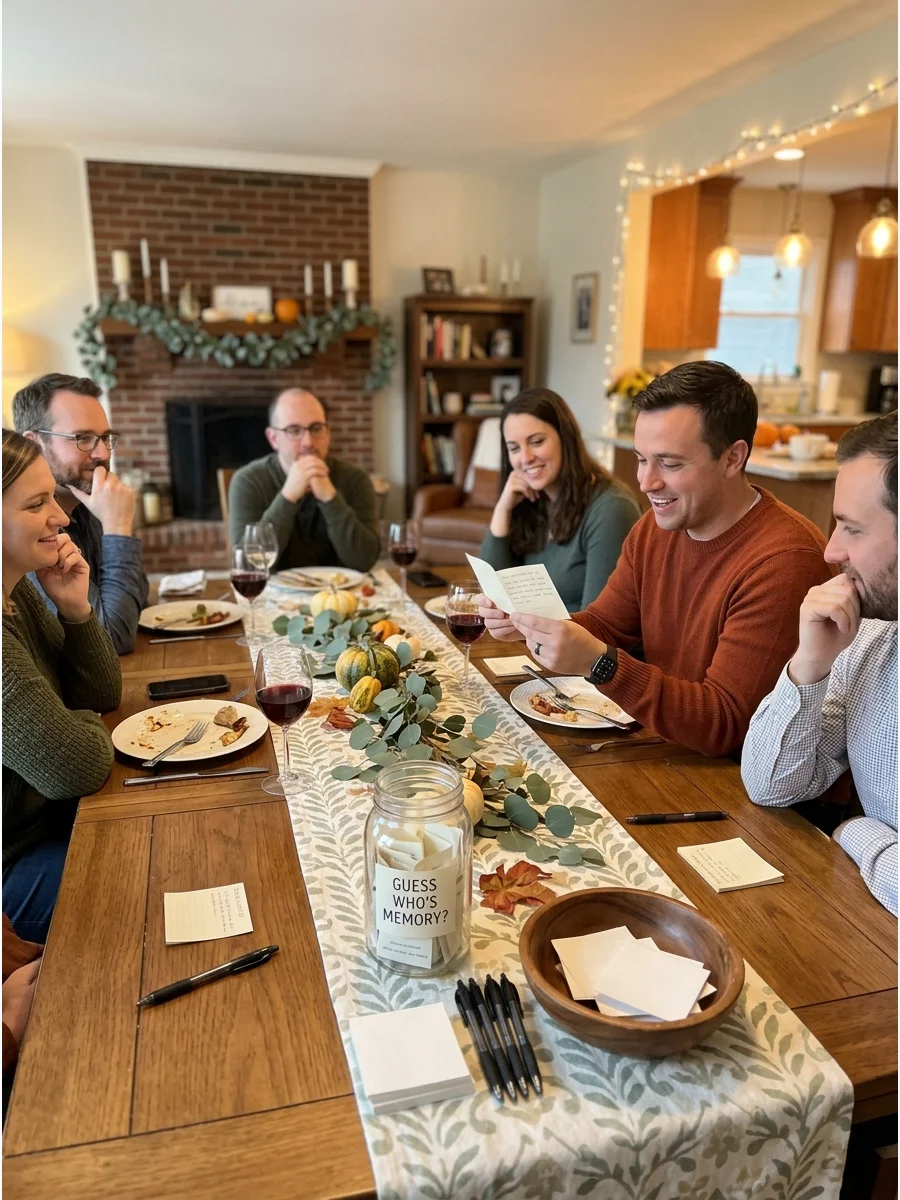
Ask guests to anonymously answer funny questions or share short memories. Read each response aloud while everyone guesses who wrote it.
It creates a sense of mystery and often leads to hilarious reveals.
Provide identical slips of paper and pens so handwriting is the only clue.
34. Memory Lane Match
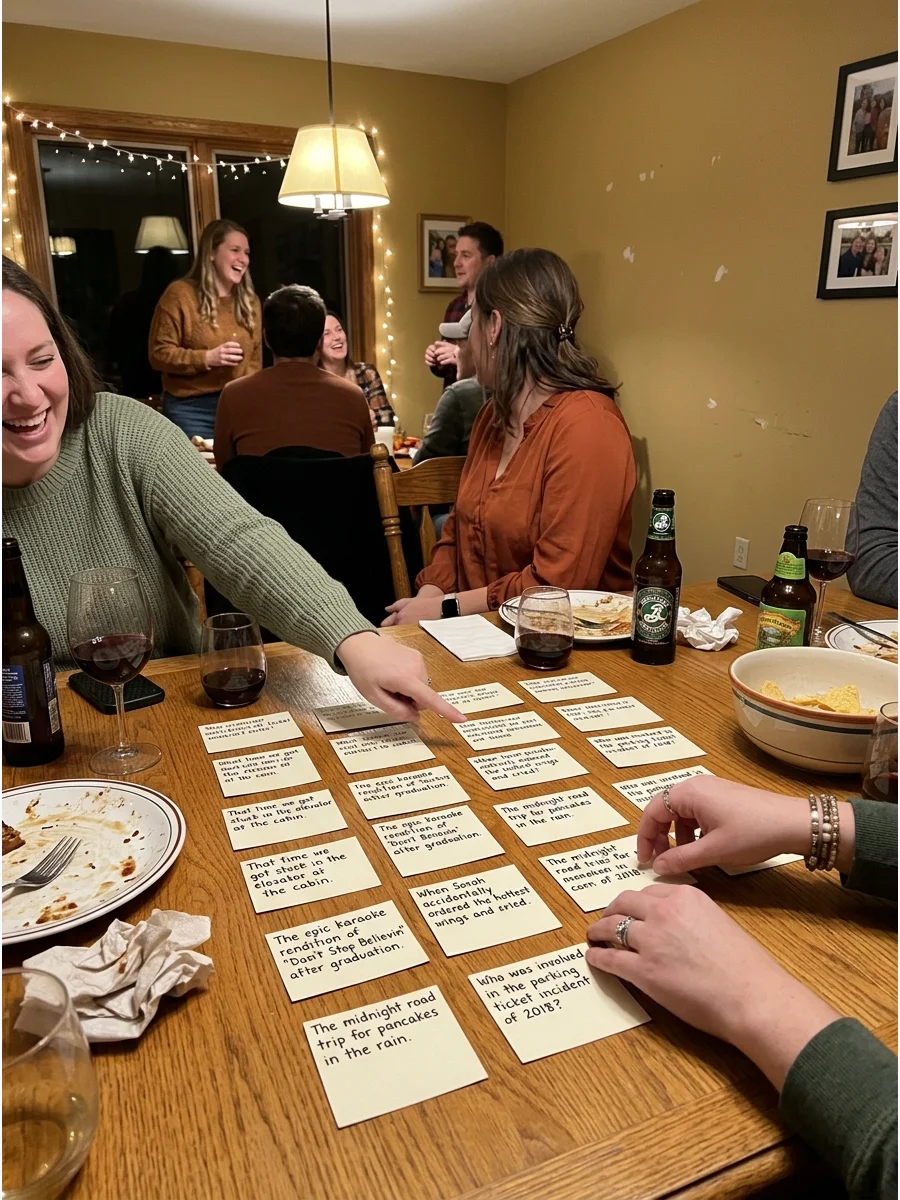
Write shared memories on cards and ask guests to identify who was involved in each event. This is especially entertaining when the group has many funny stories together.
It celebrates the group's history and clarifies 'who remembers what' correctly.
This works best for groups that have been friends for over five years.
35. Throwback Photo Guessing Game
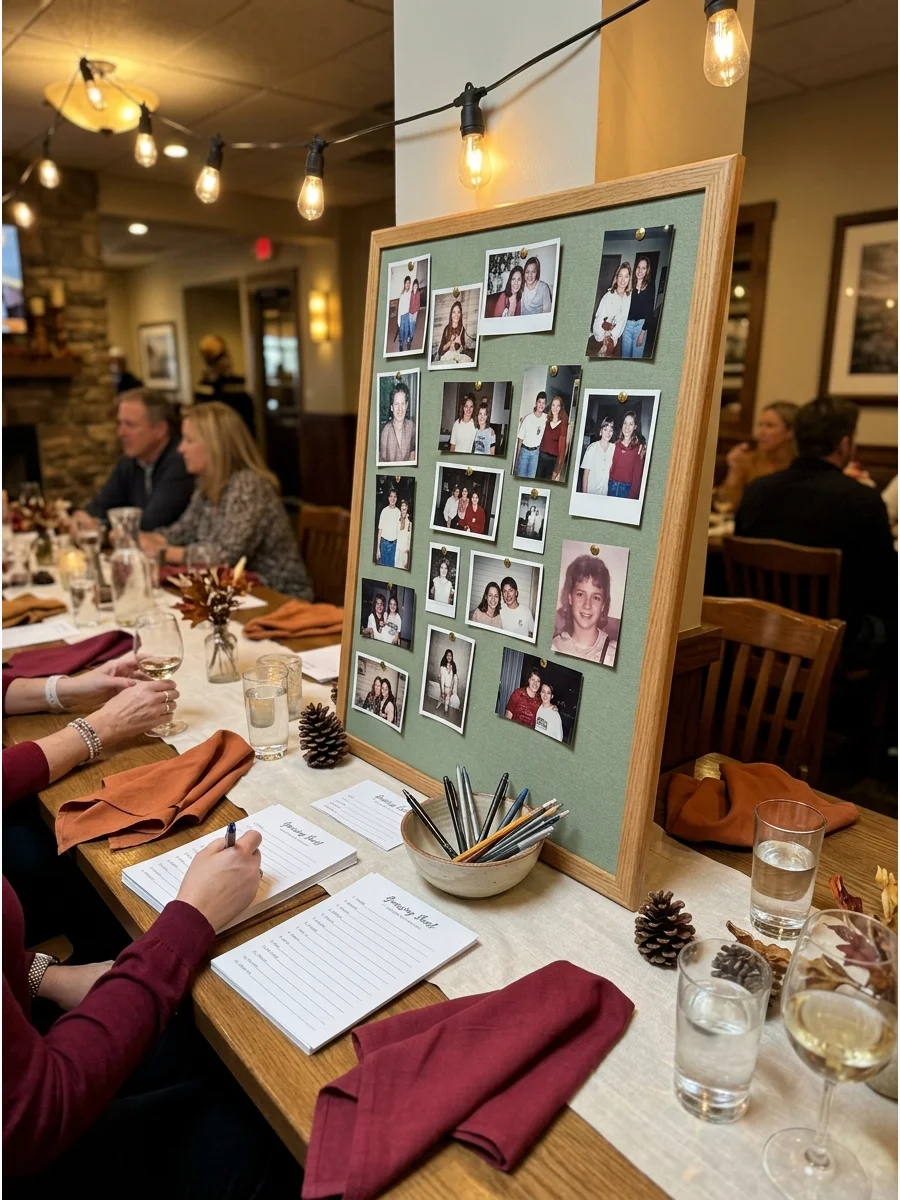
Ask everyone to bring or send an old photograph of themselves. Display the pictures without names and have guests guess who appears in each one.
It is visually engaging and a great way to start the evening as guests arrive.
String the photos up with clothespins on a piece of twine for a rustic look.
36. Guess the Childhood Favorite
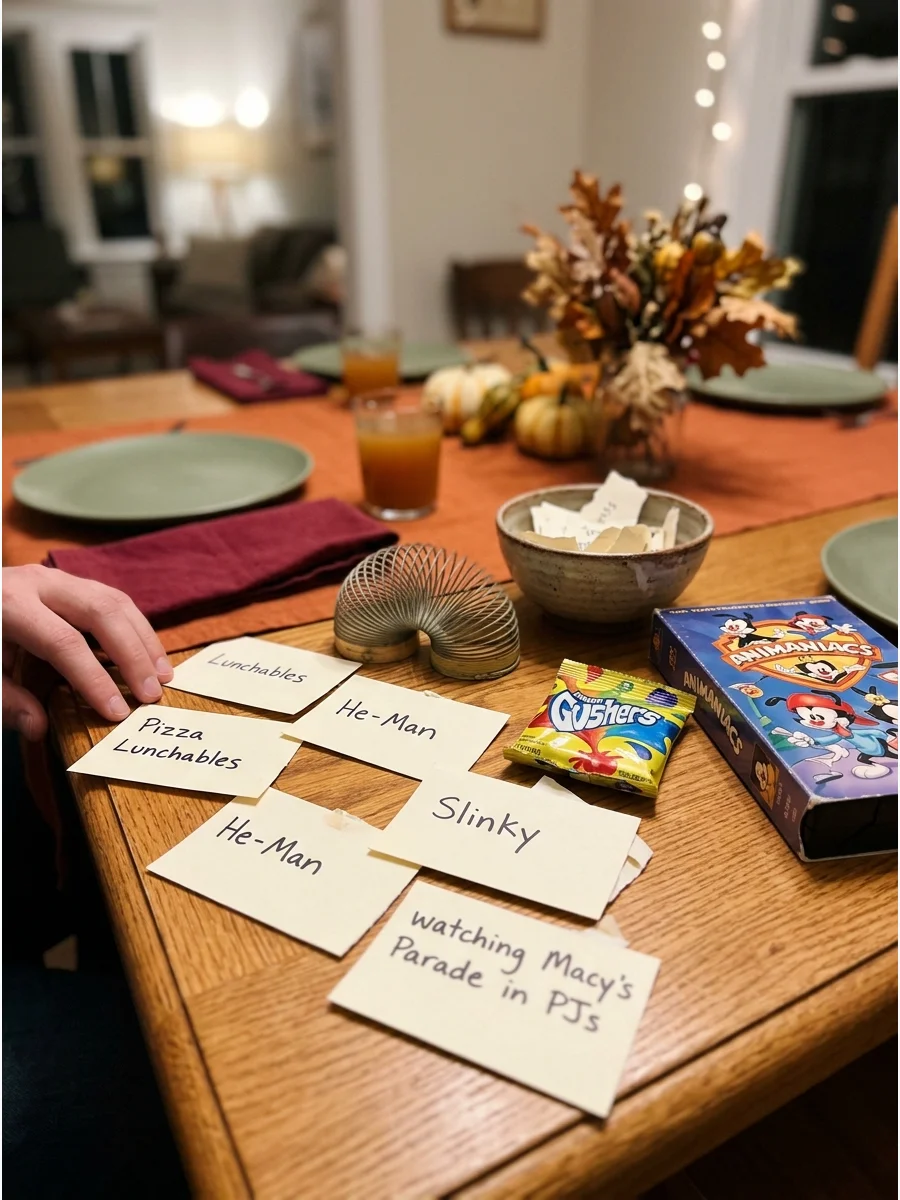
Before the party, ask each guest to submit a favorite childhood food, television show, toy, or holiday tradition. Read the answers aloud and let the group match them to the correct people.
It provides insight into the guests' backgrounds and upbringings.
Read the items aloud during the transition from dinner to dessert.
37. The Gratitude Guessing Game
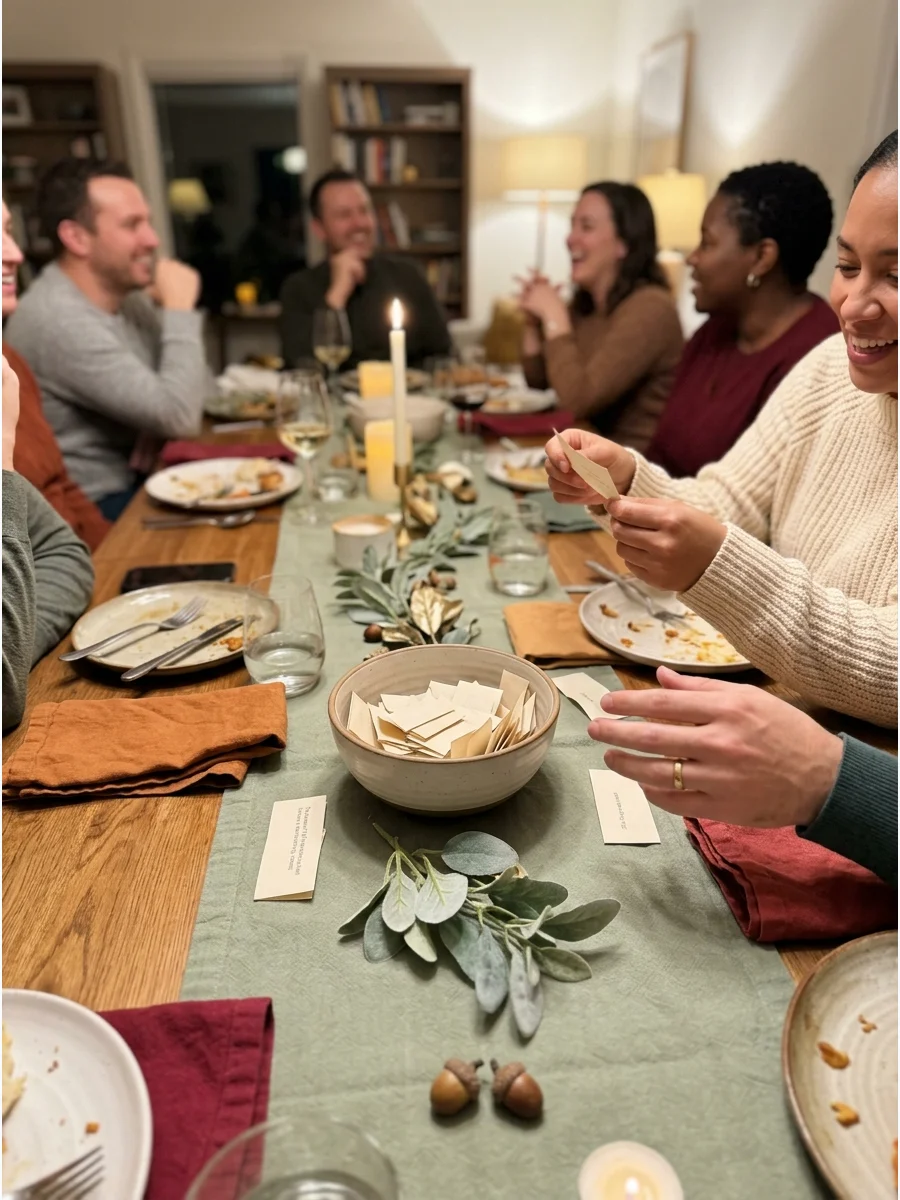
Each guest anonymously writes something they are grateful for. Place the responses in a bowl and read them aloud while everyone guesses who wrote each one.
It combines the tradition of giving thanks with a fun, interactive element.
Encourage guests to be specific rather than generic with their notes.
38. Pass the Compliment
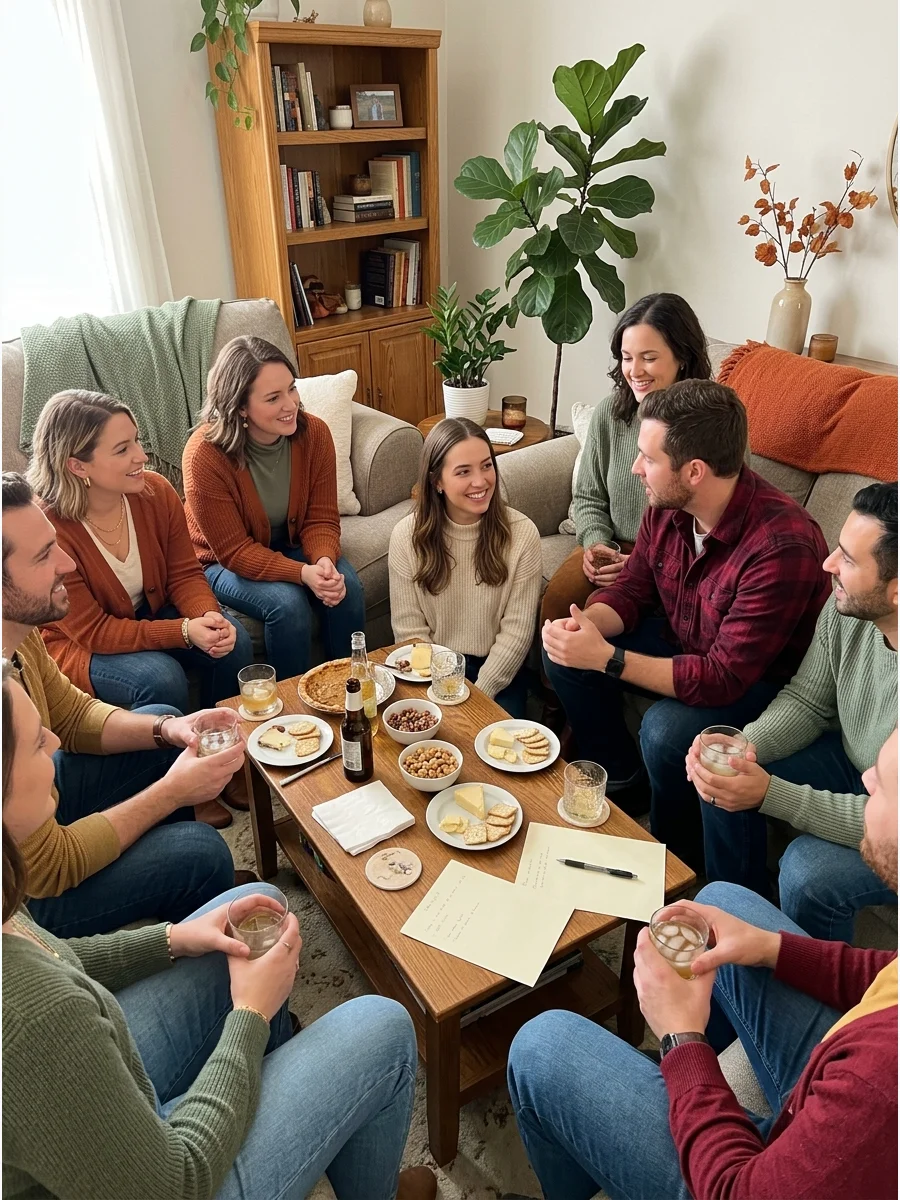
Guests sit in a circle and take turns saying something positive about the person beside them. Continue until everyone has both given and received a compliment.
It builds a warm, positive atmosphere and makes every guest feel valued.
Do this during the final course of the meal for a sentimental finish.
39. Friendsgiving Gratitude Jar
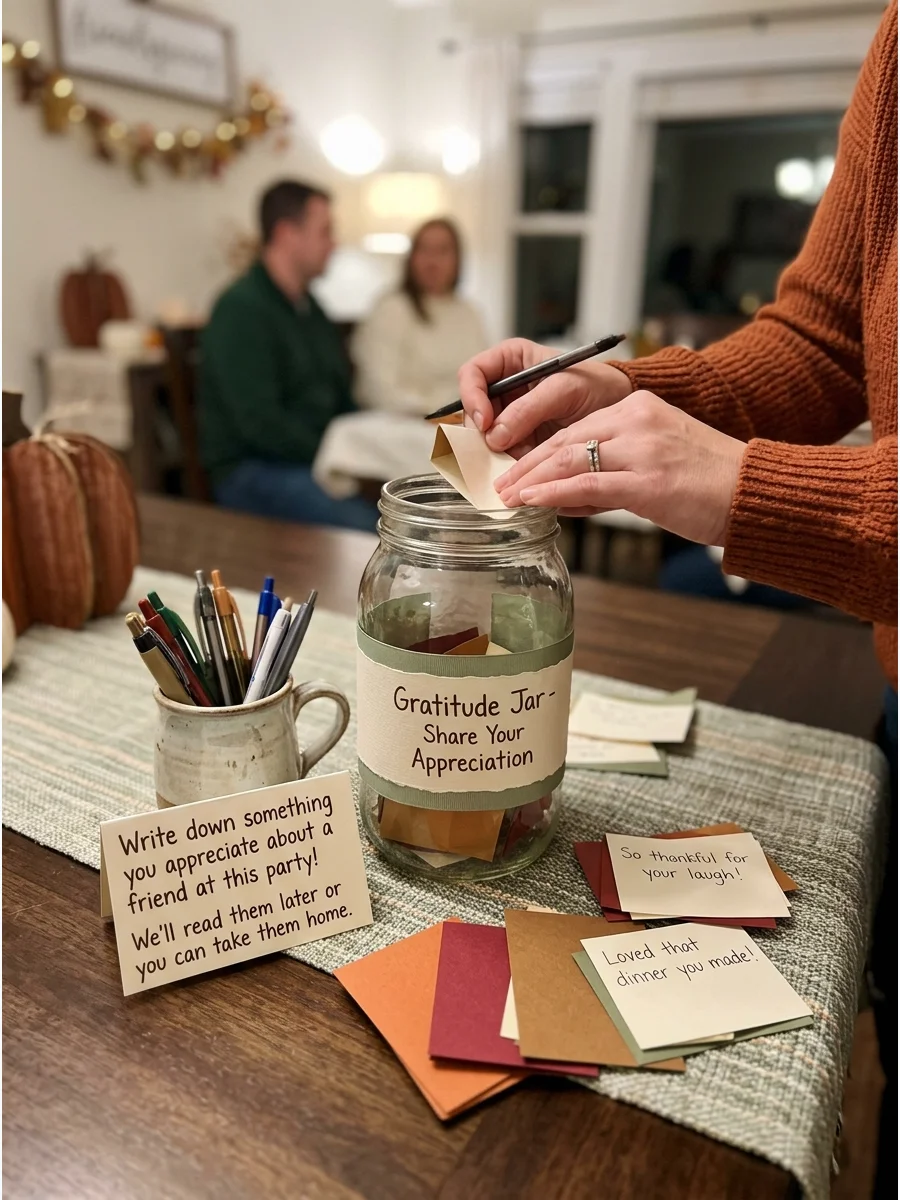
Provide slips of paper for guests to write appreciative messages about their friends. Read the messages during dessert or let each guest take their notes home.
It allows for more personal, one-on-one gratitude that doesn't have to be shared publicly.
Provide colorful pens and small slips of paper next to the jar.
40. Friendship Time Capsule
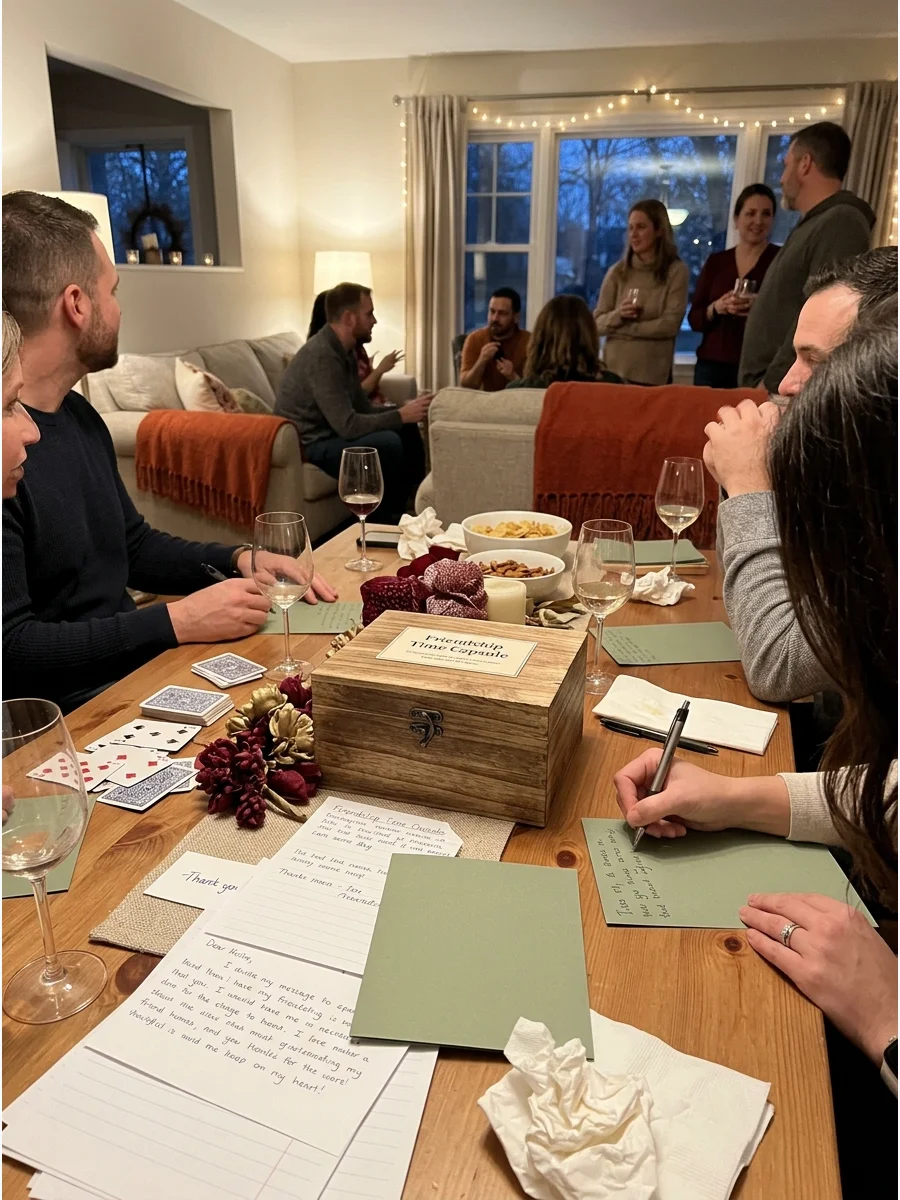
Ask guests to write predictions, goals, memories, and messages for the group. Seal everything in a container and agree to open it at a future Friendsgiving.
It creates a sense of continuity and a promise to meet again.
Use a sturdy tin or a sealed envelope and date it clearly.
41. Friendsgiving Hot Seat
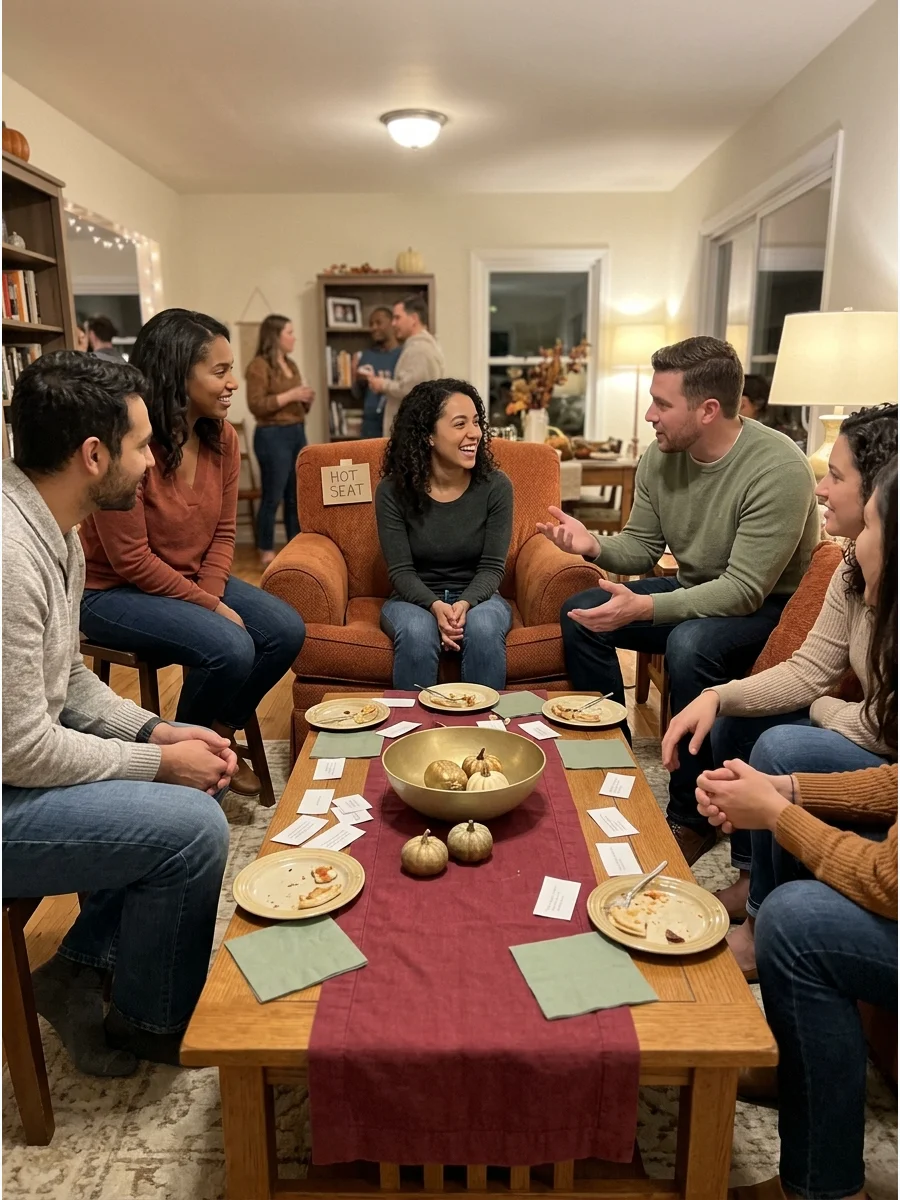
One guest sits in the “hot seat” while the others ask rapid questions about favorite foods, memories, opinions, and funny experiences. Give each person one minute before switching players.
It makes each guest the center of attention for a brief, fun moment.
The host should have a list of 'starter' questions to keep the momentum going.
42. Conversation Card Roulette
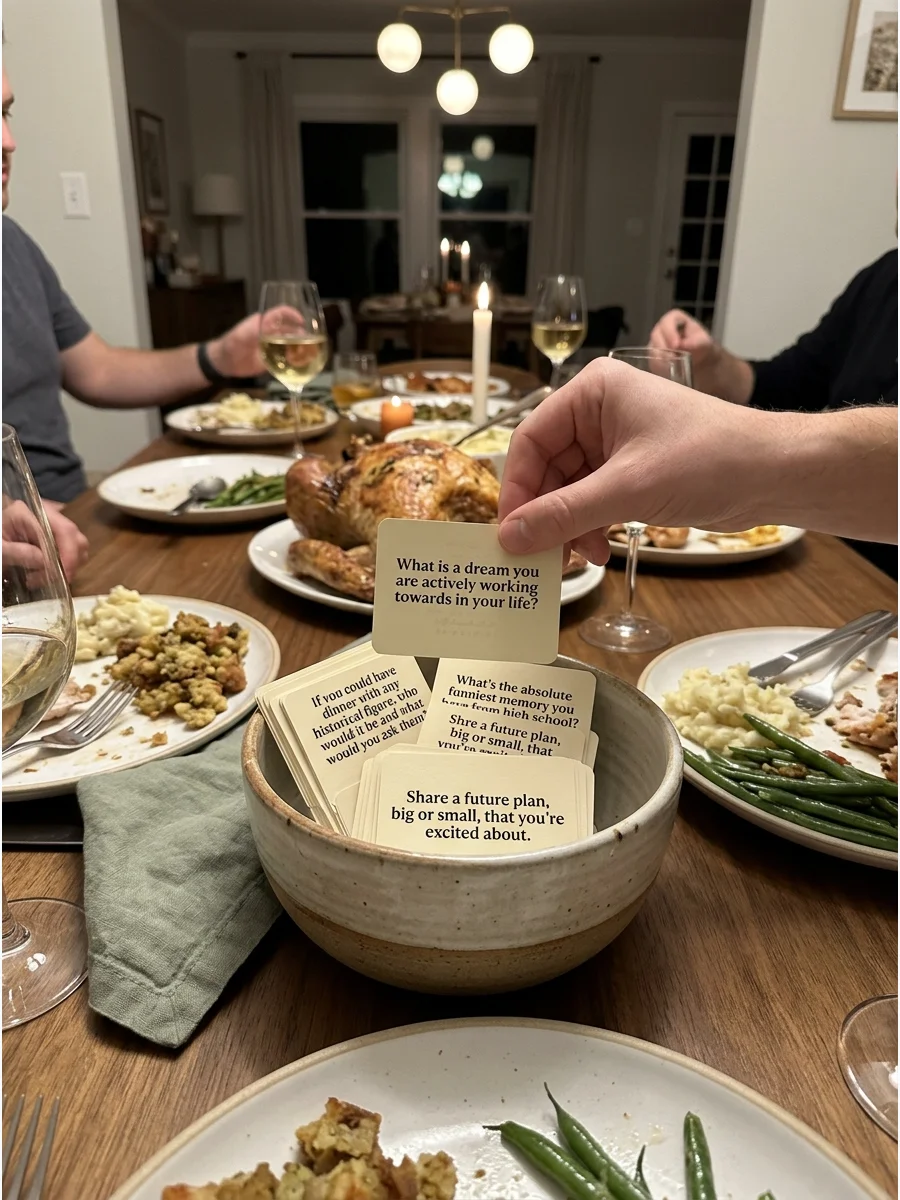
Place conversation prompts in a bowl and let guests select them throughout dinner. Include questions about dreams, favorite memories, future plans, and funny opinions.
It prevents lulls in conversation and moves beyond small talk.
Mix 'deep' questions with 'silly' ones to keep the mood balanced.
43. The Secret Mission Game
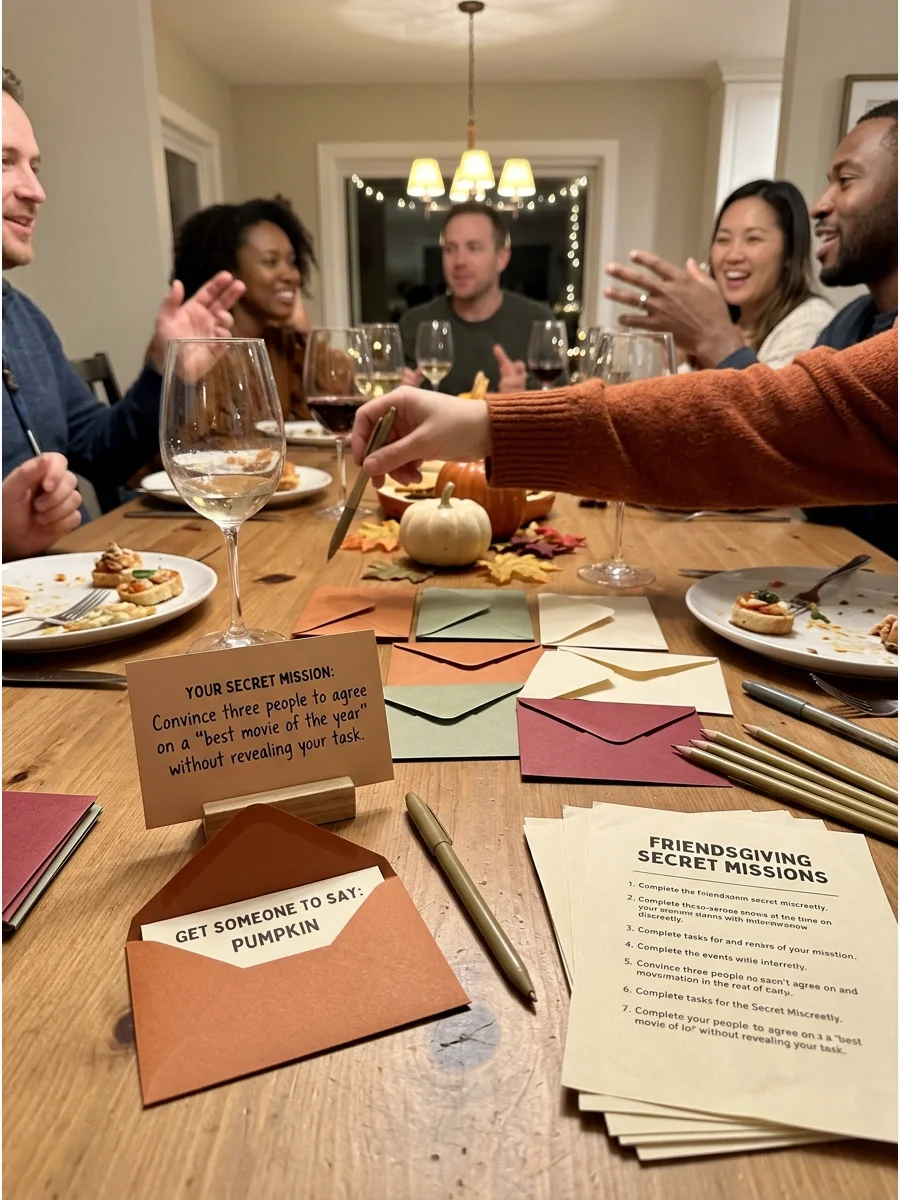
Give every guest a secret task when they arrive, such as getting someone to say “pumpkin” or convincing the group to take a photo. Players must complete their missions without being discovered.
It adds a layer of intrigue and humor to every interaction throughout the night.
Hand out the missions on small cards as guests walk through the door.
44. Friendsgiving Murder Mystery
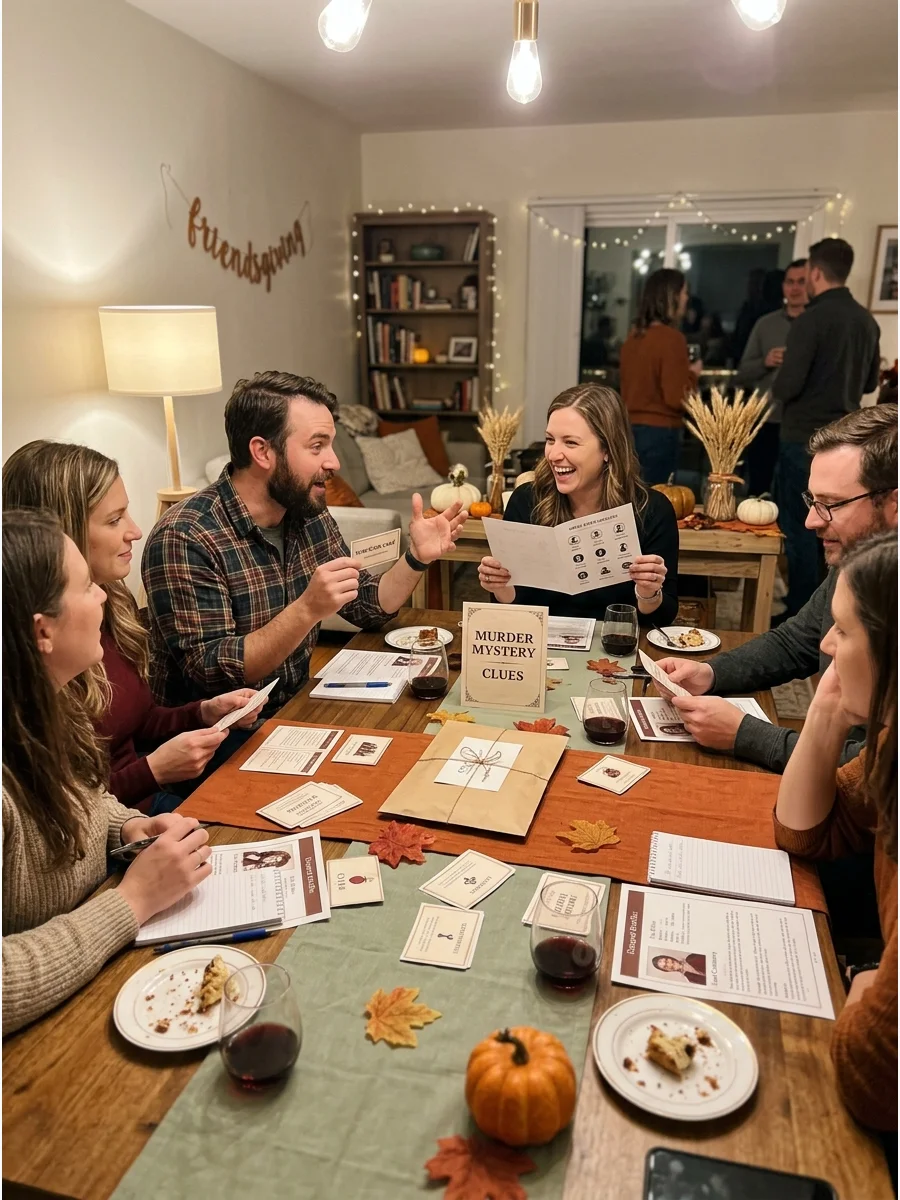
Assign every guest a character and provide clues connected to a fictional mystery. Players interact throughout the evening before attempting to identify the responsible character.
It provides a full evening of entertainment and encourages role-playing.
Choose a 'low-prep' kit that doesn't require complex costumes.
45. Friendsgiving Escape Room
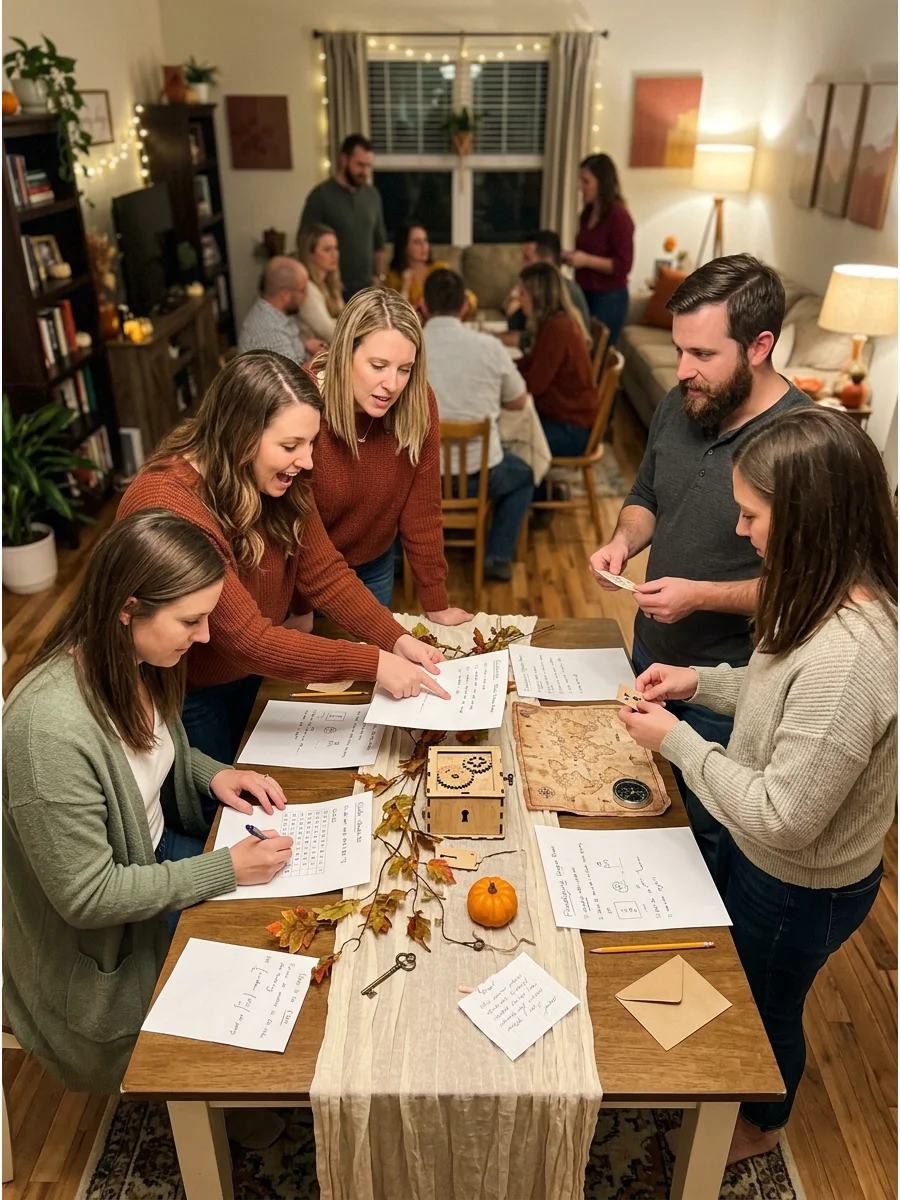
Hide clues, codes, and small puzzles around the party space. Divide guests into teams and challenge them to solve the final Thanksgiving mystery before time runs out.
It encourages teamwork and provides a satisfying challenge.
Use simple combination locks and hidden keys to keep setup easy.
46. Telephone Pictionary
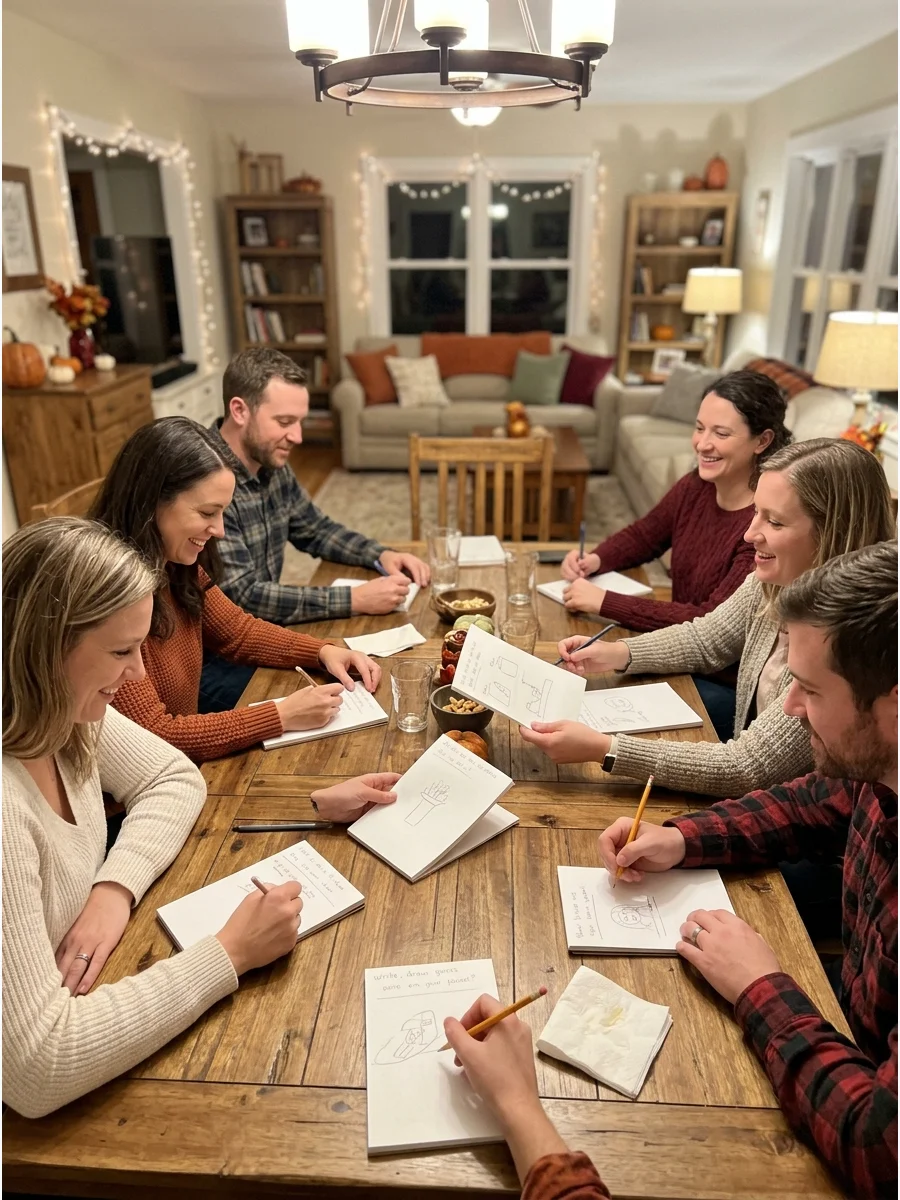
Each player writes a phrase before passing the paper to the next person, who draws it. The following player guesses the drawing, and the process continues until the paper returns to its original owner.
The inevitable misinterpretations lead to huge laughs when the papers are unfolded.
Use long strips of paper to allow for at least 6 rounds of drawing and writing.
47. Friendsgiving Fishbowl
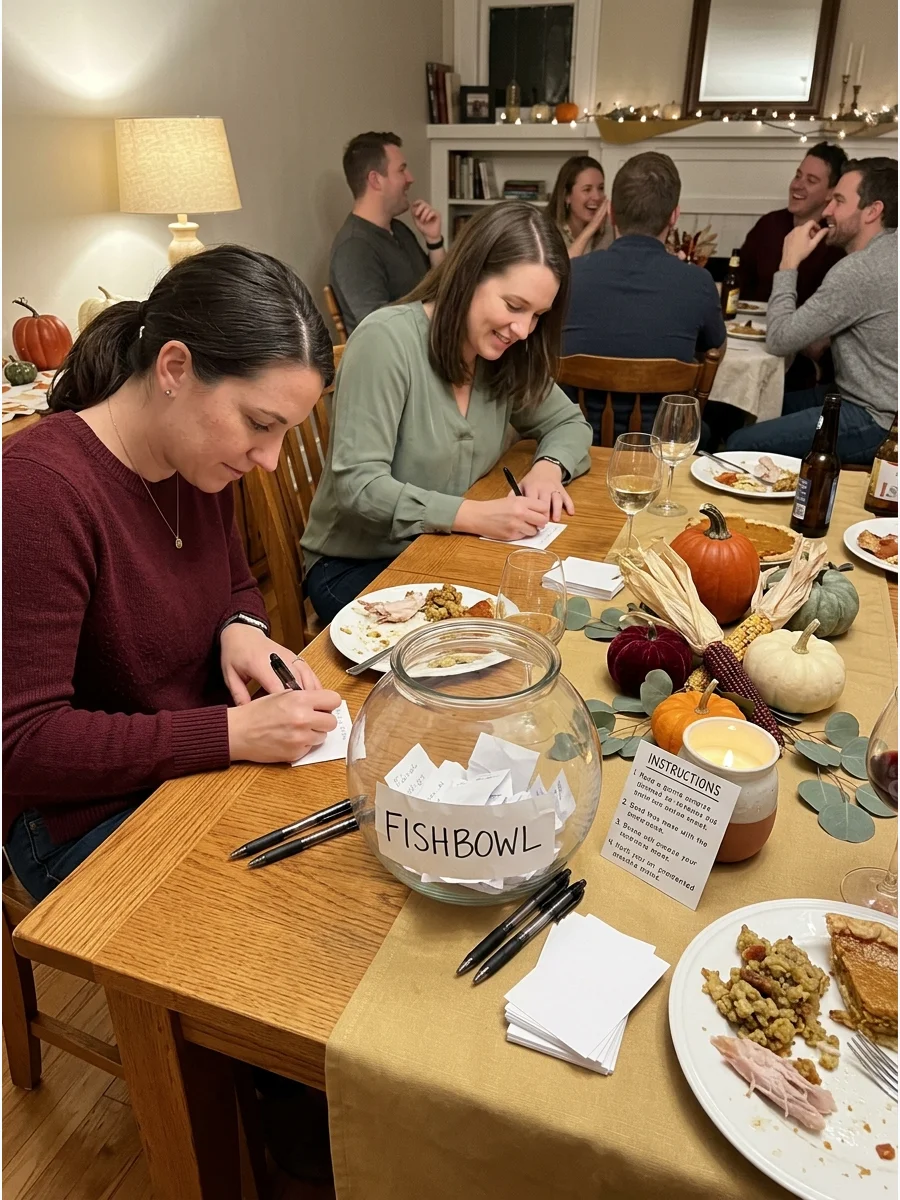
Guests write words or phrases on slips of paper and place them in a bowl. Teams use the same prompts for three rounds: describing, acting, and giving a one-word clue.
It gets progressively harder and funnier as the group becomes familiar with the words.
Use a large glass bowl to hold all the slips of paper.
48. Mini Pumpkin Ring Toss
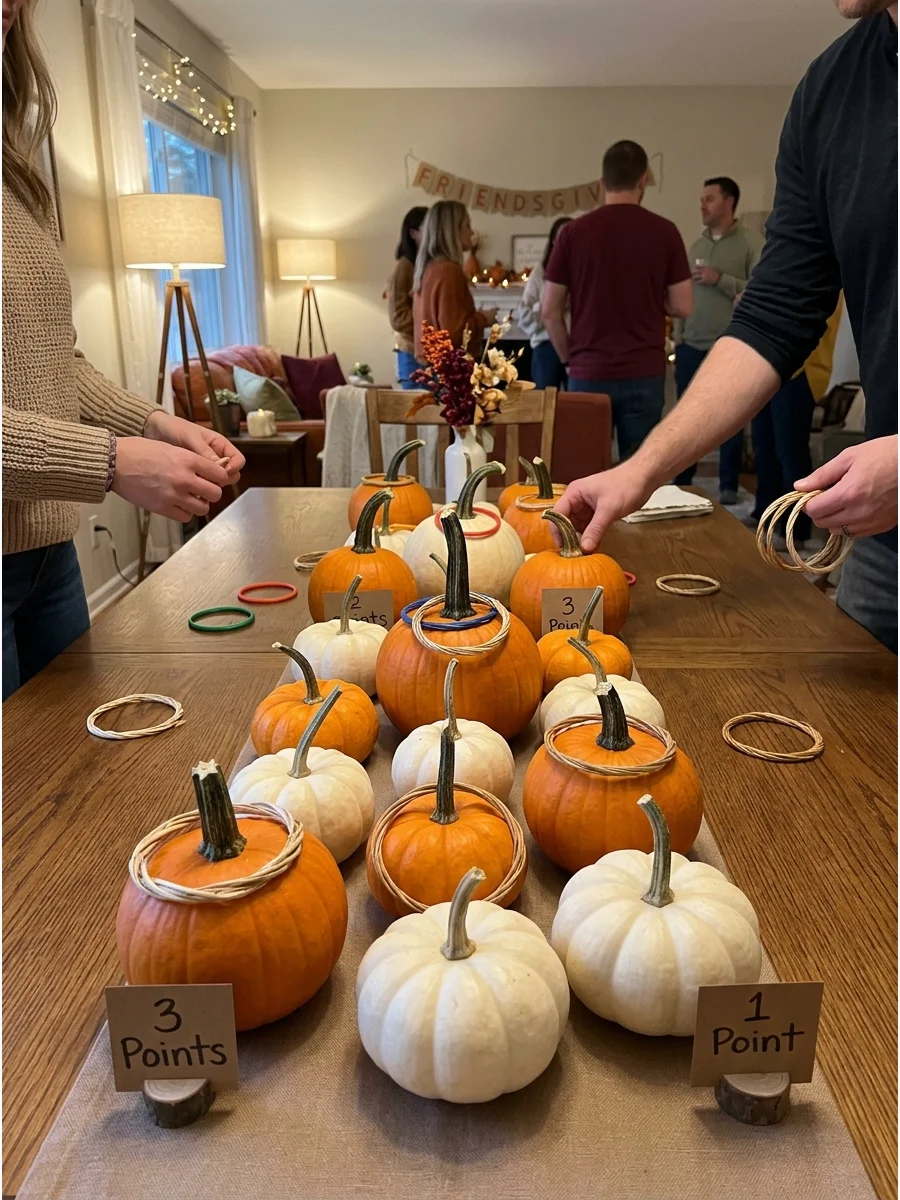
Arrange miniature pumpkins with long stems and give guests lightweight rings. Players earn points based on the pumpkins they successfully circle.
It is a simple, nostalgic carnival-style game that works well in small spaces.
Use pumpkins with long, sturdy stems for a fairer game.
49. Turkey Bowling
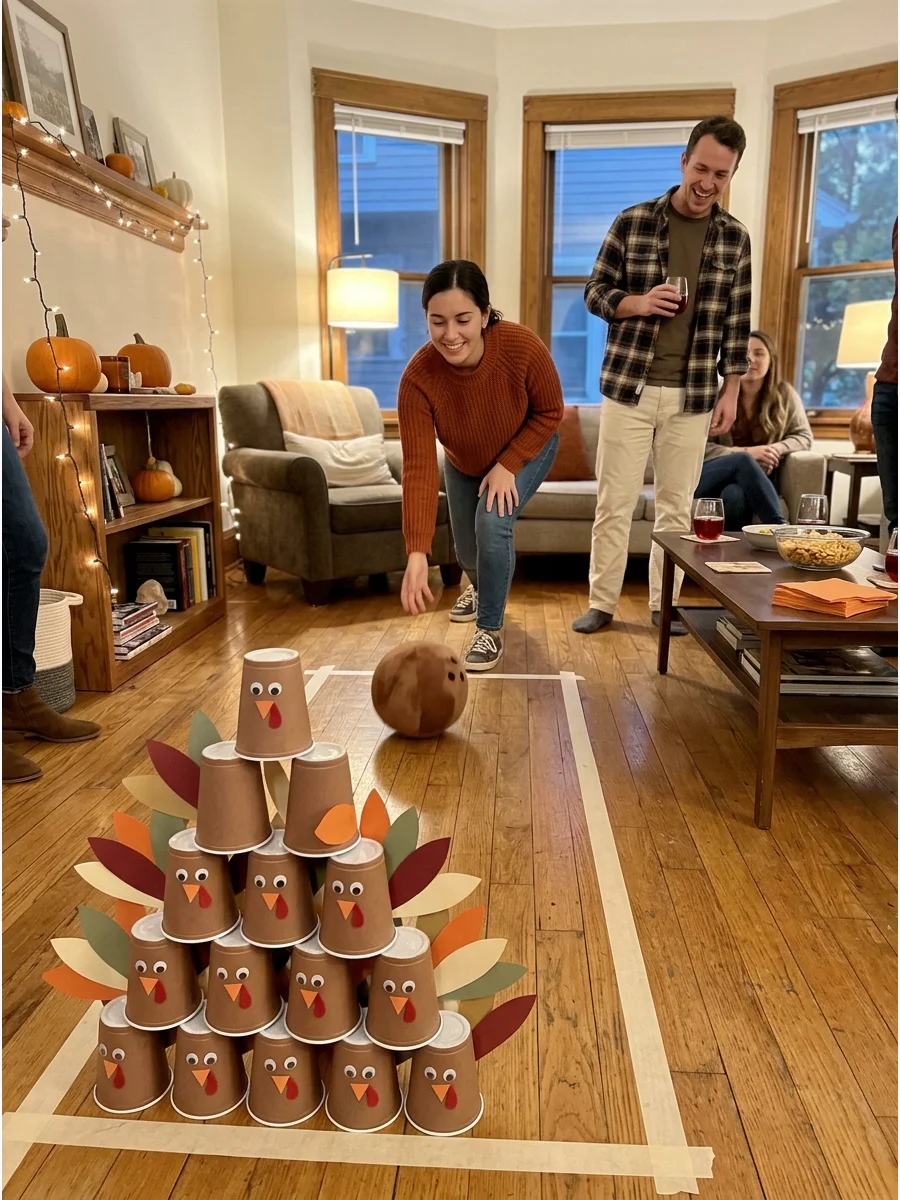
Decorate plastic cups to resemble turkeys and stack them like bowling pins. Guests roll a soft ball toward the cups and compete to knock down the largest number.
It provides a physical outlet and is easy for guests to jump in and out of.
Stack the cups in a pyramid for the most satisfying 'crash' when hit.
50. Friendsgiving Minute-to-Win-It Tournament
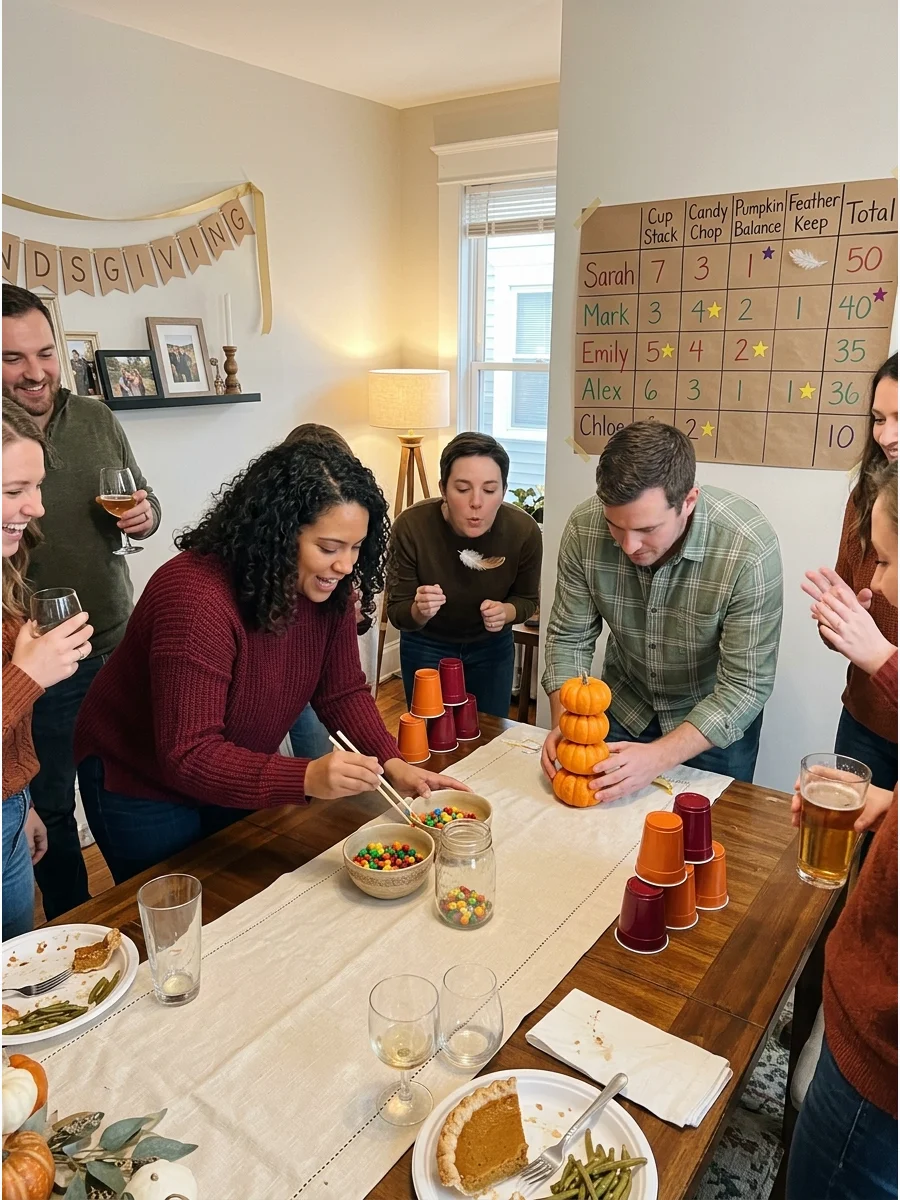
Set up several one-minute challenges, such as stacking cups, moving candy with chopsticks, balancing miniature pumpkins, or keeping a feather in the air. Add the scores from every challenge to crown the Friendsgiving game champion.
The high energy and fast pace make for a great finale to the evening.
Set up a simple scoreboard on a piece of cardstock to track points.
Frequently Asked Questions
How do you choose the right games for a specific friend group?
Assess the group’s natural dynamic before selecting activities. For competitive, high-energy crowds, focus on ‘Minute-to-Win-It’ challenges or ‘Turkey Bowling.’ If the group prefers deep conversation and nostalgia, lean toward ‘Friendship Time Capsules’ or ‘Who Knows the Host Best.’ A balanced itinerary usually includes one icebreaker, one table-based game, and one active mission.
What are the best low-prep games for a small Friendsgiving?
Paper-based classics and verbal games are ideal for small groups with minimal setup time. ‘Two Truths and a Turkey,’ ‘Most Likely To,’ and ‘Friendsgiving Mad Libs’ only require basic stationery or a printer. These activities allow for intimate conversation while providing enough structure to keep the evening focused and entertaining.
How can the transition from dinner to game time happen without losing party energy?
Bridge the gap by introducing ‘The Tasting Room’ challenges during the dessert course. Activities like blind pie-tasting or identifying secret ingredients in a seasonal dish keep guests engaged at the table while shifting the atmosphere from dining to play. Alternatively, a ‘Secret Mission’ game started during appetizers can reach its climax right as dinner concludes.
What are some small, seasonal prize ideas for game winners?
Useful, autumn-themed prizes keep the stakes fun without cluttering a guest’s home. Consider items like small jars of local honey, artisanal mulling spices, sage-scented candles, or decorative mini gourds. For a more humorous touch, a ‘Golden Turkey’ trophy or a festive bottle of cranberry bitters makes for a memorable and practical reward.
How many games should be planned for a three-hour Friendsgiving?
Planning three distinct activities is usually sufficient for a three-hour window. This allows for one ‘Mingle & Match’ game during the first hour to break the ice, one main activity like ‘Trivia’ or a ‘Tasting Challenge’ after the meal, and a reflective activity like the ‘Gratitude Jar’ to close the night. This schedule ensures the party feels programmed but leaves ample time for unstructured socializing.
This post may contain affiliate links: full affiliate disclosure.