
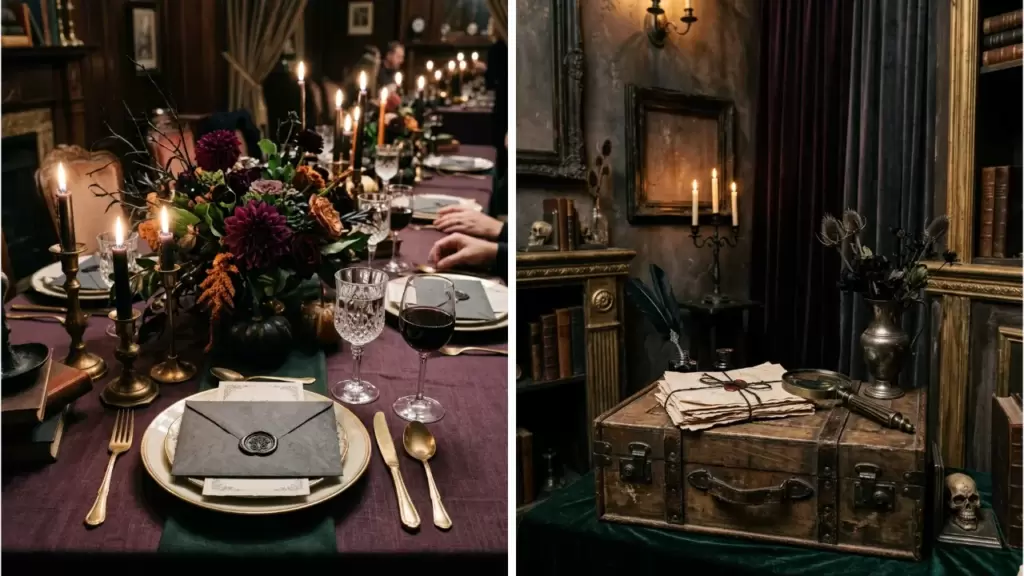
Hosting an adult Halloween gathering requires a balance of sophisticated atmosphere and structured interaction.
Moving beyond basic decor, these activities focus on guest engagement through mystery, creativity, and social competition.
Each suggestion provides a framework for entertainment that encourages guests to interact with the theme and each other throughout the evening.
Immersive Mysteries and Role-Playing Games
1. Immersive Murder Mystery
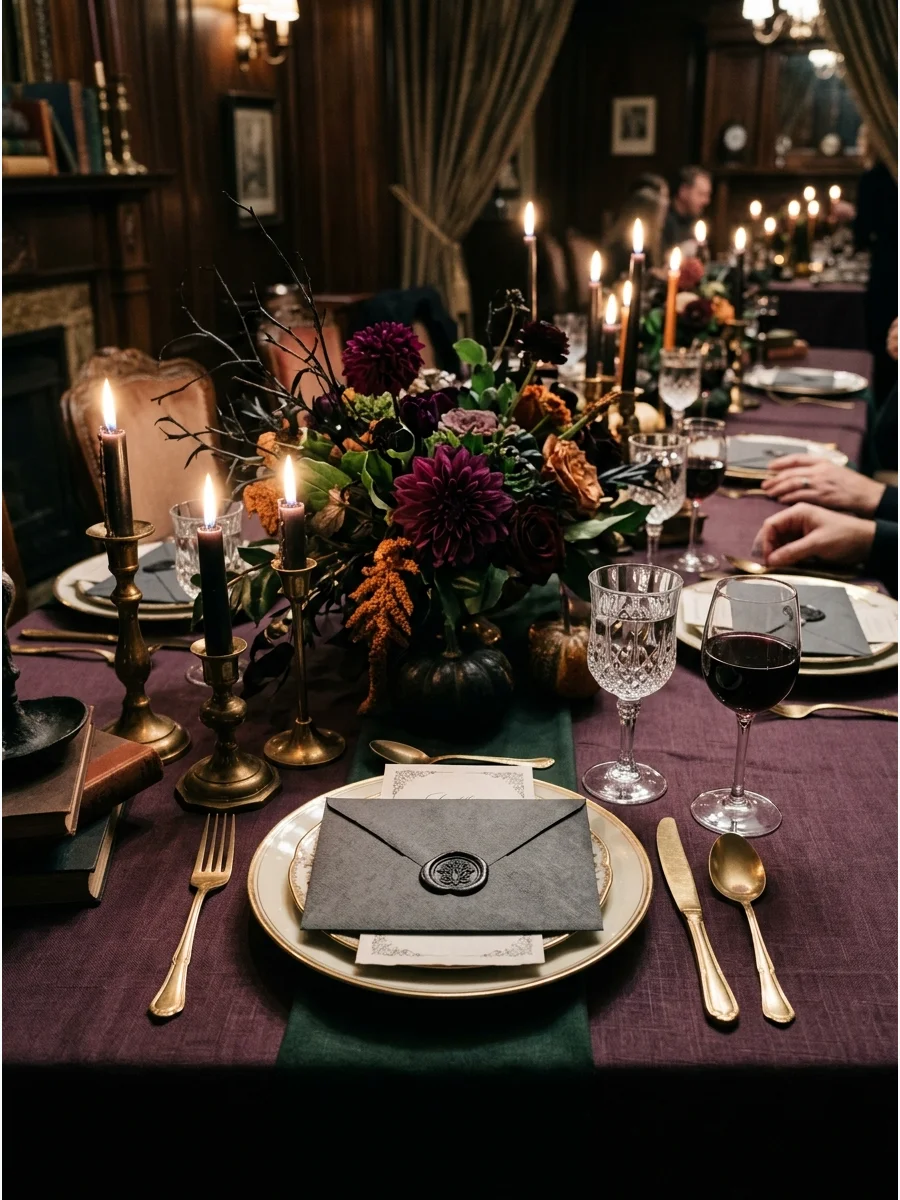
Assign every guest a fictional character with secrets, motives, and private clues to investigate a staged mystery during dinner.
This creates an immediate social bond as guests must talk to one another to uncover hidden information and solve the case.
Print character dossiers on high-quality cardstock and place them in charcoal grey envelopes at each table setting.
2. Haunted Mansion Escape Challenge
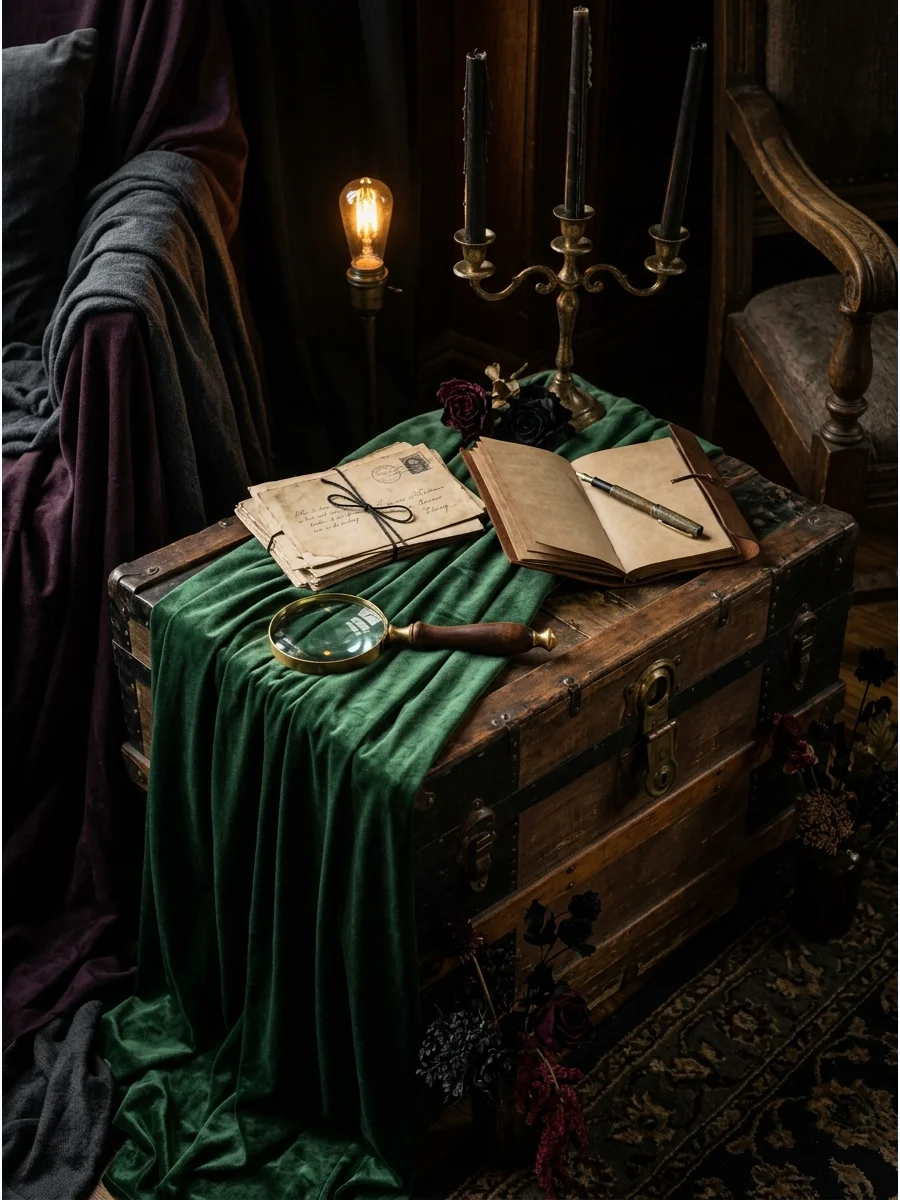
Transform one room into a short escape game using coded messages, hidden keys, and locked-looking boxes.
Small group challenges provide a break from the main party and encourage teamwork among guests who may not know each other well.
Use battery-operated lanterns and vintage-looking trunks to keep the setup portable and safe for a home environment.
3. Halloween Clue Scavenger Hunt
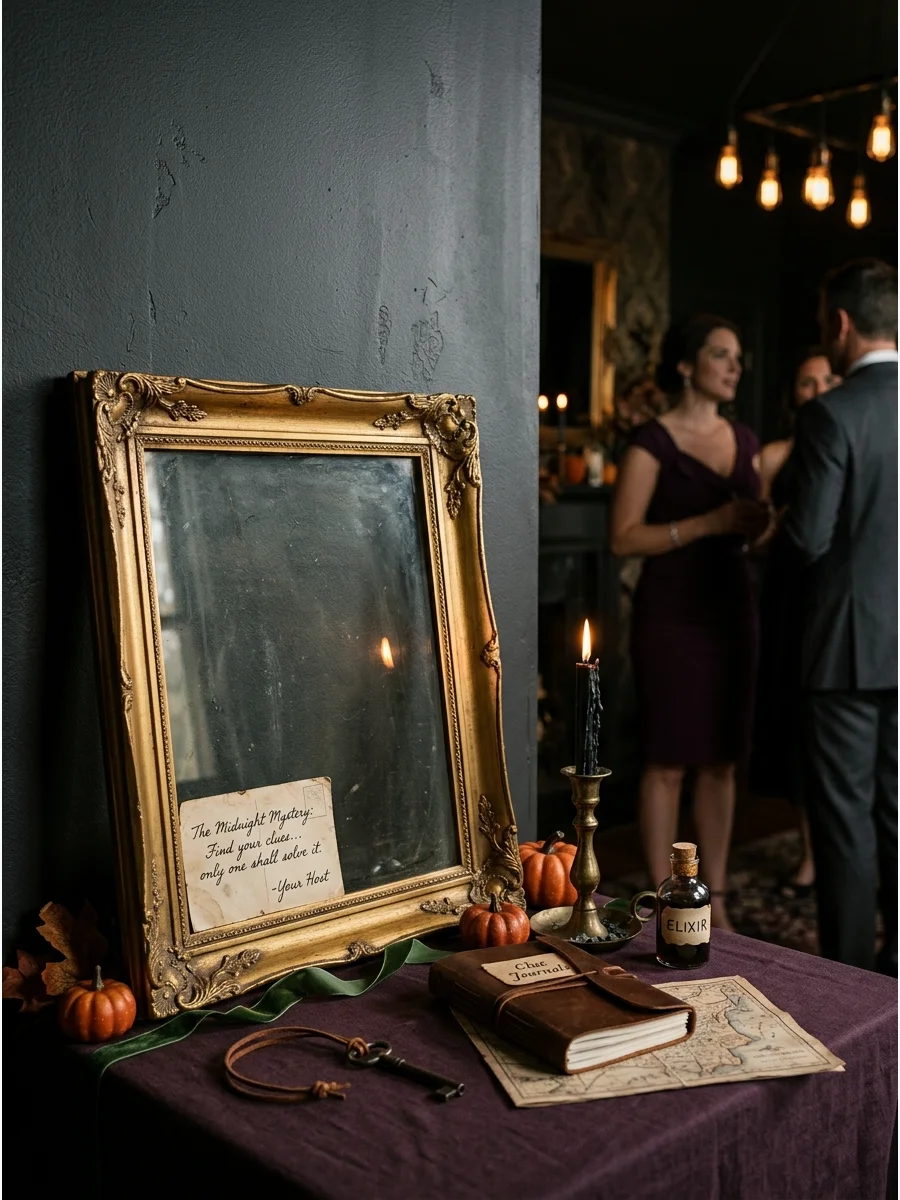
Hide riddles and Halloween objects throughout the party space to lead players to a final prize.
This utilizes the entire venue and keeps guests moving, preventing bottlenecks in the kitchen or main lounge area.
Write clues on the back of vintage postcards to maintain a sophisticated aesthetic while providing clear directions.
4. Photo Scavenger Hunt
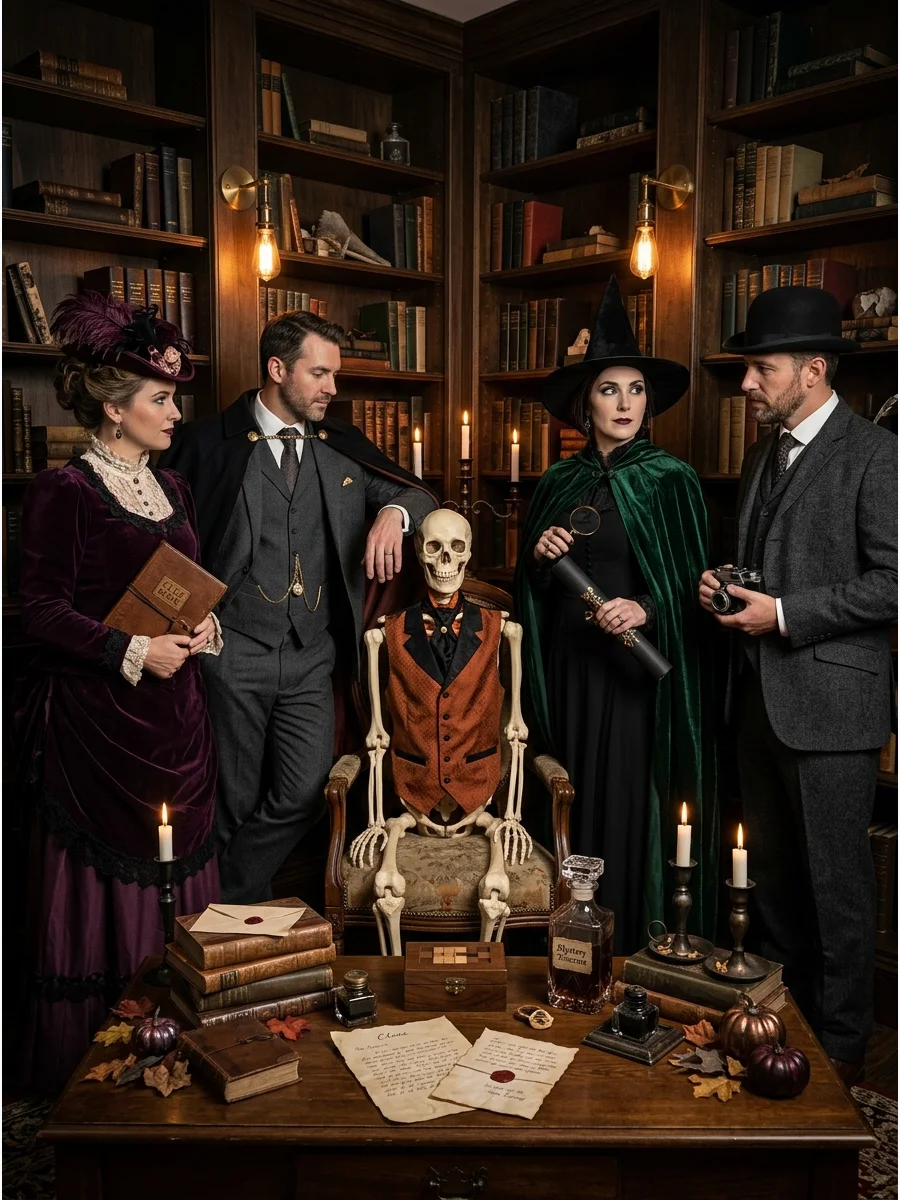
Give teams a list of themed photographs to capture, such as posing with a skeleton or recreating a vintage scene.
This activity generates a collection of photos for the host and guests to share after the event concludes.
Create a custom hashtag for the evening so all entries can be easily viewed on social media by the group.
5. Gothic Masquerade Mystery
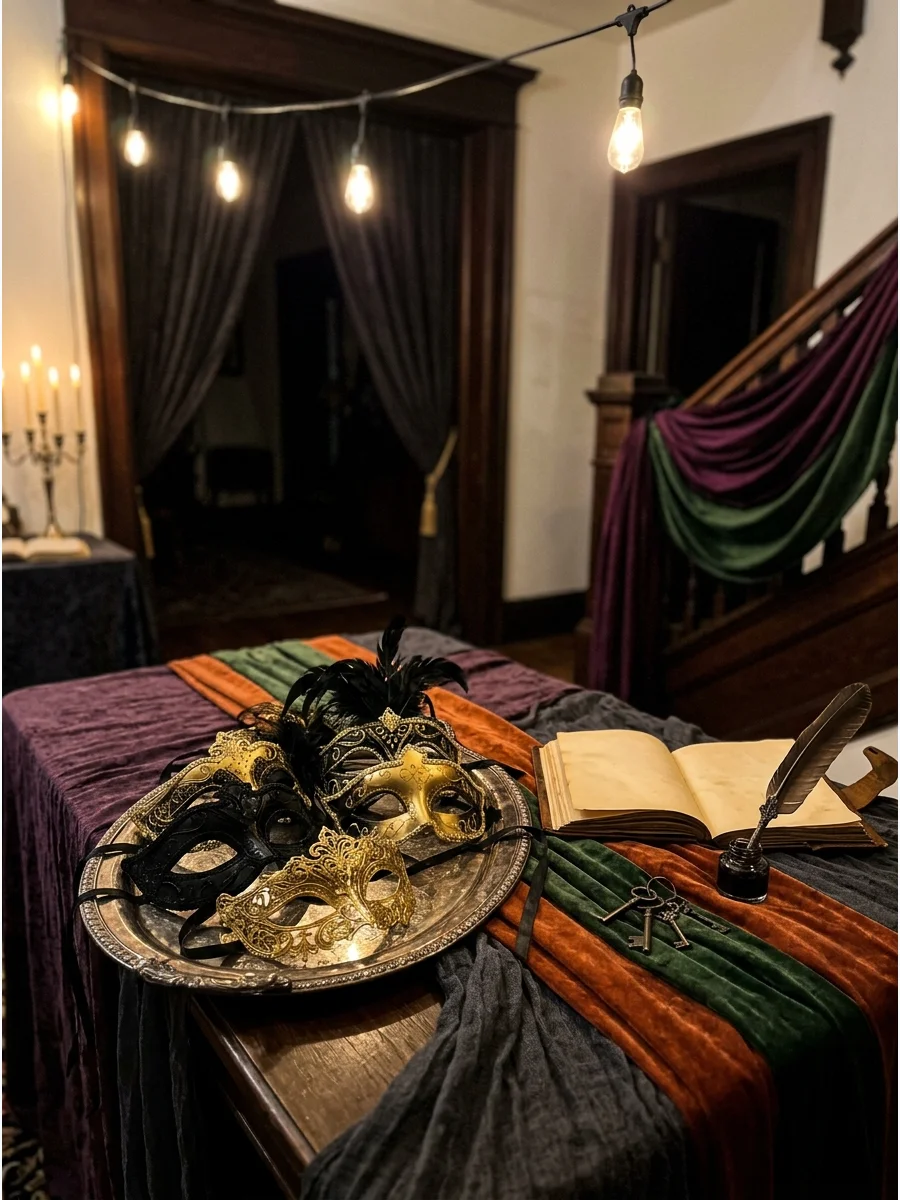
Ask guests to wear masks and give each person a secret identity or objective to reveal during social interaction.
The anonymity of masks encourages more adventurous role-playing and helps shy guests feel more comfortable in character.
Provide a few extra high-quality masks in deep plum or ink black at the entrance for guests who arrive without one.
6. Haunted Hotel Role-Playing Game
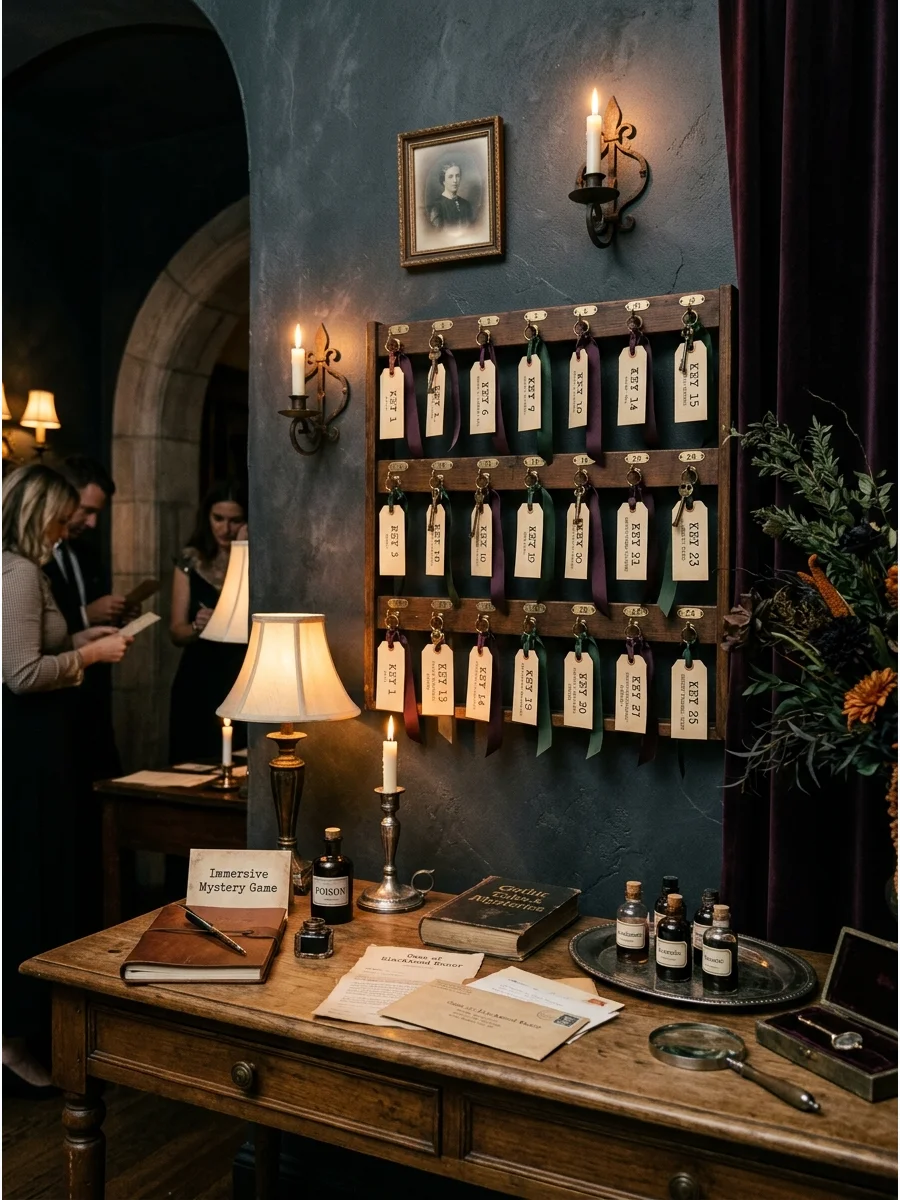
Turn the party into a fictional hotel with assigned characters like the manager, detective, and mysterious permanent resident.
A consistent theme across all roles makes the environment feel cohesive and immersive for the duration of the night.
Give the ‘hotel manager’ a set of old brass keys to carry as a visible prop that signifies their role in the game.
7. Retro Horror Movie Mystery
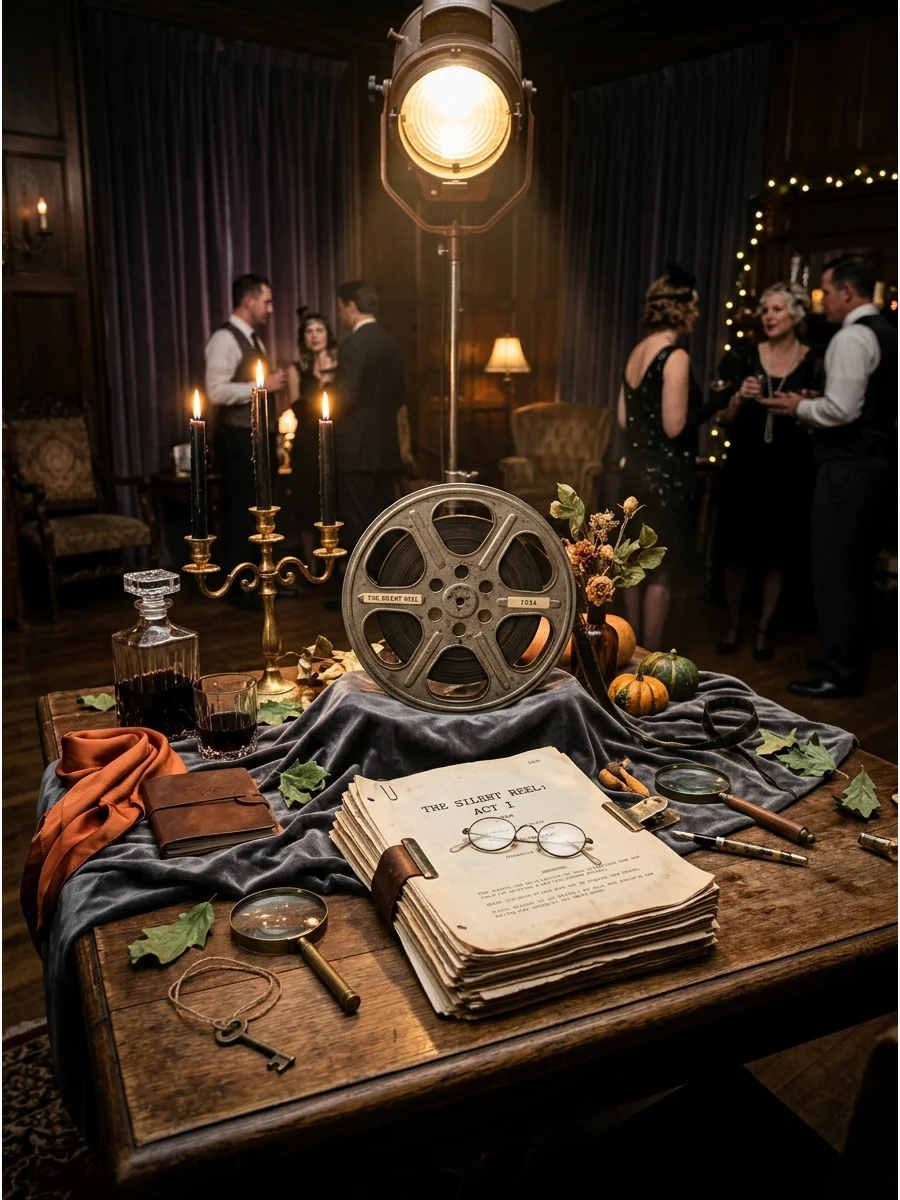
Build a mystery around a forgotten film set using old posters, ticket stubs, and prop scripts as clues.
Film enthusiasts will enjoy the specific references, while others can focus on the tactile clues and narrative.
Use a small projector to play silent, black-and-white horror films in the background to set the tone for the investigation.
8. Secret Vampire Game
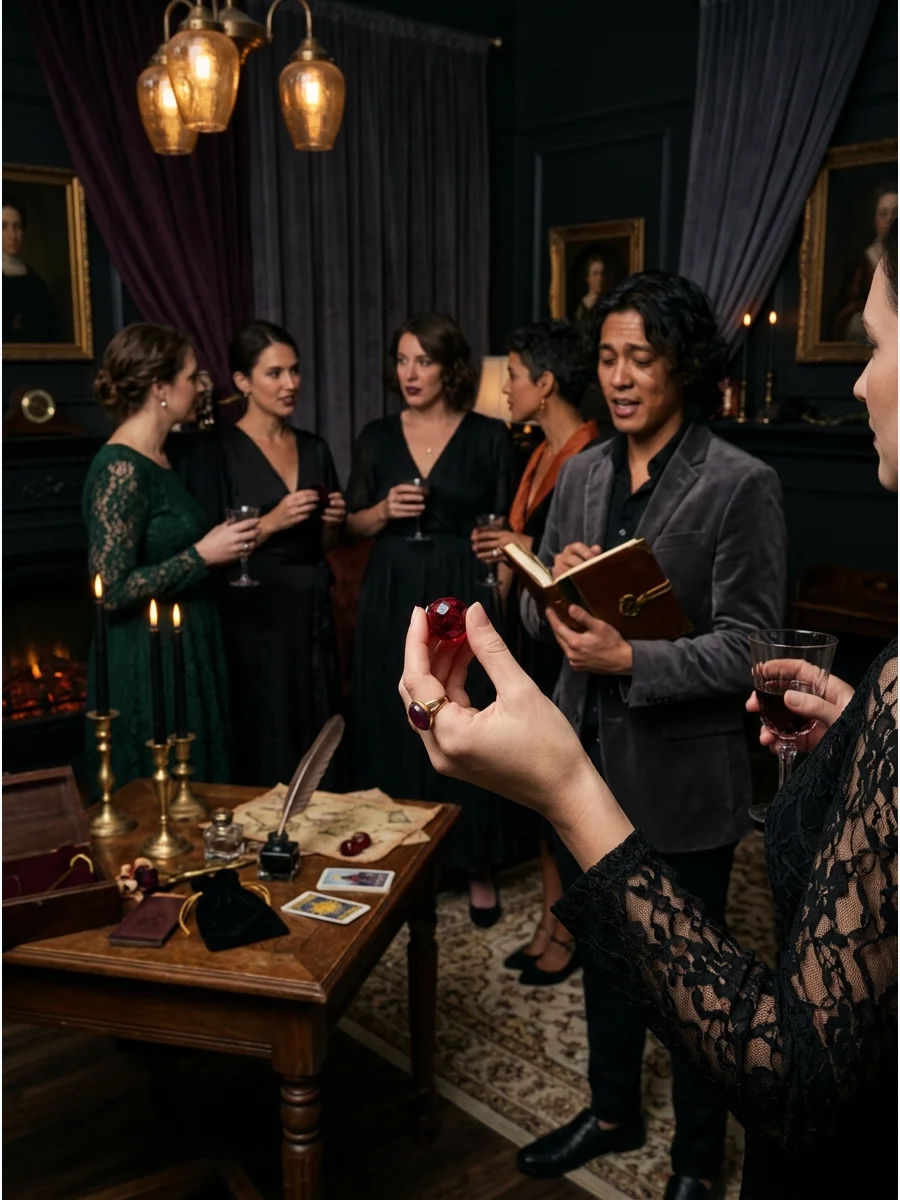
Assign one or two guests as fictional vampires who must complete challenges quietly while townspeople try to identify them.
This low-pressure game runs in the background of other activities, maintaining a constant level of suspicion and fun.
Use small red stickers or tokens that the ‘vampires’ must secretly place on guests’ belongings to ‘turn’ them.
9. Hidden Ghost Challenge
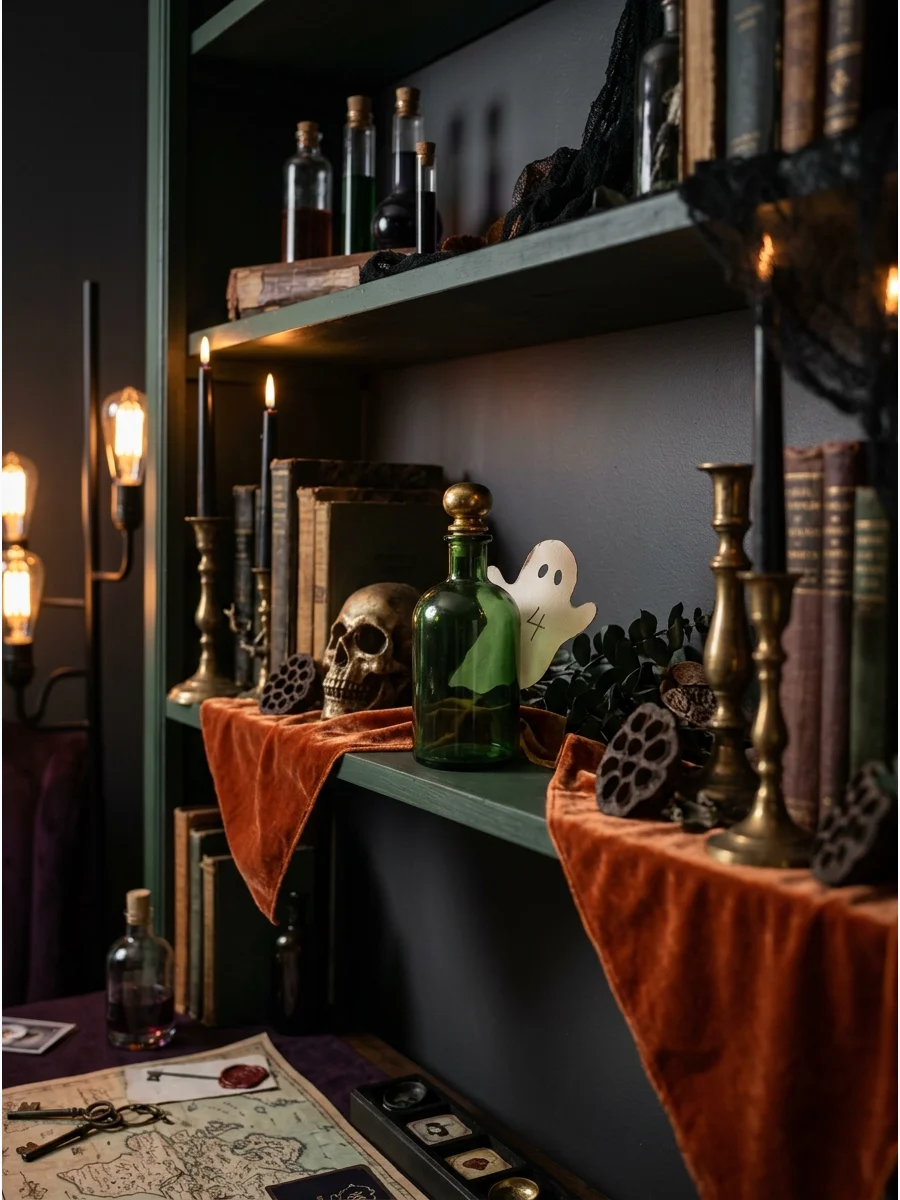
Place small numbered ghost images around the venue and have guests record each number they discover.
This is a passive activity that rewards observant guests without requiring them to stop socializing.
Hide ghosts in unexpected places like the underside of a serving tray or inside a glass lantern.
Costume Showcases and Creative Competitions
10. Halloween Costume Contest
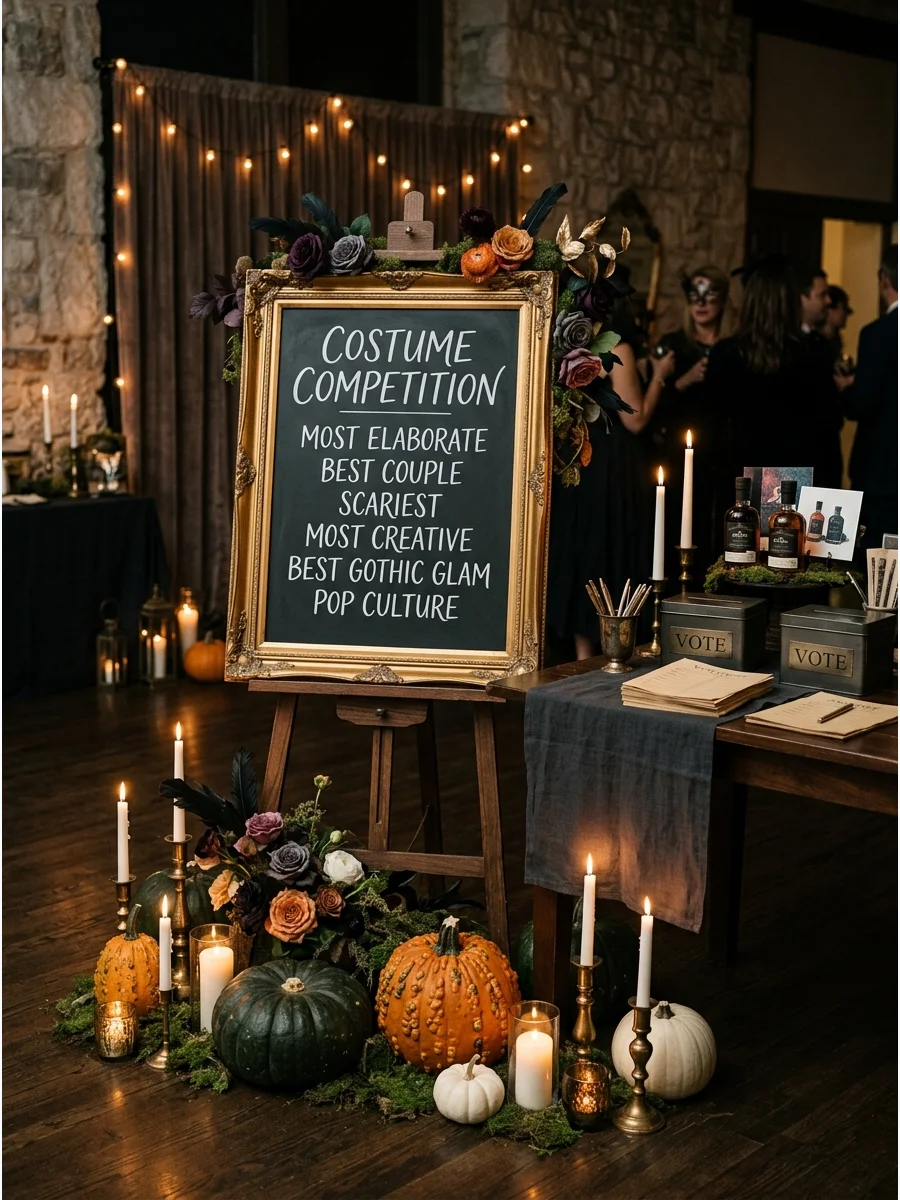
Create several categories for awards, such as most creative, best handmade, and strongest commitment to character.
Offering multiple categories ensures that different types of effort—from humor to craftsmanship—are recognized.
Display the award categories on a chalkboard or framed sign early in the night so guests know what they are competing for.
11. Costume Runway
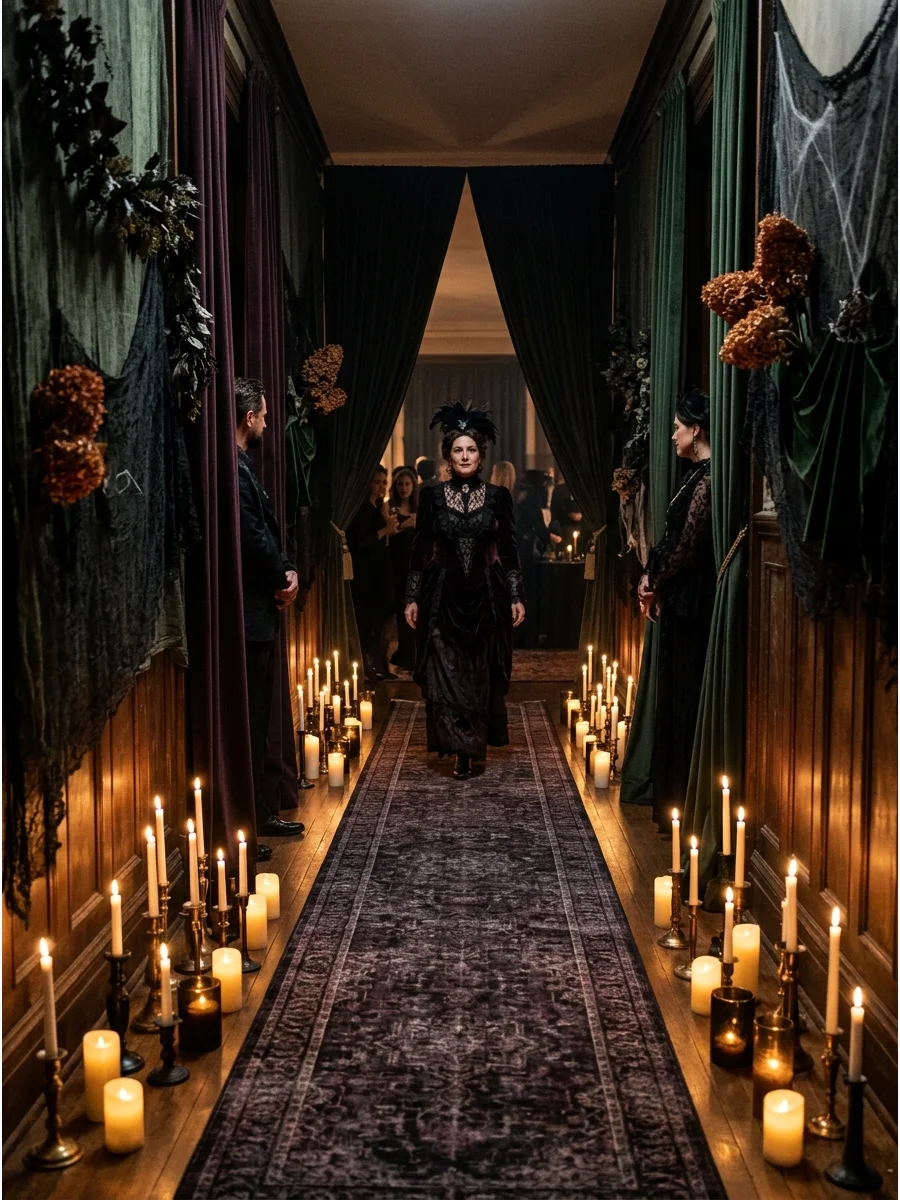
Create a short walkway with dramatic lighting where guests can present their costumes and introduce their characters.
A dedicated moment for costumes ensures that everyone’s hard work is seen and appreciated by the whole group.
Use a playlist of dark synth or classical music to provide a rhythmic background for the walk.
12. Mystery Costume Awards
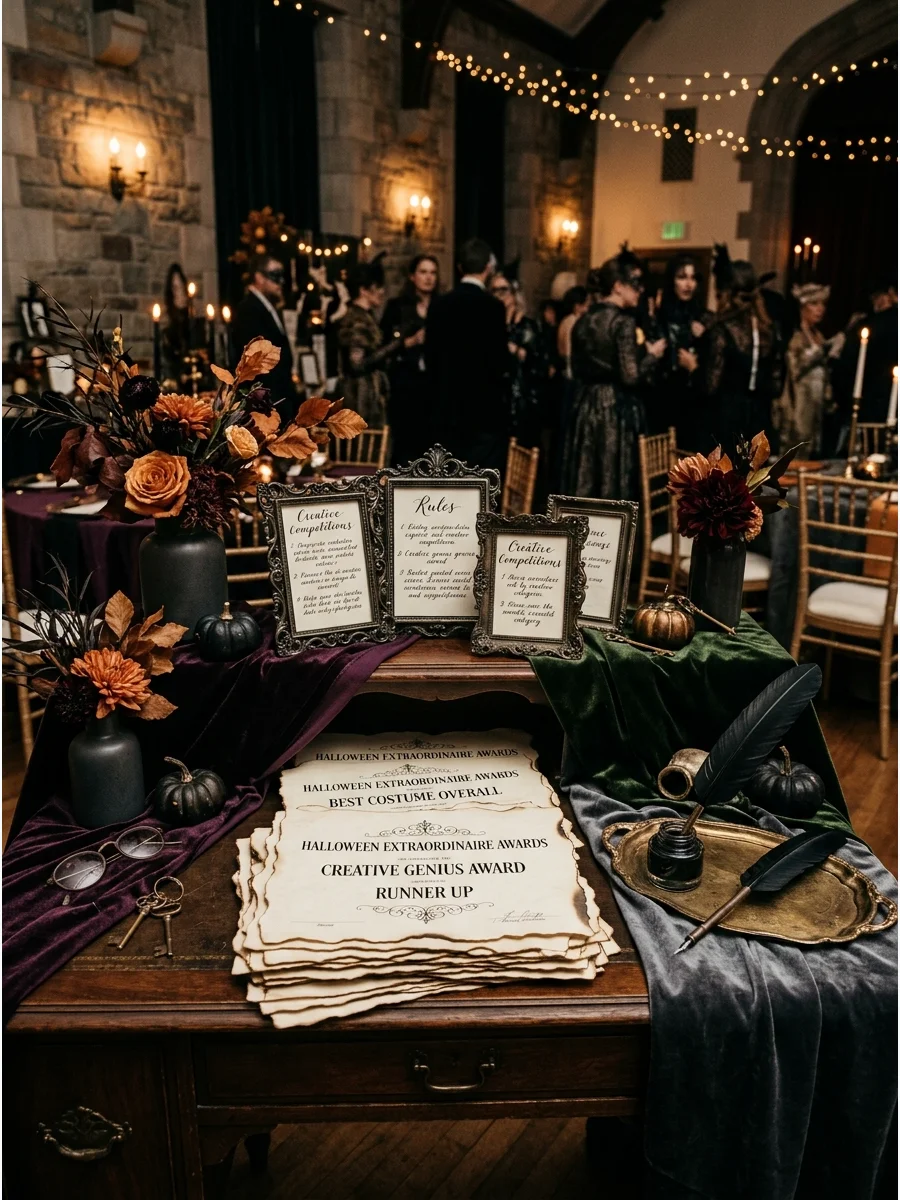
Keep award categories secret until the end of the night to recognize unexpected traits like ‘best entrance’ or ‘best accessories.’
Secret categories keep the energy high as guests remain curious about who might win for what reason.
Prepare a few generic certificates that can be filled in by hand at the end of the night to accommodate surprises.
13. Thrifted Costume Challenge
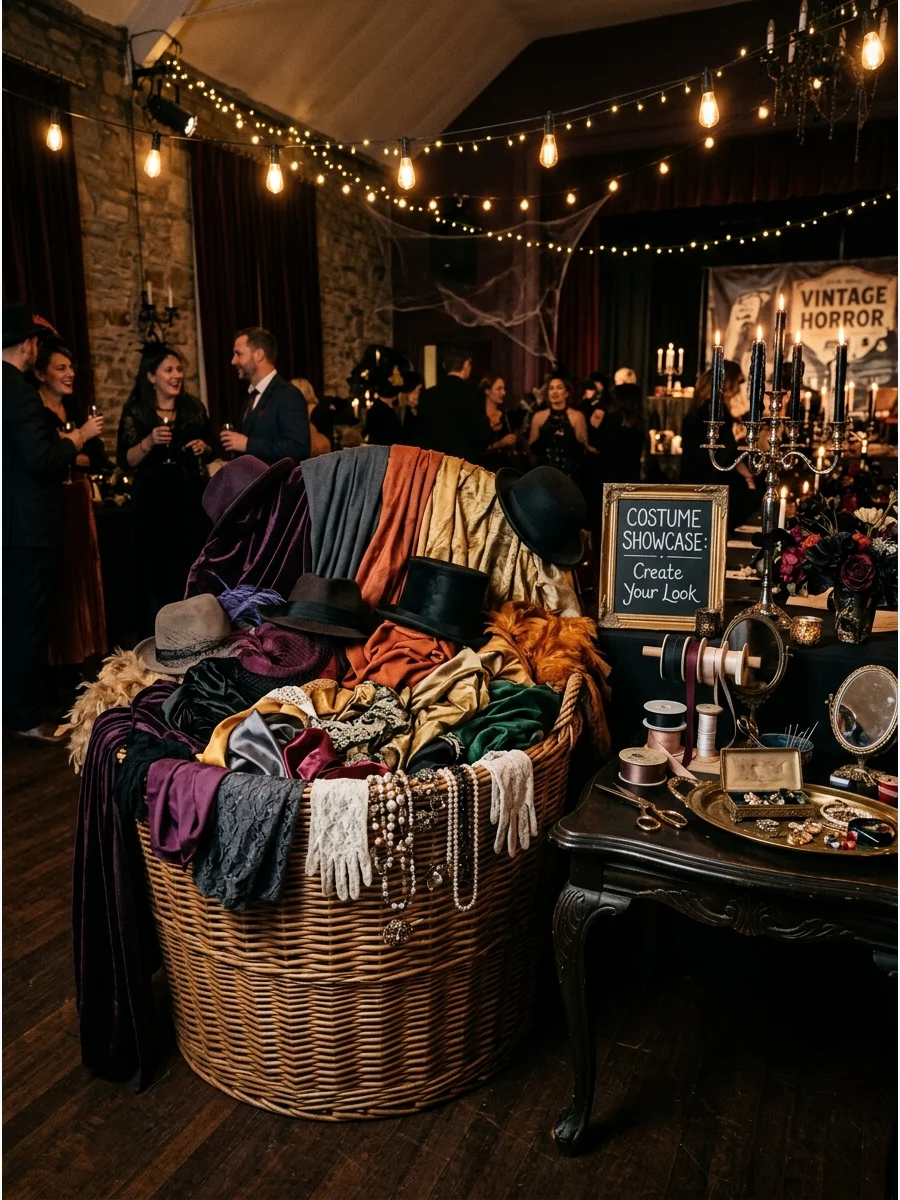
Divide guests into teams and give them a limited time to create an original costume from a box of thrifted items.
This high-energy activity tests creativity and teamwork under pressure, often resulting in humorous results.
Include a variety of textures like lace, faux fur, and velvet to allow for more interesting ‘high-fashion’ horror looks.
14. One-Color Costume Contest
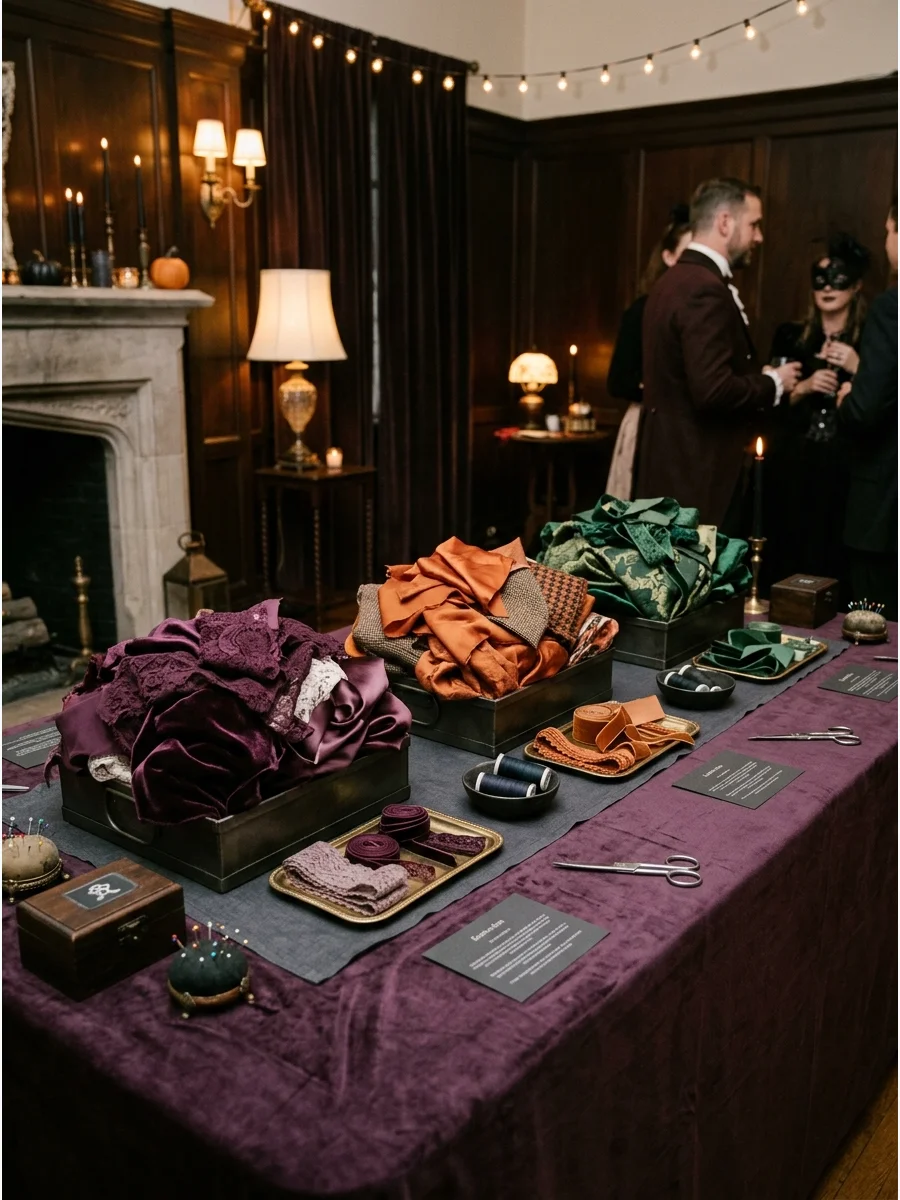
Teams create a costume using only items from one assigned color like black, orange, or forest green.
The color constraint forces guests to think about shape and texture rather than just the character’s identity.
Provide rolls of crepe paper and fabric scraps in the assigned colors to help teams flesh out their designs.
Spooky Trivia and Intellectual Challenges
15. Halloween Trivia Tournament
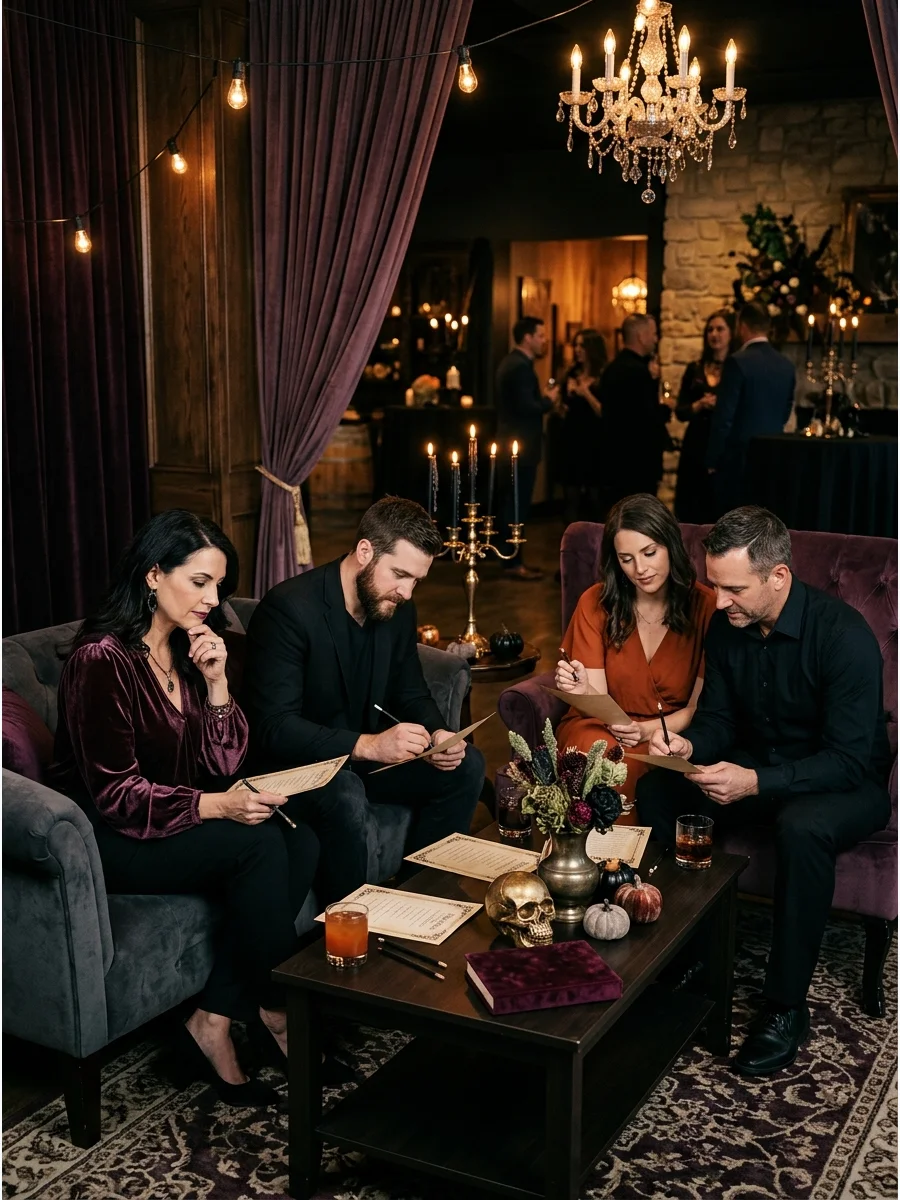
Prepare rounds covering history, folklore, and seasonal food, using a final wager question to determine the winner.
Competitive trivia engages the intellect and works well for groups that prefer sitting and talking over physical games.
Use a small bell or a squeaky toy as a ‘buzzer’ for each team to make the answering process more dynamic.
16. Horror Movie Trivia
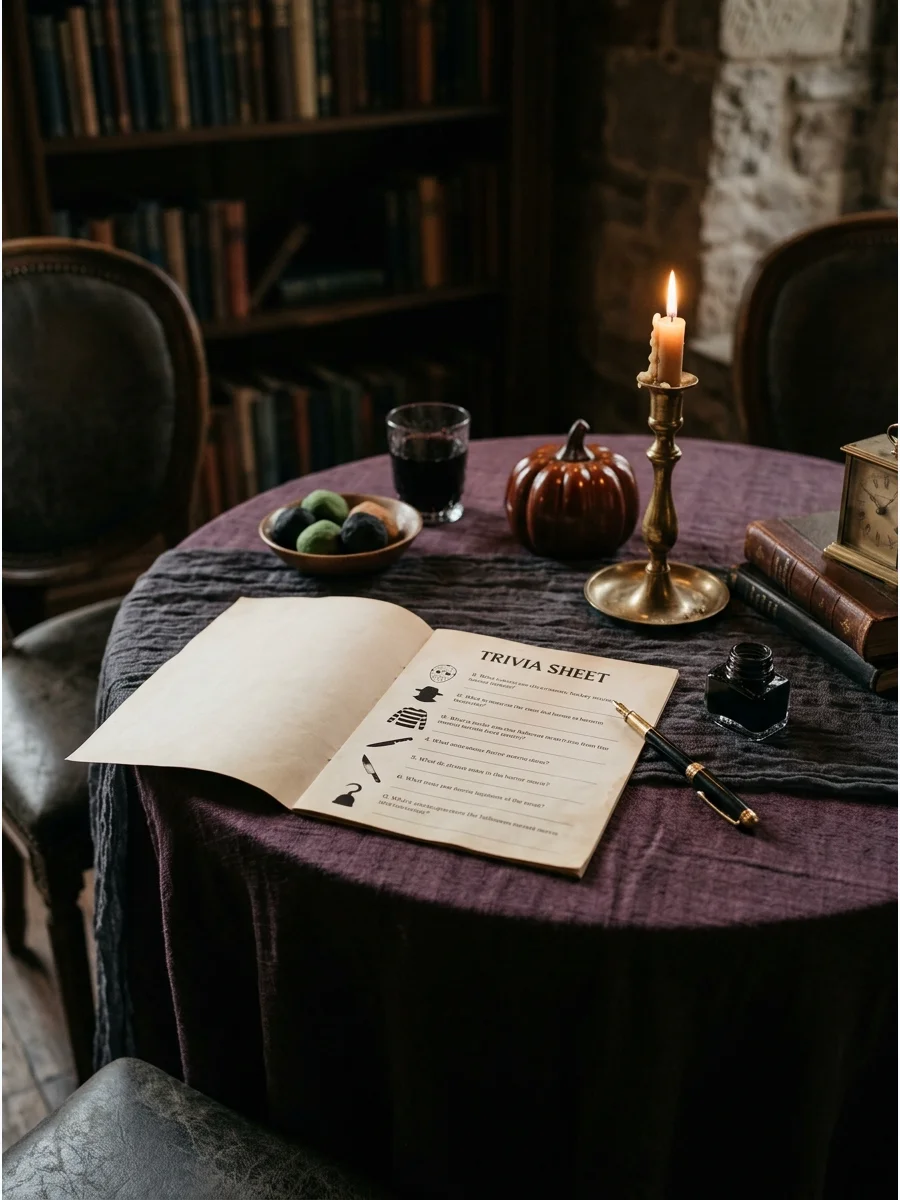
Focus questions on famous settings, taglines, and characters from horror cinema history.
This appeals to movie buffs and provides a nostalgic trip through classic and modern cinema.
Include a visual round where guests must identify a movie based on a single iconic prop or costume item.
17. Name That Spooky Sound
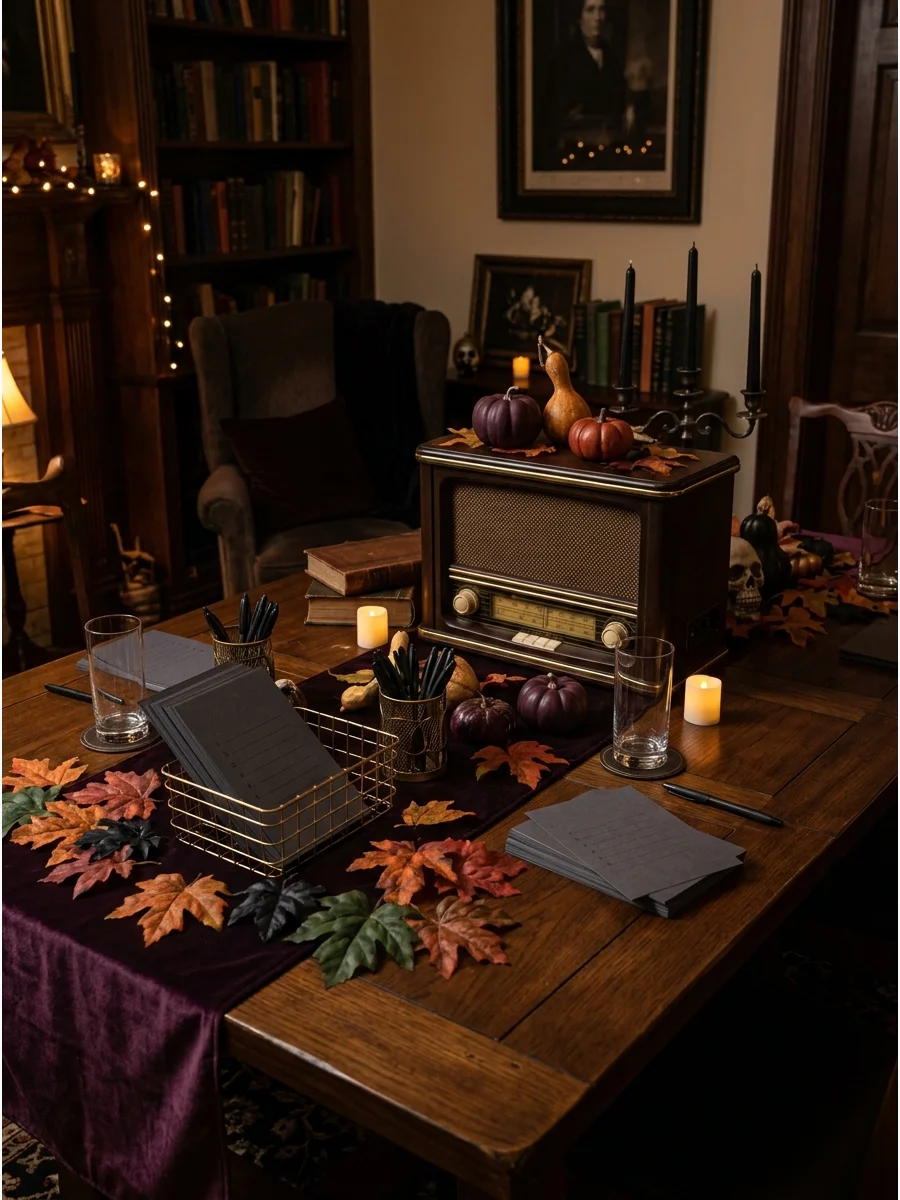
Play short sound effects like creaking doors or unusual household noises for guests to identify.
Audio-based games are inclusive and provide a different sensory experience from standard visual games.
Mix in a few difficult sounds, like a recording of a specific animal call or a rare musical instrument.
18. Halloween Soundtrack Challenge
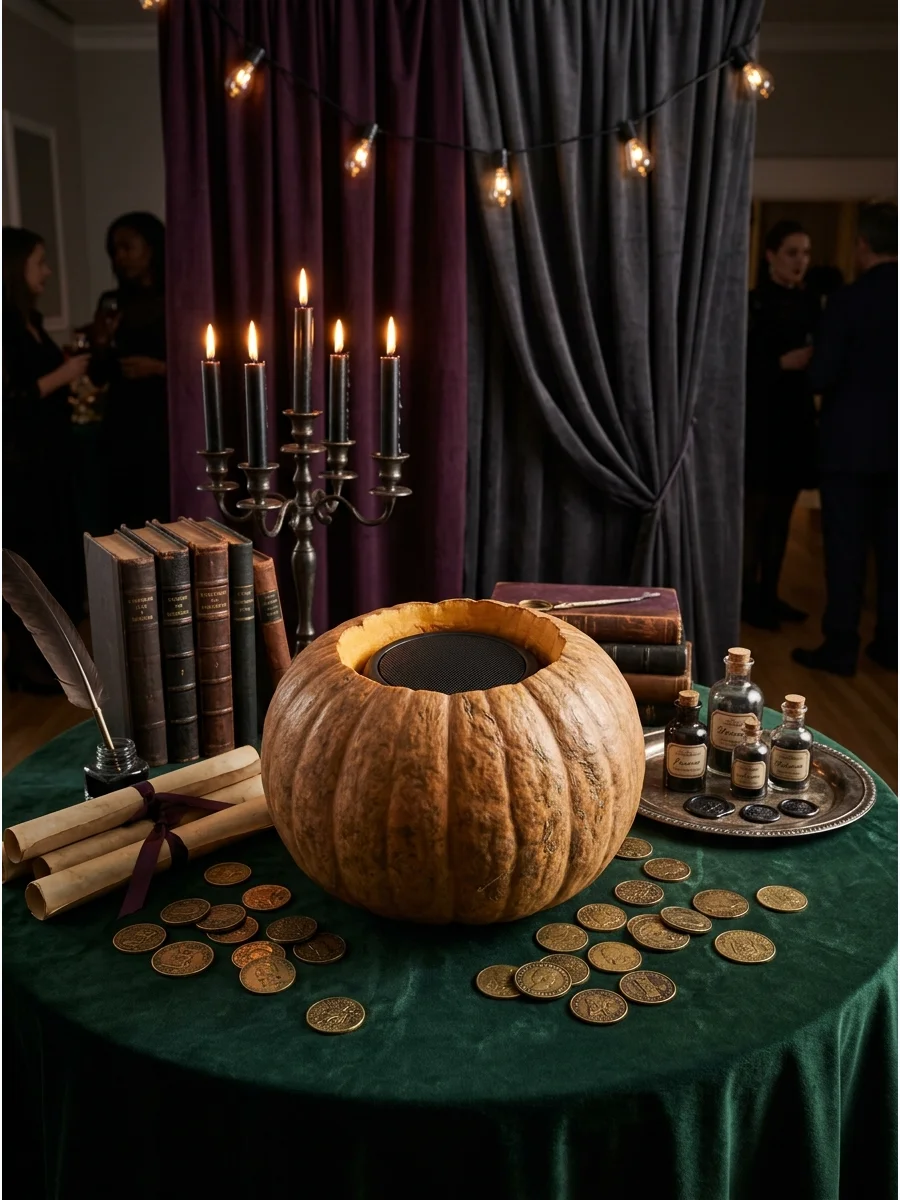
Play instrumental sections from recognizable suspense-themed music and have teams guess the film or artist.
Music often triggers strong memories and creates a lively atmosphere as guests hum along.
Use a high-quality Bluetooth speaker hidden inside a hollowed-out pumpkin for a thematic touch.
19. Halloween Movie Emoji Quiz
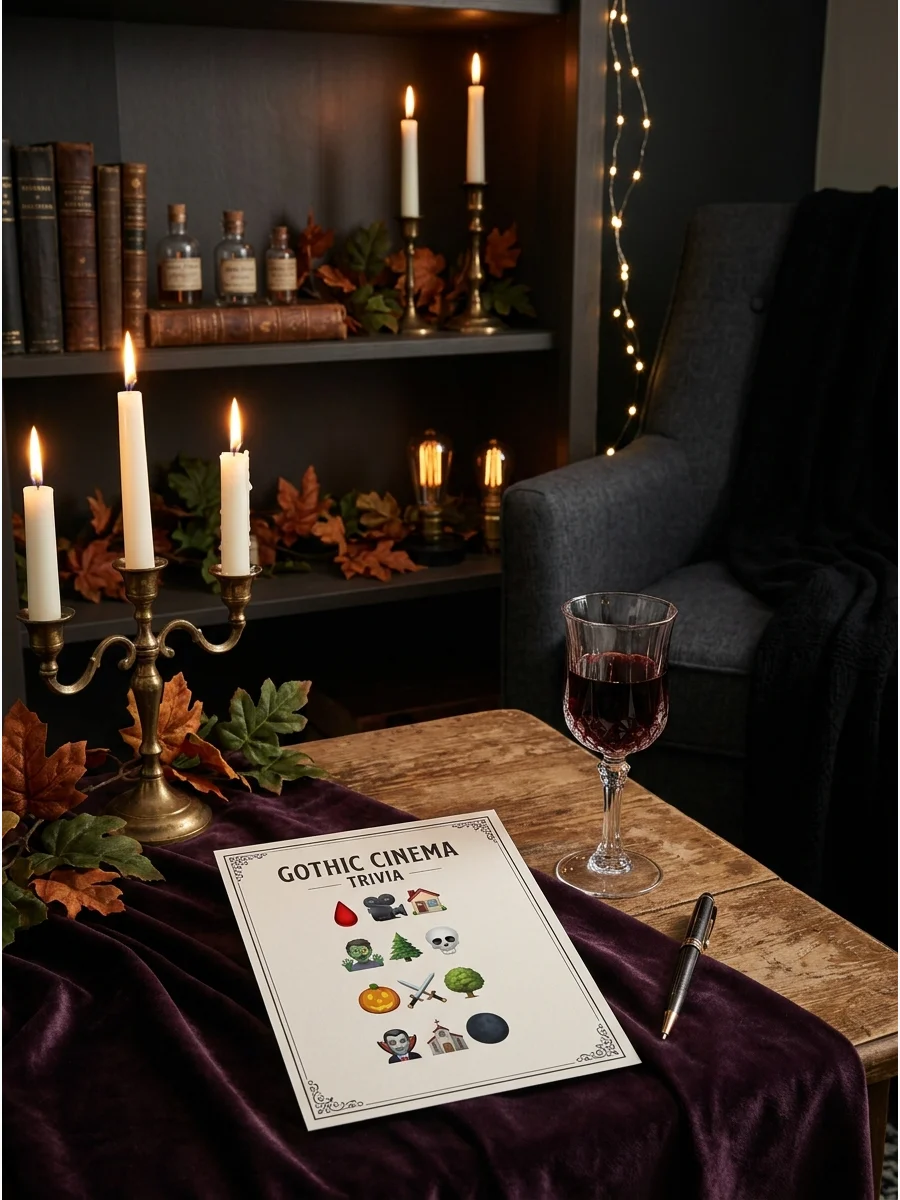
Represent movie titles using emoji combinations and have guests decode them within a time limit.
This is a quick, visual brain-teaser that can be printed on cards and left at tables for casual play.
Laminate the cards so they are spill-proof and can be reused for future parties.
20. Famous Monster Guessing Game
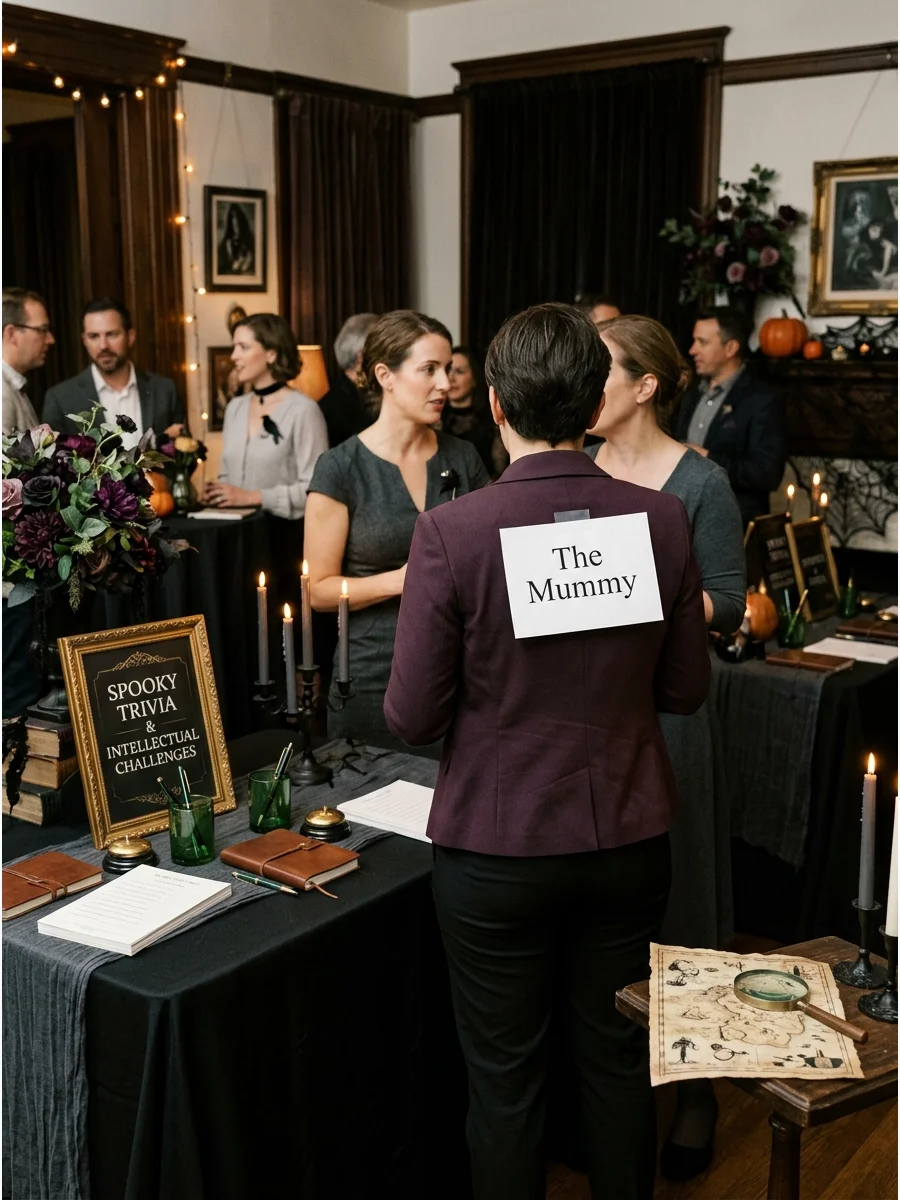
Attach a monster’s name to each guest’s back; they must ask yes-or-no questions to identify themselves.
This is a classic icebreaker that forces guests to move around and talk to multiple people.
Use adhesive labels or small clothespins to ensure the names stay attached to different types of costume fabrics.
Word Games and Social Icebreakers
21. Halloween Charades
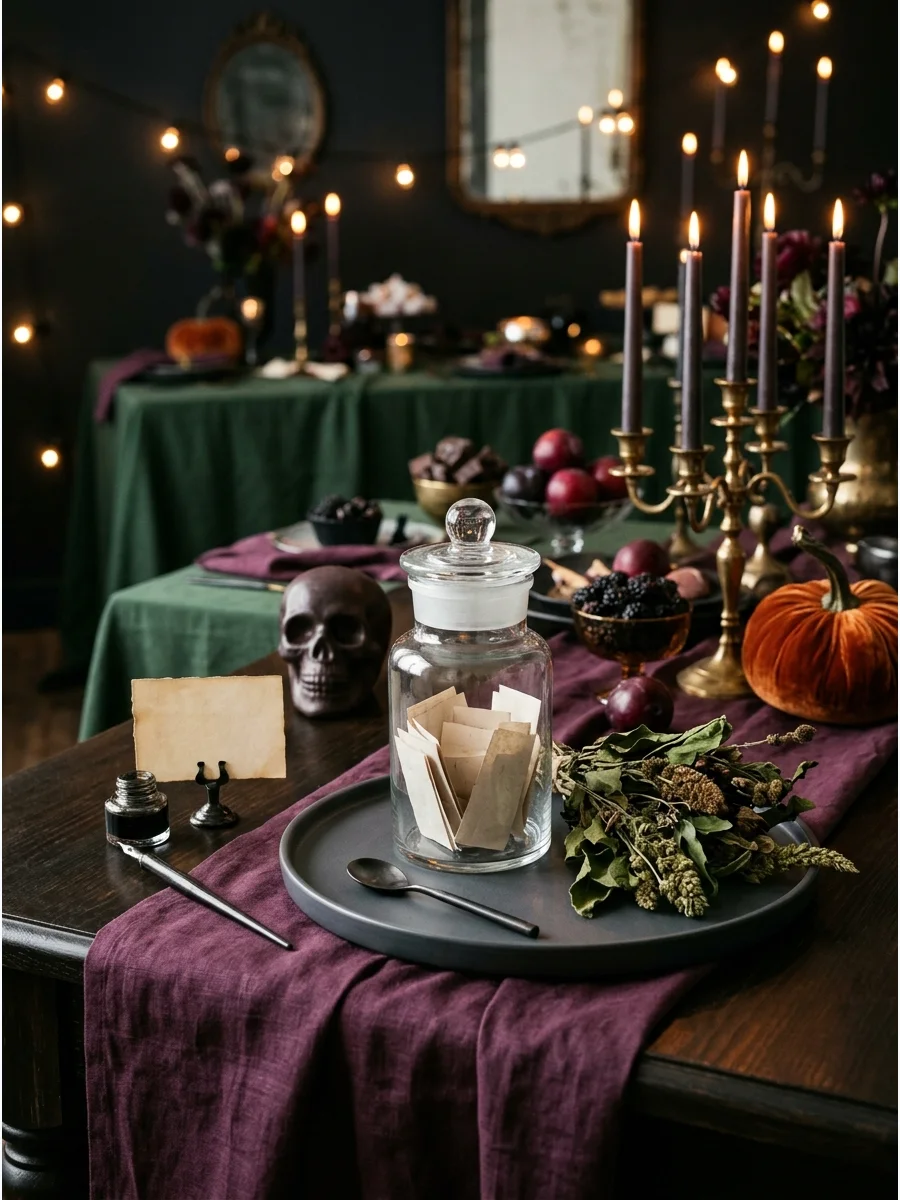
Players act out Halloween movies, creatures, or traditions without speaking while their team guesses.
The physical comedy of charades is a reliable way to break the ice and generate laughter.
Keep the prompts in a decorative apothecary jar to make the selection process feel more thematic.
22. Spooky Pictionary
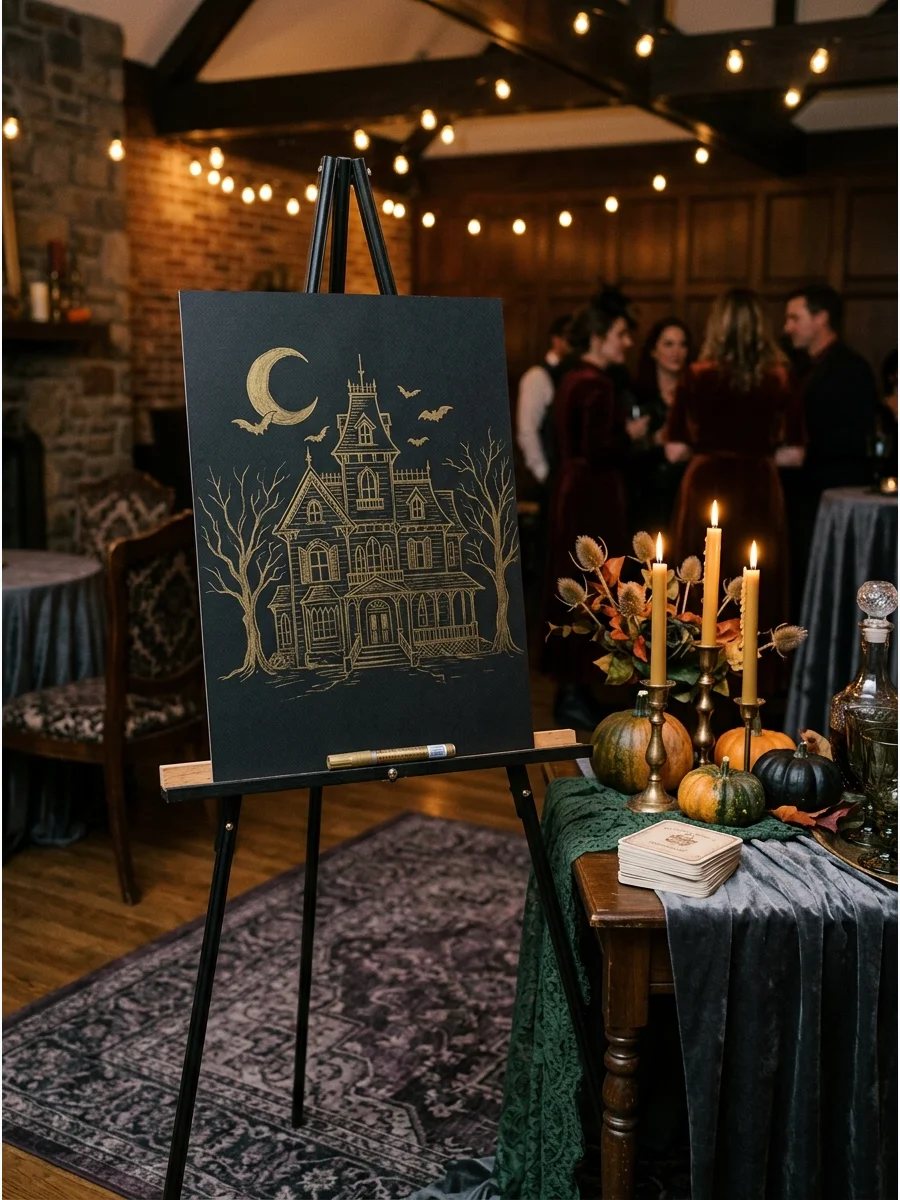
Guests draw prompts like ‘haunted hotel’ or ‘vampire vacation’ for their team to identify in timed rounds.
Drawing games provide a visual focus and work well for guests who are more comfortable being creative than being the center of attention.
Provide a large easel with black paper and metallic gold markers for a more sophisticated look than a white board.
23. Forbidden Word Challenge
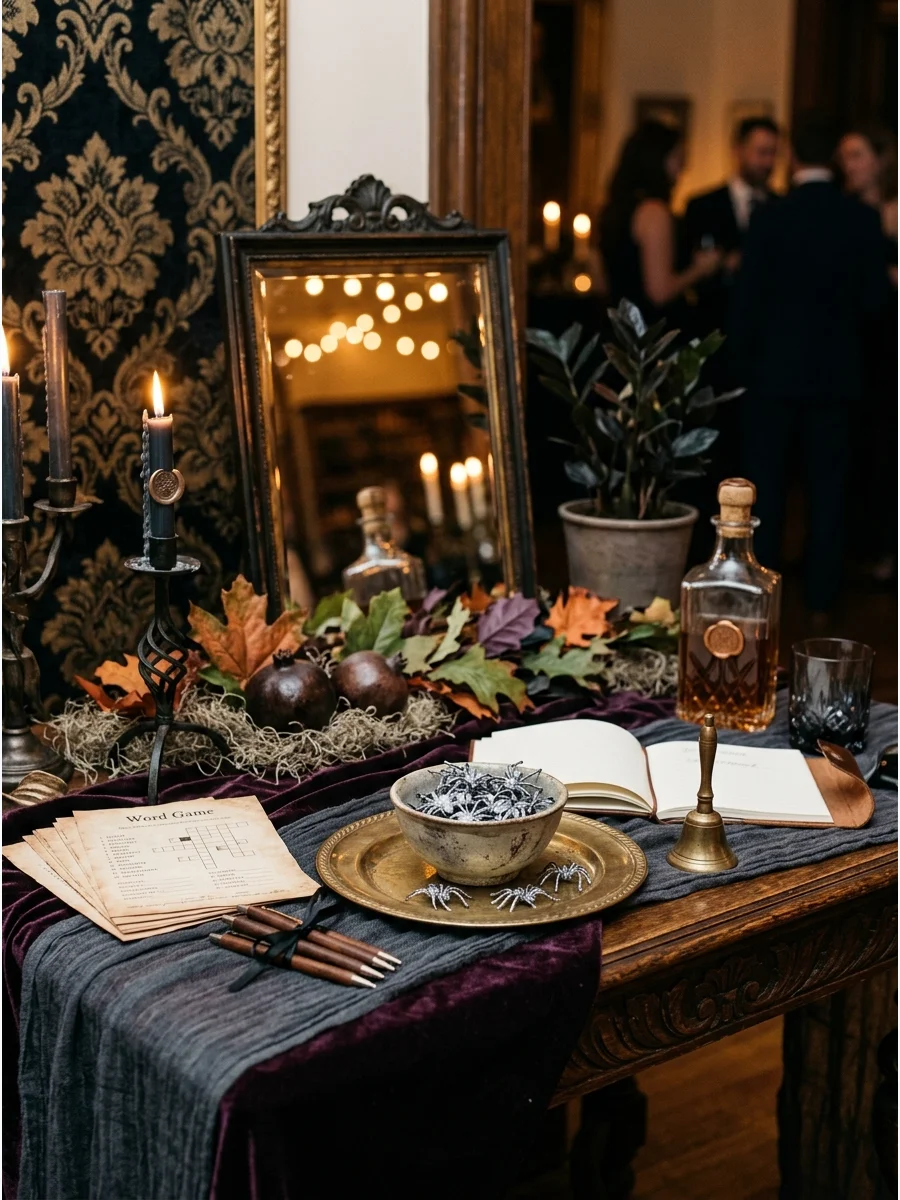
Give players a common word they cannot say; others collect tokens from anyone they catch using the forbidden word.
This adds an extra layer of focus to every conversation and lasts throughout the entire party.
Use small plastic spiders or wooden coins as tokens that guests can easily carry or wear.
24. Halloween Would You Rather
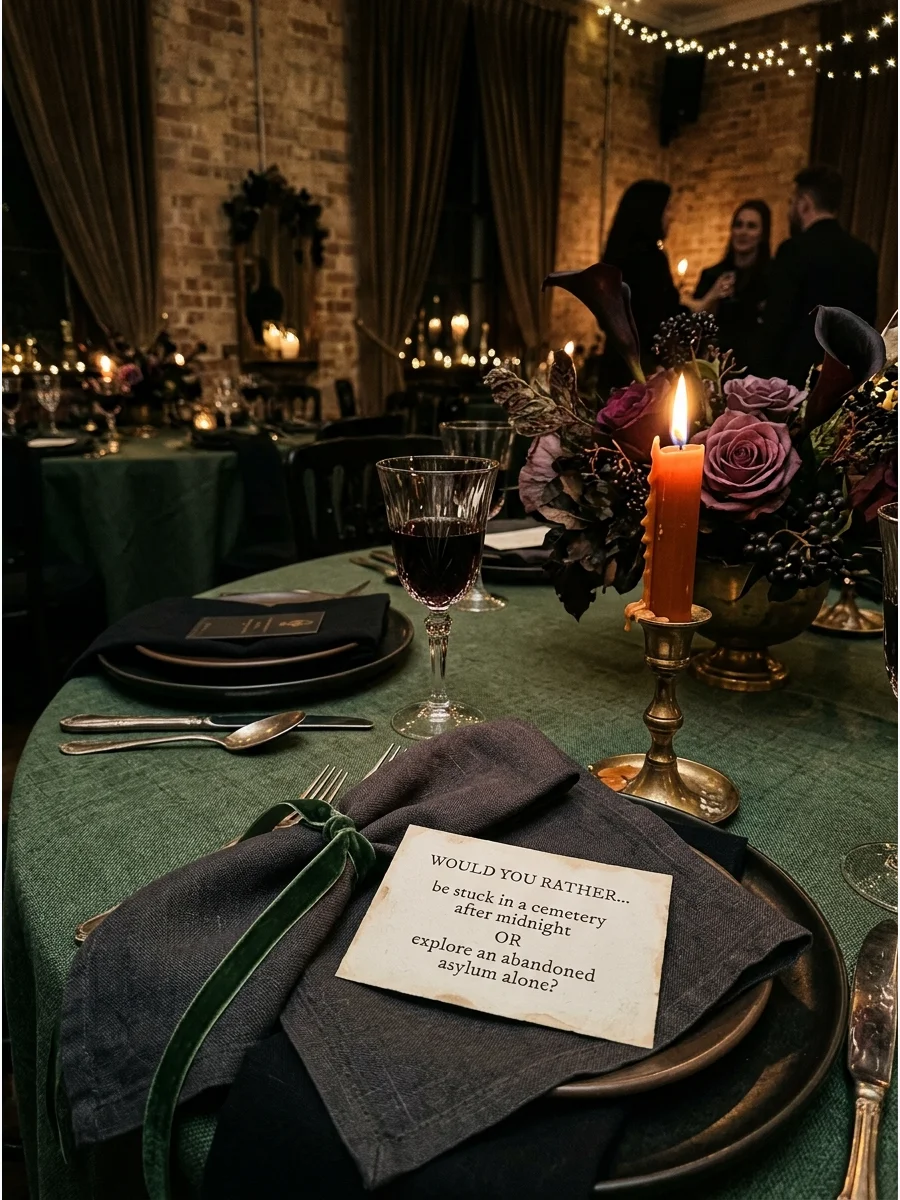
Prepare dilemmas involving supernatural scenarios and have guests defend their choices.
This sparks interesting debates and helps guests learn about each other’s preferences and sense of humor.
Print the questions on small cards and place one under each guest’s dinner plate as a conversation starter.
25. Two Truths and a Fright
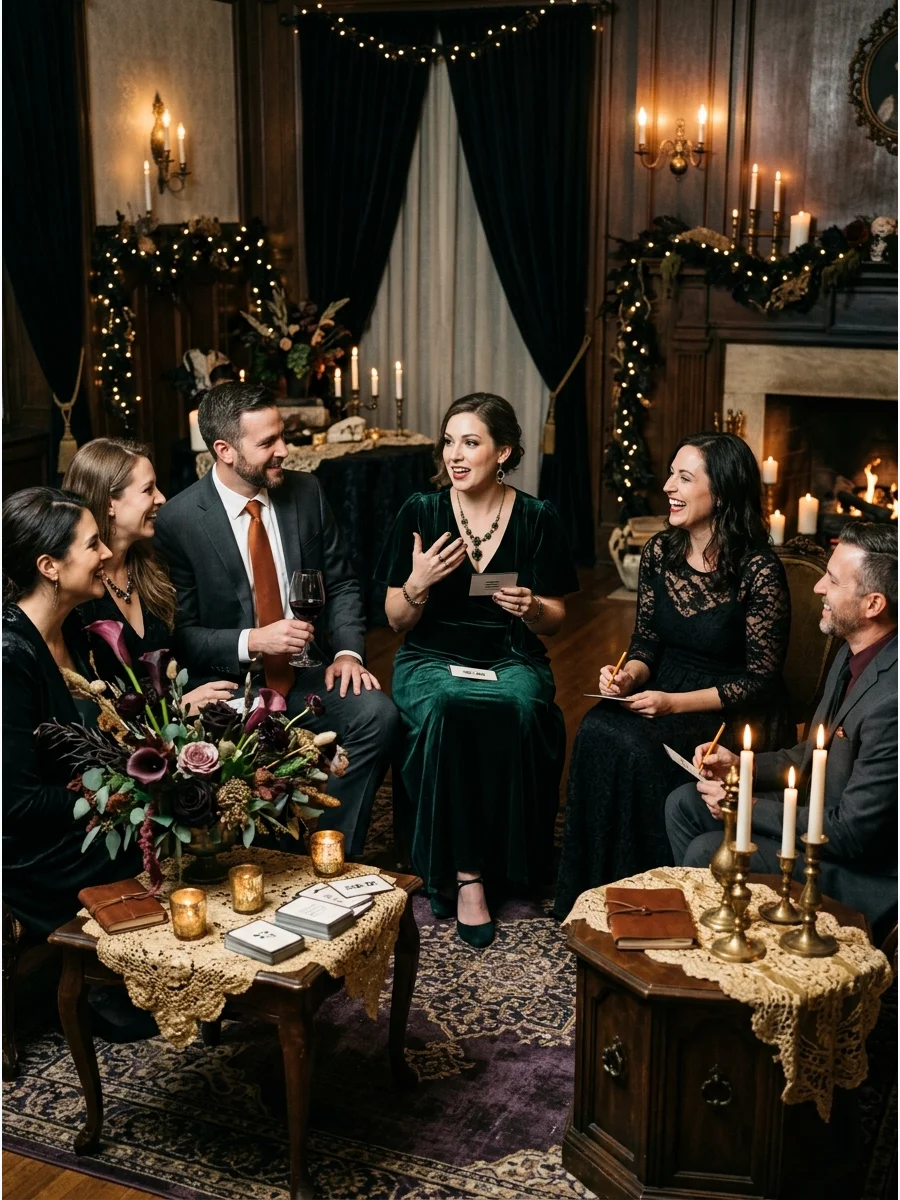
Each person shares three Halloween-related statements, with one being fictional, and the group guesses the lie.
Personal stories make for great icebreakers and often lead to further storytelling among guests.
Limit stories to one minute to keep the game moving quickly through a larger group.
26. Horror Plot in One Sentence
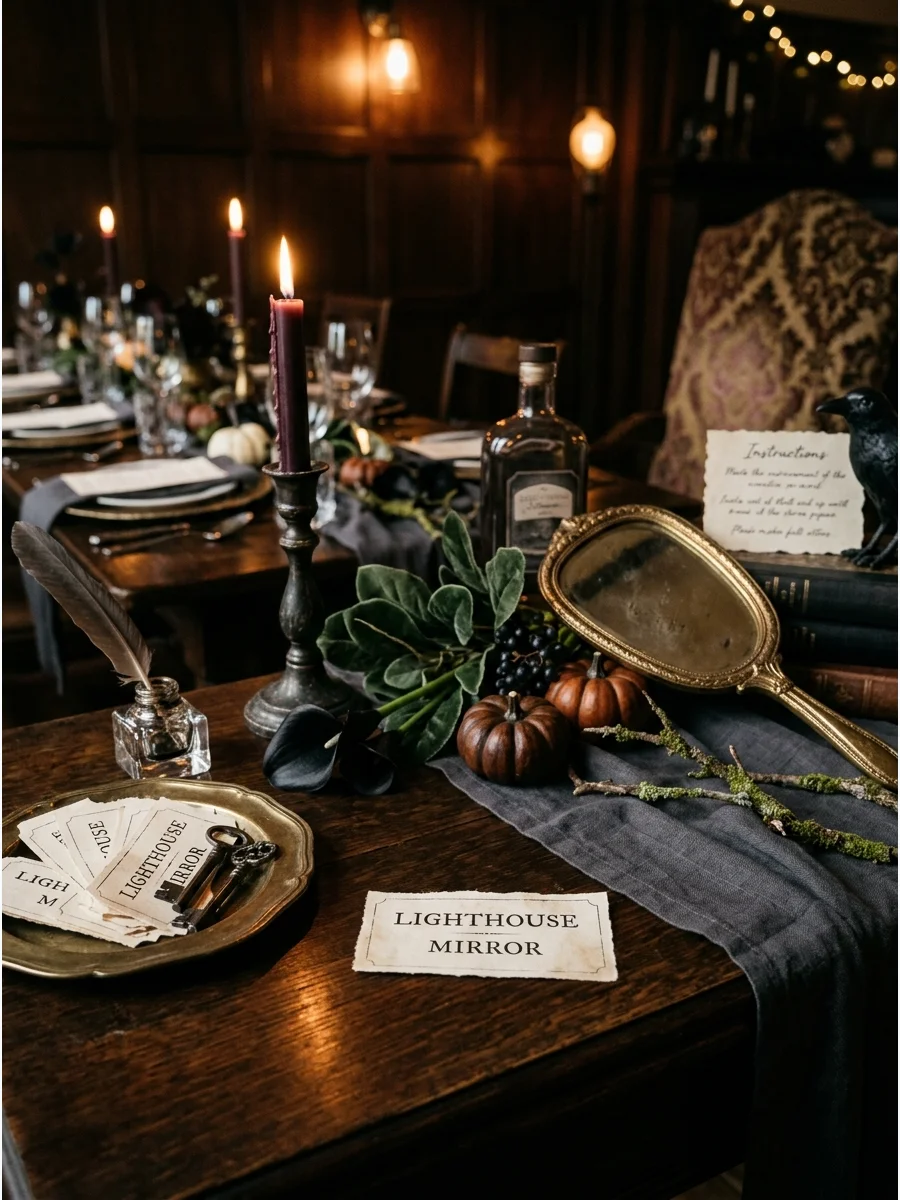
Guests must create a complete horror movie plot using several assigned random words in a single sentence.
This challenges creativity and often results in absurd and entertaining narrative summaries.
Give each guest a different set of words written on a small ‘ticket’ to make it feel like a writing assignment.
Narrative Storytelling and Performance
27. Spooky Story Chain
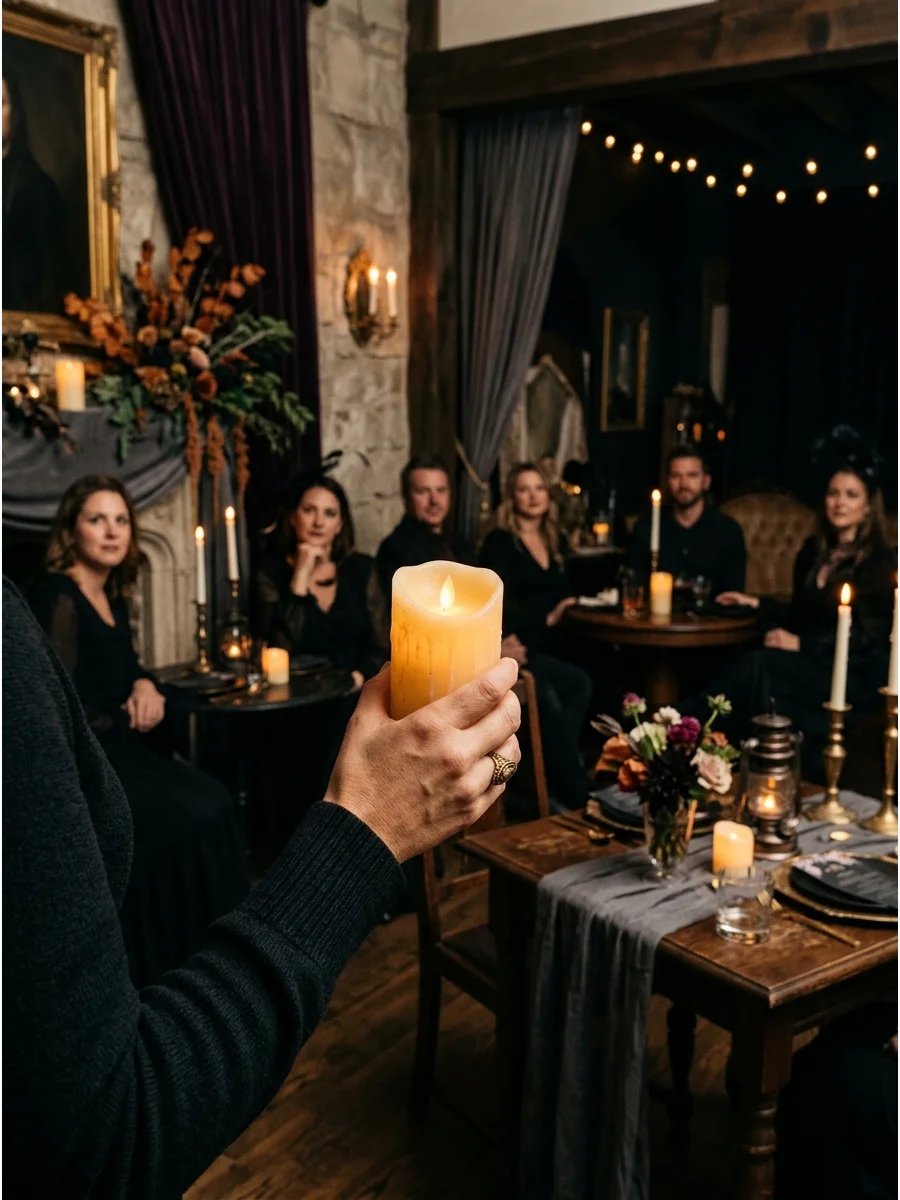
One guest starts a story with two sentences, and each person adds a part until the tale is complete.
Collaborative storytelling is unpredictable and allows the group’s collective imagination to take over.
Use a ‘storytelling torch’ (a safe LED candle) that the current speaker holds to signal it is their turn.
28. Two-Minute Ghost Story Contest
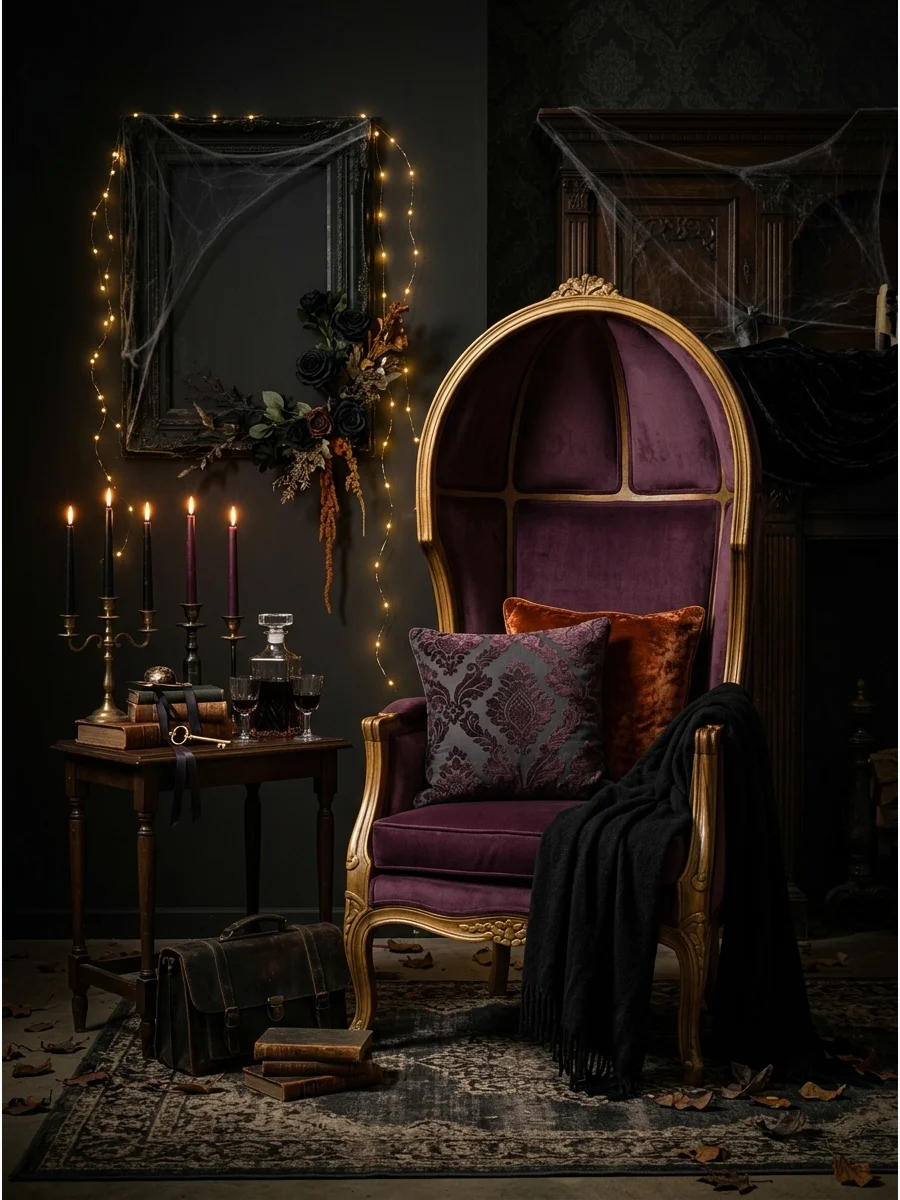
Give guests two minutes to tell an original fictional ghost story, with prizes for the most suspenseful or original.
The time limit ensures the stories are punchy and keeps the energy high throughout the performances.
Set up a small ‘stage’ area with a single spotlight and a high-backed chair to make the performance feel official.
29. Urban Legend or Invention
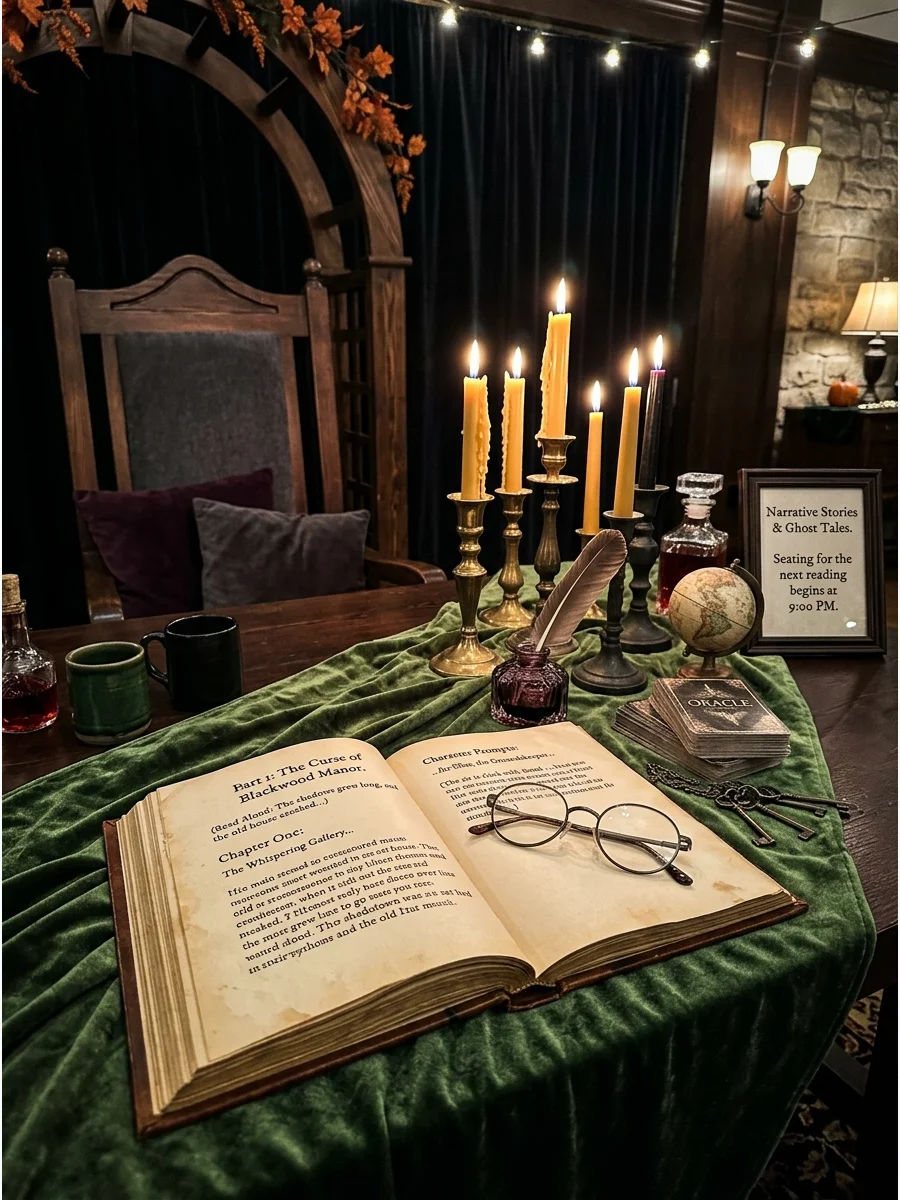
Read short urban legends and host-invented stories; teams must decide which are established folklore.
This tests guests’ knowledge of cultural myths and rewards those who can tell a convincing lie.
Choose legends from different cultures to keep the answers from being too obvious.
30. Haunted Object Storytelling
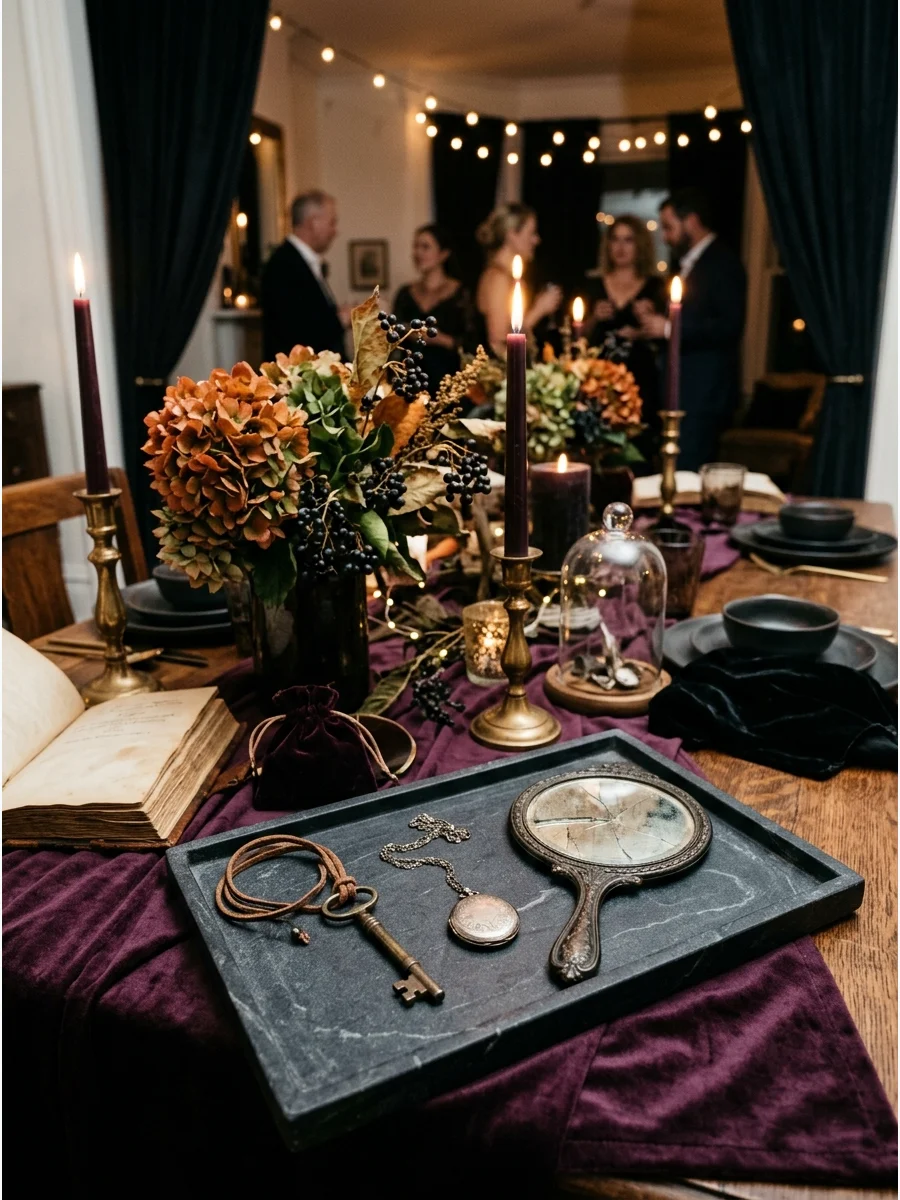
Guests choose an unusual object and invent a fictional haunted history for it.
Using physical prompts helps guests visualize their stories and provides a focus for their creativity.
Source objects from thrift stores, like old pocket watches, tarnished mirrors, or locked diaries.
31. Halloween Prop Improvisation
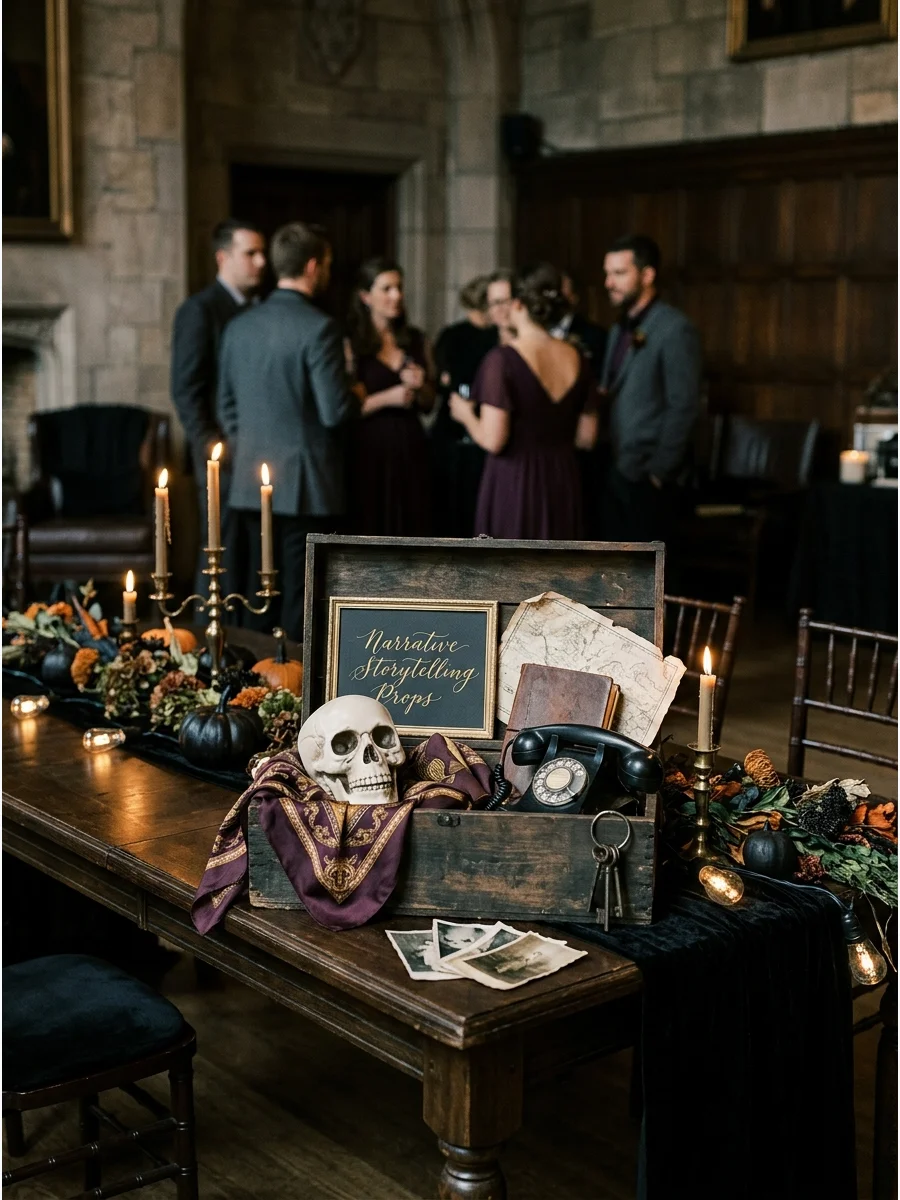
Teams draw items from a box and have five minutes to create a short scene using every prop.
Improv games are high-energy and great for groups that enjoy acting and comedy.
Include at least one completely non-themed item, like a toaster or a rubber duck, to make the scenes more challenging.
32. Silent Horror Scene
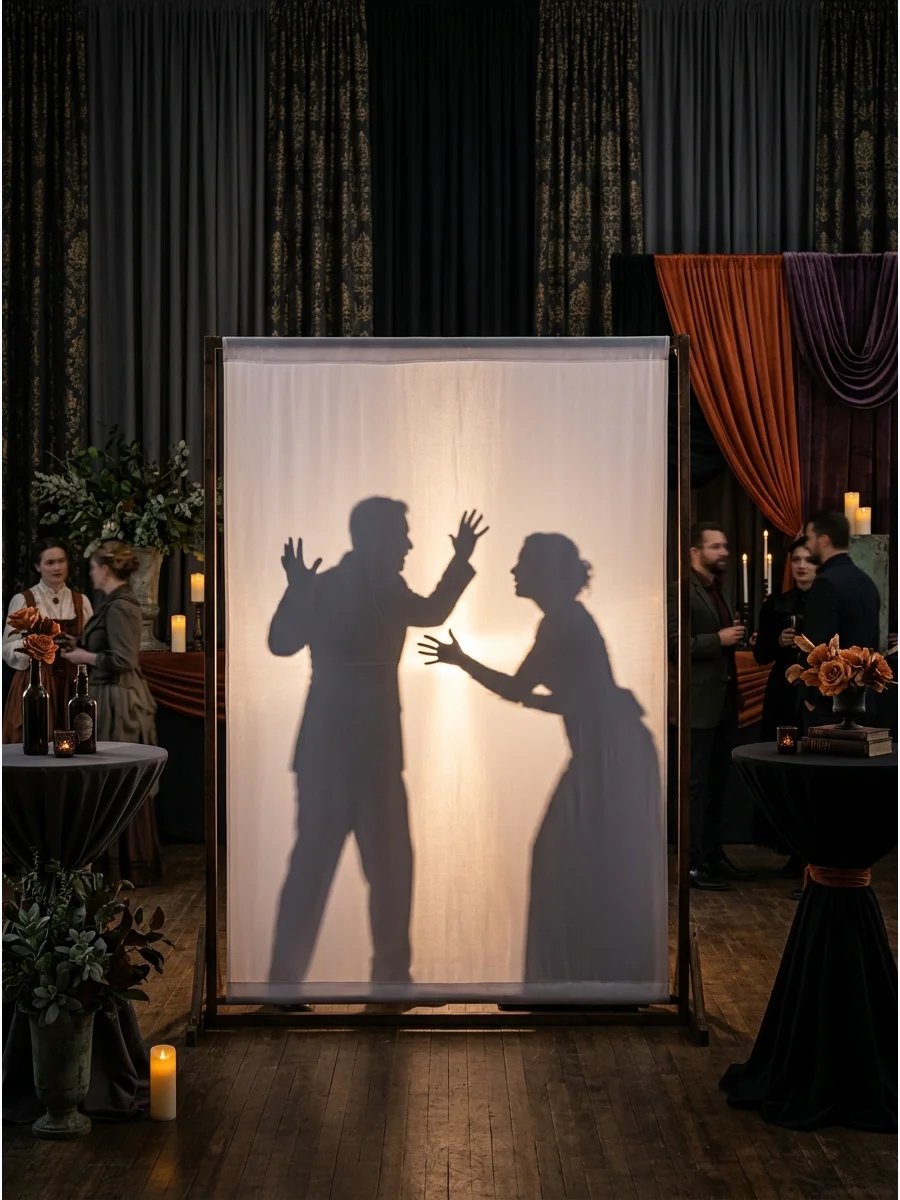
Teams perform a one-minute suspense scene using only gestures, expressions, and movement—no speaking allowed.
The lack of sound forces guests to be more expressive and often results in dramatic, theatrical moments.
Provide a few simple costume pieces like capes or hats to help define characters quickly.
33. Halloween Commercial Challenge
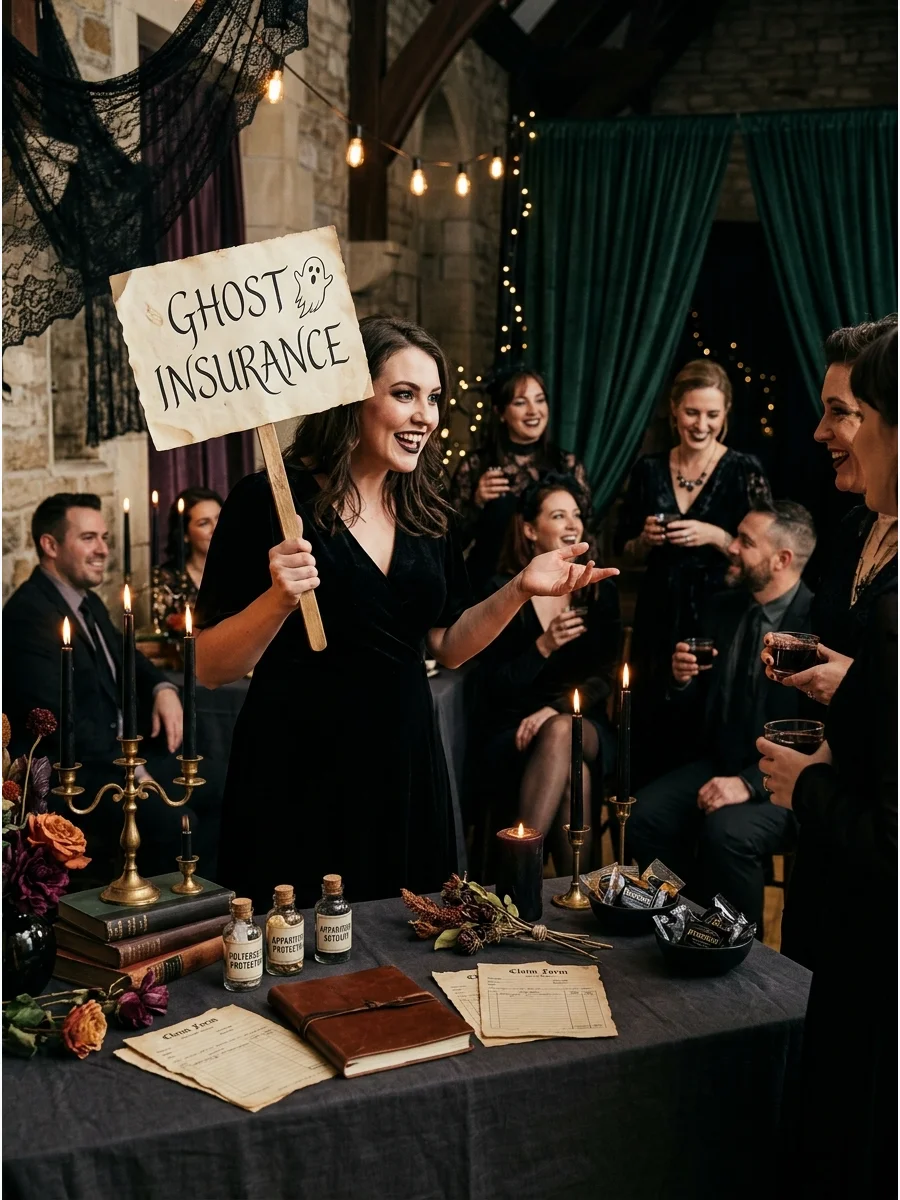
Teams create and perform a short advertisement for a fictional product like ‘ghost insurance.’
This combines humor with creative writing and performance, making it a highlight of the evening.
Provide a few ‘product’ names on slips of paper to give teams a starting point for their pitch.
34. Monster Debate
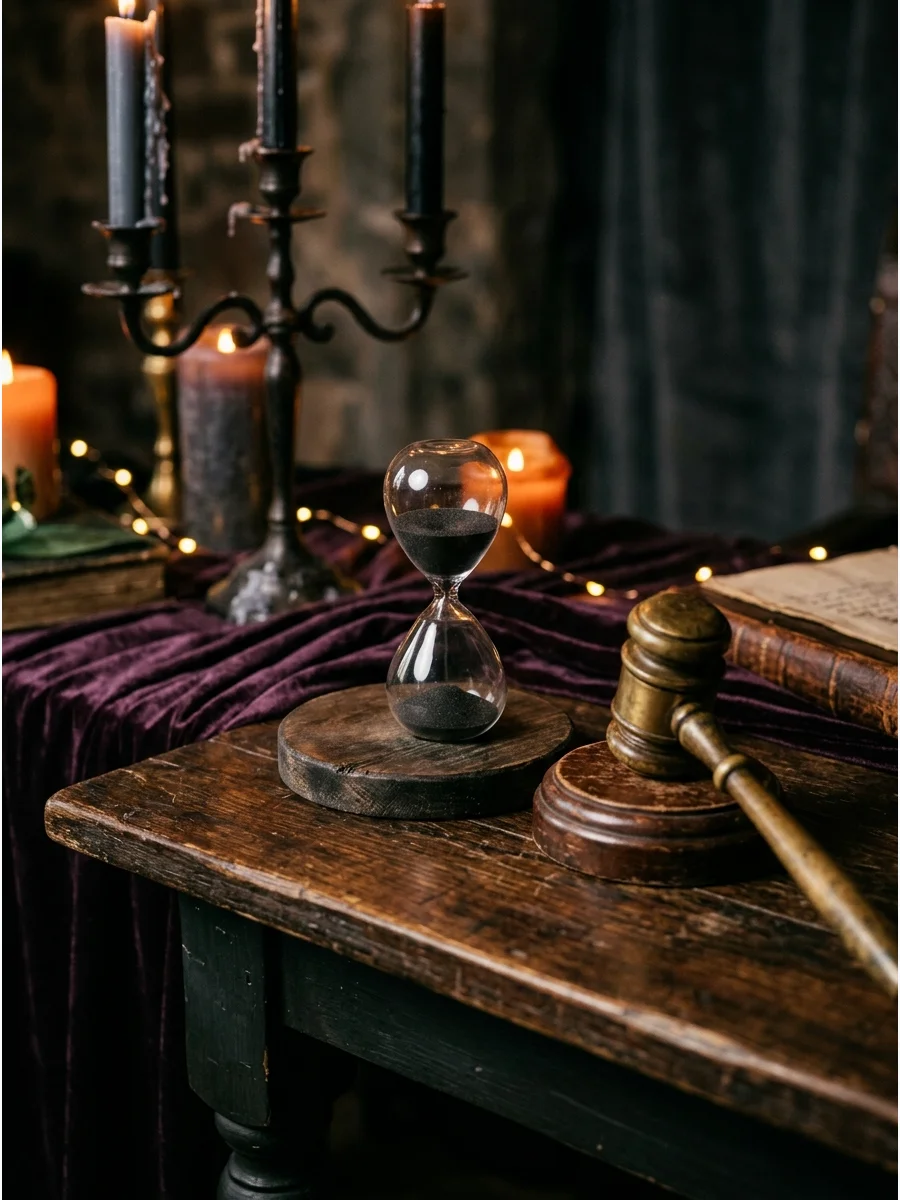
Assign guests humorous debate topics, such as whether ghosts or vampires make better neighbors.
Debates encourage quick thinking and allow guests to showcase their wit in a structured format.
Use a small sand timer to ensure each ‘debater’ keeps their argument concise and the game moves quickly.
Interactive Crafting and DIY Stations
35. No-Carve Pumpkin Painting Contest
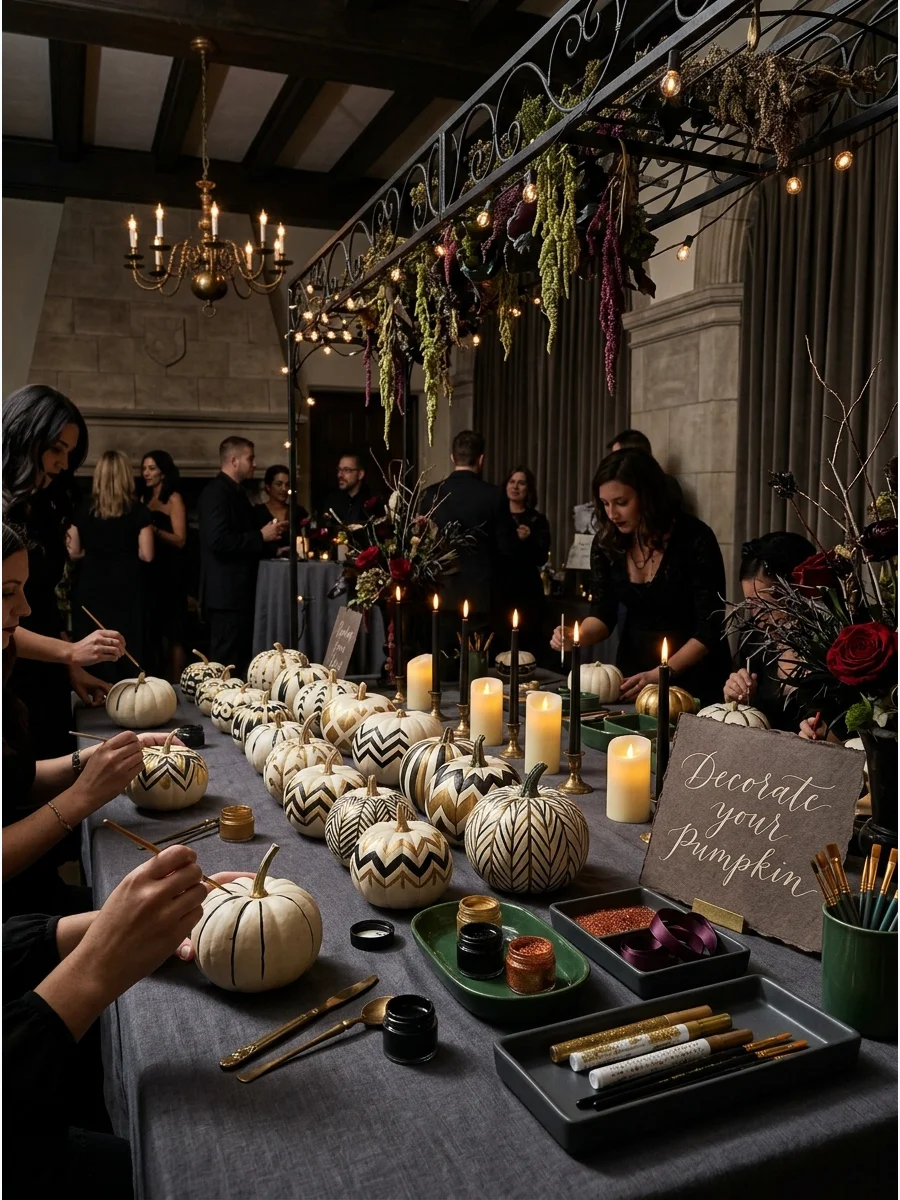
Provide small pumpkins and paint pens for guests to create Gothic or minimalist designs.
No-carve options are less messy and allow guests to keep their hands clean while being creative.
Offer a selection of metallic paint pens in gold, silver, and copper for a sophisticated finish.
36. Vintage Halloween Mask Workshop
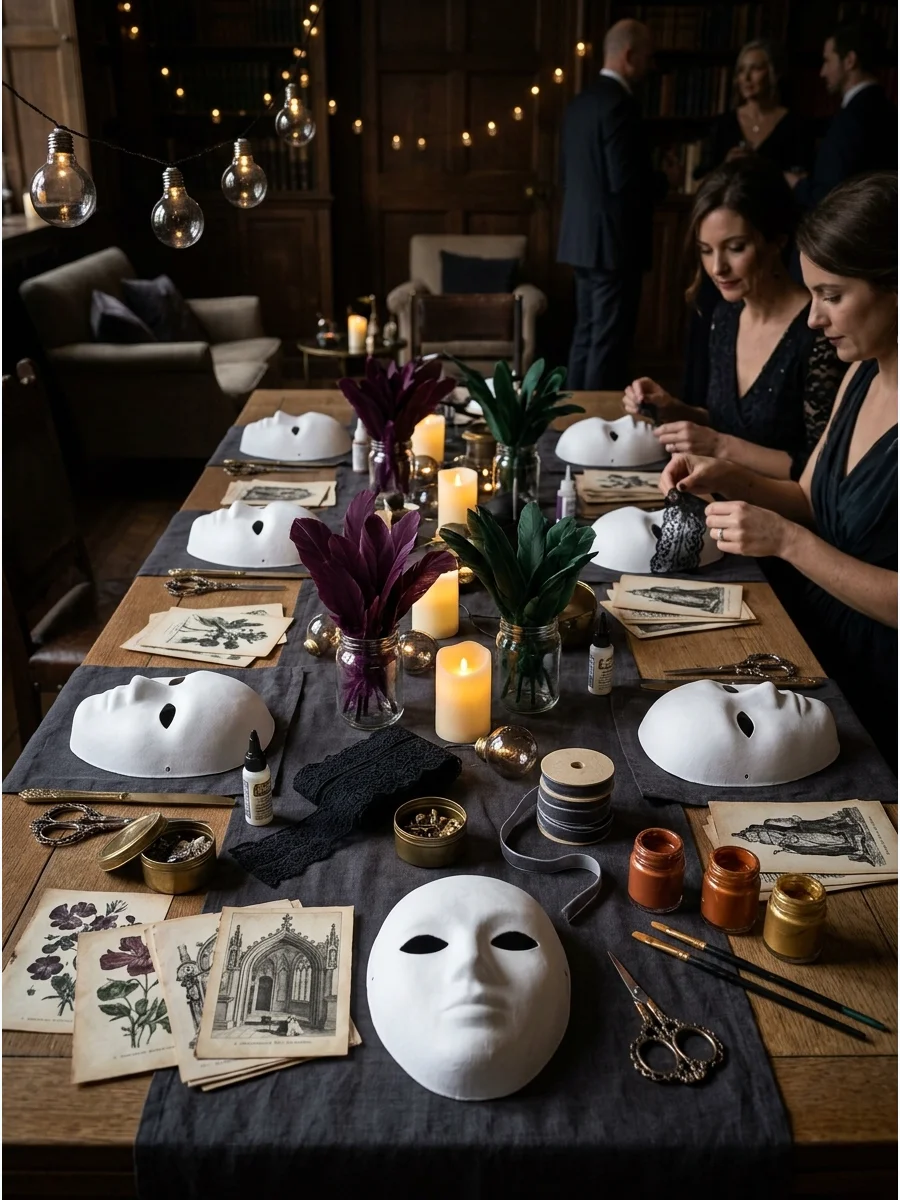
Supply blank masks and collage materials for guests to create designs inspired by retro Halloween imagery.
Crafting a physical item gives guests a tangible memory of the party to take home.
Print out some 1920s-style mask templates to give guests inspiration for their designs.
37. Potion Bottle Decorating Station
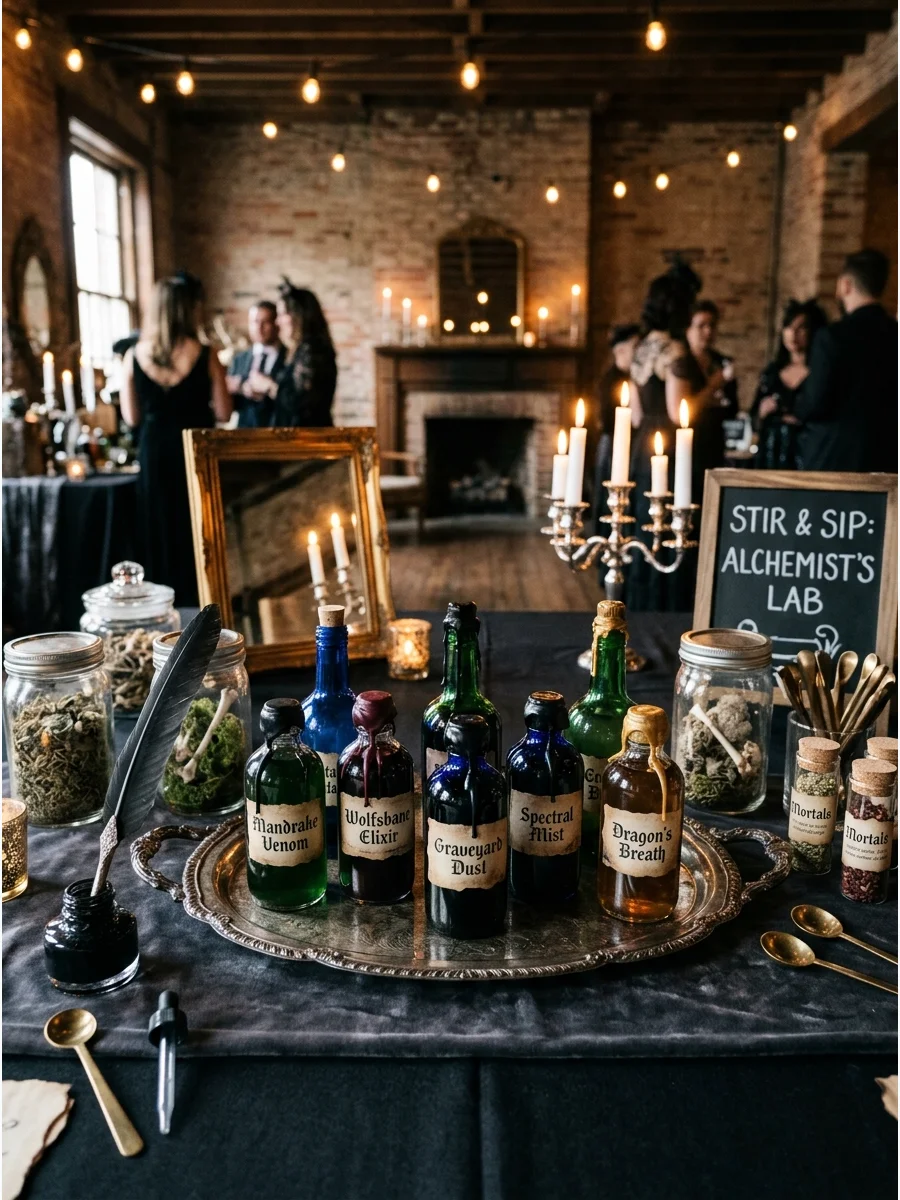
Let guests decorate small glass bottles with labels, wax seals, and colored water to create ‘potions.’
The finished bottles serve as both an activity and a unique party favor.
Use a hot glue gun with colored wax sticks to allow guests to create ‘sealed’ bottle tops quickly.
38. Mini Spellbook Workshop
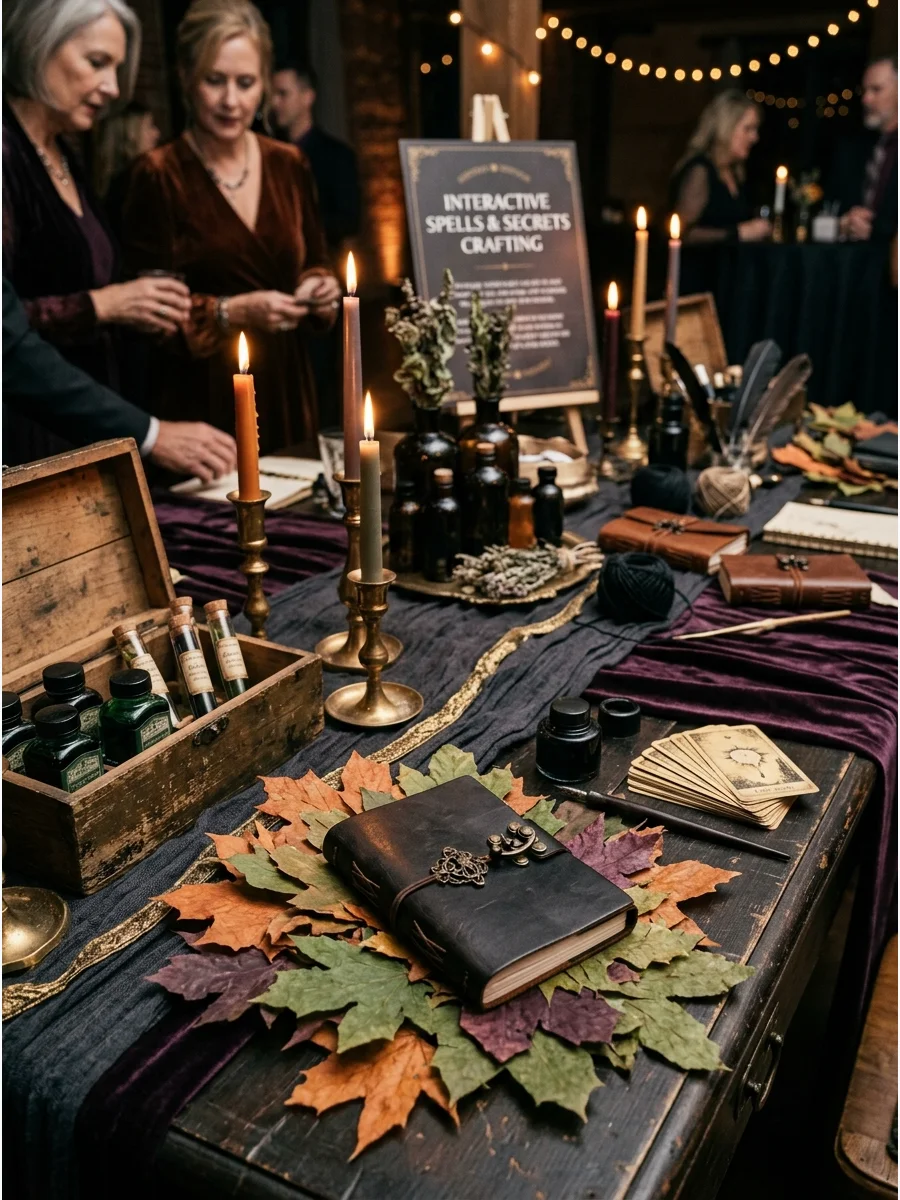
Provide pocket notebooks and decorative materials for guests to create their own fictional journals or recipe books.
This is a quiet, focused activity that appeals to guests who enjoy tactile, detailed work.
Pre-stain the notebook pages with tea or coffee to give them an aged, ‘ancient’ appearance.
39. Gothic Flower Bar
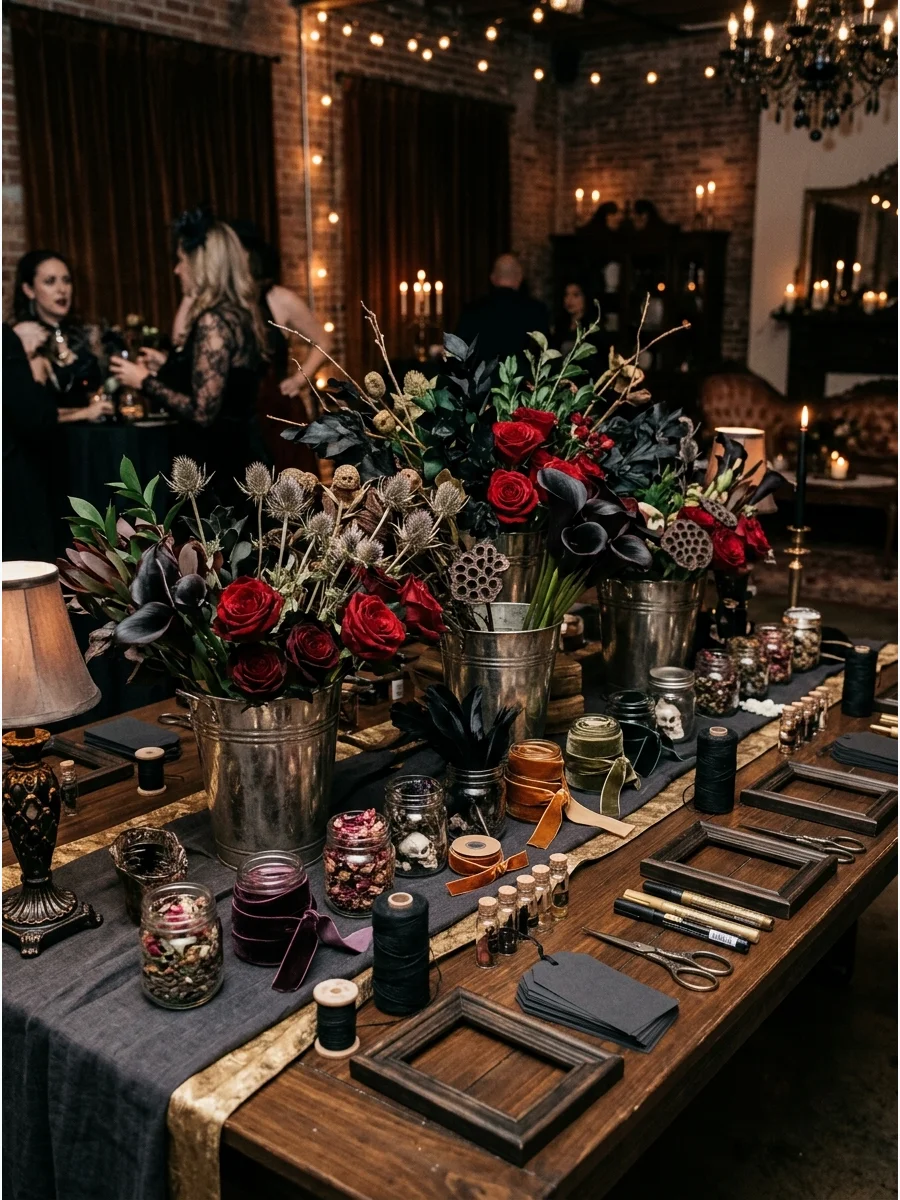
Arrange dark-colored flowers and greenery for guests to build miniature bouquets or floral accessories.
Floral arranging is a sophisticated craft that complements a moody, elegant party aesthetic.
Include unconventional elements like dried seed pods, dark berries, and black-painted eucalyptus.
40. Halloween Collage Station
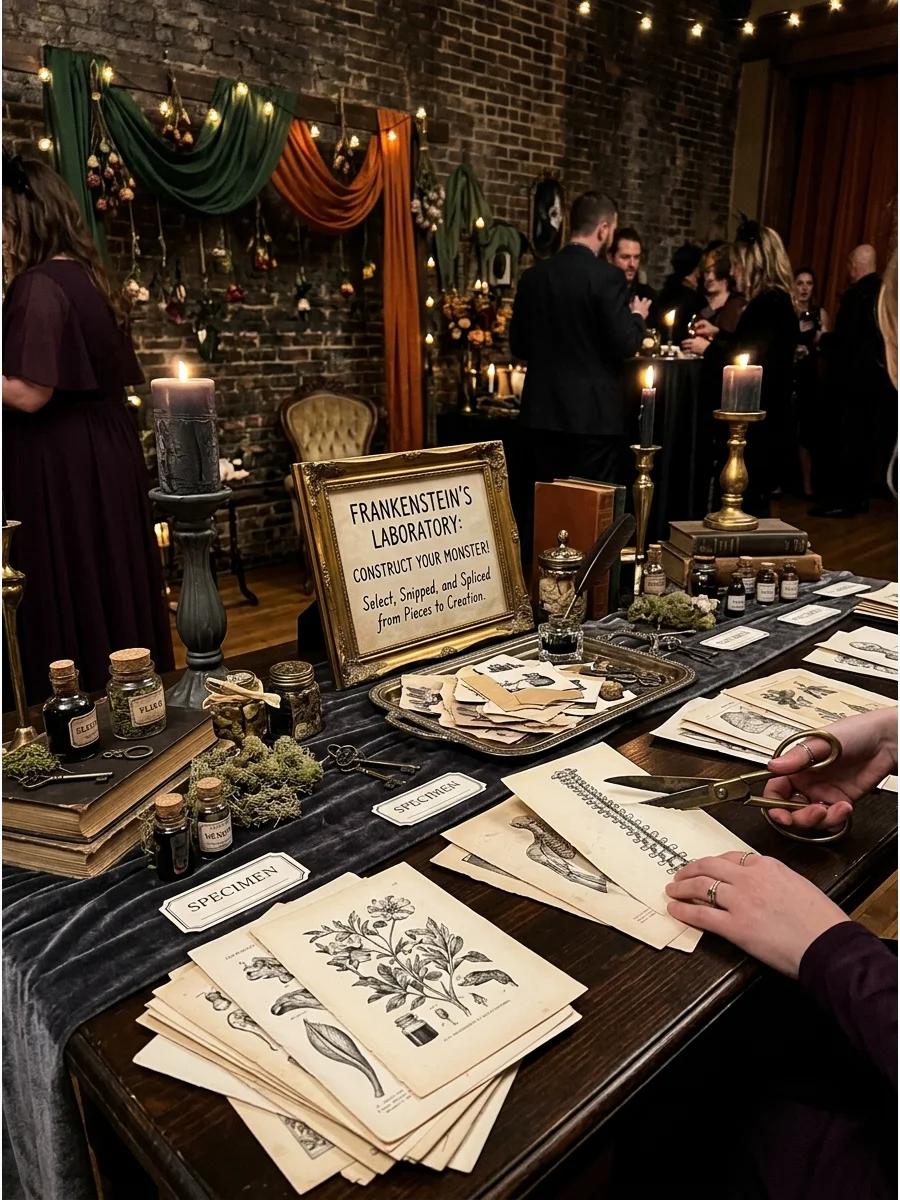
Provide old magazines and printed illustrations for guests to create Gothic mood boards or postcards.
Collage is an accessible art form that doesn’t require advanced drawing skills to produce impressive results.
Supply high-quality heavy cardstock in ink black or charcoal grey as the base for the collages.
Culinary Games and Tasting Challenges
41. Mocktail Potion Lab
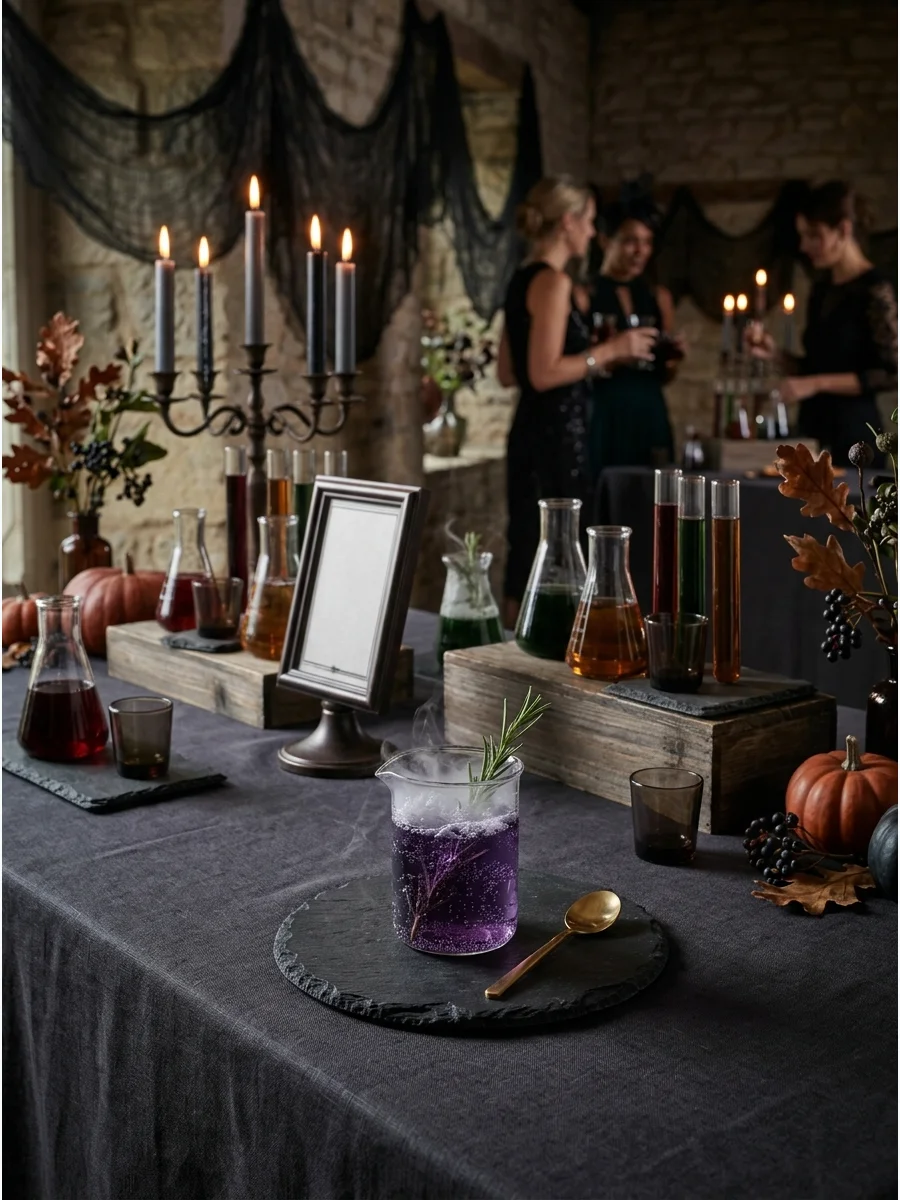
Guests invent an alcohol-free signature drink using syrups, juices, and garnishes, then present it for judging.
This turns refreshment into a creative challenge and ensures non-drinkers are fully included in the fun.
Provide dry ice (with safety instructions) or edible glitter to give the ‘potions’ a supernatural look.
42. Blind Halloween Flavor Test
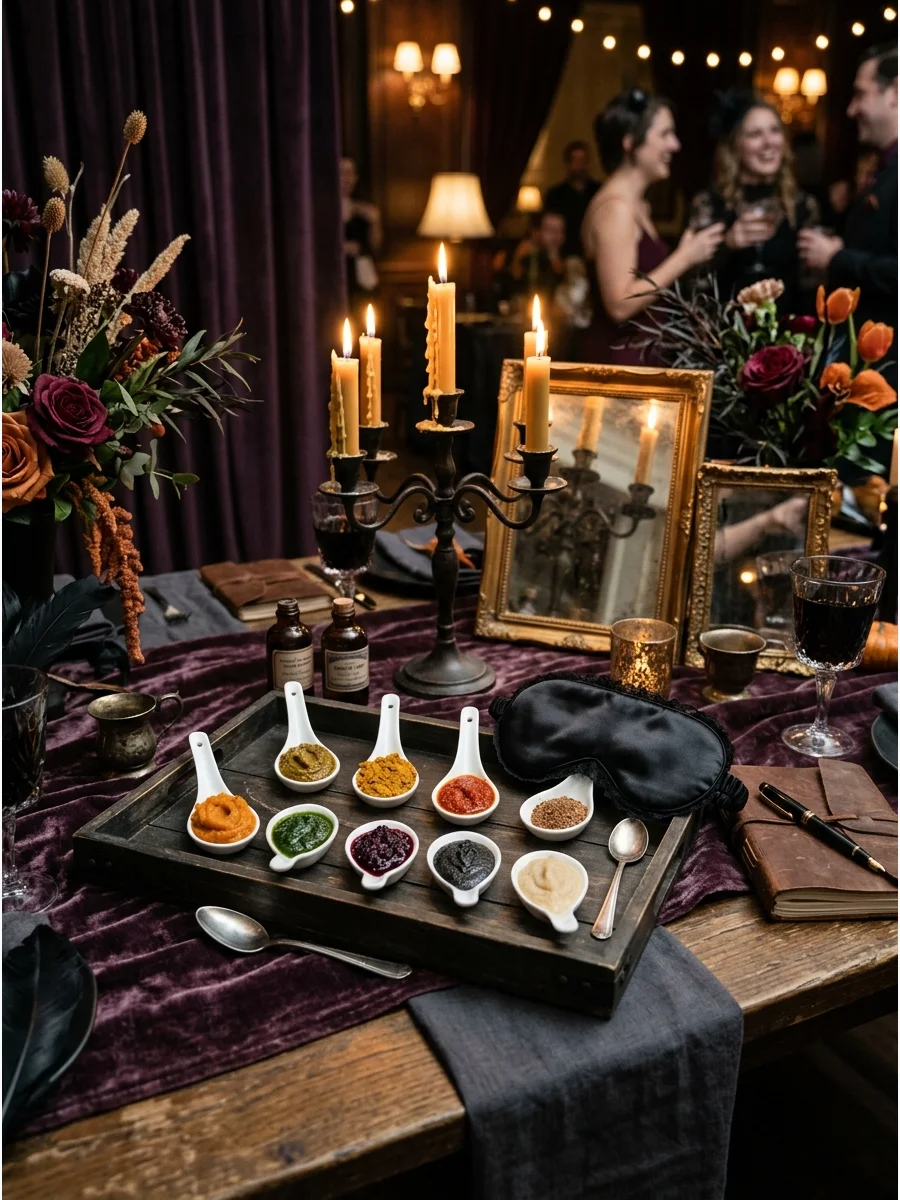
Guests wear masks and try to identify seasonal flavors like pumpkin, maple, or ginger from small samples.
Removing sight heightens the other senses and turns a simple snack into a challenging game.
Use small disposable bamboo spoons to serve the samples for easy cleanup and hygiene.
43. Mystery Candy Tasting
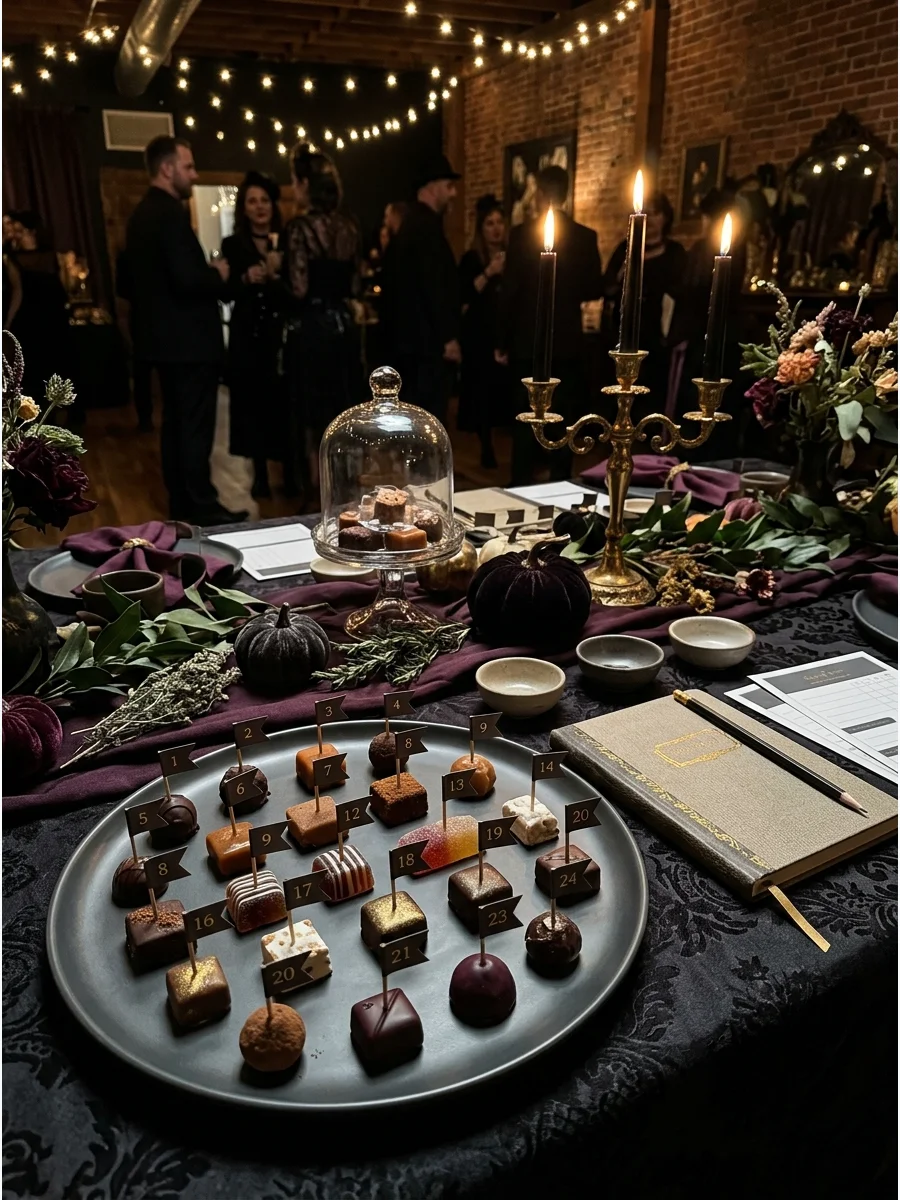
Number several seasonal candies without their packaging and have guests record the flavor or brand.
This is a nostalgic activity that sparks conversation about favorite and least-favorite childhood treats.
Include a mix of classic candies and modern artisanal chocolates to vary the difficulty.
44. Halloween Dessert Decorating Contest
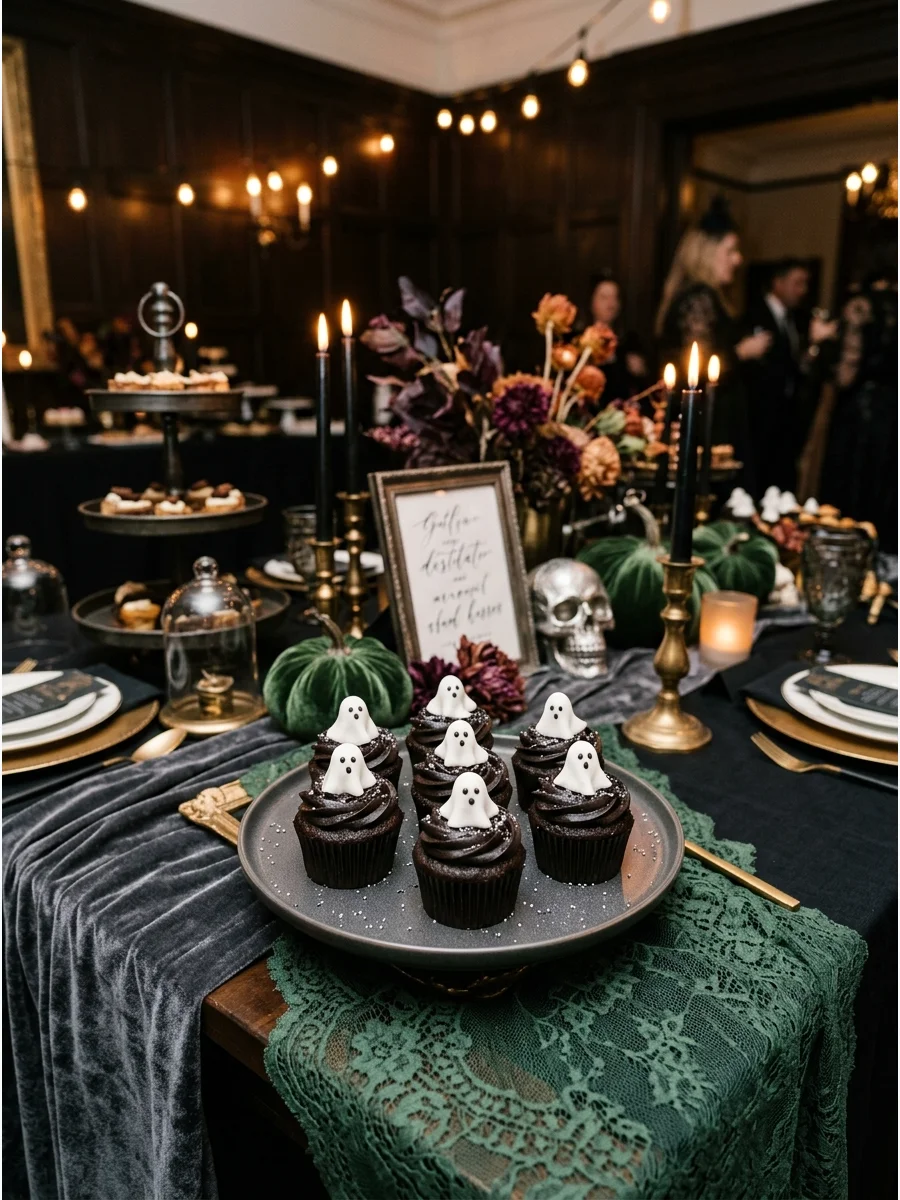
Provide plain cookies or cupcakes and give guests a time limit to create the best monster or ghost design.
Decorating is a hands-on activity that results in a delicious snack for the guests to enjoy afterward.
Offer ‘pre-made’ components like sugar eyes and chocolate shards to help guests build their designs quickly.
45. Popcorn Flavor Competition
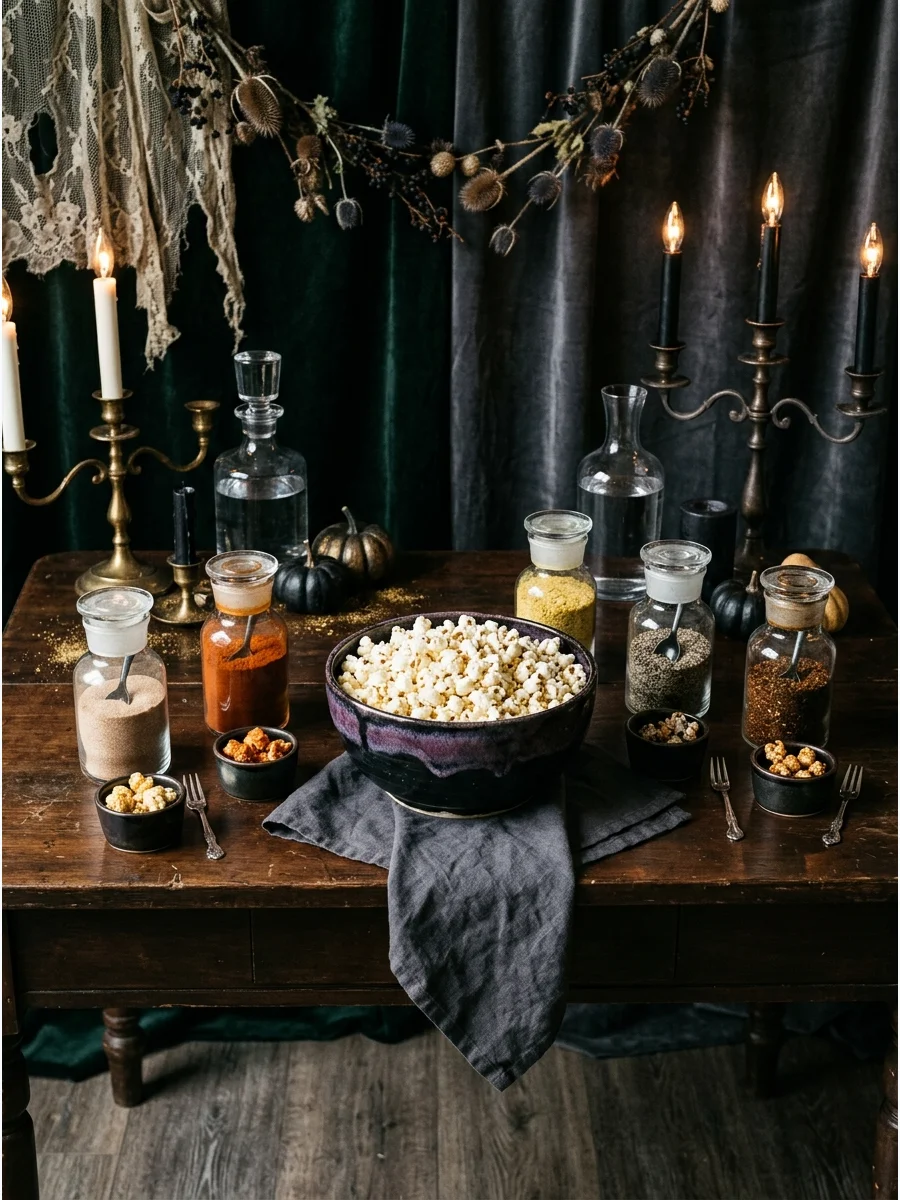
Guests create original blends using sweet and savory seasonings, then vote on the best combination.
This is an easy, low-cost activity that provides a continuous snack throughout the evening.
Set out small brown paper bags so guests can shake their popcorn with the seasonings to get an even coating.
Active Games and The Grand Finale
46. Eyeball Cup Toss
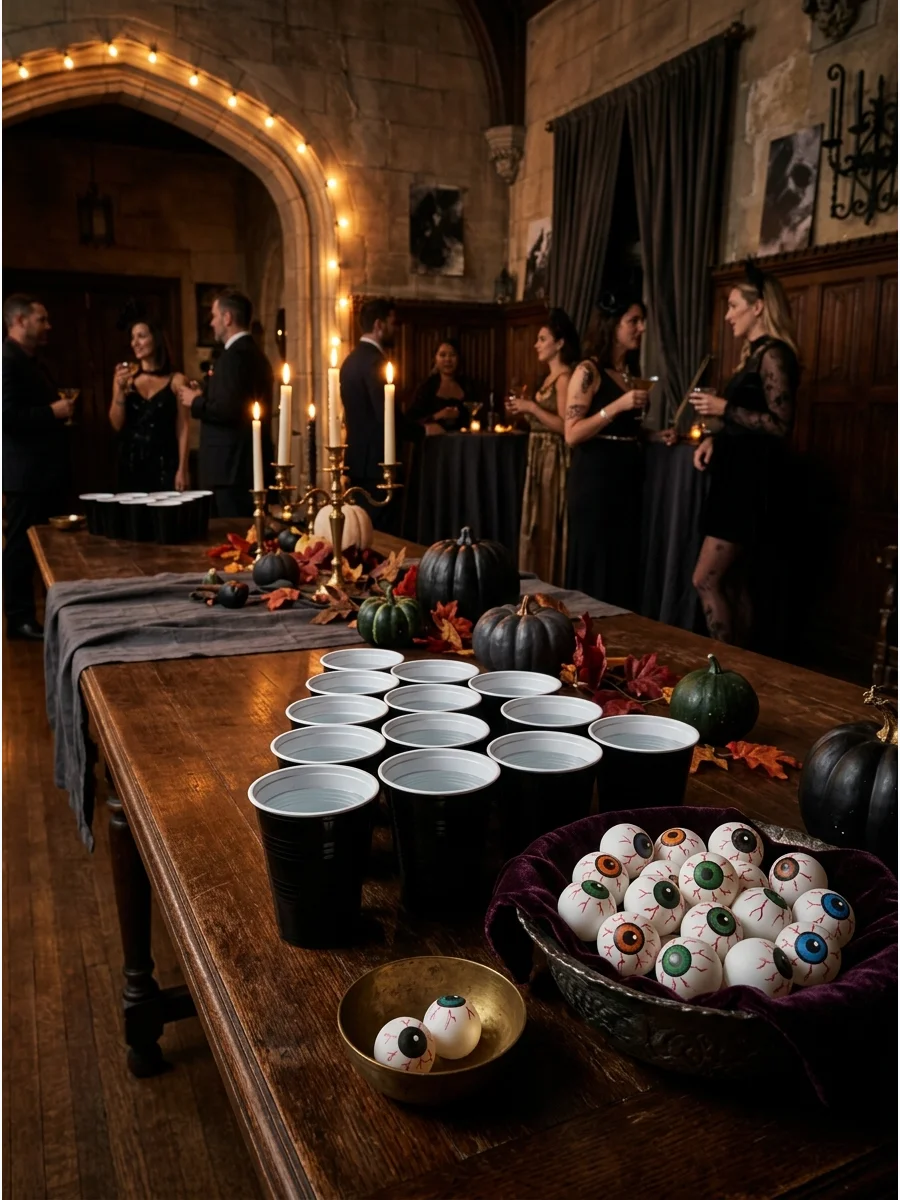
Decorate balls as eyeballs and arrange cups at different distances for a competitive point-based game.
This provides a lighthearted physical activity that can be played individually or in teams.
Use heavy-bottomed cups or add a little water to each to prevent them from tipping over when hit.
47. Glow-in-the-Dark Ring Toss
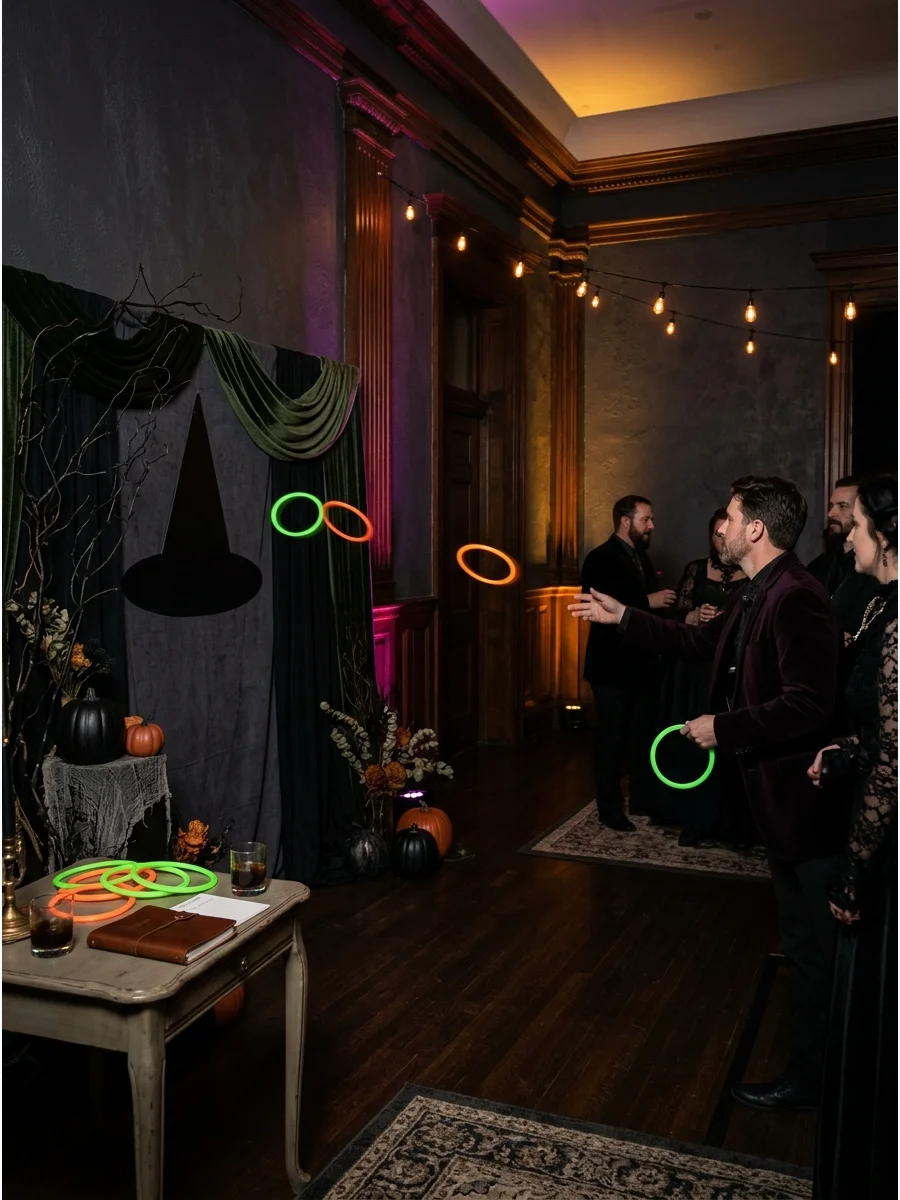
Use glowing rings with stable targets like witch hats or pumpkins in a dimly lit area.
The glowing elements fit the Halloween theme perfectly and make the game playable in low-light party conditions.
Ensure the game area is clearly marked with floor tape to prevent guests from tripping in the dark.
48. Skeleton Puzzle Relay
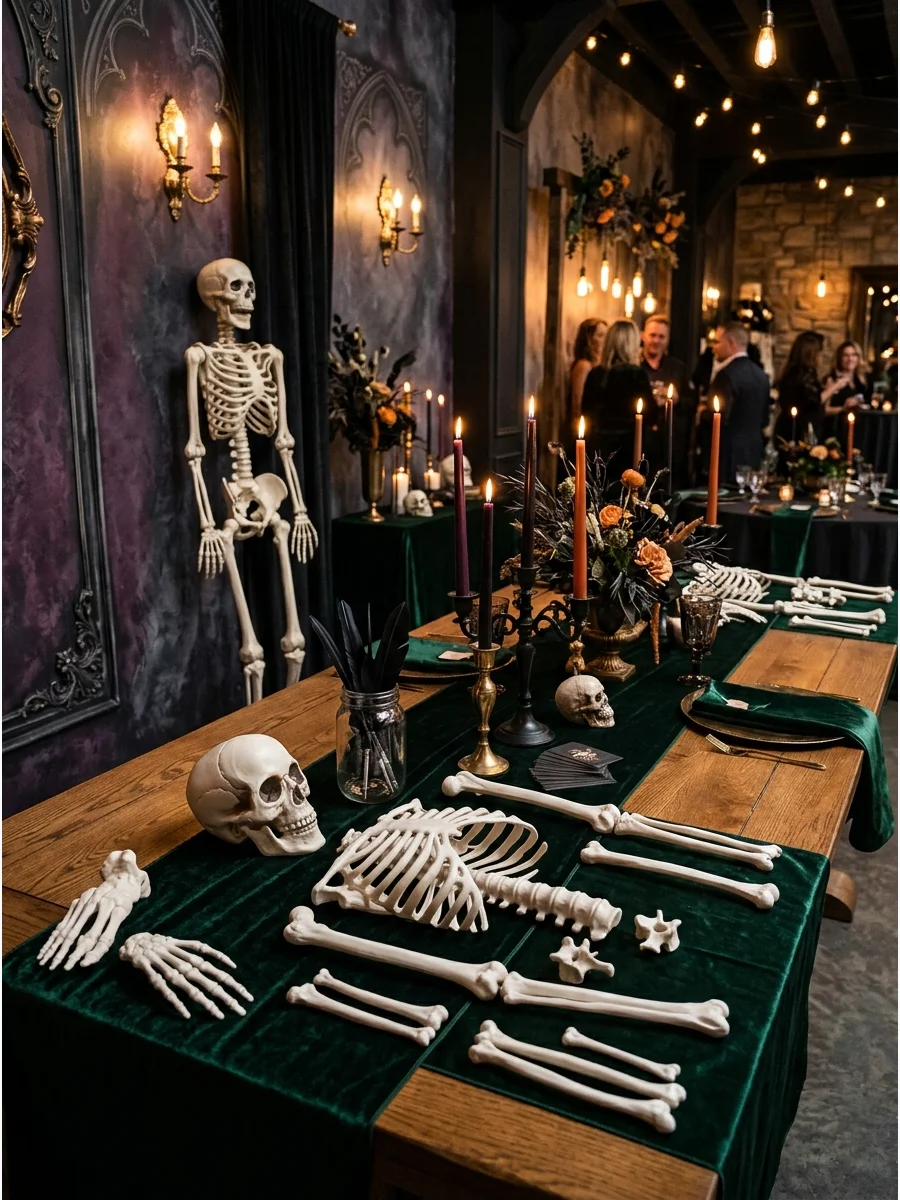
Teams race to correctly assemble a large printed or lightweight model skeleton.
Relays add a sense of urgency and excitement, making them a great way to transition into the final phase of the party.
Magnetize the back of the skeleton pieces and use a large magnetic board for easier assembly.
49. Halloween Dance Challenge
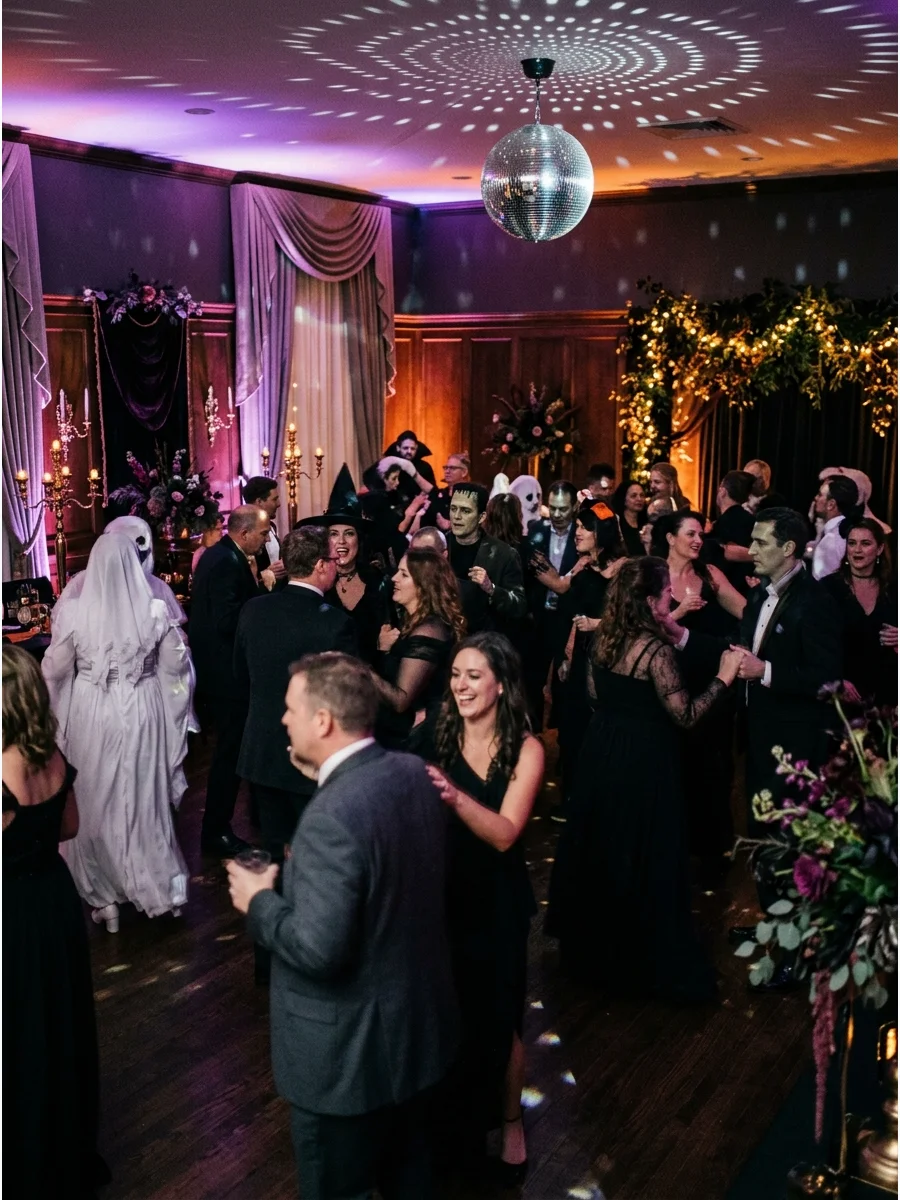
Play short rounds of different music styles—from Gothic to disco—and have guests adjust their dancing to match.
This gets everyone moving and serves as a high-energy transition toward the end of the night.
Appoint a guest as the ‘judge’ to hand out small prizes for the most enthusiastic or creative dancer in each round.
50. Halloween Awards Ceremony
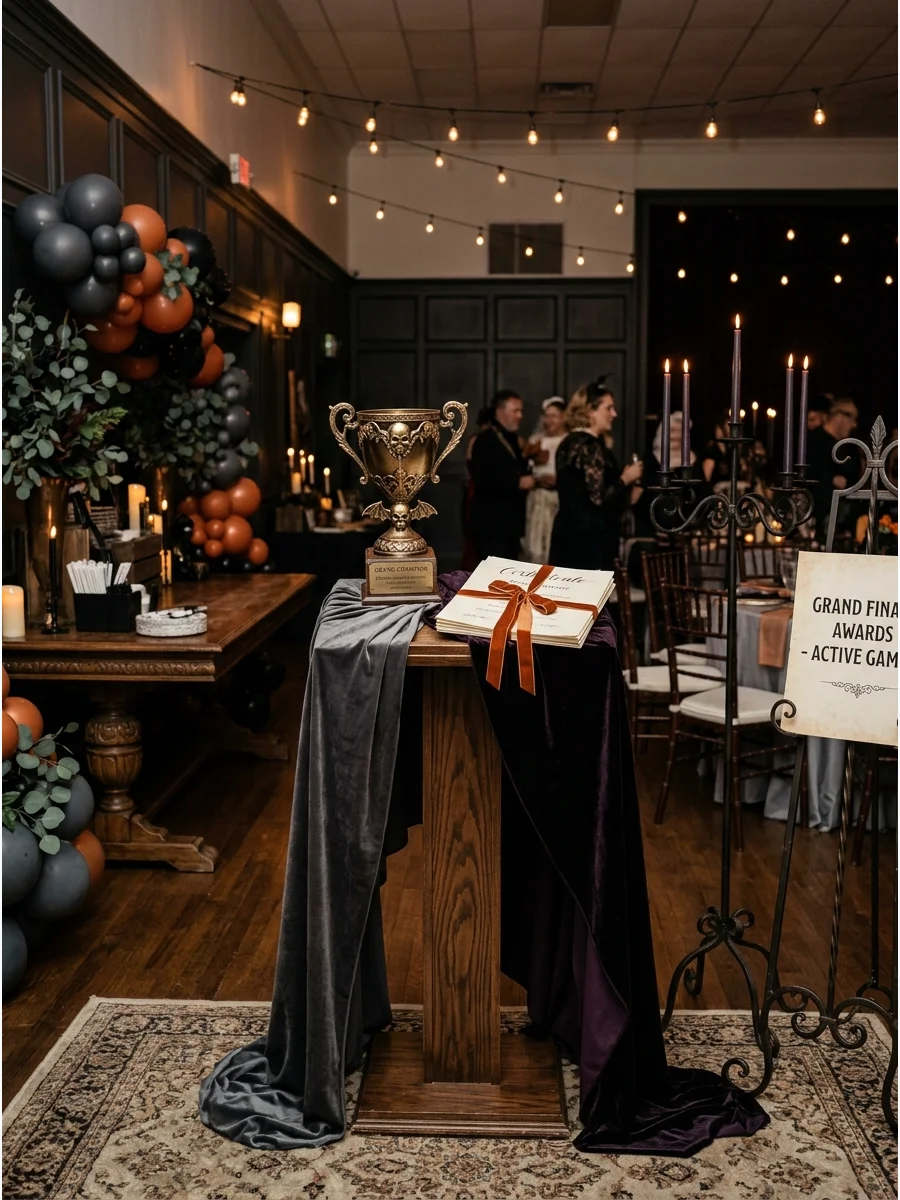
Conclude the night by recognizing costume winners, game champions, and the funniest storytellers with certificates.
A formal conclusion provides a natural end-point for the party and ensures all winners are celebrated together.
Prepare a ‘winner’s podium’ area with a themed backdrop for final photographs with their awards.
Frequently Asked Questions
How many activities should be planned for a three-hour party?
Aim for two to three structured activities to keep the evening moving without feeling over-scheduled. Start with a passive icebreaker as guests arrive, followed by one high-engagement event like a murder mystery or trivia challenge, and conclude with a costume showcase. This leaves plenty of time for natural socializing and refreshments.
How can shy guests be encouraged to participate in role-playing games?
Provide clear, written prompts or ‘secret objective’ cards so guests have a specific goal to focus on. Assigning less central roles to quieter individuals allows them to observe and engage at their own pace. Pairing them with more outgoing guests during team-based puzzles can also help reduce the pressure of being in the spotlight.
What are the best prizes for adult Halloween game winners?
Focus on sophisticated items that fit the theme, such as artisanal cocktail kits, high-quality soy candles in seasonal scents, or vintage-style apothecary jars. For costume winners, a bottle of wine with a custom gothic label or a gift card to a local boutique cinema offers a practical yet curated reward.
How can these activities be adapted for a smaller group of ten people?
Smaller groups are ideal for activities that require deep focus, such as narrative storytelling or complex culinary tasting challenges. Instead of a large-scale runway, host a seated ‘costume backstory’ session where each guest explains the lore of their character. This creates a more intimate, conversational atmosphere that larger parties cannot easily replicate.
Should guests be informed about the activities before they arrive?
Yes, mentioning activities on the invitation helps set the tone and ensures guests are prepared. If the night includes a costume contest or a specific role-playing theme, providing these details early allows guests to put more effort into their attire. A brief ‘itinerary’ on the invite also encourages punctuality for timed events like trivia.
This post may contain affiliate links: full affiliate disclosure.